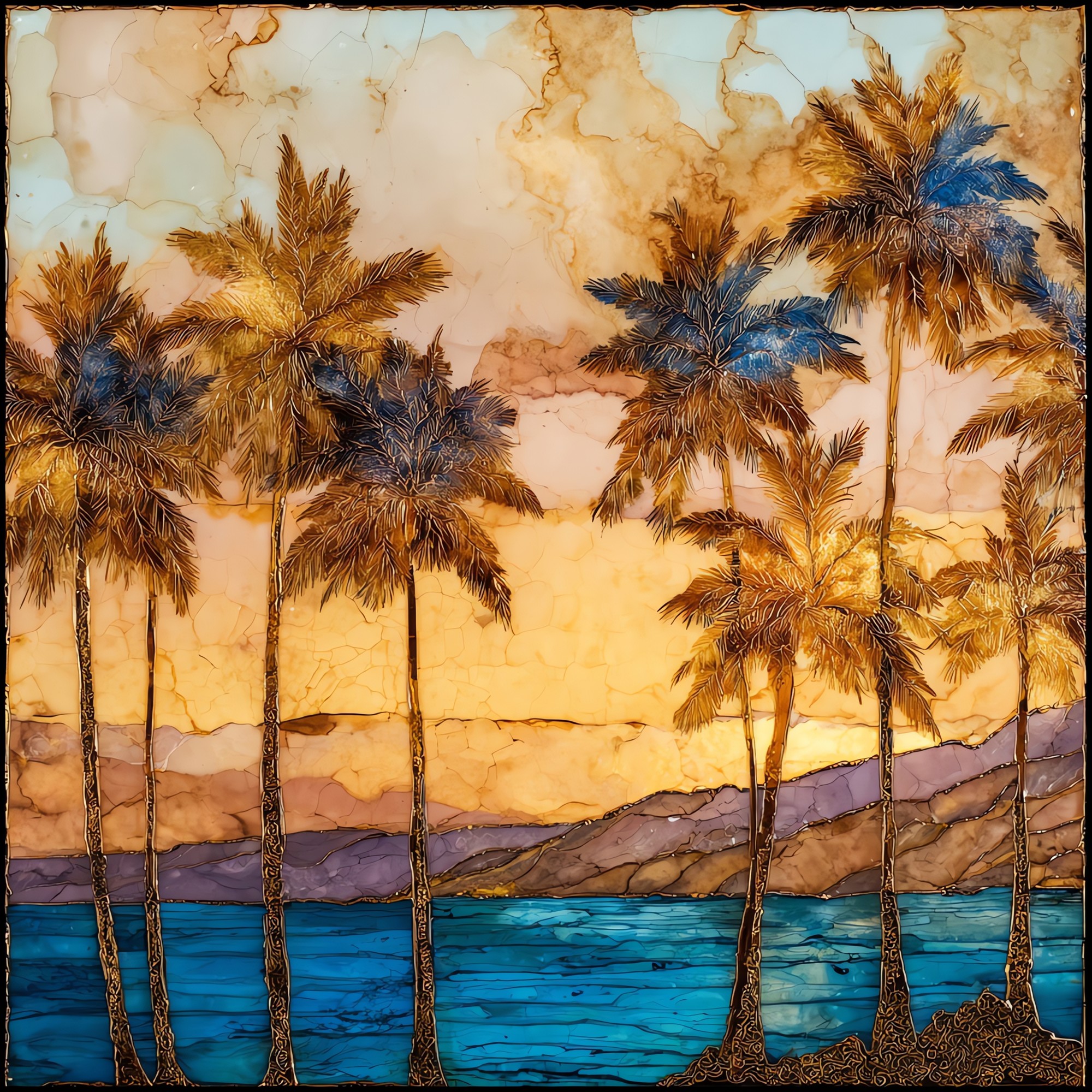
Kihei Sunset Palms Maui Ceramic Art Tile
— the minute the palms go ink against the gold.
Not only on a wall.
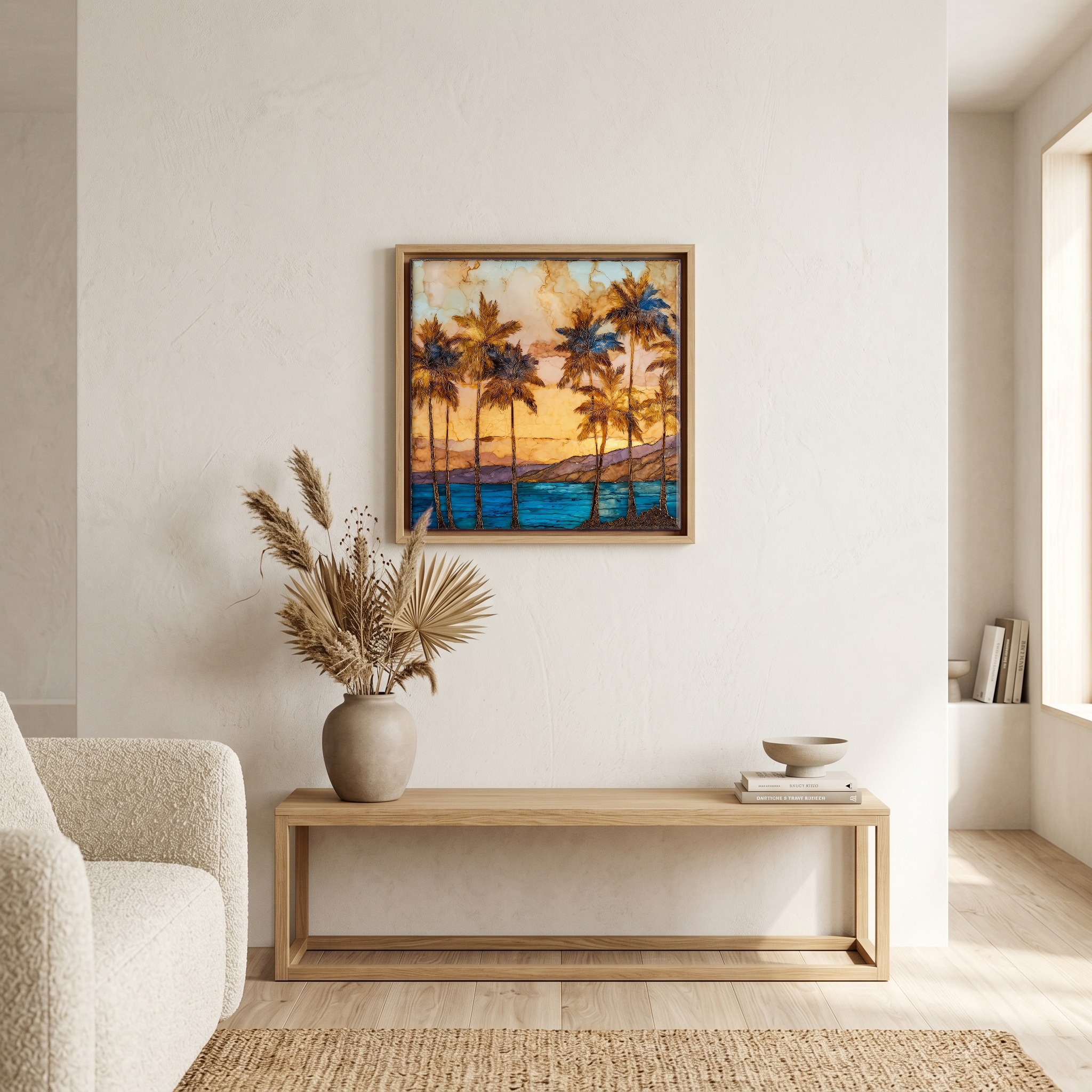
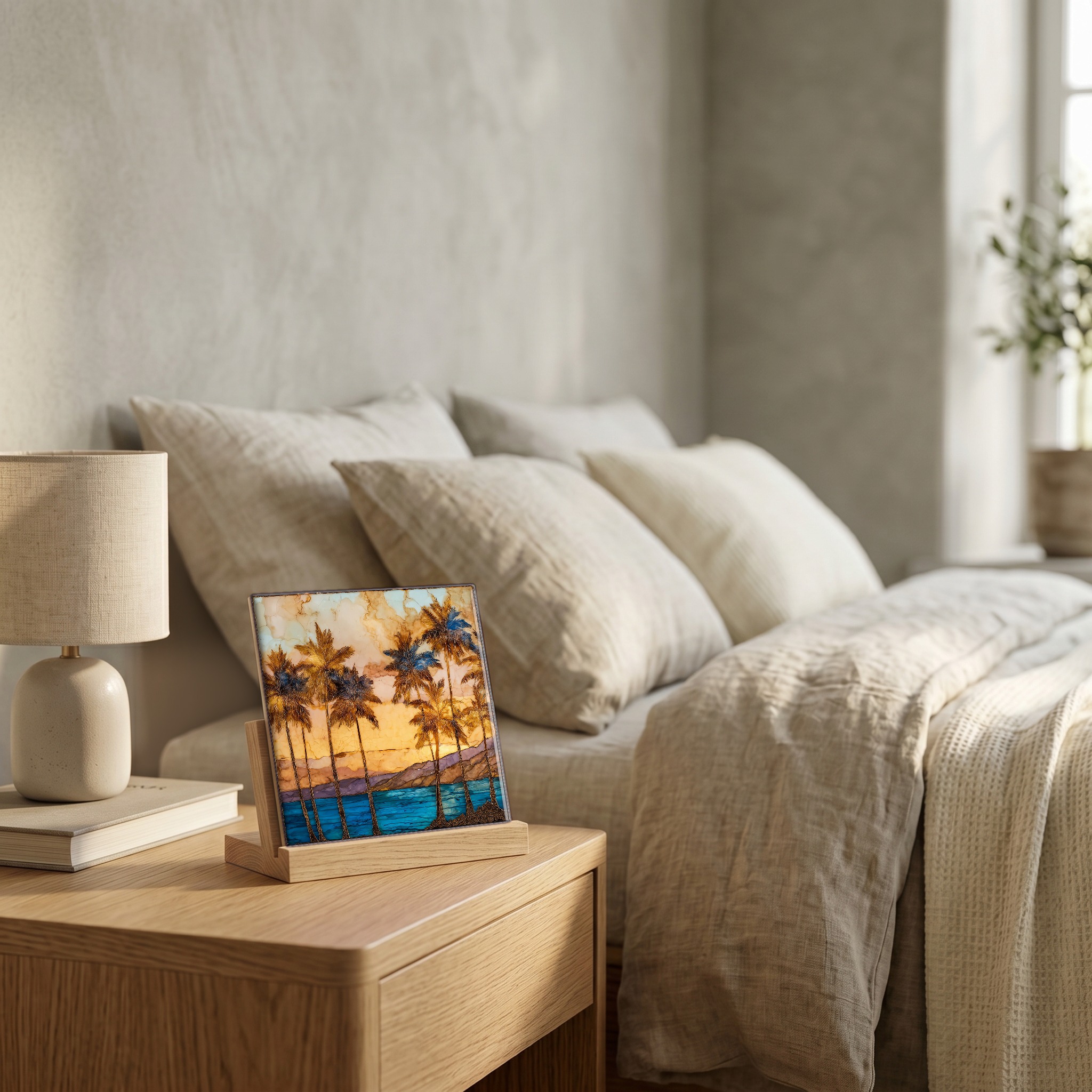
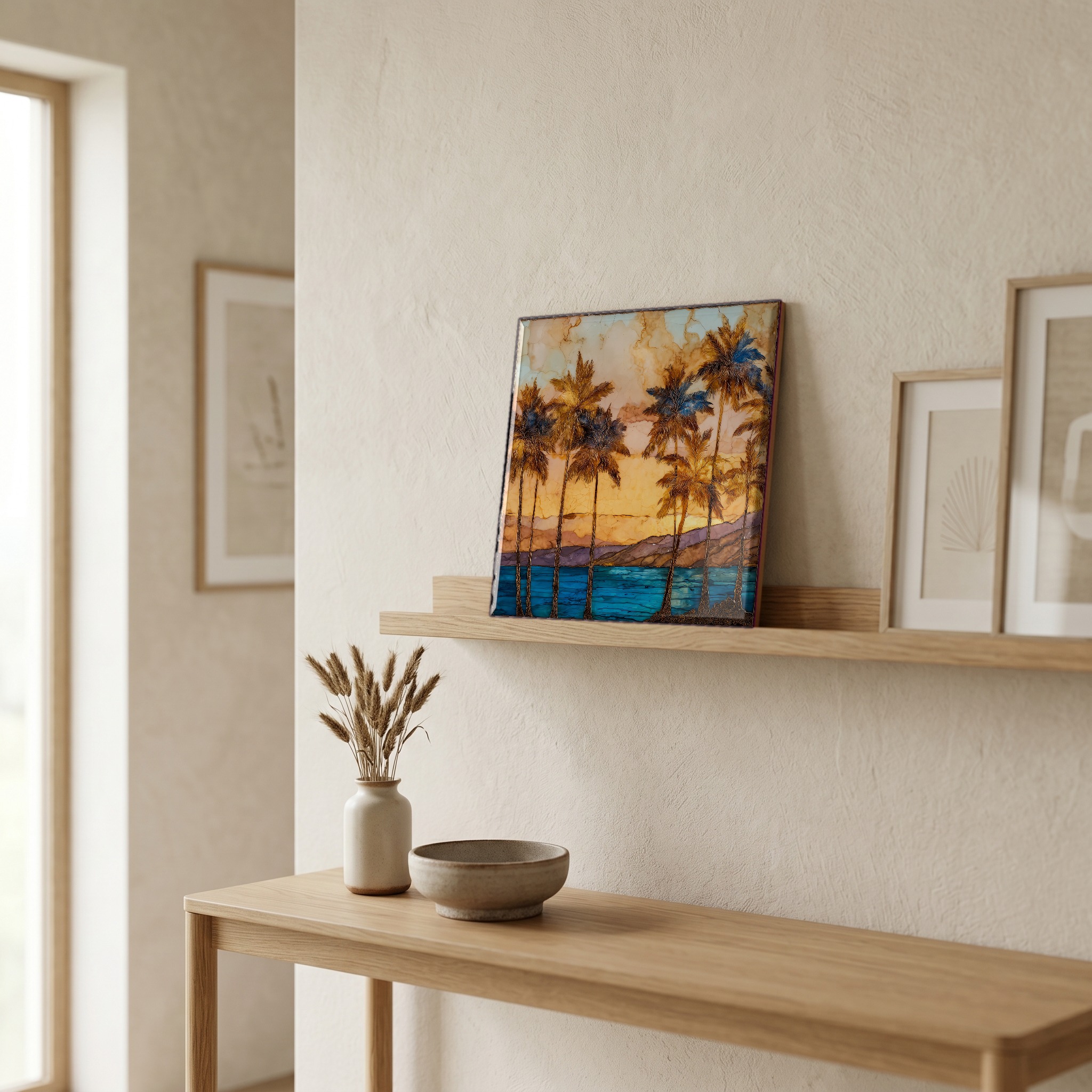
“A long row of coconut palms on the dry leeward side of Maui, the side where the trades drop and the air goes still. The coast here looks west across the channel toward Lāna‘i and Kaho‘olawe, so the sun goes down over open water most evenings through the year. The palms hold their fronds still long enough to silhouette. People stop talking when the sky shifts. Kalama Park empties slowly. The light leaves the way it does on every west-facing coast: quick at the end, longer than you'd think on the way down.
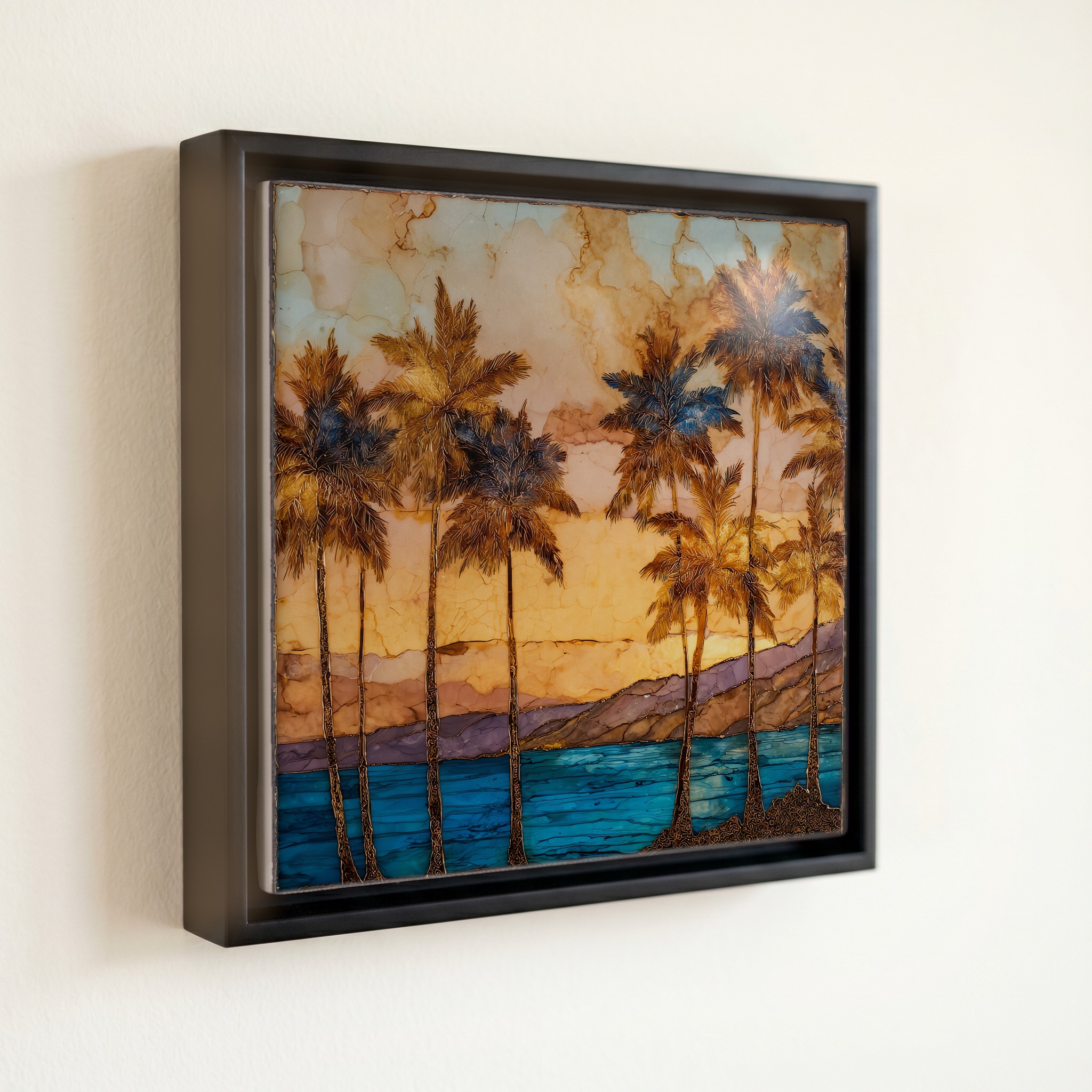
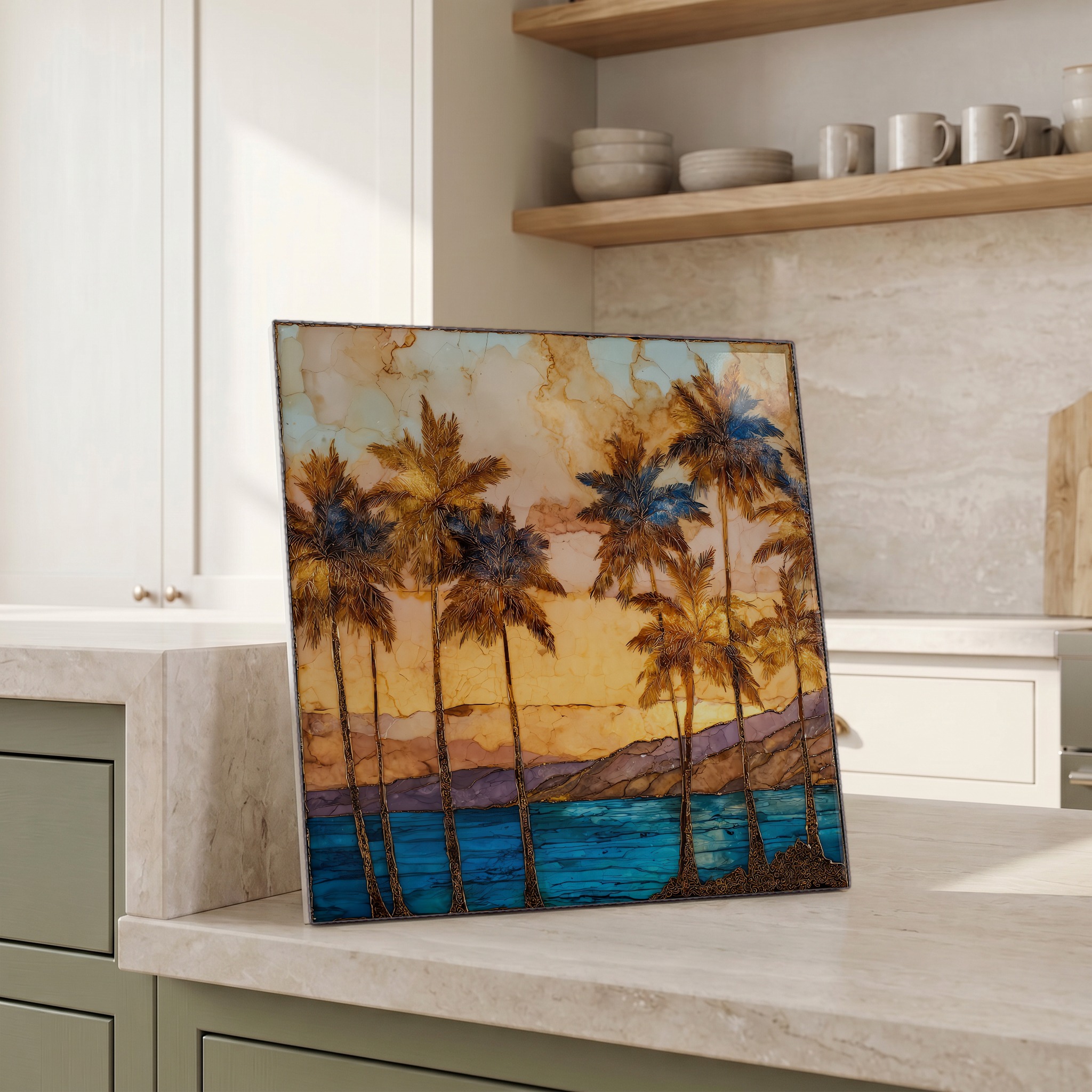
Kihei Sunset Palms Maui Ceramic Art Tile, on ceramic.
Each tile is finished by hand in our Knoxville studio. Artwork is slowly infused into the ceramic surface under high heat and pressure, and rests beneath a thin glossy finish. The colour lives in the surface, not on top of it.
Pick any four 4-inch tiles — National Parks you've been to, a Smokies set, the four seasons of one place. $ for a set of , cork-backed, ready to live on the table.
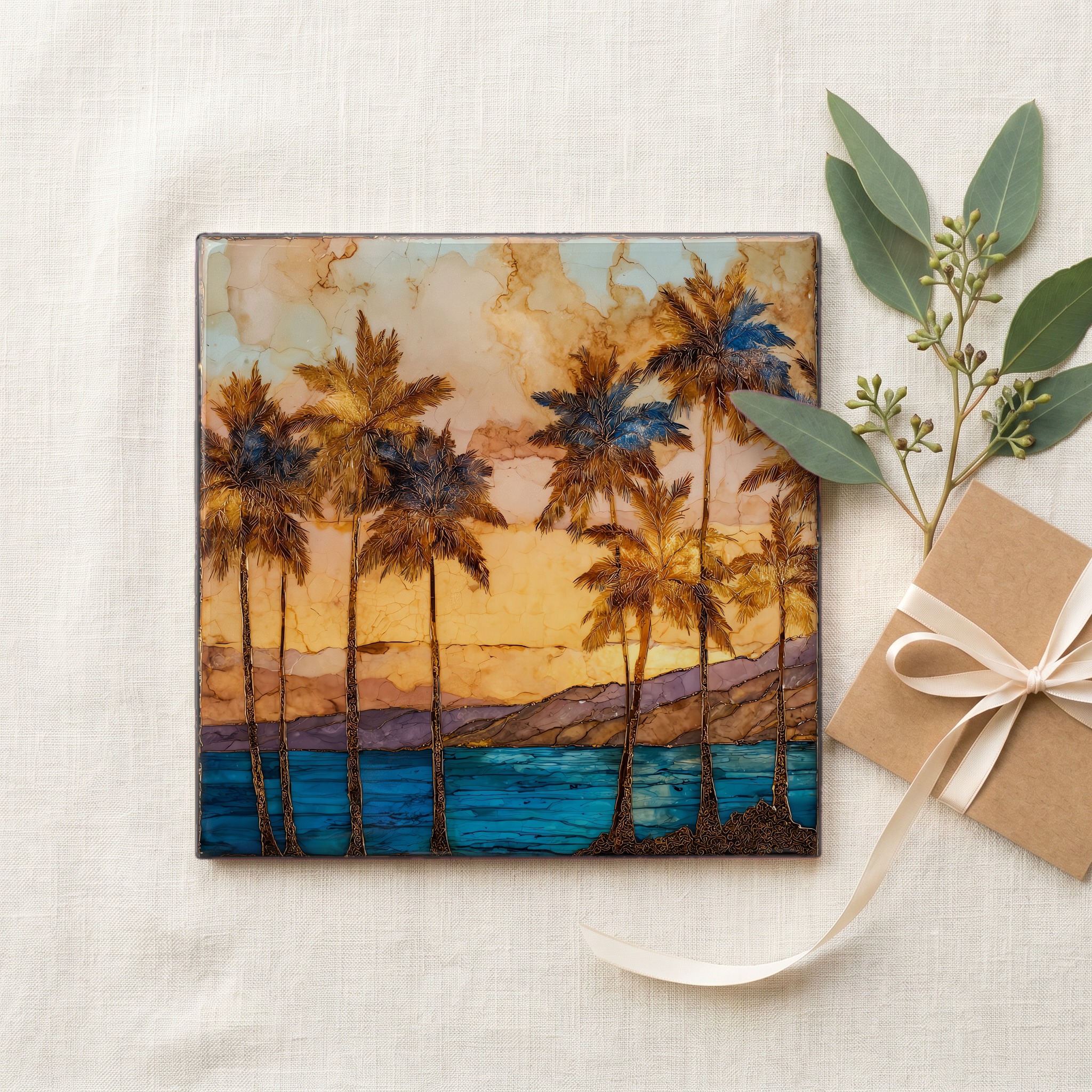
Each tile ships in a kraft box, tied with cream ribbon, with a handwritten note from the studio if you'd like to add one.
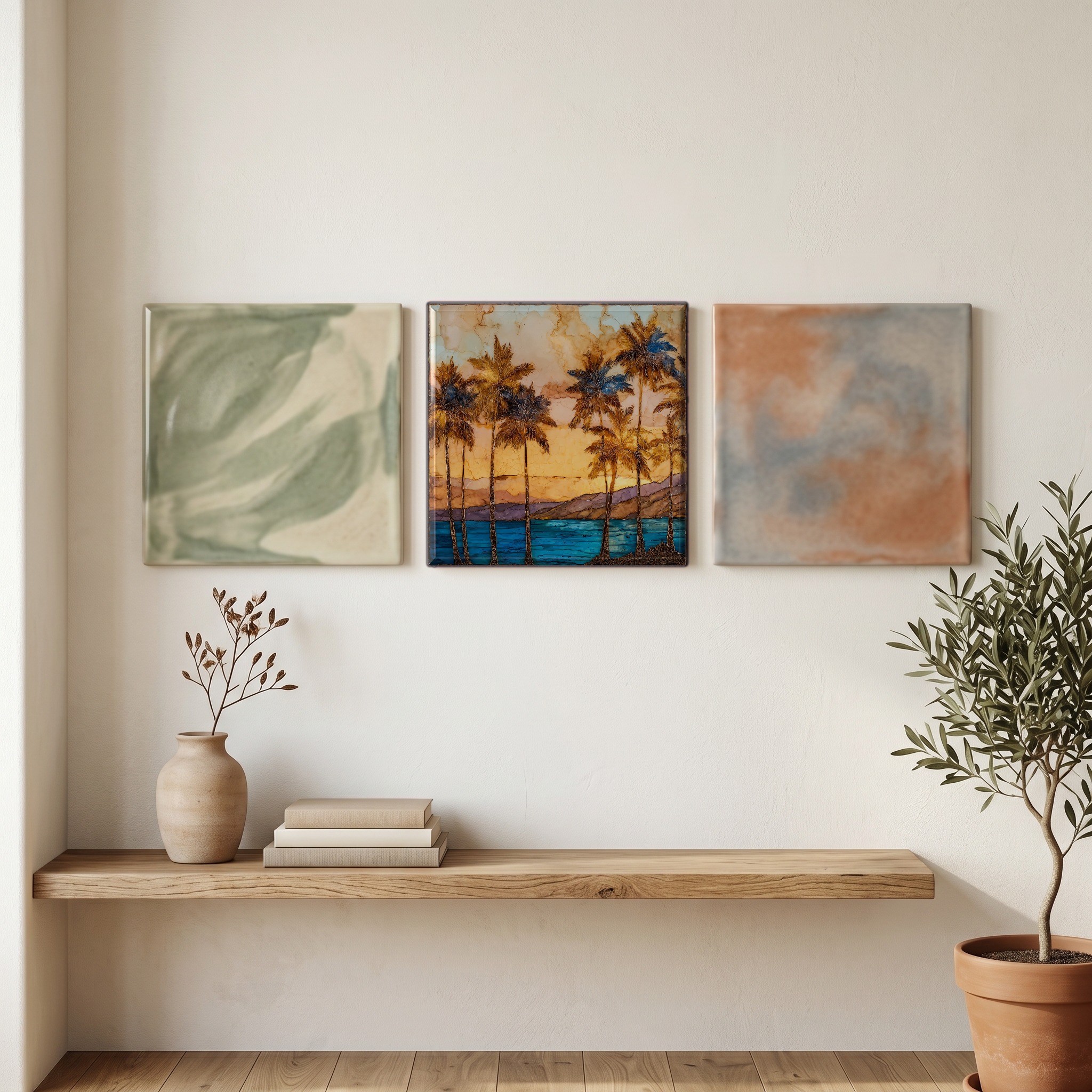
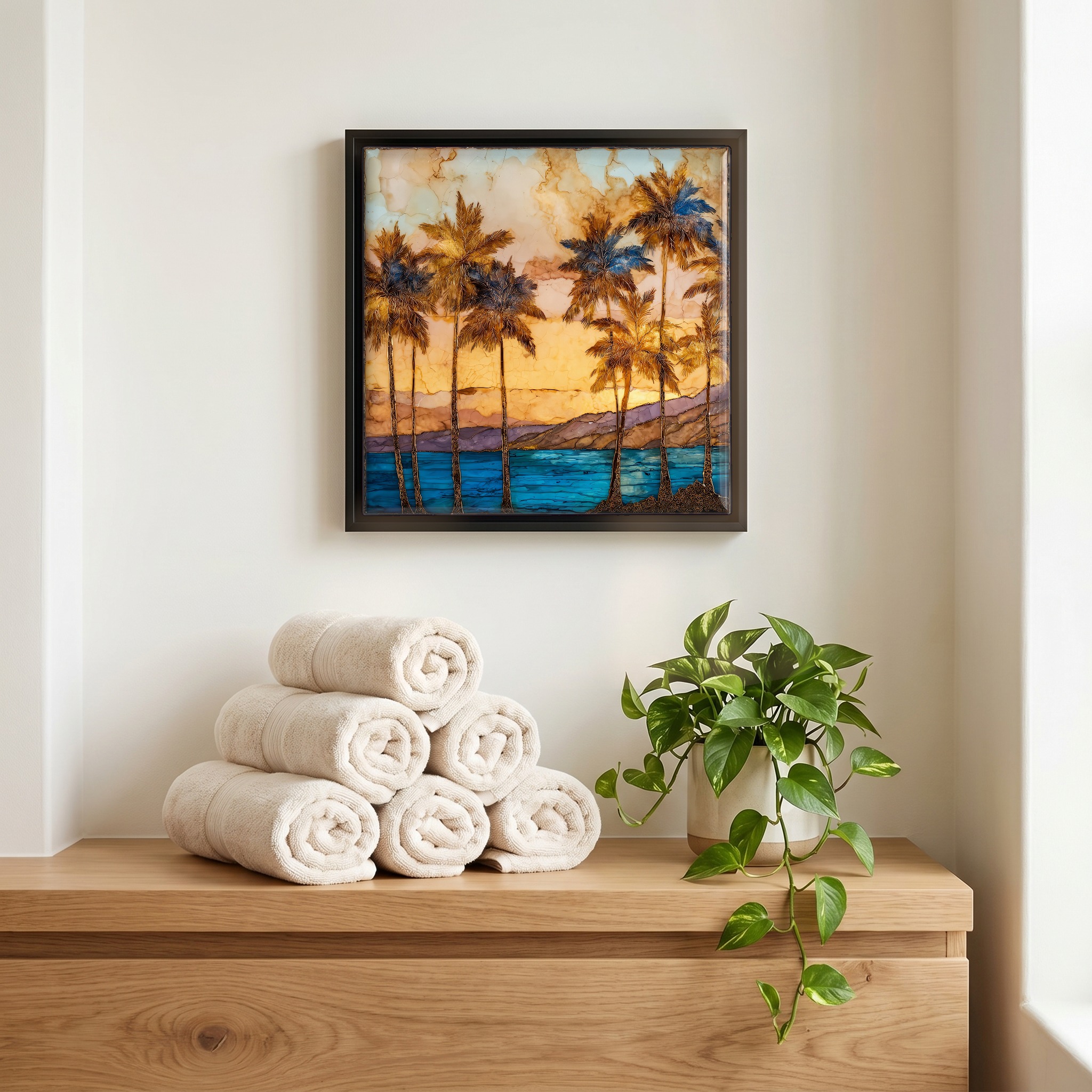
Three or five different vistas, hung together — a chapter of places you've been, or want to go.
The place, in three passes.
Kihei sits on the leeward southwest coast of Maui, the second-largest of the Hawaiian Islands, about 14 km south of the airport at Kahului. The town runs roughly nine miles along the shore from Maalaea Bay down to Wailea, edged by a string of beach parks including Kalama, Kamaole I, II, and III, and Keawakapu. To the east, the dormant shield volcano Haleakalā rises to 10,023 feet, casting a rain shadow that gives Kihei one of the driest, sunniest microclimates in the islands. Offshore lie Lāna‘i, Kaho‘olawe, and the half-submerged crescent of Molokini. The coast is reached by Highway 31 (Piilani Highway) or the older South Kihei Road that hugs the water.
The coast faces west into the ‘Au‘au Channel, so the sun sets over open water and over the silhouettes of Lāna‘i and Kaho‘olawe for almost the entire calendar year. From late March to mid-September the sun drops behind Lāna‘i, and through the winter it falls farther south, sometimes lining up behind the rim of Molokini. The leeward position of Kihei, in the rain shadow of Haleakalā, keeps the western horizon clear most evenings: the climate record for South Maui shows Kihei averaging well over 270 sunny days a year. The coconut palms along the shore stand still in the lee, which is why they silhouette so cleanly against the going light.
Public access runs the full nine miles of Kihei's shoreline. Kalama Park near central Kihei offers a long lawn under coconut palms and the easiest sunset viewing, with parking on South Kihei Road. The Kamaole Beach Parks farther south, marked I, II, and III, sit on white-sand pockets with wider west-facing views. There is no fee. The trade winds typically drop late afternoon, so the air goes still just before sunset; this is when the palms read most clearly against the sky. Late spring and summer evenings carry the longest twilight. Surf is generally calm on the leeward shore, but vog (volcanic haze) drifting from Kīlauea on Hawai‘i Island can occasionally tint the western horizon a deeper orange-pink.