Wender·Vista
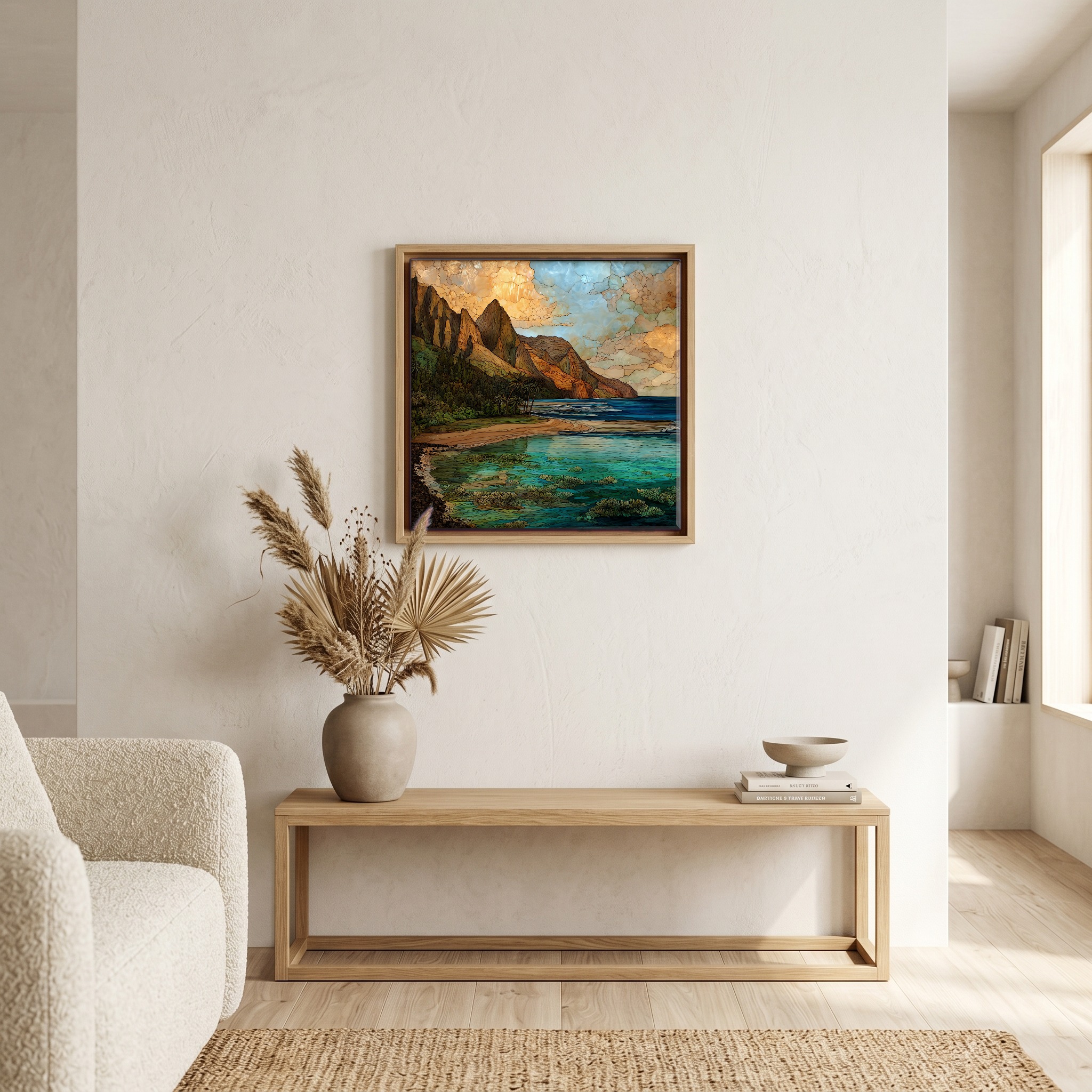
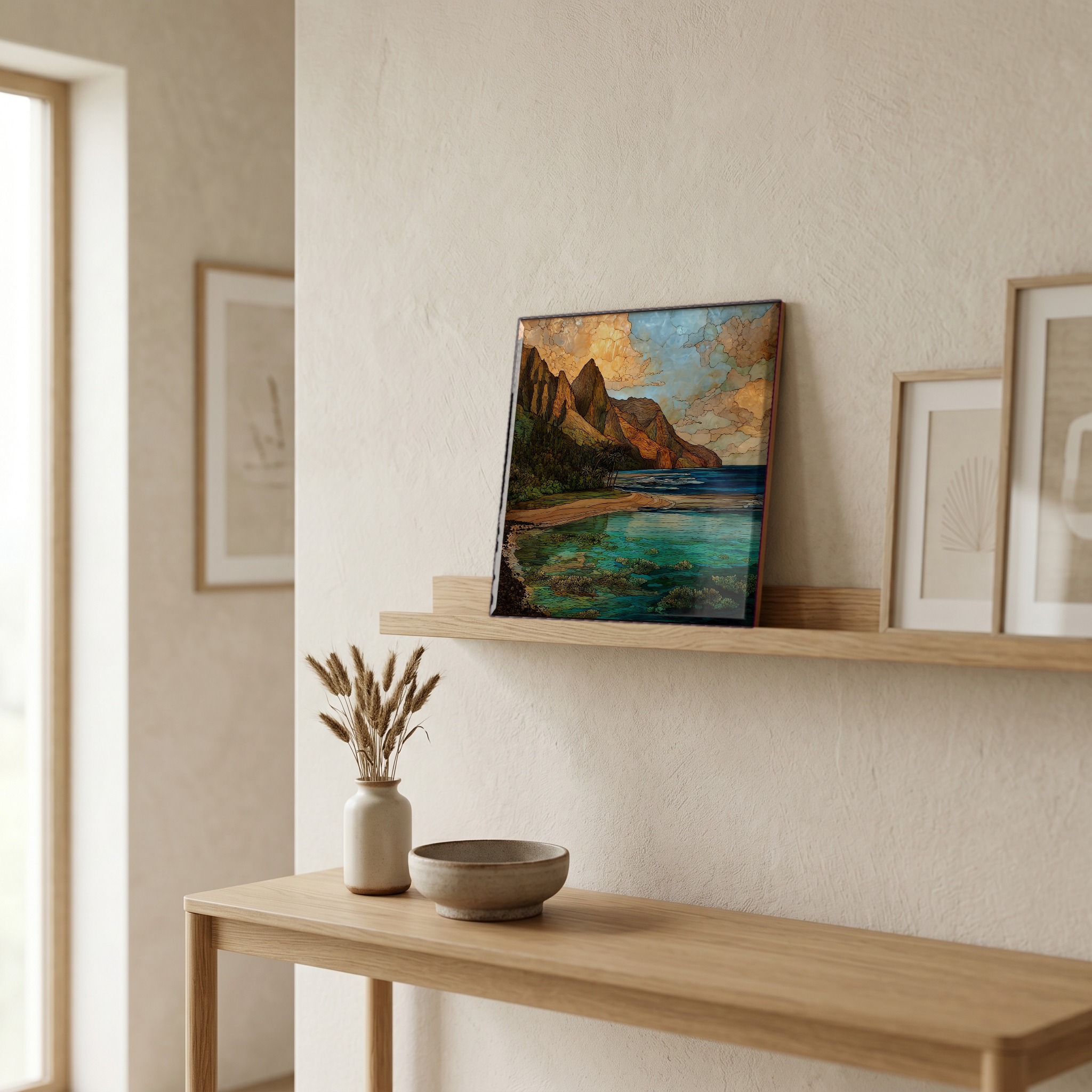
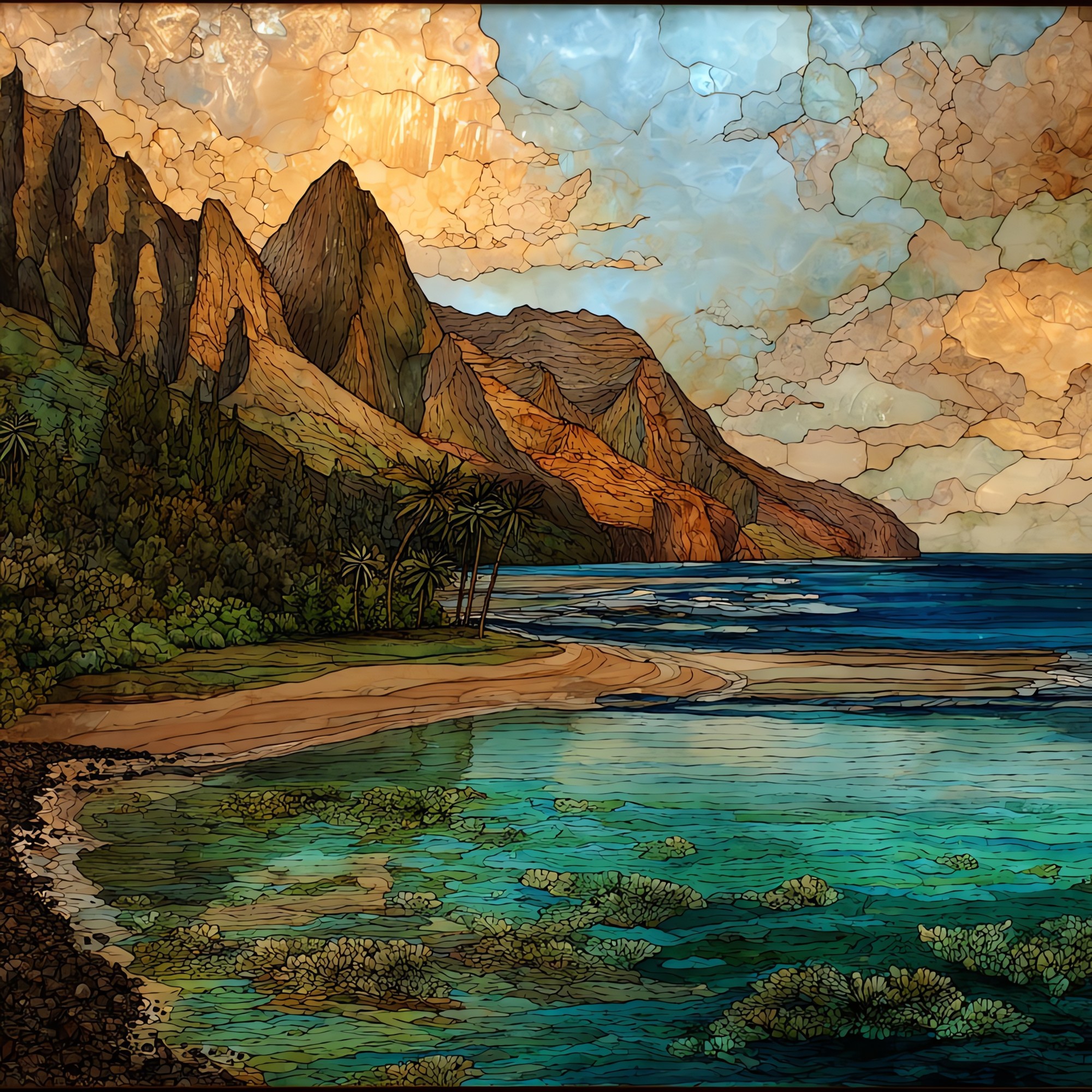
Kee Beach Kauai Ceramic Art Tile
shown on ceramic, 12-inch tileHawaii · United States
at the end of the road on Kauaʻi's north shore

Kee Beach Kauai Ceramic Art Tile

the last calm water before the cliffs.

Where it lives

Not only on a wall.

A small tile on the nightstand catching the morning. A larger one above the fire. Yours, wherever you spend the slow hours.
Above the bench, in a warm oak surround.
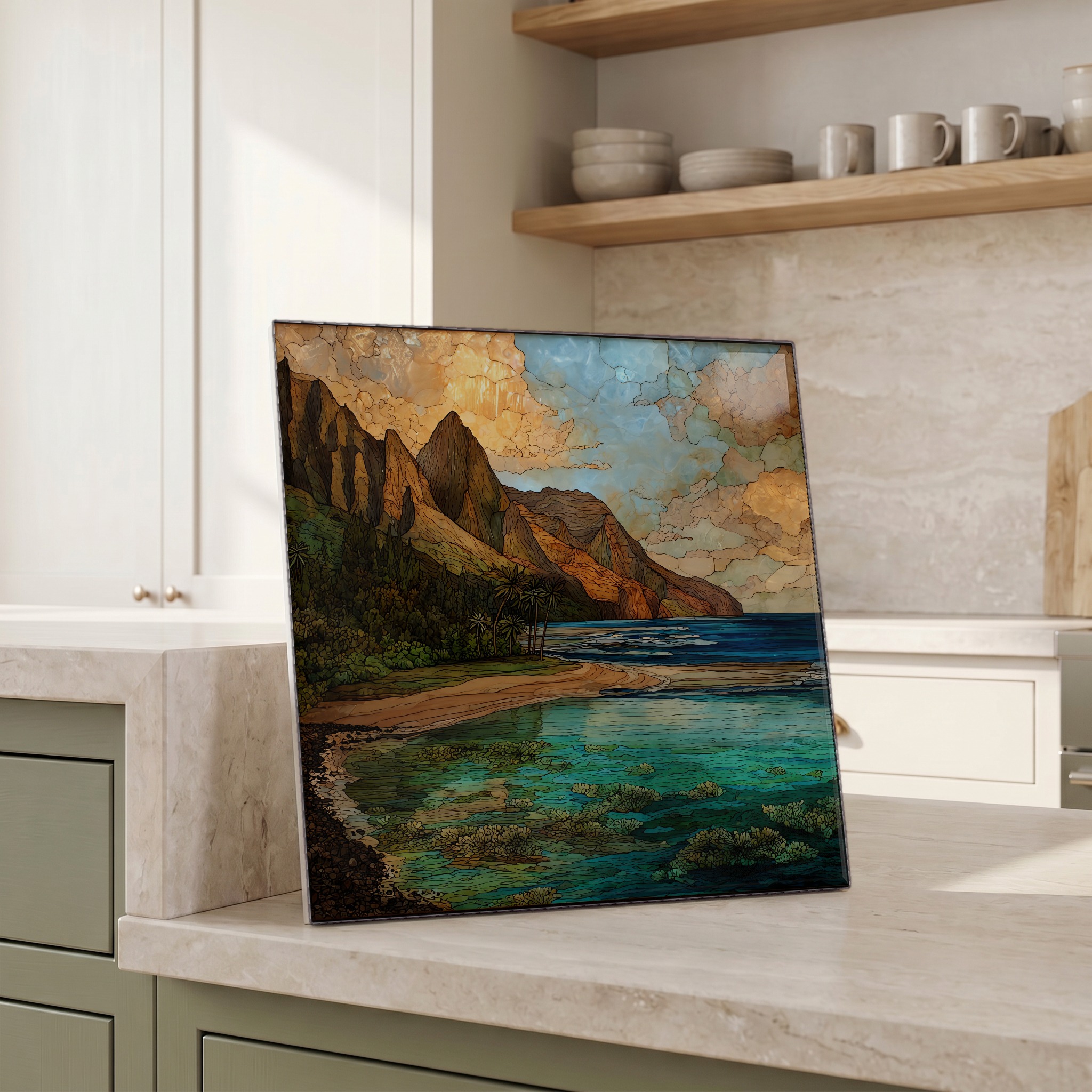
Beside the kettle, propped on the counter.
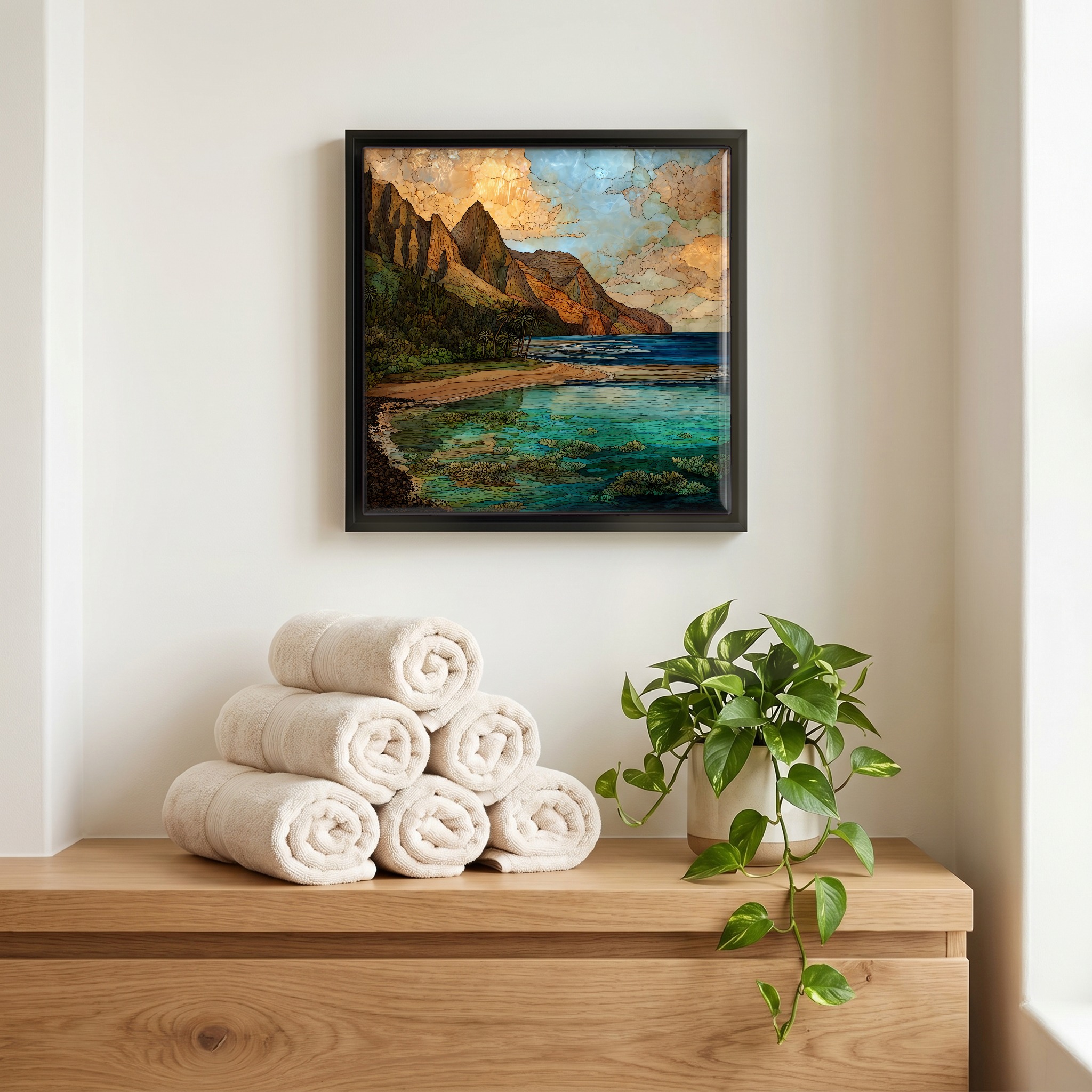
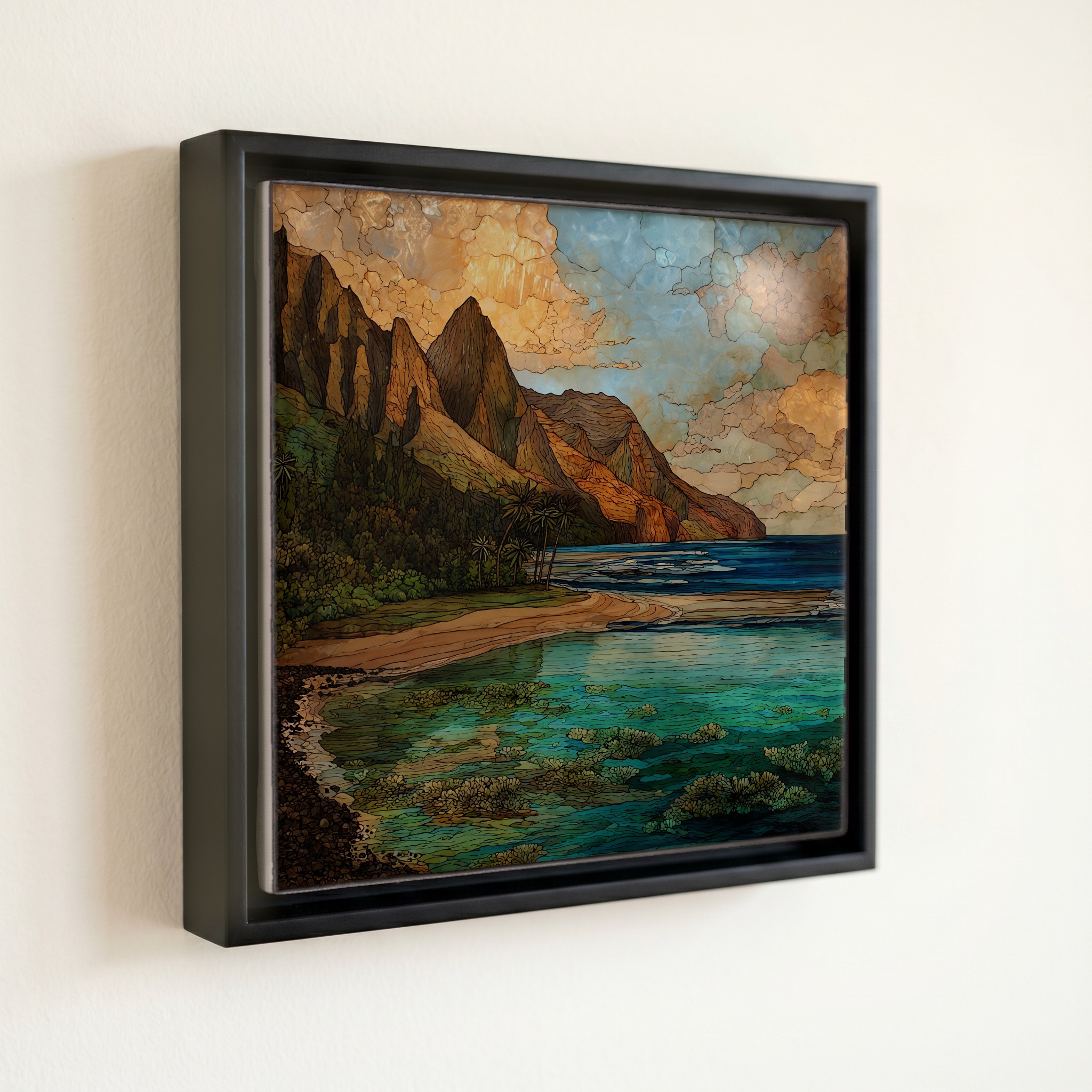
Above the linens, in a slim black surround.
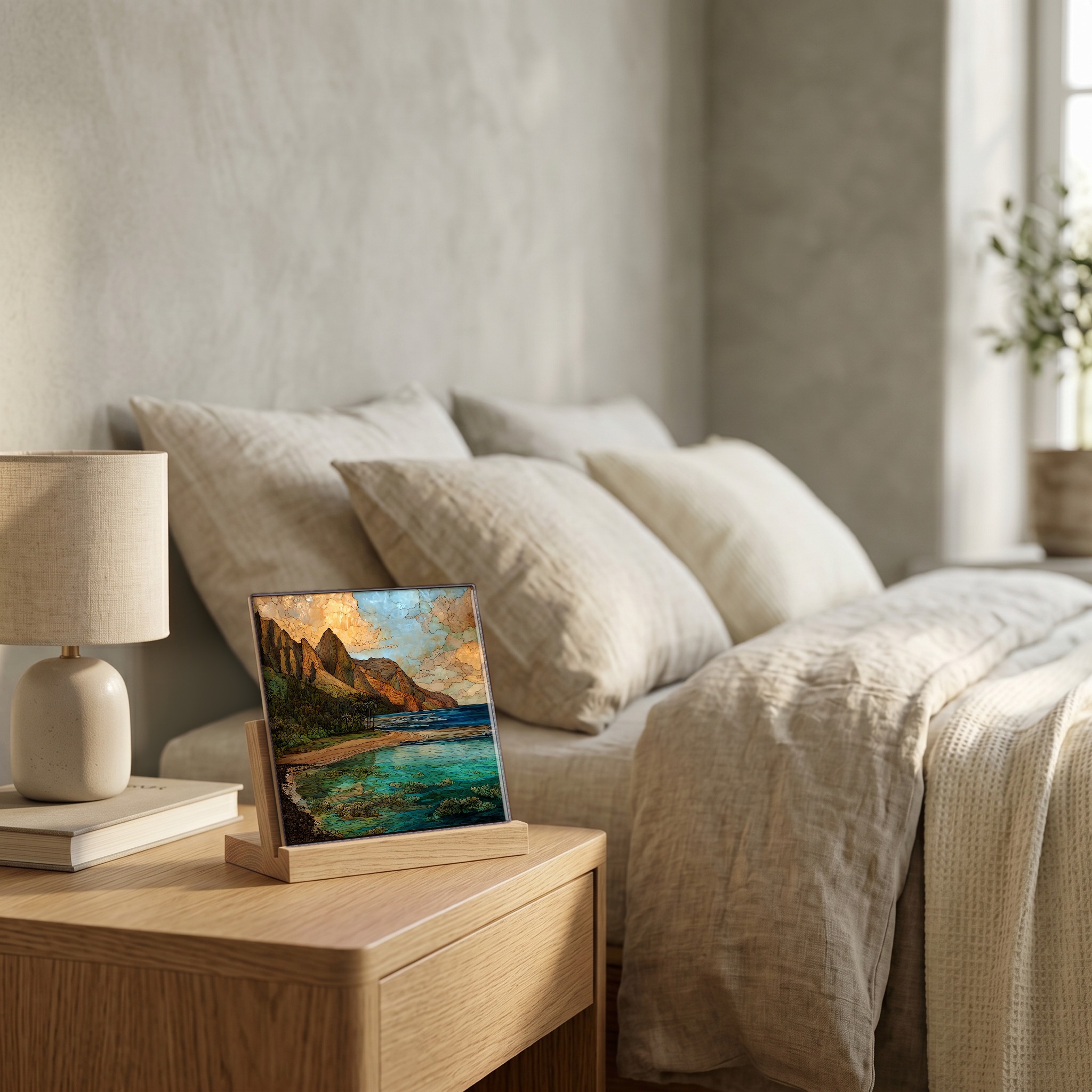
On the nightstand, on a light oak stand.
On a picture ledge, where the light comes in.
a note from the studio

The crescent at the western end of Kūhiō Highway, the last paved mile on Kauaʻi's north shore. A fringing reef cups the swimming water close to shore; beyond it the Nā Pali cliffs run on without a road. In summer the lagoon stays still enough to snorkel. In winter the surf pulls the sand off the beach and the same reef goes loud. The Kalalau Trail begins at the parking lot and runs west into the cliffs. People come at the end of the day, mostly. The light over the ridge holds longer than it should.
from the studio
shown in a slim black floating frame · 6 × 6 in
— bring it home

Kee Beach Kauai Ceramic Art Tile, on ceramic.

Each tile is finished by hand in our Knoxville studio. Artwork is slowly infused into the ceramic surface under high heat and pressure, and rests beneath a thin glossy finish. The colour lives in the surface, not on top of it.

What kind of piece?
One tile — square or rectangle.
How big?
the popular one — counter, shelf, nightstand
6 × 6 in · 15 cm · 1.6 lb
Surface finish
A clear glossy finish — the artwork reads as if under resin. Ideal for show-pieces and framed wall art.
How it sits
A hidden cleat — sits ¼″ proud of the wall.
$58
Hand-finished and shipped from our studio at the foot of the Smokies. On your wall in about ten days.
size
6 × 6 in
15 cm
weighs
1.6 lb
solid in the hand
surface
ceramic, hand-finished
art rests beneath a thin glossy finish
from
Knoxville, TN
our family studio, at the foot of the Smokies
— start a Coaster Set

Pick any four 4-inch tiles — National Parks you've been to, a Smokies set, the four seasons of one place. $ for a set of , cork-backed, ready to live on the table.
comes gift-ready
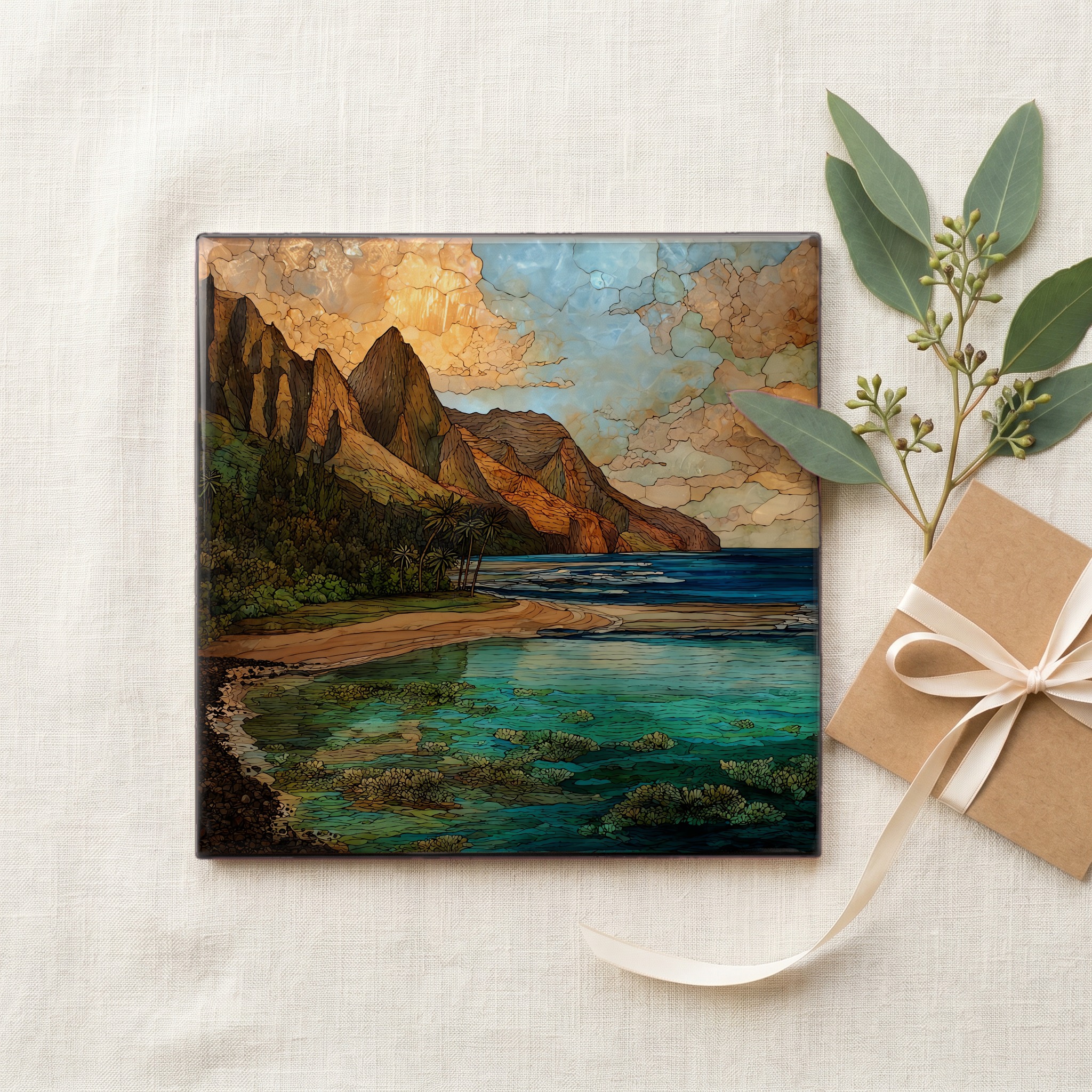
comes gift-ready

Each tile ships in a kraft box, tied with cream ribbon, with a handwritten note from the studio if you'd like to add one.
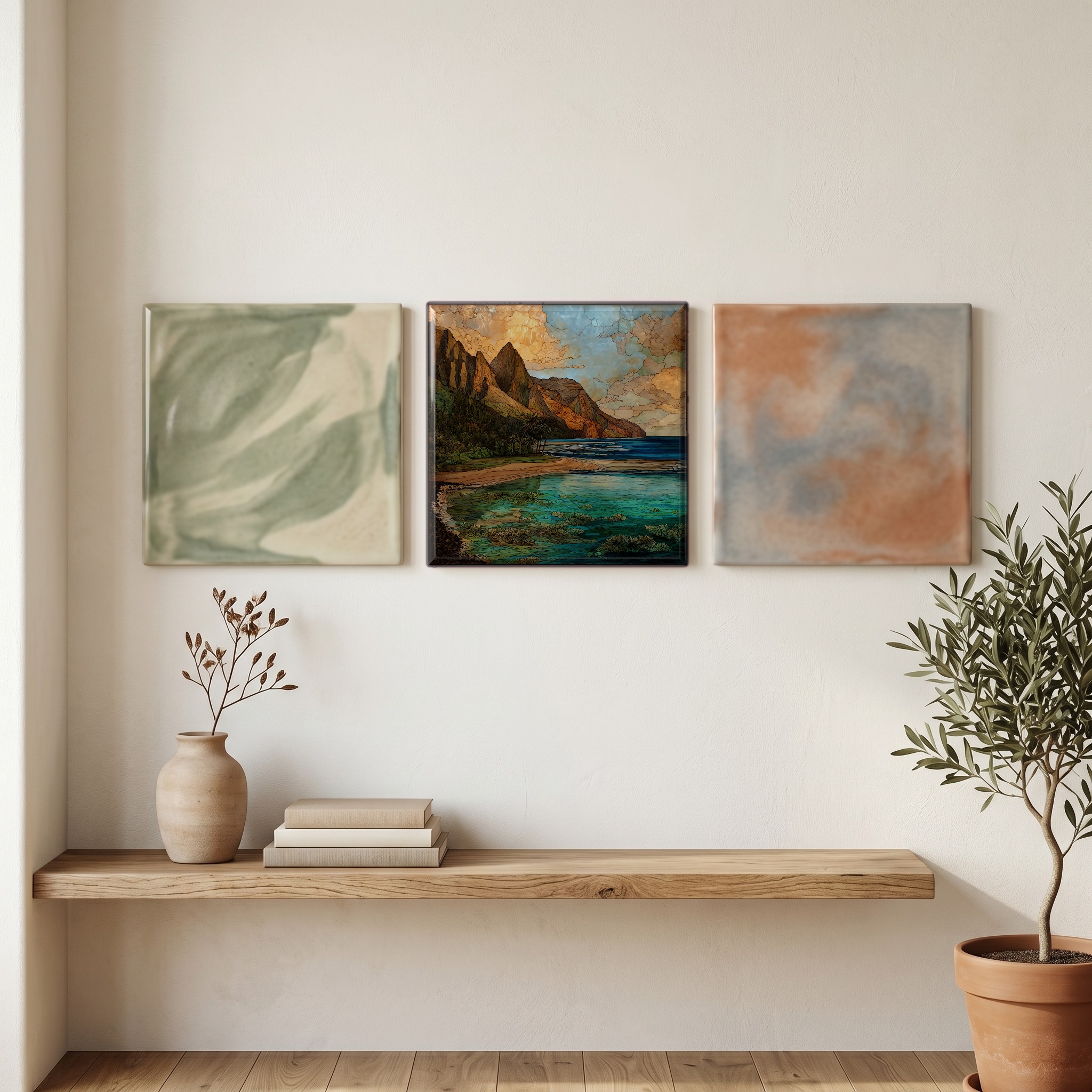
or build a grouping
or build a grouping

Three or five different vistas, hung together — a chapter of places you've been, or want to go.

about Kee Beach Kauai Ceramic Art Tile

The place, in three passes.

A little of what's known, in case you fall down the rabbit hole — or want to go see it yourself.
the place

Keʻe Beach sits at the western end of Hawaiʻi Route 560, on the north shore of Kauaʻi, inside Hāʻena State Park. The road runs out here; the Nā Pali coast continues west for about seventeen miles, accessible only by the 11-mile Kalalau Trail or by boat. Hanalei, the nearest town, is ten miles back east along the same highway. The beach itself is a small crescent of pale sand closed by a fringing reef that turns the swimming water into a shallow lagoon. Since 2019, after the April 2018 north-shore floods that closed the park for fourteen months, all non-resident access requires reservations through gohaena.com, whether by parking slot, shuttle seat, or walk-in entry.

the water

The fringing reef sits roughly seventy-five yards offshore and runs the full length of the crescent, forming a natural breakwater. From May through September the trade-wind swell stays small enough that the lagoon reads as a swimming pool, a few feet deep, sand-floored, with reef fish visible from the surface. From October through April the picture inverts. North Pacific swells unload directly on the outer reef, breaks routinely reach twenty feet, and the same reef that holds the summer lagoon becomes a hazard. The Hawaiʻi Department of Land and Natural Resources warns against entering the water through the winter months. The local rule is older than the sign.

the visit

Hāʻena State Park caps daily visitation at 900 non-resident entries, the lowest of any state park in Hawaiʻi. Reservations open thirty days ahead at gohaena.com and most summer windows fill within hours of release. Three access modes are offered: a paid parking slot at the lot, a North Shore Shuttle seat from a staging lot in Hanalei or Princeville, or walk-in entry for Hawaiʻi residents with state ID. Park gates open at 7 a.m. and close at 6:30 p.m. The Kalalau Trail begins at the trailhead just east of the beach; the first two miles to Hanakāpīʻai are open without a separate permit, but the full 11-mile route to Kalalau Beach requires a Nā Pali Coast State Wilderness Park permit through the Hawaiʻi DLNR.

where
United States · Kauaʻi County, Hawaiʻi
within
Hāʻena State Park
elevation
0 m · 0 ft
position
22.2235° N · 159.5828° W
the neighborhood

What's nearby.

A handful of named places within an hour's walk or short drive. Some we've already painted; some we will.
3 km W
Hanakāpīʻai Beach
beach
2 km E
Tunnels Beach
reef beach
3 km E
Hāʻena Beach
north-shore beach
1 km E
Limahuli Garden
botanical garden
16 km E
Hanalei Bay
bay
18 km W
Kalalau Beach
remote beach
N
Kee Beach Kauai Ceramic Art Tile
Hanakāpīʻai Beach
Tunnels Beach
Hāʻena Beach
Limahuli Garden
Hanalei Bay
Kalalau Beach
common questions

What people ask.

A few questions we get about Kee Beach Kauai Ceramic Art Tile — and about bringing the piece home.
about the place

Keʻe Beach is on the north shore of Kauaʻi, Hawaiʻi, at the western terminus of Hawaiʻi Route 560 inside Hāʻena State Park. It sits about ten miles west of Hanalei and marks the point where the paved road ends and the Nā Pali coast begins.

A fringing reef runs about seventy-five yards offshore the full length of the crescent, breaking the trade-wind swell before it reaches the sand. From May through September the protected water stays a few feet deep and sand-floored, which is why Keʻe is one of the most photographed snorkeling spots on Kauaʻi.

No. From October through April, North Pacific swells routinely break twenty feet on the outer reef and produce strong currents inside the lagoon. The Hawaiʻi Department of Land and Natural Resources advises against entering the water through the winter months.

Yes for non-residents. Hāʻena State Park caps daily visitation at 900 non-resident entries and requires advance booking at gohaena.com for parking, shuttle, or walk-in entry. Hawaiʻi residents with state ID enter without a reservation. Reservations open thirty days ahead and routinely sell out within hours of release.

Yes. The 11-mile Kalalau Trail begins at the trailhead just east of the beach and runs the length of the Nā Pali coast to Kalalau Beach. The first two miles to Hanakāpīʻai Beach are open as a day hike. The full trail requires a Nā Pali Coast State Wilderness Park permit from the Hawaiʻi DLNR.

Keʻe is generally translated as avoidance, or stepping aside. The beach sits next to Kaulu Paoa Heiau and a hula platform called Ke Ahu A Laka, traditionally dedicated to Laka, the goddess of hula. The cultural significance of the place predates the road by centuries.

The Nā Pali Coast is the seventeen-mile stretch of cliffs along the northwest shore of Kauaʻi, most of it inside Nā Pali Coast State Wilderness Park. It is the largest section of undeveloped shoreline left in the main Hawaiian Islands and is reachable only on foot from Keʻe, by boat, or by helicopter.

about the piece in your home

It carries that role well. Couples often associate Keʻe with the last evening of a Kauaʻi trip, the long sunset over the Nā Pali ridge, the calm summer lagoon. A Medium on a console or a Large above a dresser keeps the place present without taking the whole wall.

The turquoise lagoon and basalt-cliff palette of the artwork sits well in Coastal-modern, Tropical-modern, and Jewel-tone Maximalist rooms. The piece reads cleanly against pale walls in bone, oat, or soft sage, and against deep teak or rattan. In darker rooms the reef colour comes forward.

Coastal-modern has moved away from generic beach imagery toward place-specific art with a clear sense of where it is. A Pacific vista with named geography reads more credible in that register than a stock shoreline. Keʻe sits in that direction: real place, painterly treatment, no kitsch.

Above a standard sofa, a single Large or a four-tile Mural anchors the wall without crowding. Above a console or sideboard, a Medium sits at eye level. For a feature wall or a stair landing, a nine-tile Mural is the strongest format.

Yes. Order the Dura Satin or Matte finish for any vertical install with moisture or steam: backsplashes, showers, powder-room walls. The colour lives in the ceramic surface and does not fade with humidity. Reserve the Glossy finish for dry display walls and framed presentation.

A soft microfibre cloth and water. The colour is slowly infused into the ceramic surface under high heat and pressure beneath a thin glossy finish, so cleaning sprays are not needed and abrasive pads should be avoided. The surface holds up to regular wiping for years.

Yes. Every WenderVista piece is original work by Reid Wender, the studio's curator. We do not license images from stock or other studios. The work is hand-finished in our Knoxville studio under the family name.

if this one stayed with you

A few you might also love.

Hand-picked by the eye that found Sorapis. Same air, same kind of quiet.