Wender·Vista
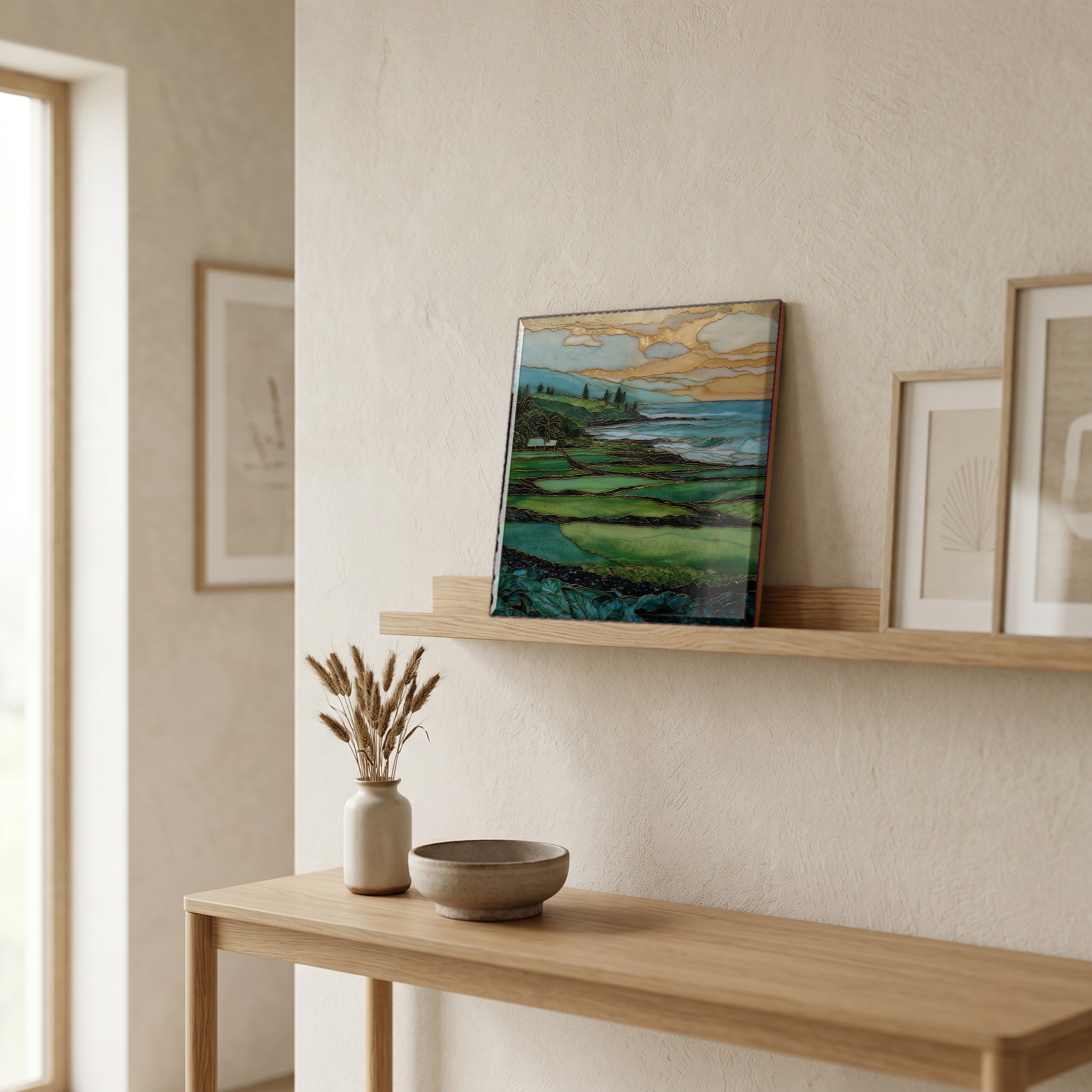
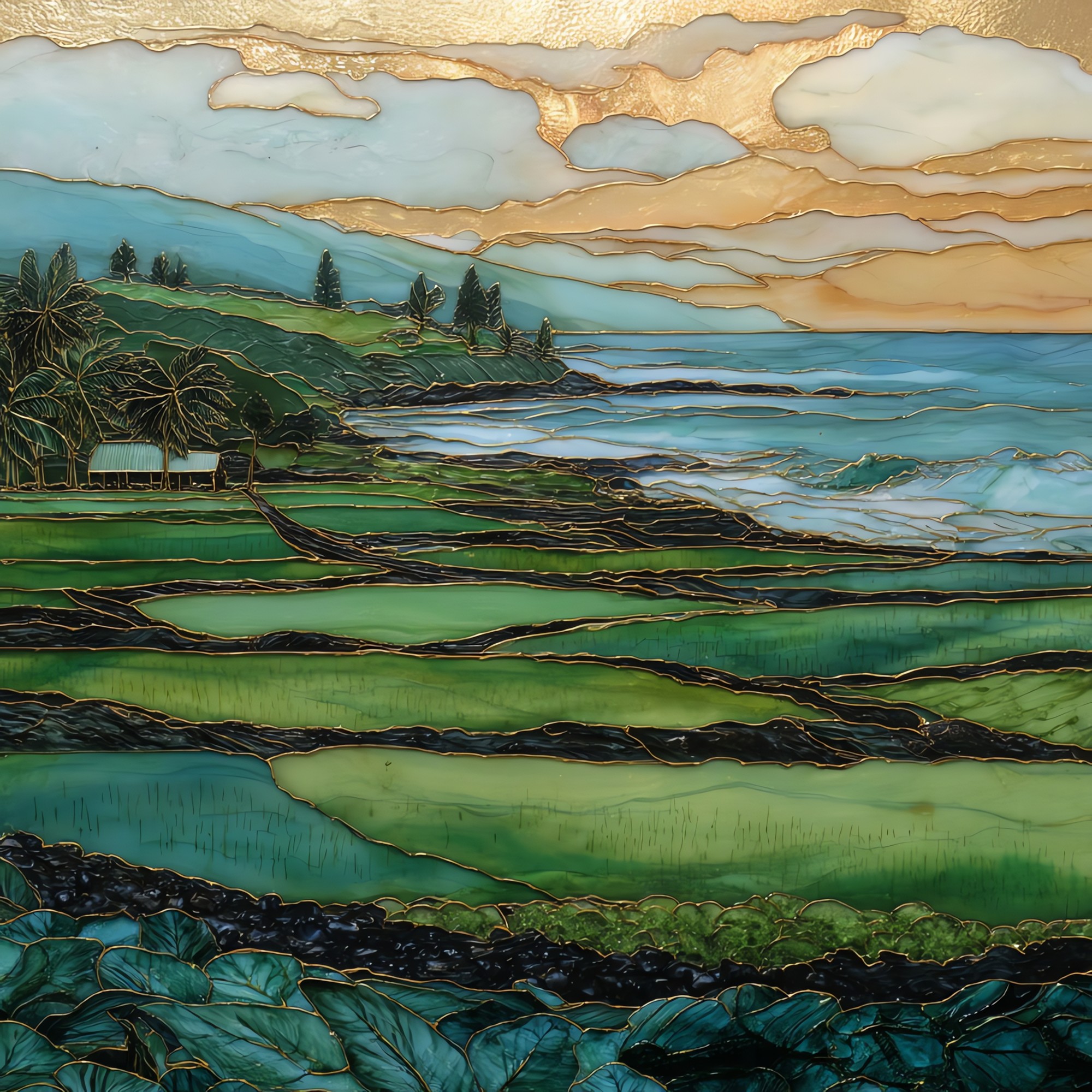
Keanae Peninsula Maui Ceramic Art Tile
shown on ceramic, 12-inch tileHawaii · United States
on the windward coast of Maui, halfway to Hana

Keanae Peninsula Maui Ceramic Art Tile

the green that grew on the lava.

Where it lives

Not only on a wall.

A small tile on the nightstand catching the morning. A larger one above the fire. Yours, wherever you spend the slow hours.
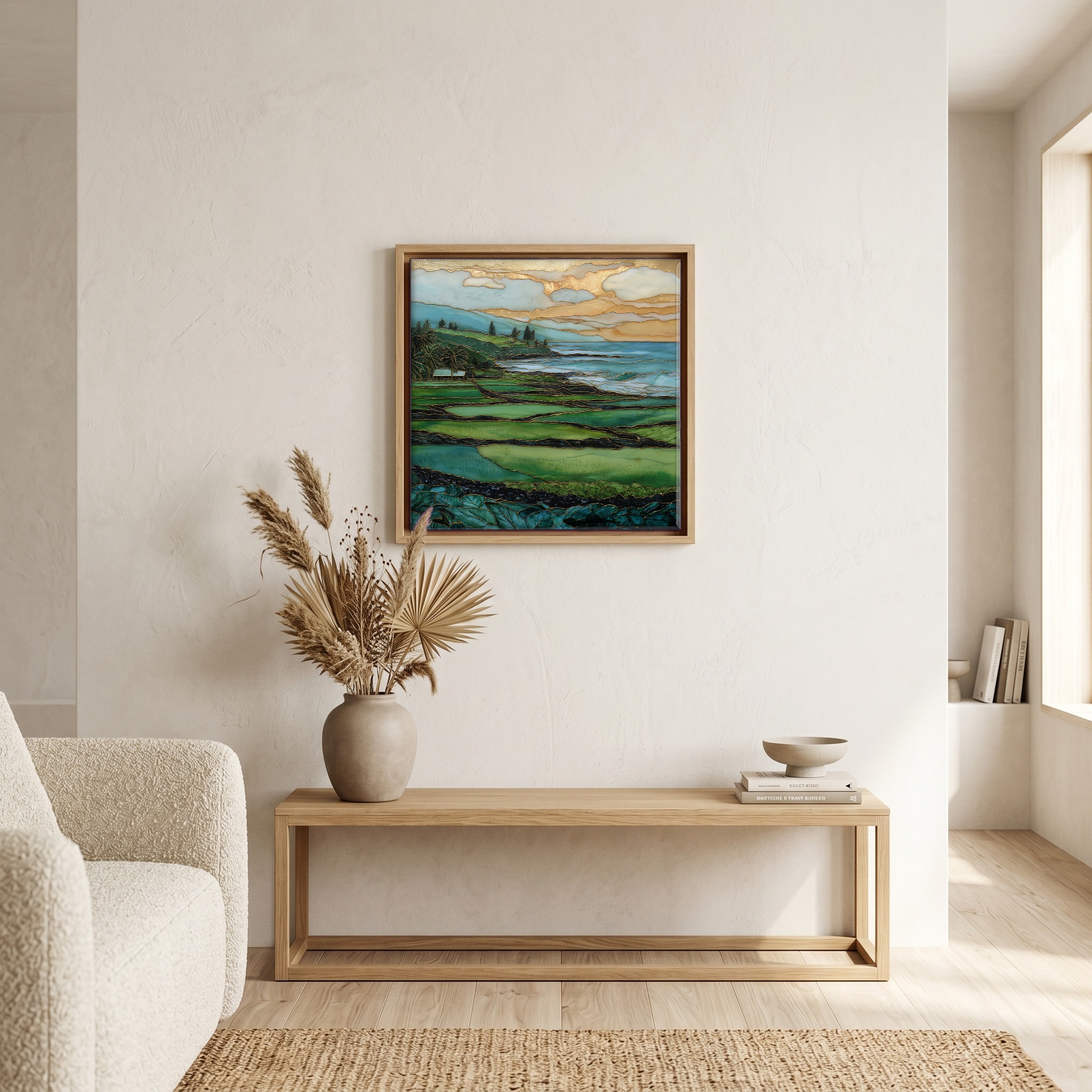
Above the bench, in a warm oak surround.
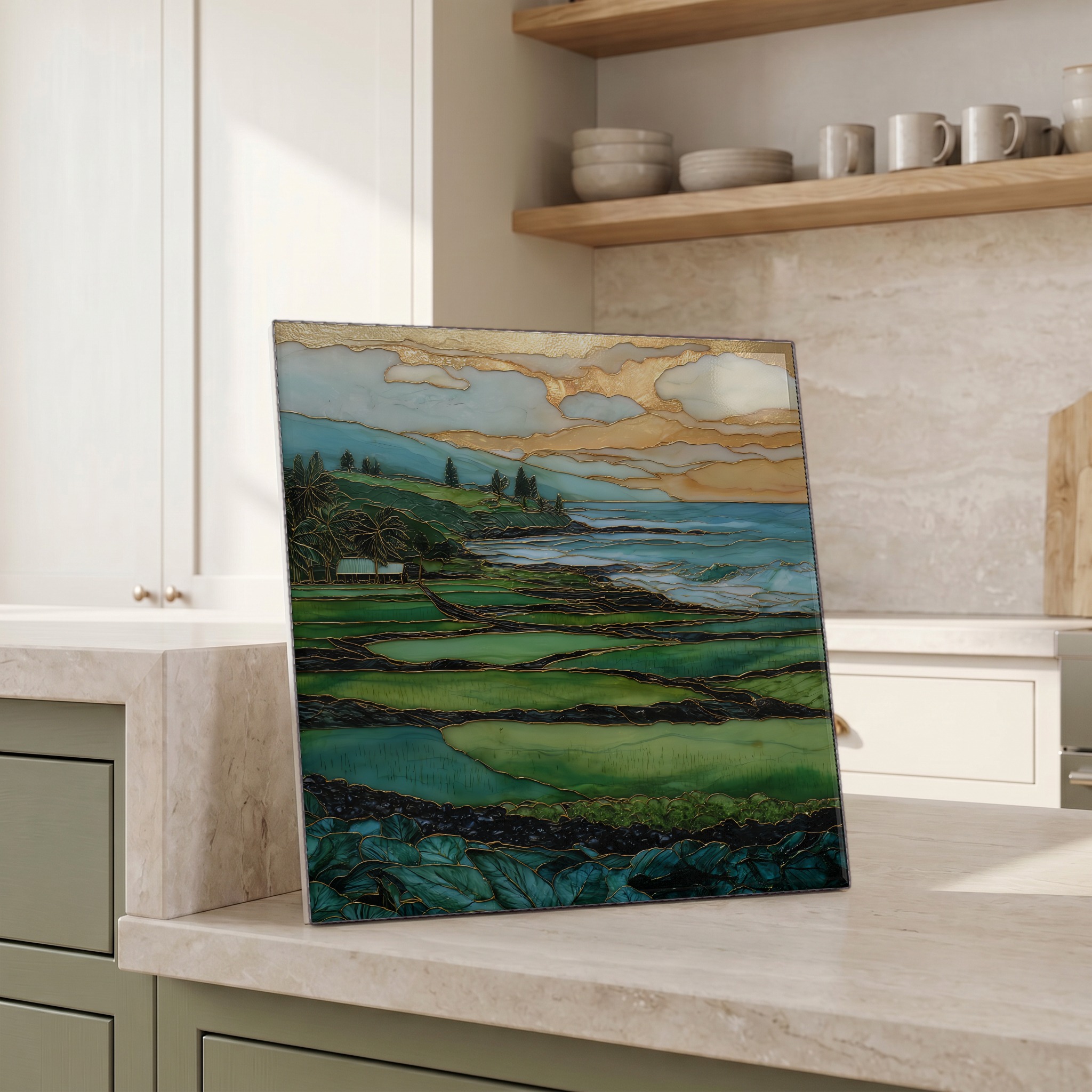
Beside the kettle, propped on the counter.
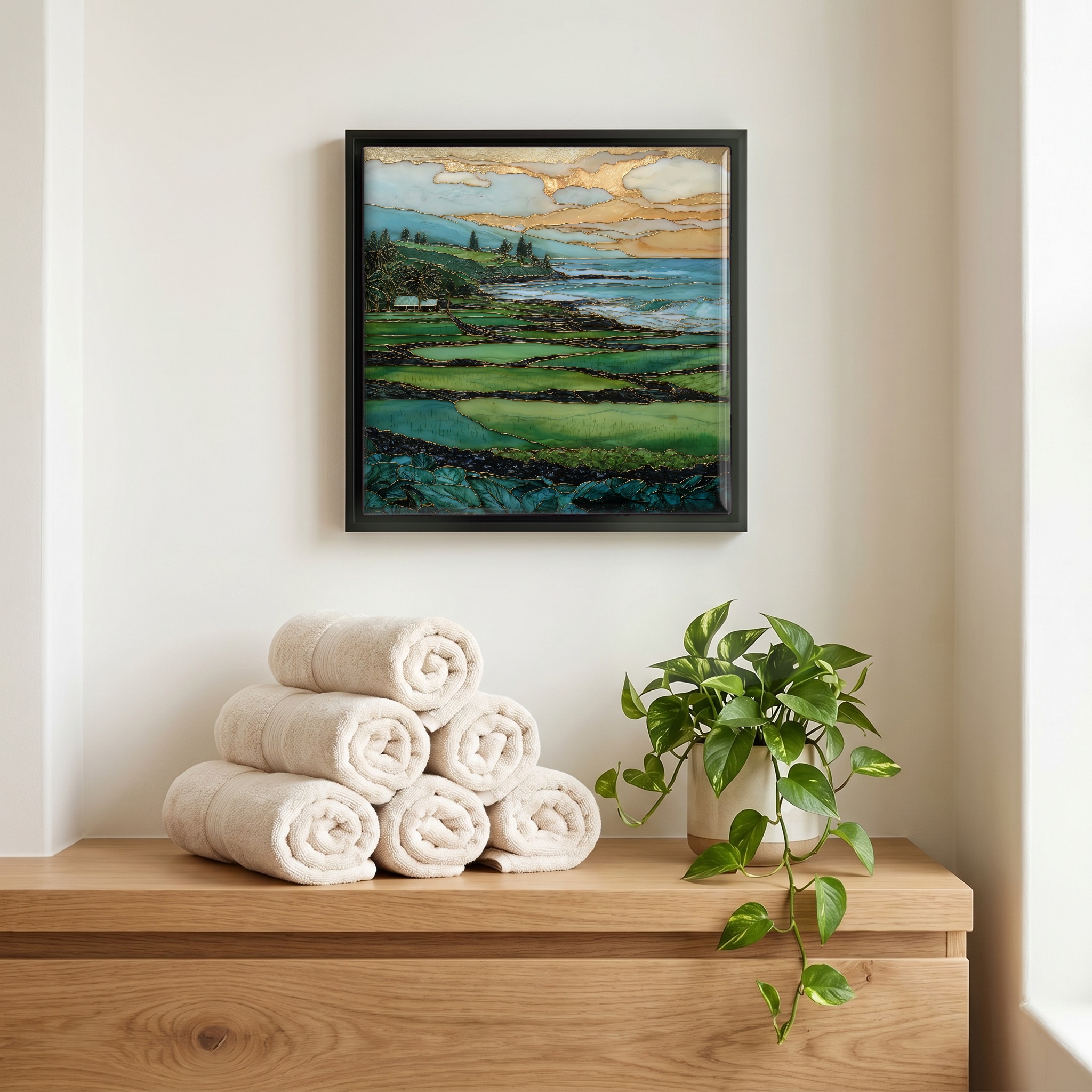
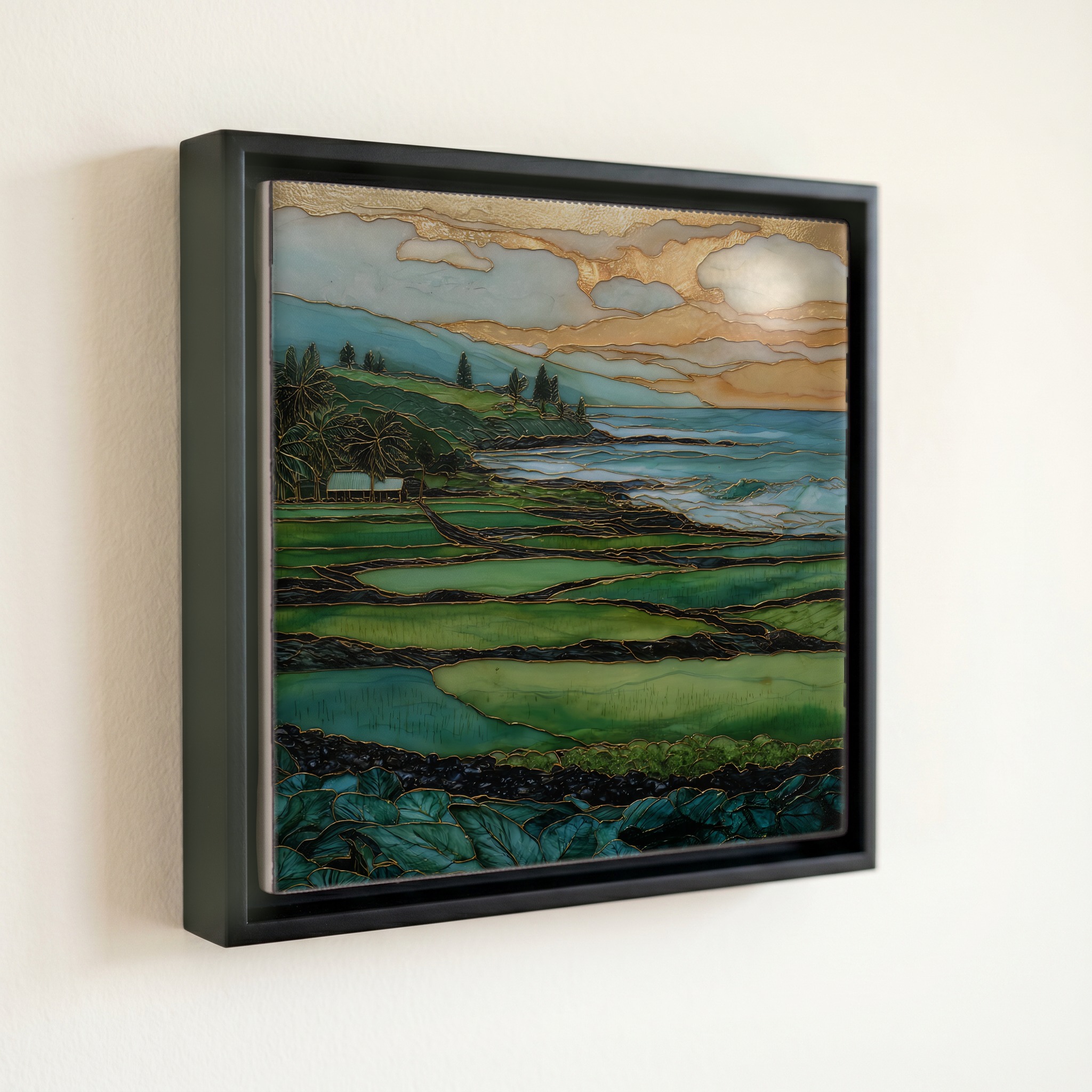
Above the linens, in a slim black surround.
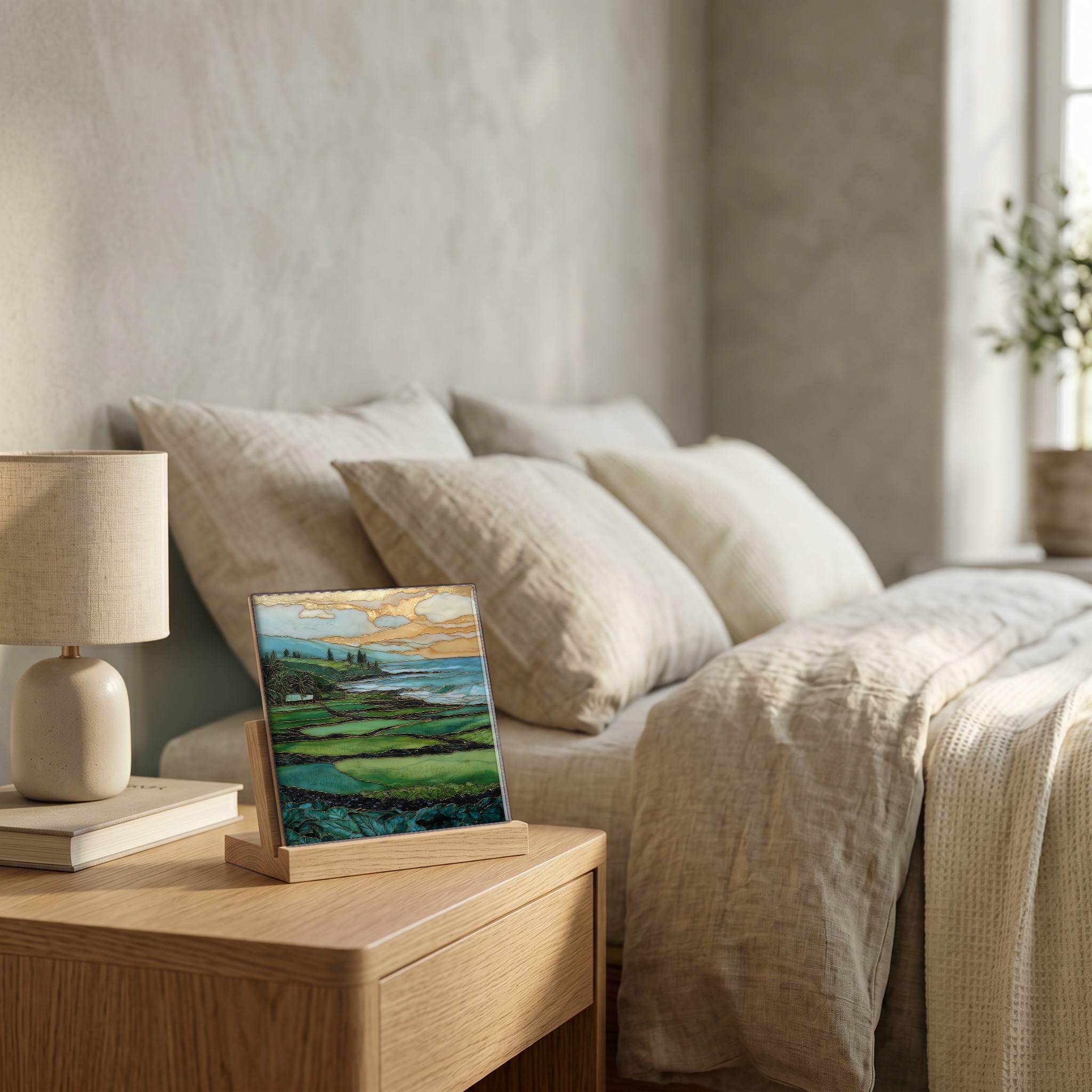
On the nightstand, on a light oak stand.
On a picture ledge, where the light comes in.
a note from the studio

A flat black peninsula reaching into the Pacific on Maui's windward side, halfway down the Hana Highway. Lava came down off Haleakala and stopped here, then over generations Hawaiian families carried baskets of soil onto the rock to grow taro. The lo'i are still there, still worked. On the seaward edge a small church of coral and lava rock has stood since the 1860s. It was the only building left in the village after the 1946 tsunami. The surf hits the black rock hard enough that you can hear it from the road.
from the studio
shown in a slim black floating frame · 6 × 6 in
— bring it home

Keanae Peninsula Maui Ceramic Art Tile, on ceramic.

Each tile is finished by hand in our Knoxville studio. Artwork is slowly infused into the ceramic surface under high heat and pressure, and rests beneath a thin glossy finish. The colour lives in the surface, not on top of it.

What kind of piece?
One tile — square or rectangle.
How big?
the popular one — counter, shelf, nightstand
6 × 6 in · 15 cm · 1.6 lb
Surface finish
A clear glossy finish — the artwork reads as if under resin. Ideal for show-pieces and framed wall art.
How it sits
A hidden cleat — sits ¼″ proud of the wall.
$58
Hand-finished and shipped from our studio at the foot of the Smokies. On your wall in about ten days.
size
6 × 6 in
15 cm
weighs
1.6 lb
solid in the hand
surface
ceramic, hand-finished
art rests beneath a thin glossy finish
from
Knoxville, TN
our family studio, at the foot of the Smokies
— start a Coaster Set

Pick any four 4-inch tiles — National Parks you've been to, a Smokies set, the four seasons of one place. $ for a set of , cork-backed, ready to live on the table.
comes gift-ready
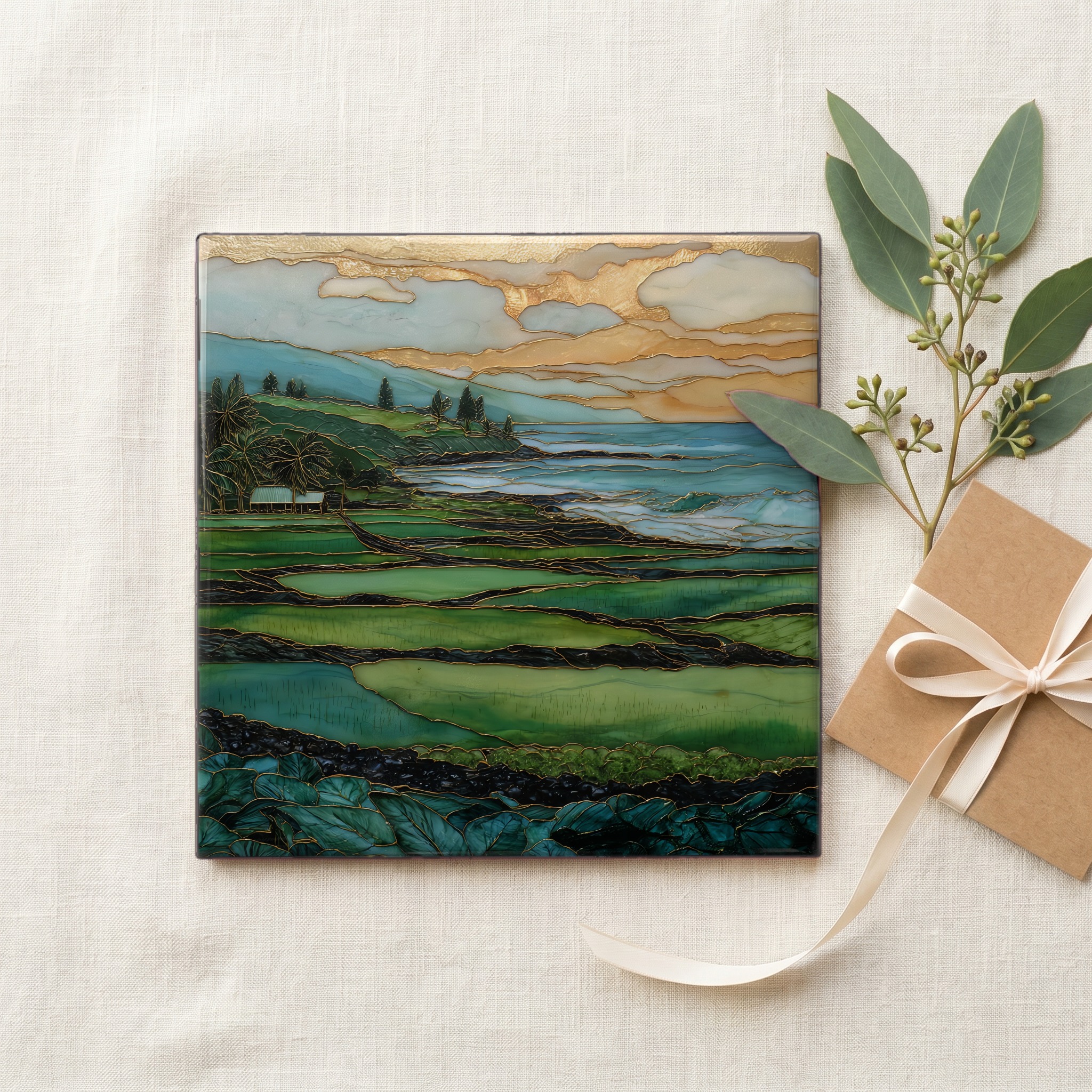
comes gift-ready

Each tile ships in a kraft box, tied with cream ribbon, with a handwritten note from the studio if you'd like to add one.
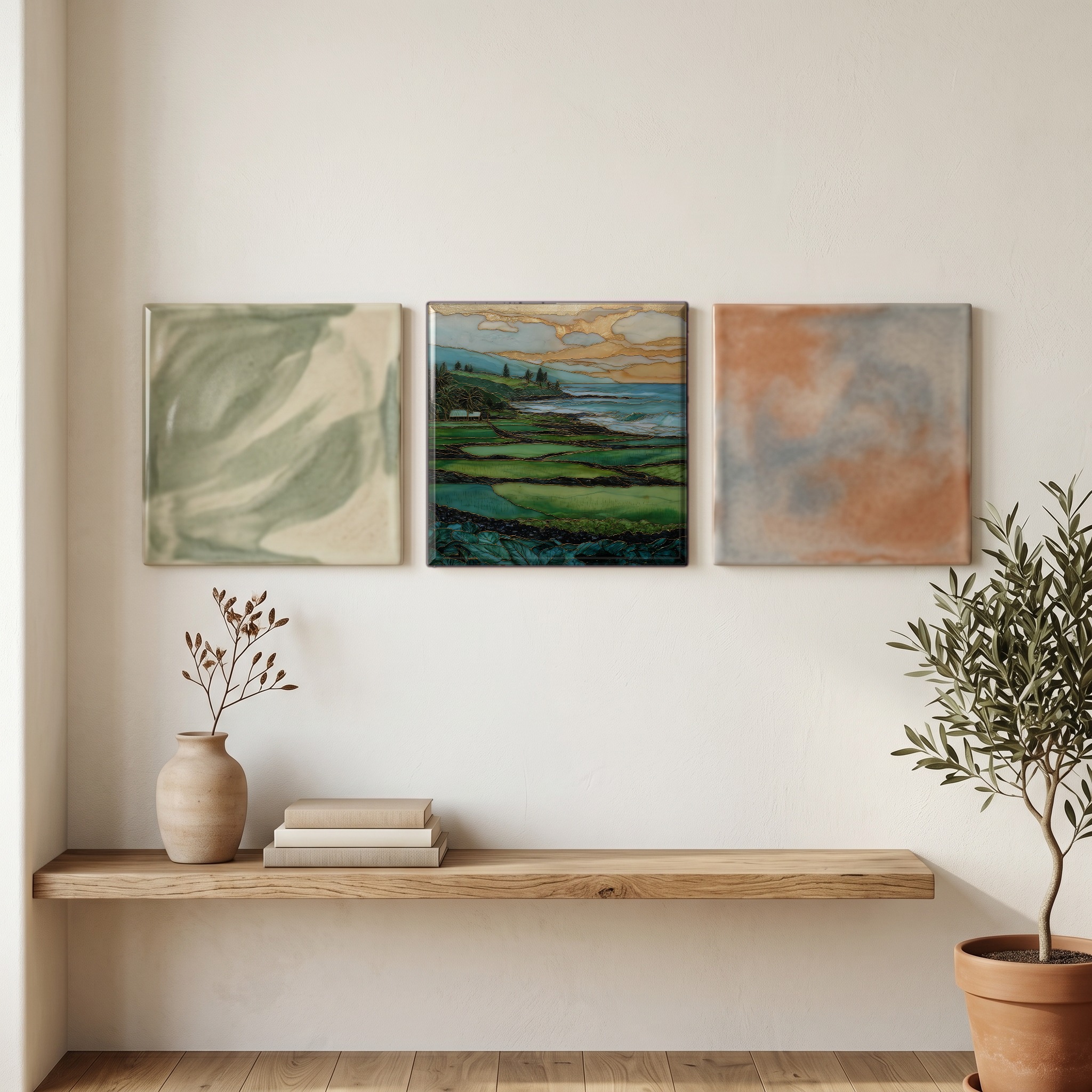
or build a grouping
or build a grouping

Three or five different vistas, hung together — a chapter of places you've been, or want to go.

about Keanae Peninsula Maui Ceramic Art Tile

The place, in three passes.

A little of what's known, in case you fall down the rabbit hole — or want to go see it yourself.
the place

Keanae Peninsula juts out from East Maui's windward coast about halfway along the Hana Highway, just past mile marker 16. The peninsula itself was built by a lava flow from Haleakala, the 10,023-foot shield volcano that forms the eastern two-thirds of the island. The flow stopped at the Pacific and cooled into a low, flat shelf of black rock, ringed by surf. Native Hawaiian families have farmed the peninsula for taro since long before written record, hauling baskets of soil down from the valley to make lo'i atop the lava. A small village still occupies the seaward edge.

the stone

The Lanakila 'Ihi'ihi O Iehowa O na Kaua Church, known locally as Ke'anae Congregational, has stood on the peninsula since 1860, two years into a construction that ran from 1856 to 1862. Builders cut blocks of lava rock from the peninsula and gathered coral from the seashore, raising walls twenty-eight inches thick and bracing the corners with buttresses. The roof trusses, hewn from local 'ohia, still hold. On April 1, 1946, a tsunami generated by an 8.6-magnitude earthquake off the Aleutians sent thirty-five-foot waves across the peninsula and erased every other structure in the village. The church alone was left standing.

the visit

The turnoff for Ke'anae sits on the makai (seaward) side of the Hana Highway just past mile marker 16, roughly two hours from Kahului. A narrow road descends through taro fields to the peninsula and the church. There is no fee and no formal hours. The village is a working Hawaiian community. The lo'i are family-tended and the homes are private. Visitors are welcome at the church and along the coastal edge; the rest of the land is not a tourist site. Aunty Sandy's banana bread, sold from a small stand near the turnoff, is the unofficial halfway marker of the Hana drive.

where
United States · Maui County, Hawaii
position
20.8600° N · 156.1490° W
the neighborhood

What's nearby.

A handful of named places within an hour's walk or short drive. Some we've already painted; some we will.
2 km E
Wailua Valley Lookout
highway overlook
1 km E
Wailuanui
village
5 km W
Honomanu Bay
bay
7 km E
Upper Waikani Falls
waterfall
35 km SW
Haleakala
shield volcano
N
Keanae Peninsula Maui Ceramic Art Tile
Wailua Valley Lookout
Wailuanui
Honomanu Bay
Upper Waikani Falls
Haleakala
common questions

What people ask.

A few questions we get about Keanae Peninsula Maui Ceramic Art Tile — and about bringing the piece home.
about the place

Keanae is a small lava peninsula on the windward coast of East Maui, on the Hana Highway just past mile marker 16, about two hours' drive from Kahului. It sits halfway along the road to Hana and is reached by a narrow lane descending from the highway through taro fields.

The peninsula was built by a lava flow from Haleakala, the 10,023-foot shield volcano that forms the eastern two-thirds of Maui. The flow poured down the mountain, spilled into the Pacific, and cooled into the flat, jagged shelf of black rock that the village now sits on.

On April 1, 1946, a tsunami generated by an 8.6-magnitude earthquake off the Aleutians sent thirty-five-foot waves across the peninsula. The village was almost entirely destroyed and lost twenty children and four teachers. The disaster led to the creation of the Pacific Tsunami Warning Center.

Lanakila 'Ihi'ihi O Iehowa O na Kaua Church, built between 1856 and 1862 from lava rock and coral, has twenty-eight-inch walls braced by corner buttresses. When the 1946 tsunami erased the rest of the village, the church alone held. The original 'ohia trusses still support the roof.

The lo'i kalo at Keanae grow taro, a staple of traditional Hawaiian agriculture. Generations of families carried baskets of valley soil onto the lava to make the fields plantable. The patches are still family-tended, fed by streams running off the Ko'olau side of Haleakala.

Keanae is a working Hawaiian community, not a tourist site. Visitors are welcome at Ke'anae Congregational Church and along the coastal edge of the peninsula, but the taro fields and homes are private. Aunty Sandy's banana bread stand near the turnoff is the customary stop.

Mornings tend to be clearer than afternoons on the windward coast. Driving east in the early morning puts the light at your back and lets you reach Keanae before the tour vans build up around mile marker 16. The road is paved and open through winter, though heavy rain can slow it.

about the piece in your home

It carries well for someone who knows the windward coast. Many of our customers send a Keanae piece to a parent or grandparent who drove the Hana road in younger years, or to family with roots in East Maui. A Small or Medium with a handwritten note from the studio is a steady choice.

The piece sits well in coastal-modern, biophilic, and jewel-tone interiors. The black lava, deep green taro, and surf-white of the artwork ground a room without the predictable blue-and-tan beach palette. It pairs with rattan, oiled teak, and ceramics in unglazed clay tones.

Yes. Biophilic design has moved toward darker, more grounded greens and away from leaf-print neutrals. The taro and lava palette of the Keanae artwork carries that direction without reading as decorative greenery. It also works in island-modern and Pacific coastal rooms.

Above a standard sofa, a single Large tile or a four-tile Mural fills the space comfortably. Above a console or entryway table, a Medium reads at the right scale. For a feature wall, a nine-tile Mural carries the full peninsula at architectural size.

Yes, with the Dura Satin or Matte finish. Both are made for backsplashes, shower walls, and humid rooms, scratch-resistant, with the colour infused into the ceramic surface. Reserve the Glossy finish for framed wall pieces in dry rooms.

A microfibre cloth and water are enough for everyday cleaning. For Dura Satin or Matte tiles installed as splash or shower surfaces, a mild non-abrasive cleaner is safe. Avoid scouring pads and acidic cleaners.

Yes. Every WenderVista piece is from Reid Wender's own painted atlas of places, hand-finished in the Knoxville studio. The Keanae artwork is not licensed from a stock library and not reproduced from a photograph. It exists only as a WenderVista tile.

if this one stayed with you

A few you might also love.

Hand-picked by the eye that found Sorapis. Same air, same kind of quiet.