Wender·Vista
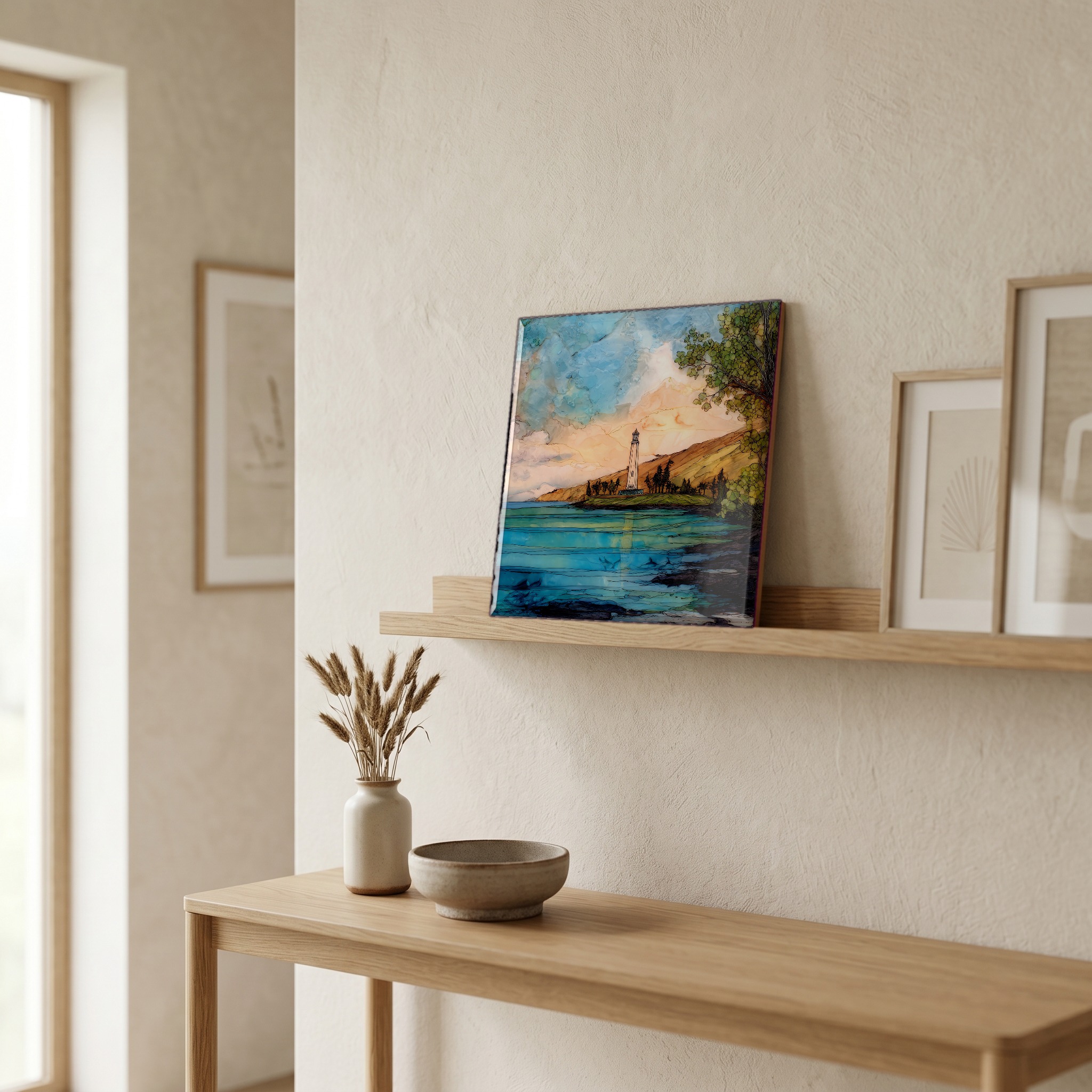
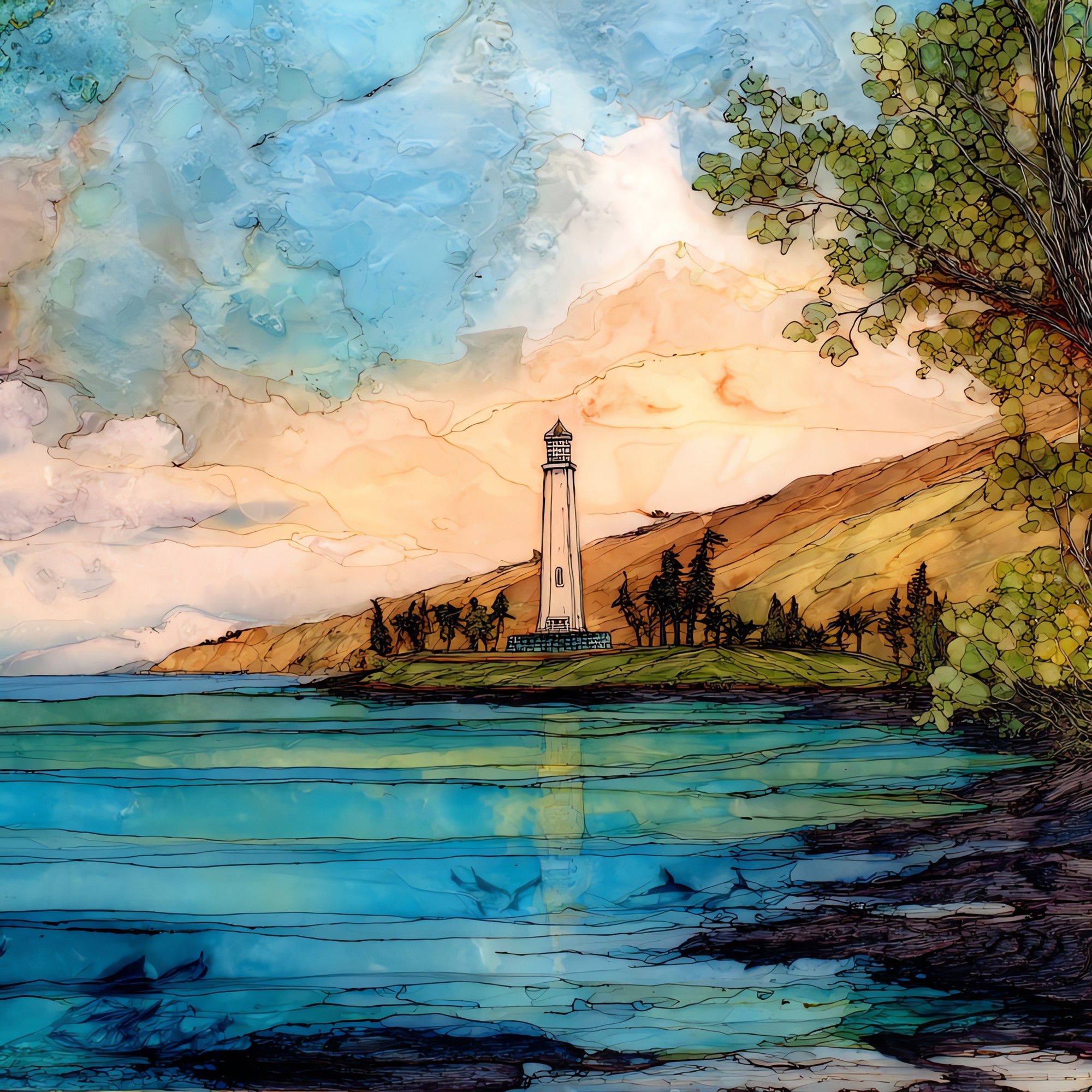
Kealakekua Bay Big Island Ceramic Art Tile
shown on ceramic, 12-inch tileHawaii · United States
on the South Kona coast of Hawaii Island

Kealakekua Bay Big Island Ceramic Art Tile

— the water the cliffs keep still.

Where it lives

Not only on a wall.

A small tile on the nightstand catching the morning. A larger one above the fire. Yours, wherever you spend the slow hours.
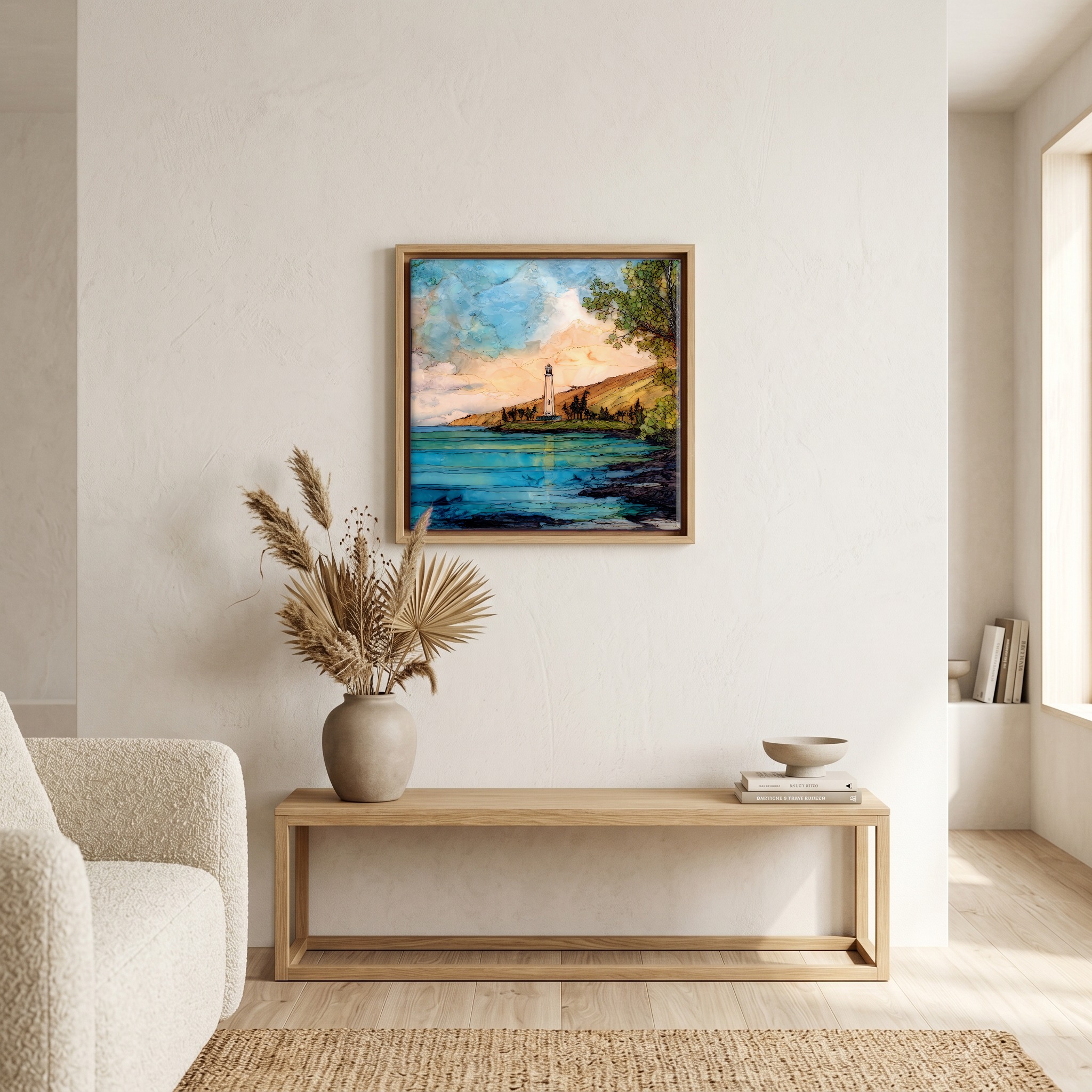
Above the bench, in a warm oak surround.
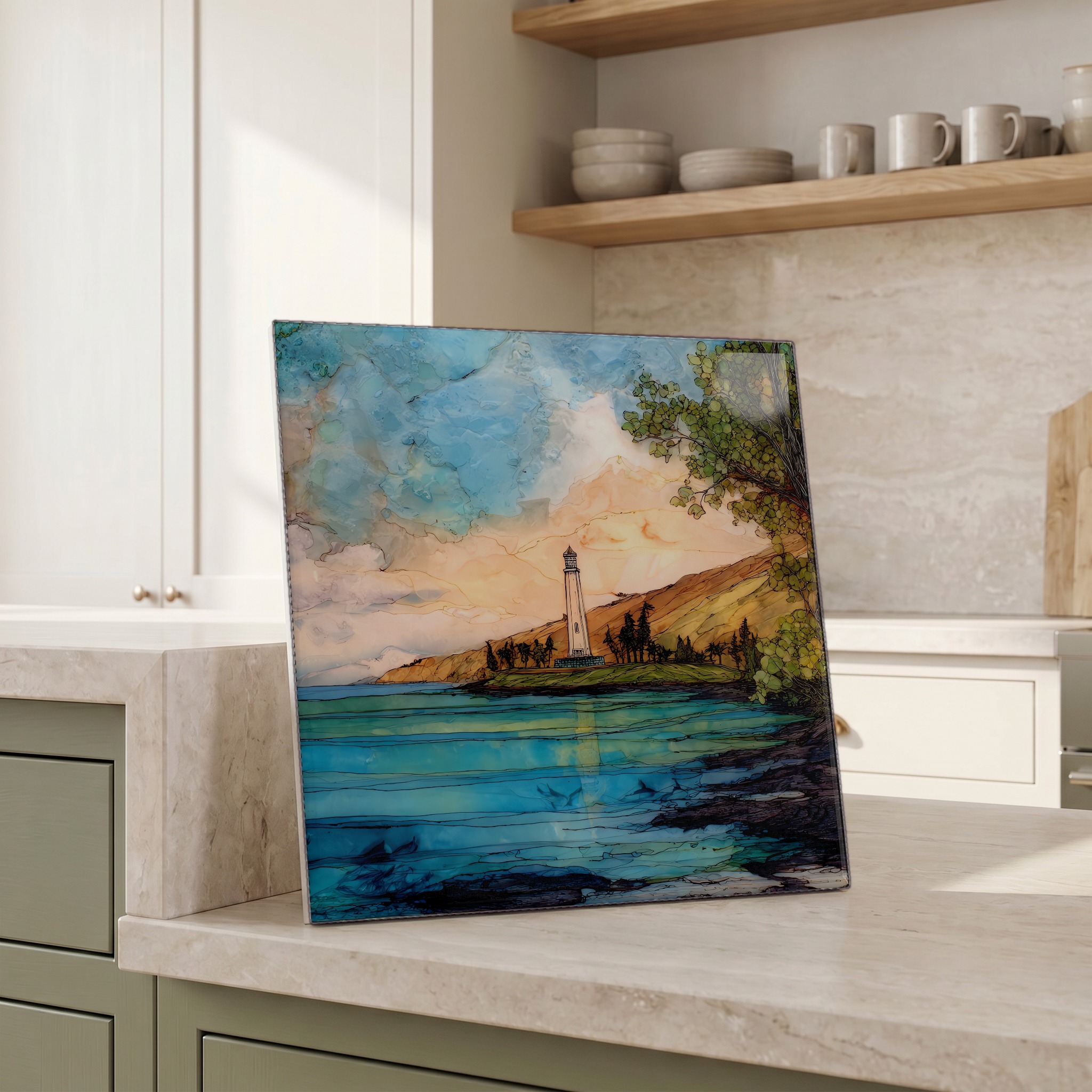
Beside the kettle, propped on the counter.
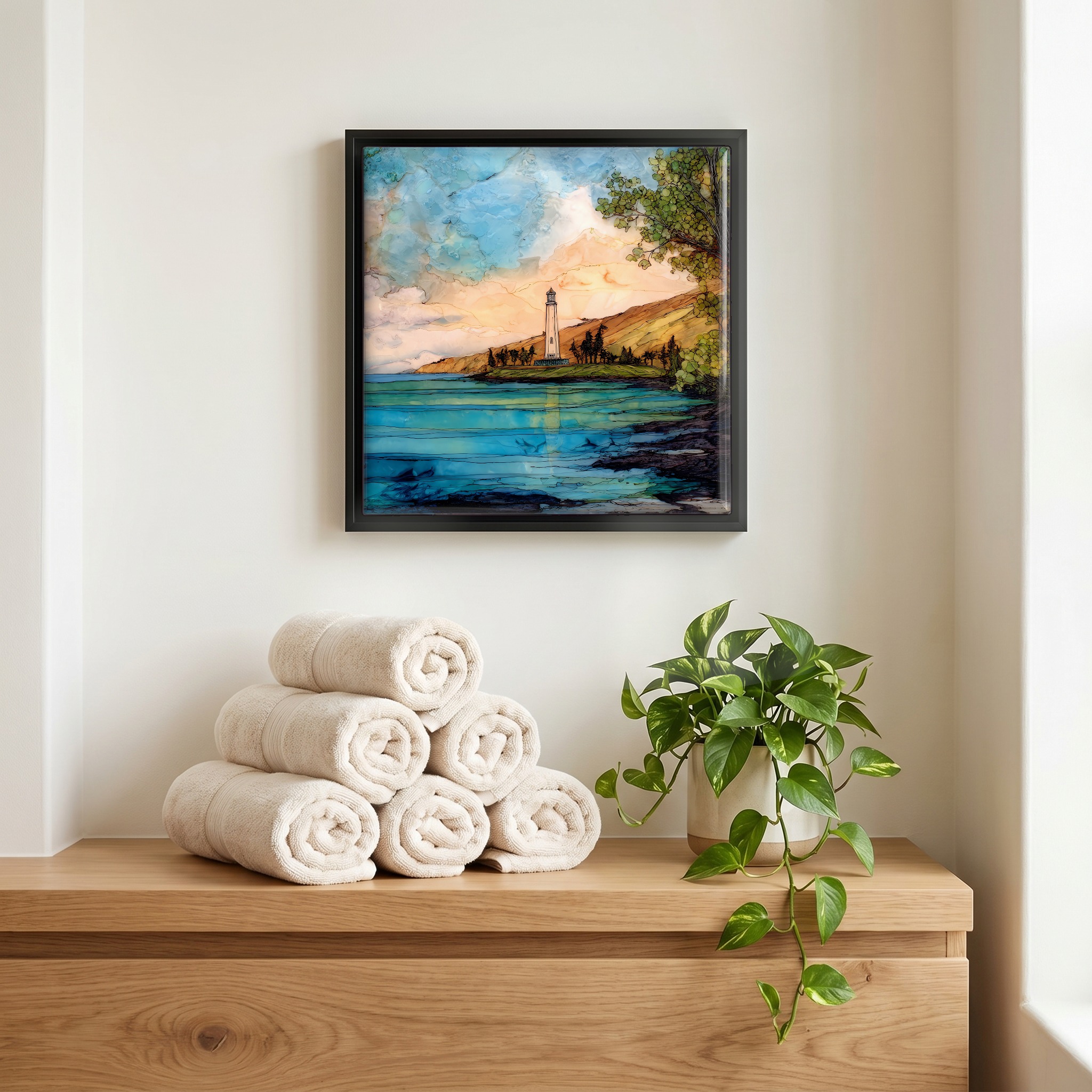
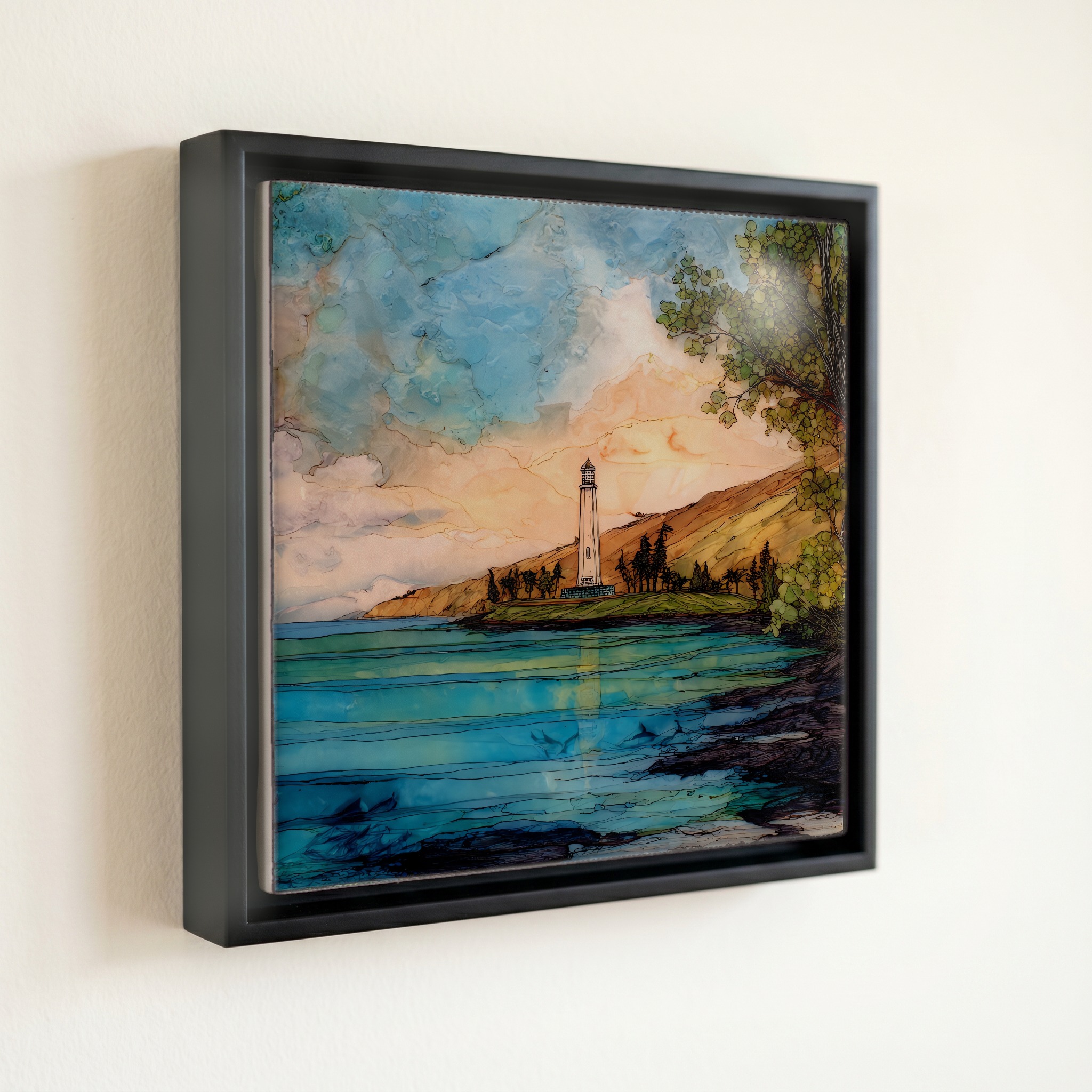
Above the linens, in a slim black surround.
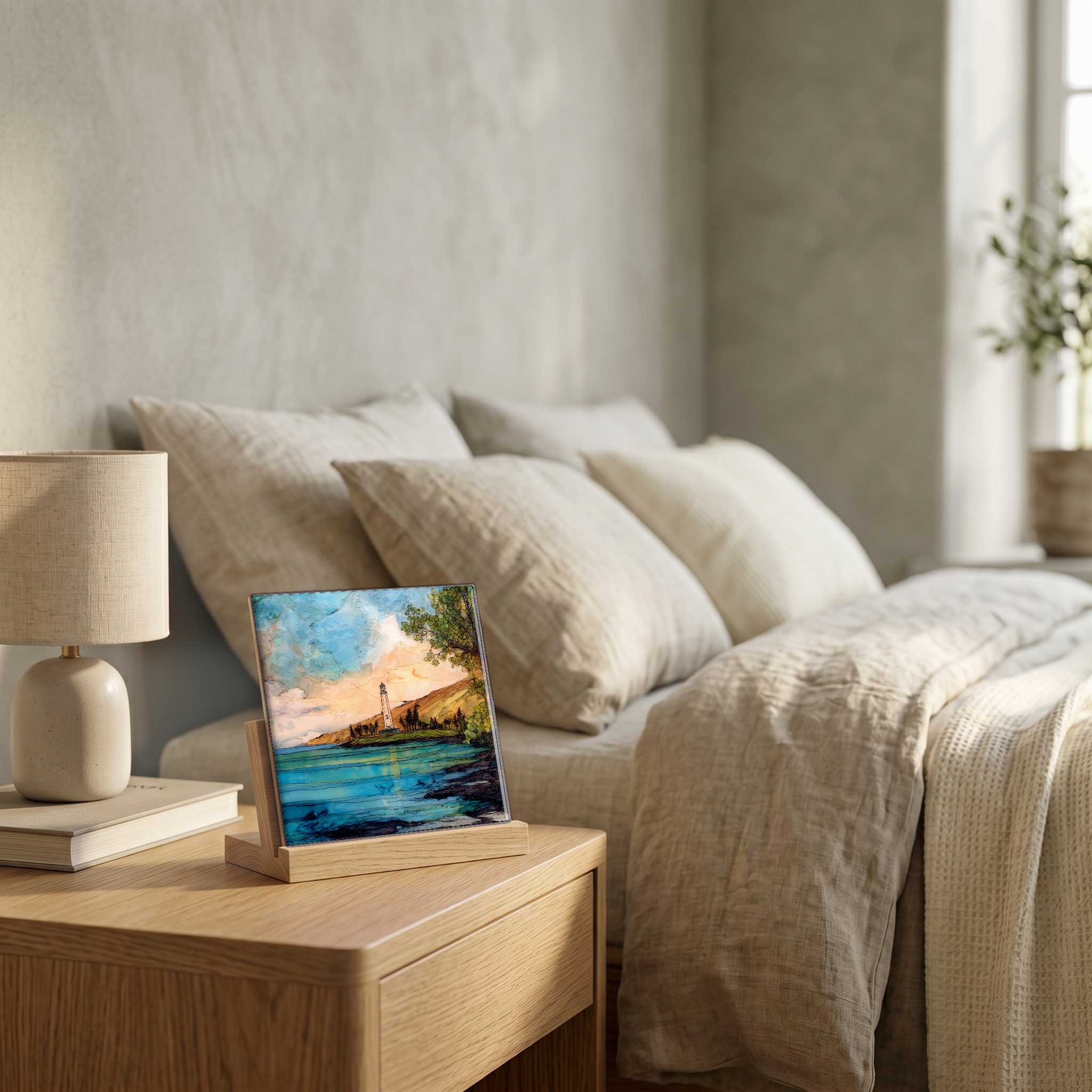
On the nightstand, on a light oak stand.
On a picture ledge, where the light comes in.
a note from the studio

A sheltered bay on the South Kona coast, where six-hundred-foot sea cliffs fall straight into water that stays glass-still for most of the morning. The kayaks put in at Napo'opo'o on the south side and paddle across to the white obelisk at Ka'awaloa, where Captain Cook came ashore in 1779. Spinner dolphins sometimes pass through at first light. The Hawaiian name means a pathway of the gods. A protected place. People speak quietly here, on the water and on the trail down.
from the studio
shown in a slim black floating frame · 6 × 6 in
— bring it home

Kealakekua Bay Big Island Ceramic Art Tile, on ceramic.

Each tile is finished by hand in our Knoxville studio. Artwork is slowly infused into the ceramic surface under high heat and pressure, and rests beneath a thin glossy finish. The colour lives in the surface, not on top of it.

What kind of piece?
One tile — square or rectangle.
How big?
the popular one — counter, shelf, nightstand
6 × 6 in · 15 cm · 1.6 lb
Surface finish
A clear glossy finish — the artwork reads as if under resin. Ideal for show-pieces and framed wall art.
How it sits
A hidden cleat — sits ¼″ proud of the wall.
$58
Hand-finished and shipped from our studio at the foot of the Smokies. On your wall in about ten days.
size
6 × 6 in
15 cm
weighs
1.6 lb
solid in the hand
surface
ceramic, hand-finished
art rests beneath a thin glossy finish
from
Knoxville, TN
our family studio, at the foot of the Smokies
— start a Coaster Set

Pick any four 4-inch tiles — National Parks you've been to, a Smokies set, the four seasons of one place. $ for a set of , cork-backed, ready to live on the table.
comes gift-ready
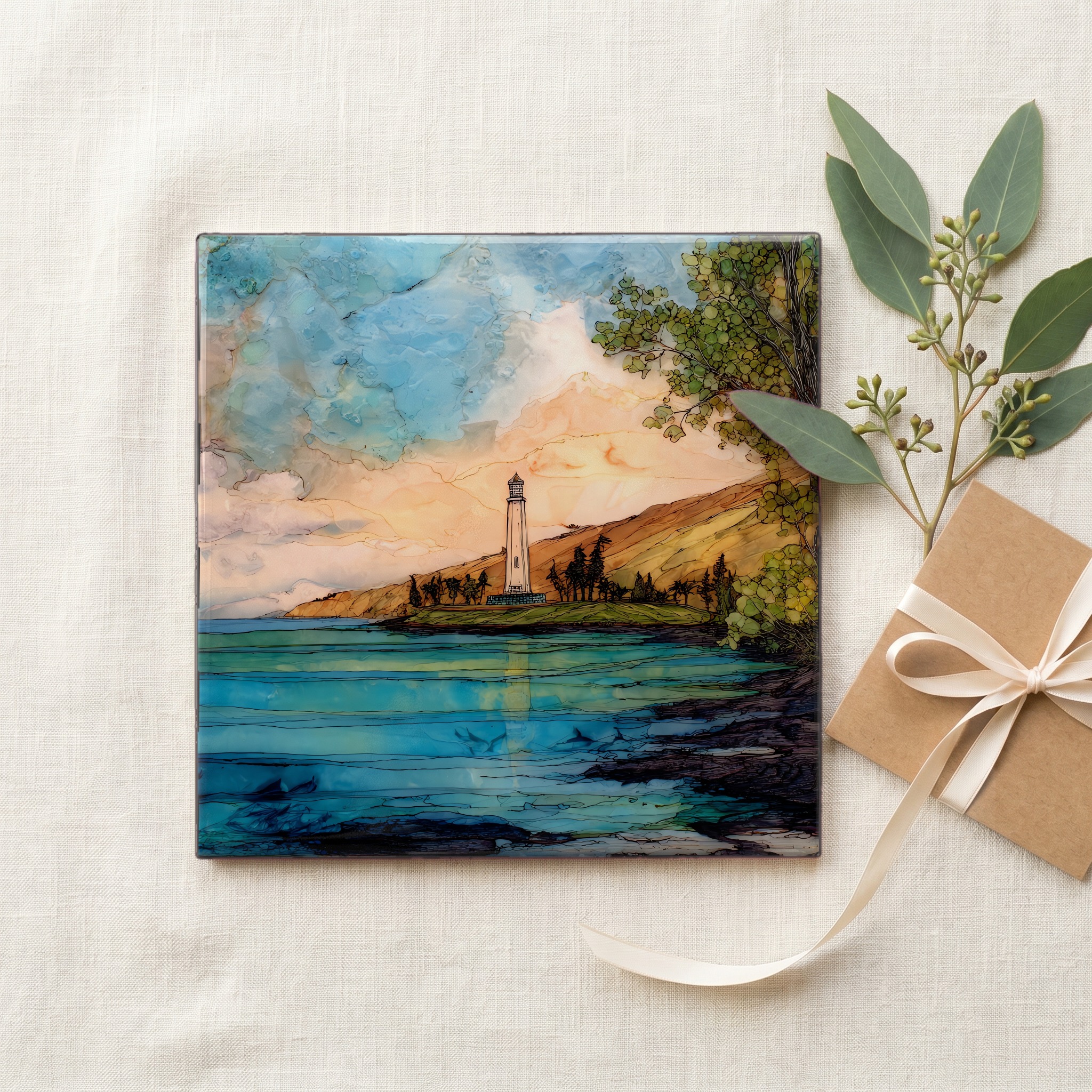
comes gift-ready

Each tile ships in a kraft box, tied with cream ribbon, with a handwritten note from the studio if you'd like to add one.
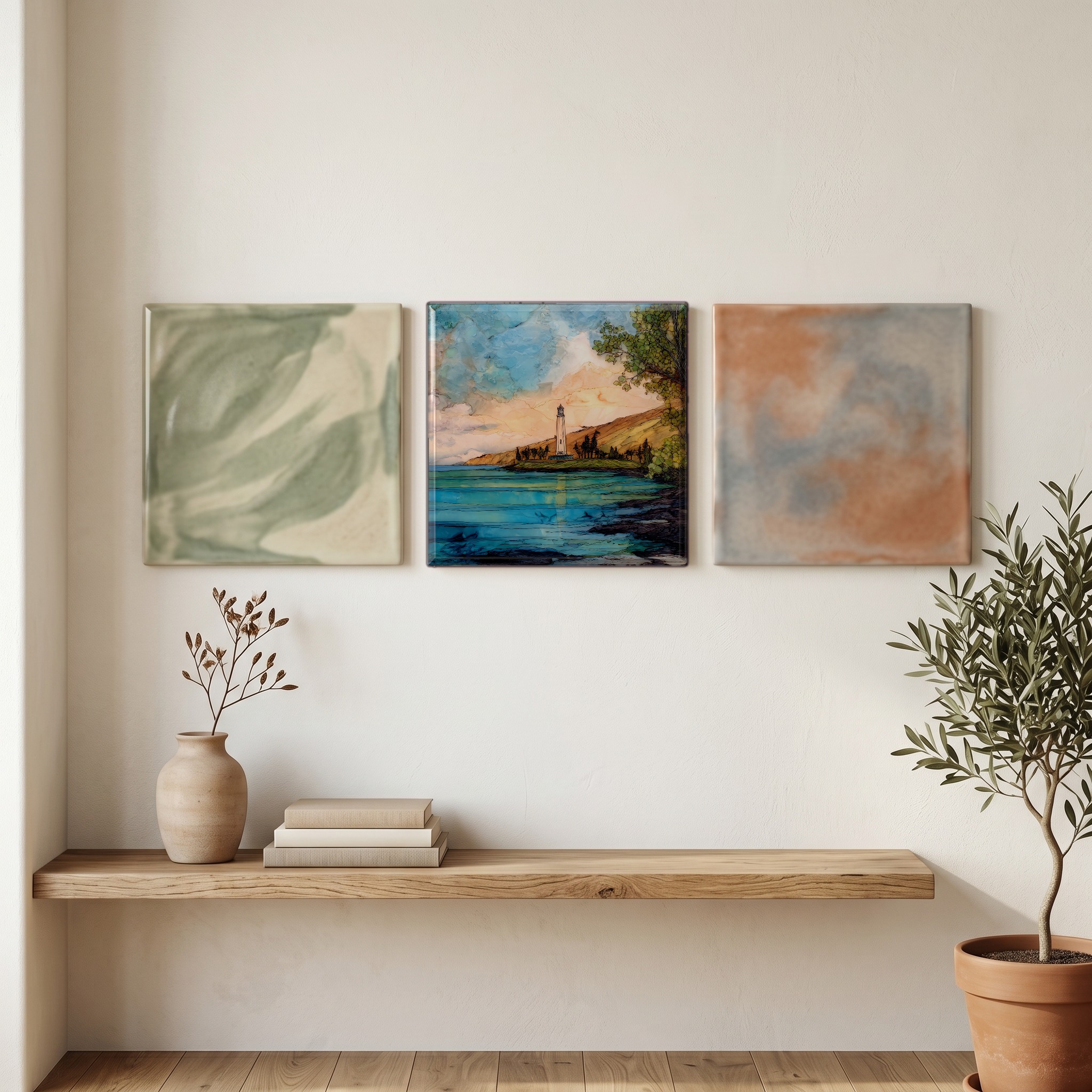
or build a grouping
or build a grouping

Three or five different vistas, hung together — a chapter of places you've been, or want to go.

about Kealakekua Bay Big Island Ceramic Art Tile

The place, in three passes.

A little of what's known, in case you fall down the rabbit hole — or want to go see it yourself.
the place

Kealakekua Bay opens on the South Kona coast of Hawaii Island, about twelve miles south of Kailua-Kona. It is a 315-acre marine embayment bracketed by Ka'awaloa Point to the north and Palemano Point to the south, with sea cliffs (the pali) rising to roughly 600 feet at the back of the bay. The bay sits within Kealakekua Bay State Historical Park and was designated one of Hawaii's first Marine Life Conservation Districts in 1969. The shoreline village of Napo'opo'o is the main launch point. The name Kealakekua translates from Hawaiian as 'the pathway of the god,' a reference to the bay's long association with Lono.

— informed by Wikipedia, Hawaii State Parks
the water

The bay's defining quality is its stillness. The 600-foot cliffs behind Ka'awaloa Point block prevailing trade winds, so the surface sits glass-flat through most mornings and visibility commonly runs past 100 feet. Coral reaches close to the surface inside the conservation district, which was designated in 1969 to protect roughly 315 acres of bay and shoreline. Hawaiian spinner dolphins (nai'a) rest in the bay during daylight after feeding offshore at night; NOAA rules adopted in 2021 prohibit swimming with them within 50 yards. The state regulates commercial snorkel and kayak operators through a permit system, and landing access at Ka'awaloa Point near the Cook Monument is restricted.

the visit

Access to Kealakekua Bay falls into three modes. From Napo'opo'o on the south side, Manini Beach and the village pier offer shore entry to the bay's southern coral. The white obelisk on the north shore is the Captain Cook Monument, raised in 1874 by his countrymen on the spot where James Cook was killed on February 14, 1779. Reaching it requires either a permitted commercial kayak or boat tour, or the Ka'awaloa Trail, a steep round-trip hike of roughly 3.8 miles that descends about 1,300 feet from the highway above Napo'opo'o. Morning is the recommended window for water clarity and for spotting resting spinner dolphins.

where
United States · South Kona, Hawai'i County, Hawaii
within
Kealakekua Bay State Historical Park
elevation
0 m · 0 ft
position
19.4789° N · 155.9259° W
the neighborhood

What's nearby.

A handful of named places within an hour's walk or short drive. Some we've already painted; some we will.
5 km S
Pu'uhonua o Honaunau
National Historical Park
1 km S
Hikiau Heiau
heiau
1 km N
Captain Cook Monument
monument
1 km S
Napo'opo'o
village
5 km S
Honaunau Bay
snorkel bay
19 km N
Kailua-Kona
town
N
Kealakekua Bay Big Island Ceramic Art Tile
Pu'uhonua o Honaunau
Hikiau Heiau
Captain Cook Monument
Napo'opo'o
Honaunau Bay
Kailua-Kona
common questions

What people ask.

A few questions we get about Kealakekua Bay Big Island Ceramic Art Tile — and about bringing the piece home.
about the place

Kealakekua Bay sits on the South Kona coast of Hawaii Island, about twelve miles south of Kailua-Kona. The bay is bracketed by Ka'awaloa Point to the north and Palemano Point to the south, with the village of Napo'opo'o on the south shore. The waters are managed as Kealakekua Bay State Historical Park.

Kealakekua translates from Hawaiian as 'the pathway of the god,' referring to Lono, the Hawaiian akua of agriculture and fertility. The bay is sacred to Lono and was the site of Hikiau Heiau, a temple on the south shore where chiefs received the god during the annual Makahiki season.

Captain James Cook arrived at Kealakekua Bay on January 17, 1779, during the Makahiki festival honoring Lono. After leaving and returning to repair a broken mast, relations with the Hawaiians deteriorated. Cook was killed on the shore at Ka'awaloa on February 14, 1779, in a confrontation over a stolen cutter.

The bay is sheltered by 600-foot sea cliffs that block prevailing trade winds, keeping the surface unusually calm. Combined with the deep, narrow shape of the embayment and limited freshwater runoff, this produces visibility that commonly exceeds 100 feet on calm mornings.

The white obelisk sits on the north shore at Ka'awaloa, accessible only by water or trail. Most visitors take a commercial snorkel or kayak tour from Keauhou or Napo'opo'o. The Ka'awaloa Trail is the land route: a steep round-trip hike of roughly 3.8 miles with about 1,300 feet of elevation.

No. Hawaiian spinner dolphins use the bay as a resting site after feeding offshore at night. NOAA rules adopted in 2021 prohibit swimming, approaching, or remaining within 50 yards of the dolphins anywhere in the main Hawaiian Islands. Observation from a distance is the lawful interaction.

Hikiau Heiau is an ancient Hawaiian temple on the south shore of Kealakekua Bay at Napo'opo'o, dedicated to Lono. The stone platform is one of the largest surviving heiau on Hawaii Island and was the site where Captain Cook's officers conducted the first documented Christian service in the Hawaiian Islands in 1779.

about the piece in your home

It's been a meaningful gift for customers with Kona-side roots. Kealakekua Bay carries weight: sacred to Lono, marked by the Cook Monument, beloved by snorkelers who grew up paddling out from Napo'opo'o. A Small or Medium with a handwritten note from the studio reads warmly to someone who knows the bay.

The piece leans into deep ocean blues, coral greens, and warm volcanic browns through the studio's stained-glass and alcohol-ink language. The tile sits well with Coastal-modern, Tropical-modern, and Jewel-tone Maximalist rooms. Pairs especially with rattan, dark wood, and natural fiber; the detailing reads against a plain wall or a white-painted shiplap surround.

Yes. Coastal-modern is moving toward fewer, larger statement pieces with painterly water imagery rather than literal beach scenes or rope-and-anchor motifs. The bay's sheltered geometry and the deep stained-glass blues sit well with the direction the category has taken since 2023.

A single Large reads well above a standard console table. Above a full sofa, the four-tile Mural carries the wall; over a sectional or a long credenza, the nine-tile Mural is the proportional choice. Triptych works for tall narrow spaces such as the wall behind a stair.

Yes. For a bathroom, shower surround, or kitchen backsplash, order the Dura Satin or Matte finish, both of which are scratch-resistant and handle steam, splashes, and routine cleaning. The Glossy finish is reserved for framed pieces and dry-wall display.

A soft microfibre cloth and warm water. The colour is slowly infused into the ceramic surface under high heat and pressure and lives in the surface itself, so a thin glossy finish protects it from ordinary wear. No specialty cleaner, no abrasive pad, no need to reseal.

Yes. Every WenderVista piece is original to the studio, painted in the studio's stained-glass and alcohol-ink visual language by Reid Wender. No licensed art. No third-party imagery. The tile of Kealakekua Bay exists only here.

if this one stayed with you

A few you might also love.

Hand-picked by the eye that found Sorapis. Same air, same kind of quiet.