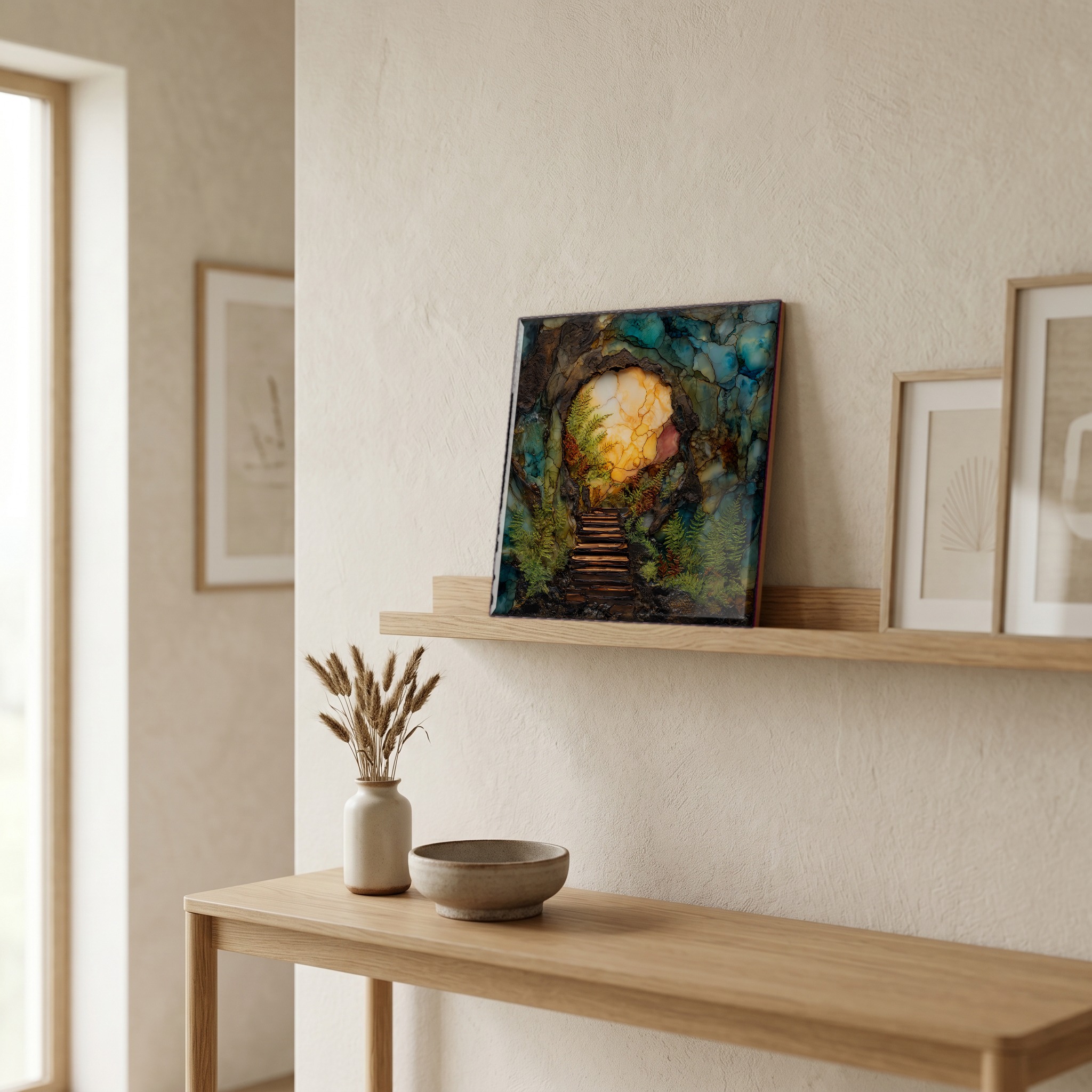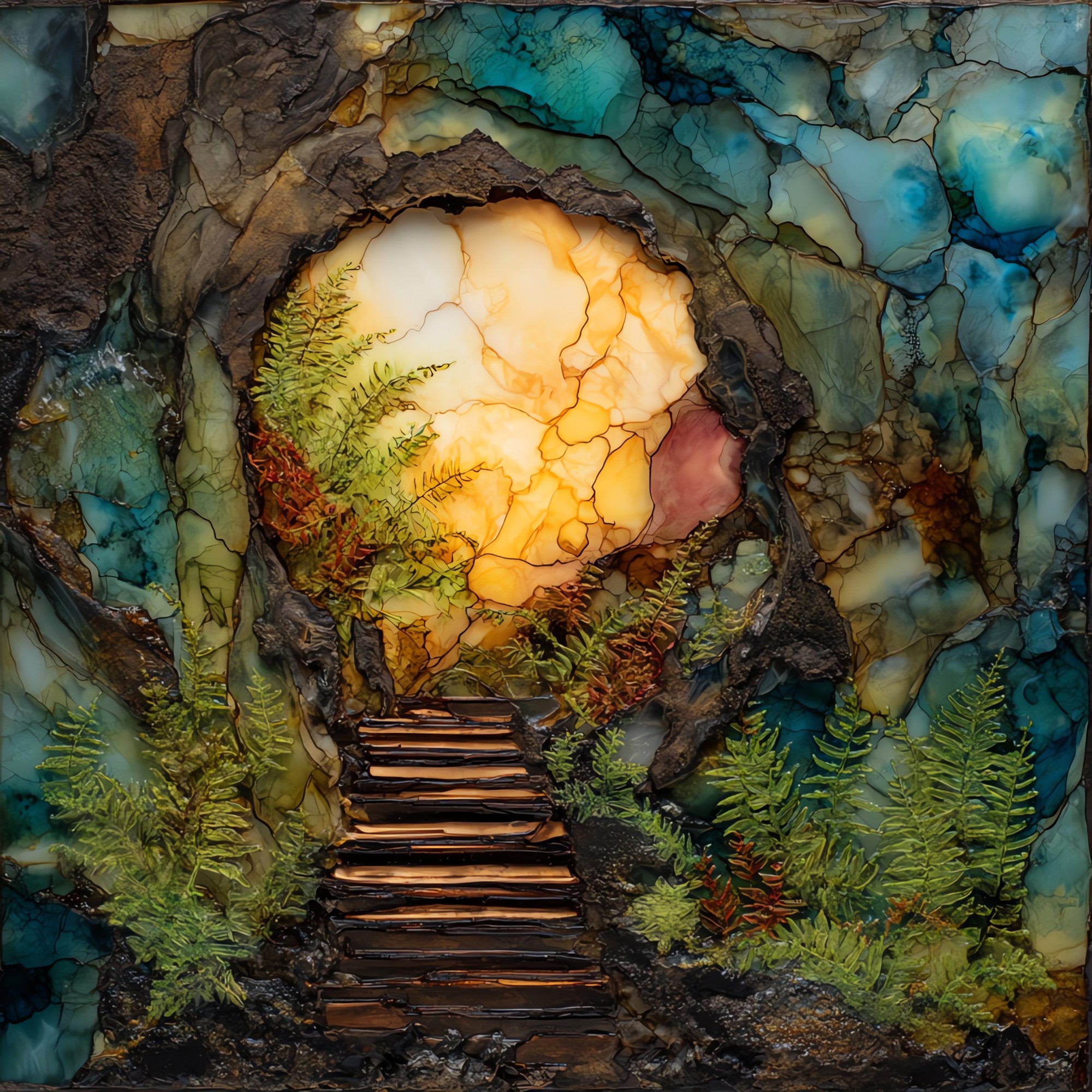
Wender·Vista
Kaumana Caves Big Island Ceramic Art Tile
shown on ceramic, 12-inch tileHawaii · United States
four miles west of Hilo, on the eastern flank of Mauna Loa

Kaumana Caves Big Island Ceramic Art Tile

a room the lava poured itself out of.

Where it lives

Not only on a wall.

A small tile on the nightstand catching the morning. A larger one above the fire. Yours, wherever you spend the slow hours.
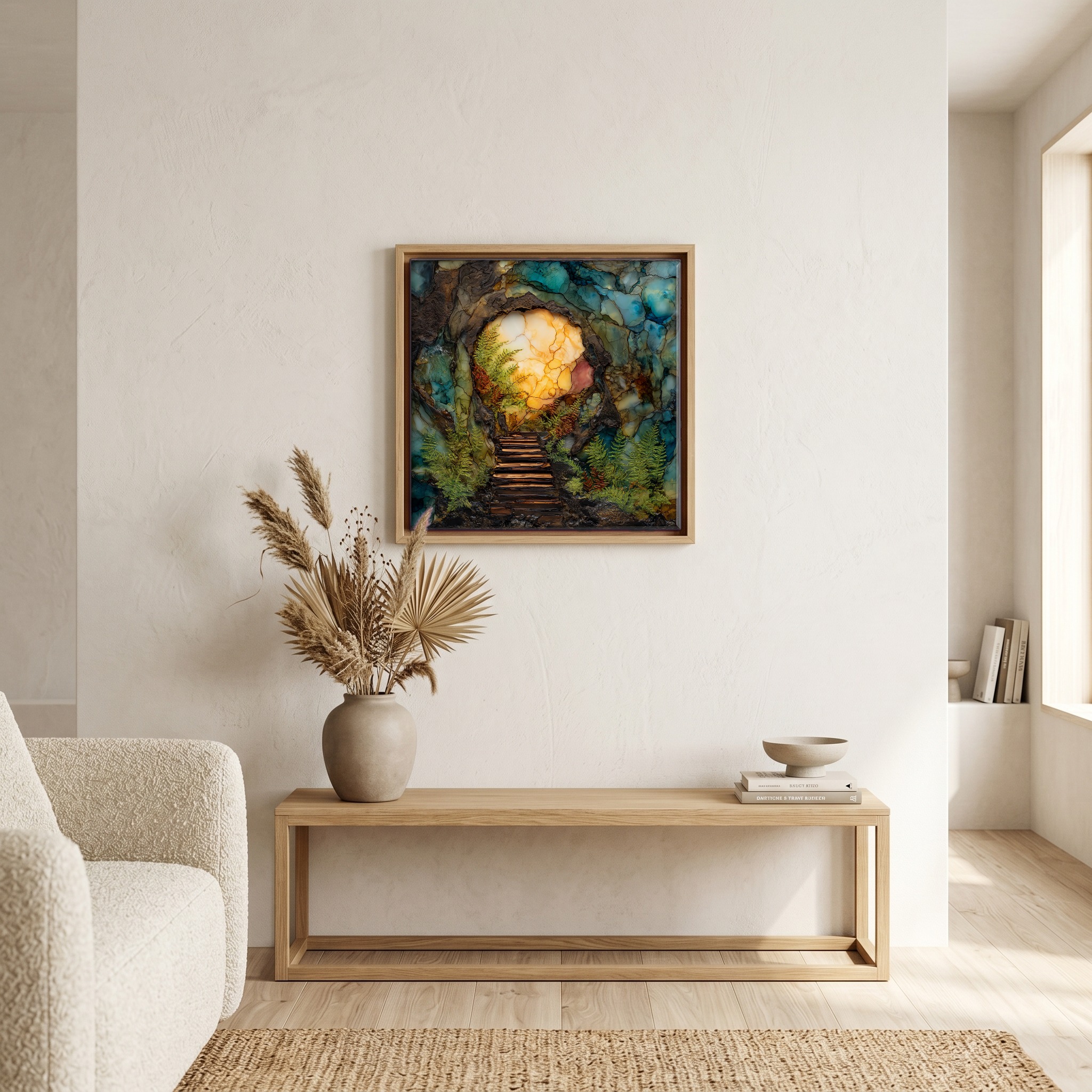
Above the bench, in a warm oak surround.
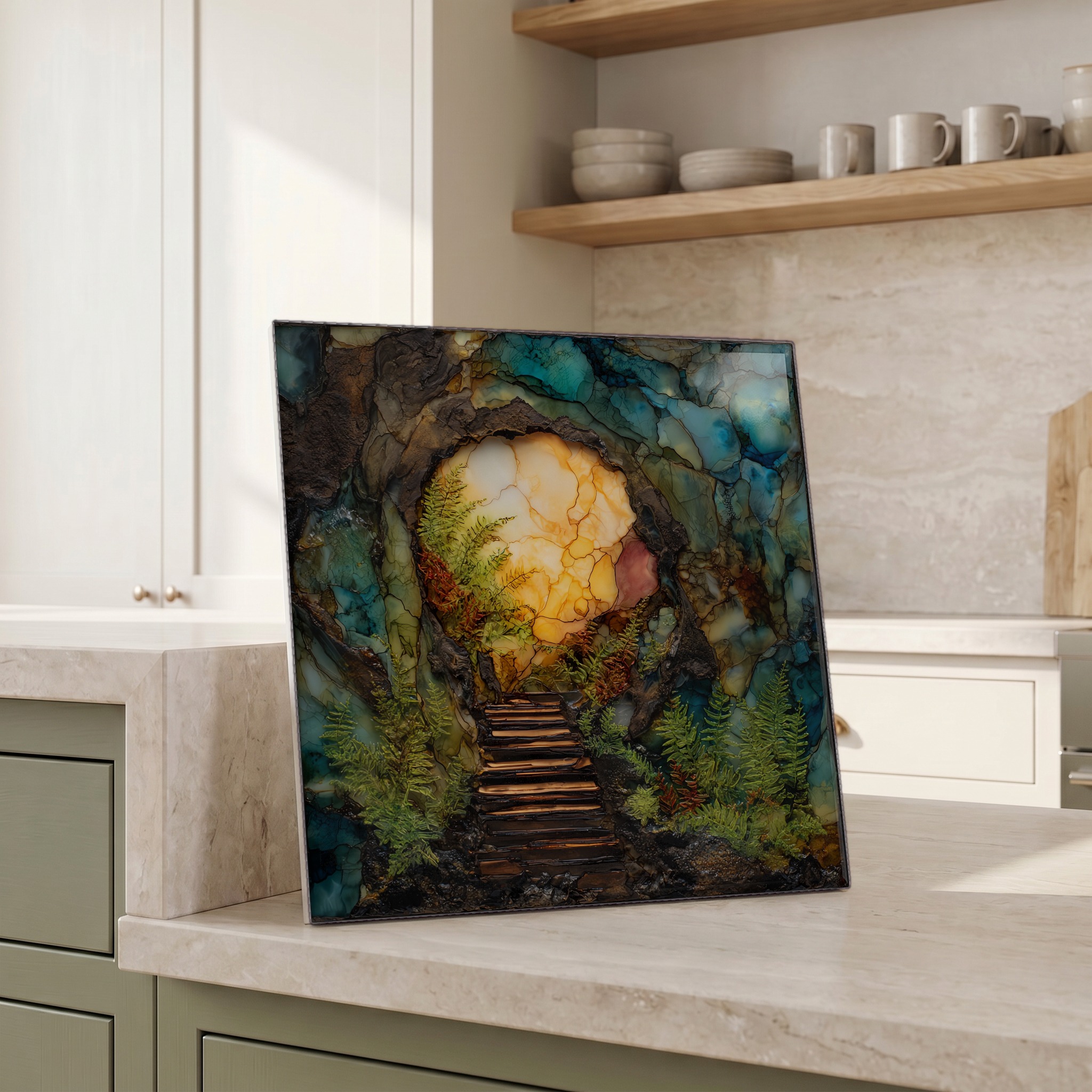
Beside the kettle, propped on the counter.
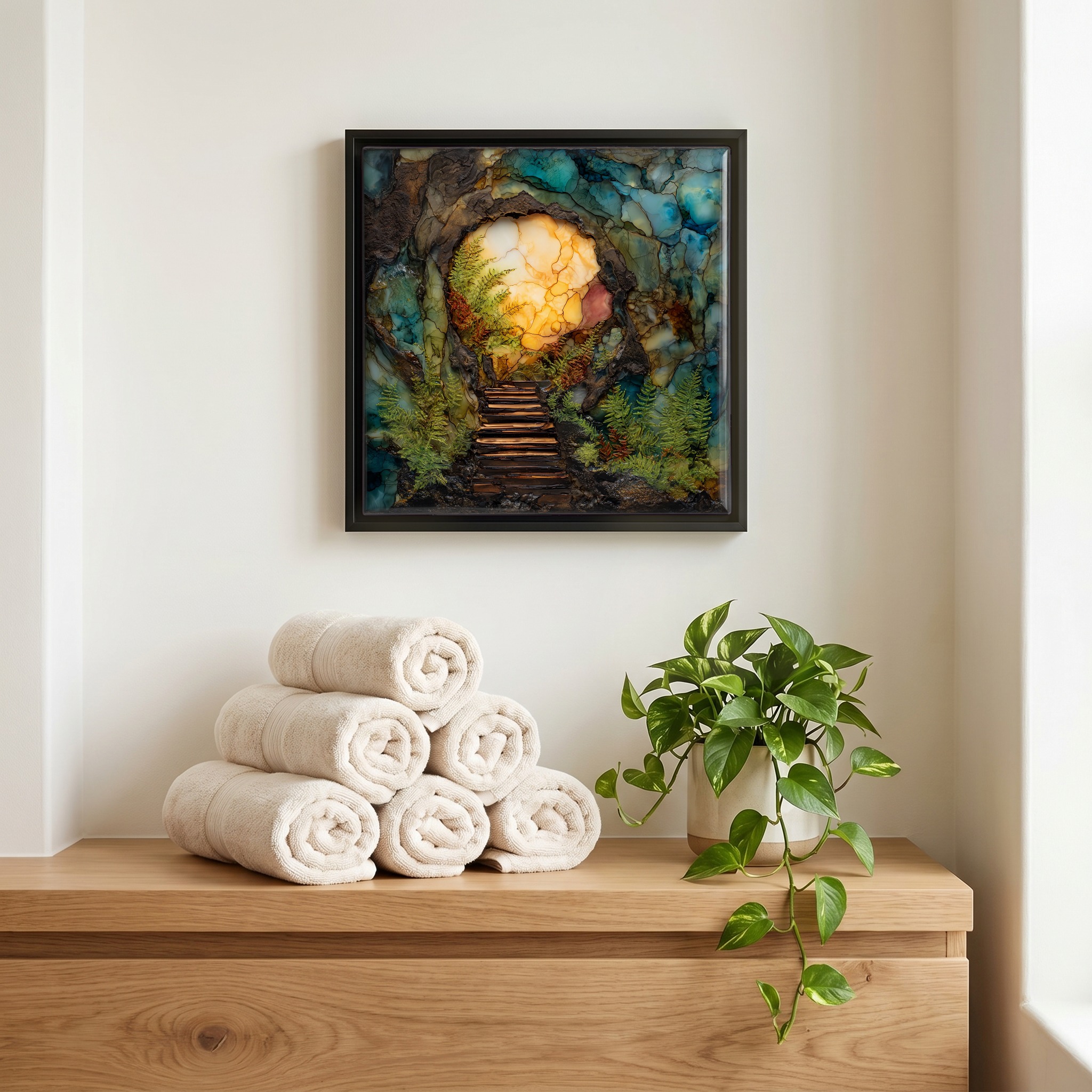
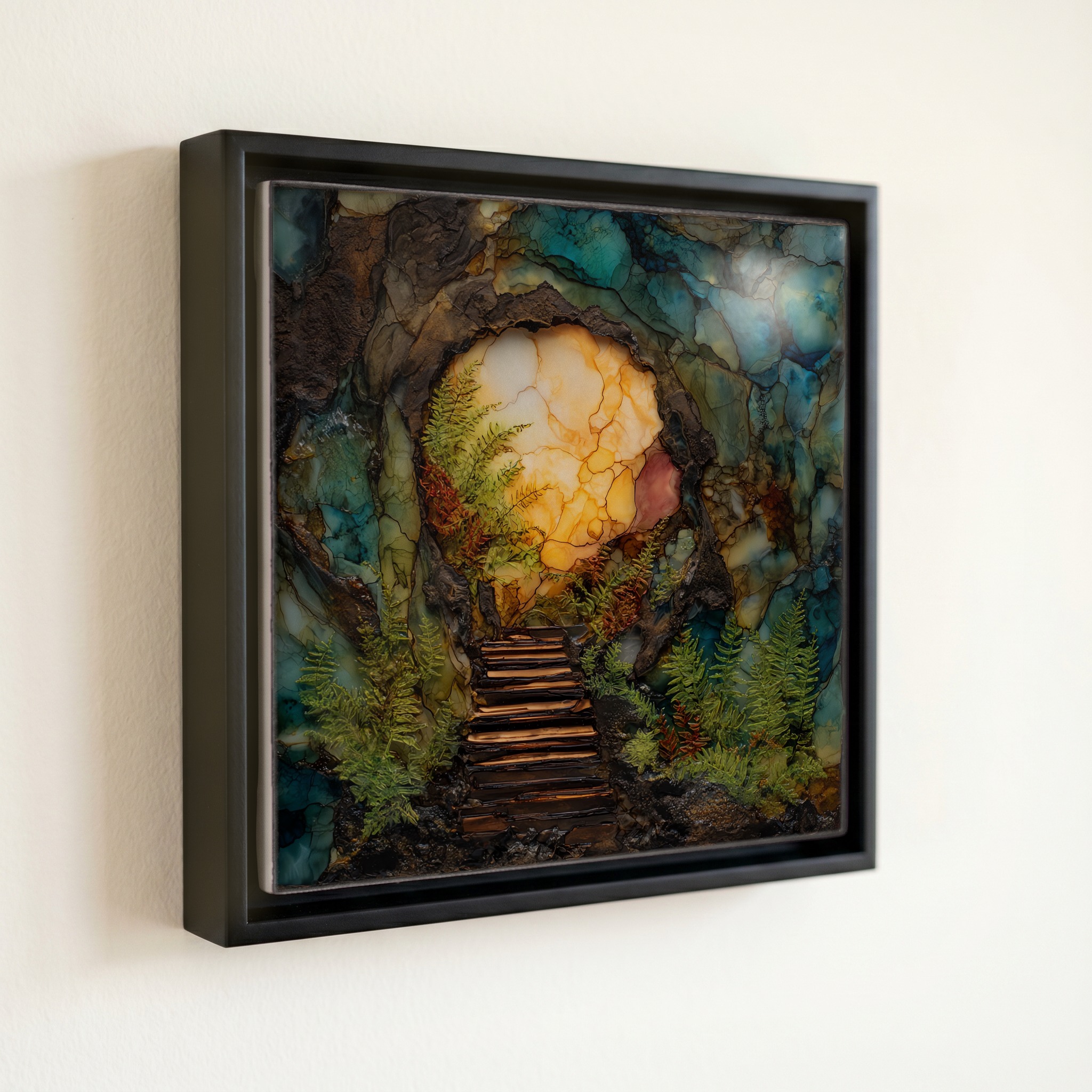
Above the linens, in a slim black surround.
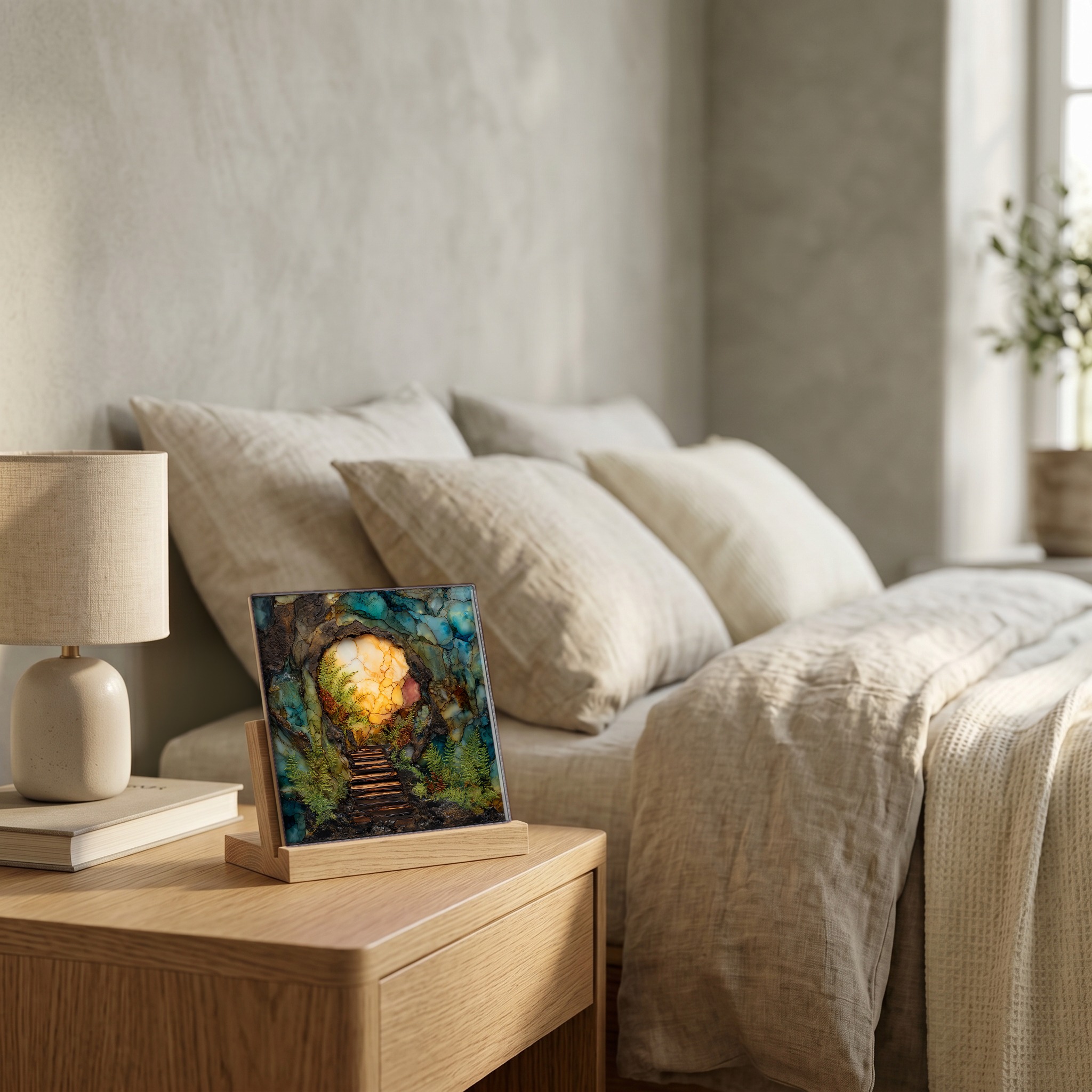
On the nightstand, on a light oak stand.
On a picture ledge, where the light comes in.
a note from the studio

Four miles west of downtown Hilo, the road bends past a collapsed skylight where ferns spill into the ground. Down a steel staircase, the air drops ten degrees and the floor turns to cooled lava: knobbed, glassy, wet underfoot. The tube runs in two directions from the skylight, narrow then wide, dark where the flashlight stops. Above it, banana trees and the hum of the highway. Below, a quiet that has been there since 1881, when the river of fire that nearly took Hilo finally drained itself out through here.
from the studio
shown in a slim black floating frame · 6 × 6 in
— bring it home

Kaumana Caves Big Island Ceramic Art Tile, on ceramic.

Each tile is finished by hand in our Knoxville studio. Artwork is slowly infused into the ceramic surface under high heat and pressure, and rests beneath a thin glossy finish. The colour lives in the surface, not on top of it.

What kind of piece?
One tile — square or rectangle.
How big?
the popular one — counter, shelf, nightstand
6 × 6 in · 15 cm · 1.6 lb
Surface finish
A clear glossy finish — the artwork reads as if under resin. Ideal for show-pieces and framed wall art.
How it sits
A hidden cleat — sits ¼″ proud of the wall.
$58
Hand-finished and shipped from our studio at the foot of the Smokies. On your wall in about ten days.
size
6 × 6 in
15 cm
weighs
1.6 lb
solid in the hand
surface
ceramic, hand-finished
art rests beneath a thin glossy finish
from
Knoxville, TN
our family studio, at the foot of the Smokies
— start a Coaster Set

Pick any four 4-inch tiles — National Parks you've been to, a Smokies set, the four seasons of one place. $ for a set of , cork-backed, ready to live on the table.
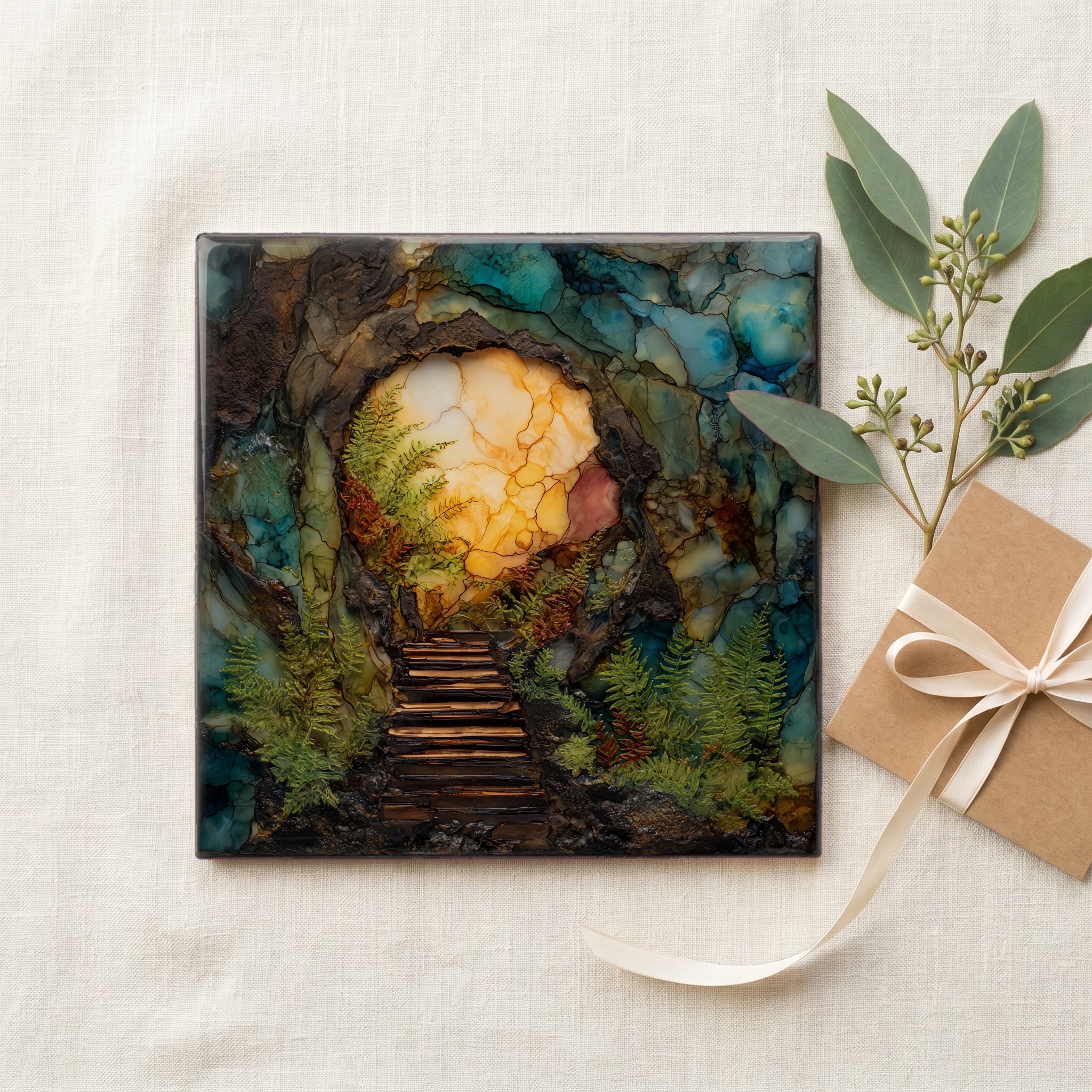
comes gift-ready
comes gift-ready

Each tile ships in a kraft box, tied with cream ribbon, with a handwritten note from the studio if you'd like to add one.
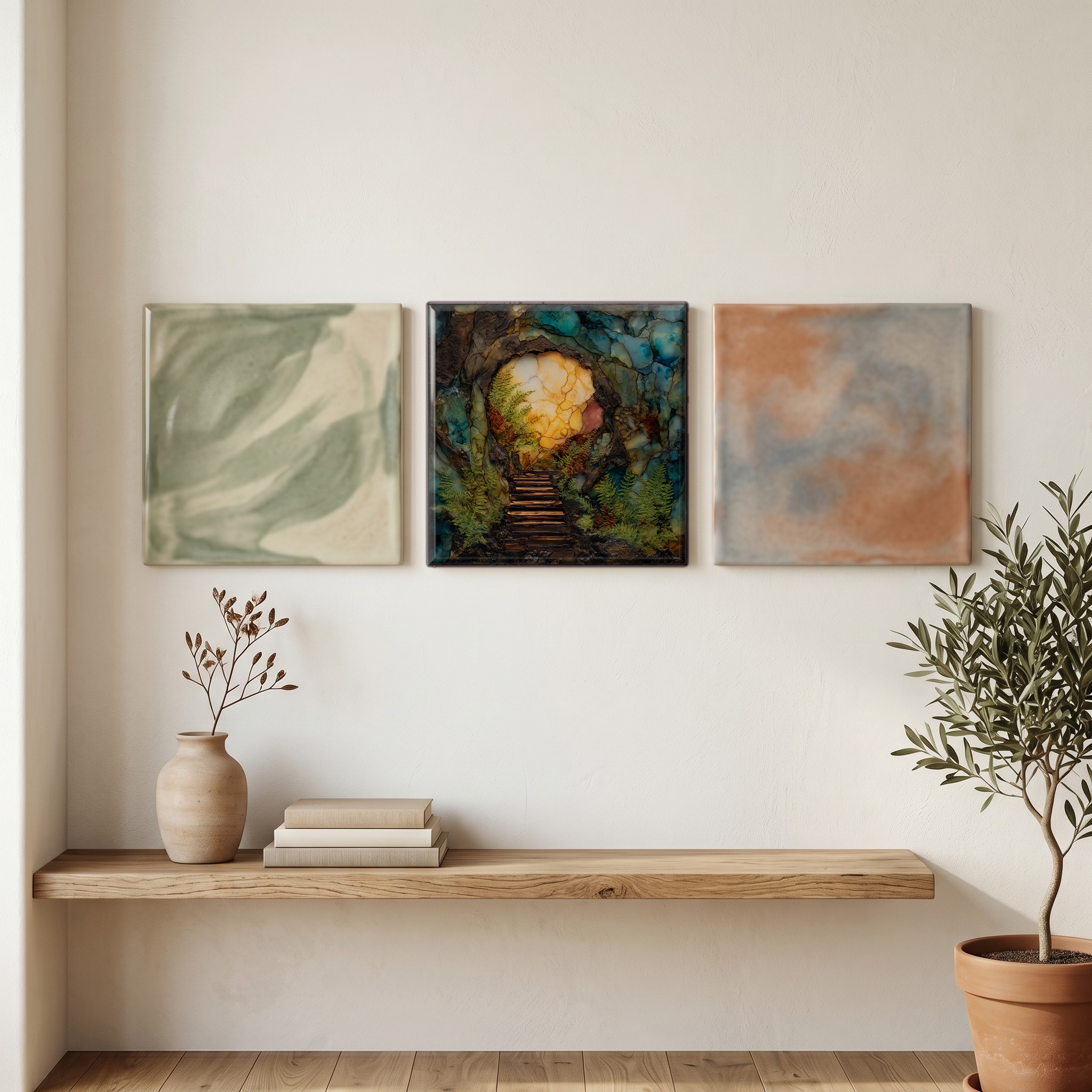
or build a grouping
or build a grouping

Three or five different vistas, hung together — a chapter of places you've been, or want to go.

about Kaumana Caves Big Island Ceramic Art Tile

The place, in three passes.

A little of what's known, in case you fall down the rabbit hole — or want to go see it yourself.
the place

Kaumana Caves State Park sits four miles west of downtown Hilo on Kaumana Drive, the lower stretch of what becomes Saddle Road as it climbs toward Mauna Kea. The park covers the collapsed skylight of a lava tube that runs 2.026 surveyed miles beneath the eastern flank of Mauna Loa, the shield volcano that forms most of the Big Island. From the parking pullout, a steel staircase drops into the skylight; from there the tube opens in two directions through cooled basalt. Hilo, the largest town on the windward side of the Big Island, sees some of the heaviest annual rainfall in the United States, and the ferns at the cave mouth never run short of water.

— informed by Wikipedia, Big Island Hikes
the year

The tube is the survivor of a single event: the 1880-1881 Mauna Loa eruption, one of the longest historic eruptions of the volcano. The flow began in November 1880 high on the northeast rift and ran for nine months toward Hilo Bay. By June 1881 it was within five miles of the village; by August it had closed to a mile and a half, threatening the harbour, the churches, and the town. The eruption stopped that month, and Hawaiian tradition credits Princess Ruth Keʻelikōlani, Royal Governor of the island, who travelled up Mauna Loa and prayed in front of the advancing lava. The tube at Kaumana is what the flow left when its molten centre drained away.

— informed by Shaka Guide, Wikipedia
the visit

The park is free and open from dawn to dusk, managed by the Hawaiʻi Division of State Parks. Parking is a narrow pullout on Kaumana Drive, opposite a small restroom; the descent is a single staircase into the skylight, then a short scramble onto cooled basalt. Inside there is no lighting and almost no signage. Visitors carry their own flashlights, watch for low ceilings, and turn back when the light from the entrance fades. The floor is uneven, wet in places, and broken by collapse rubble. The right-hand tube is wider and shorter; the left runs longer and narrows. Closed-toe shoes, a head-lamp, and a backup flashlight are the standard kit for anything past the entrance chamber.

where
United States · Hilo, Hawaiʻi County
within
Kaumana Caves State Park
position
19.6868° N · 155.1308° W
the neighborhood

What's nearby.

A handful of named places within an hour's walk or short drive. Some we've already painted; some we will.
6 km E
Hilo
town
6 km E
Rainbow Falls
waterfall
7 km E
Wailuku River State Park
river state park
8 km E
Liliʻuokalani Gardens
Japanese garden
27 km N
ʻAkaka Falls State Park
waterfall
N
Kaumana Caves Big Island Ceramic Art Tile
Hilo
Rainbow Falls
Wailuku River State Park
Liliʻuokalani Gardens
ʻAkaka Falls State Park
common questions

What people ask.

A few questions we get about Kaumana Caves Big Island Ceramic Art Tile — and about bringing the piece home.
about the place

Kaumana Caves State Park is four miles west of downtown Hilo on Kaumana Drive, the lower portion of Saddle Road, on the eastern flank of Mauna Loa on the Big Island of Hawaiʻi. The park is free and open from dawn to dusk.

The cave is a lava tube from the 1880-1881 eruption of Mauna Loa. The surface of the flow cooled into a basalt crust while molten lava continued moving inside; when the eruption ended, the molten core drained away and left a long hollow tube.

The surveyed length is 2.026 miles, about 3,260 metres, which places Kaumana among the longest lava tubes in the world. From the collapsed skylight at the park, two passages extend in opposite directions: one shorter and wider, the other longer and narrower.

No. Kaumana Caves State Park is free, managed by the Hawaiʻi Division of State Parks. There is a small roadside pullout for parking, a restroom across the road, and a staircase down to the skylight. No tickets, no guided tours, no rangers on site.

Yes. There is no lighting inside the tube, and the entrance chamber is the only place with daylight. Most visitors carry a head-lamp and a backup flashlight, and turn around when the light from the skylight fades. The floor is uneven and wet in places.

The 1880-81 lava flow came within a mile and a half of Hilo Bay before it stopped in August 1881. Hawaiian tradition credits Princess Ruth Keʻelikōlani, the Royal Governor of the island, who travelled up Mauna Loa and prayed to Pele in front of the advancing lava.

About 145 years. The flow that formed the tube began in November 1880 and stopped in August 1881, one of the longest historic eruptions of Mauna Loa. The cave is therefore one of the youngest large lava tubes on the Big Island that is open to the public.

about the piece in your home

It carries well for someone from Hilo or anyone who has driven Kaumana Drive toward the saddle. The cave is a quiet local landmark, less photographed than ʻAkaka Falls or Volcanoes National Park, more familiar to the people who grew up nearby. A Keepsake or Small with a handwritten note from the studio is the usual choice.

The piece sits naturally in tropical-modern and jewel-tone rooms, where its greens and deep volcanic blacks find company with plants, dark wood, or rattan. It also reads well in a Japandi room as a single dark anchor against pale wood and linen.

Yes. The painted ferns at the skylight and the cooled-basalt interior carry the natural-form and earth-material thread that biophilic interiors lean on. The art pairs well with a single large houseplant, a piece of raw basalt, or a Hawaiian textile.

A single Large reads as a focal piece above a console or in a stairwell. Above a standard sofa, a 4-tile Mural carries the wall without crowding it; for a long sectional or a feature wall, a 9-tile Mural is the architectural choice.

Yes. Order the tile in Dura Satin or Matte for those rooms; both are scratch-resistant and tolerate steam and splatter. The colour lives in the ceramic surface and will not fade in a humid bathroom or behind a stovetop.

A microfibre cloth and water, or a microfibre with a drop of mild dish soap for kitchen residue. No abrasive pads, no bleach. The colour is slowly infused into the ceramic surface beneath a thin glossy or satin finish and will not lift with normal cleaning.

Yes. Every WenderVista piece is original to Wender Studios in Knoxville, Tennessee. We do not licence, resell, or syndicate the artwork. The Kaumana Caves painting was made in-house by the studio and produced under Reid Wender's curation as part of the WenderVista atlas.

if this one stayed with you

A few you might also love.

Hand-picked by the eye that found Sorapis. Same air, same kind of quiet.