Wender·Vista
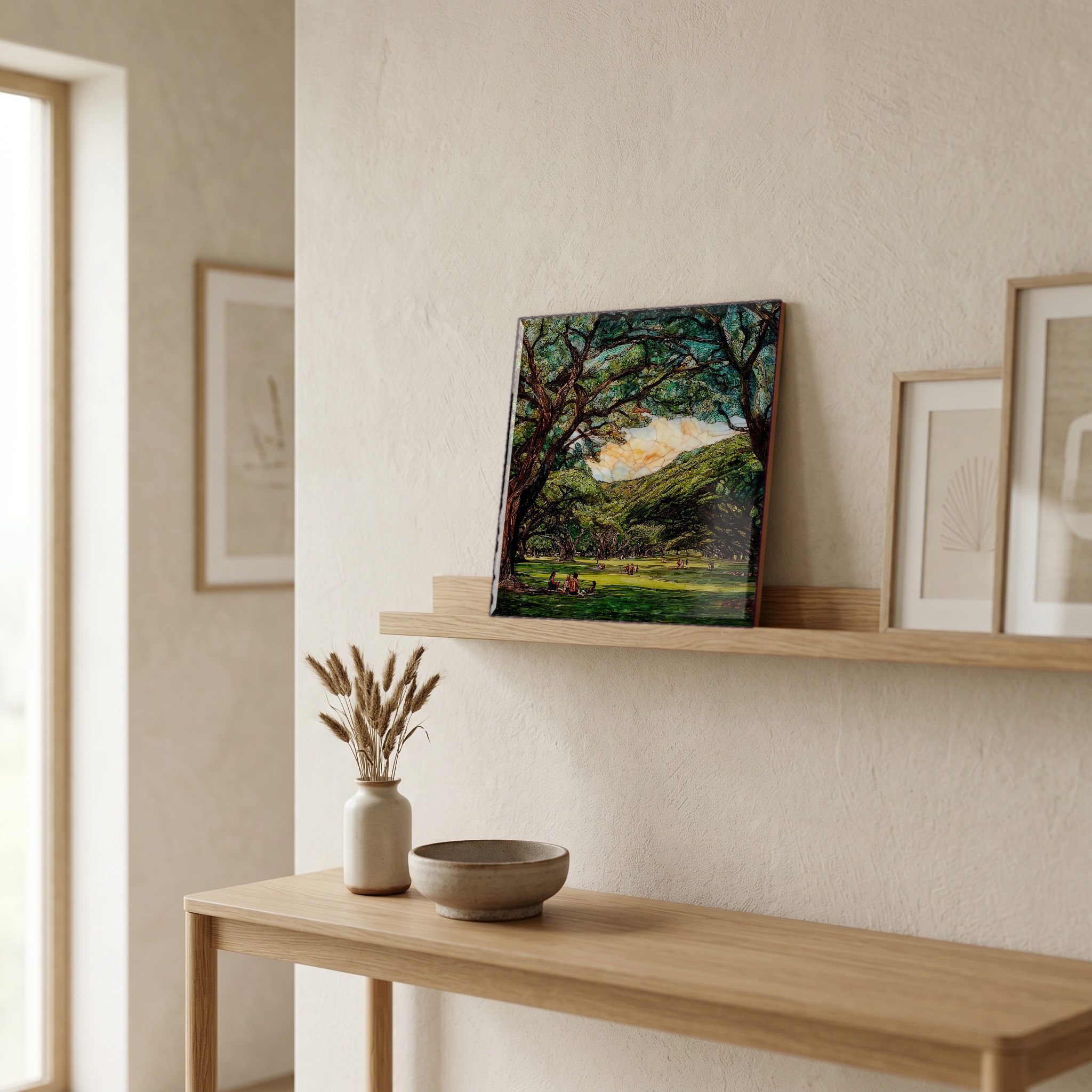
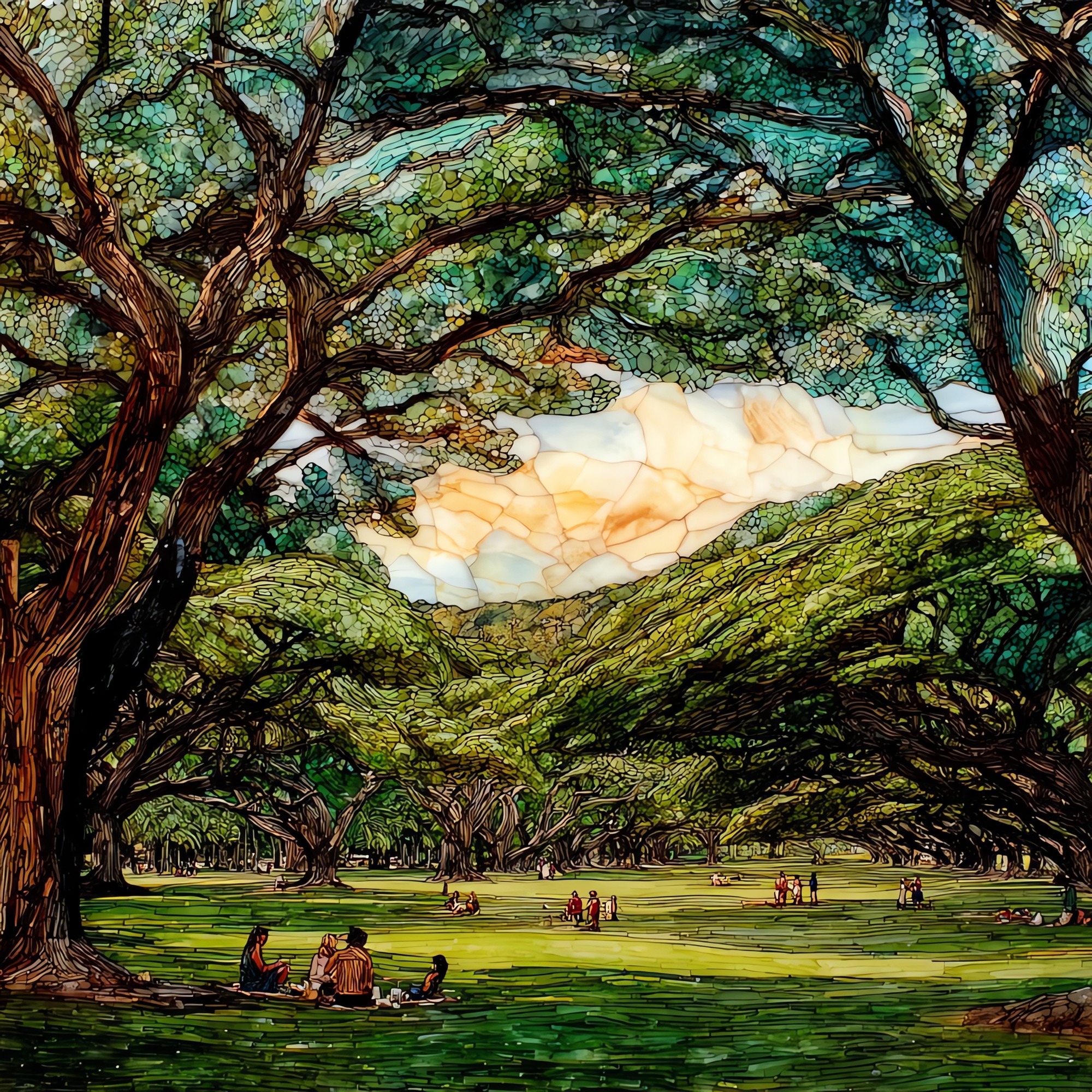
Kapiolani Banyans Oahu Ceramic Art Tile
shown on ceramic, 12-inch tileHawaii · United States
in Waikīkī, at the foot of Diamond Head

Kapiolani Banyans Oahu Ceramic Art Tile

the shade a tree builds out of itself.

Where it lives

Not only on a wall.

A small tile on the nightstand catching the morning. A larger one above the fire. Yours, wherever you spend the slow hours.
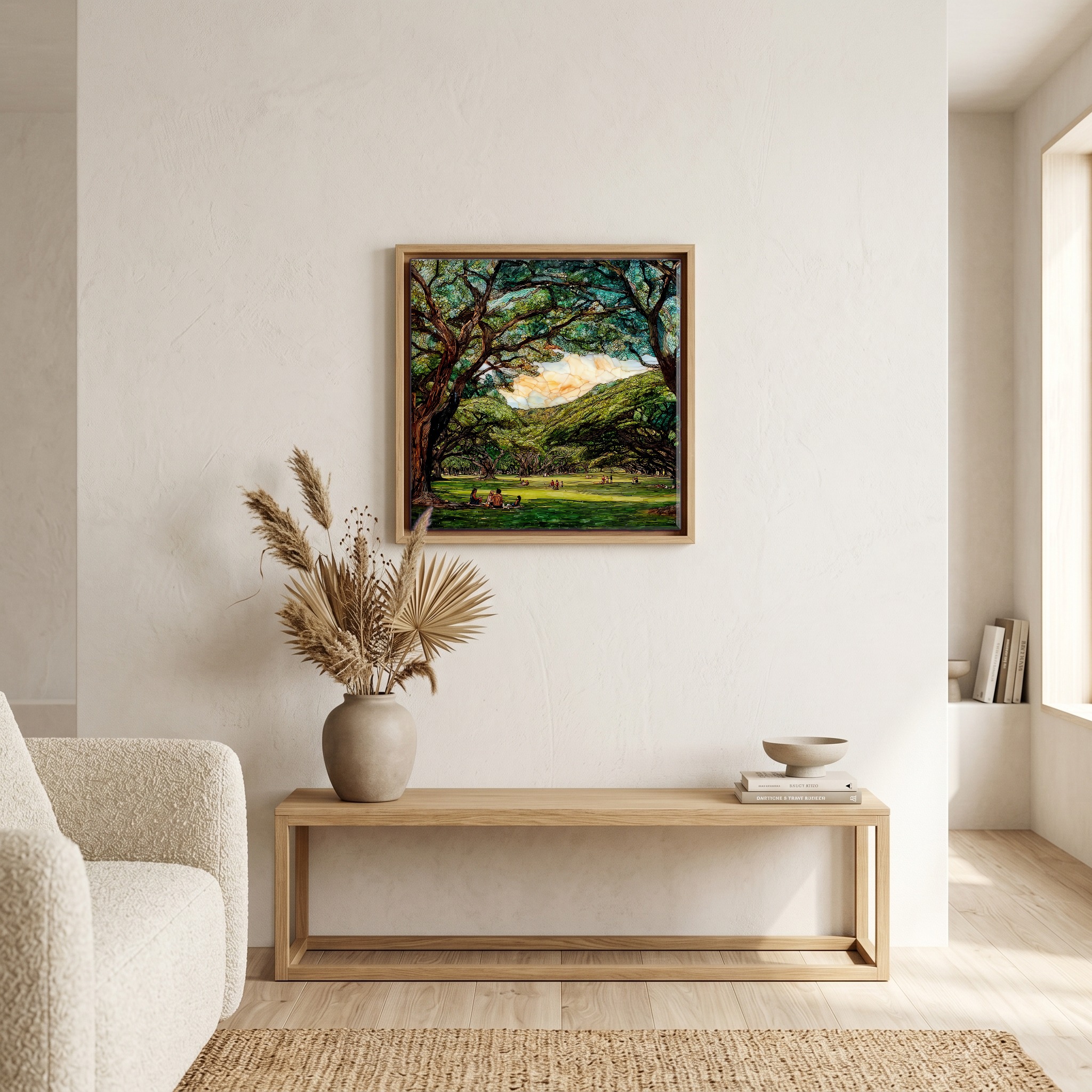
Above the bench, in a warm oak surround.
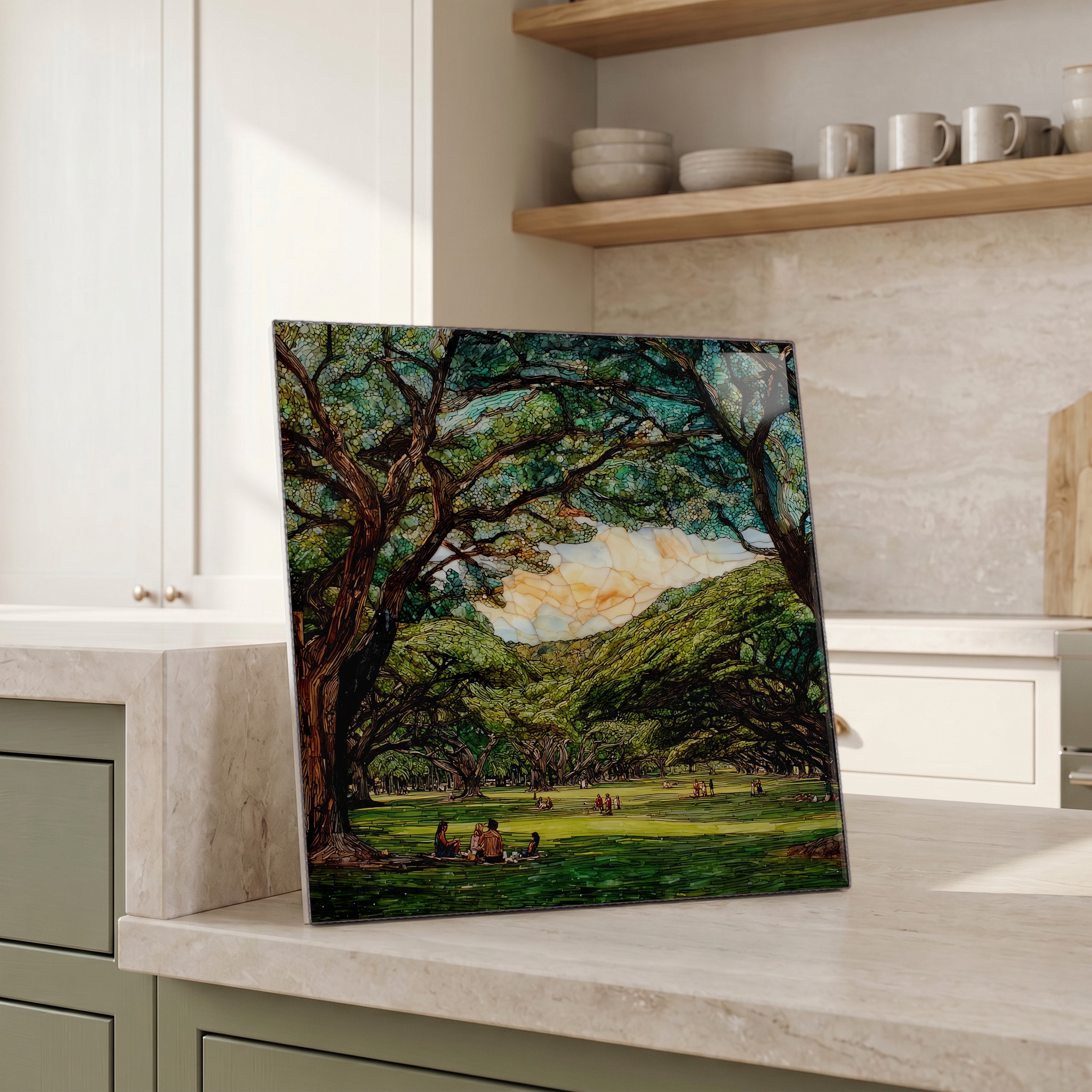
Beside the kettle, propped on the counter.
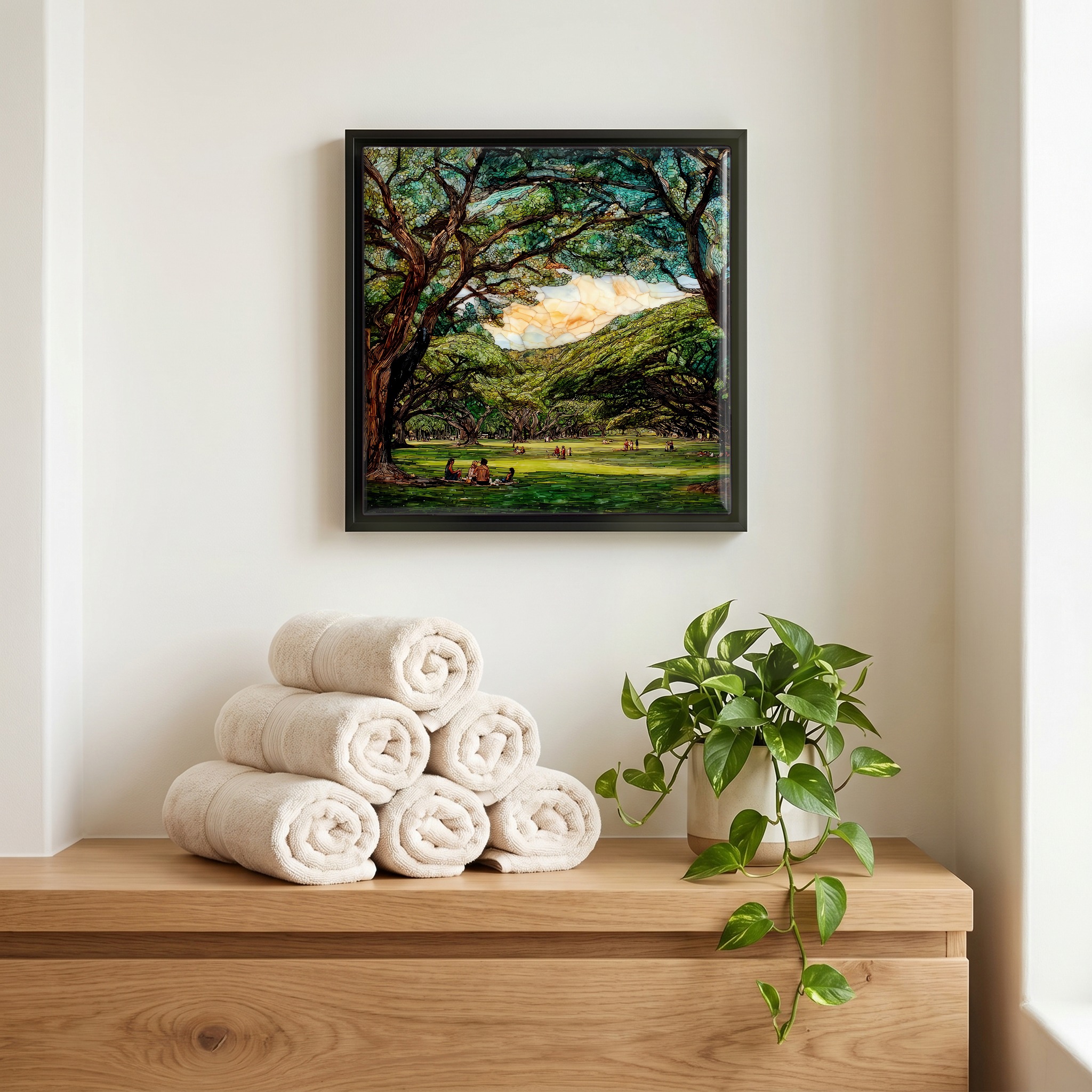
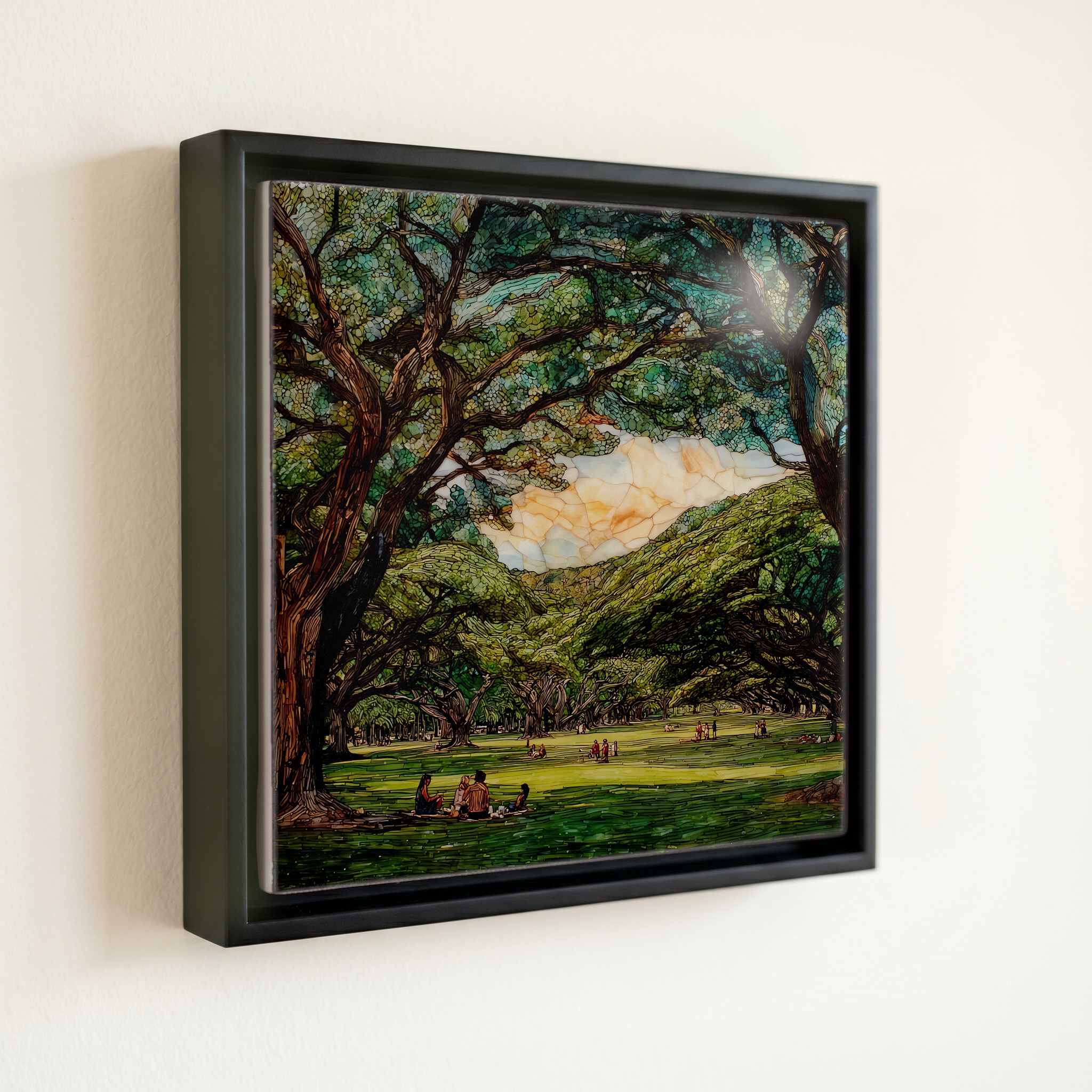
Above the linens, in a slim black surround.
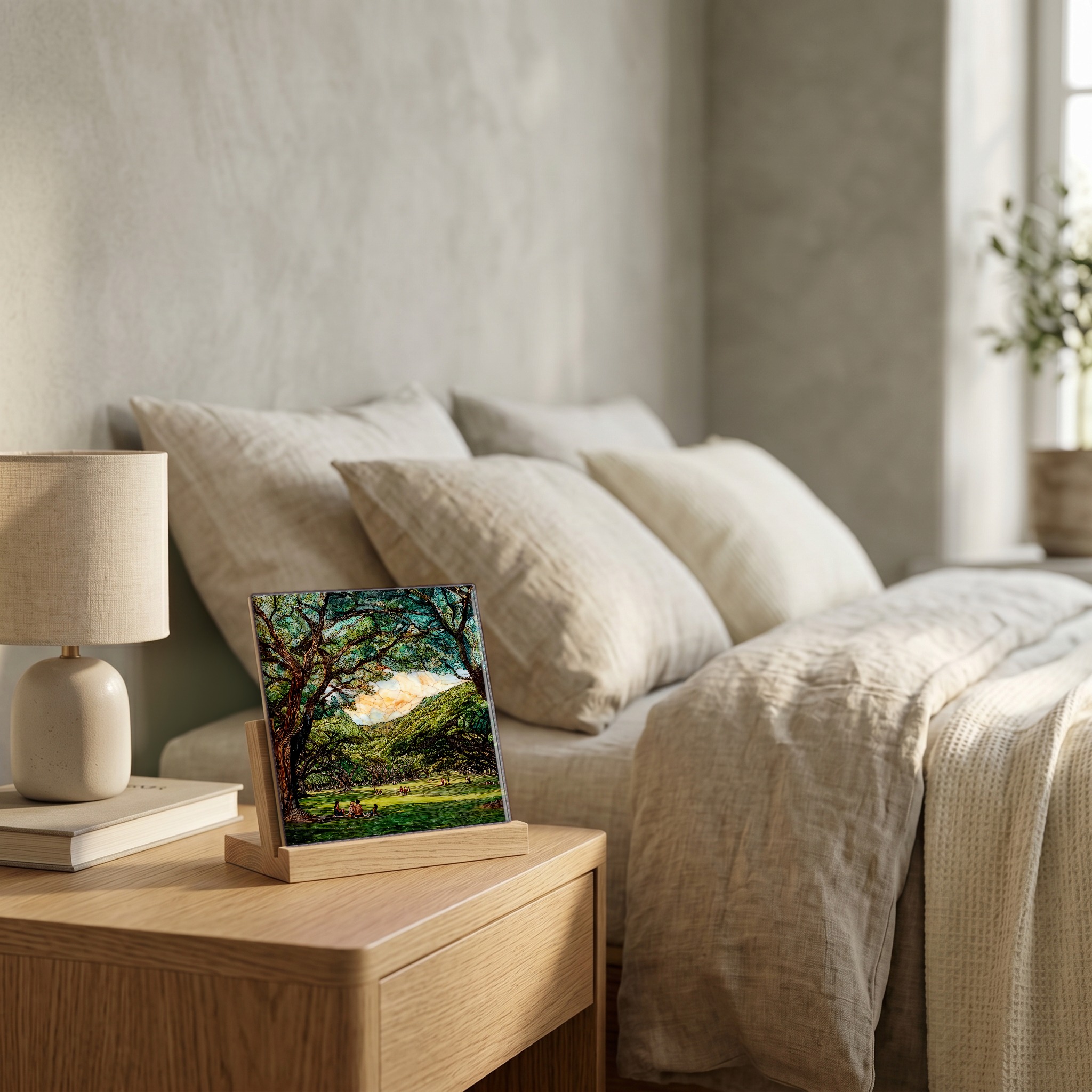
On the nightstand, on a light oak stand.
On a picture ledge, where the light comes in.
a note from the studio

A grove of Indian banyans inside Hawaii's first public park, between Waikīkī Beach and the slope of Lēʻahi. King Kalākaua opened the grounds in 1877. The thing about a banyan is that the branches put down roots, and the roots become trunks, and after a century the tree is no longer a tree but a room. The Kapiʻolani specimens are protected under the state's Exceptional Tree Act. People sit under them with thermoses, with strollers, with paperbacks. Nobody hurries through.
from the studio
shown in a slim black floating frame · 6 × 6 in
— bring it home

Kapiolani Banyans Oahu Ceramic Art Tile, on ceramic.

Each tile is finished by hand in our Knoxville studio. Artwork is slowly infused into the ceramic surface under high heat and pressure, and rests beneath a thin glossy finish. The colour lives in the surface, not on top of it.

What kind of piece?
One tile — square or rectangle.
How big?
the popular one — counter, shelf, nightstand
6 × 6 in · 15 cm · 1.6 lb
Surface finish
A clear glossy finish — the artwork reads as if under resin. Ideal for show-pieces and framed wall art.
How it sits
A hidden cleat — sits ¼″ proud of the wall.
$58
Hand-finished and shipped from our studio at the foot of the Smokies. On your wall in about ten days.
size
6 × 6 in
15 cm
weighs
1.6 lb
solid in the hand
surface
ceramic, hand-finished
art rests beneath a thin glossy finish
from
Knoxville, TN
our family studio, at the foot of the Smokies
— start a Coaster Set

Pick any four 4-inch tiles — National Parks you've been to, a Smokies set, the four seasons of one place. $ for a set of , cork-backed, ready to live on the table.
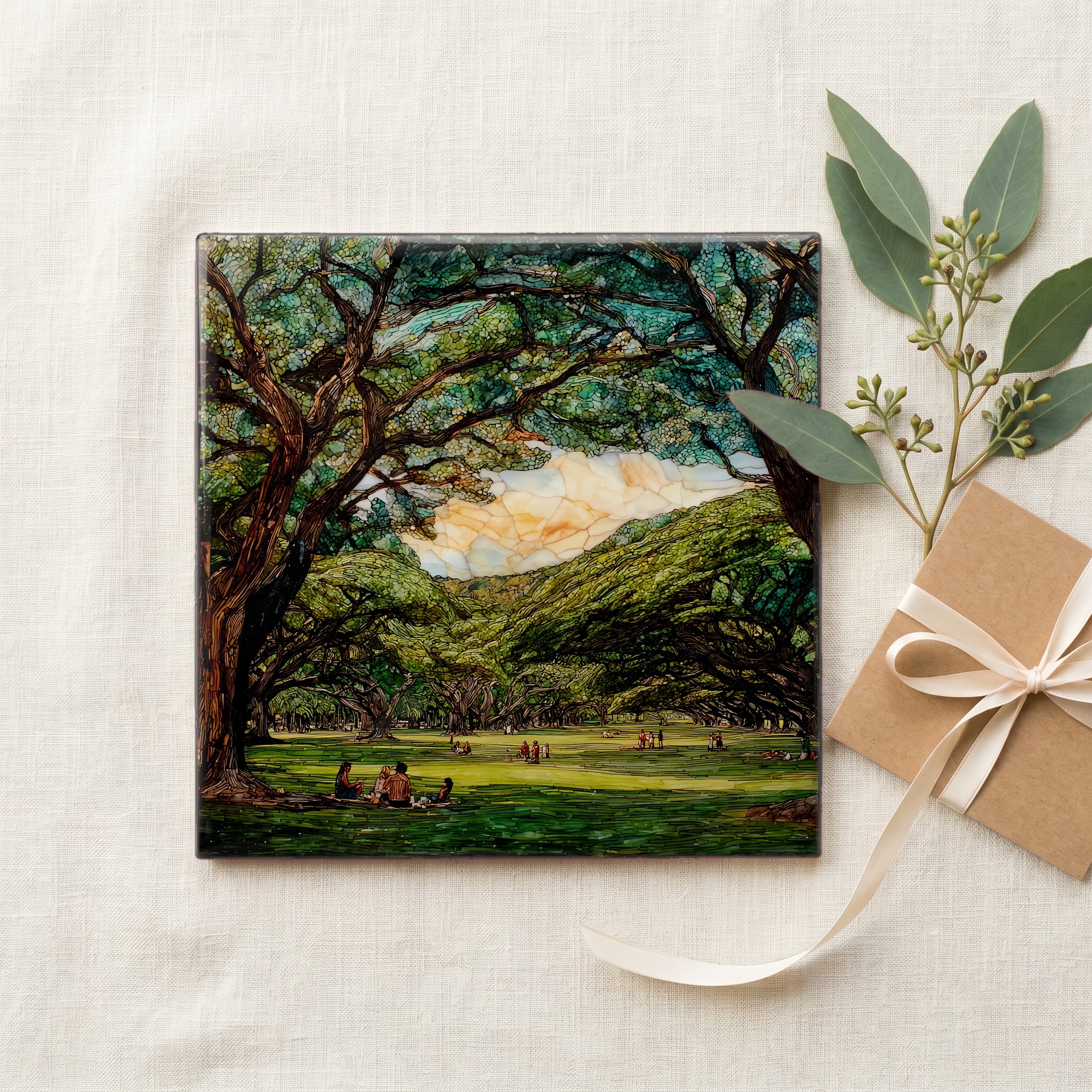
comes gift-ready
comes gift-ready

Each tile ships in a kraft box, tied with cream ribbon, with a handwritten note from the studio if you'd like to add one.
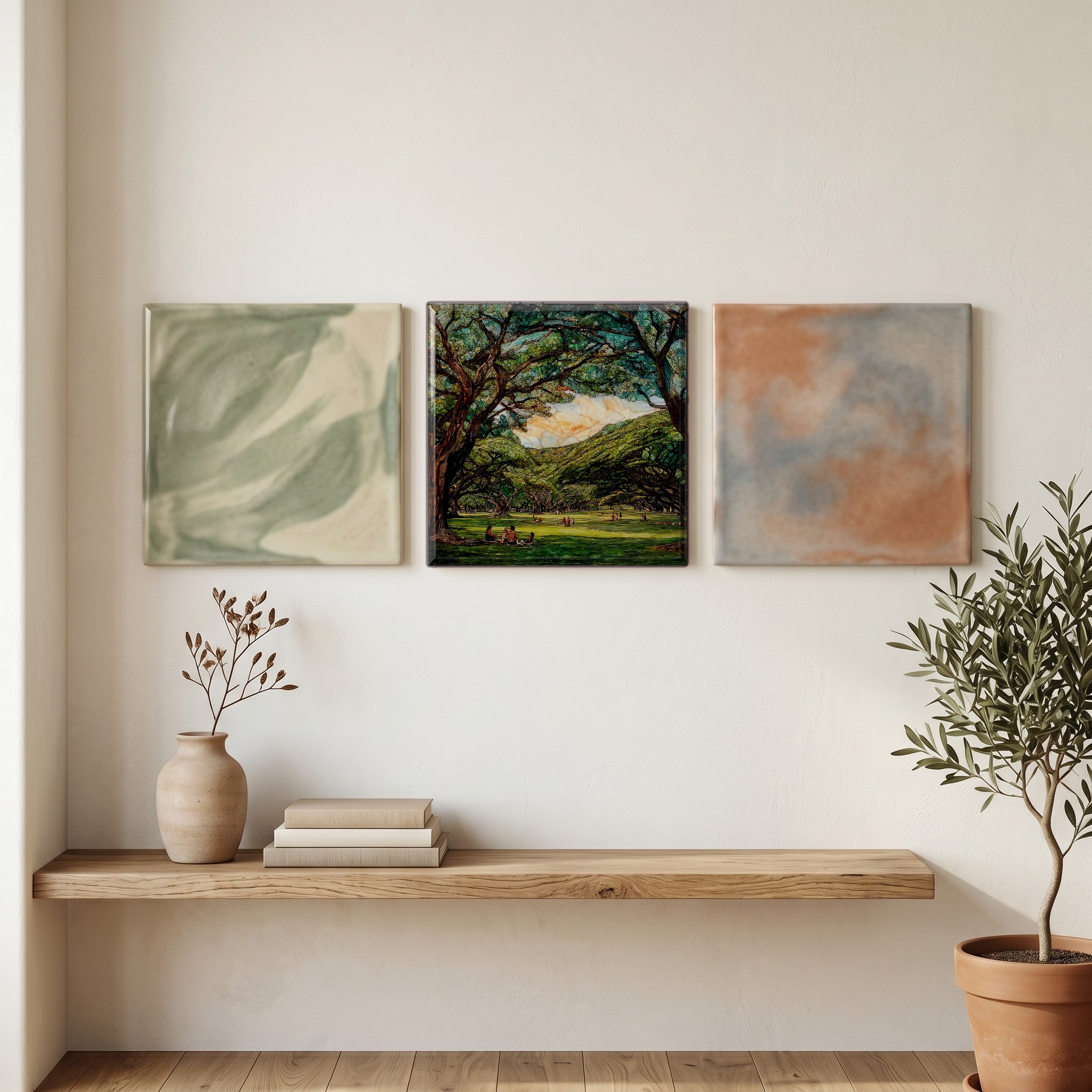
or build a grouping
or build a grouping

Three or five different vistas, hung together — a chapter of places you've been, or want to go.

about Kapiolani Banyans Oahu Ceramic Art Tile

The place, in three passes.

A little of what's known, in case you fall down the rabbit hole — or want to go see it yourself.
the place

Kapiʻolani Park covers about 300 acres of Honolulu's southeastern coast, between Waikīkī Beach and the volcanic ridge of Lēʻahi, better known as Diamond Head. King David Kalākaua dedicated the park on Kamehameha Day, June 11, 1877, naming it for his wife, Queen Kapiʻolani; it remains the oldest public park in the Hawaiian Islands. The land was marsh and royal taro ground before the kingdom drained the lagoons and planted the lawns. Today the park holds the Honolulu Zoo, the Waikiki Shell amphitheatre, several softball diamonds, and the open green where Indian banyans share their shade with joggers, picnickers, and outrigger crews.

the air

The species is Ficus benghalensis, the Indian banyan, introduced to Hawaii by missionaries from India in 1873. What makes a banyan a banyan is the way the branches send aerial roots straight down; those roots reach the soil, thicken, and become new trunks, until a single tree spreads sideways into a colonnade. The canopy at Kapiʻolani filters the afternoon light into a steady half-shade several degrees cooler than the open lawn around it. The air under the tree feels held rather than moved. Bulbuls, doves, and Japanese white-eyes work the higher branches, and the ground stays patterned with circles of sun the size of plates.

the visit

The park sits at the eastern end of Waikīkī, about 3 miles from downtown Honolulu and a short walk from the surf at Queen's Beach. Entry is free and the grounds are open through the day; the banyans cluster along Kalākaua Avenue, around the zoo, and behind the bandstand. A prominent grove flanks the path toward the Waikīkī Shell. Several of these trees are designated under Hawaiʻi's Exceptional Tree Act, passed by the State Legislature in 1975 (Act 105) to protect trees of significant age, size, location, or cultural value. Honolulu's Division of Urban Forestry administers the program, and the older Kapiʻolani specimens have been on the list for decades.

where
United States · Honolulu, Oʻahu
within
Kapiʻolani Regional Park
position
21.2683° N · 157.8231° W
the neighborhood

What's nearby.

A handful of named places within an hour's walk or short drive. Some we've already painted; some we will.
1 km E
Diamond Head (Lēʻahi)
volcanic tuff cone
1 km W
Waikīkī Beach
beach
at the lake
Honolulu Zoo
zoo
5 km W
ʻIolani Palace
royal palace
13 km E
Hanauma Bay
marine reserve
8 km N
Mānoa Falls
waterfall
N
Kapiolani Banyans Oahu Ceramic Art Tile
Diamond Head (Lēʻahi)
Waikīkī Beach
Honolulu Zoo
ʻIolani Palace
Hanauma Bay
Mānoa Falls
common questions

What people ask.

A few questions we get about Kapiolani Banyans Oahu Ceramic Art Tile — and about bringing the piece home.
about the place

Inside Kapiʻolani Regional Park at the eastern end of Waikīkī, on the south coast of Oʻahu, between the surf at Queen's Beach and the volcanic ridge of Lēʻahi (Diamond Head). The largest groves cluster along Kalākaua Avenue and around the Honolulu Zoo.

Indian banyan, Ficus benghalensis, introduced to Hawaii by missionaries from India in 1873. The species sends aerial roots from its branches that descend to the soil, root in, and thicken into new trunks. A single mature tree spreads sideways into a grove.

King David Kalākaua dedicated Kapiʻolani Park on Kamehameha Day, June 11, 1877, naming it for his wife, Queen Kapiʻolani. It is the oldest public park in the Hawaiian Islands. The land had been marsh and royal taro ground before the kingdom drained the lagoons.

Several Kapiʻolani specimens are designated under Hawaiʻi's Exceptional Tree Act of 1975 (Act 105), which protects trees of unusual age, size, location, or cultural value from removal or improper pruning. The Honolulu Division of Urban Forestry administers the program.

Aerial roots descend from the branches. When they reach the soil they take root and thicken into new trunks. Over decades, a single banyan extends sideways into a colonnade of trunks linked by an unbroken canopy. The Indian banyan is among the largest-spreading trees on earth.

Yes. The park is a free, open public space maintained by the City and County of Honolulu, with grounds accessible throughout the day. The Honolulu Zoo and the Waikiki Shell, both inside the park, charge their own admission for specific exhibits and events.

about the piece in your home

Kapiʻolani Park is one of the most familiar places in Honolulu — locals walk it on weekends, run it before work, and gather there for Lei Day. For someone with ties to the island, a Small or Medium with a handwritten note from the studio tends to land well.

The piece sits well in biophilic interiors, coastal-modern rooms, and tropical-modern spaces with rattan, raw linen, or weathered teak. The green-and-gold palette of the banyan canopy holds against off-white walls and warms a room with darker wood.

Biophilic design favors live plants, organic textures, and imagery of canopies, water, and stone. The Kapiʻolani banyan piece works inside that frame: a tree-canopy interior rendered in the studio's stained-glass palette. It reads as nature without becoming a plant photograph.

Above a standard sofa or a long console, a single Large reads as a clear hero piece. For a wider feature wall, a 4-tile Mural carries the canopy across more visual ground; a 9-tile Mural turns the wall into the tree.

Yes, with the Dura Satin or Matte finish, which are scratch-resistant and built for vertical wet-area installation. The Glossy finish is for framed wall pieces and protected interior walls. The image and the colour are identical across finishes.

A soft microfibre cloth and water. The colour lives in the surface and will not lift. Avoid abrasive scrubbers, ammonia, or bleach. For everyday dust, a dry microfibre pass is enough; for kitchen grease, microfibre with warm water.

Yes. Every WenderVista piece is curated and finished by Wender Studios in Knoxville, Tennessee. The image is not licensed from any third party. Reid Wender chooses every place that enters the WenderVista atlas.

if this one stayed with you

A few you might also love.

Hand-picked by the eye that found Sorapis. Same air, same kind of quiet.