Wender·Vista
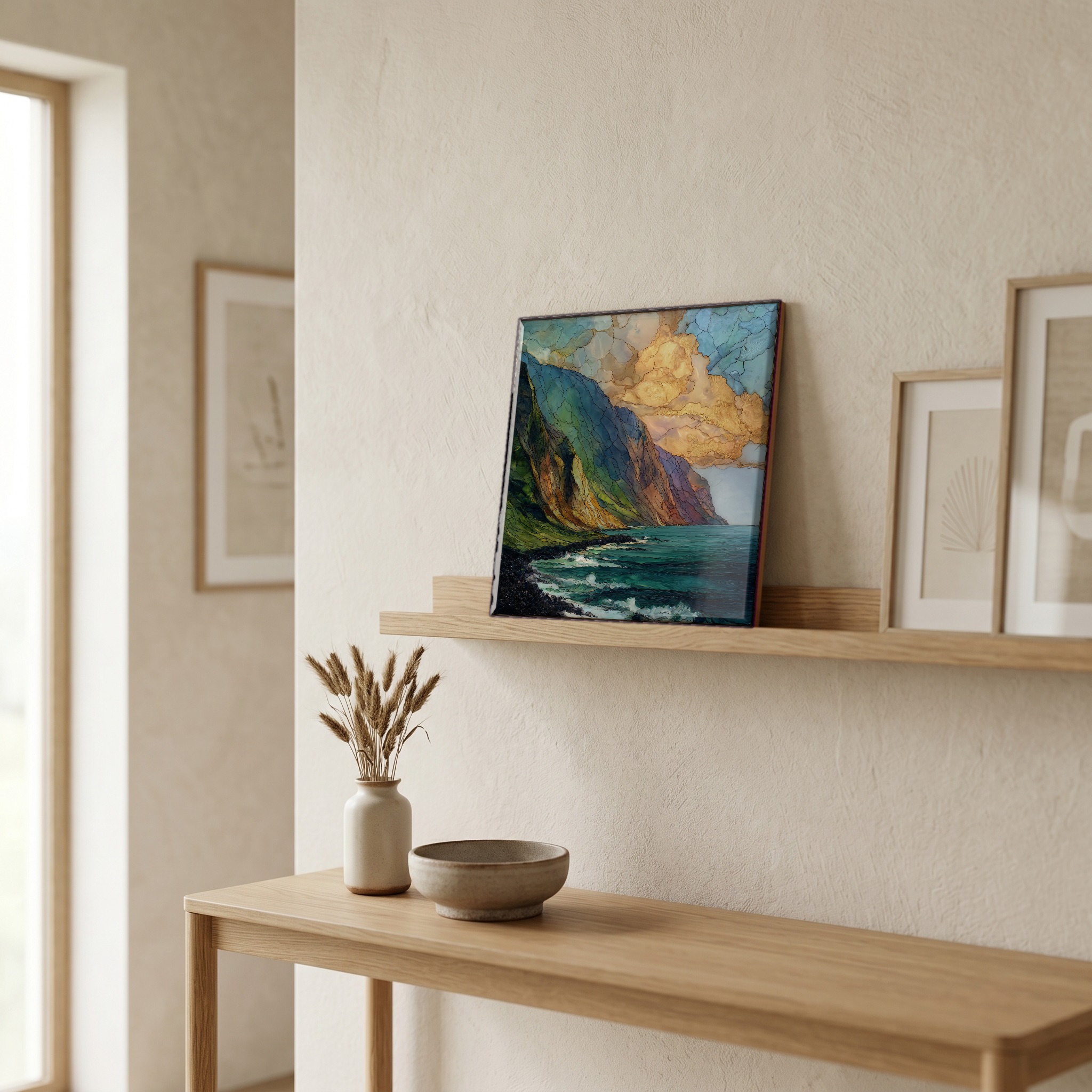
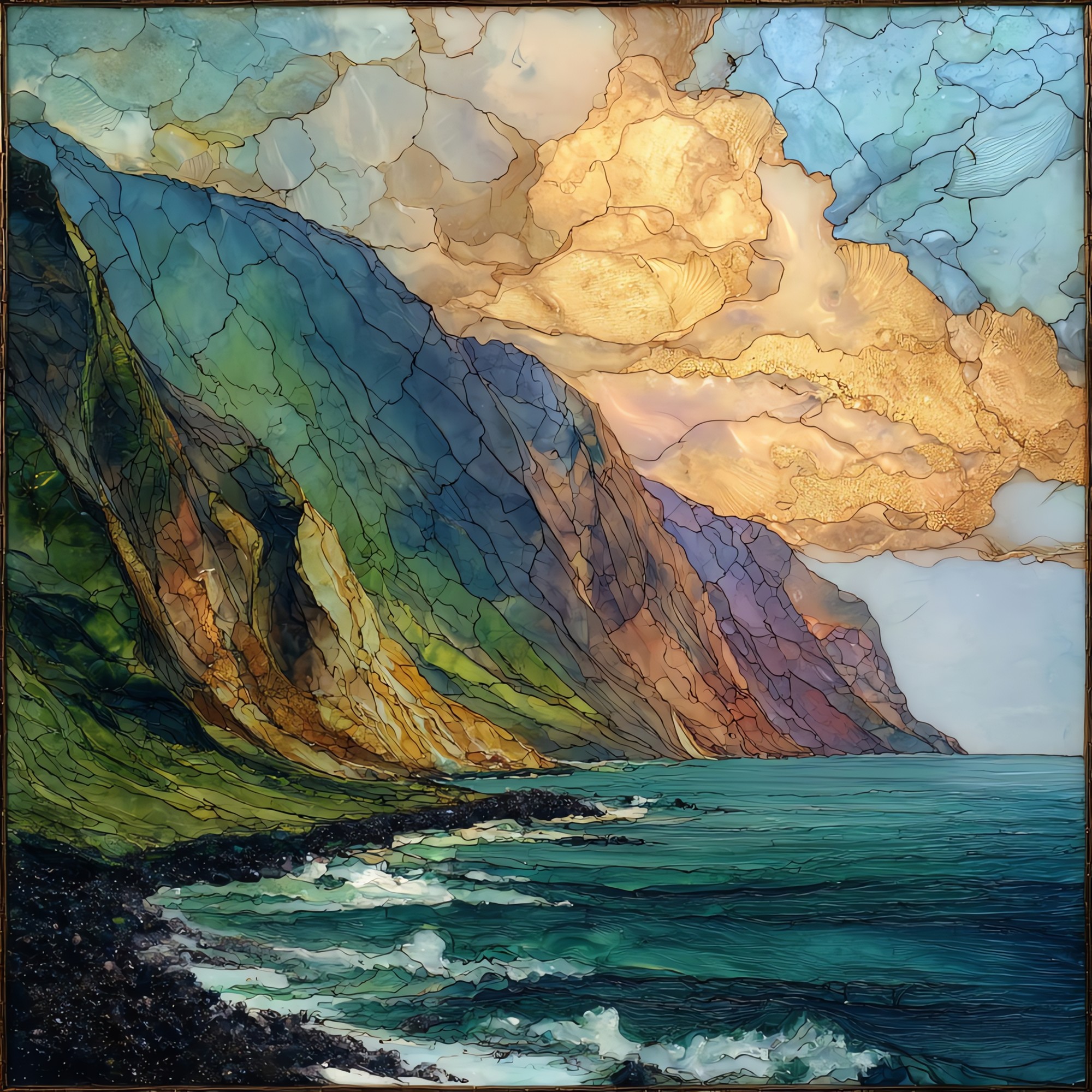
Kalaupapa Peninsula Molokai Ceramic Art Tile
shown on ceramic, 12-inch tileHawaii · United States
on the north shore of Molokai, below the cliffs

Kalaupapa Peninsula Molokai Ceramic Art Tile

— what the cliffs have kept to themselves.

Where it lives

Not only on a wall.

A small tile on the nightstand catching the morning. A larger one above the fire. Yours, wherever you spend the slow hours.
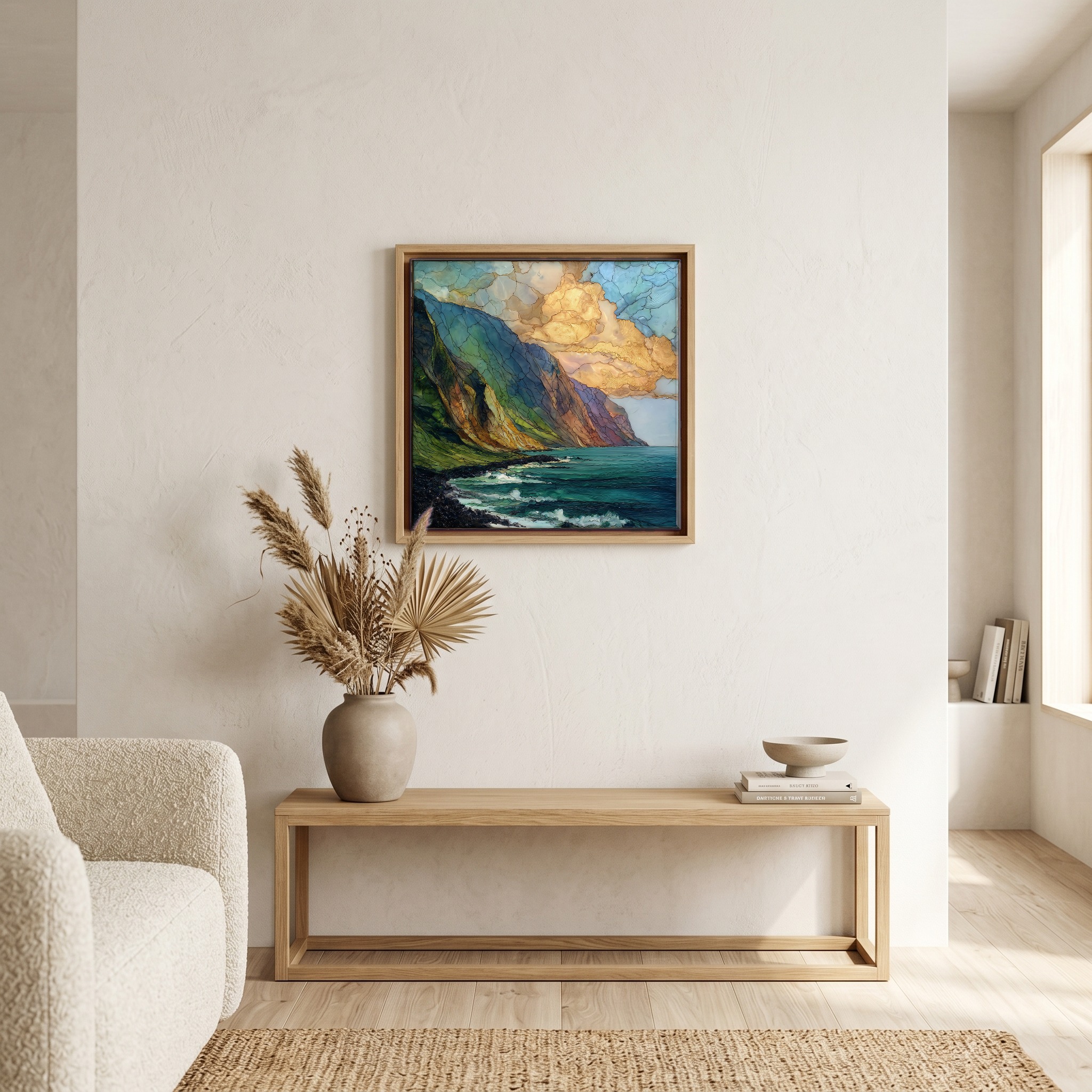
Above the bench, in a warm oak surround.
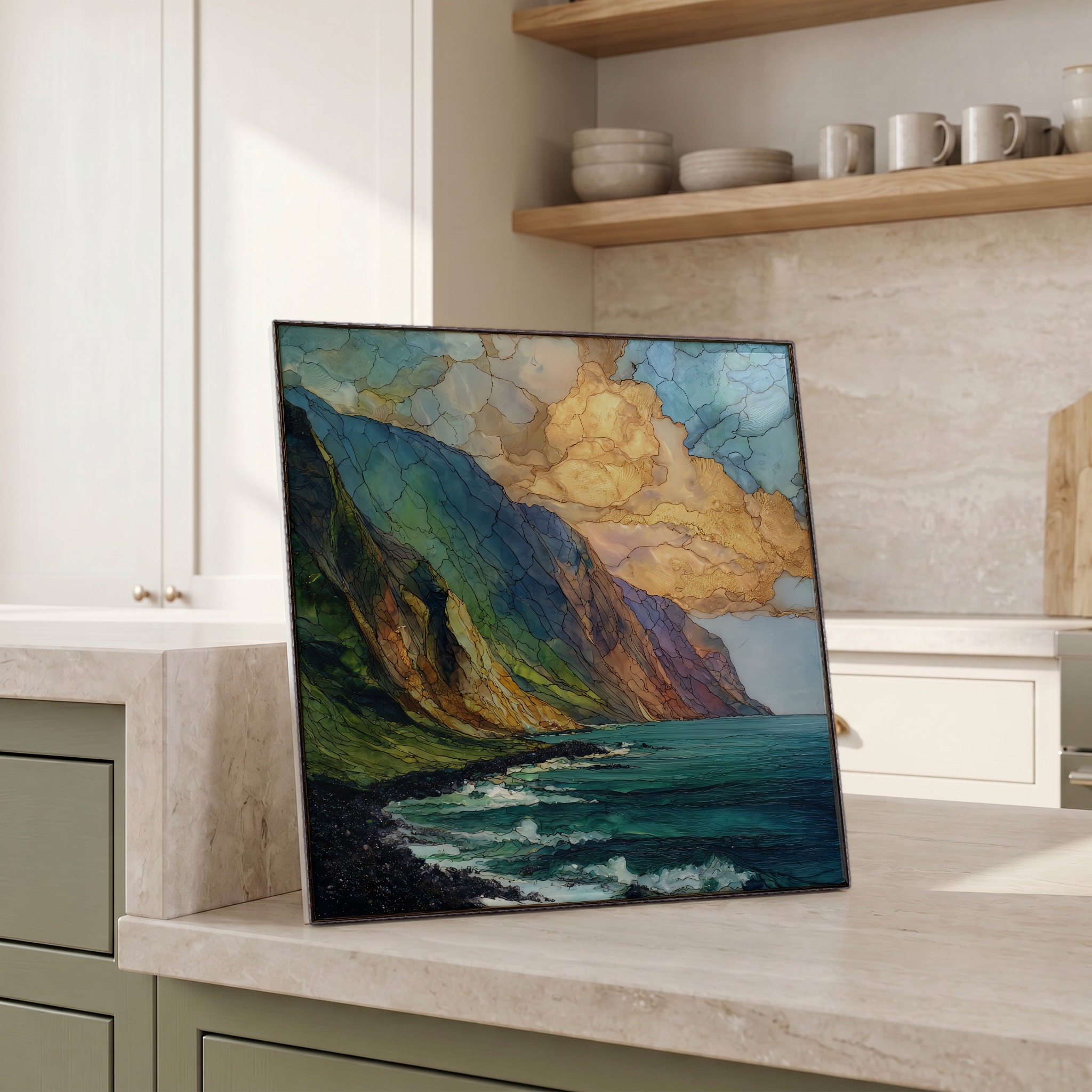
Beside the kettle, propped on the counter.
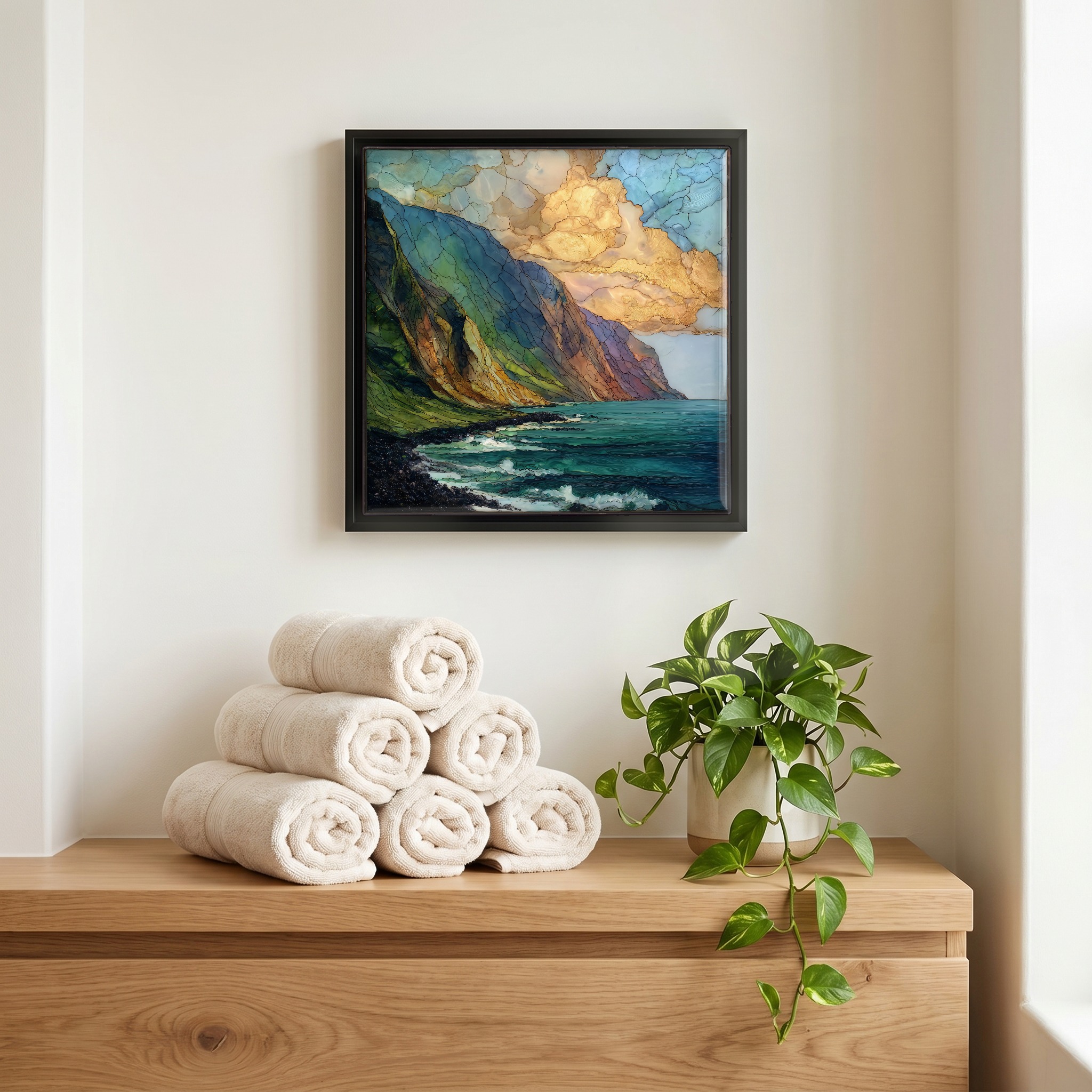
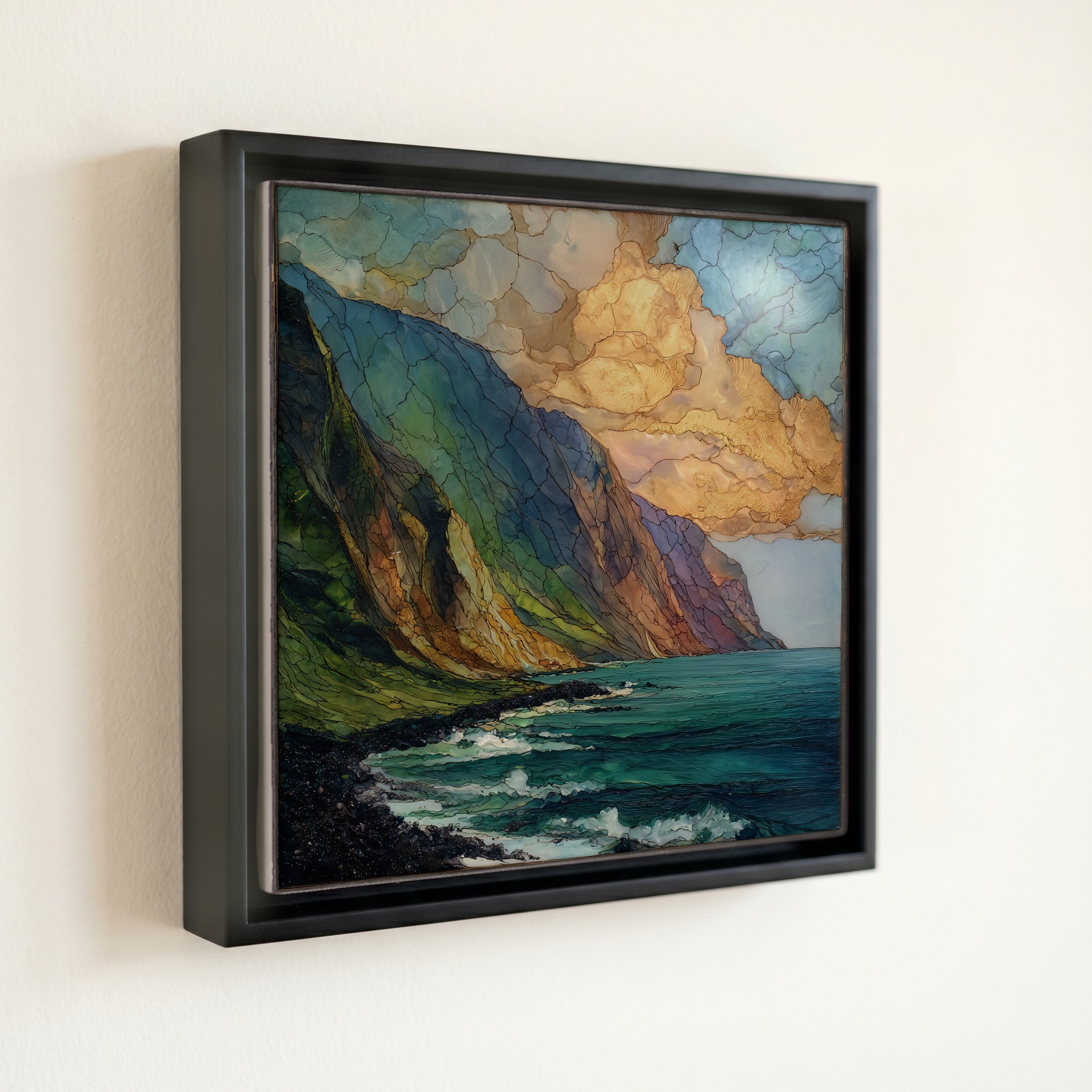
Above the linens, in a slim black surround.
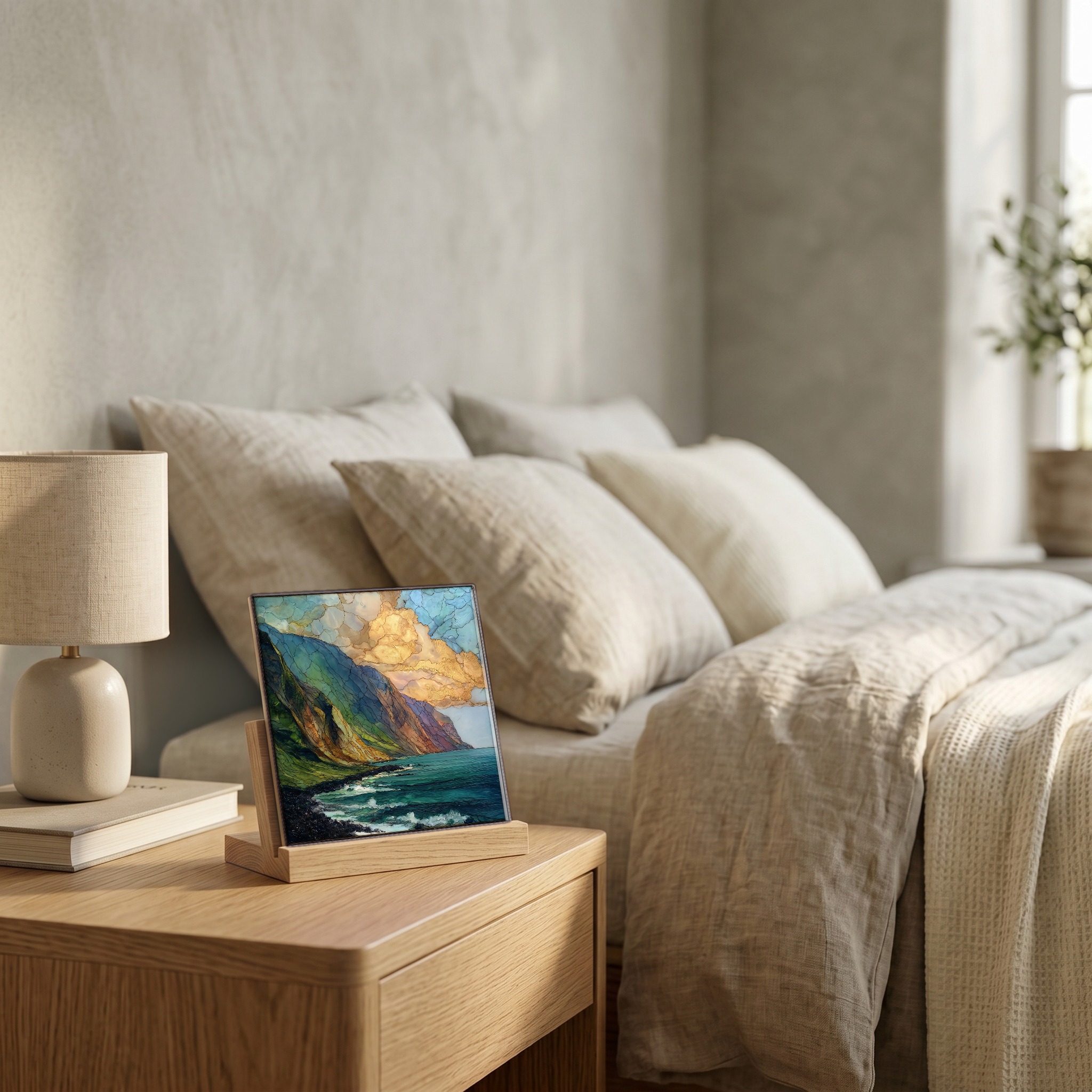
On the nightstand, on a light oak stand.
On a picture ledge, where the light comes in.
a note from the studio

A flat green peninsula at the foot of the world's tallest sea cliffs, on the north shore of Molokai. From 1866 to 1969 the Kingdom, then the Territory, then the State sent people with Hansen's disease here. About eight thousand in all. Father Damien arrived in 1873 and stayed until he died of the disease in 1889. A handful of former patients still live in Kalaupapa village by their own choosing. The mule trail down the cliffs stopped after a 2018 landslide. Most days now the peninsula is reached by small plane from topside.
from the studio
shown in a slim black floating frame · 6 × 6 in
— bring it home

Kalaupapa Peninsula Molokai Ceramic Art Tile, on ceramic.

Each tile is finished by hand in our Knoxville studio. Artwork is slowly infused into the ceramic surface under high heat and pressure, and rests beneath a thin glossy finish. The colour lives in the surface, not on top of it.

What kind of piece?
One tile — square or rectangle.
How big?
the popular one — counter, shelf, nightstand
6 × 6 in · 15 cm · 1.6 lb
Surface finish
A clear glossy finish — the artwork reads as if under resin. Ideal for show-pieces and framed wall art.
How it sits
A hidden cleat — sits ¼″ proud of the wall.
$58
Hand-finished and shipped from our studio at the foot of the Smokies. On your wall in about ten days.
size
6 × 6 in
15 cm
weighs
1.6 lb
solid in the hand
surface
ceramic, hand-finished
art rests beneath a thin glossy finish
from
Knoxville, TN
our family studio, at the foot of the Smokies
— start a Coaster Set

Pick any four 4-inch tiles — National Parks you've been to, a Smokies set, the four seasons of one place. $ for a set of , cork-backed, ready to live on the table.
comes gift-ready
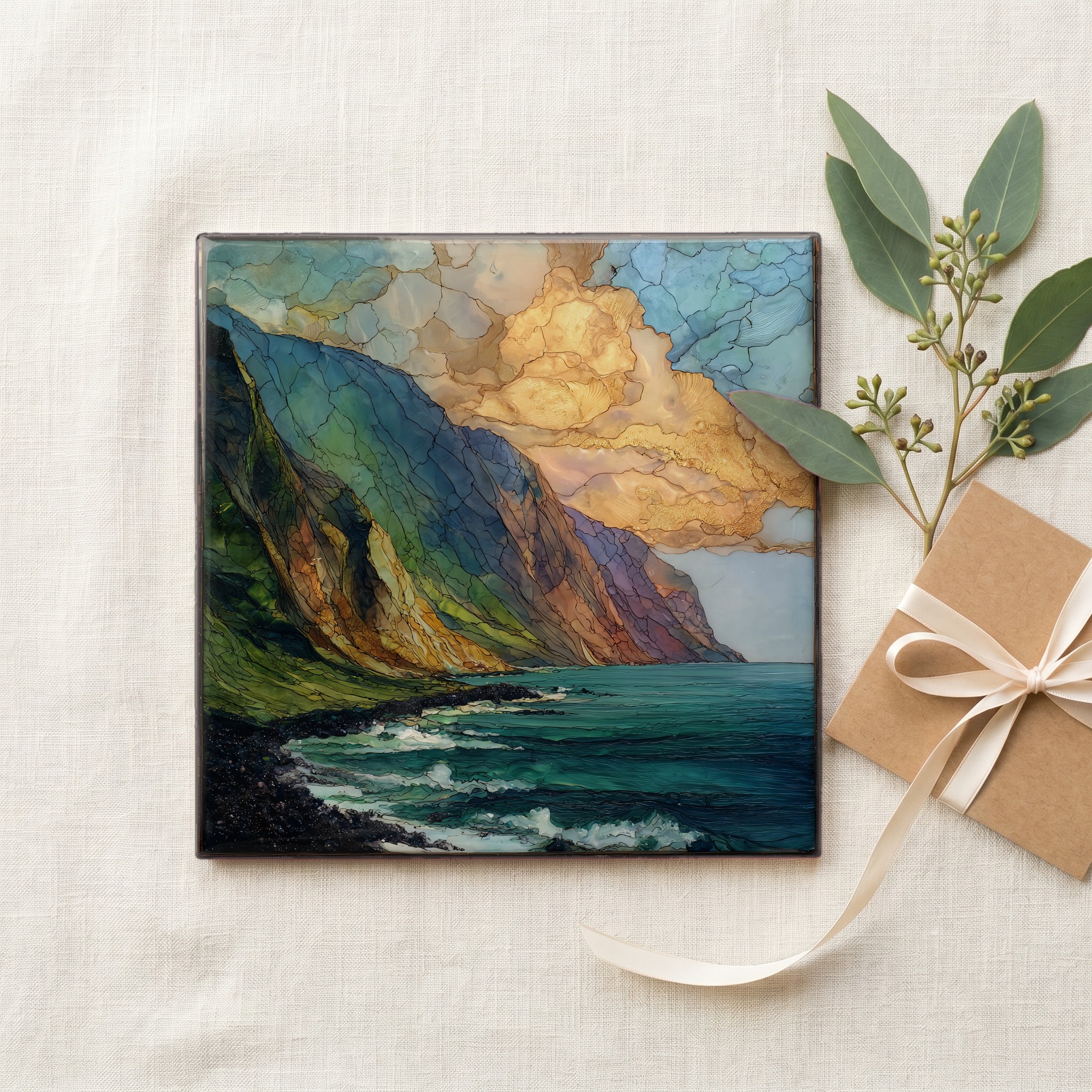
comes gift-ready

Each tile ships in a kraft box, tied with cream ribbon, with a handwritten note from the studio if you'd like to add one.
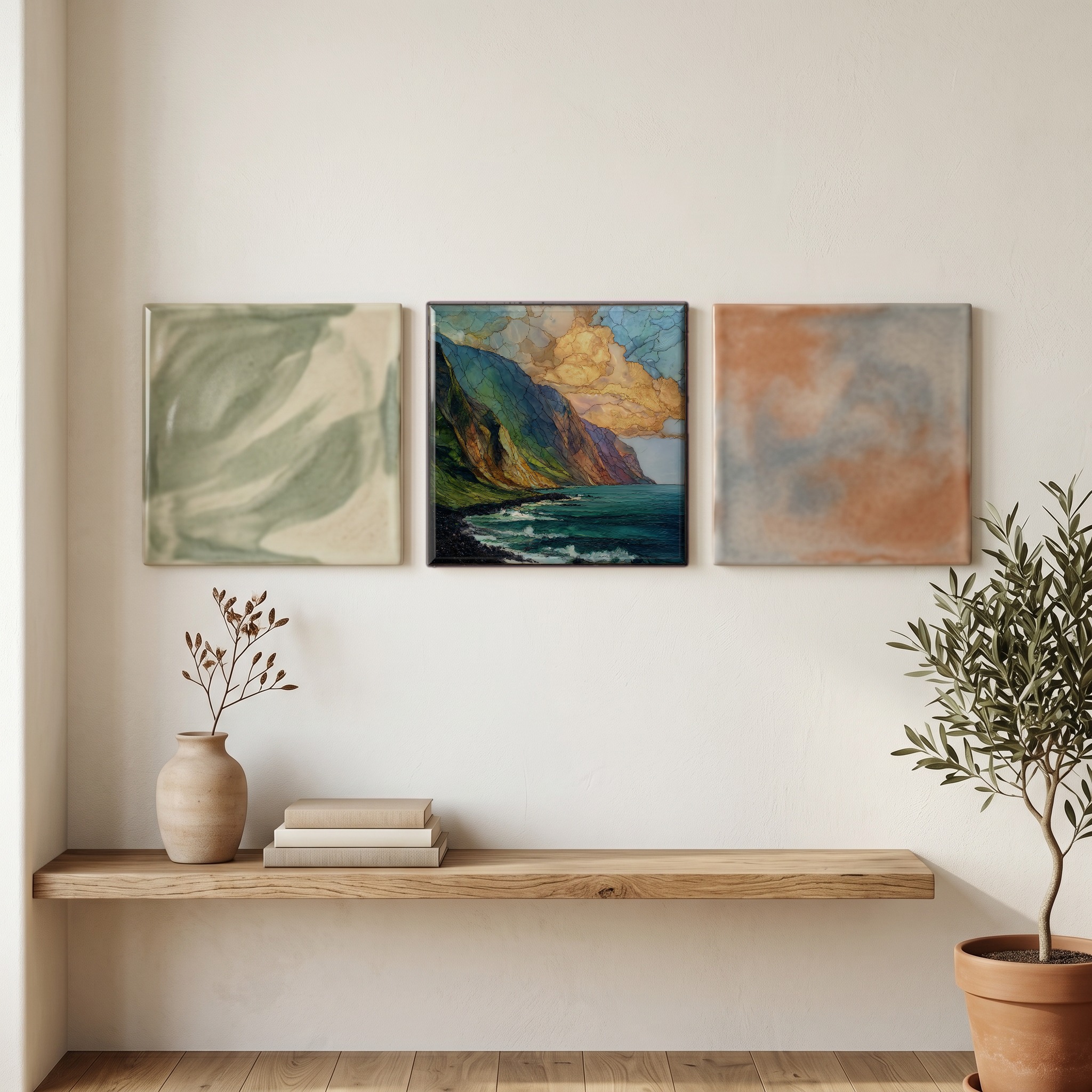
or build a grouping
or build a grouping

Three or five different vistas, hung together — a chapter of places you've been, or want to go.

about Kalaupapa Peninsula Molokai Ceramic Art Tile

The place, in three passes.

A little of what's known, in case you fall down the rabbit hole — or want to go see it yourself.
the place

A flat lava peninsula on the north shore of Molokai, built by the small Kauhakō volcano whose crater lake still holds at its centre. The pali above is among the tallest sea cliffs in the world, rising from roughly 1,600 to 3,300 feet. Kalaupapa is administered jointly by the Hawaii Department of Health and the National Park Service as Kalaupapa National Historical Park, established by Congress in 1980. It sits within Kalawao County, the smallest county in the United States by area and by population. The only practical access today is a small-plane flight to the LUP airstrip.

the silence

From 1866 to 1969 the Kingdom of Hawaii, then the Territory, then the State sent people with Hansen's disease here, about eight thousand in all. Father Damien de Veuster, a Belgian missionary priest, came to the settlement in 1873 and stayed until the disease took him in 1889. Mother Marianne Cope, a Franciscan sister from Syracuse, New York, arrived in 1888 and stayed thirty years. Both have since been canonised. Patients were granted the right to remain when the isolation policy ended; a small handful still live in Kalaupapa village. The original settlement at the east end of the peninsula, Kalawao, sits mostly empty now, with St. Philomena Church and the cemeteries kept up by the park.

the visit

Visiting requires a permit from the Hawaii Department of Health and, except for guests of remaining residents, a sponsored tour. Children under sixteen are not admitted. The mule ride down the pali from Pala'au on topside Molokai, twenty-six switchbacks and roughly 1,700 feet of descent, stopped after a 2018 landslide and has not resumed. Most visitors fly in from Honolulu or from topside Molokai on a small turboprop to the LUP airstrip. The park asks that photographs be taken with restraint; the village is still a working community, not a museum.

where
United States · Kalawao County, Hawaii
within
Kalaupapa National Historical Park
position
21.1881° N · 156.9814° W
the neighborhood

What's nearby.

A handful of named places within an hour's walk or short drive. Some we've already painted; some we will.
3 km S
Kalaupapa Overlook
cliff-top lookout at Pala'au State Park
3 km E
St. Philomena Church
Father Damien's church at Kalawao
1 km S
Kauhakō Crater
small volcanic crater with a saltwater lake
30 km E
Hālawa Valley
east Molokai valley and bay
22 km SW
Papohaku Beach
long west Molokai strand
N
Kalaupapa Peninsula Molokai Ceramic Art Tile
Kalaupapa Overlook
St. Philomena Church
Kauhakō Crater
Hālawa Valley
Papohaku Beach
common questions

What people ask.

A few questions we get about Kalaupapa Peninsula Molokai Ceramic Art Tile — and about bringing the piece home.
about the place

Kalaupapa Peninsula lies on the north shore of Molokai in Hawaii, a flat lava shelf at the foot of some of the tallest sea cliffs in the world. It is administered as Kalaupapa National Historical Park and is its own county, Kalawao, the smallest county in the United States by area and population.

The cliffs above Kalaupapa and the rough seas around it made it almost impossible to leave, which is why the Kingdom of Hawaii chose it in 1866 to isolate people with Hansen's disease. The policy continued under the Territory and the State until 1969, when forced isolation was repealed.

Joseph de Veuster, a Belgian priest of the Sacred Hearts of Jesus and Mary, came to the Kalawao settlement in 1873 and lived among the patients until he died of Hansen's disease in 1889. He was canonised as Saint Damien of Molokai by Pope Benedict XVI in 2009.

Marianne Cope was a Franciscan sister from Syracuse, New York, who came to Hawaii in 1883 and to Kalaupapa in 1888. She ran the women's home for thirty years, never contracted Hansen's disease, and was canonised in 2012 by Pope Benedict XVI.

The pali along the north coast of Molokai rises from roughly 1,600 to 3,300 feet, among the tallest sea cliffs in the world. The peninsula itself sits essentially at sea level on a lava shelf built by the small Kauhakō volcano.

Yes, by permit from the Hawaii Department of Health and, except for guests of remaining residents, on a sponsored tour. Children under sixteen are not admitted. Since a 2018 landslide on the cliff trail, the commercial mule ride has not run; most visitors now fly in to the LUP airstrip.

A small handful of former patients still live in Kalaupapa village by their own choosing. When the isolation policy was repealed in 1969, residents were granted the right to remain at Kalaupapa for the rest of their lives, with state and federal support for the community.

about the piece in your home

It carries well as a gift for someone with family or church history connected to Hawaii, and for Catholics with devotion to Saint Damien and Saint Marianne. Kalaupapa is sacred ground to many Hawaiian and Catholic families. A Small or Medium with a handwritten note from the studio fits a side table or a chapel shelf.

The deep blue of the channel, the green of the peninsula, and the basalt brown of the cliffs sit well in Coastal-modern, Pacific-modern, and Jewel-tone Maximalist rooms. The stained-glass quality of the painting also reads in quiet contemplative spaces and in homes that lean Catholic-traditional.

Coastal-modern has shifted toward darker, deeper palettes (Pacific blue, basalt, fern) rather than the white-and-beige of a decade ago. Kalaupapa's deep ocean and stained-glass greens sit squarely in that direction. The Large works as a single statement piece over a long sofa.

Above a standard sofa or a wide console, the single Large 24-inch tile holds the wall on its own. A four-tile Mural carries a longer wall in a great room. A nine-tile Mural is the right scale for a stairway wall or a double-height entry.

Yes, in the Dura Satin or Matte finish. Both are scratch-resistant and tolerate the steam and splashes of a bathroom or a kitchen splashback. The Glossy finish is meant for framed wall use in a dry room.

A soft microfibre cloth with warm water is enough for everyday dust and fingerprints. For a kitchen or bathroom install, a mild non-abrasive cleaner is fine. Avoid bleach, ammonia, or abrasive pads, which can dull the surface finish over time.

Yes. Every WenderVista piece is made in-house by Reid Wender at the studio in Knoxville, Tennessee. We do not license or resell other artists' work. Each tile is hand-finished before it leaves us.

if this one stayed with you

A few you might also love.

Hand-picked by the eye that found Sorapis. Same air, same kind of quiet.