Wender·Vista
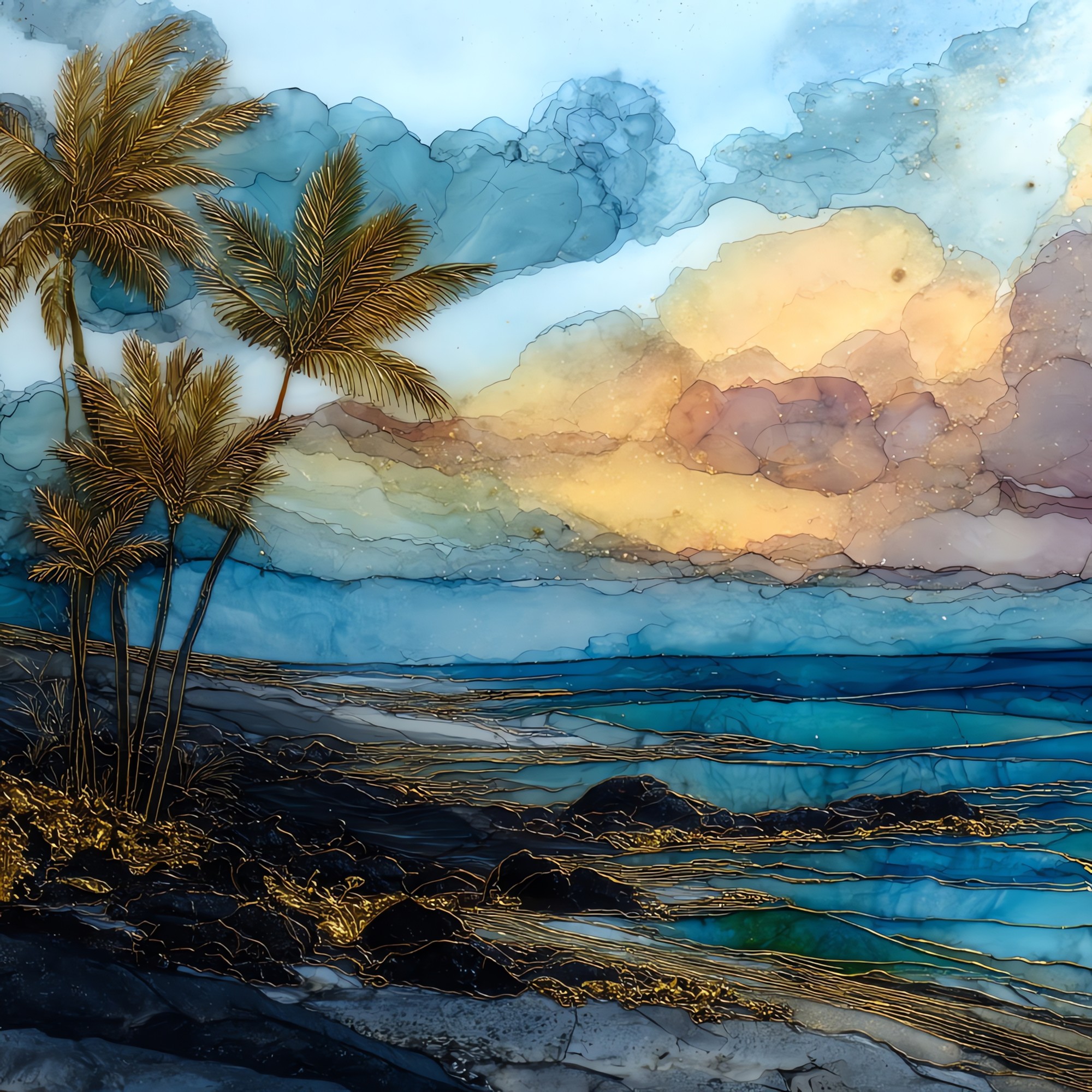
Kalapana Black Sand Big Island Ceramic Art Tile
shown on ceramic, 12-inch tileHawaii · United States
southeast of Hilo, where the road ends

Kalapana Black Sand Big Island Ceramic Art Tile

what the volcano leaves behind.

Where it lives

Not only on a wall.

A small tile on the nightstand catching the morning. A larger one above the fire. Yours, wherever you spend the slow hours.
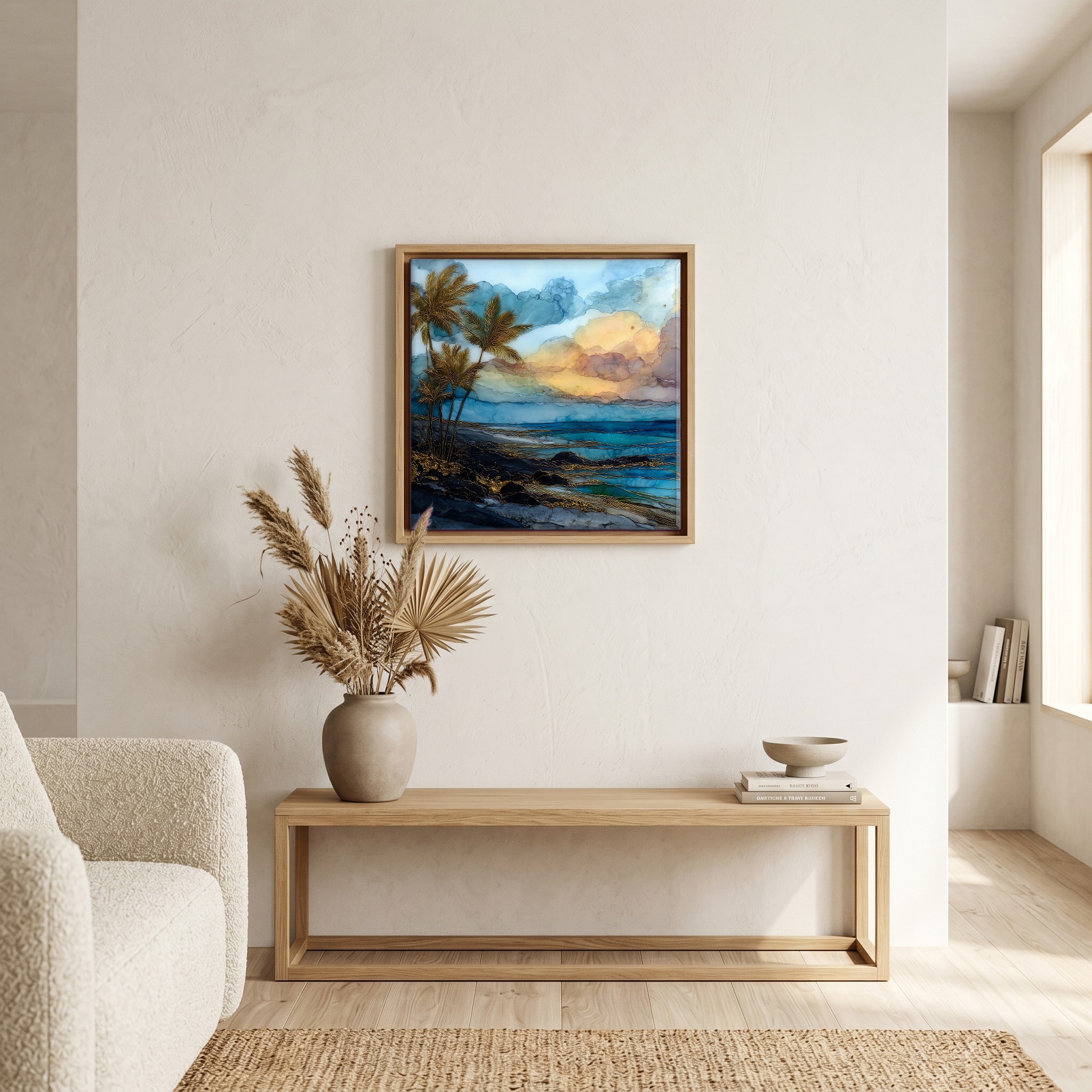
Above the bench, in a warm oak surround.
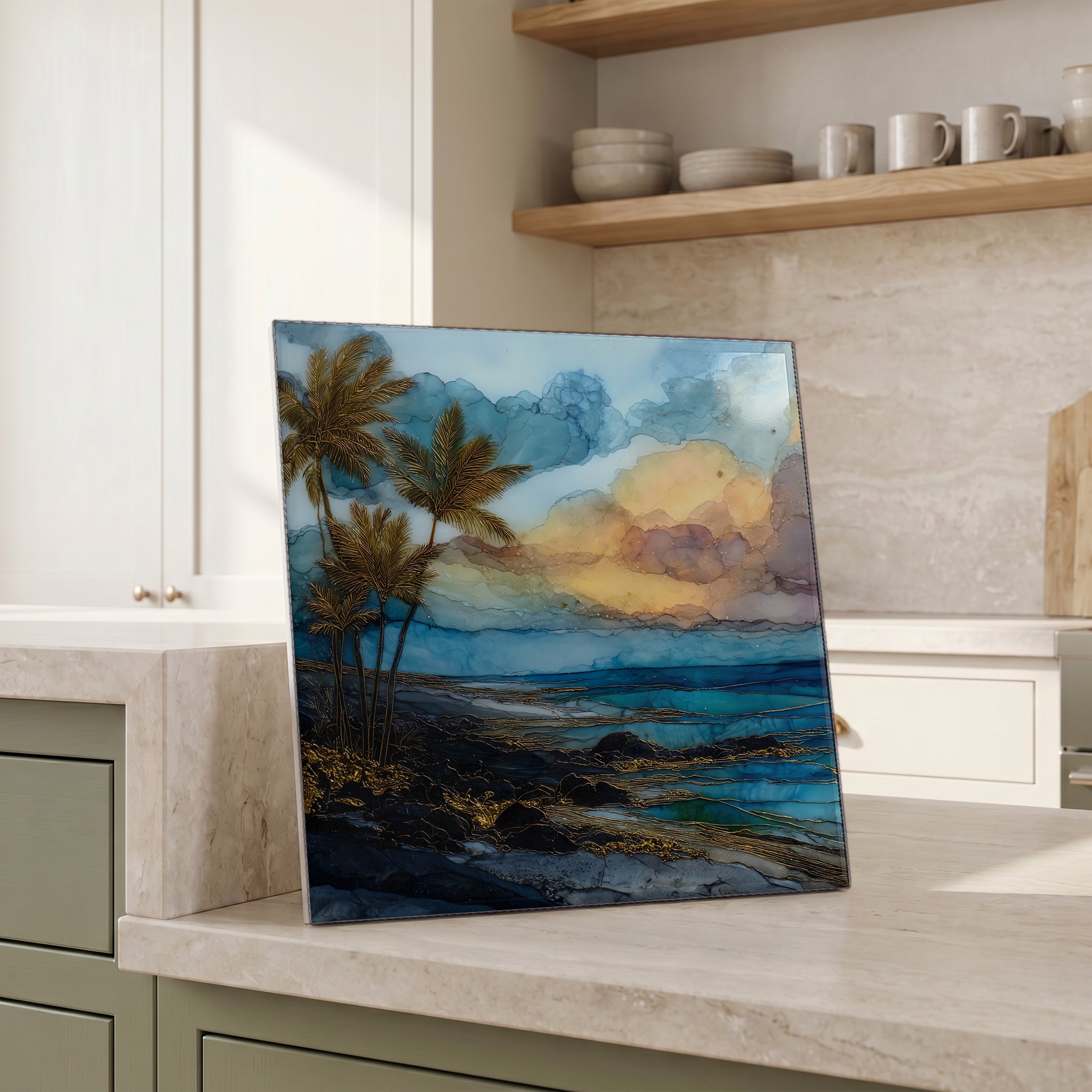
Beside the kettle, propped on the counter.
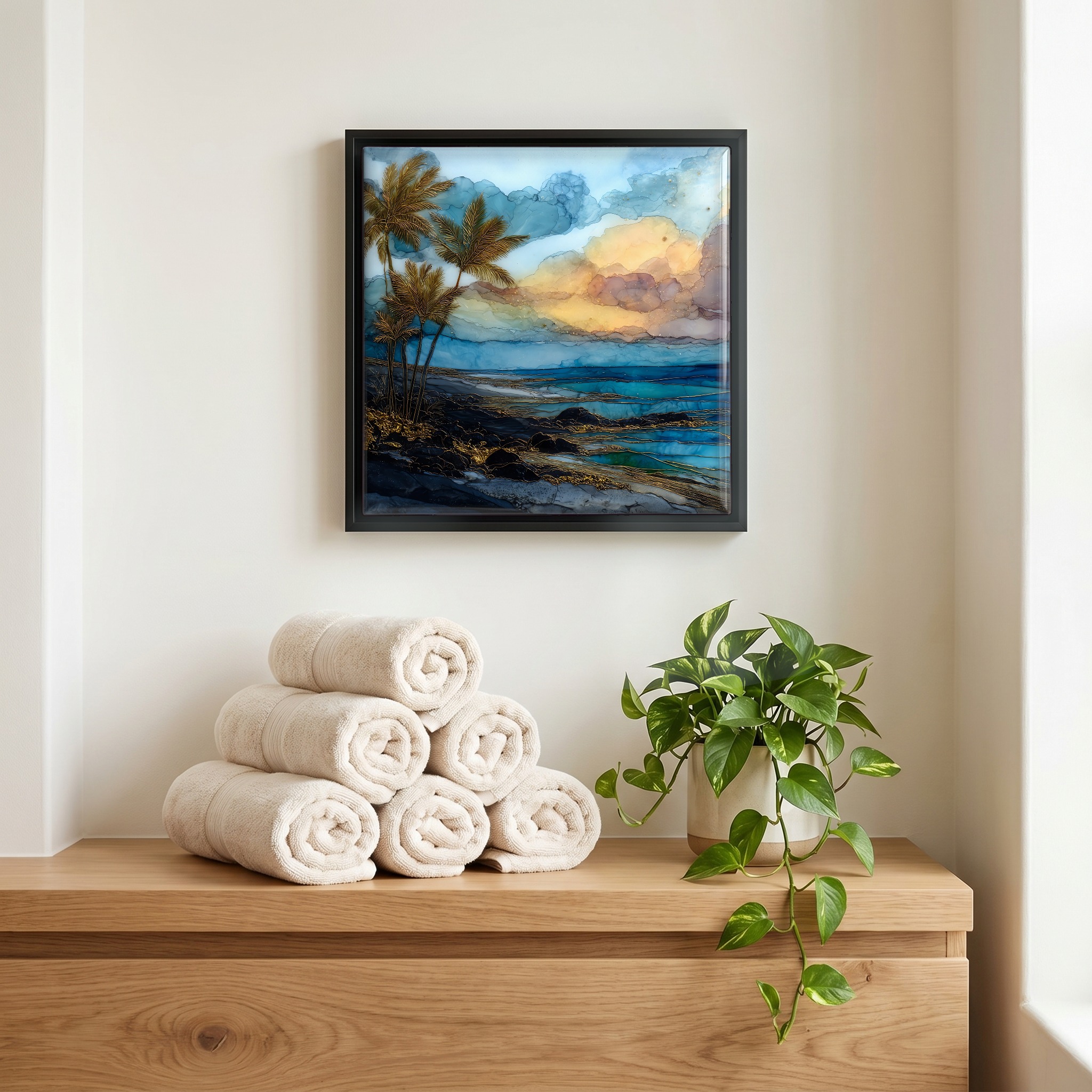
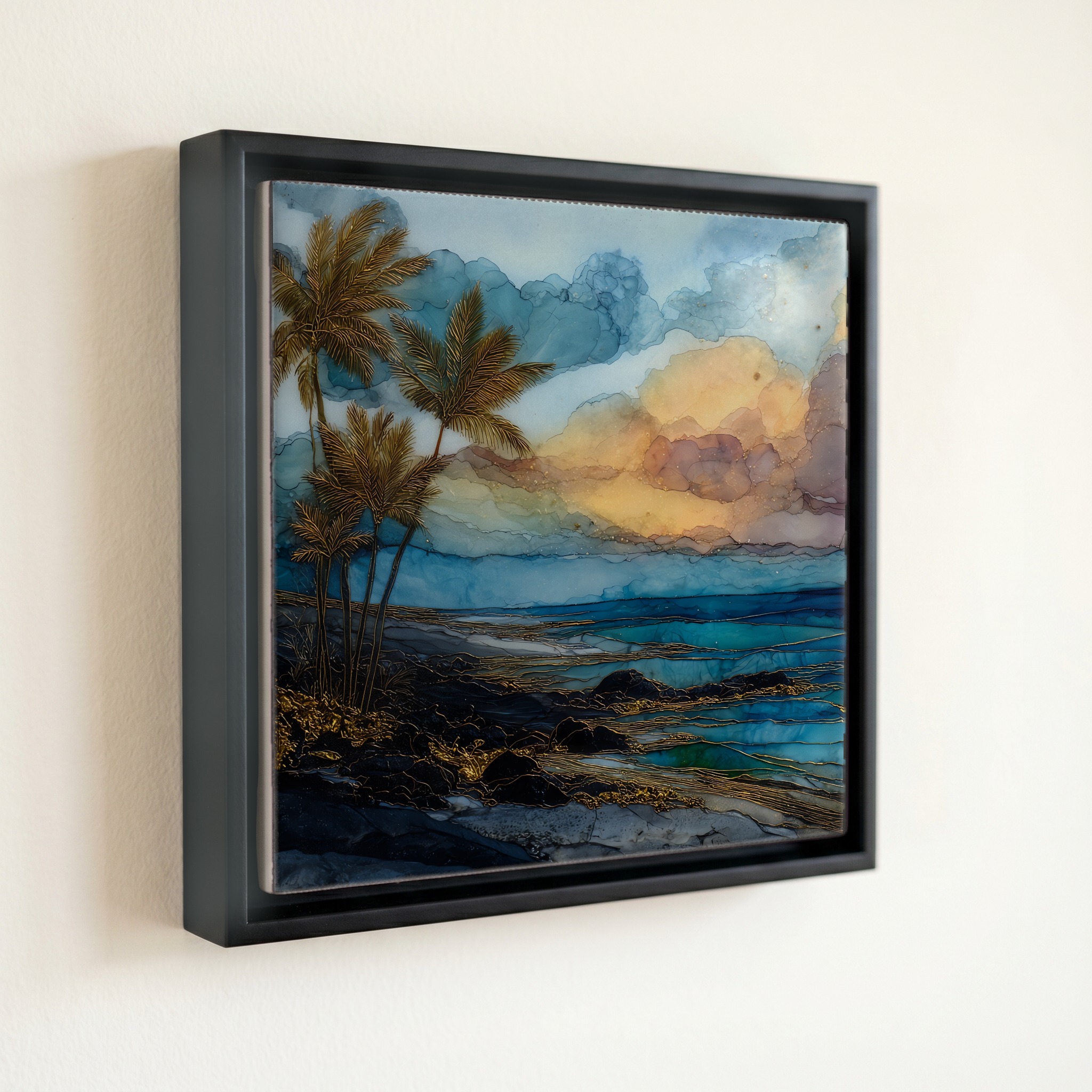
Above the linens, in a slim black surround.
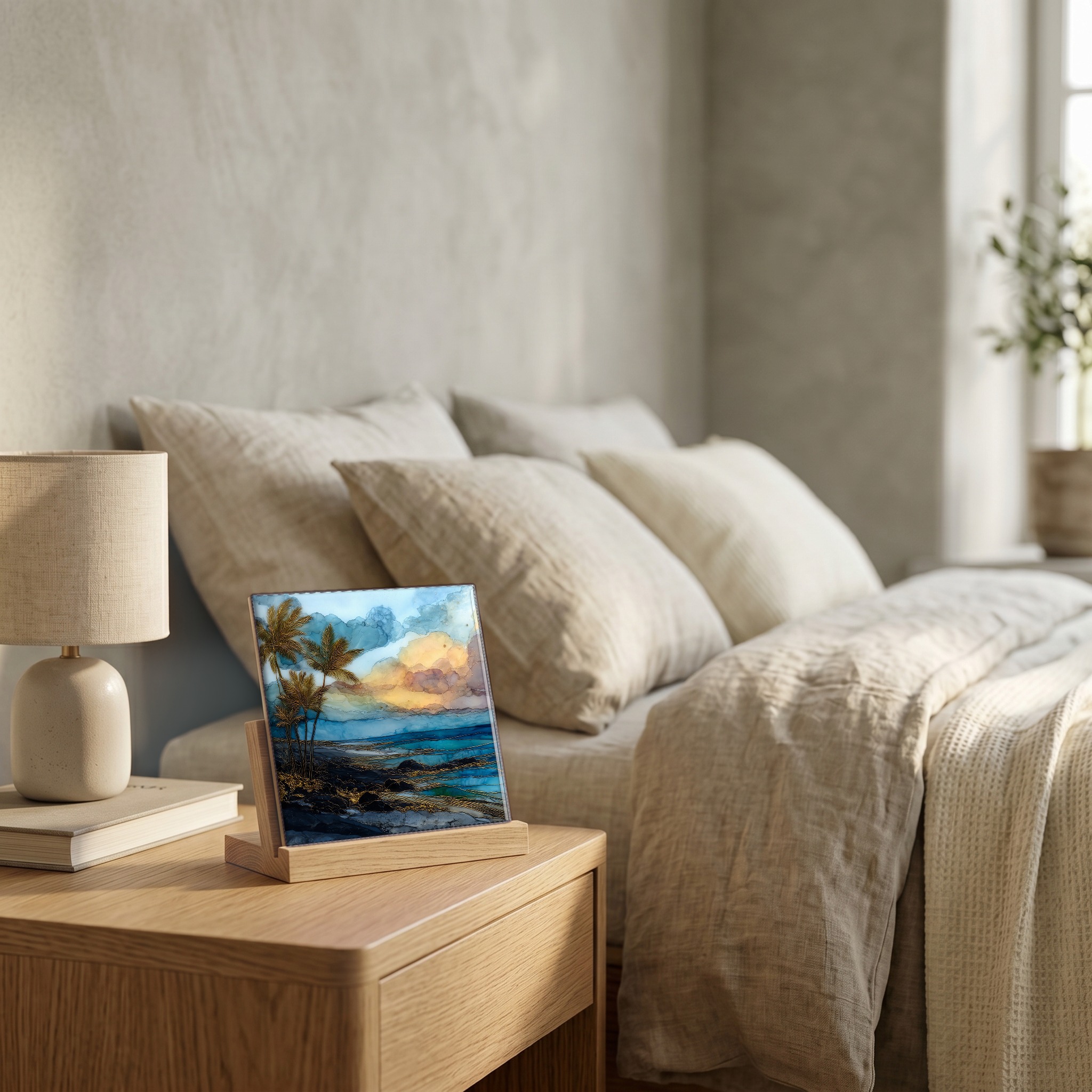
On the nightstand, on a light oak stand.
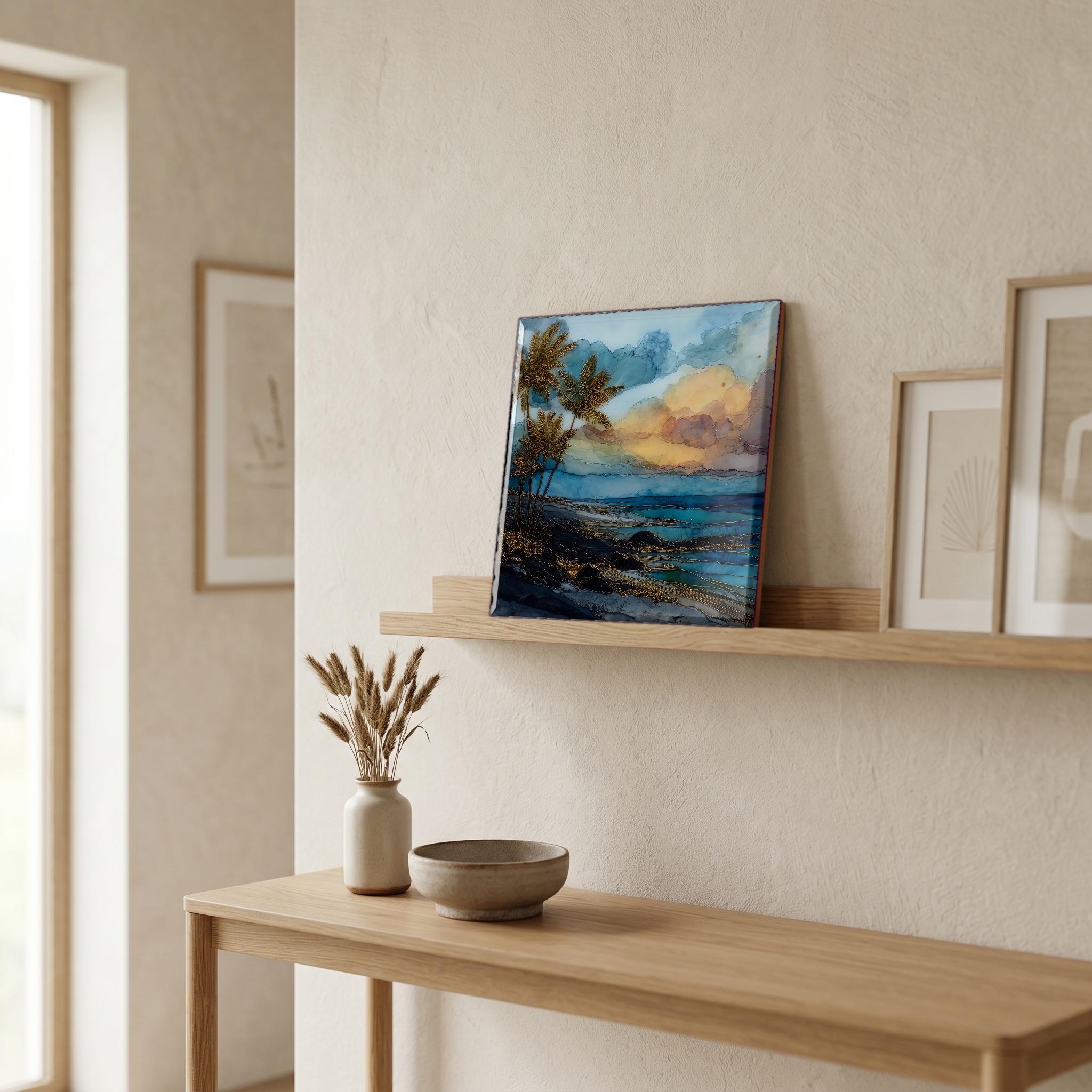
On a picture ledge, where the light comes in.
a note from the studio

The newest beach on one of the youngest coasts. Lava from Kīlauea overran the village of Kaimū in 1990 and ran on into the Pacific, where the surf has been breaking the new rock down into sand ever since. The black is basalt. The palms in even rows were planted by neighbours, a few at a time, after the flow cooled. The road runs out at the parking lot above the beach. From there it's a short walk across hardened pāhoehoe to the water.
from the studio
shown in a slim black floating frame · 6 × 6 in
— bring it home

Kalapana Black Sand Big Island Ceramic Art Tile, on ceramic.

Each tile is finished by hand in our Knoxville studio. Artwork is slowly infused into the ceramic surface under high heat and pressure, and rests beneath a thin glossy finish. The colour lives in the surface, not on top of it.

What kind of piece?
One tile — square or rectangle.
How big?
the popular one — counter, shelf, nightstand
6 × 6 in · 15 cm · 1.6 lb
Surface finish
A clear glossy finish — the artwork reads as if under resin. Ideal for show-pieces and framed wall art.
How it sits
A hidden cleat — sits ¼″ proud of the wall.
$58
Hand-finished and shipped from our studio at the foot of the Smokies. On your wall in about ten days.
size
6 × 6 in
15 cm
weighs
1.6 lb
solid in the hand
surface
ceramic, hand-finished
art rests beneath a thin glossy finish
from
Knoxville, TN
our family studio, at the foot of the Smokies
— start a Coaster Set

Pick any four 4-inch tiles — National Parks you've been to, a Smokies set, the four seasons of one place. $ for a set of , cork-backed, ready to live on the table.
comes gift-ready
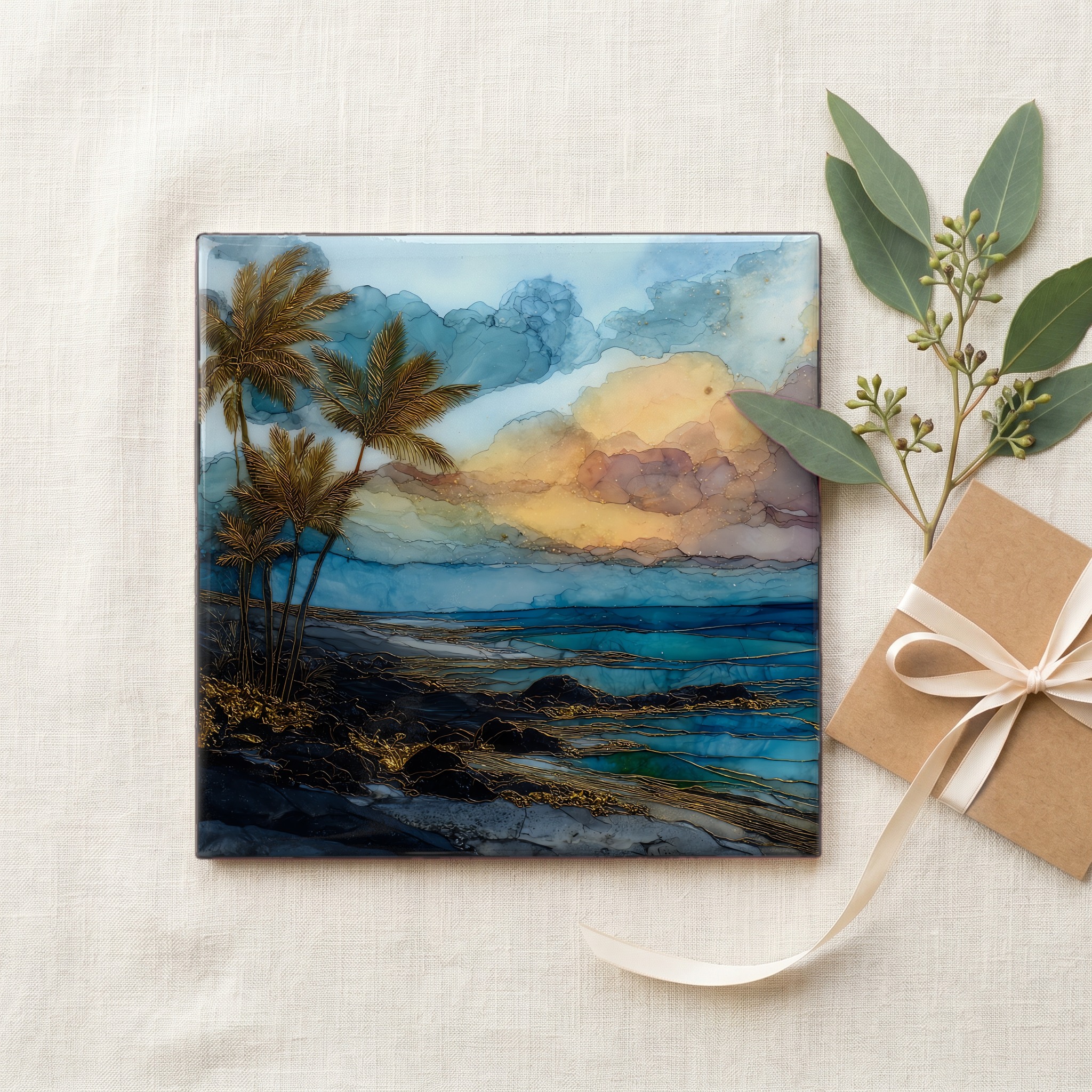
comes gift-ready

Each tile ships in a kraft box, tied with cream ribbon, with a handwritten note from the studio if you'd like to add one.
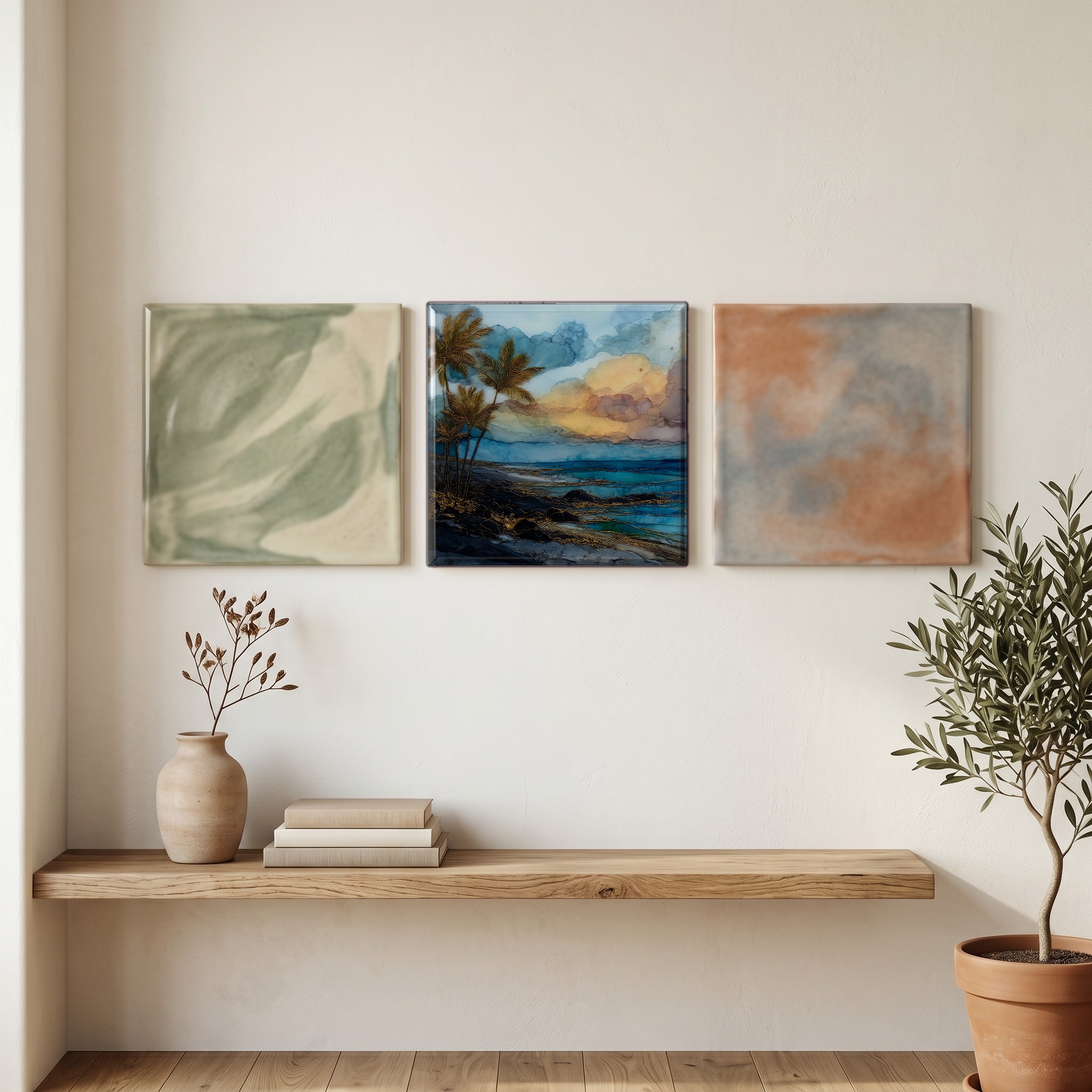
or build a grouping
or build a grouping

Three or five different vistas, hung together — a chapter of places you've been, or want to go.

about Kalapana Black Sand Big Island Ceramic Art Tile

The place, in three passes.

A little of what's known, in case you fall down the rabbit hole — or want to go see it yourself.
the place

Kalapana sits at the southeastern end of Hawaiʻi Island, in the Puna District about 30 km south of Hilo. The beach is reached by following Highway 130 to its current terminus at the village edge, then walking a short way over hardened lava to the shoreline. The land here is part of the active Kīlauea volcanic system; the village of Kaimū that once stood at this spot, with its palm-lined black-sand bay, was buried in 1990 by a flow from the Puʻu ʻŌʻō–Kūpaianaha eruption. The current beach has formed since on top of the new lava bench.

the stone

The sand is fragmented basalt. When molten lava meets the Pacific the contact is violent: superheated rock fractures in seconds, then the surf works on the broken pieces for years, grinding them to grain. The 1990 flow that buried Kaimū added new land to the southeastern coast of Hawaiʻi Island, much of it now slowly returning to sand. Most of the world's tropical beaches are pale because the underlying rock is coral or quartz; here the underlying rock is young lava from the Kīlauea volcanic system, and the sand it makes is black.

— informed by USGS: Kīlauea
the visit

The road runs out about 16 km past Pāhoa, where Highway 130 ends at the Kalapana access. From the parking area a short marked path crosses hardened pāhoehoe to the new shore. The sand is fine and warm in afternoon sun. The surf at Kaimū can be heavy and the bottom drops quickly; swimming is generally discouraged and there are no lifeguards. Most visitors come to walk, sit, and watch the coconut palms bend in the trade winds. The trees were replanted by the community after the 1990 flow. Uncle Robert's Awa Bar nearby is the village gathering place.

where
United States · Puna District, Hawaiʻi County, Hawaii
elevation
0 m · 0 ft
position
19.3670° N · 154.9830° W
the neighborhood

What's nearby.

A handful of named places within an hour's walk or short drive. Some we've already painted; some we will.
12 km W
Hawaiʻi Volcanoes National Park
national park
16 km N
Pāhoa
village
18 km NW
Puʻu ʻŌʻō
volcanic vent
N
Kalapana Black Sand Big Island Ceramic Art Tile
Hawaiʻi Volcanoes National Park
Pāhoa
Puʻu ʻŌʻō
common questions

What people ask.

A few questions we get about Kalapana Black Sand Big Island Ceramic Art Tile — and about bringing the piece home.
about the place

Kalapana sits on the southeastern coast of Hawaiʻi Island, in the Puna District about 30 km south of Hilo. Highway 130 ends at the village access; from the parking area a short path over hardened lava reaches the new beach.

The current beach is fragmented basalt from the 1990 lava flow that buried the village of Kaimū and its palm-lined black-sand bay. Pacific surf has been breaking the new lava bench down into sand ever since.

The sand is fine-grained basalt. When molten lava meets the ocean it shatters on contact; the surf then grinds the fragments for years. Hawaiian black-sand beaches are most often associated with the Kīlauea volcanic system on the Big Island.

Kaimū Beach, regarded for decades as one of the finest black-sand beaches in Hawaiʻi, was buried in 1990 by lava from the Puʻu ʻŌʻō–Kūpaianaha eruption. The village of Kalapana and most of Kaimū were lost in the same flow.

Swimming is generally discouraged. The surf at Kalapana is often heavy, the new bottom shelves quickly, and there are no lifeguards. Most visitors walk the sand, watch the surf, and sit under the coconut palms replanted after the eruption.

No. Kalapana sits just outside the park boundary, on the southeastern flank of the active Kīlauea volcanic system. The park's Chain of Craters Road formerly connected to this area but was severed by lava flows in the 1990s and has not been rebuilt.

about the piece in your home

It has carried well for our customers with roots in Hawaiʻi Island. The 1990 flow is part of the island's recent memory and the new beach is a quiet story of recovery. A Small or a Keepsake with a handwritten note from the studio travels well in a card.

The artwork's deep volcanic black, ocean blue, and coconut-green palette sits comfortably in coastal-modern interiors, in Japandi rooms that lean toward dark wood and stone, and against pale plaster or warm white walls where the black holds its weight.

It is. Coastal-modern has been moving away from pale-sand neutrals toward darker, more place-specific palettes such as volcanic black, deep teal, and weathered driftwood. A Hawaiian black-sand beach reads as both coastal and grounded; the Medium or a Large carries the look in a main room.

Above a standard sofa or long console, the single Large is the most common choice. For more presence, a 4-tile Mural fills the width of a wall; for a feature wall in an entry or stairwell, a 9-tile Mural reads at room scale.

Yes. Choose the Dura Satin or Matte finish for any installation with steam or splashes, including showers and behind a range. The Glossy finish is intended for framed wall art in dry rooms. The colour lives in the surface, not above it.

A soft microfibre cloth and water is enough. The colour is slowly infused into the ceramic surface under high heat and pressure and rests beneath a thin glossy finish, so it does not lift, scuff, or fade with ordinary cleaning.

Yes. Every WenderVista piece is original work by Reid Wender, our curator. We do not license, syndicate, or reproduce other artists' work. Each tile is hand-finished in our Knoxville studio.

if this one stayed with you

A few you might also love.

Hand-picked by the eye that found Sorapis. Same air, same kind of quiet.