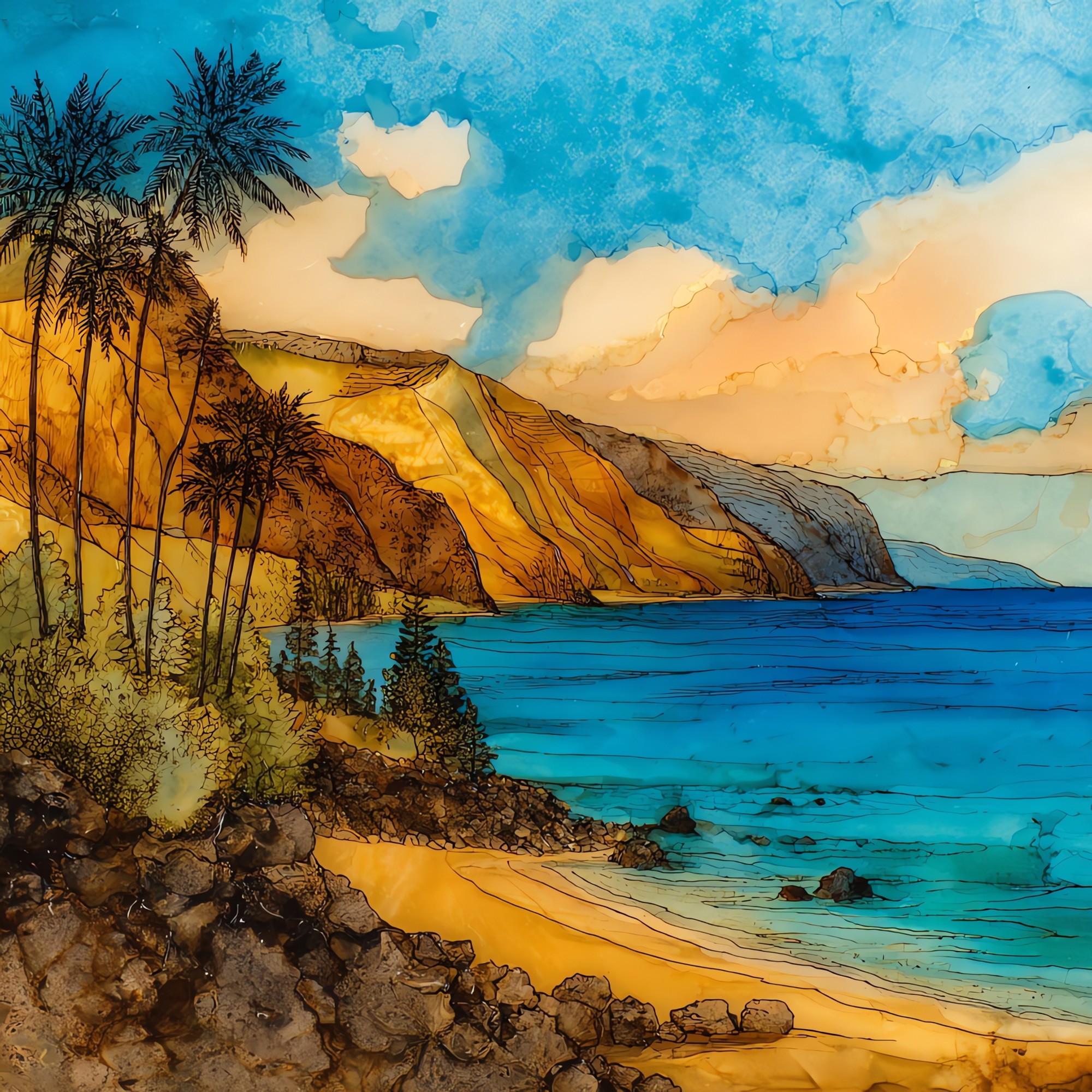
Kaiolohia Lanai Ceramic Art Tile
— the wreck the reef won't release.
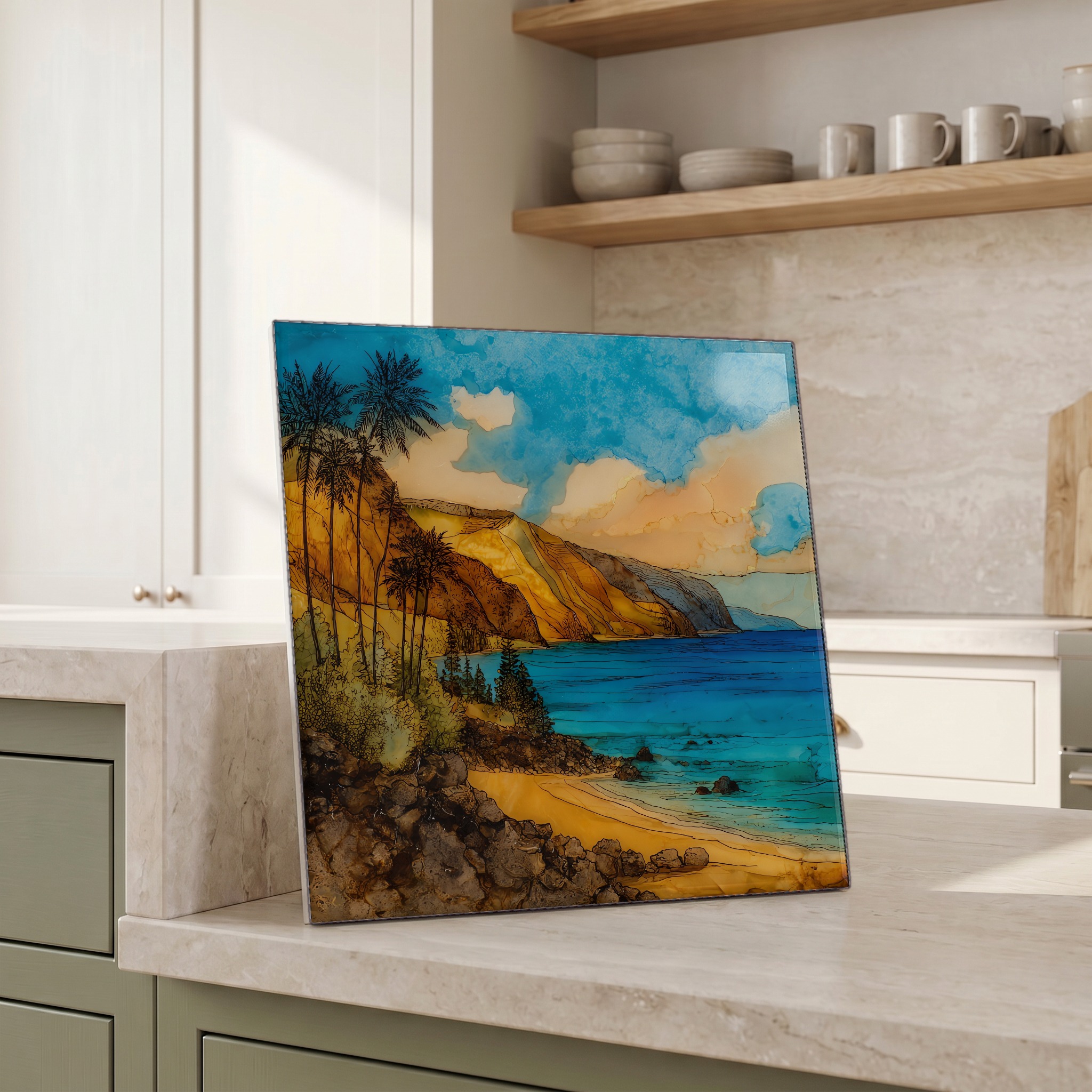
Not only on a wall.
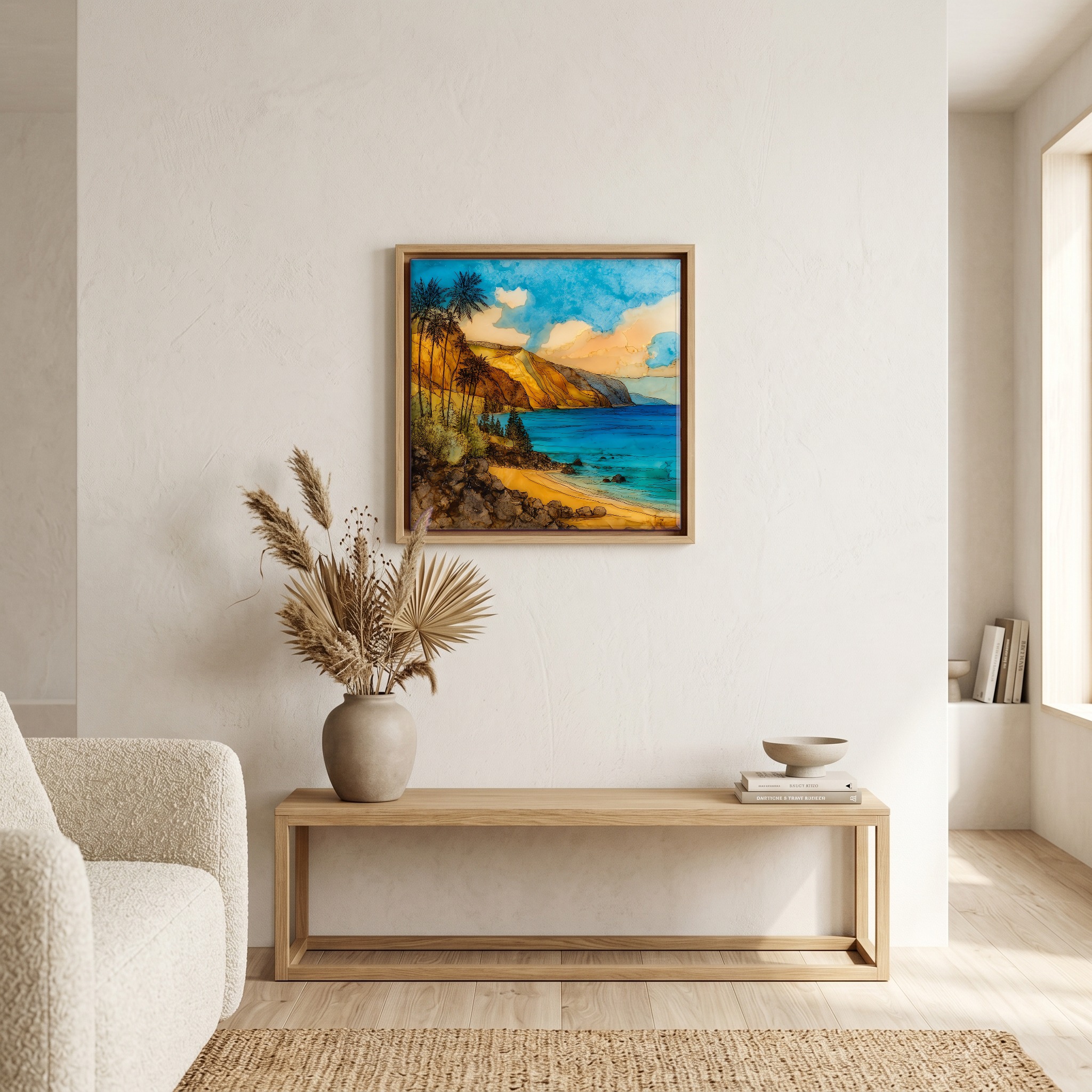
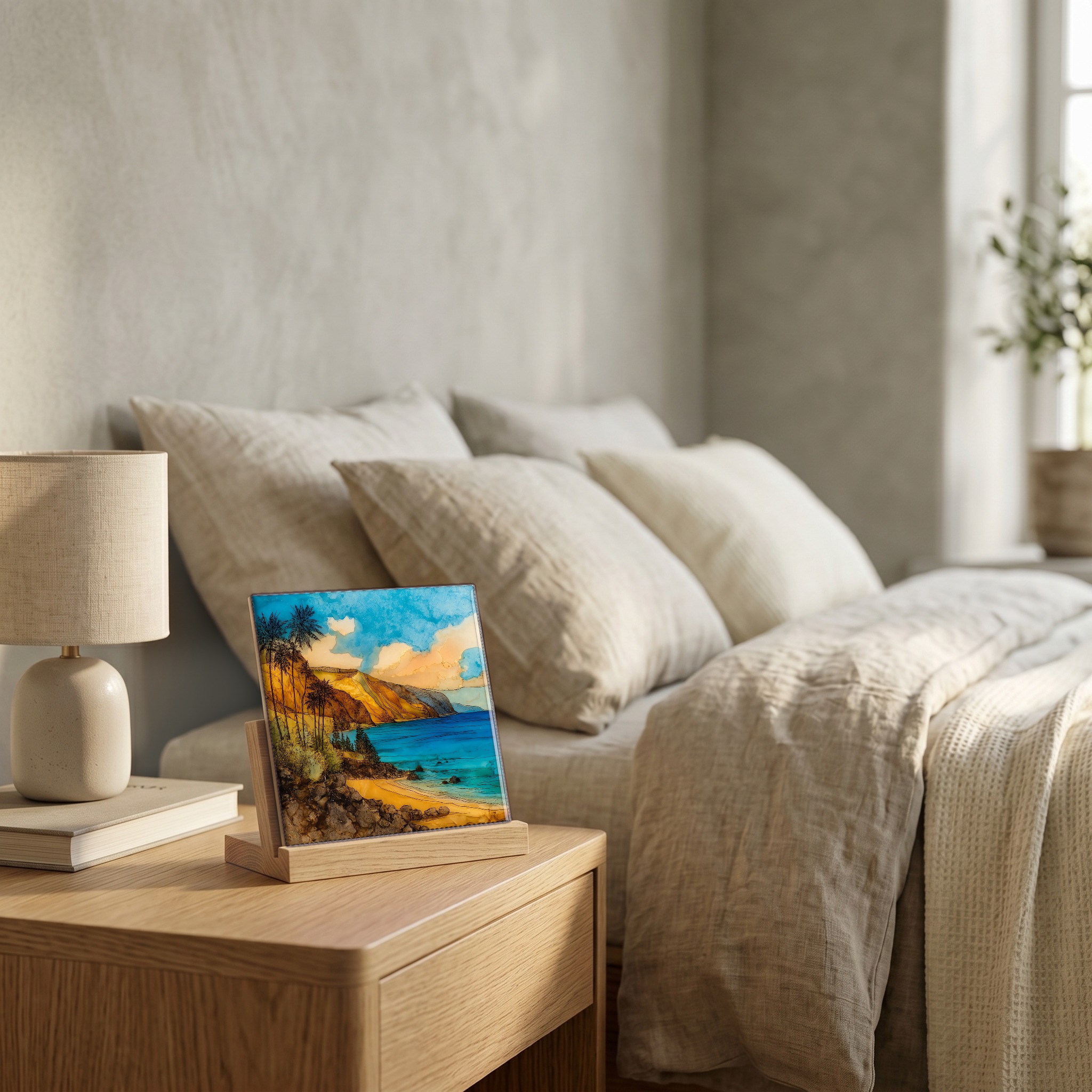
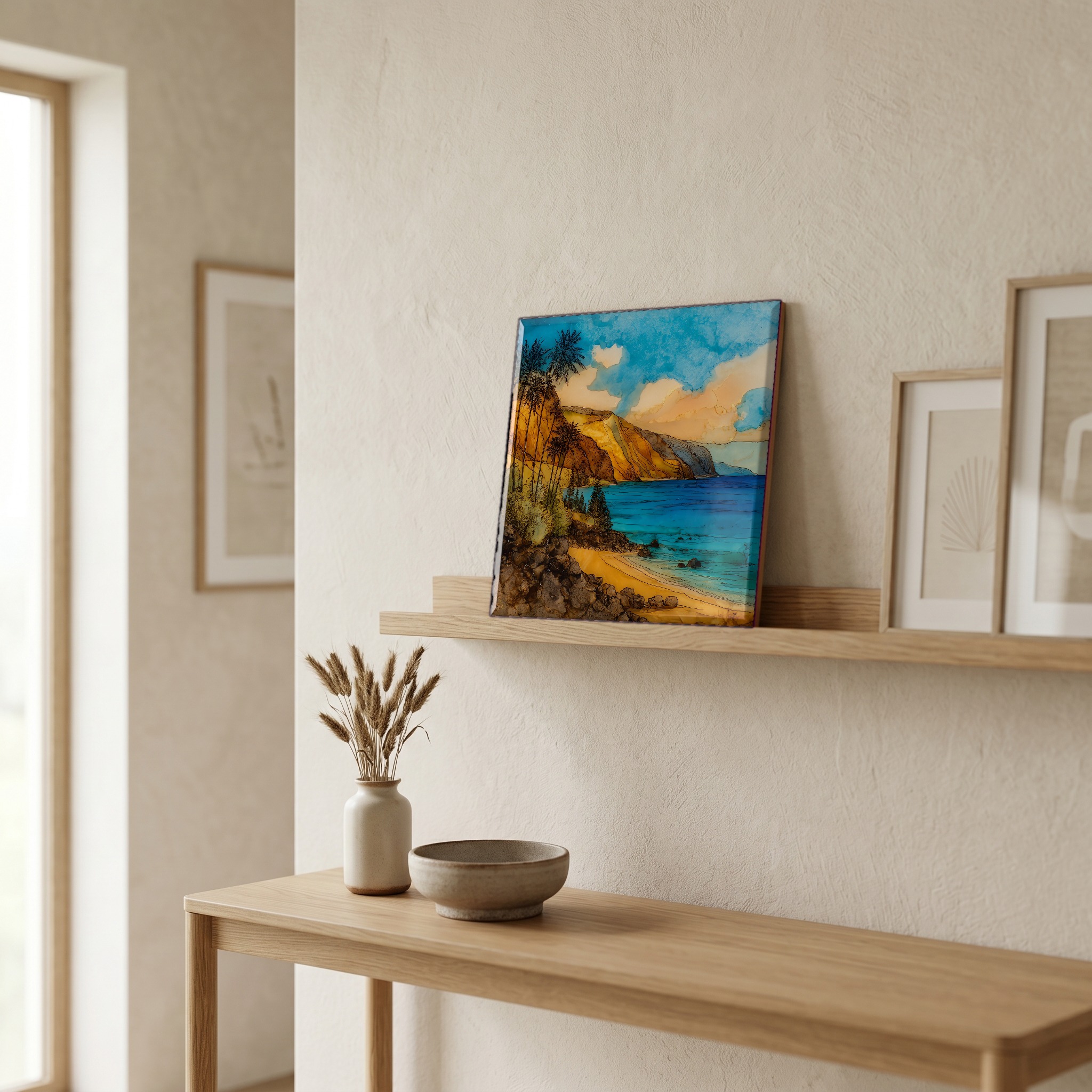
“Eight miles of beach on the windward side of Lanai, with a concrete-hulled wartime barge grounded on the outer reef since the late 1940s. The trade winds come straight across the Kalohi Channel from Molokai, so the sand keeps moving and the driftwood keeps arriving. There is no swimming here. The current does not negotiate. People drive out from Lanai City on a rutted dirt road, walk the beach for an hour, and turn around. The wreck has been rusting in place for longer than most of them have been alive.
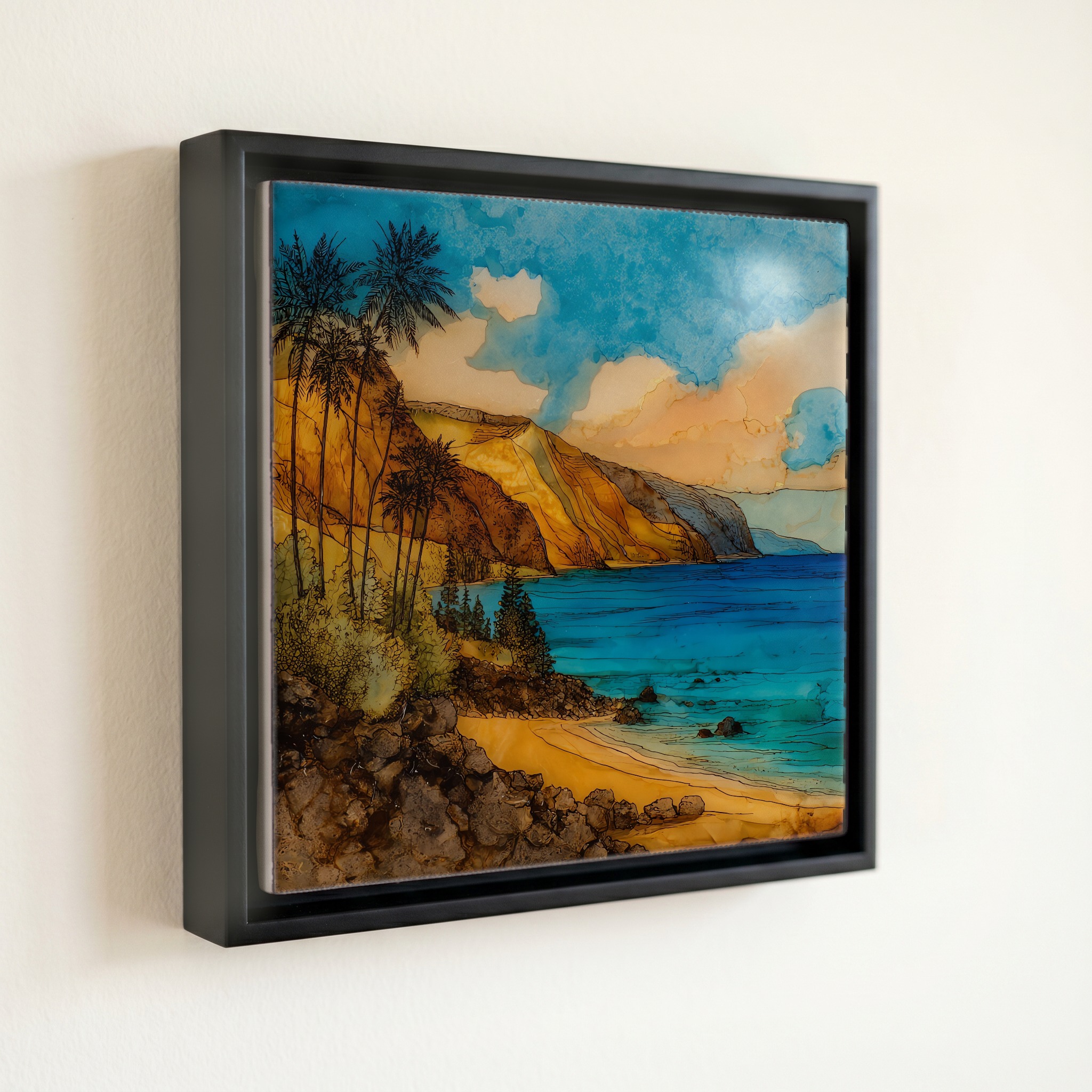
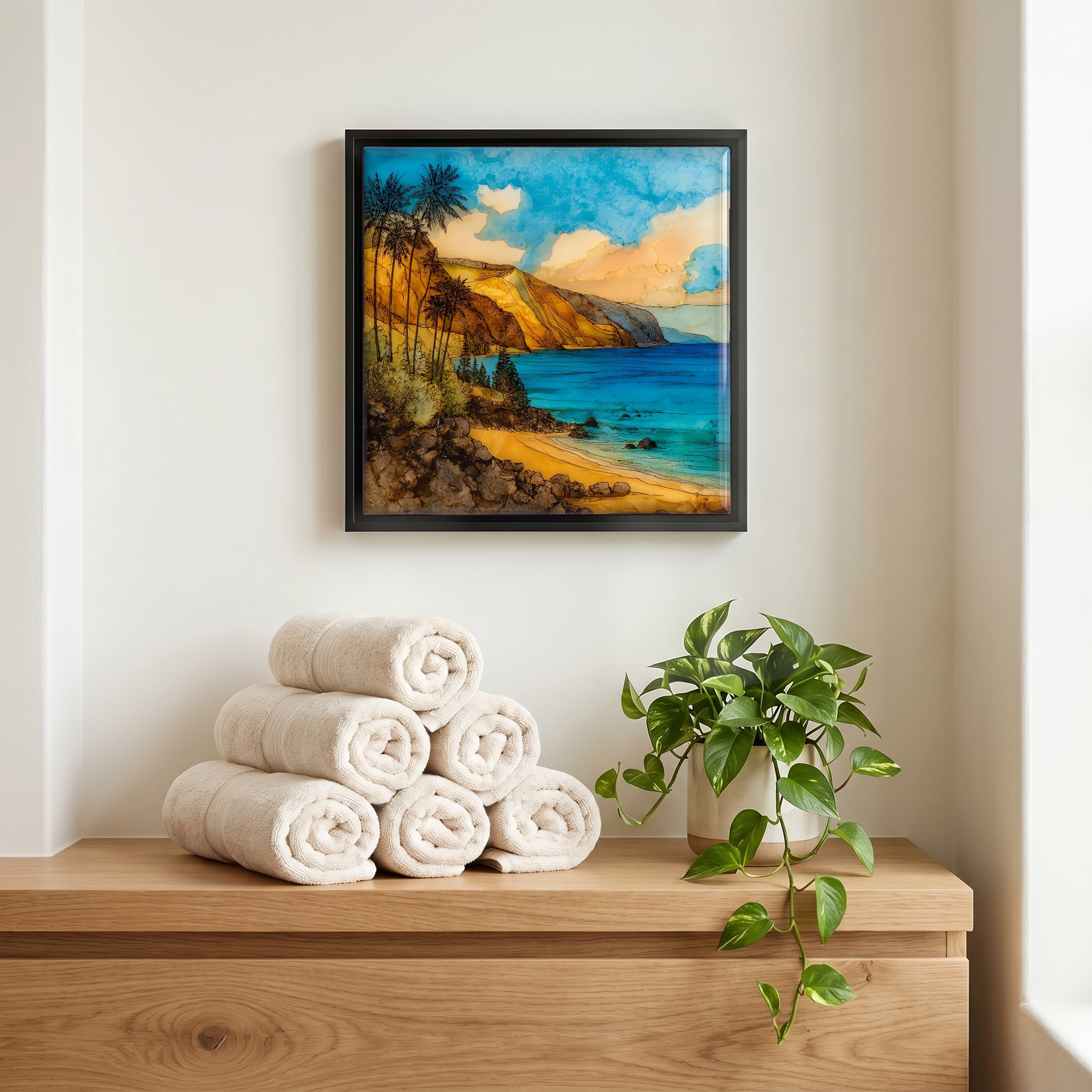
Kaiolohia Lanai Ceramic Art Tile, on ceramic.
Each tile is finished by hand in our Knoxville studio. Artwork is slowly infused into the ceramic surface under high heat and pressure, and rests beneath a thin glossy finish. The colour lives in the surface, not on top of it.
Pick any four 4-inch tiles — National Parks you've been to, a Smokies set, the four seasons of one place. $ for a set of , cork-backed, ready to live on the table.
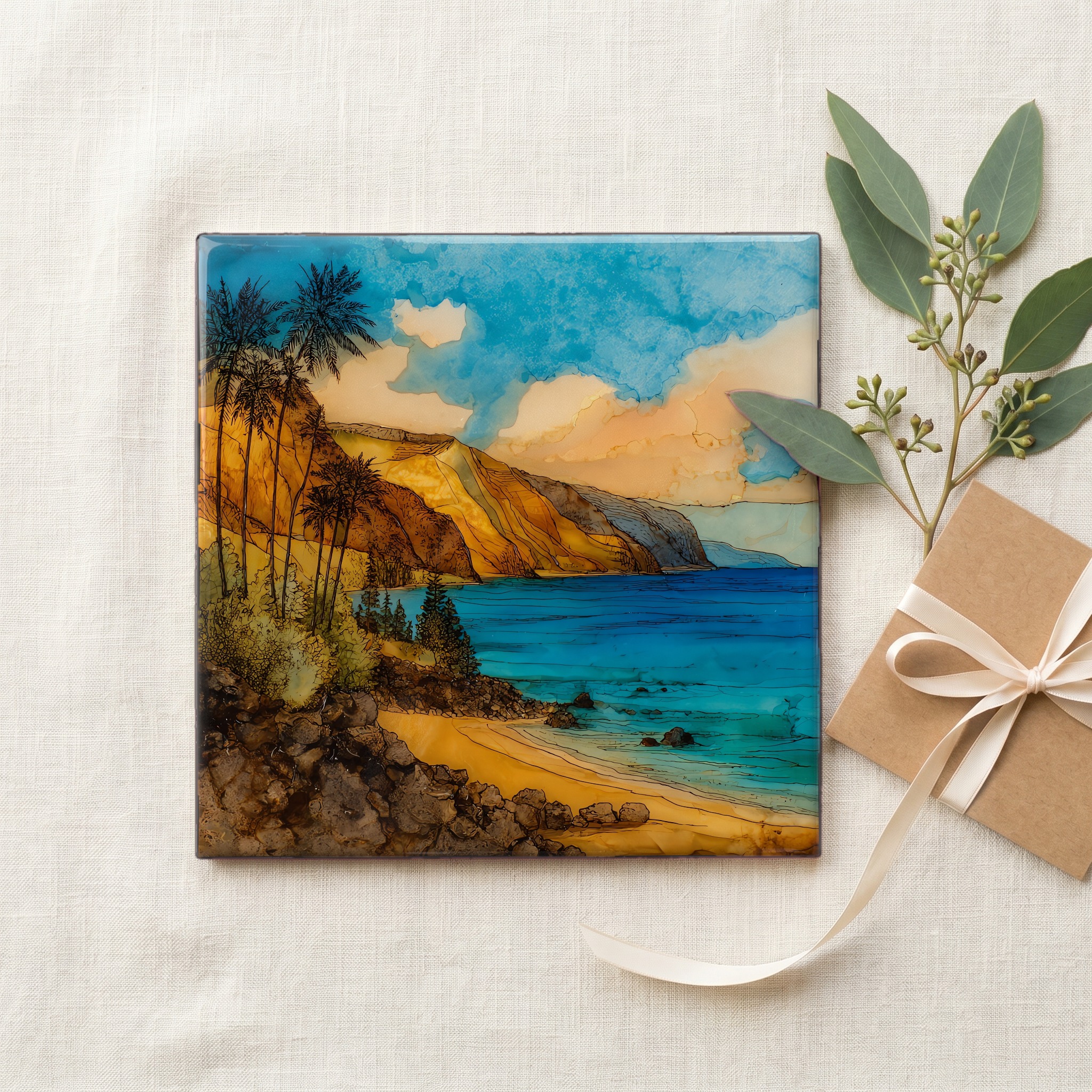
Each tile ships in a kraft box, tied with cream ribbon, with a handwritten note from the studio if you'd like to add one.
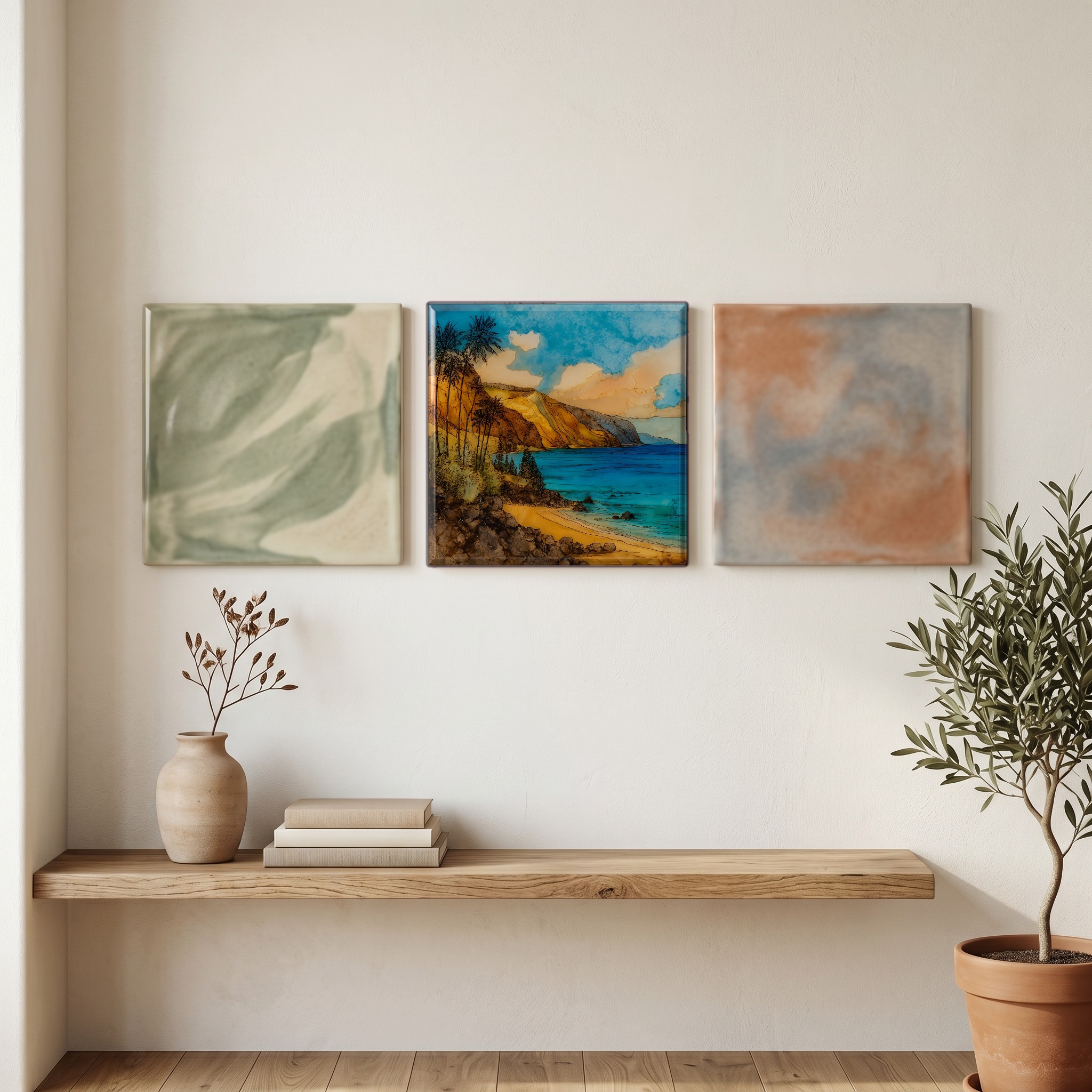
Three or five different vistas, hung together — a chapter of places you've been, or want to go.
The place, in three passes.
Kaiolohia sits on the northeast coast of Lanai, the smallest publicly accessible of the Hawaiian Islands at roughly 140 square miles. The beach runs about eight miles from Polihua at the north end down to Lopa, fronting a shallow reef on the Kalohi Channel that separates Lanai from Molokai. The island is reached by ferry from Lahaina on Maui or by a short flight to Lanai Airport; the beach itself is reached from Lanai City via Keomoku Road, an unsealed track that requires a four-wheel-drive vehicle. Lanai is privately owned, with about 98 percent of its land held by Larry Ellison through his Pulama Lanai stewardship company since 2012.
The reef offshore is what holds the wreck. The YOGN-42, a concrete-hulled Navy refueling barge built during the Second World War, was abandoned to this reef sometime in the late 1940s and has been there ever since. The hull is reinforced concrete, which is why it has lasted. The rebar rusts away from the inside while the shell holds. The Kalohi Channel funnels trade-wind swell between Lanai and Molokai and runs hard along this coast, which is why nobody swims at Kaiolohia. The same current that put the barge on the reef also delivers the driftwood and sea glass that visitors come to find.
There is one way in. From Lanai City, population around 3,000 and the only town on the island, Keomoku Road drops to the coast on an unsealed surface that needs four-wheel-drive in dry weather and is impassable in wet. Pulama Lanai maintains the road for the island's small resident and visitor population. The walk along the beach toward the wreck is roughly a mile from the road's end. Petroglyphs at Kukui Point, carved into boulders above the strand line, sit a short walk inland. There are no facilities, no shade, and no lifeguards. The current that put the wreck on the reef is also the reason for the warning signs.