Wender·Vista
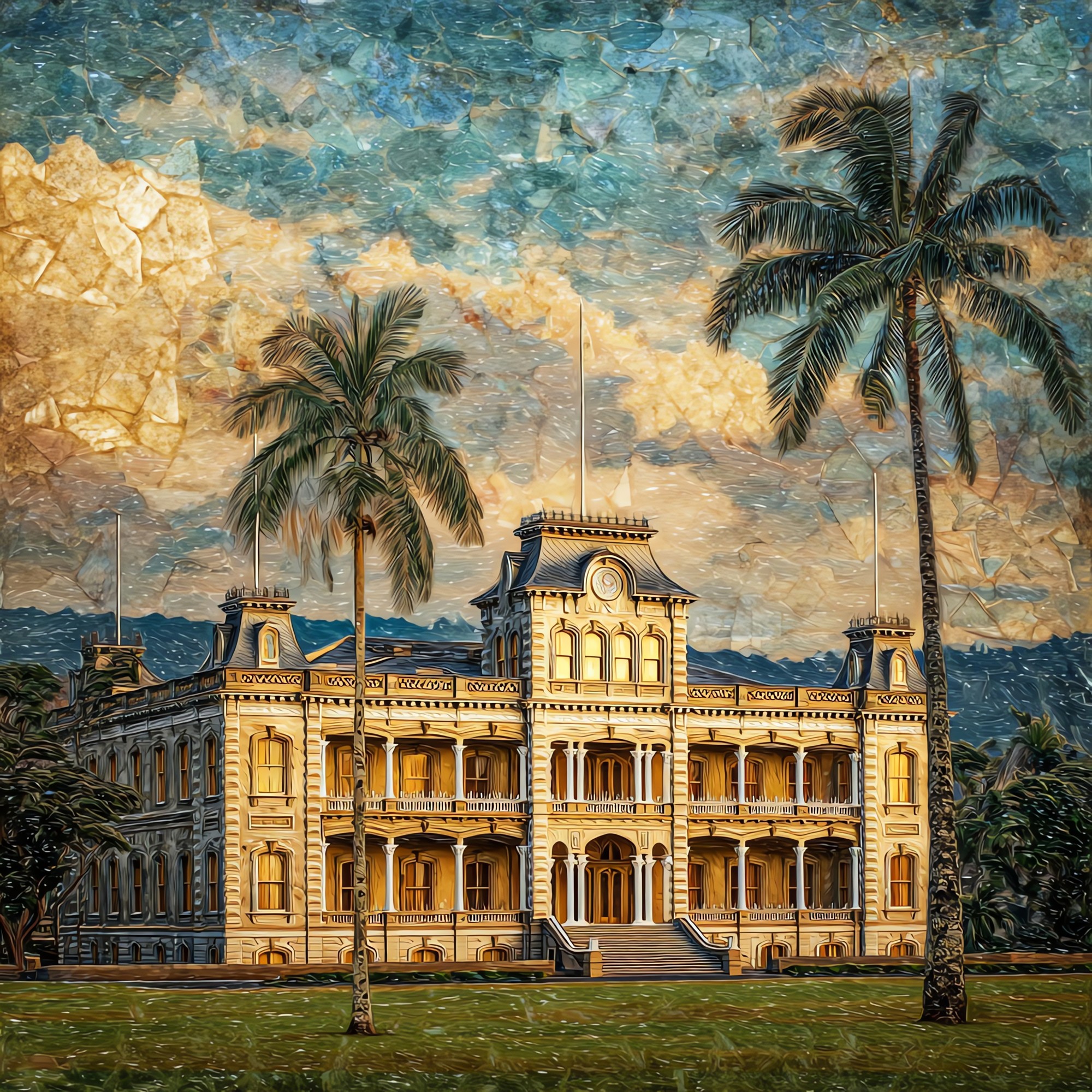
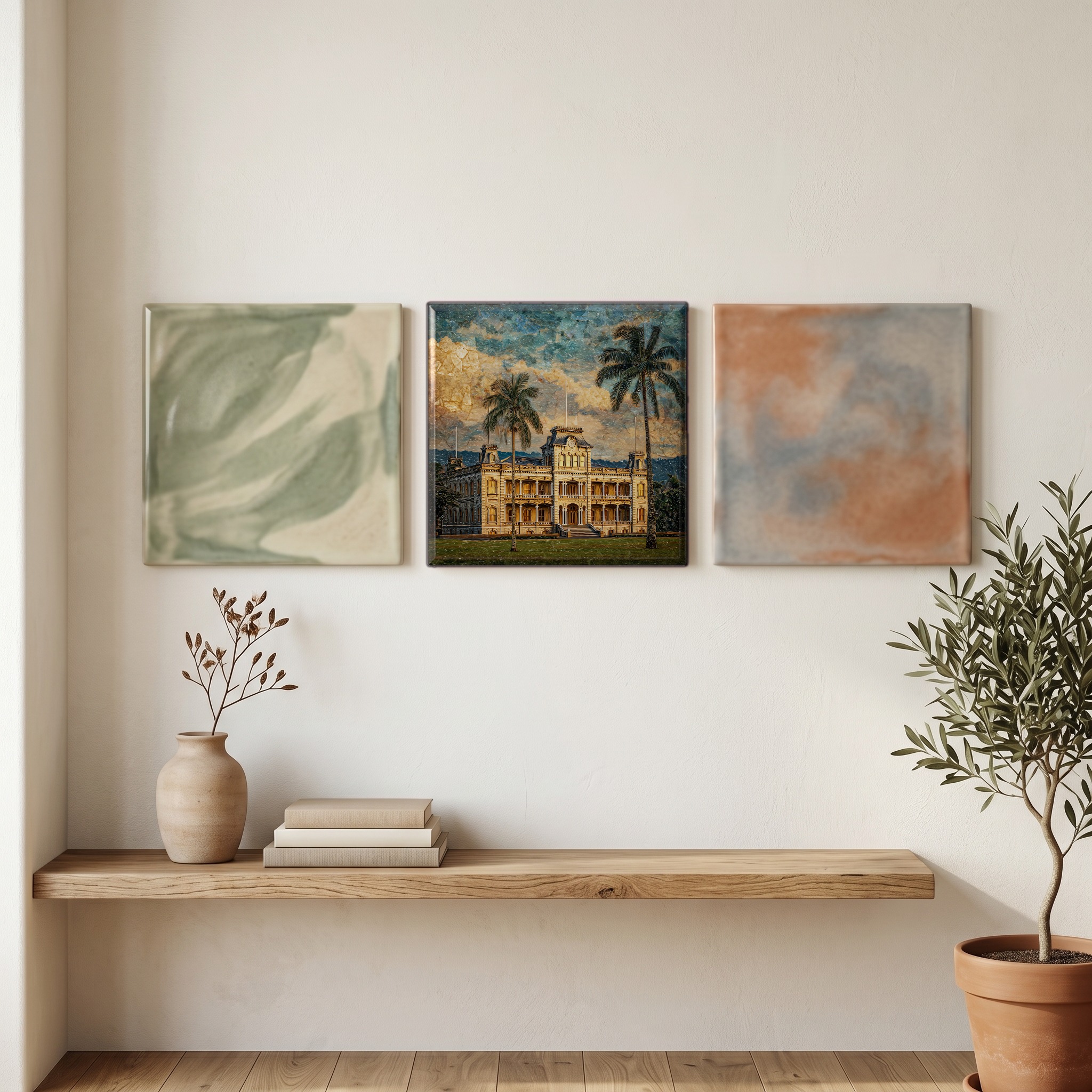
Iolani Palace Oahu Ceramic Art Tile
shown on ceramic, 12-inch tileHawaii · United States
in downtown Honolulu, a few blocks back from the harbor

Iolani Palace Oahu Ceramic Art Tile

— the palace that outlived the kingdom.

Where it lives

Not only on a wall.

A small tile on the nightstand catching the morning. A larger one above the fire. Yours, wherever you spend the slow hours.
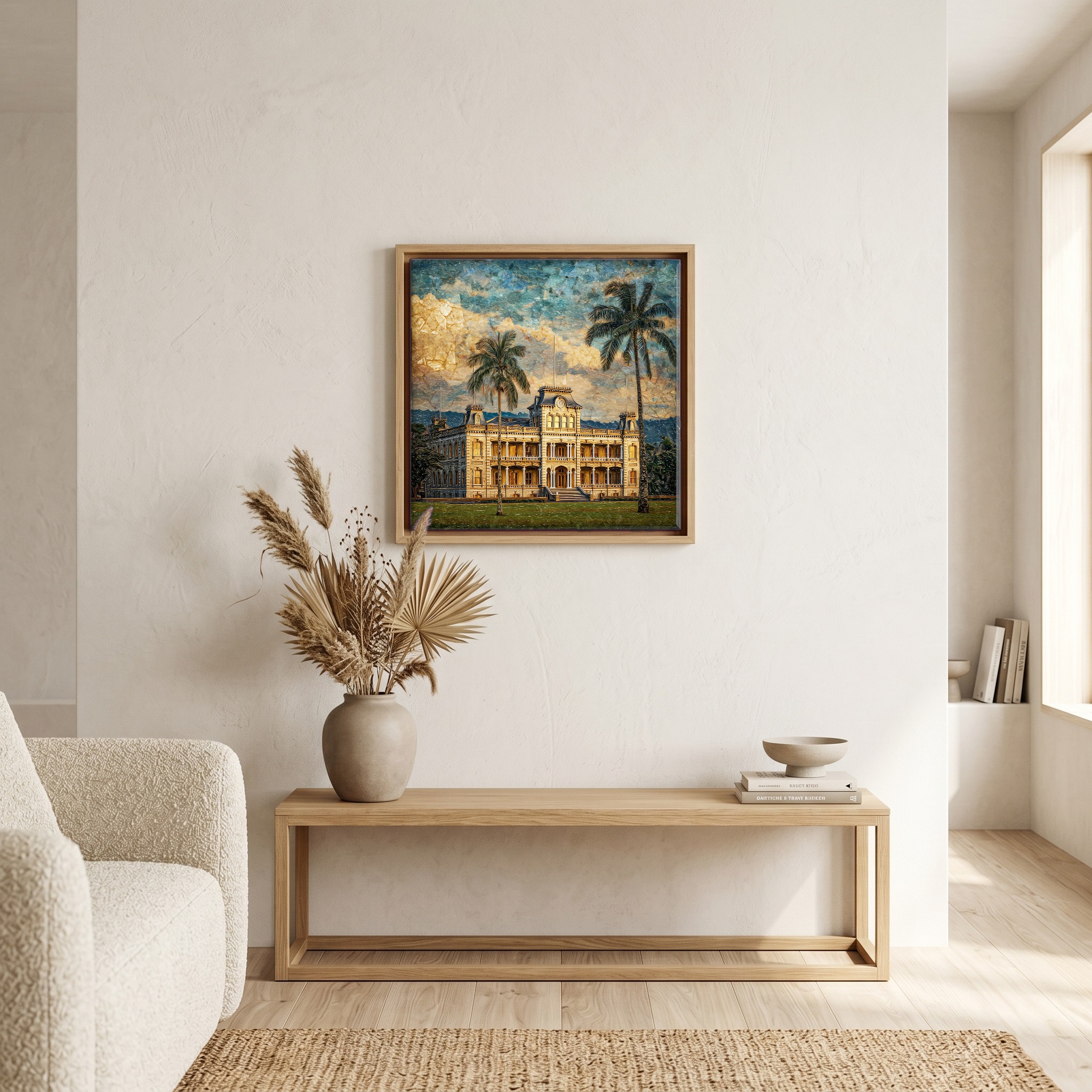
Above the bench, in a warm oak surround.
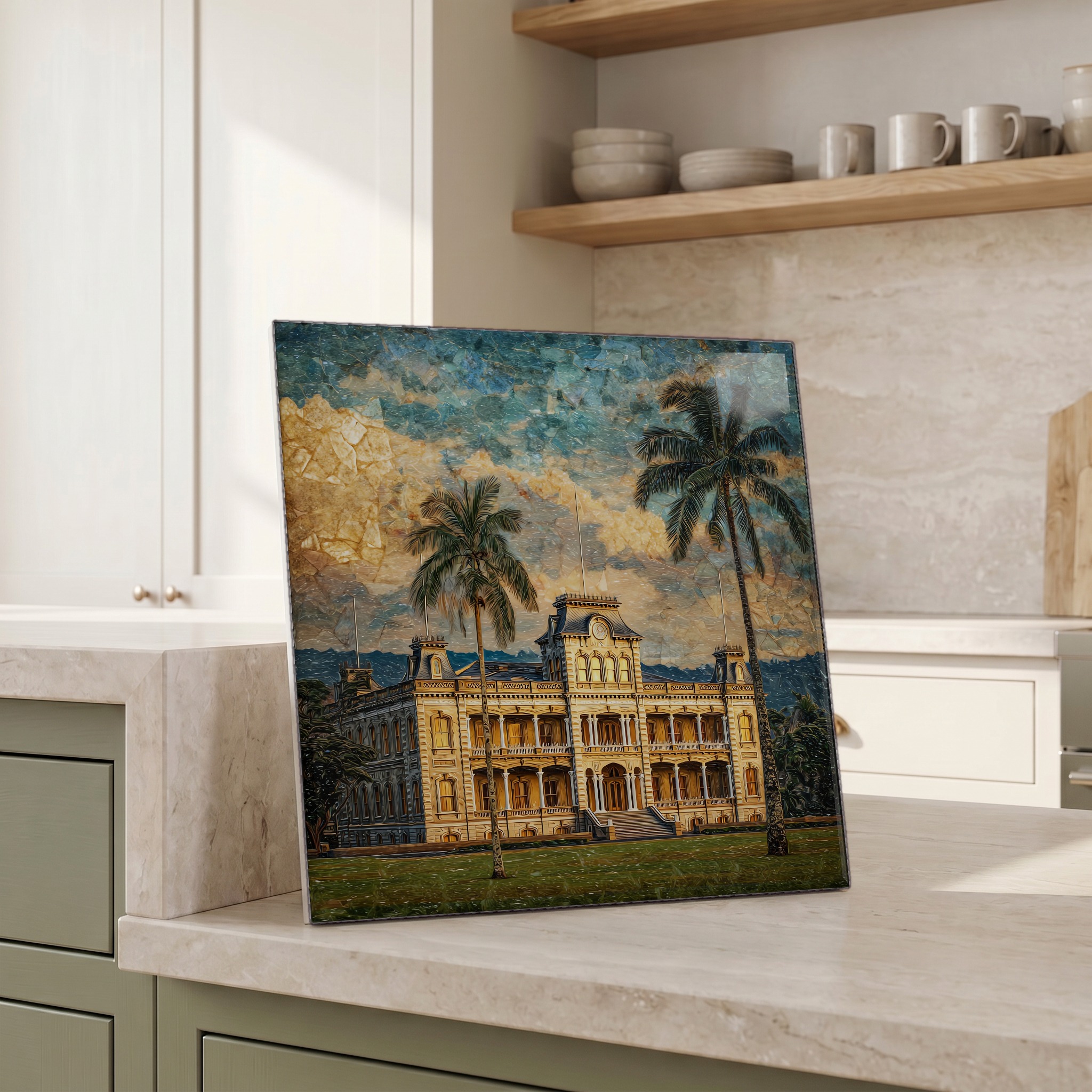
Beside the kettle, propped on the counter.
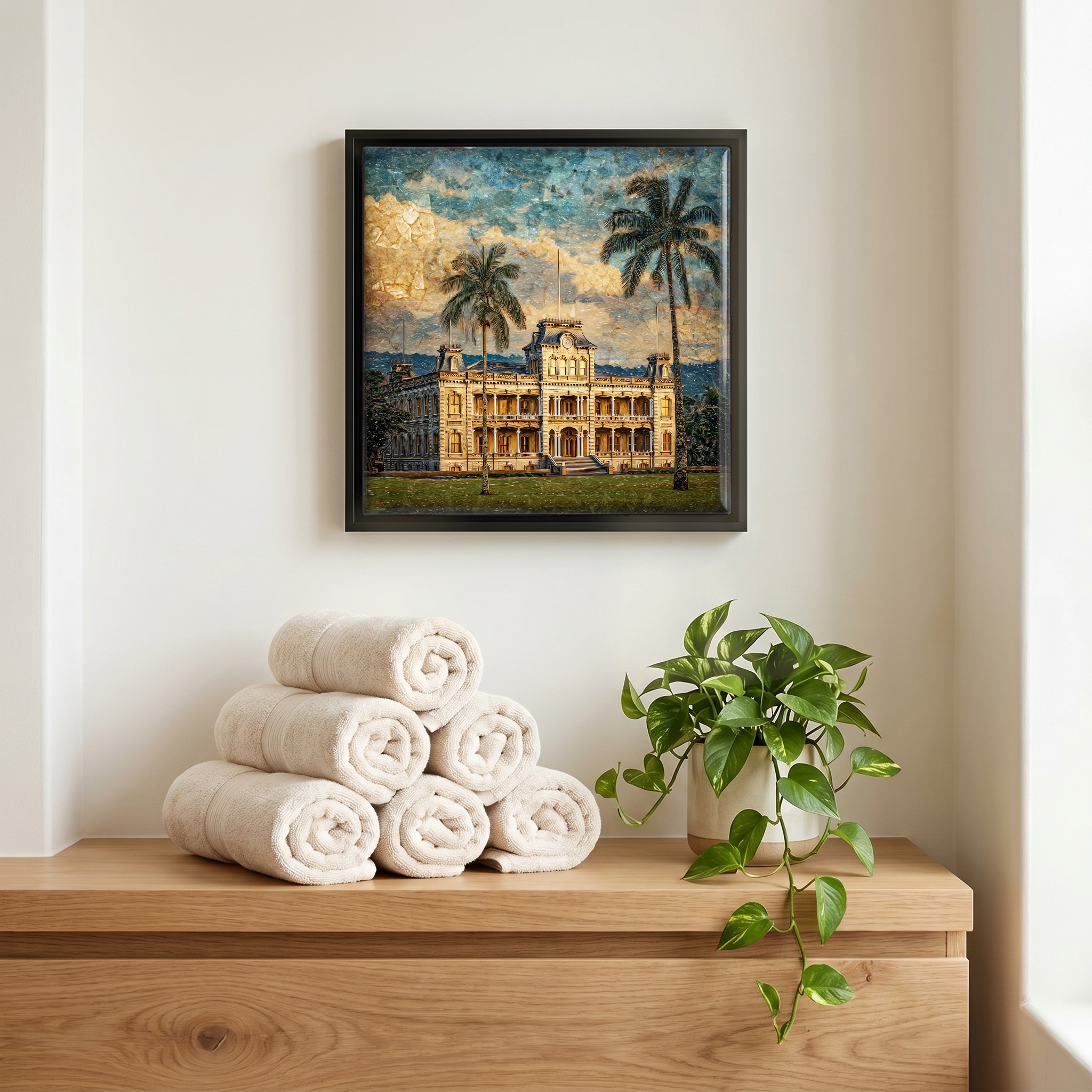
Above the linens, in a slim black surround.
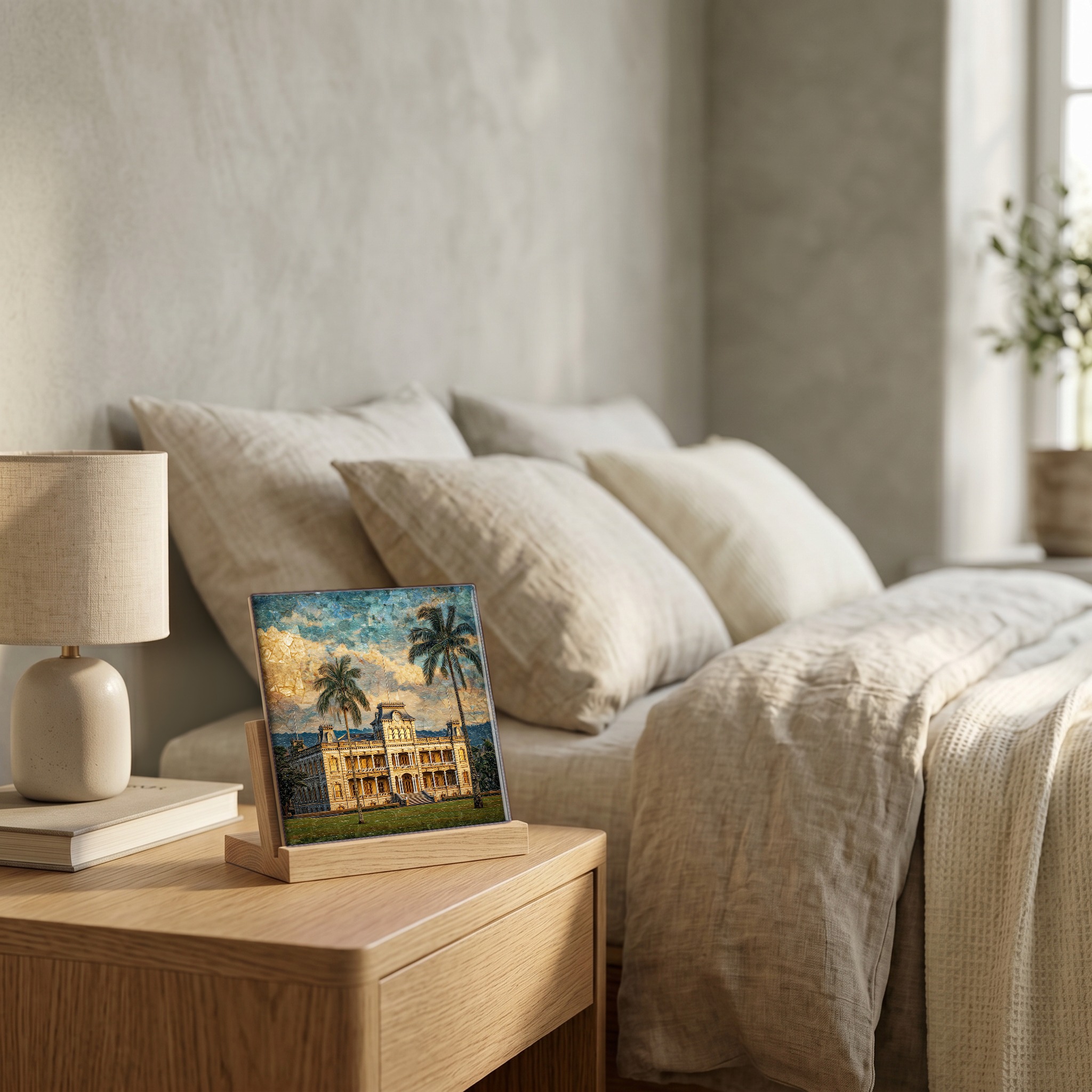
On the nightstand, on a light oak stand.
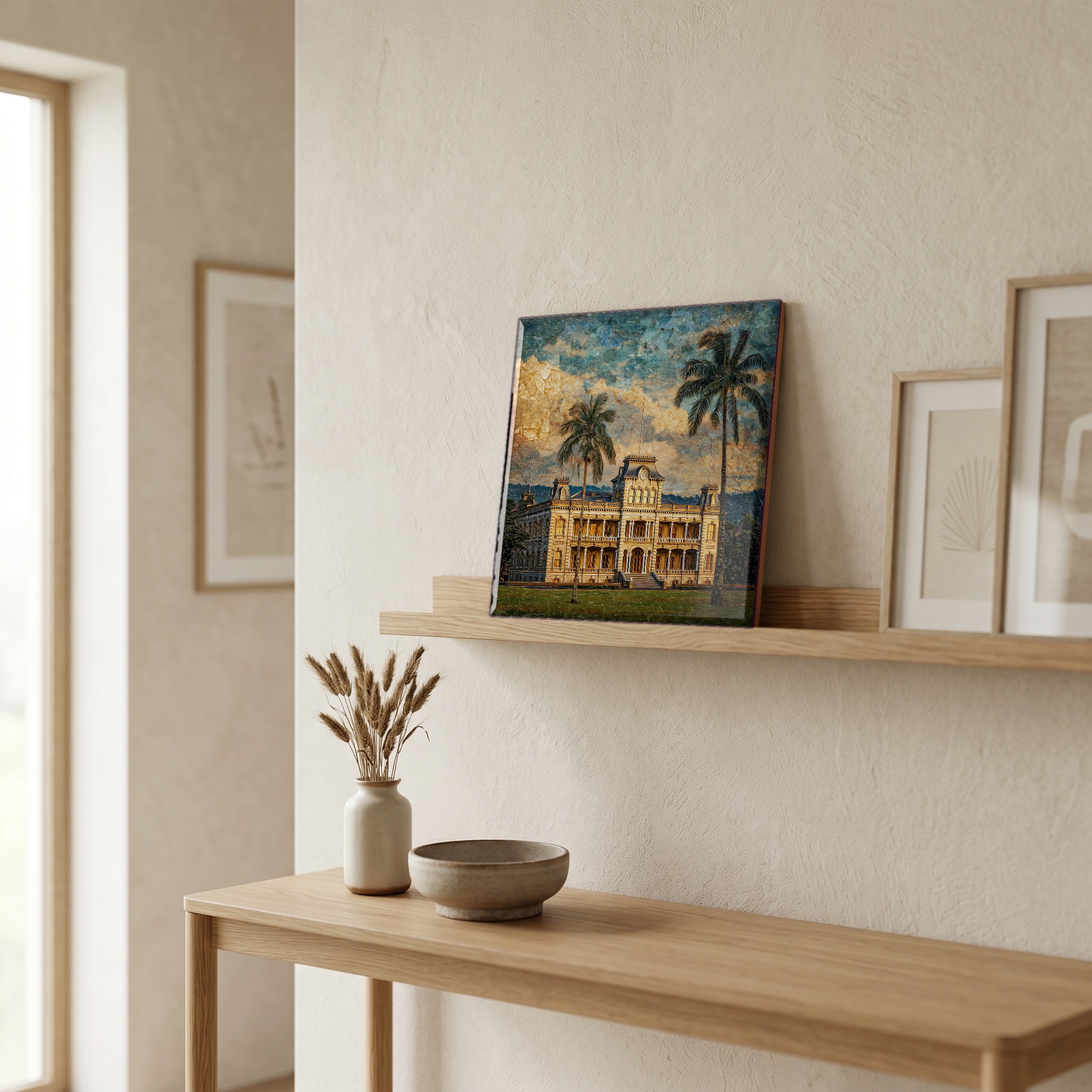
On a picture ledge, where the light comes in.
a note from the studio

The only royal palace on American soil, coral block and American Florentine columns in the middle of downtown Honolulu. King Kalākaua finished it in 1882; his sister Liliʻuokalani inherited the throne, lost the kingdom in 1893, and spent eight months under house arrest upstairs in 1895. The throne room is still set. The koa wood still glows. Visitors slip cloth covers over their shoes before walking the floors. People come back quiet.
from the studio
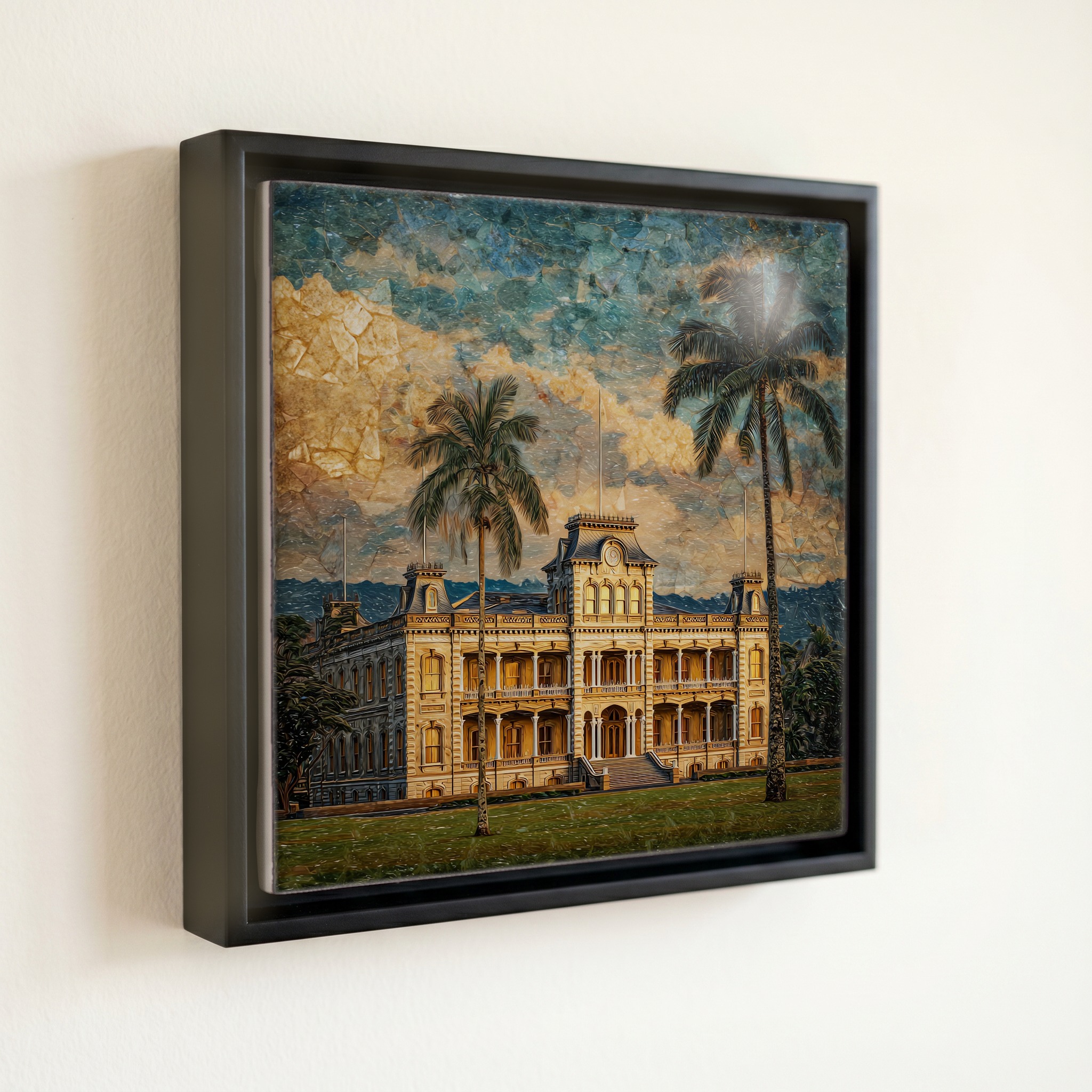
shown in a slim black floating frame · 6 × 6 in
— bring it home

Iolani Palace Oahu Ceramic Art Tile, on ceramic.

Each tile is finished by hand in our Knoxville studio. Artwork is slowly infused into the ceramic surface under high heat and pressure, and rests beneath a thin glossy finish. The colour lives in the surface, not on top of it.

What kind of piece?
One tile — square or rectangle.
How big?
the popular one — counter, shelf, nightstand
6 × 6 in · 15 cm · 1.6 lb
Surface finish
A clear glossy finish — the artwork reads as if under resin. Ideal for show-pieces and framed wall art.
How it sits
A hidden cleat — sits ¼″ proud of the wall.
$58
Hand-finished and shipped from our studio at the foot of the Smokies. On your wall in about ten days.
size
6 × 6 in
15 cm
weighs
1.6 lb
solid in the hand
surface
ceramic, hand-finished
art rests beneath a thin glossy finish
from
Knoxville, TN
our family studio, at the foot of the Smokies
— start a Coaster Set

Pick any four 4-inch tiles — National Parks you've been to, a Smokies set, the four seasons of one place. $ for a set of , cork-backed, ready to live on the table.
comes gift-ready
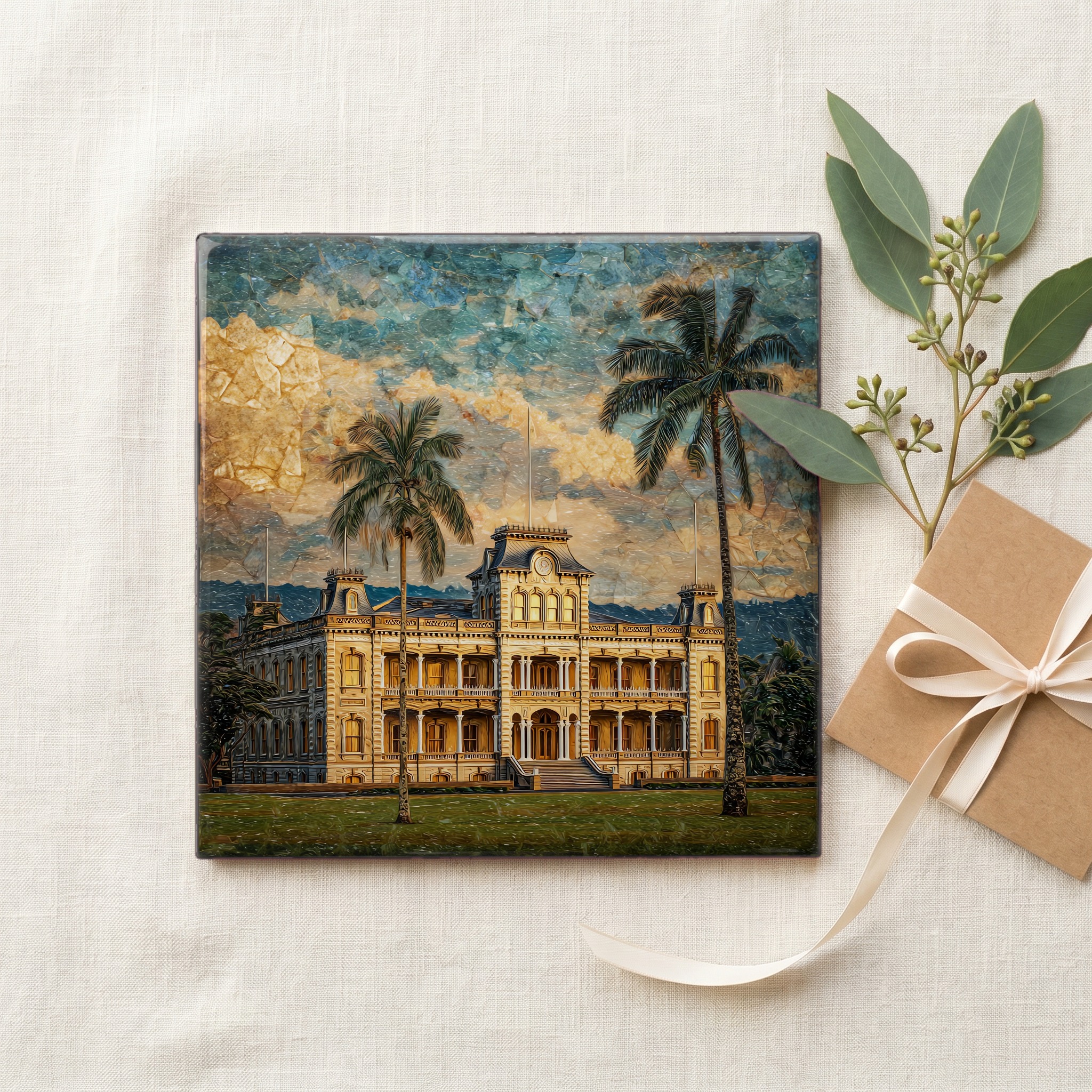
comes gift-ready

Each tile ships in a kraft box, tied with cream ribbon, with a handwritten note from the studio if you'd like to add one.
or build a grouping
or build a grouping

Three or five different vistas, hung together — a chapter of places you've been, or want to go.

about Iolani Palace Oahu Ceramic Art Tile

The place, in three passes.

A little of what's known, in case you fall down the rabbit hole — or want to go see it yourself.
the place

Iolani Palace stands on an 11-acre block in downtown Honolulu, bounded by King, Richards, Hotel, and Likelike Streets, a few blocks back from Honolulu Harbor. King Kalākaua commissioned the building in 1879, after a state tour of European courts. Architects Thomas J. Baker, Charles J. Wall, and Isaac Moore built it in an unusual style they called American Florentine: coral block walls, cast-iron balconies, and four corner towers above a wide covered lanai. The palace served as the royal residence of the Kalākaua dynasty, then as the capitol of the Republic, Territory, and State of Hawaii until 1969. The Friends of ʻIolani Palace began restoration that year and reopened the building as a museum in 1978.

the year

The Kalākaua dynasty took the throne in 1874 and lost it in 1893; Iolani Palace was the seat of both. King Kalākaua dedicated the building in 1882 and held court in the throne room on the first floor. His sister Liliʻuokalani succeeded him in 1891. On 17 January 1893, a committee of American and European businessmen, backed by US Marines landed from the USS Boston, deposed the queen at this address. Two years later, after a failed counter-coup, she was tried in her own throne room and confined to a single second-floor bedroom for eight months in 1895, where she composed the song 'Ke Aloha O Ka Haku,' known in English as 'The Queen's Prayer.' The kingdom did not return.

the visit

Iolani Palace is open Tuesday through Saturday and closed Sundays and Mondays. Three ticket tiers cover the same building: a docent-led guided tour, a self-led audio tour, and a basement-only gallery tour. Visitors slip soft cloth covers over their shoes before walking the original 1882 koa floors; the covers come with the ticket. The grounds, including the Coronation Pavilion (Keliiponi Hale) and the Iolani Barracks, are free and open daily. The palace sits across South King Street from the Hawaii State Capitol and the King Kamehameha I statue at Aliʻiolani Hale; both add useful context to a half-day visit downtown.

where
United States · Honolulu, Oʻahu, Hawaii
position
21.3069° N · 157.8589° W
the neighborhood

What's nearby.

A handful of named places within an hour's walk or short drive. Some we've already painted; some we will.
0.1 km S
Aliʻiolani Hale (King Kamehameha I Statue)
supreme court building
0.2 km N
Hawaii State Capitol
state capitol
0.4 km SE
Kawaiahaʻo Church
historic church
0.5 km SE
Mission Houses Museum
history museum
0.7 km SW
Aloha Tower
harbor landmark
0.7 km S
Honolulu Harbor
working harbor
6 km ESE
Diamond Head
volcanic crater
N
Iolani Palace Oahu Ceramic Art Tile
Aliʻiolani Hale (King Kamehameha I Statue)
Hawaii State Capitol
Kawaiahaʻo Church
Mission Houses Museum
Aloha Tower
Honolulu Harbor
Diamond Head
common questions

What people ask.

A few questions we get about Iolani Palace Oahu Ceramic Art Tile — and about bringing the piece home.
about the place

Iolani Palace stands at 364 South King Street in downtown Honolulu, on the island of Oʻahu in Hawaii. It occupies an 11-acre block bounded by King, Richards, Hotel, and Likelike Streets, a few blocks back from Honolulu Harbor.

It is the only building in the United States that served as the official residence of a reigning monarch. King Kalākaua dedicated it in 1882, and his sister Queen Liliʻuokalani lived here until the Hawaiian Kingdom was overthrown in January 1893.

American Florentine, a style the architects Thomas J. Baker, Charles J. Wall, and Isaac Moore named for the building itself. It combines coral block walls, cast-iron balconies, and four corner towers with a deep covered lanai suited to the Honolulu climate.

Yes. Iolani Palace was electrified in 1886 with arc and incandescent lighting installed during King Kalākaua's reign. The White House did not receive electric lighting until 1891. The palace also had indoor flush toilets and telephones early in its life.

After a failed 1895 counter-coup against the Republic of Hawaii, Liliʻuokalani was tried in her own throne room and confined to a second-floor bedroom for eight months. She composed 'Ke Aloha O Ka Haku' (The Queen's Prayer) during that imprisonment and later abdicated under duress to spare her supporters.

Yes, Tuesday through Saturday. Three ticket types cover guided docent tours, self-led audio tours, and basement gallery tours. Visitors slip soft cloth covers over their shoes to protect the original 1882 koa wood floors. The Coronation Pavilion and palace grounds are free and open daily.

The Friends of ʻIolani Palace, a private nonprofit founded in 1966 by Liliʻuokalani Kawānanakoa Morris, has managed the palace since 1969. The State of Hawaii owns the building and grounds; the Friends restored the interior and operate it as a National Historic Landmark museum.

about the piece in your home

Iolani Palace holds a particular place for Native Hawaiians and for anyone who carries the story of the Kingdom. A Small or Medium with a handwritten note from the studio reads as recognition rather than souvenir. The Keepsake size also works well as a desk piece or a gift sent through the mail.

The colours run warm and jewel-toned: koa brown, throne-room crimson, gold leaf, deep teal. It anchors a room in Tropical Traditional, Hawaiiana, and Eclectic Maximalist directions. It is less at home in stripped Scandi rooms, very at home in a study or library with leather, brass, and dark wood.

Yes. Hawaiian Regency and Tropical Traditional are both in a quiet revival across 2025-2026 design press: koa wood furniture, monstera prints, and a return to monarch-era references. A framed Iolani Palace tile sits naturally inside that vocabulary.

Above a console table, a single Large reads cleanly on its own. Above a sofa, step up to a 4-tile Mural (roughly 24 x 24 inches) or a 9-tile Mural (roughly 36 x 36 inches) for proper scale. The Triptych also works for a long horizontal wall.

Yes. Order the Dura Satin or Matte finish for vertical installations behind a vanity, a stovetop backsplash, or in a guest shower surround. The Glossy finish is for framed wall art in dry rooms and is not recommended for direct water exposure.

A soft microfibre cloth and warm water. Skip abrasive sponges, household solvents, and anything labelled scouring or polishing. The colour is slowly infused into the ceramic surface under high heat and pressure, so it will not lift, fade, or wash off with normal cleaning.

Yes. Every WenderVista piece is made in our Knoxville, Tennessee studio under Reid Wender's direction. There is no licensing, no third-party stock, no reseller chain. The Iolani Palace tile exists because Reid chose this place for the atlas.

if this one stayed with you

A few you might also love.

Hand-picked by the eye that found Sorapis. Same air, same kind of quiet.