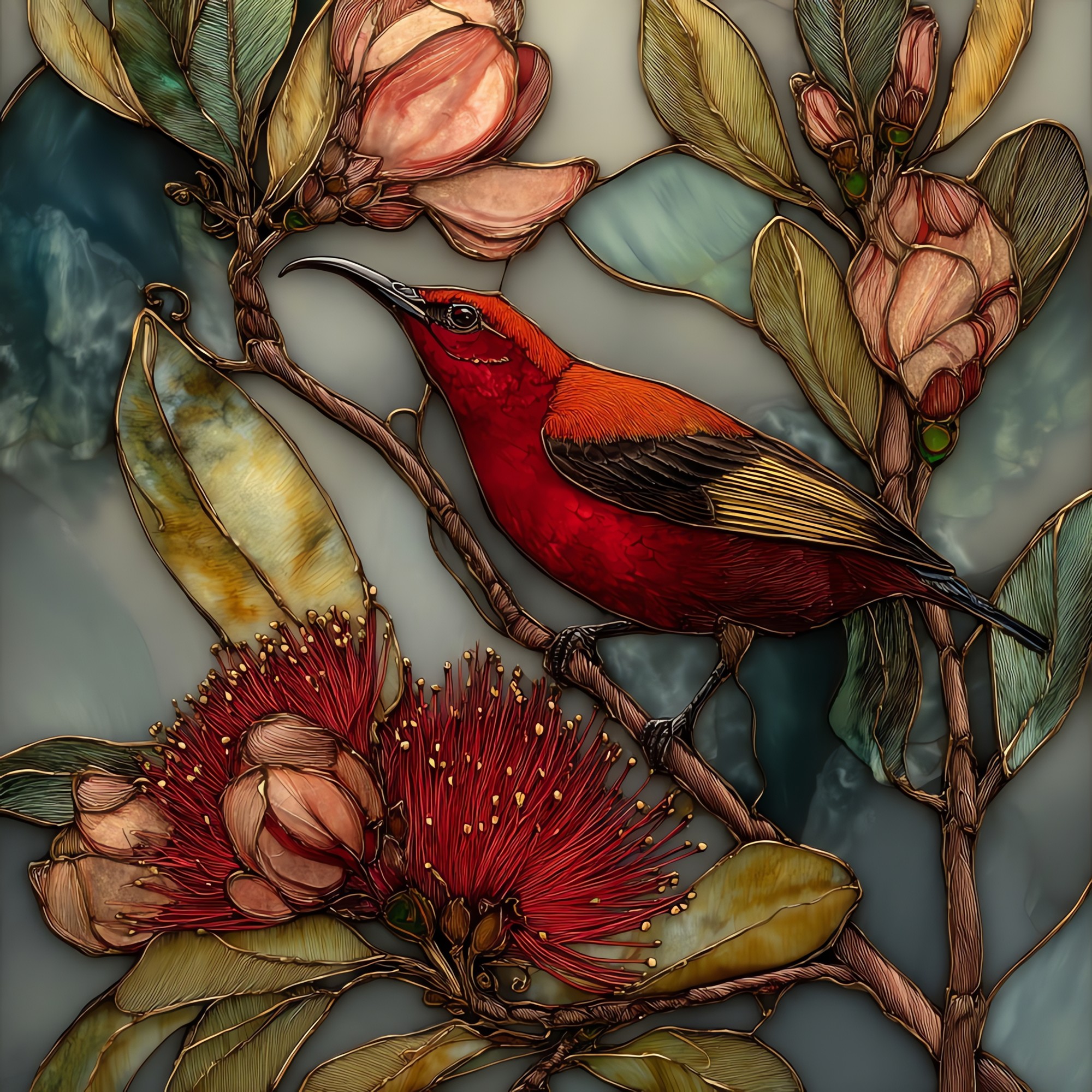
Iiwi Ohia Lehua Big Island Ceramic Art Tile
— — two reds that need each other.
Not only on a wall.
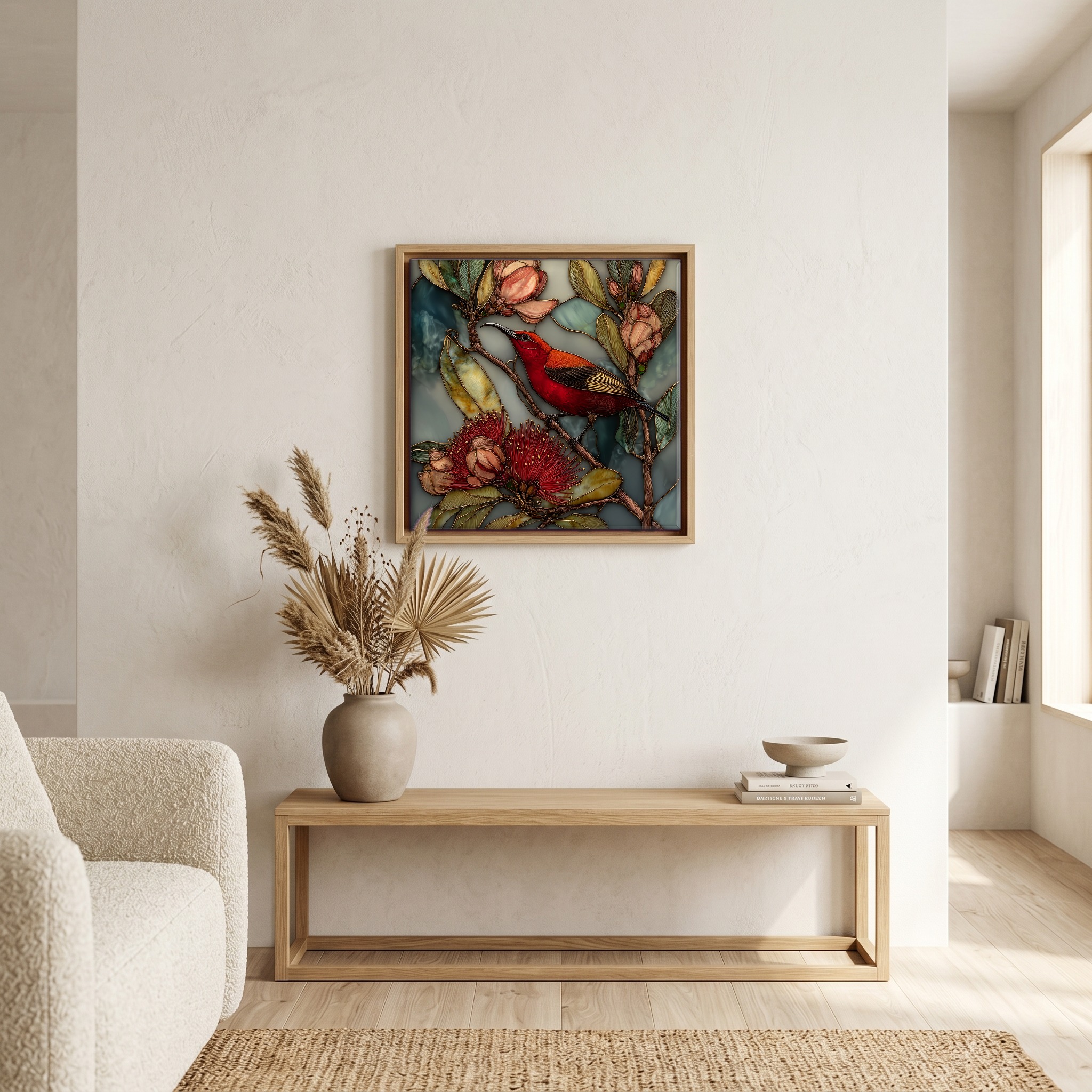
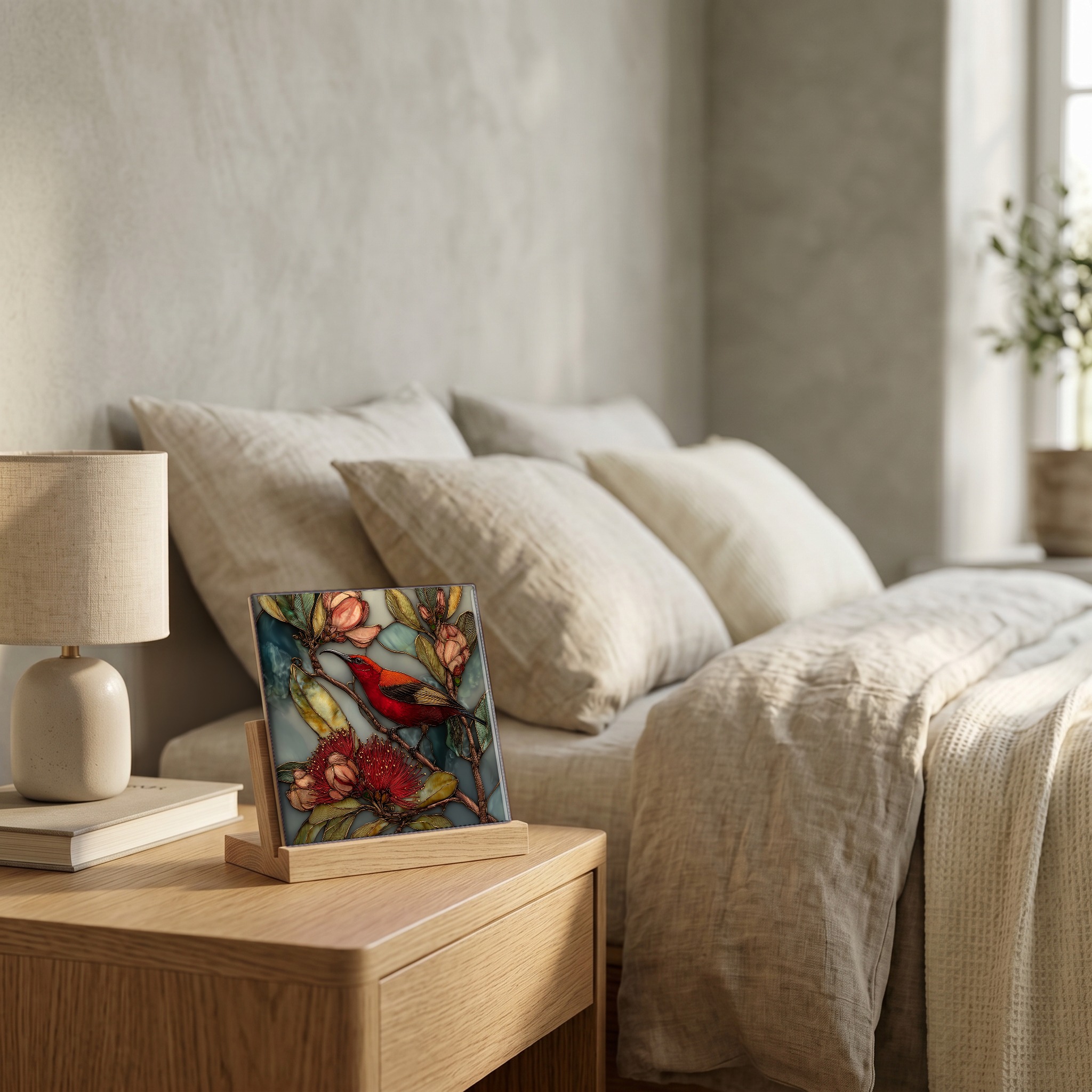
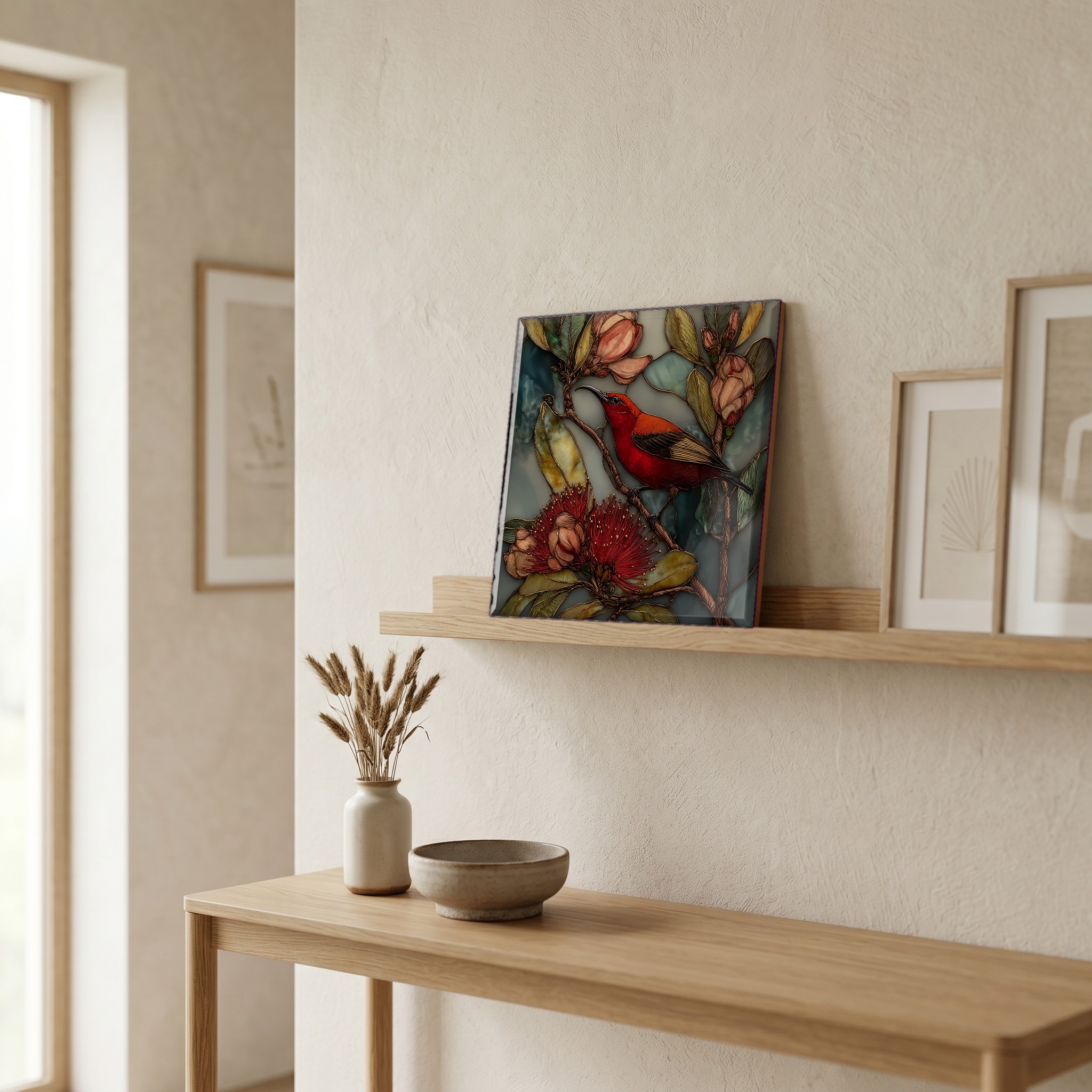
“The scarlet honeycreeper that fits the scarlet flower. The ʻiʻiwi's long curved bill evolved alongside the lehua bloom, a coevolution Native Hawaiians have been telling stories about for centuries. Today the bird survives mostly above four thousand feet, where the air is still cold enough to keep introduced mosquitoes out. The forests of Hawaiʻi Volcanoes National Park, on the windward slopes of Kīlauea, are one of the last places the meeting still happens in numbers. The studio painted what the forest still holds.
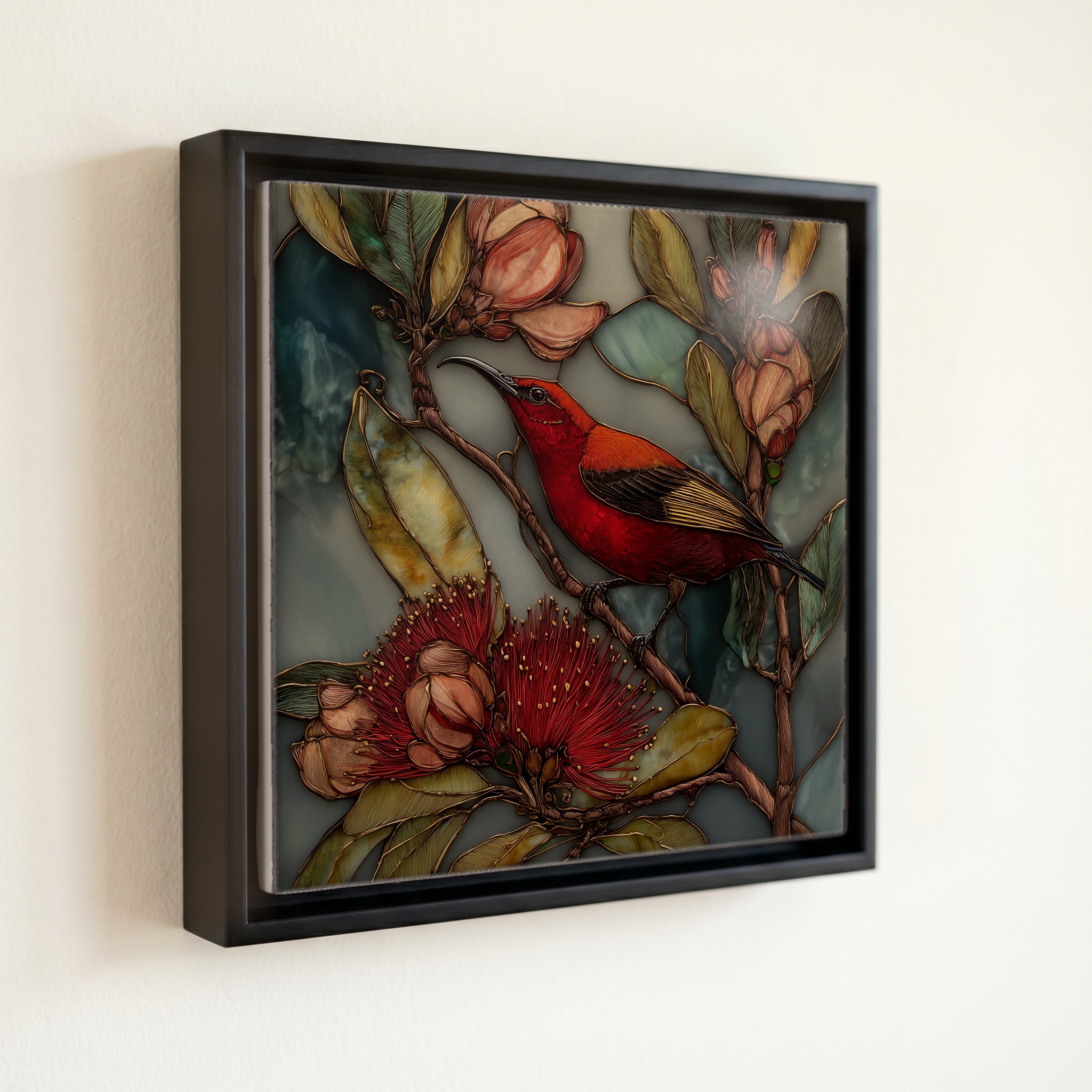
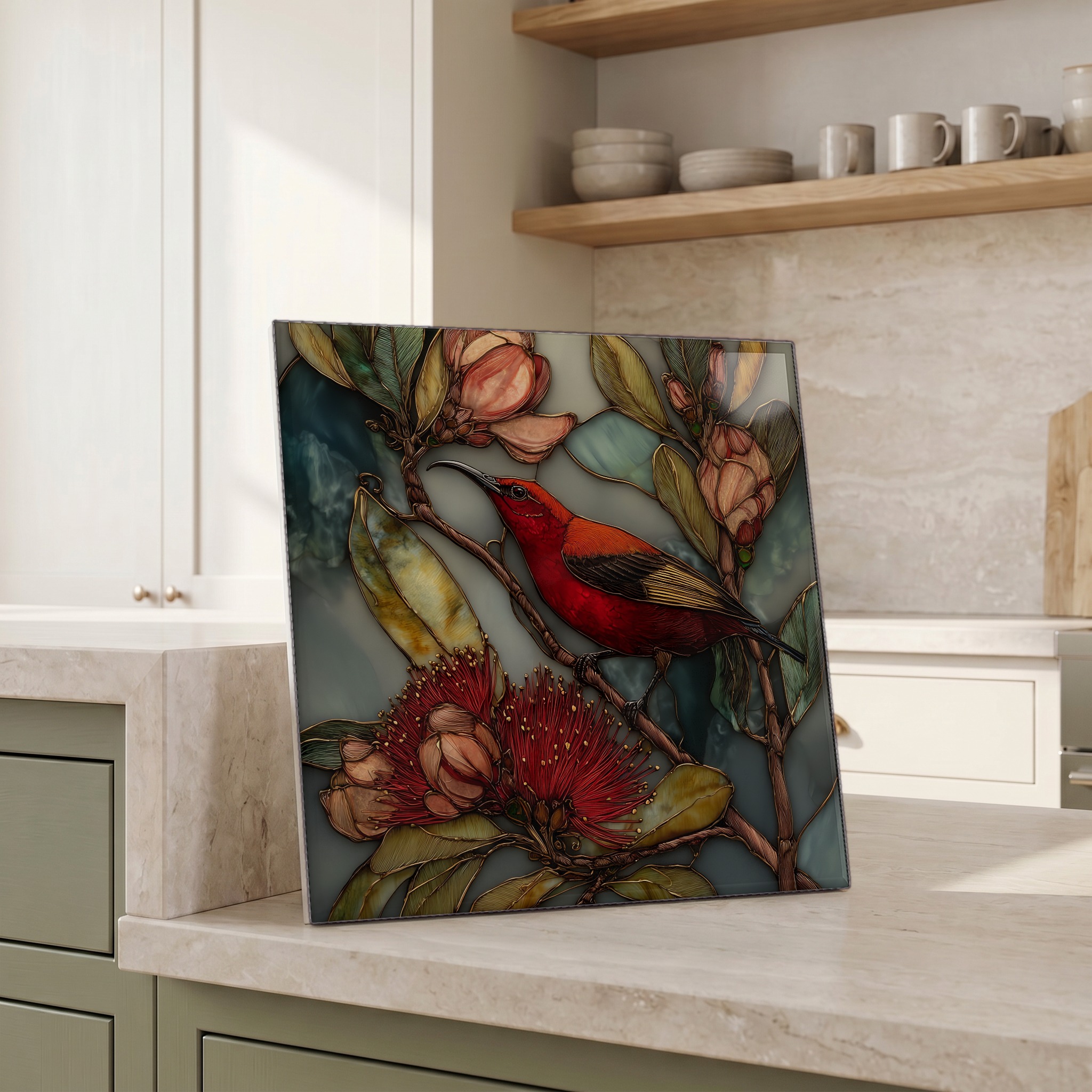
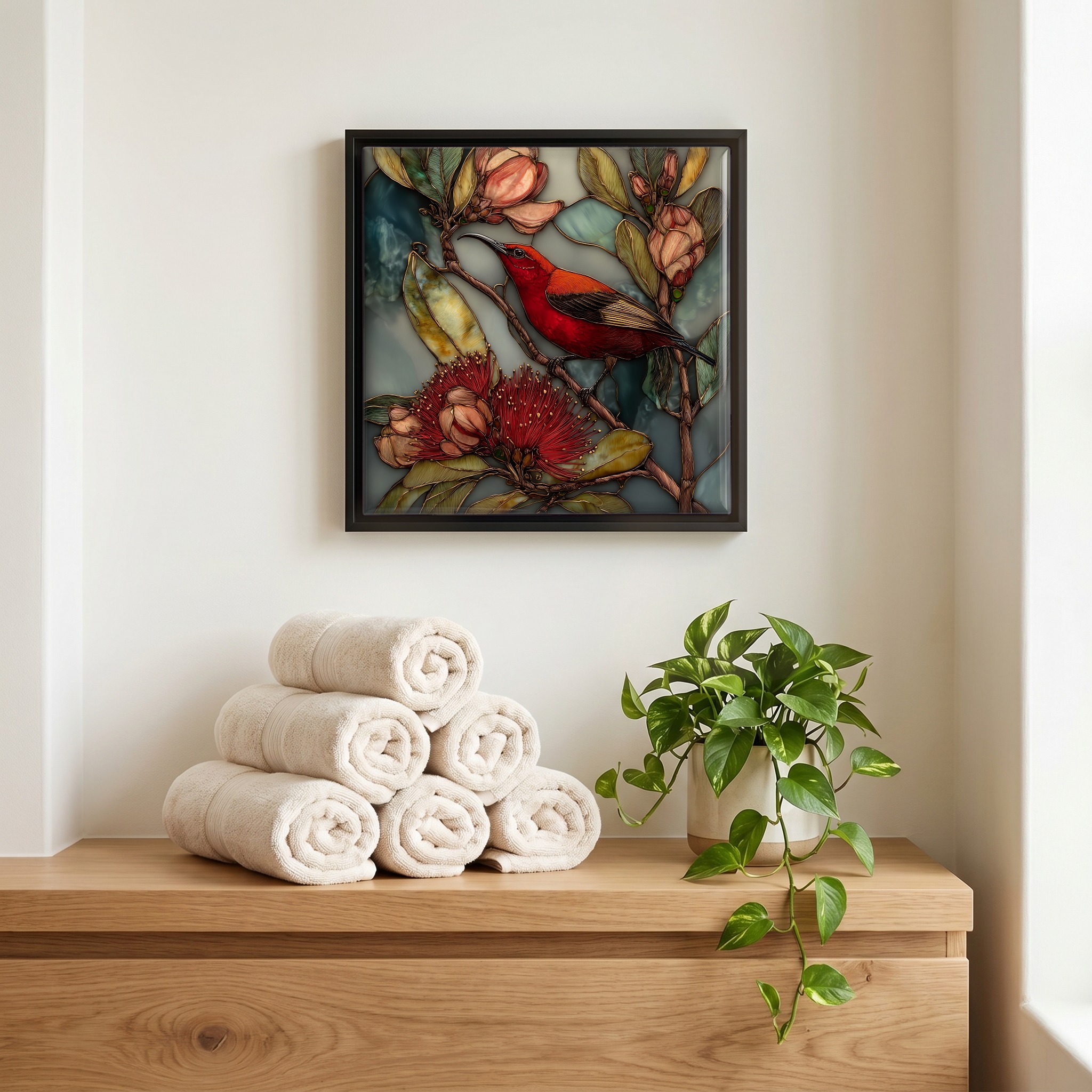
Iiwi Ohia Lehua Big Island Ceramic Art Tile, on ceramic.
Each tile is finished by hand in our Knoxville studio. Artwork is slowly infused into the ceramic surface under high heat and pressure, and rests beneath a thin glossy finish. The colour lives in the surface, not on top of it.
Pick any four 4-inch tiles — National Parks you've been to, a Smokies set, the four seasons of one place. $ for a set of , cork-backed, ready to live on the table.
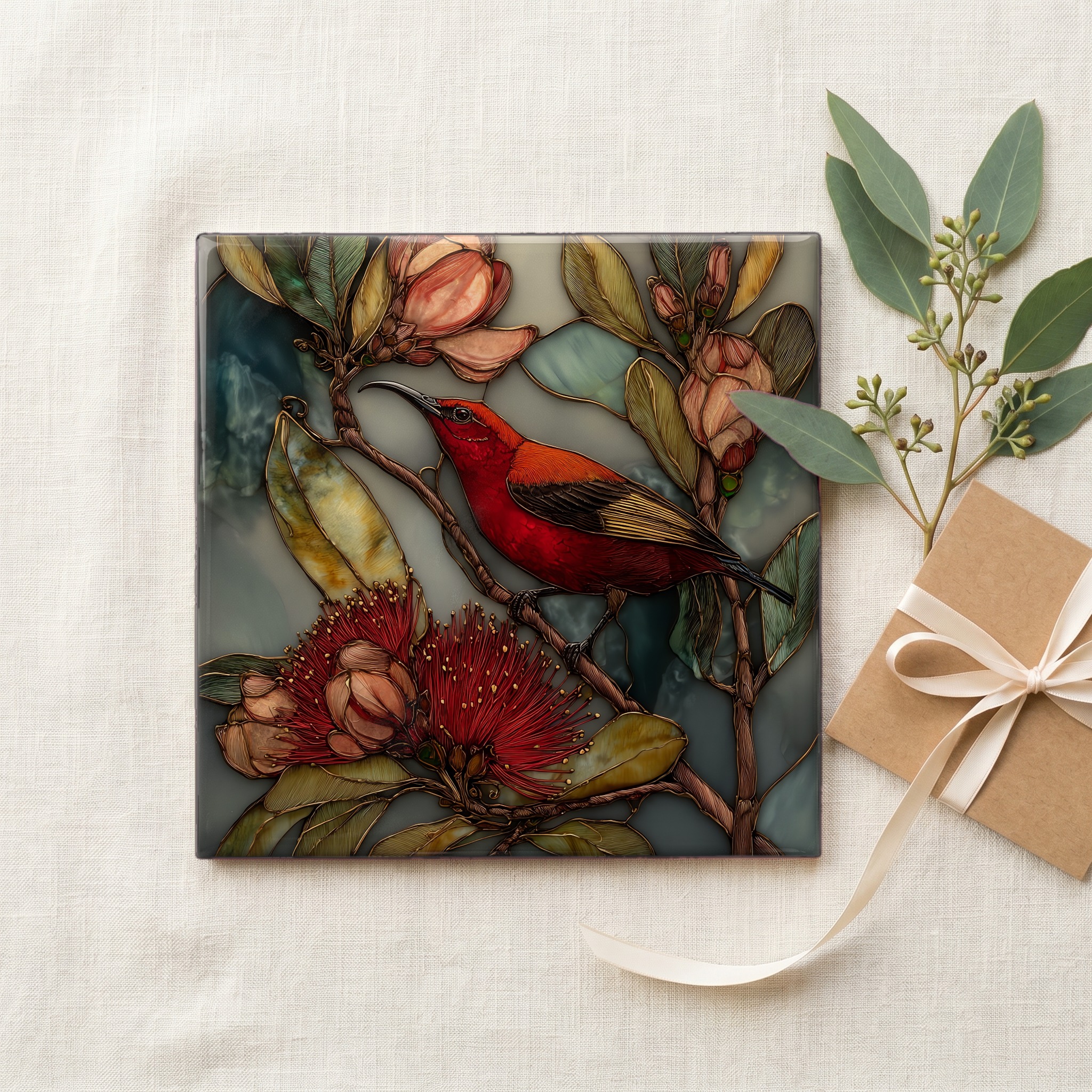
Each tile ships in a kraft box, tied with cream ribbon, with a handwritten note from the studio if you'd like to add one.
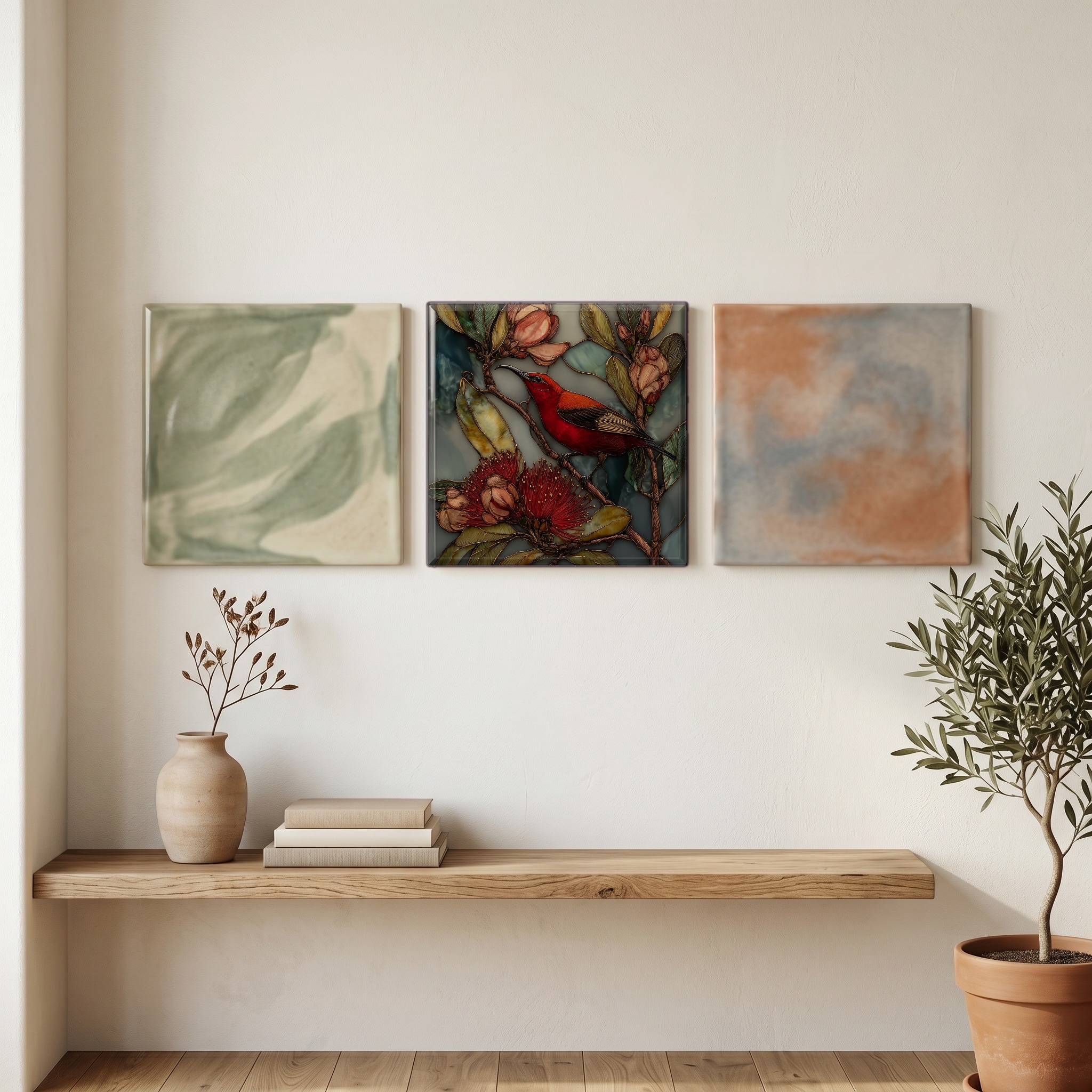
Three or five different vistas, hung together — a chapter of places you've been, or want to go.
The place, in three passes.
The Big Island is the youngest and largest of the Hawaiian Islands, roughly 4,028 square miles built up from five overlapping shield volcanoes. The ʻiʻiwi and the ʻōhiʻa lehua meet in the wet upland forests on the windward sides of Mauna Loa and Mauna Kea, with the most accessible stretch inside Hawaiʻi Volcanoes National Park, set aside as federal land in 1916 and recognised as a UNESCO World Heritage Site in 1987. The Kīpukapuaulu (Bird Park) trail, near the summit of Kīlauea, runs through a kīpuka of old-growth ʻōhiʻa surrounded by younger lava. The pairing also persists in the Hakalau Forest National Wildlife Refuge on the eastern slope of Mauna Kea.
Both reds are real and they are not the same red. The lehua blossom is a tuft of stamen-rich filaments, scarlet most often but occasionally yellow, orange, or pale pink across the recognised varieties of Metrosideros polymorpha. The ʻiʻiwi (Drepanis coccinea), first described from specimens collected on Cook's third voyage in 1780, carries a deeper vermilion across body and tail, with black wings and a long sickle-curved bill that evolved to drink the lehua's nectar without crushing the flower. In Hawaiian legend, ʻŌhiʻa was a young man and Lehua a young woman; the volcano goddess Pele turned them into the tree and the flower so they would never be parted, and picking a lehua blossom is said to call the rain.
The bird now lives almost entirely above four thousand feet. Below that altitude, introduced southern house mosquitoes (Culex quinquefasciatus) carry avian malaria, which ʻiʻiwi have no resistance to, and infection is usually fatal within days. The remaining stronghold is the Big Island, where the great majority of the global population persists in the cooler upland forests. The trees that hold them are themselves under pressure: Rapid ʻŌhiʻa Death, a fungal disease first identified on the Big Island around 2014, has killed more than a million ʻōhiʻa trees on the island. The U.S. Fish and Wildlife Service listed the ʻiʻiwi as a threatened species in 2017.