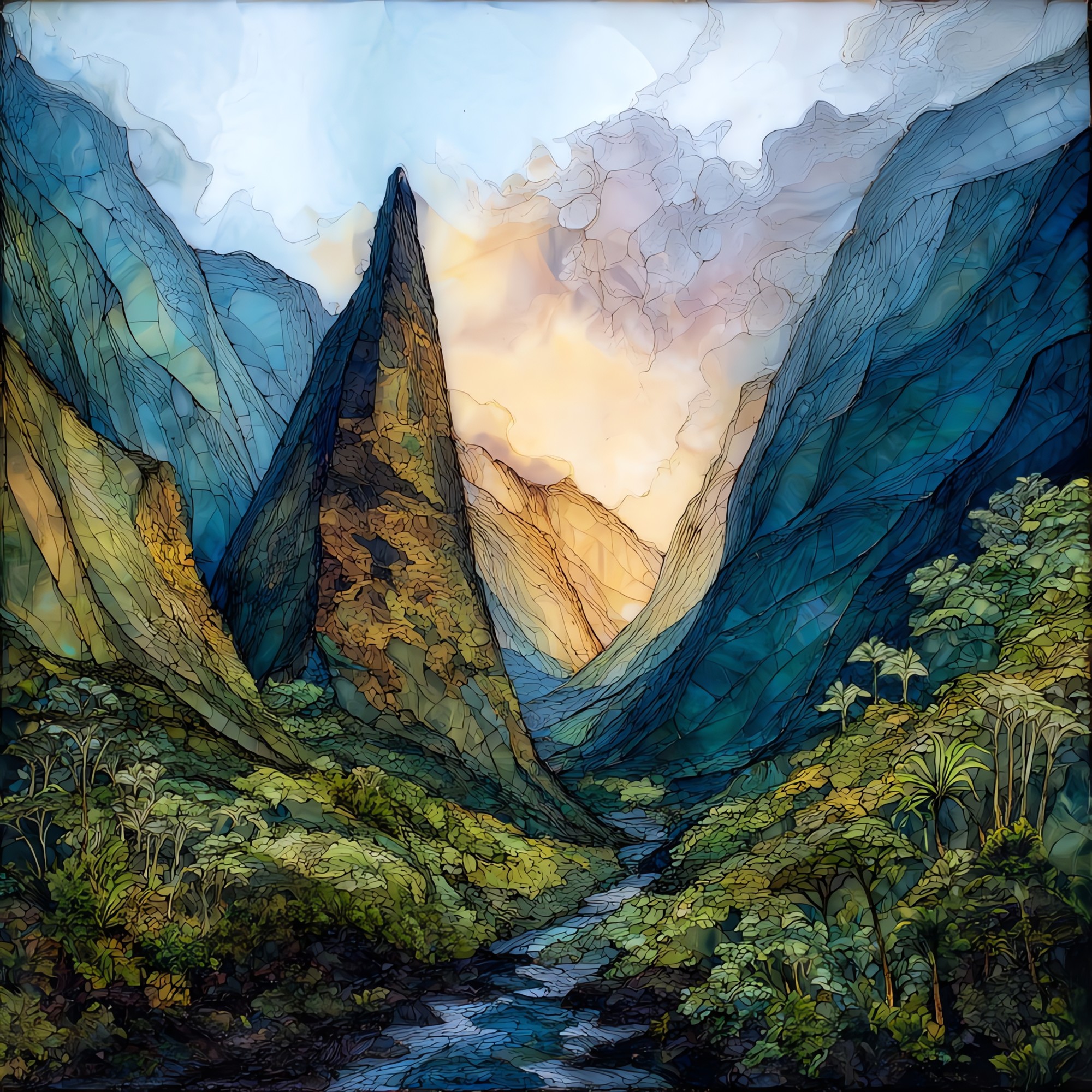
Iao Needle Maui Ceramic Art Tile
— the green the valley keeps for itself.
Not only on a wall.
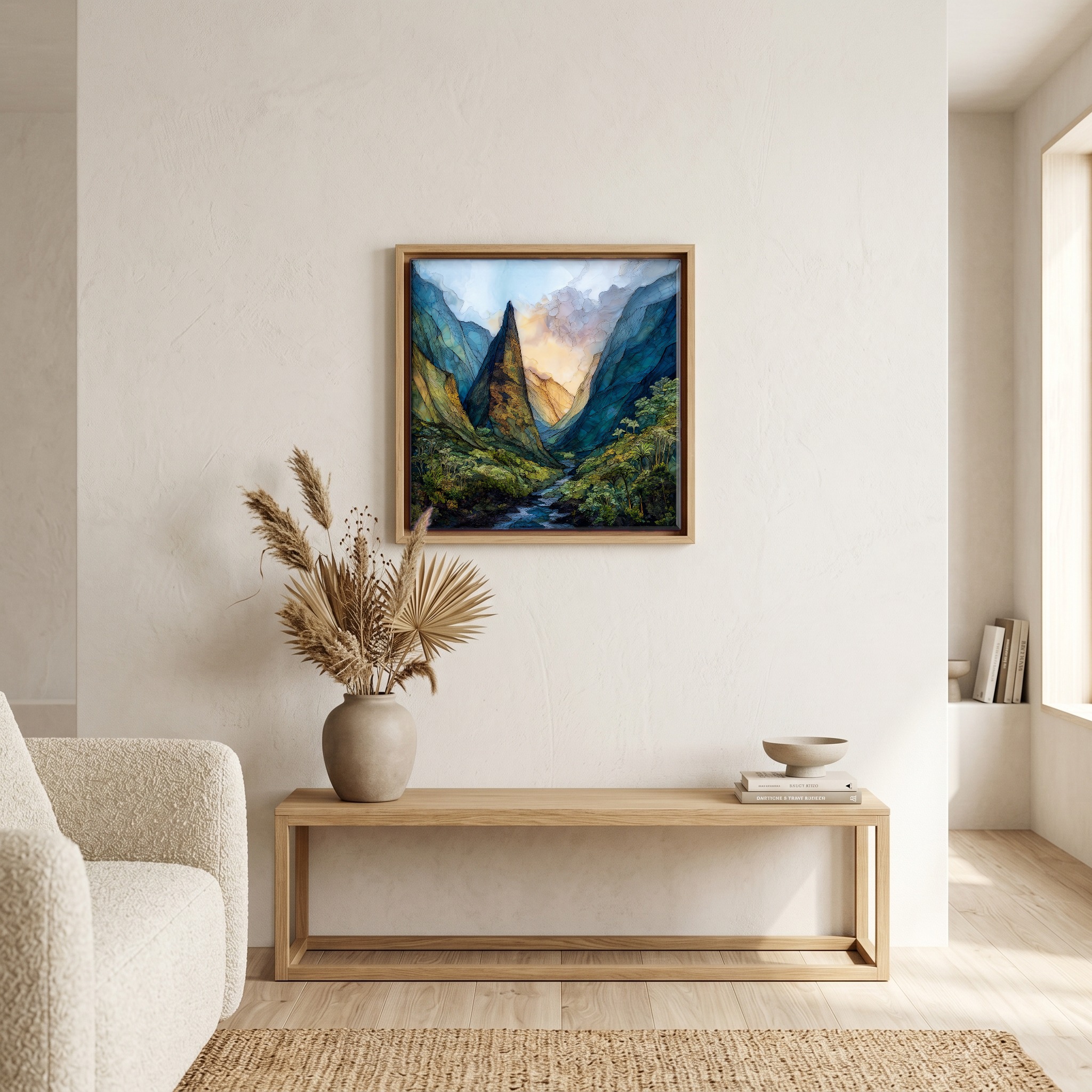

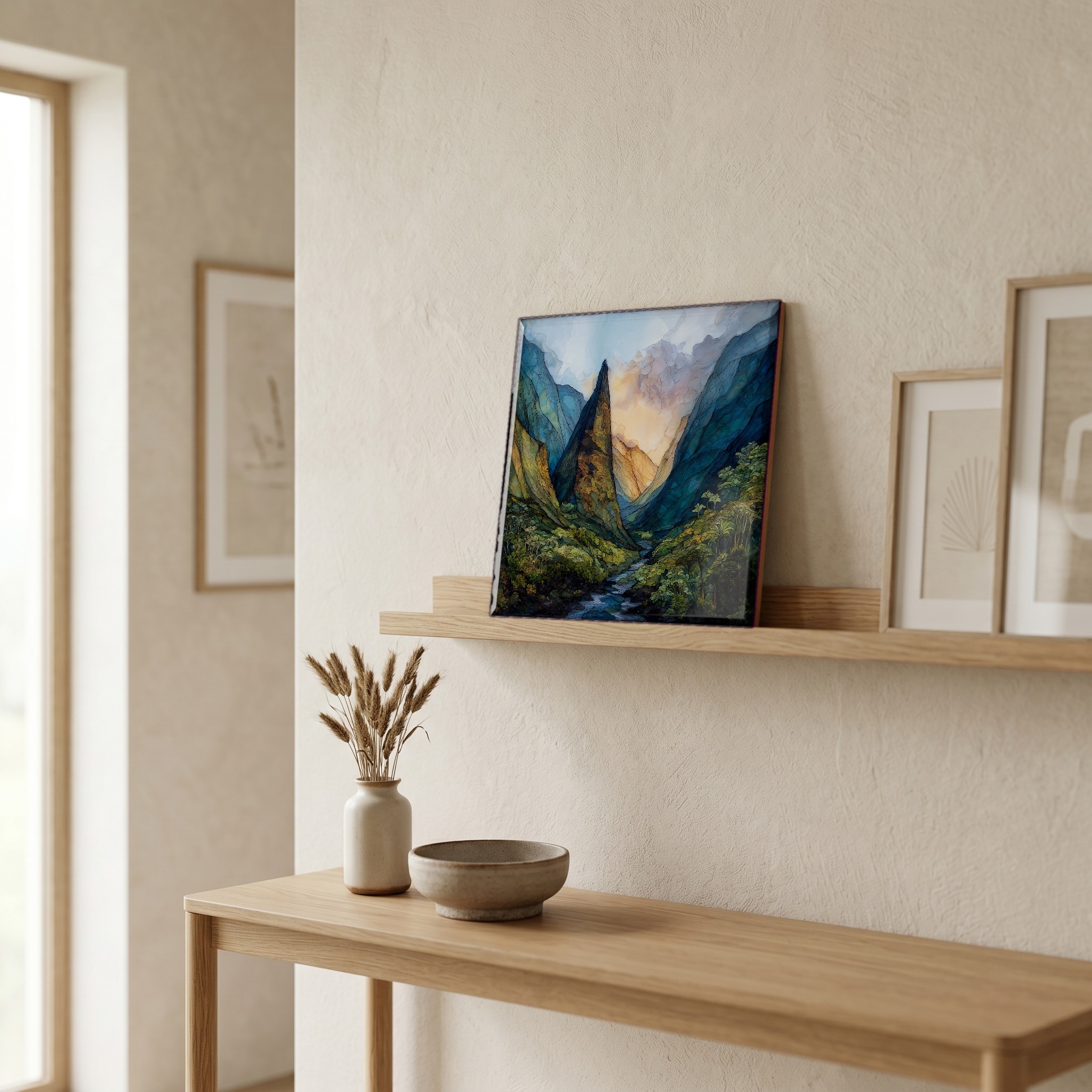
“A basalt spire that rises about 1,200 feet straight out of the floor of ʻĪao Valley, draped in moss the rain keeps fed. The Hawaiian name is Kūkaemoku. Below it runs ʻĪao Stream, the same one that gave the 1790 battle its name, Kepaniwai, the damming of the waters. The cloud comes and goes on its own schedule. From the lookout the spire shows and then it doesn't. People walk the paved path quietly. It is not a long visit and it is not meant to be.
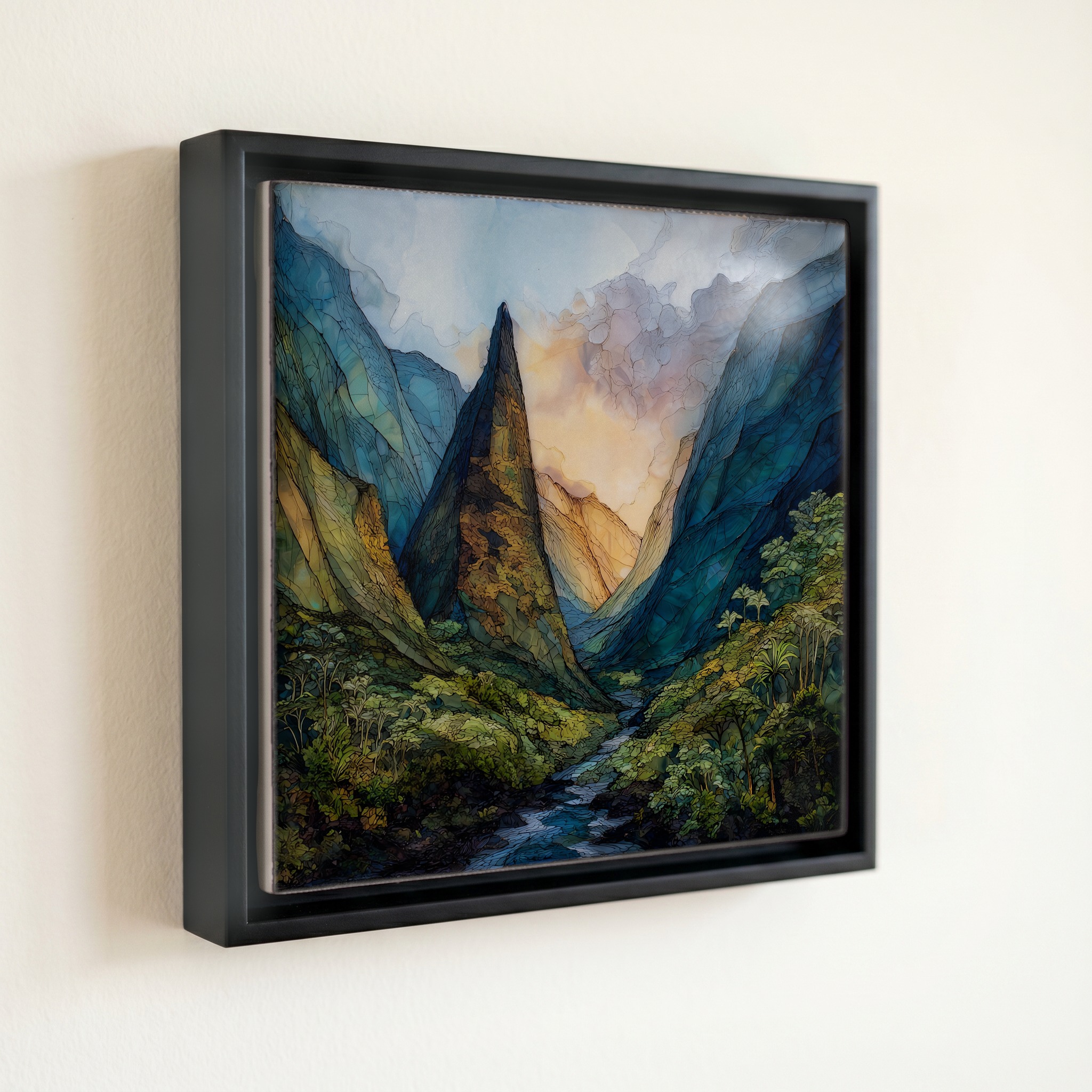
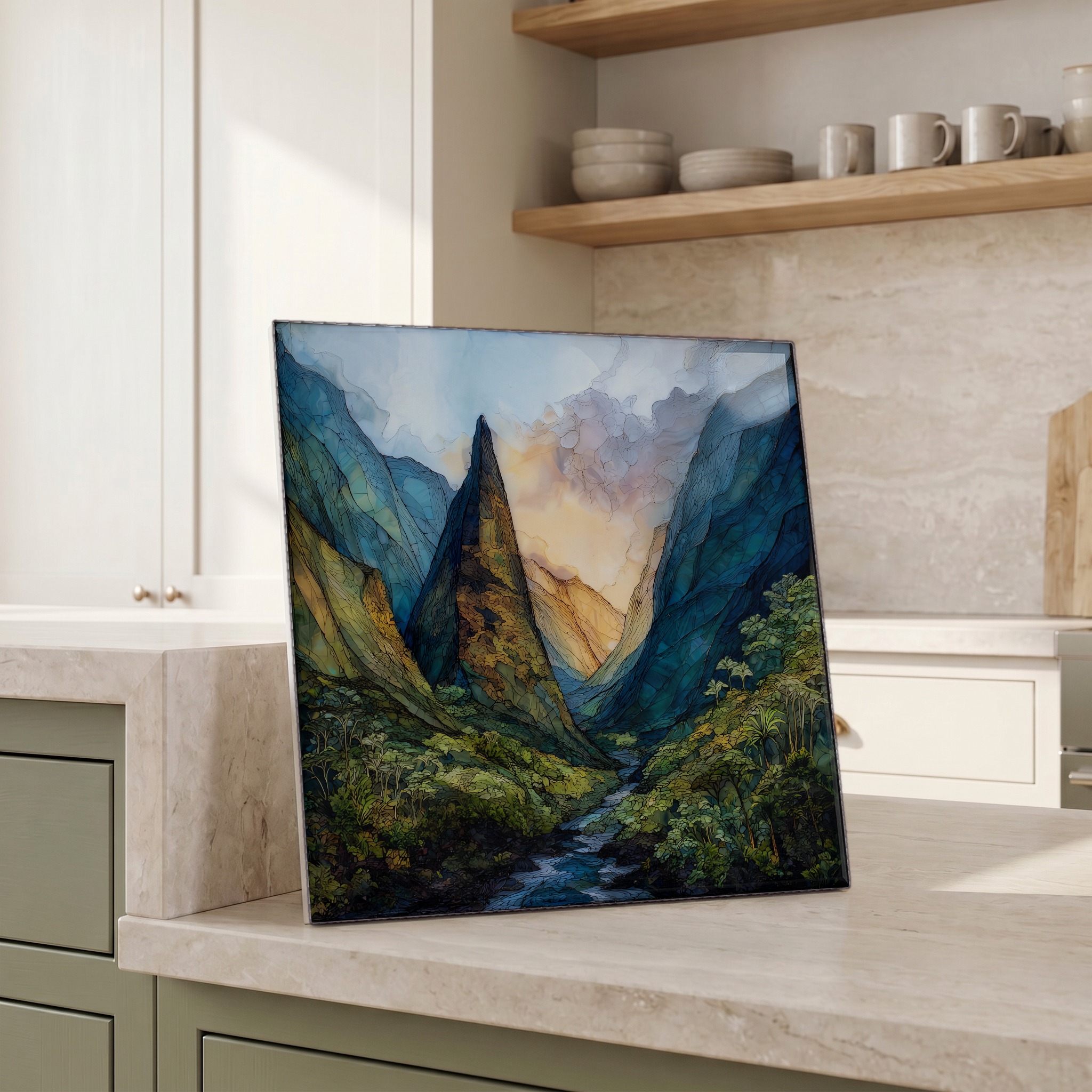
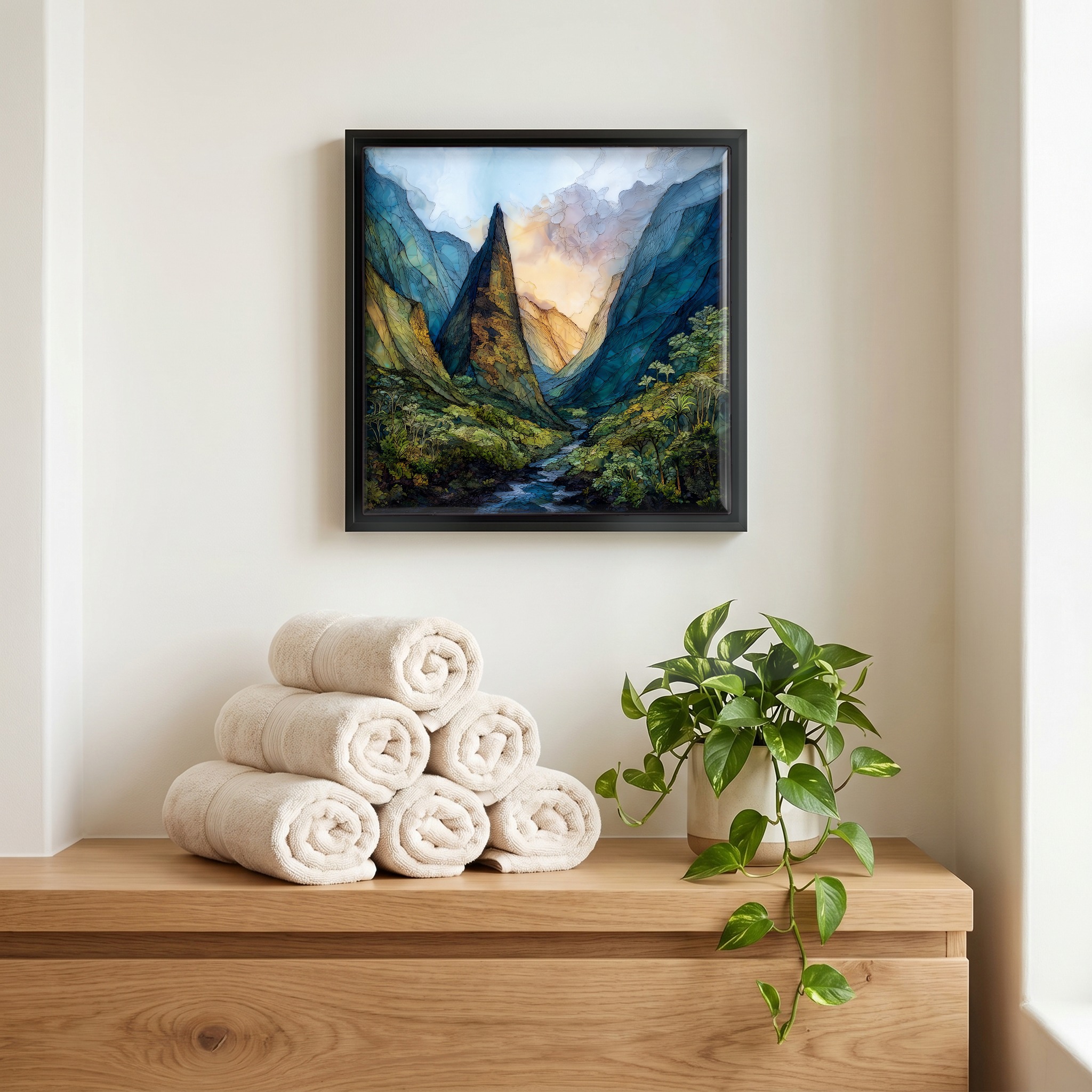
Iao Needle Maui Ceramic Art Tile, on ceramic.
Each tile is finished by hand in our Knoxville studio. Artwork is slowly infused into the ceramic surface under high heat and pressure, and rests beneath a thin glossy finish. The colour lives in the surface, not on top of it.
Pick any four 4-inch tiles — National Parks you've been to, a Smokies set, the four seasons of one place. $ for a set of , cork-backed, ready to live on the table.
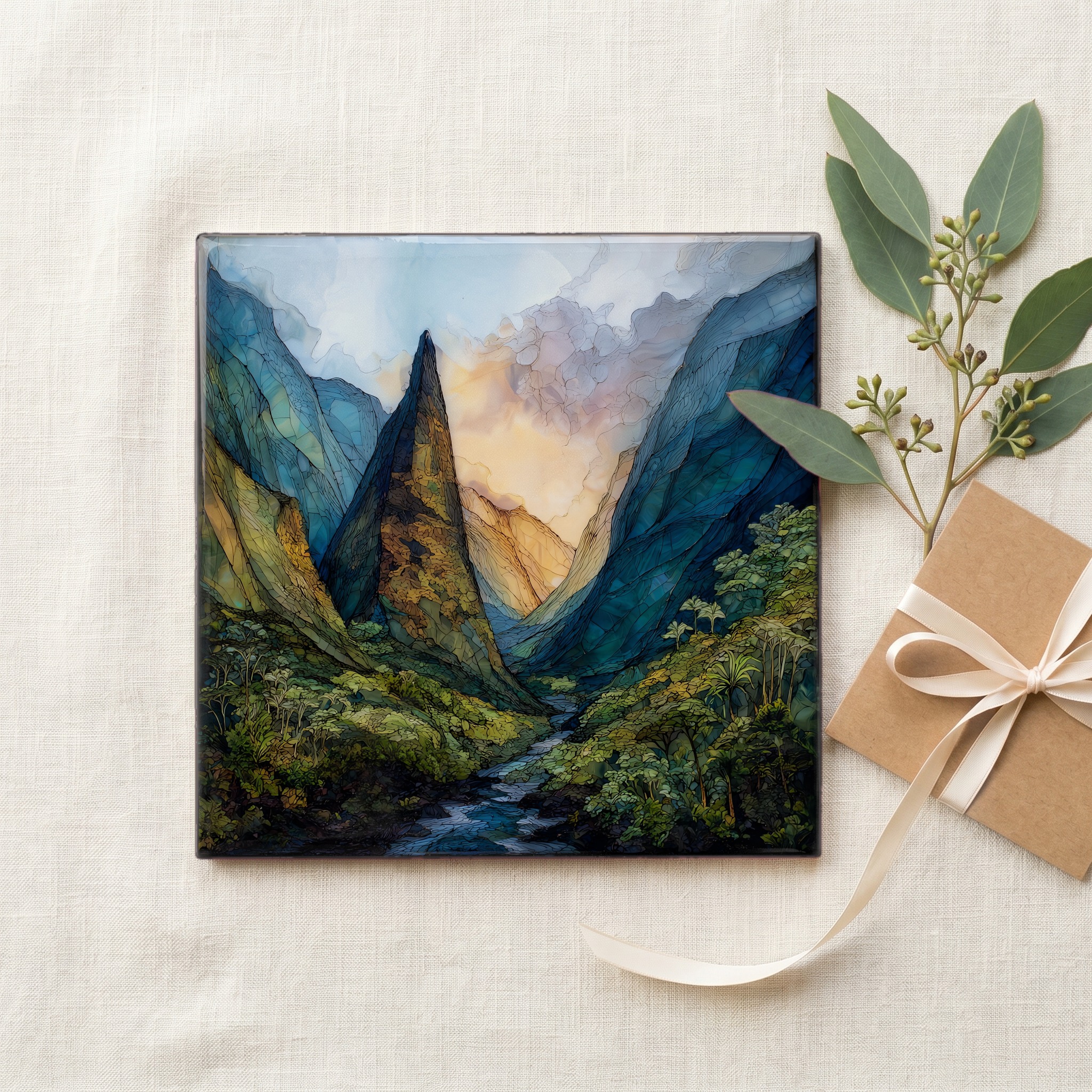
Each tile ships in a kraft box, tied with cream ribbon, with a handwritten note from the studio if you'd like to add one.
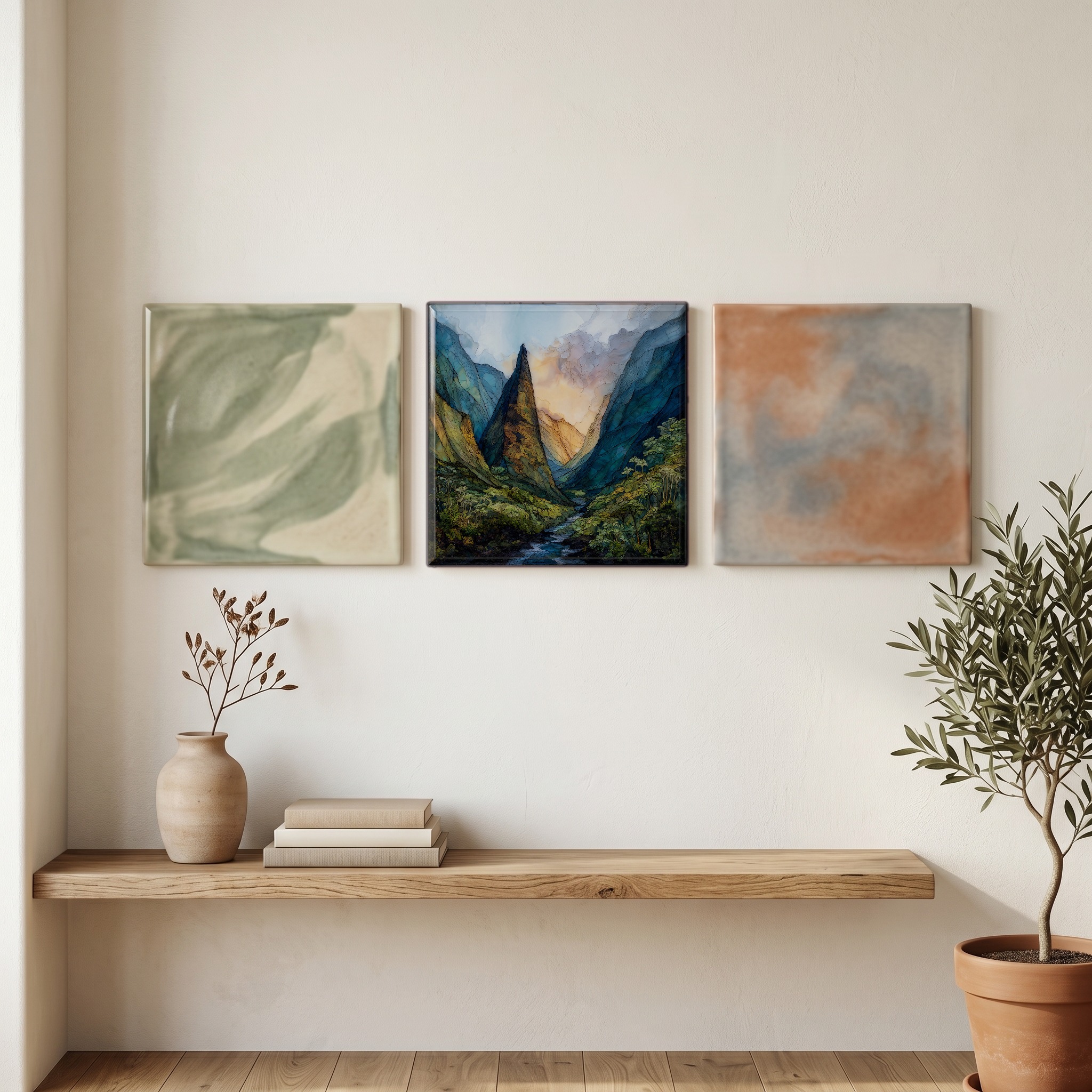
Three or five different vistas, hung together — a chapter of places you've been, or want to go.
The place, in three passes.
ʻĪao Needle, known in Hawaiian as Kūkaemoku, stands at the head of ʻĪao Valley in the West Maui Mountains, about three miles west of Wailuku. The spire is a basalt erosional remnant rising roughly 1,200 feet (370 m) above the valley floor, with a summit close to 2,250 feet (686 m) above sea level. It is the eroded core of a much older volcanic ridge: the soft rock has gone, the harder rib of basalt has not. The surrounding 4,000-acre ʻĪao Valley State Monument is administered by the Hawaiʻi Division of State Parks and reached by Highway 32, which ends at a small parking area below the lookout.
ʻĪao Valley sits at the base of Puʻu Kukui, the West Maui Mountains' main summit at 5,788 feet (1,764 m). The rain gauge at Puʻu Kukui has recorded an average above 360 inches a year, placing it among the wettest measured spots on Earth. That weather collects and drains through the valley, which is why the Needle looks the way it does: colour-fed daily, the cloud pulled across the ridge at almost any hour. The same rainfall has carved the basalt and stripped the valley to its harder bones over millions of years. Calm morning views are best at opening; afternoons more often bring showers than not.
ʻĪao Valley State Monument is open seven days a week from 7:00 a.m. to 6:00 p.m., managed by the Hawaiʻi Division of State Parks. Non-residents must reserve entry in advance through the state parks reservation portal; entry runs $5 per person with $10 for parking, card-only. Hawaiʻi residents enter free with state ID. The walk from the car park to the main lookout is about a quarter mile, paved, with a flight of steps near the top. The valley closes during heavy rain because ʻĪao Stream floods quickly. Photography is best in early morning before the cloud builds; the spire often vanishes by mid-afternoon.