Wender·Vista
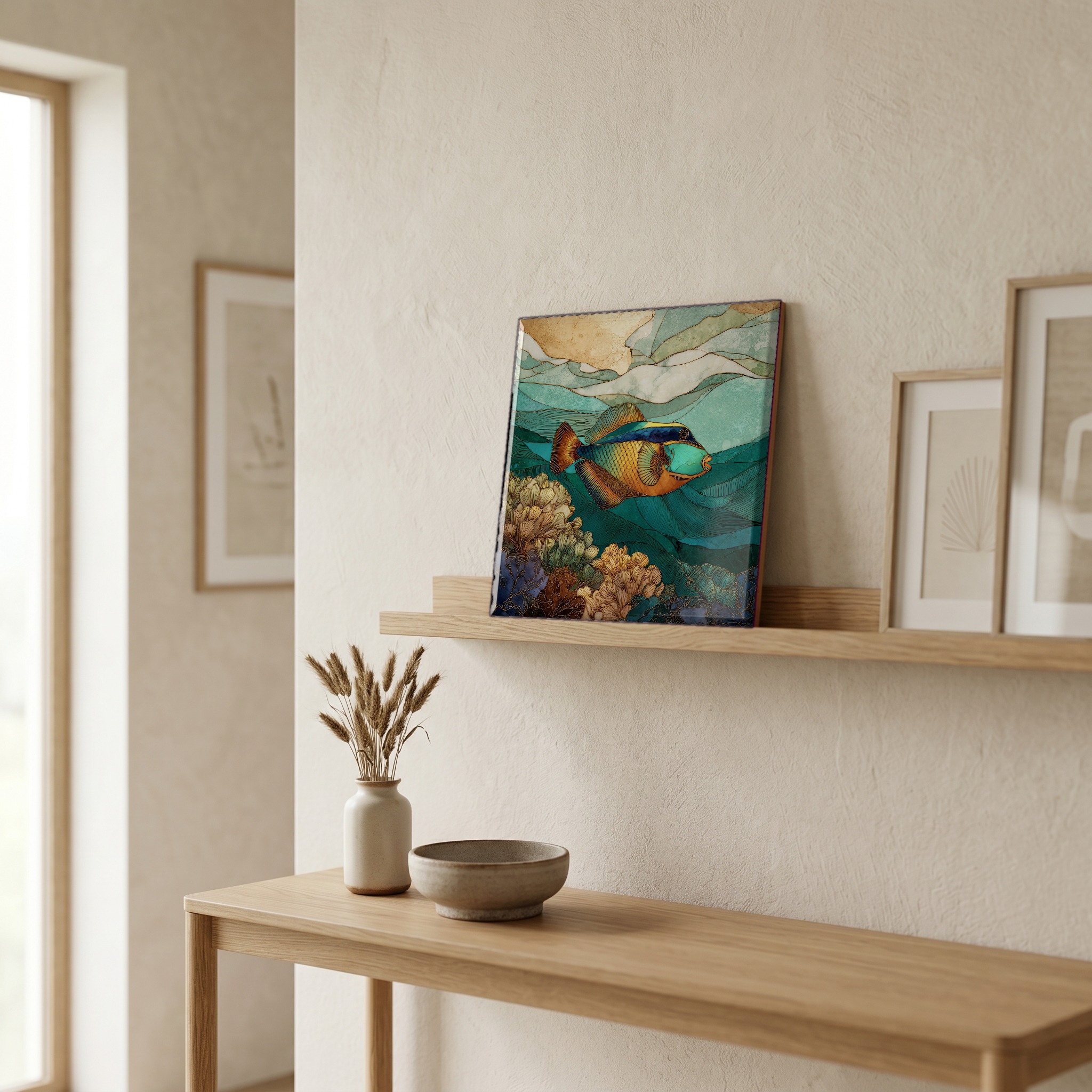
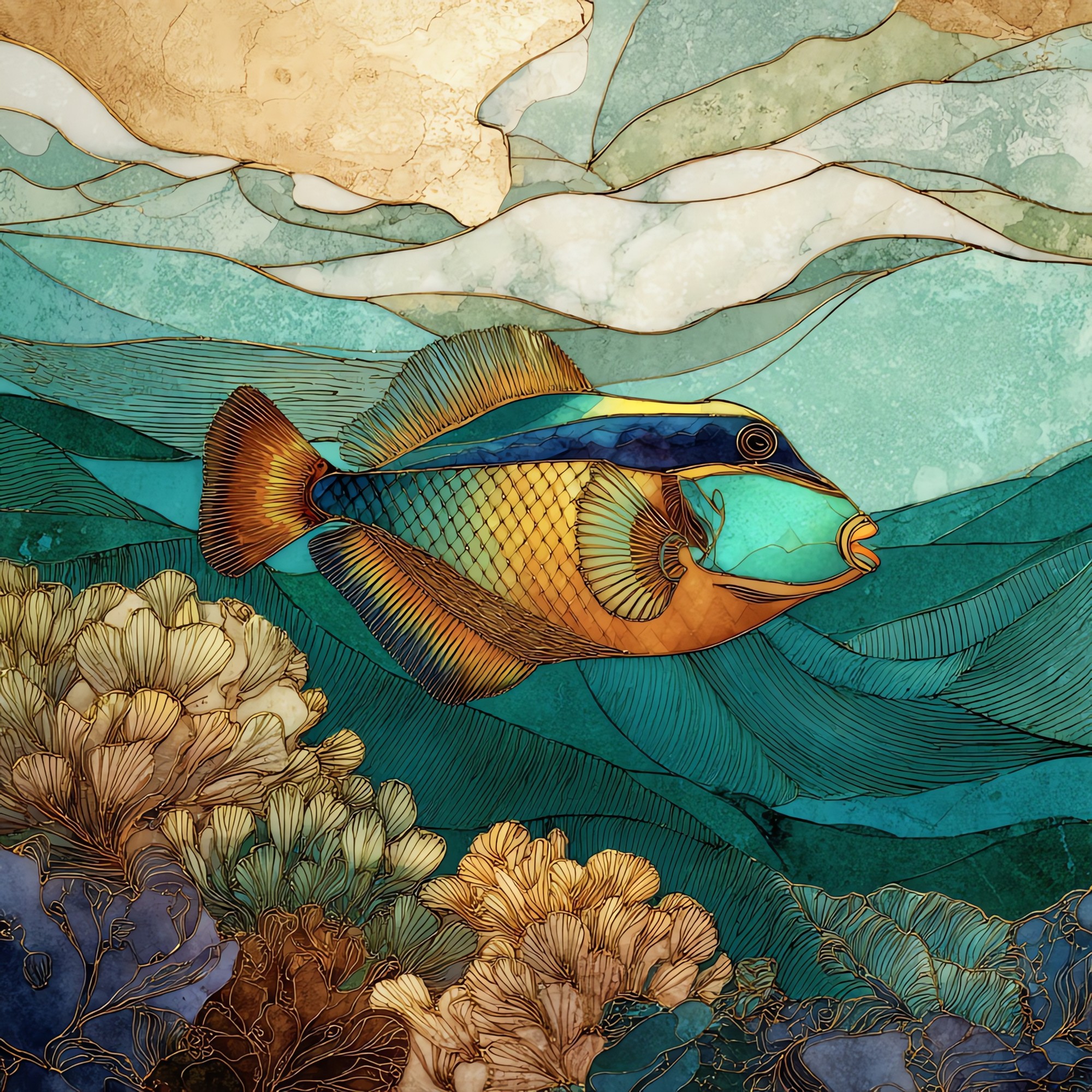
Humuhumunukunukuapuaa Ceramic Art Tile
shown on ceramic, 12-inch tileHawaii · United States
in the coral shallows off every Hawaiian island

Humuhumunukunukuapuaa Ceramic Art Tile

— the reef's coat of arms.

Where it lives

Not only on a wall.

A small tile on the nightstand catching the morning. A larger one above the fire. Yours, wherever you spend the slow hours.
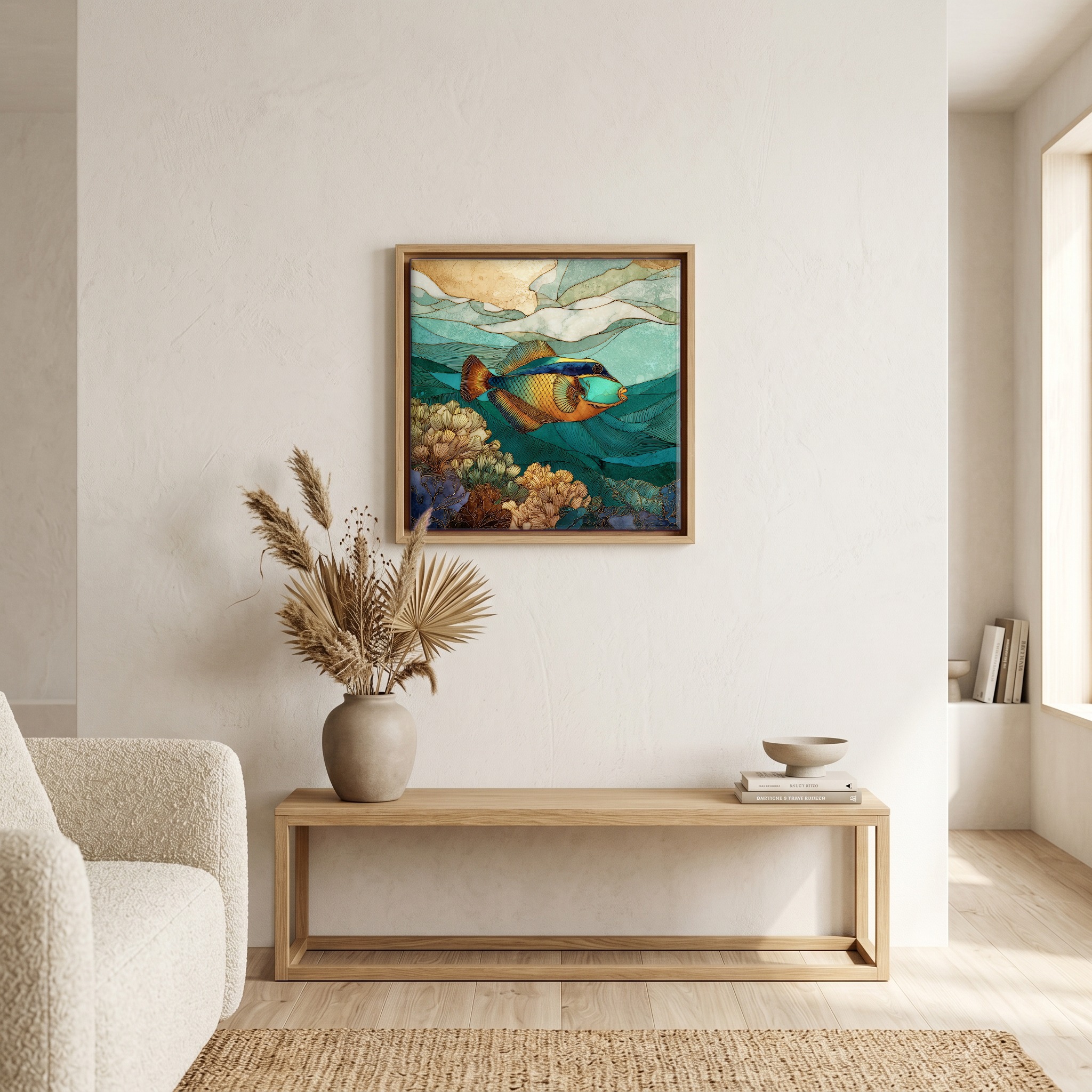
Above the bench, in a warm oak surround.
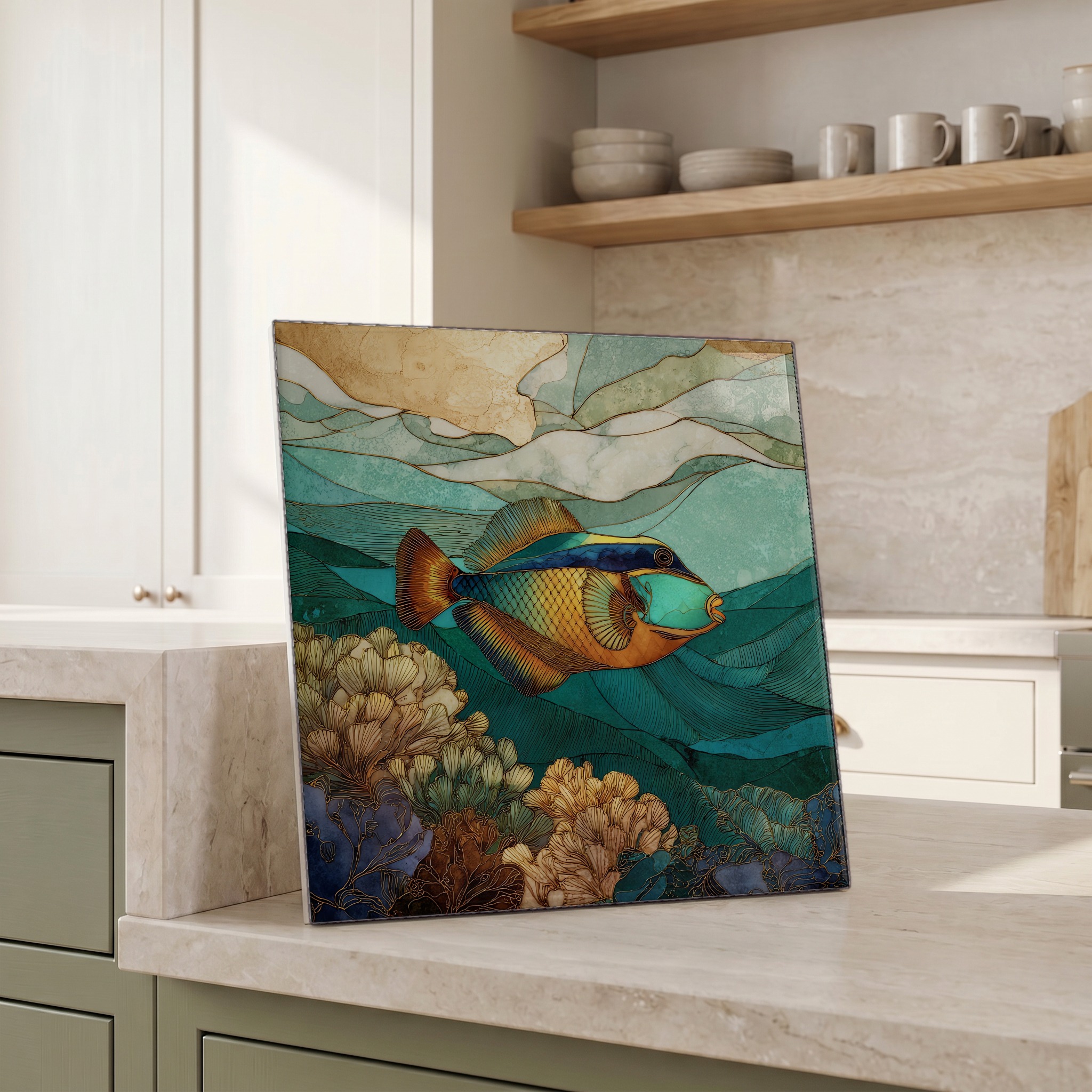
Beside the kettle, propped on the counter.
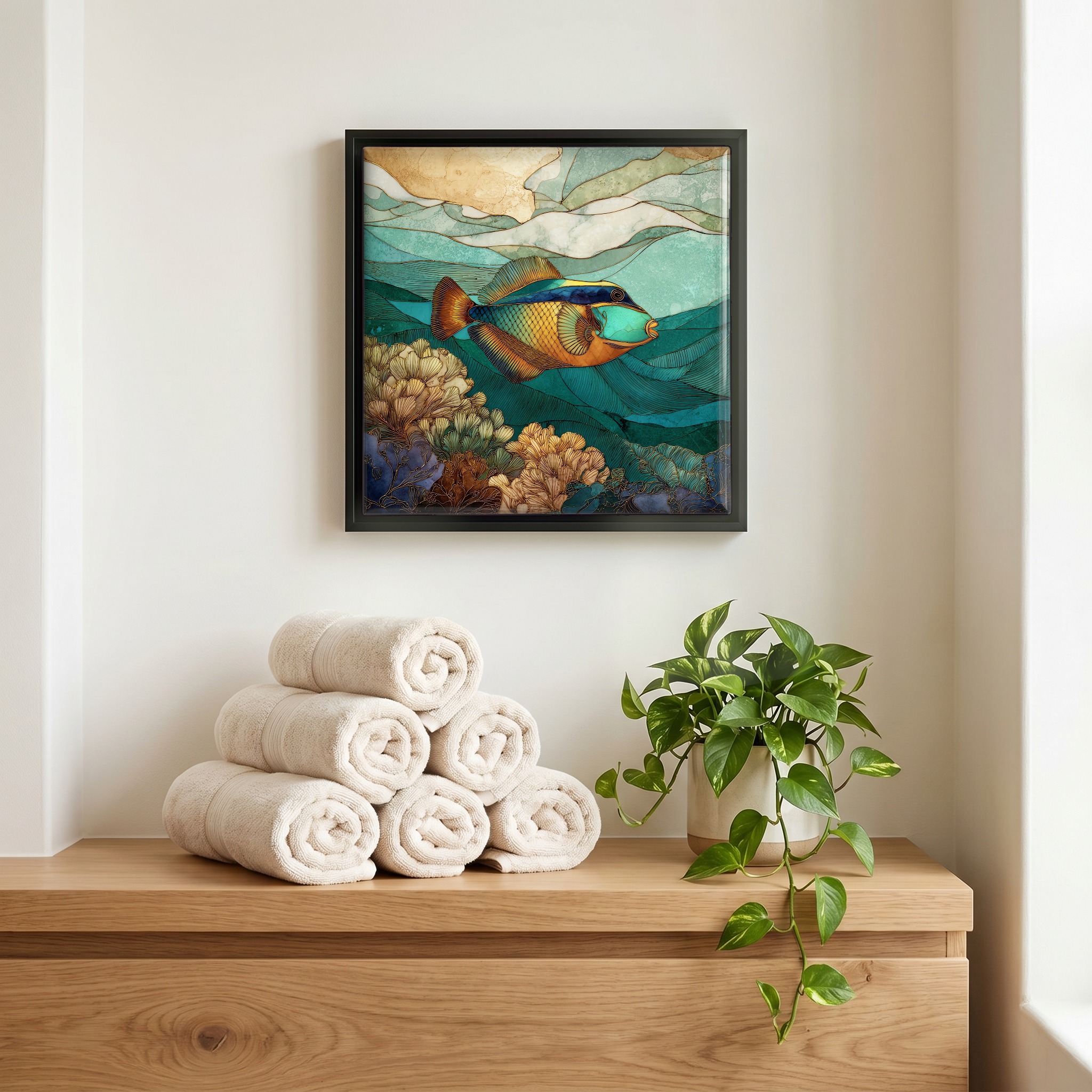
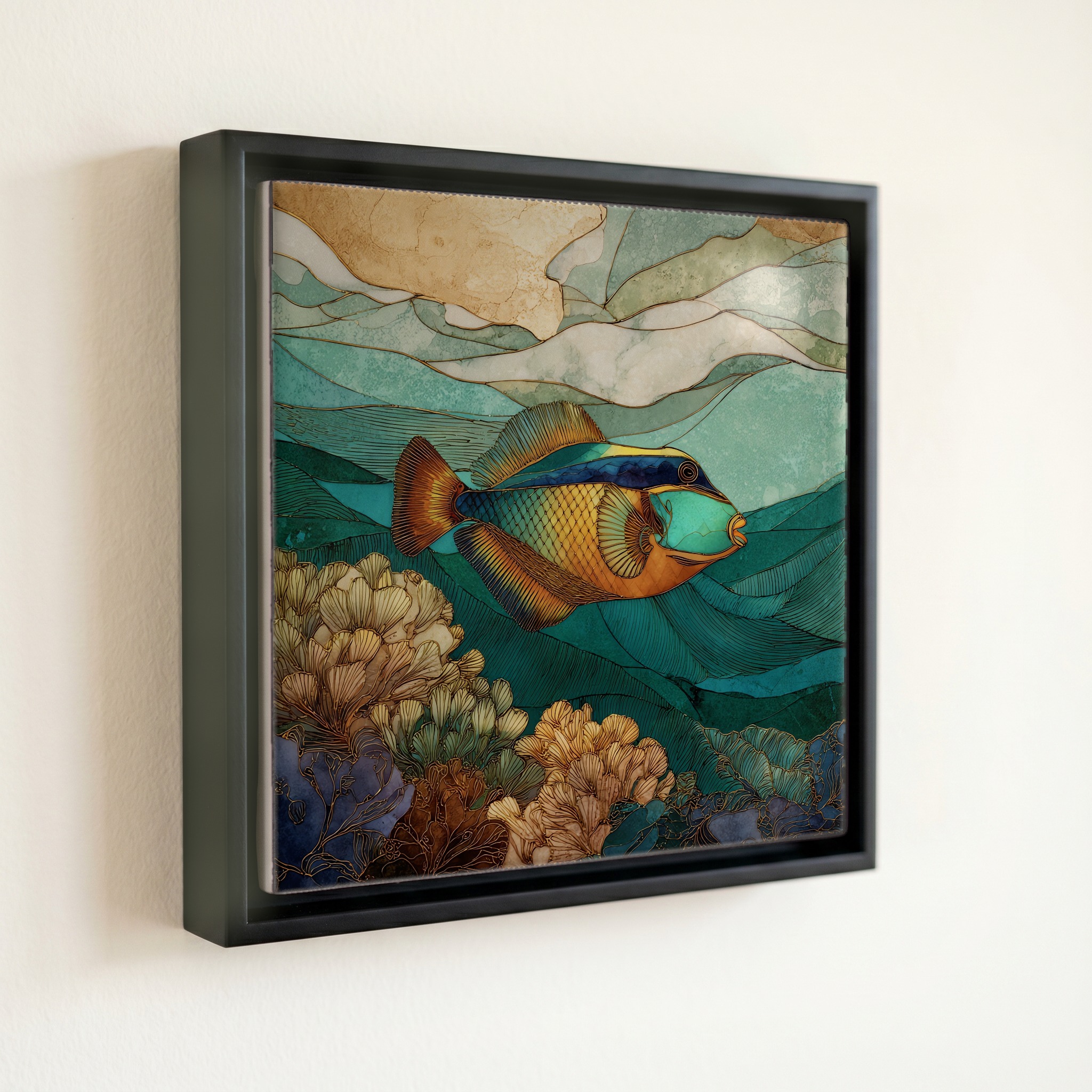
Above the linens, in a slim black surround.
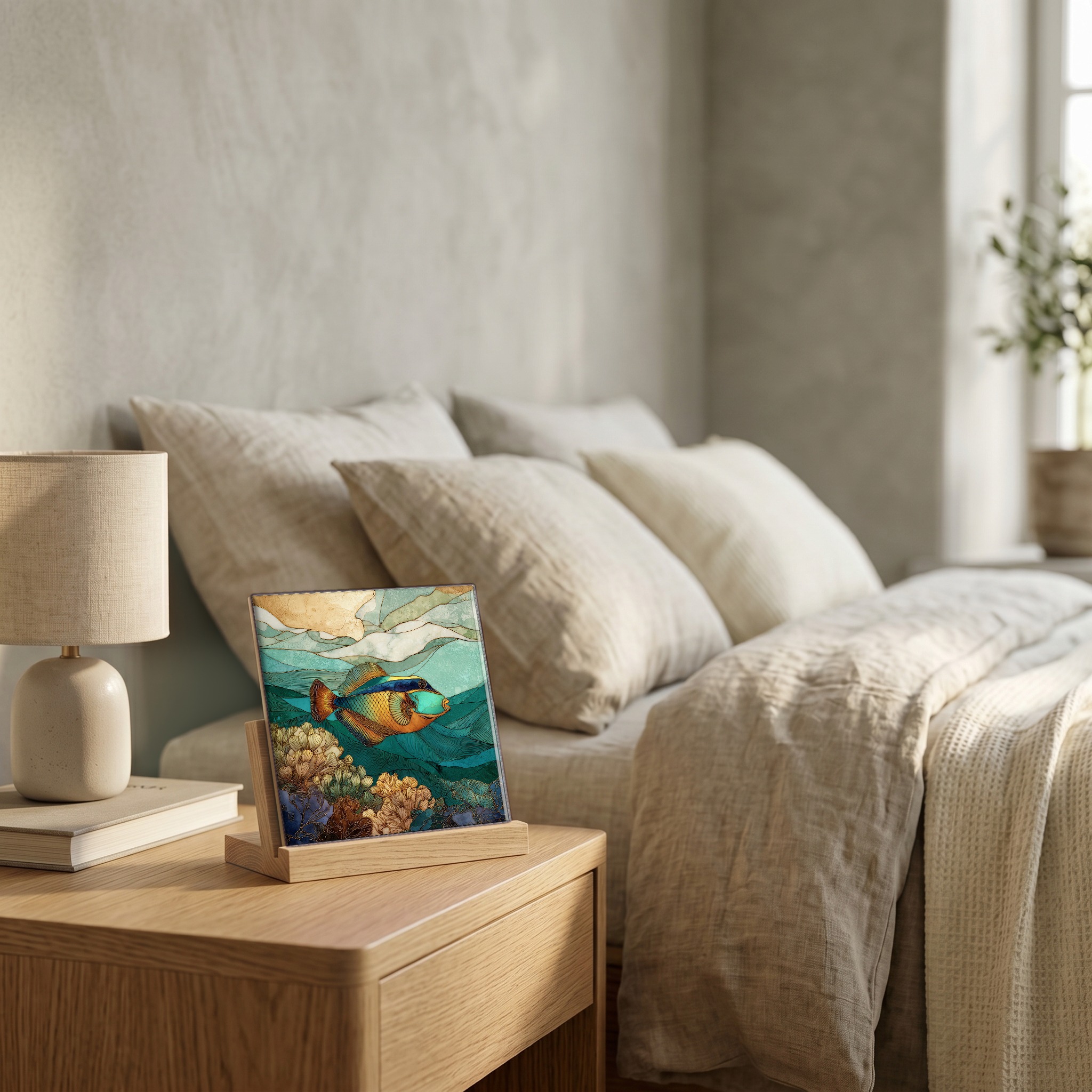
On the nightstand, on a light oak stand.
On a picture ledge, where the light comes in.
a note from the studio

Hawaii's state fish, named for a snout like a pig and a grunt to match. Humuhumunukunukuāpuaʻa lives across the nearshore reefs of all the main Hawaiian islands, usually within snorkeling depth. The face wears a dark mask; the lips are yellow; a thin blue line runs along the brow. The tail is edged in black. The name carried into a 1933 hapa-haole song about a grass shack in Kealakekua, and from there into the wider world. The Hawaii State Legislature made the state-fish designation permanent in 2006, the second time around.
from the studio
shown in a slim black floating frame · 6 × 6 in
— bring it home

Humuhumunukunukuapuaa Ceramic Art Tile, on ceramic.

Each tile is finished by hand in our Knoxville studio. Artwork is slowly infused into the ceramic surface under high heat and pressure, and rests beneath a thin glossy finish. The colour lives in the surface, not on top of it.

What kind of piece?
One tile — square or rectangle.
How big?
the popular one — counter, shelf, nightstand
6 × 6 in · 15 cm · 1.6 lb
Surface finish
A clear glossy finish — the artwork reads as if under resin. Ideal for show-pieces and framed wall art.
How it sits
A hidden cleat — sits ¼″ proud of the wall.
$58
Hand-finished and shipped from our studio at the foot of the Smokies. On your wall in about ten days.
size
6 × 6 in
15 cm
weighs
1.6 lb
solid in the hand
surface
ceramic, hand-finished
art rests beneath a thin glossy finish
from
Knoxville, TN
our family studio, at the foot of the Smokies
— start a Coaster Set

Pick any four 4-inch tiles — National Parks you've been to, a Smokies set, the four seasons of one place. $ for a set of , cork-backed, ready to live on the table.
comes gift-ready
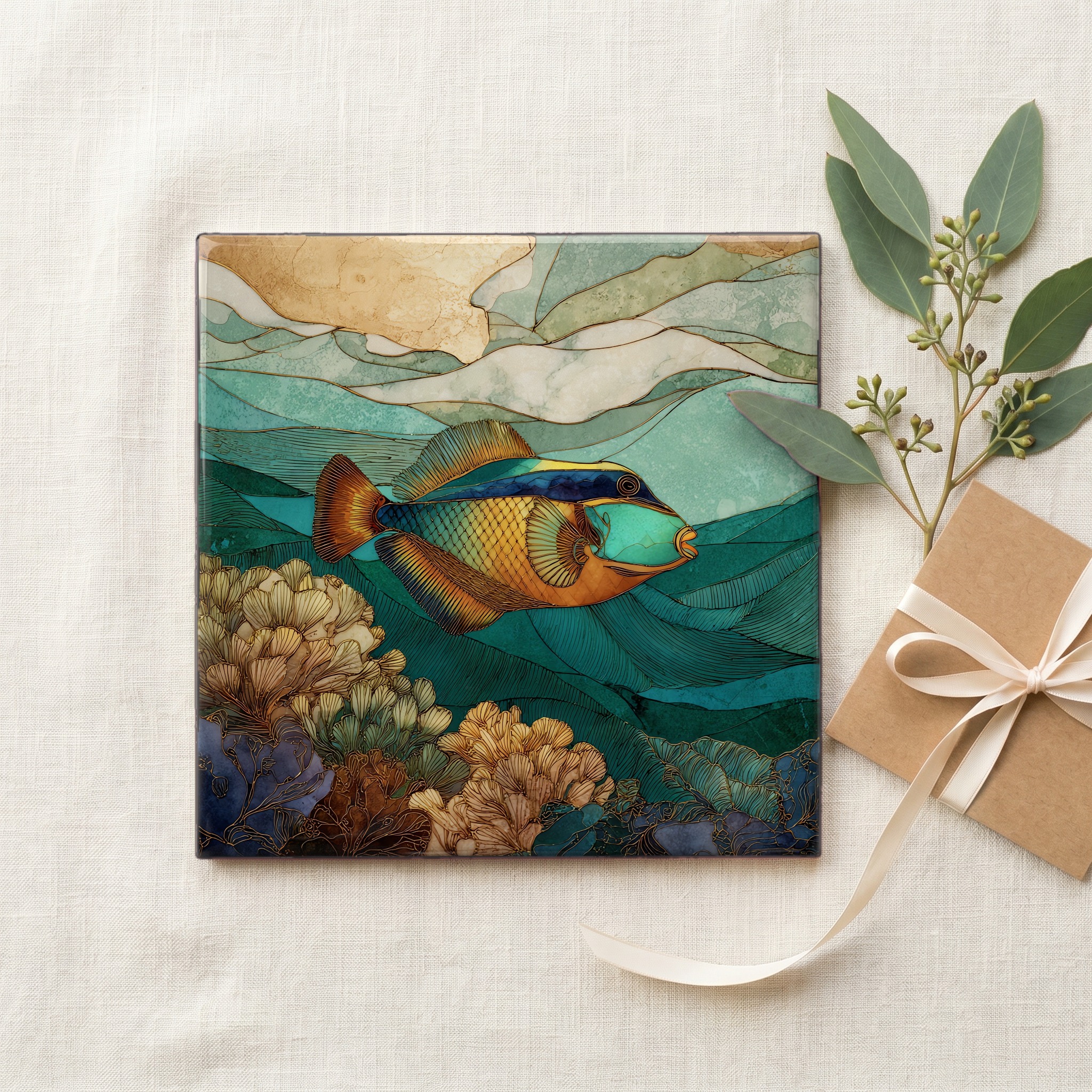
comes gift-ready

Each tile ships in a kraft box, tied with cream ribbon, with a handwritten note from the studio if you'd like to add one.
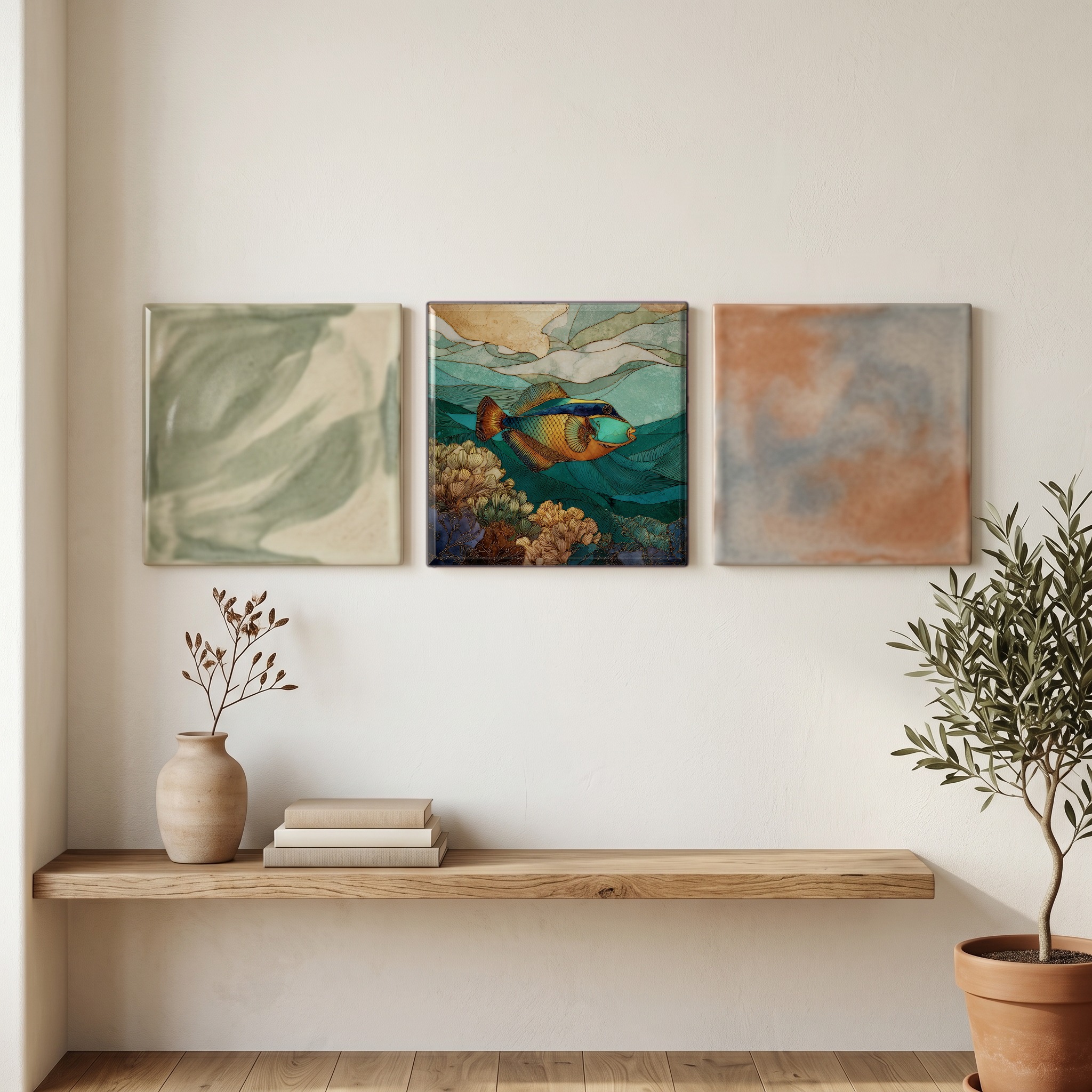
or build a grouping
or build a grouping

Three or five different vistas, hung together — a chapter of places you've been, or want to go.

about Humuhumunukunukuapuaa Ceramic Art Tile

The place, in three passes.

A little of what's known, in case you fall down the rabbit hole — or want to go see it yourself.
the place

The humuhumunukunukuapuaa is the state fish of Hawaii, a reef triggerfish (Rhinecanthus rectangulus) native to the Indo-Pacific and common across the nearshore reefs of all eight main Hawaiian Islands. It lives at depths from a few feet down to about 50 feet, holding territory along coral walls and pocket reefs. The Hawaiian name translates roughly to 'triggerfish with a snout like a pig,' a reference to both the squared facial profile and the grunting sound the fish produces through its swim bladder when threatened. The Hawaii State Legislature designated it the official state fish in 1985 under Act 252; that designation lapsed in 1990 and was made permanent in 2006.

the colour

The pattern is one of the most distinctive on the reef. A black diagonal bar masks the face from above the eye down to the corner of the mouth; the lips themselves are yellow. A blue line traces the upper edge of the head, and a second yellow band crosses the body just behind the gill. The rear third of the body is pale, finishing in a broad black bar at the base of the tail. Adults reach about 10 inches. Because the fish hangs head-down to feed on small invertebrates and algae, the high-contrast face is what a snorkeler usually sees first. It reads like heraldry against the coral.

the visit

Hanauma Bay on Oahu is the most reliable place to see the humuhumu, a fringing reef protected as Hawaii's first Marine Life Conservation District since 1967. The bay caps daily visitors at about 1,400 and closes Mondays and Tuesdays. Molokini Crater off Maui, a half-submerged tuff cone, offers clearer water and the same fish along its inner crescent. Anaehoomalu Bay on the Big Island and Kee Beach on Kauai also hold reliable populations. The fish is non-migratory; it stays close to its home reef and is best seen between mid-morning and early afternoon, when the sun is high enough to light the reef but the trades have not yet stirred the surface.

where
United States · Hawaii, United States
common questions

What people ask.

A few questions we get about Humuhumunukunukuapuaa Ceramic Art Tile — and about bringing the piece home.
about the place

It is the state fish of Hawaii, a reef triggerfish (Rhinecanthus rectangulus) found across the nearshore reefs of all the main Hawaiian Islands. The Hawaiian name means 'triggerfish with a snout like a pig.' Adults reach about 10 inches and make a grunting sound through the swim bladder when threatened.

Roughly hoo-moo-hoo-moo-noo-koo-noo-koo-ah-poo-ah-ah, with even stress on each syllable. The full Hawaiian spelling carries diacritical marks: humuhumunukunukuāpuaʻa. Most signage in the islands drops the marks. The 'puaa' at the end refers to puaʻa, the Hawaiian word for pig.

The Hawaii State Legislature first designated it under Act 252 in 1985 for a five-year term, recognizing it as the most distinctively Hawaiian reef fish. The designation lapsed in 1990 and was made permanent in 2006. The name appears across Hawaiian folklore, place-lore, and song.

Snorkeling spots across the main Hawaiian Islands. Hanauma Bay on Oahu is the most accessible. Molokini Crater off Maui has the clearest water. Anaehoomalu Bay on the Big Island and Kee Beach on Kauai also hold reliable populations. The fish stays in nearshore reef across the seasons.

Small reef invertebrates, algae, and detritus. It feeds head-down along coral walls, picking at urchins, crustaceans, and worms. The strong jaws and the trigger mechanism in the dorsal fin, which the fish locks into reef crevices to sleep, are adaptations to a hard-cover reef environment.

Yes. The 1933 hapa-haole song 'My Little Grass Shack in Kealakekua, Hawaii' by Bill Cogswell, Tommy Harrison and Johnny Noble uses the name in its chorus. The phrase is one of the most recognizable Hawaiian-language words outside the islands, partly because it is famously the longest fish name in common English use.

No. Rhinecanthus rectangulus has a wide Indo-Pacific range and is classified as Least Concern on the IUCN Red List. Hawaiian populations are stable. The fish is not commercially fished in Hawaii and is protected at sites like Hanauma Bay, designated a Marine Life Conservation District in 1967.

about the piece in your home

It carries well to anyone who grew up on the islands or spent time in them. The humuhumu is the state fish; most people from Hawaii know it from childhood, from snorkel trips, and from the song. A Coaster Set or a Small with a handwritten note from the studio is a quiet way to send it.

Coastal-modern interiors, tropical-modern rooms, and rooms with a piece of warm wood already in them. The yellows and blacks in the artwork carry into jewel-tone maximalist palettes and into mid-century rooms where teak and brass already live. Less at home in cool, all-white minimalism.

Yes. Reef and ocean imagery is a continuing thread in biophilic design, with the natural pattern and saturated blues doing quiet work. The humuhumu's bold heraldic markings give the artwork the graphic strength that coastal-modern rooms need to keep the wall from going washed-out.

A single Large reads well above a console or in a smaller seating area. Above a full sofa, a 4-tile Mural carries the wall; for a longer wall or a stairwell, the 9-tile Mural arrangement gives the artwork room to breathe. The Triptych works on narrower vertical runs.

Yes. Order it in the Dura Satin or Matte finish for any installation that sees steam, splash, or repeated touch: backsplashes, shower surrounds, half-baths. The Glossy finish is for framed wall-art use only and is not rated for wet installations.

Microfibre cloth and water. Skip ammonia and abrasive pads; the surface does not need them. For a Dura Satin installation behind a stove, an occasional pass with a pH-neutral kitchen cleaner is fine. The colour lives in the surface and does not lift.

Yes. Every piece in the WenderVista atlas is original to the studio, painted in our stained-glass and alcohol-ink visual language and slowly infused into the ceramic surface under high heat and pressure. We do not license outside artwork.

if this one stayed with you

A few you might also love.

Hand-picked by the eye that found Sorapis. Same air, same kind of quiet.