Wender·Vista
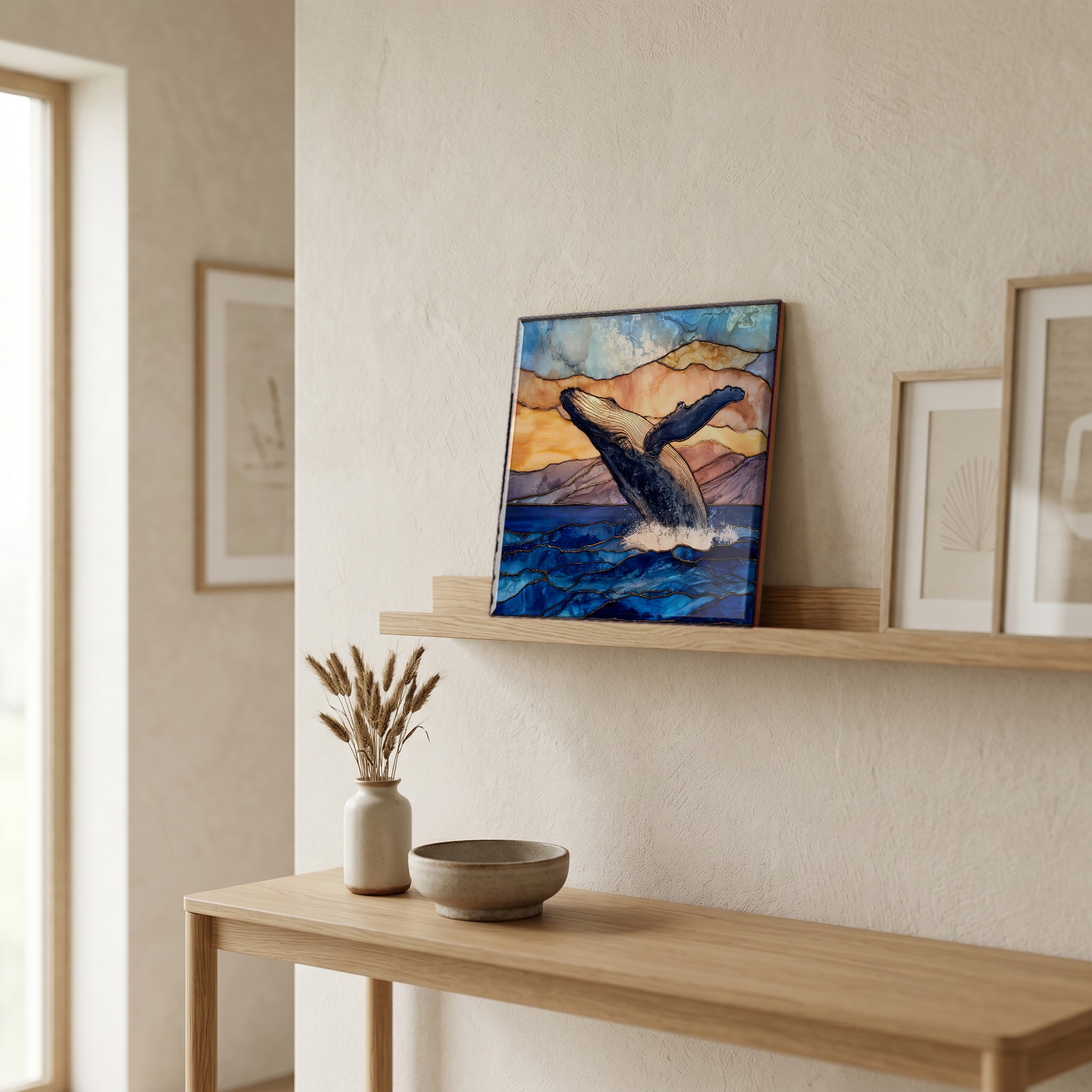
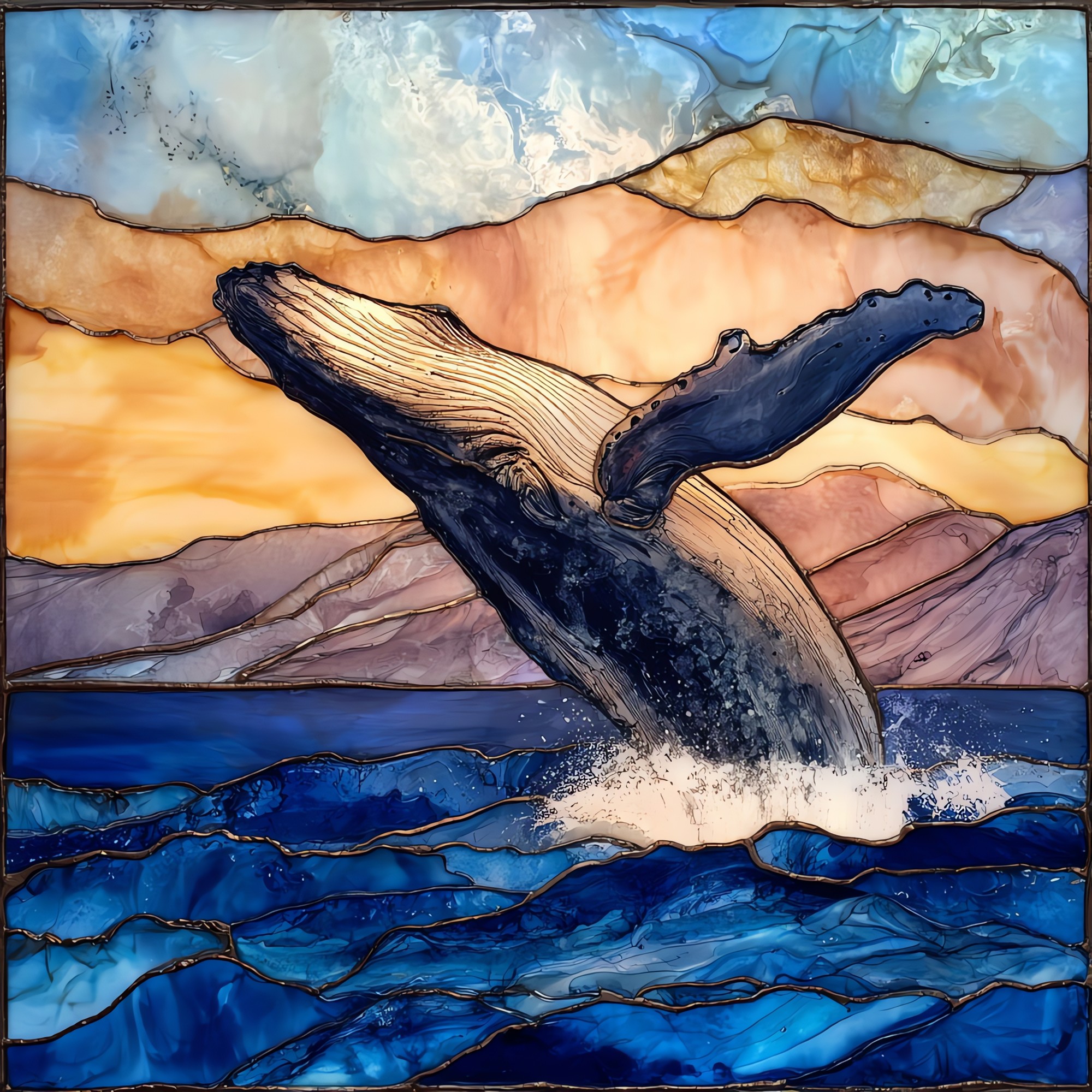
Humpback Whale Maui Ceramic Art Tile
shown on ceramic, 12-inch tileHawaii · United States
in the channel between Maui and Lanaʻi

Humpback Whale Maui Ceramic Art Tile

the song you can hear through the hull.

Where it lives

Not only on a wall.

A small tile on the nightstand catching the morning. A larger one above the fire. Yours, wherever you spend the slow hours.
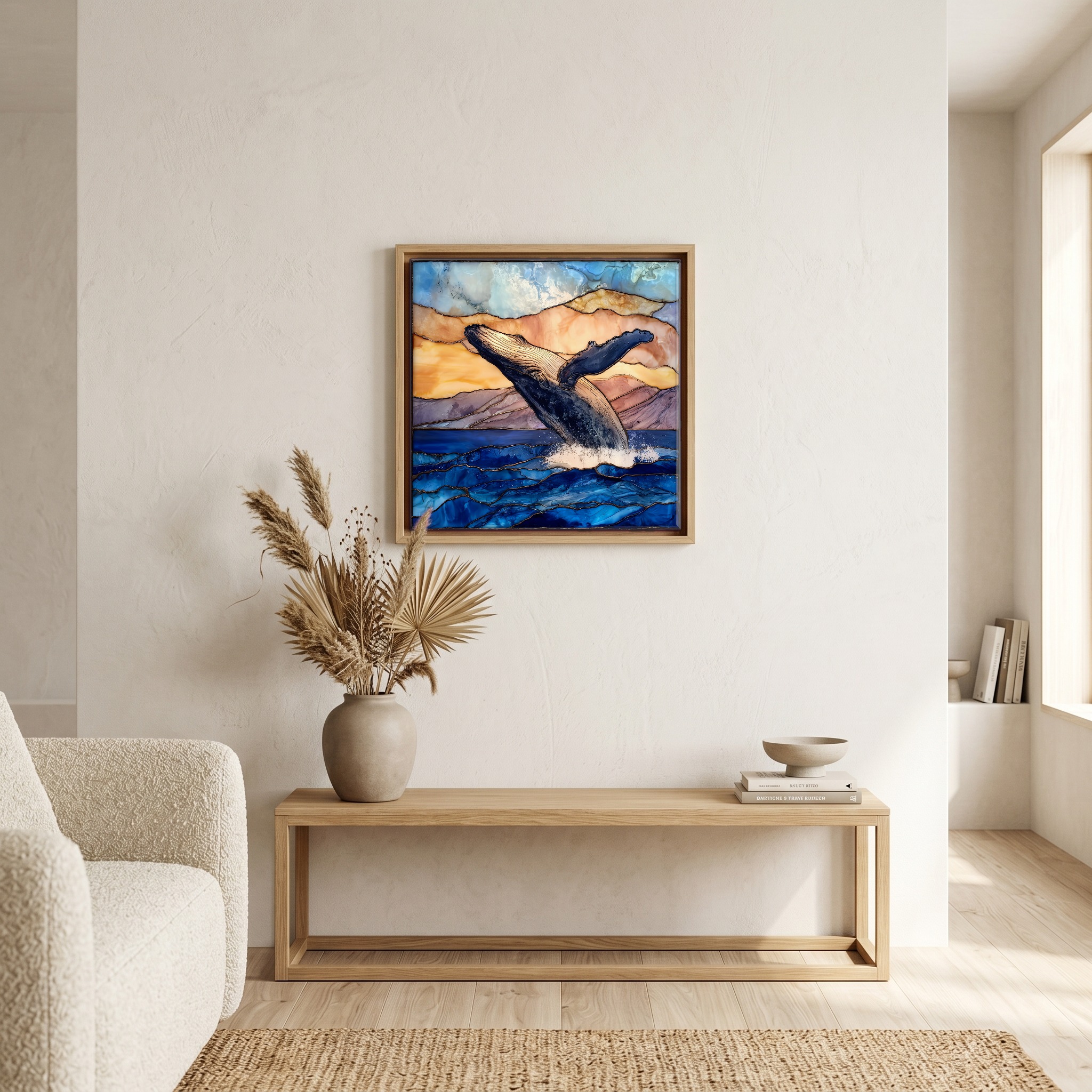
Above the bench, in a warm oak surround.
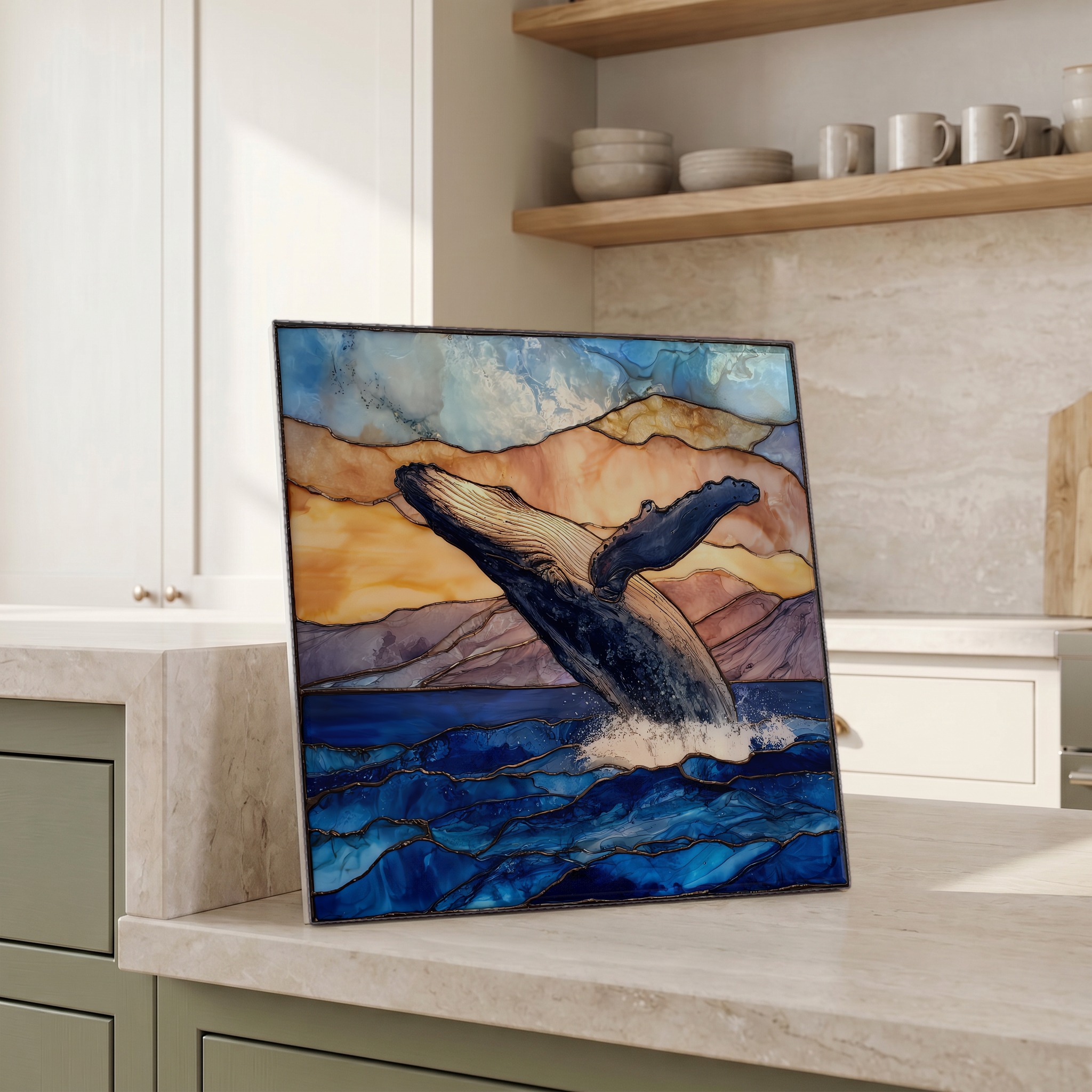
Beside the kettle, propped on the counter.
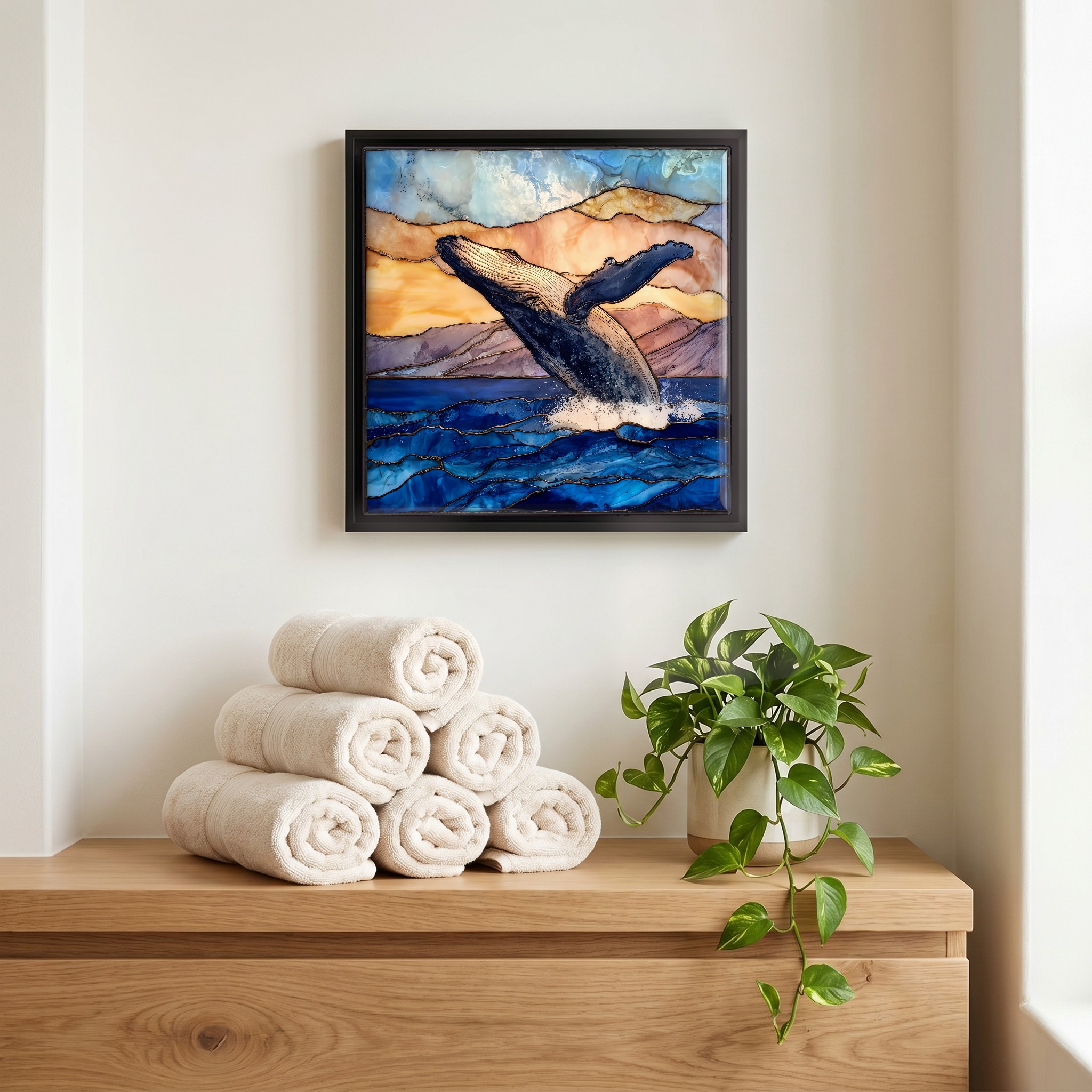
Above the linens, in a slim black surround.
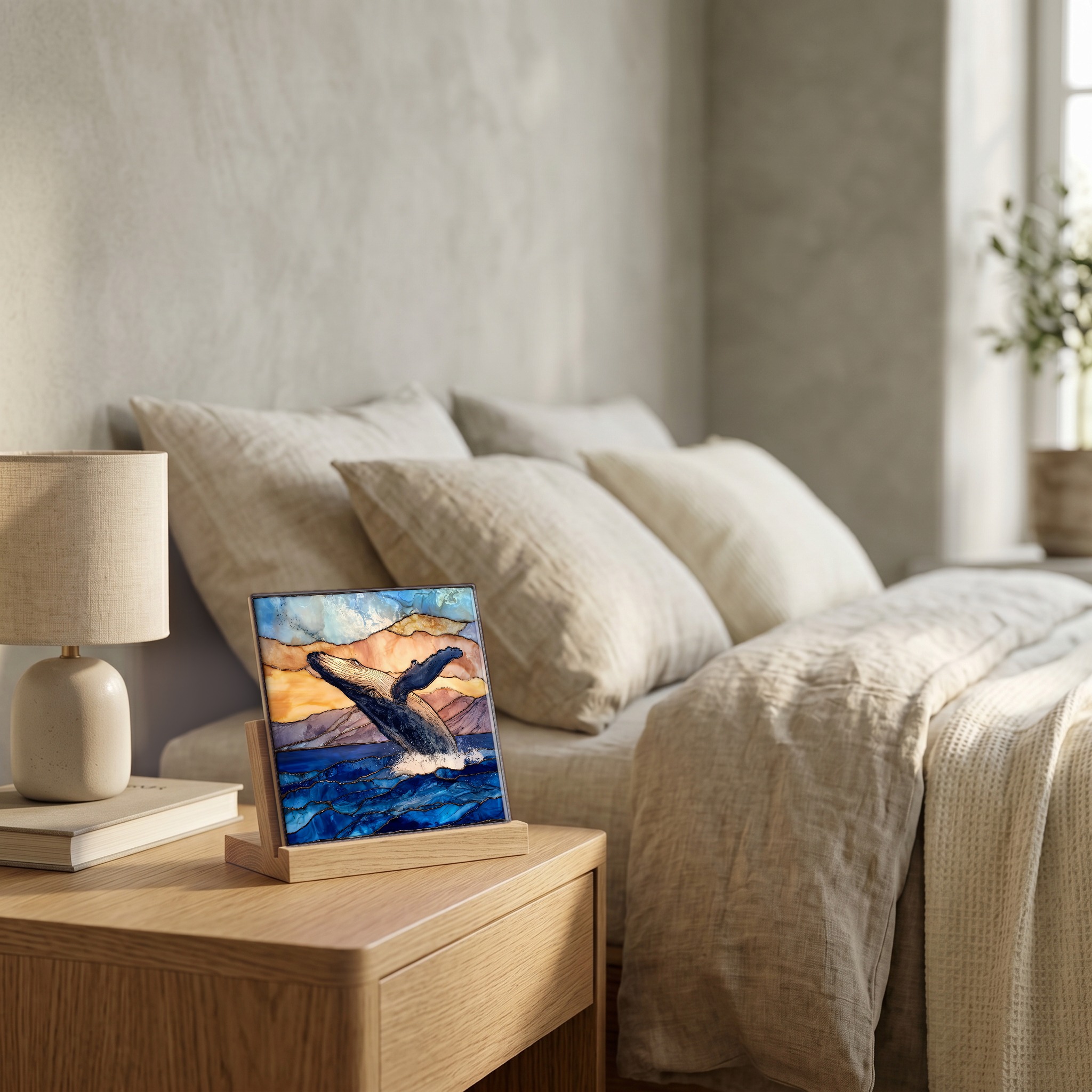
On the nightstand, on a light oak stand.
On a picture ledge, where the light comes in.
a note from the studio

Each winter, ten thousand humpbacks leave the cold feeding grounds off Alaska and travel three thousand miles to the warm channel between Maui and Lanaʻi. They come to calve, to nurse, to sing. The ʻAuʻau Channel is shallow and sheltered, a held space the whales have used for thousands of winters. The males sing for hours, a song you can hear through the hull of a small boat in Maʻalaea Bay. They do not eat the whole time they are here. They live on what they brought with them.
from the studio
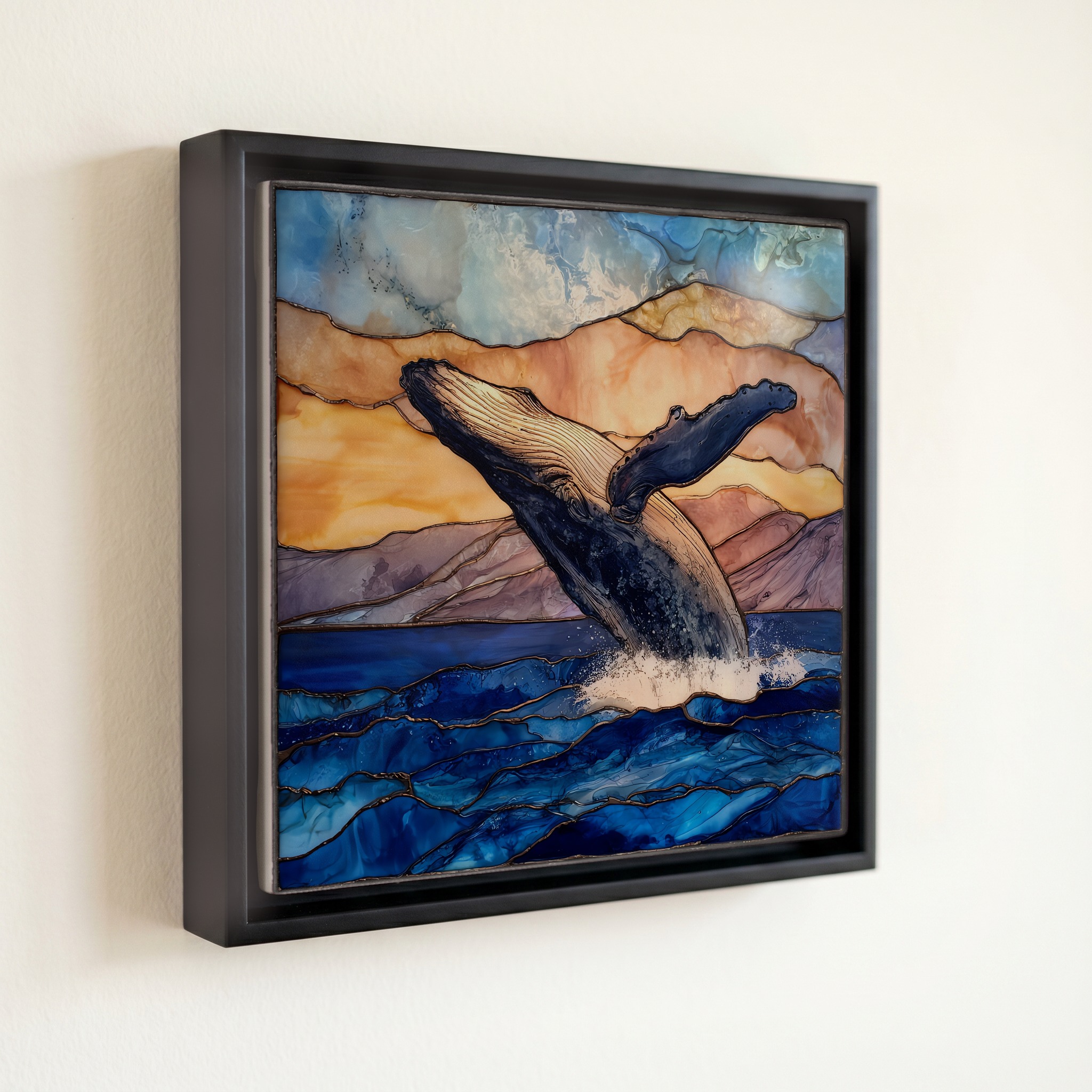
shown in a slim black floating frame · 6 × 6 in
— bring it home

Humpback Whale Maui Ceramic Art Tile, on ceramic.

Each tile is finished by hand in our Knoxville studio. Artwork is slowly infused into the ceramic surface under high heat and pressure, and rests beneath a thin glossy finish. The colour lives in the surface, not on top of it.

What kind of piece?
One tile — square or rectangle.
How big?
the popular one — counter, shelf, nightstand
6 × 6 in · 15 cm · 1.6 lb
Surface finish
A clear glossy finish — the artwork reads as if under resin. Ideal for show-pieces and framed wall art.
How it sits
A hidden cleat — sits ¼″ proud of the wall.
$58
Hand-finished and shipped from our studio at the foot of the Smokies. On your wall in about ten days.
size
6 × 6 in
15 cm
weighs
1.6 lb
solid in the hand
surface
ceramic, hand-finished
art rests beneath a thin glossy finish
from
Knoxville, TN
our family studio, at the foot of the Smokies
— start a Coaster Set

Pick any four 4-inch tiles — National Parks you've been to, a Smokies set, the four seasons of one place. $ for a set of , cork-backed, ready to live on the table.
comes gift-ready
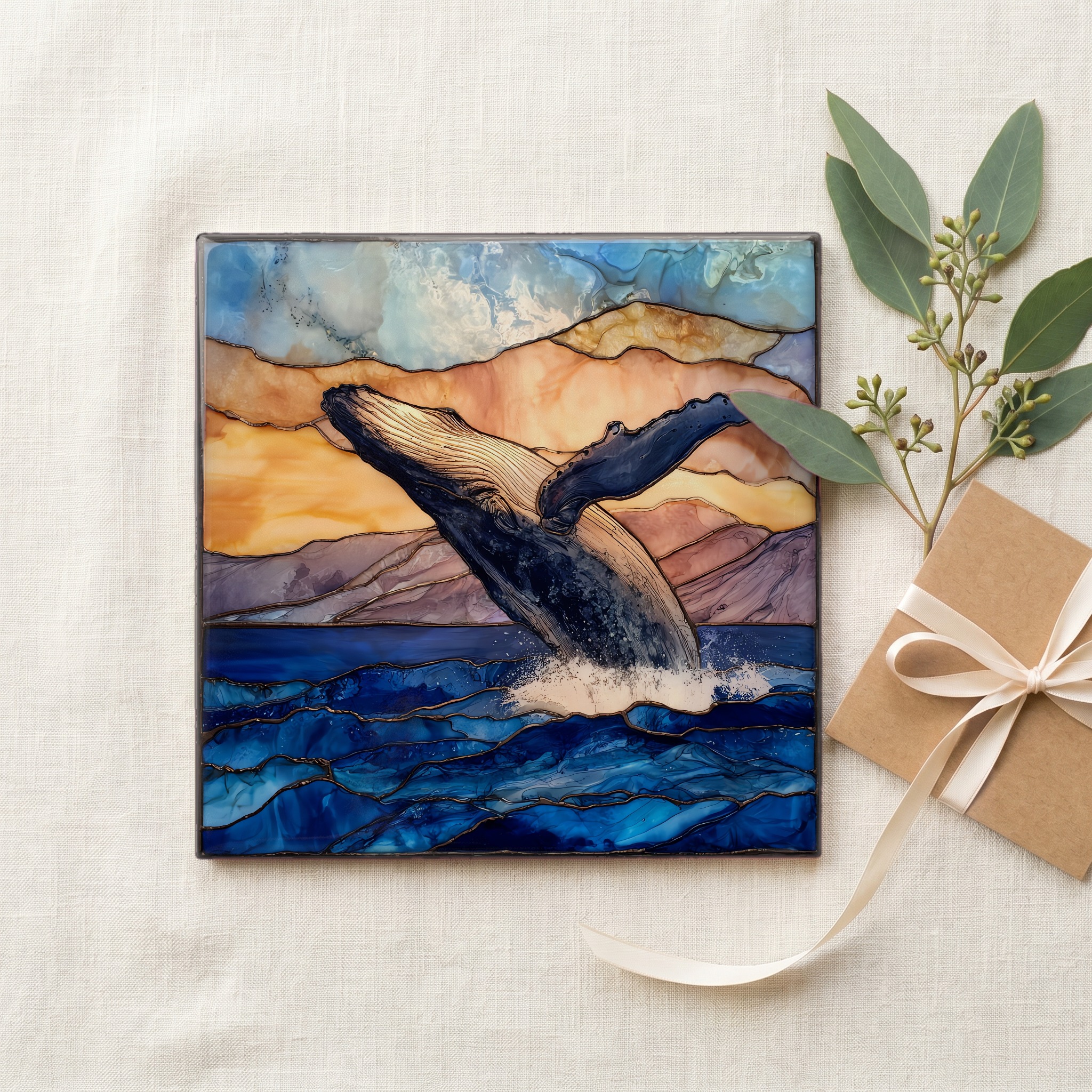
comes gift-ready

Each tile ships in a kraft box, tied with cream ribbon, with a handwritten note from the studio if you'd like to add one.
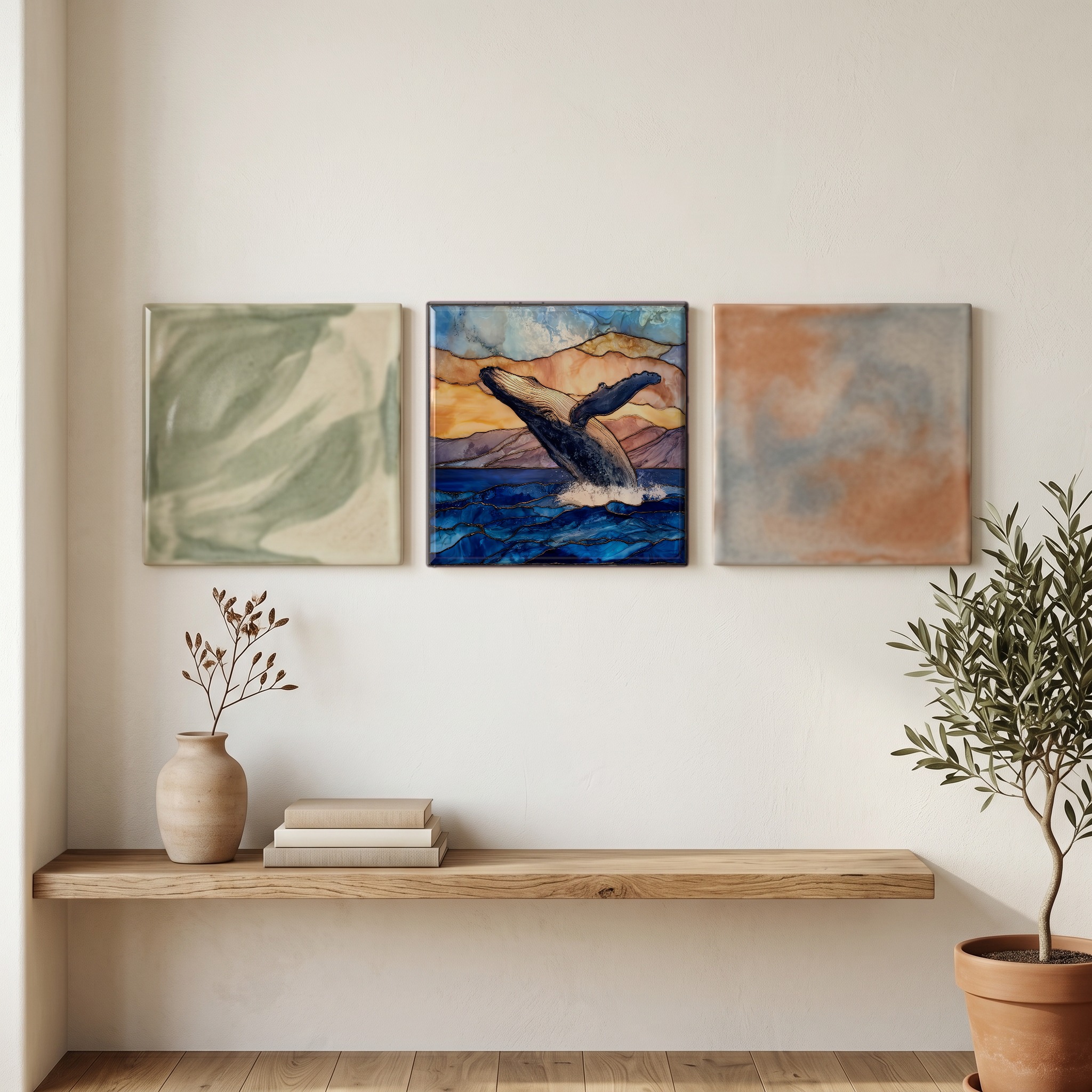
or build a grouping
or build a grouping

Three or five different vistas, hung together — a chapter of places you've been, or want to go.

about Humpback Whale Maui Ceramic Art Tile

The place, in three passes.

A little of what's known, in case you fall down the rabbit hole — or want to go see it yourself.
the place

Maui is the second largest of the Hawaiian Islands at 727 square miles, formed by two ancient shield volcanoes. Haleakalā in the east rises to 10,023 feet; the West Maui Mountains form the older dome to the west. The waters off Maui's southern and western shores fall within the Hawaiian Islands Humpback Whale National Marine Sanctuary, designated by Congress in 1992 to protect about 1,400 square miles of federal ocean. The sanctuary's headquarters sit in Kihei, on Maui's south shore. The ʻAuʻau Channel between Maui and Lanaʻi, sheltered by both islands, is the most heavily used humpback breeding area in the North Pacific.

the water

The ʻAuʻau Channel between Maui and Lanaʻi is shallow and sheltered, with surface water holding at 75 to 80 degrees Fahrenheit through winter. The warmth is critical for humpback calves, which are born without a thick blubber layer and could not survive in cold water. Trade winds break against the West Maui Mountains and Haleakalā, leaving the channel calm for months at a stretch. The same waters draw spinner dolphins, green sea turtles, and the occasional pilot whale. NOAA sanctuary rules require boats to keep 100 yards from any whale, and 300 yards from a mother and calf.

the season

The humpbacks are present in Hawaiian waters from November through May, with the heaviest concentration between January and March. Roughly ten thousand whales arrive each winter from the Gulf of Alaska, a one-way journey of about 3,000 miles. They calve, mate, and rear their young in the warm channel, and they do not feed the entire time they are here, living off blubber laid down in the summer. Boat-based whale watching runs out of Lahaina, Maʻalaea, and Kihei; the peak month is February. Males sing the long, structured song the species is known for, and all males in a region sing the same song each season, which changes slightly the next year.

where
United States · Maui County, Hawaii
within
Hawaiian Islands Humpback Whale National Marine Sanctuary
position
20.8500° N · 156.8000° W
the neighborhood

What's nearby.

A handful of named places within an hour's walk or short drive. Some we've already painted; some we will.
12 km N
Lahaina
harbor town
20 km E
Maʻalaea Harbor
harbor
22 km E
Kihei
coastal town
25 km SE
Molokini Crater
crescent islet
25 km NE
ʻĪao Valley
river valley
50 km E
Haleakalā National Park
shield volcano
25 km W
Lanaʻi
island
N
Humpback Whale Maui Ceramic Art Tile
Lahaina
Maʻalaea Harbor
Kihei
Molokini Crater
ʻĪao Valley
Haleakalā National Park
Lanaʻi
common questions

What people ask.

A few questions we get about Humpback Whale Maui Ceramic Art Tile — and about bringing the piece home.
about the place

The waters between Maui, Lanaʻi, Molokaʻi, and Kahoʻolawe make up the densest humpback nursery in the North Pacific. The ʻAuʻau Channel between Maui and Lanaʻi holds the highest concentrations. Lahaina, Maʻalaea, and Kihei are the main boat-tour departure points.

Humpbacks are present in Hawaiian waters from mid-November through May, with peak numbers between January and March. February is typically the heaviest month. Most commercial tours run December through April, anchored to NOAA's official whale season window of December 15 to May 15.

Recent NOAA estimates place the wintering Hawaiian humpback population at around 10,000 to 12,000 individuals, roughly half of the North Pacific population. Numbers peak in February and taper through April as adults and calves begin the return migration to Alaska.

The waters around Maui are warm, shallow, and sheltered from open-ocean swell by the surrounding islands. Humpbacks calve, mate, and nurse their young here in winter. The temperature and calm are critical for newborn calves, which are born without a thick blubber layer.

The Hawaiian humpbacks travel from the Gulf of Alaska and the eastern Aleutian Islands, a one-way journey of roughly 3,000 miles. They make the trip in six to eight weeks, swimming through open ocean without stopping to feed.

No. NOAA sanctuary regulations prohibit approaches closer than 100 yards by any vessel or swimmer, and 300 yards from a mother and calf. Aerial drones are restricted to 1,000 feet above the whales. Violations carry federal penalties.

Yes. Male humpbacks sing the long, structured song the species is known for, but only in their winter breeding waters. The song is the same across all males in a region each season, and changes slightly each year. Listeners on small boats can hear it through the hull.

about the piece in your home

It's been a meaningful gift for our customers with ties to the islands. The humpback's return each winter is a quiet anchor of Maui's year, and the ʻAuʻau Channel is one of the most beloved waters in the Pacific. A Keepsake or Coaster with a handwritten note from the studio carries the meaning well.

The piece reads as Coastal-modern, Jewel-tone Maximalist, and Pacific-Asian. Deep teals, blues, and inks sit easily next to natural wood, woven texture, and ocean-influenced palettes. The work also pairs with rooms in deep navy or charcoal; the colour holds against a darker wall.

Yes. The painting's stained-glass blues, alcohol-ink water, and oil texture lean into biophilic principles, drawing the ocean inside without sliding into beach-house cliché. It sits comfortably in coastal-modern and water-anchored rooms, categories that have grown across recent design seasons.

The Large works above a console or a small love seat. For a standard three-seat sofa, a 4-tile Mural reads as a single anchored work. Above wider sofas or a long entry wall, the 9-tile Mural holds the room.

Yes, with the Dura Satin or Matte finish. Both are scratch-resistant and stand up to the steam and splash of bathrooms, kitchens, and backsplashes. The Glossy finish is best kept to framed wall pieces away from heavy splash, like a living room or hallway.

A soft microfibre cloth with warm water. The colour is infused into the ceramic surface beneath a thin protective finish, so it will not fade with cleaning. Avoid abrasive scrubbers or harsh solvents, which can dull the finish over time.

Yes. Every piece in the WenderVista atlas is original to Wender Studios in Knoxville, Tennessee. Reid Wender is the curator and chooses what enters the line. The work is hand-finished in our studio. No licensing, no third-party prints, no stock imagery.

if this one stayed with you

A few you might also love.

Hand-picked by the eye that found Sorapis. Same air, same kind of quiet.