Wender·Vista
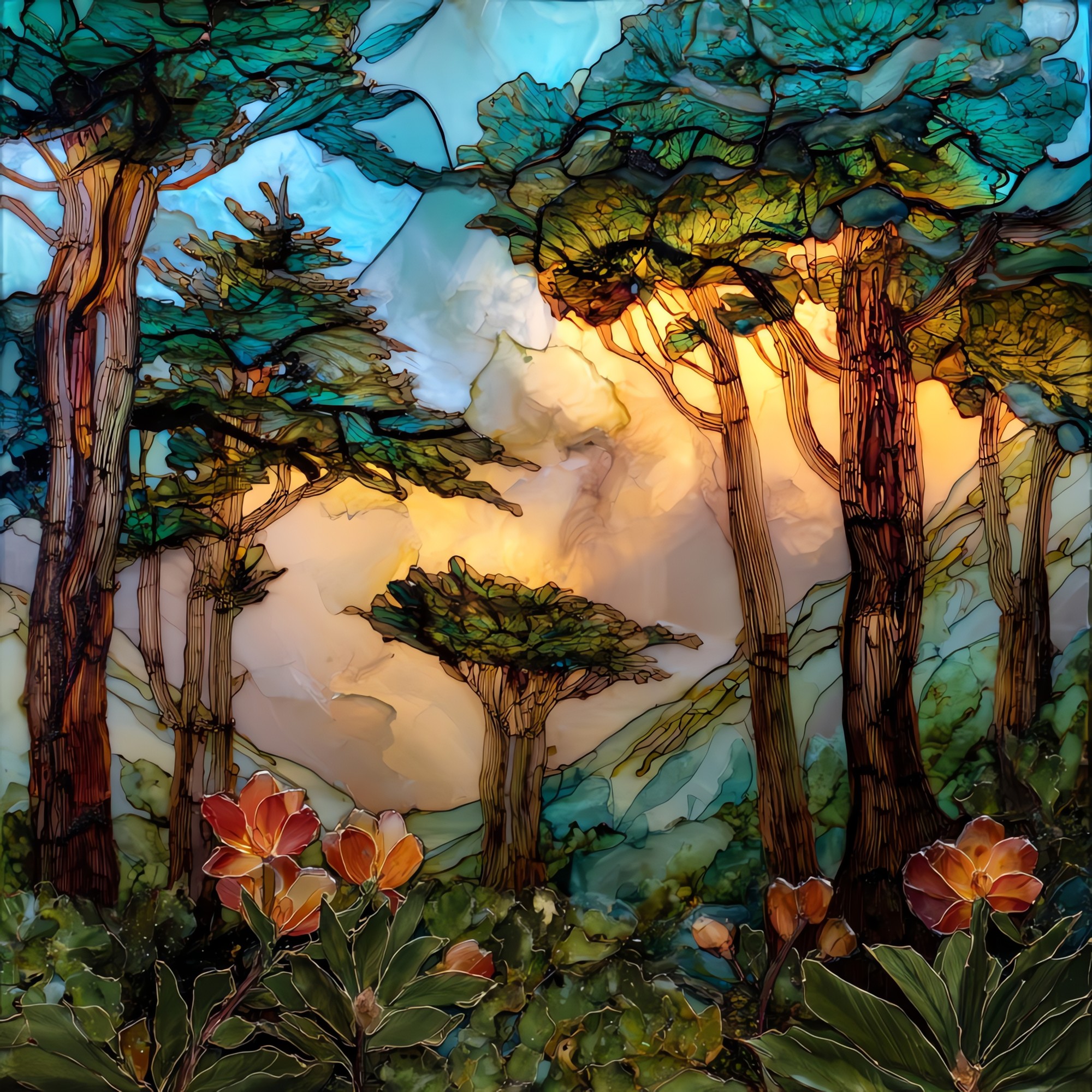
Hosmer Grove Maui Ceramic Art Tile
shown on ceramic, 12-inch tileHawaii · United States
high on Maui's Haleakalā, above the cloud deck

Hosmer Grove Maui Ceramic Art Tile

— a temperate forest the volcano kept.

Where it lives

Not only on a wall.

A small tile on the nightstand catching the morning. A larger one above the fire. Yours, wherever you spend the slow hours.
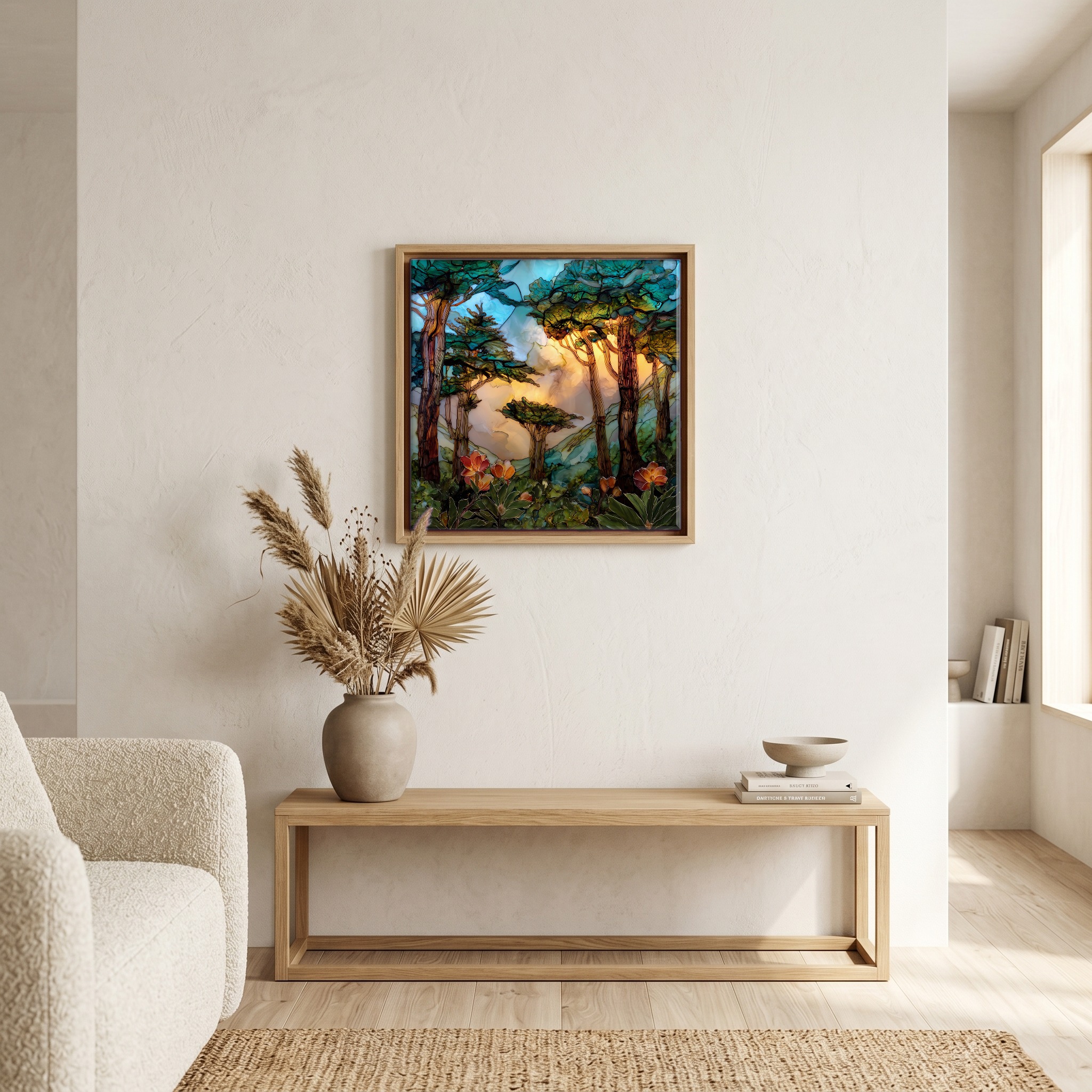
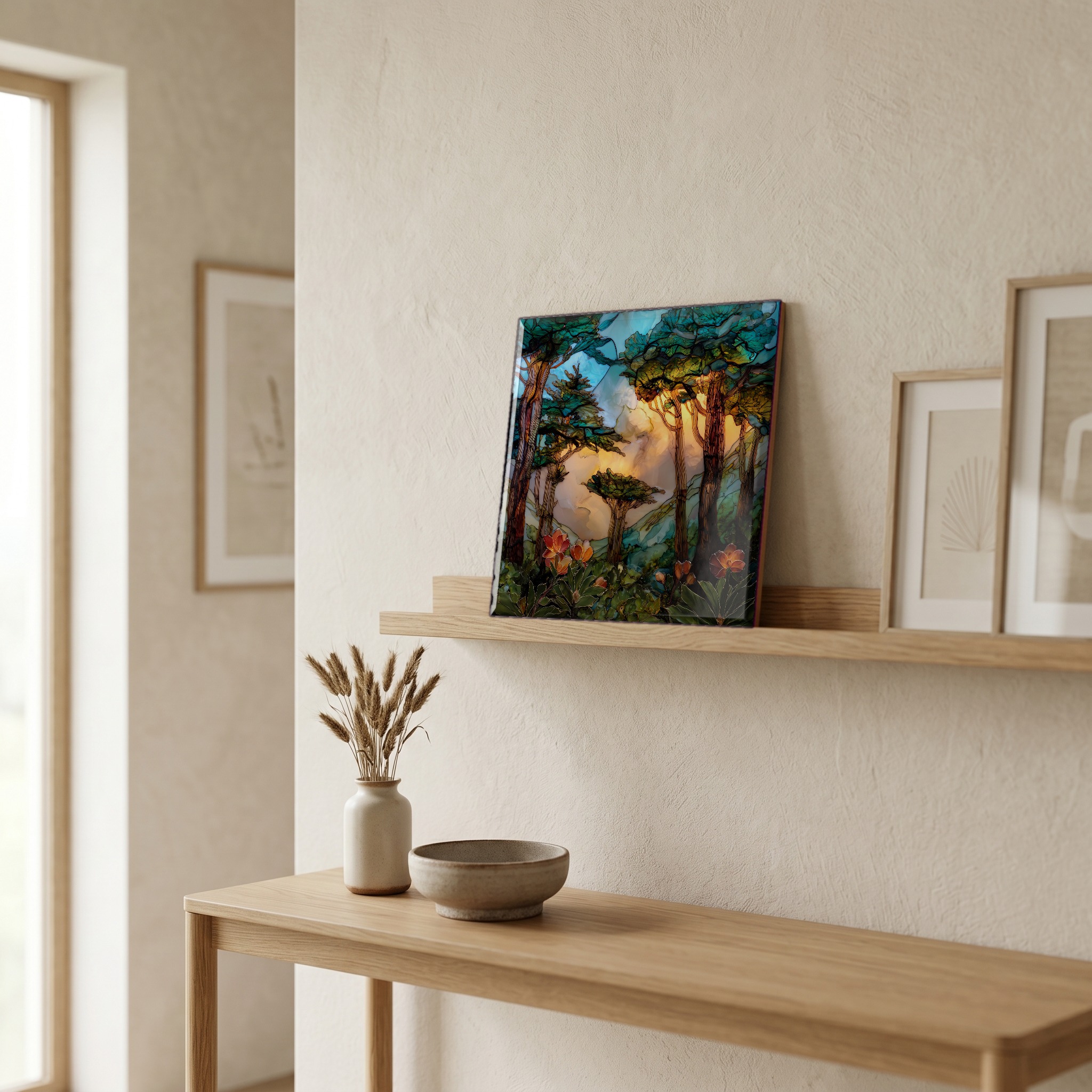
Above the bench, in a warm oak surround.
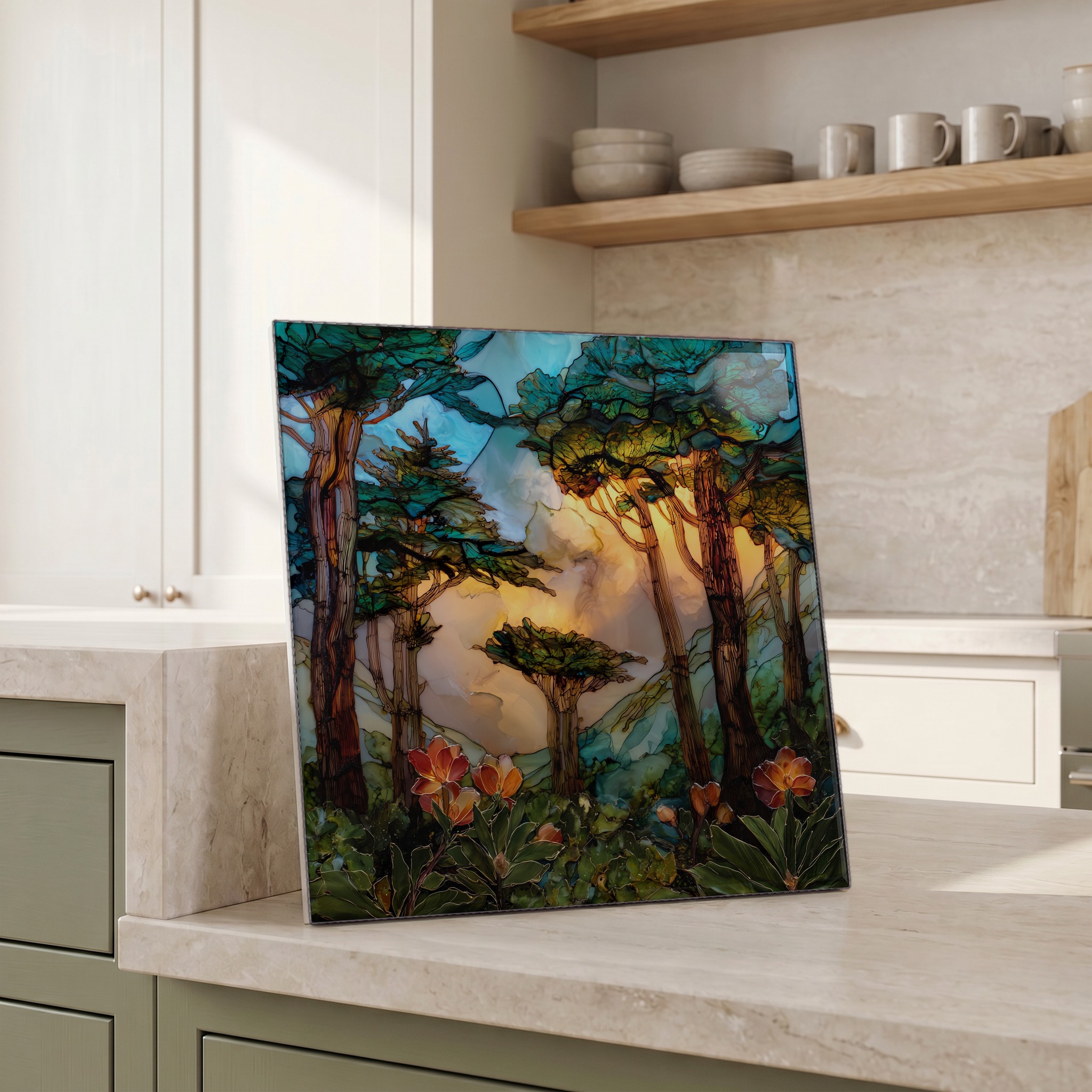
Beside the kettle, propped on the counter.
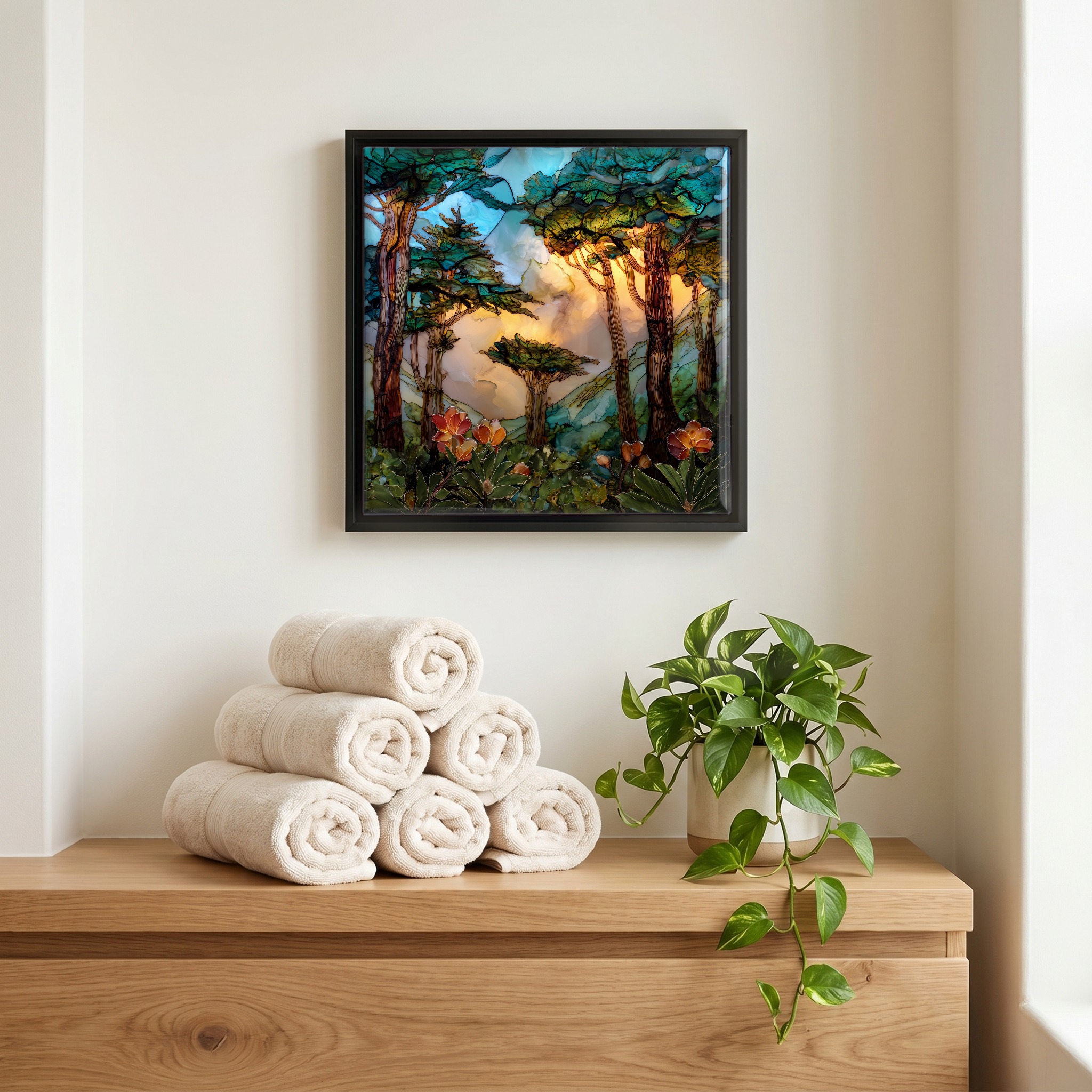
Above the linens, in a slim black surround.
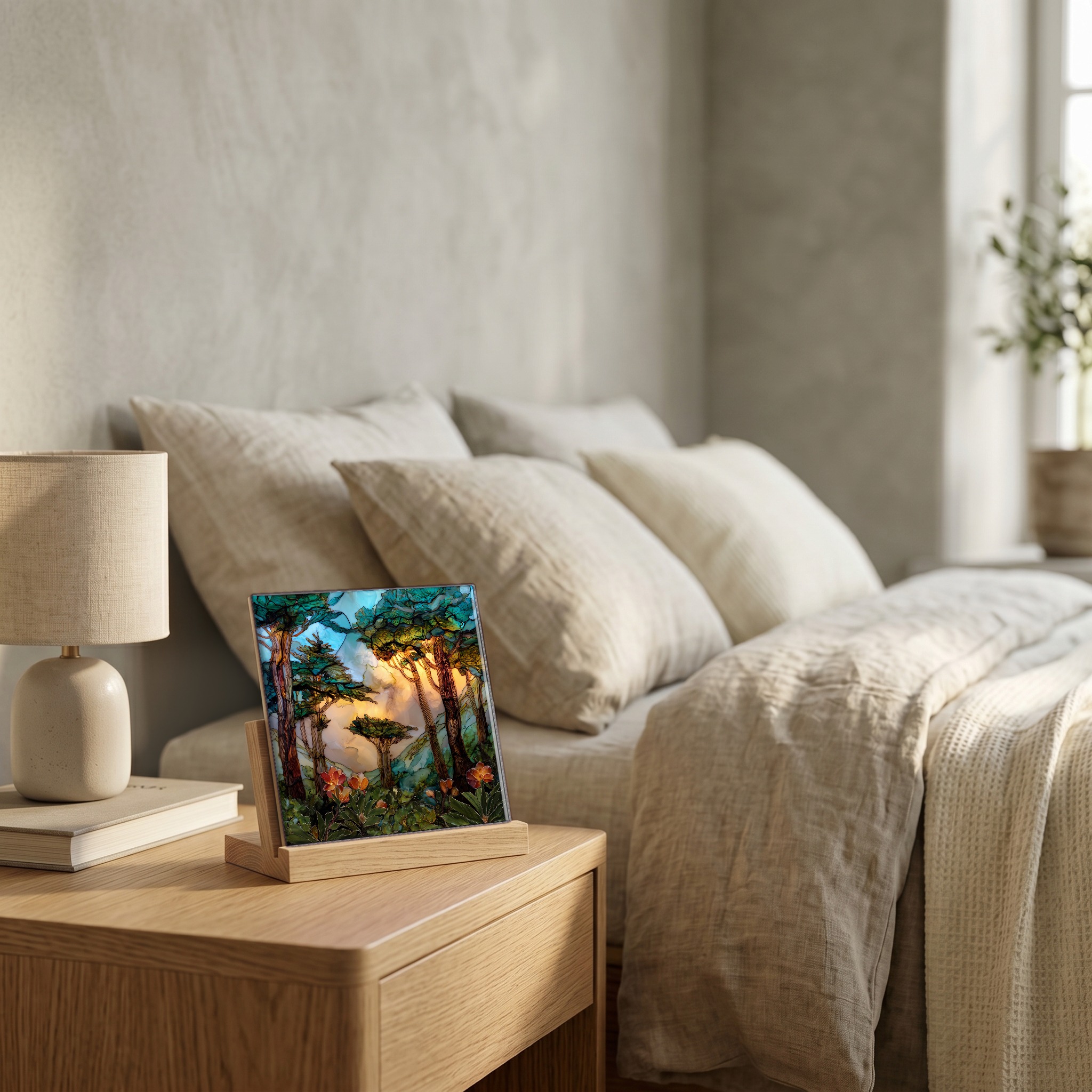
On the nightstand, on a light oak stand.
On a picture ledge, where the light comes in.
a note from the studio

An experimental forest from 1910, planted by the territory's first forester to see what could grow this high on a tropical volcano. Pines and cedars from California, sugi from Japan, eucalyptus from Australia, deodar from the Himalayas. About twenty species survived. They are now seventy feet tall, on a Hawaiian mountain, at six thousand eight hundred feet. Native honeycreepers feed along the half-mile loop, the scarlet ʻiʻiwi and the crimson ʻapapane working the ʻōhiʻa lehua. People come for the silence and the cool air. Most leave the campground before dawn for the summit and the sunrise. The grove keeps its quiet either way.
from the studio
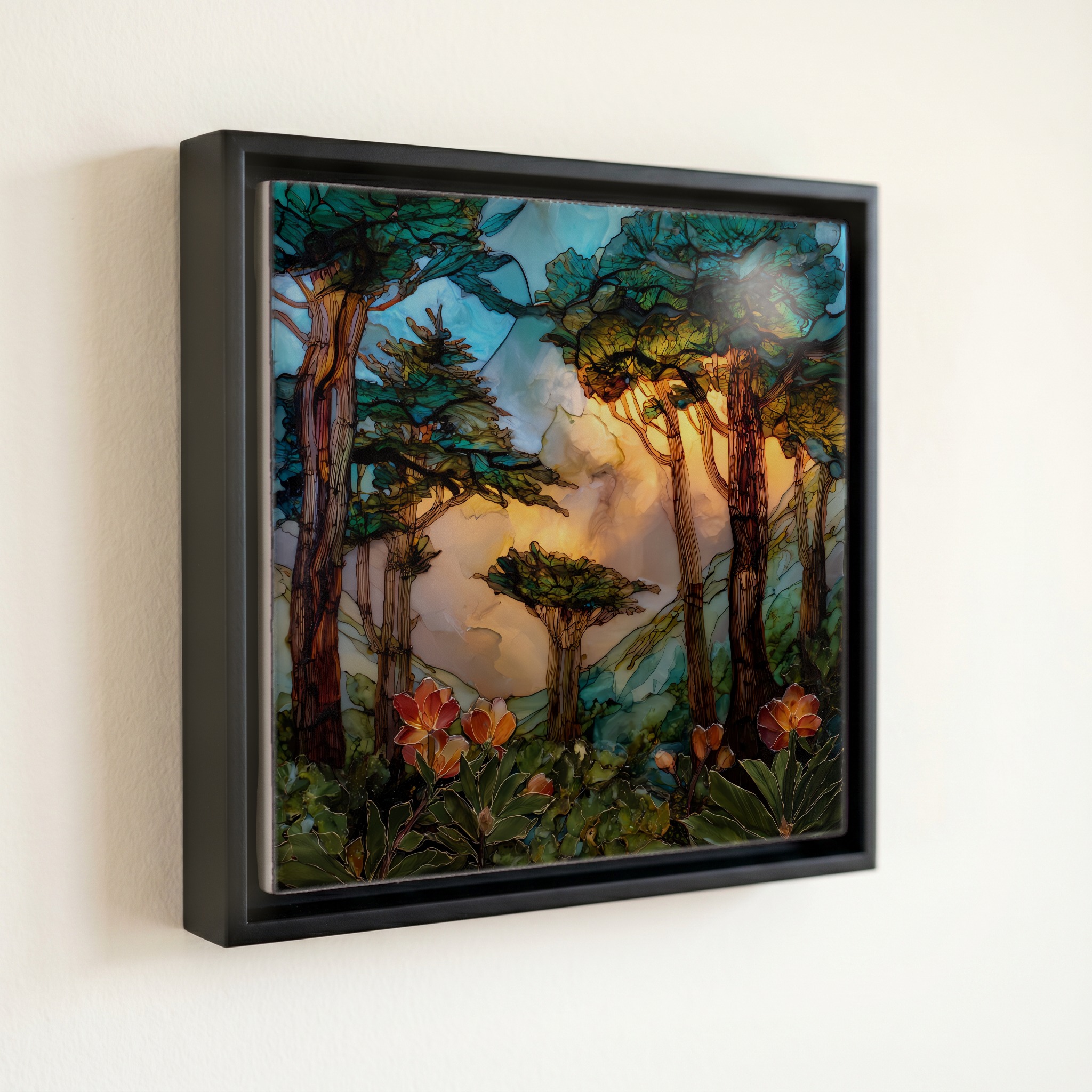
shown in a slim black floating frame · 6 × 6 in
— bring it home

Hosmer Grove Maui Ceramic Art Tile, on ceramic.

Each tile is finished by hand in our Knoxville studio. Artwork is slowly infused into the ceramic surface under high heat and pressure, and rests beneath a thin glossy finish. The colour lives in the surface, not on top of it.

What kind of piece?
One tile — square or rectangle.
How big?
the popular one — counter, shelf, nightstand
6 × 6 in · 15 cm · 1.6 lb
Surface finish
A clear glossy finish — the artwork reads as if under resin. Ideal for show-pieces and framed wall art.
How it sits
A hidden cleat — sits ¼″ proud of the wall.
$58
Hand-finished and shipped from our studio at the foot of the Smokies. On your wall in about ten days.
size
6 × 6 in
15 cm
weighs
1.6 lb
solid in the hand
surface
ceramic, hand-finished
art rests beneath a thin glossy finish
from
Knoxville, TN
our family studio, at the foot of the Smokies
— start a Coaster Set

Pick any four 4-inch tiles — National Parks you've been to, a Smokies set, the four seasons of one place. $ for a set of , cork-backed, ready to live on the table.
comes gift-ready
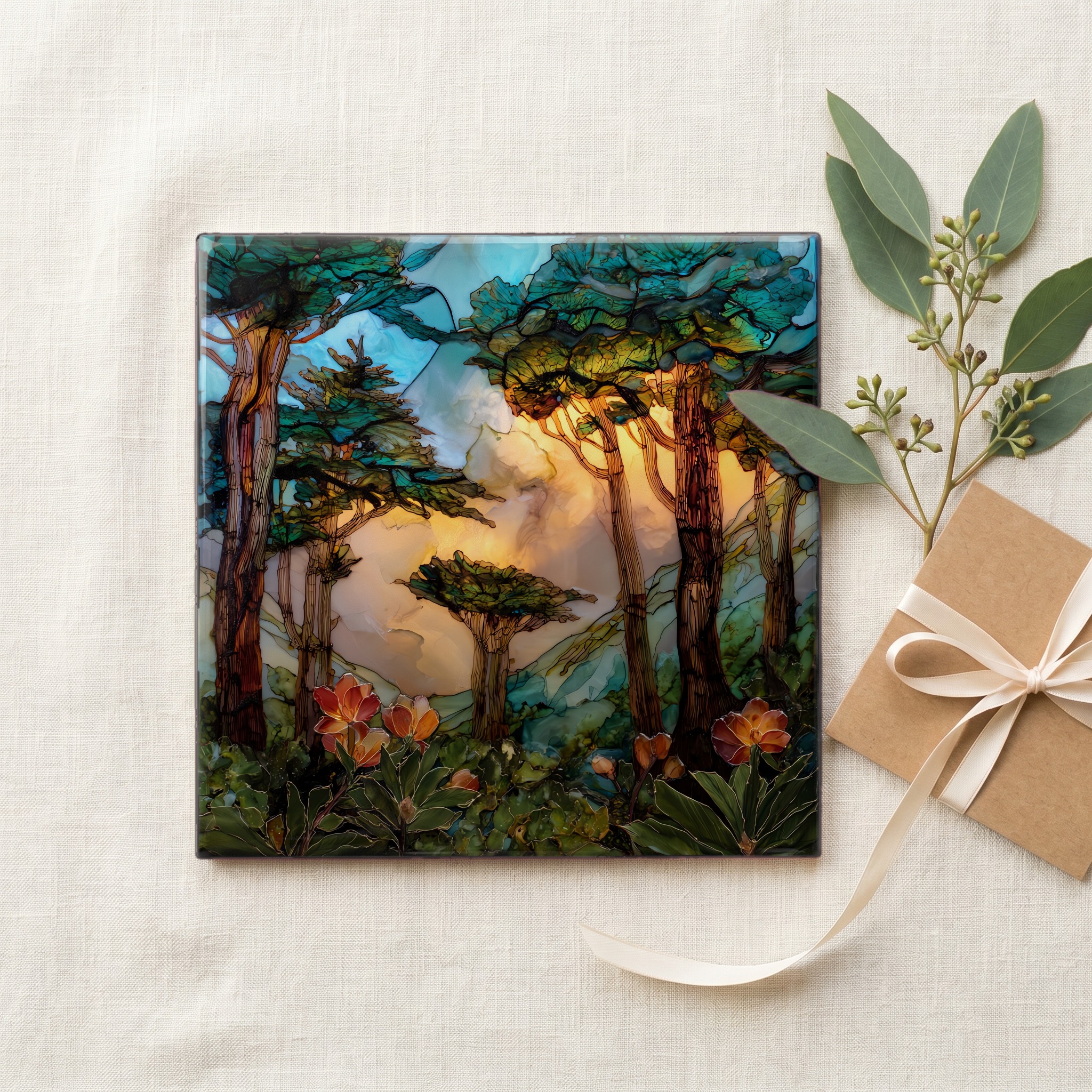
comes gift-ready

Each tile ships in a kraft box, tied with cream ribbon, with a handwritten note from the studio if you'd like to add one.
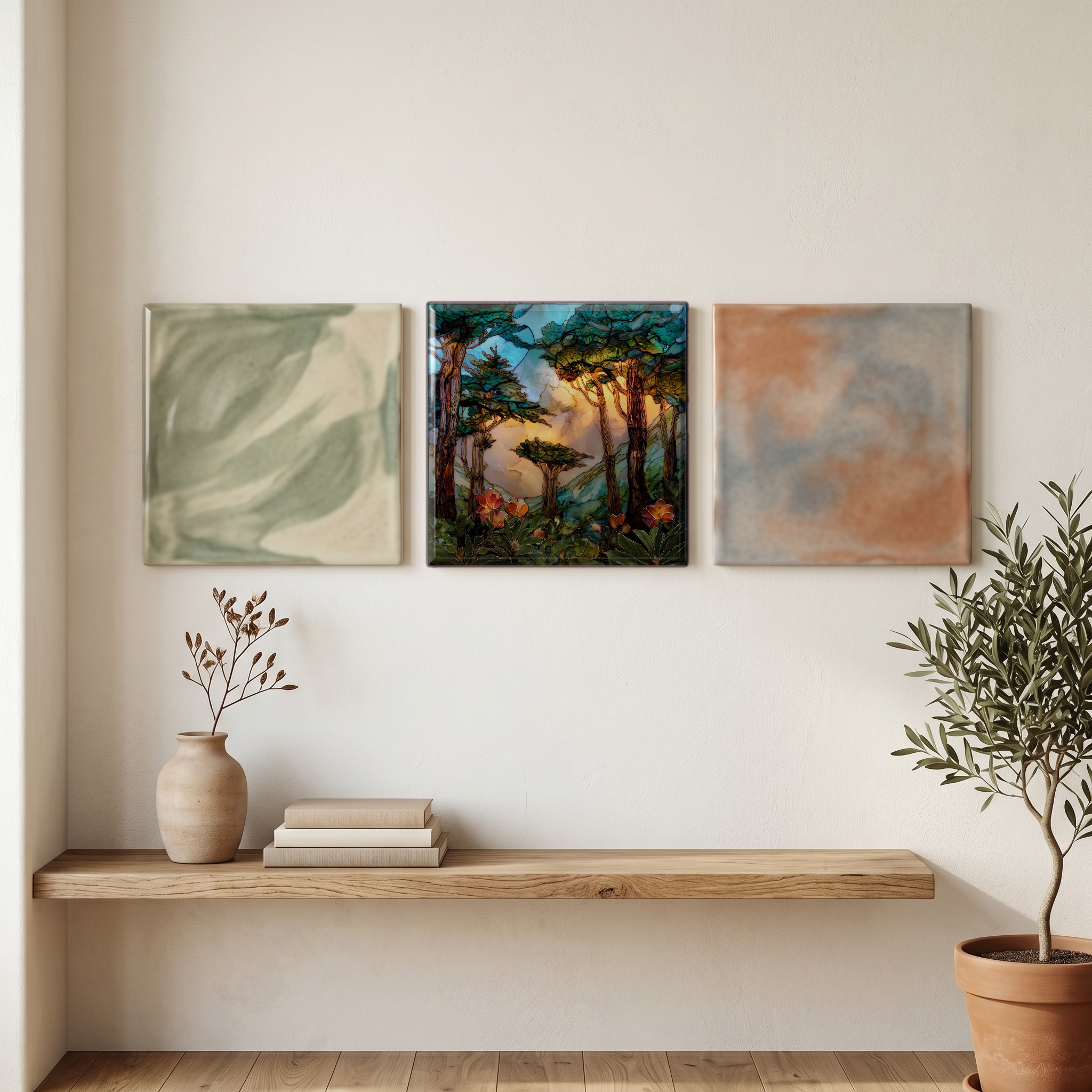
or build a grouping
or build a grouping

Three or five different vistas, hung together — a chapter of places you've been, or want to go.

about Hosmer Grove Maui Ceramic Art Tile

The place, in three passes.

A little of what's known, in case you fall down the rabbit hole — or want to go see it yourself.
the place

Hosmer Grove sits inside Haleakalā National Park on the north slope of the volcano at 6,800 feet (2,070 m). The grove and its small campground lie just inside the park entrance on the Crater Road (HI-378), about ten miles below the summit. It was established in 1910 by Ralph S. Hosmer, the Territory of Hawaii's first Territorial Forester, as a trial of which temperate-climate trees could survive at altitude on a Pacific volcano. About 86 species were planted; roughly 20 lived. The grove is the lower trailhead for the Supply Trail, which climbs to the Halemauʻu Trail and the crater rim. The campground holds six sites, first-come first-served, and remains the only drive-up campground in the summit district of the park.

the air

At 6,800 feet (2,070 m), the grove sits above the trade-wind inversion most days, in the band where Maui's cloud deck climbs the slope each afternoon and the air drops to the low 50s Fahrenheit. The campground is one of the few places on the island where a winter visitor can see frost on a windshield in the morning. Eucalyptus, sugi, and incense cedar produce the smell more often associated with the Pacific Northwest than the islands. Visibility shifts hour to hour: a clear morning gives way to a wall of grey by lunchtime as moisture pushes up from Kahului and Pāʻia, and the grove enters its own weather. Layering matters here even in August.

the visit

Hosmer Grove is the first major stop inside Haleakalā National Park, about a mile past the entrance kiosk on the Crater Road. The park entrance fee is $30 per vehicle, valid for three days, and the America the Beautiful pass is honoured. The Hosmer Grove Nature Loop runs about half a mile through the planted forest and an adjoining native shrubland, with interpretive signs at each species. The six-site campground is free with self-registration, first-come first-served, with potable water, vault toilets, and grills. Most visitors stop briefly on the way up to the summit and skip the loop entirely. Birders and overnight campers come for the grove itself, often arriving the afternoon before so they can walk the loop in low light when the honeycreepers are most active.

where
United States · Maui County, Hawaii
within
Haleakalā National Park
elevation
2,070 m · 6,800 ft
position
20.7640° N · 156.2470° W
the neighborhood

What's nearby.

A handful of named places within an hour's walk or short drive. Some we've already painted; some we will.
1 km S
Park Headquarters Visitor Center
park visitor center
5 km S
Halemauʻu Trailhead
trailhead
9 km S
Leleiwi Overlook
crater overlook
11 km S
Kalahaku Overlook
crater overlook
16 km S
Puʻu ʻUlaʻula (Haleakalā Summit)
summit overlook
18 km W
Kula
upcountry town
N
Hosmer Grove Maui Ceramic Art Tile
Park Headquarters Visitor Center
Halemauʻu Trailhead
Leleiwi Overlook
Kalahaku Overlook
Puʻu ʻUlaʻula (Haleakalā Summit)
Kula
common questions

What people ask.

A few questions we get about Hosmer Grove Maui Ceramic Art Tile — and about bringing the piece home.
about the place

Hosmer Grove is an experimental forest of about twenty surviving non-native tree species planted in 1910 inside what is now Haleakalā National Park on Maui. It sits at 6,800 feet on the volcano's north slope. The grove is named for Ralph S. Hosmer, the first Territorial Forester of Hawaii.

Ralph Sheldon Hosmer (1874-1963) was the first Superintendent of Forestry for the Territory of Hawaii, serving from 1904 to 1914. He led early planting trials at high elevation on Maui to identify timber species that could grow in Hawaii. He later taught forestry at Cornell University.

The surviving species include incense cedar, deodar cedar, sugi (Japanese cedar), eucalyptus, redwood, Mexican weeping pine, and Monterey cypress. About 86 species were planted in 1910; roughly 20 lived. Most are now between 60 and 90 feet tall.

Hosmer Grove is inside Haleakalā National Park on Maui, just past the park entrance on the Crater Road (HI-378), about ten miles below the summit. The elevation is 6,800 feet (2,070 m). Driving time from Kahului is roughly one hour fifteen minutes.

Yes. The Hosmer Grove Campground has six sites, free with self-registration, first-come first-served. The campground provides potable water, vault toilets, and grills. It is the only drive-up campground in the summit district of Haleakalā National Park.

The grove is one of the easiest places on Maui to see endemic Hawaiian honeycreepers, including the scarlet ʻiʻiwi, the crimson ʻapapane, and the yellow-green Hawaiʻi ʻamakihi. They feed on the ʻōhiʻa lehua along the half-mile Hosmer Grove Nature Loop, most actively at dawn and dusk.

The grove predates the park. Hosmer planted it in 1910 as a Territorial forestry trial; Haleakalā became part of the federal Hawaiʻi National Park in 1916 and was redesignated as its own national park in 1961. The planted forest was retained as a historic site within the park boundary.

about the piece in your home

It is a quiet, specific choice for anyone who has camped under the redwoods at Hosmer Grove or hiked down into the crater from the Supply Trail. Most visitors skip the grove on the way to the summit; the ones who didn't tend to remember it. The Small or Medium frames cleanly in an entryway.

The piece reads as a forest scene with stained-glass colour through the canopy. It sits well in Pacific Northwest mountain-modern interiors, in biophilic plant-forward rooms, and in muted earth-tone palettes that lean green and slate. The colours pull from cedar bark and ʻōhiʻa red rather than the bright tropical blues most Hawaiʻi art reaches for.

Yes. Biophilic design centres real or rendered natural texture, and forest art with this much depth in the canopy and ground layer holds the eye in living rooms, reading corners, and short hallways. The 4-tile Mural carries a full wall in a hospitality or office space.

Above a standard three-seater sofa, a single Large (approximately 24 × 36 inches) holds the centre. Above a console, the Medium reads cleaner. For a full-wall statement, the 4-tile Mural (about 48 inches wide) or the 9-tile Mural (about 72 inches wide) carries the room.

Yes. Order the Dura Satin or Matte finish for any wet or splash-prone install: backsplash, shower wall, mudroom. The colour lives in the surface and does not wear with cleaning. The Glossy finish stays in dry rooms, where the sheen catches the light.

A soft microfibre cloth with water for daily wiping. For kitchen grease or bathroom soap film, a drop of mild dish soap in warm water and a soft cloth, then rinse and dry. No abrasive pads, no bleach. The colour is sealed beneath a thin finish and will not fade.

Yes. Every WenderVista piece is curated and finished in our Knoxville, Tennessee studio. There is no licensing and no third-party art on the line. Reid Wender chooses each location and the visual treatment, and the studio produces the tiles in-house.

if this one stayed with you

A few you might also love.

Hand-picked by the eye that found Sorapis. Same air, same kind of quiet.