Wender·Vista
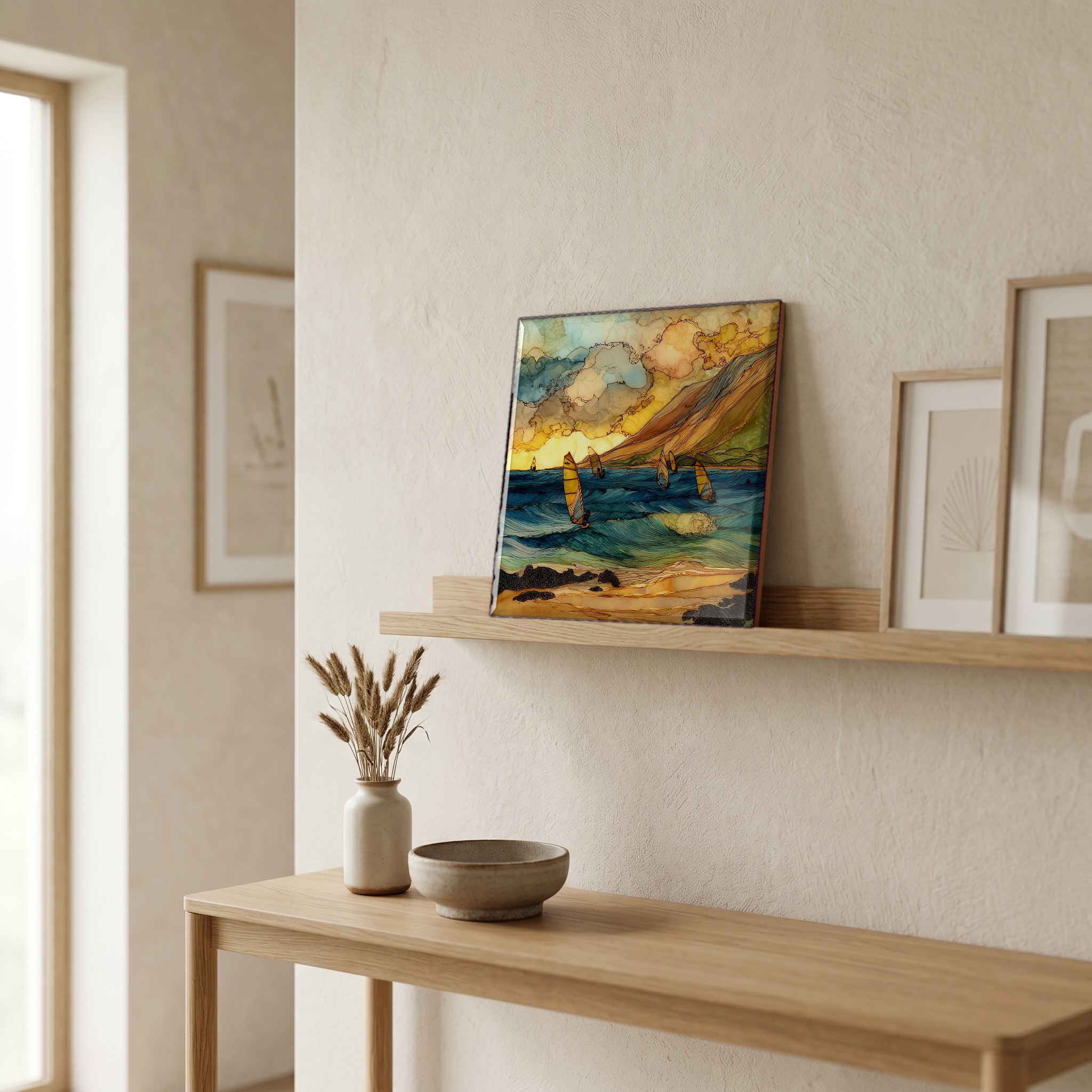
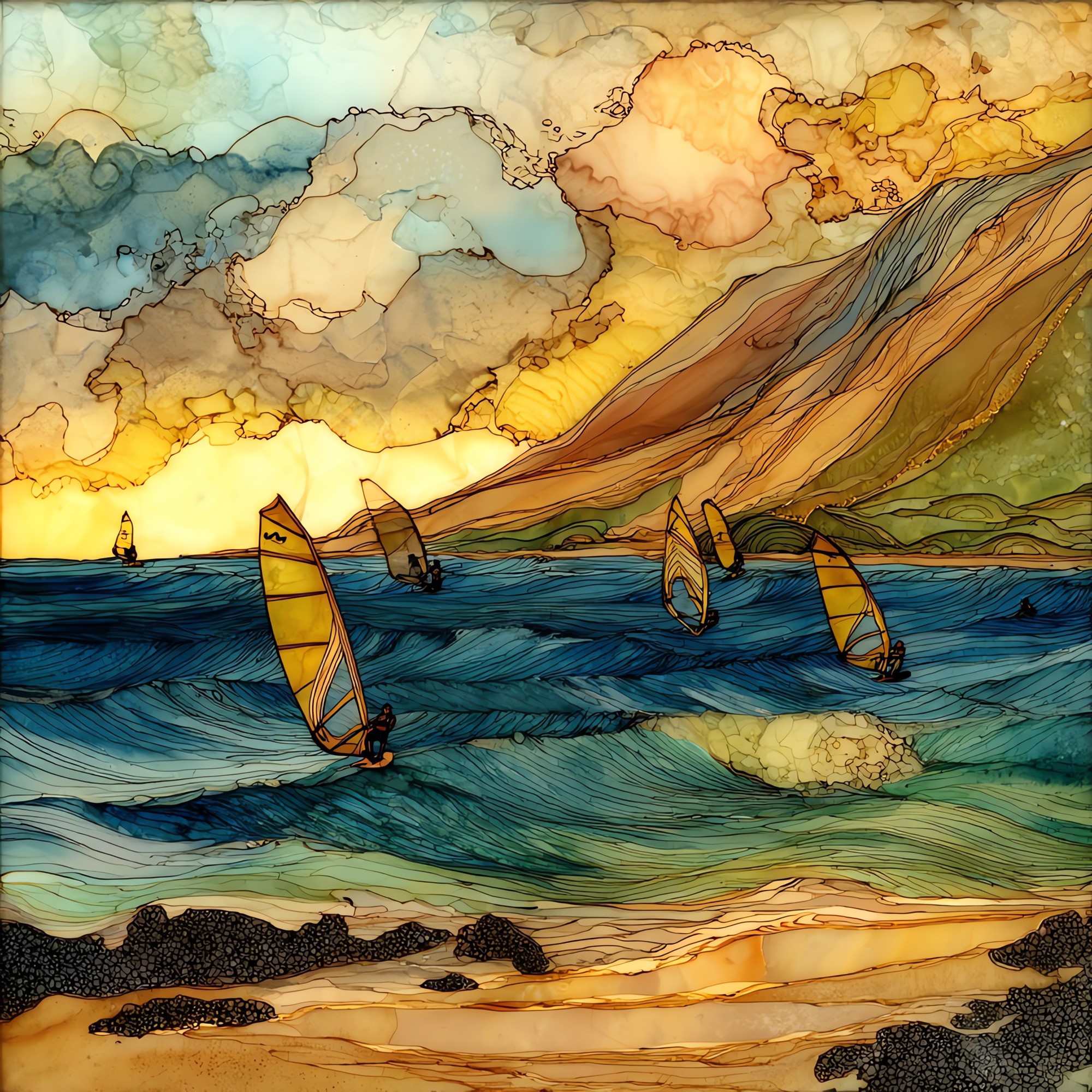
Hookipa Windsurfing Maui Ceramic Art Tile
shown on ceramic, 12-inch tileHawaii · United States
on Maui's north shore, just past Pa'ia

Hookipa Windsurfing Maui Ceramic Art Tile

where the trades come ashore.

Where it lives

Not only on a wall.

A small tile on the nightstand catching the morning. A larger one above the fire. Yours, wherever you spend the slow hours.
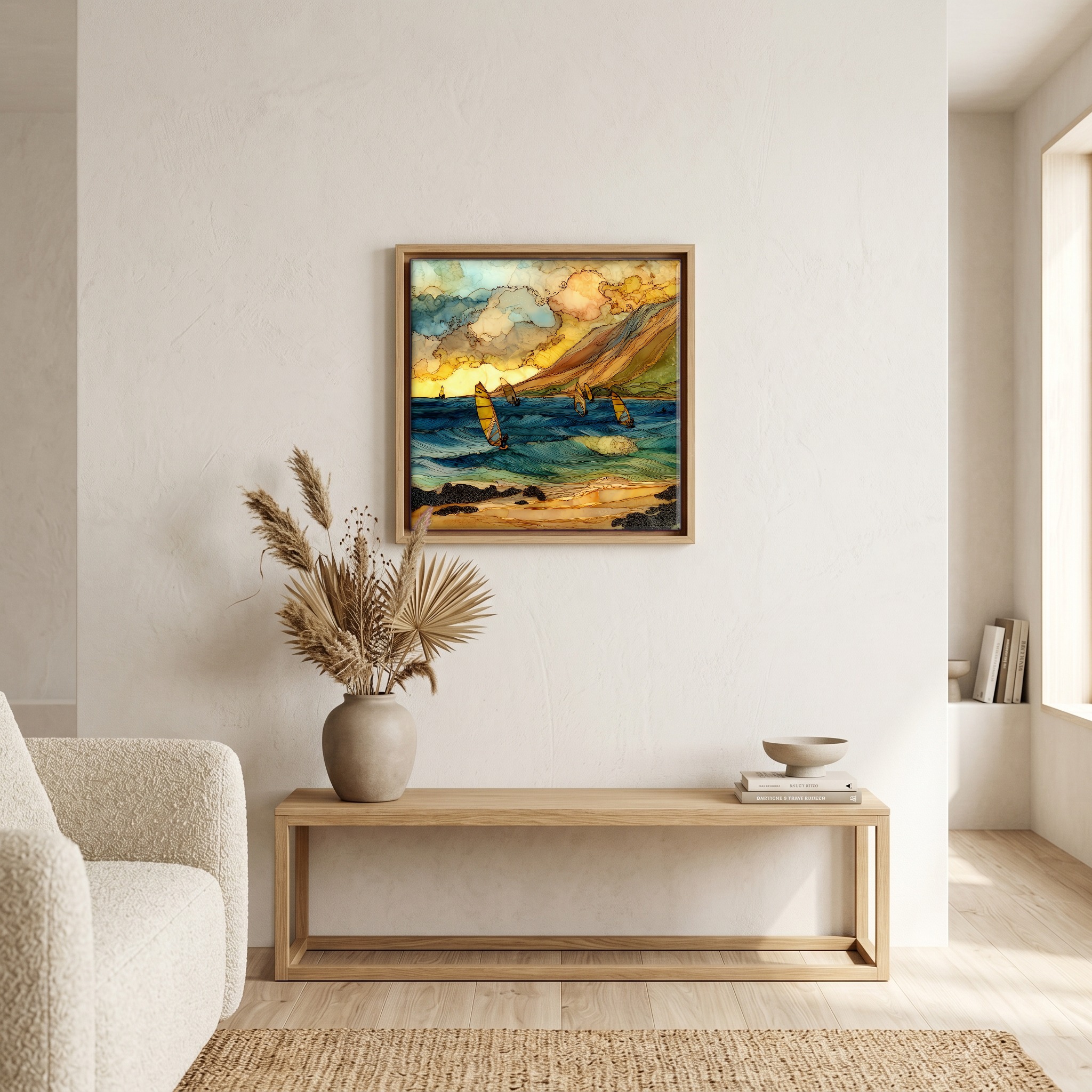
Above the bench, in a warm oak surround.
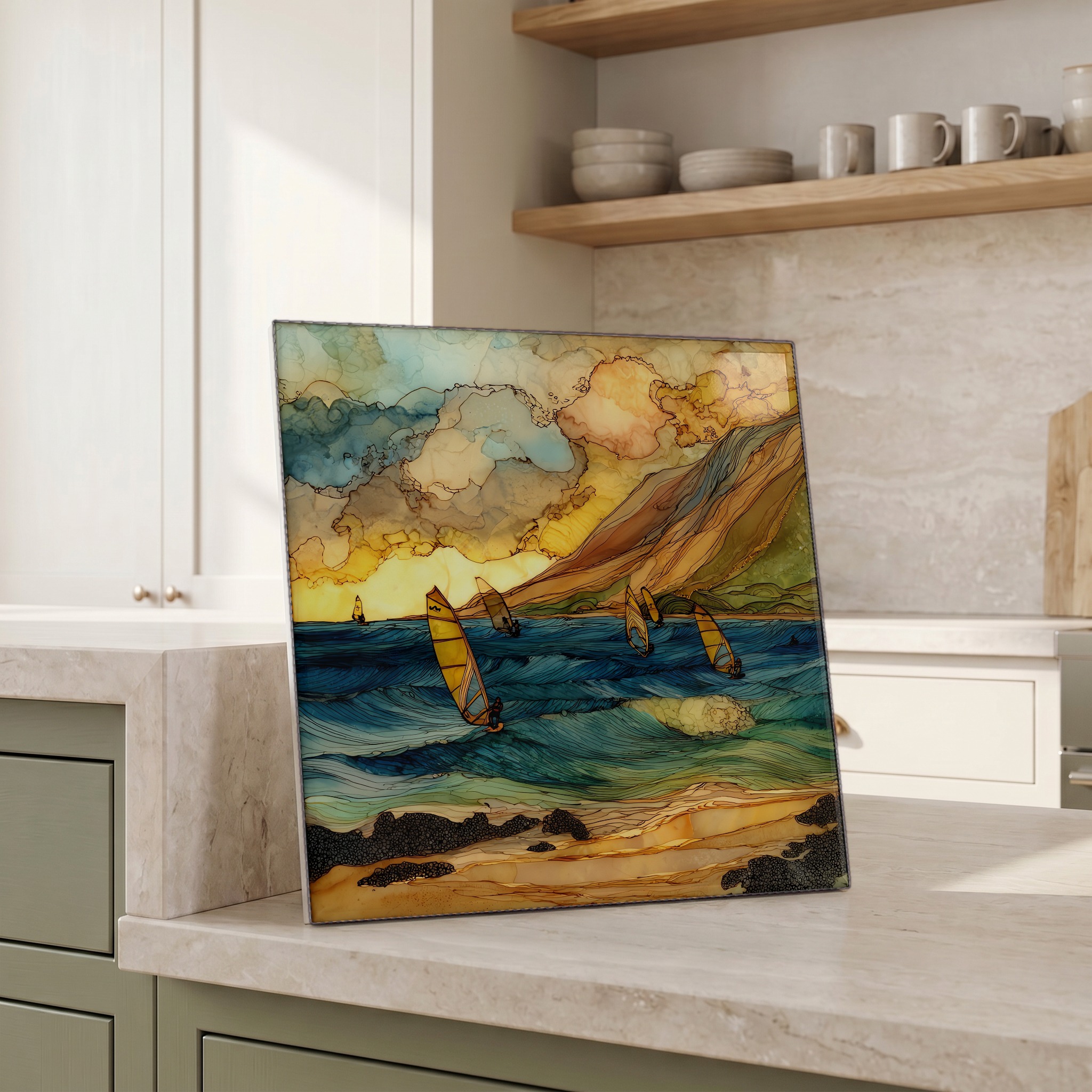
Beside the kettle, propped on the counter.
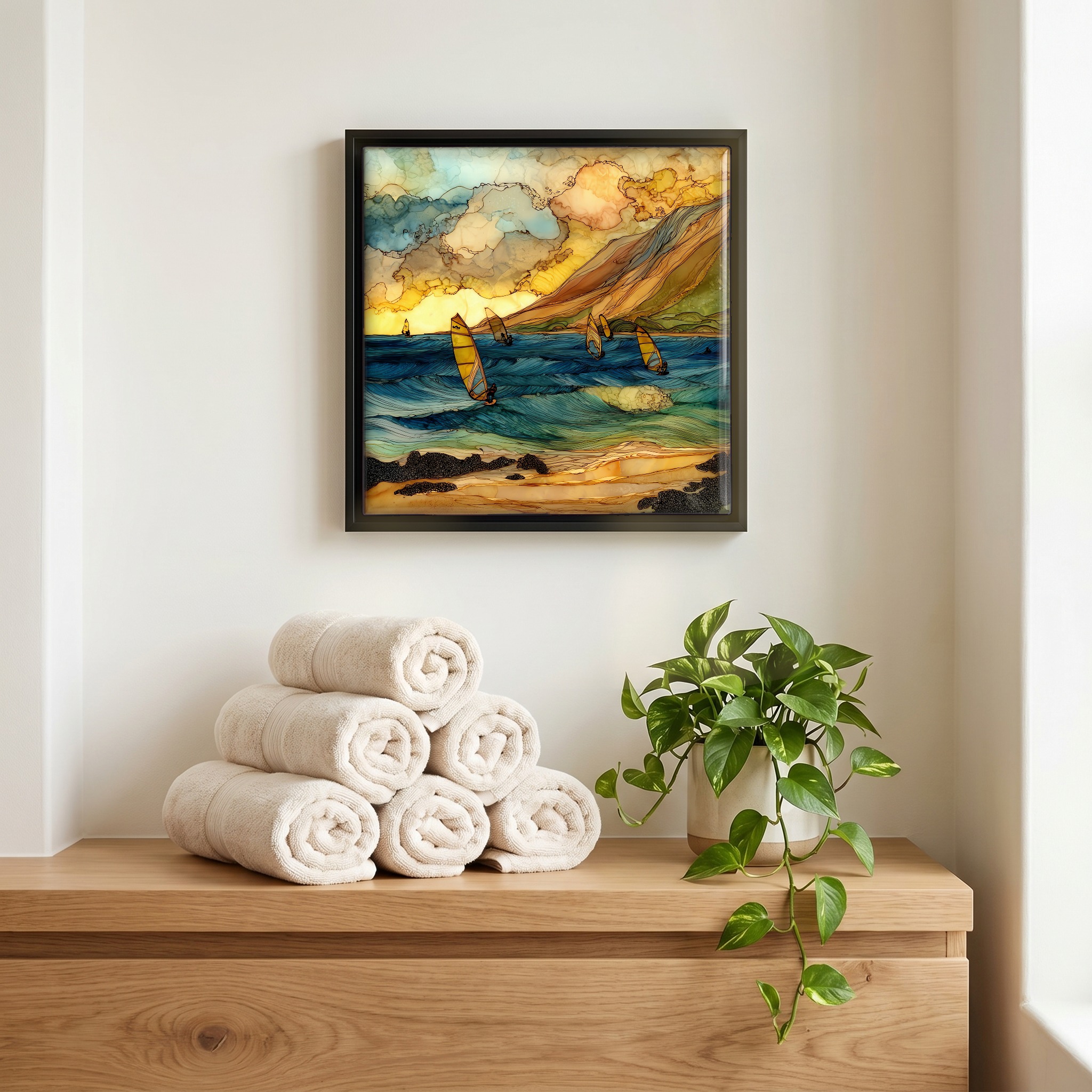
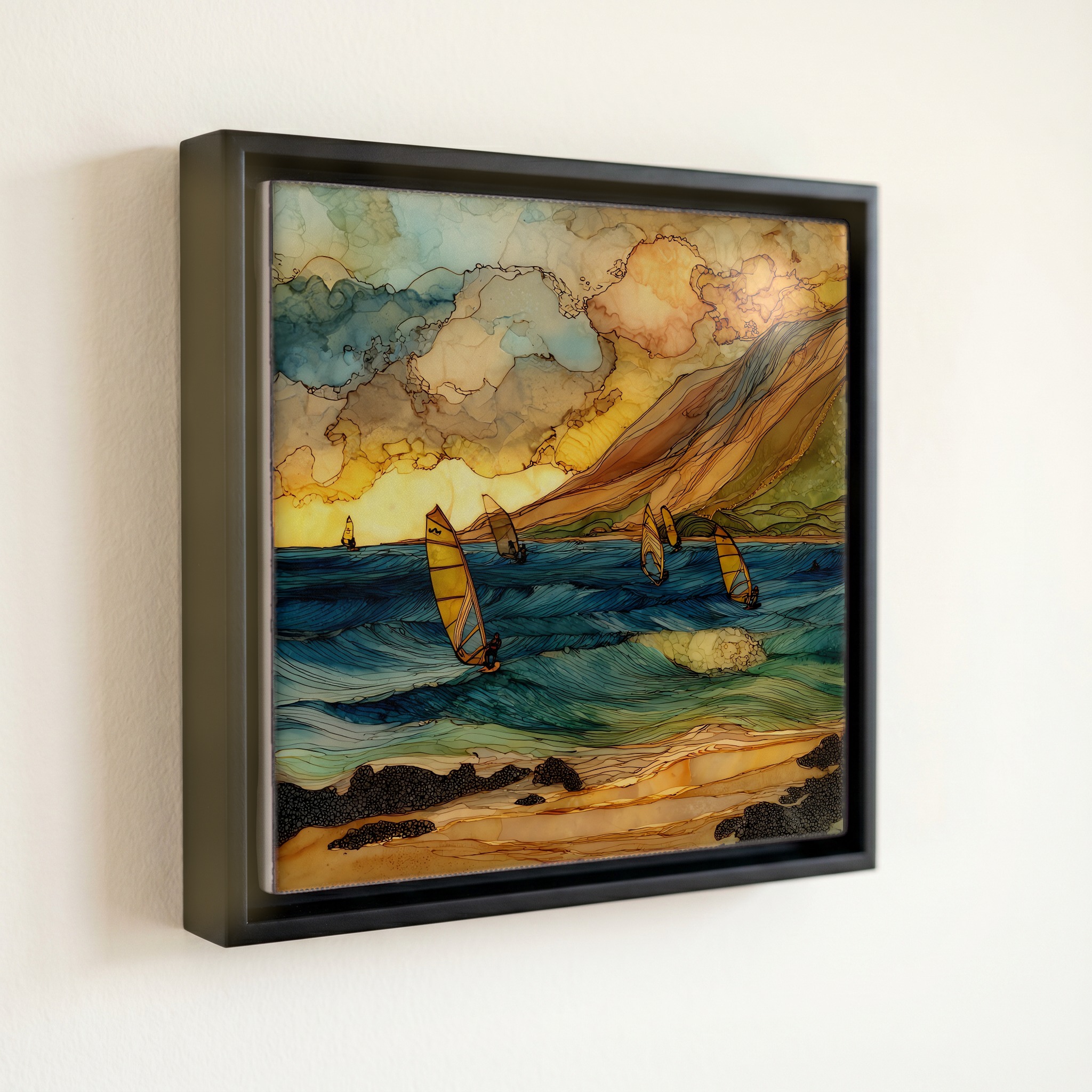
Above the linens, in a slim black surround.
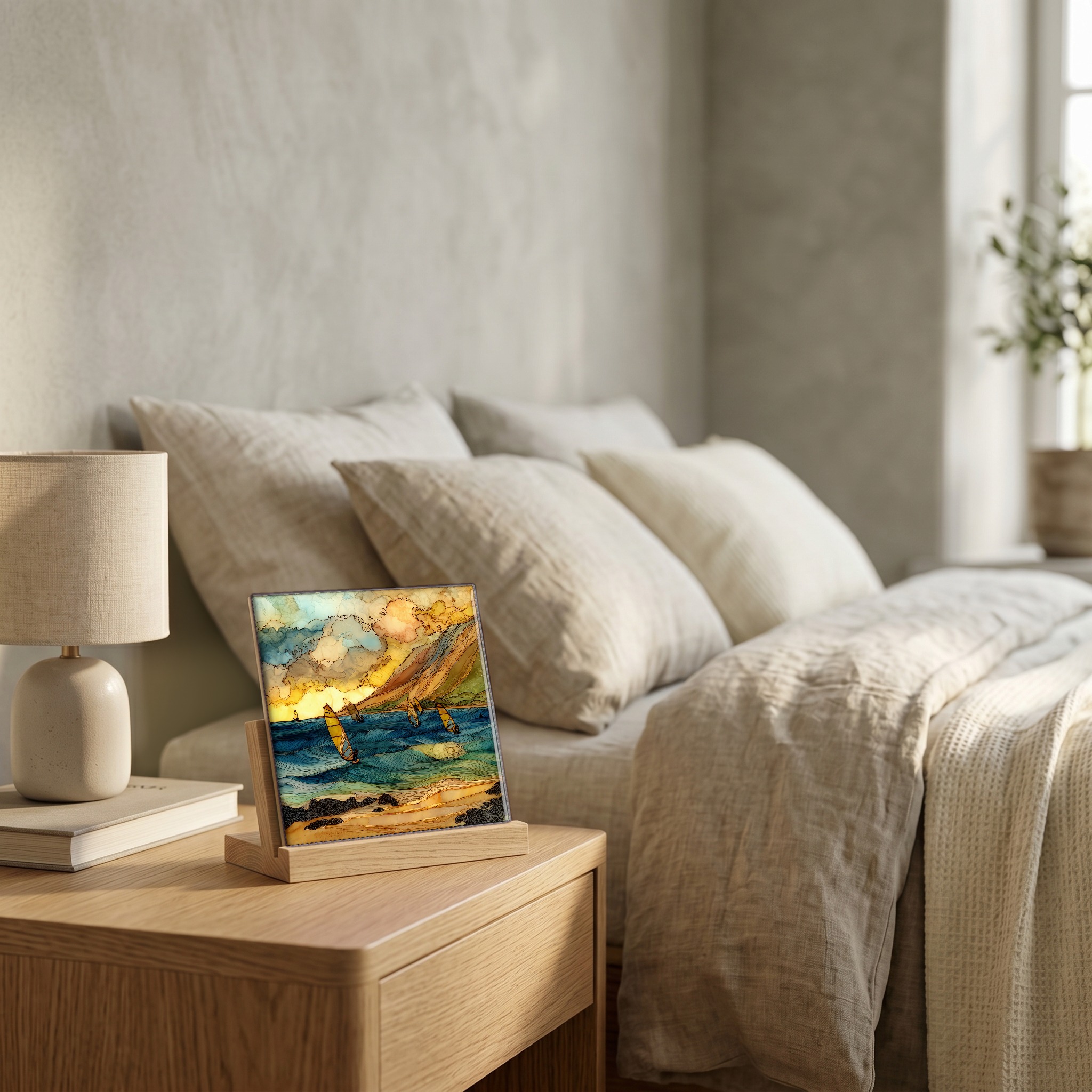
On the nightstand, on a light oak stand.
On a picture ledge, where the light comes in.
a note from the studio

A small county park where the Hāna Highway bends past the cliffs, two miles east of Pa'ia. By early afternoon the trade winds are up and the channel between the reefs is full of sails. Surfers take the early hours; windsurfers and kiters take the rest of the day. The honu come up the beach at low tide and sleep where the cars can see them. From the lookout above, the whole bay reads as wind: the colour of it, the geometry of it, the small flags of the sails crossing each other.
from the studio
shown in a slim black floating frame · 6 × 6 in
— bring it home

Hookipa Windsurfing Maui Ceramic Art Tile, on ceramic.

Each tile is finished by hand in our Knoxville studio. Artwork is slowly infused into the ceramic surface under high heat and pressure, and rests beneath a thin glossy finish. The colour lives in the surface, not on top of it.

What kind of piece?
One tile — square or rectangle.
How big?
the popular one — counter, shelf, nightstand
6 × 6 in · 15 cm · 1.6 lb
Surface finish
A clear glossy finish — the artwork reads as if under resin. Ideal for show-pieces and framed wall art.
How it sits
A hidden cleat — sits ¼″ proud of the wall.
$58
Hand-finished and shipped from our studio at the foot of the Smokies. On your wall in about ten days.
size
6 × 6 in
15 cm
weighs
1.6 lb
solid in the hand
surface
ceramic, hand-finished
art rests beneath a thin glossy finish
from
Knoxville, TN
our family studio, at the foot of the Smokies
— start a Coaster Set

Pick any four 4-inch tiles — National Parks you've been to, a Smokies set, the four seasons of one place. $ for a set of , cork-backed, ready to live on the table.
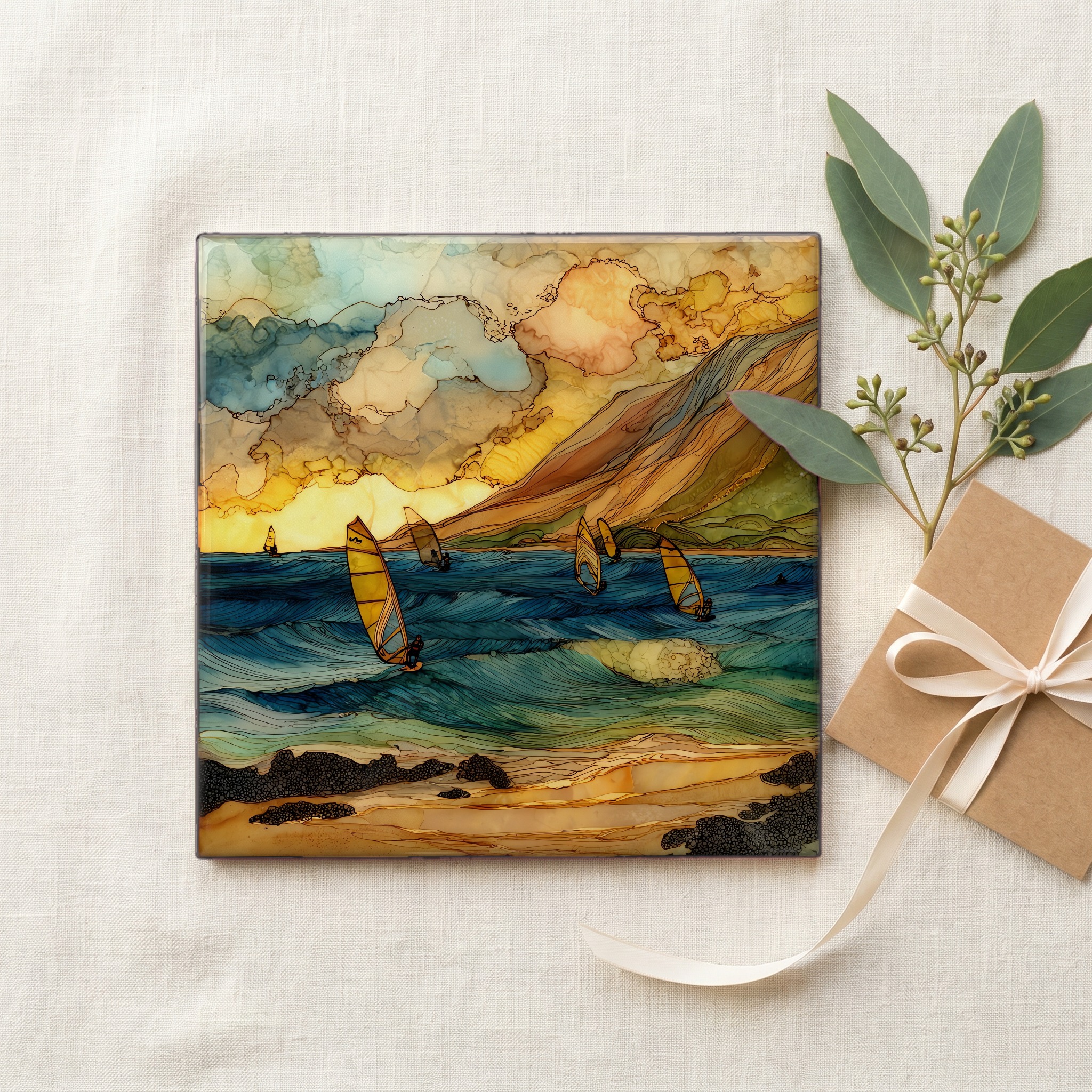
comes gift-ready
comes gift-ready

Each tile ships in a kraft box, tied with cream ribbon, with a handwritten note from the studio if you'd like to add one.
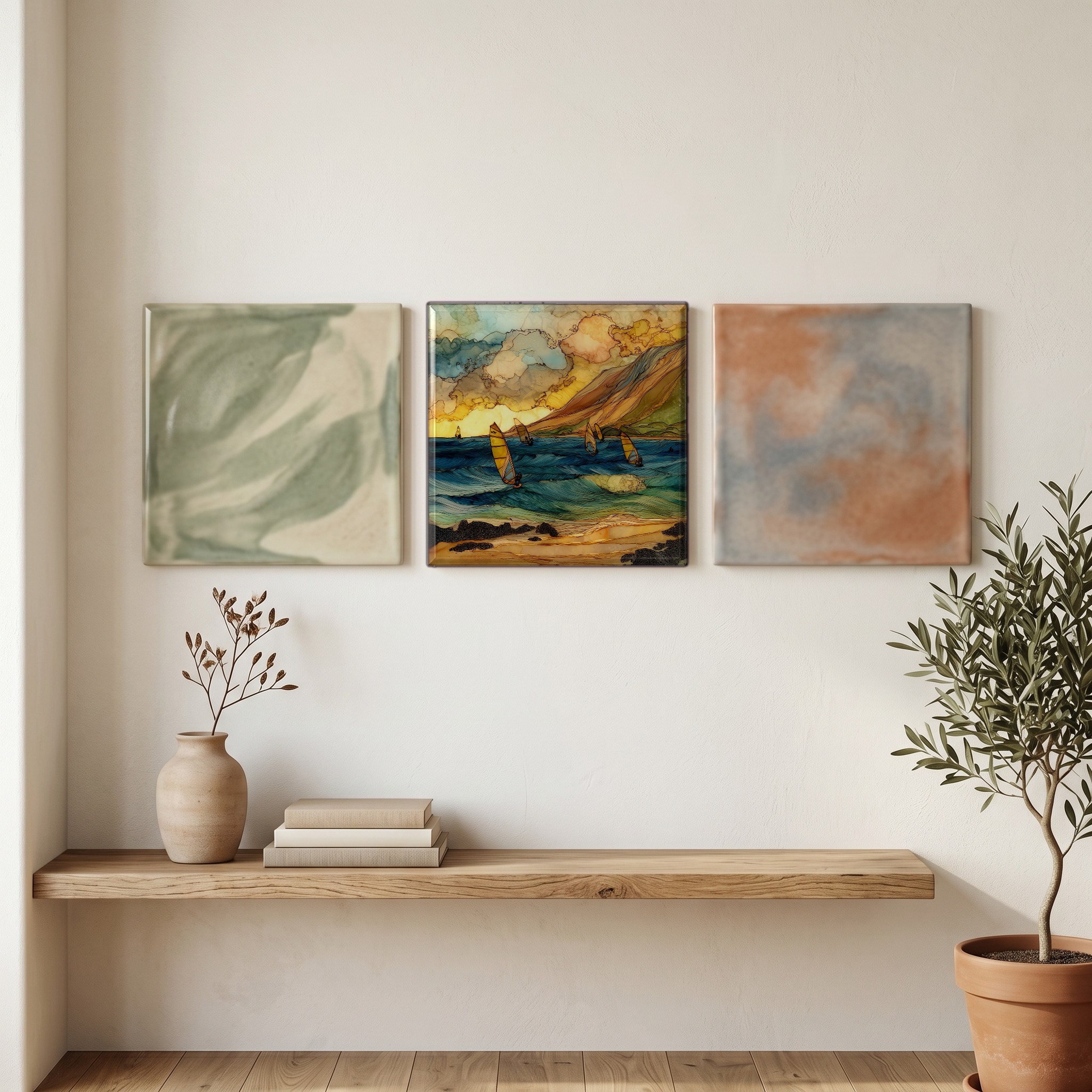
or build a grouping
or build a grouping

Three or five different vistas, hung together — a chapter of places you've been, or want to go.

about Hookipa Windsurfing Maui Ceramic Art Tile

The place, in three passes.

A little of what's known, in case you fall down the rabbit hole — or want to go see it yourself.
the place

Ho'okipa Beach Park is a Maui County beach park on the north shore of the island, about two miles east of Pa'ia town along the Hāna Highway (Hawaii Route 36). The park covers roughly 14 acres of grass, picnic pavilions, and a cliffside lookout above a half-mile sand beach. Ho'okipa means 'hospitality' in Hawaiian. The bay sits below a low pali (cliff) and faces directly into the prevailing trade winds, which is the geographic accident that makes it what it is. Kahului Airport is about nine miles back along the highway in the opposite direction; Hāna is fifty miles ahead.

the air

The northeast trade winds blow across thousands of miles of open Pacific and land on Maui's north shore with very little to slow them, which is what makes Ho'okipa what it is. By early afternoon, sustained winds at the beach commonly reach 20-30 knots through the summer months, and the offshore reefs shape the swell into the four named breaks: Pavilions, H'Poko, Middles, and Lanes. The combination of consistent wind and reef-built swell is what made Ho'okipa the centre of competitive windsurfing in the 1980s and, later, of kitesurfing and big-wave tow-in surfing at nearby Pe'ahi (Jaws).

the visit

The beach is free and open daily, with a small parking lot, restrooms, and pavilions managed by the County of Maui. Surfers have the morning; windsurfers and kiters wait for the afternoon trade winds and the lifeguard's signal that the south end of the beach is open for sail. Winter (November through March) brings the largest north swells and the Aloha Classic, the season-ending stop on the International Windsurfing Tour. Green sea turtles often come up to rest on the sand at low tide; visitors are asked to stay at least ten feet back.

where
United States · Maui County, Hawaii
within
Ho'okipa Beach Park
elevation
0 m · 0 ft
position
20.9347° N · 156.3555° W
the neighborhood

What's nearby.

A handful of named places within an hour's walk or short drive. Some we've already painted; some we will.
3 km W
Pa'ia
north-shore town
2 km W
Kuau Cove (Mama's Fish House)
small cove
6 km W
Baldwin Beach Park
county beach park
7 km E
Pe'ahi (Jaws)
big-wave break
14 km E
Twin Falls
waterfall on the Hāna Highway
N
Hookipa Windsurfing Maui Ceramic Art Tile
Pa'ia
Kuau Cove (Mama's Fish House)
Baldwin Beach Park
Pe'ahi (Jaws)
Twin Falls
common questions

What people ask.

A few questions we get about Hookipa Windsurfing Maui Ceramic Art Tile — and about bringing the piece home.
about the place

On the north shore of Maui, about two miles east of Pa'ia town along the Hāna Highway. The beach park is managed by the County of Maui and sits below a low cliff that gives it the well-known elevated lookout above the surf and windsurf breaks.

The northeast trade winds blow across open Pacific and land here with little obstruction, producing sustained 20-30 knot winds most summer afternoons. Offshore reefs shape the north swell into four named breaks. The combination of consistent wind and reef-built swell drew the sport's pioneers in the 1980s and never let go.

Afternoons, generally after one o'clock, when the trade winds fill in. Surfers have the morning; the lifeguards open the south end of the beach for sail later in the day. The biggest waves arrive November through March; the steadiest wind days run May through September.

Green sea turtles, called honu in Hawaiian, regularly come up to bask on the sand, most often in the late afternoon at low tide. They are a protected species. The County and the state DLNR ask visitors to stay at least ten feet back and never touch them.

Ho'okipa is the Hawaiian word for hospitality, the welcoming of guests. The beach park took the name from the surrounding ahupua'a, the traditional Hawaiian land division that runs from the ridge down to the sea.

Pe'ahi, the big-wave break known as Jaws, is about four miles further east along the Hāna Highway. It breaks only on the largest winter swells and is viewed from a clifftop access road. Ho'okipa is the everyday, accessible counterpart on the same stretch of coast.

The Aloha Classic is the long-running windsurfing competition held at Ho'okipa each autumn, currently as the season finale of the International Windsurfing Tour. The event has been part of the bay's identity since the 1980s and brings the world's top wave-sailors to Maui.

about the piece in your home

It has been a meaningful gift for many of our customers with that history. Ho'okipa is one of the most identifiable places in the sport, and the artwork carries the bay, the sail-line, and the cliff lookout. A Medium with a handwritten studio note carries well; a Large reads at room scale.

The piece sits well with coastal-modern, mid-century beach, and surf-shop modern interiors. The layered stained-glass colour reads as both ocean and weather, so it carries warmer rooms too: Japandi with rattan, or a darker board-shop palette with reclaimed wood.

Coastal-modern has steadily moved away from generic seascapes toward specific, recognisable places. A named break like Ho'okipa anchors a wall with a real story instead of a stock image of the ocean. The Mural sizes work particularly well in this style.

For a standard three-seat sofa, a single Large reads cleanly. Above a wider console or a king bed, the 4-tile Mural is the most common choice. The 9-tile Mural at full-wall scale is reserved for stairwells, restaurant walls, and large entryways.

Yes, when ordered with the Dura Satin or Matte finish. Both are scratch-resistant and suited to vertical installations behind a sink, in a shower surround, or on a kitchen backsplash. The Glossy finish is the show-piece option, best reserved for framed wall work.

A soft microfibre cloth, slightly damp with water, lifts everyday dust and fingerprints. No scrubs, no acidic cleaners, no abrasive pads. The colour lives in the ceramic surface itself beneath a thin glossy finish, so the piece does not fade or scuff with normal use.

Yes. Every WenderVista piece is painted in our distinctive stained-glass and alcohol-ink visual language by Reid Wender, the studio's curator. No licensing, no stock imagery, no reuse across studios. Each place is its own piece, hand-finished in Knoxville, Tennessee.

if this one stayed with you

A few you might also love.

Hand-picked by the eye that found Sorapis. Same air, same kind of quiet.