Wender·Vista
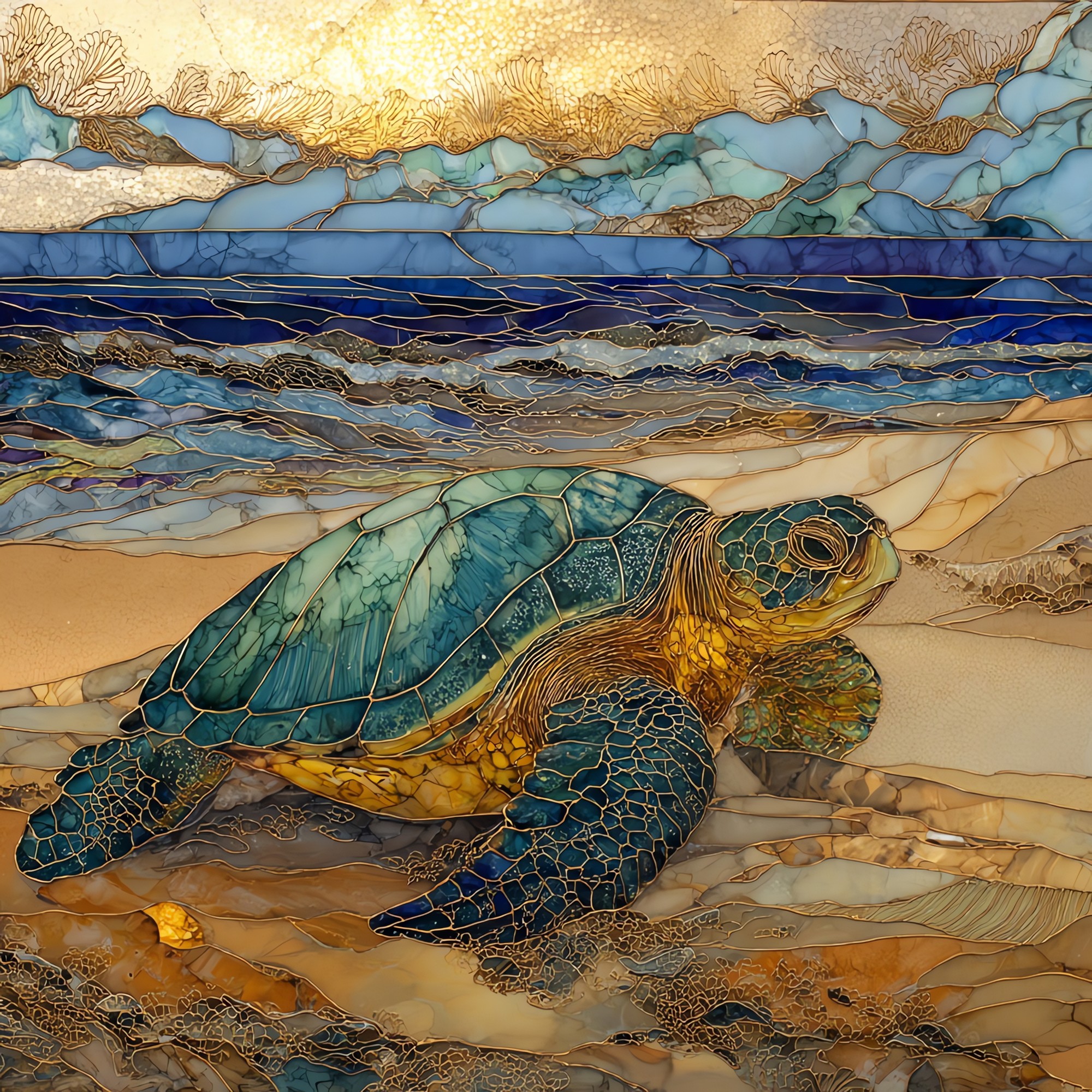
Honu Nesting Beach Ceramic Art Tile
shown on ceramic, 12-inch tileHawaii · United States
on the Kaʻū coast of Hawaiʻi Island

Honu Nesting Beach Ceramic Art Tile

— the warm afternoon the honu come up to sleep.

Where it lives

Not only on a wall.

A small tile on the nightstand catching the morning. A larger one above the fire. Yours, wherever you spend the slow hours.
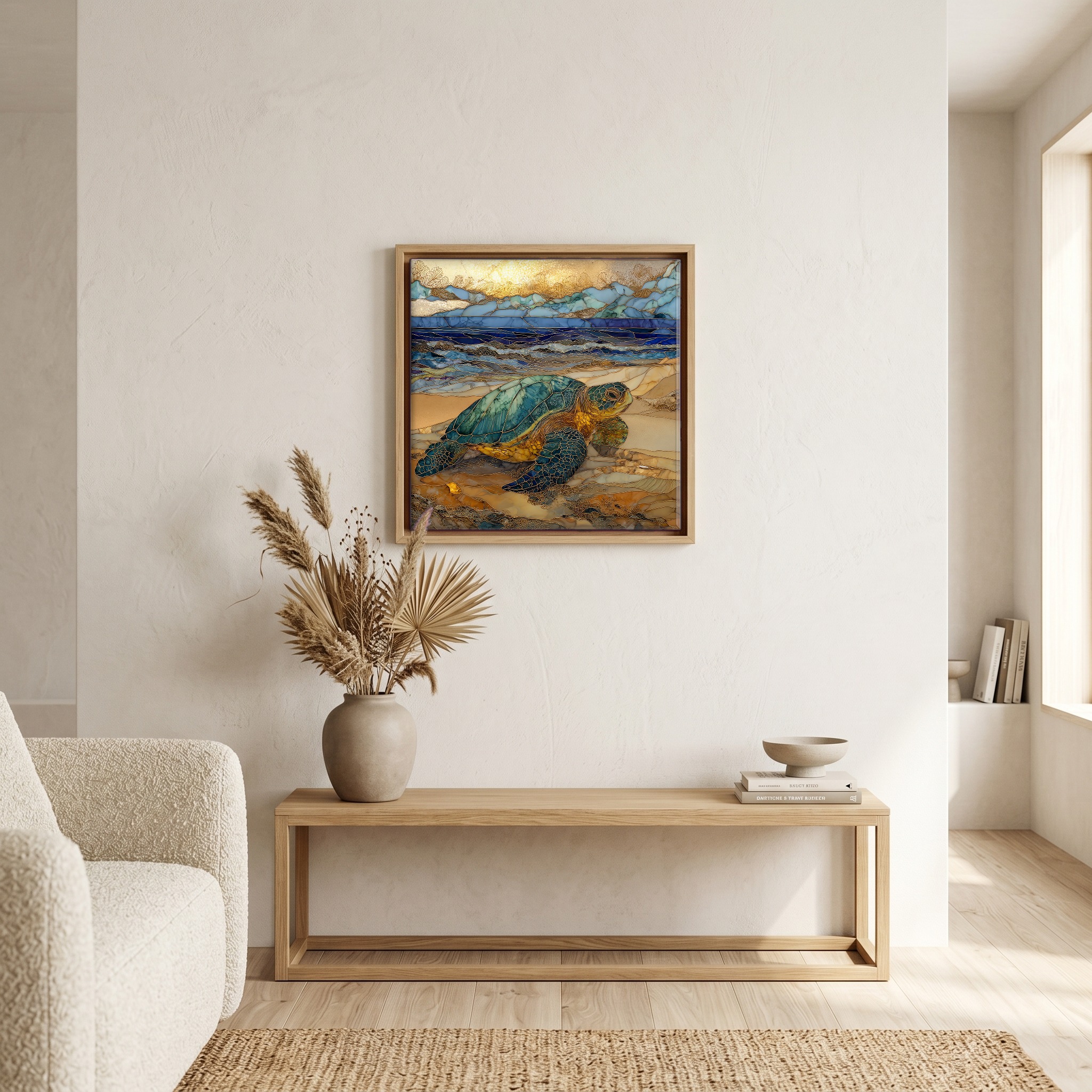
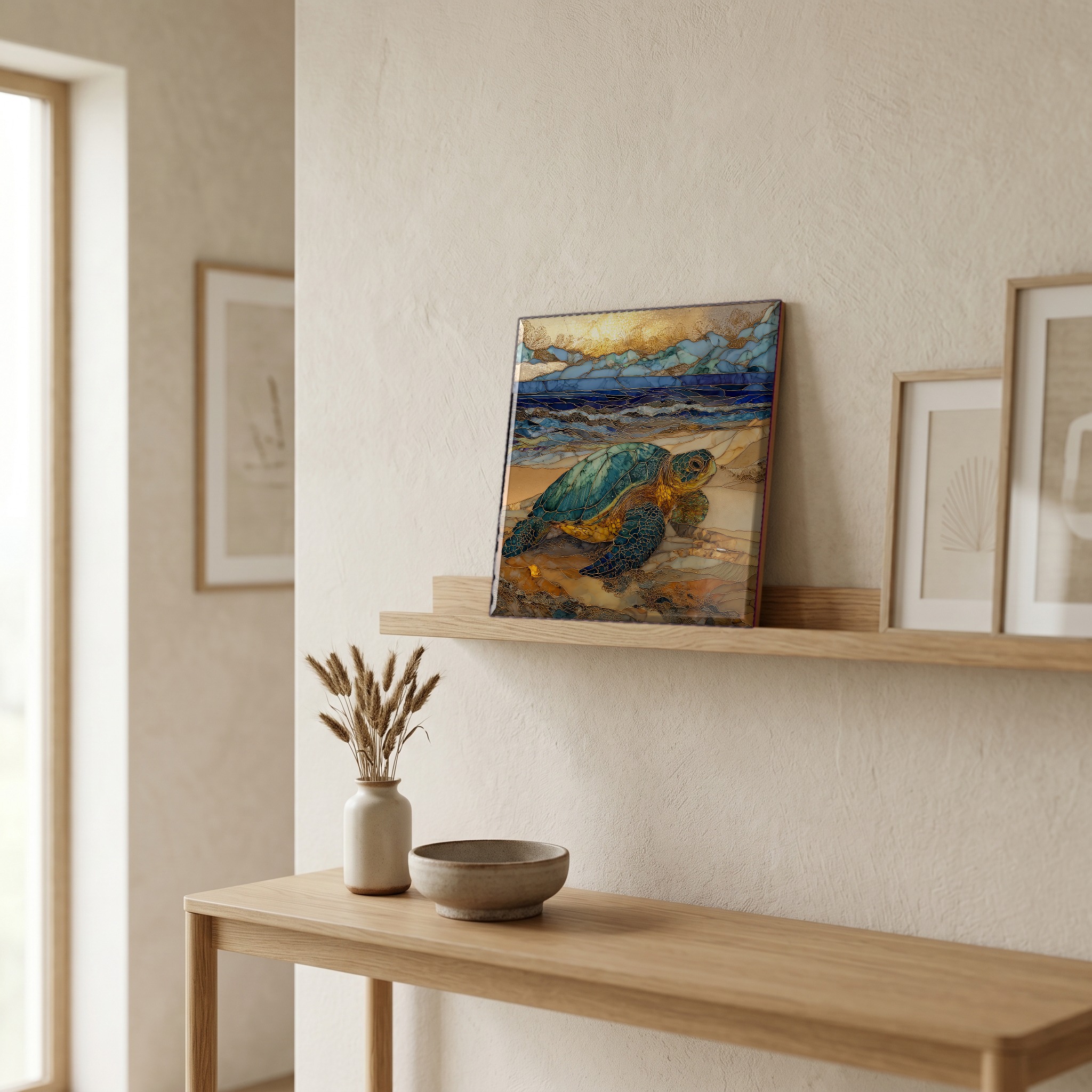
Above the bench, in a warm oak surround.
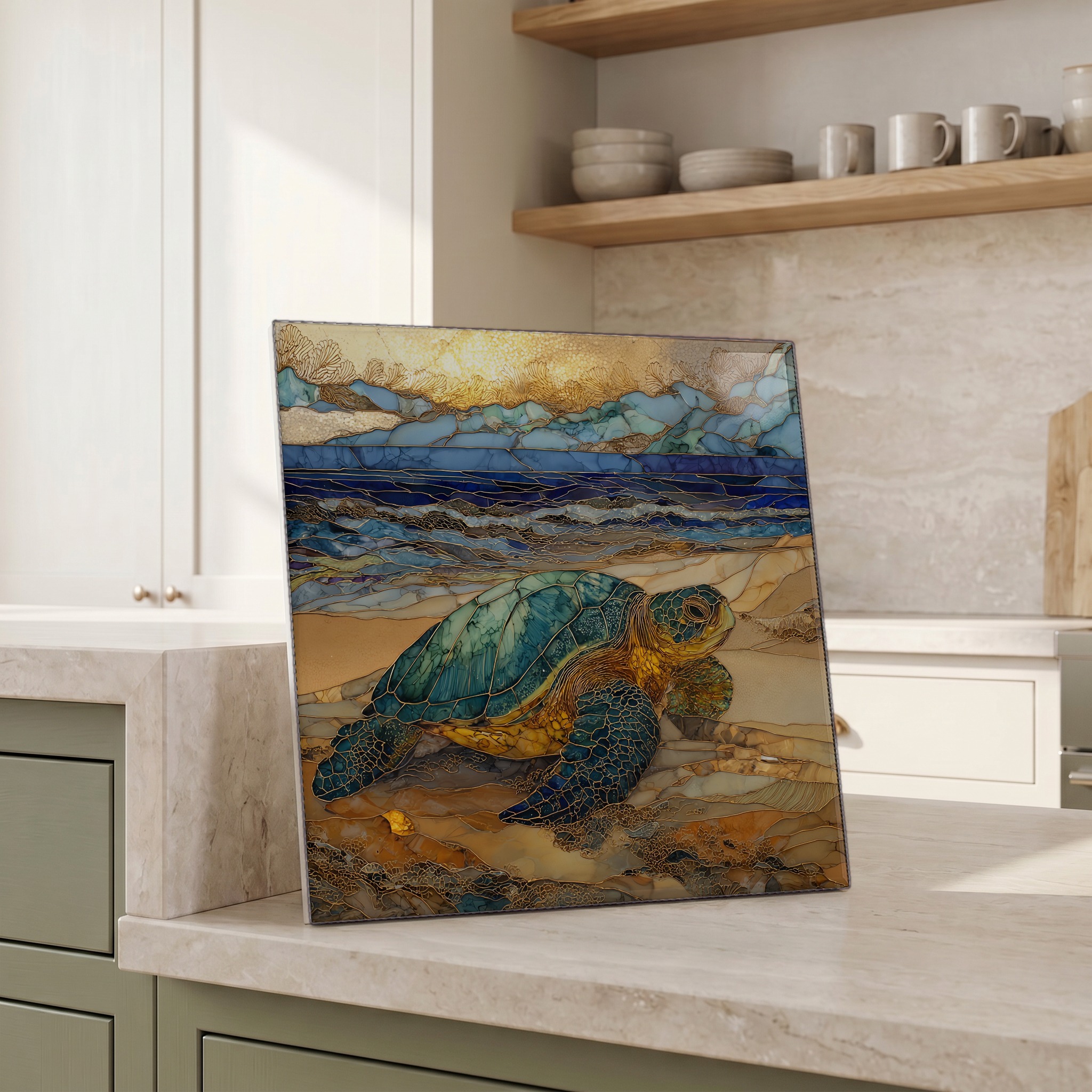
Beside the kettle, propped on the counter.
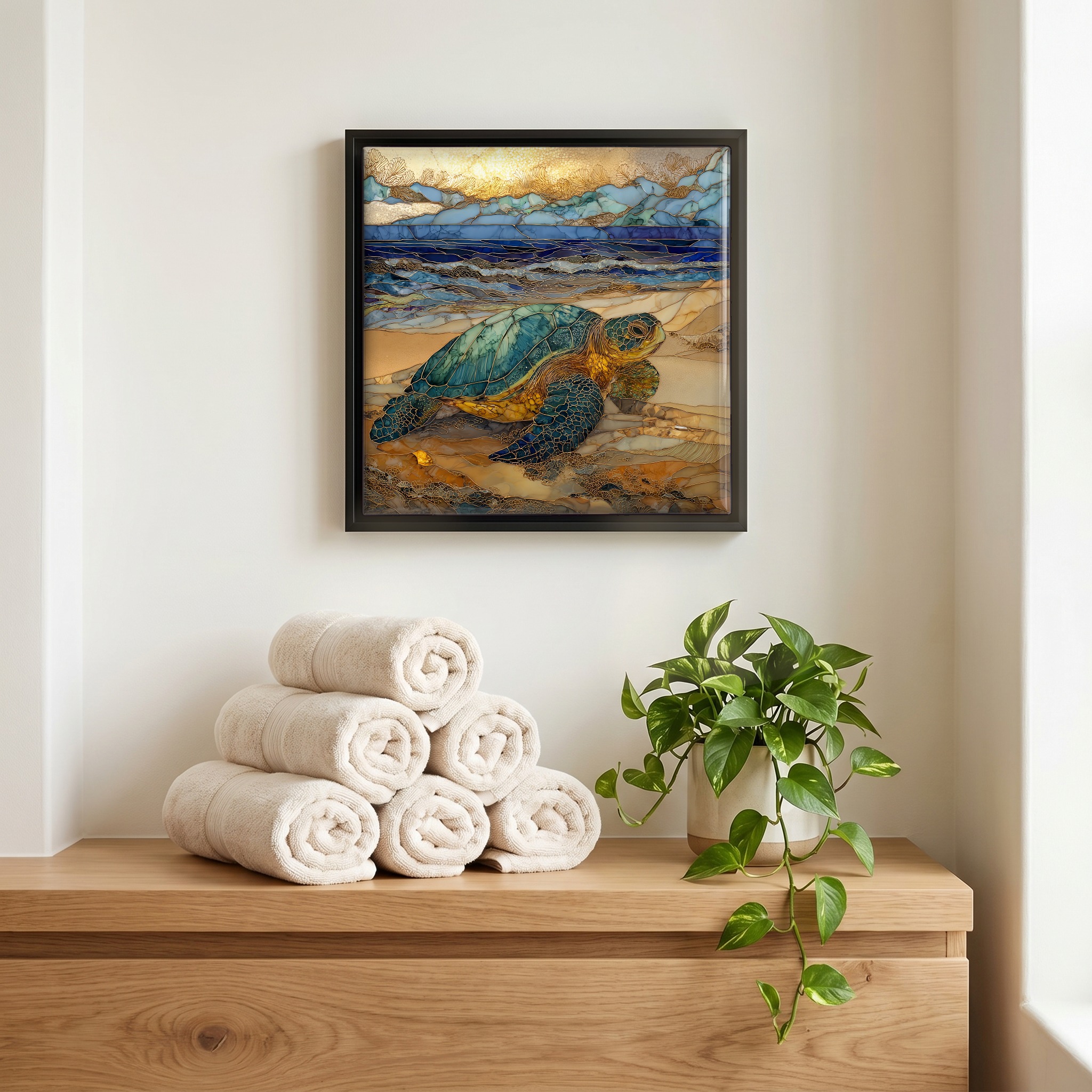
Above the linens, in a slim black surround.
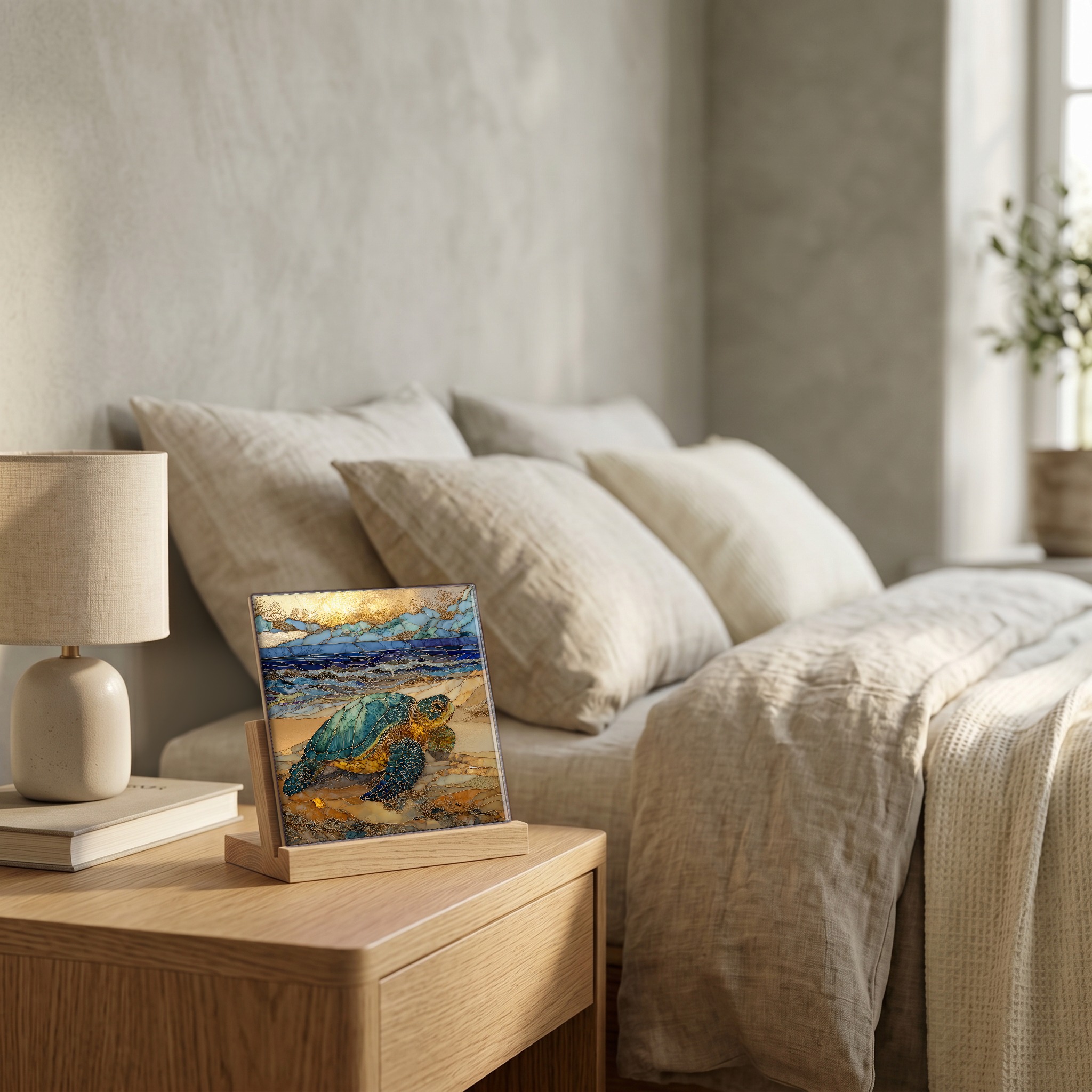
On the nightstand, on a light oak stand.
On a picture ledge, where the light comes in.
a note from the studio

On the black-sand beaches of Hawaiʻi's southern shore, the honu (Hawaiian green sea turtles) come up out of the water in the long afternoons to sleep in the sun. They are old animals doing an old thing. A roped distance keeps the basking ground unbothered, and people on the beach drop their voices without being asked. The sand is warmed lava, fine and black. The turtles arrive and stay. A few of the older females return in season to nest. The light is gold by four, and the wind smells of guava and salt.
from the studio
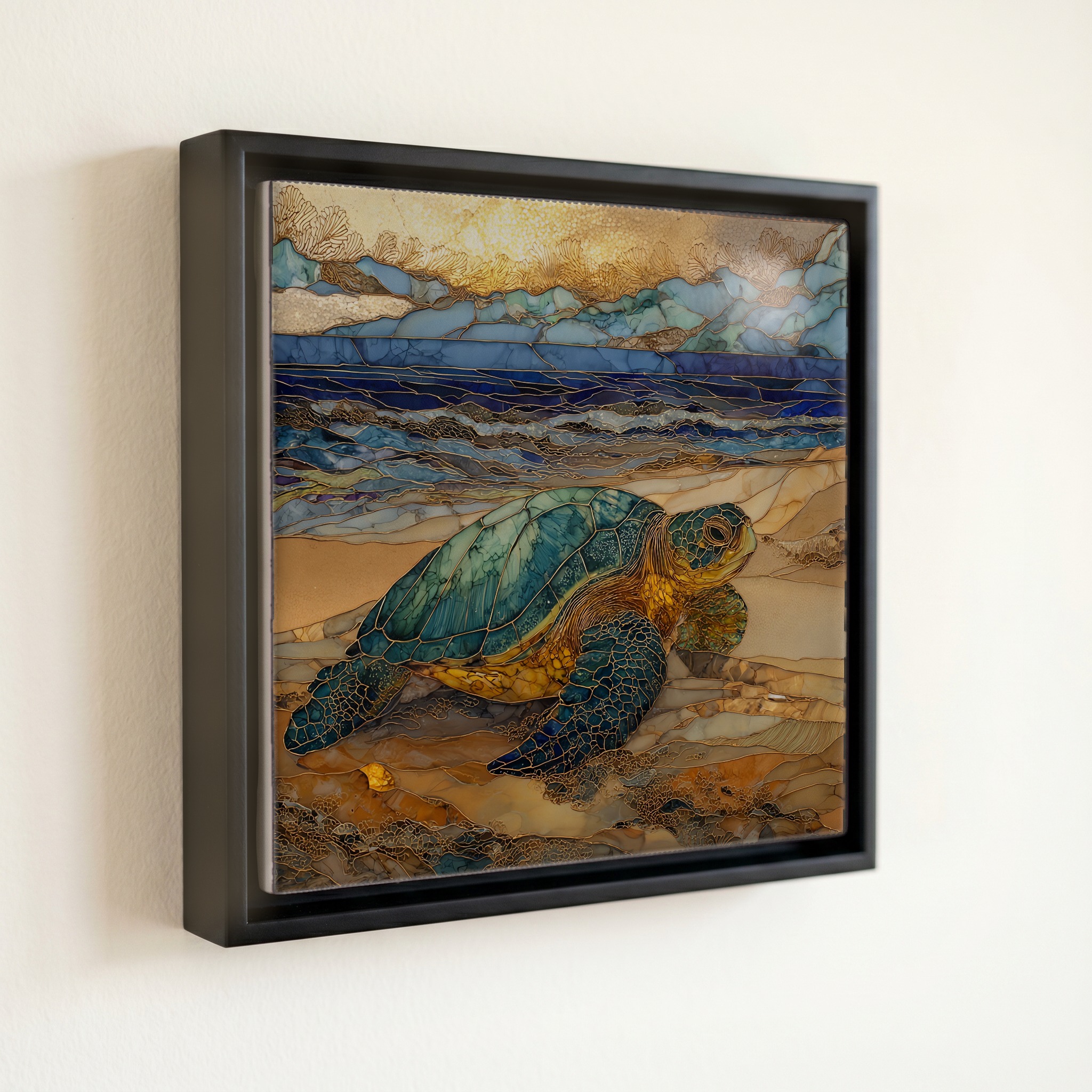
shown in a slim black floating frame · 6 × 6 in
— bring it home

Honu Nesting Beach Ceramic Art Tile, on ceramic.

Each tile is finished by hand in our Knoxville studio. Artwork is slowly infused into the ceramic surface under high heat and pressure, and rests beneath a thin glossy finish. The colour lives in the surface, not on top of it.

What kind of piece?
One tile — square or rectangle.
How big?
the popular one — counter, shelf, nightstand
6 × 6 in · 15 cm · 1.6 lb
Surface finish
A clear glossy finish — the artwork reads as if under resin. Ideal for show-pieces and framed wall art.
How it sits
A hidden cleat — sits ¼″ proud of the wall.
$58
Hand-finished and shipped from our studio at the foot of the Smokies. On your wall in about ten days.
size
6 × 6 in
15 cm
weighs
1.6 lb
solid in the hand
surface
ceramic, hand-finished
art rests beneath a thin glossy finish
from
Knoxville, TN
our family studio, at the foot of the Smokies
— start a Coaster Set

Pick any four 4-inch tiles — National Parks you've been to, a Smokies set, the four seasons of one place. $ for a set of , cork-backed, ready to live on the table.
comes gift-ready
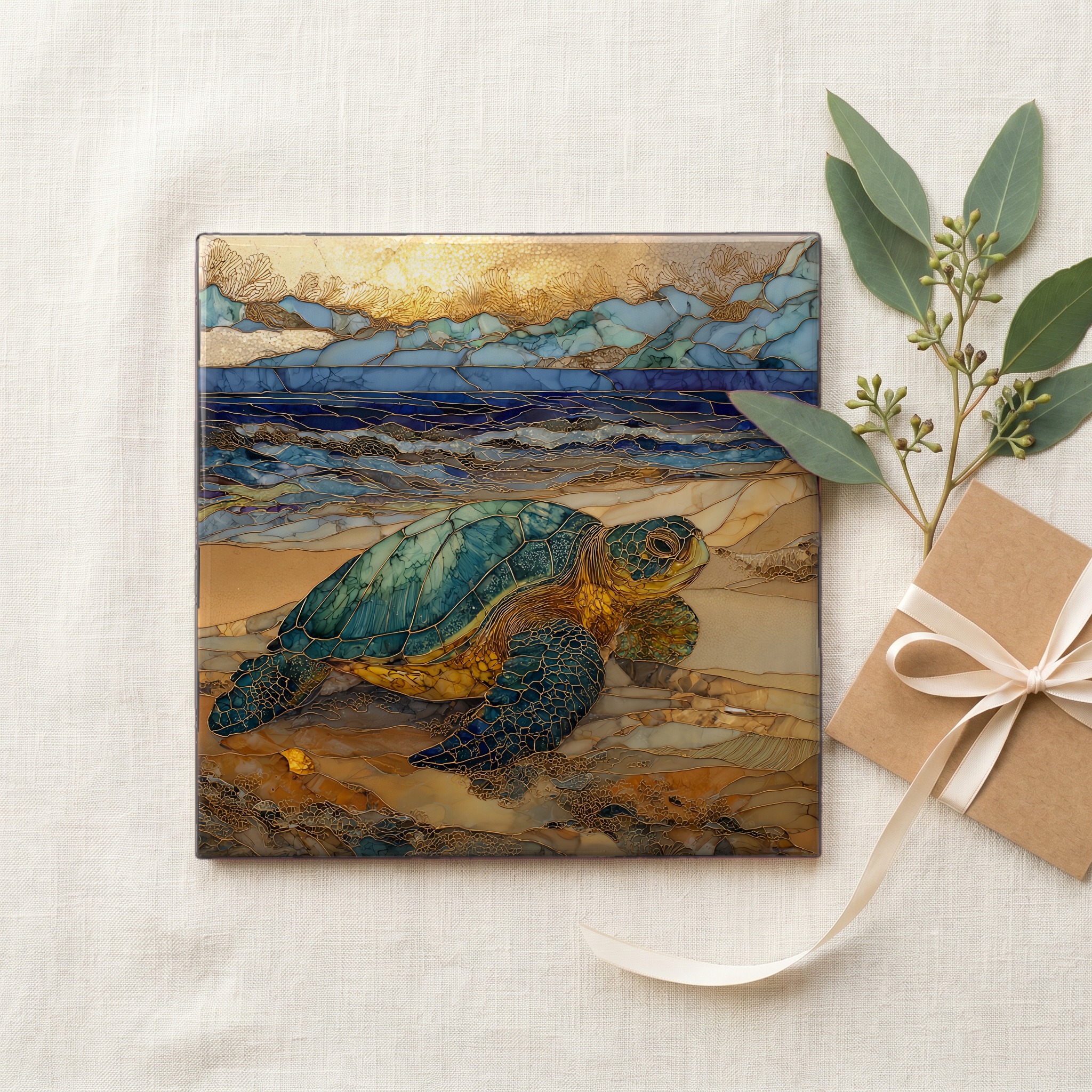
comes gift-ready

Each tile ships in a kraft box, tied with cream ribbon, with a handwritten note from the studio if you'd like to add one.
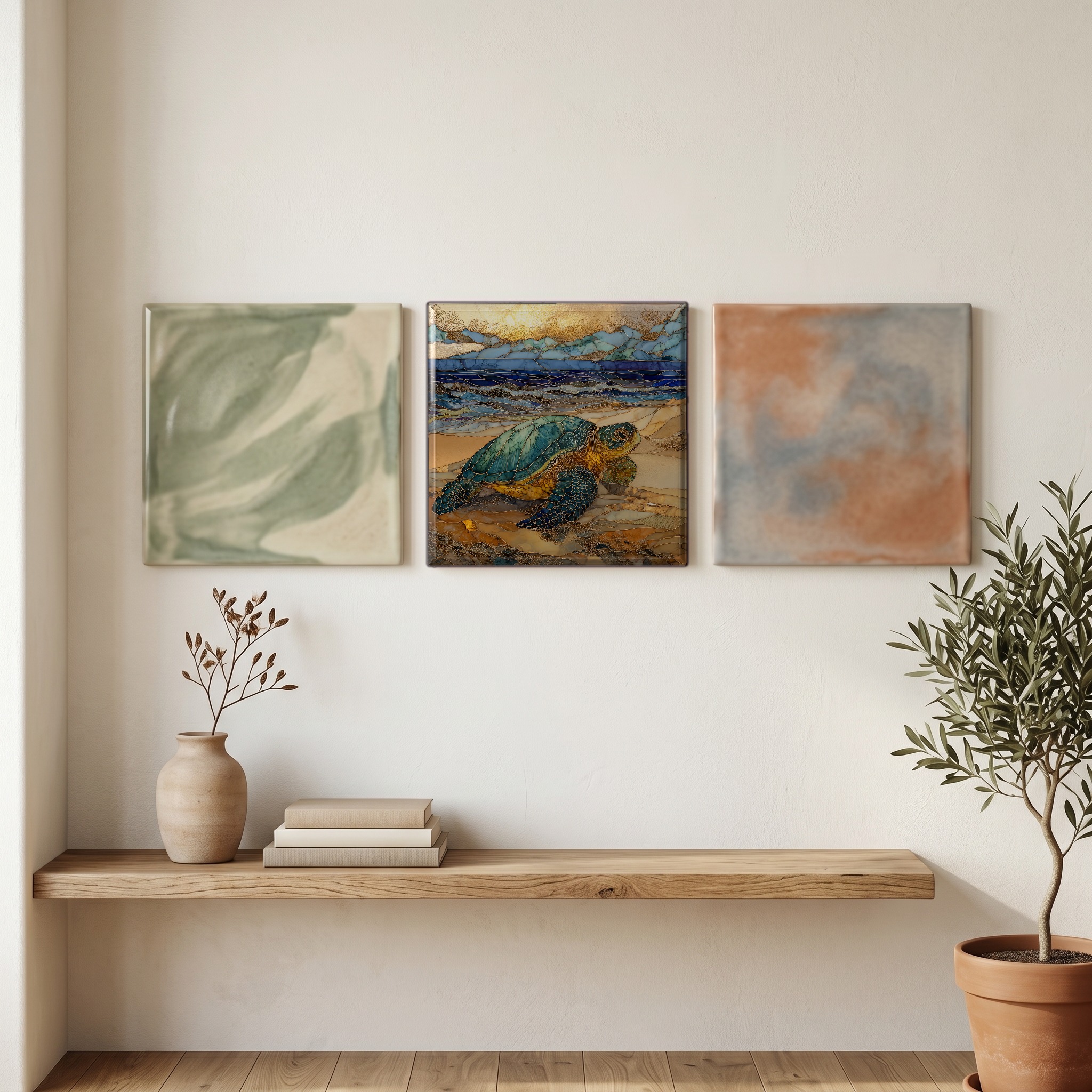
or build a grouping
or build a grouping

Three or five different vistas, hung together — a chapter of places you've been, or want to go.

about Honu Nesting Beach Ceramic Art Tile

The place, in three passes.

A little of what's known, in case you fall down the rabbit hole — or want to go see it yourself.
the place

The black-sand beaches of Hawaiʻi Island are the closest most visitors get to a honu basking ground. The most accessible is Punaluʻu, on the Kaʻū coast of the Big Island, where Hawaiian green sea turtles haul out to rest in the sun beside coconut palms. The sand here is not weathered shell but fragmented basalt: black grains created when molten lava from the Mauna Loa and Kīlauea systems entered the sea and shattered. Hawaiian green sea turtles, an endemic genetic population of Chelonia mydas, were listed as threatened under the U.S. Endangered Species Act in 1978 and are still recovering. Most of their actual nesting, about ninety-six percent, happens at the French Frigate Shoals, six hundred miles to the northwest.

the season

Honu nesting on the French Frigate Shoals peaks between May and September, with the largest concentrations in June and July. Females haul out at night to lay clutches of about a hundred eggs in soft sand above the high-water line, and the hatchlings emerge roughly sixty days later. On the main Hawaiian Islands, basking happens in every month and mostly during the warm hours of the afternoon. Hawksbill turtles (honuʻea), a separate species, nest at a small number of Hawaiʻi Island sites including Pōhue Bay and Kamehame between May and December. East Island in the Shoals, where most green turtles laid, was largely destroyed in October 2018 by Hurricane Walaka, and the population has been adapting.

the visit

NOAA Fisheries asks visitors to stay at least ten feet, about three metres, from any basking honu, and never to touch, feed, or photograph with flash. The turtles are protected under the U.S. Endangered Species Act and Hawaiʻi state law, with fines for harassment. At Punaluʻu, a Hawaiʻi County park, signage and roped sections mark the rest area, and locals and trained volunteers often help orient first-time visitors. Parking and restrooms are free. Swimming is permitted on the open beach, though strong rip currents can develop, and the calmer hours are early morning. The honu themselves come and go on their own schedule. Some afternoons there are three on the sand; some afternoons there are none.

where
United States · Hawaiʻi Island, Hawaiʻi
the neighborhood

What's nearby.

A handful of named places within an hour's walk or short drive. Some we've already painted; some we will.
40 km N
Hawaiʻi Volcanoes National Park
national park
30 km SW
South Point (Ka Lae)
southernmost point of the US
55 km NW
Mauna Loa
shield volcano
95 km N
Mauna Kea
dormant volcano
80 km NE
Hilo
town
25 km W
Pōhue Bay
hawksbill nesting beach
N
Honu Nesting Beach Ceramic Art Tile
Hawaiʻi Volcanoes National Park
South Point (Ka Lae)
Mauna Loa
Mauna Kea
Hilo
Pōhue Bay
common questions

What people ask.

A few questions we get about Honu Nesting Beach Ceramic Art Tile — and about bringing the piece home.
about the place

Punaluʻu Black Sand Beach, on the Kaʻū coast of Hawaiʻi Island, is the most visited basking site for Hawaiian green sea turtles. The park sits between Naʻālehu and Pāhala, about an hour south of Hilo on Highway 11. Coconut palms line the dark sand.

The grains are shattered basalt, not weathered shell. When lava from the Mauna Loa and Kīlauea systems enters the ocean, the temperature shock fractures it into fine fragments. Hawaiʻi Island produces black, green, and white sand beaches within driving distance of each other.

A small number nest on Hawaiʻi Island each year, but about ninety-six percent of the population still nests at the French Frigate Shoals, six hundred miles to the northwest. The main-island beaches are mainly basking grounds, where turtles haul out to rest rather than to lay.

NOAA Fisheries asks visitors to stay at least ten feet, about three metres, from any honu on land or in shallow water. Touching, feeding, riding, or flashing a camera at a turtle is illegal under the U.S. Endangered Species Act and Hawaiʻi state law.

Basking happens in every month on the main Hawaiian Islands and tends to peak in the warm hours between late morning and late afternoon. Some days bring three or four turtles to Punaluʻu; some days none. Nesting on the French Frigate Shoals peaks between May and September.

Honu is the Hawaiian name for the green sea turtle (Chelonia mydas), the larger and more common species. Honuʻea is the hawksbill turtle (Eretmochelys imbricata), a smaller, critically endangered species that nests at a handful of Hawaiʻi Island sites including Pōhue Bay and Kamehame.

Adult honu reach about three to four feet of carapace length and can weigh two hundred to four hundred pounds. They live for sixty to seventy years and do not begin to nest until their mid-twenties. The animal you watch sleeping at Punaluʻu may be older than the road that brought you there.

about the piece in your home

Honu carry strong meaning across the islands, as ʻaumakua (guardian ancestors) for many families, as a sign of longevity, and as one of the first creatures Hawaiian children learn to recognise. A Keepsake or Small with a handwritten note from the studio reads warmly to anyone with Hawaiʻi in their story.

The piece sits comfortably in coastal-modern, tropical-modern, and biophilic rooms. The black sand and warm gold of the honu shell read as warm darks rather than as bright tropical colour, which lets the tile work in a quiet living room or bedroom as easily as in a beach house.

Biophilic interiors that draw on protected-species imagery have grown steadily over the last three years, and Hawaiian sea-turtle motifs are one of the most-searched marine subjects on Pinterest. The piece carries the biophilic mood without leaning into beach-resort cliché.

For a standard sofa or console, the single Large (about twelve inches across) reads as a focal point at eye level. For a longer wall, a four-tile Mural in a two-by-two grid carries the scale of the beach; the nine-tile Mural is for a featured wall or stairwell.

Yes, in the Dura Satin or Matte finish. Both are designed for vertical wet installations, are scratch-resistant, and read softer than the Glossy under bathroom lighting. The Glossy is best kept to dry rooms where it can shine.

A soft microfibre cloth and warm water are all the tile needs. The colour lives in the surface beneath a thin clear finish, so it does not lift with cleaning. Avoid scouring pads or chemical strippers.

Yes. Every piece is made in our Knoxville studio by Reid Wender's eye and our hands. The artwork is not licensed from a third party, and the print is not pulled from a marketplace template. The honu studies that anchor this piece were composed for the WenderVista atlas.

if this one stayed with you

A few you might also love.

Hand-picked by the eye that found Sorapis. Same air, same kind of quiet.