Wender·Vista
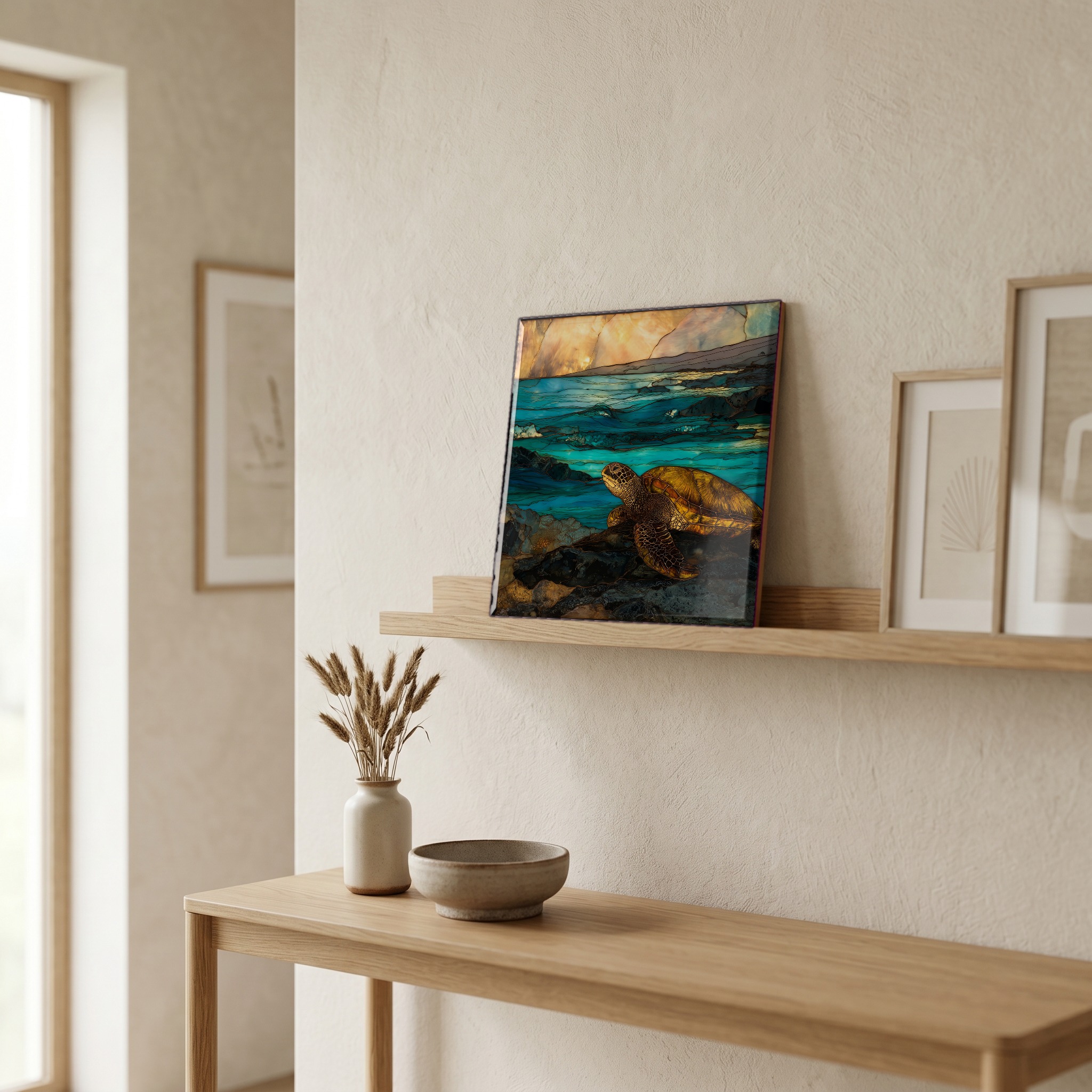
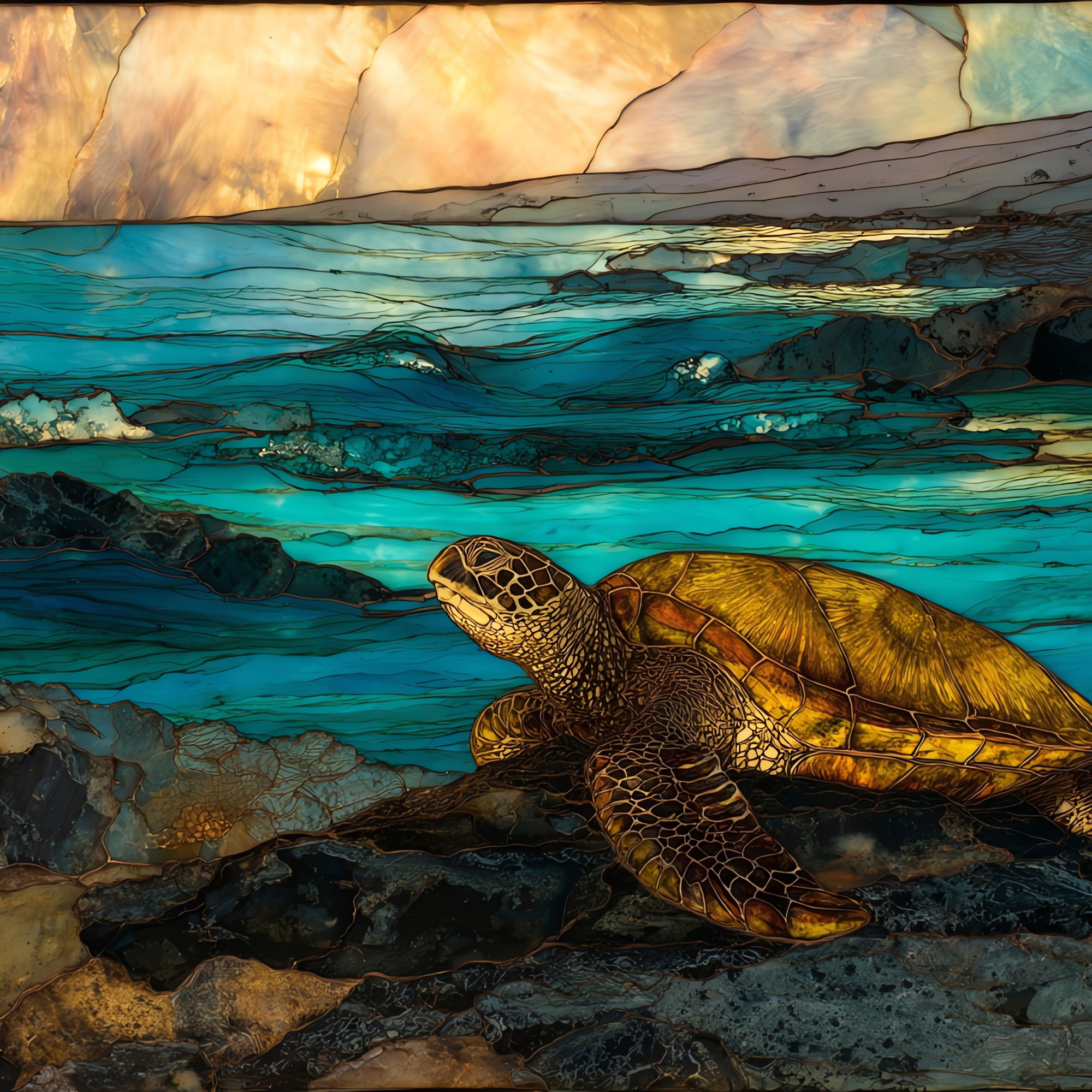
Honu on Lava Reef Big Island Ceramic Art Tile
shown on ceramic, 12-inch tileHawaii · United States
on the Big Island, where the lava meets the sea

Honu on Lava Reef Big Island Ceramic Art Tile

— the warm black stone the honu come back for.

Where it lives

Not only on a wall.

A small tile on the nightstand catching the morning. A larger one above the fire. Yours, wherever you spend the slow hours.
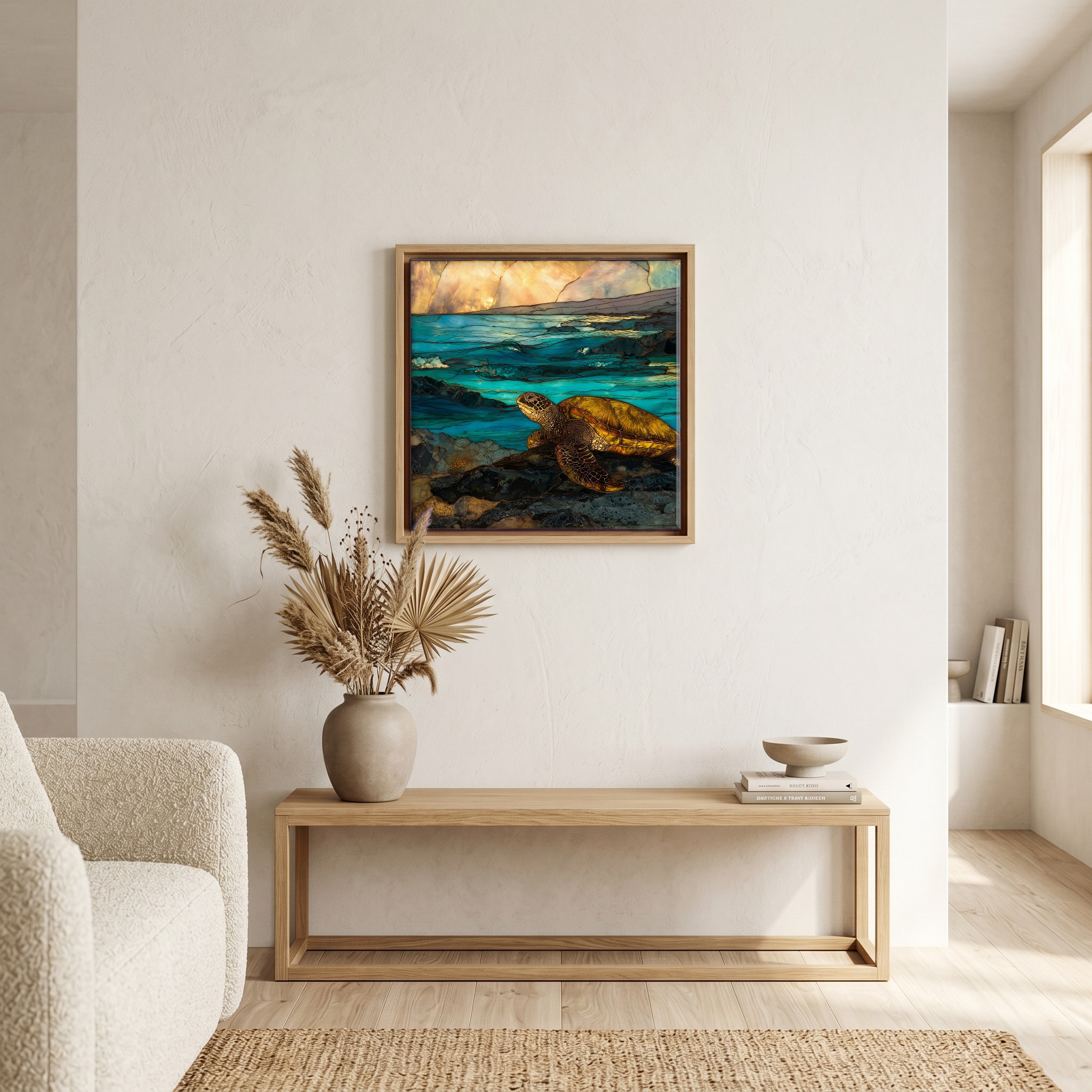
Above the bench, in a warm oak surround.
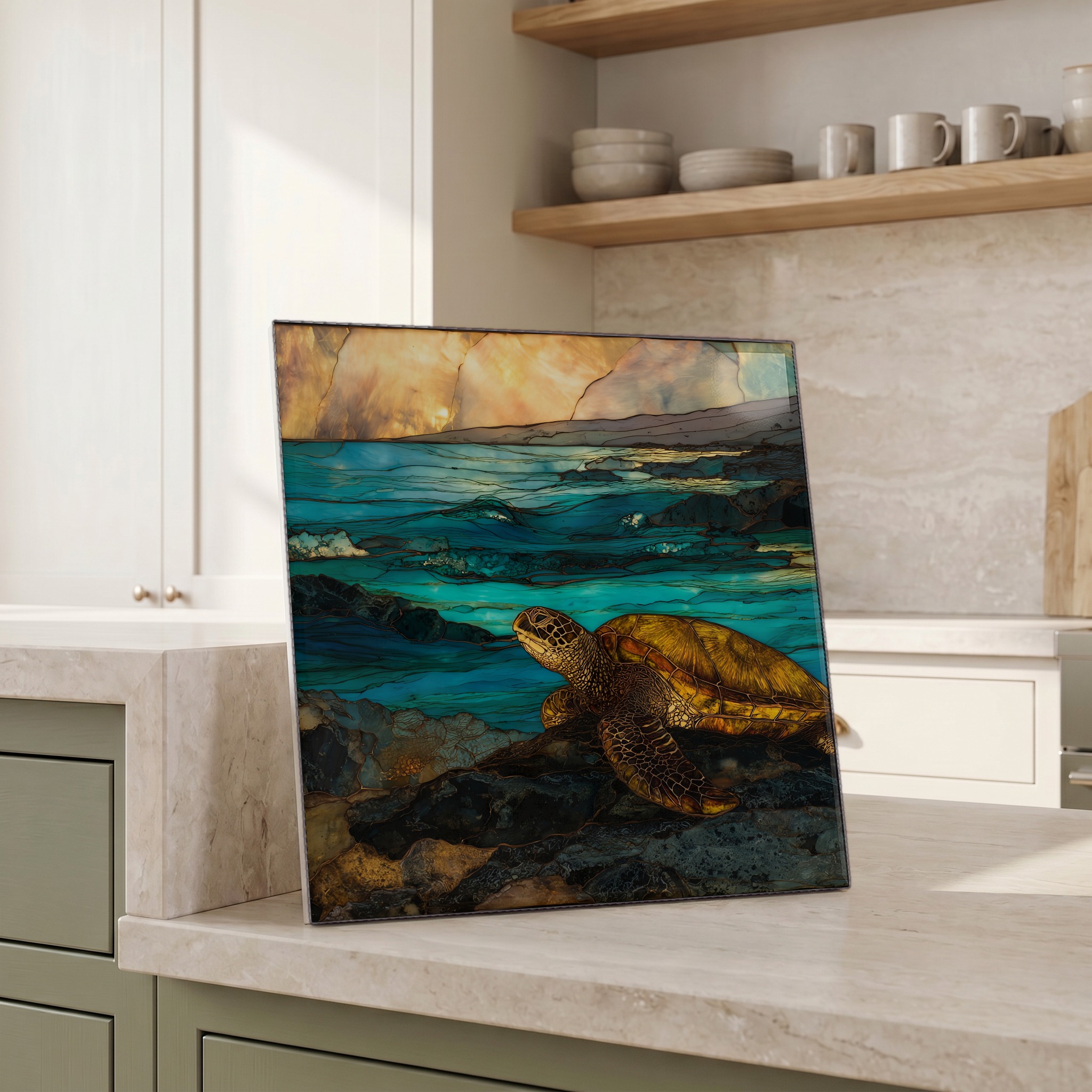
Beside the kettle, propped on the counter.
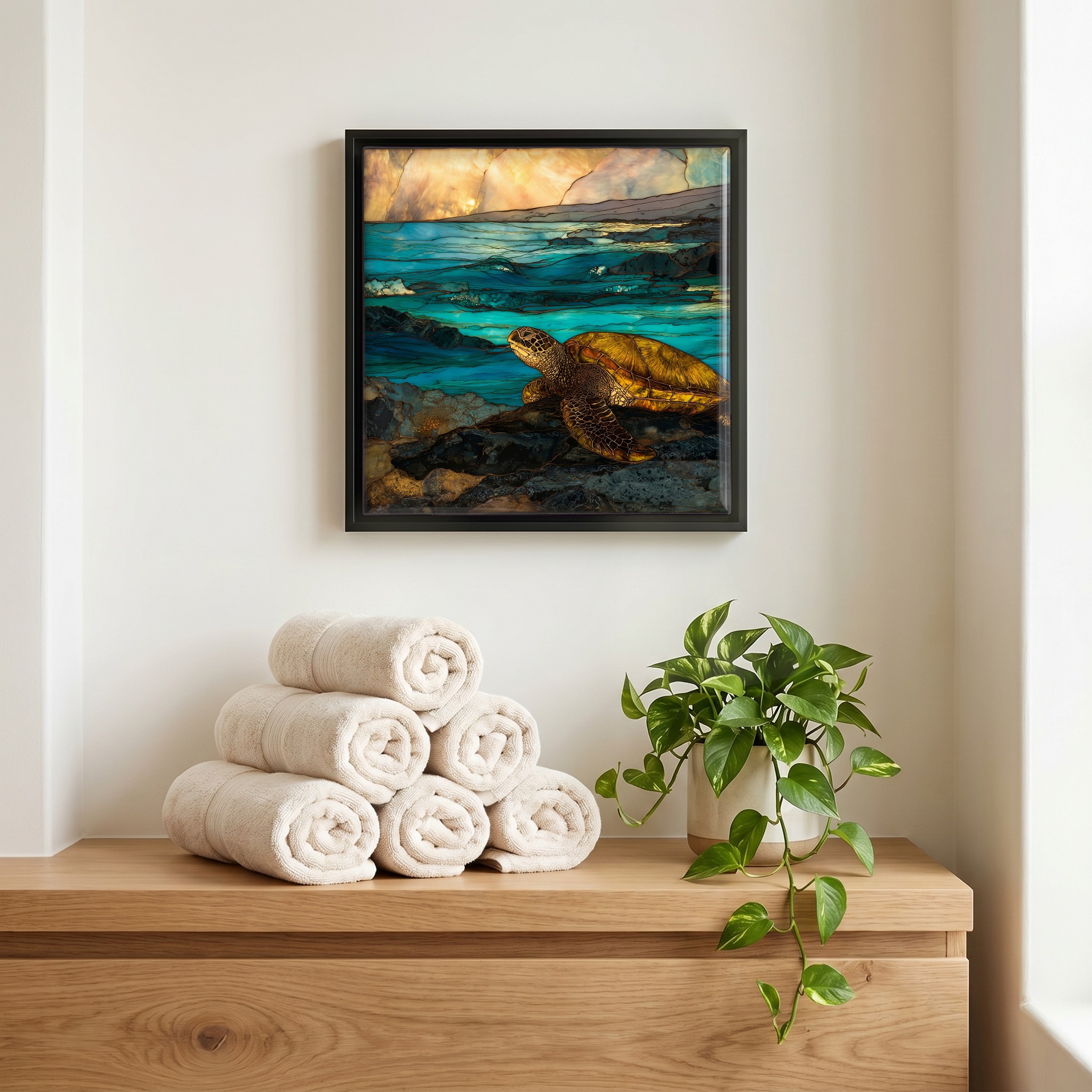
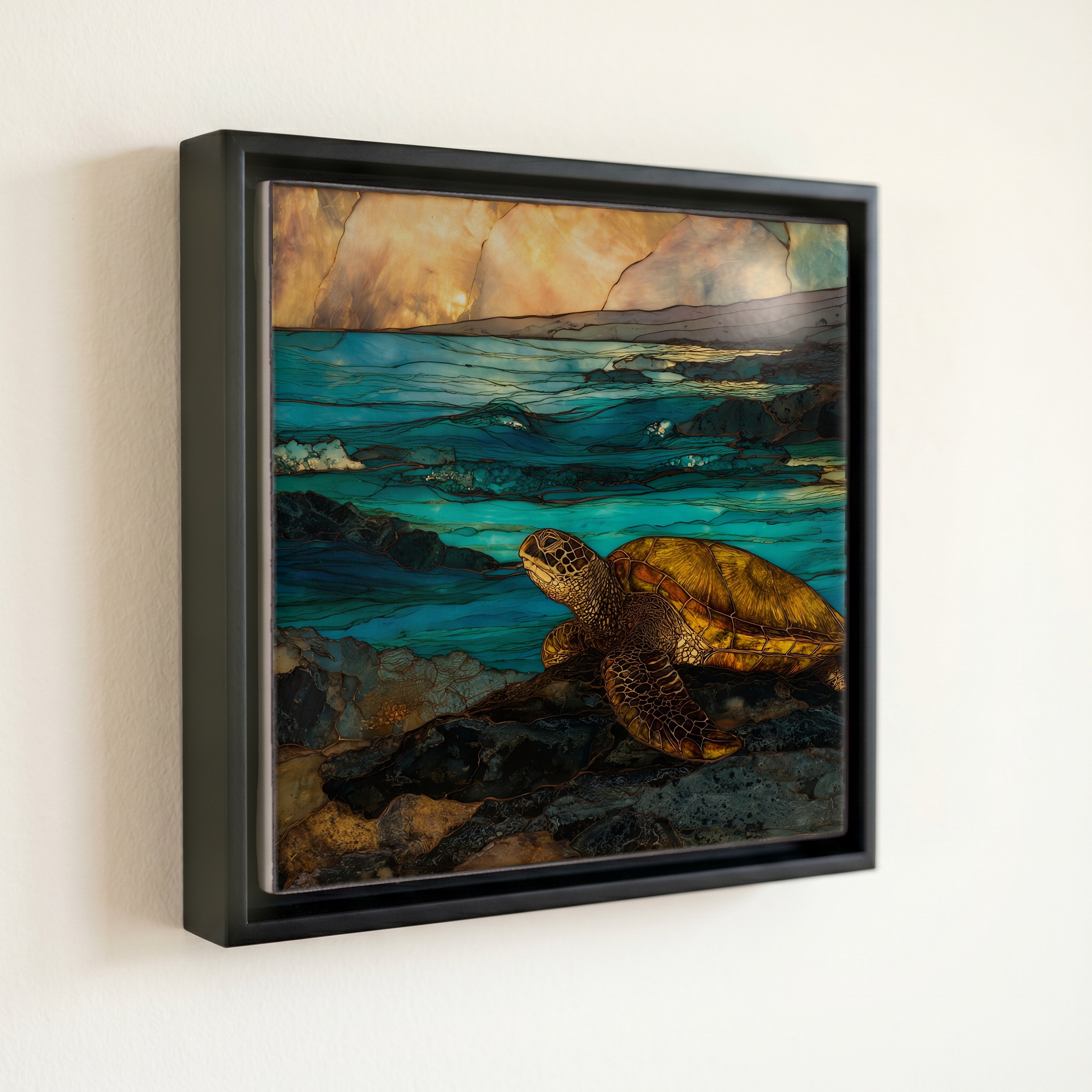
Above the linens, in a slim black surround.
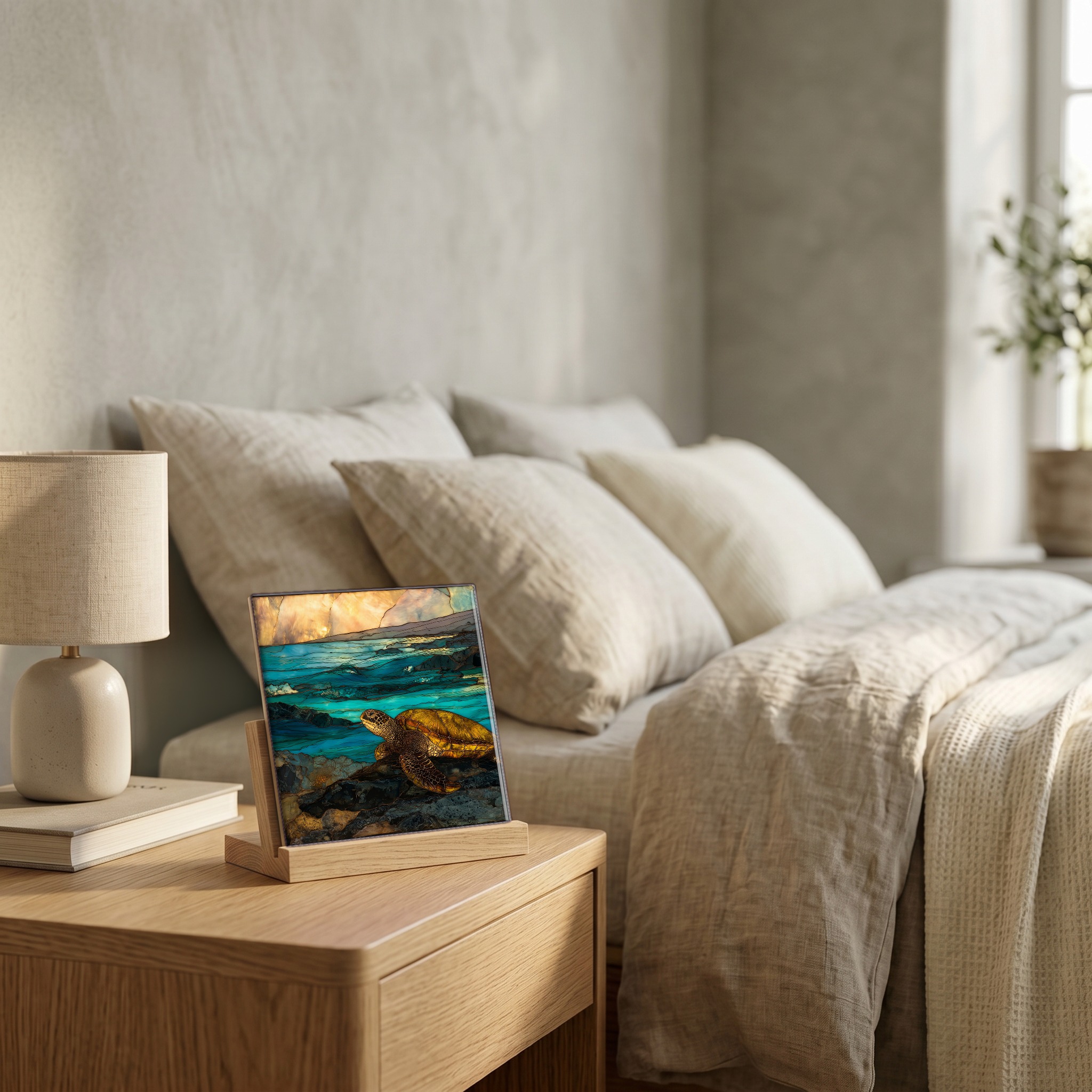
On the nightstand, on a light oak stand.
On a picture ledge, where the light comes in.
a note from the studio

The southeast coast of the Big Island, where lava reaches the sea and cools into black sand and reef. Honu, the Hawaiian green sea turtles, come ashore here, hauling out on volcanic rock to warm in the sun. They are one of the few sea turtle populations in the world that bask on land. The Hawaiian word for them, honu, carries the older sense of guardian, an ʻaumakua in family lineages. NOAA asks visitors to keep ten feet of distance, and that is all the encounter wants. The turtle moves slowly. The rock is still warm. Nobody hurries.
from the studio
shown in a slim black floating frame · 6 × 6 in
— bring it home

Honu on Lava Reef Big Island Ceramic Art Tile, on ceramic.

Each tile is finished by hand in our Knoxville studio. Artwork is slowly infused into the ceramic surface under high heat and pressure, and rests beneath a thin glossy finish. The colour lives in the surface, not on top of it.

What kind of piece?
One tile — square or rectangle.
How big?
the popular one — counter, shelf, nightstand
6 × 6 in · 15 cm · 1.6 lb
Surface finish
A clear glossy finish — the artwork reads as if under resin. Ideal for show-pieces and framed wall art.
How it sits
A hidden cleat — sits ¼″ proud of the wall.
$58
Hand-finished and shipped from our studio at the foot of the Smokies. On your wall in about ten days.
size
6 × 6 in
15 cm
weighs
1.6 lb
solid in the hand
surface
ceramic, hand-finished
art rests beneath a thin glossy finish
from
Knoxville, TN
our family studio, at the foot of the Smokies
— start a Coaster Set

Pick any four 4-inch tiles — National Parks you've been to, a Smokies set, the four seasons of one place. $ for a set of , cork-backed, ready to live on the table.
comes gift-ready
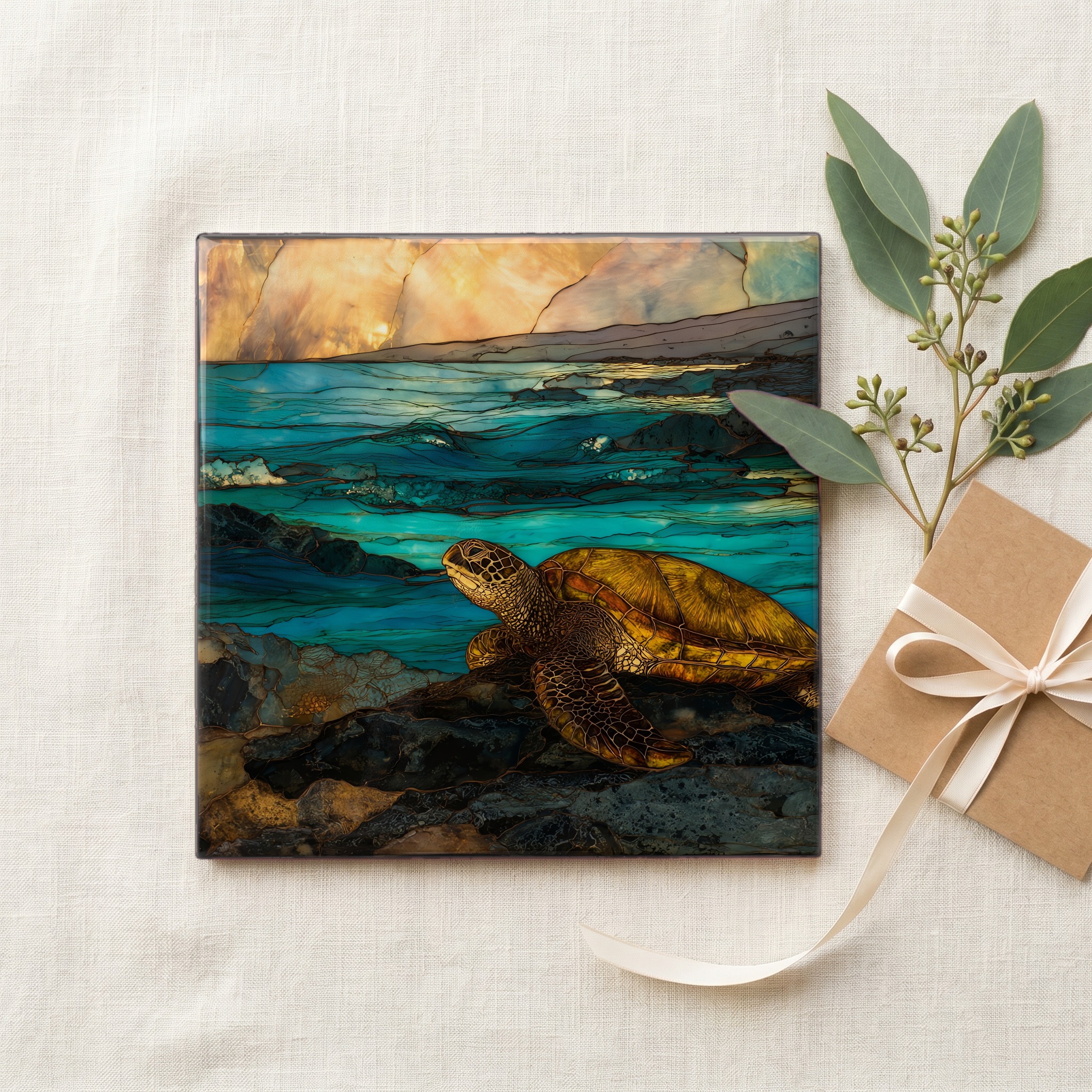
comes gift-ready

Each tile ships in a kraft box, tied with cream ribbon, with a handwritten note from the studio if you'd like to add one.
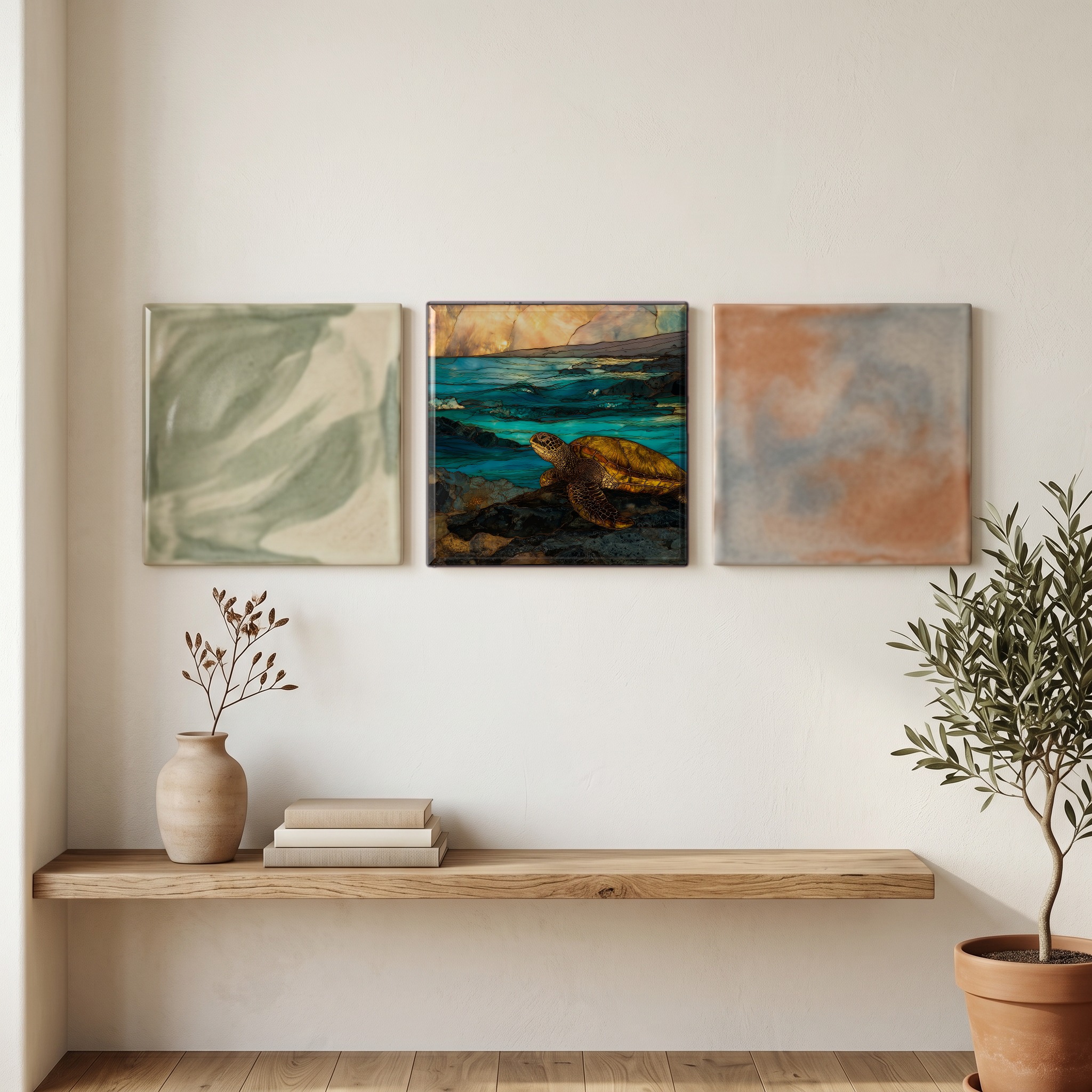
or build a grouping
or build a grouping

Three or five different vistas, hung together — a chapter of places you've been, or want to go.

about Honu on Lava Reef Big Island Ceramic Art Tile

The place, in three passes.

A little of what's known, in case you fall down the rabbit hole — or want to go see it yourself.
the place

The Big Island, formally Hawaiʻi Island, is the largest in the Hawaiian archipelago at 4,028 square miles, larger than all the other Hawaiian islands combined. Its southeast coast, in the Kaʻū district, is where the youngest land in the United States is still being made: lava from Kīlauea volcano has flowed to the sea repeatedly over the last forty years, cooling into reef. Punaluʻu Black Sand Beach, on this coast, is the best-known place along the stretch to find honu basking on volcanic rock. The beach is a county park with paved access, and the reef offshore is shallow and warm to the touch by midday. To the northeast, Hawaiʻi Volcanoes National Park reaches the ocean.

the stone

The reef is basalt: cooled tholeiitic lava from the shield volcanoes that built the island, Mauna Loa and Kīlauea. Kīlauea has been one of the most active volcanoes on earth for the last forty years; the Puʻu ʻŌʻō eruption ran from 1983 to 2018, sending lava overland to the sea many times. Where the lava reached the Pacific it shattered into black sand and laid down low platforms of dark rock that hold the day's heat. That heat is part of what brings the honu up: thermoregulation. The Hawaiian green sea turtle, Chelonia mydas, is one of the few sea turtle populations in the world that hauls out on land regularly, and the warm volcanic shelf is part of why this stretch of coast became one of the reliable basking sites.

the visit

Honu have been federally protected under the U.S. Endangered Species Act since 1978, and NOAA Fisheries asks viewers to keep at least ten feet of distance from a basking turtle. Touching or harassing a sea turtle is a federal offence. Punaluʻu Black Sand Beach is the most reliable basking site on the Big Island; honu typically come ashore between mid-morning and late afternoon, more often in the warm months from late spring through early fall. The parking lot is small and fills early on weekends. Locals at Punaluʻu will often set up a quiet rope perimeter around a basking animal so visitors keep their distance. The right way to see this is to sit on the warm sand and watch.

where
United States · Hawaiʻi County, Hawaiʻi
the neighborhood

What's nearby.

A handful of named places within an hour's walk or short drive. Some we've already painted; some we will.
at the lake
Punaluʻu Black Sand Beach
black sand beach
50 km NE
Hawaiʻi Volcanoes National Park
national park
40 km SW
Ka Lae (South Point)
headland
8 km SW
Nāʻālehu
town
60 km N
Mauna Loa
shield volcano
N
Honu on Lava Reef Big Island Ceramic Art Tile
Punaluʻu Black Sand Beach
Hawaiʻi Volcanoes National Park
Ka Lae (South Point)
Nāʻālehu
Mauna Loa
common questions

What people ask.

A few questions we get about Honu on Lava Reef Big Island Ceramic Art Tile — and about bringing the piece home.
about the place

Honu is the Hawaiian word for the Hawaiian green sea turtle, Chelonia mydas. It is a distinct population of green sea turtle found in the central Pacific, listed as Threatened under the U.S. Endangered Species Act and culturally significant in Hawaiian tradition as an ʻaumakua, or family guardian.

Honu come ashore to warm themselves on heated volcanic rock and sand. Hawaiian green sea turtles are one of the few sea turtle populations in the world to do this regularly. The behaviour helps them conserve energy, raise their body temperature for digestion, and may help females speed up egg development.

Punaluʻu Black Sand Beach, on the southeast coast in the Kaʻū district, is the most reliable basking site on the Big Island. Honu also haul out at Kīholo Bay on the Kona side, and they are commonly seen in the water at Honokōhau Beach inside Kaloko-Honokōhau National Historical Park.

NOAA Fisheries asks viewers to keep at least ten feet of distance from a basking honu. Touching, feeding, or harassing a sea turtle is a federal offence under the Endangered Species Act, and locals at Punaluʻu will often set up a quiet rope perimeter around an animal.

Black sand on the Big Island is fragmented basalt, formed when molten lava from Kīlauea and Mauna Loa flowed into the cold Pacific and shattered on contact. The Big Island's south coast holds the youngest beaches of this kind in the United States, and Punaluʻu is the most accessible.

An ʻaumakua in Hawaiian tradition is an ancestral or family guardian spirit that takes the form of an animal. Many Hawaiian families consider the honu their ʻaumakua, watching over them at sea. The turtle appears widely in Hawaiian petroglyphs and in chant.

Basking continues through every season but is most frequent from late spring through early fall, when sand and rock temperatures are highest. Mornings and early afternoons are the most reliable windows. Cloudy days reduce the number of turtles that come ashore.

about the piece in your home

It has been a meaningful gift for many of our customers with ties to the islands. The honu carries deep family meaning in Hawaiian tradition as an ʻaumakua, and a tile of a turtle on the lava reef holds the coast and the culture together. A Small or Medium with a handwritten note from the studio carries well.

The deep blacks of the volcanic rock and the green and ochre tones of the honu's shell sit well in coastal-modern, biophilic, and mid-century rooms. The piece reads naturally against natural wood, woven textures, and warm white plaster, and it holds its own in darker rooms that already carry weight.

Biophilic design, the practice of bringing living textures and natural forms into interiors, has been one of the most steady directions in décor for the last five years. An animal-on-stone image fits the brief: it reads as creature and place at once, which is what biophilic rooms reward.

Above a standard 84-inch sofa, a single Large reads as a focal point, and a 4-tile Mural fills the width with room to breathe on either side. Above a 60-inch console, the Medium and the 9-tile Mural both work; the 9-tile gives a bigger statement piece.

Yes. The Dura Satin finish has a soft sheen and is scratch-resistant; the Matte has no sheen at all. Both are suited to bathroom walls, kitchen backsplashes, and shower installations. The Glossy finish is for dry wall and framed pieces.

A soft microfibre cloth and water. The colour is slowly infused into the ceramic surface under high heat and pressure and lives beneath a thin protective finish, so no scrubbing or solvents are needed. For kitchen or bathroom installations, a mild soap is fine.

Yes. The Honu on Lava Reef piece was made by Reid Wender, the curator of the WenderVista atlas, in our distinctive stained-glass and alcohol-ink visual language. The work is not licensed from a third party and is exclusive to Wender Studios.

if this one stayed with you

A few you might also love.

Hand-picked by the eye that found Sorapis. Same air, same kind of quiet.