Wender·Vista
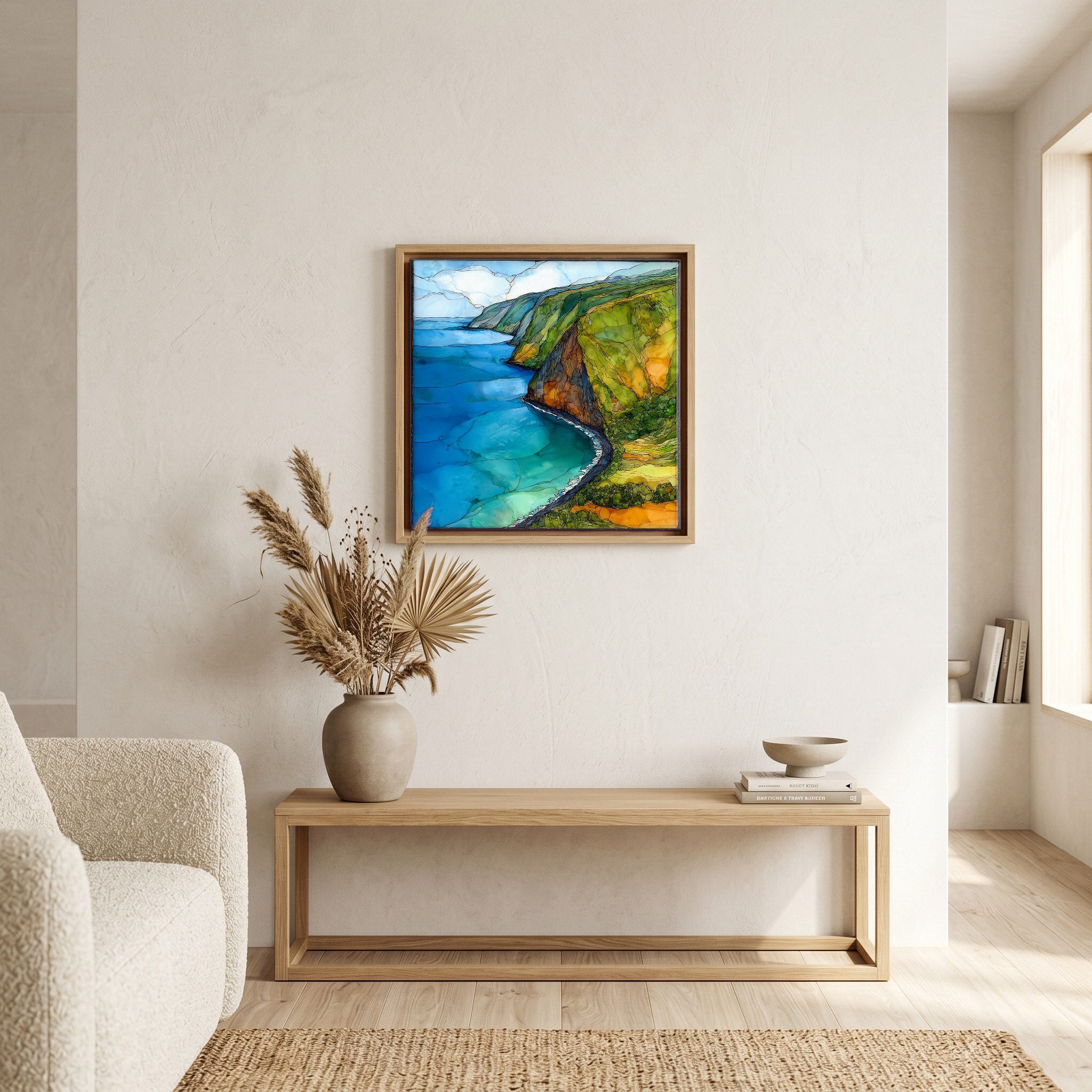
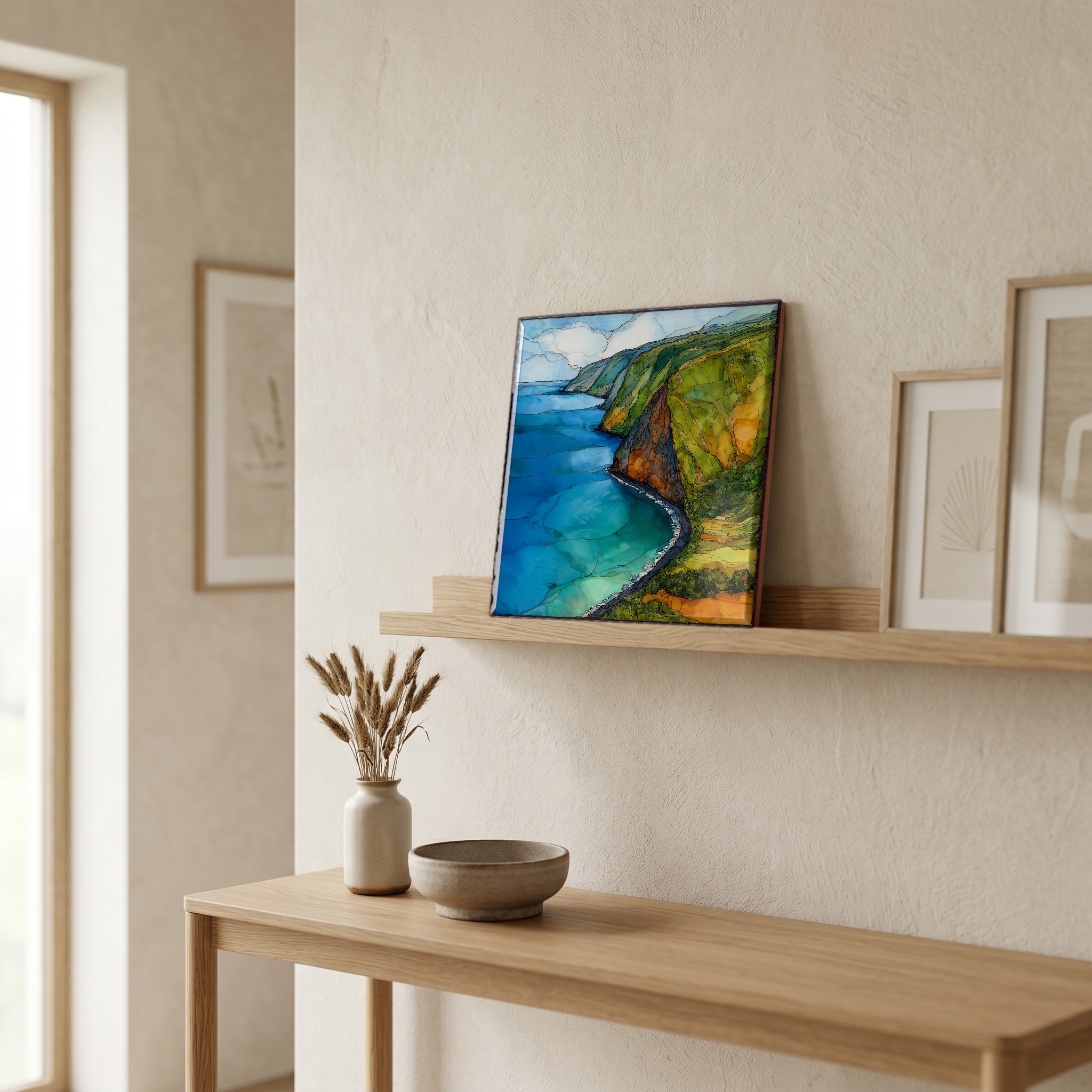
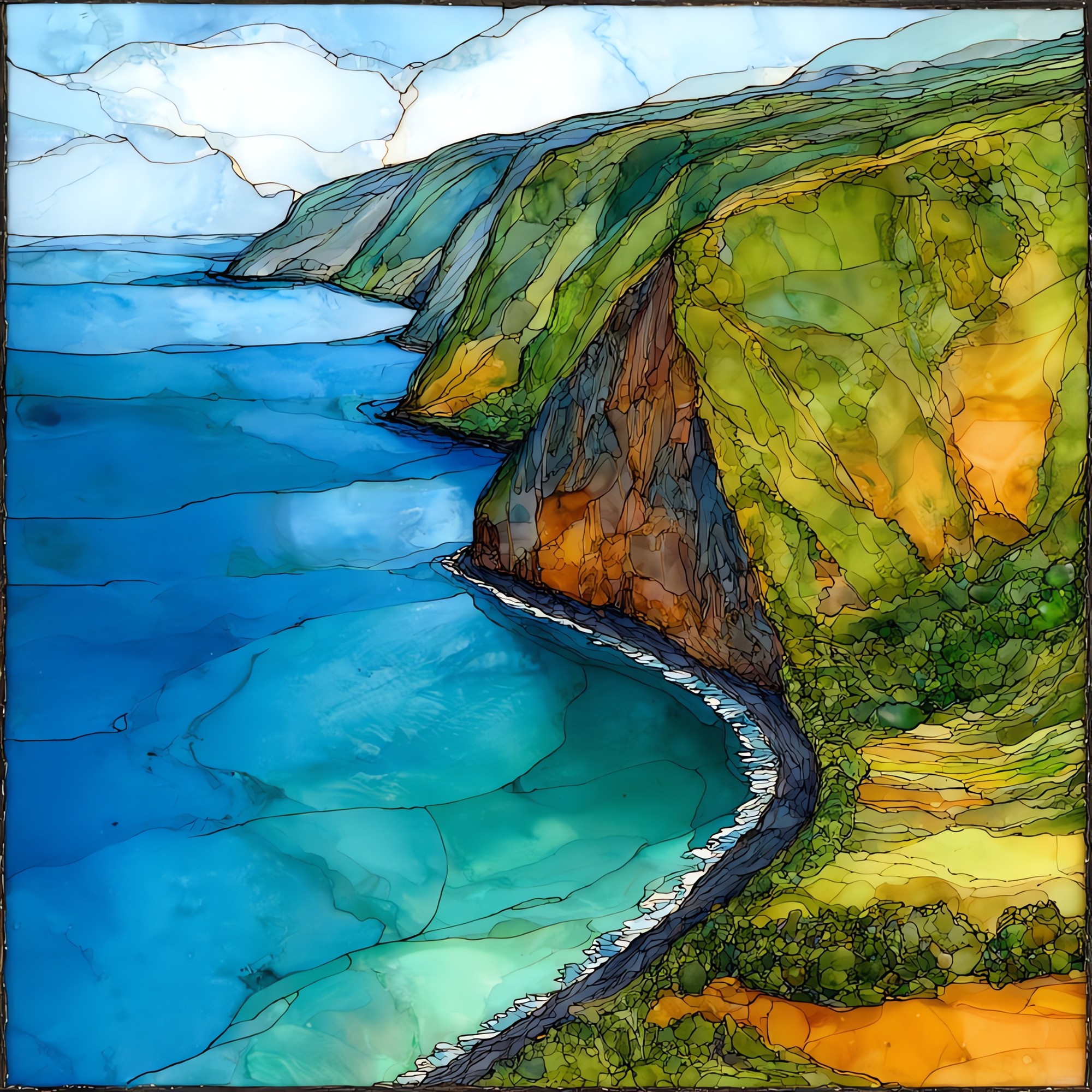
Honomanu Bay Maui Ceramic Art Tile
shown on ceramic, 12-inch tileHawaii · United States
on the Road to Hana, north-east Maui

Honomanu Bay Maui Ceramic Art Tile

where the rainforest spills into the Pacific.

Where it lives

Not only on a wall.

A small tile on the nightstand catching the morning. A larger one above the fire. Yours, wherever you spend the slow hours.
Above the bench, in a warm oak surround.
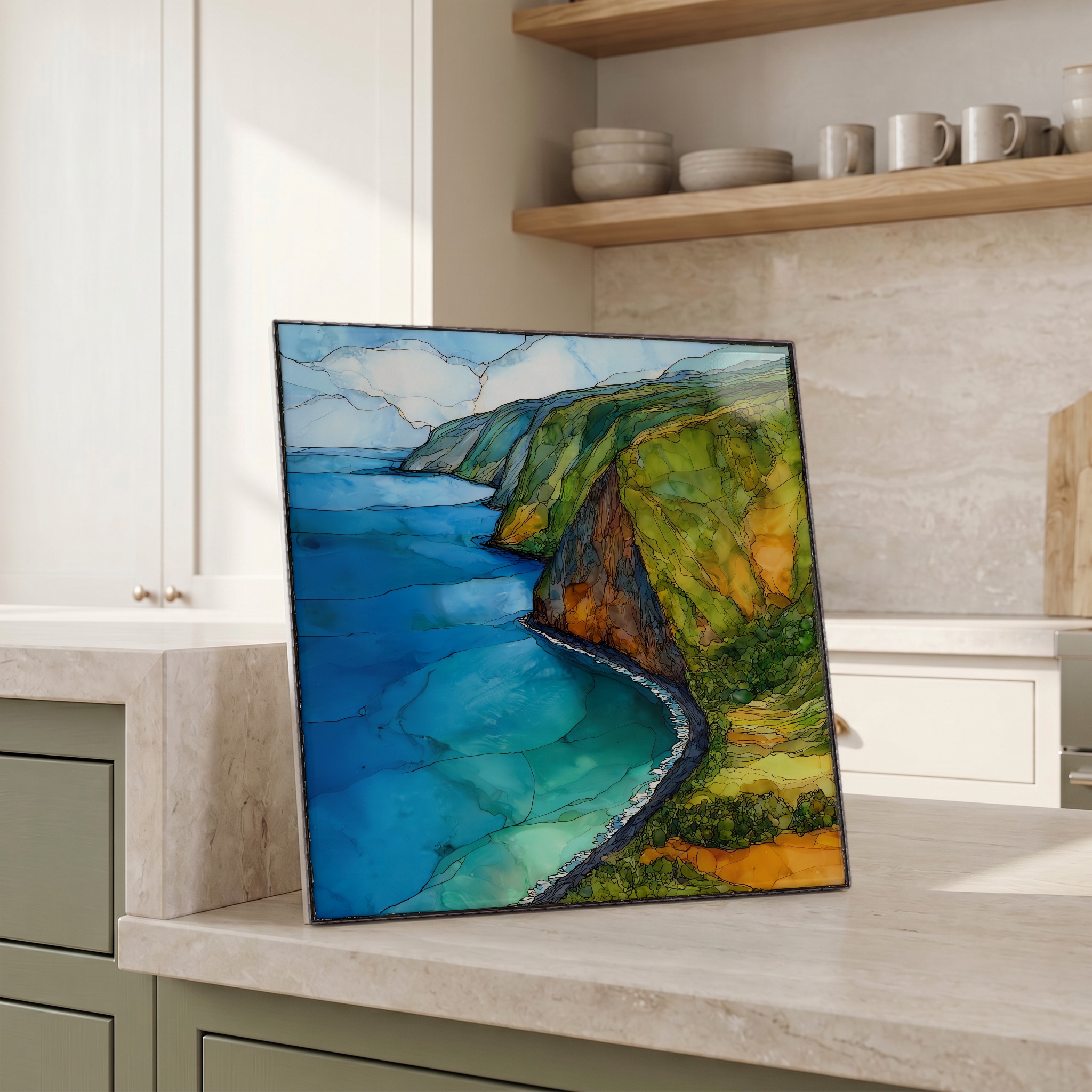
Beside the kettle, propped on the counter.
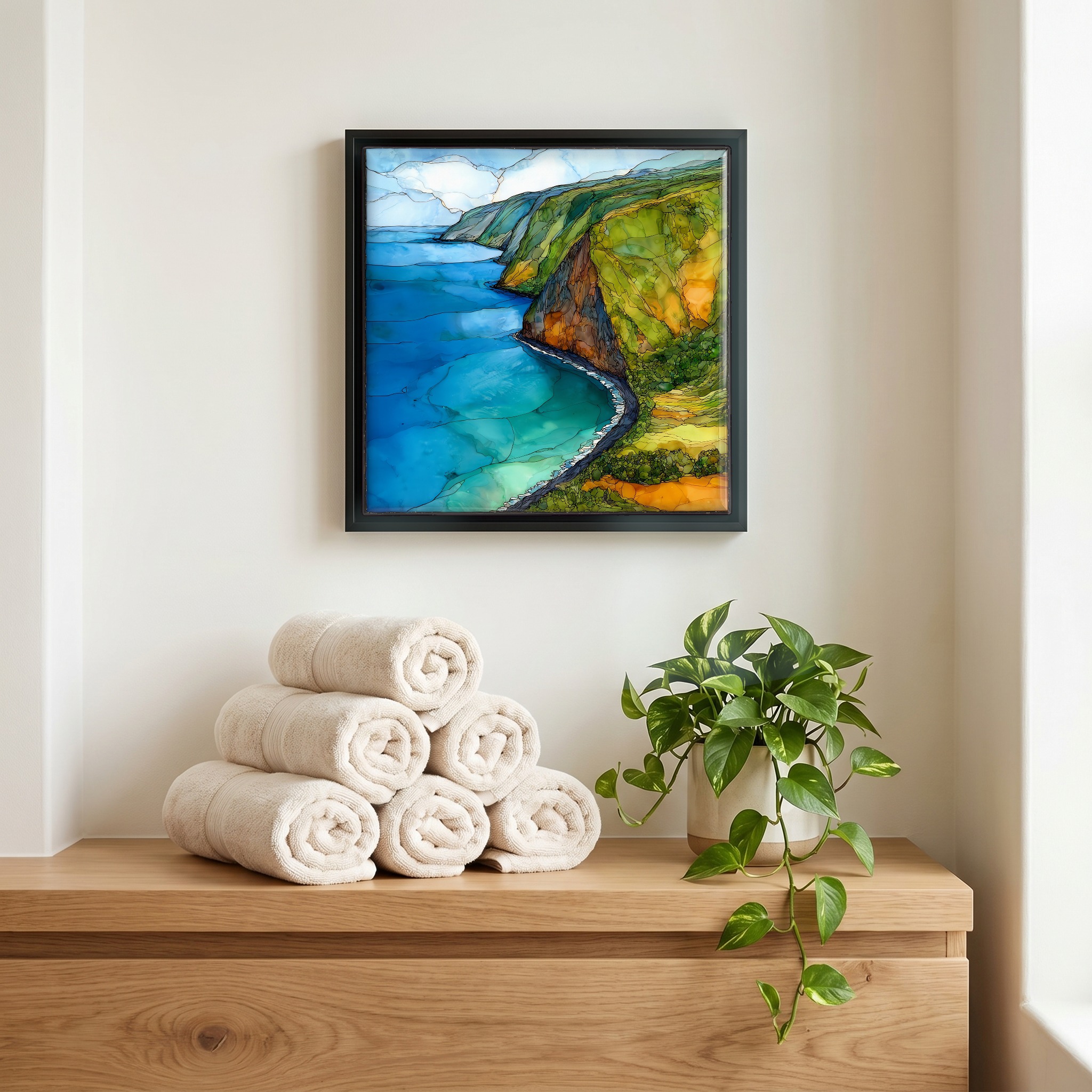
Above the linens, in a slim black surround.
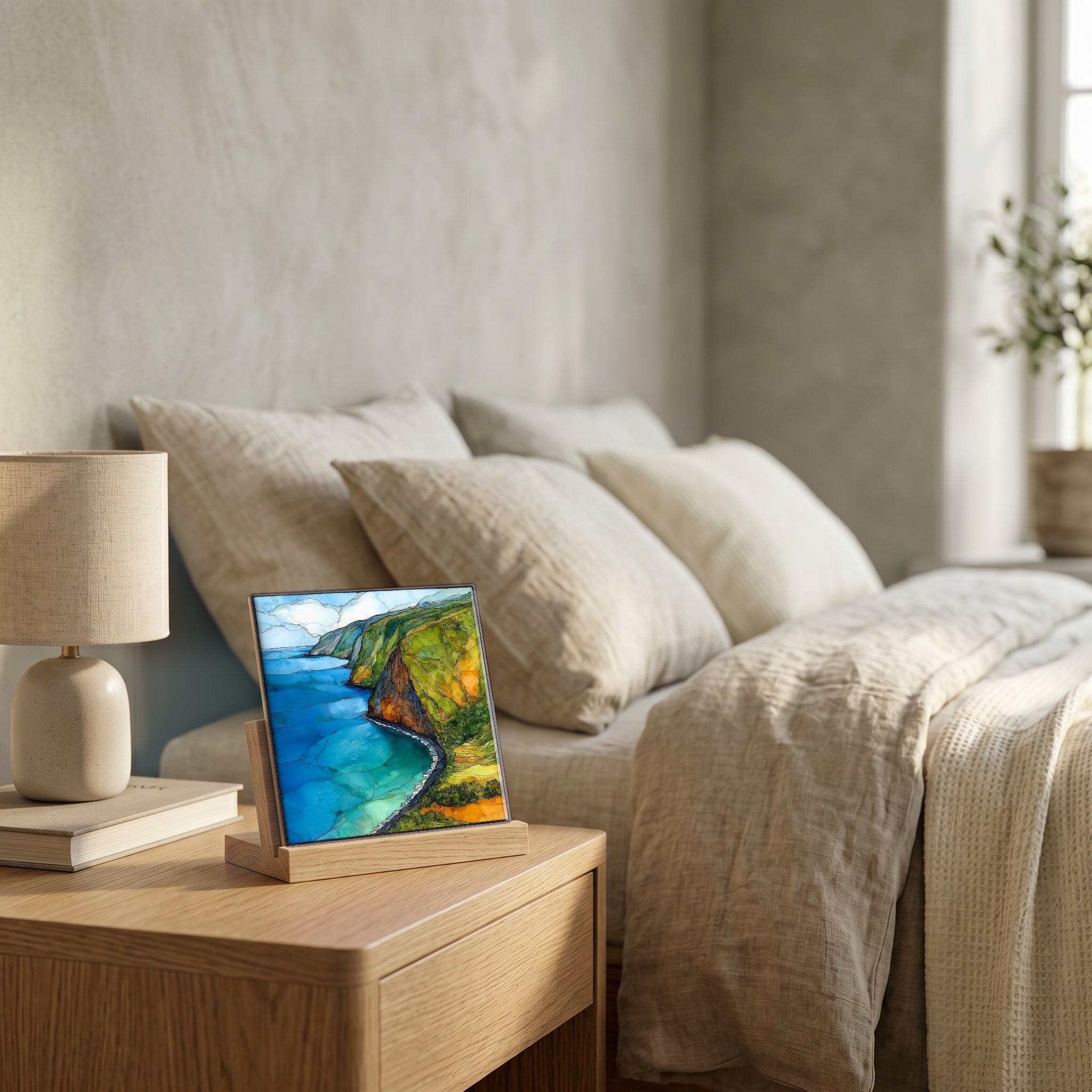
On the nightstand, on a light oak stand.
On a picture ledge, where the light comes in.
a note from the studio

A dark cove at the base of one of the largest valleys on Haleakalā's windward flank. Honomanu Stream cuts down through the rainforest and meets the Pacific at a beach of black sand and rolling cobble. The Hana Highway switchbacks down to a one-lane bridge across the stream and climbs out again; most cars pull off at the overlook above to look down. The road to the beach itself is narrow, often rough, mostly used by surfers and families who live along the coast. The boulders shift with each swell. The basalt below is over a million years old, the oldest exposed on East Maui.
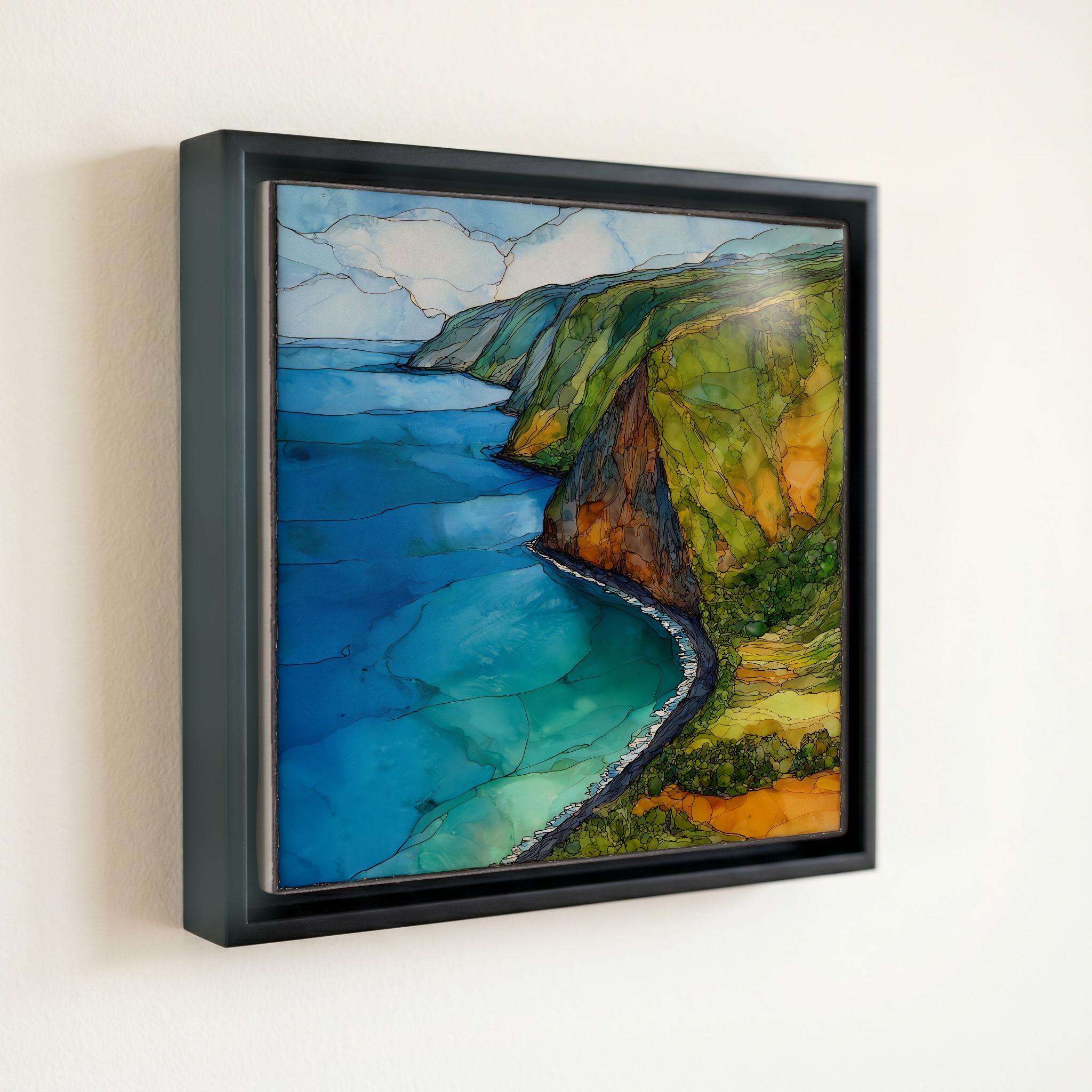
from the studio
shown in a slim black floating frame · 6 × 6 in
— bring it home

Honomanu Bay Maui Ceramic Art Tile, on ceramic.

Each tile is finished by hand in our Knoxville studio. Artwork is slowly infused into the ceramic surface under high heat and pressure, and rests beneath a thin glossy finish. The colour lives in the surface, not on top of it.

What kind of piece?
One tile — square or rectangle.
How big?
the popular one — counter, shelf, nightstand
6 × 6 in · 15 cm · 1.6 lb
Surface finish
A clear glossy finish — the artwork reads as if under resin. Ideal for show-pieces and framed wall art.
How it sits
A hidden cleat — sits ¼″ proud of the wall.
$58
Hand-finished and shipped from our studio at the foot of the Smokies. On your wall in about ten days.
size
6 × 6 in
15 cm
weighs
1.6 lb
solid in the hand
surface
ceramic, hand-finished
art rests beneath a thin glossy finish
from
Knoxville, TN
our family studio, at the foot of the Smokies
— start a Coaster Set

Pick any four 4-inch tiles — National Parks you've been to, a Smokies set, the four seasons of one place. $ for a set of , cork-backed, ready to live on the table.
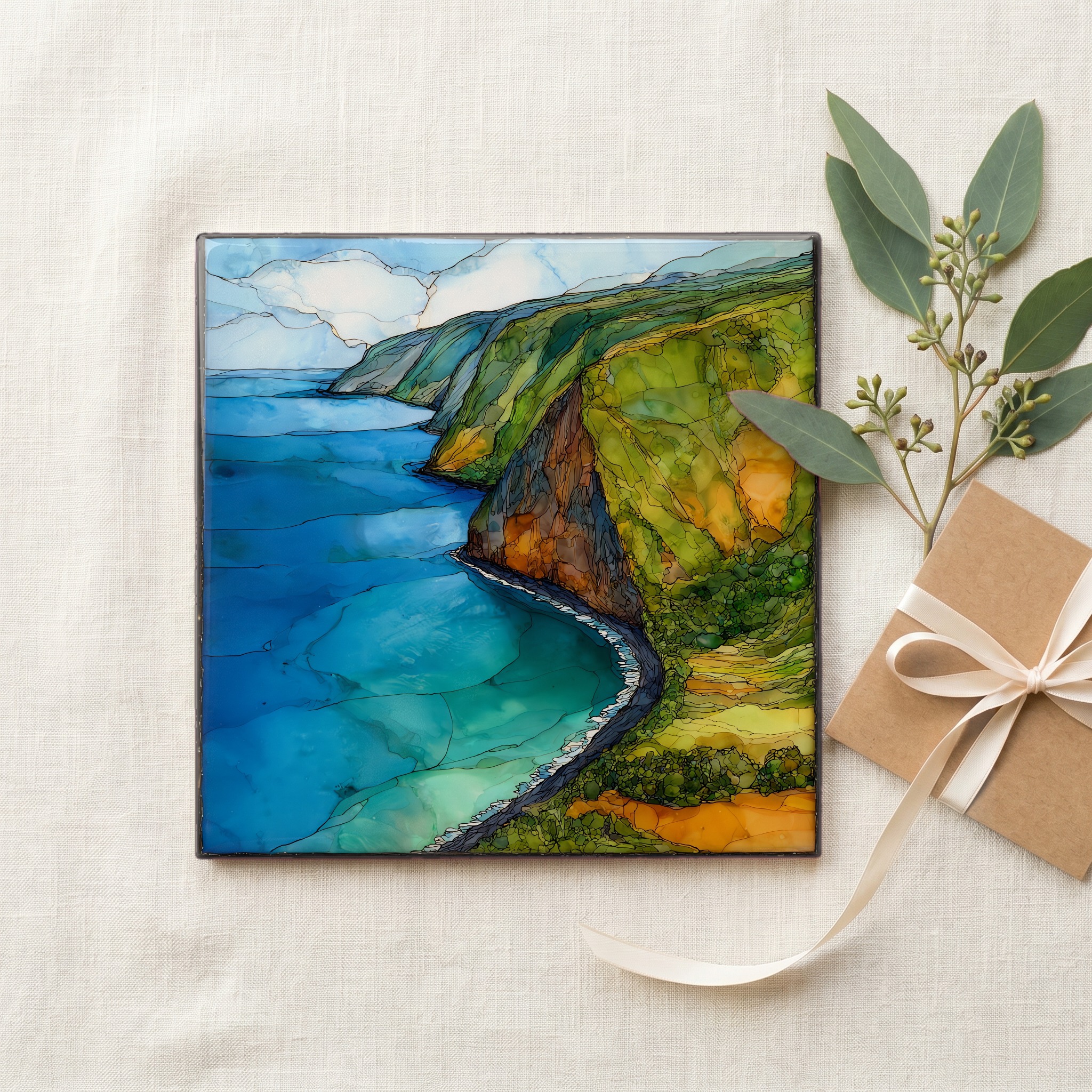
comes gift-ready
comes gift-ready

Each tile ships in a kraft box, tied with cream ribbon, with a handwritten note from the studio if you'd like to add one.
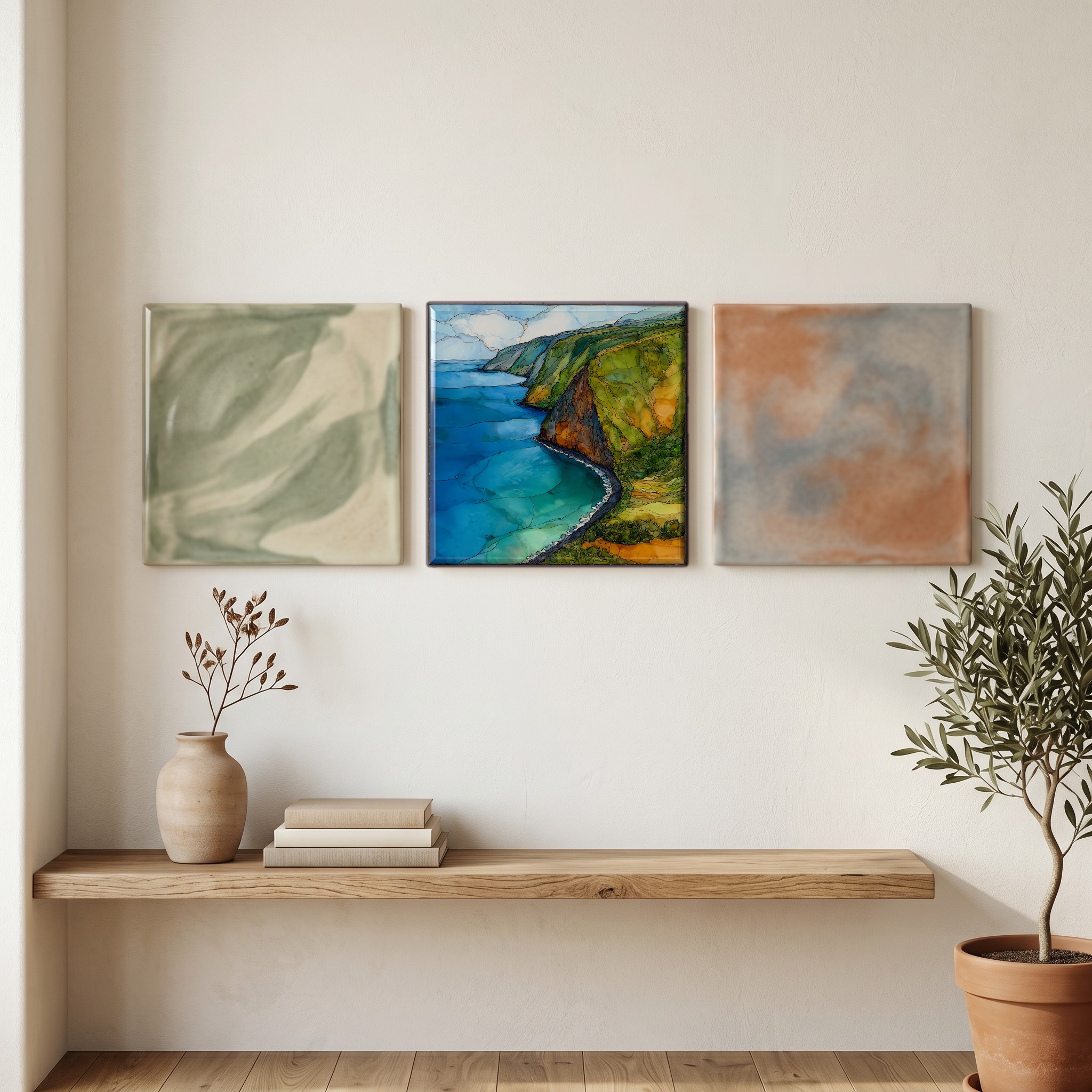
or build a grouping
or build a grouping

Three or five different vistas, hung together — a chapter of places you've been, or want to go.

about Honomanu Bay Maui Ceramic Art Tile

The place, in three passes.

A little of what's known, in case you fall down the rabbit hole — or want to go see it yourself.
the place

Honomanu Bay sits on the windward coast of East Maui, between mile markers 13 and 14 of the Hana Highway, at the base of one of the largest valleys on Haleakalā's northern slope. Honomanu Stream drains the upper rainforest of the volcano and reaches the Pacific here as a black-sand and cobble beach. The bay sits between the Garden of Eden Arboretum to the west and the Keʻanae Peninsula to the east, the ancient Hawaiian taro-growing settlement that juts into the surf about a mile north. Access from the highway is via a narrow, unmarked makai turnoff that drops through forest to a parking area at the stream mouth.

the stone

The dark cobble at the waterline is Honomanu Basalt, the formal geologic name for the oldest exposed lava on East Maui. The flows came out of Haleakalā between 1.1 and 0.97 million years ago, light-grey to dark-blue aa and pahoehoe with olivine and feldspar phenocrysts, mixed with tuff and breccia near the contact zones. The formation takes its name from this valley; type-locality outcrops were first described along Honomanu Stream and the lower bay. The boulders on the beach have been worked smooth by the swell that crosses the open Pacific without a reef to break it. The colour shifts with the wet: slate when dry, near-black when the tide is in.

the visit

The drive from Kahului on the Hana Highway to Honomanu takes most visitors over an hour because of the corners, though the distance is only around 27 miles. The overlook above the bay is where most tour vans stop for a photograph; the turnoff down to the beach itself is unmarked, on the ocean side of the road just before the one-lane bridge across Honomanu Stream. The unpaved road down is rough enough that some rental contracts ask drivers to avoid it. Surfers come for a right-hand break that rises on the south side of the bay. Swimming is best in the freshwater pool that forms where the stream meets the ocean; the open surf is rarely calm.

where
United States · Maui County, Hawaii
elevation
0 m · 0 ft
position
20.8563° N · 156.1701° W
the neighborhood

What's nearby.

A handful of named places within an hour's walk or short drive. Some we've already painted; some we will.
3 km NE
Keʻanae Peninsula
Hawaiian taro village on a lava peninsula
3 km W
Garden of Eden Arboretum
botanical garden above the Hana Highway
6 km NE
Wailua Valley
taro-terraced windward valley
14 km W
Twin Falls
roadside falls near the start of the Hana Highway
25 km S
Haleakalā summit
10,023-foot dormant shield volcano summit
N
Honomanu Bay Maui Ceramic Art Tile
Keʻanae Peninsula
Garden of Eden Arboretum
Wailua Valley
Twin Falls
Haleakalā summit
common questions

What people ask.

A few questions we get about Honomanu Bay Maui Ceramic Art Tile — and about bringing the piece home.
about the place

Honomanu Bay is on the windward coast of East Maui, between mile markers 13 and 14 of the Hana Highway. It sits at the base of Honomanu Valley, one of the largest valleys cut into Haleakalā's northern slope, between the Garden of Eden Arboretum and the Keʻanae Peninsula.

The cobble and sand at the waterline are weathered Honomanu Basalt, the oldest exposed lava on East Maui, erupted from Haleakalā roughly 0.97 to 1.1 million years ago. The Pacific swell breaks the basalt down without a reef to soften the surge, so the beach is mostly polished cobble rather than fine sand.

The open surf is usually too rough for swimming, with no reef to break the Pacific swell. A freshwater pool forms most of the year where Honomanu Stream meets the ocean; it is the safer place to get in the water. Surfers come for a right-hand break on the south side of the bay.

The drive from Kahului on the Hana Highway is about 27 miles and takes most visitors over an hour. The turnoff to the beach is unmarked, on the ocean side of the road just before the one-lane bridge across Honomanu Stream. The unpaved road down is rough; some rental contracts ask drivers to avoid it.

Honomanu Valley is a deep stream-cut valley on the northeast flank of Haleakalā, the dormant shield volcano that forms three-quarters of Maui. It is one of the largest valleys on the windward side of the mountain and feeds Honomanu Stream, which reaches the Pacific at the bay.

Honomanu Falls sits in the upper valley, roughly 400 feet high, set well back in the rainforest above the highway. The falls themselves are not easily reached; their overflow feeds Honomanu Stream down to the bay. Smaller falls show along the canyon walls after rain.

about the piece in your home

It has landed well with our customers who carry a memory of the drive. Honomanu is one of the stops most people remember: the deep valley, the dark cove, the bridge. A Small or Medium with a handwritten note from the studio travels well as a wedding, retirement, or anniversary gift.

The greens and blacks in the painting carry the windward rainforest: deep evergreen, basalt grey, ocean blue. The piece sits comfortably in Coastal-modern, Mountain-modern, and Tropical-modern rooms. It also works in a Jewel-tone Maximalist arrangement against deep navy or forest-green walls.

Yes. Tropical-modern has moved away from bright postcard colour toward deep botanical greens, volcanic darks, and quiet water tones, which is exactly what Honomanu carries. The tile reads as art rather than souvenir, which is the line the trend has been walking for several years.

A single Large tile centres well over a console or a reading chair. Above a standard sofa, a 4-tile Mural or a 9-tile Mural is the more common choice; the Mural carries the valley's vertical drop across the wall in a way a single tile cannot.

Yes, in the Dura Satin or Matte finish. Both are scratch-resistant and built for vertical installations in steam and splash environments. The Glossy finish is meant for framed wall pieces in dry rooms; it is not the right call for a shower or backsplash.

A soft microfibre cloth and plain water are enough for most marks. For stubborn residue on a Dura Satin or Matte installation, a mild dish soap diluted in warm water is safe. Avoid abrasive sponges and harsh cleaners; the colour lives in the surface and does not need polishing.

Yes. Every WenderVista piece is painted in our studio in Knoxville, Tennessee, in the same stained-glass-and-oil visual language. We do not license artwork in or out, and we do not duplicate styles from other studios. The Honomanu painting was made for this tile.

if this one stayed with you

A few you might also love.

Hand-picked by the eye that found Sorapis. Same air, same kind of quiet.