Wender·Vista
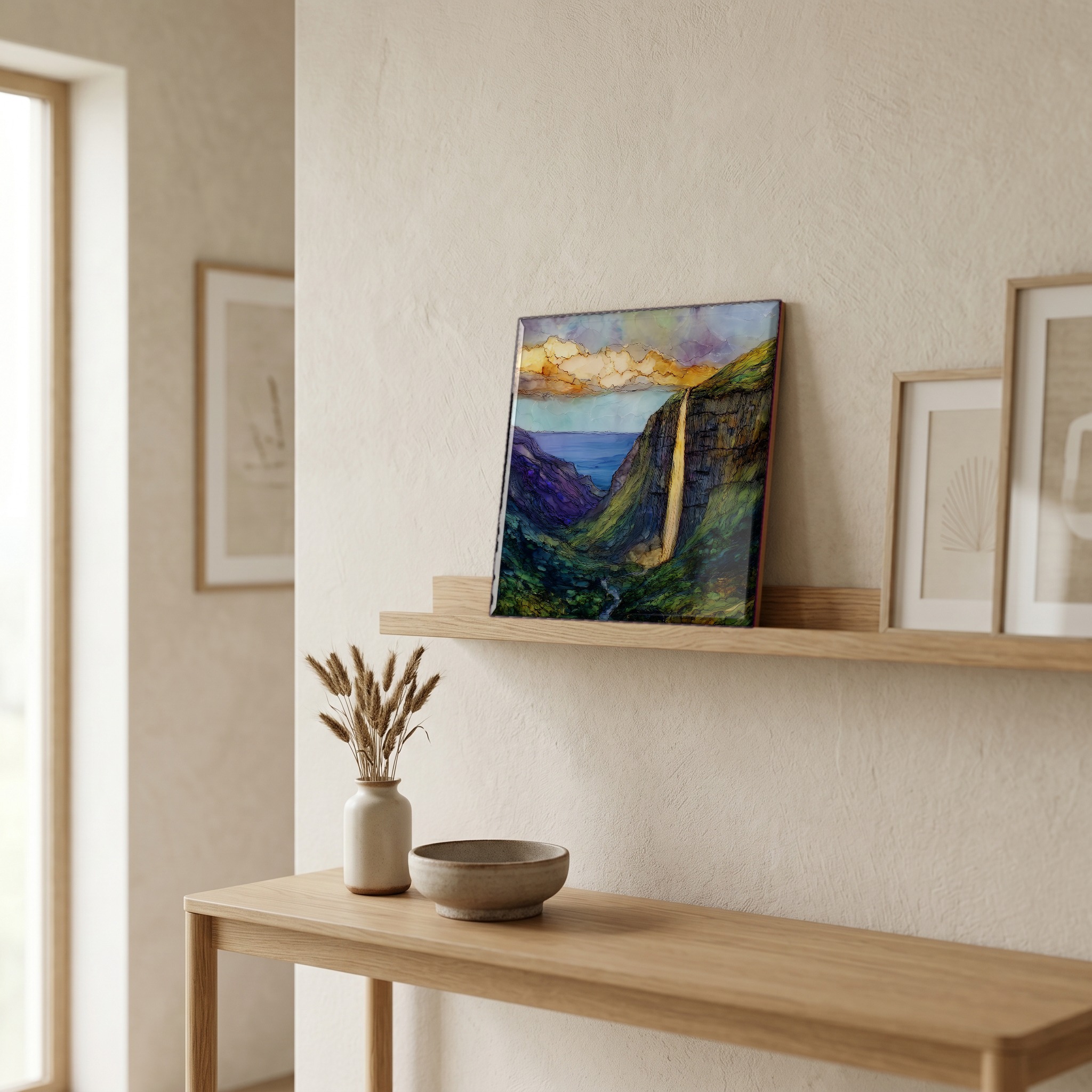
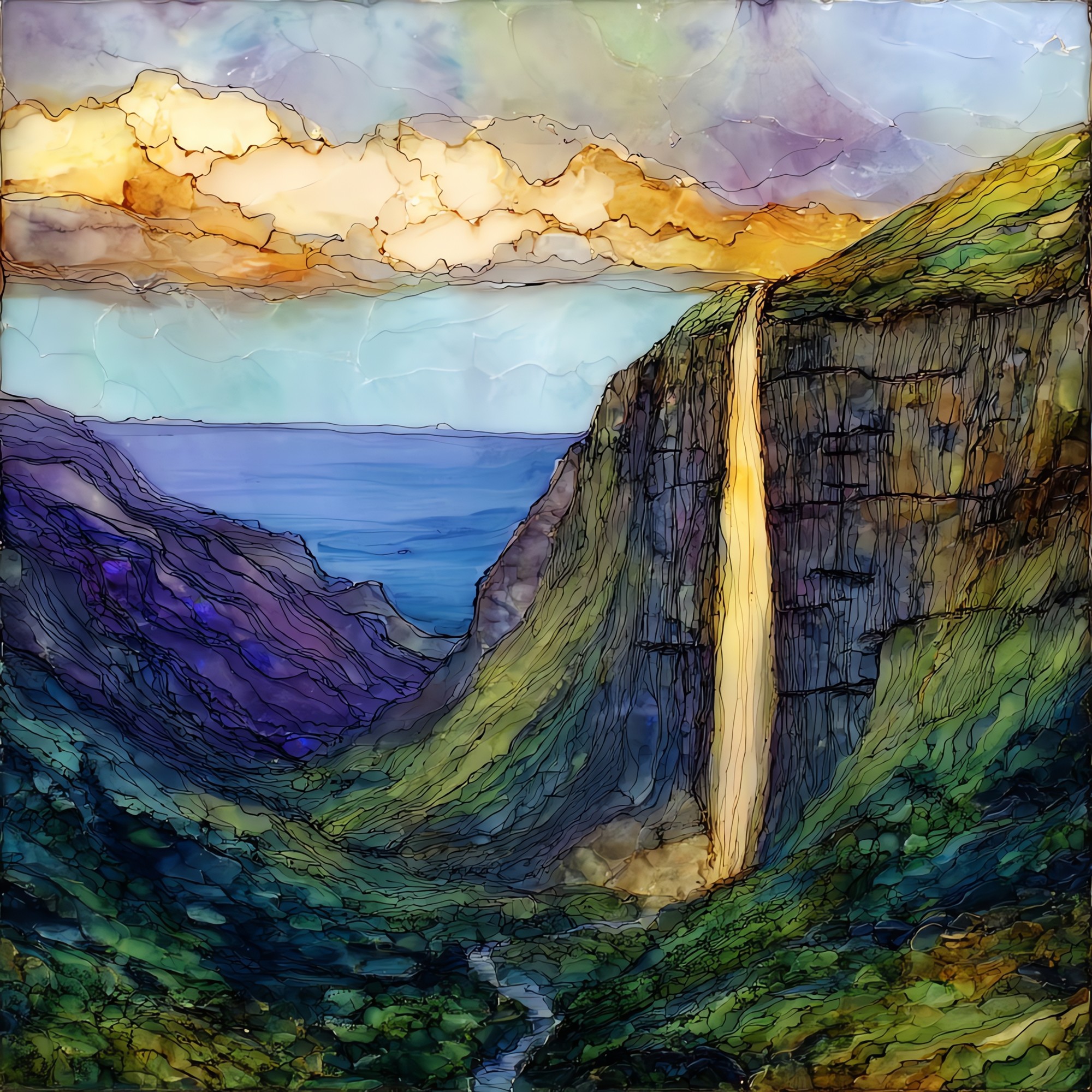
Honokohau Falls Maui Ceramic Art Tile
shown on ceramic, 12-inch tileHawaii · United States
deep in the West Maui Mountains

Honokohau Falls Maui Ceramic Art Tile

— the long white the road can't reach.

Where it lives

Not only on a wall.

A small tile on the nightstand catching the morning. A larger one above the fire. Yours, wherever you spend the slow hours.
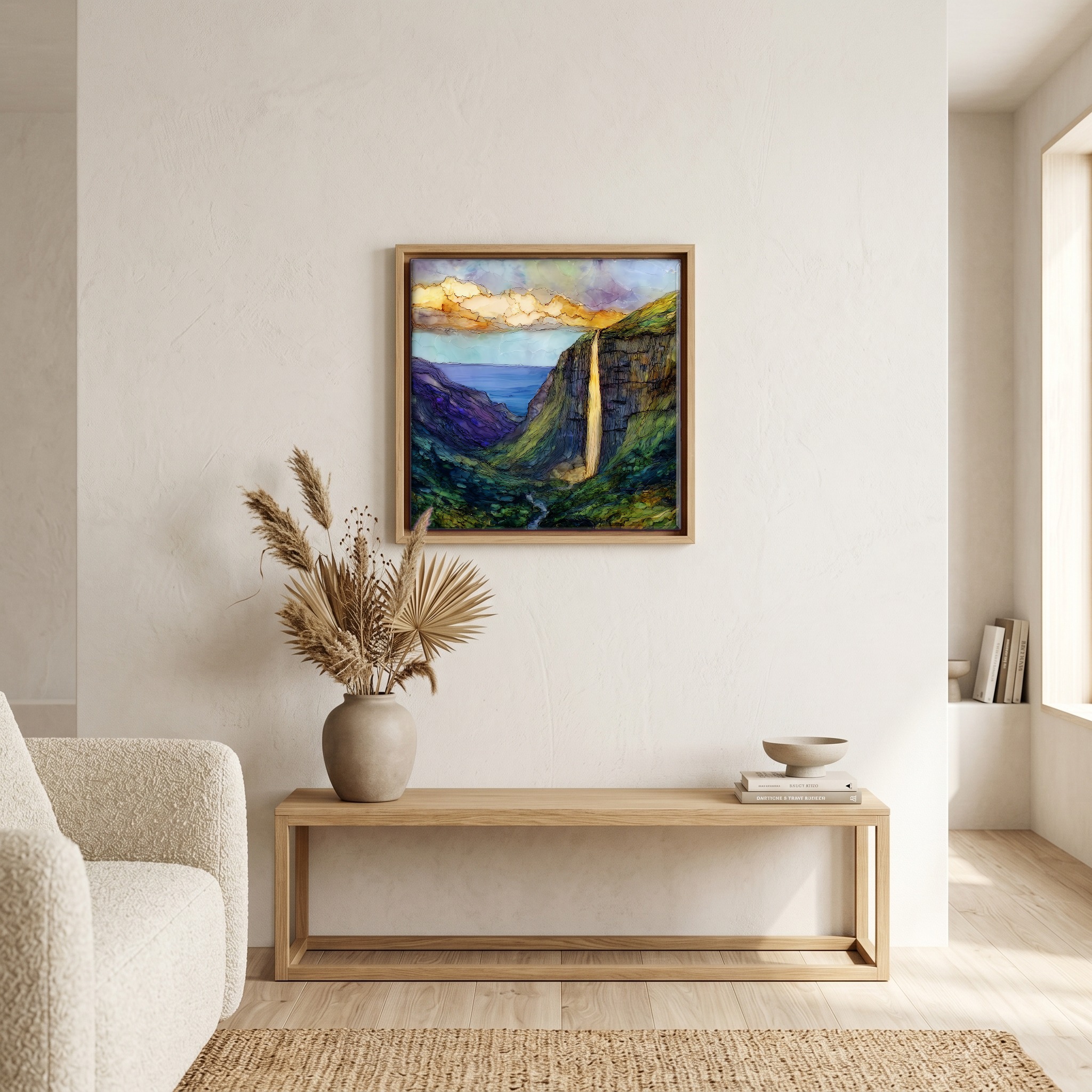
Above the bench, in a warm oak surround.
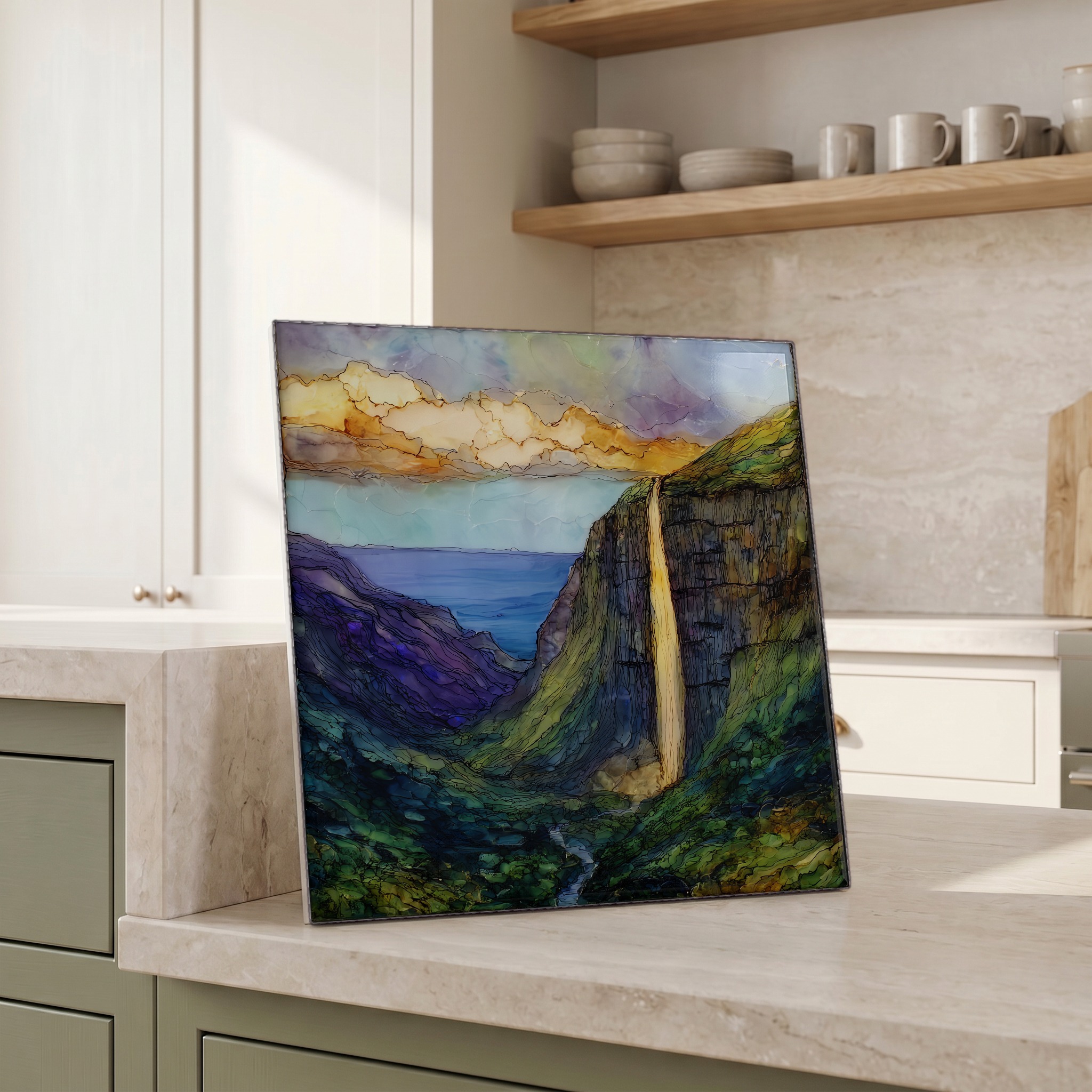
Beside the kettle, propped on the counter.
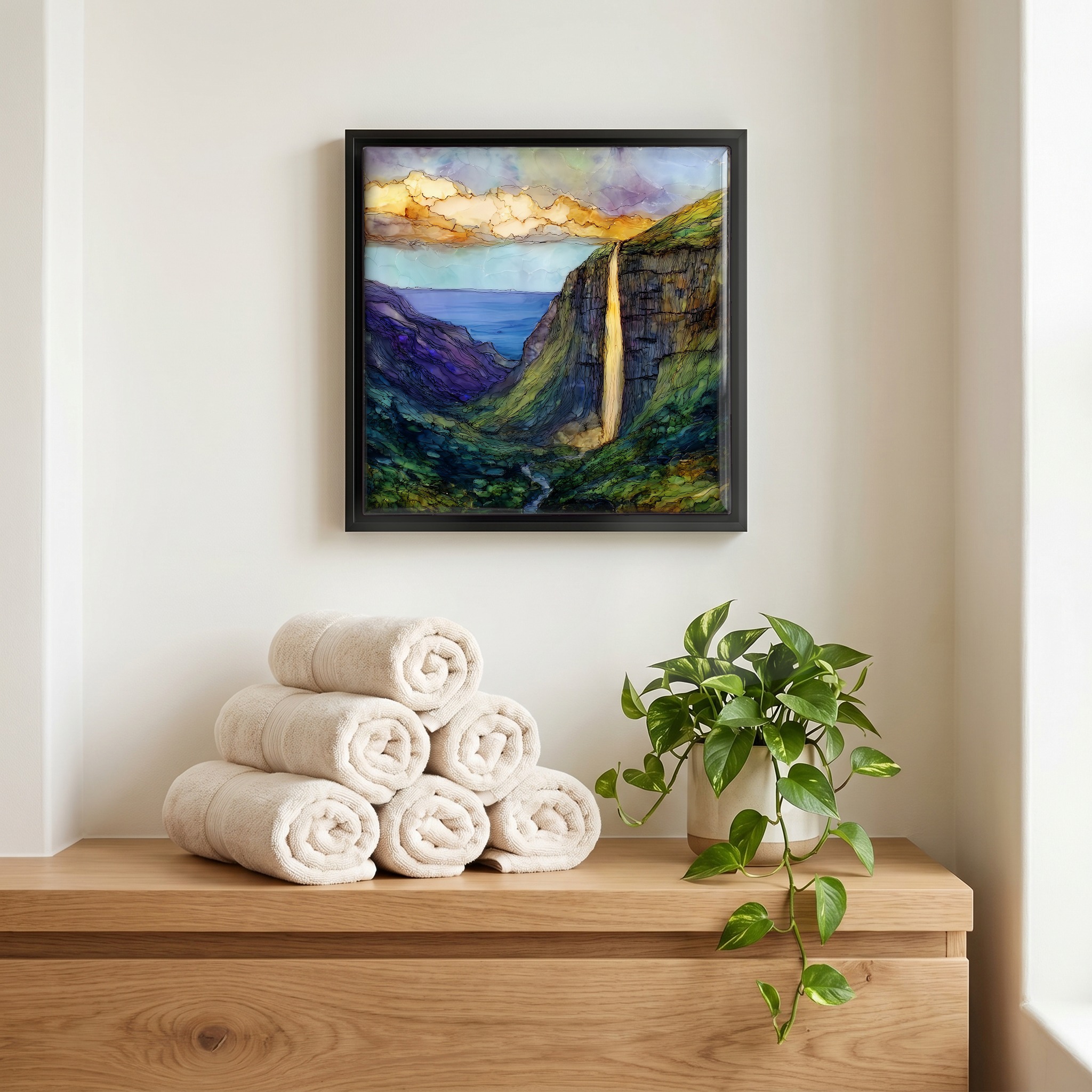
Above the linens, in a slim black surround.
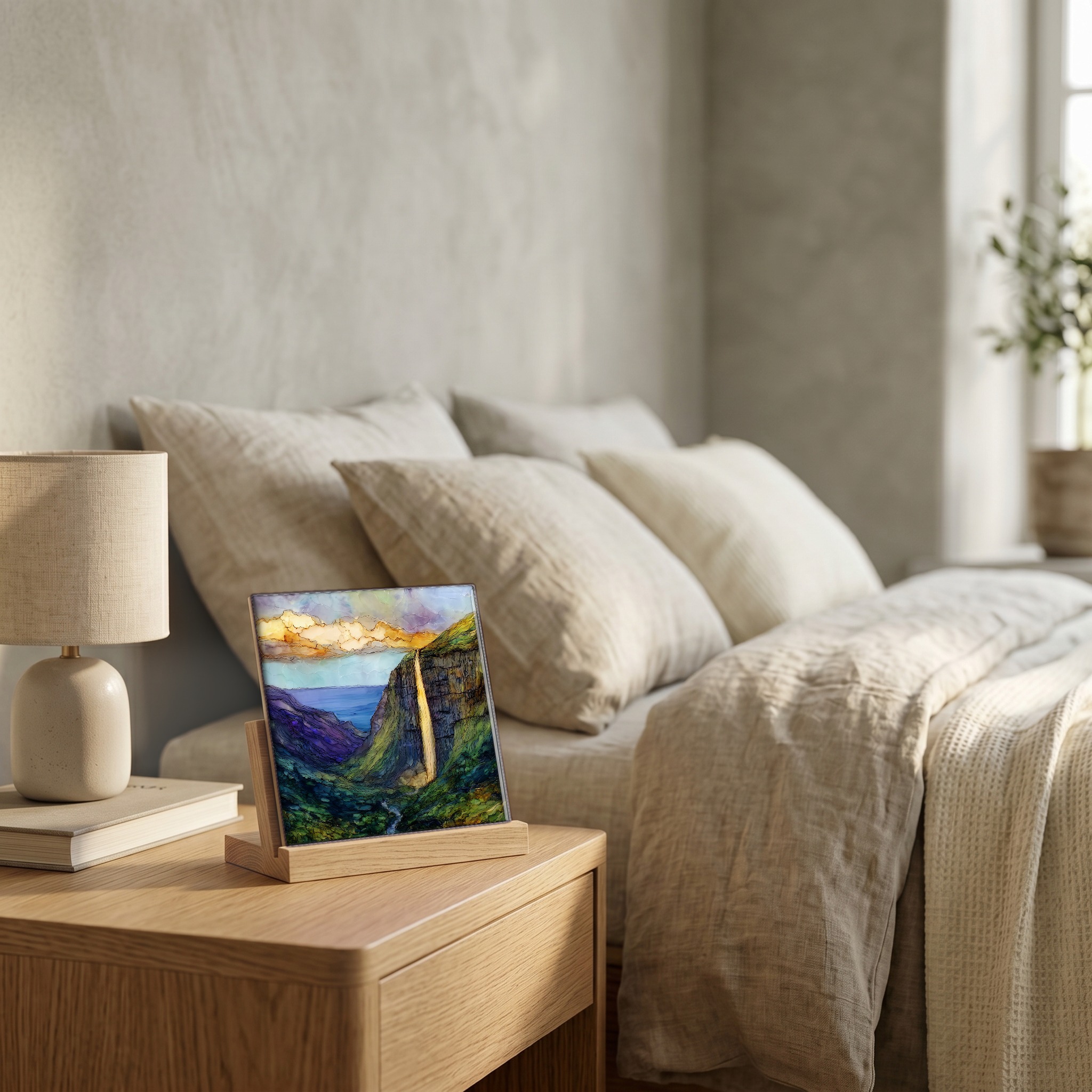
On the nightstand, on a light oak stand.
On a picture ledge, where the light comes in.
a note from the studio

The tallest waterfall in Maui, threading through a valley with no road and no trail. Honokōhau drops about a thousand feet in tiers, deep in the West Maui Mountains, fed by rain on Puʻu Kukui, one of the wettest summits on earth. Helicopters slip into the bowl, hover, leave. The wind in the valley carries the sound a long way. From the bay below, the falls are out of sight; the cliff above them holds the cloud most days.
from the studio
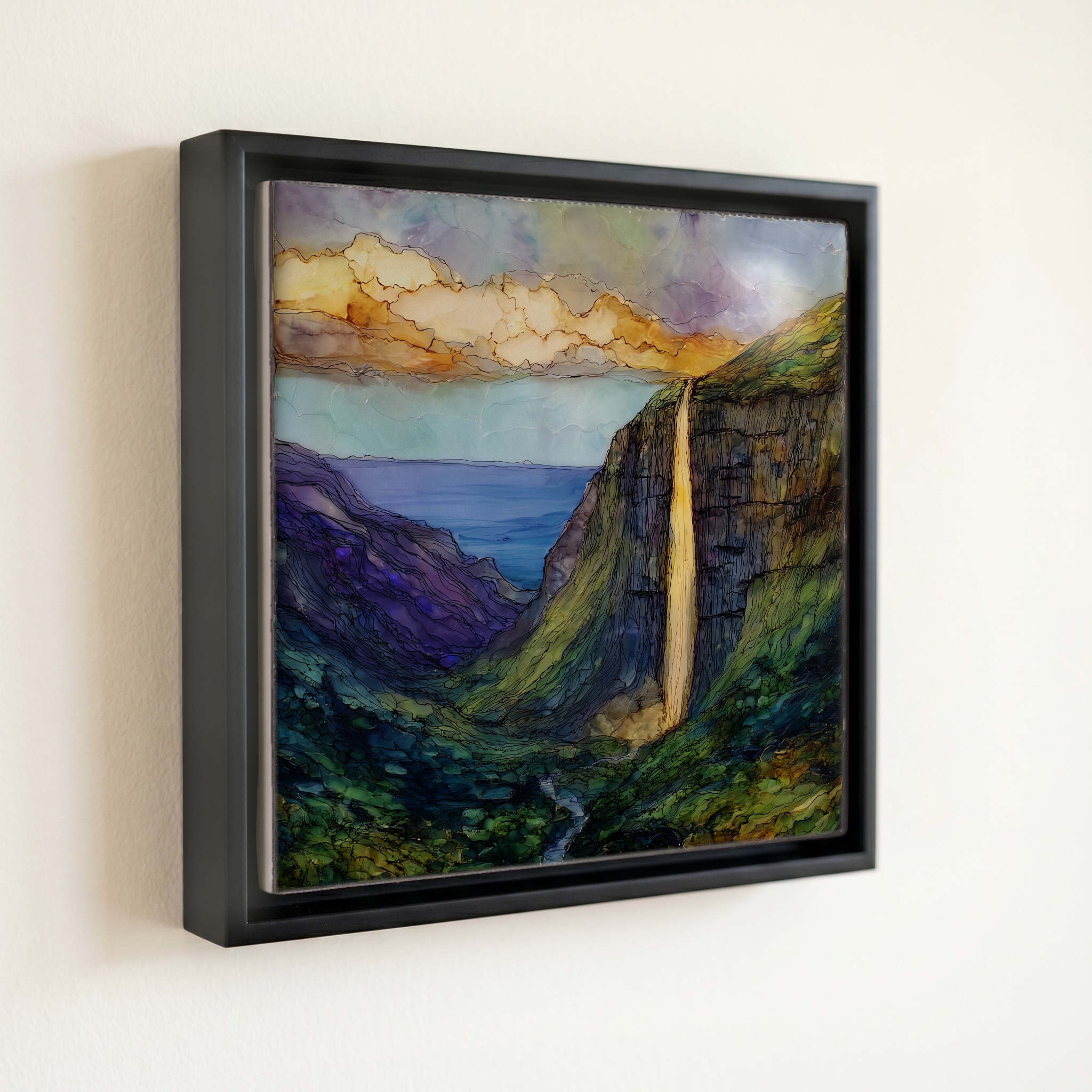
shown in a slim black floating frame · 6 × 6 in
— bring it home

Honokohau Falls Maui Ceramic Art Tile, on ceramic.

Each tile is finished by hand in our Knoxville studio. Artwork is slowly infused into the ceramic surface under high heat and pressure, and rests beneath a thin glossy finish. The colour lives in the surface, not on top of it.

What kind of piece?
One tile — square or rectangle.
How big?
the popular one — counter, shelf, nightstand
6 × 6 in · 15 cm · 1.6 lb
Surface finish
A clear glossy finish — the artwork reads as if under resin. Ideal for show-pieces and framed wall art.
How it sits
A hidden cleat — sits ¼″ proud of the wall.
$58
Hand-finished and shipped from our studio at the foot of the Smokies. On your wall in about ten days.
size
6 × 6 in
15 cm
weighs
1.6 lb
solid in the hand
surface
ceramic, hand-finished
art rests beneath a thin glossy finish
from
Knoxville, TN
our family studio, at the foot of the Smokies
— start a Coaster Set

Pick any four 4-inch tiles — National Parks you've been to, a Smokies set, the four seasons of one place. $ for a set of , cork-backed, ready to live on the table.
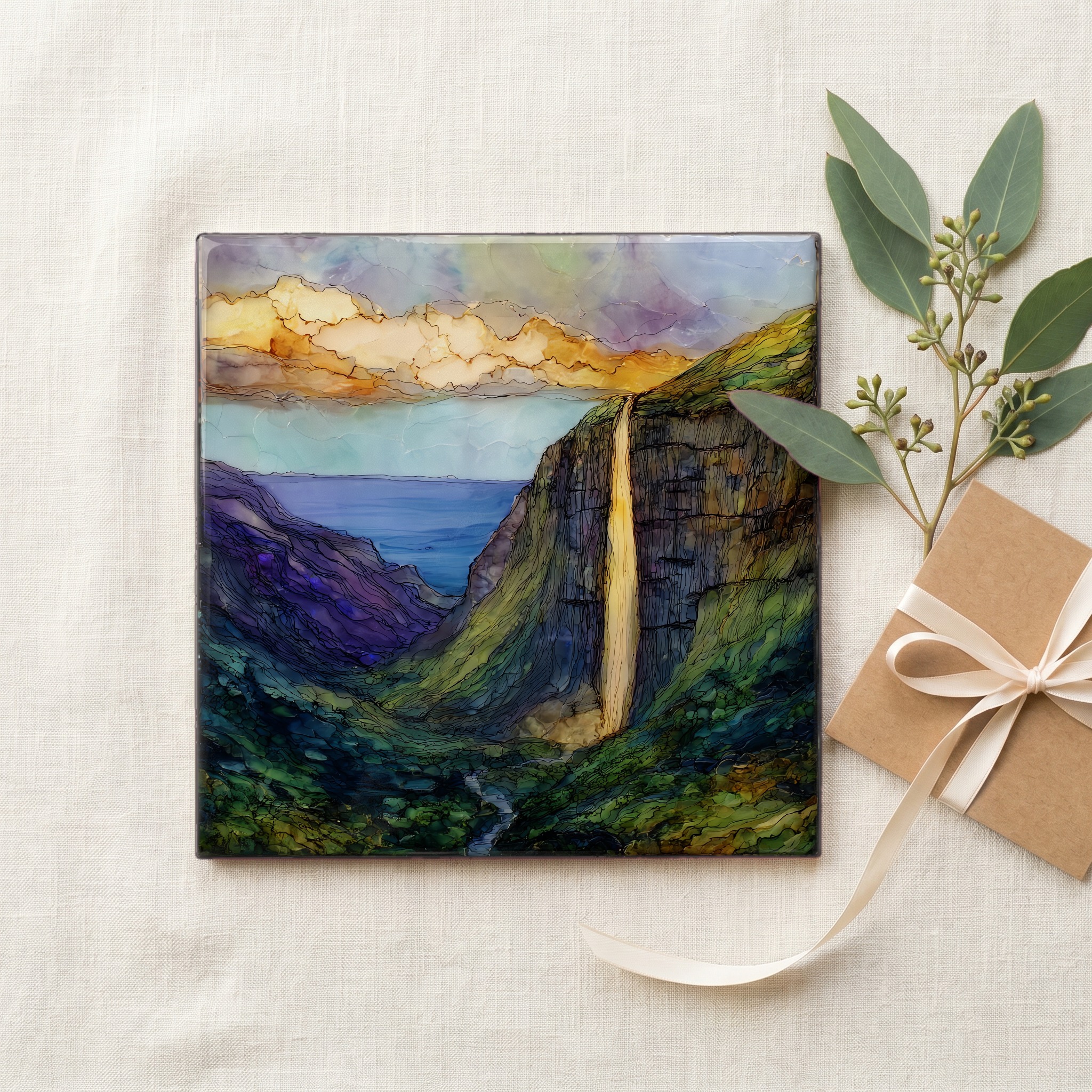
comes gift-ready
comes gift-ready

Each tile ships in a kraft box, tied with cream ribbon, with a handwritten note from the studio if you'd like to add one.
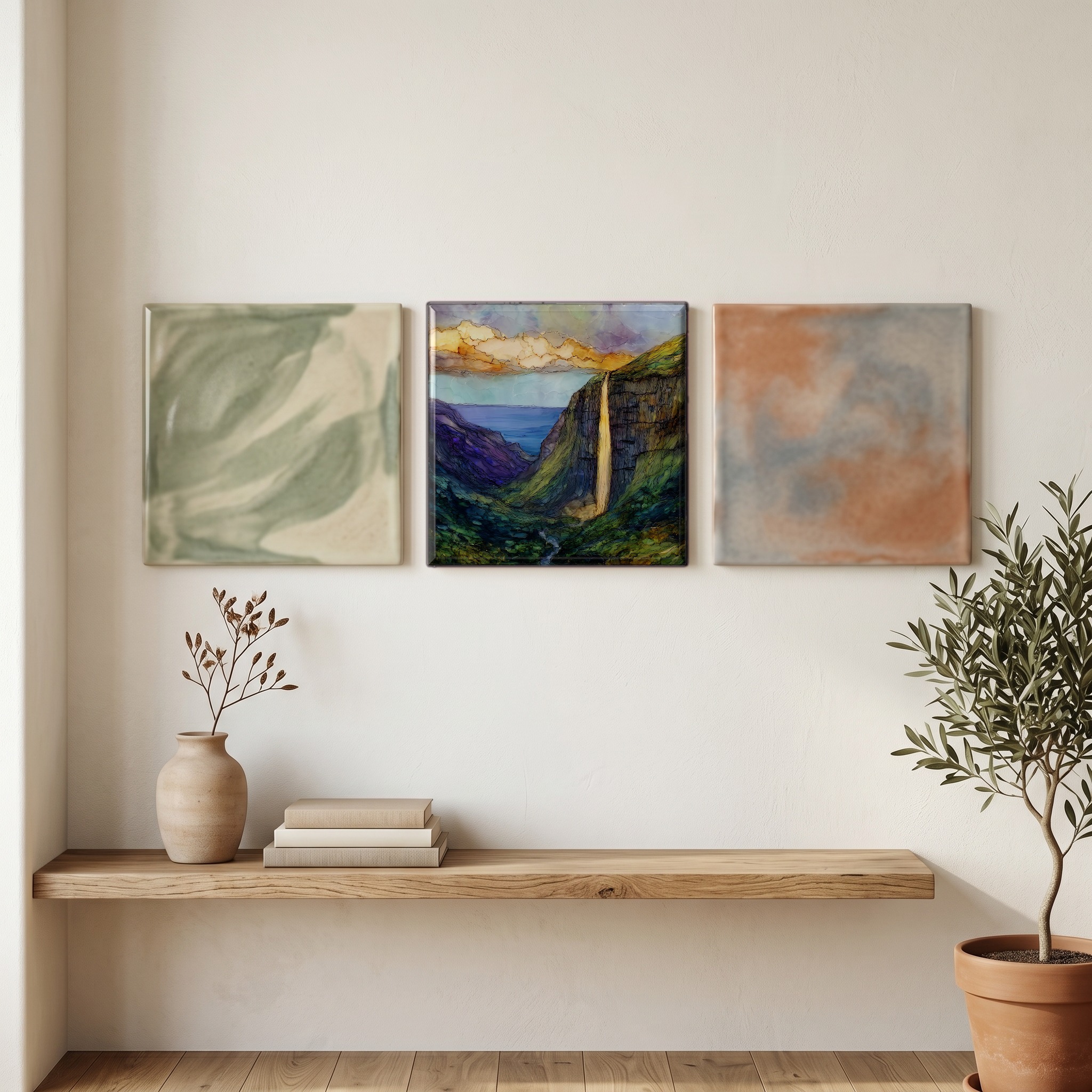
or build a grouping
or build a grouping

Three or five different vistas, hung together — a chapter of places you've been, or want to go.

about Honokohau Falls Maui Ceramic Art Tile

The place, in three passes.

A little of what's known, in case you fall down the rabbit hole — or want to go see it yourself.
the place

Honokōhau Falls is the tallest waterfall on Maui, in the West Maui Mountains, dropping about 1,119 ft (341 m) in tiers into Honokōhau Valley. The valley sits within the Puʻu Kukui Watershed Preserve, a private nature reserve stewarded by Maui Land & Pineapple Company. The falls are not reachable by trail; the valley has no public road and no maintained path. Most people who see them are passengers on a helicopter tour out of Kahului Airport. The stream that begins under the falls runs north and meets the sea at Honokōhau Bay, on the rugged northwestern coast of the island.

the water

The falls drop in tiers down a sheer face of basalt and a near-vertical jungle wall. The water comes from rainfall on Puʻu Kukui, the 5,788-ft summit just south of the valley, which averages roughly 386 inches of rain per year, ranking among the wettest places on earth. The stream is small in volume but the height does the work. After a heavy storm the falls double in mass and the spray reaches the rim of the valley. In the dry summer months the upper tier can thin to a near-veil. The water is cold by the time it reaches the bottom.

— informed by Wikipedia: Puʻu Kukui
the visit

There is no trail. No road approaches the falls. The valley is privately stewarded by the Puʻu Kukui Watershed Preserve, and overland access is closed to the public to protect the watershed. Air tours from Kahului Airport, about 50 minutes round-trip, are the only practical way to see the falls; flights run through the year but are weather-gated and most reliable on dry winter mornings before the cloud builds on the West Maui ridges. A few operators bank into the valley low and slow. Photographs from the ground exist mostly from kayak views of Honokōhau Bay, miles from the falls themselves.

where
United States · Maui County, Hawaii
within
Puʻu Kukui Watershed Preserve
the neighborhood

What's nearby.

A handful of named places within an hour's walk or short drive. Some we've already painted; some we will.
3 km N
Honokōhau Bay
coastal bay
5 km S
Puʻu Kukui
summit
6 km NE
Nakalele Blowhole
sea blowhole
7 km E
Honolua Bay
marine reserve
8 km SW
Kapalua
resort village
12 km SE
ʻĪao Valley
state park
N
Honokohau Falls Maui Ceramic Art Tile
Honokōhau Bay
Puʻu Kukui
Nakalele Blowhole
Honolua Bay
Kapalua
ʻĪao Valley
common questions

What people ask.

A few questions we get about Honokohau Falls Maui Ceramic Art Tile — and about bringing the piece home.
about the place

Honokōhau Falls is in the West Maui Mountains on the island of Maui, Hawaii, in a deep valley on the northwestern flank of the range. The water drains north into Honokōhau Bay on the island's wild northwest coast.

The falls drop in tiers totaling about 1,119 ft (341 m), which makes it the tallest waterfall on Maui and one of the tallest in the state. The upper tier is the long, visible white drop in most photographs.

No. The valley sits inside the Puʻu Kukui Watershed Preserve, a privately stewarded conservation area with no public trail or road access. The only practical way to see the falls is from the air on a helicopter tour out of Kahului.

The falls are fed by rain on Puʻu Kukui, the 5,788-ft summit just south of the valley. Puʻu Kukui averages around 386 inches of rain a year, among the wettest places on earth, so the falls run through every season.

Most West Maui and circle-island helicopter tours out of Kahului Airport bank into the Honokōhau valley. Morning flights, before the West Maui ridge clouds in, are the most reliable for photographs. A round-trip from Kahului typically runs about 50 minutes.

Dry winter mornings, before the West Maui ridge builds its cloud cap, give the clearest air views. After heavy storms the falls swell visibly and the spray climbs to the valley rim. In the dry summer months the upper tier can thin to a near-veil.

about the piece in your home

It's been a meaningful gift for customers who love the island. Honokōhau Falls is a Maui-only place, deeper in the West Maui Mountains than most visitors ever see. A Coaster or Small with a handwritten note from the studio carries well.

The deep greens, cold whites, and basalt shadows hold their own in Coastal-modern, Tropical-modern, and Jewel-tone Maximalist rooms. The piece reads quiet against a rattan or live-edge wood surround, and bright against a charcoal or navy wall.

Yes. Tropical-modern and biophilic interiors lean on layered greens, natural stone, and water imagery, all of which this piece carries. The Large or a 4-tile Mural anchors a wall without crowding it.

Above a standard sofa or a longer console, a single Large works as a centered focal piece. For a wider wall, the 4-tile Mural reads as one painting at conversational distance, and the 9-tile Mural fills a feature wall.

Yes, with a Dura Satin or Matte finish. Dura Satin works well for a backsplash or a shower wall: soft sheen, scratch-resistant, made for damp rooms. Matte sits flatter and reads more like a painting on the wall.

A microfibre cloth and water. No abrasive sponges, no harsh cleaners. The colour lives in the ceramic surface beneath a thin glossy finish, so the surface wipes clean and stays true to its original tone over years.

Yes. Every WenderVista tile is original to Wender Studios in Knoxville, Tennessee. Reid Wender chooses each place, paints the work in the studio's signature stained-glass and alcohol-ink language, and hand-finishes the tile before it ships.

if this one stayed with you

A few you might also love.

Hand-picked by the eye that found Sorapis. Same air, same kind of quiet.