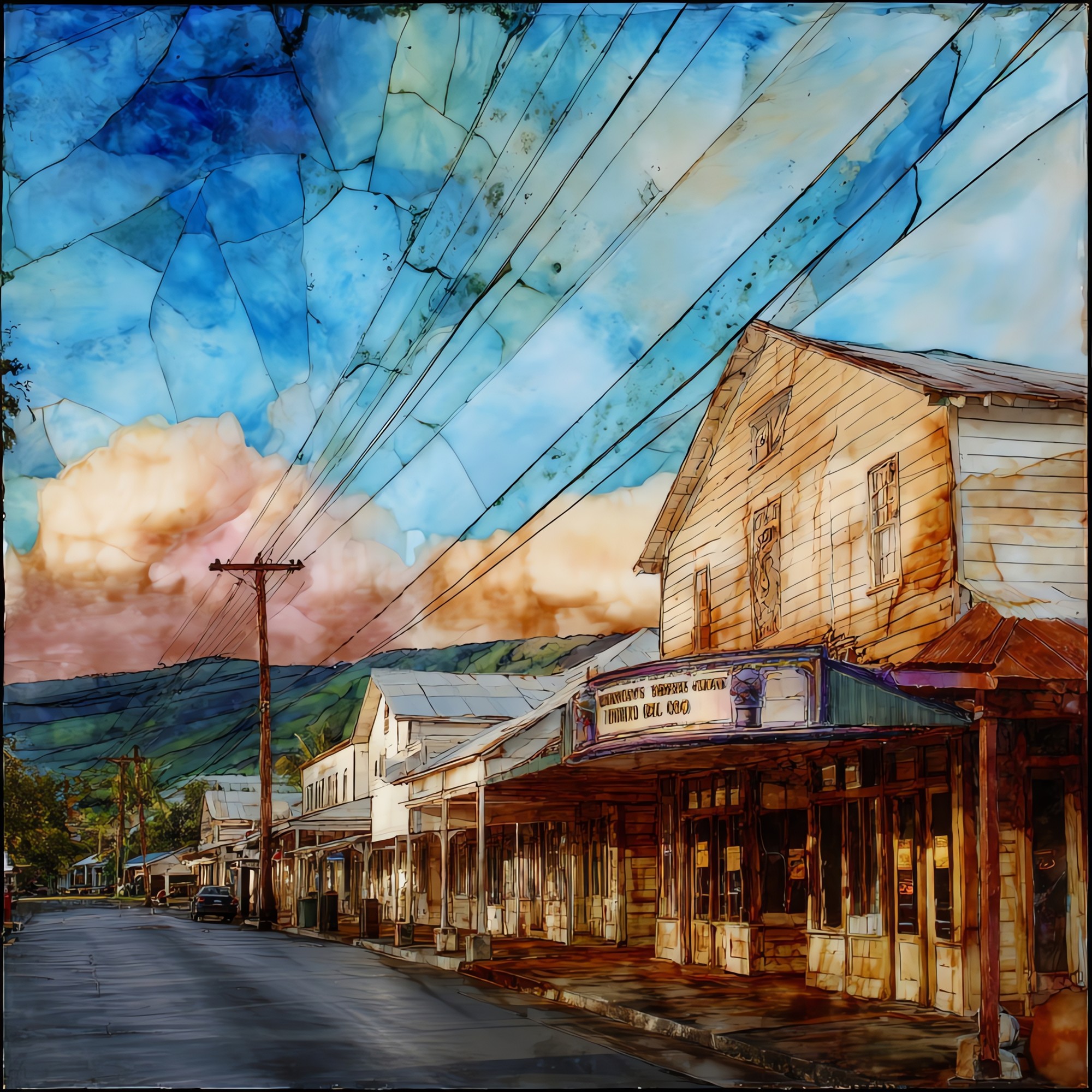
Honokaa Hamakua Big Island Ceramic Art Tile
— a plantation town the trade wind keeps green.
Not only on a wall.
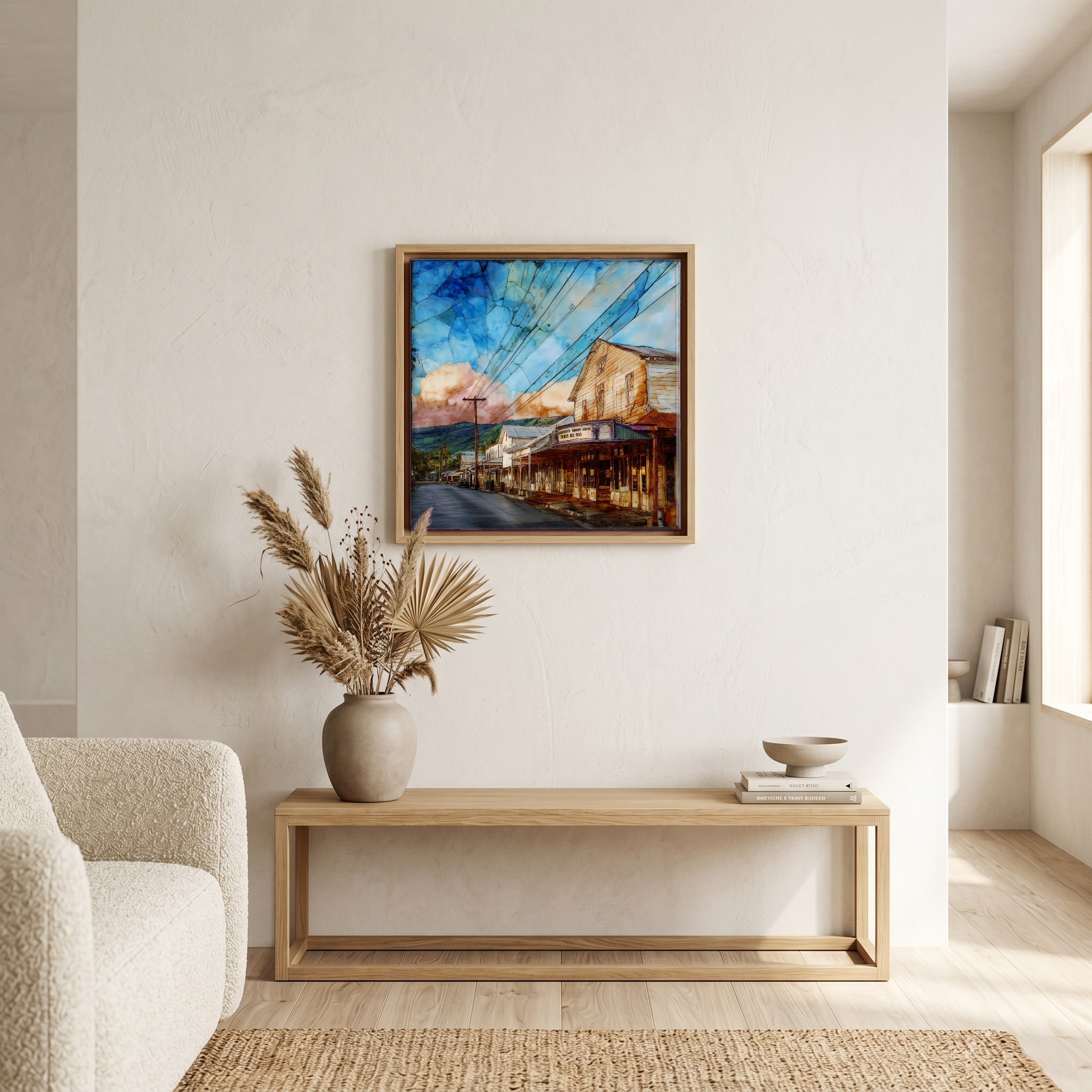
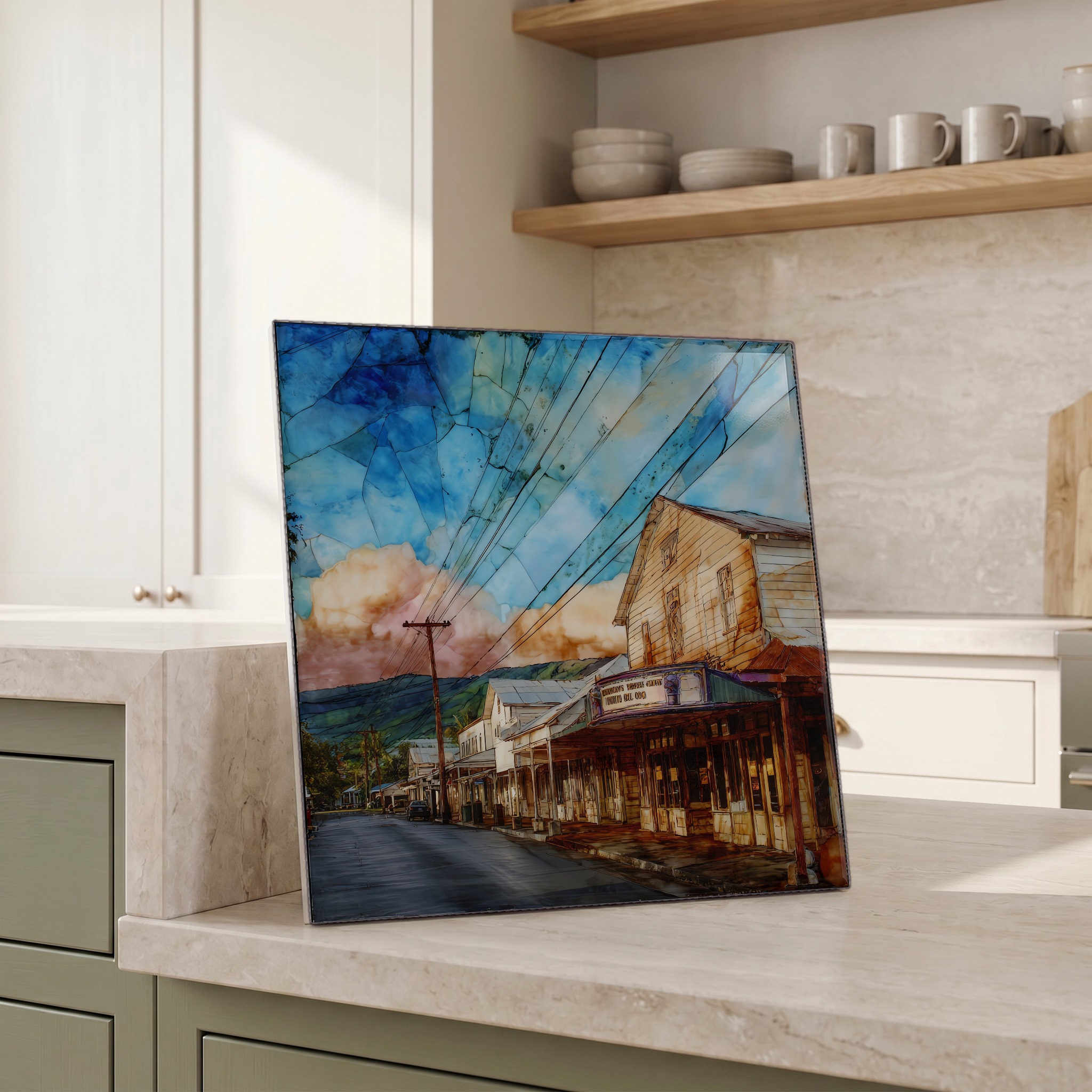
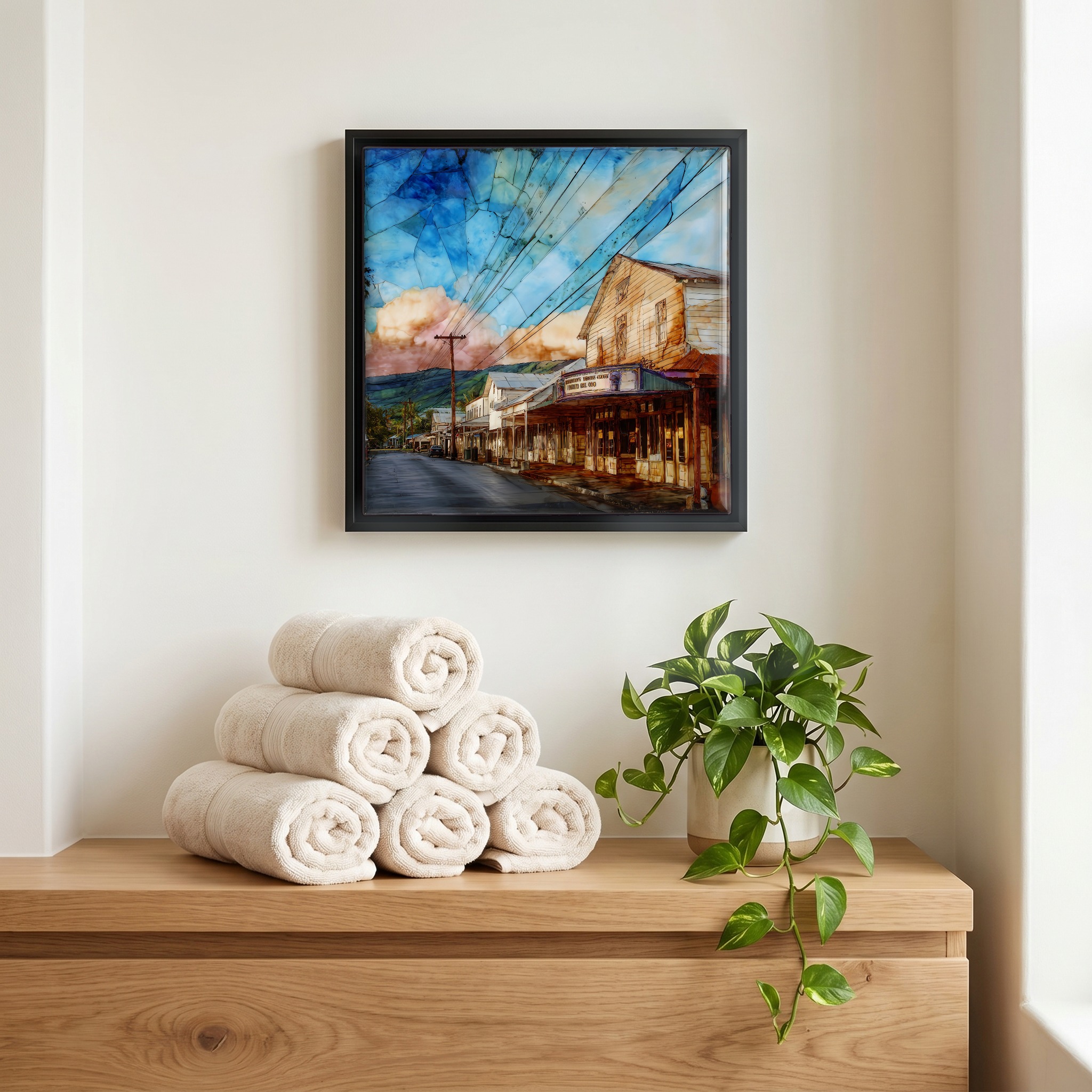
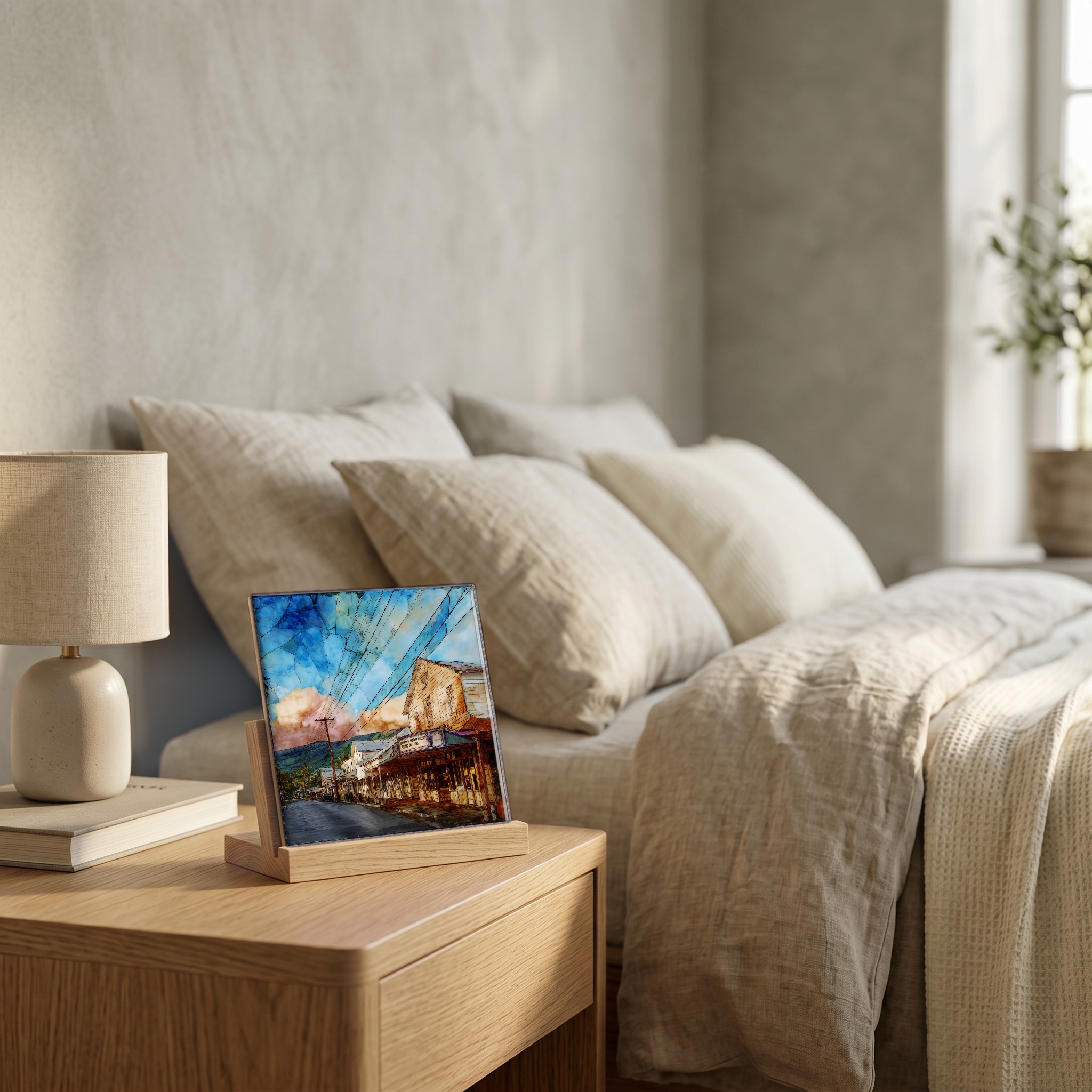
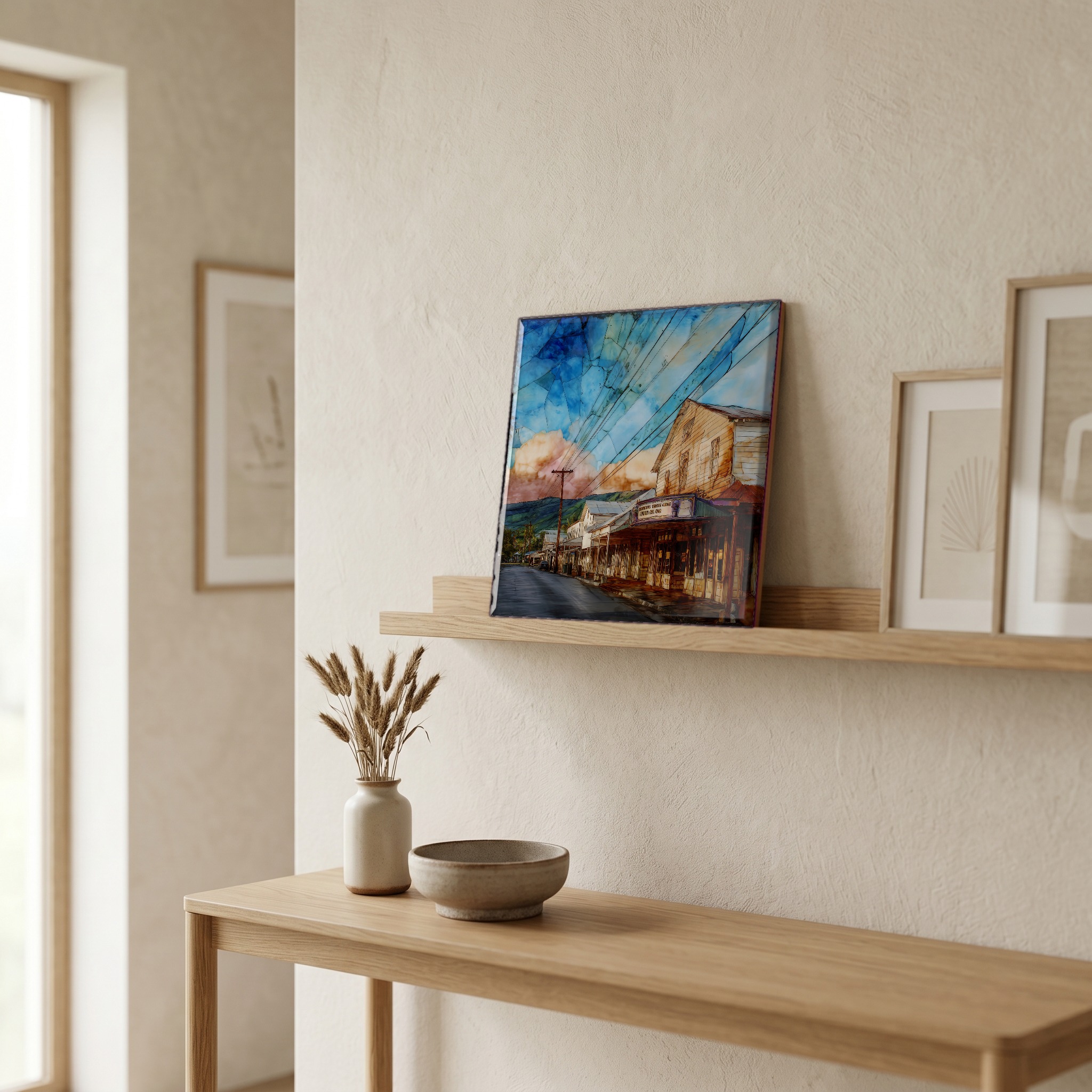
“Main Street runs along the top of the Hāmākua cliffs, two long wooden sidewalks above the sea. The cane fields below fed the coast's sugar mills for a century; the last one closed in 1994, and the slopes turned to macadamia and pasture. The People's Theatre has been on Mamane Street since 1930. Nine miles north, the road ends above Waipiʻo Valley, where the cliffs drop to black sand. The trade wind comes up the coast most afternoons. The town gets greener for it.
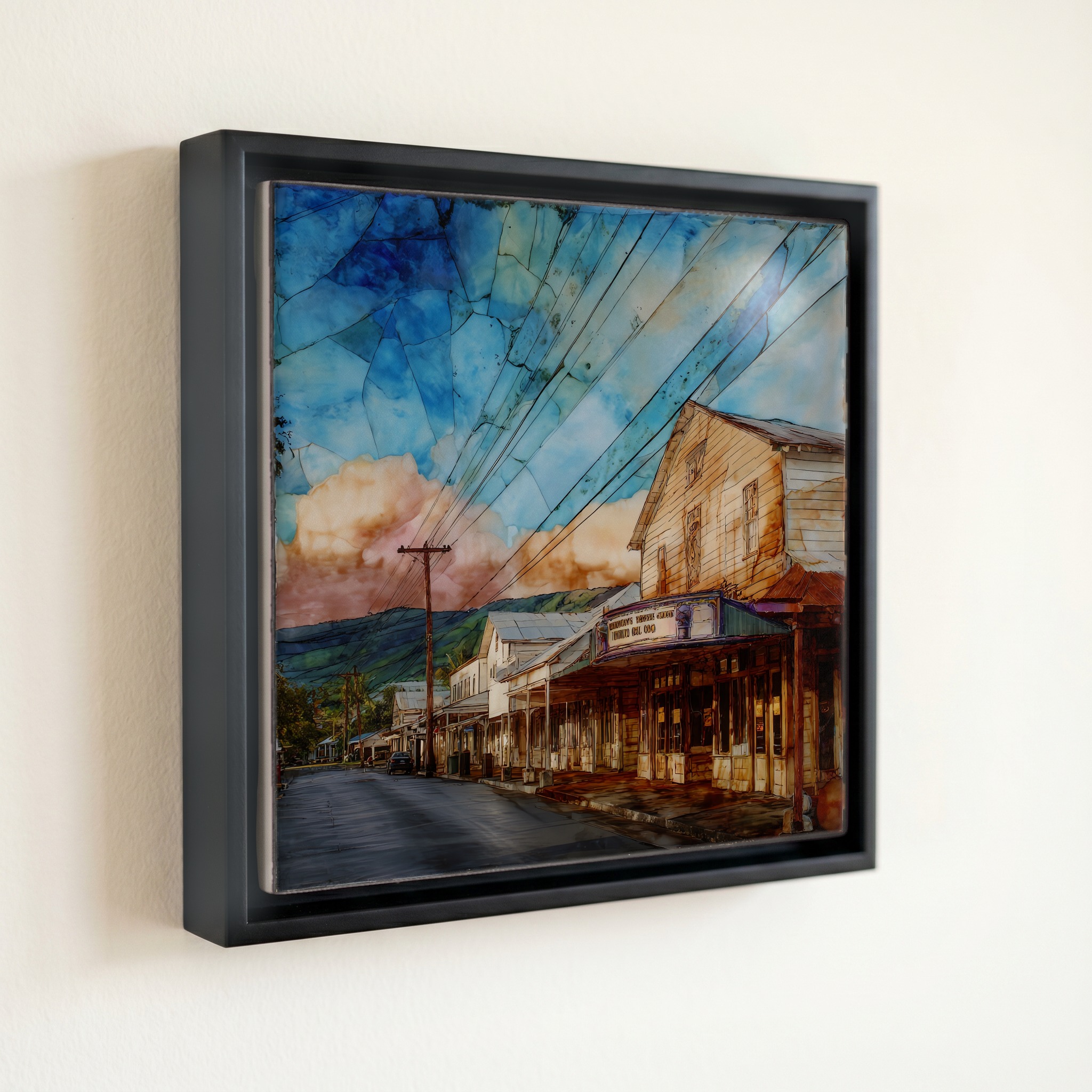
Honokaa Hamakua Big Island Ceramic Art Tile, on ceramic.
Each tile is finished by hand in our Knoxville studio. Artwork is slowly infused into the ceramic surface under high heat and pressure, and rests beneath a thin glossy finish. The colour lives in the surface, not on top of it.
Pick any four 4-inch tiles — National Parks you've been to, a Smokies set, the four seasons of one place. $ for a set of , cork-backed, ready to live on the table.
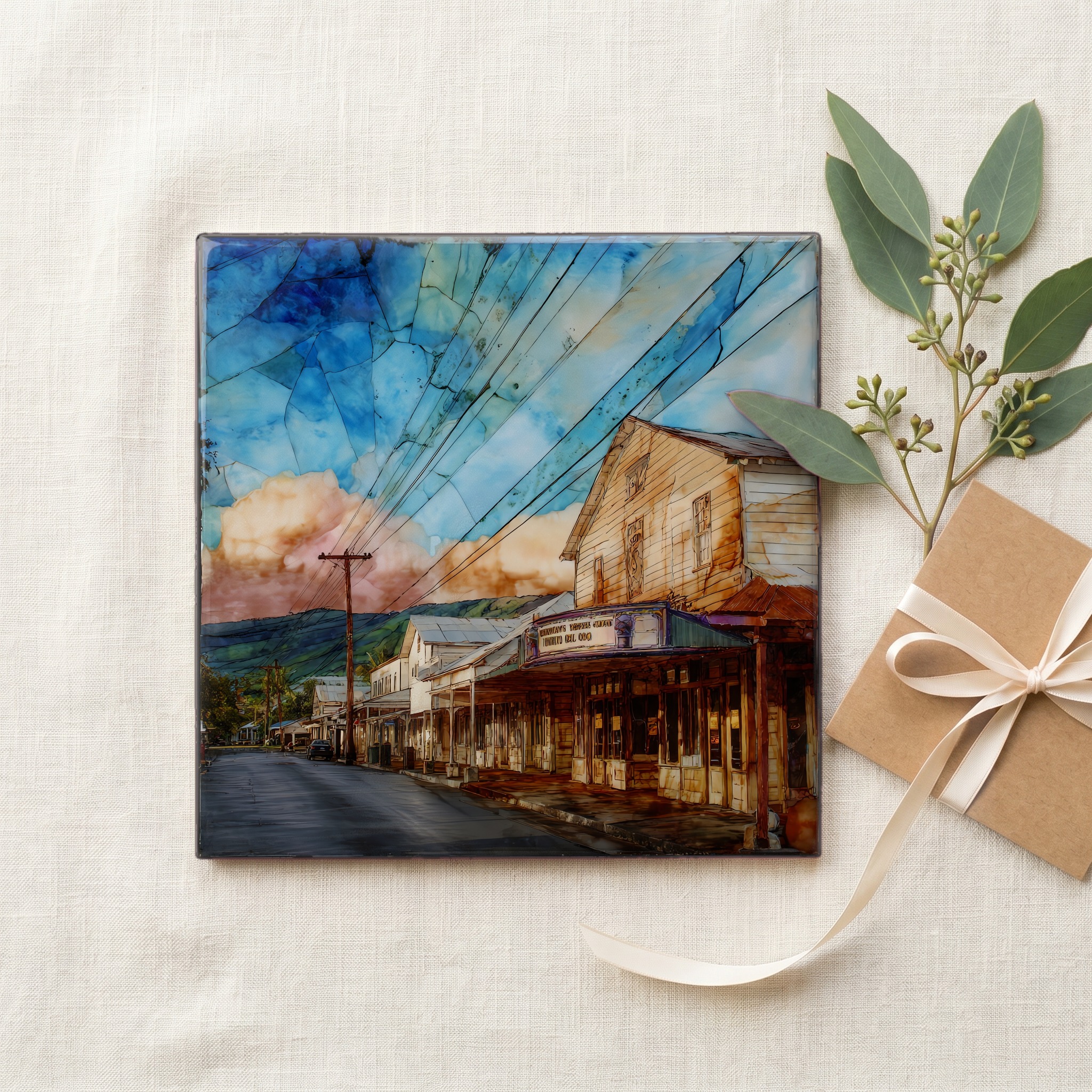
Each tile ships in a kraft box, tied with cream ribbon, with a handwritten note from the studio if you'd like to add one.
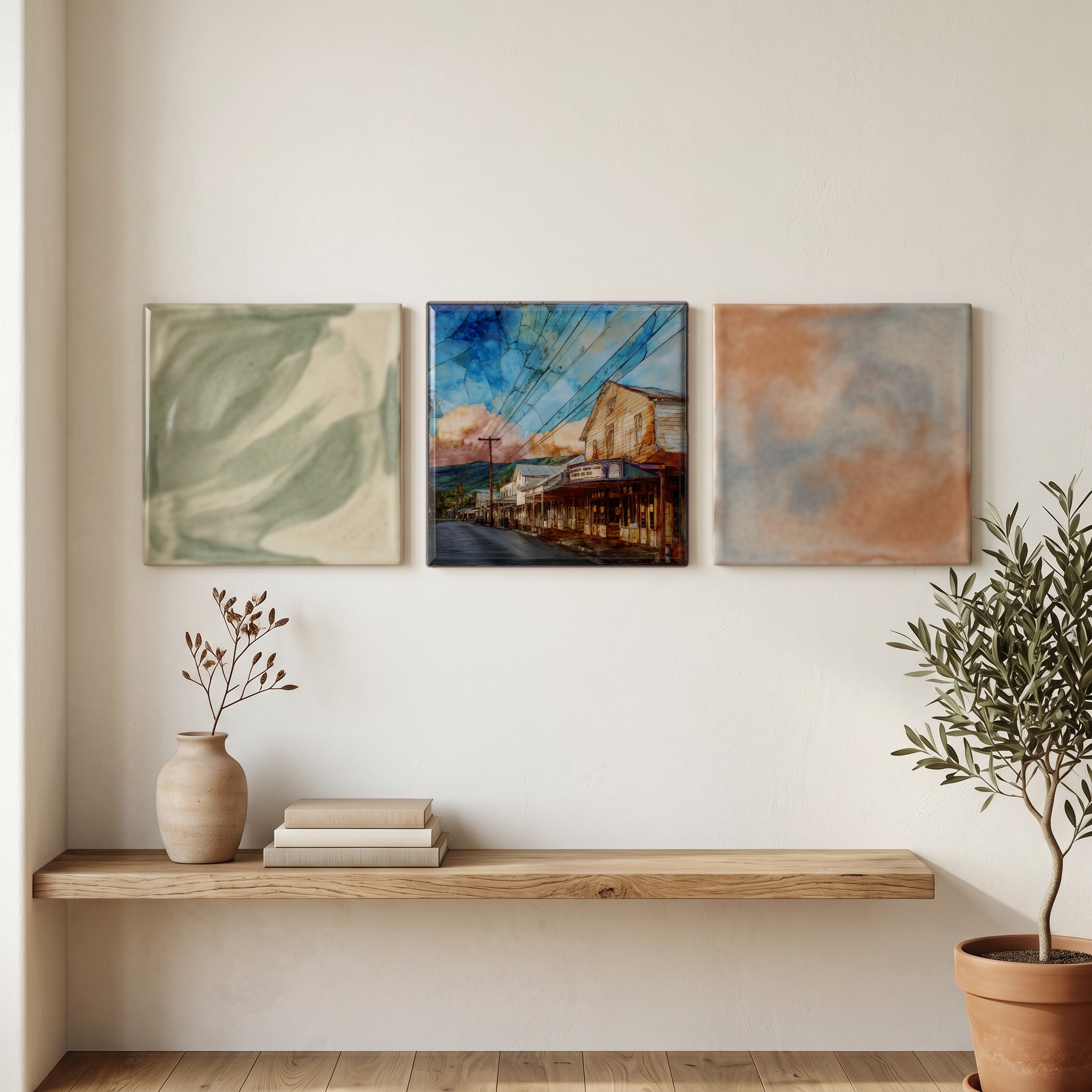
Three or five different vistas, hung together — a chapter of places you've been, or want to go.
The place, in three passes.
Honokaʻa sits at about 1,135 feet above the Pacific on the Hāmākua Coast of Hawaiʻi Island, the largest of the Hawaiian Islands and the southernmost county in the United States. The town is the main settlement of the Hāmākua District, between the city of Hilo to the south and the Kohala Mountains to the north. Hawaiʻi Route 240 runs nine miles north from town to the Waipiʻo Valley Lookout, where the road ends above the valley. Honokaʻa grew up around the sugar mill founded in 1873; the Hāmākua Sugar Company, the last operating mill on the coast, shut its doors in October 1994, closing more than a century of cane production along this windward shore.
The Hāmākua Coast is the windward face of Hawaiʻi Island, the side the northeast trade winds reach first. Moist air rising against the volcanic slopes of Mauna Kea releases its rain along this strip of cliff, producing the deep green that defines the coast in any season. Honokaʻa receives more than 60 inches of rain in an average year, and the showers typically come up the coast in the afternoon. Ferns, ʻōhiʻa, and old strangler figs grow in the gulches between the old cane terraces; macadamia orchards and Norfolk pines now cover the slopes the sugar companies once kept open.
Mamane Street is the historic main street, a quarter-mile of wooden plantation-era storefronts above the cliffs. The Honokaʻa People's Theatre, built by Sumitaro Kawamoto and opened on October 1, 1930, still runs films and live shows from a 525-seat house and hosts the Hāmākua Music Festival each fall. Tex Drive Inn, at the south end of town on Hawaiʻi Route 19, has been frying malasadas — the Portuguese fried dough brought to the islands by plantation workers — since 1969. Hawaiʻi Route 240 runs nine miles north to the Waipiʻo Valley Lookout; the descent road into the valley itself is one of the steepest public roads in the United States and has been restricted to residents and authorized vehicles in recent years.