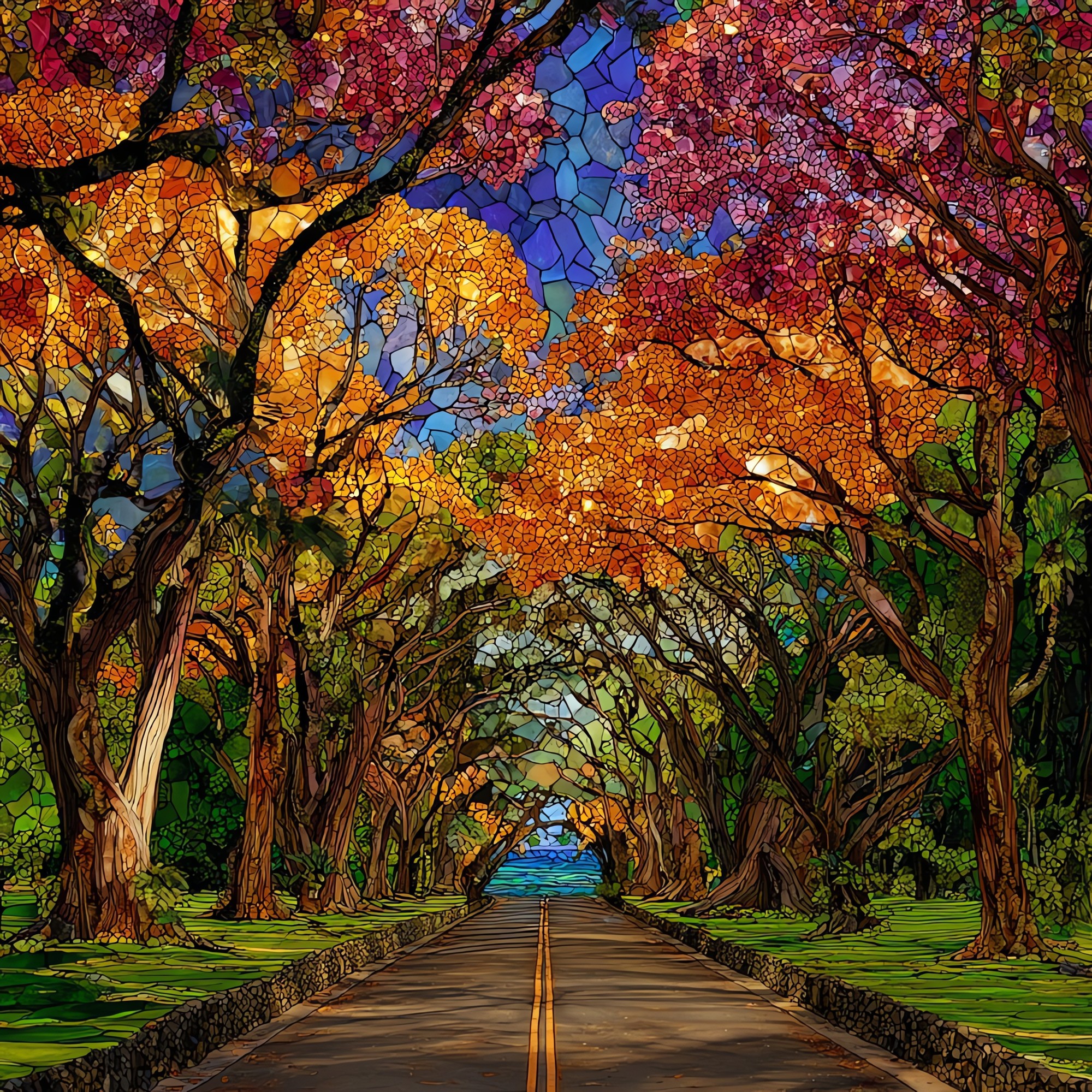
Hilo Banyan Drive Big Island Ceramic Art Tile
— — a green colonnade, each column signed.
Not only on a wall.
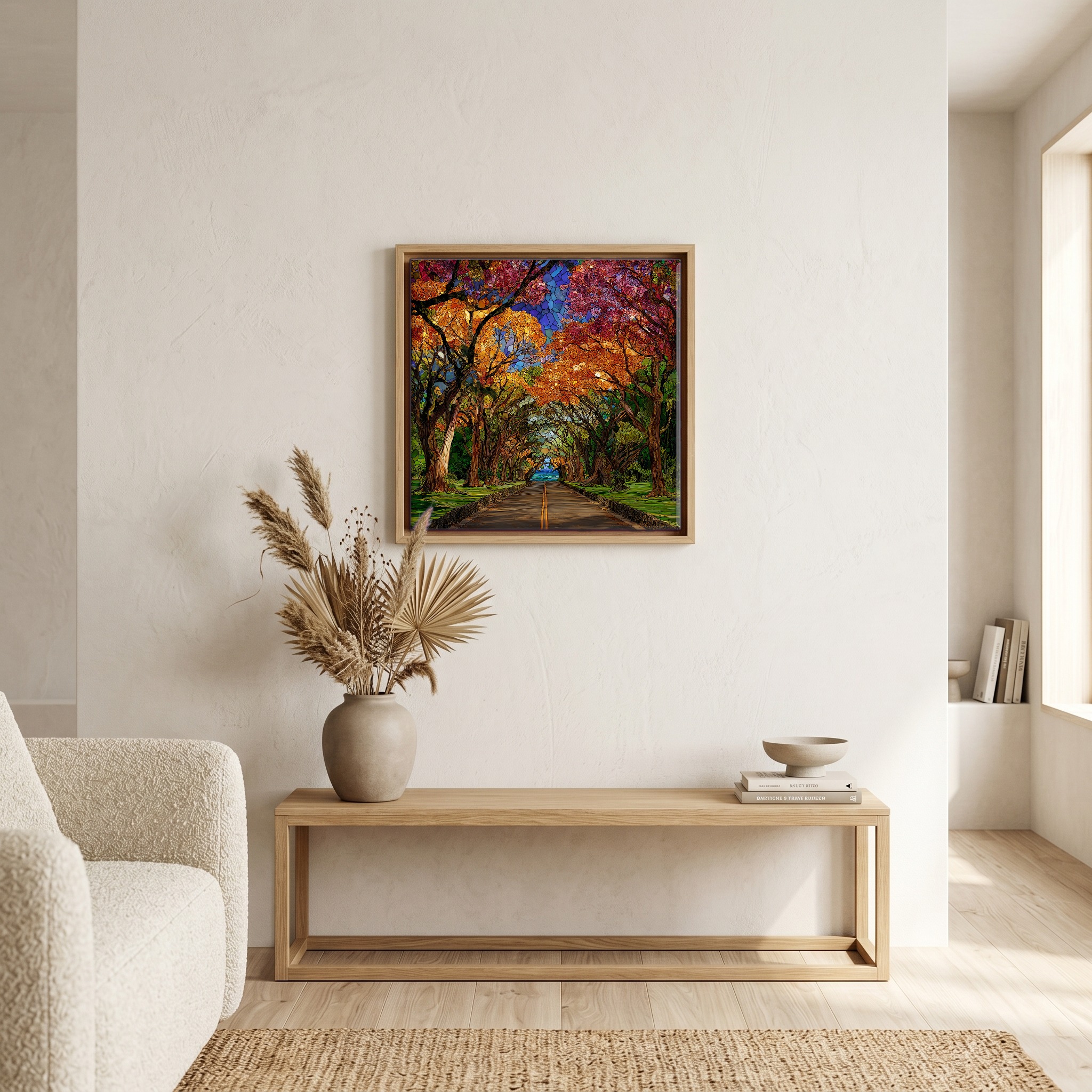
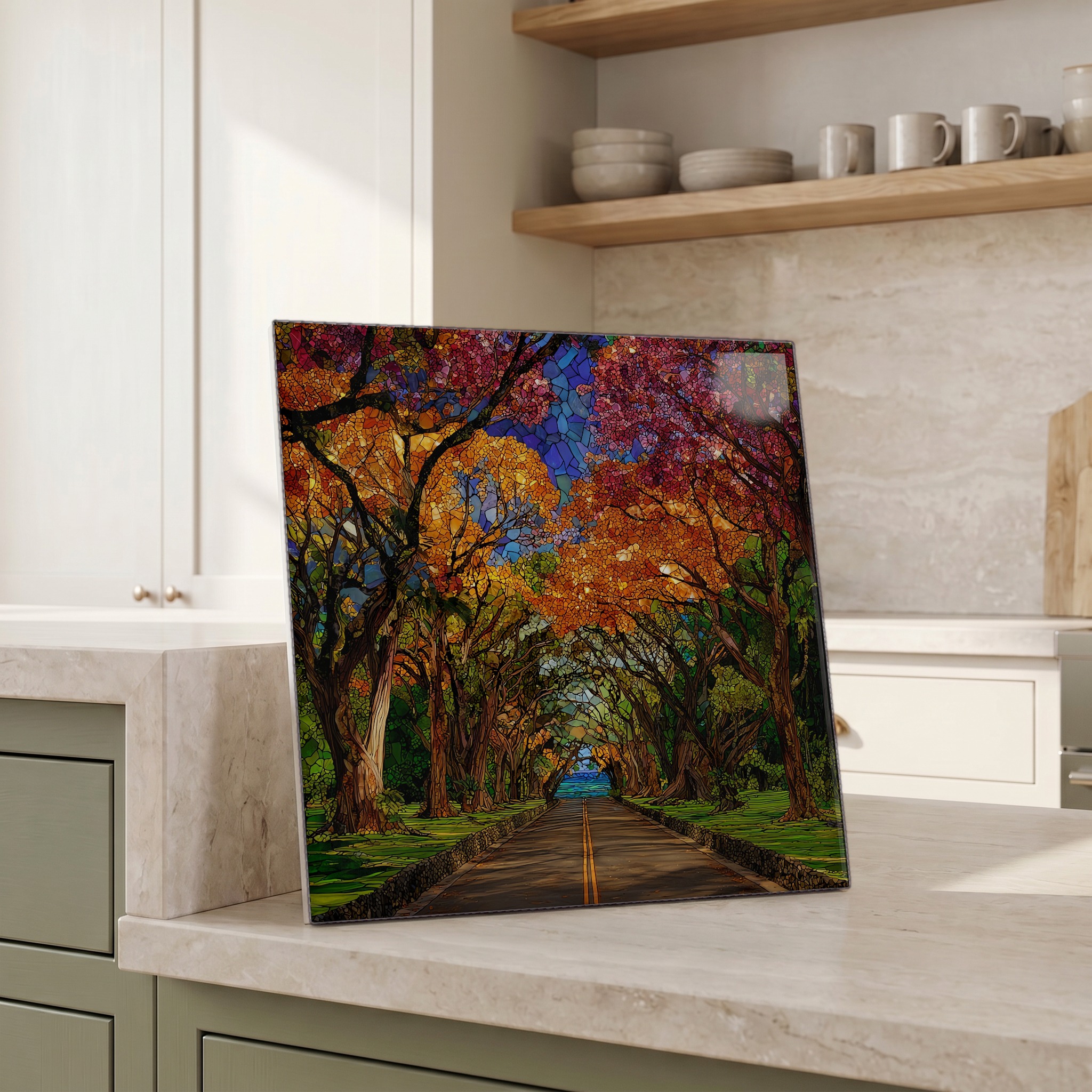
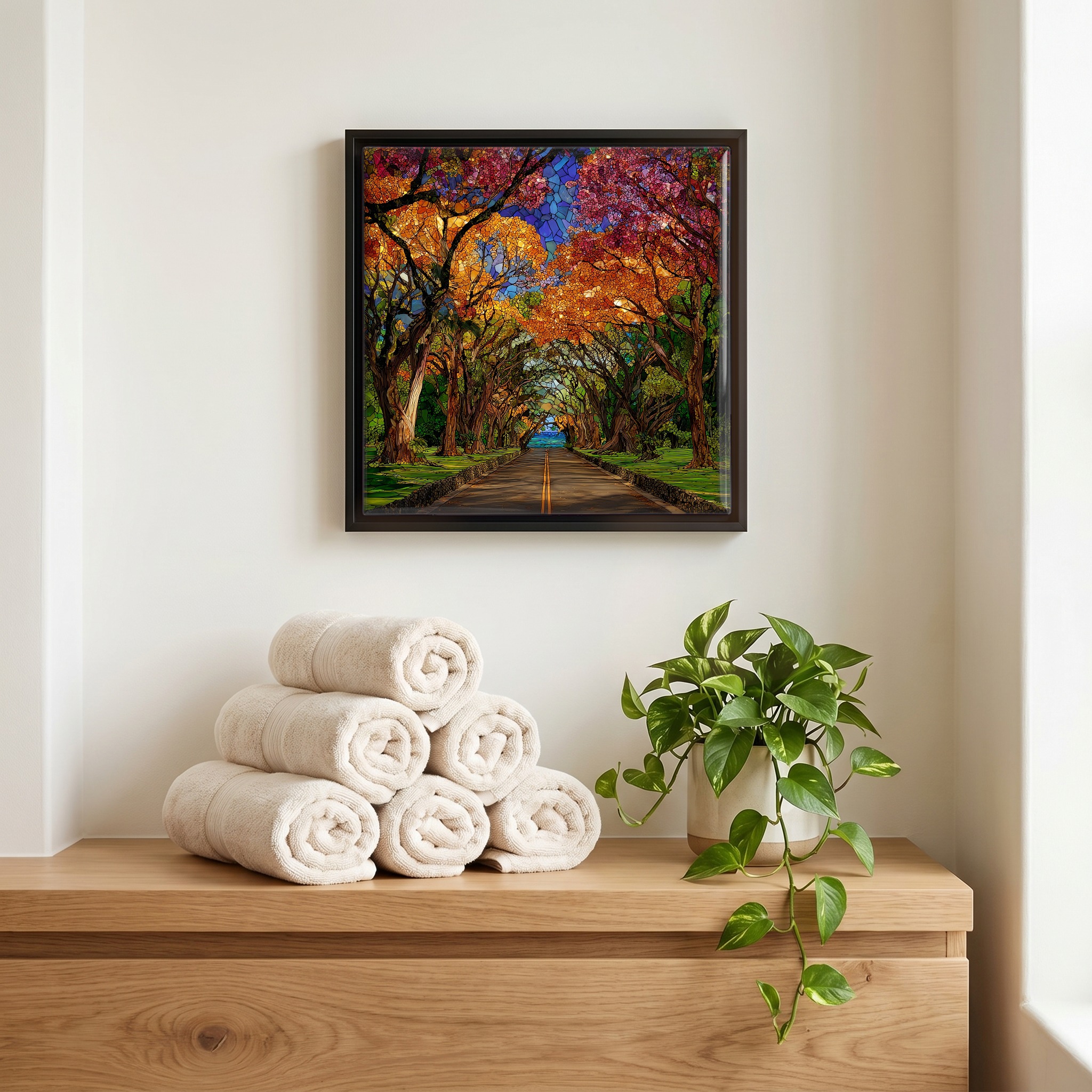

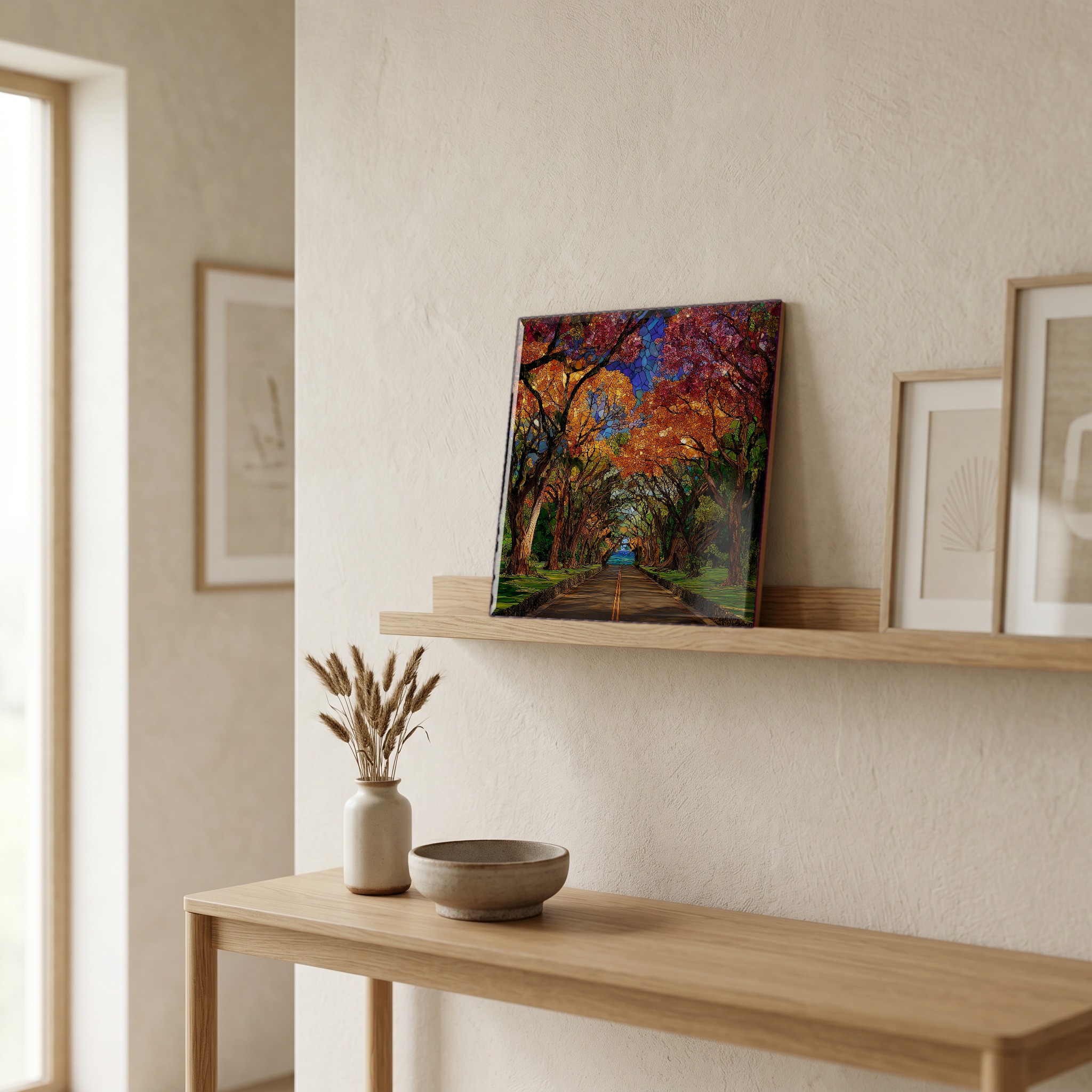
“A loop road on a small peninsula that pushes into Hilo Bay. The first banyan was planted in 1933 by Cecil B. DeMille on a Hilo stop. Babe Ruth, Amelia Earhart, and Franklin Roosevelt added theirs over the next two years. Each tree carries a bronze plaque at its foot with a name and a date. The trees have grown into each other above the road. Aerial roots drop in long curtains and braid into new trunks. The shade is heavy and constant. Drivers slow without being told to.
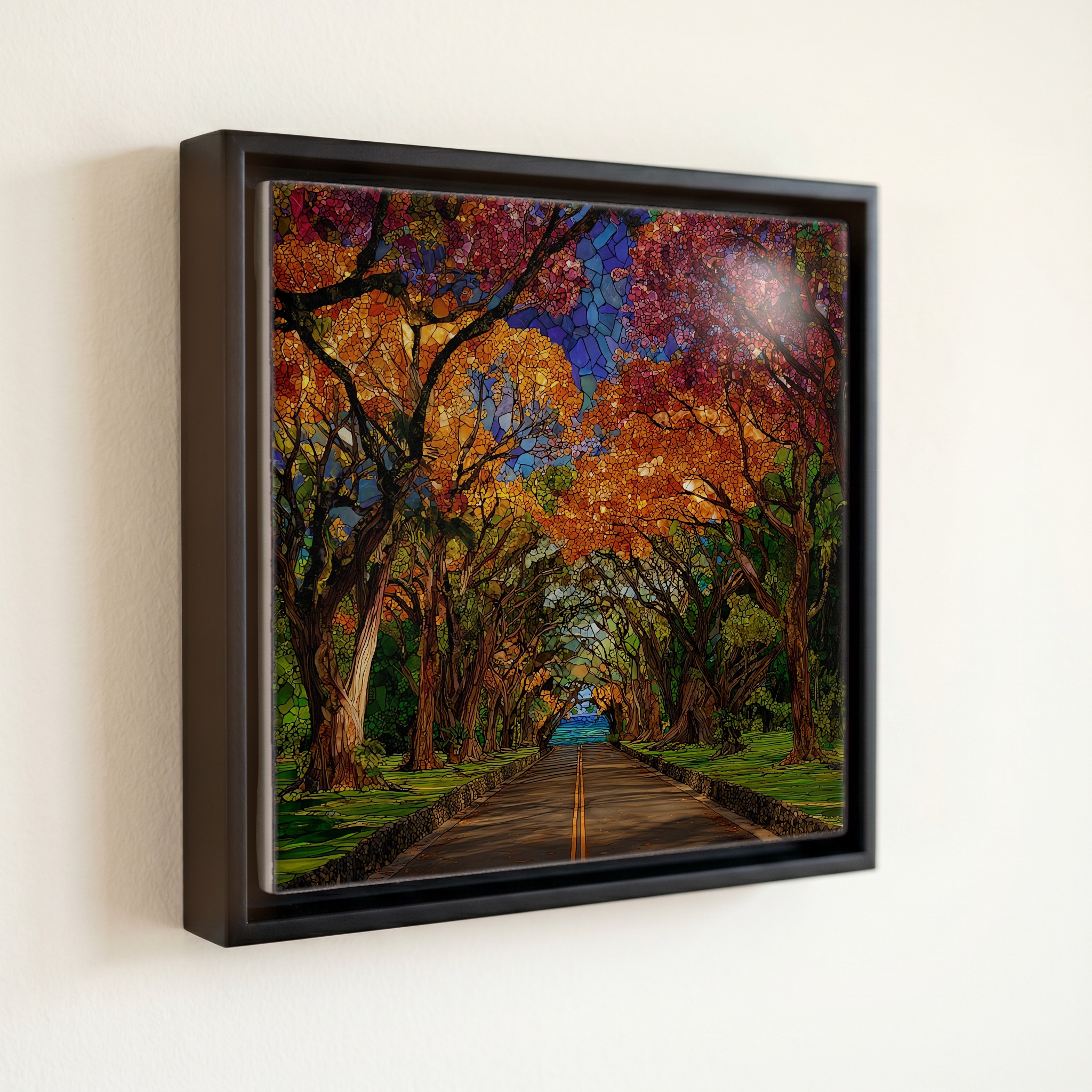
Hilo Banyan Drive Big Island Ceramic Art Tile, on ceramic.
Each tile is finished by hand in our Knoxville studio. Artwork is slowly infused into the ceramic surface under high heat and pressure, and rests beneath a thin glossy finish. The colour lives in the surface, not on top of it.
Pick any four 4-inch tiles — National Parks you've been to, a Smokies set, the four seasons of one place. $ for a set of , cork-backed, ready to live on the table.
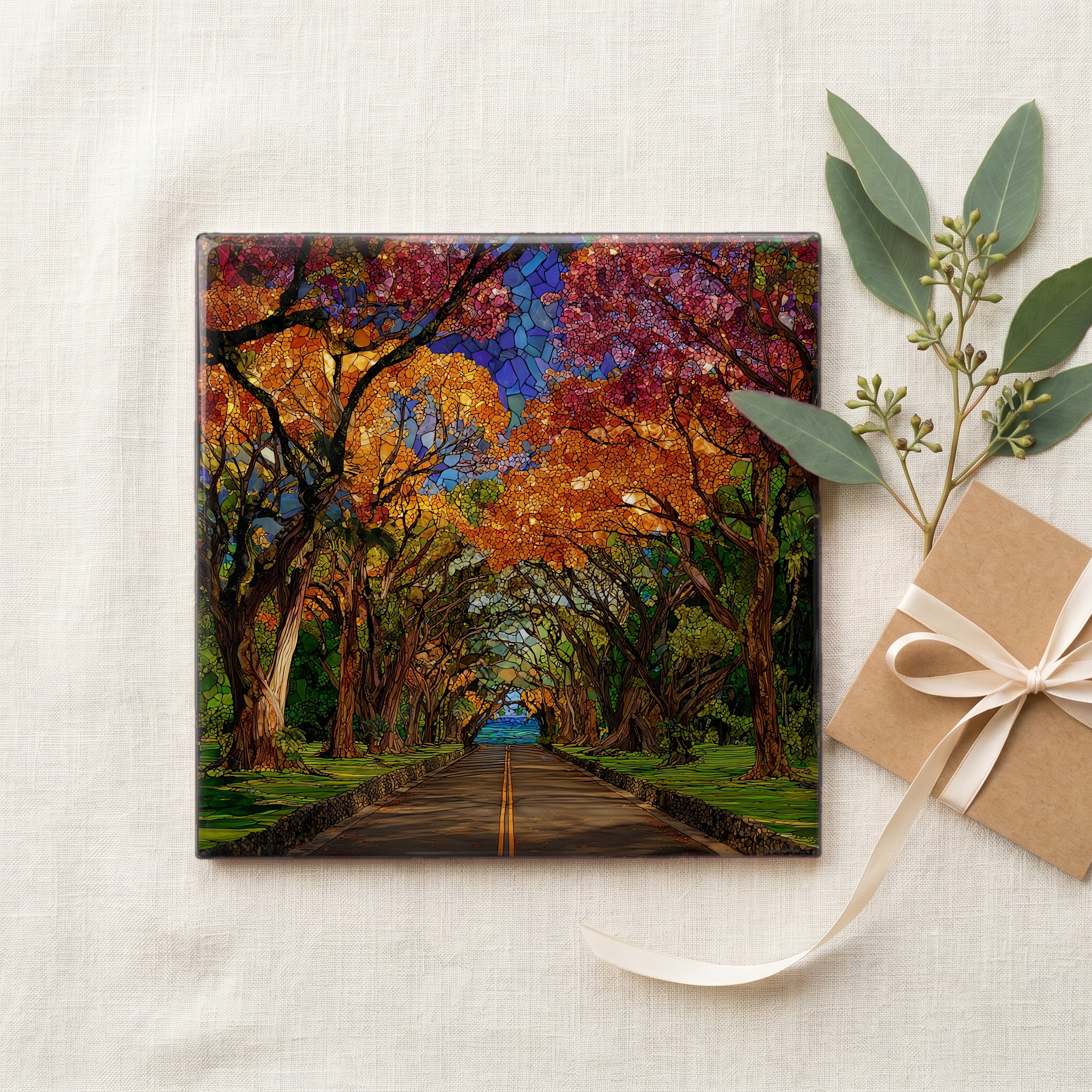
Each tile ships in a kraft box, tied with cream ribbon, with a handwritten note from the studio if you'd like to add one.

Three or five different vistas, hung together — a chapter of places you've been, or want to go.
The place, in three passes.
Banyan Drive is a loop road on the Waiākea Peninsula in Hilo, the largest town on the windward east coast of Hawaiʻi Island. The road circles a small peninsula that pushes into Hilo Bay, with Coconut Island, called Mokuola in Hawaiian, sitting just offshore. Lined with about fifty Indian banyan trees, Ficus benghalensis, the drive was begun in 1933, when the film director Cecil B. DeMille placed the first tree during a Hilo stop while filming Four Frightened People. Trees were added over the following decades by visiting celebrities, athletes, diplomats, and U.S. presidents. In 2009 the road was added to the National Register of Historic Places as the Banyan Drive Historic District.
The first tree was placed by Cecil B. DeMille in 1933, during a Hilo stop while he was filming Four Frightened People. Other planters in the drive's first decades include the baseball player Babe Ruth, the aviator Amelia Earhart, and President Franklin Delano Roosevelt, who came to Hilo in 1934 aboard the USS Houston as the first sitting U.S. president to set foot in the territory. Each tree carries a bronze plaque at its base with the planter's name and the date. The trees and their plaques together were listed on the National Register of Historic Places in 2009 as the Banyan Drive Historic District. About fifty trees stand along the road today.
Hilo sits on the windward side of Hawaiʻi Island and receives roughly 130 inches (3,300 mm) of rain a year, placing it among the wettest cities in the United States. Trade winds, evaporation off Hilo Bay, and the lift of Mauna Kea and Mauna Loa keep the air saturated through most of the year. Under the banyans on the drive, that saturated air settles into something denser. The shade is constant. The canopy reaches across the road in places, and the aerial roots drop in curtains and braid into new trunks. The sound of the bay is muffled. Even on hot days the road runs noticeably cooler than the streets a few blocks inland.