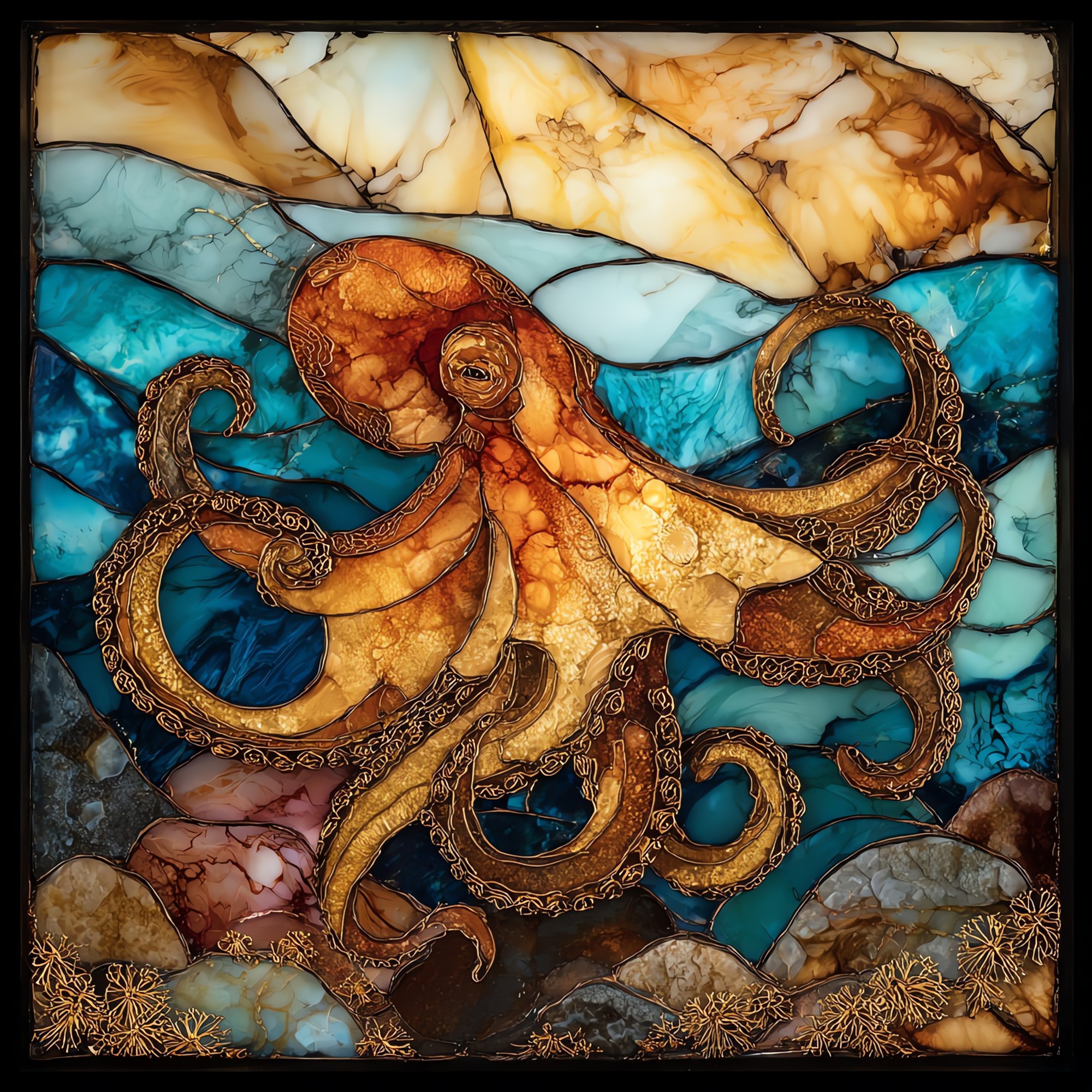
Hee Octopus Tidepool Oahu Ceramic Art Tile
— — the stone that thinks, then is gone.
Not only on a wall.
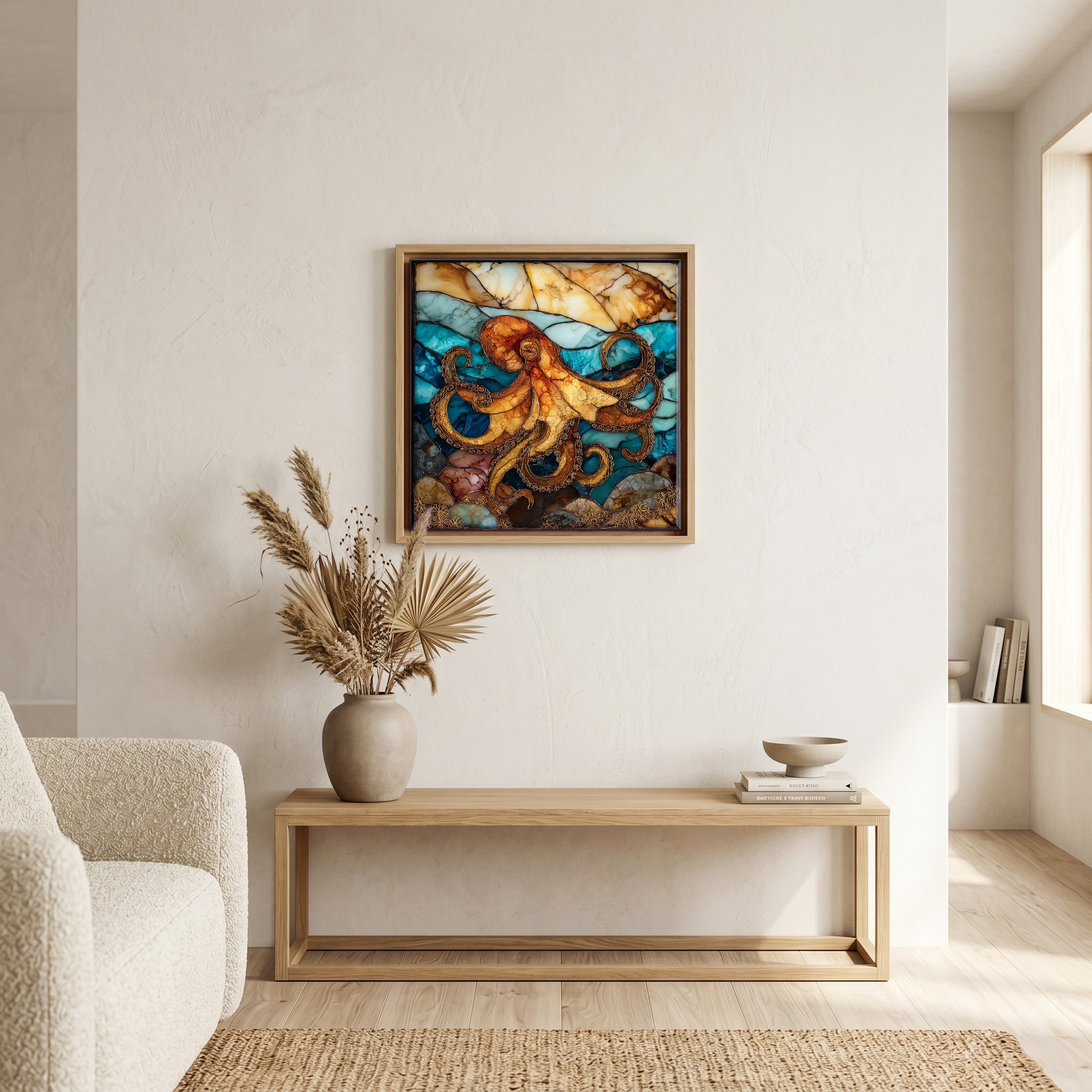
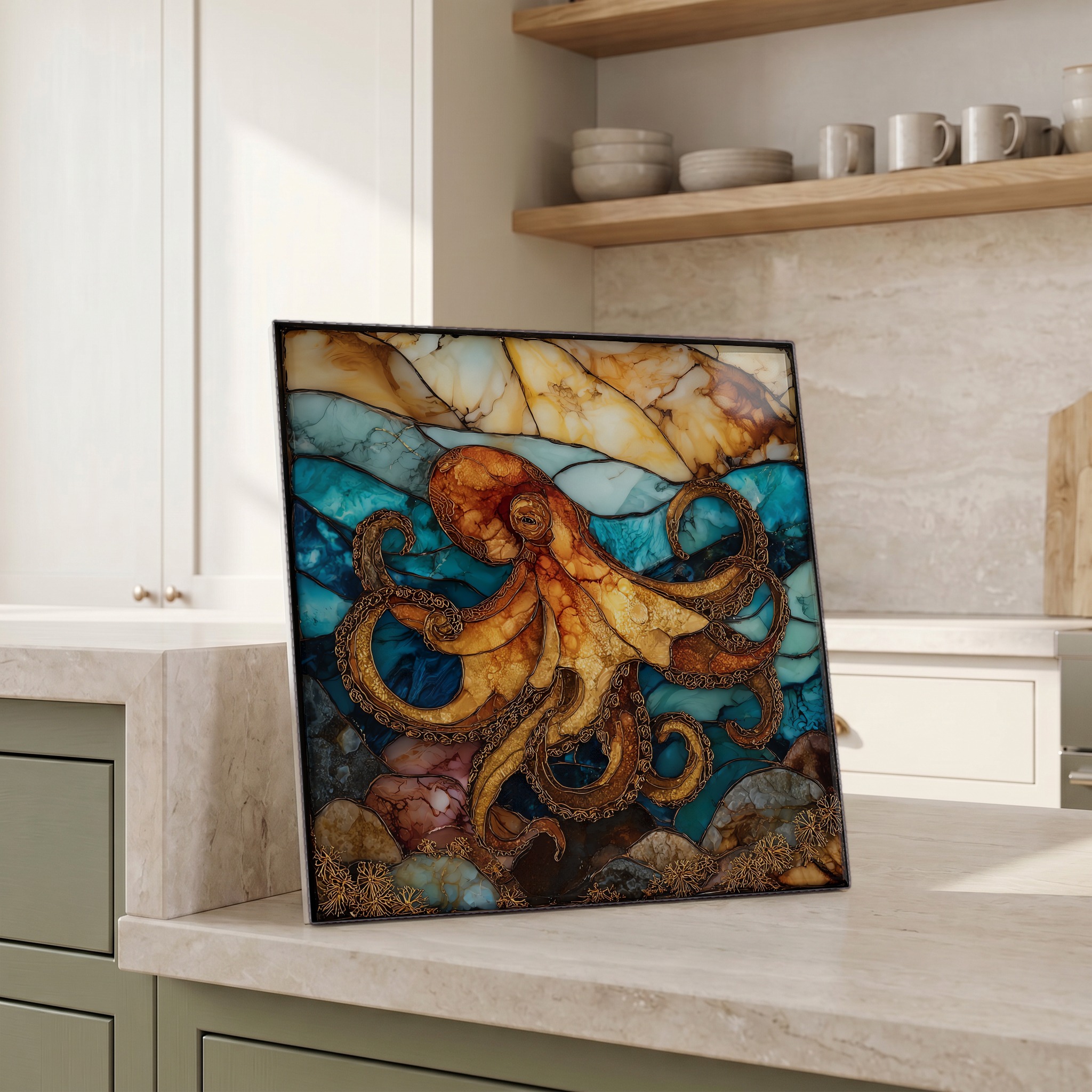
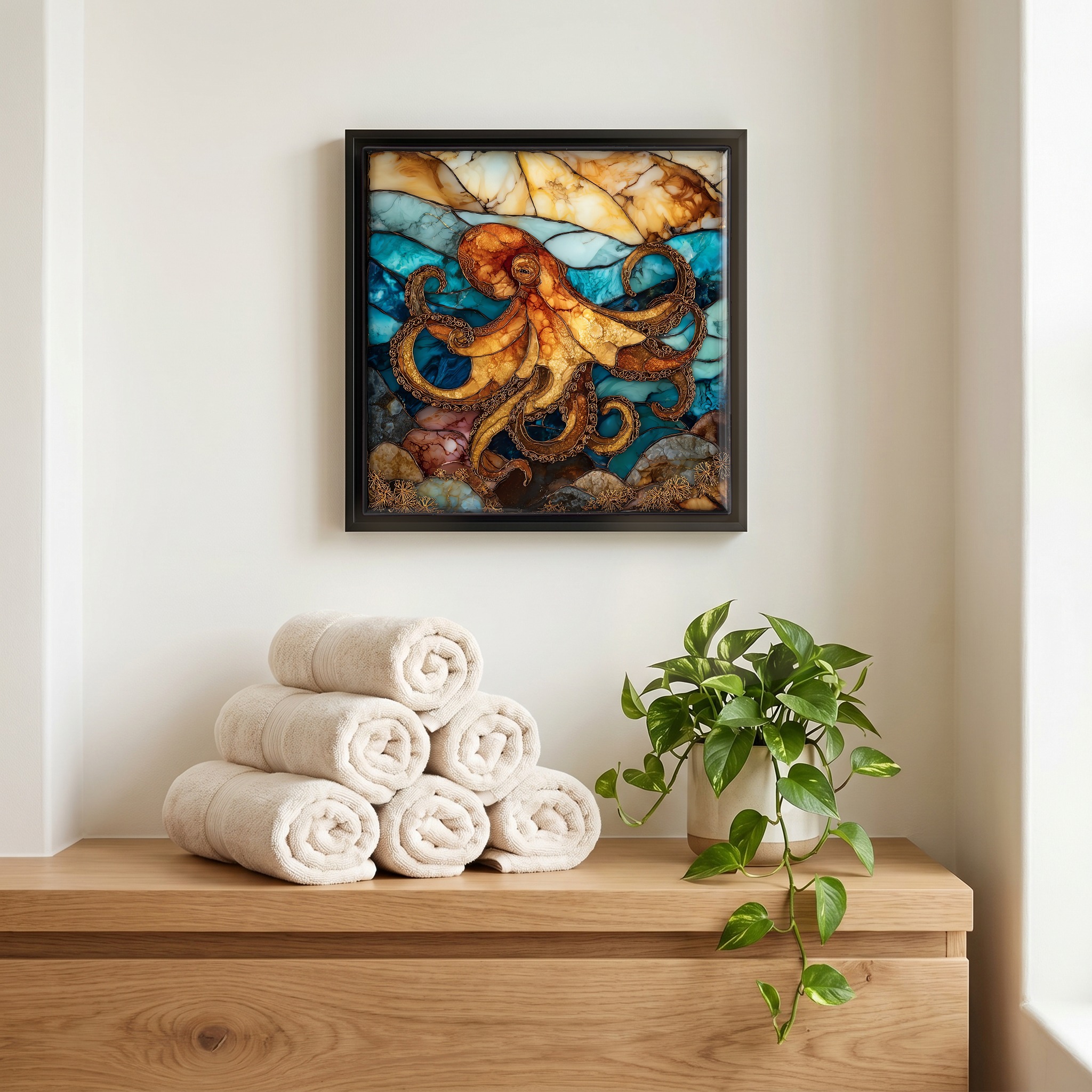
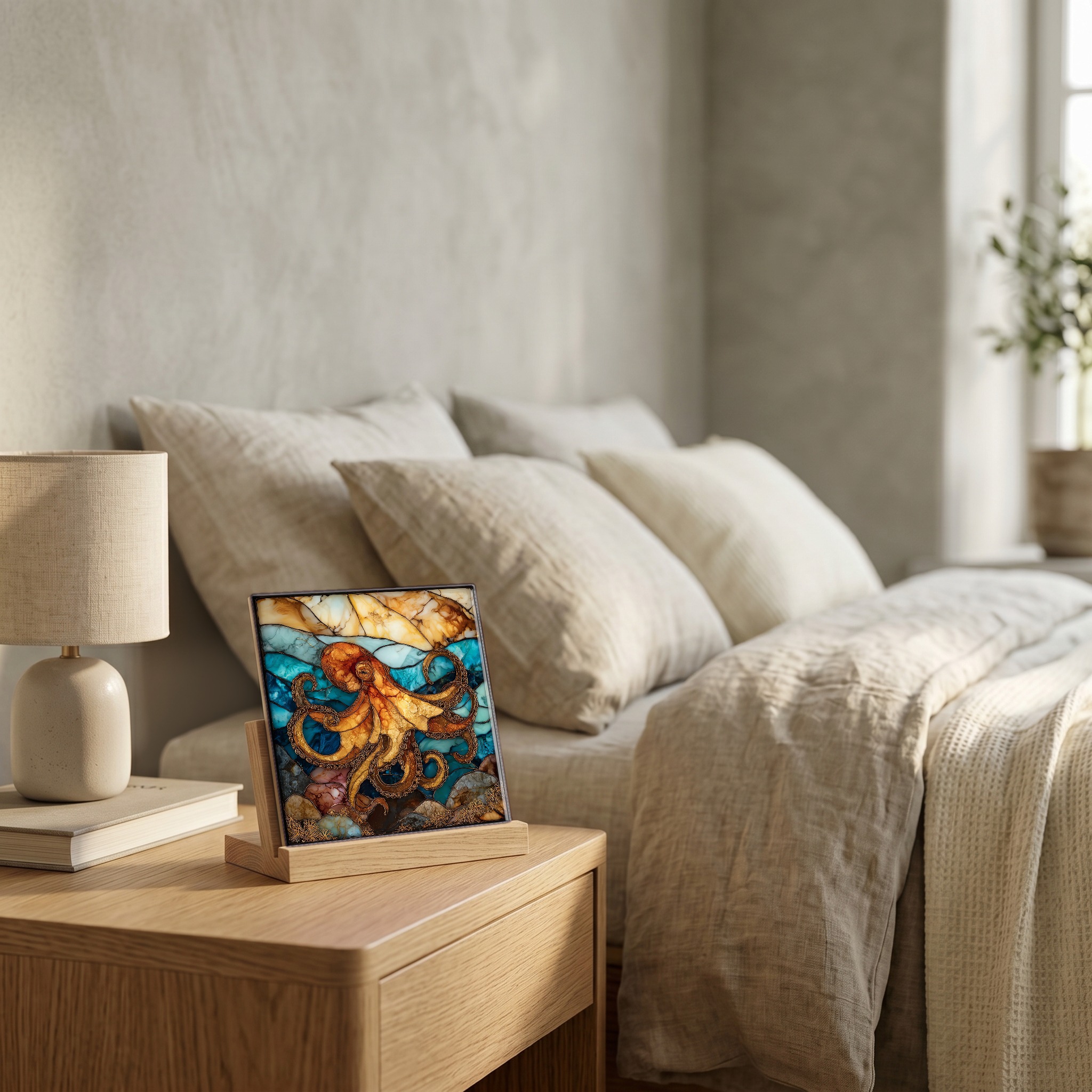
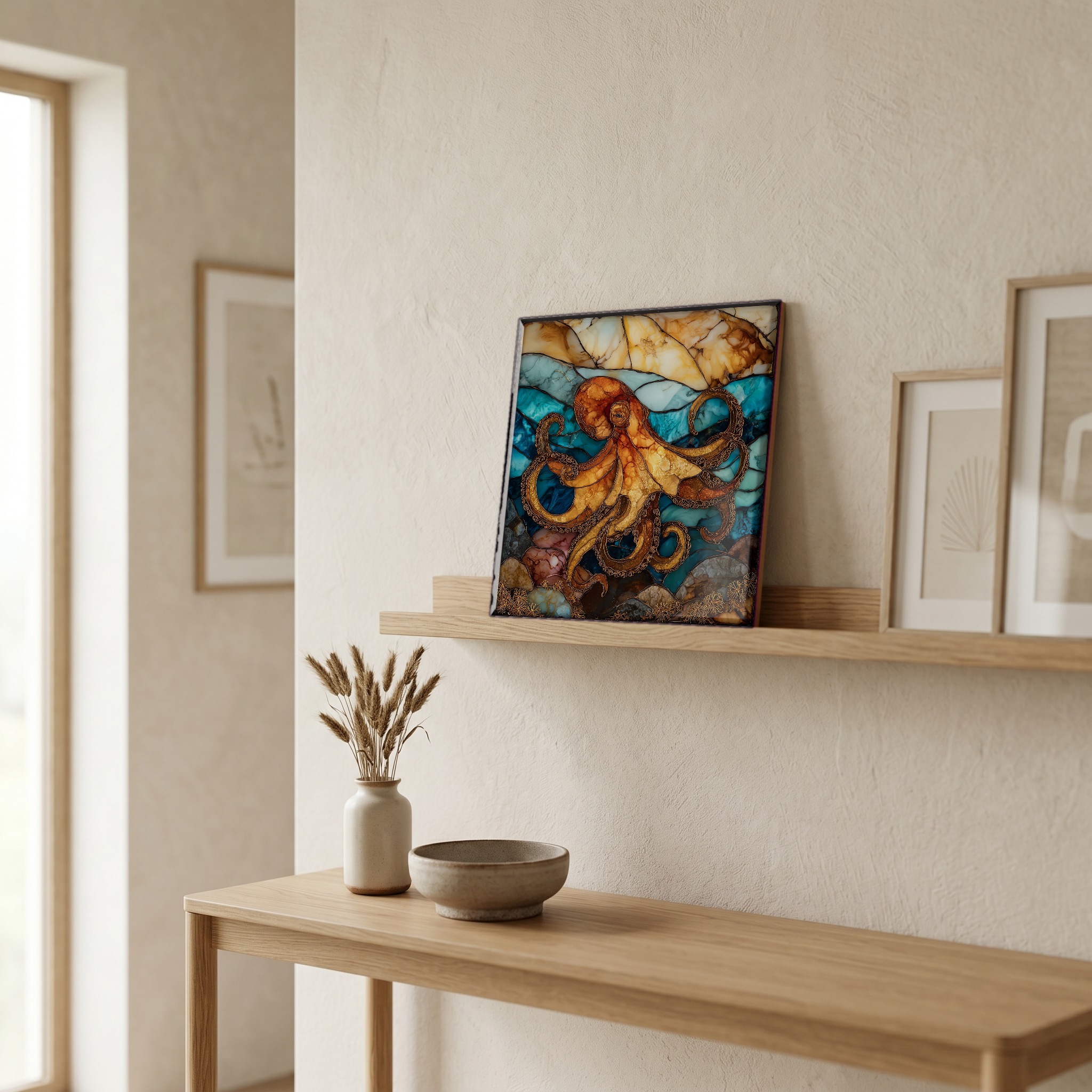
“Octopus in a shallow tidepool on Oahu's North Shore. He'e mauli, the day octopus — the one with the eye that finds yours first. The water is two feet deep, full of urchins and the long shadows of wana spines. The octopus holds still until you stop moving, then unrolls one careful arm across the floor of the pool. Hawaiian fishermen used to whisper to the den before a take, never to it. The kapu was older than the word for kapu. On a good morning the reef holds a dozen of these slow conversations, and none of them are loud.
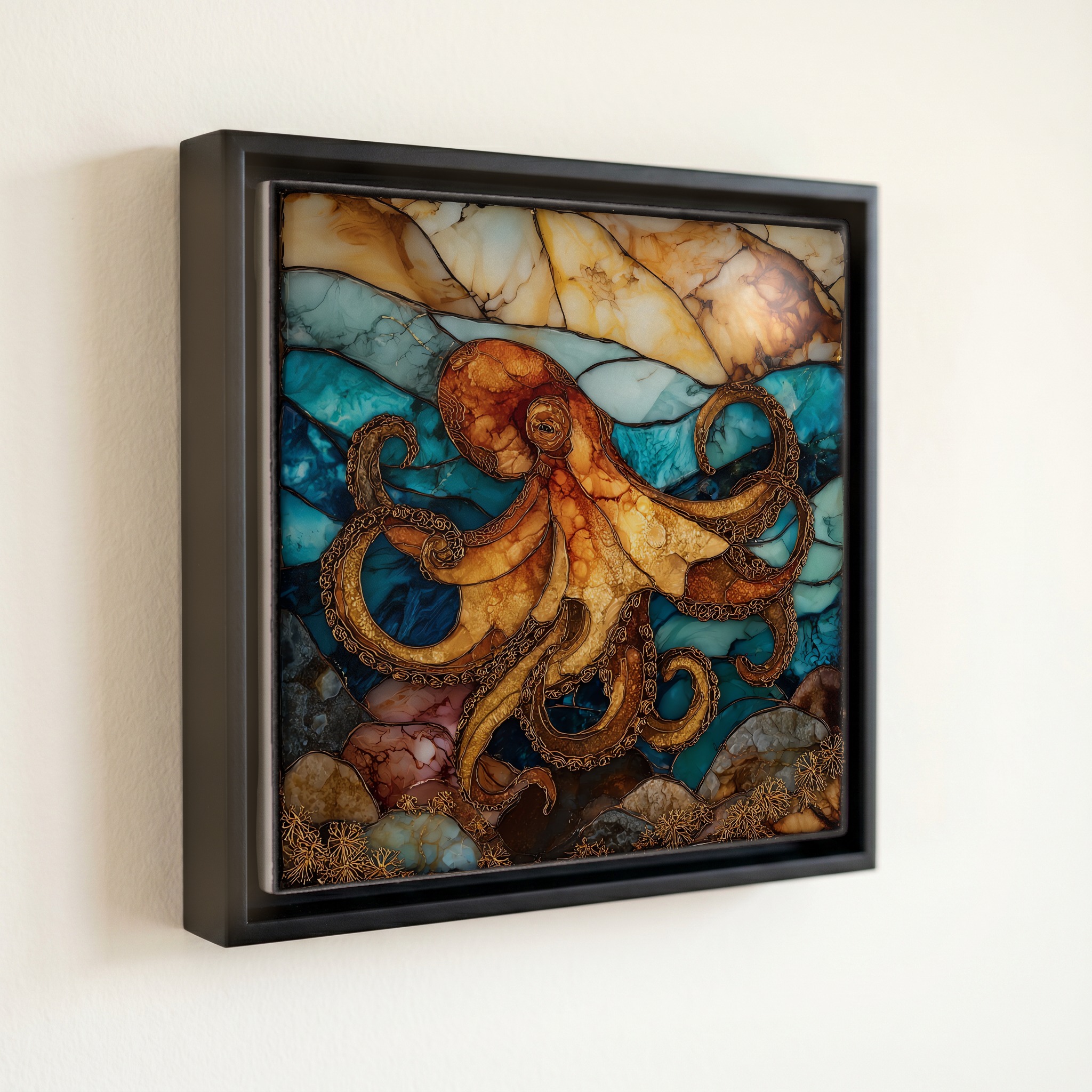
Hee Octopus Tidepool Oahu Ceramic Art Tile, on ceramic.
Each tile is finished by hand in our Knoxville studio. Artwork is slowly infused into the ceramic surface under high heat and pressure, and rests beneath a thin glossy finish. The colour lives in the surface, not on top of it.
Pick any four 4-inch tiles — National Parks you've been to, a Smokies set, the four seasons of one place. $ for a set of , cork-backed, ready to live on the table.
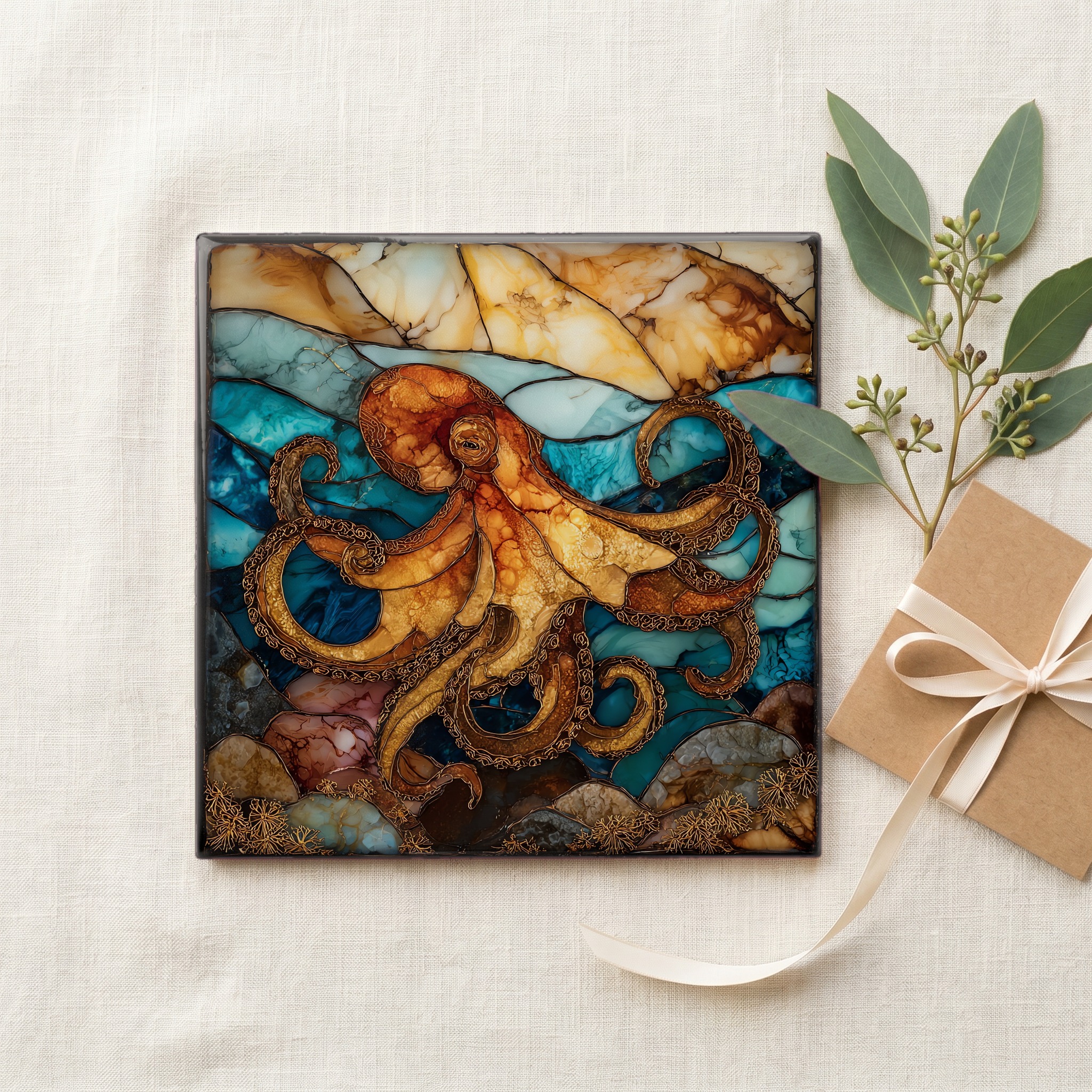
Each tile ships in a kraft box, tied with cream ribbon, with a handwritten note from the studio if you'd like to add one.
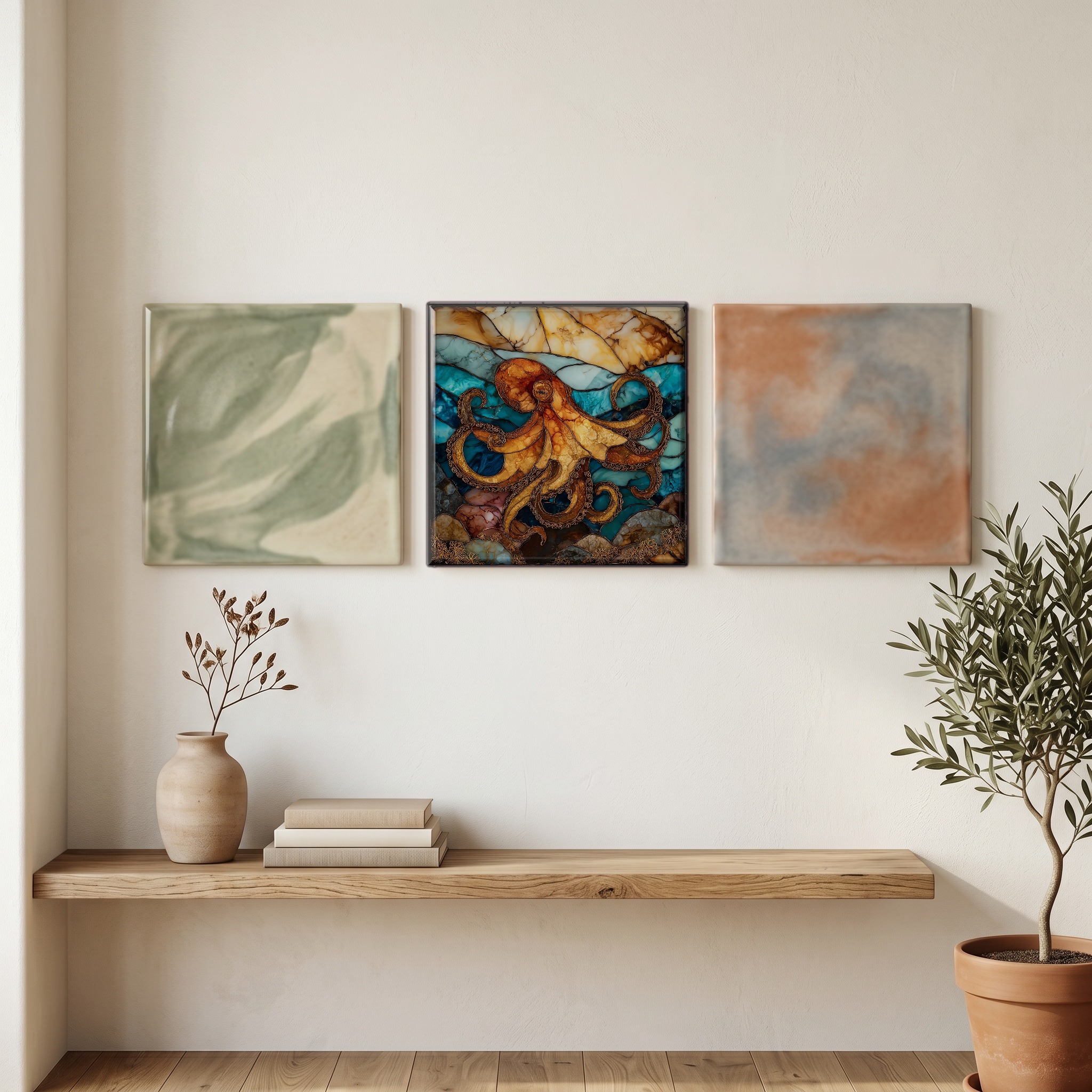
Three or five different vistas, hung together — a chapter of places you've been, or want to go.
The place, in three passes.
The tidepools sit along Oahu's reef benches, where basalt flowed into the Pacific some 2.5 million years ago and the surf has been carving the rock ever since. On the island's North Shore, the Pupukea Marine Life Conservation District protects about 100 acres of this shelf — Sharks Cove, Three Tables, and Old Quarry — among the most reliable places in the main Hawaiian Islands to find he'e in a foot of water. The reef is basalt with infilled coral pockets; at low tide the sea draws back into shallow ponds, exposing the wana and the wrasse and, sometimes, the day octopus tucked under a ledge.
He'e mauli, Octopus cyanea, is the species nearly every Oahu tidepool encounter turns out to be. The day octopus hunts on the shallow reef during daylight — most octopus do the opposite — and carries chromatophores in its skin that match the colour and texture of whatever it sits against. A startled he'e can vanish into a coral head in under a second. The tidepools work because the reef shelf traps water above mean low tide; small reef fish, hermit crabs, wana, and the occasional 'opae shrimp share the pool with the octopus, which eats most of them. Hawaii has at least seven octopus species in nearshore waters; the one in the tidepool is almost always this one.
The Pupukea Marine Life Conservation District has been protected since 1983 and is closed to all take of marine life. Touching a he'e, lifting it from its den, or harassing it for a photograph is illegal under Hawaii Administrative Rules. The pools work best at low tide on a calm summer morning — the North Shore goes flat from roughly May through September; winter brings the heavy surf the coast is known for, and the pools become dangerous. Reef shoes matter; the wana spines do not negotiate. Park near Sharks Cove off Kamehameha Highway, walk down to the rock shelf, and watch the surface for the small puff of sand that gives away a hunting he'e.