Wender·Vista
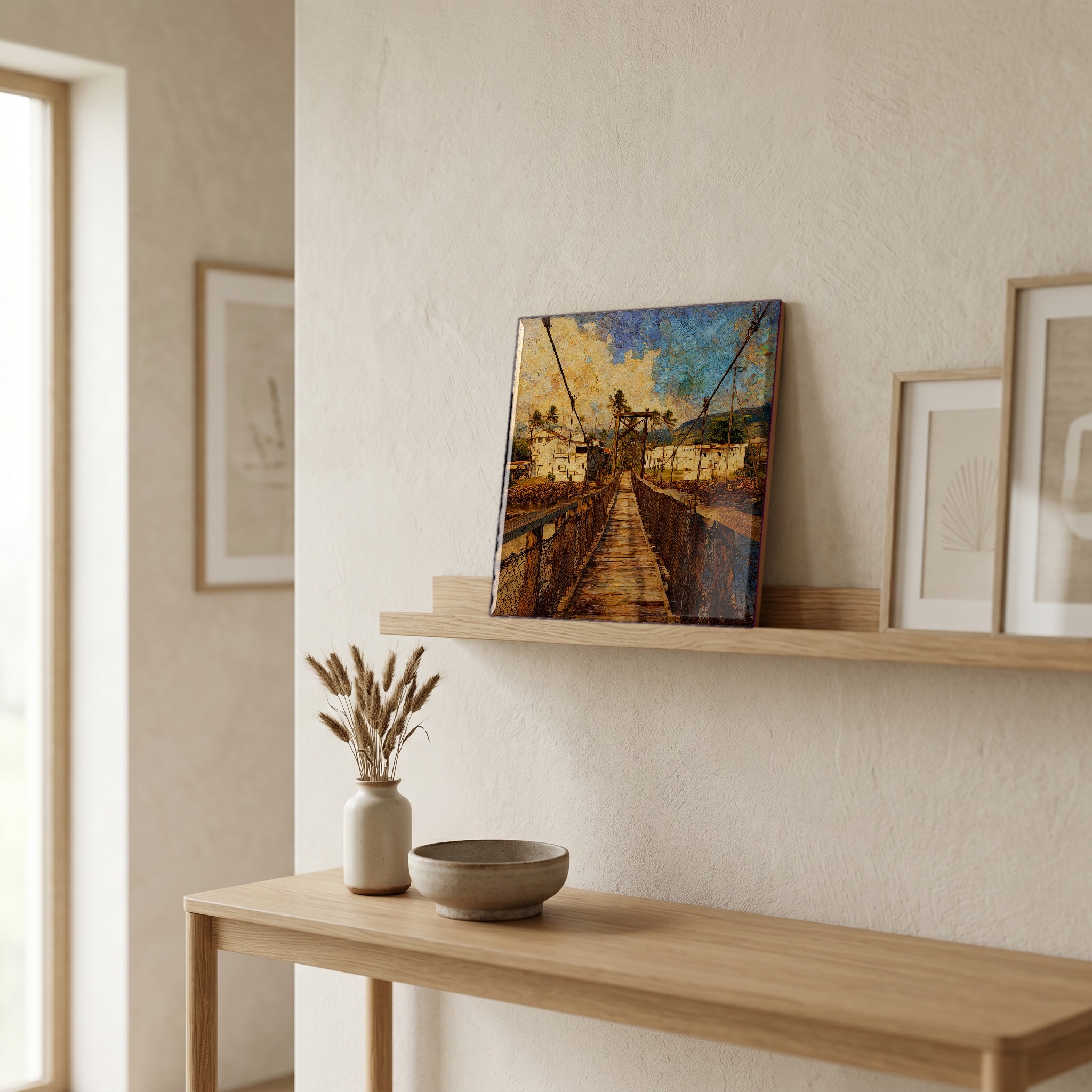
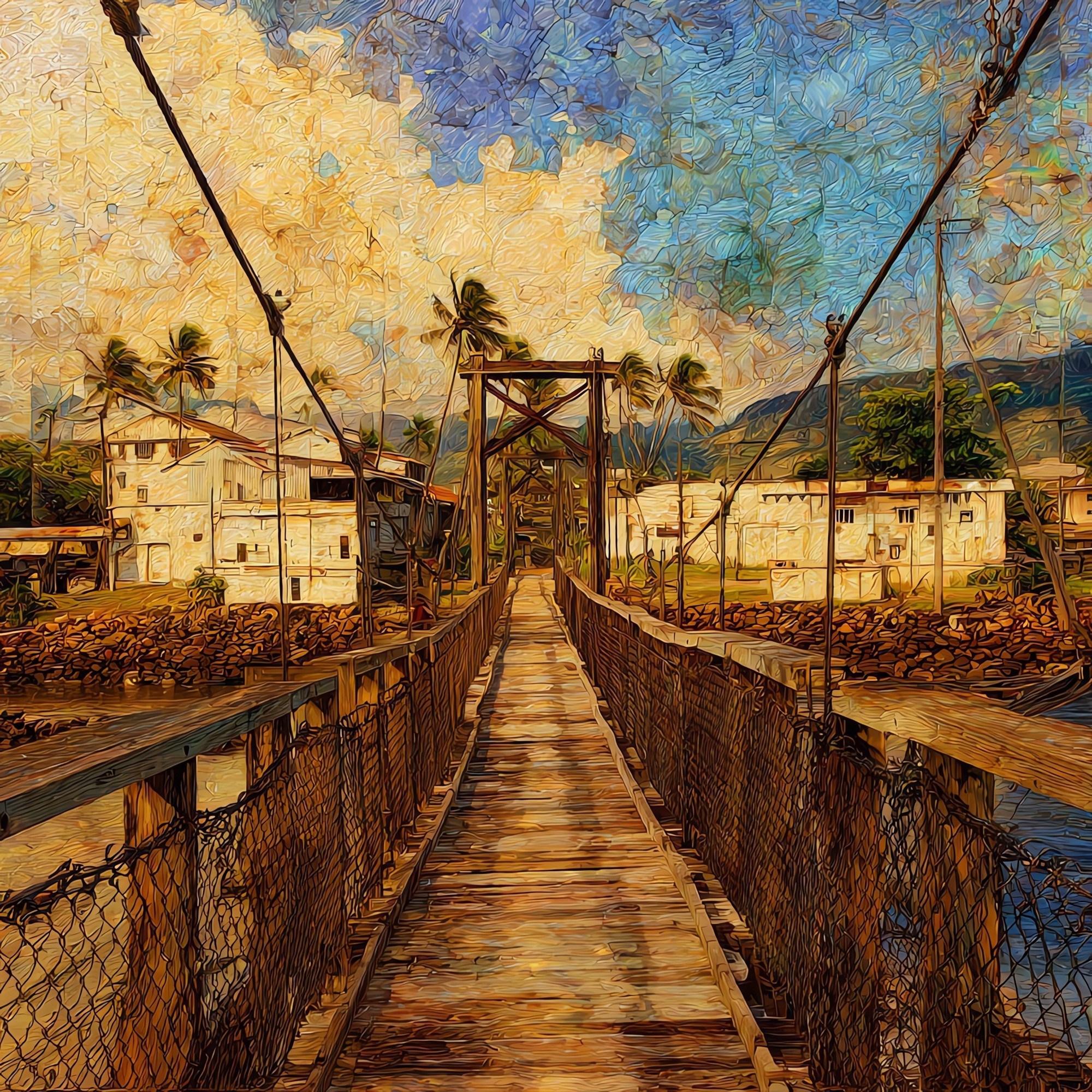
Hanapepe Swinging Bridge Kauai Ceramic Art Tile
shown on ceramic, 12-inch tileHawaii · United States
in Hanapepe, on Kauai's west side

Hanapepe Swinging Bridge Kauai Ceramic Art Tile

the bridge the hurricane took and the town put back.

Where it lives

Not only on a wall.

A small tile on the nightstand catching the morning. A larger one above the fire. Yours, wherever you spend the slow hours.
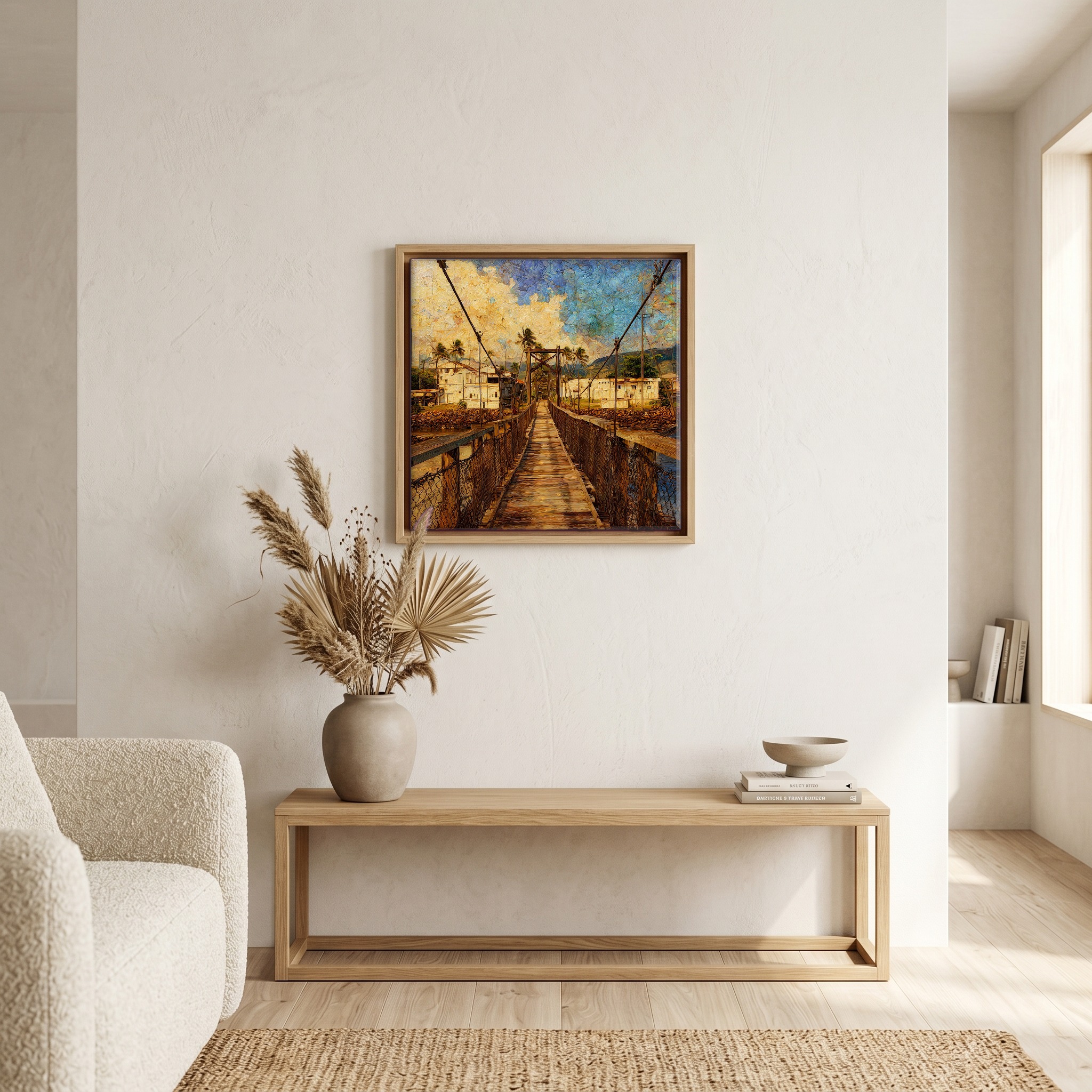
Above the bench, in a warm oak surround.
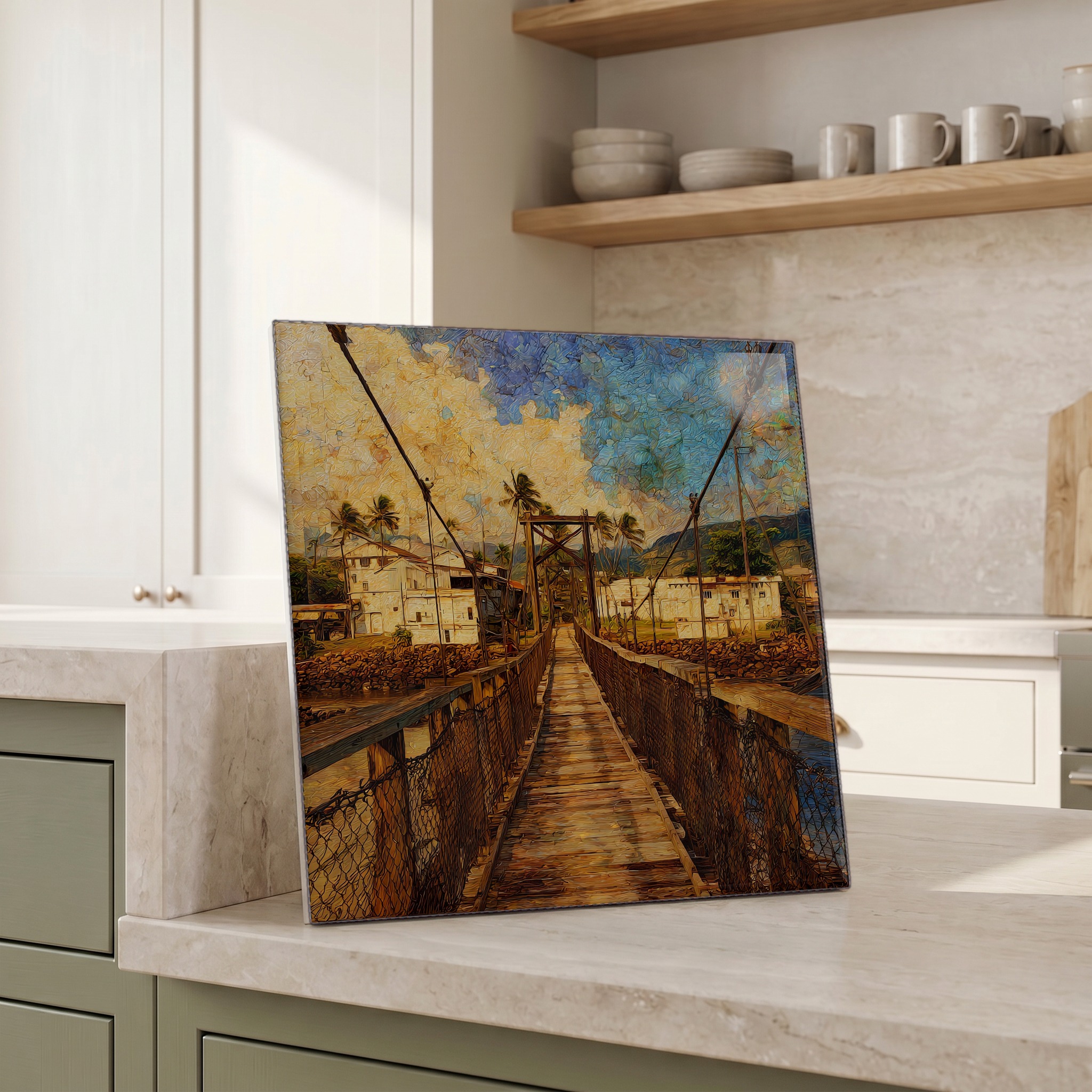
Beside the kettle, propped on the counter.
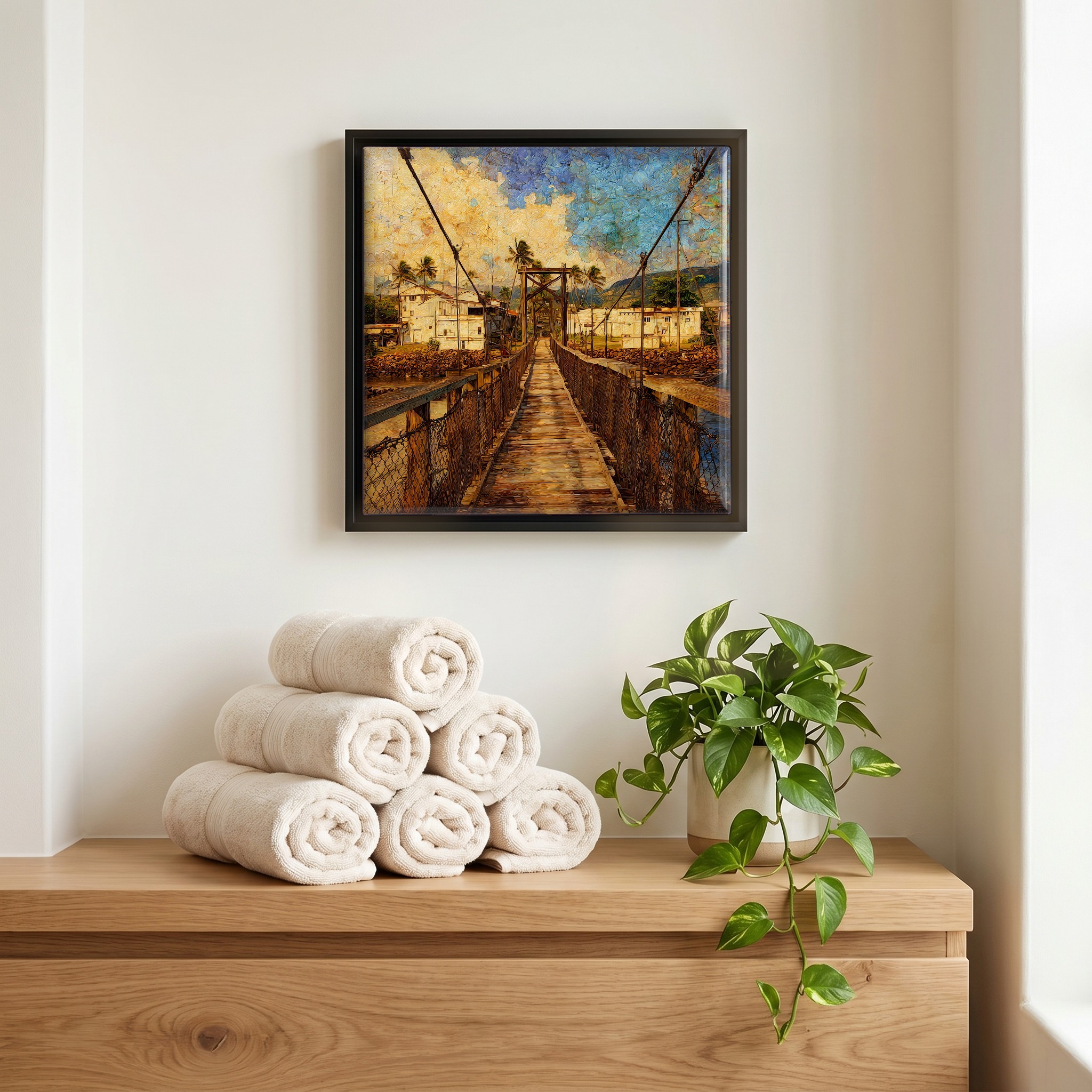
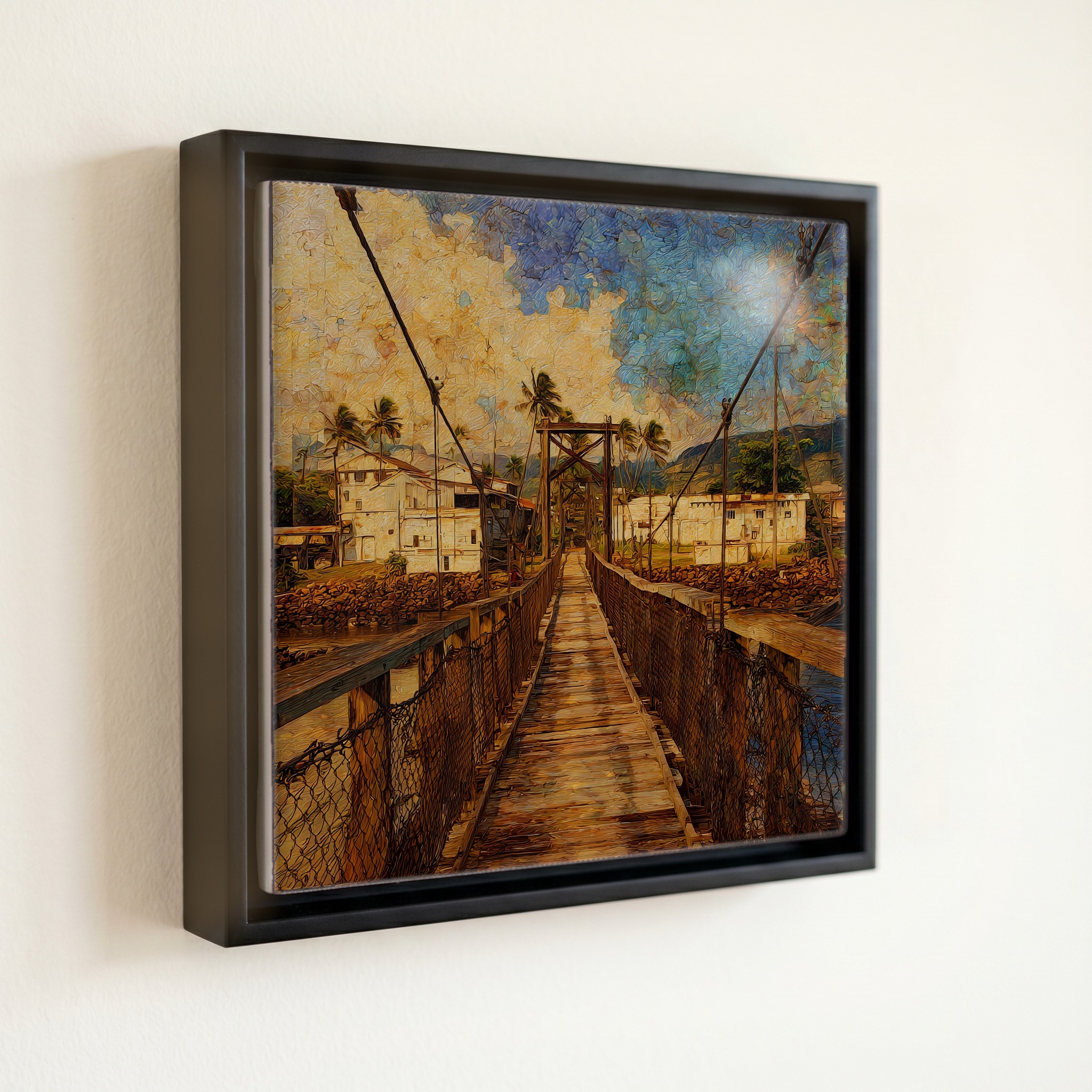
Above the linens, in a slim black surround.
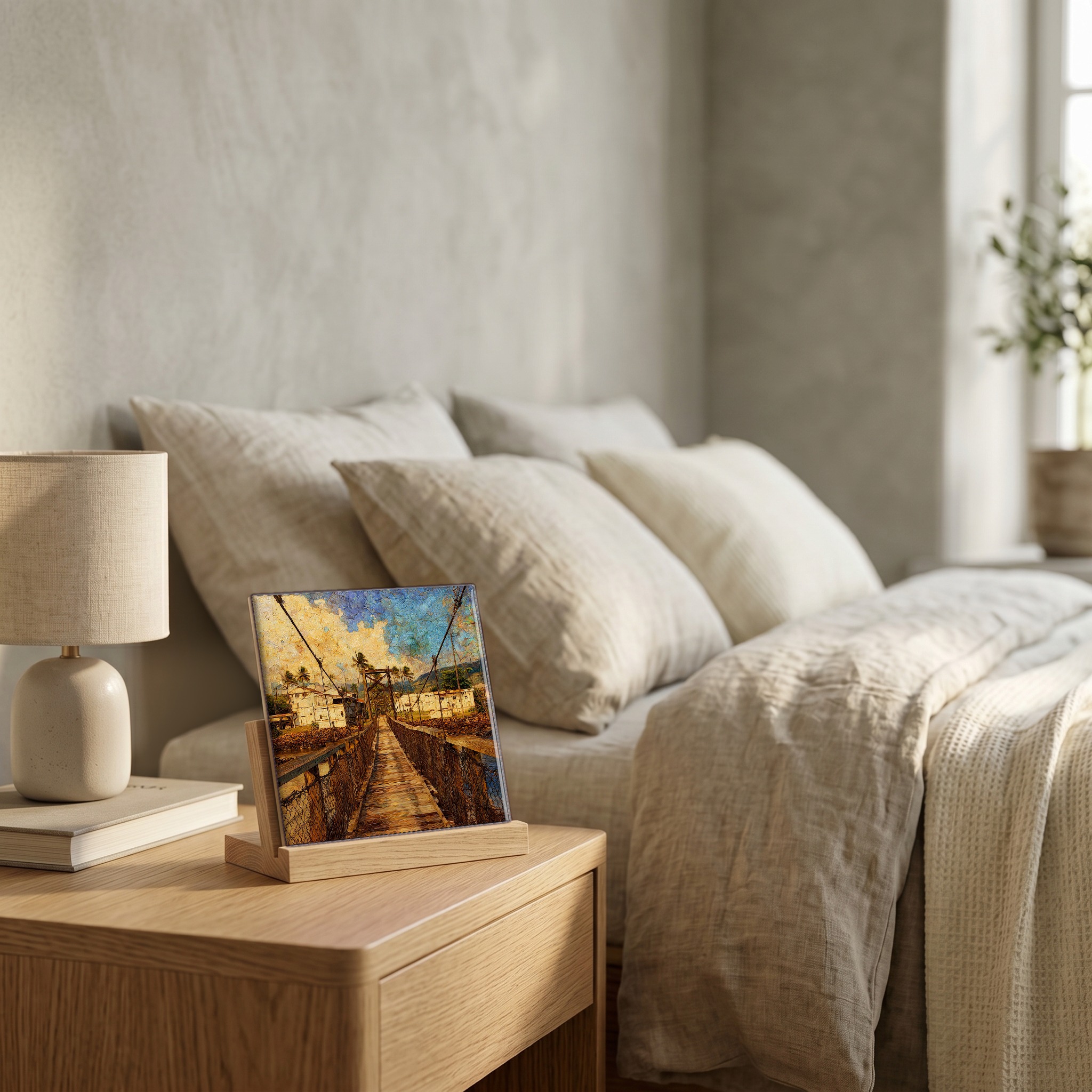
On the nightstand, on a light oak stand.
On a picture ledge, where the light comes in.
a note from the studio

A wooden plank footbridge across the Hanapepe River on the west side of Kauai, where the highway sweeps past above and the old town keeps its own slower hours. Built early in the last century so taro farmers could cross to their patches; taken apart by Hurricane Iniki in 1992 and put back by the people who lived there. It still sways a little under footfall. Hanapepe means crushed bay. The town has the kind of stillness that small Friday-night gallery towns get right when no one is trying.
from the studio
shown in a slim black floating frame · 6 × 6 in
— bring it home

Hanapepe Swinging Bridge Kauai Ceramic Art Tile, on ceramic.

Each tile is finished by hand in our Knoxville studio. Artwork is slowly infused into the ceramic surface under high heat and pressure, and rests beneath a thin glossy finish. The colour lives in the surface, not on top of it.

What kind of piece?
One tile — square or rectangle.
How big?
the popular one — counter, shelf, nightstand
6 × 6 in · 15 cm · 1.6 lb
Surface finish
A clear glossy finish — the artwork reads as if under resin. Ideal for show-pieces and framed wall art.
How it sits
A hidden cleat — sits ¼″ proud of the wall.
$58
Hand-finished and shipped from our studio at the foot of the Smokies. On your wall in about ten days.
size
6 × 6 in
15 cm
weighs
1.6 lb
solid in the hand
surface
ceramic, hand-finished
art rests beneath a thin glossy finish
from
Knoxville, TN
our family studio, at the foot of the Smokies
— start a Coaster Set

Pick any four 4-inch tiles — National Parks you've been to, a Smokies set, the four seasons of one place. $ for a set of , cork-backed, ready to live on the table.
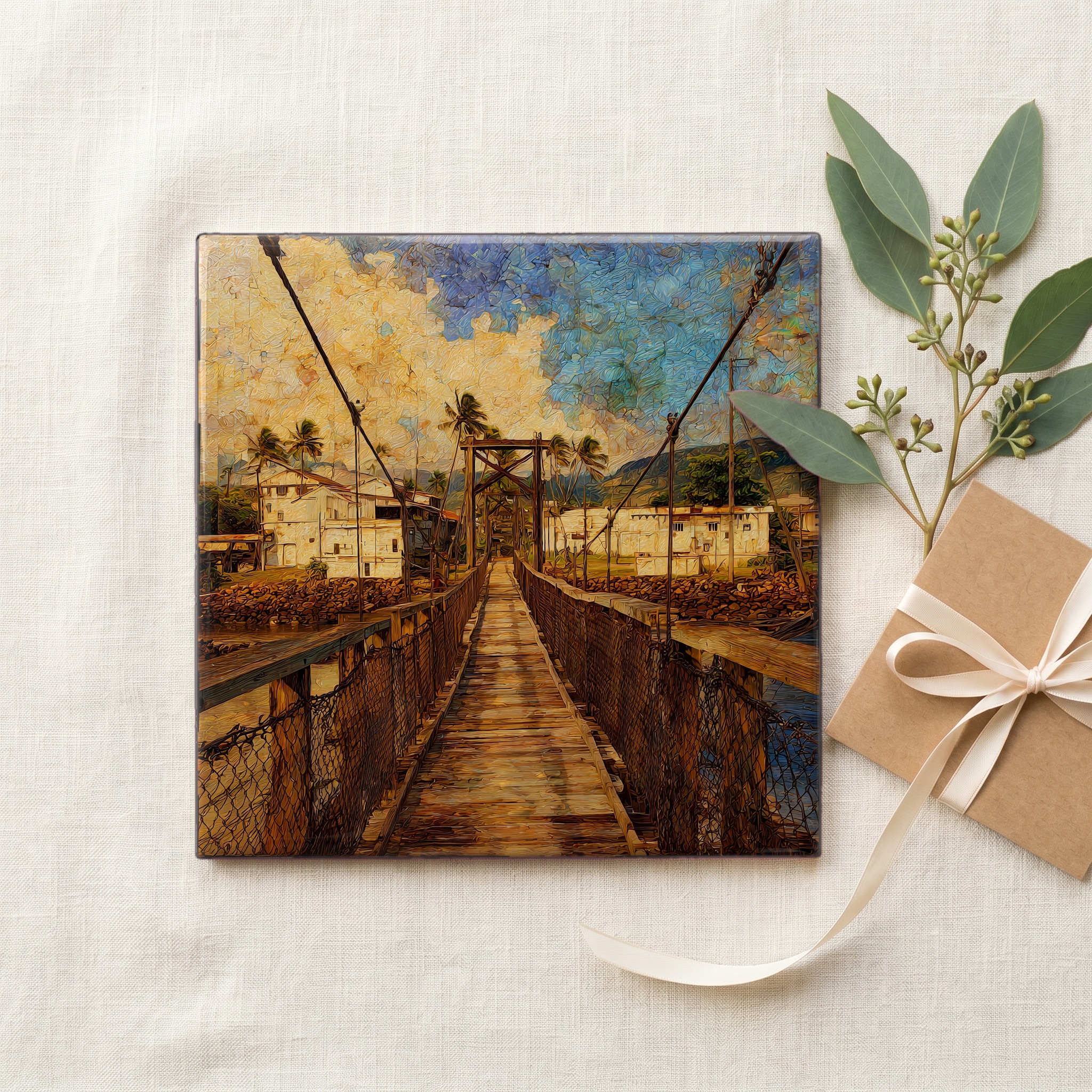
comes gift-ready
comes gift-ready

Each tile ships in a kraft box, tied with cream ribbon, with a handwritten note from the studio if you'd like to add one.
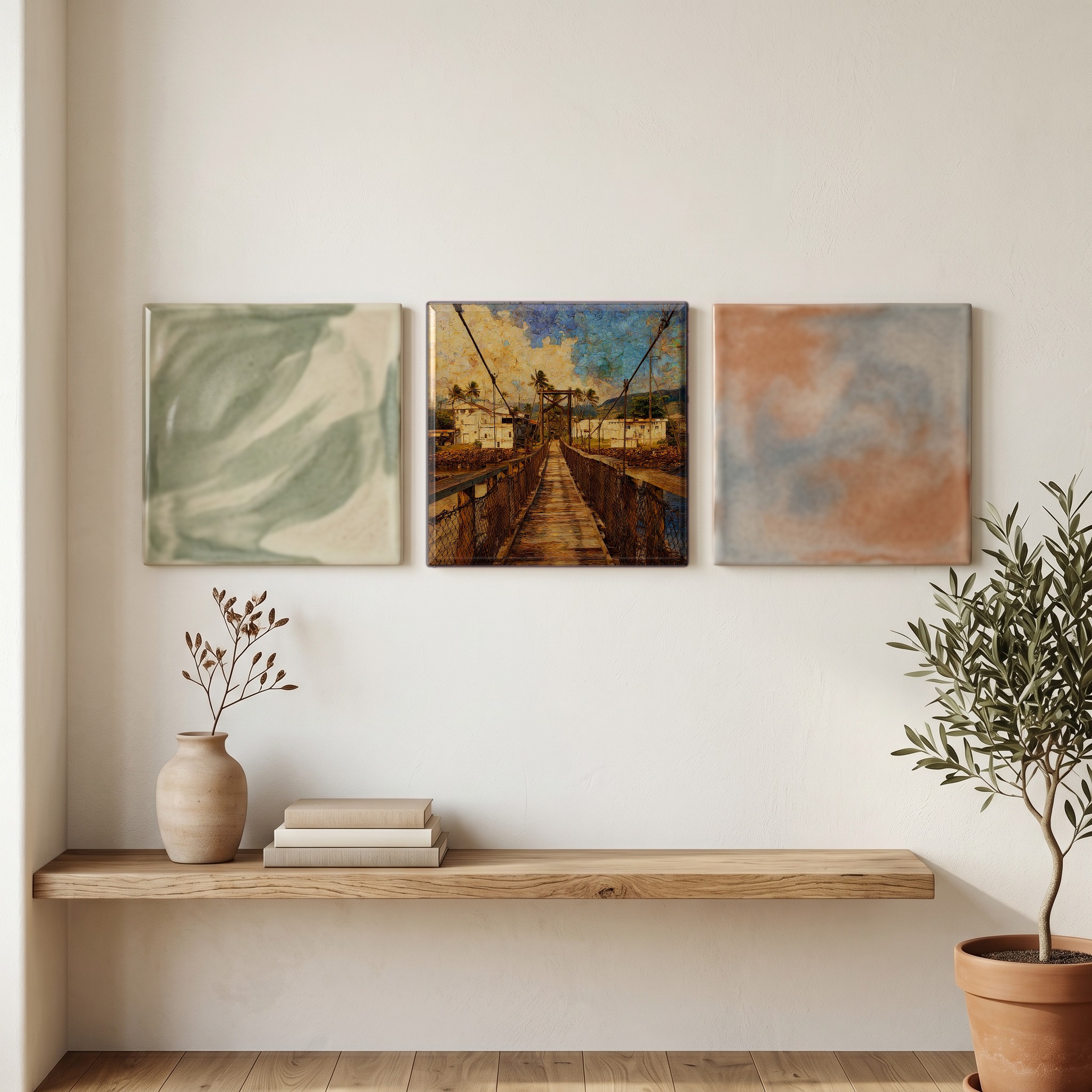
or build a grouping
or build a grouping

Three or five different vistas, hung together — a chapter of places you've been, or want to go.

about Hanapepe Swinging Bridge Kauai Ceramic Art Tile

The place, in three passes.

A little of what's known, in case you fall down the rabbit hole — or want to go see it yourself.
the place

Hanapepe sits on the south-west coast of Kauai, on the leeward Kona side of the island, about twenty miles west of Lihue along Kaumualii Highway between Kalaheo and Waimea. The swinging bridge crosses the Hanapepe River in the centre of the old town, a few minutes' walk from the gallery row on Hanapepe Road. The river drains the Hanapepe Valley, one of the longest river valleys on Kauai, which cuts inland toward the Olokele canyon system above the Waimea Plateau. The name Hanapepe is Hawaiian for crushed bay, attributed to an old landslide along the coast. Two miles south, traditional Hawaiian salt-making continues at the Hanapepe Salt Ponds.

— informed by Wikipedia: Hanapepe
the visit

The bridge is a short wooden-plank footbridge suspended on steel cables across the Hanapepe River, free to cross and open through daylight hours. Originally built in the early twentieth century so taro farmers and residents on the west bank could reach the town centre, it was dismantled by Hurricane Iniki when the storm crossed Kauai on September 11, 1992 with sustained winds near 145 miles per hour. The community rebuilt the bridge by hand in the years after. It still sways noticeably underfoot, a small deliberate sway rather than a thrilling one. Access is from a short path behind the buildings along Hanapepe Road in the historic town centre; parking is on the road.

the silence

Hanapepe calls itself Kauai's biggest little town and runs on weekly rhythms rather than the resort-day clock that organises the rest of the island. The Friday Night Art Walk, held every Friday evening on Hanapepe Road since the mid-1990s, brings the galleries, the food trucks, and the talk-story crowd out for a few hours; for the rest of the week the town keeps the half-asleep pace of the sugar-mill years. The animators of Lilo and Stitch (2002) used Hanapepe as visual reference for the film's small Hawaiian town. The bridge belongs to that slower clock. Wooden planks, a steady creak, the brown river underneath, the highway humming overhead but never quite getting in.

— informed by Wikipedia: Hanapepe
where
United States · Kauai County, Hawaii
position
21.9100° N · 159.5900° W
the neighborhood

What's nearby.

A handful of named places within an hour's walk or short drive. Some we've already painted; some we will.
3 km S
Salt Pond Beach Park
beach with traditional salt ponds
2 km E
Hanapepe Valley Lookout
scenic overlook
4 km E
Port Allen Harbor
small commercial harbor
4 km E
Glass Beach
sea-glass beach
19 km NW
Waimea Canyon
river canyon
N
Hanapepe Swinging Bridge Kauai Ceramic Art Tile
Salt Pond Beach Park
Hanapepe Valley Lookout
Port Allen Harbor
Glass Beach
Waimea Canyon
common questions

What people ask.

A few questions we get about Hanapepe Swinging Bridge Kauai Ceramic Art Tile — and about bringing the piece home.
about the place

The bridge crosses the Hanapepe River in the historic town of Hanapepe on the south-west coast of Kauai, Hawaii, about twenty miles west of Lihue along Kaumualii Highway. It sits in the centre of the old town, a few minutes' walk from the galleries on Hanapepe Road.

The original wooden footbridge was put up in the early twentieth century so taro farmers and residents on the west bank of the Hanapepe River could walk to the town centre. The current bridge is the community rebuild that followed Hurricane Iniki in 1992.

Yes. Hurricane Iniki made landfall on Kauai on September 11, 1992 with sustained winds near 145 miles per hour and dismantled the swinging bridge along with much of the island's infrastructure. Residents and volunteers rebuilt it by hand in the years after the storm.

Yes. The Hanapepe Swinging Bridge is free to cross during daylight hours. Access is from a short path off Hanapepe Road in the historic town centre, and parking is along the road. The bridge is pedestrian only and sways noticeably underfoot.

The slogan reflects the town's mix of historic plantation-era buildings, working art galleries, and small-town pace on an island better known for its resort coasts. Hanapepe was once one of Kauai's largest commercial centres during the sugar-mill years and still carries that older town fabric.

Yes. The animation team for Disney's Lilo and Stitch (2002) used Hanapepe as visual reference for the film's small Hawaiian town. The wooden storefronts, the quiet streets, and the bridge area all appear in reworked form across several scenes.

Hanapepe means crushed bay in Hawaiian. The name is attributed to a long-ago landslide along the coast that altered the shoreline. The town sits at the mouth of the Hanapepe River, which drains one of the longest river valleys on Kauai.

about the piece in your home

It's been a meaningful gift for many of our customers with family or memories on the west side of Kauai. The bridge is a quiet local landmark rather than a postcard icon, which is part of why it lands as a gift. A Small or Medium with a handwritten note from the studio carries well.

The blue-greens of the river and the deep wood-browns of the bridge sit comfortably in coastal-modern, organic-modern, and warm-minimalist rooms. It pairs especially well with rattan, oak, and unbleached linen. The artwork is quiet enough to anchor a wall without dominating it.

Yes. Coastal-modern as a category has shifted from beach pastels toward darker, more painterly water imagery (rivers, harbours, mangroves) and the Hanapepe tile fits that shift. It works alongside the moody-coastal direction that has held through the last several seasons.

A single Large reads well above a standard 84-inch sofa or a long console. For a stronger statement, a 4-tile Mural fills a 36-inch span and a 9-tile Mural carries above a sectional or a fireplace mantel. Smaller rooms tend to land on a Medium.

Yes, in the Dura Satin or Matte finish. Both are scratch-resistant and engineered for vertical wet-area installation. The Glossy finish is recommended for dry framed wall art only. Backsplashes, shower walls, and powder rooms all work in Dura Satin.

A microfibre cloth and water. The colour is slowly infused into the ceramic surface under high heat and pressure and sits beneath a thin glossy finish, so the surface is non-porous and easy to wipe. Avoid abrasive sponges and acidic cleaners.

Yes. Every WenderVista tile is made by our family studio in Knoxville, Tennessee. The artwork is curated by Reid Wender, hand-finished in-house, and not licensed from any other source. The Hanapepe Swinging Bridge piece is exclusive to WenderVista.

if this one stayed with you

A few you might also love.

Hand-picked by the eye that found Sorapis. Same air, same kind of quiet.