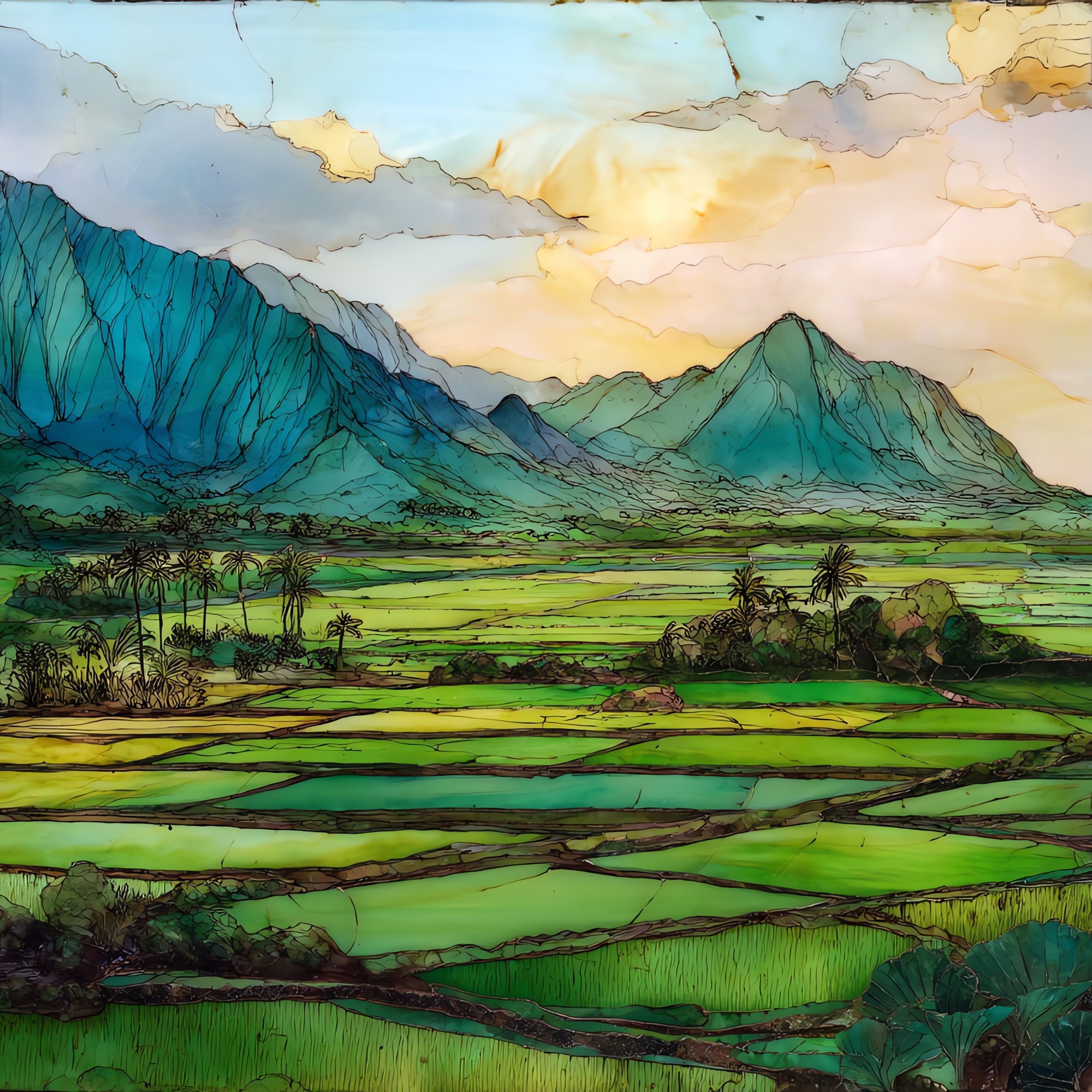
Hanalei Taro Fields Kauai Ceramic Art Tile
— — a valley flat enough to hold the sky.
Not only on a wall.

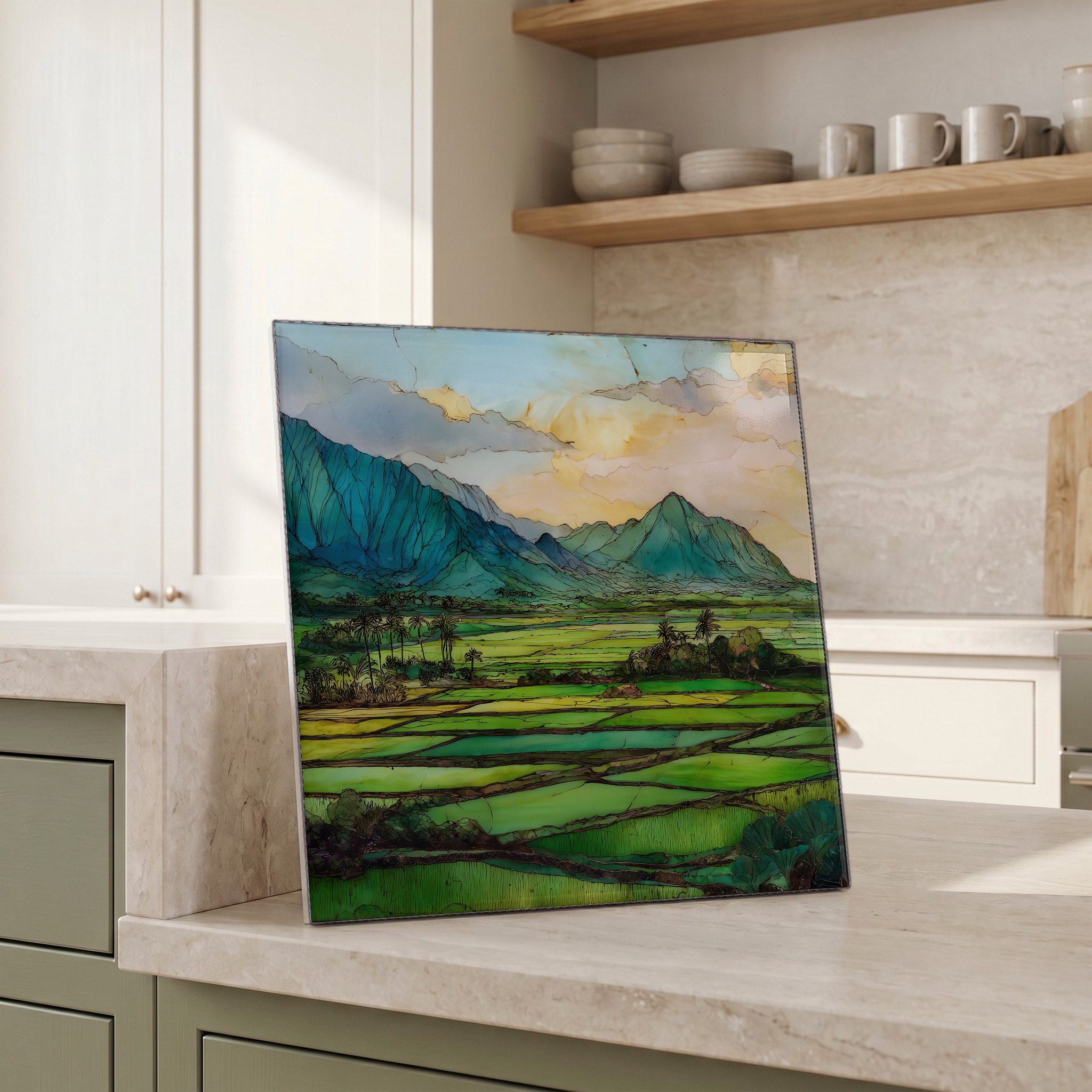


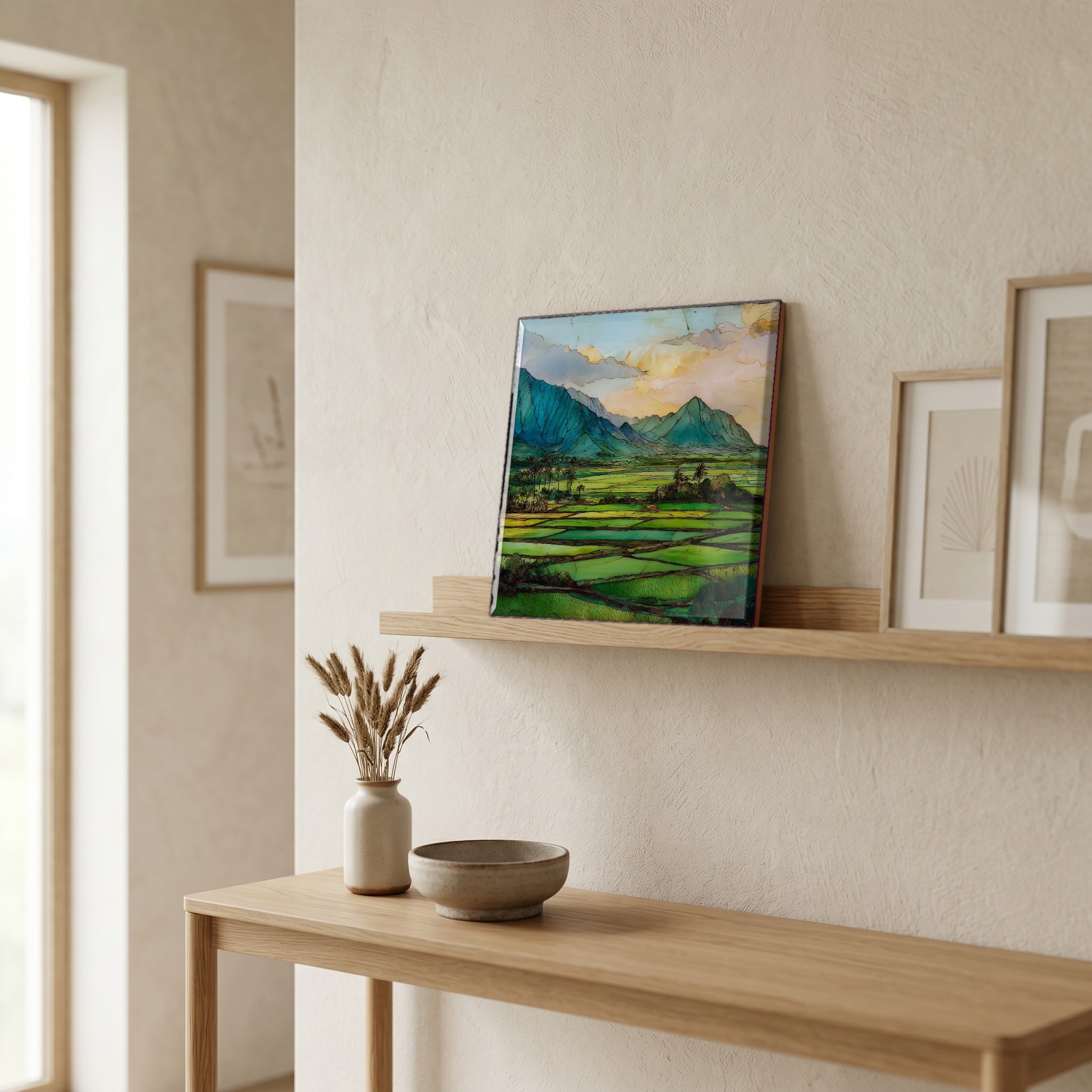
“The taro fields below Princeville. Flooded paddies stitched between the Namolokama ridge and the Hanalei River, working farms whose families have grown kalo on this floor for generations. The lookout pulls cars off Kuhio Highway most afternoons; nobody stays long. The same paddies hold the koloa and the 'alae 'ula, birds that have nowhere else left to go. From above, the valley reads as panes of water under a wall of dark green.
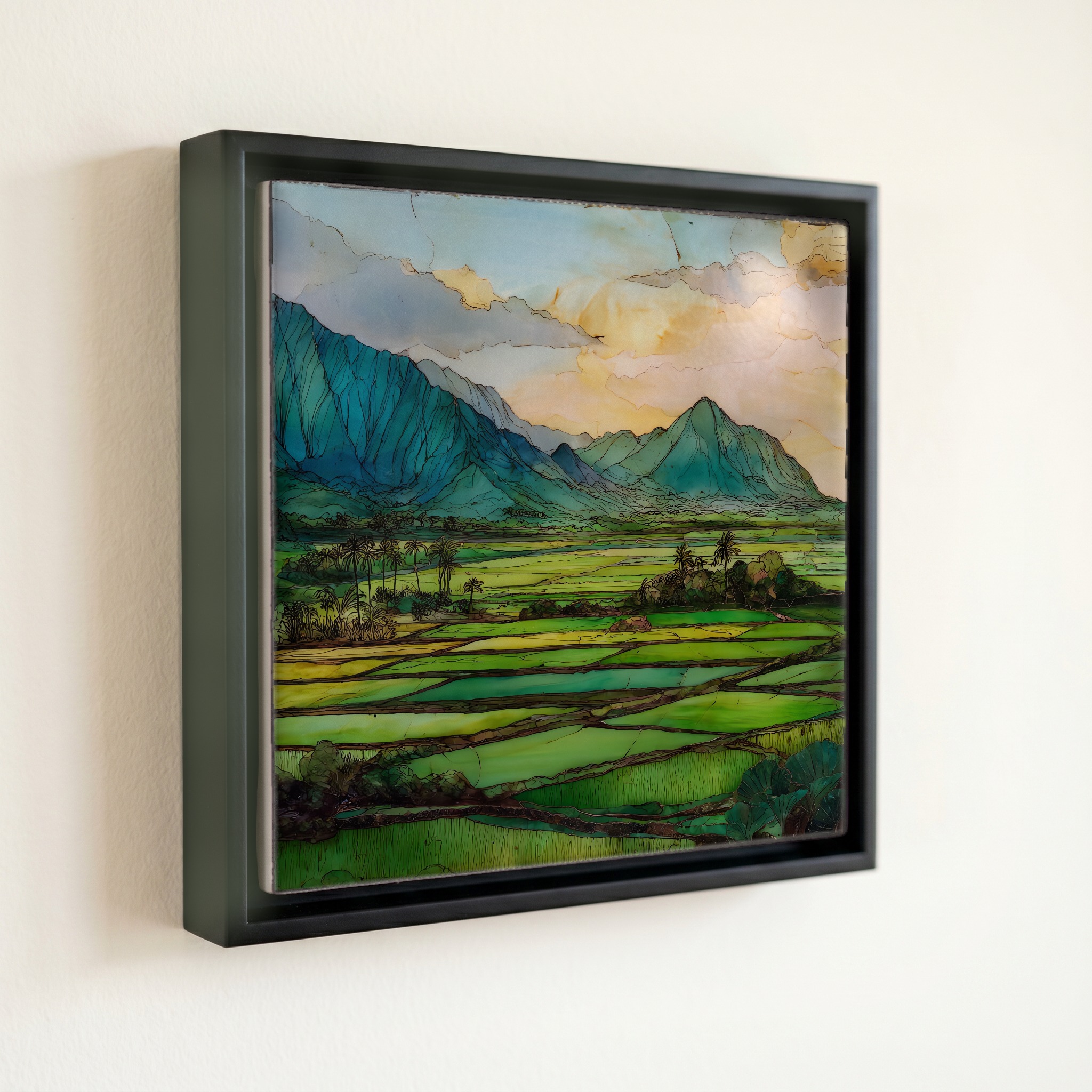
Hanalei Taro Fields Kauai Ceramic Art Tile, on ceramic.
Each tile is finished by hand in our Knoxville studio. Artwork is slowly infused into the ceramic surface under high heat and pressure, and rests beneath a thin glossy finish. The colour lives in the surface, not on top of it.
Pick any four 4-inch tiles — National Parks you've been to, a Smokies set, the four seasons of one place. $ for a set of , cork-backed, ready to live on the table.

Each tile ships in a kraft box, tied with cream ribbon, with a handwritten note from the studio if you'd like to add one.

Three or five different vistas, hung together — a chapter of places you've been, or want to go.
The place, in three passes.
Hanalei Valley sits on the north shore of Kauai, the oldest of the main Hawaiian islands. The Hanalei River drops out of the Namolokama ridge and runs the length of the valley before reaching Hanalei Bay. The flat alluvial bottom, a few hundred acres of it, stays wet through every season and floods readily for kalo, the Hawaiian word for taro. Roughly 60 percent of all the taro grown in Hawaii comes from this valley. The viewing pull-off is on Kuhio Highway (Route 560), just past the Princeville turnoff; the fields themselves are private working farms and not open to the public. Most of the valley floor falls within the Hanalei National Wildlife Refuge, established by the U.S. Fish and Wildlife Service in 1972.
Each taro paddy, called lo'i kalo in Hawaiian, is a shallow flooded basin fed by a system of diverted streams that pre-date Western contact by centuries. The Hanalei River and its tributaries fall off the Namolokama ridge above, where waterfalls show after heavy rain and stay for a day or two before they go again. The same flooded paddies double as habitat for four endangered Hawaiian waterbirds: the koloa maoli (Hawaiian duck), the 'alae 'ula (Hawaiian moorhen), the 'alae ke'oke'o (Hawaiian coot), and the ae'o (Hawaiian stilt). Farmers and the U.S. Fish and Wildlife Service share the valley through a cooperative-farming agreement that keeps the lo'i wet enough for both crop and bird.
The view of the valley is from the Hanalei Valley Lookout on Kuhio Highway, just past the Princeville roundabout. It is a small unmarked pull-off; the fields below are private working farms and the road that descends into the valley, Ohiki Road, ends at a one-lane bridge that floods after heavy rain. The refuge itself is closed to the public, and the cooperative farms supply much of the poi sold across the islands. The best light comes in late afternoon, when the ridge throws a long shadow across the floor and the lo'i hold the colour of the sky.