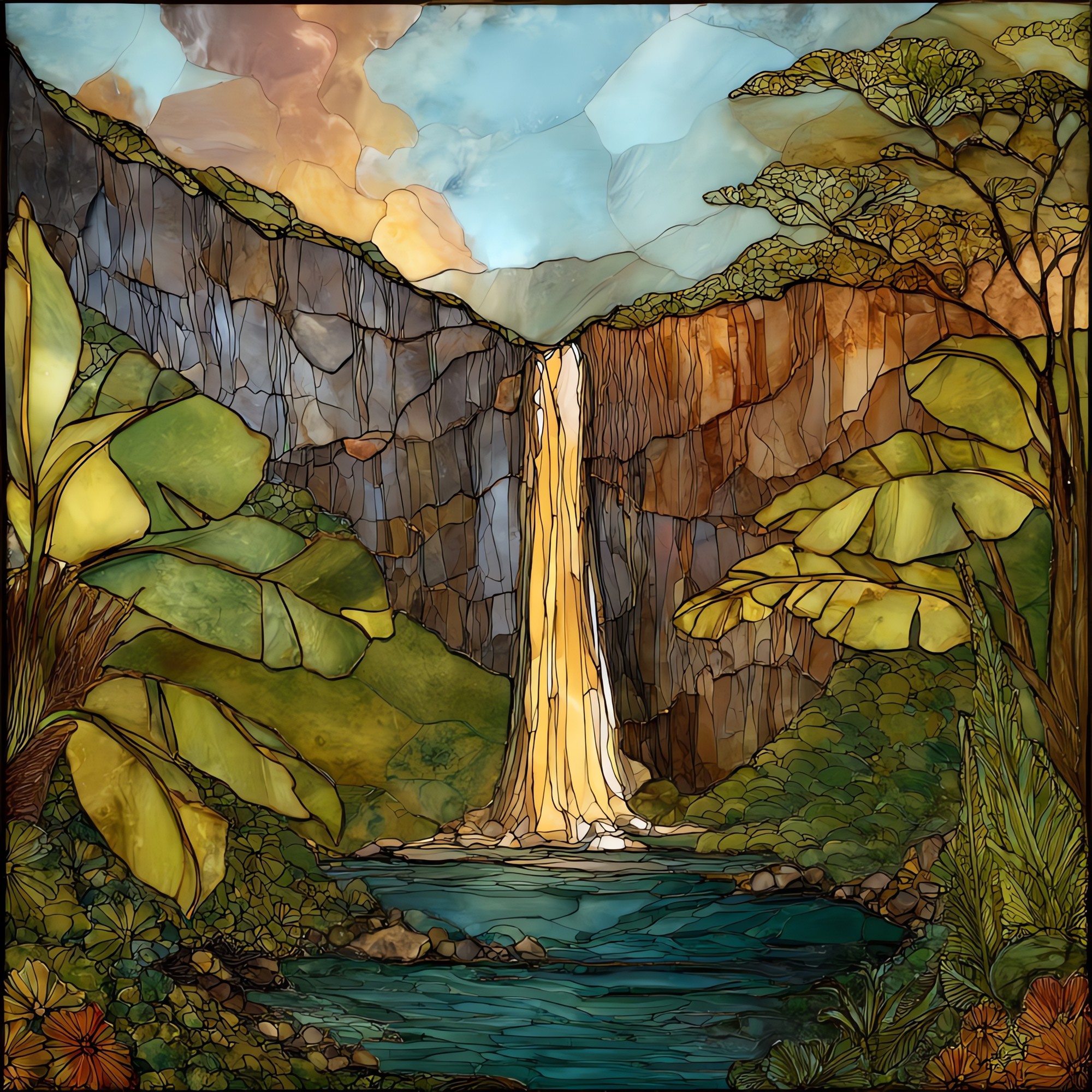
Hanakapiai Falls Kauai Ceramic Art Tile
— — water down a wall of ferns.
Not only on a wall.

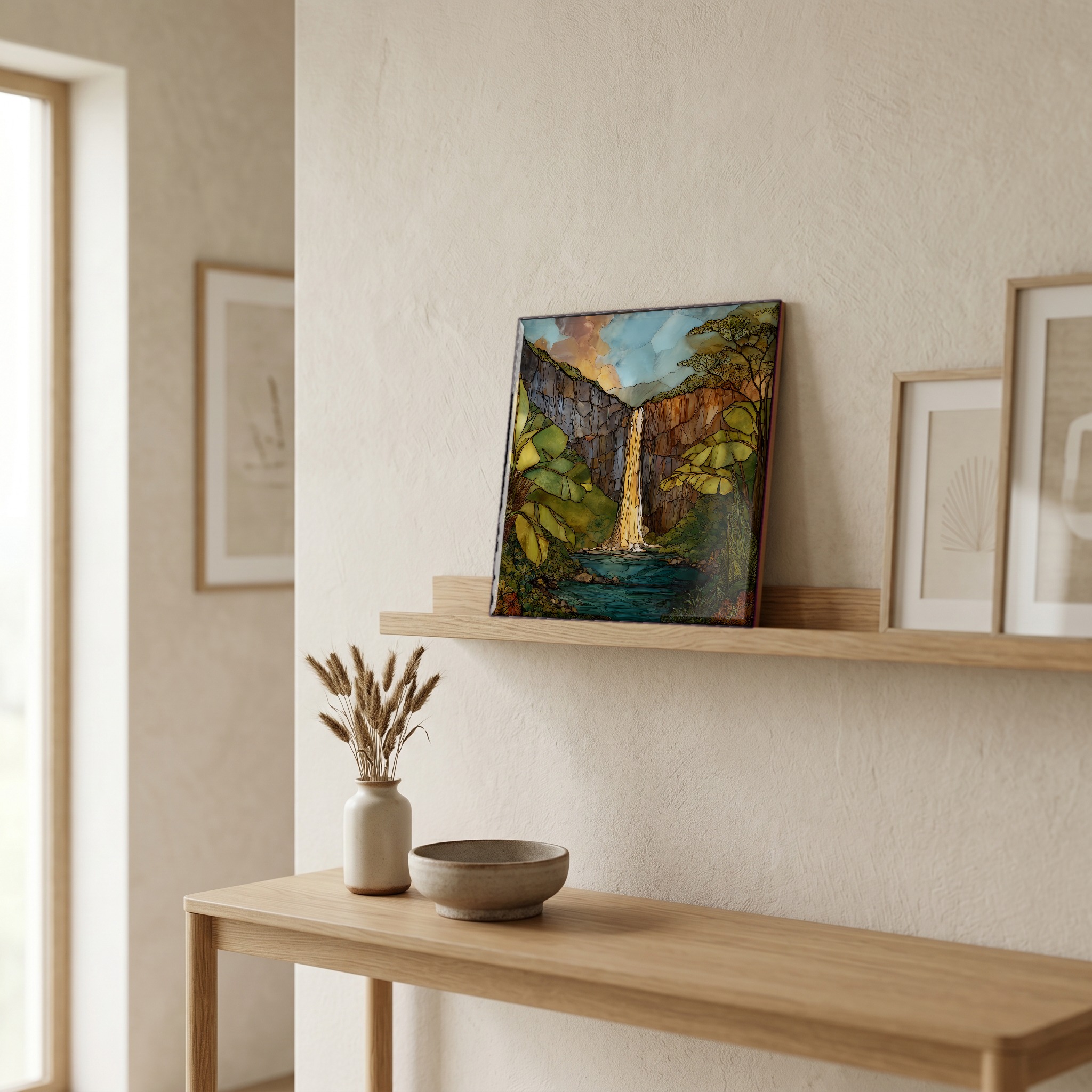
“A waterfall at the back of a valley on Kauaʻi's north shore. You don't drive to it. You park at Hāʻena, walk two miles up the Kalalau Trail to the beach, then turn inland and follow the stream another two miles through wet rock and hala. The valley narrows. The light gets quieter. Then a single ribbon of water falls about three hundred feet down a fern-covered wall into a cold pool. Hikers eat sandwiches without saying much. The valley has been doing this for a long time before anyone walked in to find it.
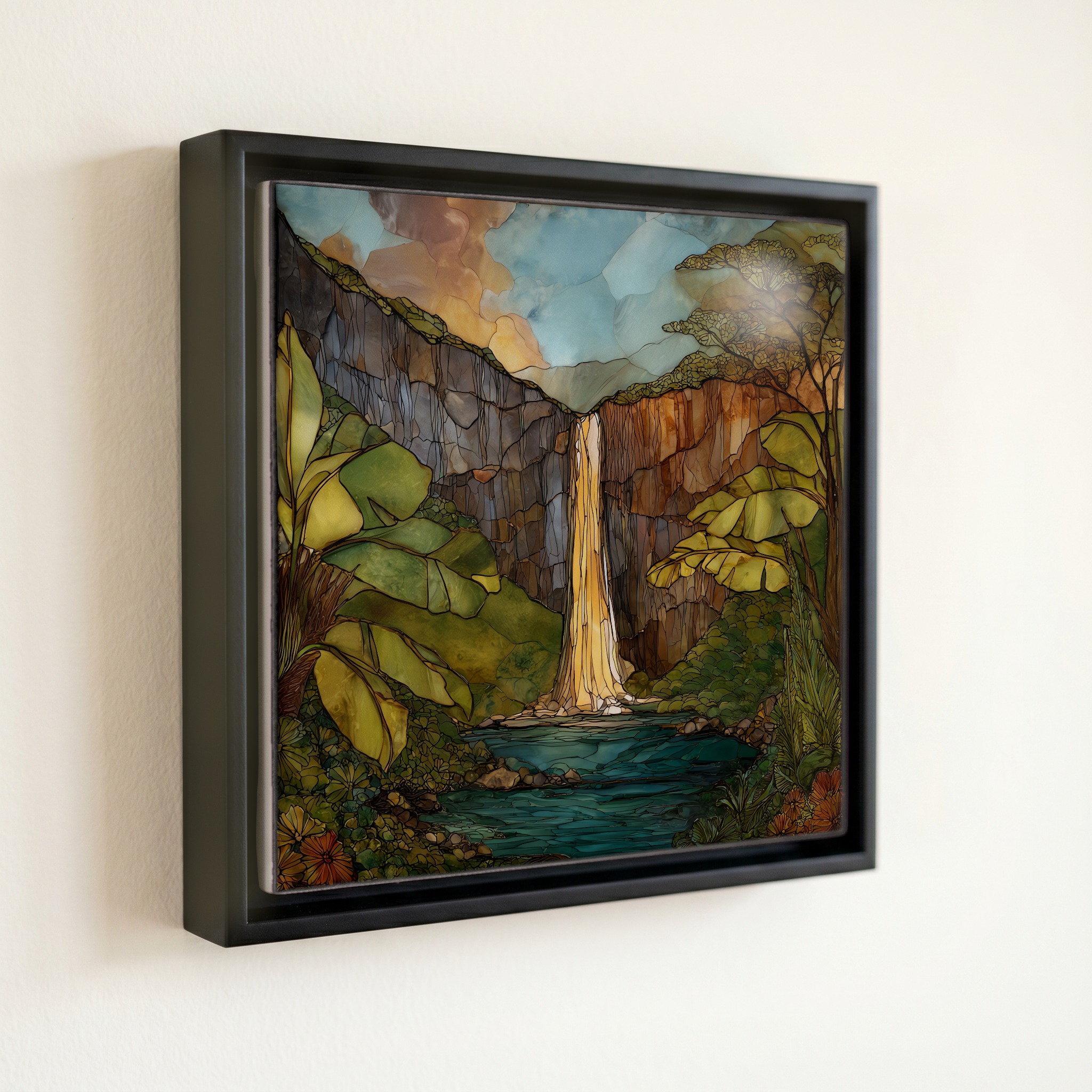
Hanakapiai Falls Kauai Ceramic Art Tile, on ceramic.
Each tile is finished by hand in our Knoxville studio. Artwork is slowly infused into the ceramic surface under high heat and pressure, and rests beneath a thin glossy finish. The colour lives in the surface, not on top of it.
Pick any four 4-inch tiles — National Parks you've been to, a Smokies set, the four seasons of one place. $ for a set of , cork-backed, ready to live on the table.
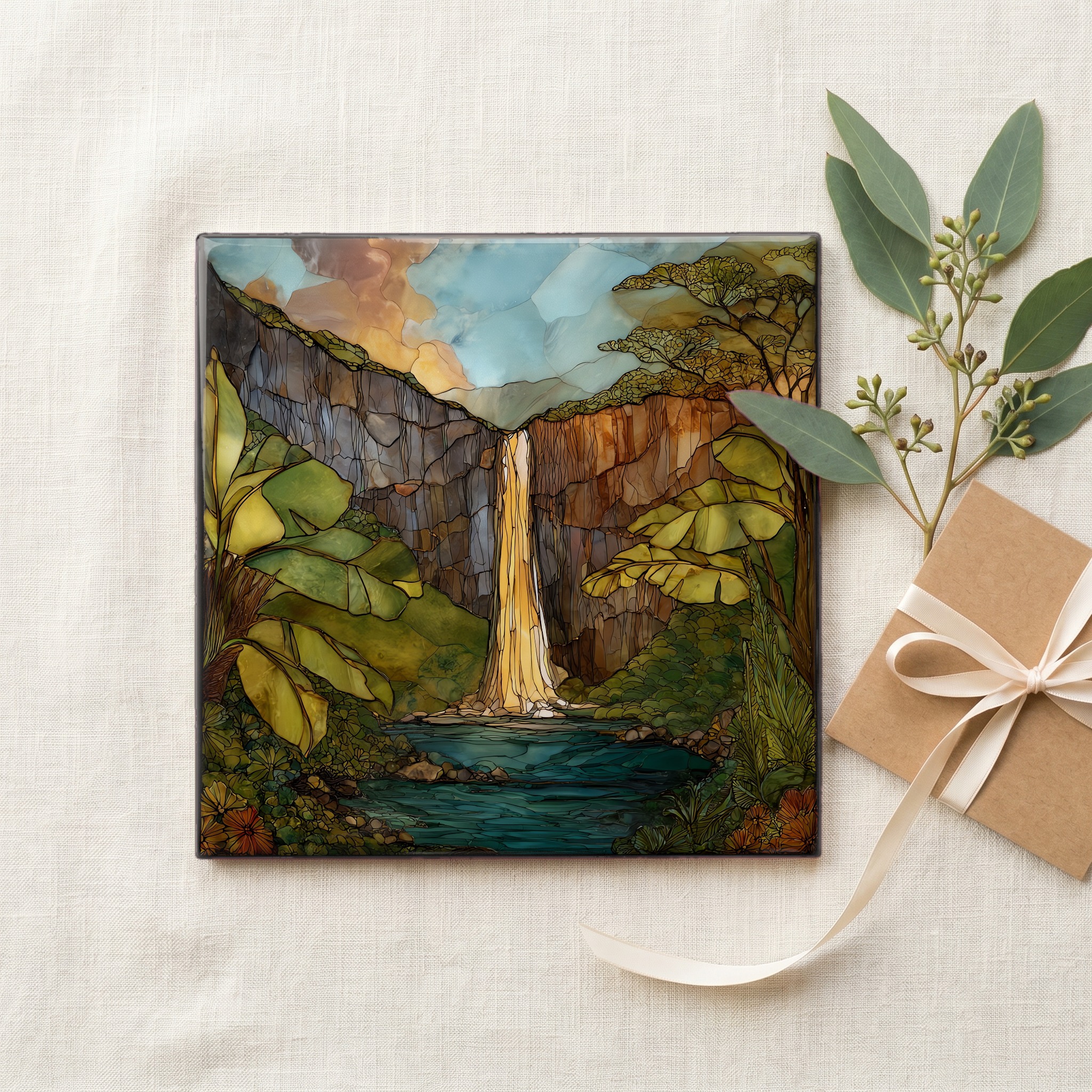
Each tile ships in a kraft box, tied with cream ribbon, with a handwritten note from the studio if you'd like to add one.

Three or five different vistas, hung together — a chapter of places you've been, or want to go.
The place, in three passes.
Hanakāpīʻai Falls drops at the back of Hanakāpīʻai Valley on the north shore of Kauaʻi, inside the Nā Pali Coast State Wilderness Park. The trail in begins at Keʻe Beach at the end of Kūhiō Highway, where Hāʻena State Park caps the road. From there it is four miles each way along the Kalalau Trail to the falls, with a stream crossing at Hanakāpīʻai Beach and another two miles inland through the valley. Hawaiʻi's Department of Land and Natural Resources requires an advance reservation for Hāʻena entry, and a separate permit for any travel past Hanakāpīʻai Beach. The valley sits below the sea cliffs that give the Nā Pali coast its name.
The falls drop where Hanakāpīʻai Stream tips out of its upper catchment behind the Nā Pali ridgeline. Kauaʻi's wet interior is one of the rainiest places on Earth. The summit of Mount Waiʻaleʻale, at the centre of the island, averages more than 400 inches of rain a year, and the runoff feeds the north-shore valley streams. The water falls roughly three hundred feet down a basalt headwall into a small pool at the back of the valley. State signs warn against swimming directly under the column: the rock face above the pool sheds debris, and the stream itself can rise within minutes when rain reaches the head of the valley. The same Hanakāpīʻai Stream crossing down at the beach is the one most often photographed and most often misjudged.
Reaching the falls means walking the first four miles of the Kalalau Trail, which begins at Hāʻena State Park at the end of Kauaʻi's north-shore road. Since 2019, day entry to Hāʻena requires an advance online reservation through the State of Hawaiʻi reservation system, with a separate parking slot for visitors not arriving by shuttle. The trail's first two miles drop down to Hanakāpīʻai Beach. The inland leg to the falls is unmaintained, slick when wet, and crosses Hanakāpīʻai Stream several times. The stream is closed to crossing when in flood. Permits from the Department of Land and Natural Resources are required to continue past the beach toward Kalalau. Most fit hikers turn it around in eight to ten hours.