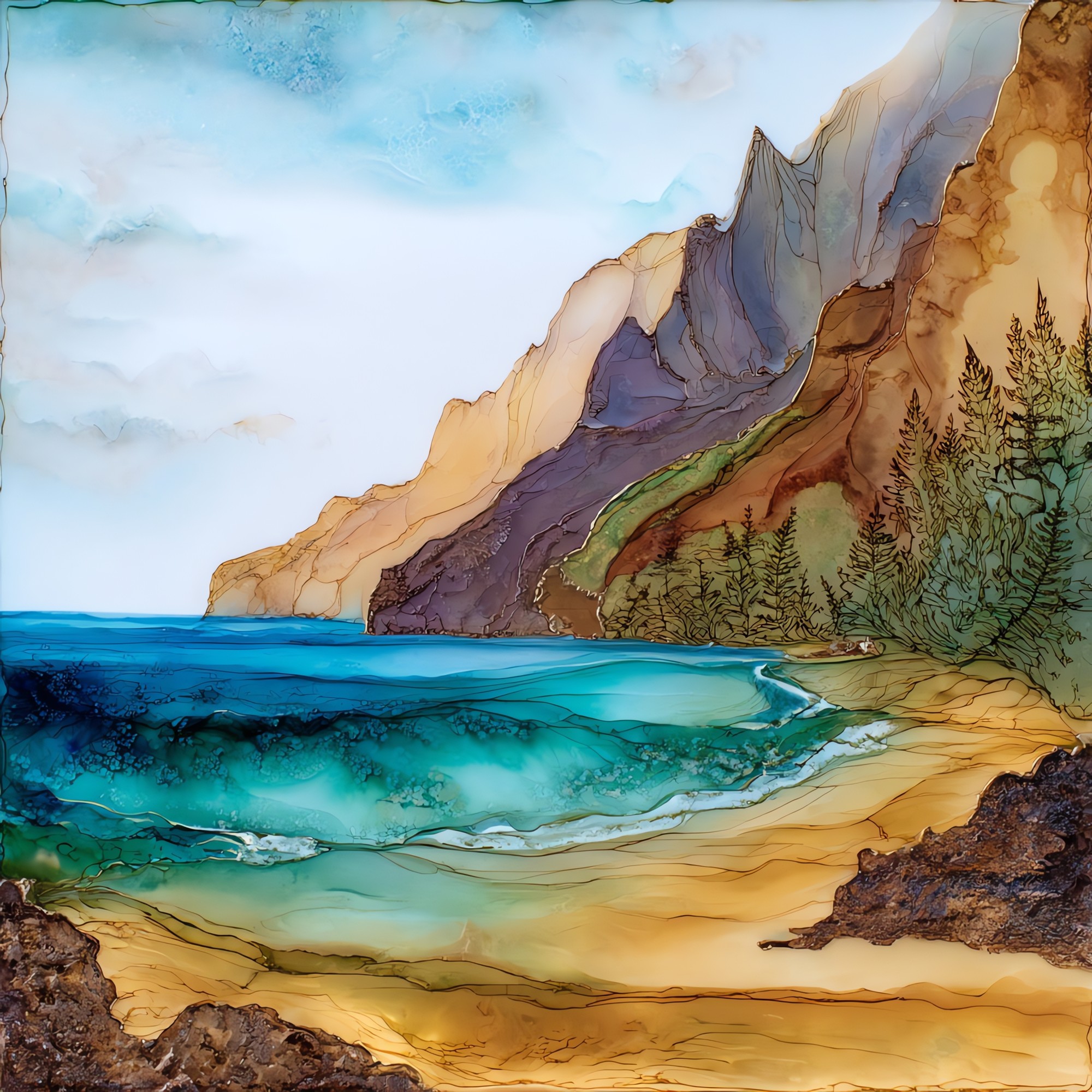
Hanakapiai Beach Kauai Ceramic Art Tile
— — the beach the winter takes back.
Not only on a wall.
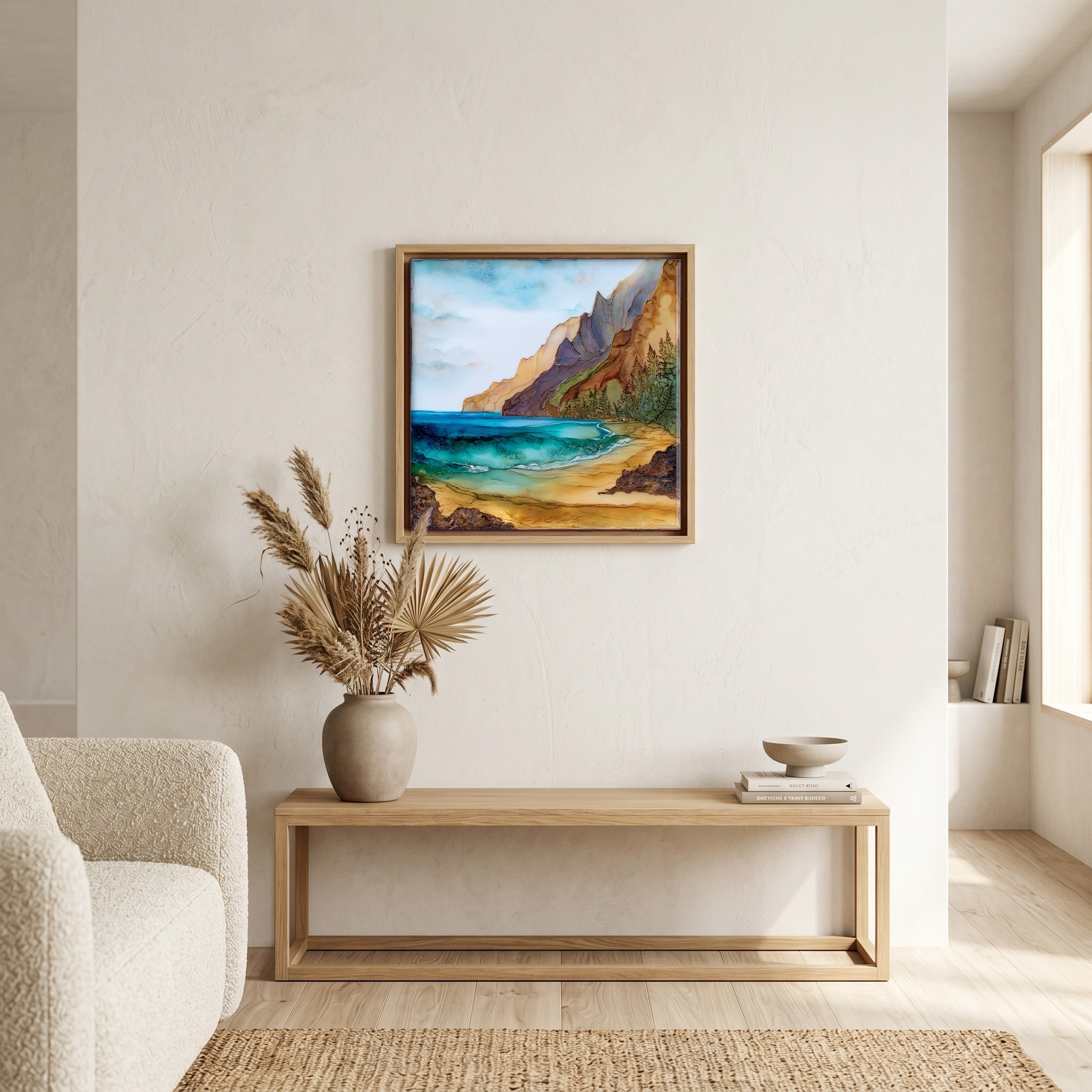

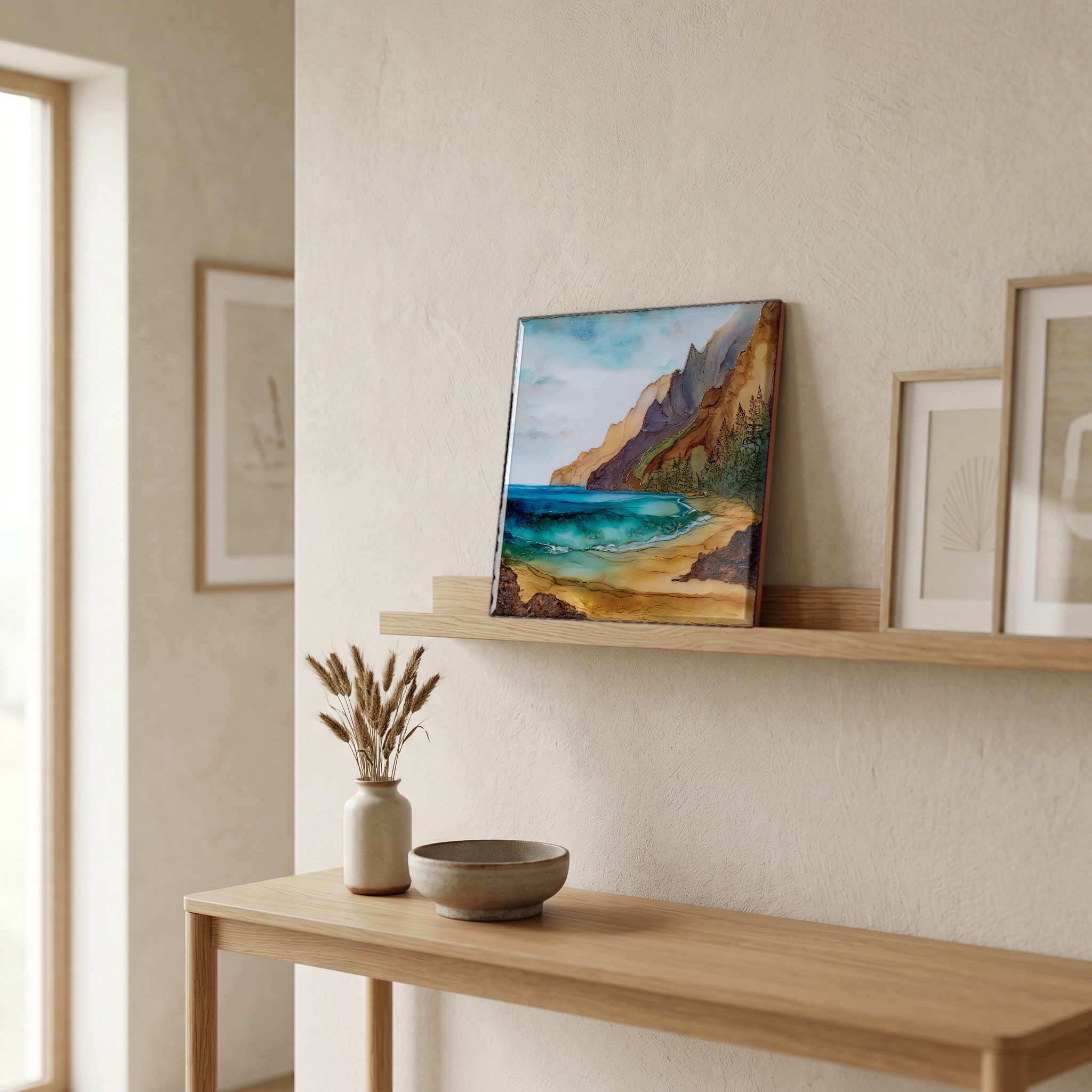
“At Keʻe the north-shore road ends and the trail begins. Two miles further on foot, after the climb up and the descent into the next valley, it empties onto Hanakāpīʻai. In summer there is sand, gold and broad, and the cliffs of the Nā Pali run west toward Kalalau. In winter the same beach is mostly stones; the swell takes the sand and gives it back in May. A sign at the back of the cove counts the people the water has carried off. Nobody swims here.
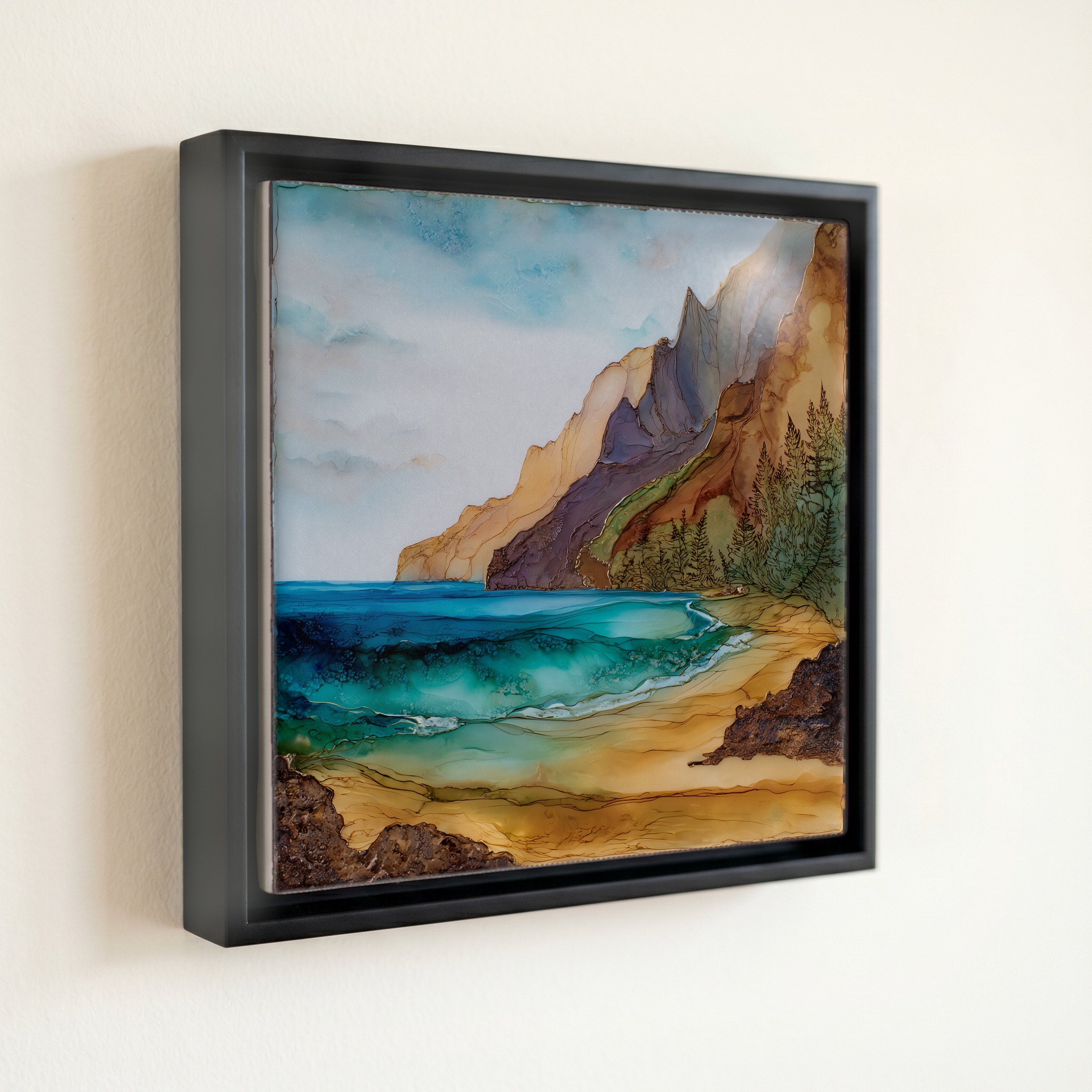
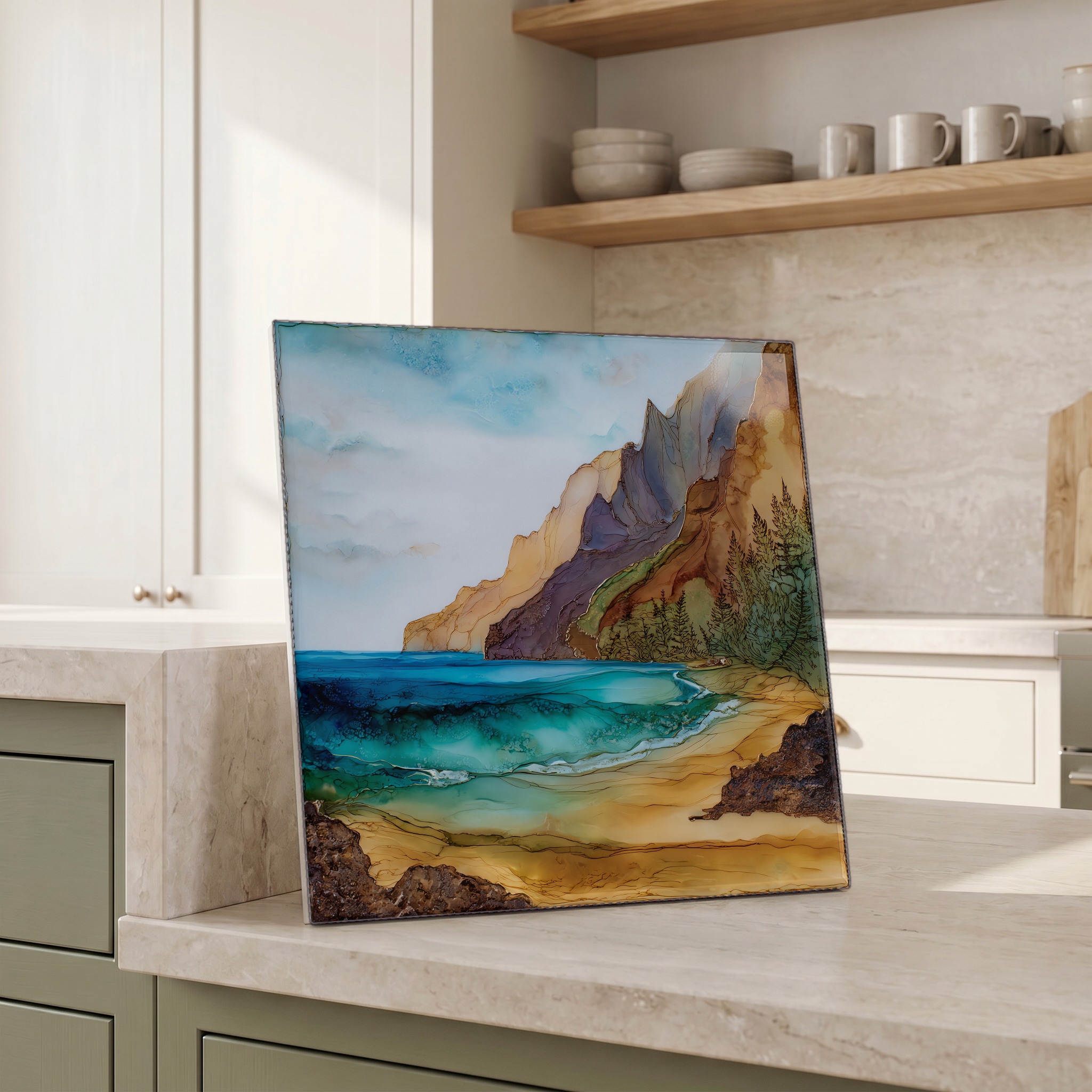
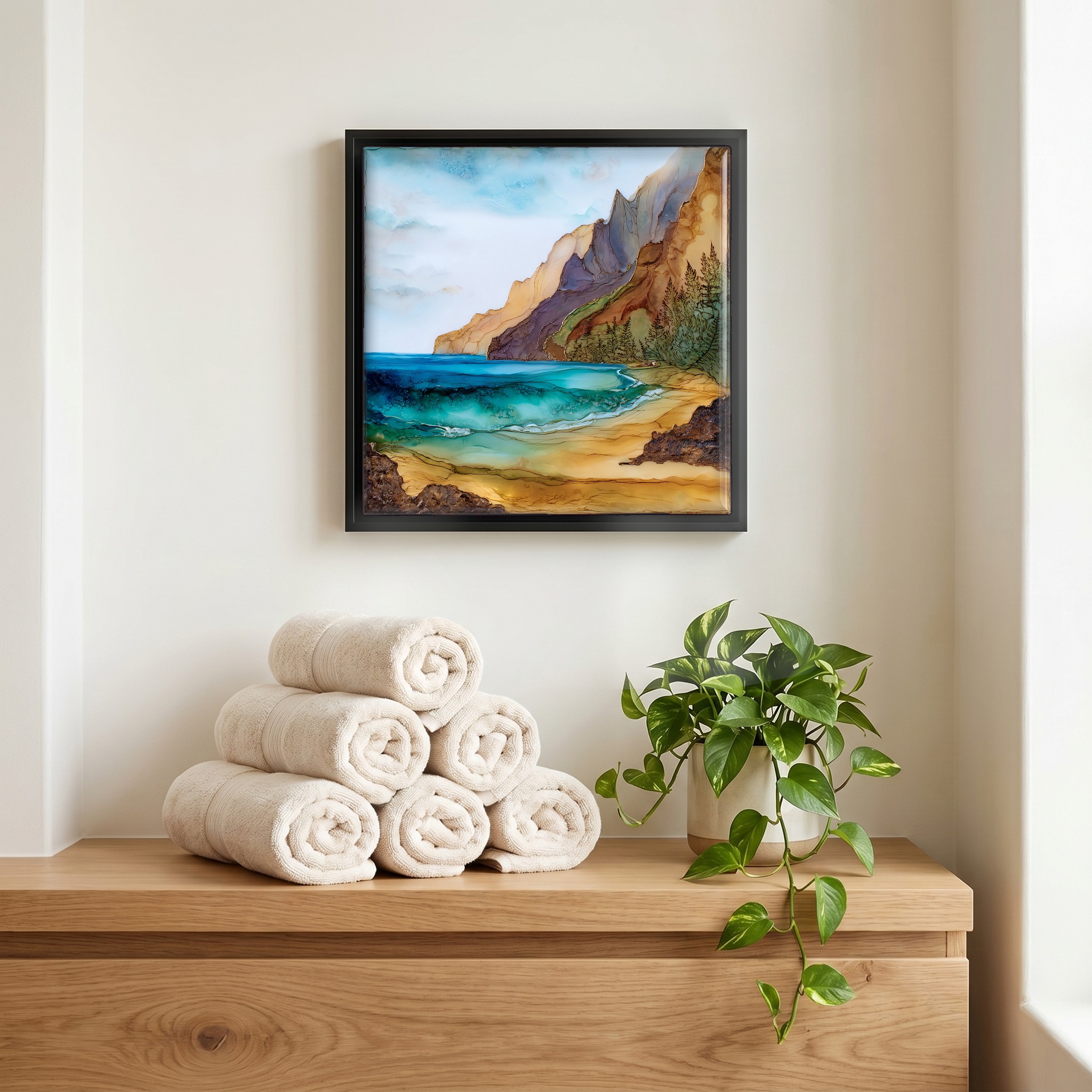
Hanakapiai Beach Kauai Ceramic Art Tile, on ceramic.
Each tile is finished by hand in our Knoxville studio. Artwork is slowly infused into the ceramic surface under high heat and pressure, and rests beneath a thin glossy finish. The colour lives in the surface, not on top of it.
Pick any four 4-inch tiles — National Parks you've been to, a Smokies set, the four seasons of one place. $ for a set of , cork-backed, ready to live on the table.
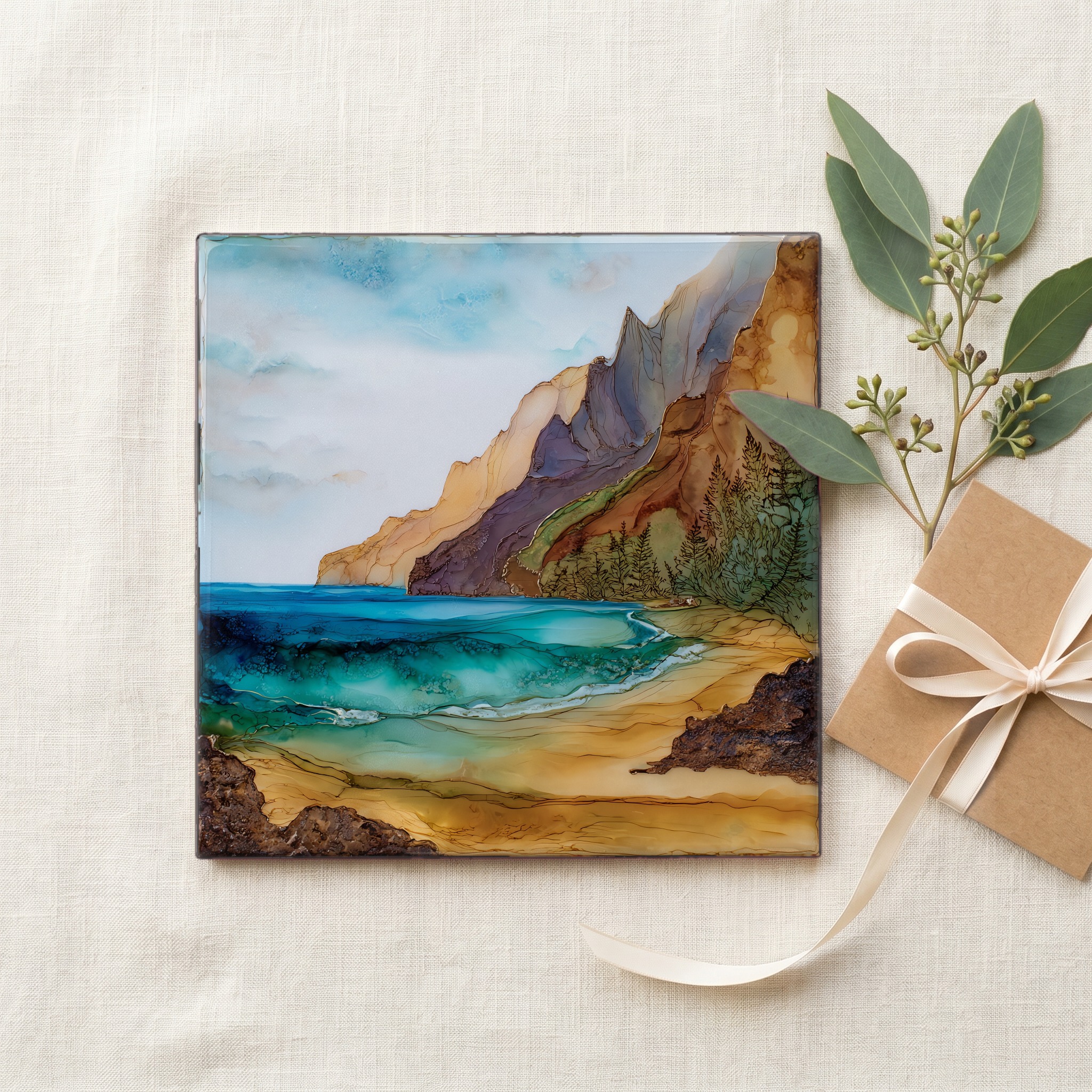
Each tile ships in a kraft box, tied with cream ribbon, with a handwritten note from the studio if you'd like to add one.
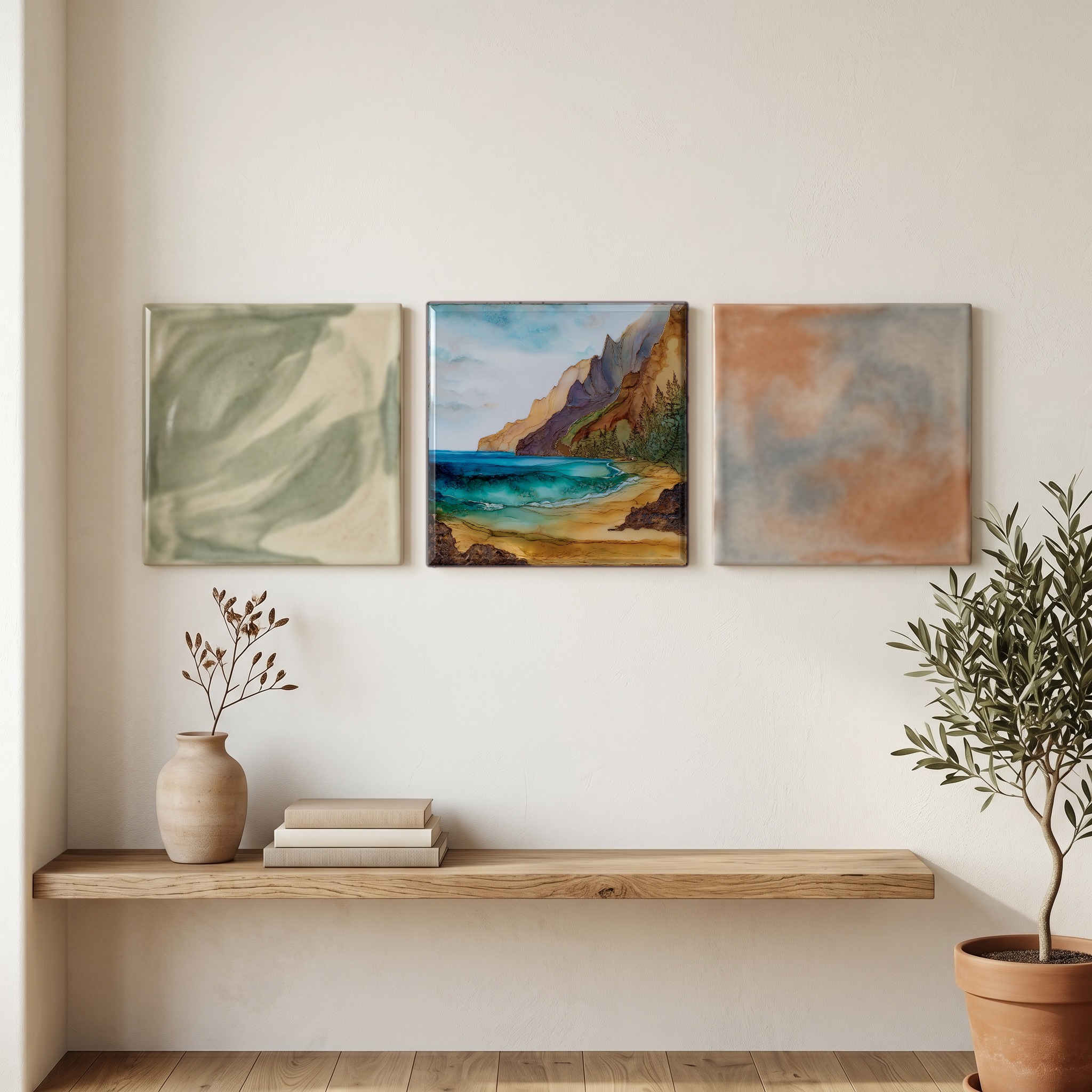
Three or five different vistas, hung together — a chapter of places you've been, or want to go.
The place, in three passes.
Hanakāpīʻai is the first valley west of Keʻe Beach along the Nā Pali Coast of Kauaʻi, reached only on foot. The trail begins at Keʻe, where the north-shore road ends inside Hāʻena State Park, and forms the opening two-mile segment of the 11-mile Kalalau Trail. The first mile climbs to a saddle about 800 feet above the Pacific; the second descends to sea level and crosses Hanakāpīʻai Stream onto the beach. From the cove a side trail continues another two miles inland along the stream to Hanakāpīʻai Falls, a roughly 300-foot drop in the upper valley. The beach sits at the eastern edge of Nā Pali Coast State Wilderness Park, the largest stretch of undeveloped shoreline left in the main Hawaiian Islands.
The beach exchanges its sand with the open Pacific twice a year. Heavy north-shore swells through winter strip the cove down to cobbles; gentler summer surf and the trade-wind pattern return the sand by late May, leaving a wide gold beach from June through October. The same exposure makes the water itself among the most dangerous on Kauaʻi. There is no protecting reef, no lifeguard, and a longshore rip drags swimmers seaward into the foot of the Nā Pali cliffs. A weathered sign at the back of the cove keeps a running count of the people the surf has taken, a tally that has grown well past eighty since the 1970s.
Access has been controlled since 2019, when Hāʻena State Park reopened after the 2018 north-shore floods with a reservation system at the trailhead. Non-resident visitors must book a parking or shuttle slot at gohaena.com before arriving; walk-up entry is not permitted, and reservations open thirty days in advance and routinely fill in summer. The trail is open from sunrise to sunset and is not maintained past Hanakāpīʻai. Day-hiking to the beach is allowed; camping at the cove is not. The separate permit to continue along the Kalalau Trail to Kalalau Valley is issued by the Hawaiʻi Department of Land and Natural Resources. The two-mile walk in takes most hikers ninety minutes one way over rooted, often muddy ground.