Wender·Vista
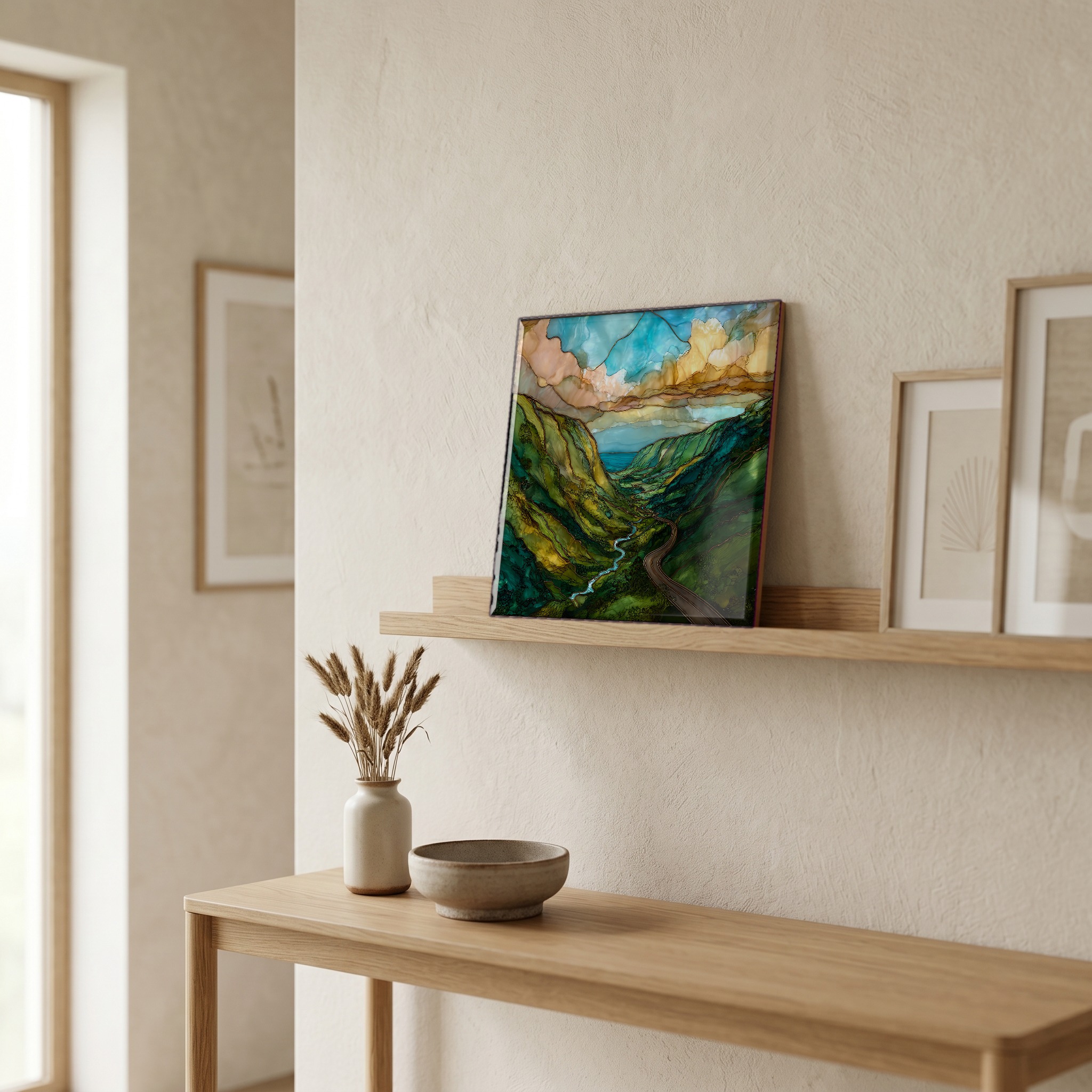
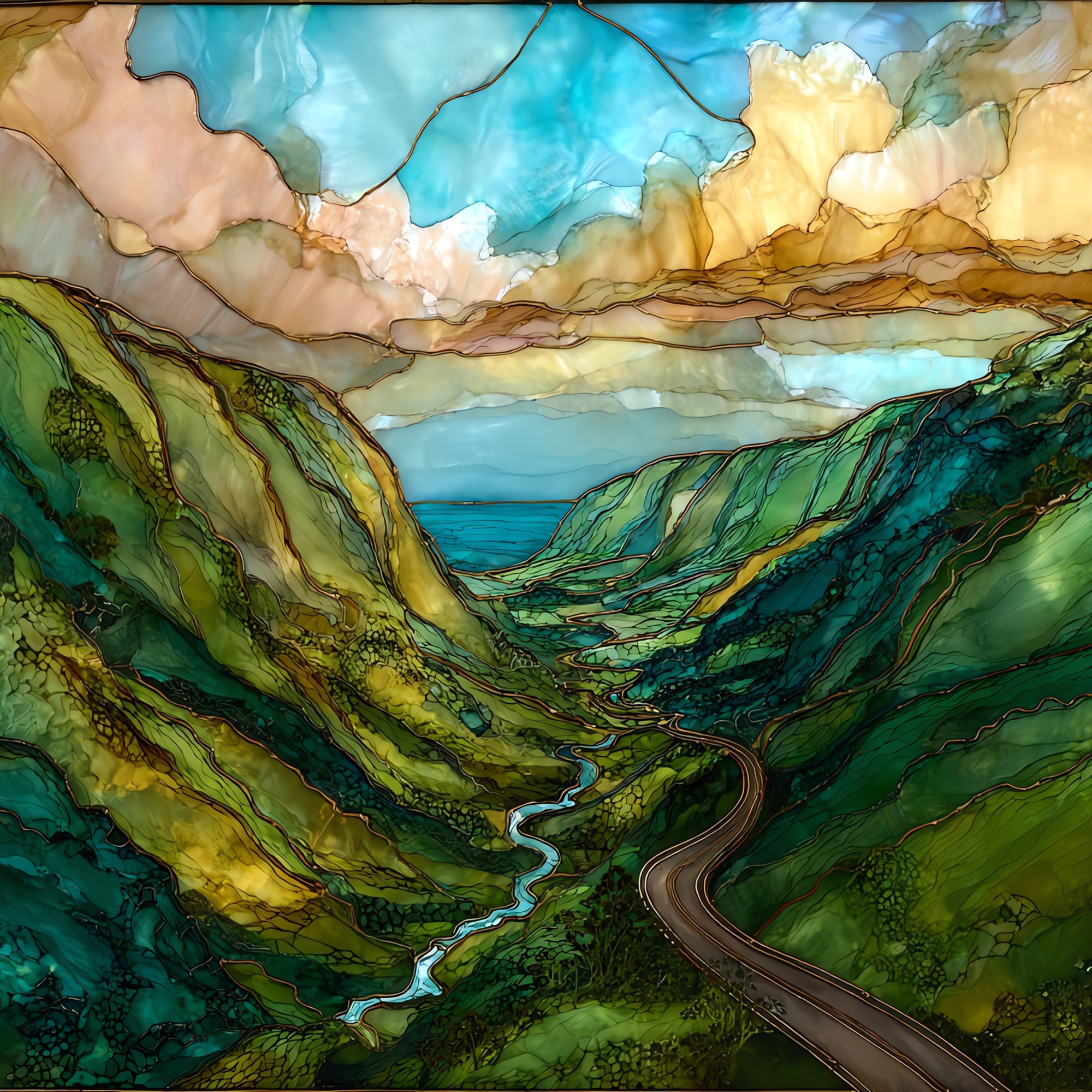
Hamakua Cane Road Big Island Ceramic Art Tile
shown on ceramic, 12-inch tileHawaii · United States
on the windward coast of the Big Island

Hamakua Cane Road Big Island Ceramic Art Tile

— the road the cane left behind.

Where it lives

Not only on a wall.

A small tile on the nightstand catching the morning. A larger one above the fire. Yours, wherever you spend the slow hours.
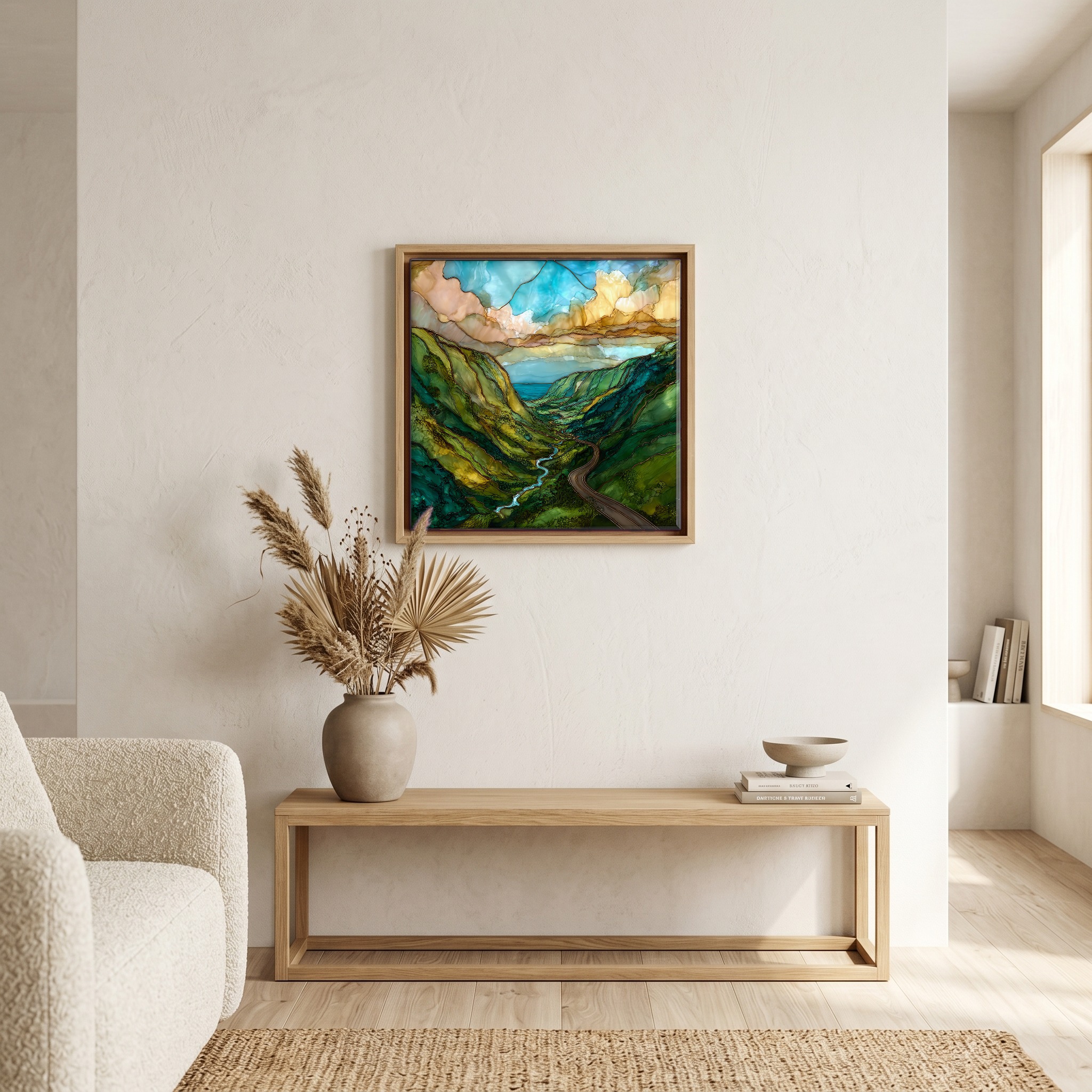
Above the bench, in a warm oak surround.
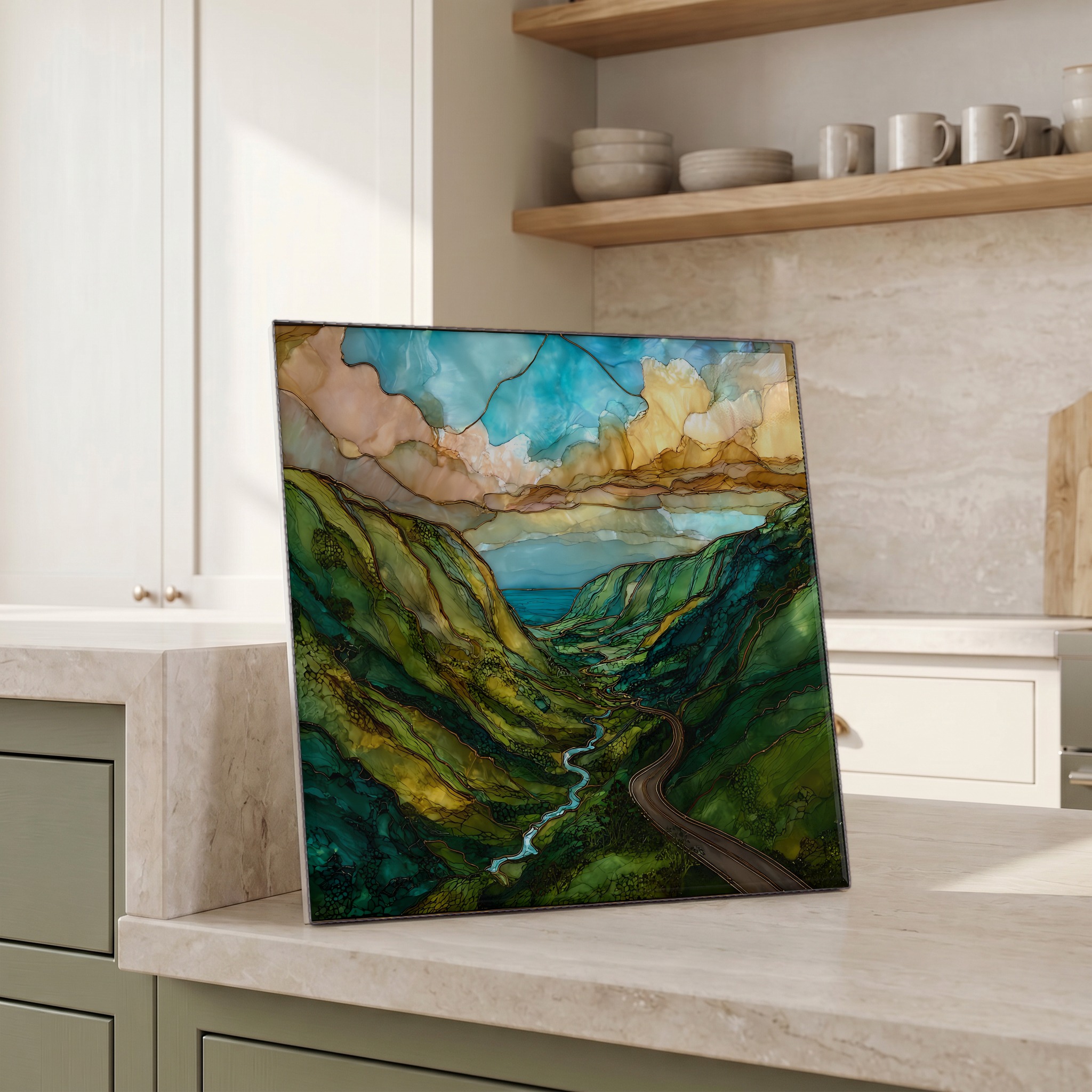
Beside the kettle, propped on the counter.
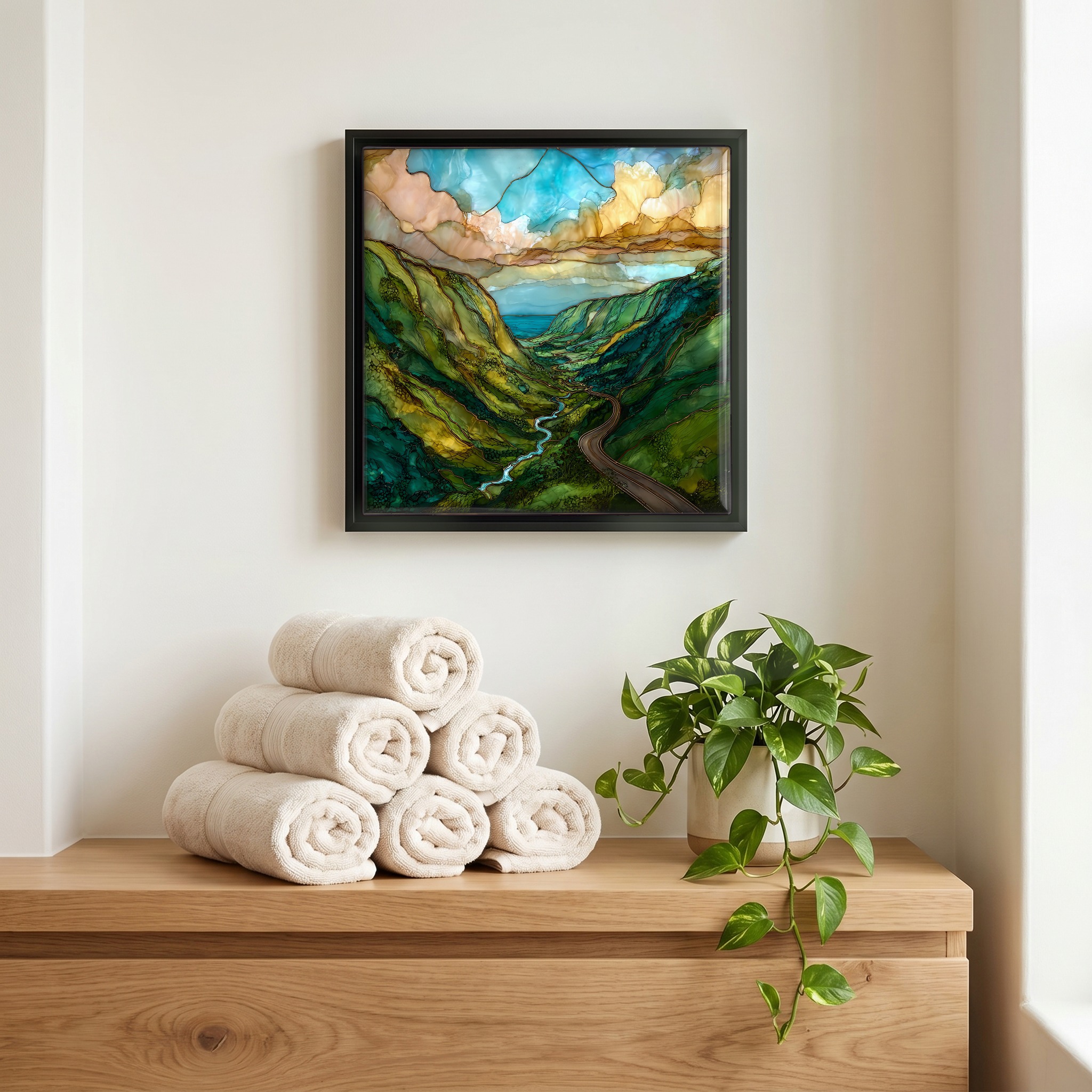
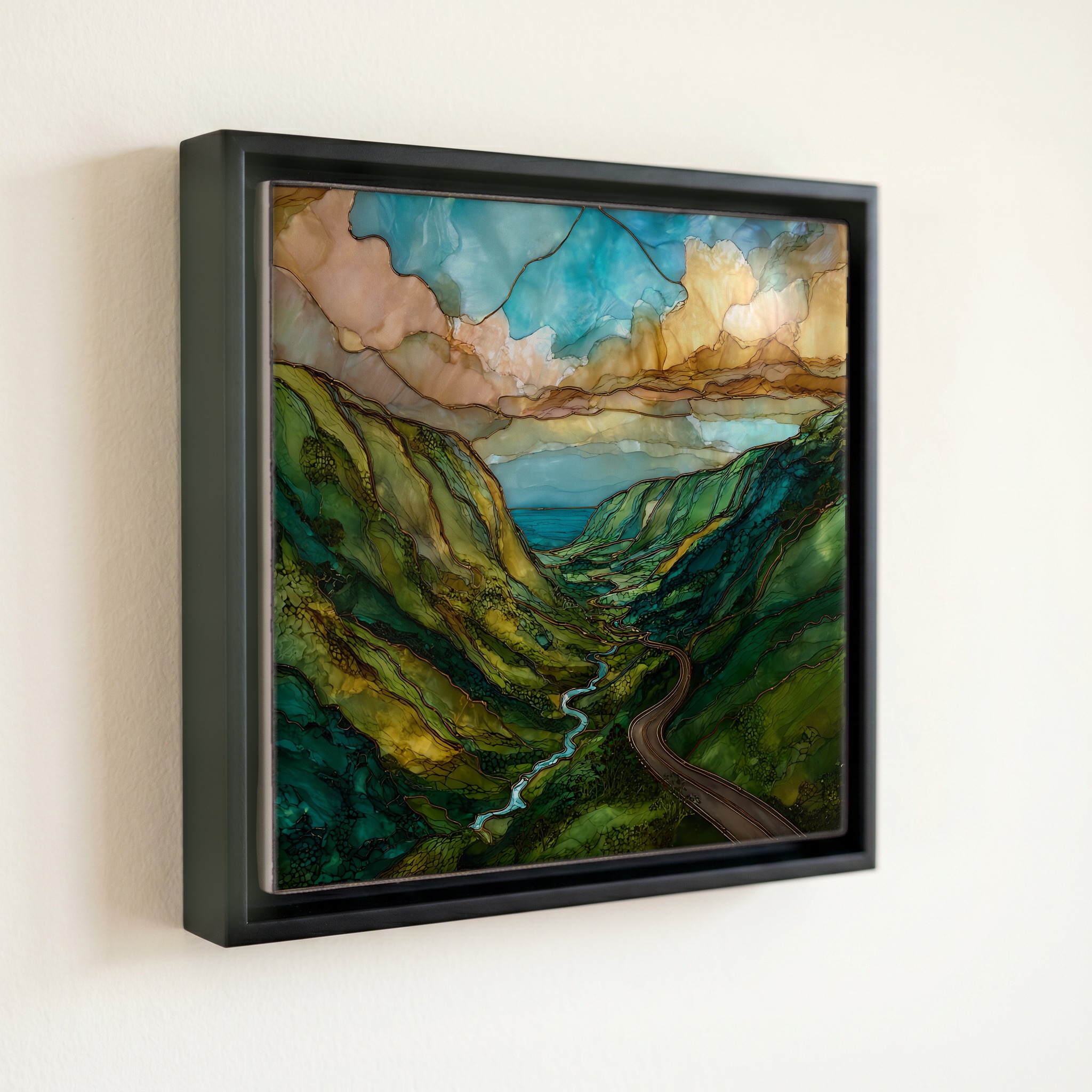
Above the linens, in a slim black surround.
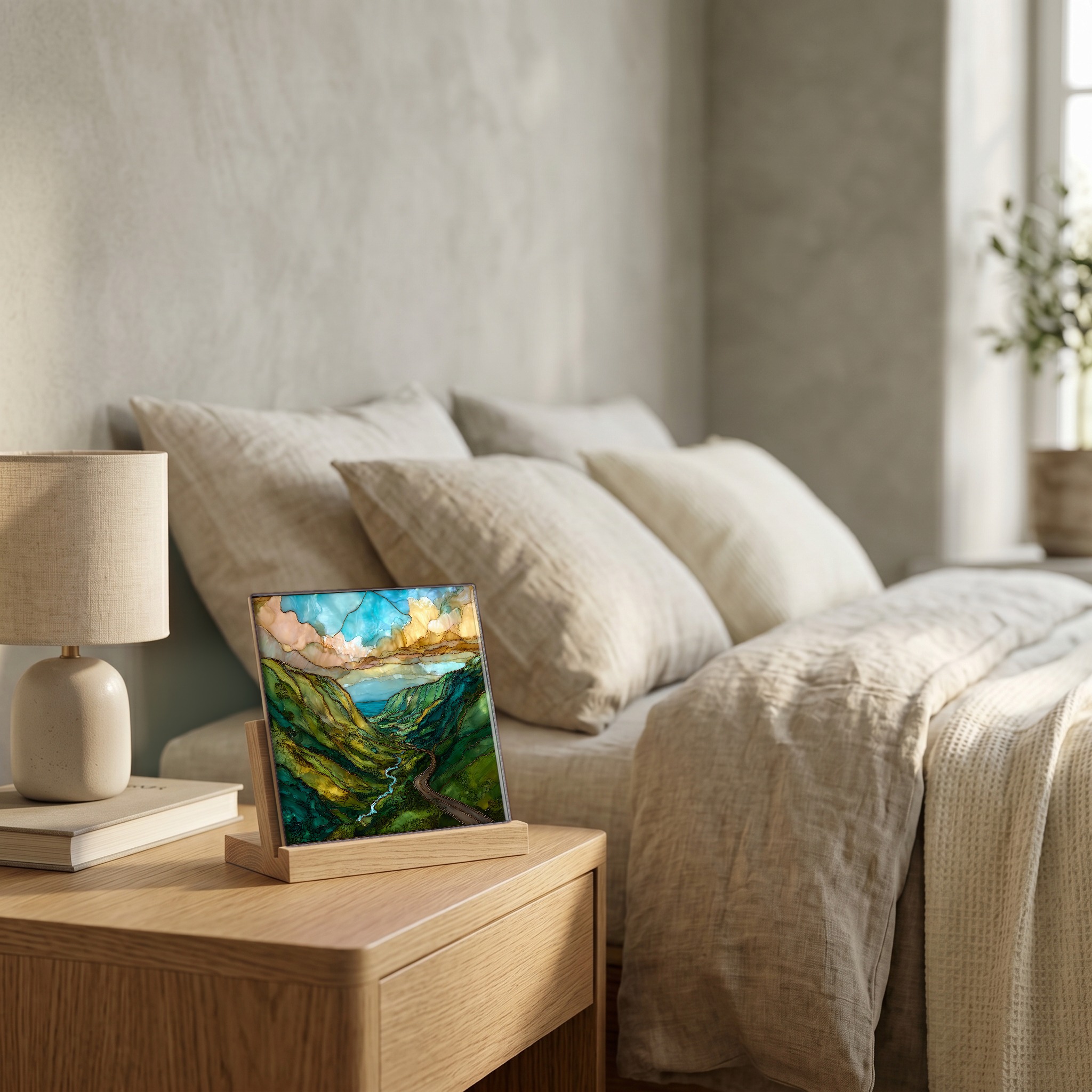
On the nightstand, on a light oak stand.
On a picture ledge, where the light comes in.
a note from the studio

The windward coast of the Big Island, north of Hilo. The road winds in and out of fern-walled gulches over one-lane bridges, the sea always somewhere below. The sugar mills closed in 1994. The cane is gone but the road remembers, in the plantation towns still arranged around where the mills stood, in the eucalyptus and African tulip that grew up in the old fields. The rain falls almost every day. Honoka'a, Laupāhoehoe, Pepe'ekeo — the towns hold the names. The road keeps going.
from the studio
shown in a slim black floating frame · 6 × 6 in
— bring it home

Hamakua Cane Road Big Island Ceramic Art Tile, on ceramic.

Each tile is finished by hand in our Knoxville studio. Artwork is slowly infused into the ceramic surface under high heat and pressure, and rests beneath a thin glossy finish. The colour lives in the surface, not on top of it.

What kind of piece?
One tile — square or rectangle.
How big?
the popular one — counter, shelf, nightstand
6 × 6 in · 15 cm · 1.6 lb
Surface finish
A clear glossy finish — the artwork reads as if under resin. Ideal for show-pieces and framed wall art.
How it sits
A hidden cleat — sits ¼″ proud of the wall.
$58
Hand-finished and shipped from our studio at the foot of the Smokies. On your wall in about ten days.
size
6 × 6 in
15 cm
weighs
1.6 lb
solid in the hand
surface
ceramic, hand-finished
art rests beneath a thin glossy finish
from
Knoxville, TN
our family studio, at the foot of the Smokies
— start a Coaster Set

Pick any four 4-inch tiles — National Parks you've been to, a Smokies set, the four seasons of one place. $ for a set of , cork-backed, ready to live on the table.
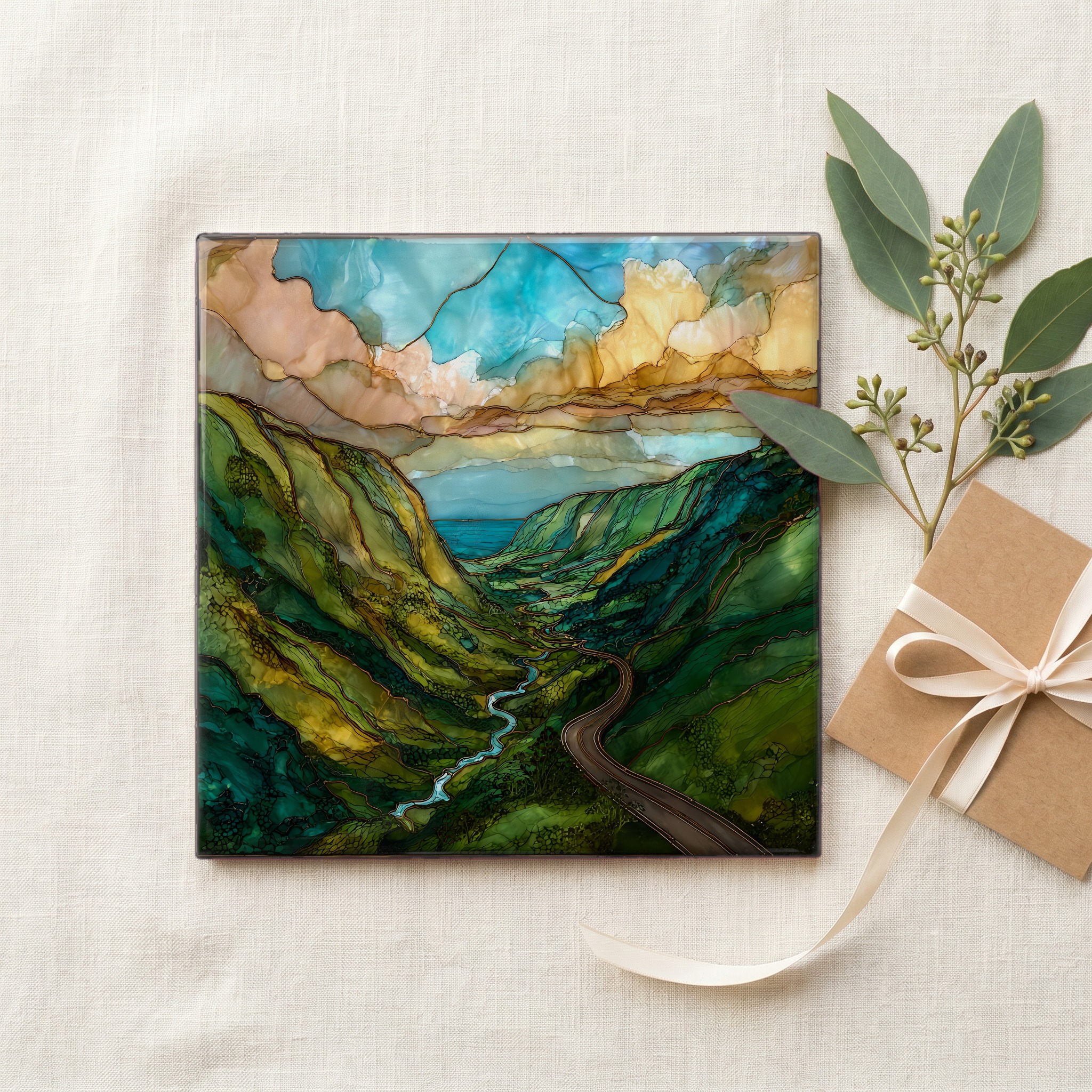
comes gift-ready
comes gift-ready

Each tile ships in a kraft box, tied with cream ribbon, with a handwritten note from the studio if you'd like to add one.
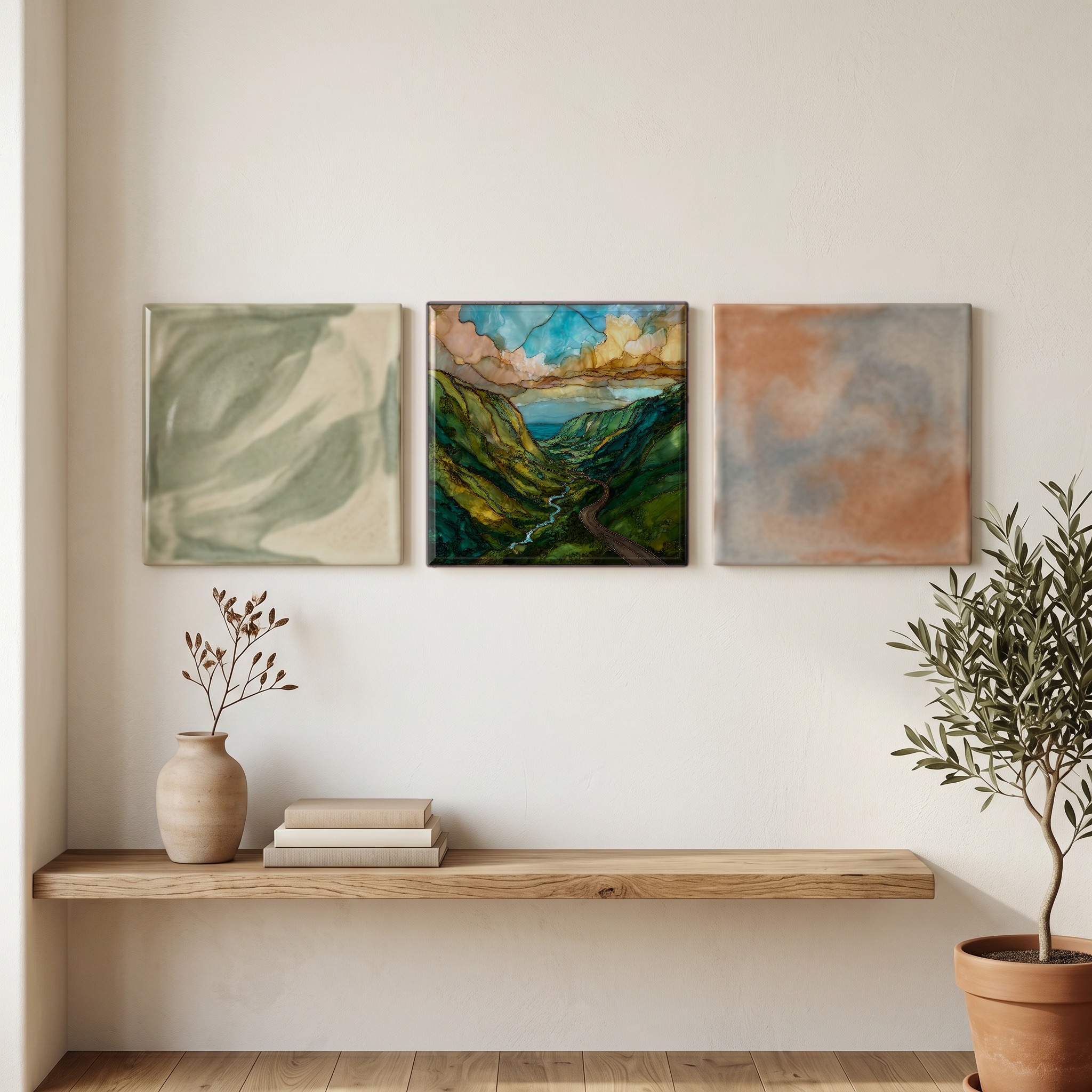
or build a grouping
or build a grouping

Three or five different vistas, hung together — a chapter of places you've been, or want to go.

about Hamakua Cane Road Big Island Ceramic Art Tile

The place, in three passes.

A little of what's known, in case you fall down the rabbit hole — or want to go see it yourself.
the place

The Hāmākua Coast runs along the windward side of Hawai'i Island, from Hilo north to the cliffs above Waipi'o Valley — roughly 50 miles of rain-fed coast facing the open Pacific. The Old Māmalahoa Highway, the original belt road built in the early 1900s, winds in and out of more than thirty stream-cut gulches, crossing them on narrow steel-truss bridges. Most travelers take the parallel Highway 19; the older road is slower, lined with ginger, African tulip, and ohi'a that took over after the sugar mills closed. The plantation towns — Honoka'a, Pa'auilo, Laupāhoehoe, Pepe'ekeo — still hold the road's plan, the way each one cups around where the cane once came in from the fields.

the water

The Hāmākua Coast receives some of the highest rainfall in the state — 80 to 130 inches a year along the cane belt — pulled in by trade winds rising against the slopes of Mauna Kea. The water cuts the land into a ribbed shape of gulches and falls. 'Akaka Falls drops 442 feet through a fern-walled amphitheatre near Honomū, with Kahuna Falls another 100 feet in the same park. Rainbow Falls on the Wailuku River, just outside Hilo, runs full all year. Each gulch the highway crosses carries its own stream: Kolekole, Maulua, Hakalau, Honoli'i. Most run year-round, and the older bridges still carry the stream names cast into their concrete abutments.

the visit

The most-driven stretch is the four-mile Pepe'ekeo Scenic Drive, a hairpin loop off Highway 19 about eight miles north of Hilo, threading what was Pepe'ekeo Sugar Company land. The Hāmākua Heritage Corridor follows the older Māmalahoa Highway further north, through Honoka'a and on toward Waipi'o Lookout. The road is paved but narrow — one lane on the older bridges, with right-of-way usually given to the heavier vehicle. No permits, no fees. Most people drive it slowly, with windows down. The Hawai'i Tropical Botanical Garden at Onomea Bay, opened to the public in 1984, is the most-visited stop along the scenic drive, and worth a morning.

where
United States · Hāmākua District, Hawai'i County, Hawaii
position
19.8360° N · 155.1070° W
the neighborhood

What's nearby.

A handful of named places within an hour's walk or short drive. Some we've already painted; some we will.
13 km N
'Akaka Falls State Park
waterfall park
1 km N
Hawai'i Tropical Botanical Garden
botanical garden
32 km N
Laupāhoehoe Point
coastal park
50 km NW
Honoka'a
plantation town
57 km NW
Waipi'o Valley Lookout
valley overlook
13 km S
Hilo
city
N
Hamakua Cane Road Big Island Ceramic Art Tile
'Akaka Falls State Park
Hawai'i Tropical Botanical Garden
Laupāhoehoe Point
Honoka'a
Waipi'o Valley Lookout
Hilo
common questions

What people ask.

A few questions we get about Hamakua Cane Road Big Island Ceramic Art Tile — and about bringing the piece home.
about the place

The Hāmākua Coast is the windward, northeastern coast of Hawai'i Island, running about 50 miles from Hilo north to the cliffs above Waipi'o Valley. It carried Hawai'i's sugarcane industry from the 1860s until the last mill on the coast closed in 1994.

The Hāmākua Sugar Company, the last operator on the coast, ceased operations in September 1994. Plantation towns along the road — Honoka'a, Pa'auilo, Laupāhoehoe, Pepe'ekeo — still hold the layout and architecture of that era.

A four-mile detour off Highway 19, about eight miles north of Hilo. It winds through former Pepe'ekeo Sugar Company land, crosses several gulches on narrow bridges, and passes the Hawai'i Tropical Botanical Garden on Onomea Bay.

The windward slopes of Mauna Kea pull rain off the trade winds nearly every day. Annual rainfall along the cane belt ranges from about 80 to 130 inches depending on the stretch — among the higher totals in the United States.

No commercial sugar is grown in Hawai'i any longer. The Hāmākua mill closed in 1994, and the last operating mill in the islands, HC&S on Maui, closed at the end of 2016. The former cane fields are now used for macadamia, coffee, eucalyptus, and cattle.

'Akaka Falls, in 'Akaka Falls State Park near Honomū, drops 442 feet. Kahuna Falls in the same park drops 100 feet. Rainbow Falls on the Wailuku River, just outside Hilo, runs all year. Dozens of smaller falls fill the gulches after heavy rain.

about the piece in your home

It's been a meaningful gift for our customers connected to Hawai'i Island, especially those who grew up around the old plantation towns or remember when the mills were still running. A Small or Medium with a handwritten note from the studio carries the place well.

The greens and ocean blues of the Hāmākua piece sit well in coastal-modern, tropical-modern, and biophilic rooms. The stained-glass and alcohol-ink visual language gives it more depth than a flat photograph, so it can anchor a wall on its own rather than disappear into the green.

Tropical-modern interiors have been moving away from flat botanical prints toward art with more line and color depth. The stained-glass treatment of the Hāmākua tile reads as artisan rather than mass-print, which is where the category is heading.

Above a standard 84-inch sofa, a single Large reads as a centerpiece; a 4-tile Mural fills the wall more fully; a 9-tile Mural makes the wall the room's focal point. Above a console table, a Medium or a Large works well.

Yes. Order it in Dura Satin or Matte finish for those rooms. The color is slowly infused into the ceramic surface under high heat and pressure beneath a thin protective finish, so steam, splashes, and daily cleaning do not affect it. Glossy is best kept to dry-wall installations.

A microfibre cloth and water. The color lives in the surface beneath a thin glossy or satin finish, so abrasive cleaners and solvents are unnecessary and best avoided. For kitchen splashes, a drop of mild dish soap on the cloth is fine.

Yes. Every WenderVista piece is original work by Reid Wender, the studio's curator. We do not license third-party art and we do not repeat compositions across our shops. Each place enters the atlas once, in the studio's visual language.

if this one stayed with you

A few you might also love.

Hand-picked by the eye that found Sorapis. Same air, same kind of quiet.