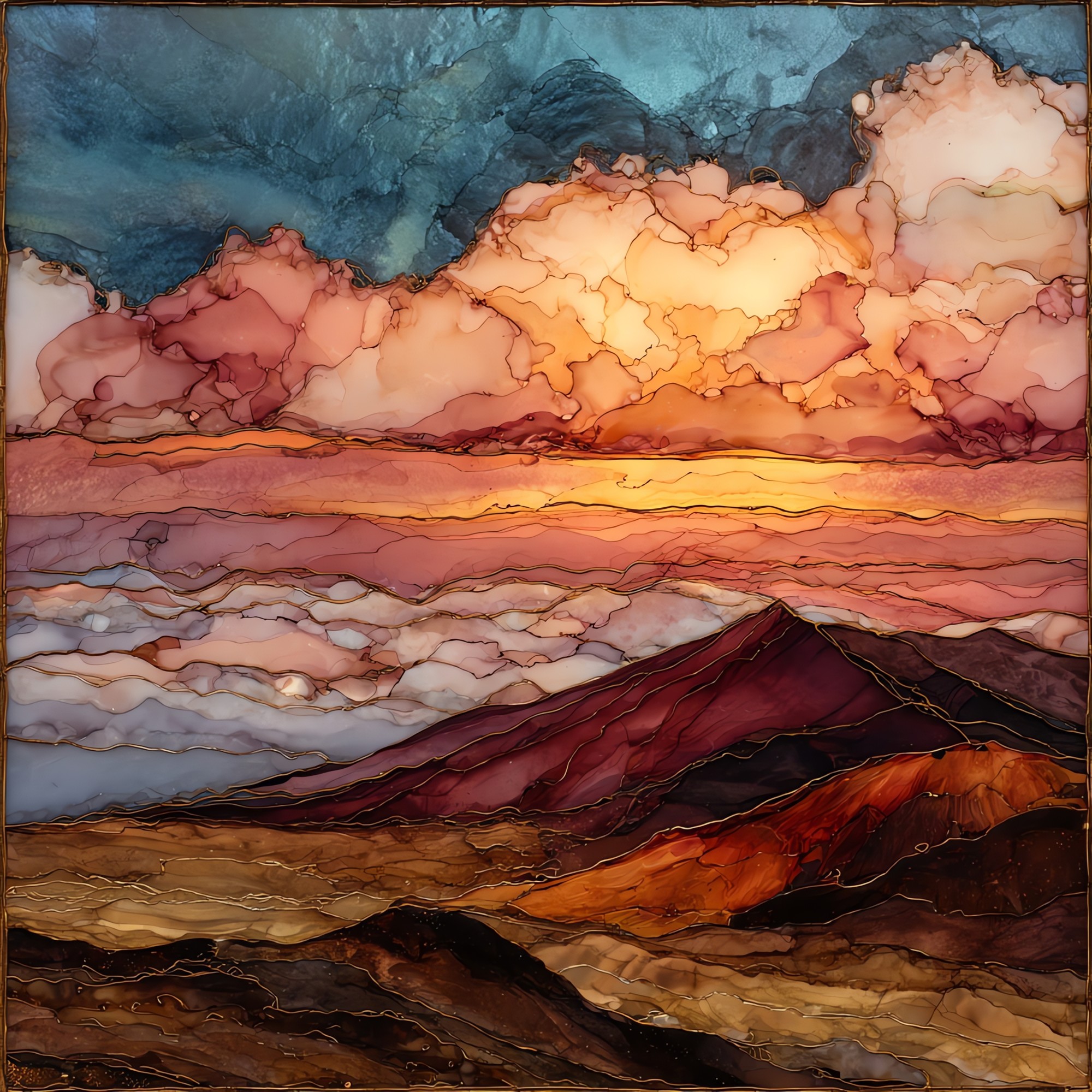
Haleakala Sunrise Maui Ceramic Art Tile
— the morning the dark gives the colour back.
Not only on a wall.
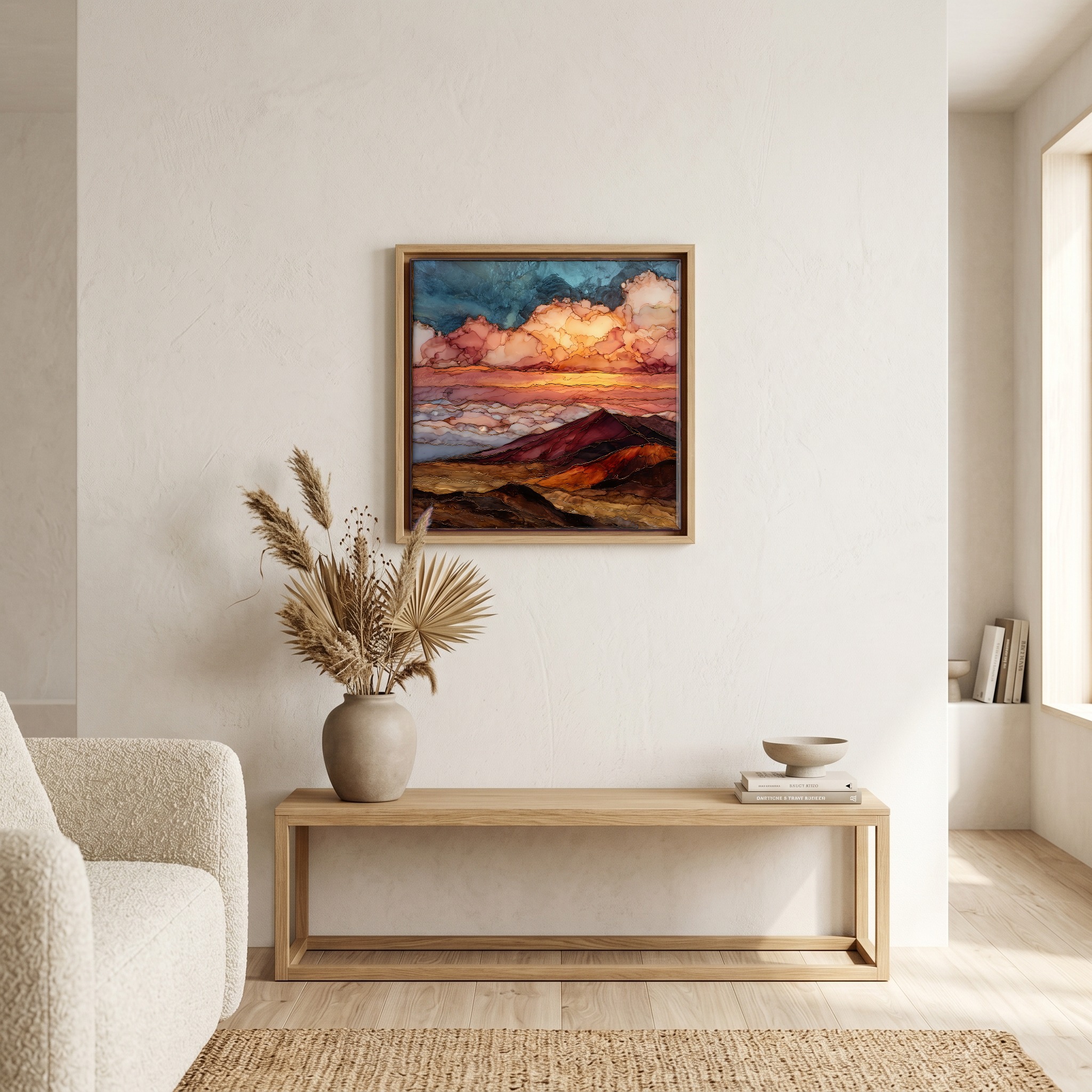
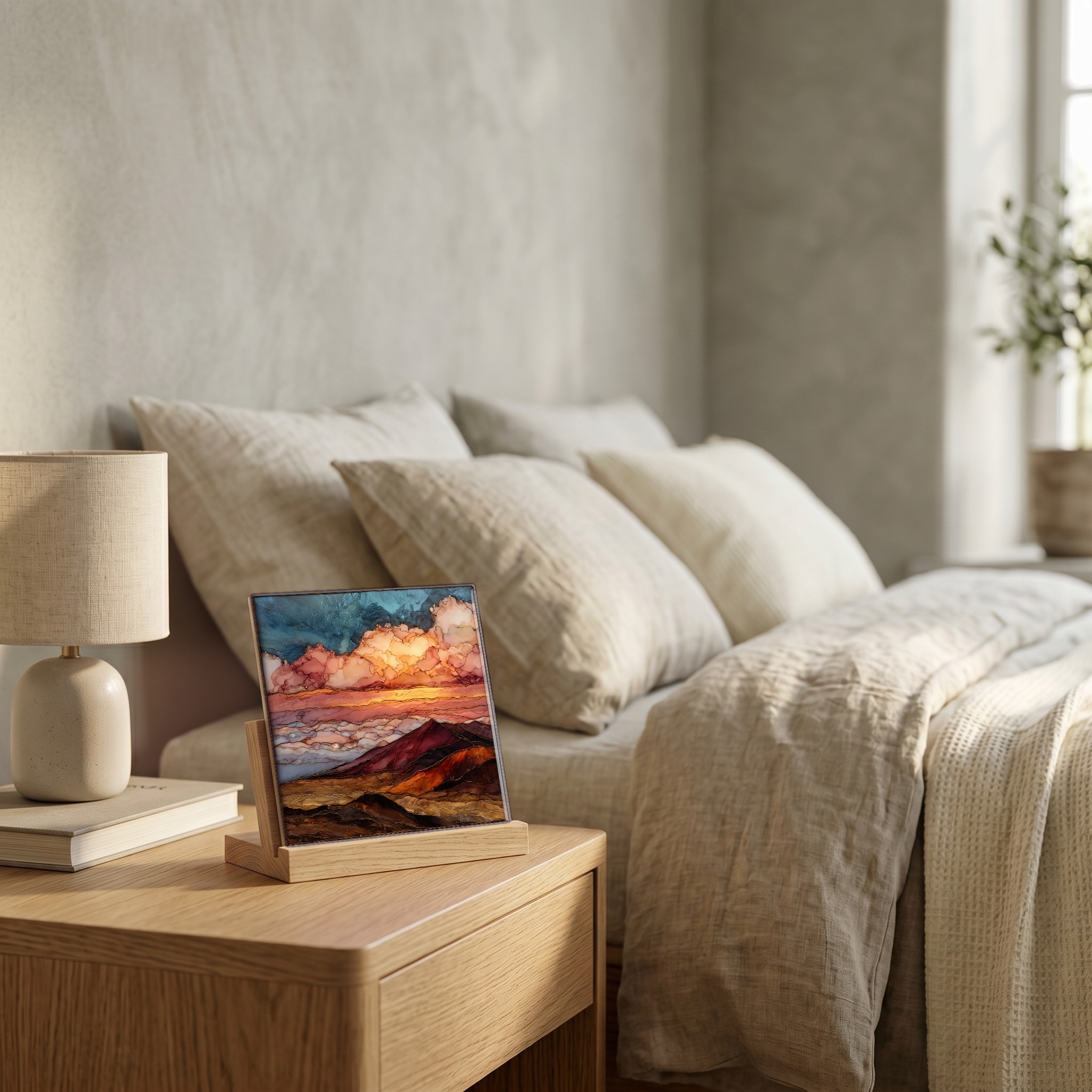
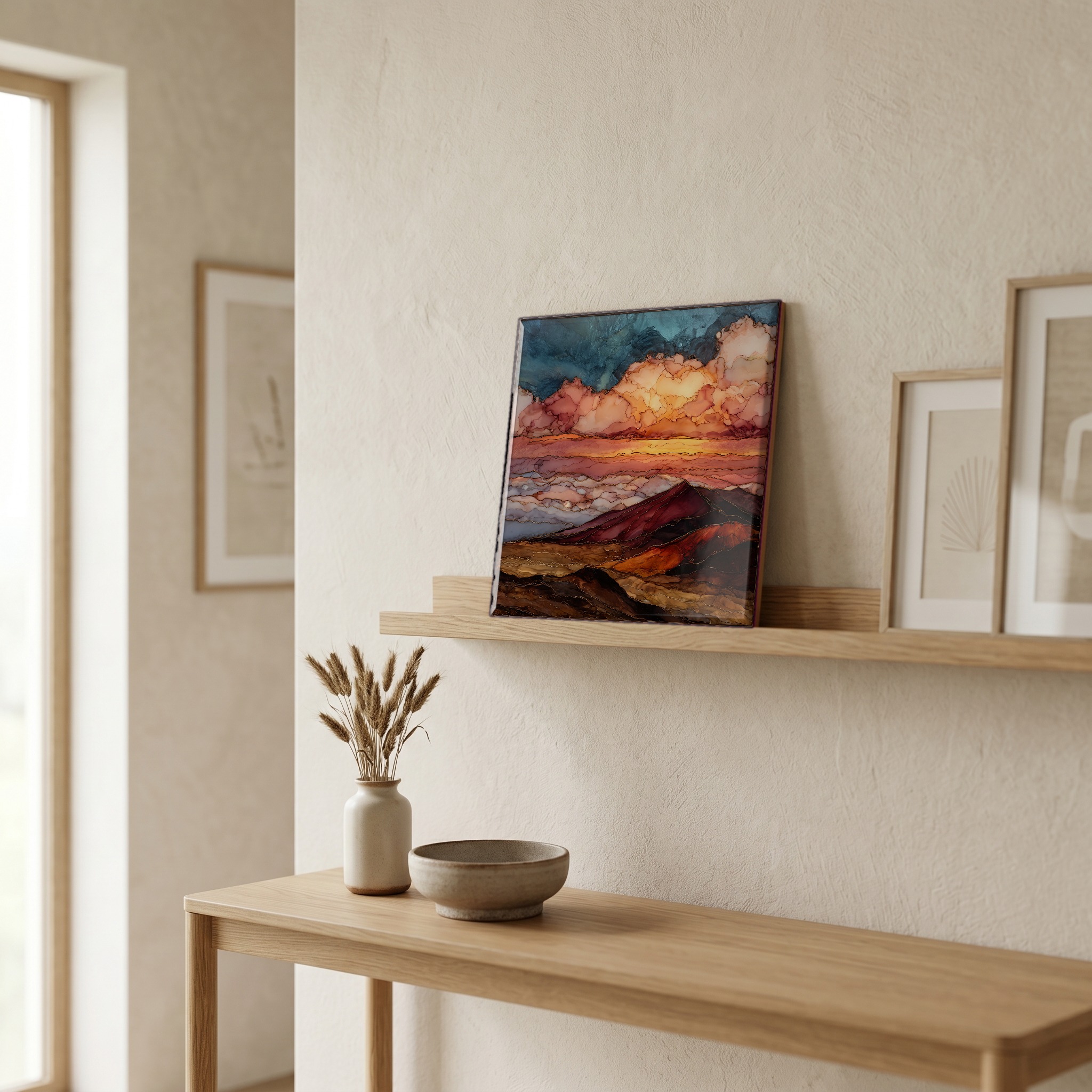
“Ten thousand feet above the Pacific, on the summit ridge of the island. The road climbs out of cane and pasture through Kula and the upper switchbacks, lifting above the trade-wind clouds before first light. Cars park in the dark; people stand in coats they brought from somewhere colder. The crater holds its outline first. Then the colour begins, the long slow pour the Hawaiians called the house of the sun. Below the rim, the clouds turn pink. The wind takes the silversword and not much else. Nobody says much until after.
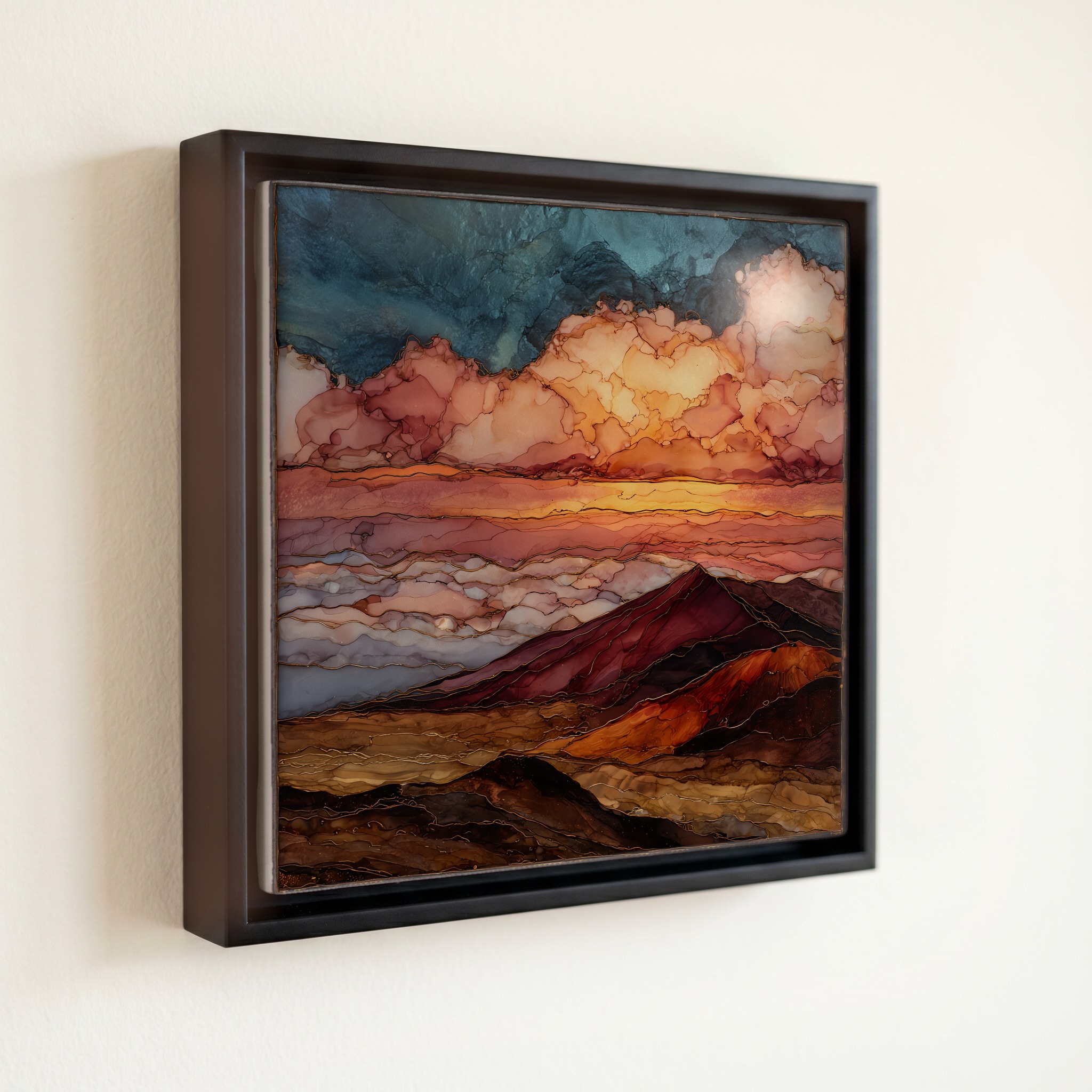
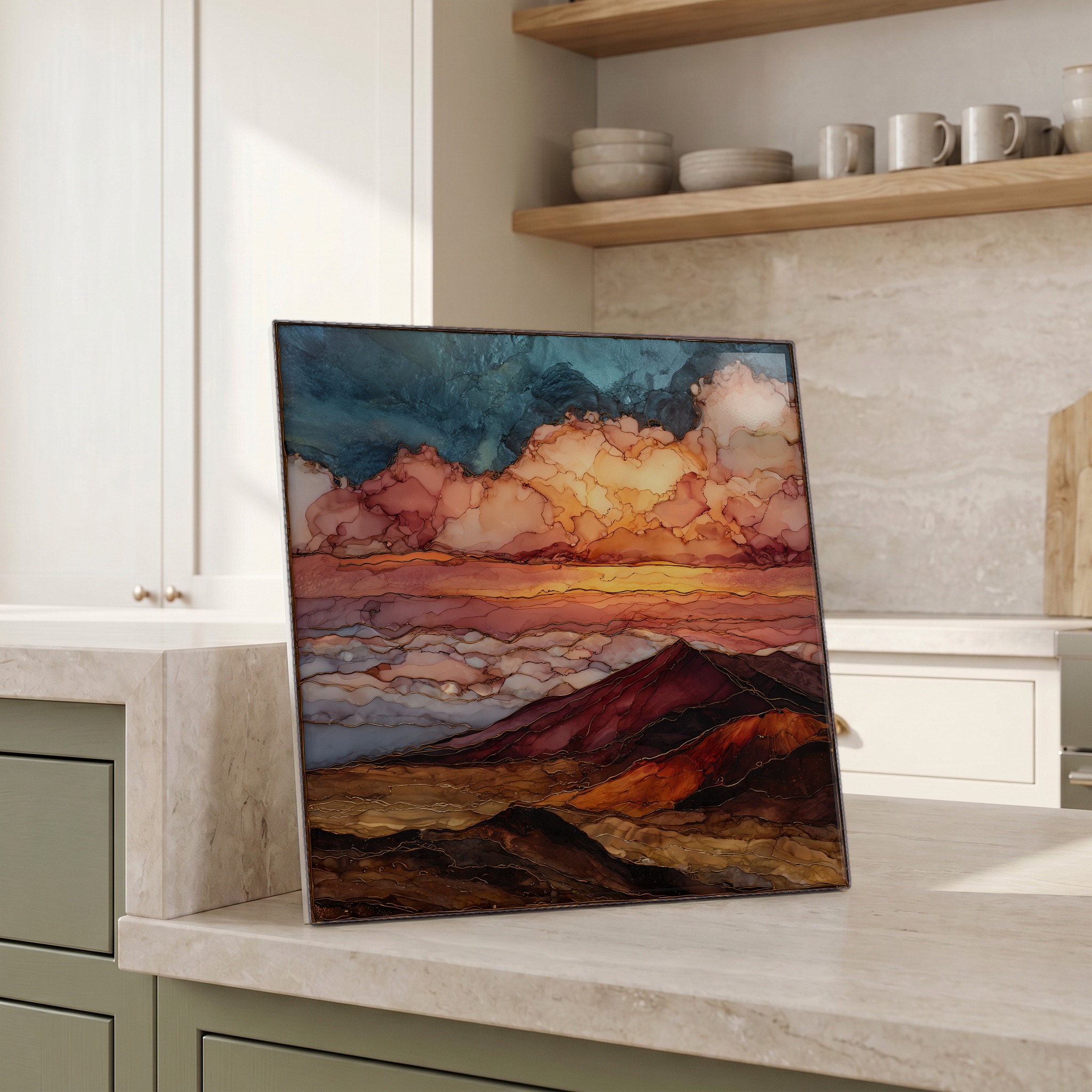
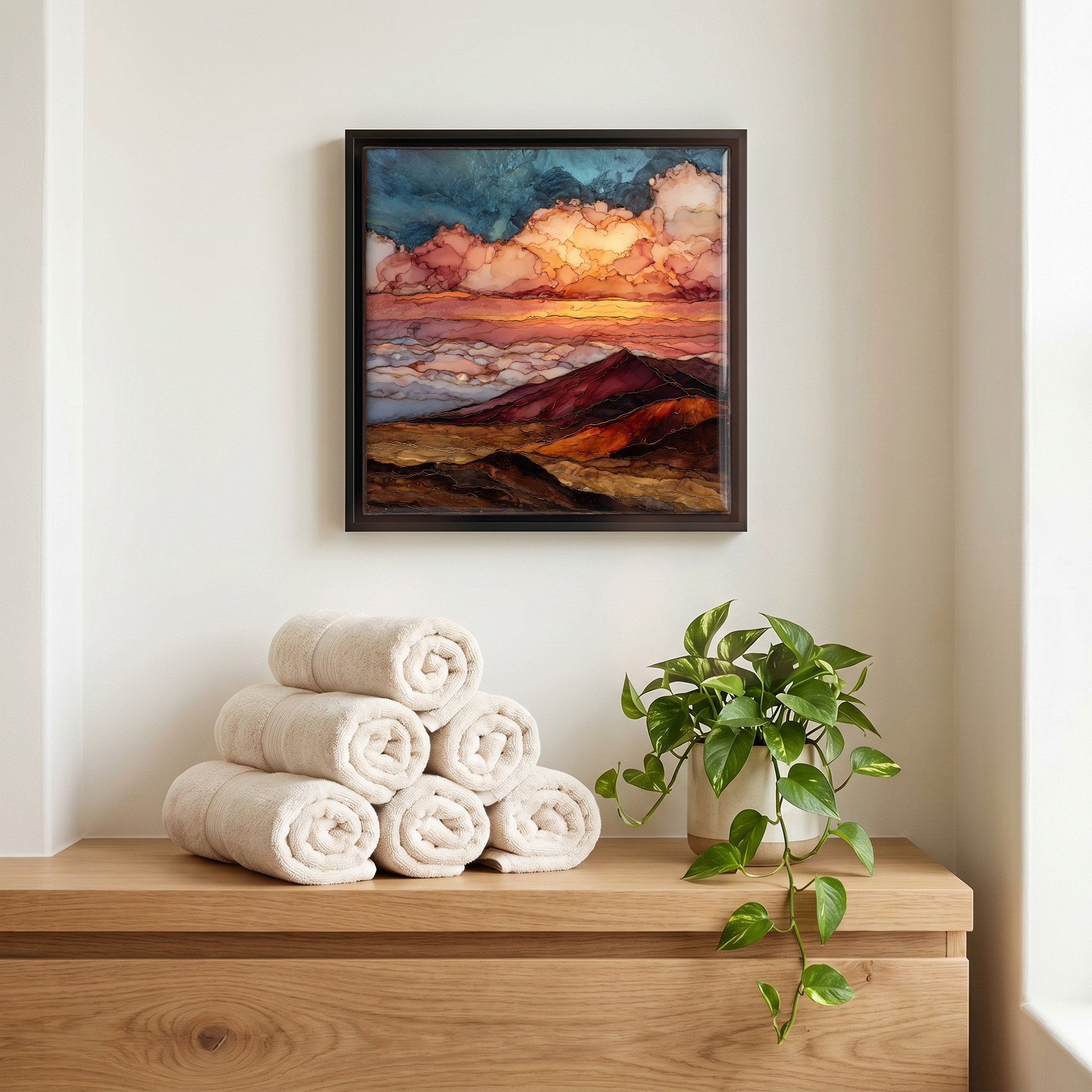
Haleakala Sunrise Maui Ceramic Art Tile, on ceramic.
Each tile is finished by hand in our Knoxville studio. Artwork is slowly infused into the ceramic surface under high heat and pressure, and rests beneath a thin glossy finish. The colour lives in the surface, not on top of it.
Pick any four 4-inch tiles — National Parks you've been to, a Smokies set, the four seasons of one place. $ for a set of , cork-backed, ready to live on the table.
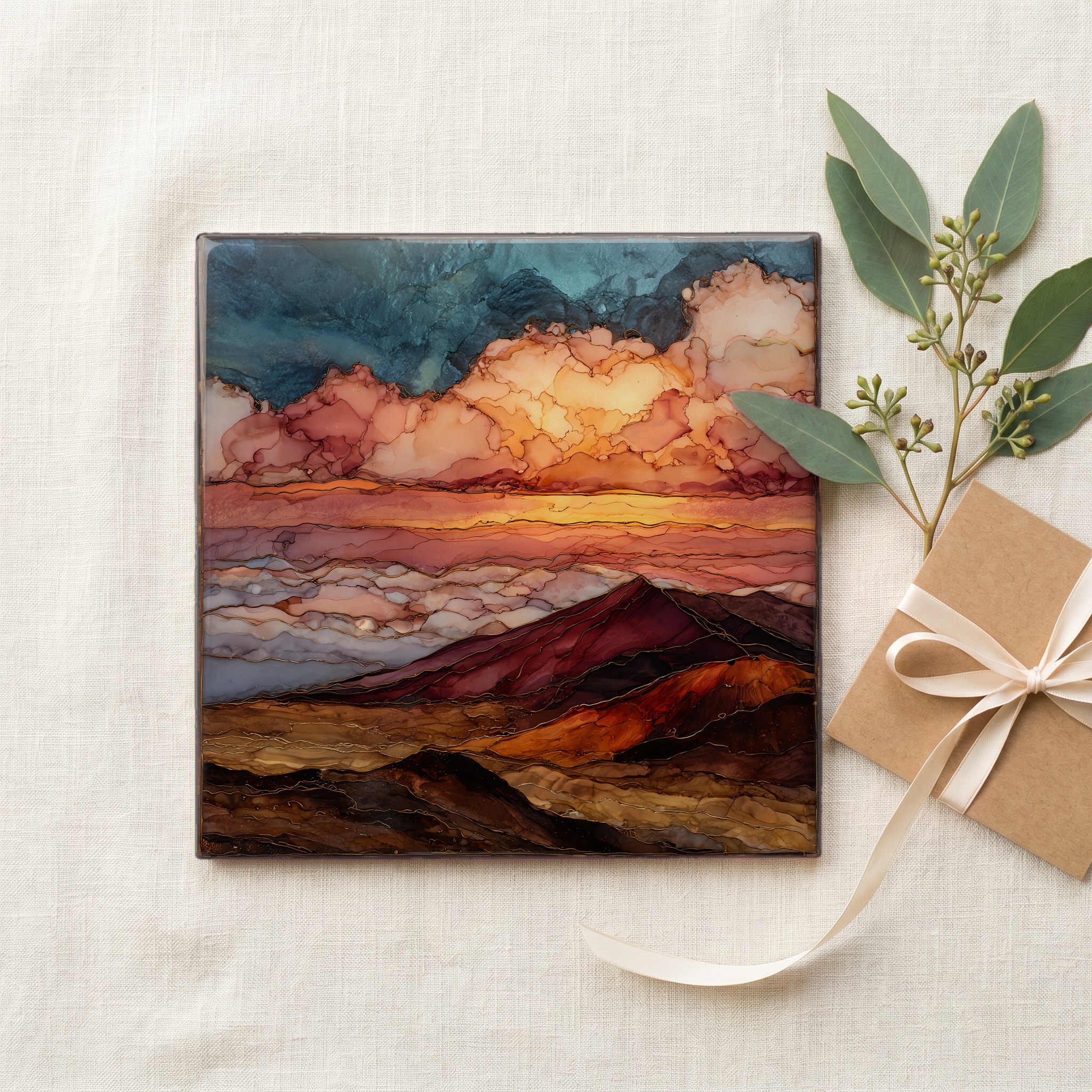
Each tile ships in a kraft box, tied with cream ribbon, with a handwritten note from the studio if you'd like to add one.
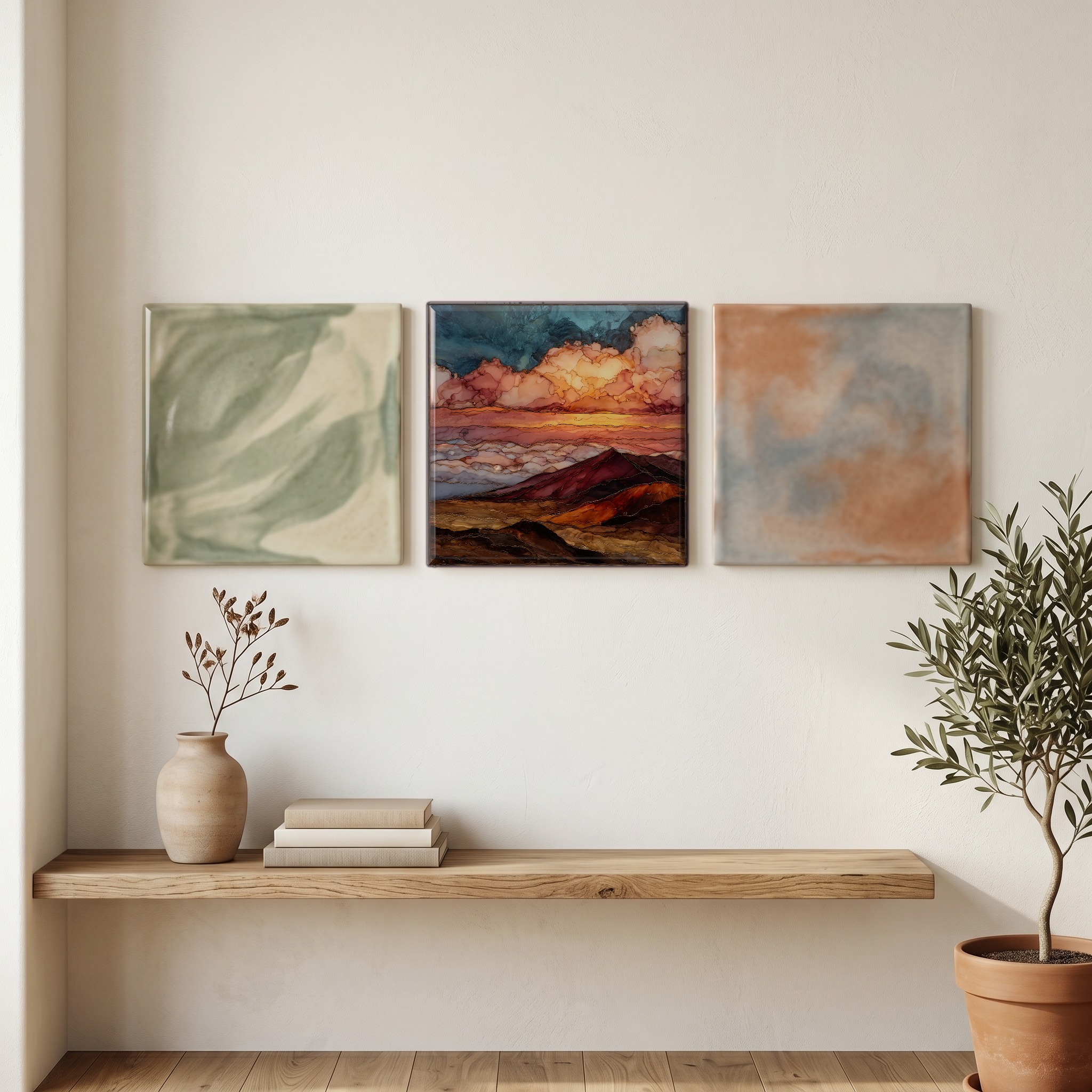
Three or five different vistas, hung together — a chapter of places you've been, or want to go.
The place, in three passes.
Haleakalā is the shield volcano that forms the eastern two-thirds of Maui. Its summit, Puʻu ʻUlaʻula or Red Hill, rises to 10,023 feet, the highest point on the island. The summit district of Haleakalā National Park is reached by Crater Road, which climbs from sea level at Kahului to the summit in roughly 38 miles of switchbacks above the upcountry towns of Pukalani and Kula. The crater below the summit is about seven miles long and two miles wide. The mountain's last eruption is generally dated to a window between 1480 and 1600. The park was established in 1916 and now covers 33,265 acres across two non-contiguous districts.
The summit is the place on Maui most often associated with first light. The visitor positions along the rim face east across a cloud inversion that usually sits a few thousand feet below the summit, so the sun appears over a sea of cloud rather than across a horizon. Air temperatures at the top in the hour before sunrise frequently fall into the 30s Fahrenheit, even in midsummer, and wind chill takes it lower; the National Park Service recommends warm layers, gloves, and a hat. The Hawaiian name Haleakalā translates as house of the sun, after the Polynesian story of the demigod Māui slowing the sun's passage across the sky from this summit.
The summit district requires a reserved sunrise ticket to enter between 3 a.m. and 7 a.m. The reservation system was introduced in February 2017 to address crowding and is administered through recreation.gov for a small booking fee, in addition to the park's standard entrance fee. Tickets release sixty days in advance and the most popular dates fill within minutes. Visitors without a sunrise reservation can enter the summit district at any other time of day. The drive from Kahului typically takes about two hours; rangers advise arriving at least an hour before astronomical sunrise to find parking and adjust to the elevation.