Wender·Vista
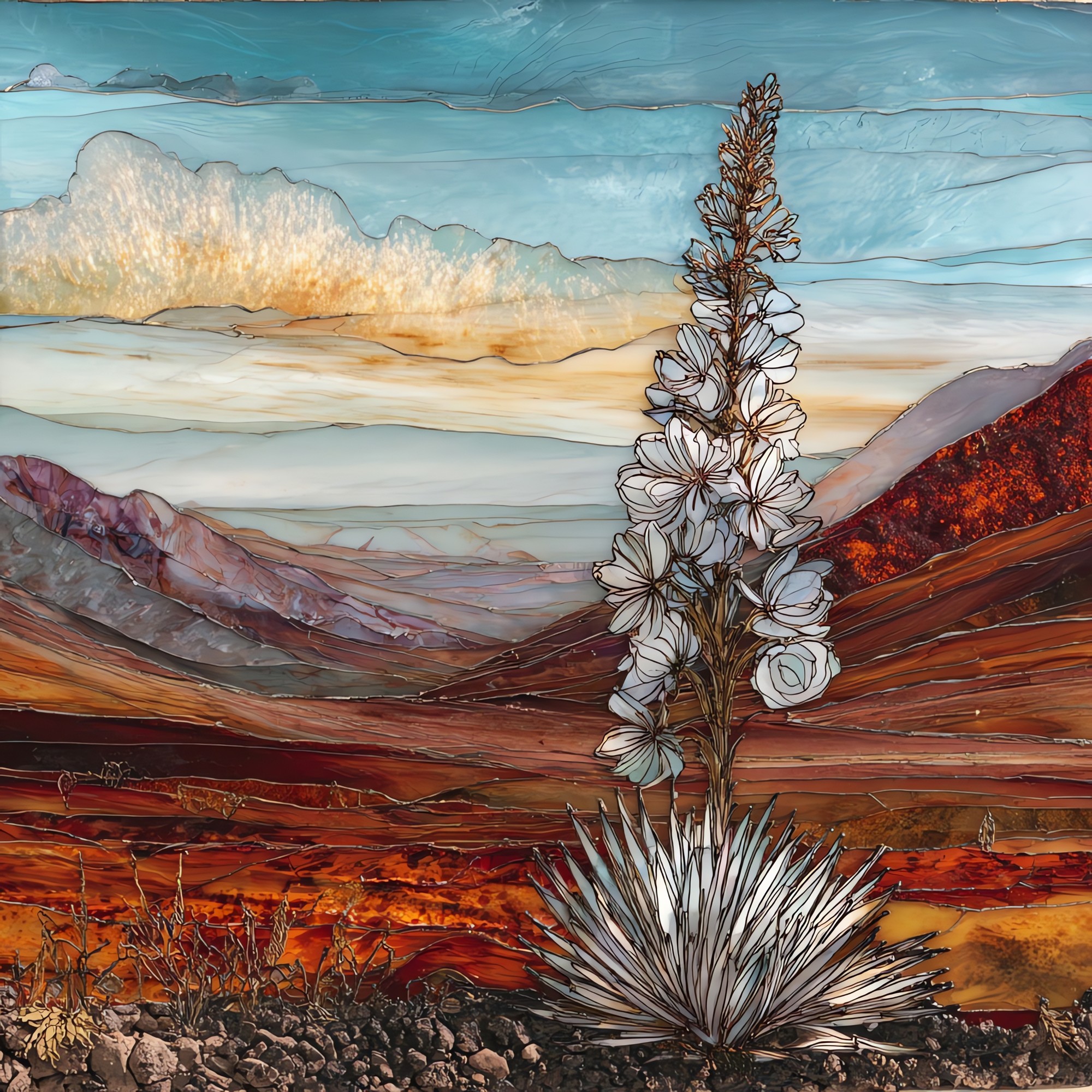
Haleakala Silversword Maui Ceramic Art Tile
shown on ceramic, 12-inch tileHawaii · United States
high on Haleakalā, above the trade-wind clouds on Maui

Haleakala Silversword Maui Ceramic Art Tile

— silver against the cinder, the years before the bloom.

Where it lives

Not only on a wall.

A small tile on the nightstand catching the morning. A larger one above the fire. Yours, wherever you spend the slow hours.
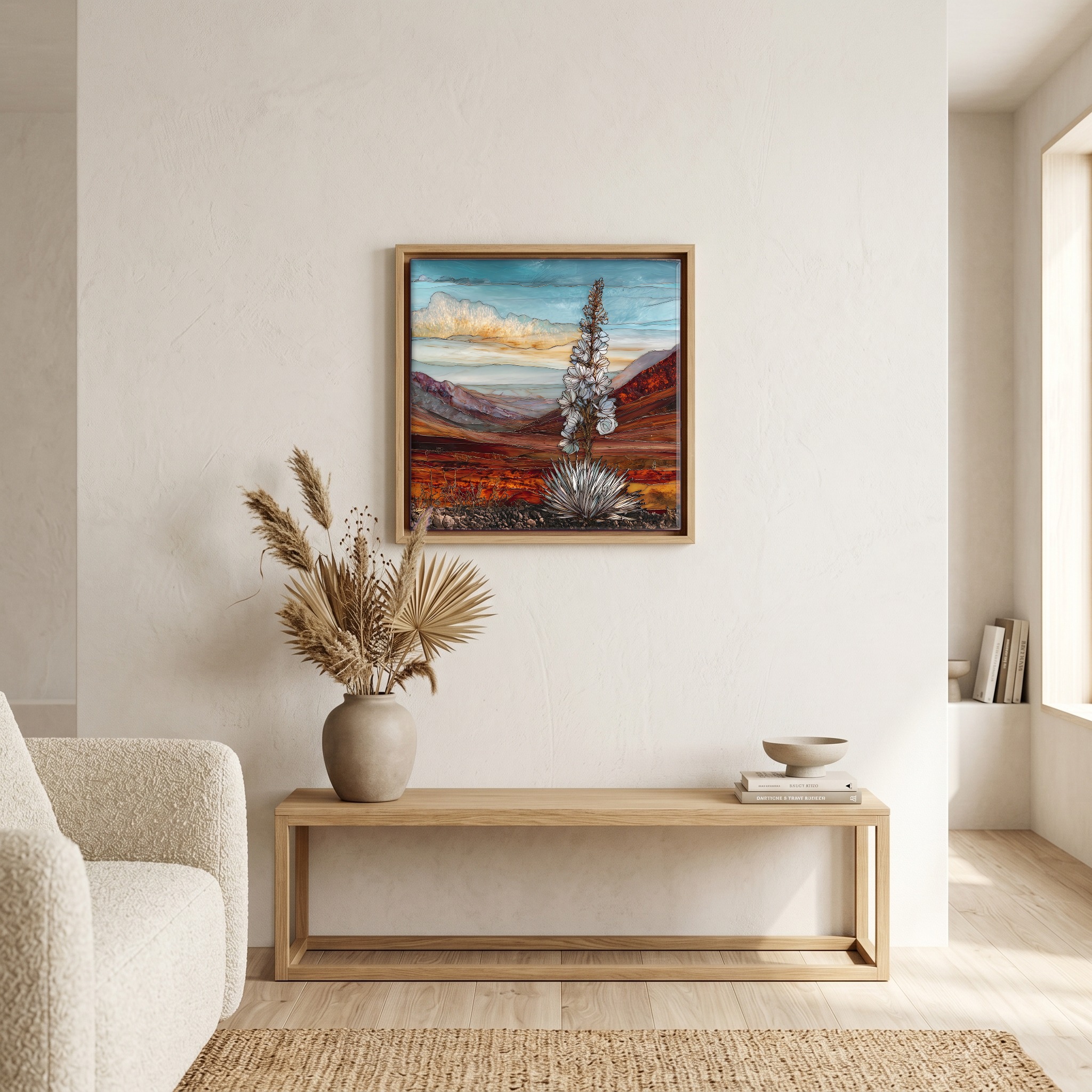
Above the bench, in a warm oak surround.
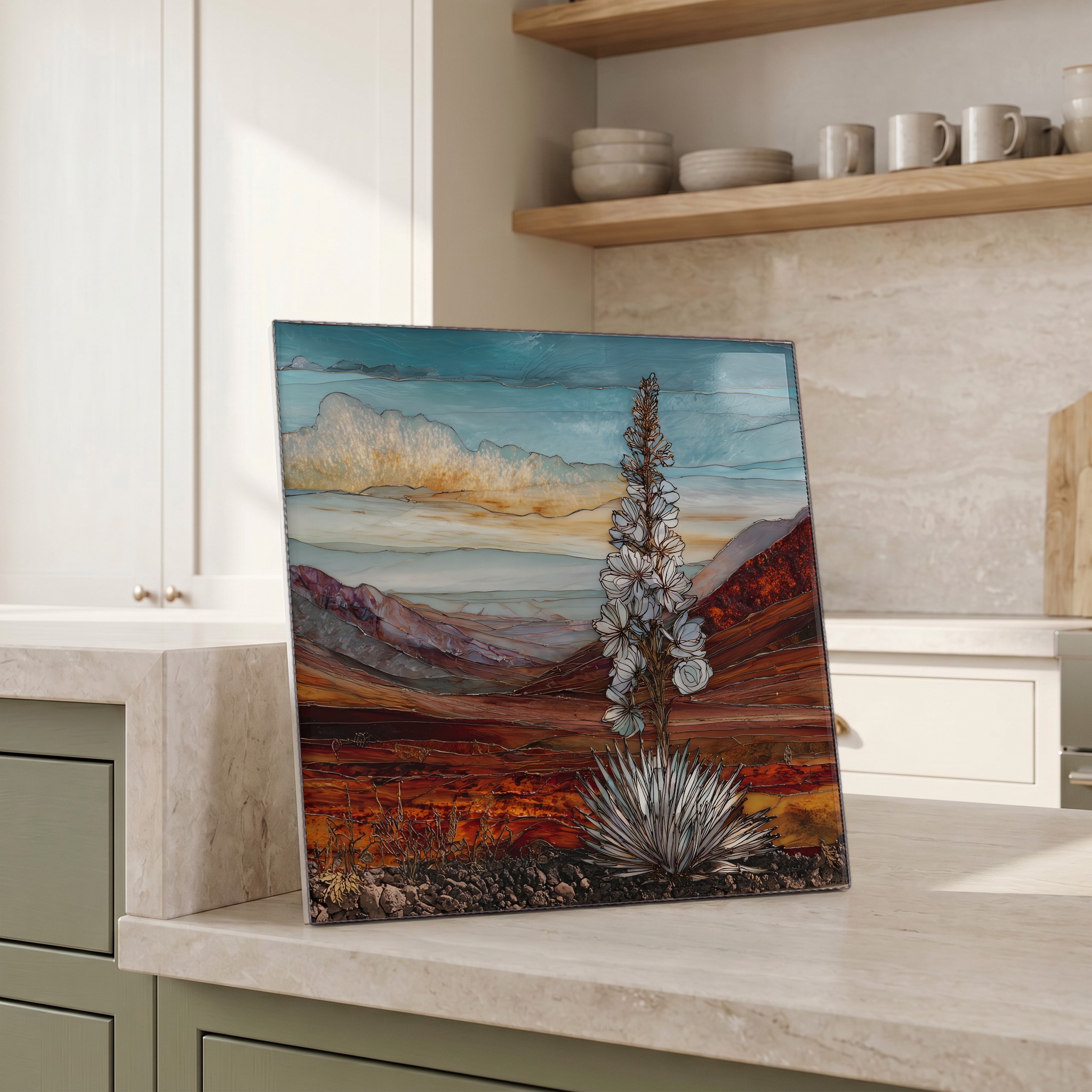
Beside the kettle, propped on the counter.
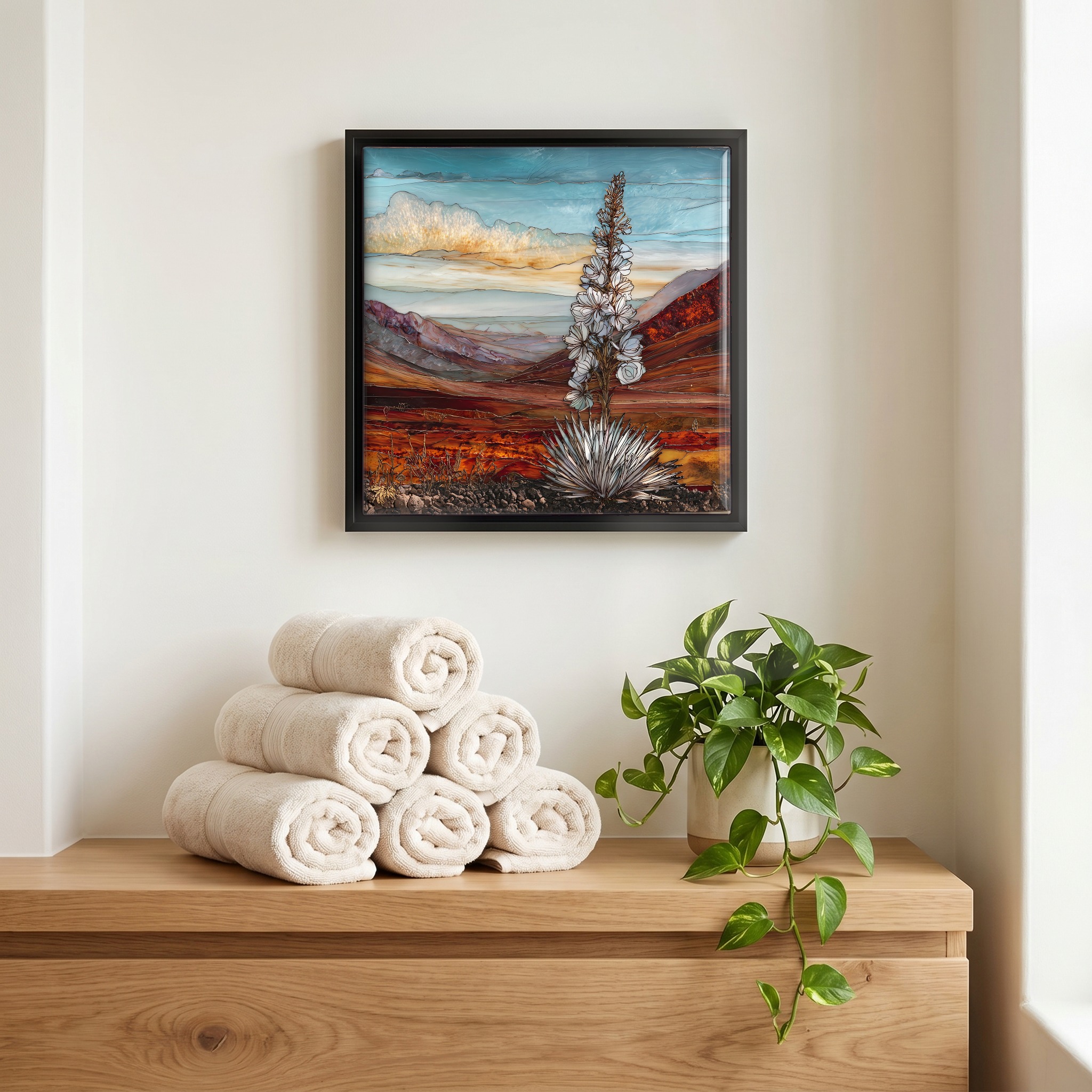
Above the linens, in a slim black surround.
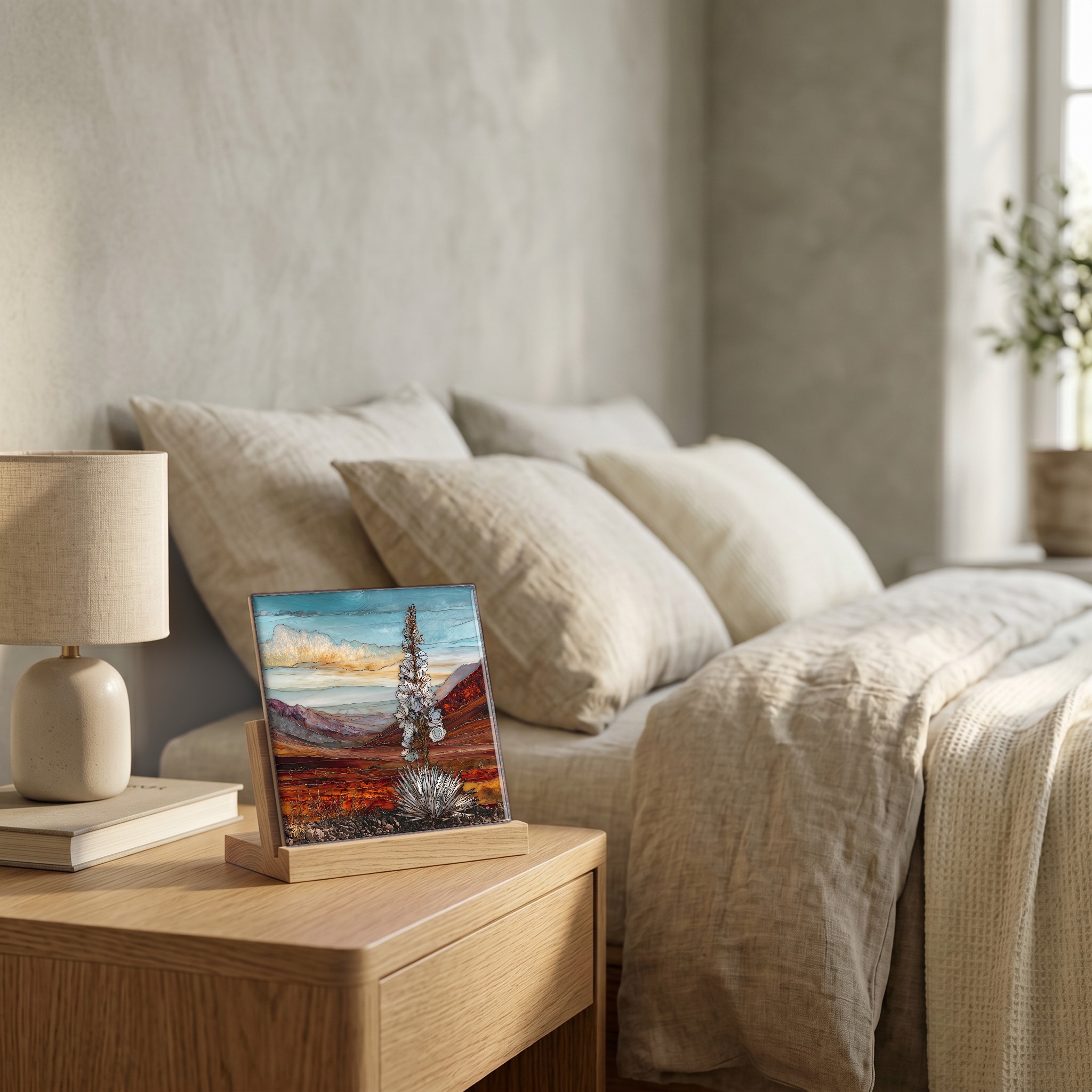
On the nightstand, on a light oak stand.
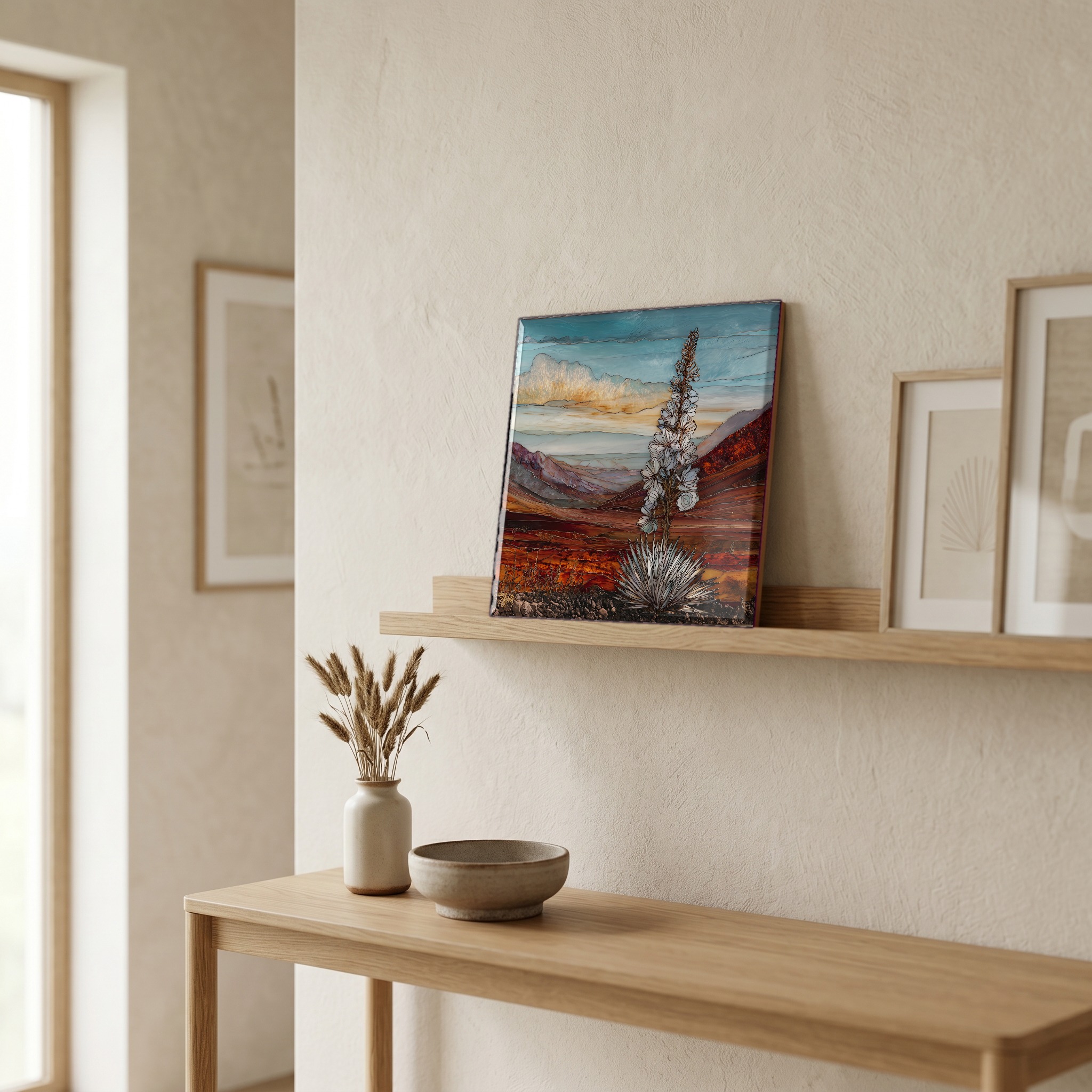
On a picture ledge, where the light comes in.
a note from the studio

A plant that lives nowhere else. The Haleakalā silversword (ʻāhinahina in Hawaiian) grows above 6,900 feet on the slopes of the volcano, its silver hairs catching what little water comes through the cloud layer. Most rosettes spend twenty to fifty years building toward a single bloom: a stalk taller than a person, hundreds of small maroon flowers. Then the plant dies. There used to be tens of thousands. Goats and souvenir hunters took most by the 1920s. After the park fenced out the goats, the count climbed back to roughly sixty-five thousand. Warmer, drier years have begun to thin it again.
from the studio
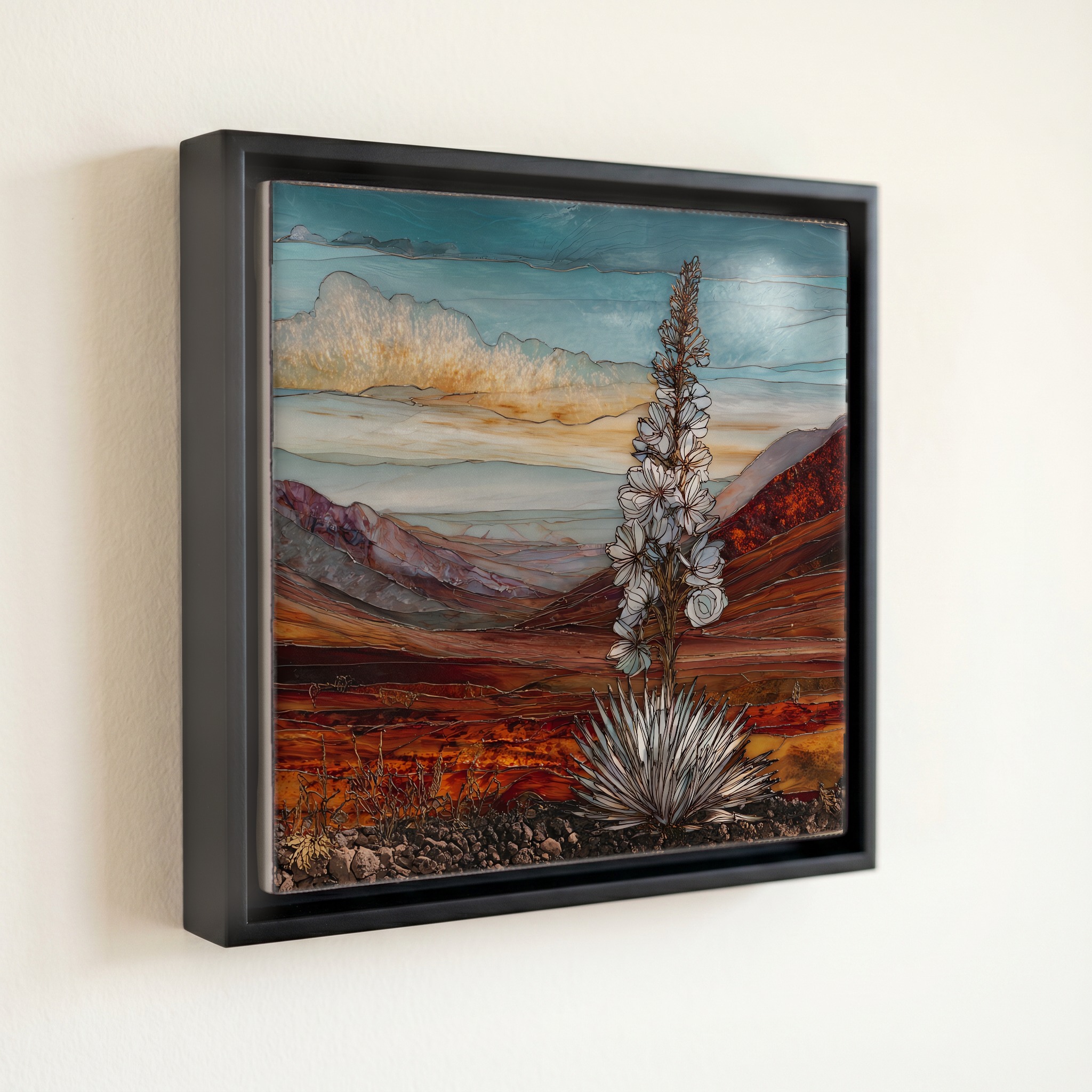
shown in a slim black floating frame · 6 × 6 in
— bring it home

Haleakala Silversword Maui Ceramic Art Tile, on ceramic.

Each tile is finished by hand in our Knoxville studio. Artwork is slowly infused into the ceramic surface under high heat and pressure, and rests beneath a thin glossy finish. The colour lives in the surface, not on top of it.

What kind of piece?
One tile — square or rectangle.
How big?
the popular one — counter, shelf, nightstand
6 × 6 in · 15 cm · 1.6 lb
Surface finish
A clear glossy finish — the artwork reads as if under resin. Ideal for show-pieces and framed wall art.
How it sits
A hidden cleat — sits ¼″ proud of the wall.
$58
Hand-finished and shipped from our studio at the foot of the Smokies. On your wall in about ten days.
size
6 × 6 in
15 cm
weighs
1.6 lb
solid in the hand
surface
ceramic, hand-finished
art rests beneath a thin glossy finish
from
Knoxville, TN
our family studio, at the foot of the Smokies
— start a Coaster Set

Pick any four 4-inch tiles — National Parks you've been to, a Smokies set, the four seasons of one place. $ for a set of , cork-backed, ready to live on the table.
comes gift-ready
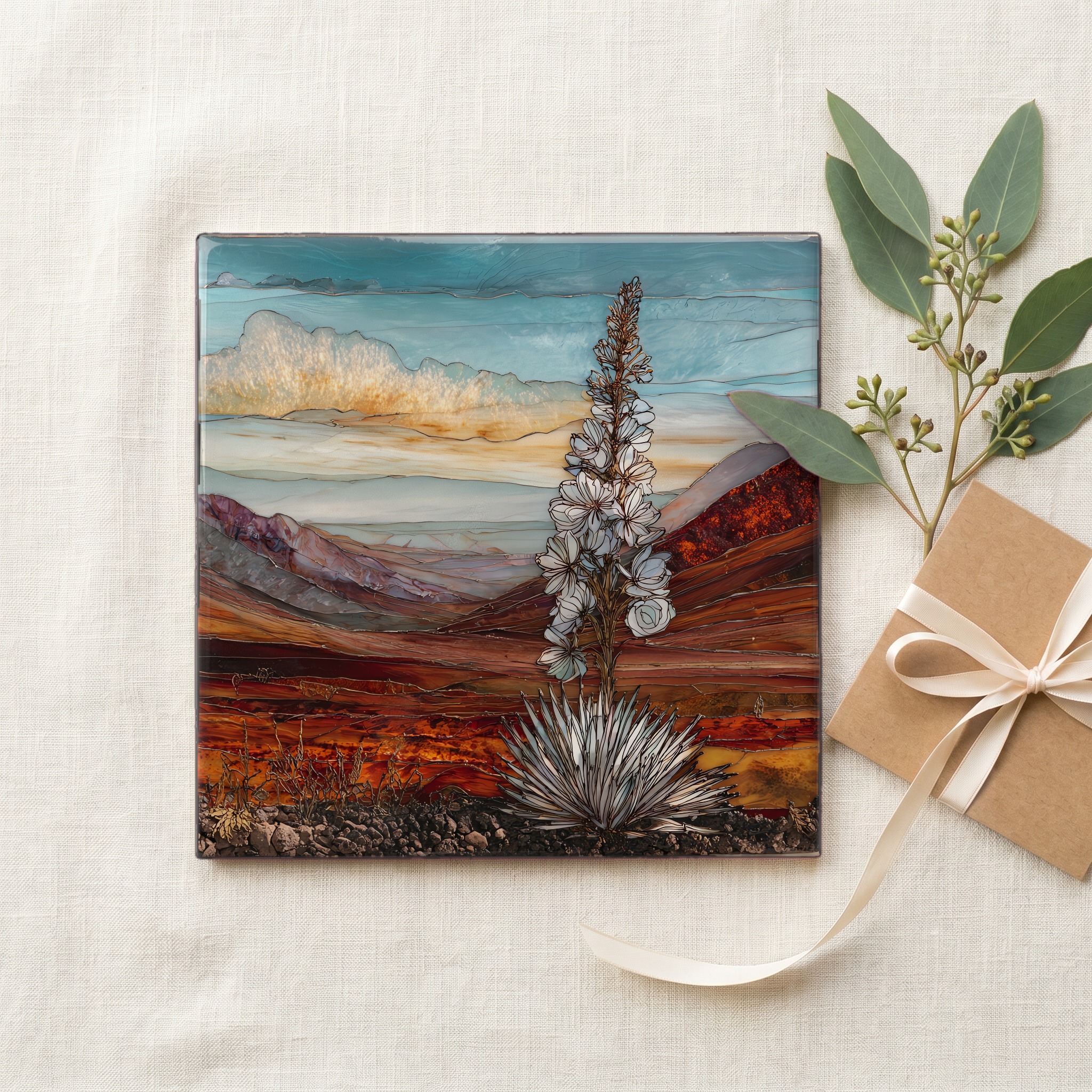
comes gift-ready

Each tile ships in a kraft box, tied with cream ribbon, with a handwritten note from the studio if you'd like to add one.
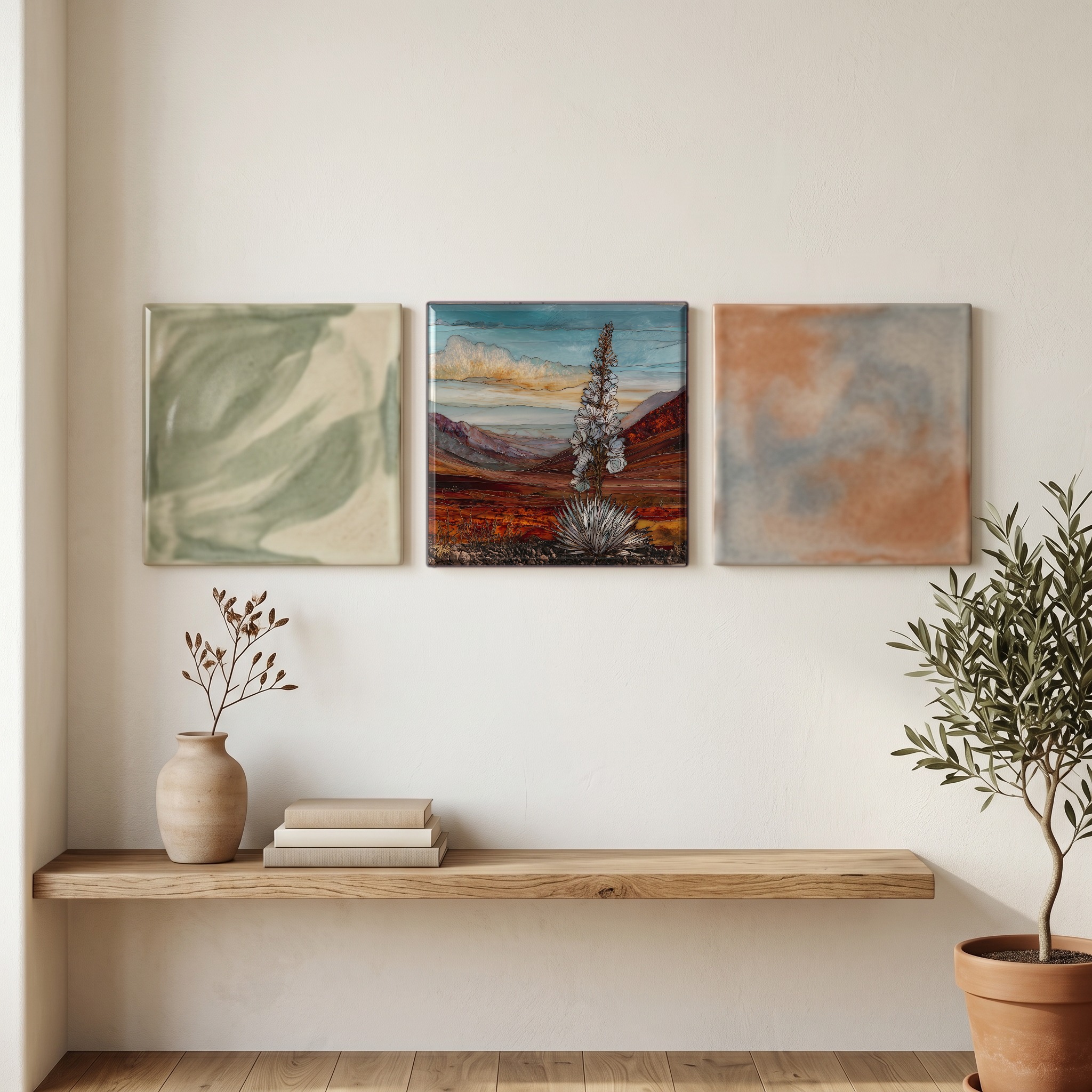
or build a grouping
or build a grouping

Three or five different vistas, hung together — a chapter of places you've been, or want to go.

about Haleakala Silversword Maui Ceramic Art Tile

The place, in three passes.

A little of what's known, in case you fall down the rabbit hole — or want to go see it yourself.
the place

Haleakalā is a 10,023-foot shield volcano that forms the eastern three-quarters of the island of Maui. Its summit caldera, roughly seven miles across, sits above the trade-wind cloud layer at 3,055 metres and supports a small alpine desert and a suite of plants endemic to its slopes. The Haleakalā silversword (Argyroxiphium sandwicense subsp. macrocephalum) lives only here, on the upper slopes between about 6,900 and 9,800 feet. Most are found inside Haleakalā National Park, which the National Park Service administers from the visitor centre near Puʻu ʻUlaʻula, the summit cone. The park is reached by the Haleakalā Crater Road from Kahului, a thirty-eight-mile drive that climbs from sea level to the rim in under two hours.

the season

The silversword's bloom is a once-in-a-lifetime event. After spending anywhere from three to ninety years as a silver rosette of curved leaves, the plant sends up a flowering stalk that can exceed two metres and bears between one hundred and six hundred maroon-and-yellow composite heads. Bloom typically peaks between June and October, with most stalks flowering in July and August. Each rosette is monocarpic, dying within weeks of releasing seed. The park's count of mature plants recovered from fewer than four thousand in 1927 to roughly sixty-five thousand in the 1990s, then began to decline; the U.S. Geological Survey links the drop to warmer, drier conditions in the alpine zone since 1989.

the visit

Haleakalā National Park charges a $30 vehicle entrance fee, valid for three days, and a separate timed reservation is required for any vehicle entering the summit district between 3 a.m. and 7 a.m. for sunrise viewing. The Haleakalā Visitor Center sits at 9,740 feet near the rim of the caldera; the road continues another two miles to Puʻu ʻUlaʻula at 10,023 feet. Silverswords are visible from the parking areas and along the Pa Kaʻoao and Sliding Sands trails. Visitors are asked not to step within fifteen feet of any plant; the shallow root system extends well beyond the silver rosette and is easily damaged by foot traffic.

where
United States · Maui County, Hawaii
within
Haleakalā National Park
elevation
3,055 m · 10,023 ft
position
20.7097° N · 156.2533° W
the neighborhood

What's nearby.

A handful of named places within an hour's walk or short drive. Some we've already painted; some we will.
1 km W
Puʻu ʻUlaʻula (Red Hill)
summit cone
2 km W
Haleakalā Visitor Center
viewpoint
1 km N
Sliding Sands Trail (Keoneheʻeheʻe)
crater trail
3 km W
Kalahaku Overlook
overlook
7 km NW
Hosmer Grove
subalpine forest
N
Haleakala Silversword Maui Ceramic Art Tile
Puʻu ʻUlaʻula (Red Hill)
Haleakalā Visitor Center
Sliding Sands Trail (Keoneheʻeheʻe)
Kalahaku Overlook
Hosmer Grove
common questions

What people ask.

A few questions we get about Haleakala Silversword Maui Ceramic Art Tile — and about bringing the piece home.
about the place

The Haleakalā silversword grows only on the upper slopes of Haleakalā volcano on Maui, Hawaii, between about 6,900 and 9,800 feet. Almost all known plants live within Haleakalā National Park, with the largest populations near Puʻu ʻUlaʻula and along the Sliding Sands Trail.

The leaves are covered in dense silver hairs that reflect intense ultraviolet light at altitude and trap a thin layer of humid air around the plant. The combination protects the rosette from sunburn and slows water loss in an alpine desert that receives less than fifty inches of rain a year.

A rosette can live anywhere from three to ninety years before flowering, with most plants blooming between fifteen and fifty. The bloom is monocarpic: the plant sends up a single flowering stalk, sets seed, and dies within a few weeks.

Bloom peaks between June and October, with the most flowering stalks in July and August. The silver rosettes themselves are visible at the summit in every season, and the park is open daily except during rare weather closures.

The Haleakalā silversword is federally listed as threatened. The population recovered from under four thousand plants in 1927 to about sixty-five thousand by the late 1990s after the park fenced out feral goats, then began to decline; the U.S. Geological Survey attributes the recent loss to warmer, drier conditions on the upper mountain.

It is called ʻāhinahina, meaning roughly "very grey" in Hawaiian, after the silver hairs on the leaves. A separate subspecies of the same plant grows on Mauna Kea on the island of Hawaiʻi and is called the Mauna Kea silversword.

Stay on marked trails and keep at least fifteen feet from any plant. The silversword has a wide, shallow root system that extends well beyond the silver rosette, and a single footstep can damage roots and kill the plant. Off-trail walking is prohibited inside the park.

about the piece in your home

It's been a meaningful gift for many of our customers with ties to Maui or to the park. Most visitors leave with a sunrise photo; the silversword is what they remember a year later. A Small or Medium with a handwritten note from the studio carries well.

The silver-on-cinder palette suits coastal-modern Hawaiian interiors, minimalist desert-modern rooms, and biophilic spaces that lean into native flora. It also sits well against unfinished oak or basalt; the silvers in the leaves answer warm-grey and bone-white walls.

Yes. Biophilic design emphasises native, place-specific flora over generic tropical motifs, and the silversword is one of the most-cited examples of high-altitude island endemism. A Medium or Large reads as a single botanical statement piece without the busy quality of a multi-plant composition.

Above a standard 84-inch sofa, a single Large reads cleanly. For a stronger presence, a 4-tile Mural gives the silver rosette real scale. Above a console, a Medium or a 4-tile Mural in horizontal arrangement holds the wall.

Yes. Order the Dura Satin or Matte finish for any bathroom, shower, or kitchen backsplash; both are scratch-resistant and rated for moisture and steam. The Glossy finish is for framed wall art and dry rooms.

Wipe with a soft microfibre cloth and warm water. The colour lives in the ceramic surface, so it cannot fade or scratch under normal cleaning. Avoid abrasive pads and bleach-based cleaners on the Matte and Dura Satin finishes, which can dull the surface over time.

Yes. Every WenderVista painting is the work of Reid Wender, the curator of the atlas, and the studio holds the full copyright. We do not license other studios' work and we do not appear on the print-on-demand marketplaces. Each tile is finished by hand in Knoxville, Tennessee.

if this one stayed with you

A few you might also love.

Hand-picked by the eye that found Sorapis. Same air, same kind of quiet.