Wender·Vista
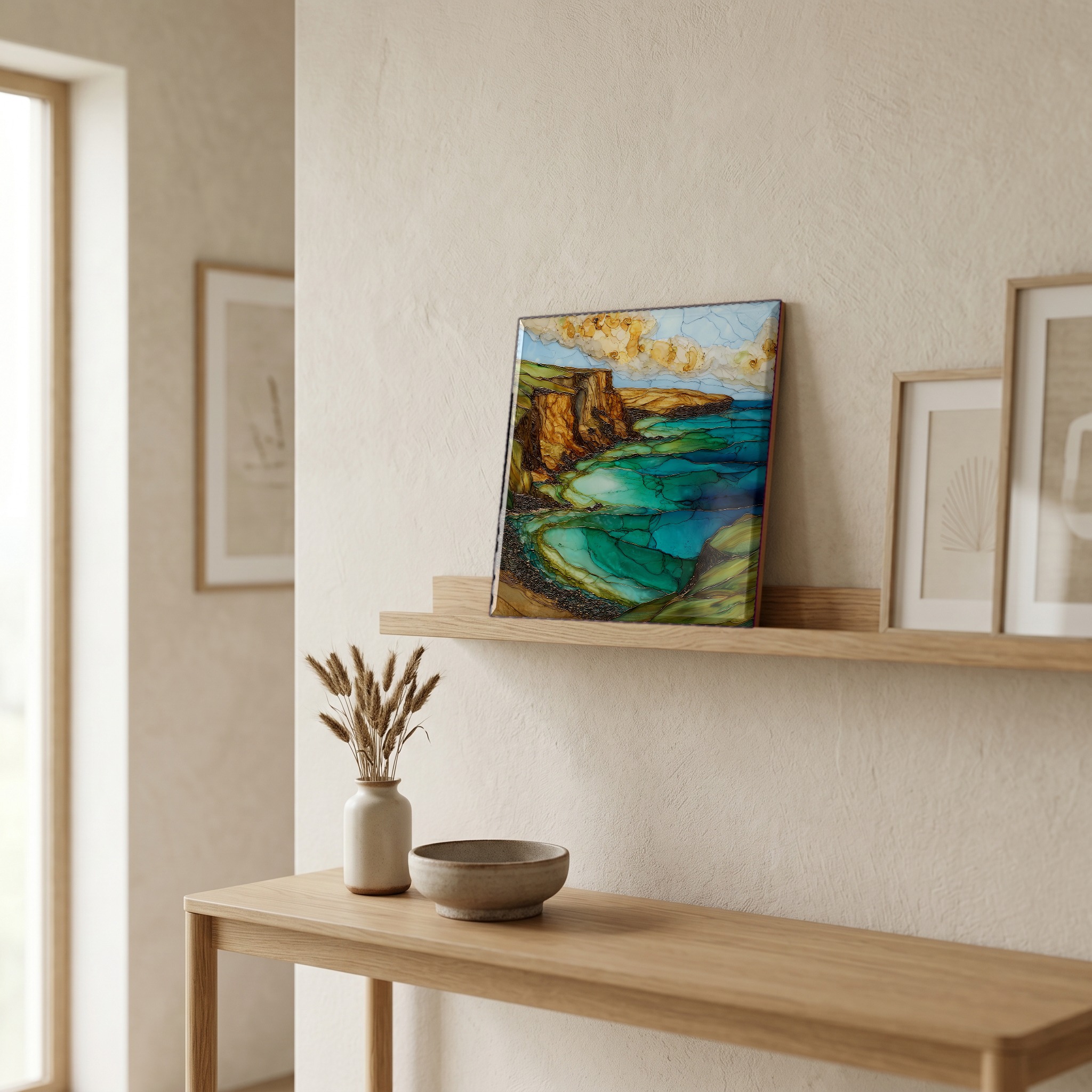
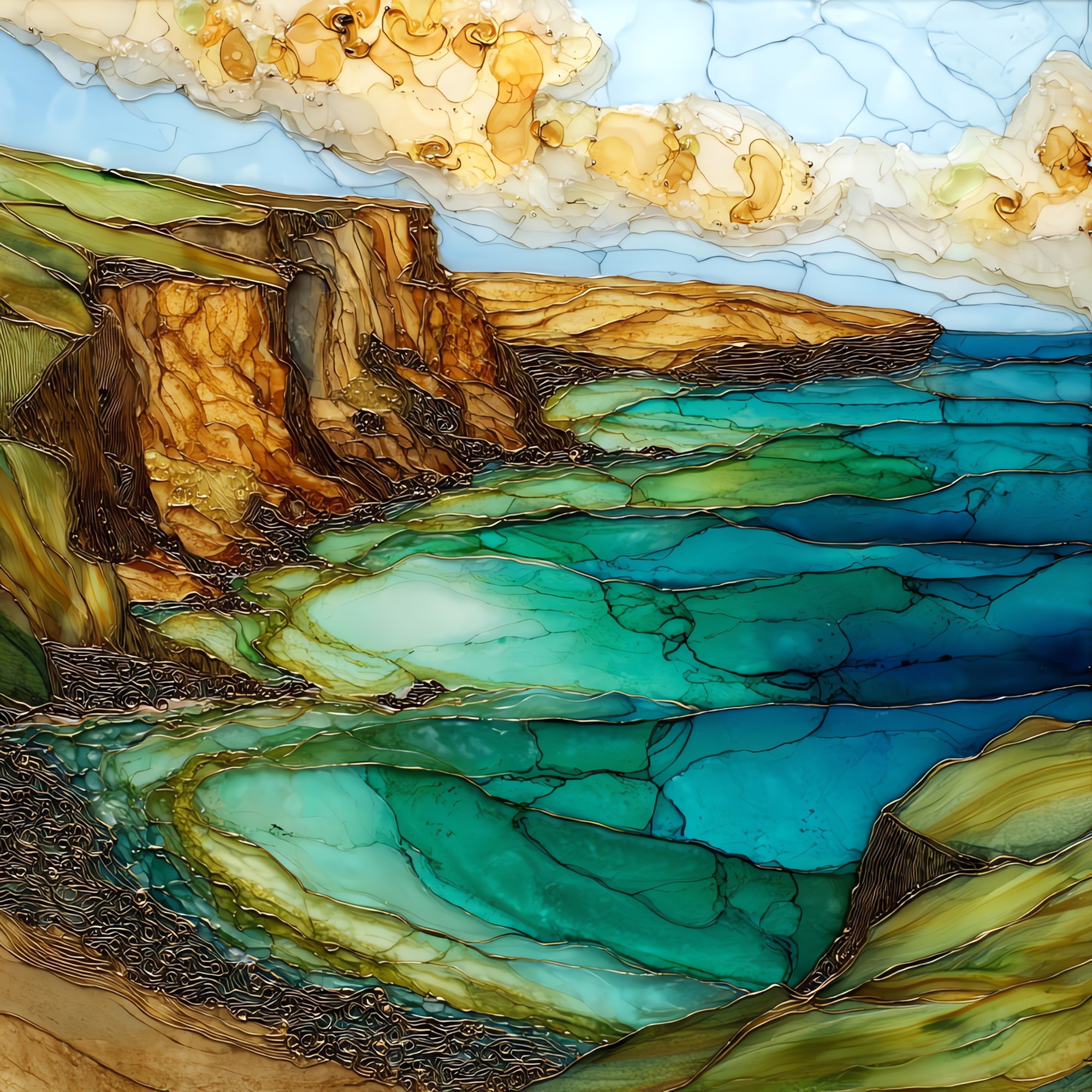
Green Sand Papakolea Big Island Ceramic Art Tile
shown on ceramic, 12-inch tileHawaii · United States
at the southern tip of the Big Island, east of South Point

Green Sand Papakolea Big Island Ceramic Art Tile

— the green the old volcano left behind.

Where it lives

Not only on a wall.

A small tile on the nightstand catching the morning. A larger one above the fire. Yours, wherever you spend the slow hours.
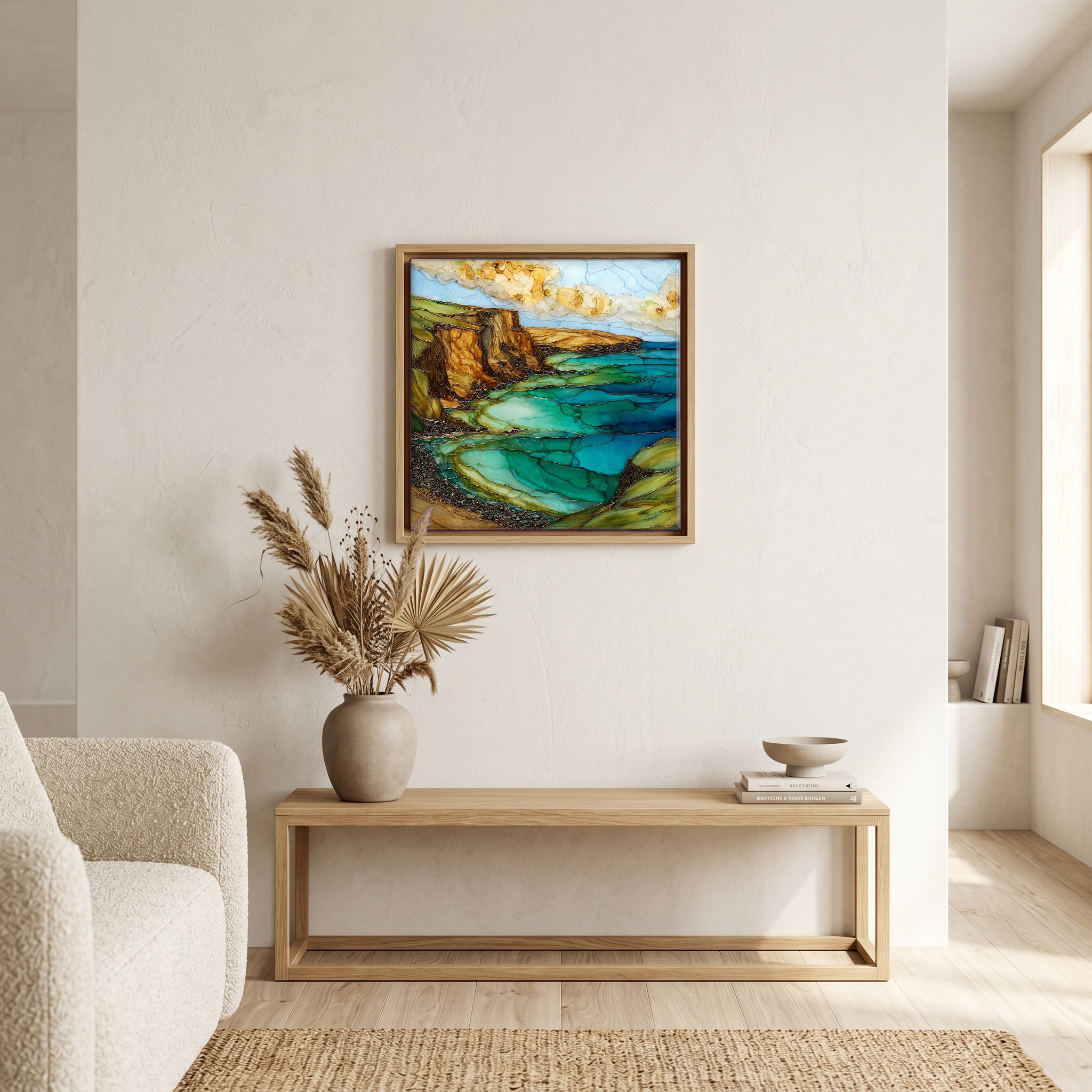
Above the bench, in a warm oak surround.
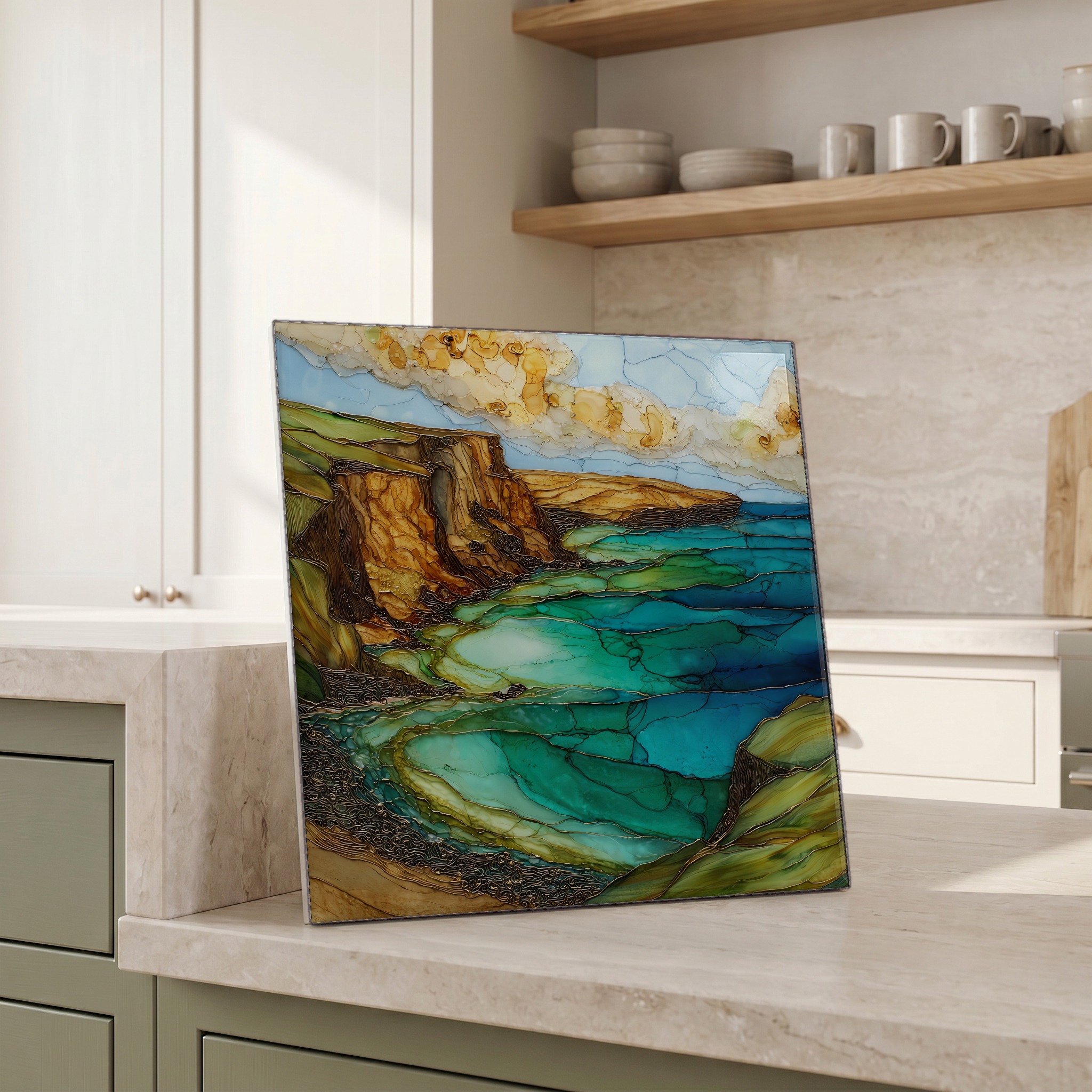
Beside the kettle, propped on the counter.
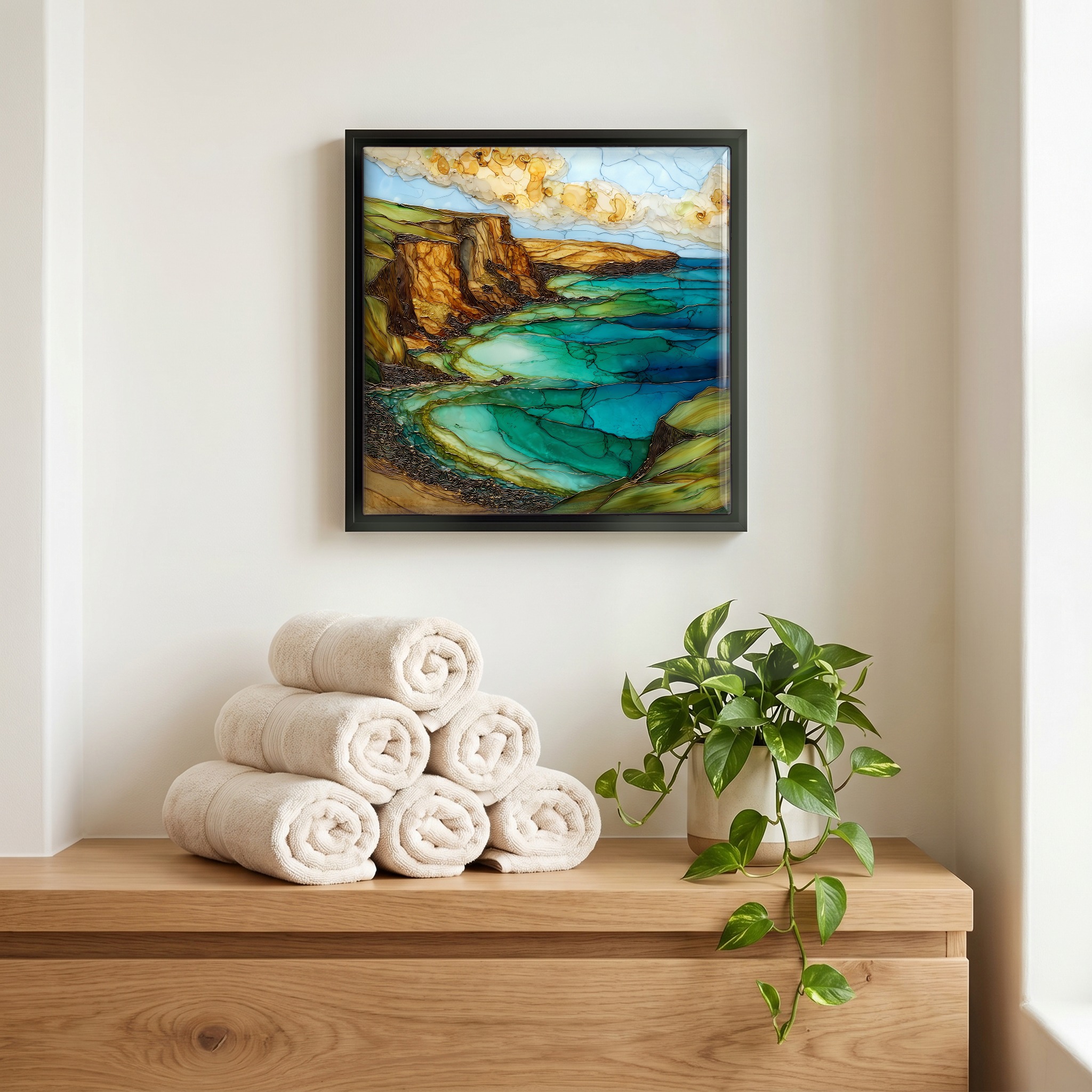
Above the linens, in a slim black surround.
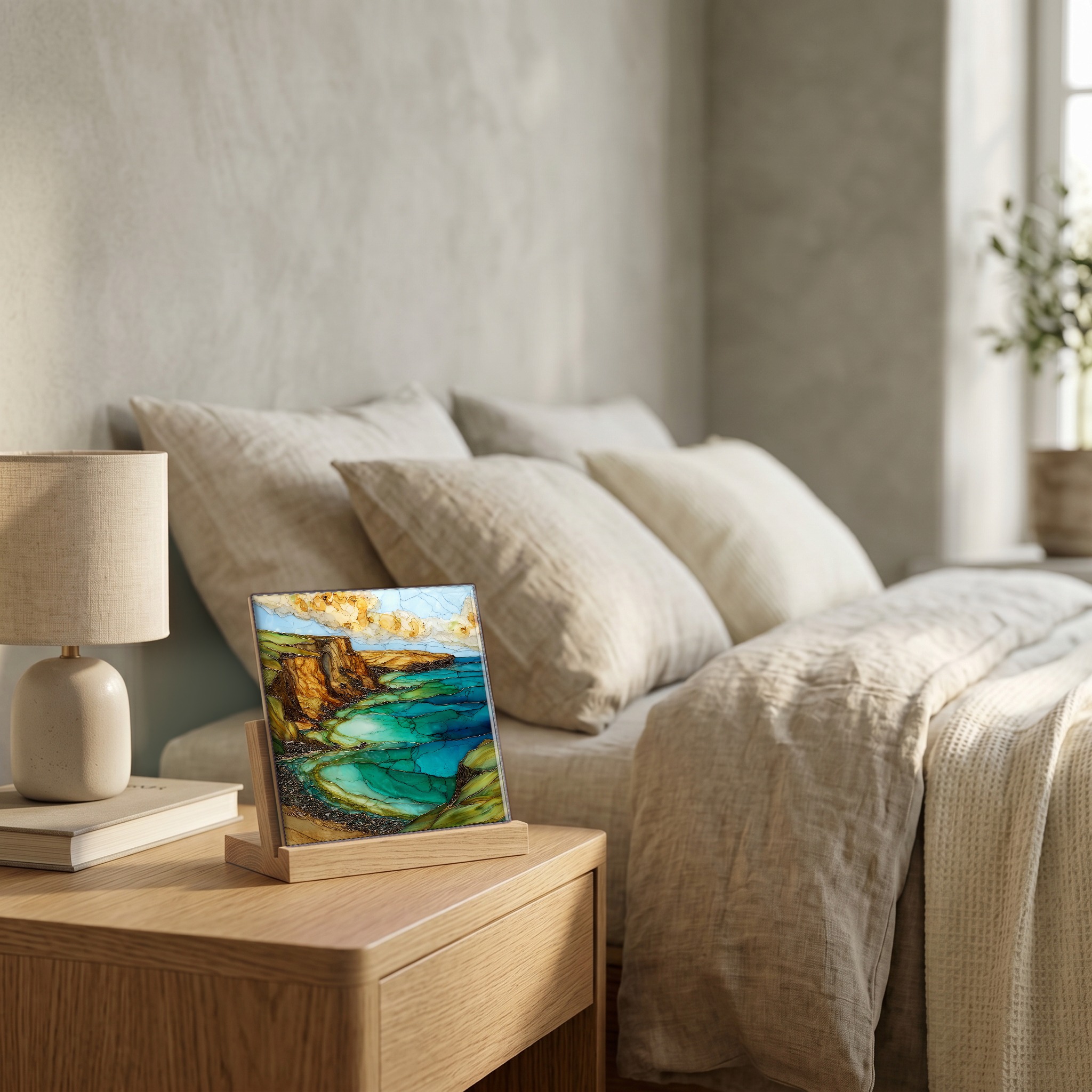
On the nightstand, on a light oak stand.
On a picture ledge, where the light comes in.
a note from the studio

A crescent of olive-green sand at the foot of a half-collapsed cinder cone called Puʻu Mahana, four kilometres east of Ka Lae, the southernmost point of the United States. The colour is olivine, a silicate mineral that erodes out of the cone and stays behind while the lighter ash washes back to the Pacific. There is no road in. From the parking area at South Point the walk is about five miles round trip across windswept pasture, or a local 4WD pickup if one is running. Most people who come this far come for the colour.
from the studio
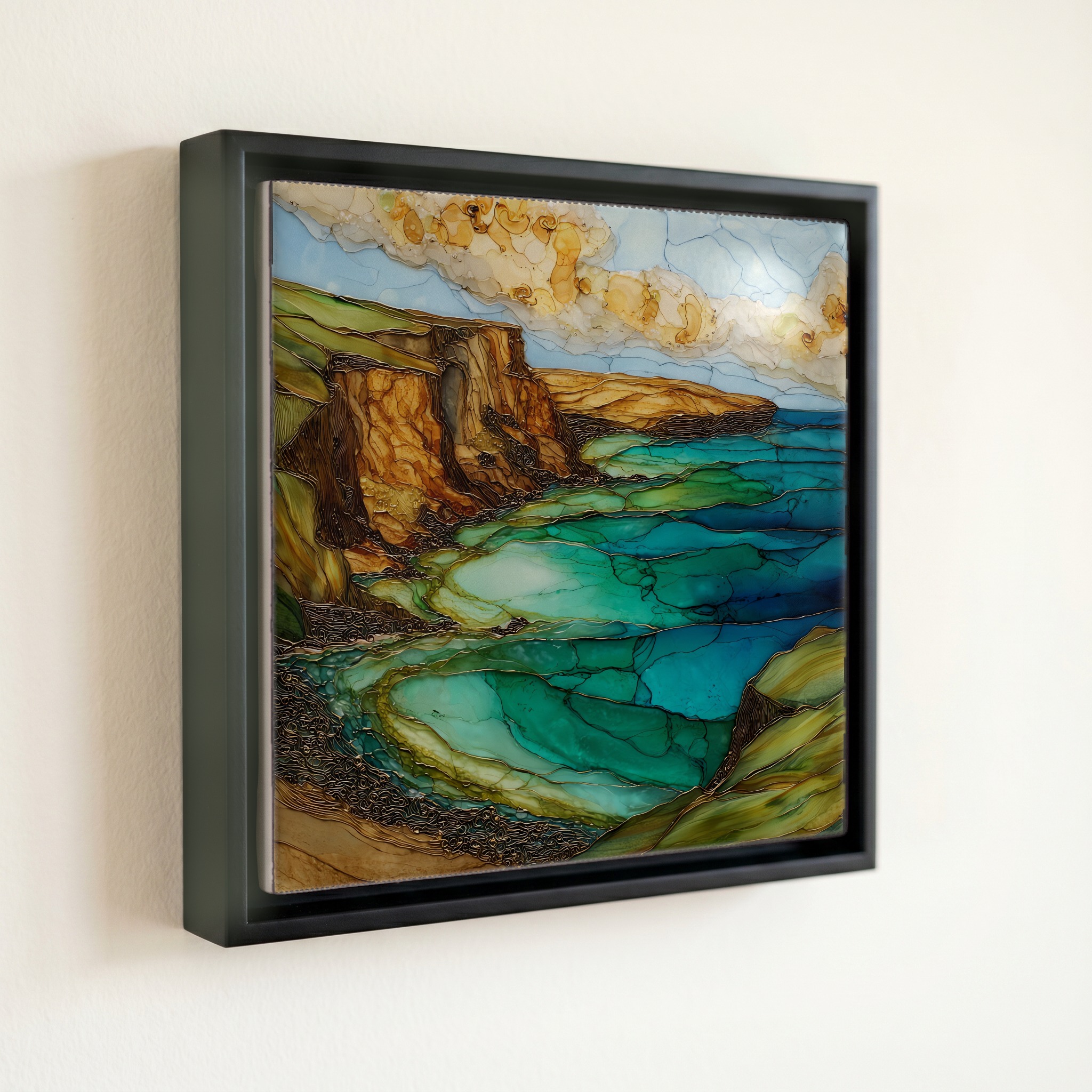
shown in a slim black floating frame · 6 × 6 in
— bring it home

Green Sand Papakolea Big Island Ceramic Art Tile, on ceramic.

Each tile is finished by hand in our Knoxville studio. Artwork is slowly infused into the ceramic surface under high heat and pressure, and rests beneath a thin glossy finish. The colour lives in the surface, not on top of it.

What kind of piece?
One tile — square or rectangle.
How big?
the popular one — counter, shelf, nightstand
6 × 6 in · 15 cm · 1.6 lb
Surface finish
A clear glossy finish — the artwork reads as if under resin. Ideal for show-pieces and framed wall art.
How it sits
A hidden cleat — sits ¼″ proud of the wall.
$58
Hand-finished and shipped from our studio at the foot of the Smokies. On your wall in about ten days.
size
6 × 6 in
15 cm
weighs
1.6 lb
solid in the hand
surface
ceramic, hand-finished
art rests beneath a thin glossy finish
from
Knoxville, TN
our family studio, at the foot of the Smokies
— start a Coaster Set

Pick any four 4-inch tiles — National Parks you've been to, a Smokies set, the four seasons of one place. $ for a set of , cork-backed, ready to live on the table.
comes gift-ready
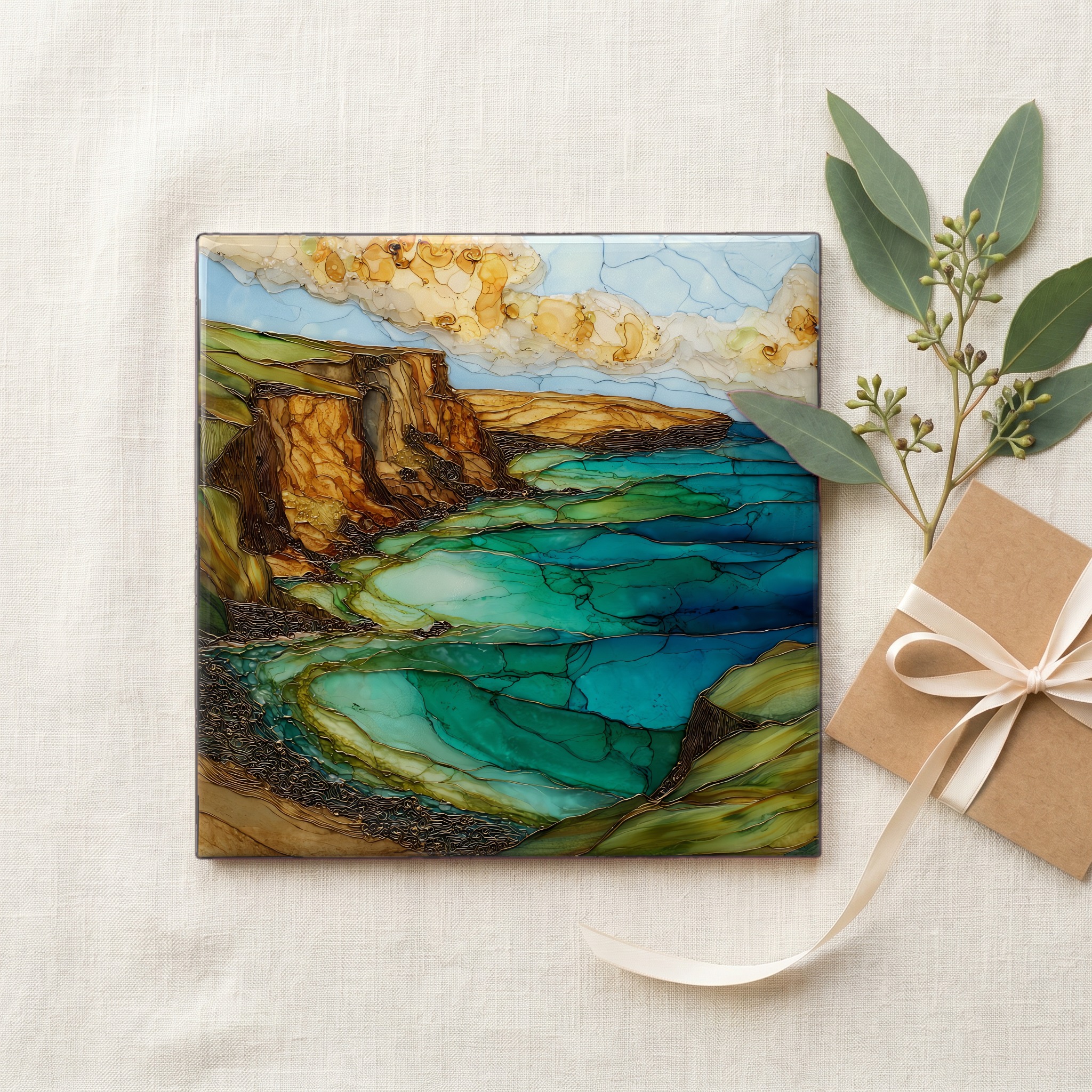
comes gift-ready

Each tile ships in a kraft box, tied with cream ribbon, with a handwritten note from the studio if you'd like to add one.
or build a grouping
or build a grouping

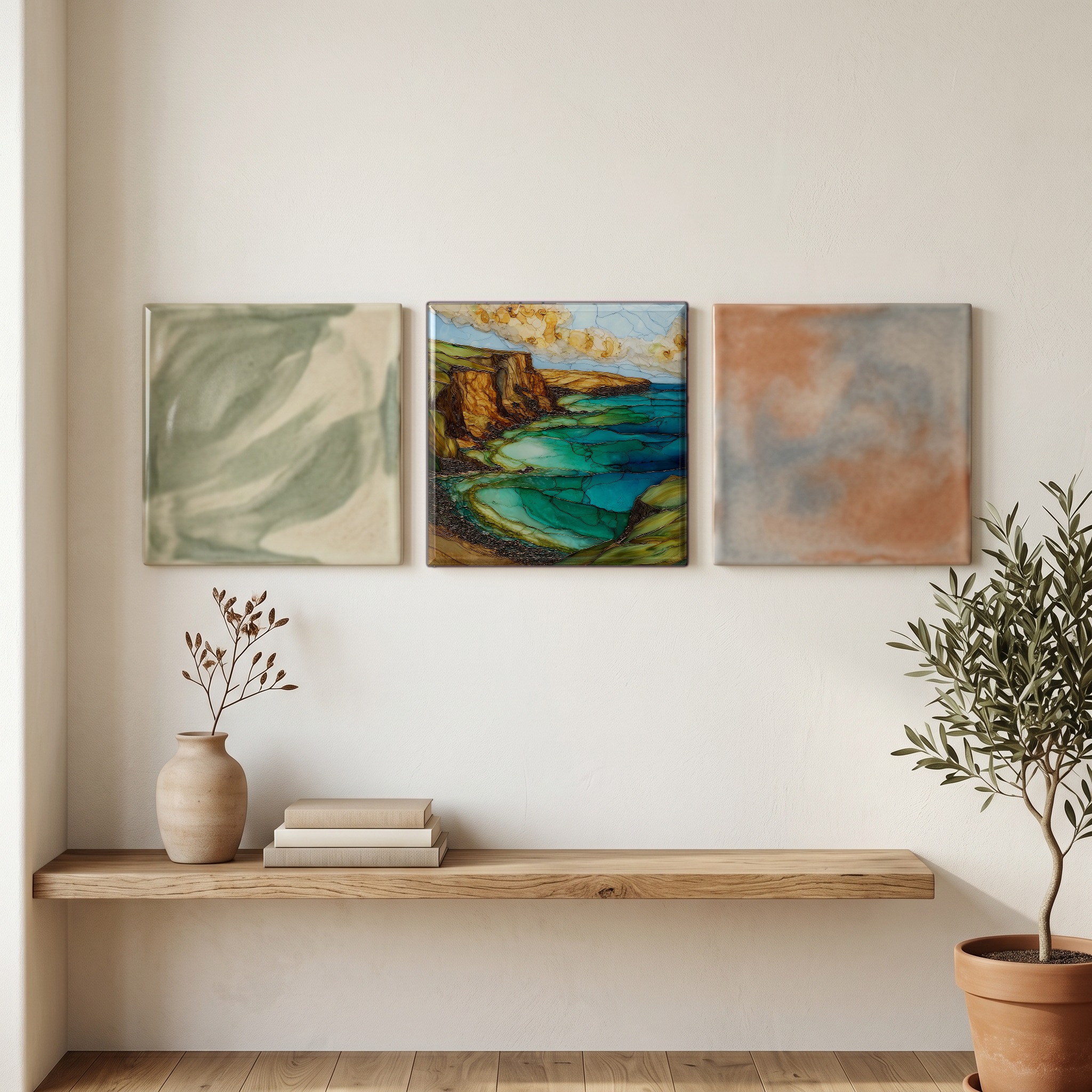
Three or five different vistas, hung together — a chapter of places you've been, or want to go.

about Green Sand Papakolea Big Island Ceramic Art Tile

The place, in three passes.

A little of what's known, in case you fall down the rabbit hole — or want to go see it yourself.
the place

Papakōlea sits inside Mahana Bay on the south coast of Hawaiʻi Island, in the district of Kaʻū. The beach is enclosed by the partially eroded walls of Puʻu Mahana, a small cone on the southwest flank of Mauna Loa estimated to have formed roughly 49,000 years ago. The walk from the gravel parking area near Ka Lae (South Point) is about 2.5 miles each way along open coastal pasture, which is held in trust by the Department of Hawaiian Home Lands. There are no facilities, no shade, and the path is exposed to a steady south wind off the open Pacific.

the colour

The sand reads green because it is almost pure olivine, a magnesium-iron silicate that crystallises in basaltic lavas. When the seaward wall of Puʻu Mahana broke open, surf began grinding the cone apart; the lighter glass and pumice were carried offshore, while the denser olivine crystals stayed behind and accumulated in the bay. Locals sometimes call the crystals Hawaiian diamonds for the pale, forsteritic shade. Only a handful of true green-sand beaches exist worldwide, including Talofofo Beach on Guam and Punta Cormorant on Floreana Island in the Galápagos, but Papakōlea is generally considered the most uniformly green of them.

the visit

Access begins at the end of South Point Road, off the Hawaiʻi Belt Road about 12 miles south of Naʻālehu. The lot is unpaved and unsupervised; many rental car companies forbid driving the road, although it is legal public access. The 2.5-mile coastal trail to the cone is open at all hours and free. Local Hawaiian Home Lands beneficiaries sometimes offer a private 4WD shuttle for a fee; the practice is informal and not endorsed by the state. Pack water and sun protection, since there is no shade once you leave the parking area.

where
United States · Kaʻū, Hawaiʻi County
elevation
0 m · 0 ft
position
18.9333° N · 155.6458° W
the neighborhood

What's nearby.

A handful of named places within an hour's walk or short drive. Some we've already painted; some we will.
4 km W
Ka Lae (South Point)
landmark
14 km N
Naʻālehu
town
32 km NE
Punaluʻu Black Sand Beach
black-sand beach
N
Green Sand Papakolea Big Island Ceramic Art Tile
Ka Lae (South Point)
Naʻālehu
Punaluʻu Black Sand Beach
common questions

What people ask.

A few questions we get about Green Sand Papakolea Big Island Ceramic Art Tile — and about bringing the piece home.
about the place

It sits at Mahana Bay on the southern tip of Hawaiʻi Island, in the district of Kaʻū, about four kilometres east of Ka Lae, the southernmost point of the fifty United States. The nearest town is Naʻālehu, roughly 12 miles north on the Hawaiʻi Belt Road.

The sand is mostly olivine, a magnesium-iron silicate eroded from a cinder cone called Puʻu Mahana. Olivine is denser than the surrounding ash and glass, so when surf grinds the cone apart, the heavier green crystals stay in the bay while the lighter material is carried offshore.

Drive South Point Road off the Hawaiʻi Belt Road, park at the gravel lot near Ka Lae, then walk about 2.5 miles east along the coastal pasture. The round trip is roughly five miles with no shade. Some local residents offer informal 4WD shuttles, but the road is rough and the service is unregulated.

Puʻu Mahana is estimated to have formed about 49,000 years ago during volcanic activity on the southwest flank of Mauna Loa. The seaward wall has since been breached by Pacific wave action, leaving the half-bowl that holds the beach today.

Only a small number of true green-sand beaches exist. The most commonly cited are Papakōlea on Hawaiʻi Island, Talofofo Beach on Guam, and Punta Cormorant on Floreana Island in the Galápagos. Papakōlea is generally considered the most uniformly green of them.

The surrounding pasture is held in trust by the Department of Hawaiian Home Lands for Native Hawaiian beneficiaries. The beach itself sits within Hawaiʻi County, but access crosses Hawaiian Home Lands acreage, which is why local 4WD shuttles operate informally rather than as a state service.

Swimming is possible on calm days but generally discouraged. The bay opens directly to the open Pacific with strong currents, frequent surge, and no lifeguard. The cliffs around the bowl are unstable in places. Most visitors come to see the colour and walk back rather than enter the water.

about the piece in your home

Yes. Papakōlea is one of the most-storied places in Kaʻū, and people who grew up on Hawaiʻi Island or who have spent time at South Point recognise it immediately. The Small or Medium with a handwritten studio card travels well, and the Coaster Set works for a kitchen on the mainland.

The olive-green and warm sand palette pairs with coastal-modern, biophilic, and earth-tone interiors. It also reads in mountain-modern rooms that lean toward green over blue. Less suited to high-contrast minimalist or jewel-tone schemes, where the muted greens tend to flatten against the surrounding colour.

Yes. Earth-toned greens like olive, sage, and forest have been central to coastal-modern and biophilic interiors for several seasons. Papakōlea reads in that family naturally and tends to anchor a wall without competing with linen, jute, oak, or rattan around it.

The Large is the most common single-piece choice above a standard sofa or console. For wider walls, the four-tile Mural reads as one continuous scene across roughly 24 inches, and the nine-tile Mural carries a full feature wall in a living room or stairwell.

Yes. The Dura Satin or Matte finish is the right choice for any room with steam or splash: showers, backsplashes, bathroom walls. The colour lives in the surface and will not fade with cleaning. The Glossy finish is reserved for framed wall pieces in dry rooms.

A soft microfibre cloth with water is enough for everyday dust. For stuck residue use a drop of mild dish soap and warm water. Avoid abrasive pads, citrus cleaners, and any solvent. The image is slowly infused into the ceramic surface and beneath a thin protective finish, so it does not wear off.

Yes. Every WenderVista piece is by Reid Wender at our Knoxville studio. The art is not licensed from a third party, and the tile is hand-finished in-house. Each one carries a small studio mark on the back.

if this one stayed with you

A few you might also love.

Hand-picked by the eye that found Sorapis. Same air, same kind of quiet.