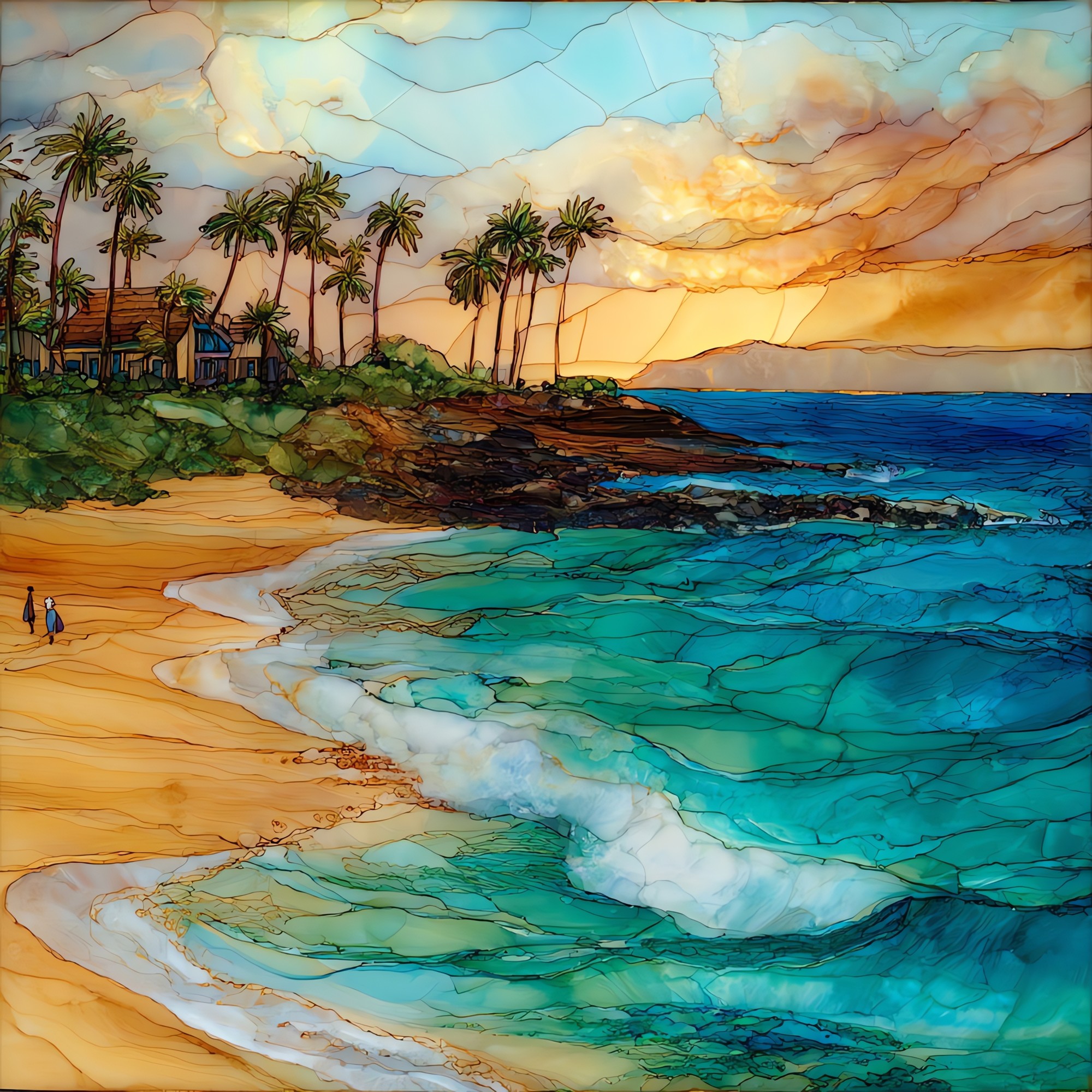
D T Fleming Beach Maui Ceramic Art Tile
— gold sand the pines have shadowed for a century.
Not only on a wall.
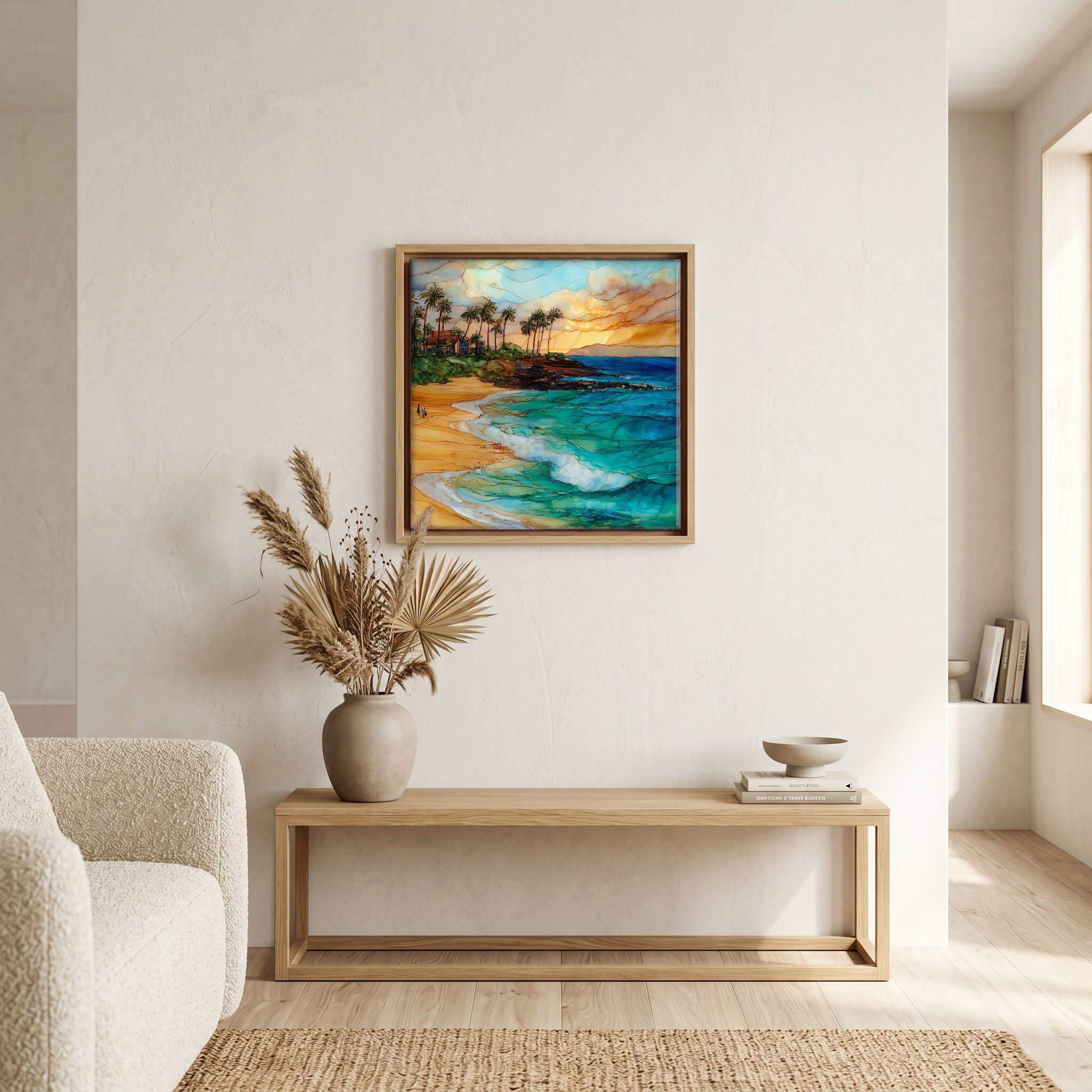
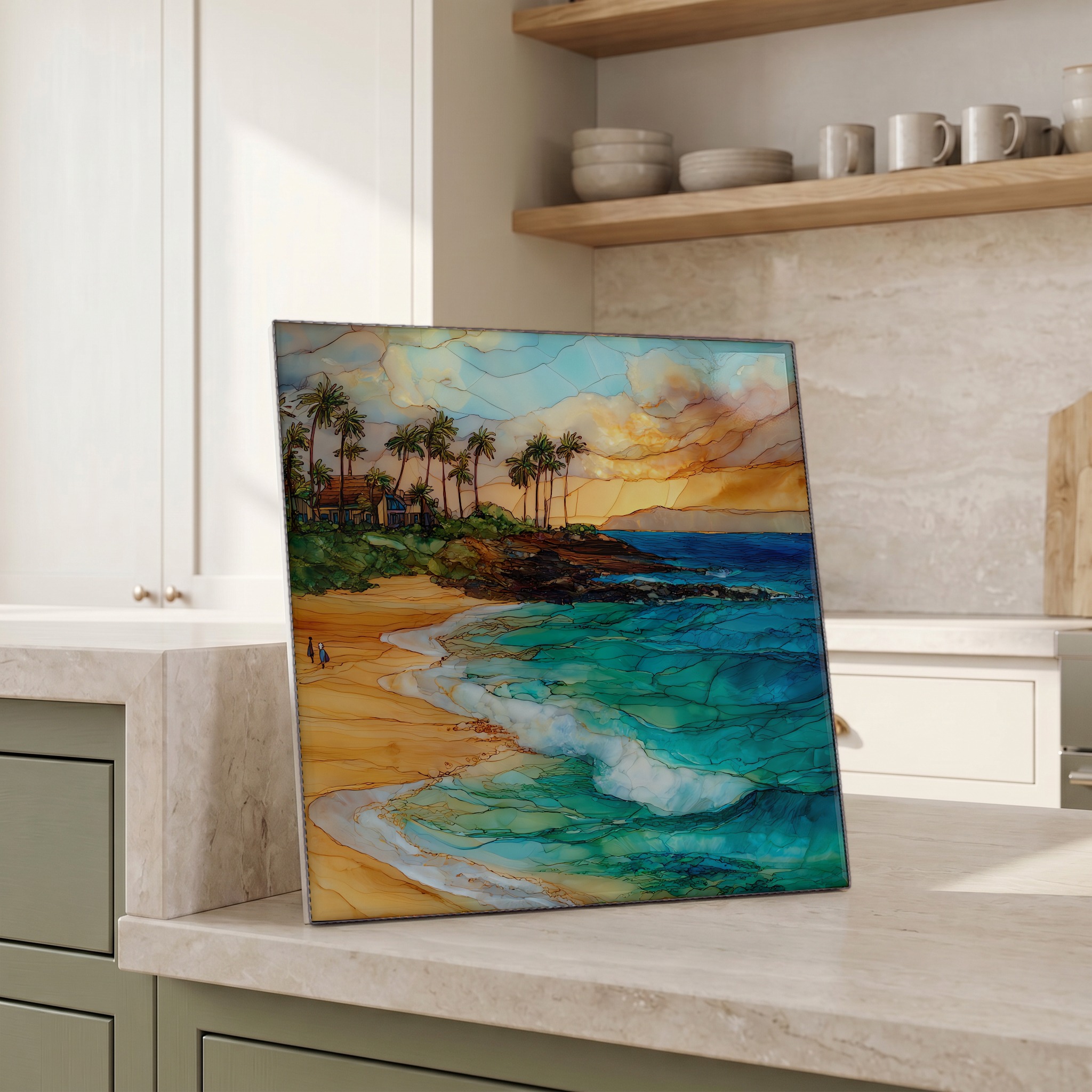
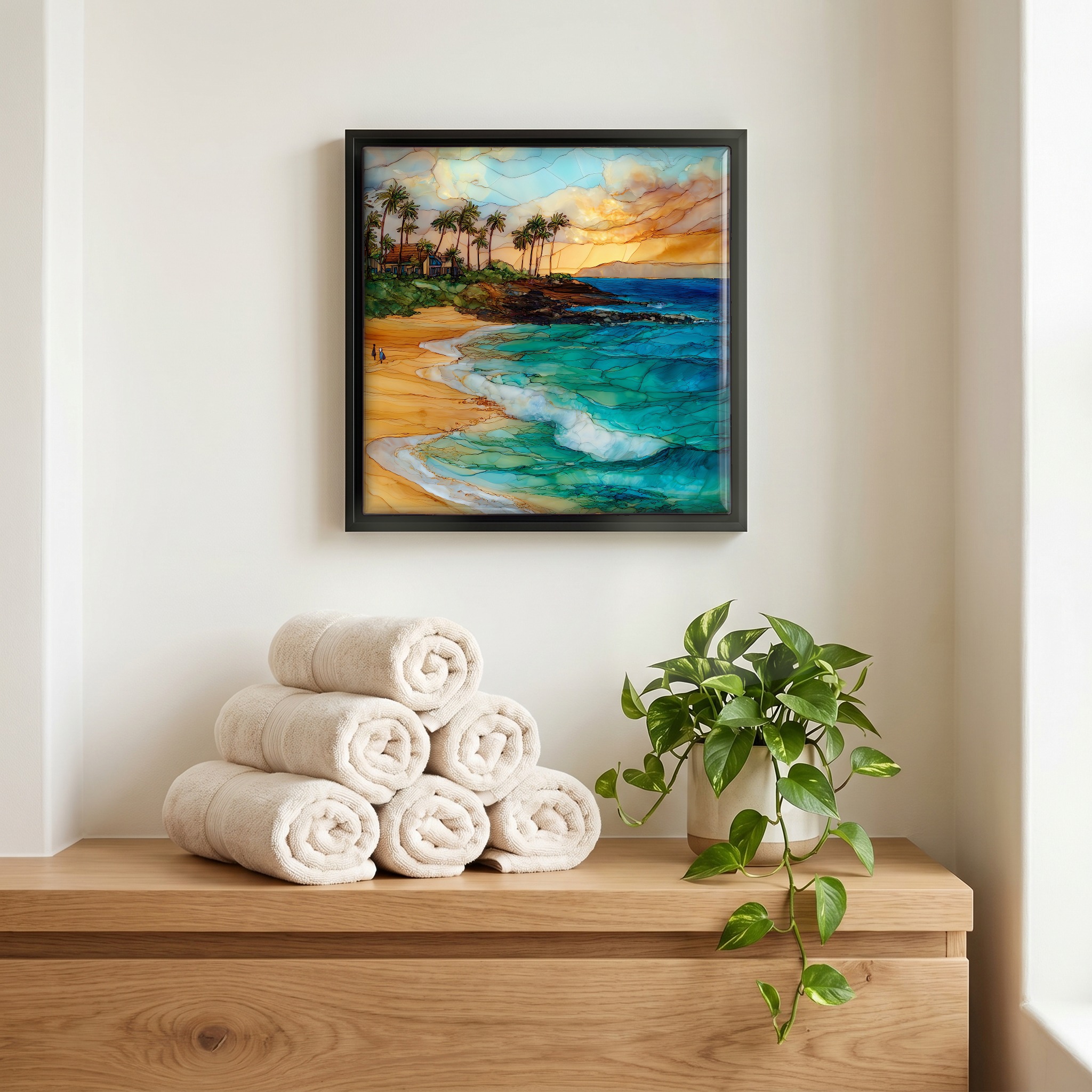
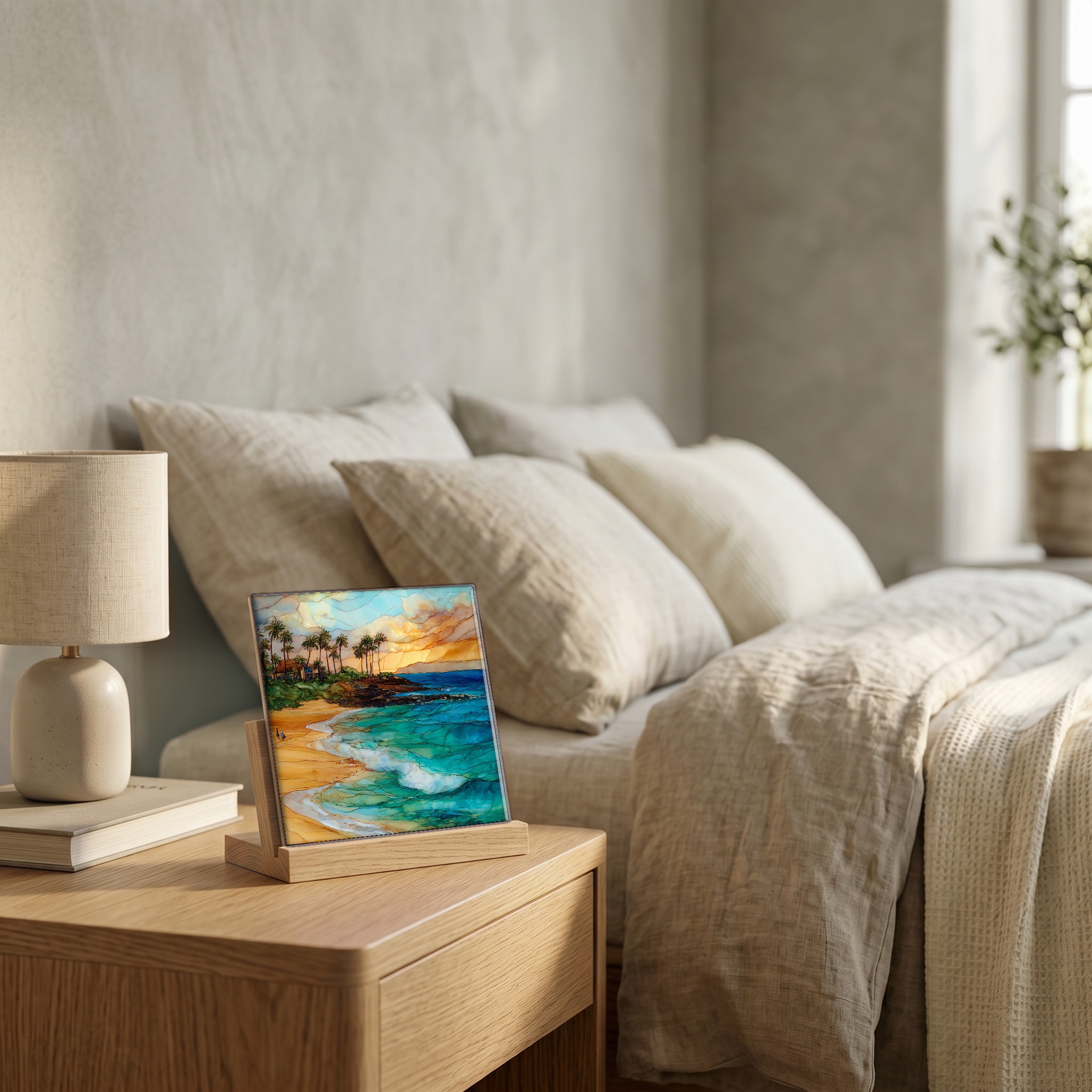
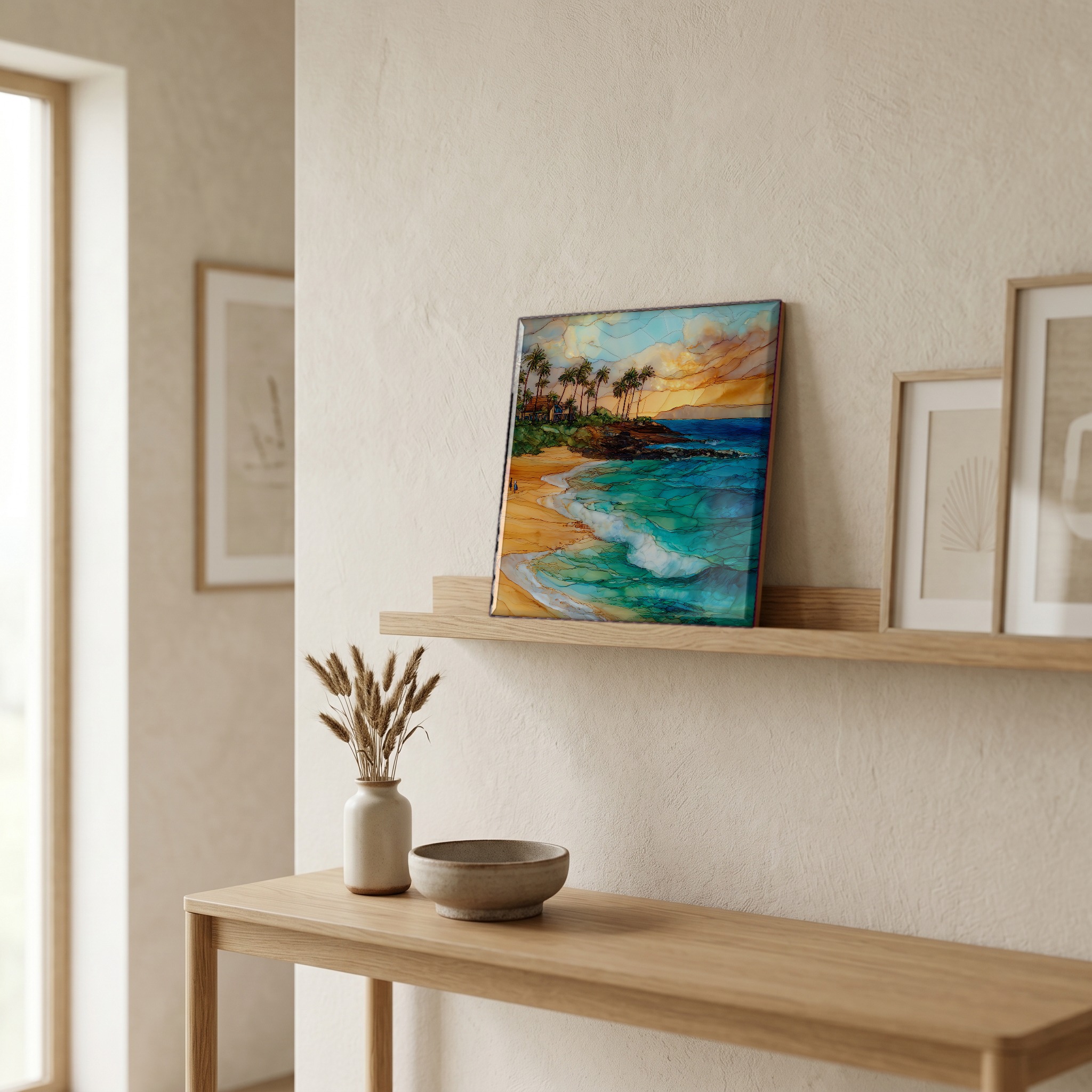
“A long gold beach on the northwest coast of Maui, shaded by Cook pines and ironwoods a Scotsman named D.T. Fleming planted a century ago, when he managed the pineapple ranch above the cove. In summer the water lies flat enough for swimming. In winter the same break draws bodyboarders to swell that can stand the sand up like a wall. The pines lean a little, the way trade-wind trees do. Locals come early and stay until the sky turns.
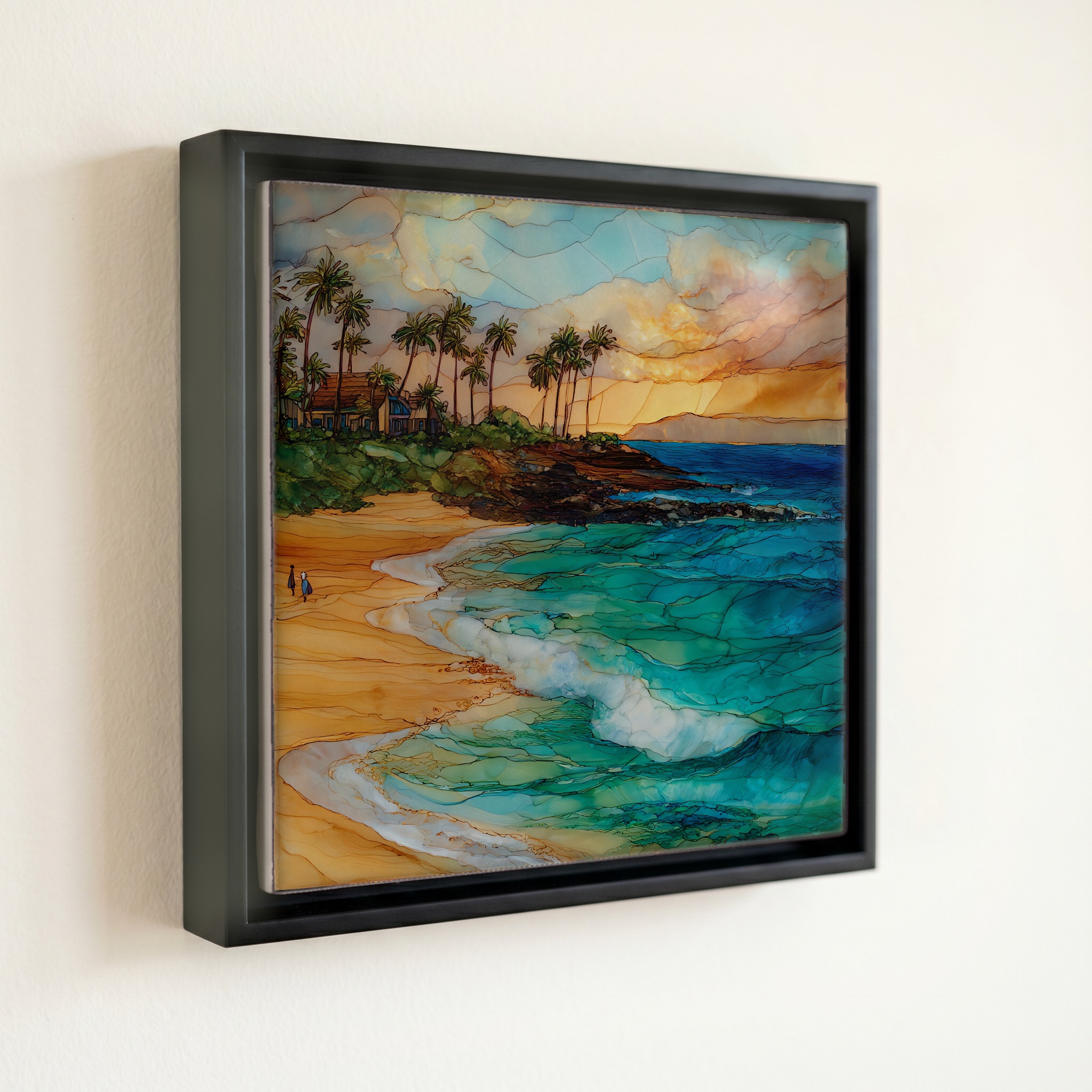
D T Fleming Beach Maui Ceramic Art Tile, on ceramic.
Each tile is finished by hand in our Knoxville studio. Artwork is slowly infused into the ceramic surface under high heat and pressure, and rests beneath a thin glossy finish. The colour lives in the surface, not on top of it.
Pick any four 4-inch tiles — National Parks you've been to, a Smokies set, the four seasons of one place. $ for a set of , cork-backed, ready to live on the table.
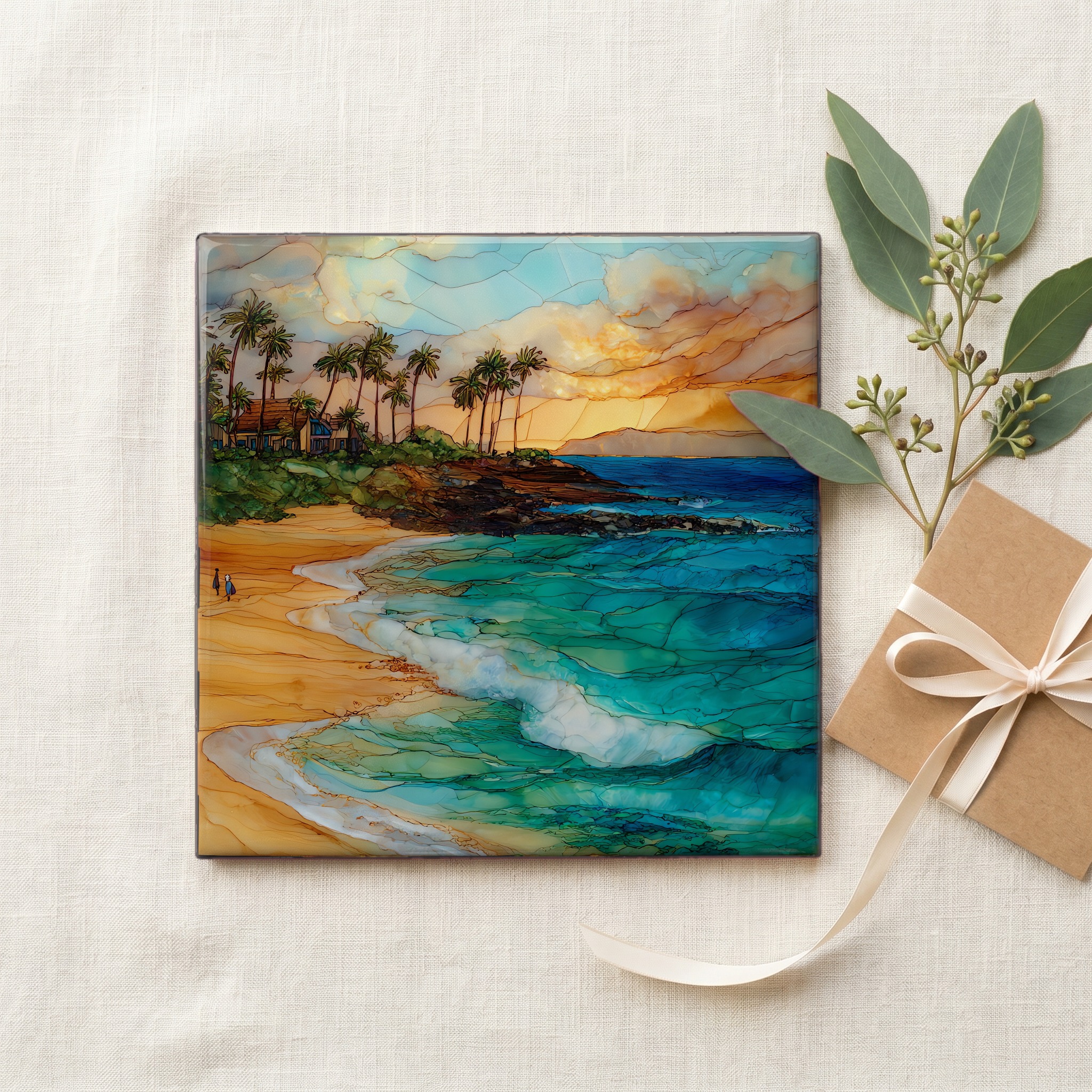
Each tile ships in a kraft box, tied with cream ribbon, with a handwritten note from the studio if you'd like to add one.
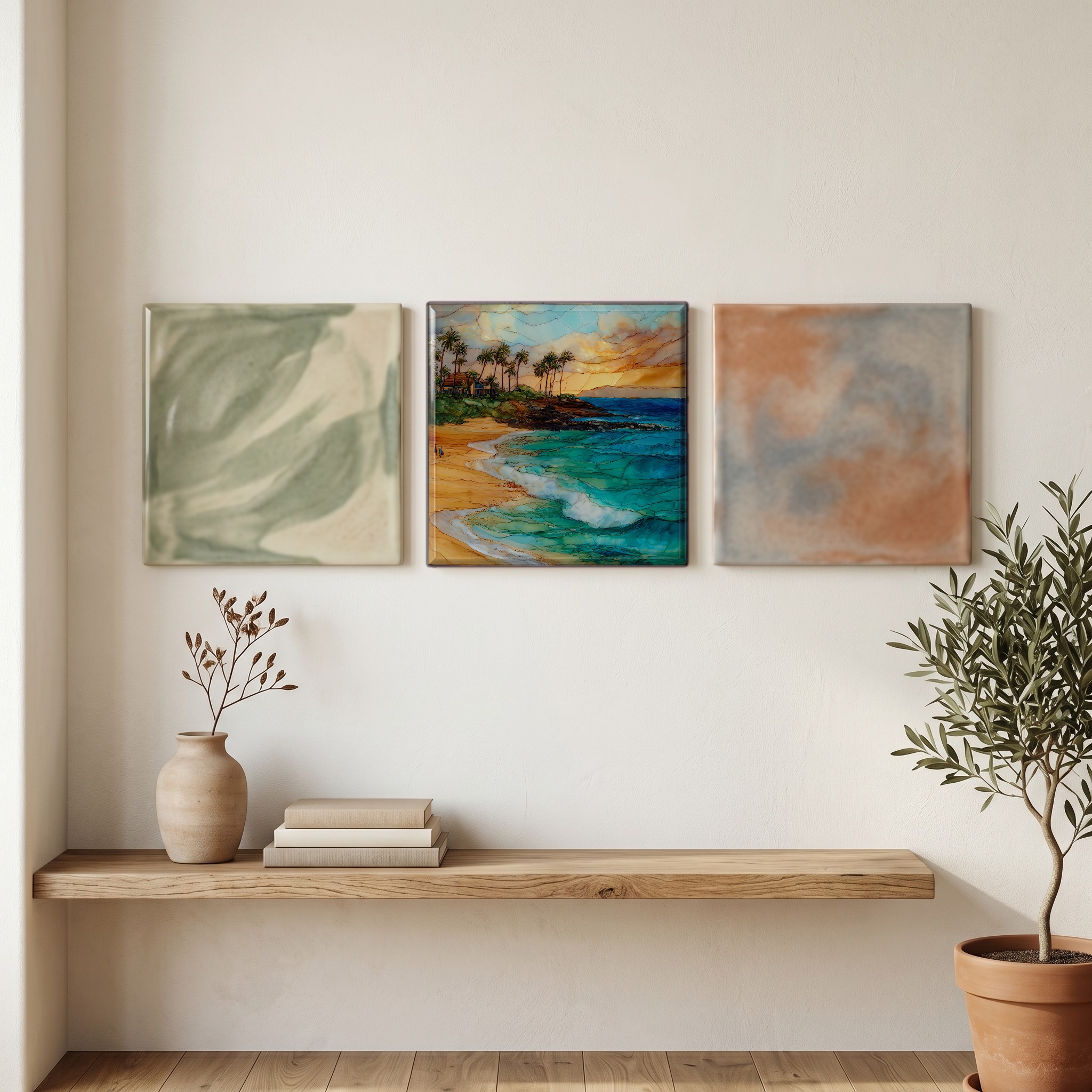
Three or five different vistas, hung together — a chapter of places you've been, or want to go.
The place, in three passes.
D.T. Fleming Beach Park sits on the northwest coast of Maui, just north of the Kapalua resort and about 12 miles north of Lahaina. The beach takes its name from David Thomas Fleming (1881–1955), a Scottish-born agriculturalist who arrived in Hawaii in 1907 and managed the Honolua Ranch, the operation that would become the Maui Land and Pineapple Company. Fleming planted thousands of trees on Maui, including Cook pines, Norfolk pines, and ironwoods, and the ones he set along this bay still shade the picnic ground today. The county runs the park: restrooms, showers, grills, ample parking just off the Honoapiilani Highway. Stephen Leatherman, the coastal geographer better known as Dr. Beach, named this America's Best Beach in 2006.
The shape of the cove turns gentle in summer and dramatic in winter. From roughly May through September the trade winds and the North Pacific calm settle the inshore water enough for swimming and snorkelling along the rocky points at either end of the half-mile crescent. From October through April the winter swells build, and the same beach becomes one of West Maui's better-known bodyboarding breaks. The shorebreak can stand up sharply and the rip currents pull seaward at the deep cuts in the sand; Maui County lifeguards staff the tower during posted daytime hours. The water reads gold-blue against the sand because the seabed here is shallow shelf, not the dark volcanic shoal common along most of this coast.
The park is reached from the Honoapiilani Highway (Hwy 30), the coast road that winds north from Kapalua resort toward Honolua Bay. Parking is free, the lot is large by Maui standards, and there is no admission fee. Restrooms, outdoor showers, charcoal grills, and shaded tables under the Cook pines sit at the southern end near the lifeguard tower; the northern end is quieter and faces the points where the rocky entry favours snorkelling on calm days. Mornings are coolest and least crowded. The Ritz-Carlton Kapalua occupies the bluff just south of the park, and its golf course threads the headland. The public park is open daily from sunrise to sunset.