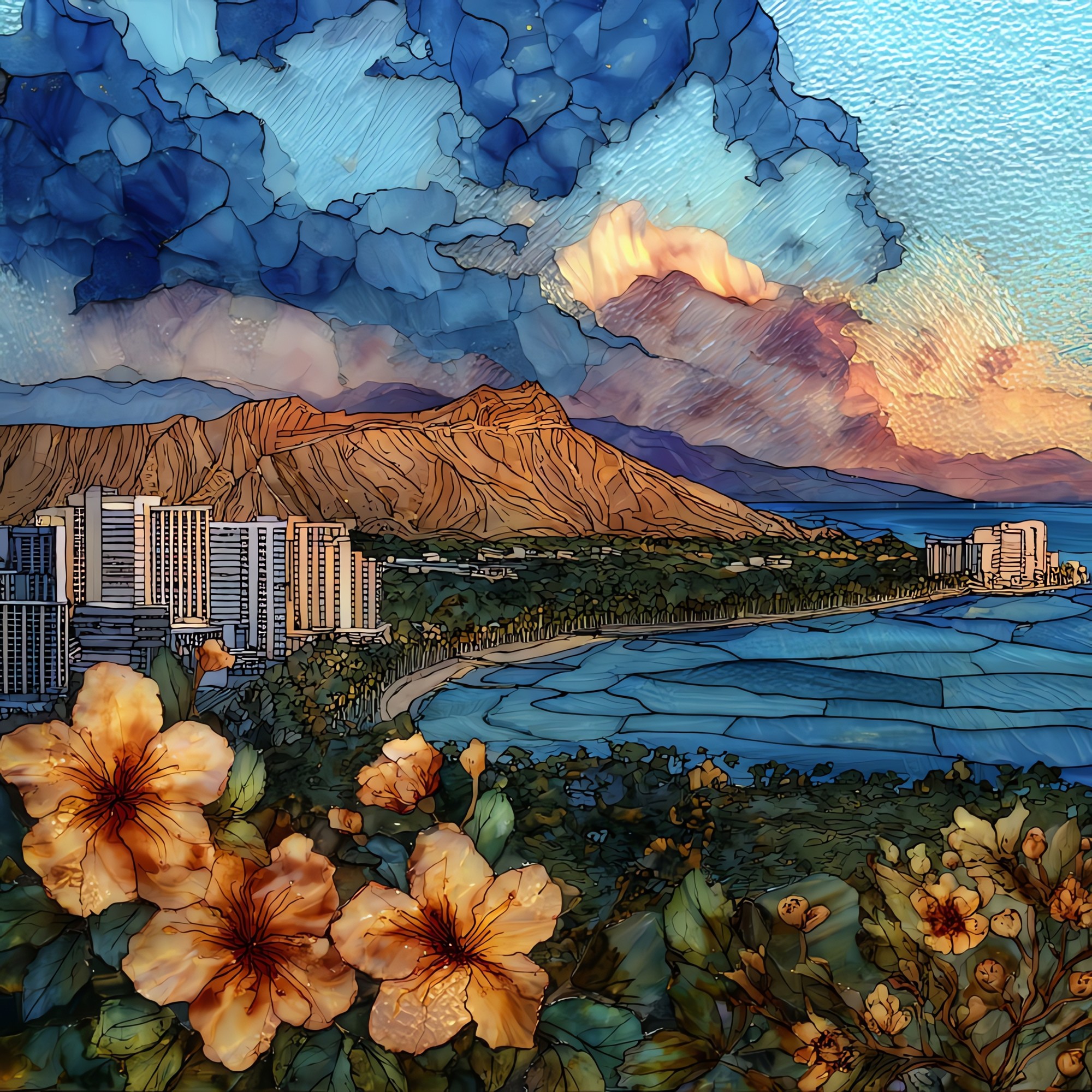
Diamond Head Summit Oahu Ceramic Art Tile
— the climb that ends in the whole Pacific.
Not only on a wall.

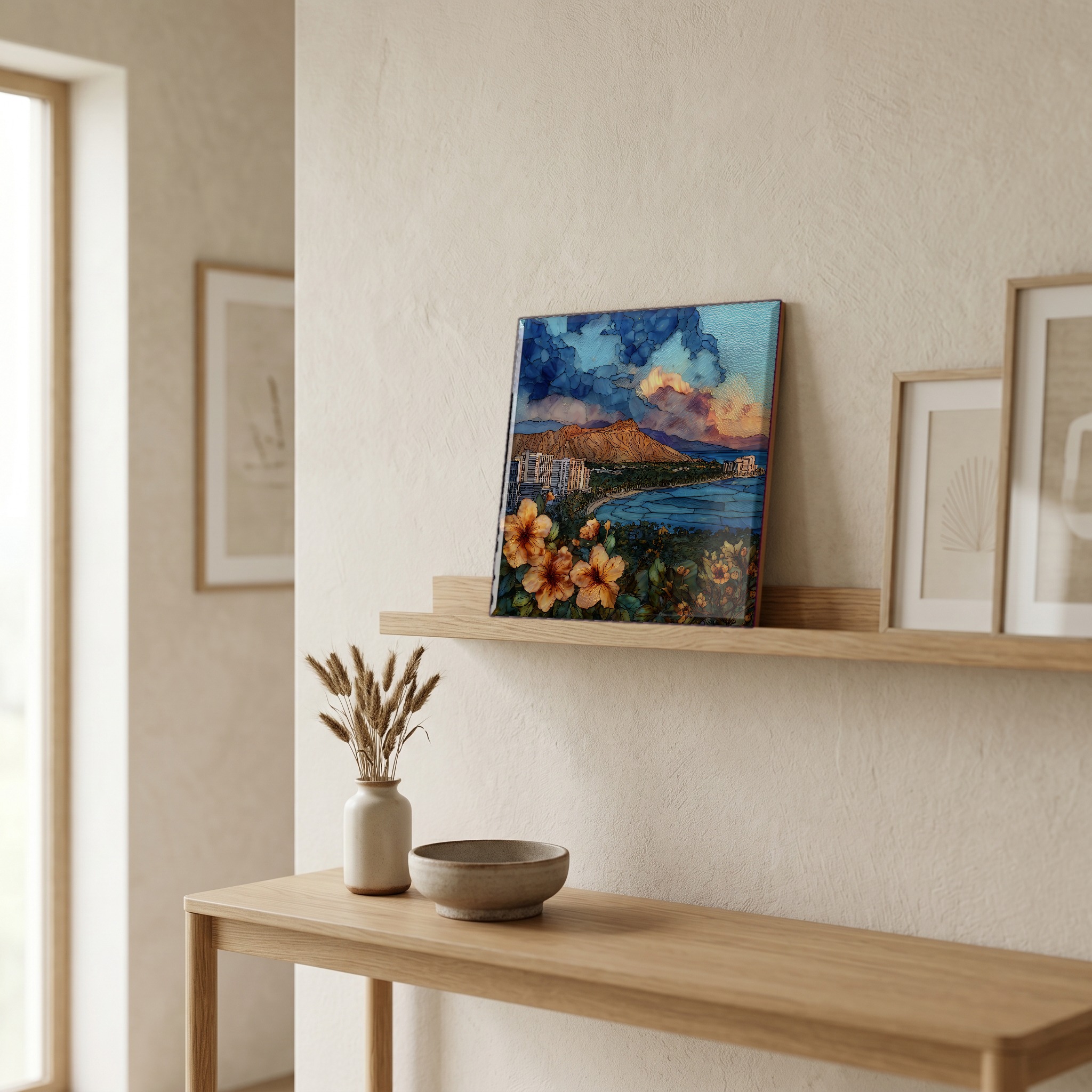
“The volcanic cone Hawaiians have always called Lēʻahi, the brow of the tuna. Climbers come up before the heat, through tunnels and a long flight of stairs cut into the crater wall, and emerge at a Fire Control Station the Army built in 1911. The view at the top is the one that puts the rest of the island in scale: Waikiki tucked against the sea, the Pacific running out blue to the horizon, the Koʻolau ridge somewhere behind. Reservations are required for non-residents. Most people walk back down without saying much.
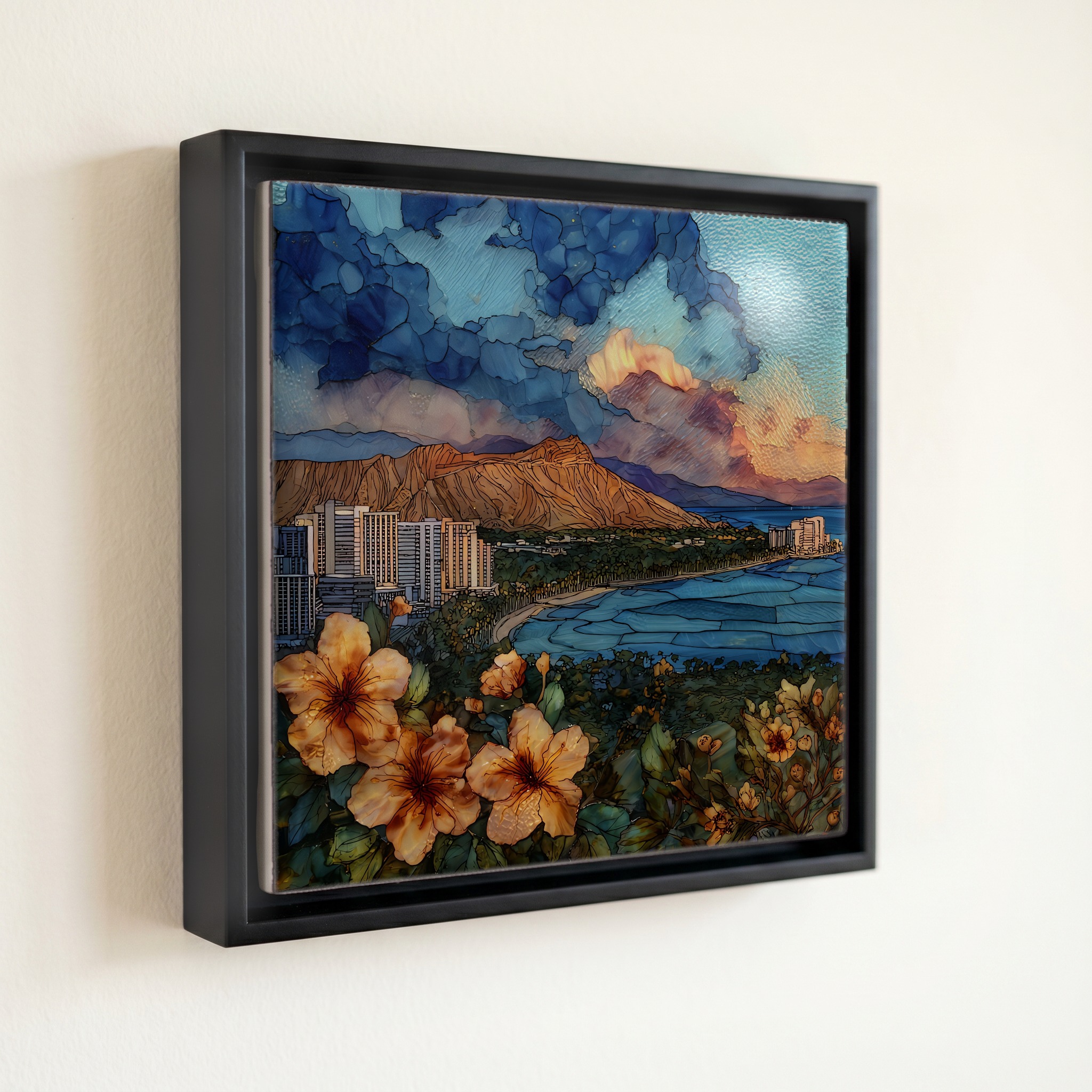
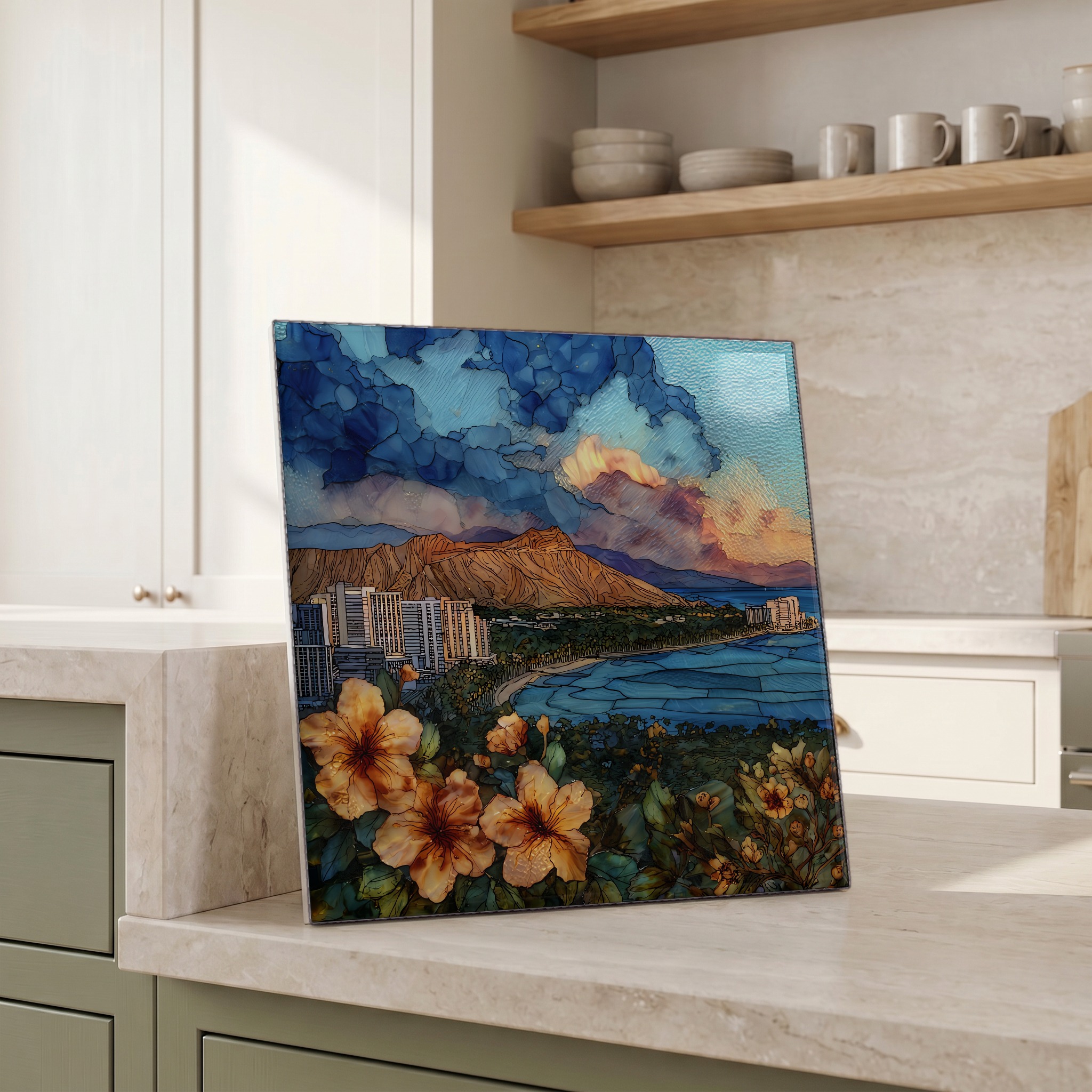
Diamond Head Summit Oahu Ceramic Art Tile, on ceramic.
Each tile is finished by hand in our Knoxville studio. Artwork is slowly infused into the ceramic surface under high heat and pressure, and rests beneath a thin glossy finish. The colour lives in the surface, not on top of it.
Pick any four 4-inch tiles — National Parks you've been to, a Smokies set, the four seasons of one place. $ for a set of , cork-backed, ready to live on the table.
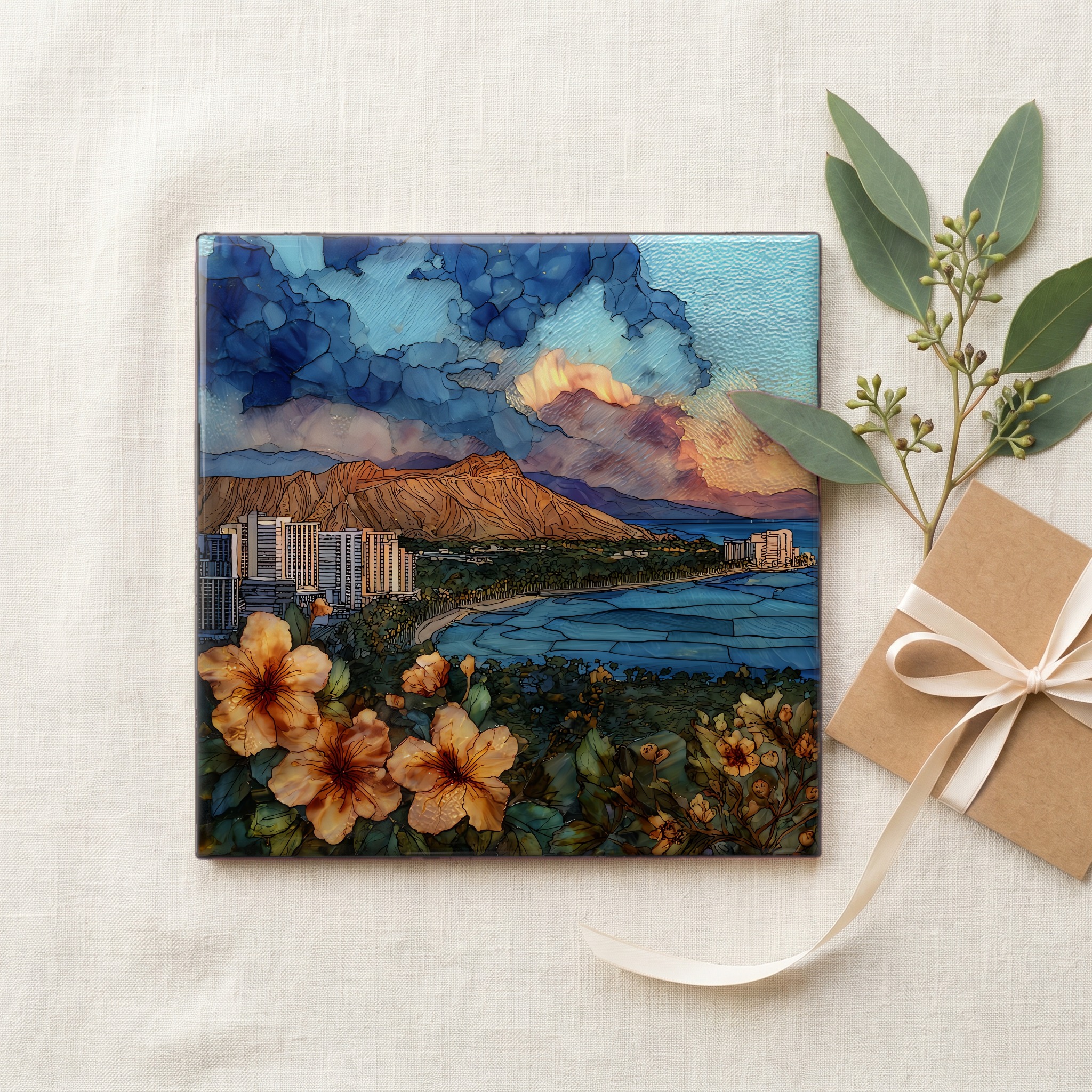
Each tile ships in a kraft box, tied with cream ribbon, with a handwritten note from the studio if you'd like to add one.

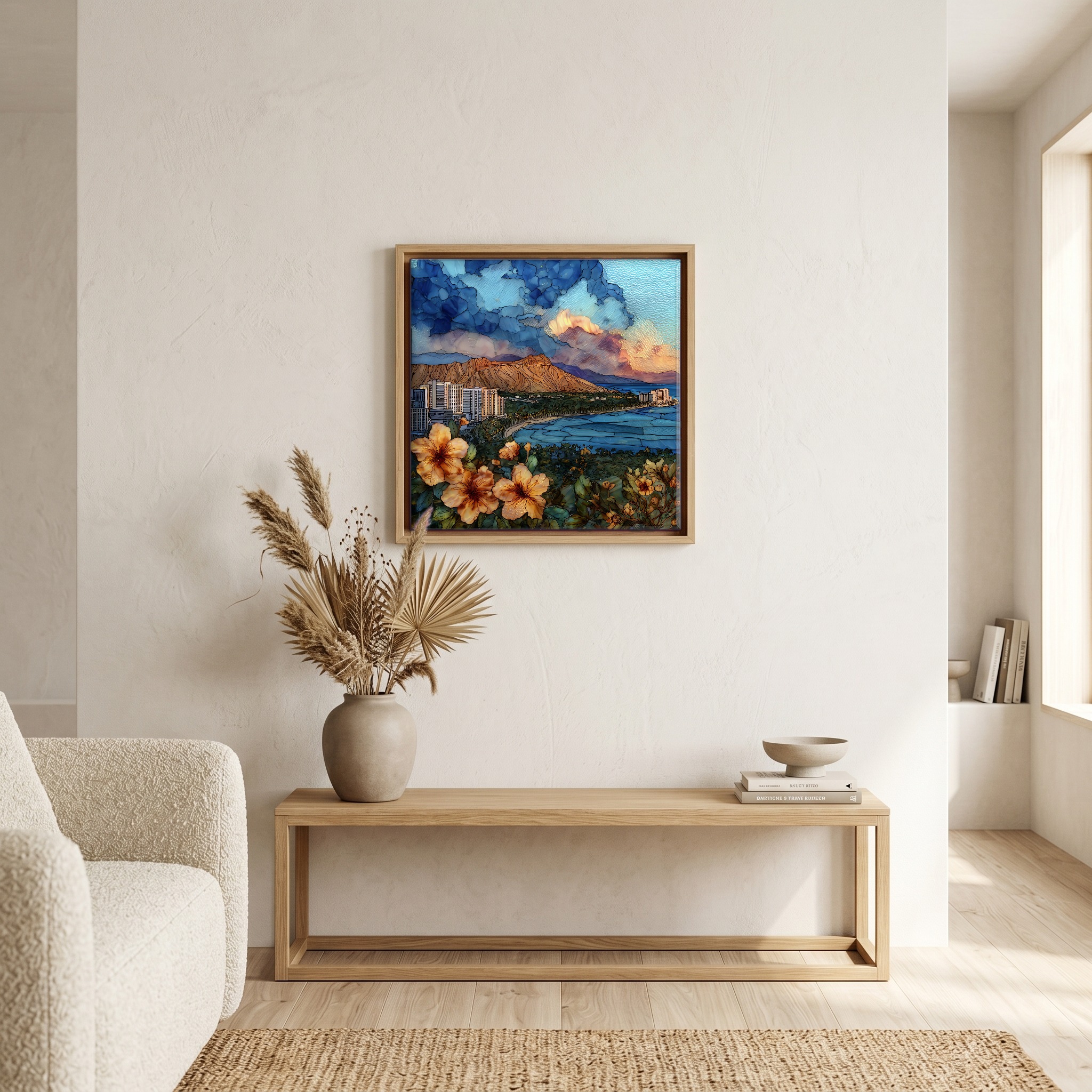
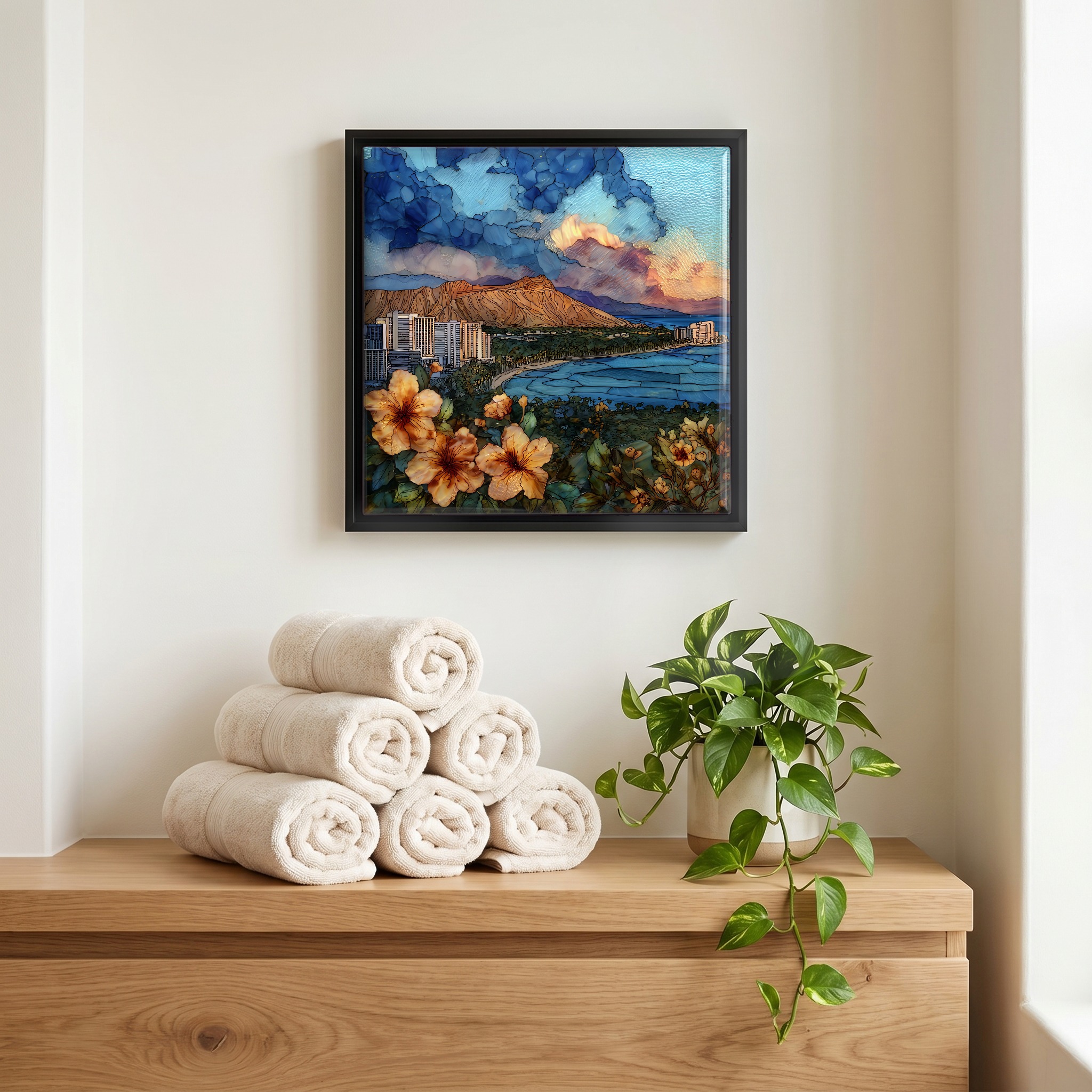
Three or five different vistas, hung together — a chapter of places you've been, or want to go.
The place, in three passes.
Diamond Head is a 762-foot tuff cone on the south shore of Oʻahu, on the eastern edge of Honolulu just past Waikiki. The Hawaiian name is Lēʻahi, often translated as the brow of the tuna for the silhouette of the southern ridge. The cone is part of the Honolulu Volcanic Series, a chain of late-stage eruptions that also produced Punchbowl Crater and Koko Head a short distance to the east. The summit looks down on Waikiki Beach to the west, Maunalua Bay to the east, and the Koʻolau Range inland. The crater floor is roughly 3,520 feet across. The site is managed by the Hawaiʻi Department of Land and Natural Resources as Diamond Head State Monument.
The cone is the product of a single explosive eruption roughly 300,000 years ago, when rising magma met groundwater and shattered into ash and rock. That ash welded into tuff, a fine pale layered rock that gives the inside of the crater its colour. The U.S. Geological Survey groups Lēʻahi with the Honolulu Volcanics, a late chapter in Oʻahu's geology long after the island's two shield volcanoes built the main mass. The brow visible from Waikiki is the eroded southern rim, the lowest point on the crater wall. The original eruption left the inside open to the trade winds, and the floor has been a marsh, a sisal field, and a military reservation in its time.
Reservations are required for out-of-state visitors and have been since May 2022, booked at gostateparks.hawaii.gov up to thirty days ahead. Entry costs five dollars per person, with ten dollars for parking. The park opens at 6 a.m. and the last summit entry is at 4 p.m. The climb is 0.8 miles to the top, gaining roughly 560 feet, with two short tunnels and two stair flights (99 steps, then 76). The first half is exposed switchbacks; the second half is concrete steps cut through the old Fire Control Station. Hawaiʻi residents can walk in without a reservation. Sunrise hikes are common when the season puts the gate opening before first light.