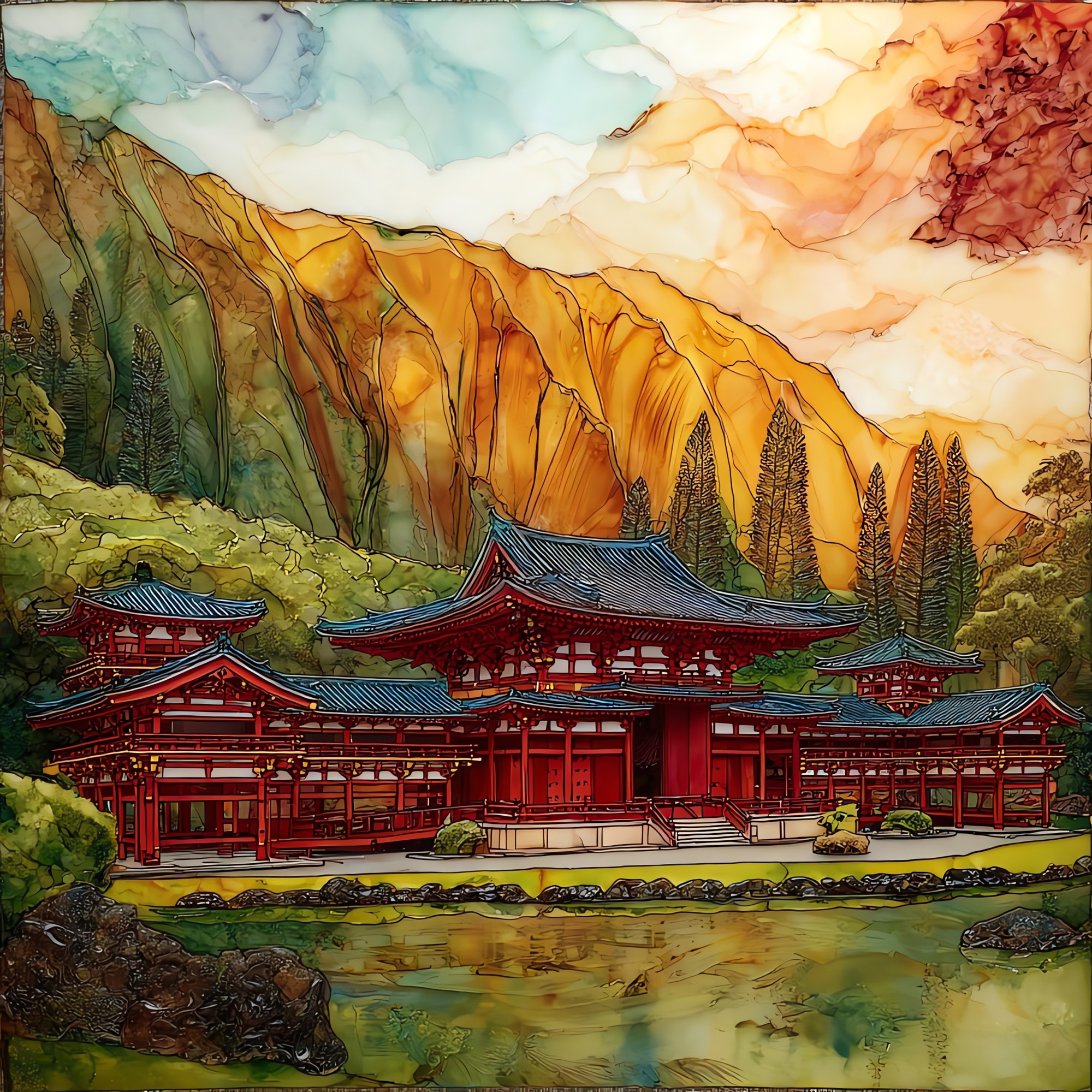
Byodo-In Temple Oahu Ceramic Art Tile
— — the long minute after the bell.
Not only on a wall.
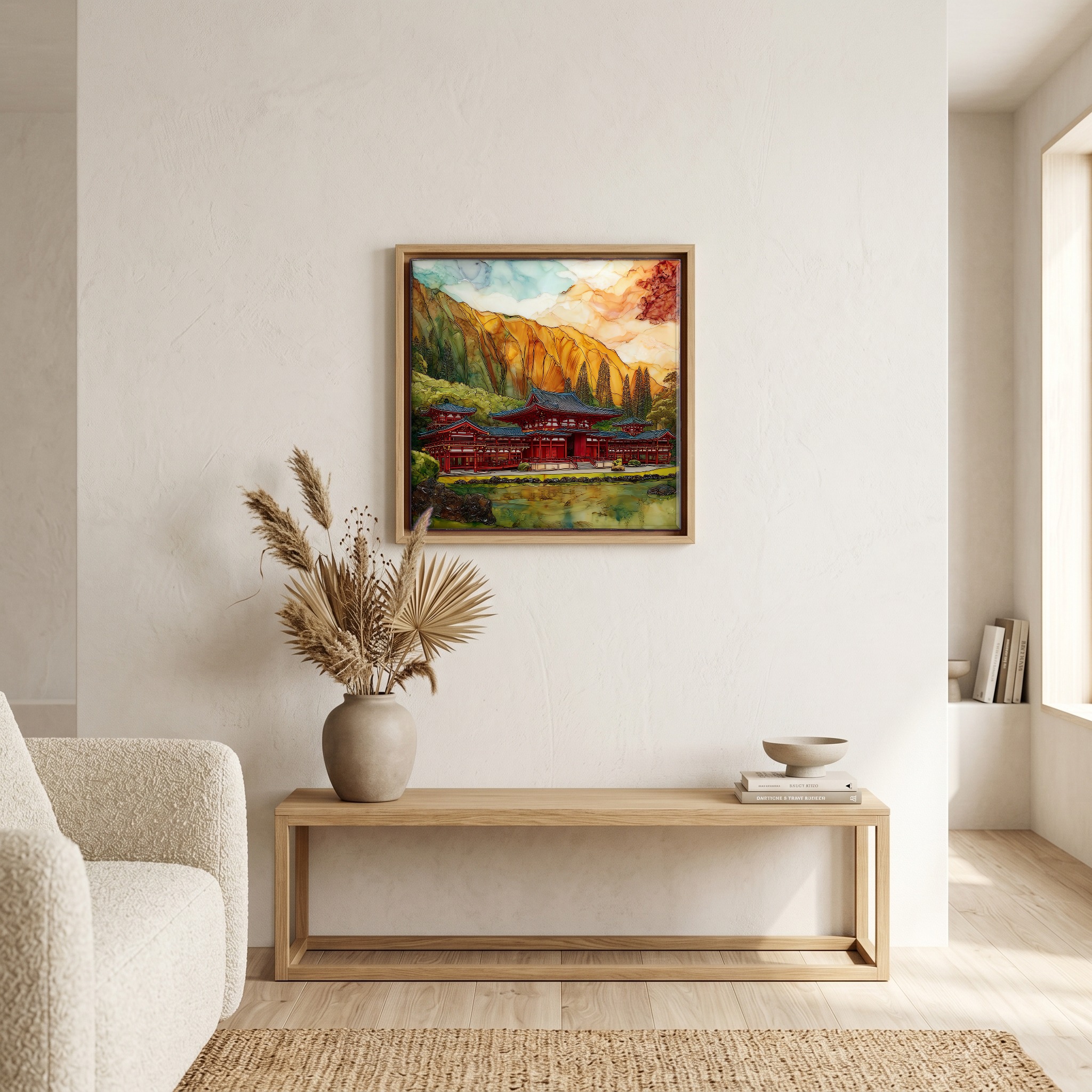
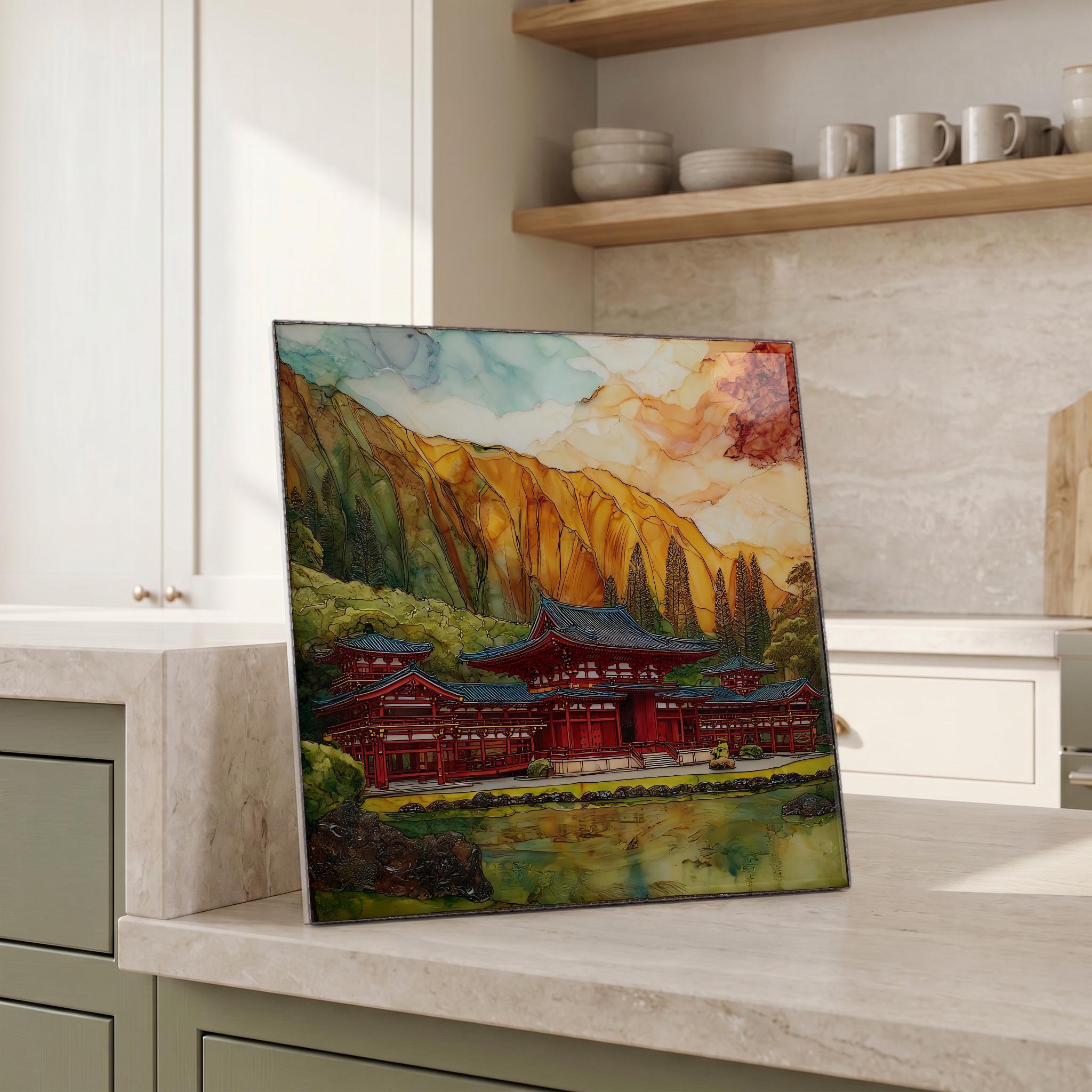
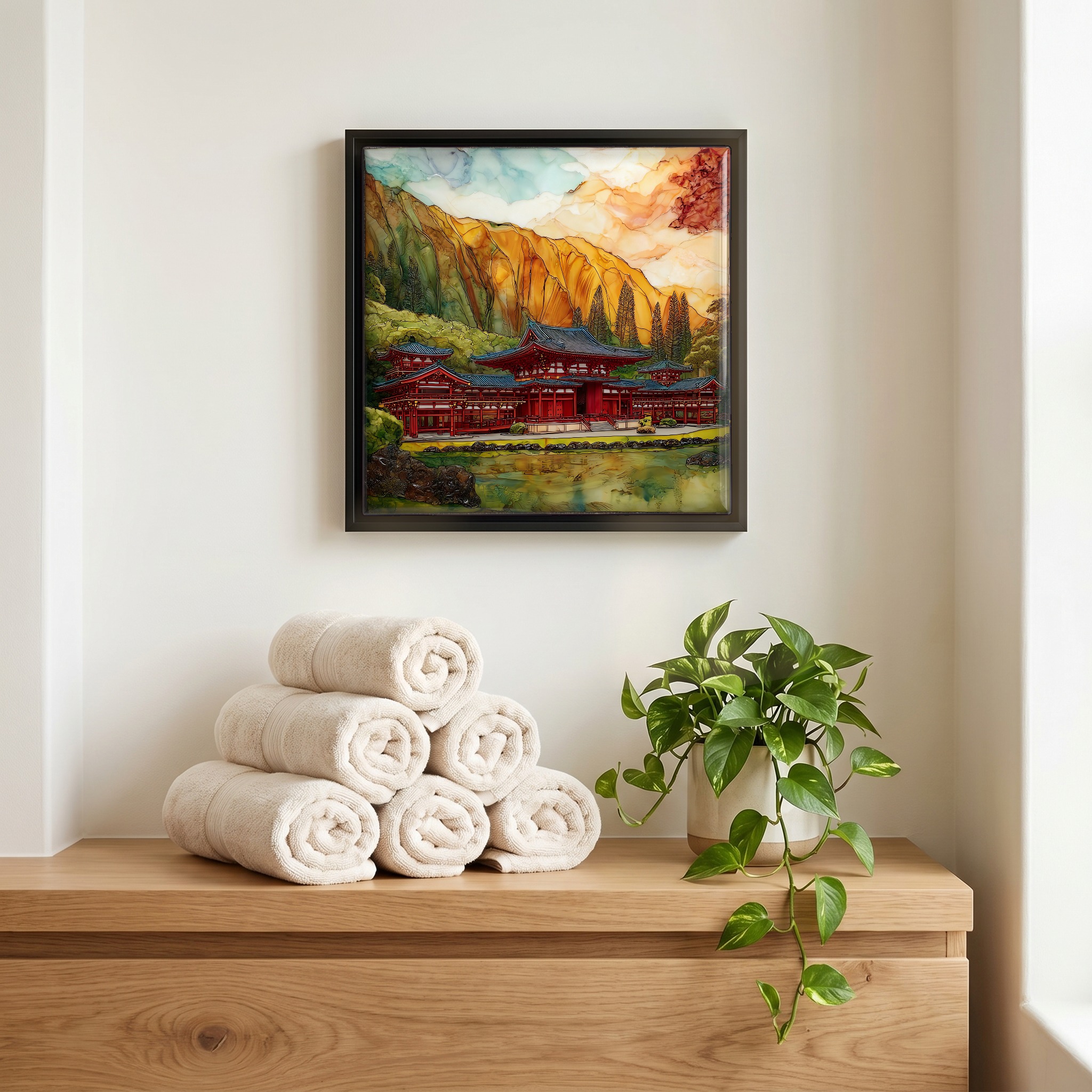
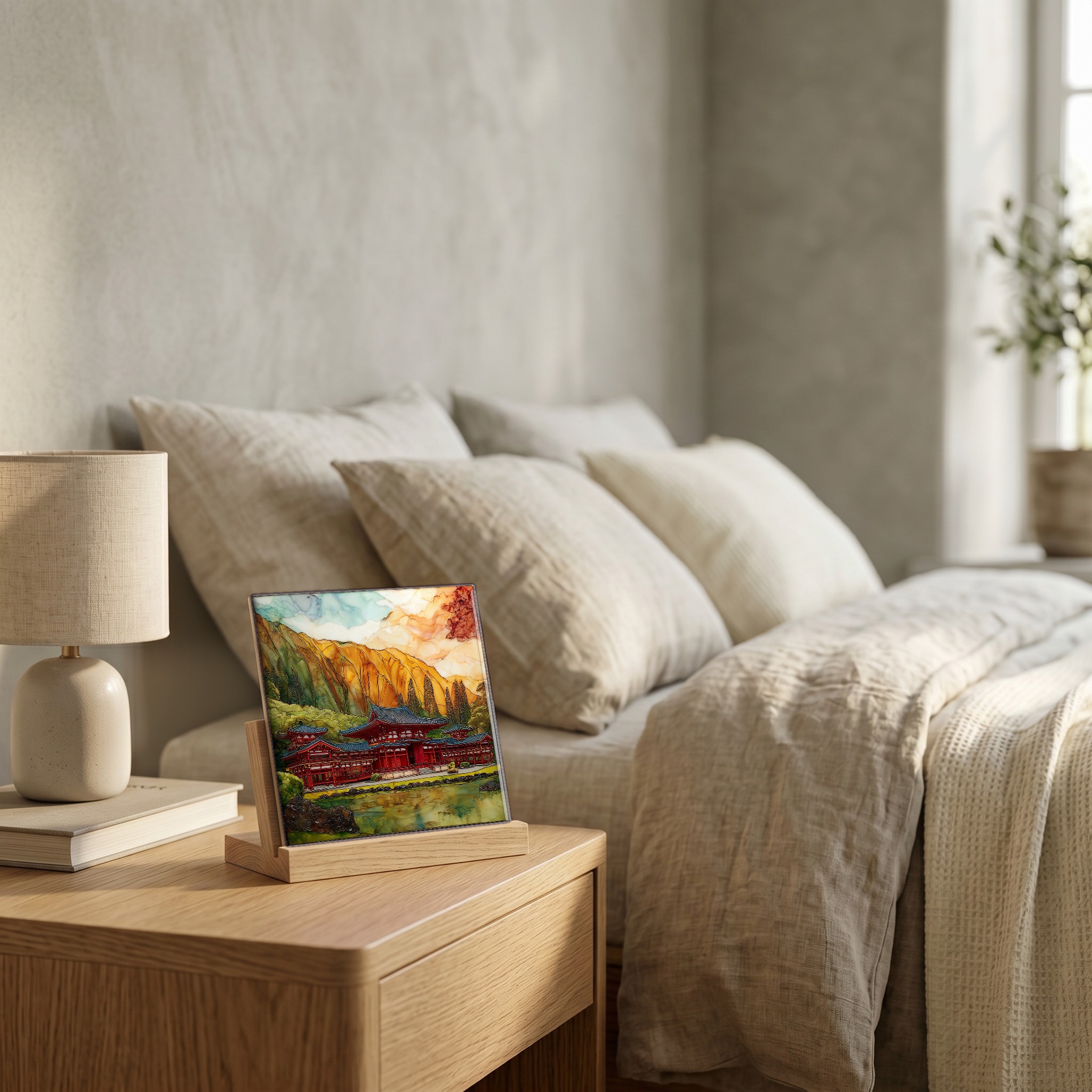
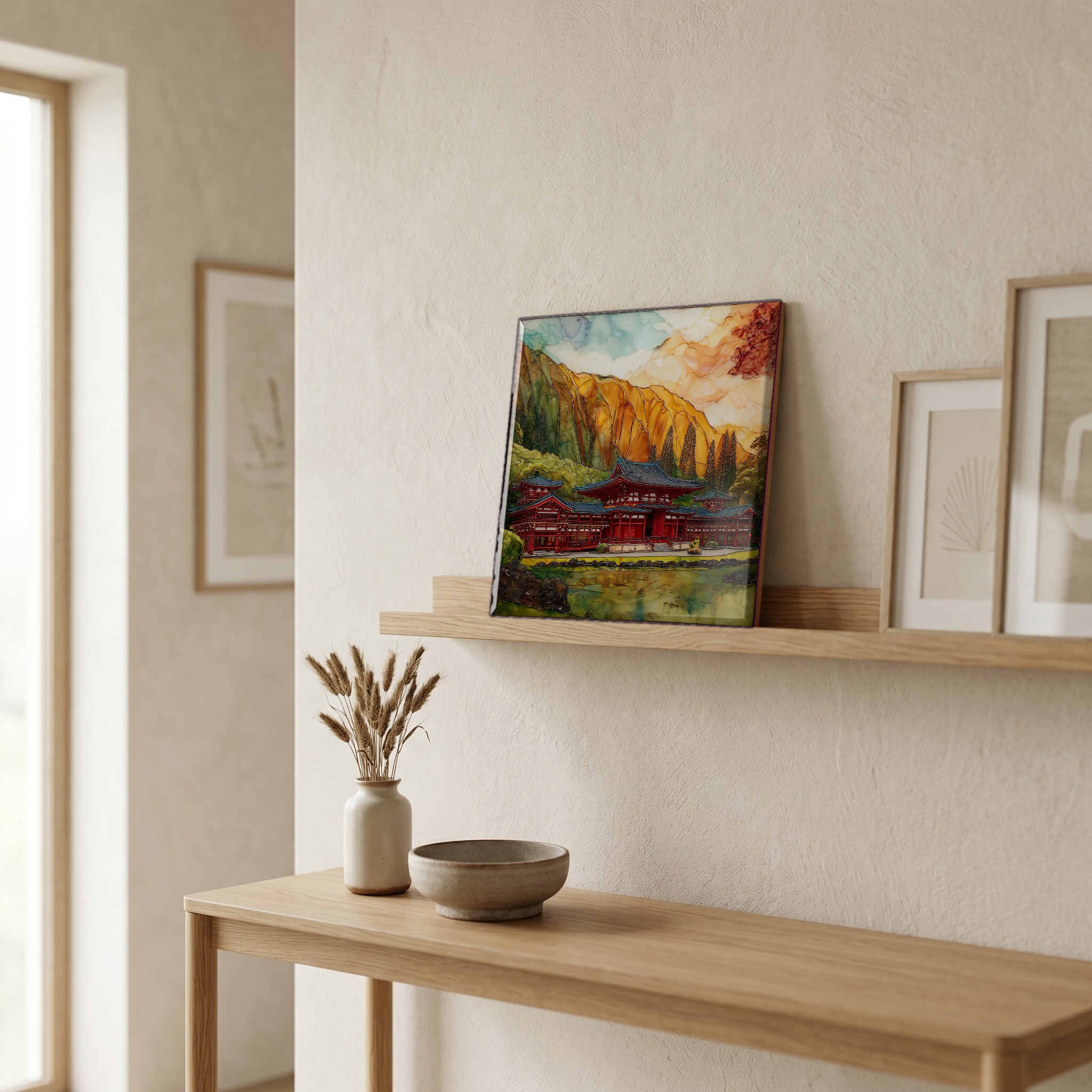
“A vermilion-roofed replica below the green wall of the Ko'olau, in the Valley of the Temples on the windward side of Oahu. The original, the Byōdō-in at Uji, has stood since 1052. This one was built in 1968, a hundred years after the Scioto brought the first 153 Japanese immigrants from Yokohama to Honolulu in 1868. The grounds hold two acres of koi ponds, a bamboo grove, peacocks, and a three-ton brass bell that visitors are invited to ring. The cliff behind it does most of the work. The temple holds still beneath it.
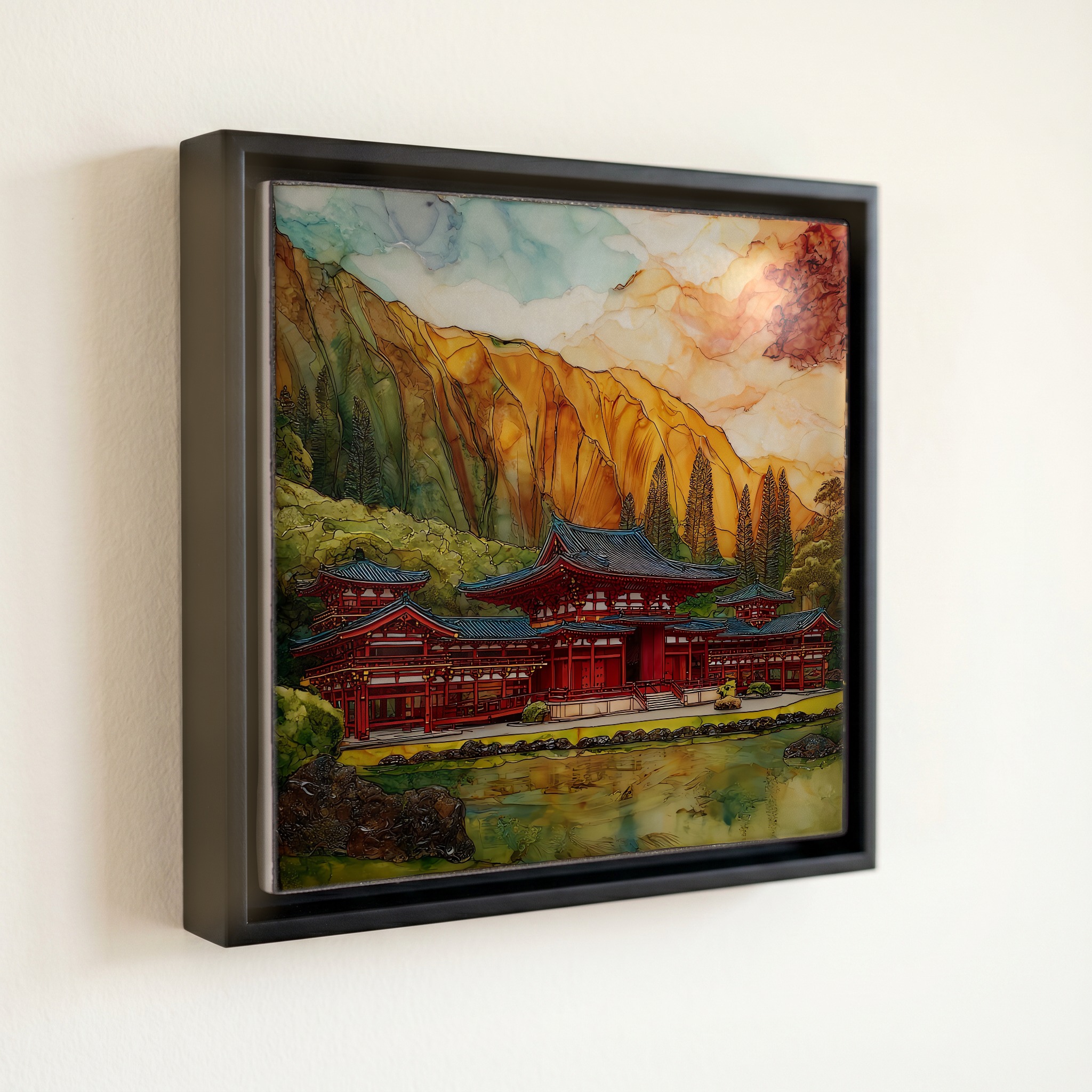
Byodo-In Temple Oahu Ceramic Art Tile, on ceramic.
Each tile is finished by hand in our Knoxville studio. Artwork is slowly infused into the ceramic surface under high heat and pressure, and rests beneath a thin glossy finish. The colour lives in the surface, not on top of it.
Pick any four 4-inch tiles — National Parks you've been to, a Smokies set, the four seasons of one place. $ for a set of , cork-backed, ready to live on the table.
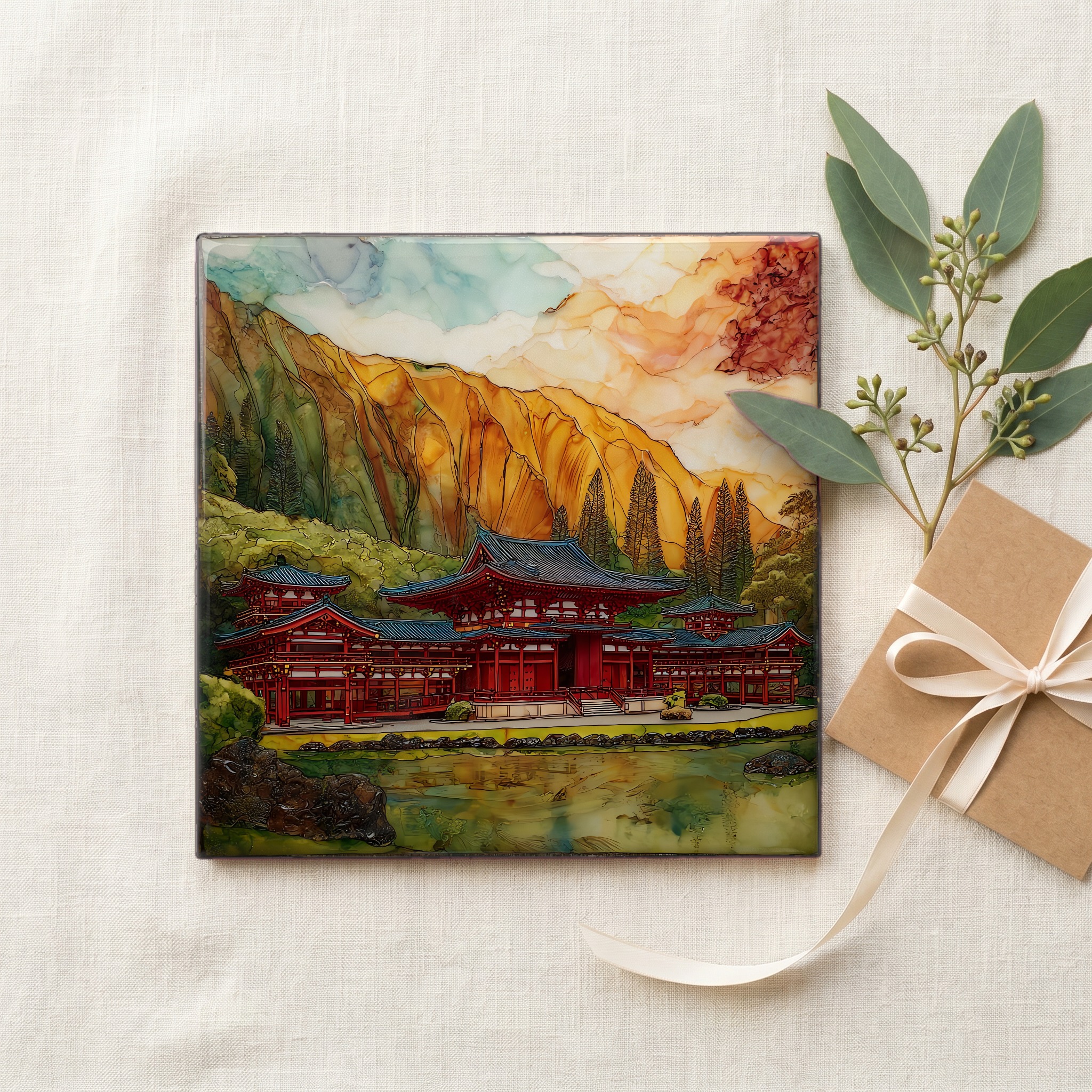
Each tile ships in a kraft box, tied with cream ribbon, with a handwritten note from the studio if you'd like to add one.
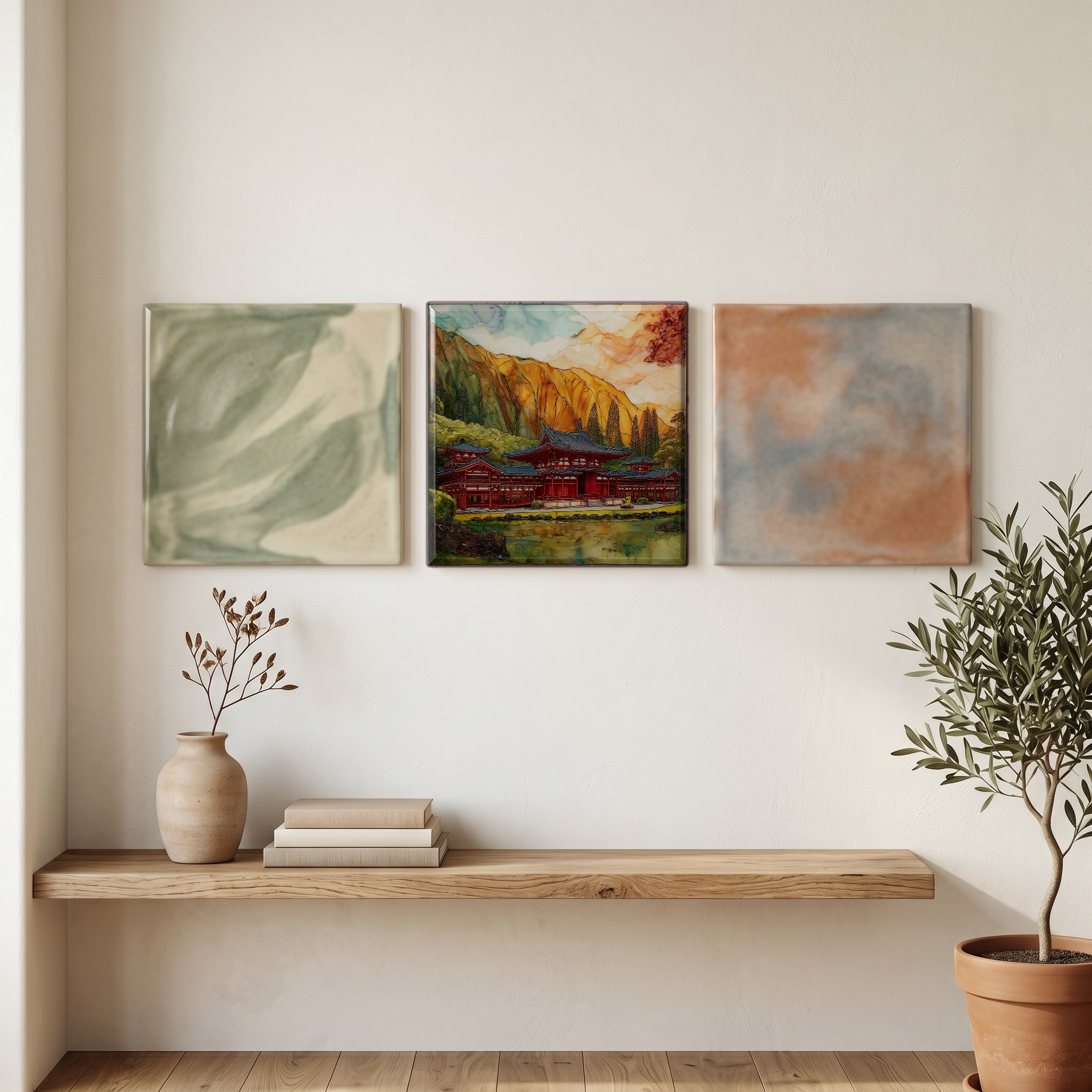
Three or five different vistas, hung together — a chapter of places you've been, or want to go.
The place, in three passes.
Byodo-In Temple sits in the Valley of the Temples Memorial Park, at the foot of the Ko'olau pali on the windward side of Oahu, about forty-five minutes by road from Waikiki. The park, founded by Paul Trousdale in 1963, holds graves and shrines from Buddhist, Shinto, Catholic, and Protestant traditions across the valley beneath the cliffs. The temple itself, dedicated in August 1968, was placed at the back of the valley, against the vertical green wall the trade winds keep wet. The address is 47-200 Kahekili Highway, Kaneohe; entry is from the south end of the park's drive, past the Catholic statuary and over the bridge.
The building is a smaller-scale replica of the Phoenix Hall (Hō-ō-dō) at the Byōdō-in temple complex at Uji, near Kyoto, established in 1052 and now a UNESCO World Heritage site. The Hawaii temple was completed in 1968 to commemorate the centennial of the Gannenmono, the first 153 Japanese immigrants to Hawaii, who sailed from Yokohama to Honolulu aboard the Scioto in 1868 to work the sugar plantations. Inside, an eighteen-foot statue of Amida Buddha, carved from wood and finished in gold lacquer, faces the entrance. The wooden beams of the structure are joined without nails, locked together in the traditional puzzle of post-and-beam, then painted vermilion against the cliff.
The temple opens daily 8:30 a.m. to 4:30 p.m., with last entry at 4:15. As of 2026, admission is $10 for adults, $8 for seniors over sixty-five, $6 for children two to twelve, and free for under two; card only, no cash. A three-ton brass peace bell (bon-shō) hangs in a small bell house at the entrance, and visitors are invited to ring it before entering the temple itself. The koi ponds run to about two acres, and food for the koi and the resident peacocks is sold near the gate. The grounds close before sunset, which on the windward side comes earlier than the rest of the island because the Ko'olau cuts off the sun.