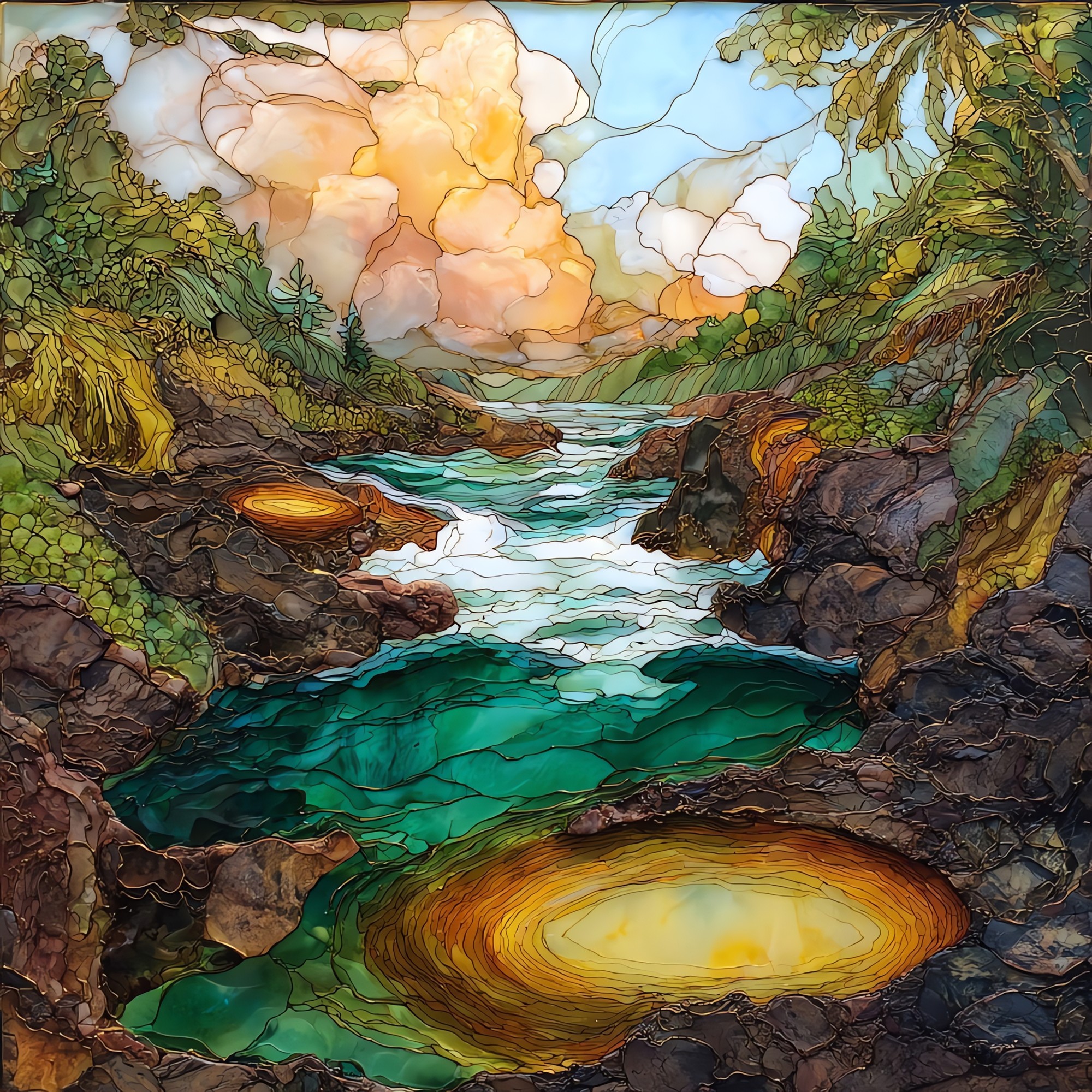
Boiling Pots Big Island Ceramic Art Tile
— the river the lava taught to boil.
Not only on a wall.
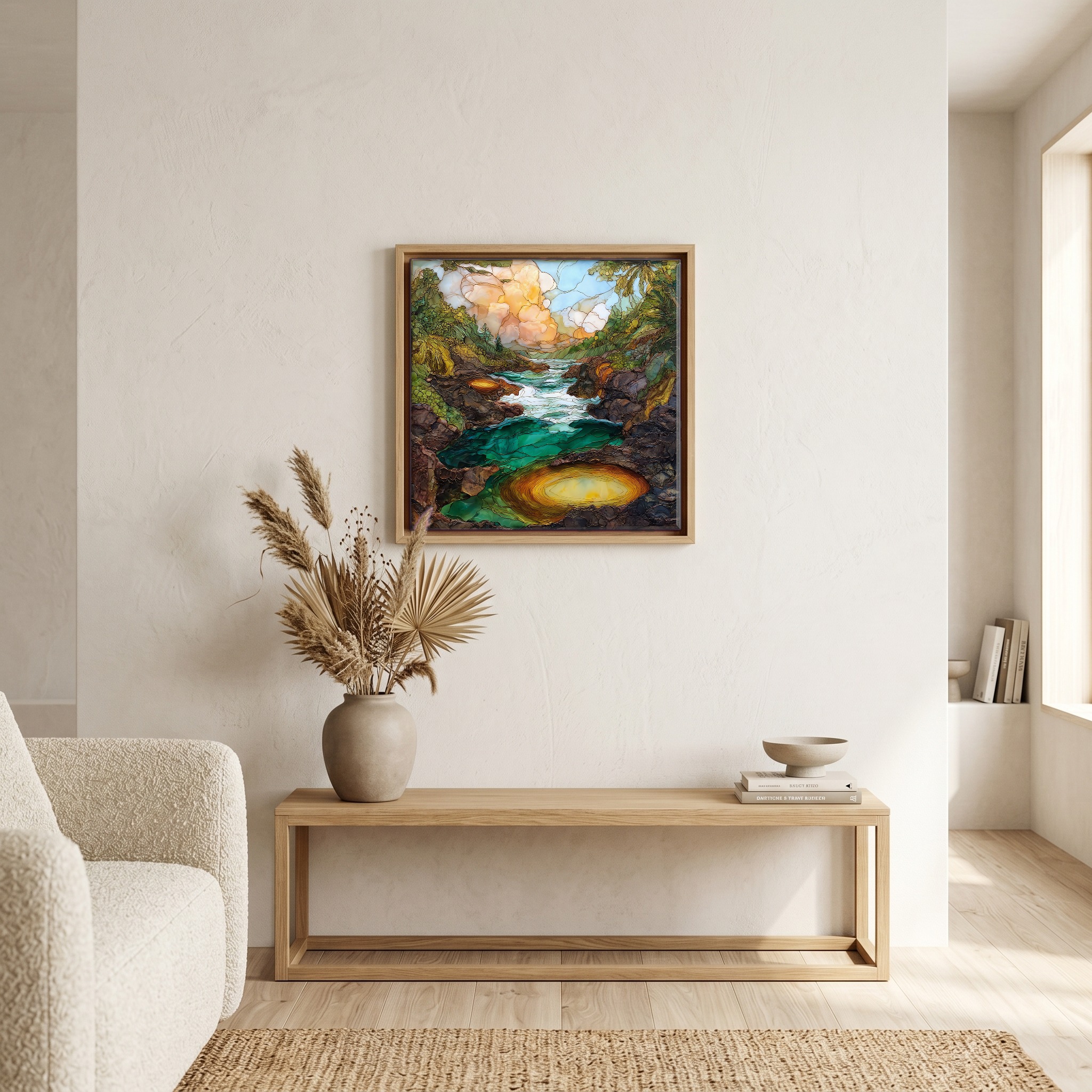
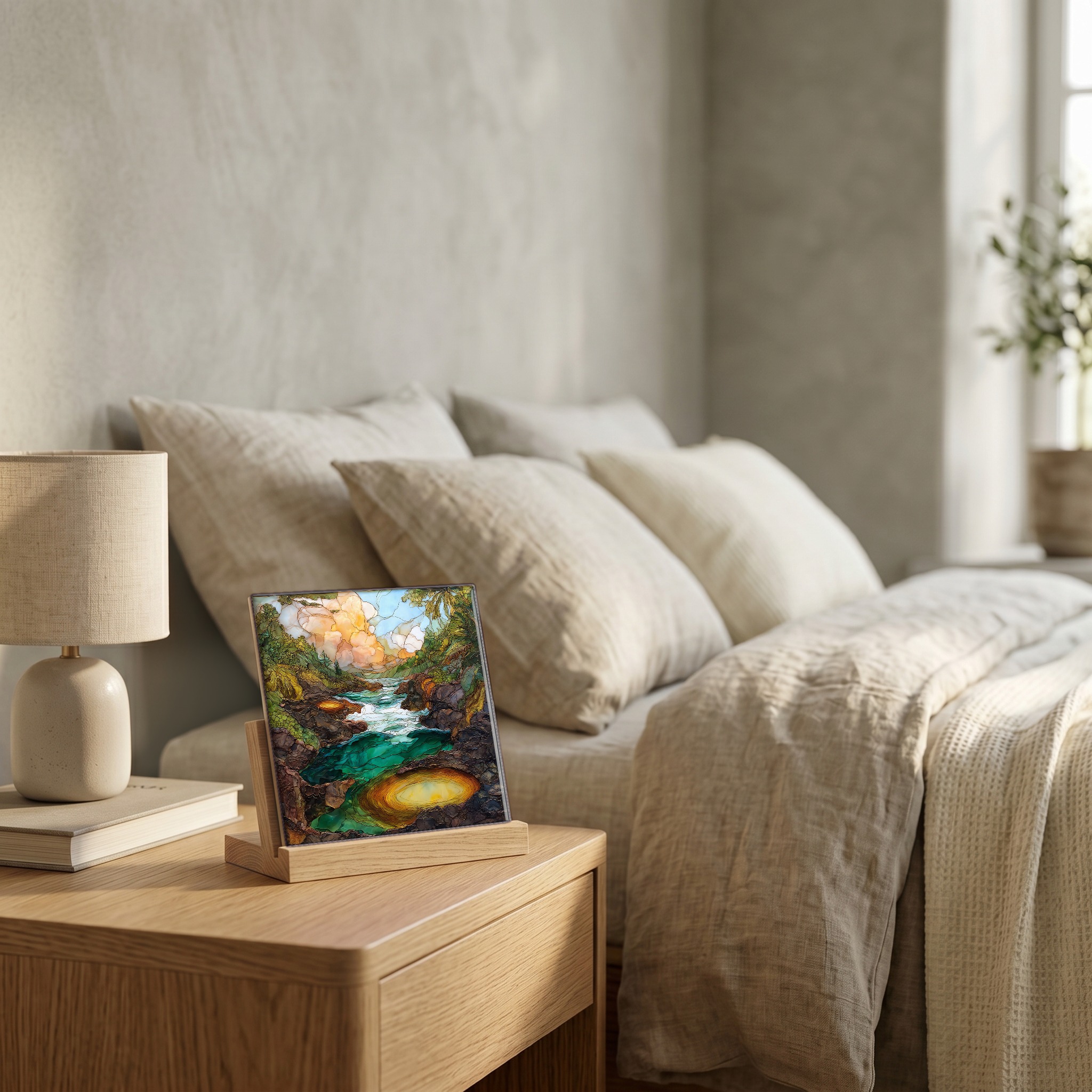
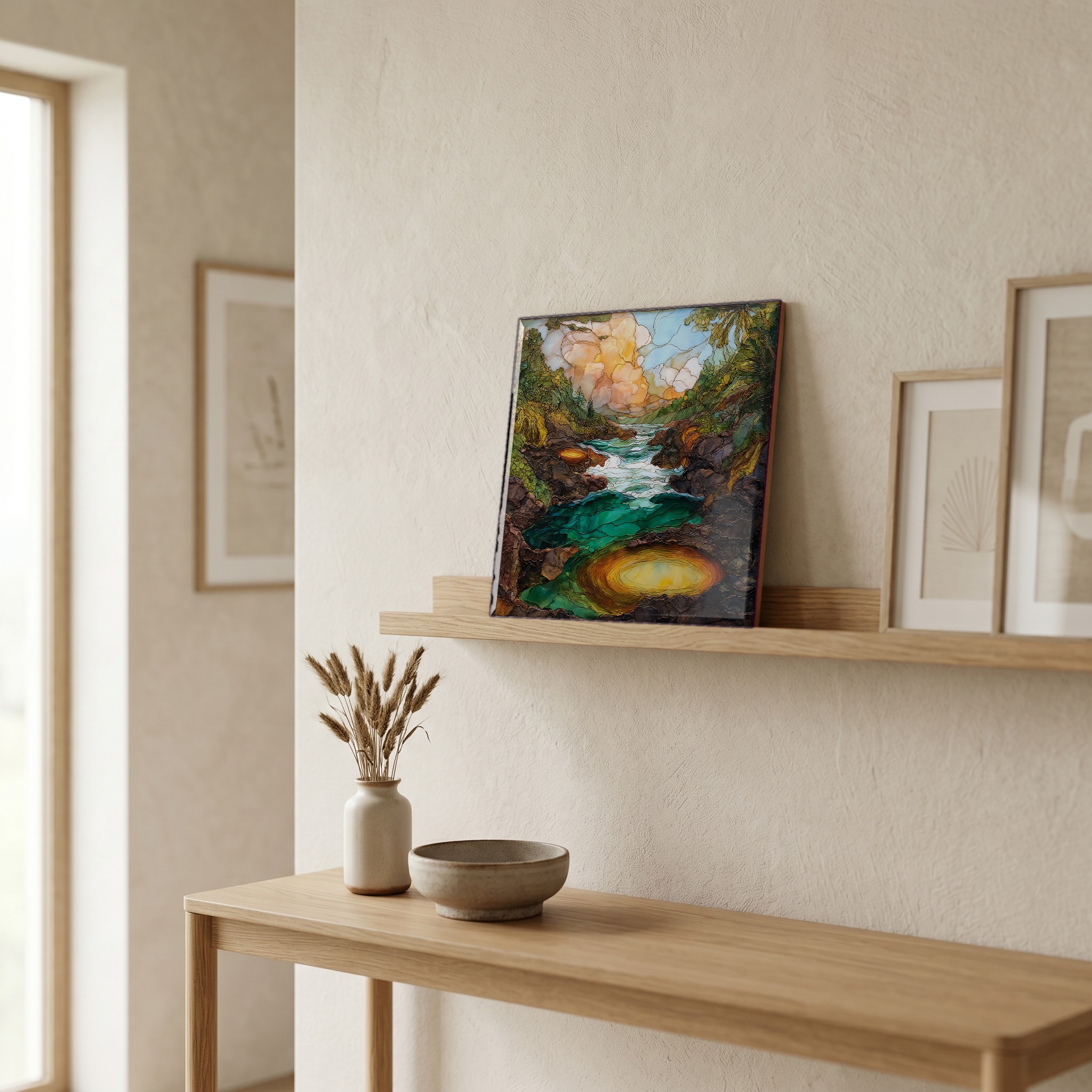
“A short overlook on the longest river in Hawaii. The water moves through a string of round basins cut into old lava, churning hard enough that the surface looks like it is at a rolling boil. Pe'epe'e Falls comes in from above and disappears into the first pot; the rest is the river working its way down through stone the volcano left behind. It is loudest in the days after a heavy rain, which on Hilo's side of the Big Island is most days. Nobody swims here; the undercurrents have been killing people for a hundred years, and the overlook is for looking.
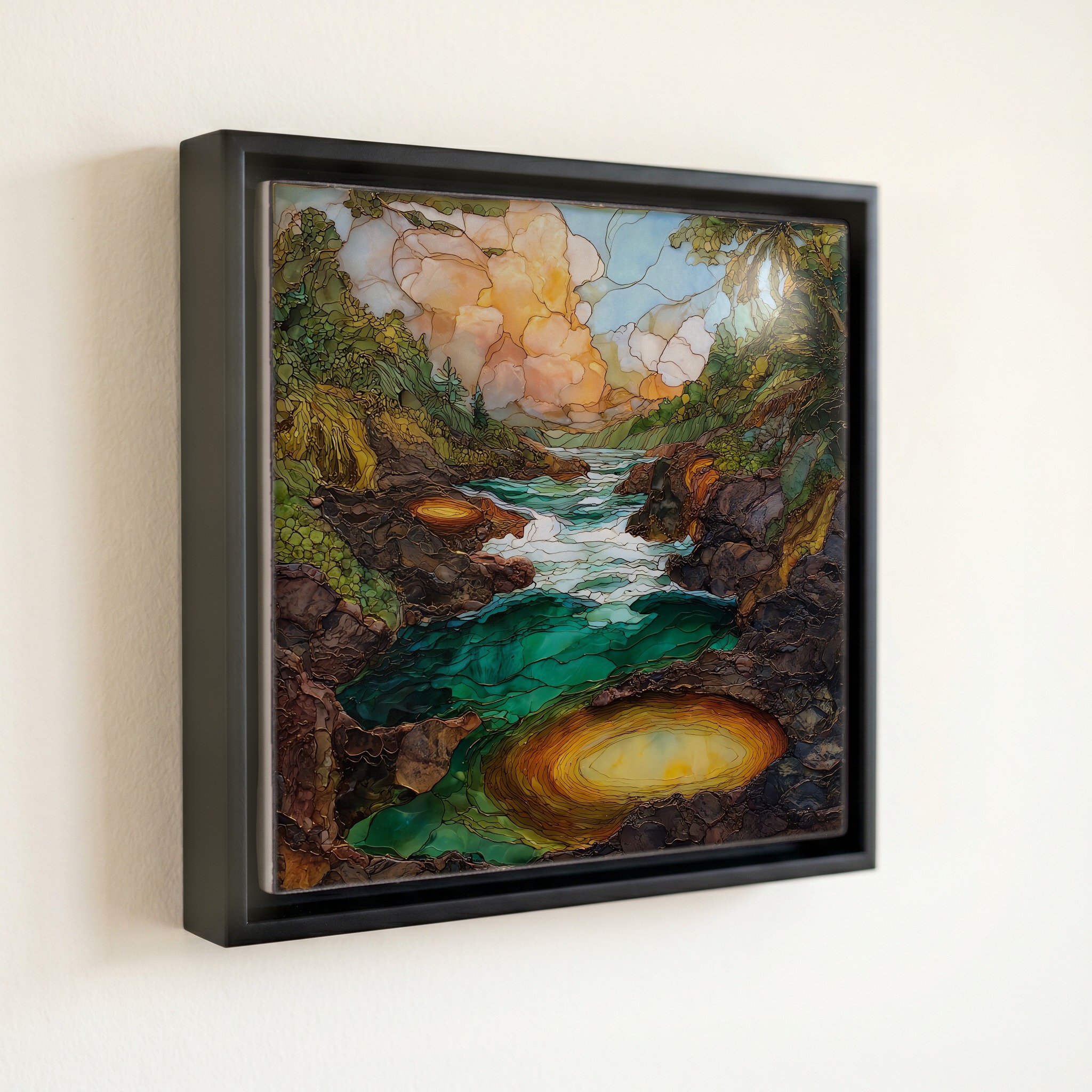
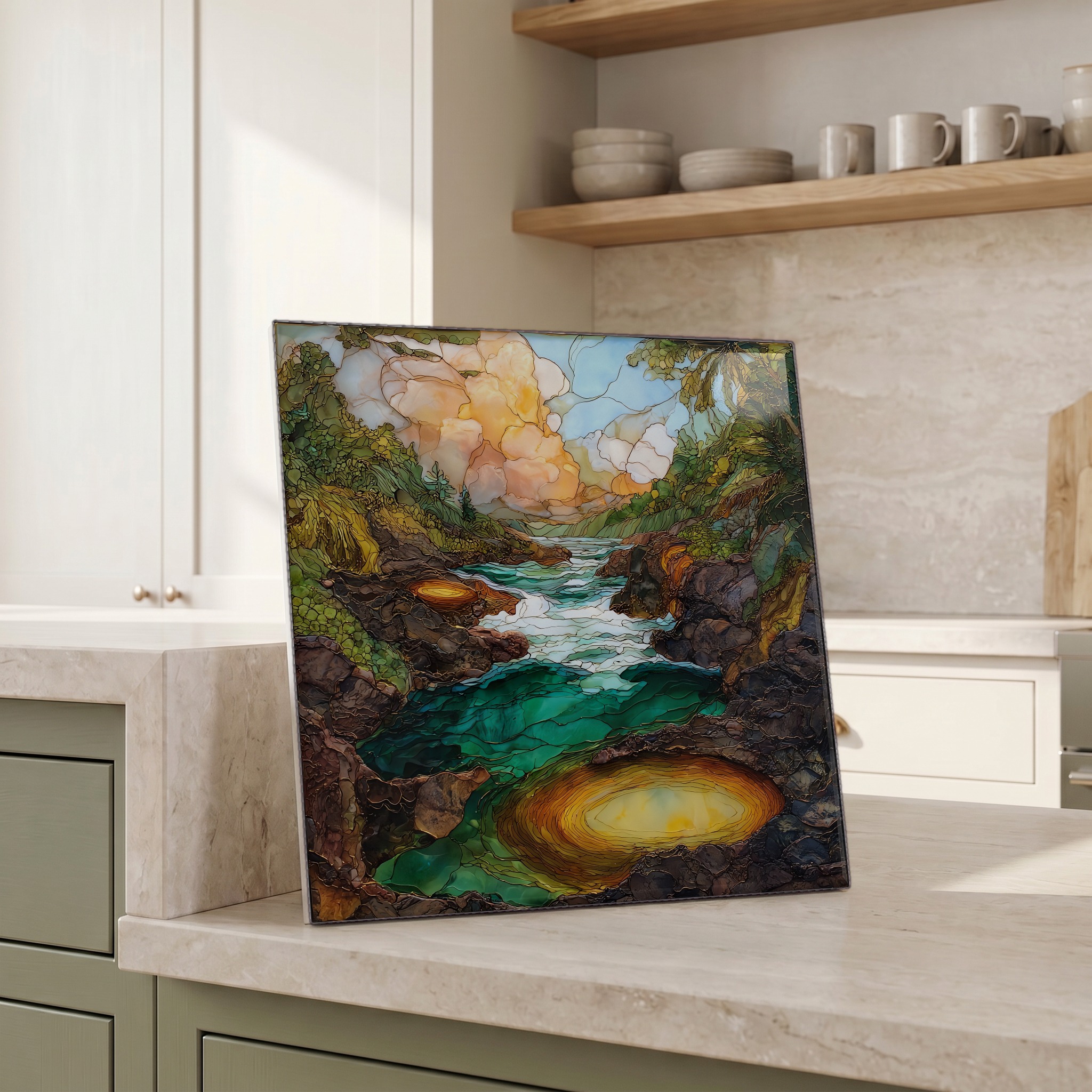
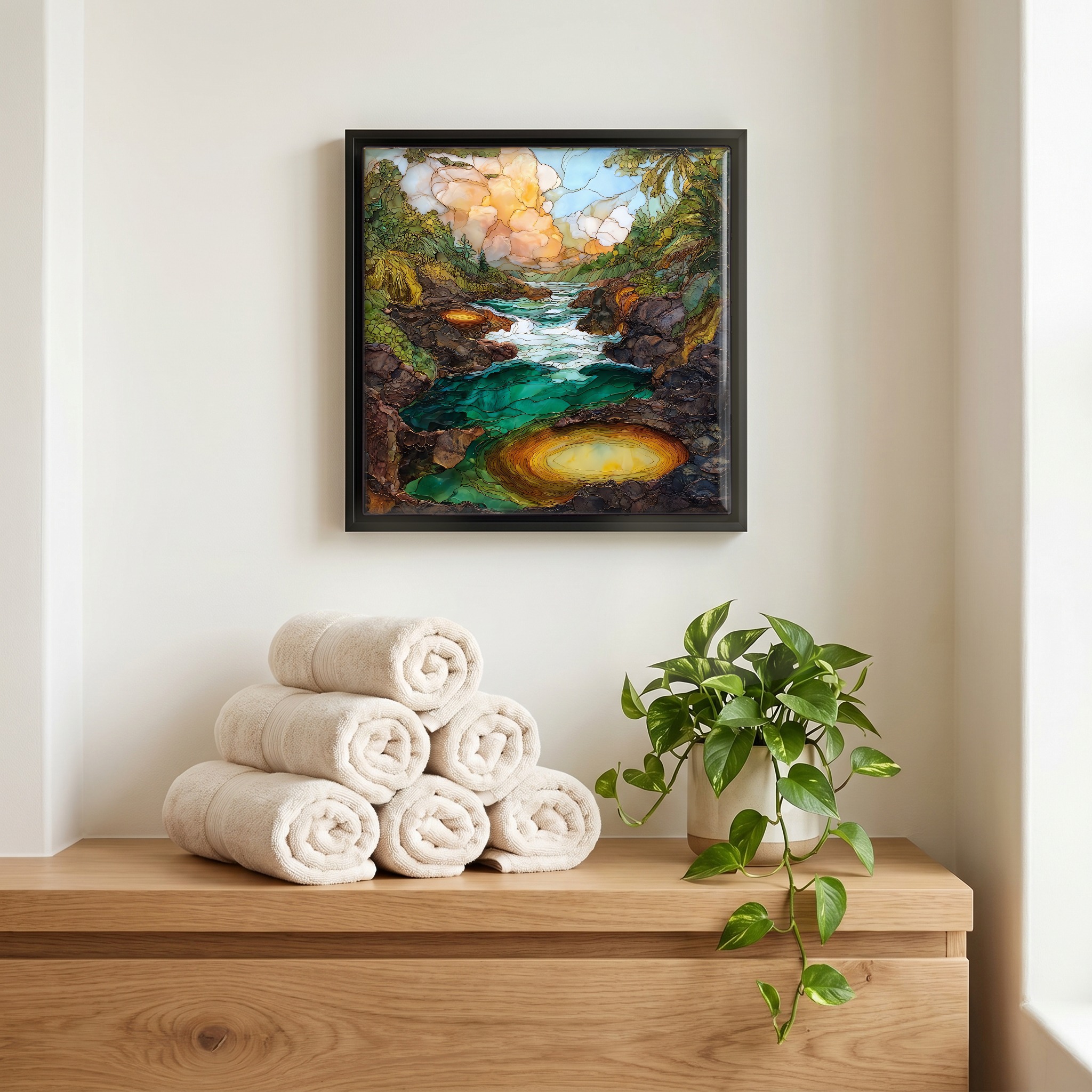
Boiling Pots Big Island Ceramic Art Tile, on ceramic.
Each tile is finished by hand in our Knoxville studio. Artwork is slowly infused into the ceramic surface under high heat and pressure, and rests beneath a thin glossy finish. The colour lives in the surface, not on top of it.
Pick any four 4-inch tiles — National Parks you've been to, a Smokies set, the four seasons of one place. $ for a set of , cork-backed, ready to live on the table.
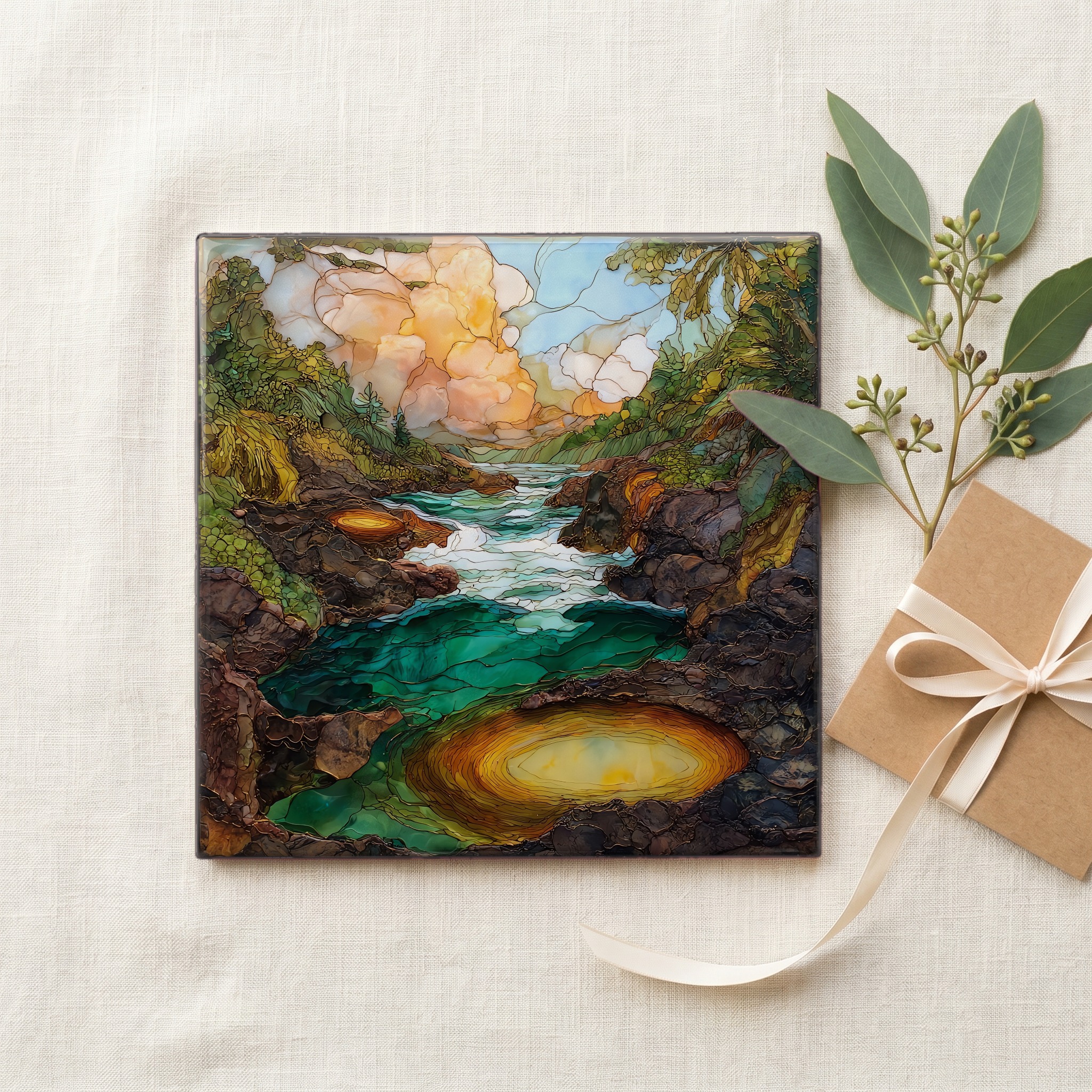
Each tile ships in a kraft box, tied with cream ribbon, with a handwritten note from the studio if you'd like to add one.
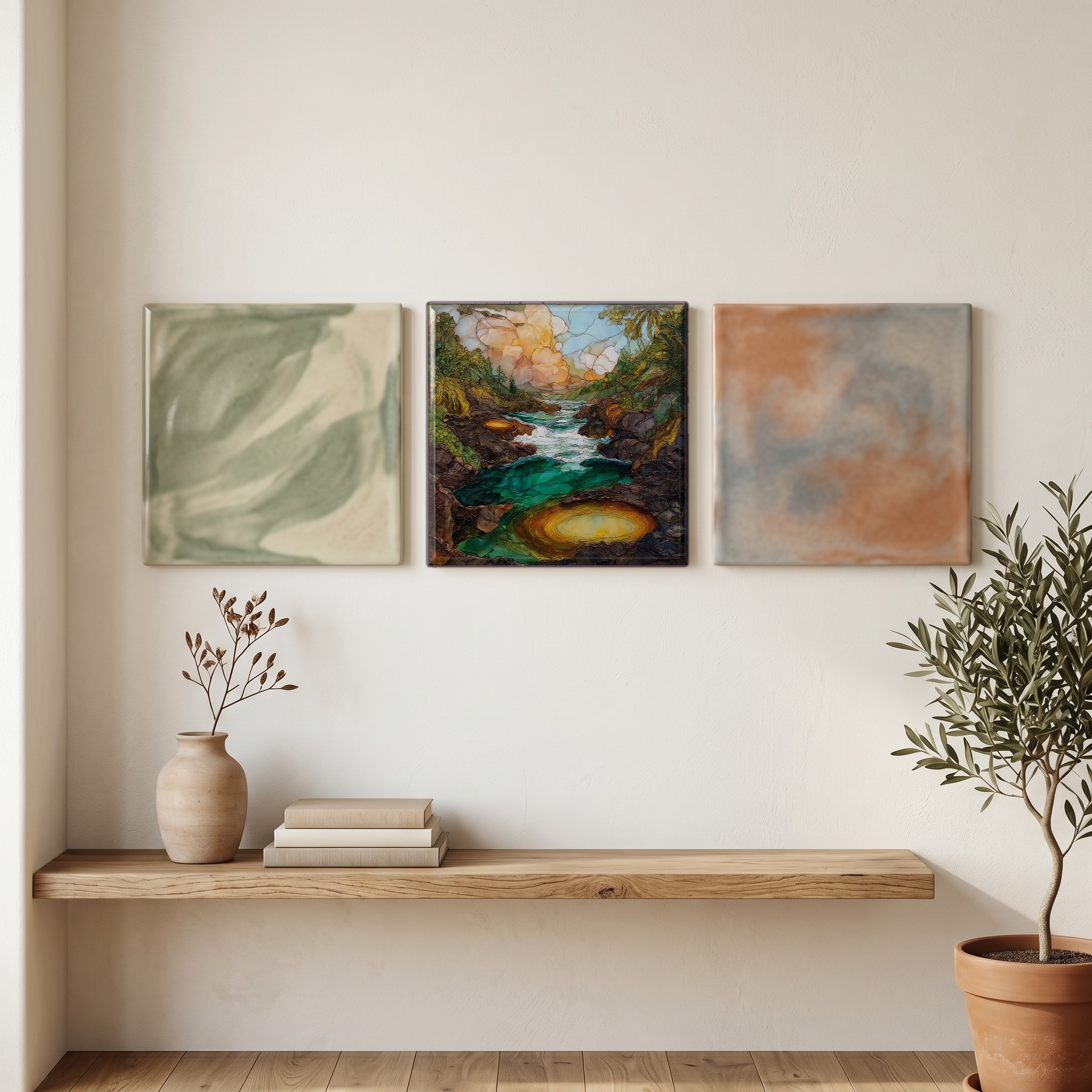
Three or five different vistas, hung together — a chapter of places you've been, or want to go.
The place, in three passes.
Boiling Pots sits along the Wailuku River in Hilo, on the windward east coast of Hawaii Island, inside Wailuku River State Park. The Wailuku is the longest river in the Hawaiian Islands, draining about 28 miles down from the slopes of Mauna Kea to Hilo Bay. The overlook is roughly two miles inland from the bay, reached from Waianuenue Avenue, and a third of a mile upstream from Rainbow Falls, the better-known of the park's two viewpoints. Parking, a short paved path, and a railed viewing platform are open to the public at no charge.
The boiling is an optical effect, not heat. The river drops in over Pe'epe'e Falls and pours through a chain of kettle-shaped basins that were ground out of the basalt by water and lava-tube collapse over thousands of years. Underground springs feed the basins from below at the same time the falls feed them from above, and the two flows colliding inside each pot make the surface roll and churn. The water itself is cold, the same mountain-fed run-off that has cut the gorge. Volume swings with rainfall; Hilo averages roughly 130 inches of rain a year, one of the wettest weather stations in the United States, and the pots run hardest in the day or two after a storm.
The Boiling Pots overlook is a roadside stop, not a hike. From downtown Hilo, follow Waianuenue Avenue inland about a mile and a half past Rainbow Falls; signage on the right marks the turn into the small lot. The platform sits above the gorge, fenced and paved. Swimming and wading are prohibited and have been for decades; the State Parks division cites recurring drownings caused by the strong undercurrents that make the pots churn, and the rule is enforced. Mornings tend to be quieter; the bus tours that cycle through Rainbow Falls usually skip this stop. Bring rain protection. The Hilo side of the island sees rain on roughly 270 days a year.