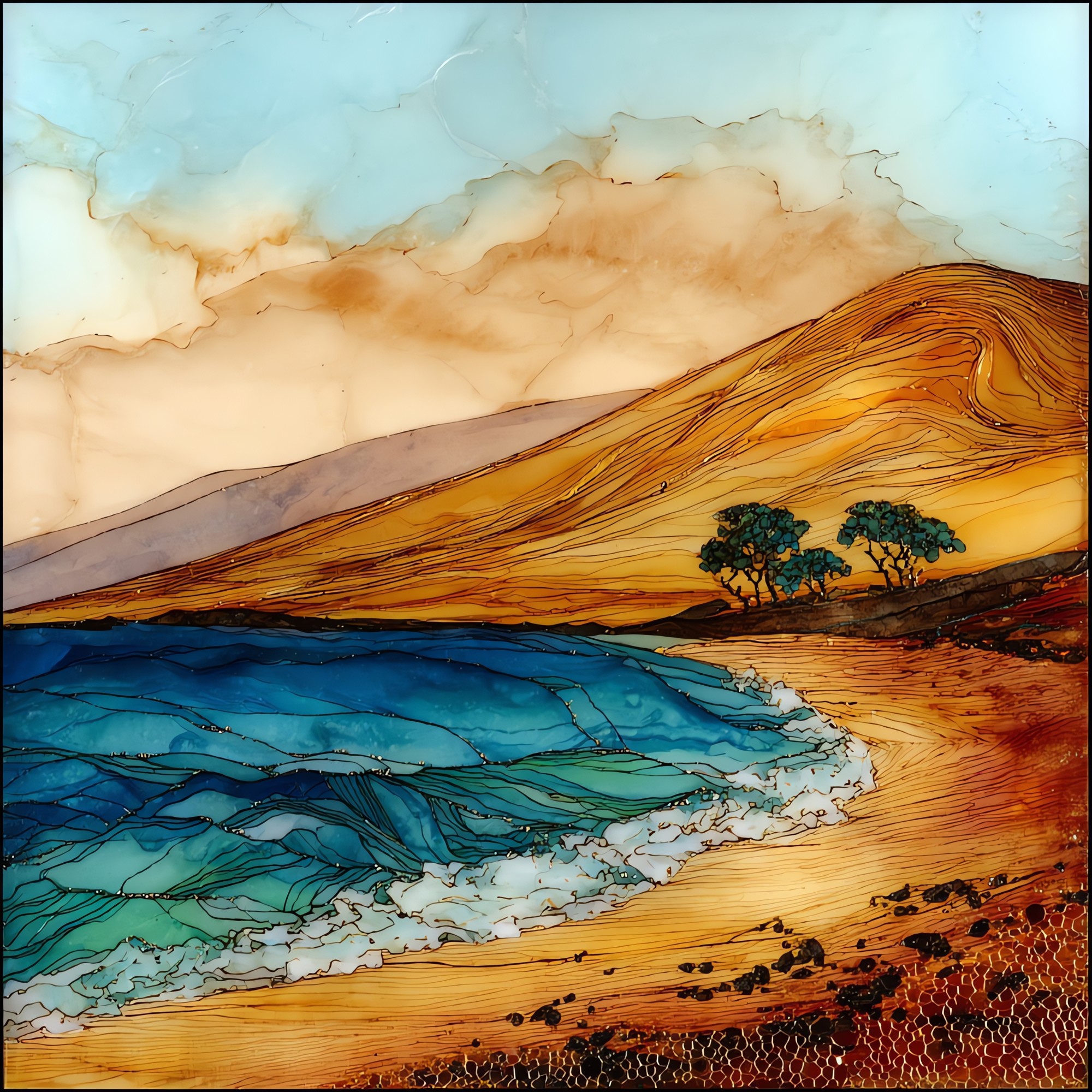
Big Beach Makena Maui Ceramic Art Tile
— the long sand at the end of the road.
Not only on a wall.
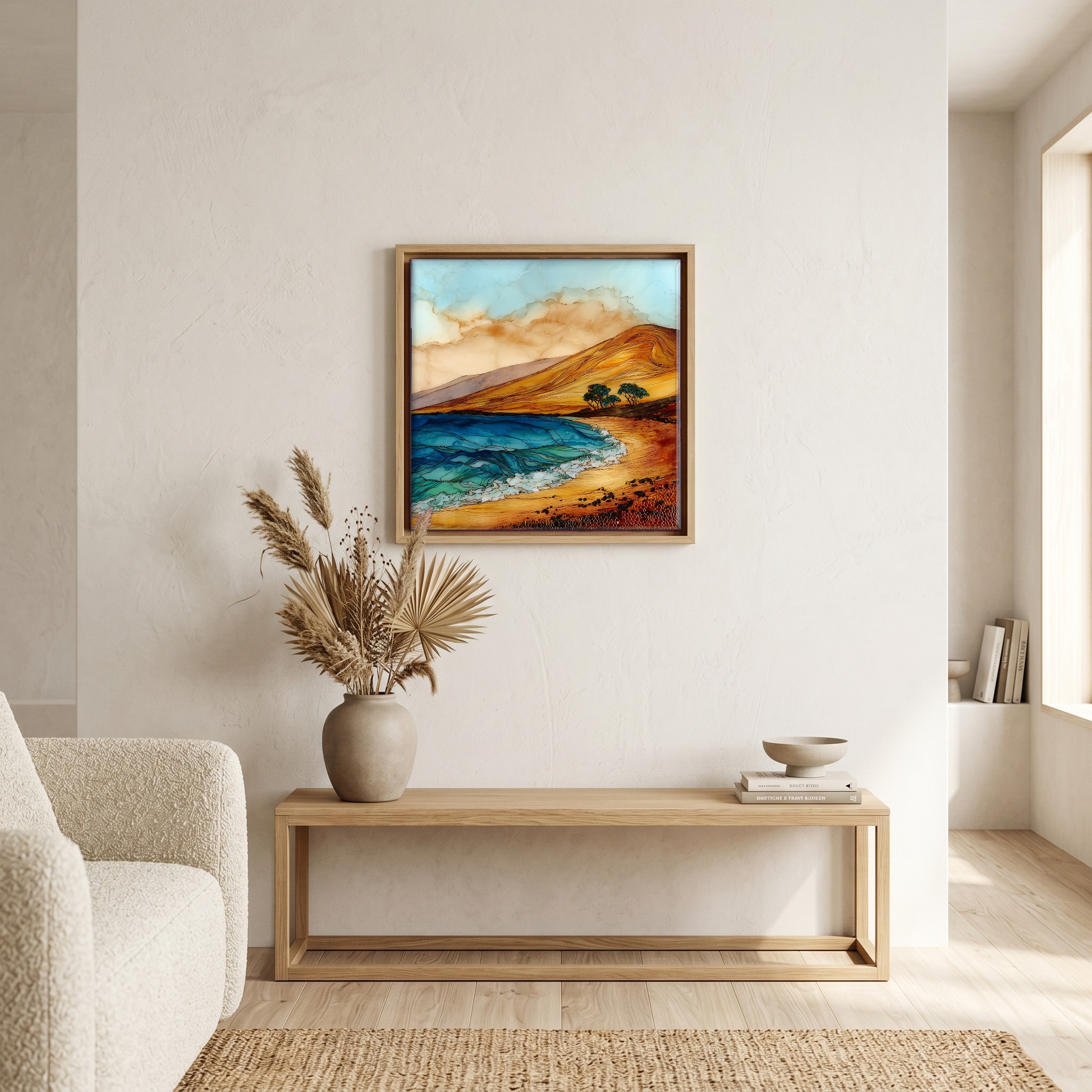
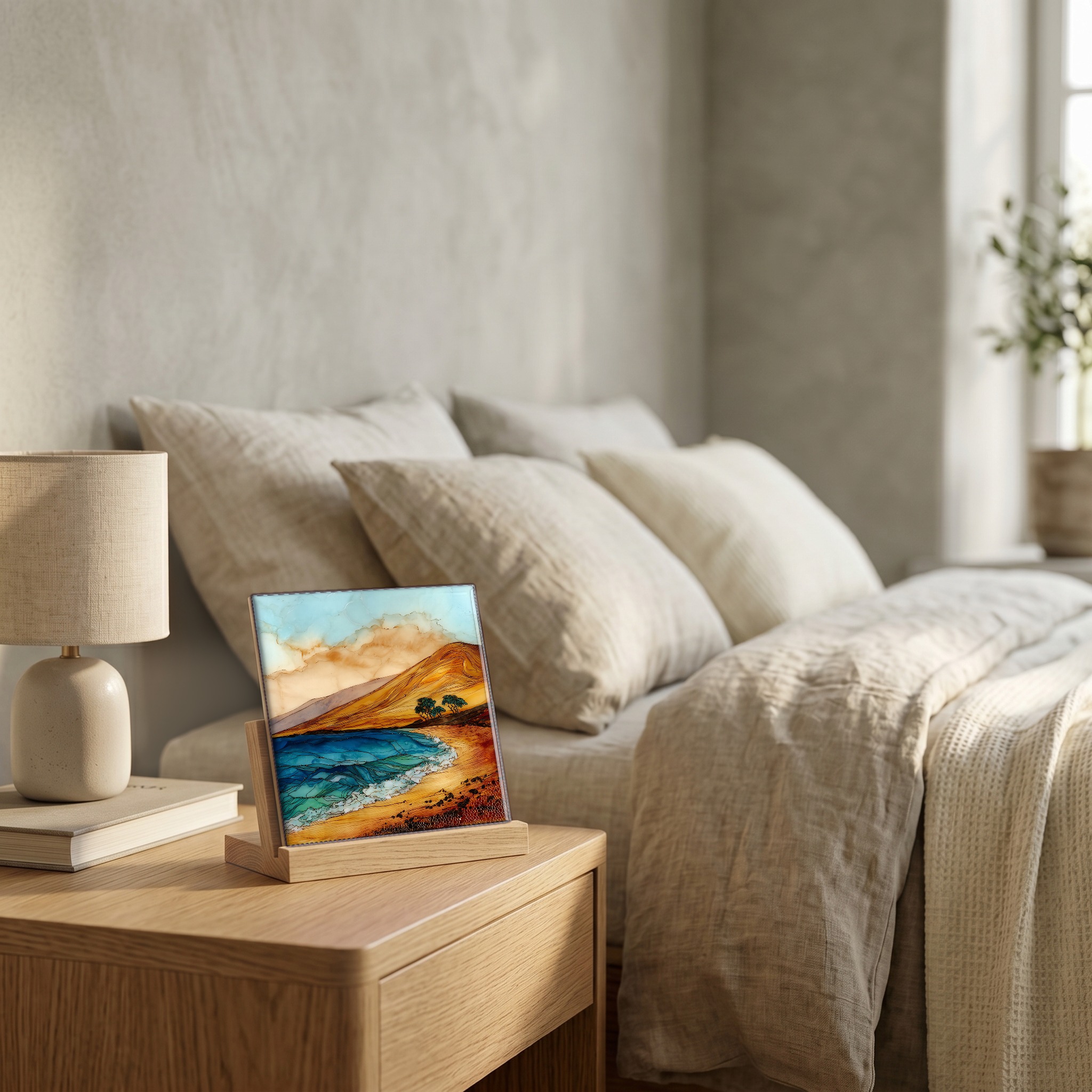
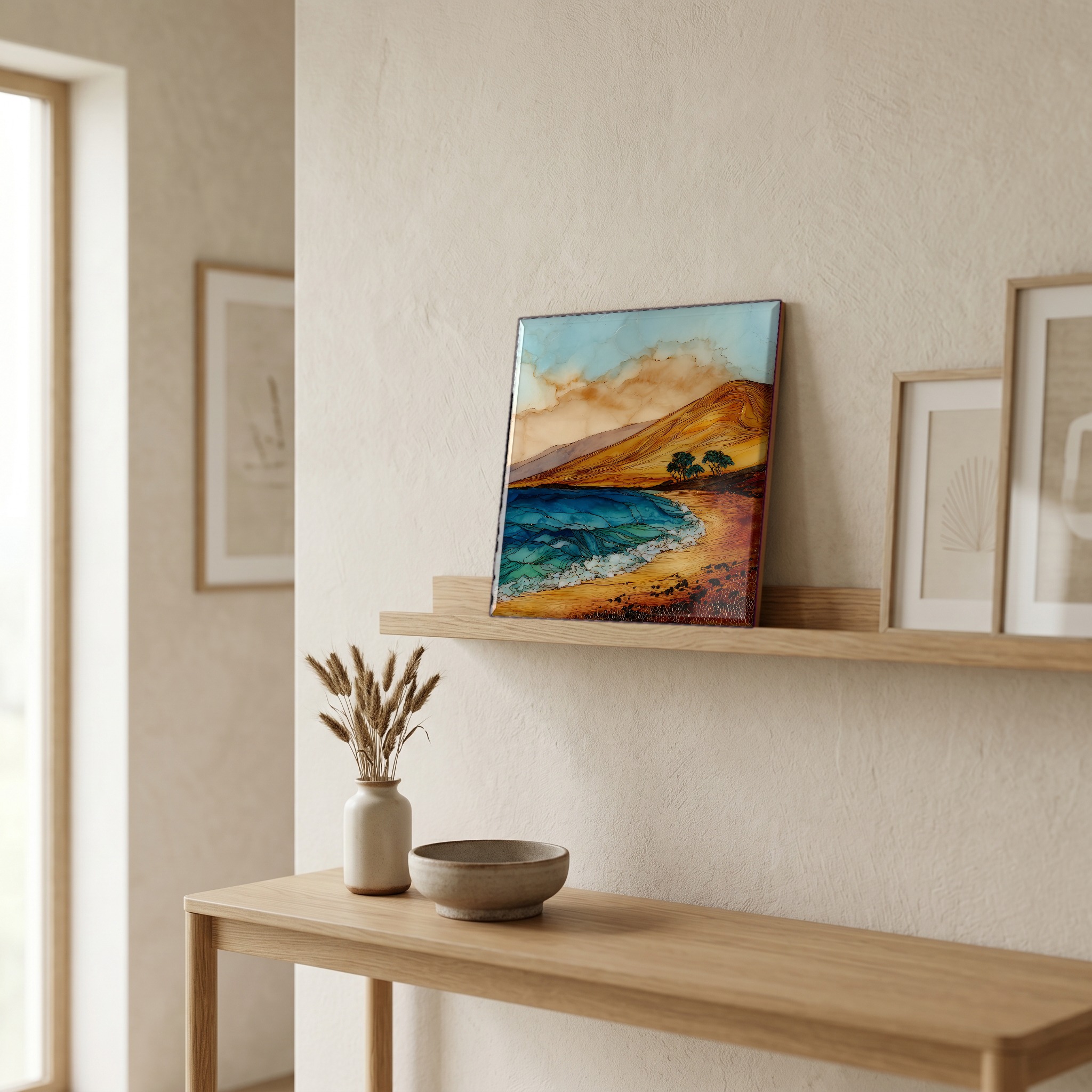
“At the end of the Wailea coast road, where pavement runs out and Makena State Park begins. Gold sand for two-thirds of a mile, and a cinder cone at the north end called Pu'u Olai, weathered red where the trade winds work it. The Hawaiian name, Oneloa, means long sand. The shore break is famous and serious; people watch it more than they swim it. Mornings are best, before the wind comes up off the leeward channel. A beach the state has kept undeveloped since the early 1980s.
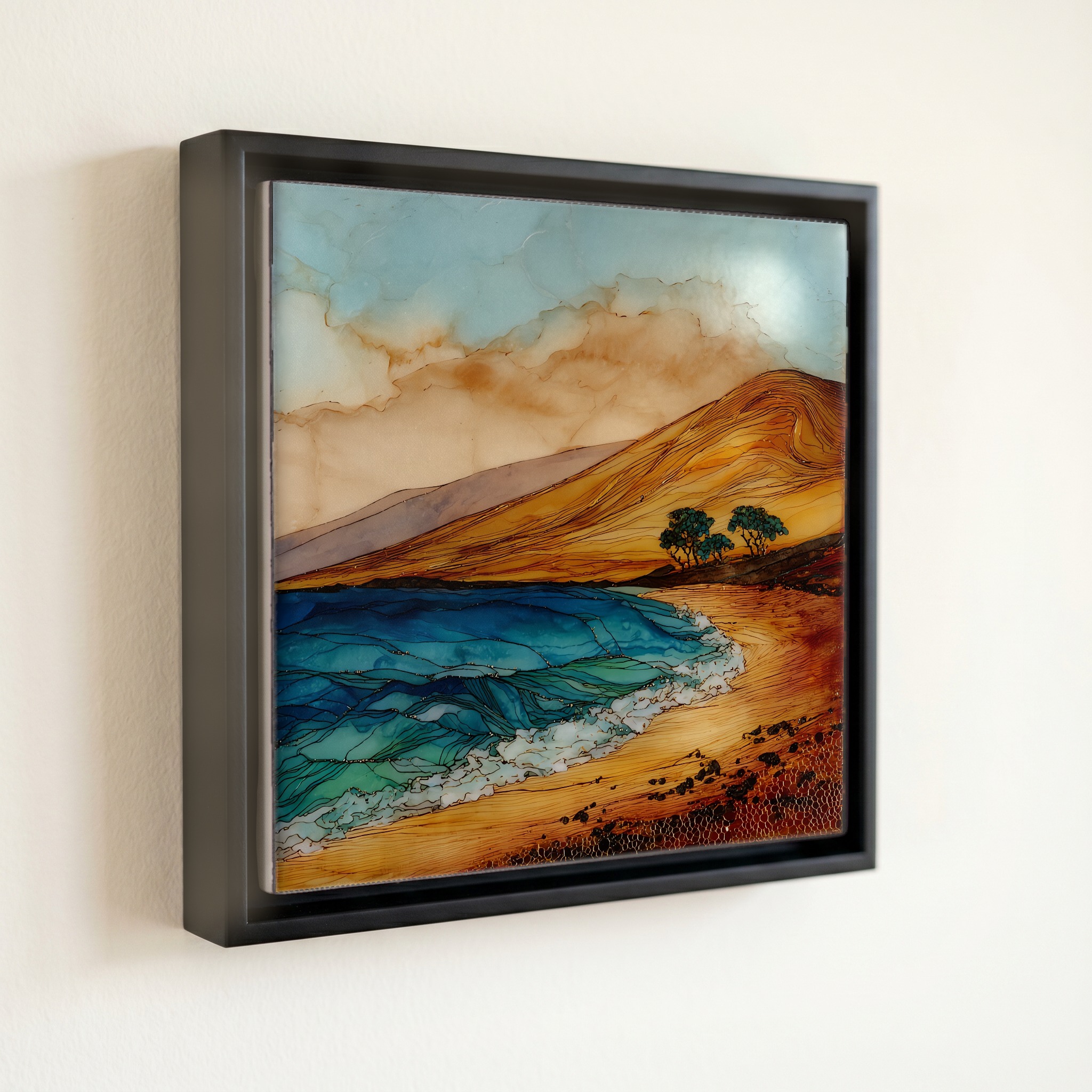
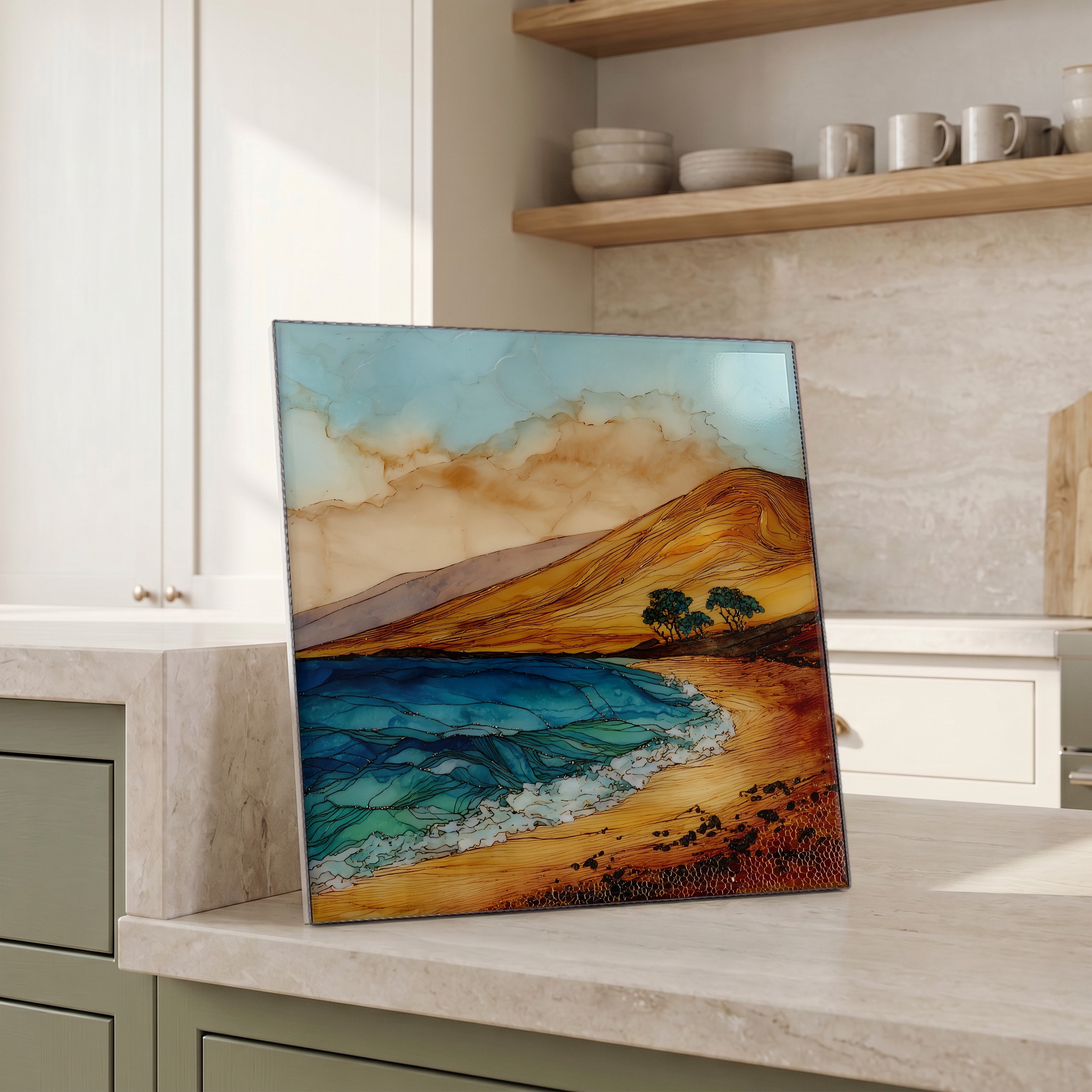
Big Beach Makena Maui Ceramic Art Tile, on ceramic.
Each tile is finished by hand in our Knoxville studio. Artwork is slowly infused into the ceramic surface under high heat and pressure, and rests beneath a thin glossy finish. The colour lives in the surface, not on top of it.
Pick any four 4-inch tiles — National Parks you've been to, a Smokies set, the four seasons of one place. $ for a set of , cork-backed, ready to live on the table.
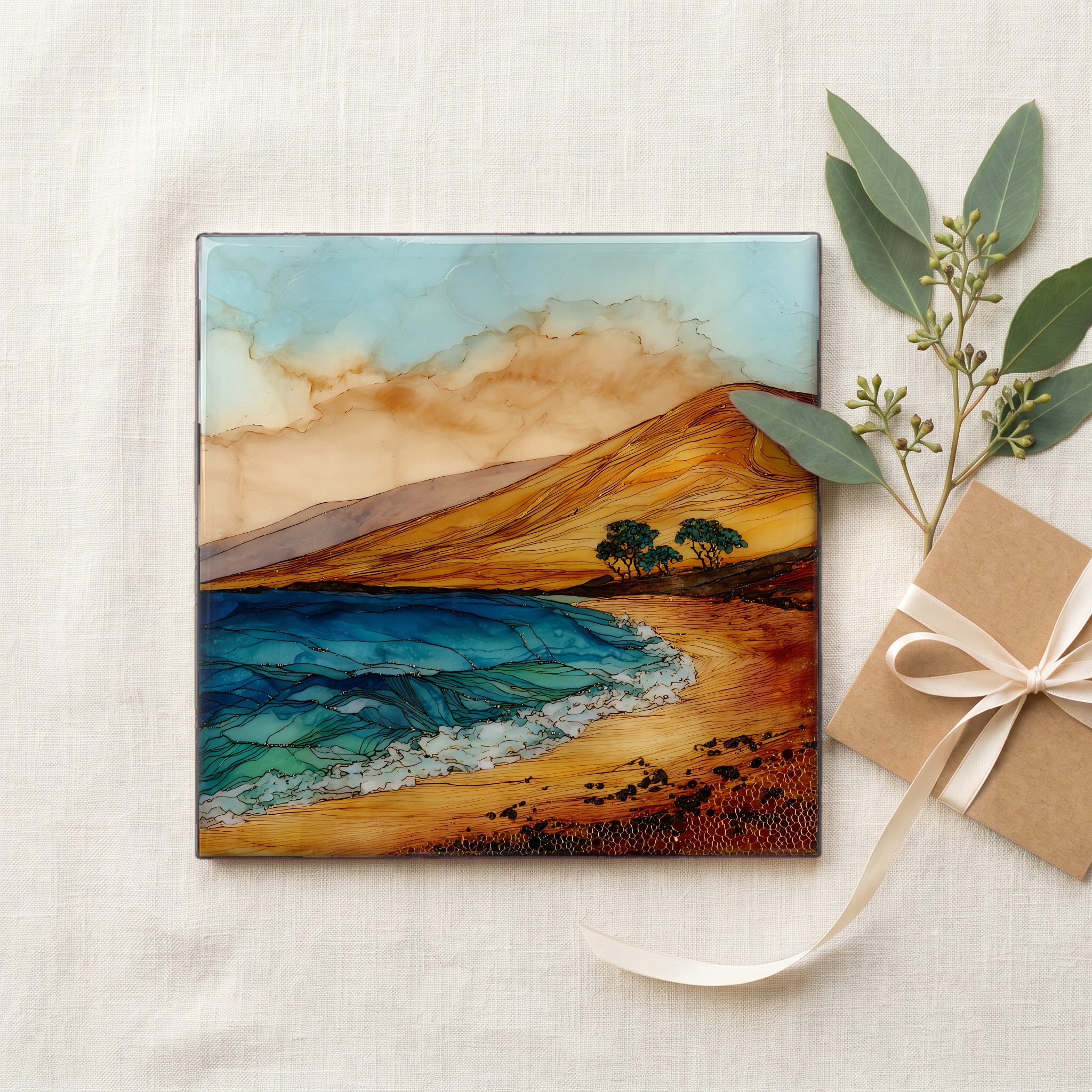
Each tile ships in a kraft box, tied with cream ribbon, with a handwritten note from the studio if you'd like to add one.
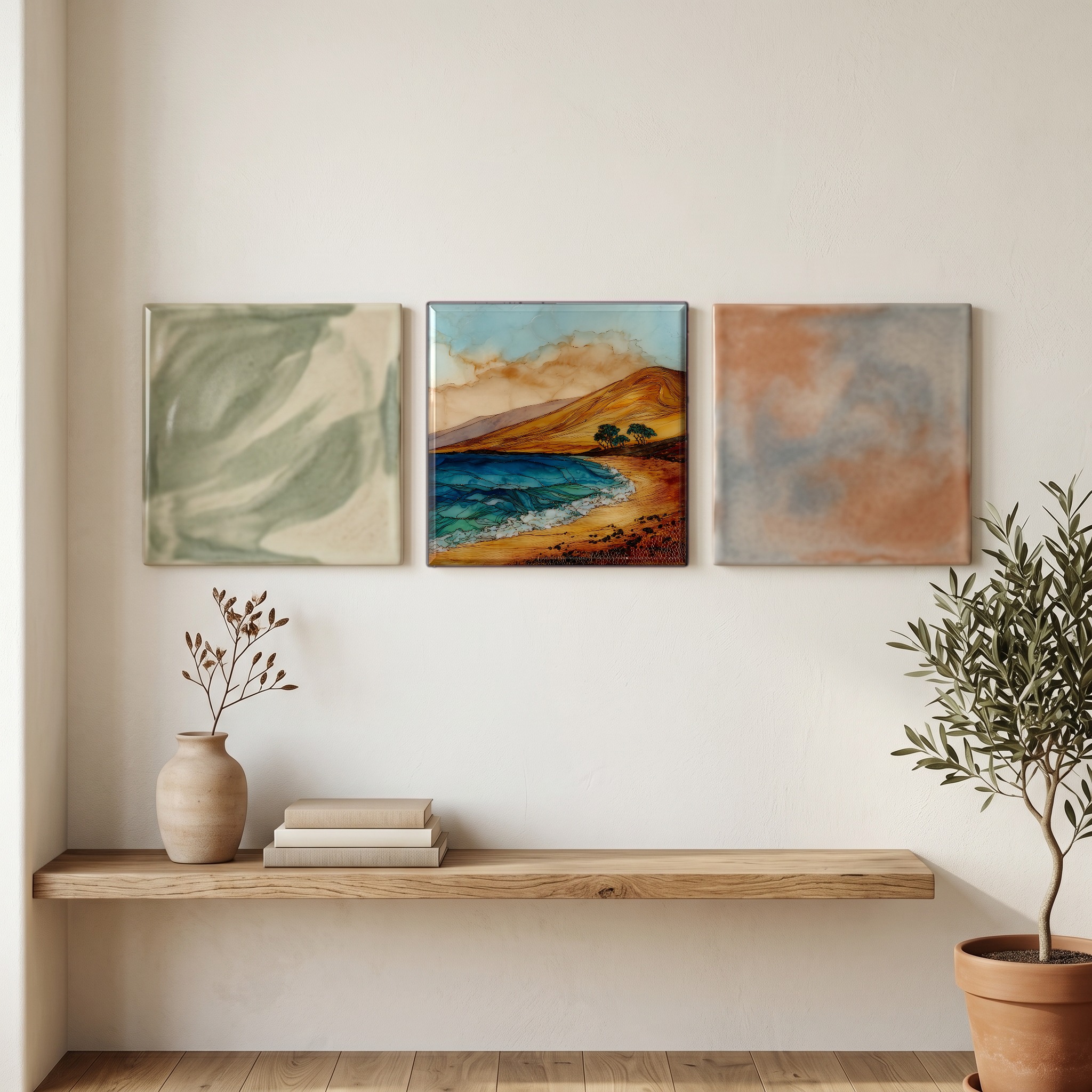
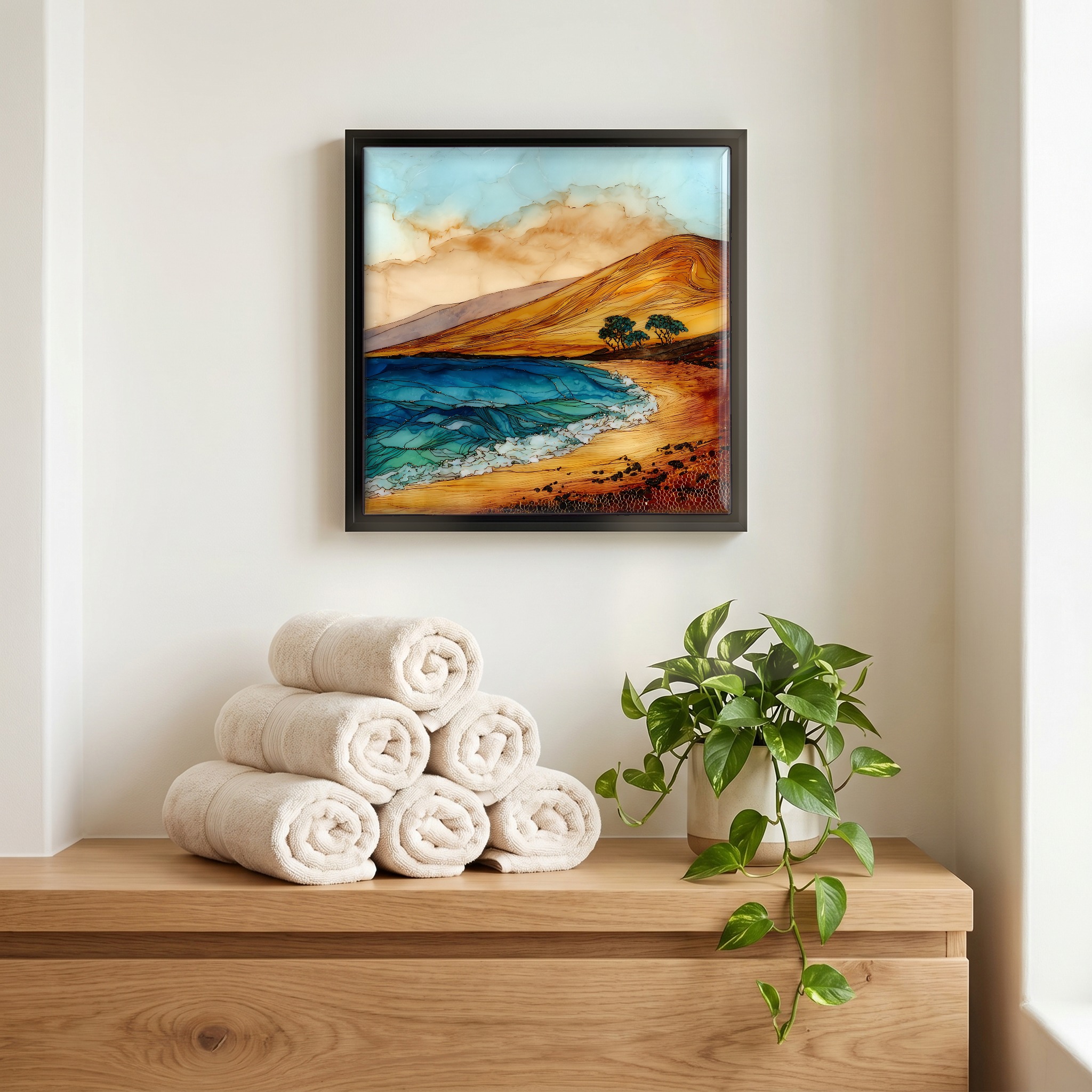
Three or five different vistas, hung together — a chapter of places you've been, or want to go.
The place, in three passes.
Big Beach, known in Hawaiian as Oneloa or 'long sand,' lies on the leeward south shore of Maui in Makena State Park, about five miles south of the Wailea resort district. The beach runs for roughly two-thirds of a mile of golden sand, ending at Pu'u Olai, a cinder cone left by one of Maui's late volcanic events. The park covers around 165 acres and is reached by Makena Alanui Road, which runs out of pavement shortly past the southern parking lot. Maui County also includes Lanai, Molokai, and Kahoolawe; the island of Maui sits across the Au'au Channel from Lanai.
The Makena shore break is famous and serious. Open-Pacific swells reach the beach without the buffer of a fringing reef, and a steep drop a few yards offshore lets waves fold and crash directly onto the sand. Hawaii State Parks posts daily surf warnings at the entrance, and lifeguards staff a central tower most days of the year. Winter swells, generally largest from November through March, can break overhead in waist-deep water; summer mornings are calmer before the leeward trade winds rise. Boogie-boarders and body-surfers know the break and respect it; visitors who don't know it are routinely told to watch a few sets before stepping in.
Makena State Park sits at the end of the developed Wailea-Makena coast; pavement runs out a short distance south of the southernmost parking lot. The state charges a small non-resident entry fee at a self-service kiosk. Three parking lots (north, central, and south) feed onto the beach, and a footpath at the north end climbs over the back of Pu'u Olai to a smaller cove known as Little Beach. There are restrooms and outdoor showers but no concessions, lifeguard equipment but no rentals, and no resort behind the sand. The park covers about 165 acres of state-held land that the Hawaii Division of State Parks has kept undeveloped since the early 1980s.