Wender·Vista
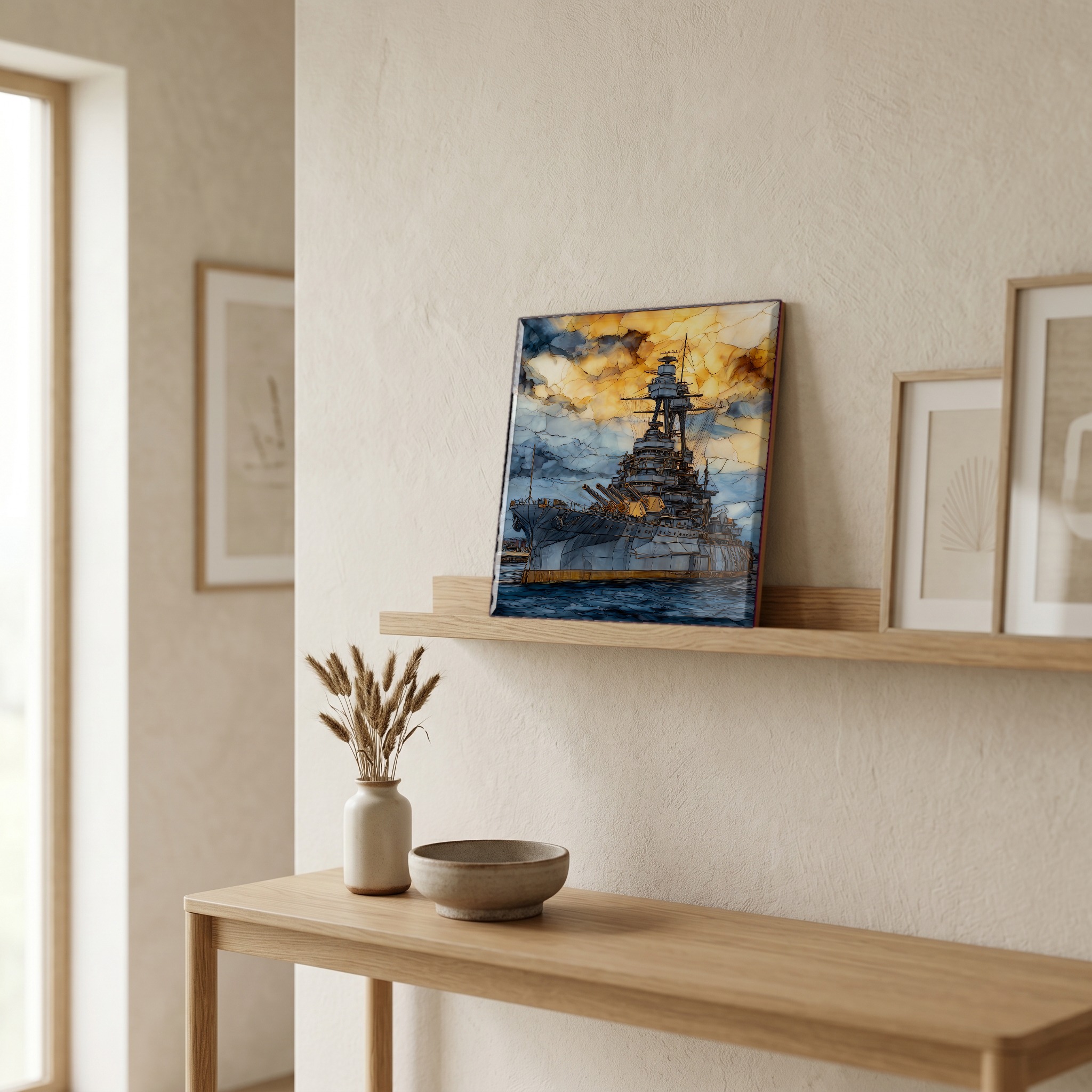
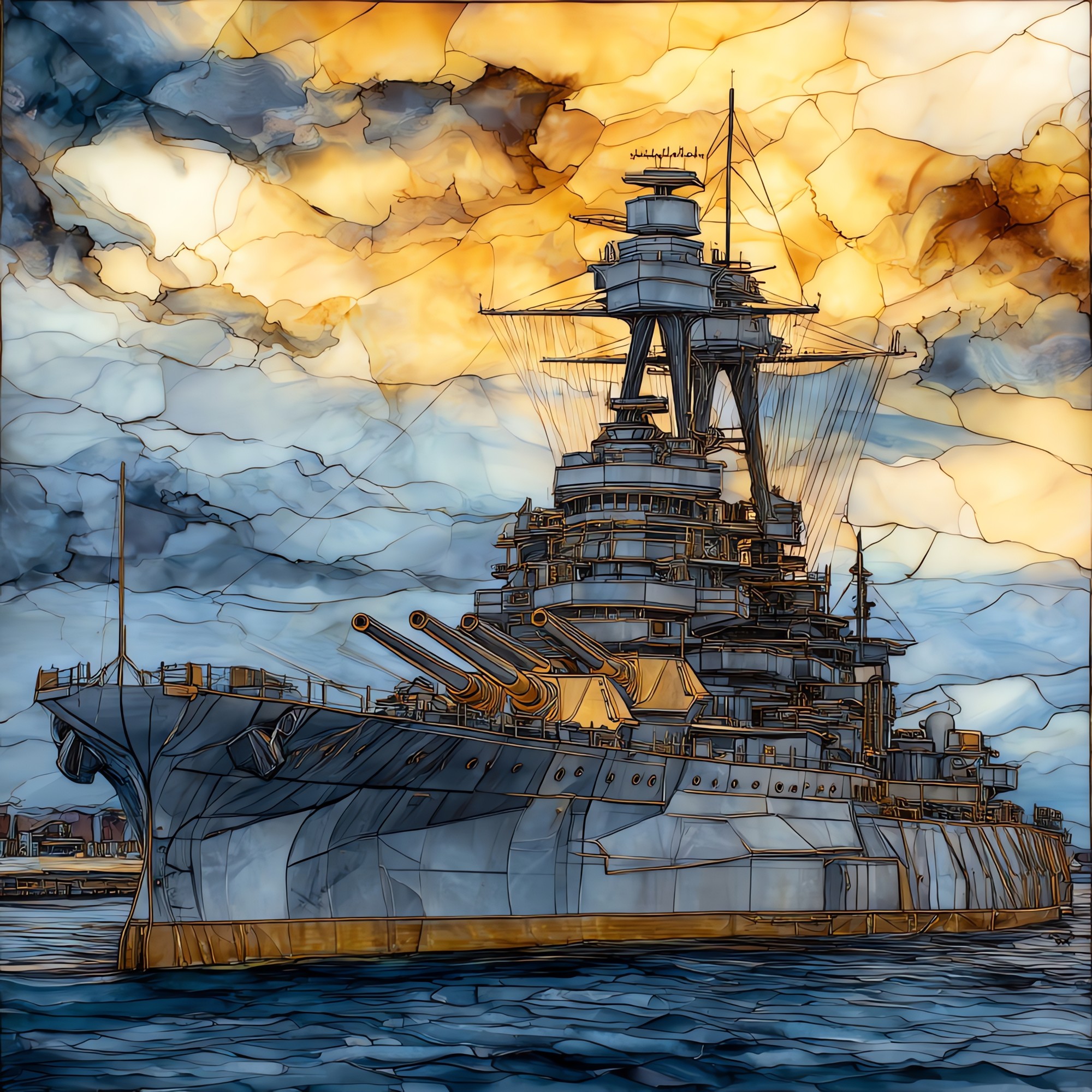
Battleship Missouri Oahu Ceramic Art Tile
shown on ceramic, 12-inch tileHawaii · United States
moored at Ford Island, across the harbour from the Arizona

Battleship Missouri Oahu Ceramic Art Tile

the deck where the war ended.

Where it lives

Not only on a wall.

A small tile on the nightstand catching the morning. A larger one above the fire. Yours, wherever you spend the slow hours.
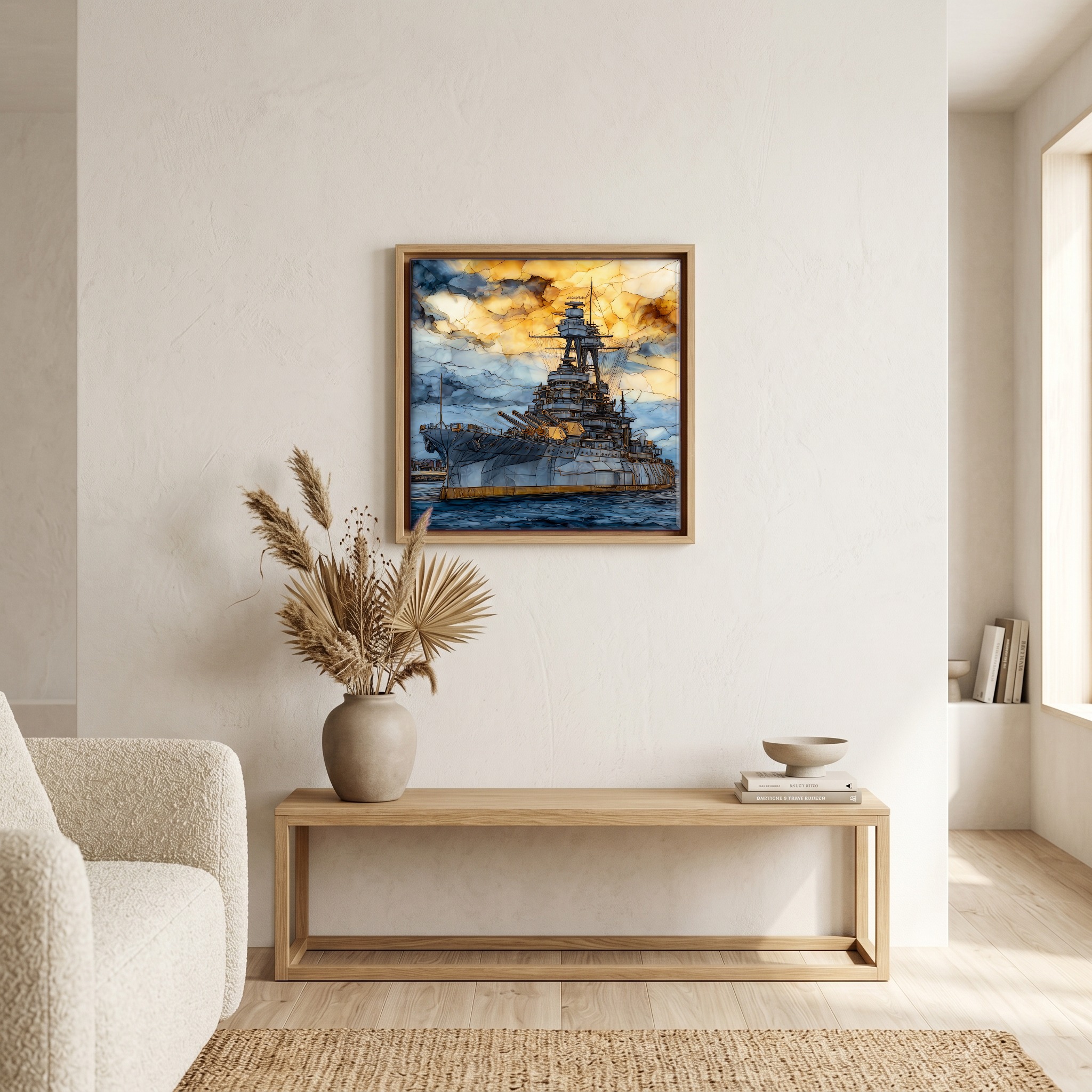
Above the bench, in a warm oak surround.
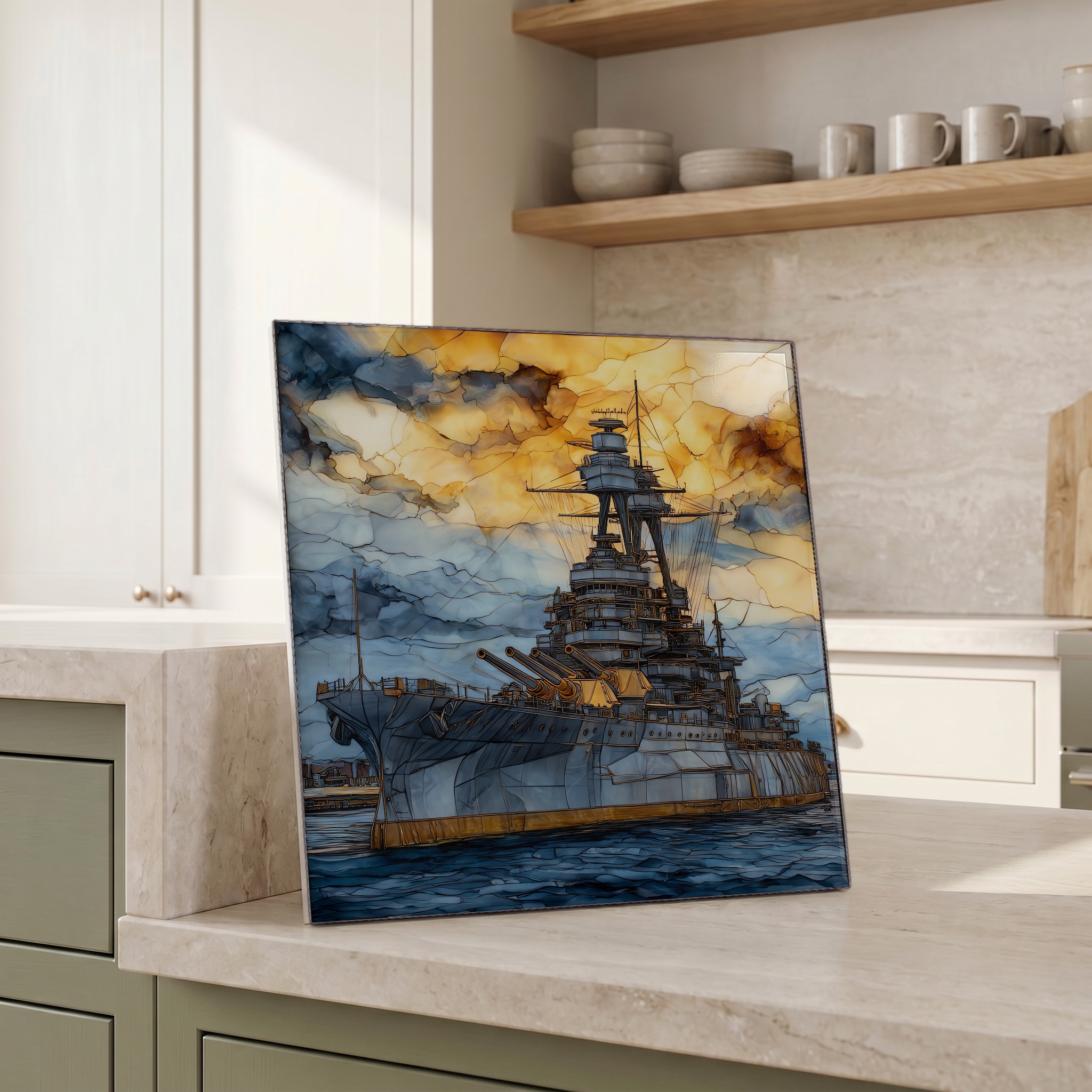
Beside the kettle, propped on the counter.
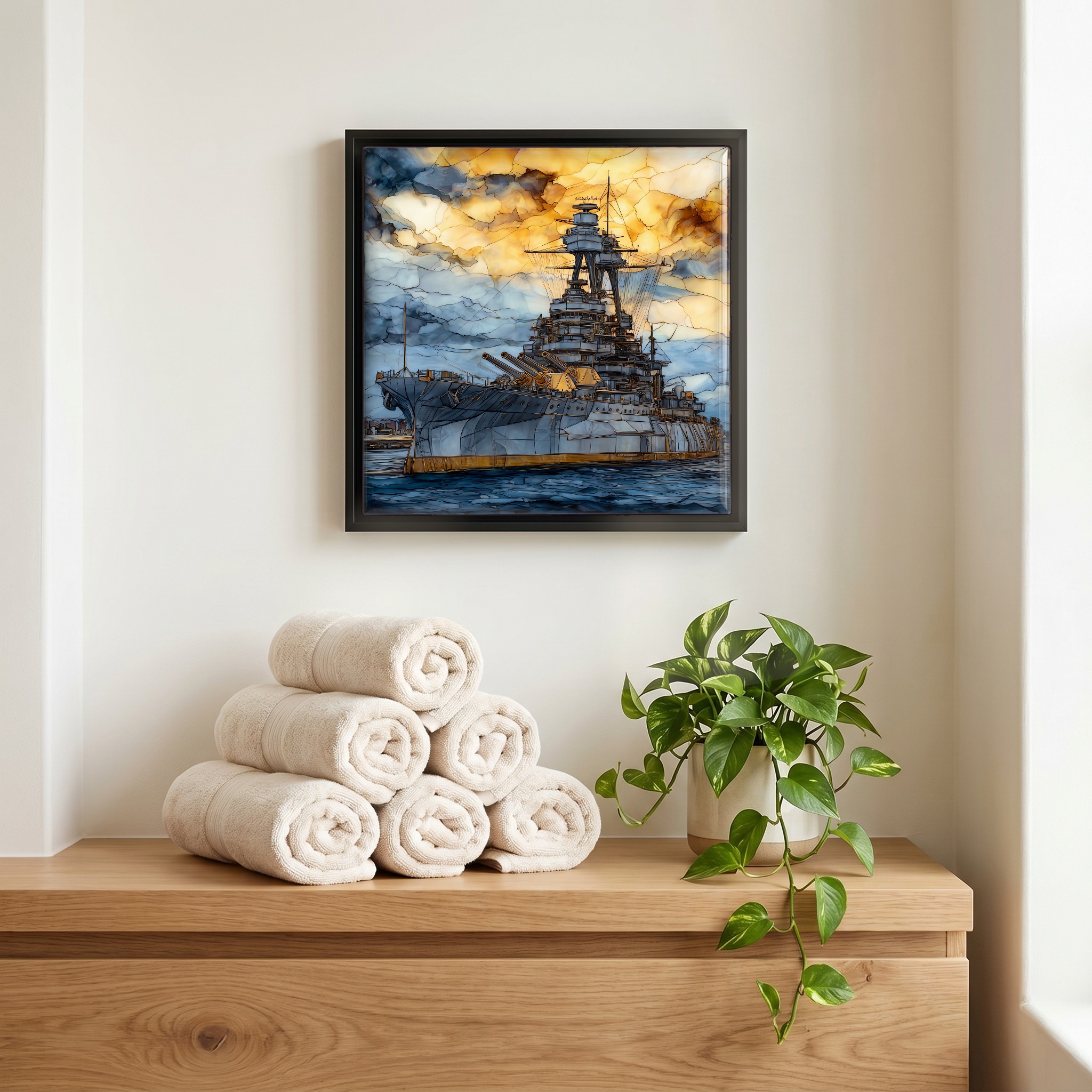
Above the linens, in a slim black surround.
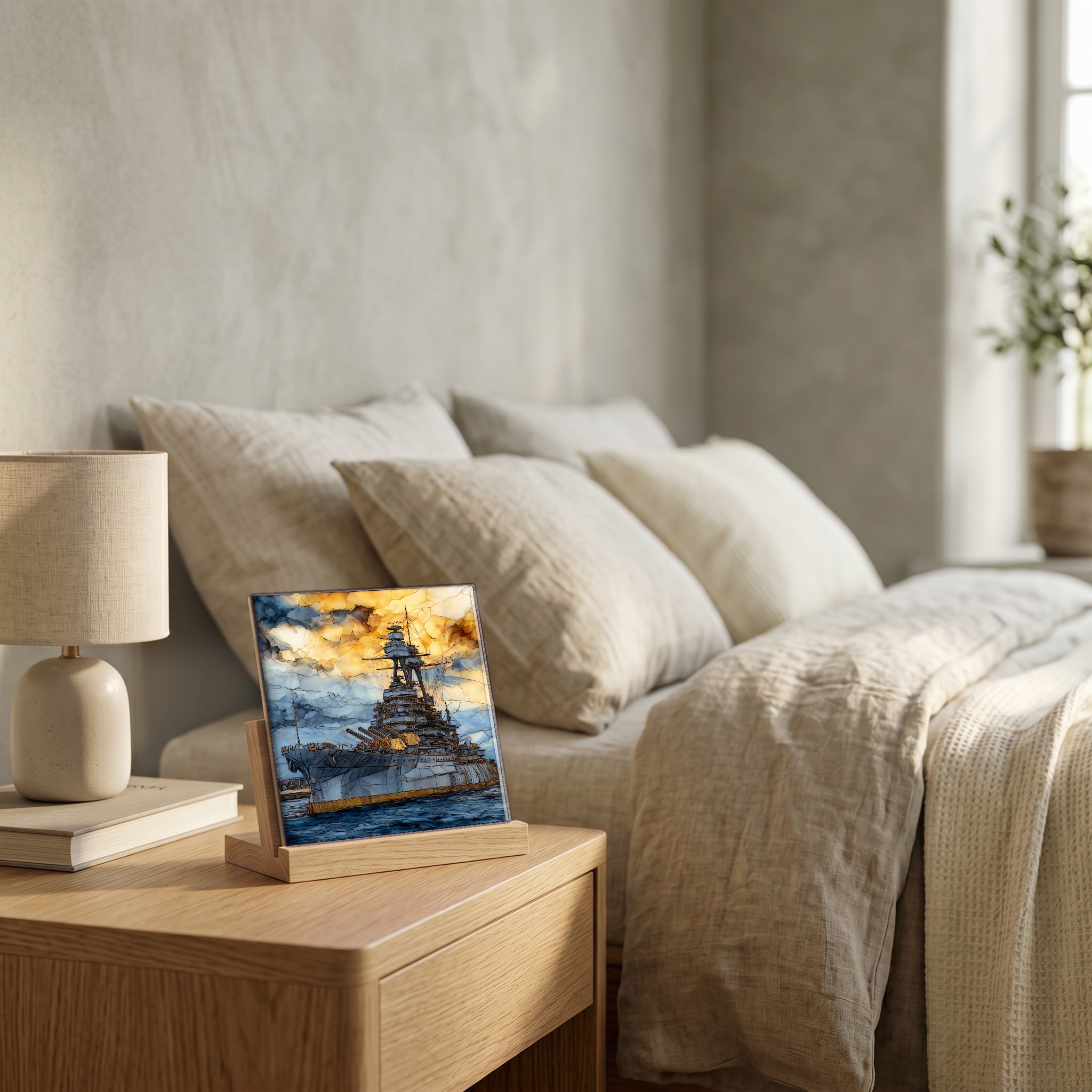
On the nightstand, on a light oak stand.
On a picture ledge, where the light comes in.
a note from the studio

The Mighty Mo sits at Ford Island, in symbolic watch over the Arizona Memorial across a few hundred yards of harbour water. The two ships bookend the American chapter of the war: Arizona where it began, Missouri where it ended. On the starboard veranda deck of the 01 level, a small brass plaque marks the spot where the Instrument of Surrender was signed on the morning of September 2, 1945. The teak is still walked. The ship is 887 feet long, grey, quiet, and the harbour wind comes up off Pearl smelling of salt and warm steel.
from the studio
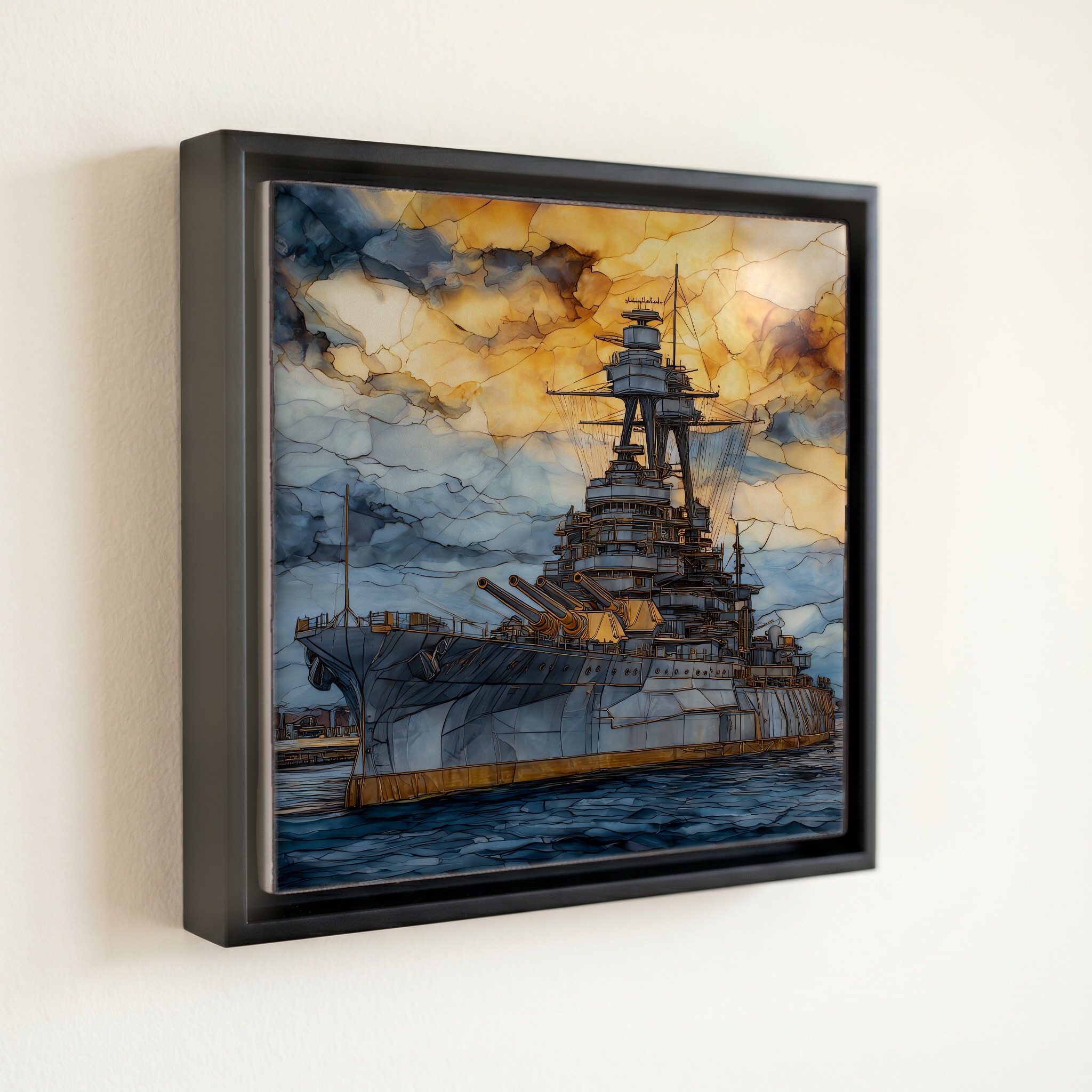
shown in a slim black floating frame · 6 × 6 in
— bring it home

Battleship Missouri Oahu Ceramic Art Tile, on ceramic.

Each tile is finished by hand in our Knoxville studio. Artwork is slowly infused into the ceramic surface under high heat and pressure, and rests beneath a thin glossy finish. The colour lives in the surface, not on top of it.

What kind of piece?
One tile — square or rectangle.
How big?
the popular one — counter, shelf, nightstand
6 × 6 in · 15 cm · 1.6 lb
Surface finish
A clear glossy finish — the artwork reads as if under resin. Ideal for show-pieces and framed wall art.
How it sits
A hidden cleat — sits ¼″ proud of the wall.
$58
Hand-finished and shipped from our studio at the foot of the Smokies. On your wall in about ten days.
size
6 × 6 in
15 cm
weighs
1.6 lb
solid in the hand
surface
ceramic, hand-finished
art rests beneath a thin glossy finish
from
Knoxville, TN
our family studio, at the foot of the Smokies
— start a Coaster Set

Pick any four 4-inch tiles — National Parks you've been to, a Smokies set, the four seasons of one place. $ for a set of , cork-backed, ready to live on the table.
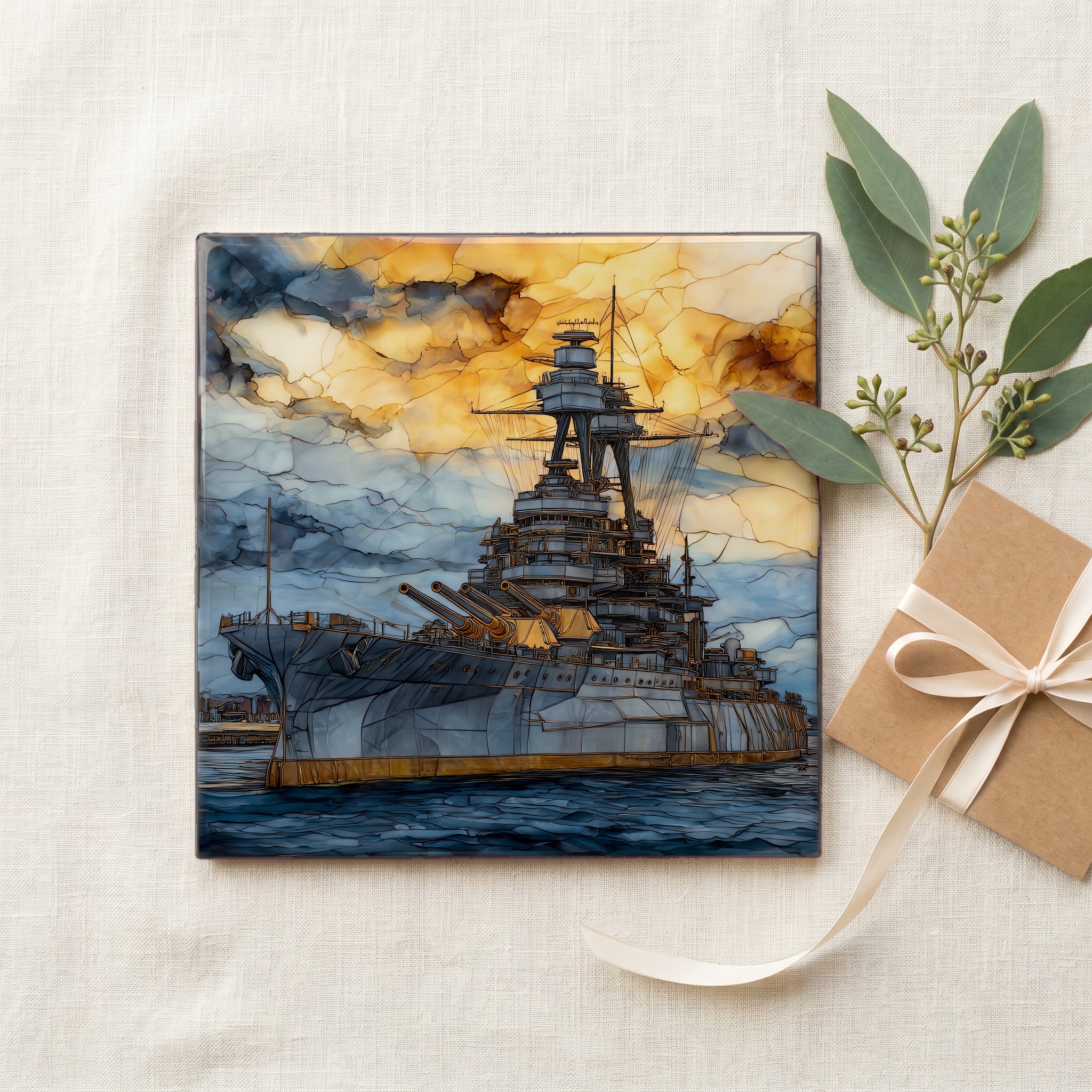
comes gift-ready
comes gift-ready

Each tile ships in a kraft box, tied with cream ribbon, with a handwritten note from the studio if you'd like to add one.
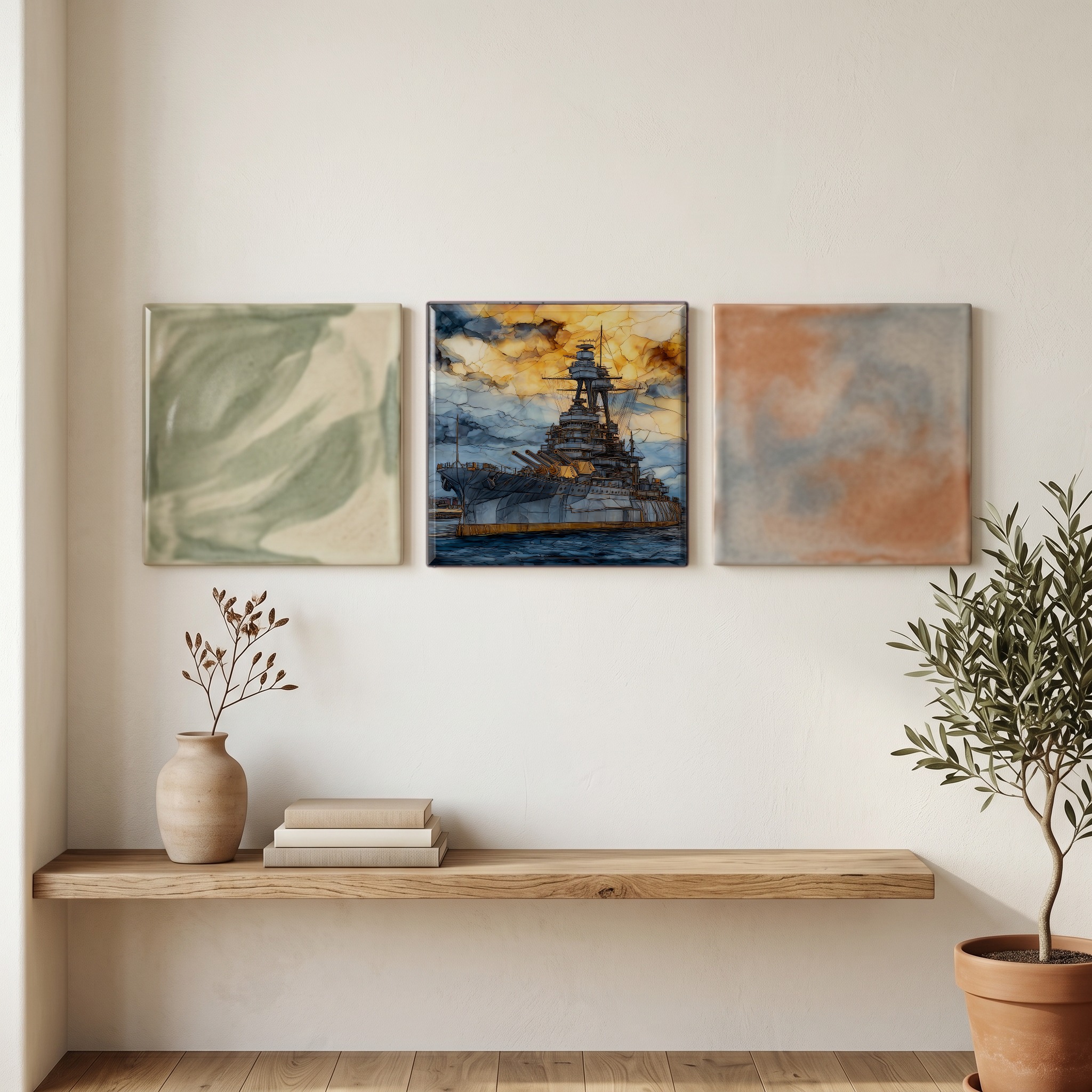
or build a grouping
or build a grouping

Three or five different vistas, hung together — a chapter of places you've been, or want to go.

about Battleship Missouri Oahu Ceramic Art Tile

The place, in three passes.

A little of what's known, in case you fall down the rabbit hole — or want to go see it yourself.
the place

Pearl Harbor sits on the south coast of Oahu, west of Honolulu. The USS Missouri (BB-63) is moored at Pier Foxtrot 5 on Ford Island, the small island in the middle of the harbour reached by shuttle bus from the Pearl Harbor National Memorial Visitor Center on the Oahu side. The ship sits at the head of Battleship Row, in symbolic watch over the USS Arizona Memorial about a quarter mile away across the harbour basin. The Iowa-class battleship is 887 feet long with a 108-foot beam, displacing about 58,000 tons fully loaded. The memorial is operated independently as the Battleship Missouri Memorial, separate from the National Park Service site that runs the Arizona.

the year

On the morning of September 2, 1945, Japanese Foreign Minister Mamoru Shigemitsu signed the Instrument of Surrender on the starboard veranda deck of the Missouri while she lay anchored in Tokyo Bay. General Douglas MacArthur signed for the Allied Powers; Fleet Admiral Chester Nimitz signed for the United States. The ceremony ran about twenty-three minutes and ended the Second World War. Hundreds of American aircraft passed overhead as the documents were countersigned. A brass plaque on the teak deck now marks the exact spot where Shigemitsu set his pen. The same ship had been struck by a kamikaze five months earlier off Okinawa, on April 11, 1945; Captain William Callaghan ordered the recovered remains of the Japanese pilot buried at sea with military honours.

the visit

The Battleship Missouri Memorial opens daily at 8 a.m. Access is by shuttle bus from the Pearl Harbor Visitor Center; private vehicles cannot drive directly onto Ford Island. General-admission tickets for adults run in the mid-$30 range as of 2025, with discounts for active military, kamaaina, and children. A self-guided walk takes about ninety minutes; specialty tours of the Engine Room, the Heritage spaces, or the Captain's areas each add roughly an hour. Closed-toe shoes are required for the Engine Room Tour. The ship is moored at Pier Foxtrot 5 on Battleship Row, a few minutes' shuttle ride past the ferry landing for the USS Arizona Memorial.

where
United States · Honolulu, Hawaii
within
Pearl Harbor National Memorial
position
21.3635° N · 157.9531° W
the neighborhood

What's nearby.

A handful of named places within an hour's walk or short drive. Some we've already painted; some we will.
1 km E
USS Arizona Memorial
sunken battleship memorial
1 km N
Pearl Harbor Aviation Museum
aviation museum
2 km E
USS Bowfin Submarine Museum
submarine museum
2 km E
Pearl Harbor National Memorial Visitor Center
memorial visitor center
15 km SE
Waikiki Beach
beach district
18 km SE
Diamond Head
volcanic crater
N
Battleship Missouri Oahu Ceramic Art Tile
USS Arizona Memorial
Pearl Harbor Aviation Museum
USS Bowfin Submarine Museum
Pearl Harbor National Memorial Visitor Center
Waikiki Beach
Diamond Head
common questions

What people ask.

A few questions we get about Battleship Missouri Oahu Ceramic Art Tile — and about bringing the piece home.
about the place

The USS Missouri (BB-63) is moored at Pier Foxtrot 5 on Ford Island in Pearl Harbor, on the south coast of Oahu, Hawaii. Visitors reach the ship by shuttle bus from the Pearl Harbor National Memorial Visitor Center; private vehicles cannot drive directly onto Ford Island.

The nickname dates to her launch in 1944 as one of the last Iowa-class battleships placed in active service. Sailors shortened Missouri to Mo, and Mighty Mo stuck. The name carries the ship's role as the place where the Second World War was formally ended.

The Instrument of Surrender of Japan was signed on the starboard veranda deck while the ship lay anchored in Tokyo Bay. General Douglas MacArthur signed for the Allied Powers and Fleet Admiral Chester Nimitz signed for the United States. The ceremony lasted about twenty-three minutes.

The pairing is deliberate. The Arizona is where America's war began on December 7, 1941; the Missouri is where it ended on September 2, 1945. The two ships bookend the American chapter of the Second World War in the same harbour.

Yes. A brass plaque on the starboard veranda of the 01 level marks the exact spot on the teak deck where Foreign Minister Mamoru Shigemitsu signed the Instrument of Surrender. The surrender deck is included in general admission and is the first stop most visitors make.

Yes, on April 11, 1945, off Okinawa. The aircraft struck the starboard side just below the main deck. Damage was minor and the ship stayed on station. Captain William Callaghan ordered the recovered remains of the Japanese pilot buried at sea with military honours the next day.

The ship was decommissioned for the second time in 1992 after service in the Persian Gulf War. She was towed from Bremerton, Washington to Pearl Harbor in 1998 and opened to the public as the Battleship Missouri Memorial on January 29, 1999.

about the piece in your home

It's been a meaningful gift for many of our customers with ties to the ship and the Pacific Fleet. The Mighty Mo is where the Second World War ended; the artwork carries that gravity. A Medium or Large works well in a study, and a Coaster Set carries the same image for someone with limited wall space.

The piece reads well in three settings: a traditional study with leather and dark wood, a coastal-modern room where harbour blues sit naturally, and a military-collector wall beside framed flags or service photographs. The grey steel and stained-glass blue work easily against warm wood and brass.

The piece sits in the Americana and military-history categories rather than chasing a current decorating trend. Pearl Harbor subjects hold their value with collectors because the subject matter does not date. A Large or 4-tile Mural reads as the centre of a themed wall.

Above a standard 84-inch sofa, a single Large centres well; a 4-tile Mural fills the wall more decisively. Above a console table, a Medium reads better, or two Coasters flanking a small framed photograph. The 9-tile Mural is meant for larger feature walls.

Yes. Order the Dura Satin or Matte finish for any wet or vertical installation: showers, backsplashes, powder rooms. The Glossy finish is meant for framed wall pieces and display. The image and the colour live inside the surface either way.

A soft microfibre cloth and water are all the surface needs. No abrasive sponges, no household cleansers. The colour is slowly infused into the ceramic surface under high heat and pressure, beneath a thin glossy finish, so there is nothing to wear off in normal cleaning.

Yes. Every WenderVista piece is original to the Wender Studios family in Knoxville, Tennessee. The Mighty Mo painting was made for the studio's atlas of places, and the ceramic art tile is hand-finished in-house. No licensed reference images are used.

if this one stayed with you

A few you might also love.

Hand-picked by the eye that found Sorapis. Same air, same kind of quiet.