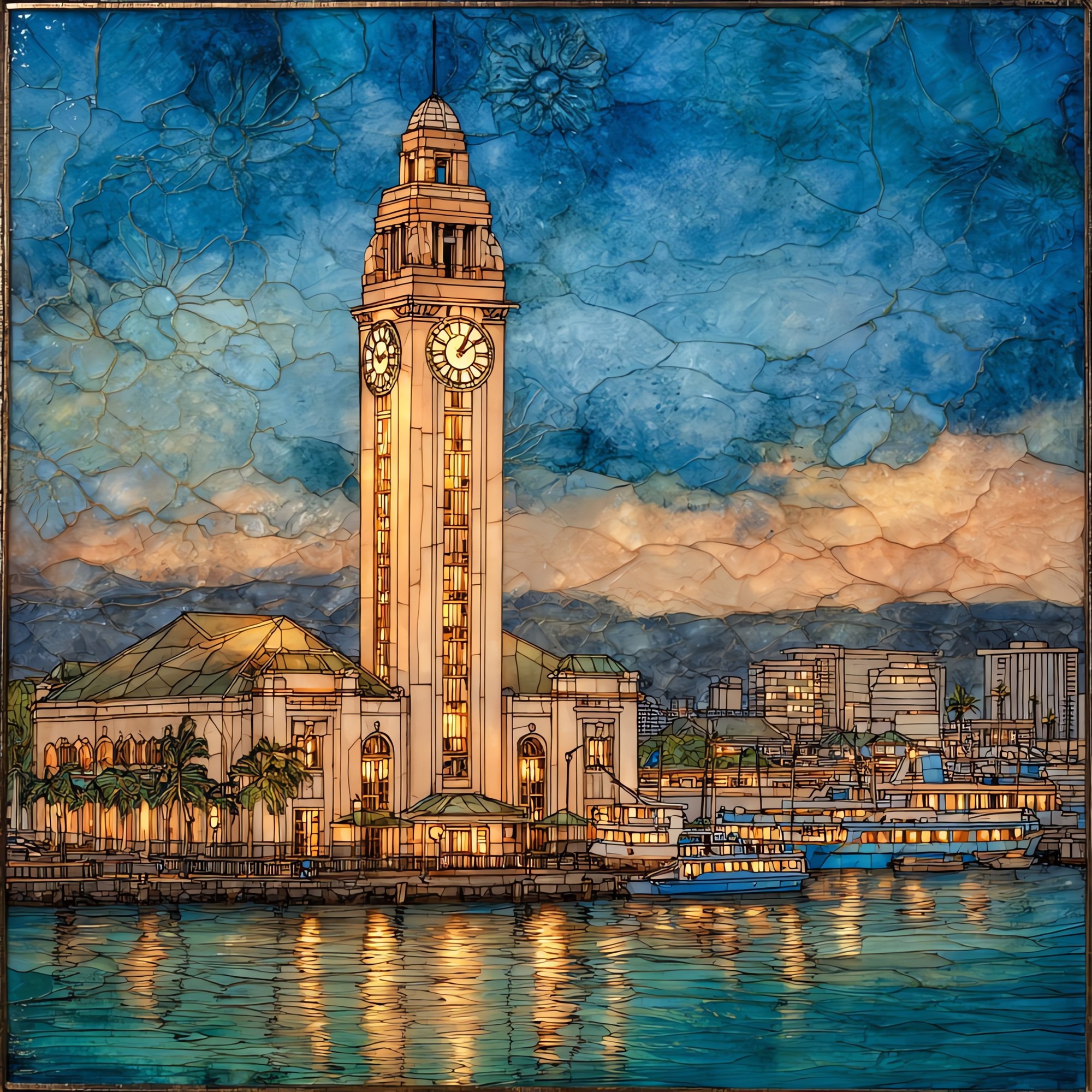
Aloha Tower Oahu Ceramic Art Tile
— the word the harbour wears on all four sides.
Not only on a wall.
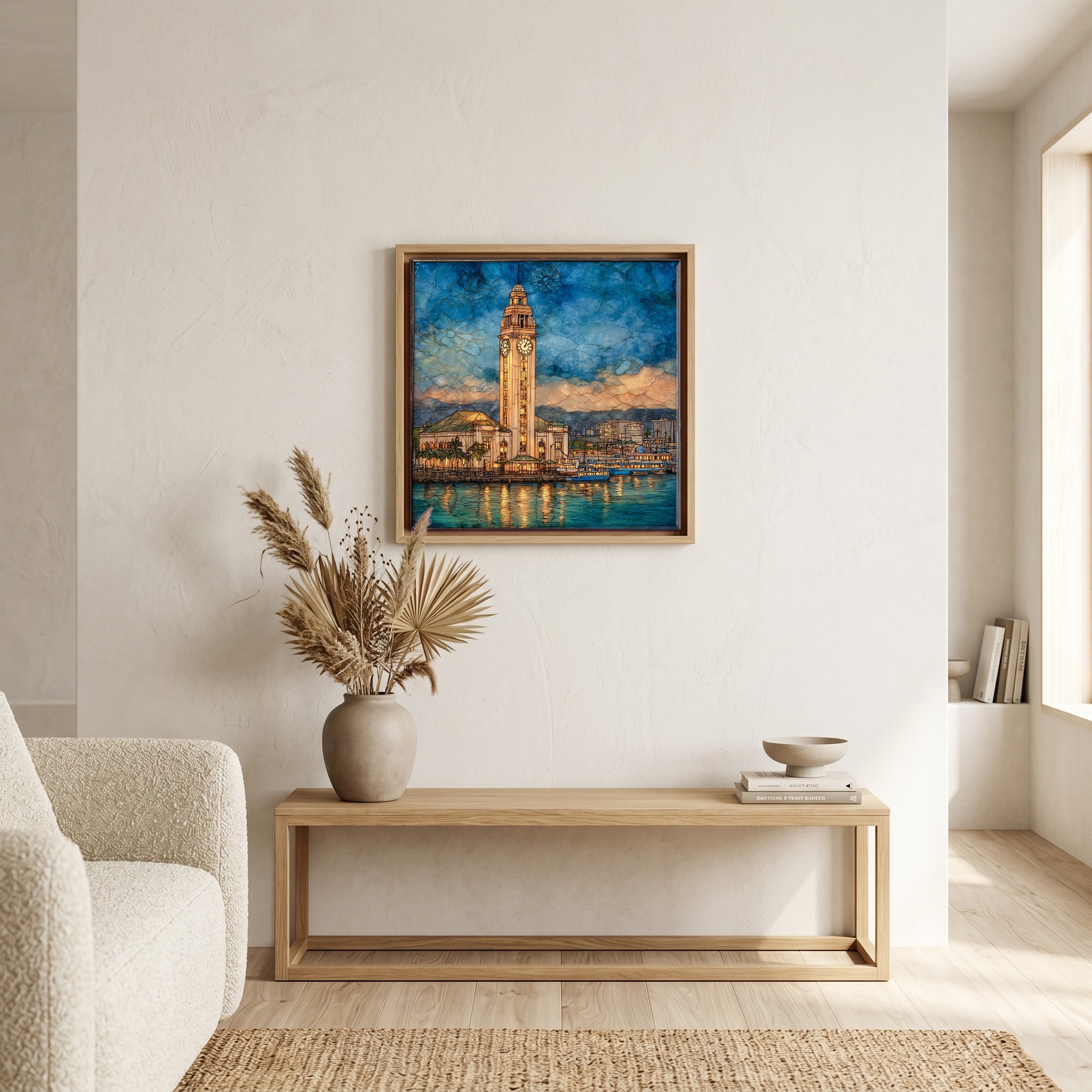
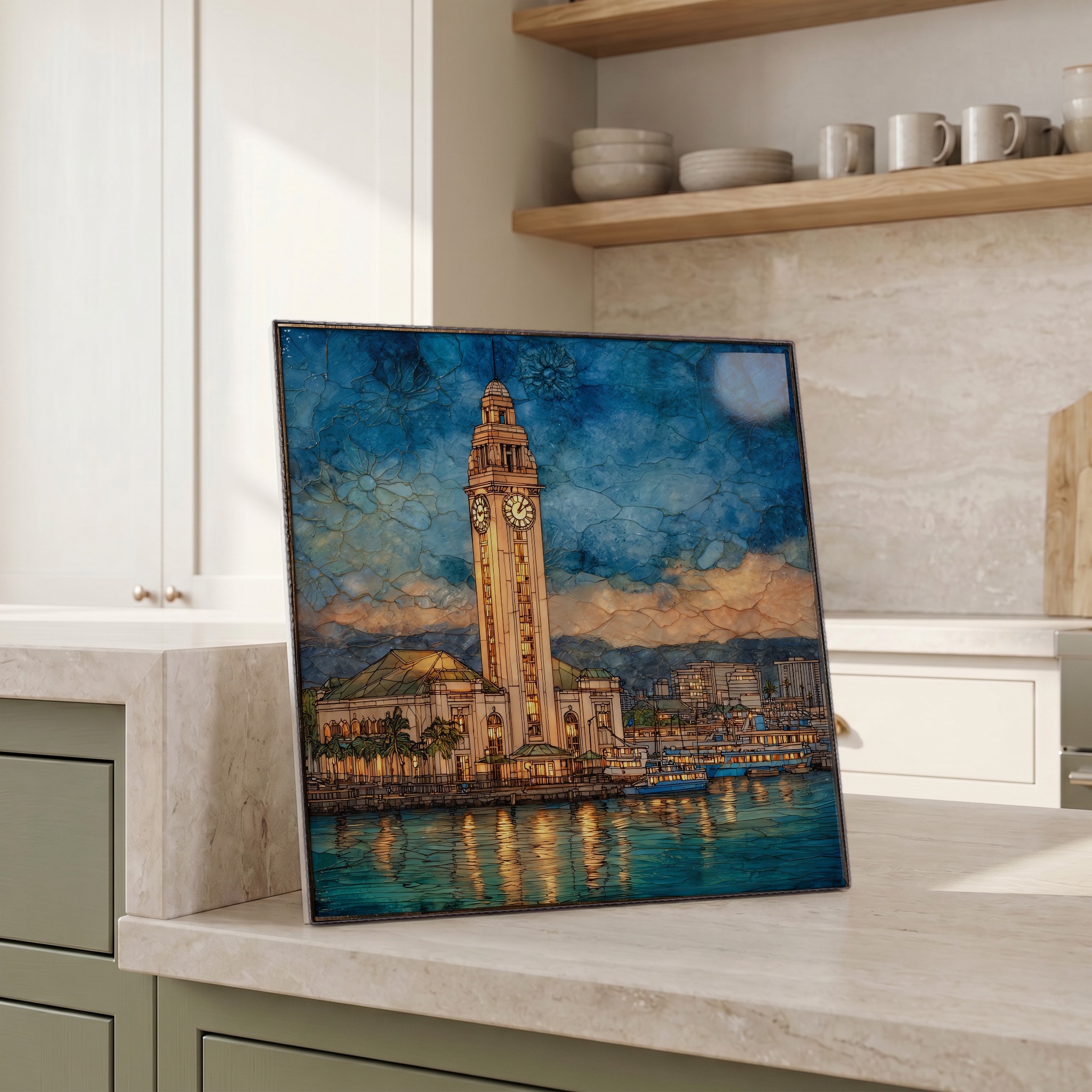
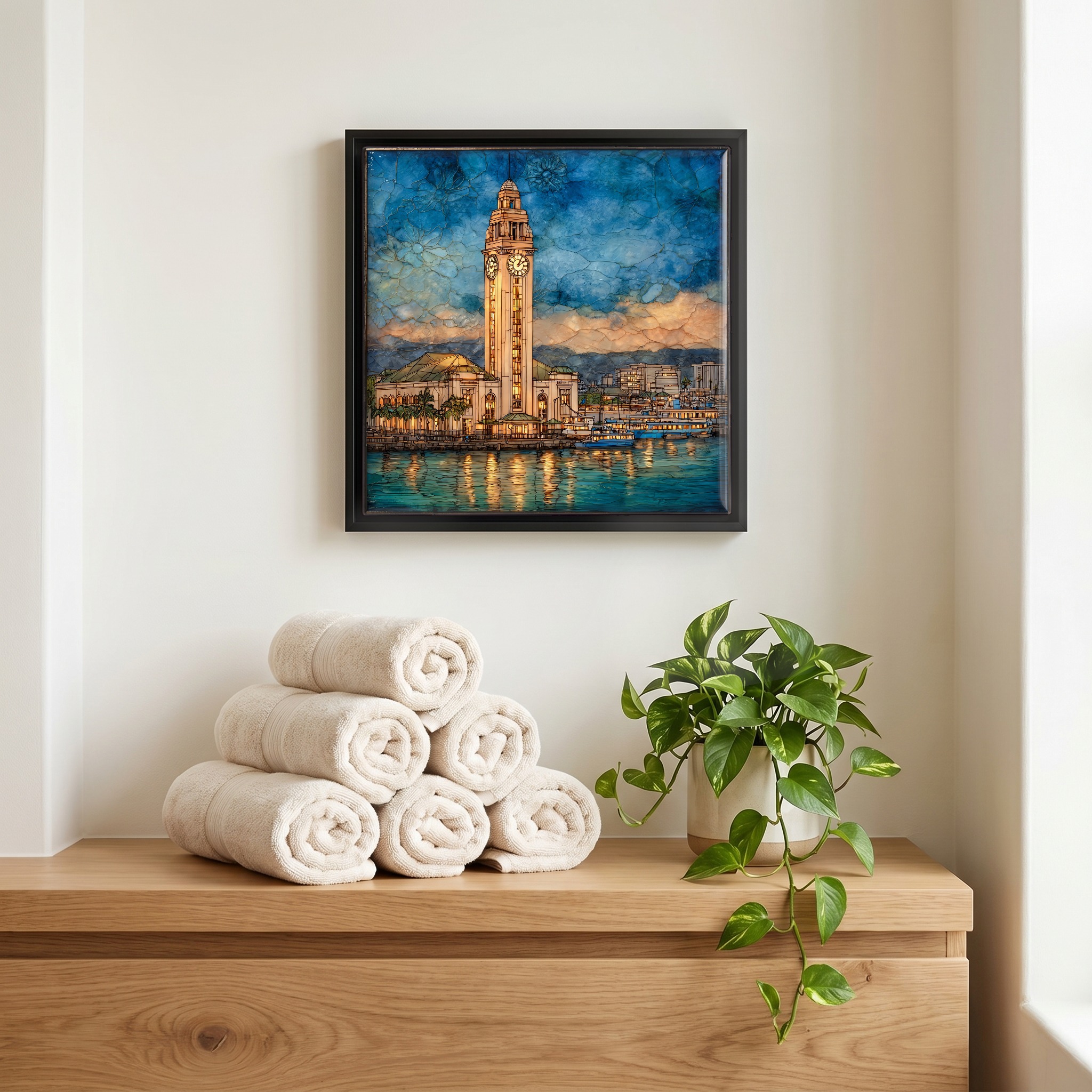
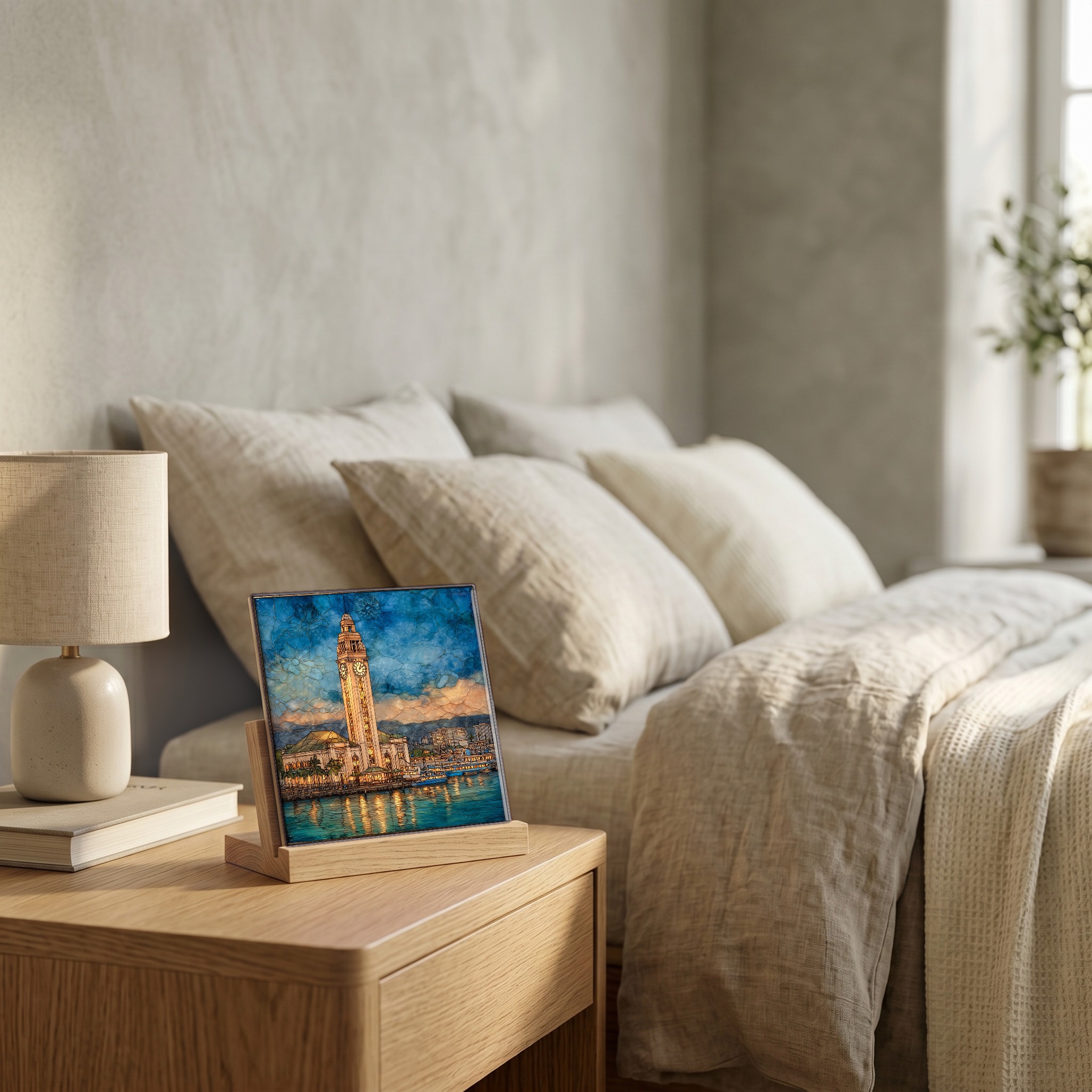
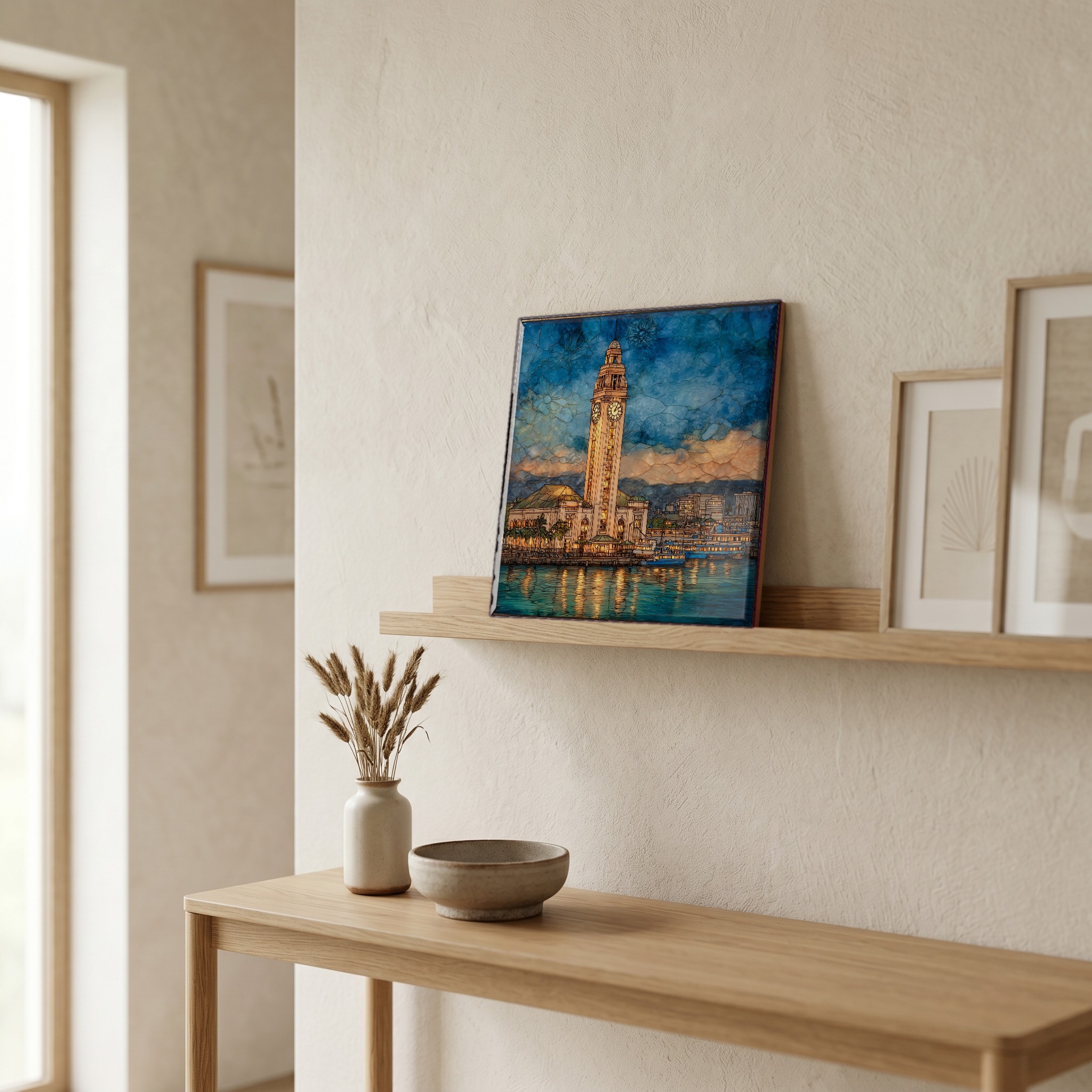
“Ten stories of cream-coloured concrete at the entrance to Honolulu Harbor, with the word ALOHA spelled across all four sides and a four-faced clock that has kept the harbour's time since 1926. For forty years it was the tallest building in Hawaii. Steamships used to tie up at Pier 9 and passengers heard the bells before they saw the city. Cruise ships still come alongside. The observation deck, ten floors up, looks across Sand Island, the green wall of the Koʻolau range, and the runway that quietly replaced the harbour as the door to the islands.
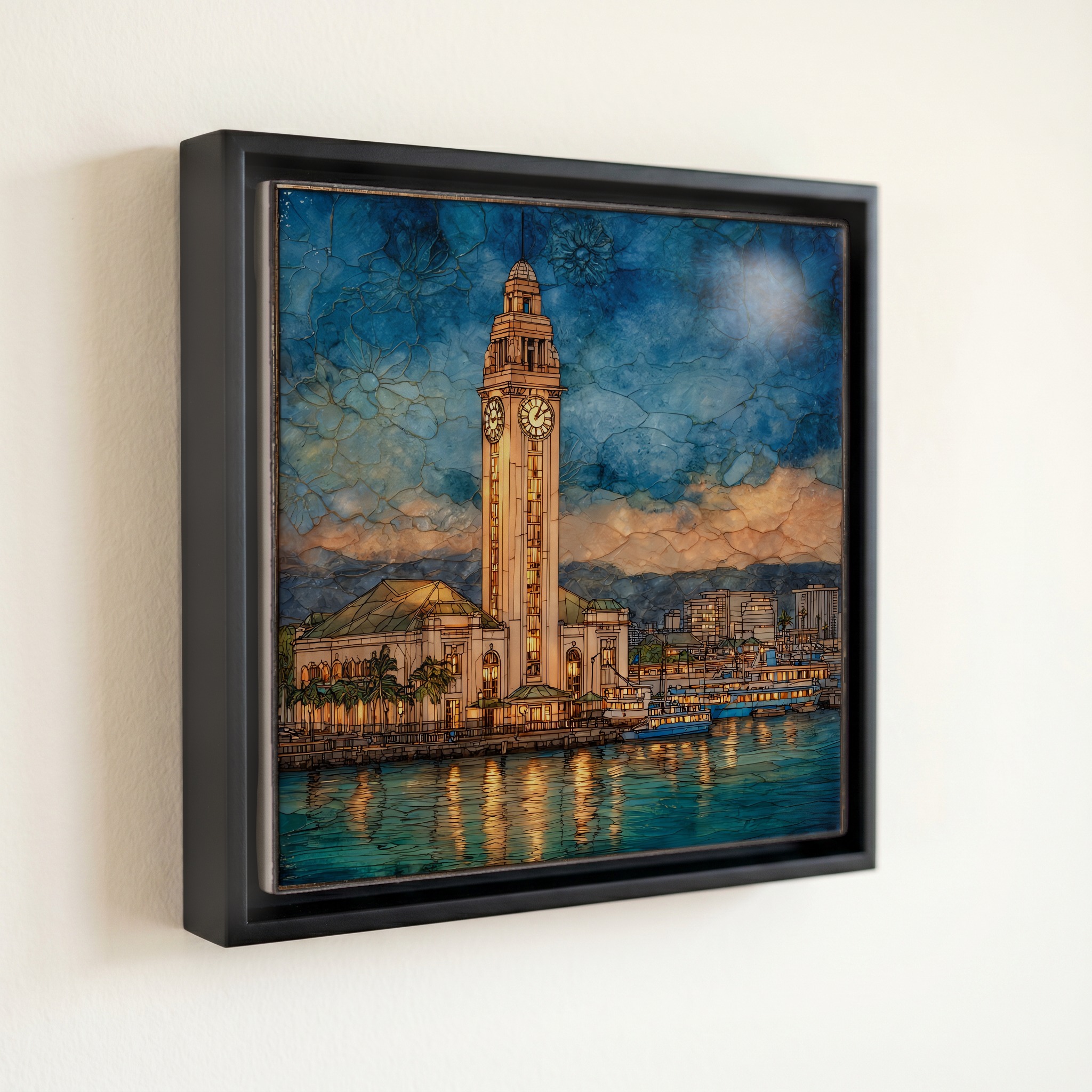
Aloha Tower Oahu Ceramic Art Tile, on ceramic.
Each tile is finished by hand in our Knoxville studio. Artwork is slowly infused into the ceramic surface under high heat and pressure, and rests beneath a thin glossy finish. The colour lives in the surface, not on top of it.
Pick any four 4-inch tiles — National Parks you've been to, a Smokies set, the four seasons of one place. $ for a set of , cork-backed, ready to live on the table.
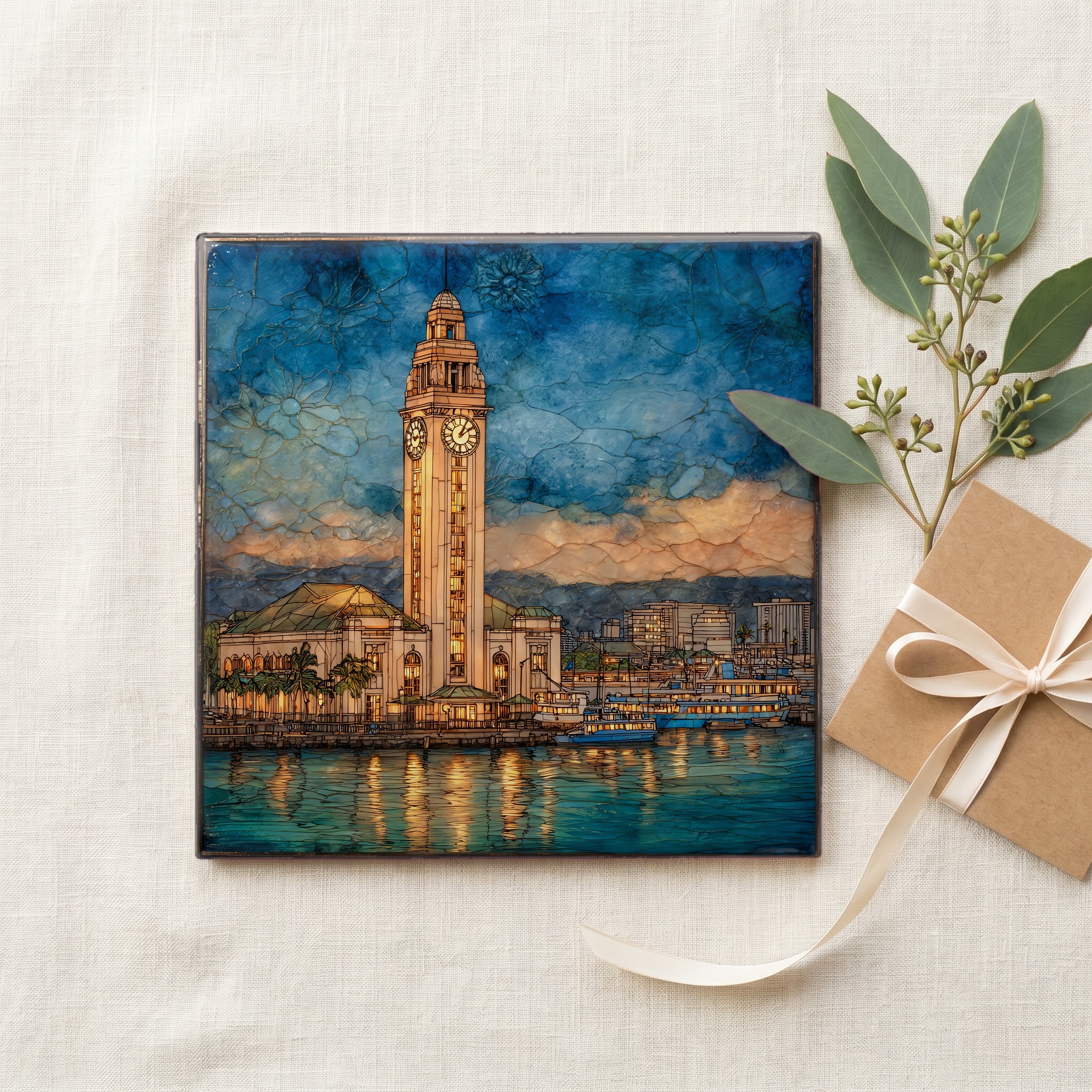
Each tile ships in a kraft box, tied with cream ribbon, with a handwritten note from the studio if you'd like to add one.
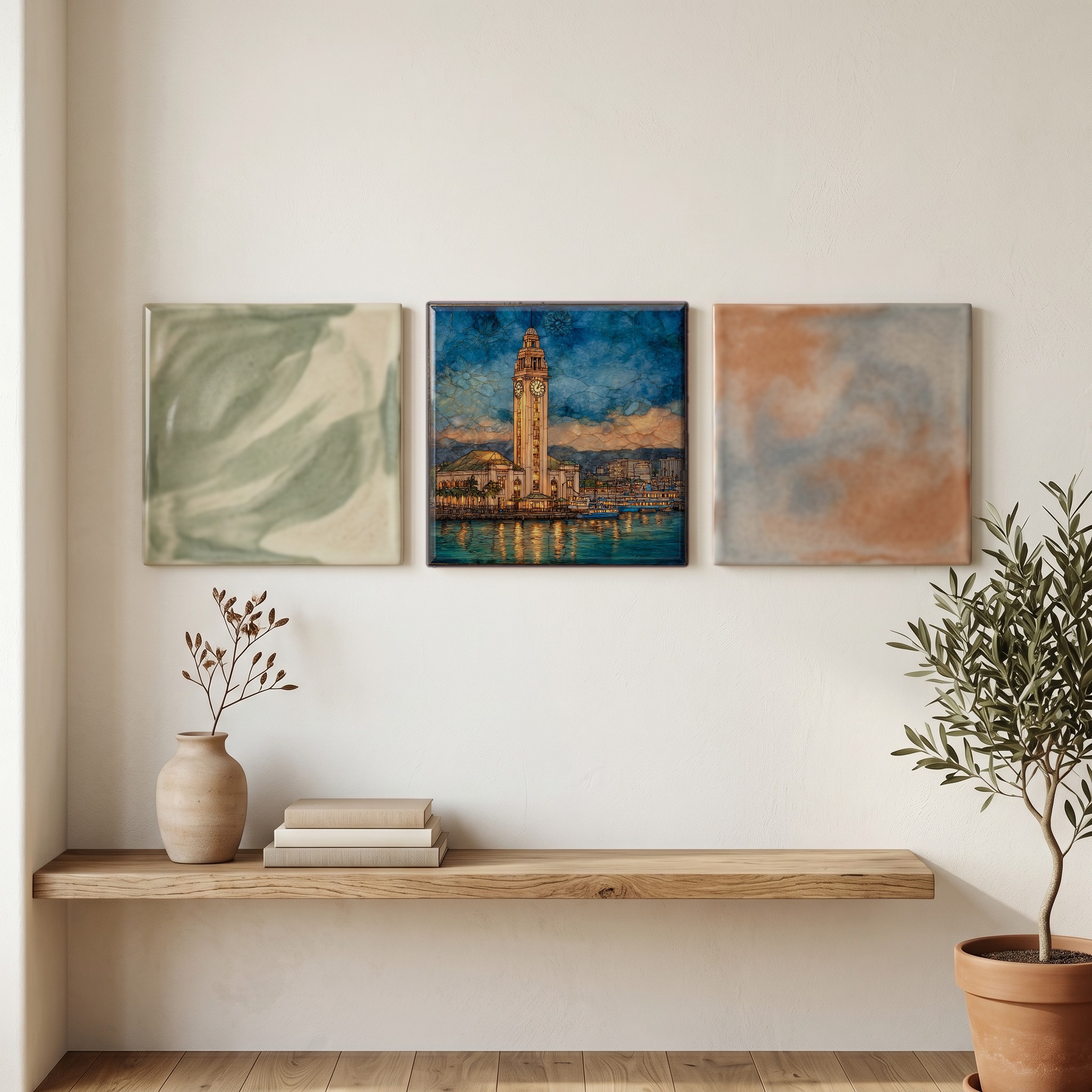
Three or five different vistas, hung together — a chapter of places you've been, or want to go.
The place, in three passes.
Aloha Tower stands at the foot of Bishop Street on Pier 9 of Honolulu Harbor, on the south shore of the island of Oahu. It opened in September 1926 to greet ships at the entrance to Hawaii's busiest port, and for the next forty years it remained the tallest building in the state. The architect, Arthur L. Reynolds, designed the 184-foot reinforced-concrete tower in a Hawaiian Gothic style that takes cues from medieval European campaniles. The U.S. National Park Service added Aloha Tower to the National Register of Historic Places in 1976. The site is now part of the Aloha Tower Marketplace, leased and redeveloped by Hawaii Pacific University since 2014.
The tower is a single reinforced-concrete shaft topped by a four-faced clock at the seventh floor and a working navigation beacon above. The word ALOHA is set into the parapet on each of the four sides, so that whichever direction a ship approached from, the first word readable from the harbour was the Hawaiian greeting for both hello and goodbye. The clocks were among the largest in the United States when they were installed by the Howard Clock Company of Boston, and the lighthouse beacon, originally a fixed-flash light, still keeps watch over the entrance channel. During the Second World War the cream concrete was painted over in olive camouflage for the duration.
The tenth-floor observation deck is open to the public free of charge during daylight hours, reached by a single elevator from the lobby at the base. The view runs east toward Diamond Head, north into the green wall of the Koʻolau range behind downtown, and south across the harbour mouth and Sand Island. Cruise ships still berth alongside the tower at Piers 10 and 11, and the bells ring as each ship pulls in. The surrounding Aloha Tower Marketplace, redeveloped under a Hawaii Pacific University lease since 2014, holds student housing, restaurants, and a small weekend farmers' market.