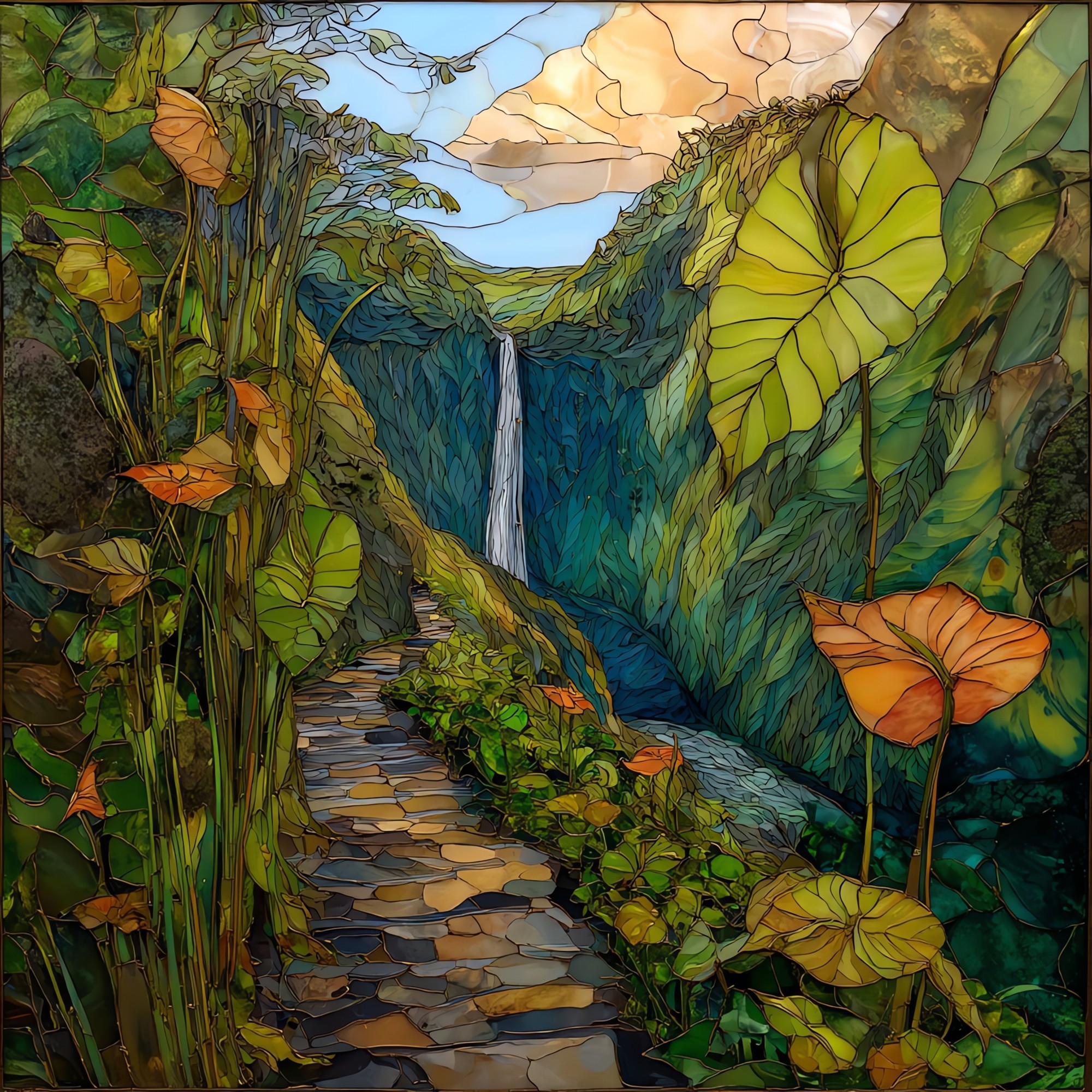
Akaka State Park Trail Big Island Ceramic Art Tile
— — a thread of white through the tree-fern green.
Not only on a wall.

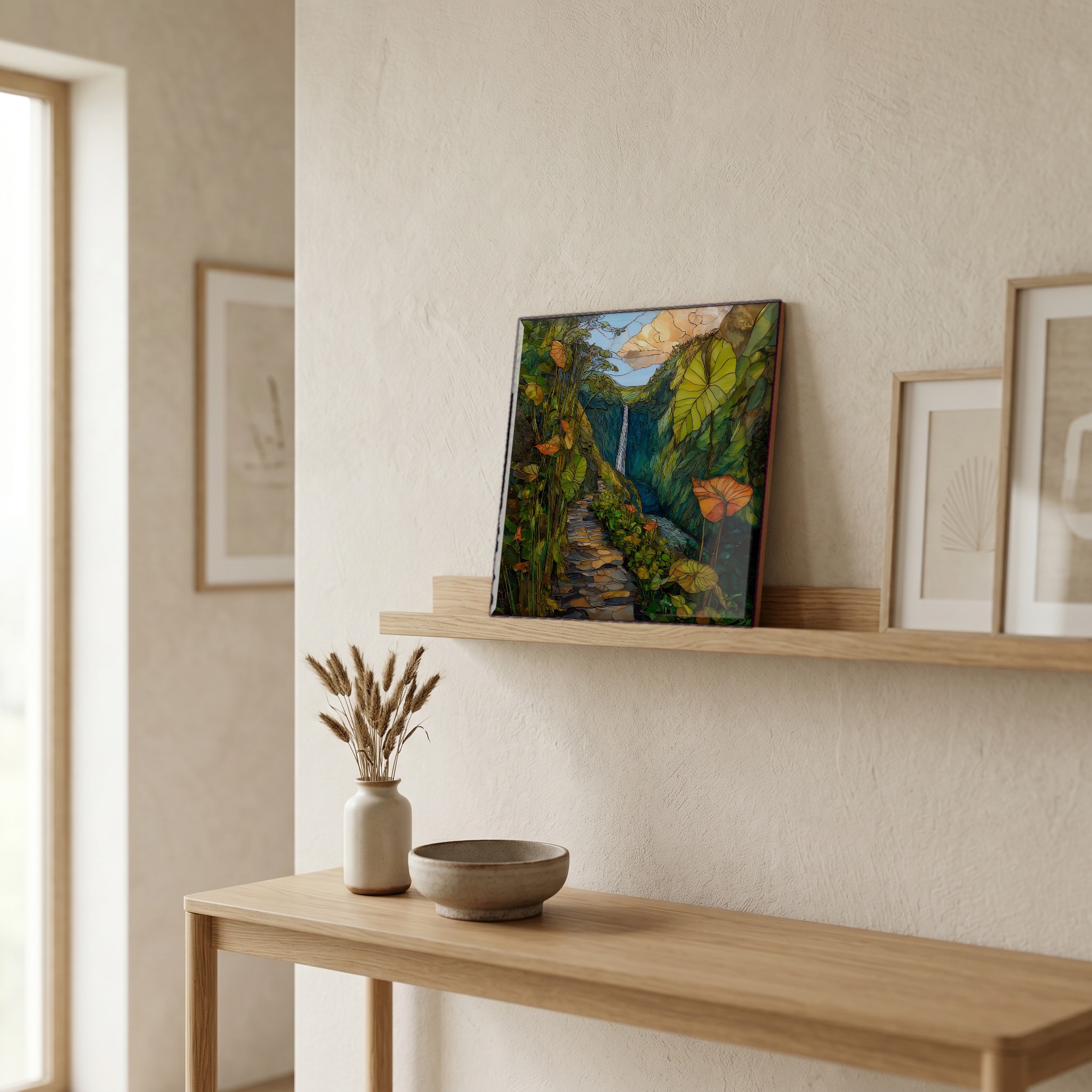
“A 442-foot drop into a rainforest gorge above the Hāmākua Coast, about eleven miles north of Hilo. The loop is paved and under half a mile, threading through hāpuʻu tree ferns and bamboo high enough to close over the path. Kahuna Falls is visible across the gorge, lower and partial through the leaves. Trade winds carry the spray up the slope. Most visitors are off the loop in twenty minutes, but the green stays with you. The water has been finding the same crack down the cliff face since long before the road was paved.
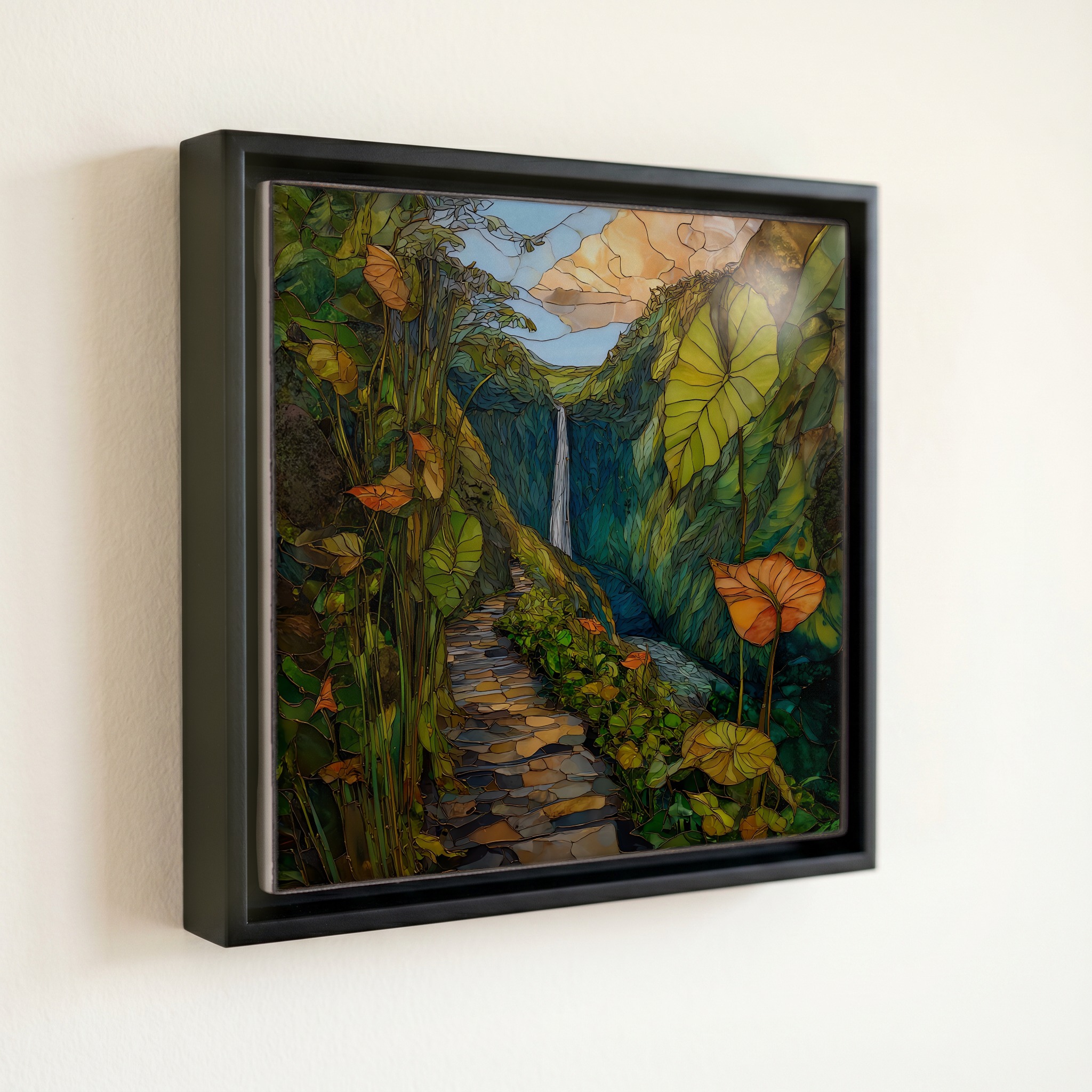
Akaka State Park Trail Big Island Ceramic Art Tile, on ceramic.
Each tile is finished by hand in our Knoxville studio. Artwork is slowly infused into the ceramic surface under high heat and pressure, and rests beneath a thin glossy finish. The colour lives in the surface, not on top of it.
Pick any four 4-inch tiles — National Parks you've been to, a Smokies set, the four seasons of one place. $ for a set of , cork-backed, ready to live on the table.
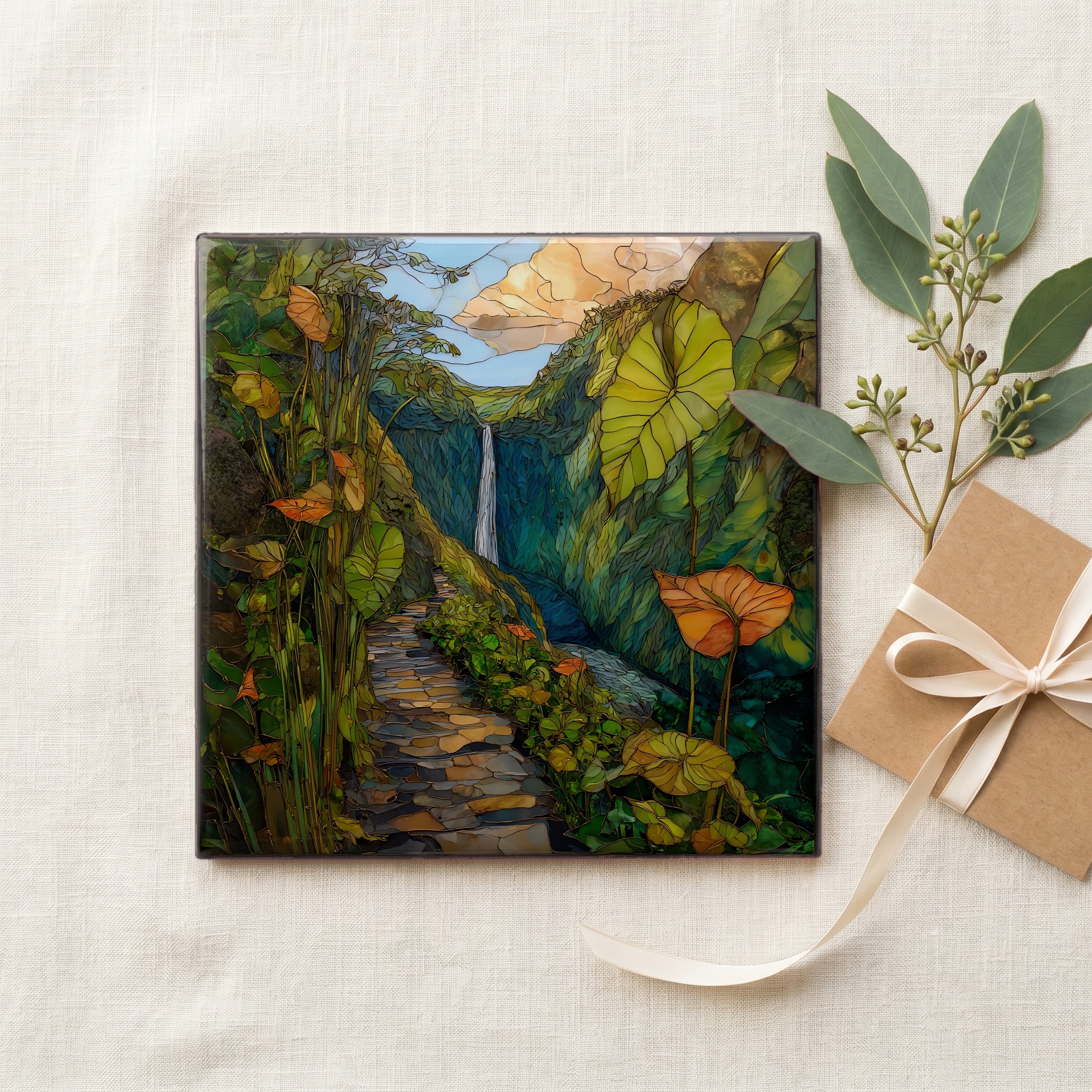
Each tile ships in a kraft box, tied with cream ribbon, with a handwritten note from the studio if you'd like to add one.
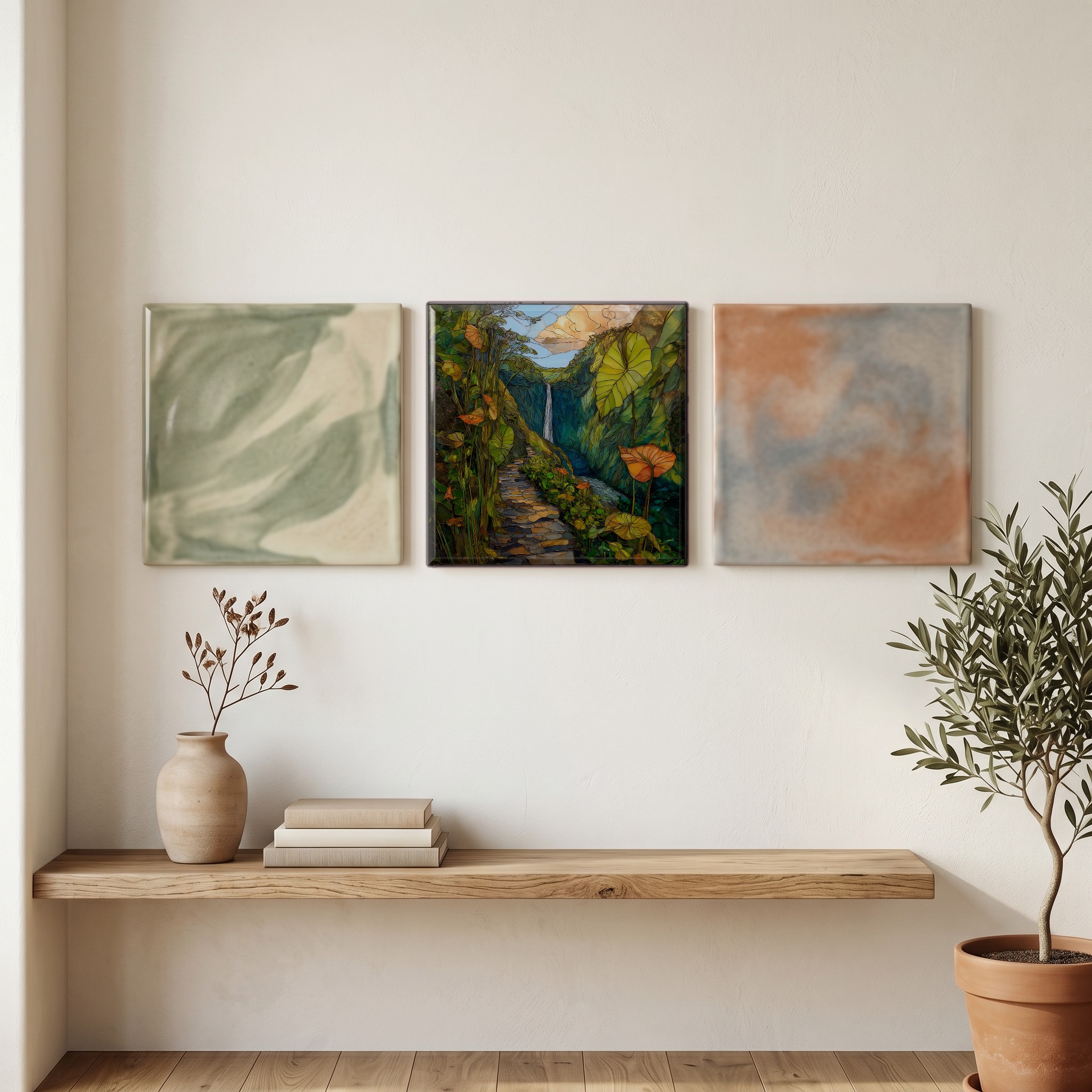
Three or five different vistas, hung together — a chapter of places you've been, or want to go.
The place, in three passes.
ʻAkaka Falls State Park sits on the Hāmākua Coast of Hawaiʻi Island, about eleven miles north of Hilo and a short climb inland from the plantation village of Honomū. The falls drop 442 feet from a basalt cliff cut by Kolekole Stream, which continues another four miles to the sea at Kolekole Beach Park. The park is managed by the Hawaiʻi State Parks Division and is reached by a turn off Highway 19 and a steep climb on Highway 220. The surrounding lowland rainforest is a remnant of the windward forests that once covered the eastern slope of Mauna Kea, the dormant shield volcano whose summit at 13,803 feet stands roughly twenty miles to the west.
At 442 feet (135 metres) ʻAkaka Falls is among the tallest single-drop waterfalls accessible by trail in Hawaiʻi. Kolekole Stream gathers from rainfall on the windward slope of Mauna Kea, where annual precipitation often exceeds 120 inches, and falls free of the cliff in one long unbroken thread. Volume swells in the wet season from November through March and softens in summer, but the falls run in every season. Across the same gorge, Kahuna Falls drops in two tiers and is partly screened by canopy. The basalt the water carves through belongs to the Hāmākua Volcanics, the lava series that built this side of Hawaiʻi Island roughly 200,000 to 400,000 years ago.
The loop trail is paved and about 0.4 miles, with a few sets of steps and a steady mild climb. The park is open daily during daylight hours and charges a modest entrance fee for non-residents, with a per-person fee for walk-ins and a higher per-vehicle fee for cars; Hawaiʻi residents enter without charge. Most visitors complete the loop in twenty to thirty minutes. The path passes through hāpuʻu tree ferns, philodendron, heliconia, and tall stands of golden bamboo planted during the old plantation era. The platform faces ʻAkaka Falls directly across the gorge, with Kahuna Falls visible to the left through the canopy. Honomū village, a short drive back toward the coast, holds a few bakeries and small shops along the old plantation main street.