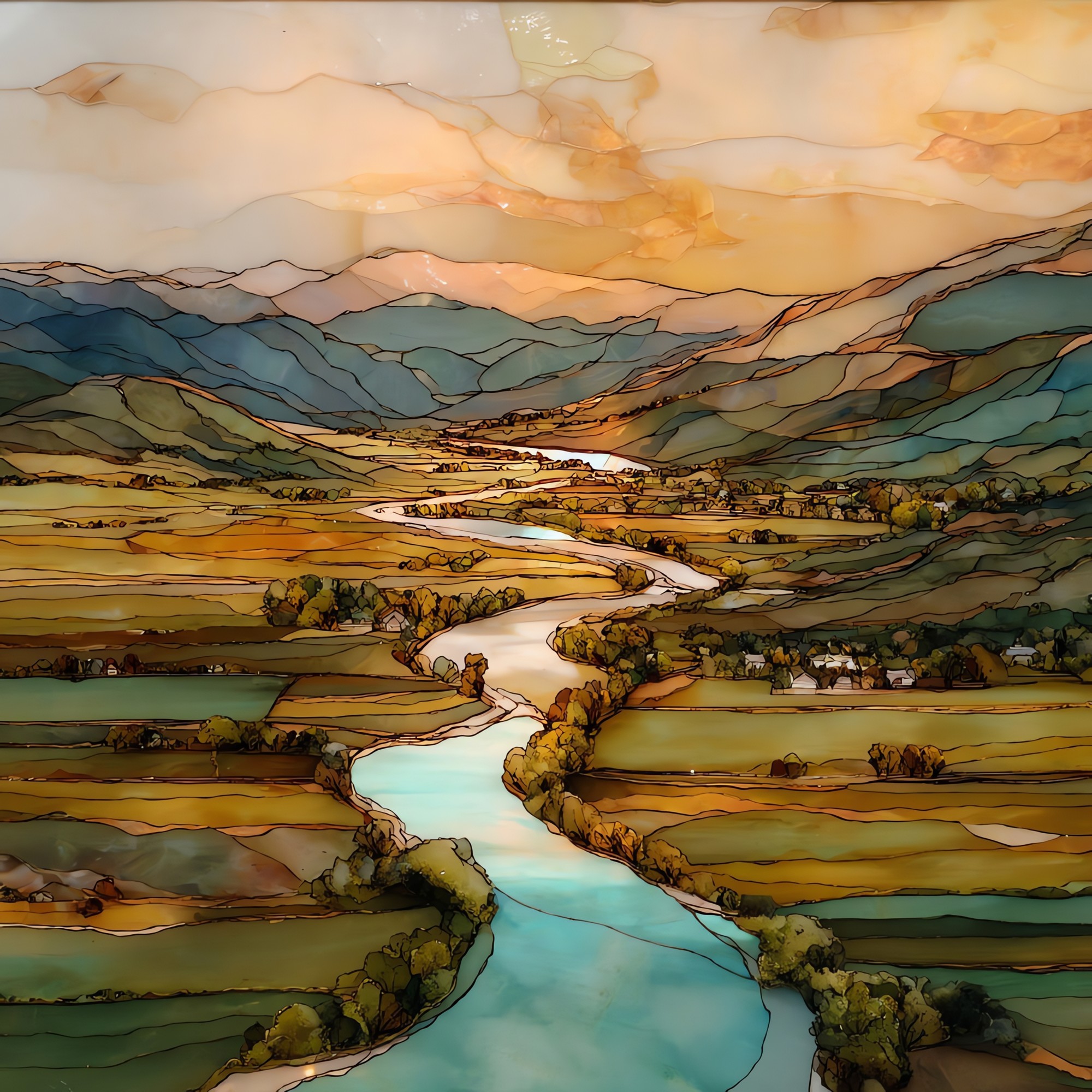
Yampa River through Steamboat Yampa Valley Ceramic Art Tile
— the river the dams never reached.
Not only on a wall.

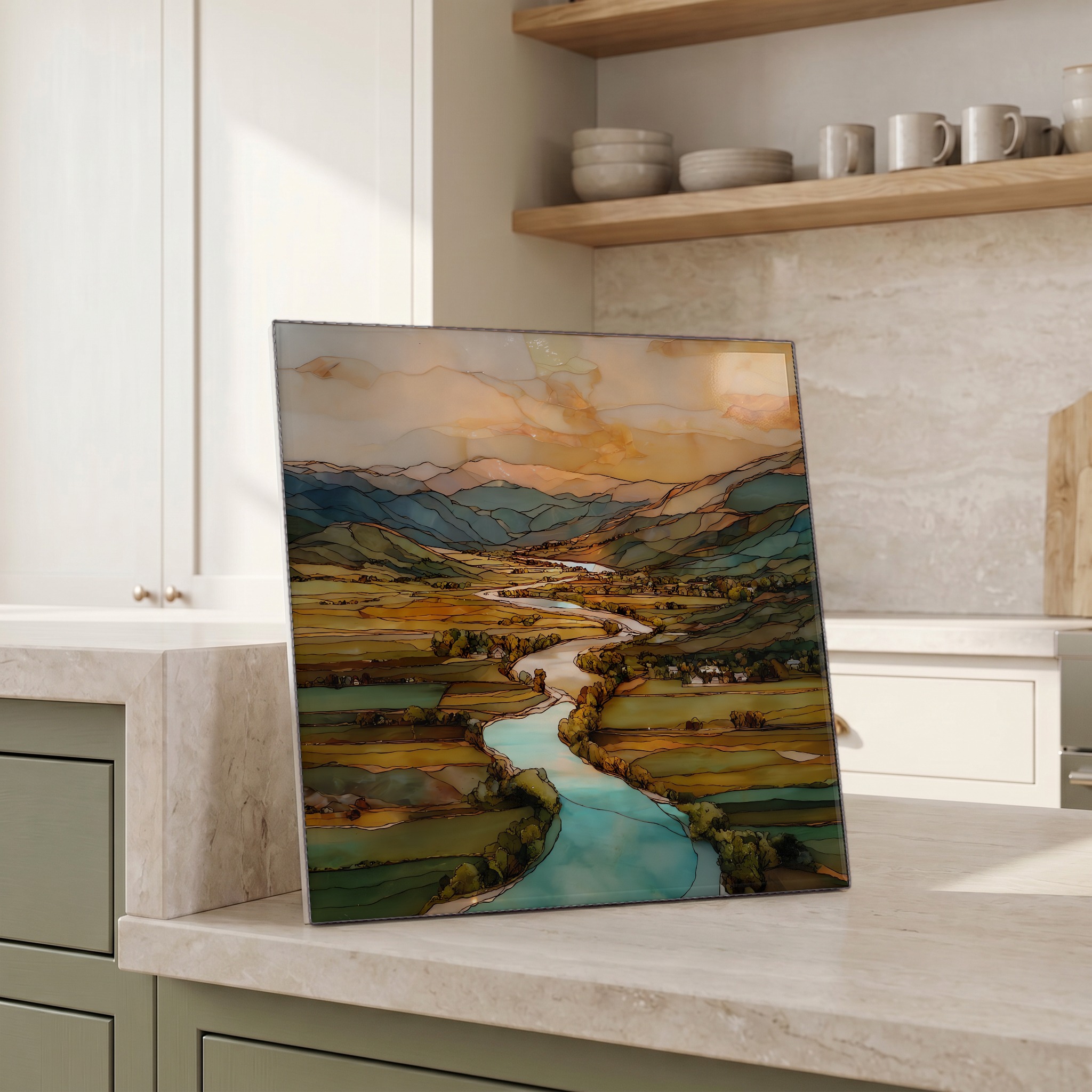



“A river that runs through the middle of a town. The Yampa bends west through downtown Steamboat with no large dam to slow it, the last river of its size on the Colorado system to keep its own hours. The Core Trail follows it for about seven miles past benches and bridges and the old jump hill. In late May the runoff arrives loud enough to hear from the sidewalk. In October the cottonwoods turn the colour of old brass.
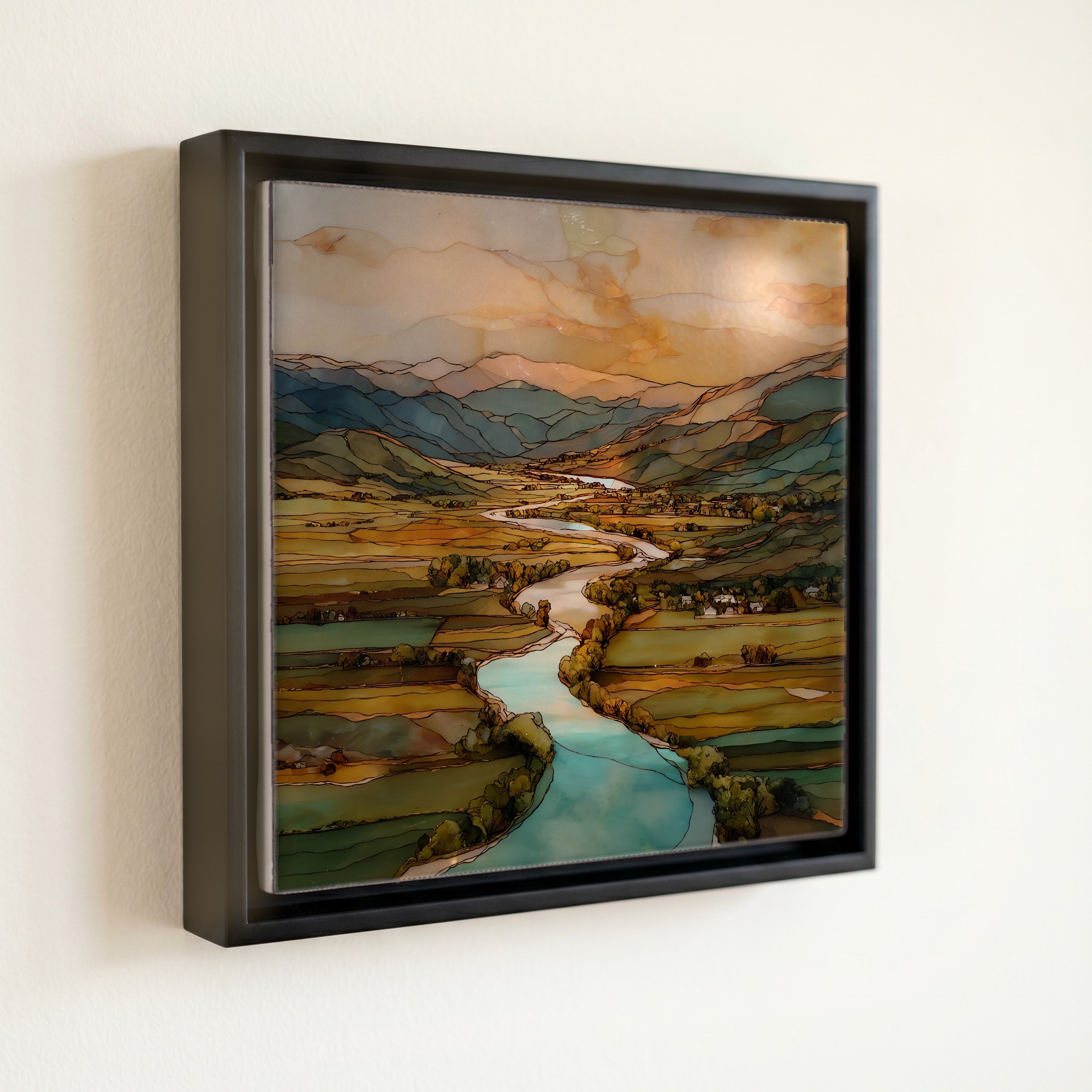
Yampa River through Steamboat Yampa Valley Ceramic Art Tile, on ceramic.
Each tile is finished by hand in our Knoxville studio. Artwork is slowly infused into the ceramic surface under high heat and pressure, and rests beneath a thin glossy finish. The colour lives in the surface, not on top of it.
Pick any four 4-inch tiles — National Parks you've been to, a Smokies set, the four seasons of one place. $ for a set of , cork-backed, ready to live on the table.
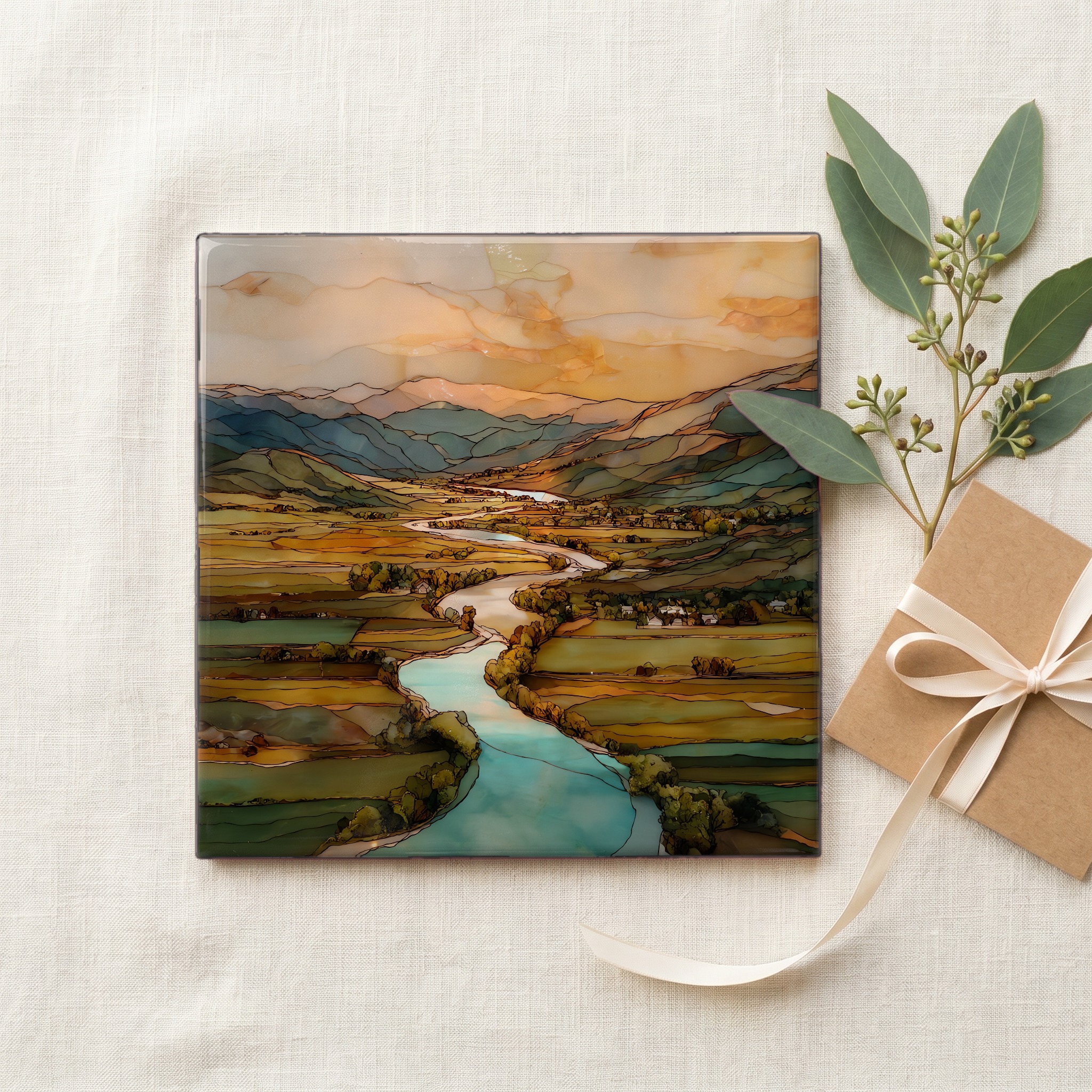
Each tile ships in a kraft box, tied with cream ribbon, with a handwritten note from the studio if you'd like to add one.

Three or five different vistas, hung together — a chapter of places you've been, or want to go.
The place, in three passes.
The Yampa River rises in the Park Range of Routt County, Colorado, formed by the meeting of the Bear River and Phillips Creek near the small town of Yampa. It flows about 250 miles through the northwestern corner of the state, bending sharply west through Steamboat Springs at 6,867 feet, then on through the sagebrush plateau of Routt and Moffat counties before meeting the Green River at Echo Park inside Dinosaur National Monument, about five miles from the Utah border. Its drainage covers roughly 7,660 square miles. Steamboat Springs took its name from a chugging mineral spring on the river bank, mistaken in the 1860s by trappers for the sound of an approaching steamboat.
The Yampa is the only major tributary of the Colorado River with no large dam on its main stem, and it carries the most natural hydrograph in the upper basin. Flow runs high in late May when the snowpack from the Flat Tops and the Park Range comes off the mountains, low and clear by August. Average flow at the mouth is about 2,154 cubic feet per second, with a recorded peak of 33,200 in the snowmelt of May 1984. The free flow regime is what keeps native fish here that have largely vanished from dammed reaches downstream, including the Colorado pikeminnow and the humpback chub.
Late May into mid-June is when the Yampa is loudest. The snowmelt rises fast and the in-town wave at Charlie's Hole, named for local kayaker Charlie Beavers, runs with paddlers most afternoons. By late June the flow has dropped enough to put a tube in above town and float through the middle of Steamboat, a ritual that holds through July and August. October turns the cottonwoods along the banks a held gold for about two weeks. Bald eagles winter on the lower river through Cross Mountain Canyon, fishing the ice-free riffles. The Yampa River Core Trail runs about seven miles along the water through Steamboat and is open in every season.