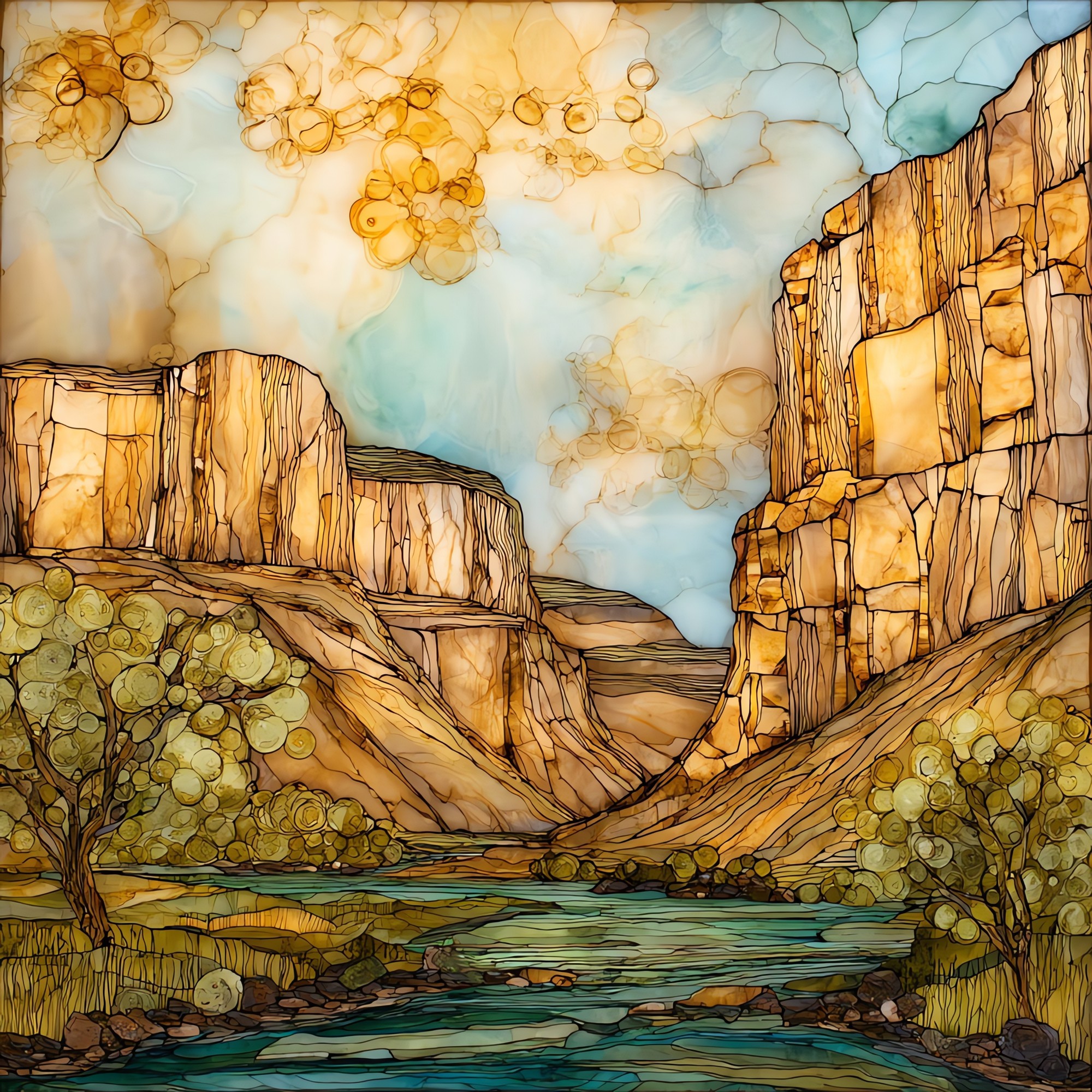
Vogel Canyon Ceramic Art Tile
— the green seam in the shortgrass.
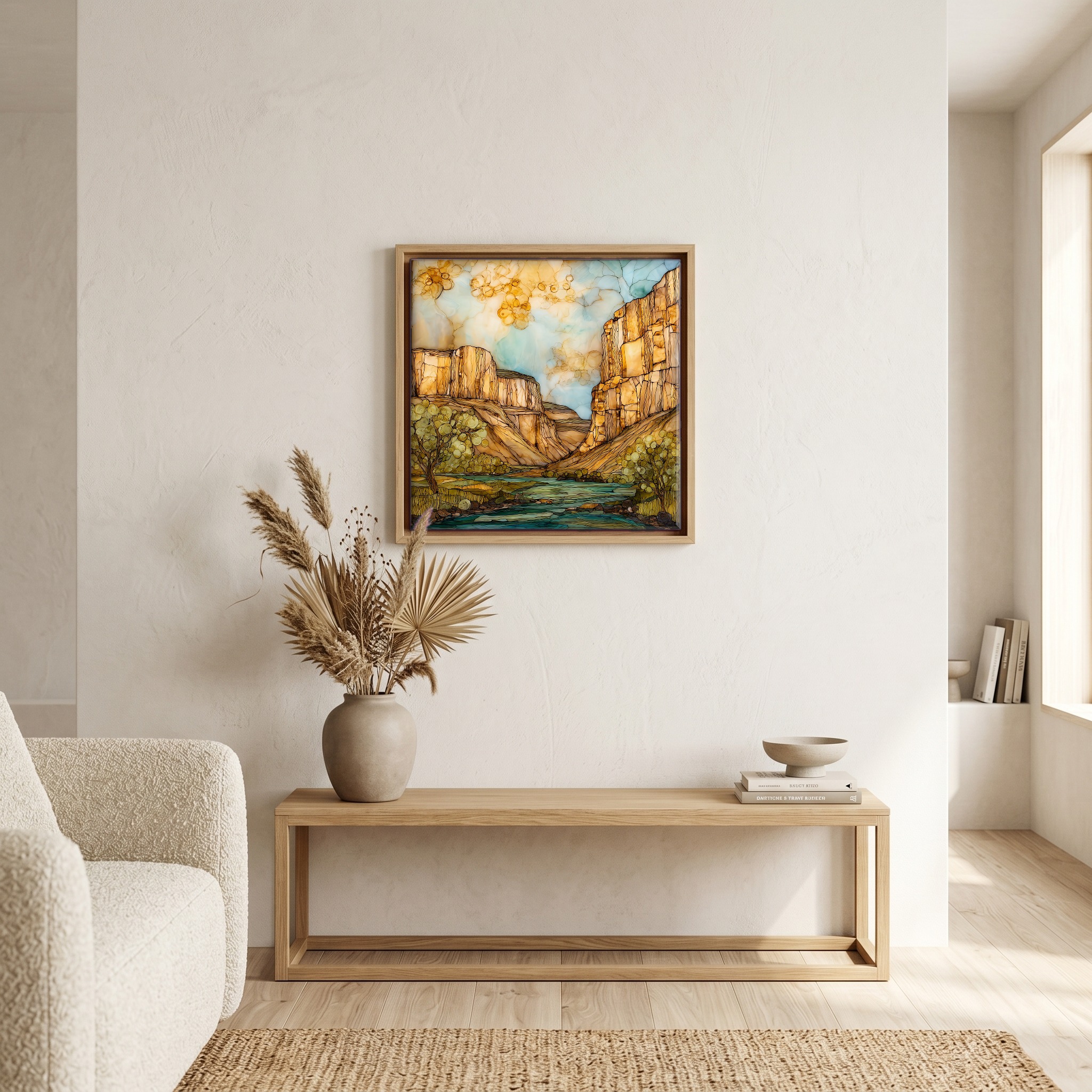
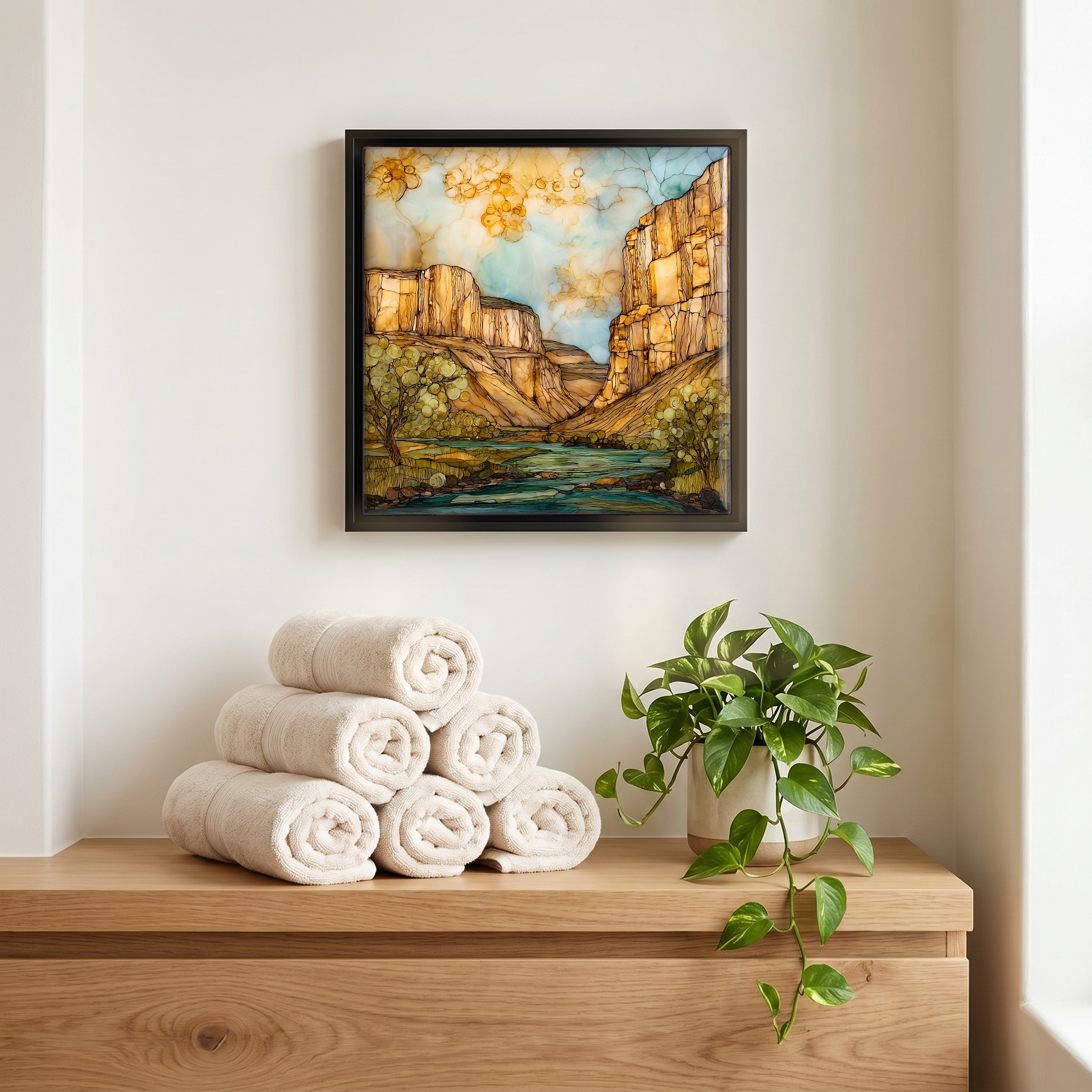
Not only on a wall.

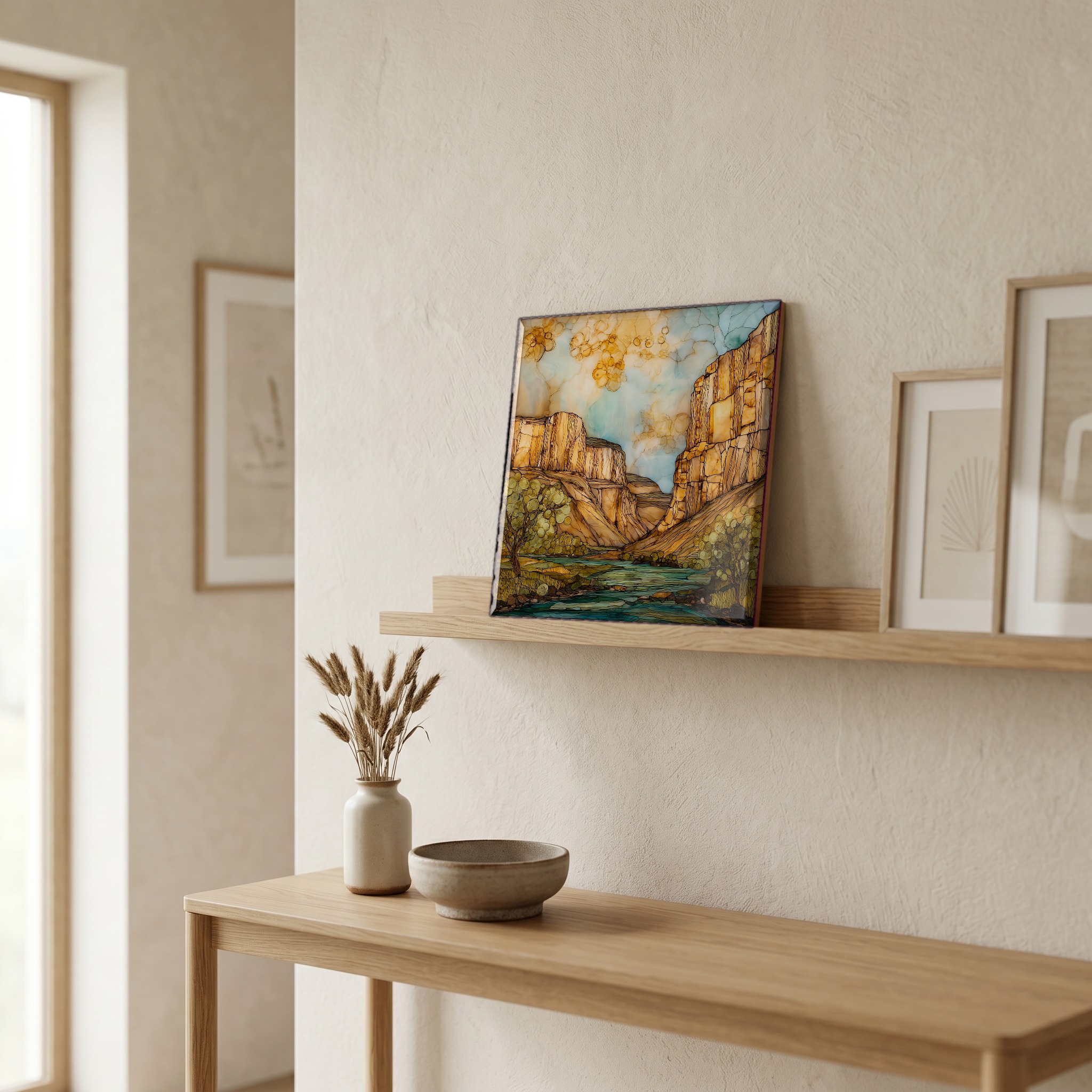
“Thirteen miles south of La Junta, the shortgrass prairie cracks open and a sandstone canyon drops away into shade. The Purgatoire River cut this seam through soft rock; springs still hold the floor of it. On the cliff walls, hands from eight hundred years ago left figures and shapes a person can still read. The ruins of an 1870s stagecoach stop sit further down the canyon road, and the stone walls of a Depression-era homestead stand on the rim where the prairie picks up again. Most days nobody walks the loop. The owls keep the cottonwoods to themselves.
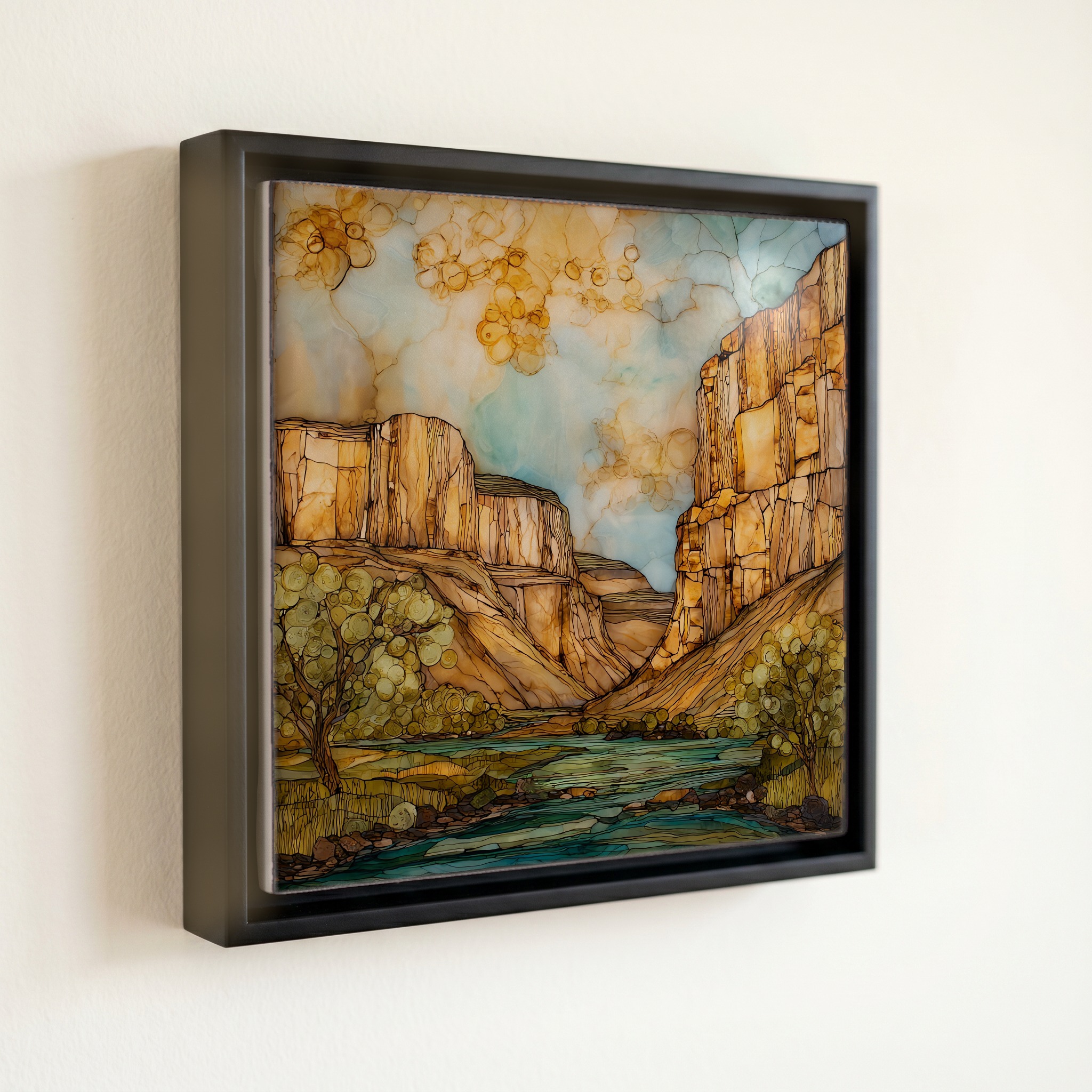
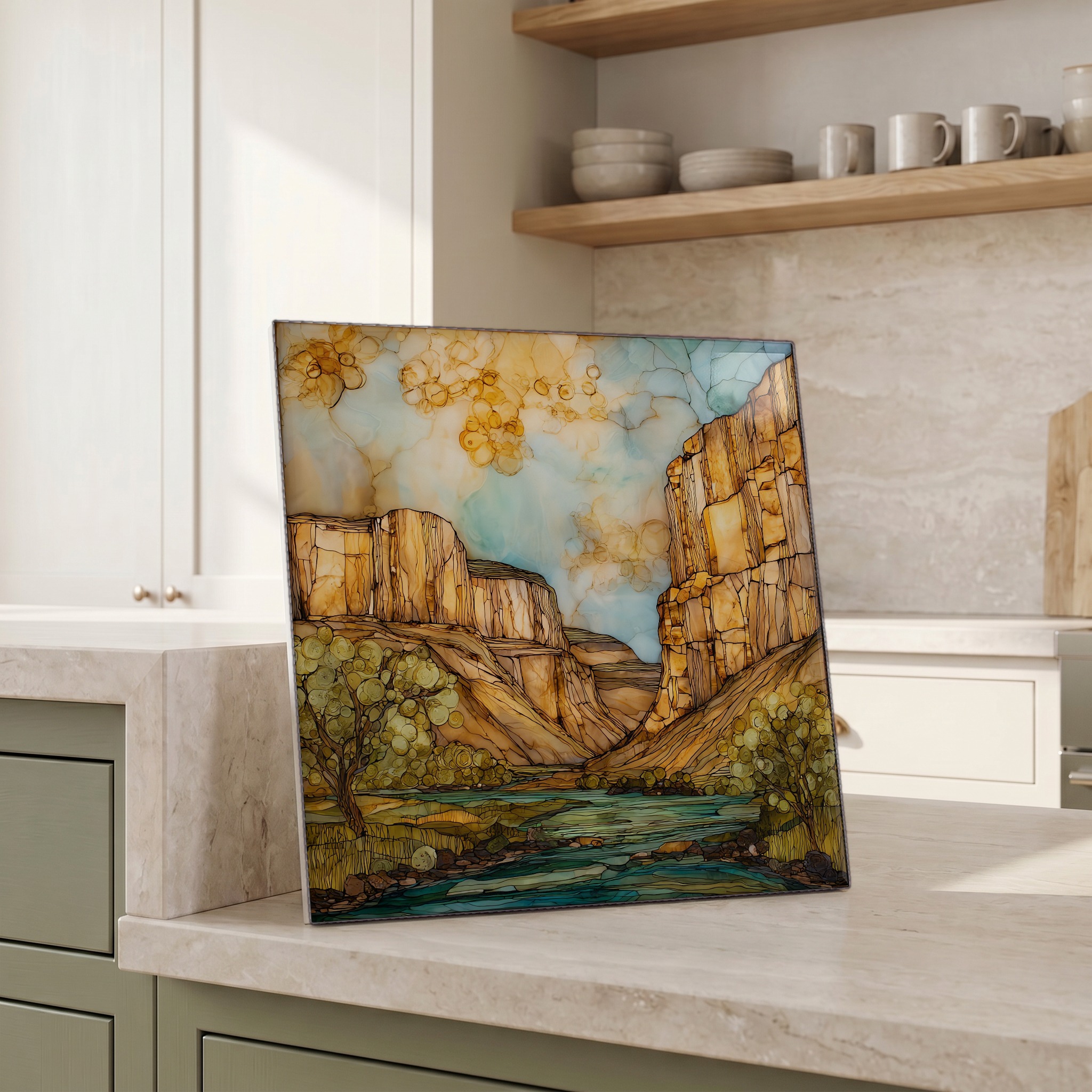
Vogel Canyon Ceramic Art Tile, on ceramic.
Each tile is finished by hand in our Knoxville studio. Artwork is slowly infused into the ceramic surface under high heat and pressure, and rests beneath a thin glossy finish. The colour lives in the surface, not on top of it.
Pick any four 4-inch tiles — National Parks you've been to, a Smokies set, the four seasons of one place. $ for a set of , cork-backed, ready to live on the table.
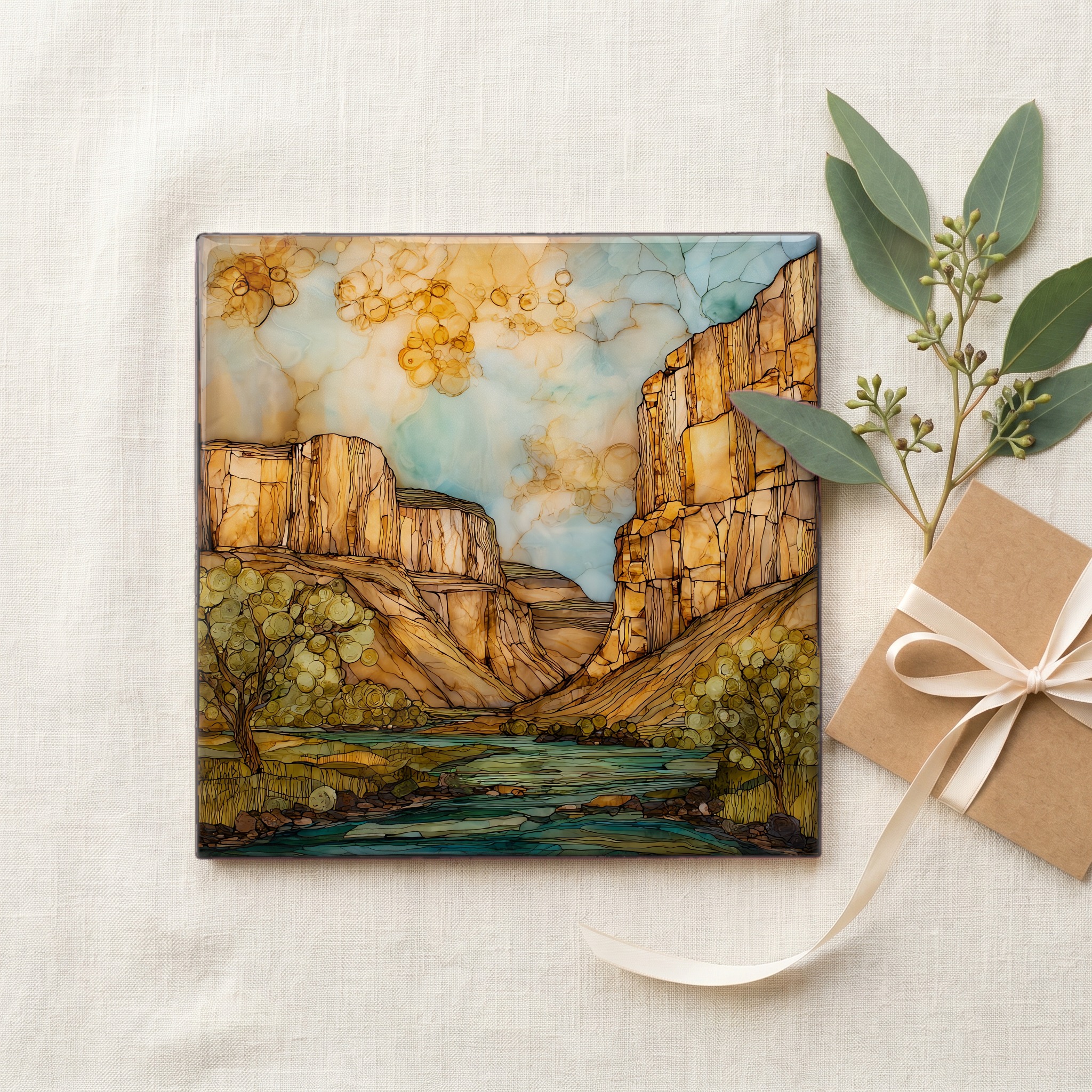
Each tile ships in a kraft box, tied with cream ribbon, with a handwritten note from the studio if you'd like to add one.
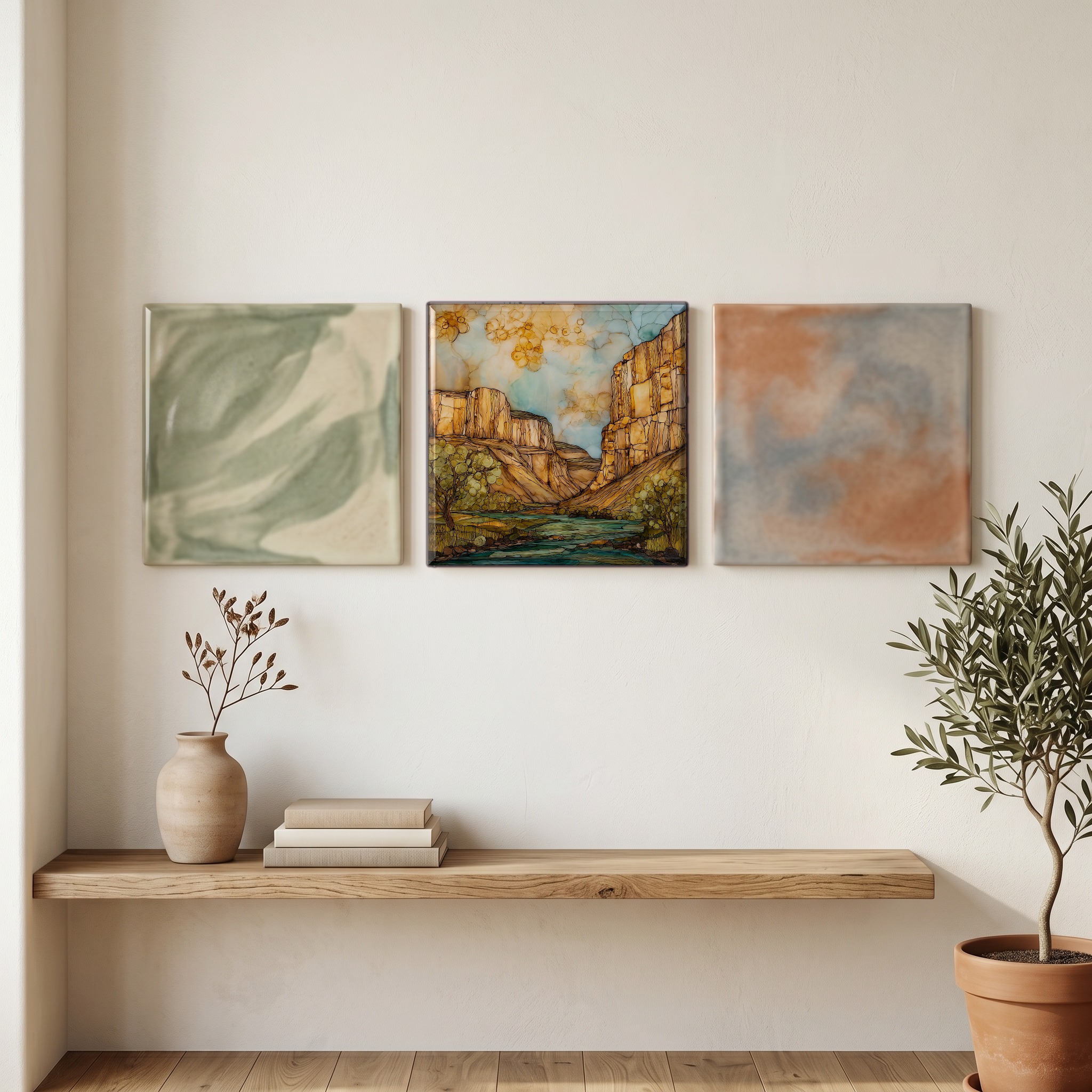
Three or five different vistas, hung together — a chapter of places you've been, or want to go.
The place, in three passes.
Vogel Canyon sits on the Timpas Unit of the Comanche National Grassland in Otero County, Colorado, about thirteen miles south of La Junta on the Santa Fe Trail Scenic and Historic Byway. The Purgatoire River cut the canyon through layers of Dakota sandstone, leaving a floor near 4,213 feet (1,284 m) below mesa rims at 4,386 feet (1,337 m). Four short trails (Overlook, Canyon, Prairie, and Mesa) connect the picnic area to the canyon floor; the Overlook is a one-mile loop and wheelchair accessible. The Forest Service keeps the site open year-round for day use, with no entrance fee.
The canyon walls carry petroglyphs left by Native American groups who used the canyon between roughly three hundred and eight hundred years ago. Figures, shapes, and animals are scored into the soft sandstone, with interpretive panels along the trail. Further down the canyon floor stands the rock shell of a Barlow and Sanderson stagecoach stop, in service from 1872 to 1876 on a spur of the Santa Fe Trail. Up on the rim, the stone walls of the Westbrook homestead, settled during the Great Depression, still hold their corners. Three eras of hands worked the same stone.
There is no entrance fee, and the picnic area is open year-round for day use only; overnight camping is prohibited. Four short trails ring the canyon: the Overlook (a one-mile loop, wheelchair accessible), the Canyon at 1.75 miles round-trip, the Mesa at 2.25 miles, and the Prairie at 3 miles. Spring brings the wildflower bloom; jackrabbits, pronghorn, great horned owls, and coyotes water at the canyon springs in early morning and at dusk. The springs are not safe to drink. The closest town is La Junta, thirteen miles north on Highway 109. Contact the Timpas Unit at 719-384-2181.