Wender·Vista
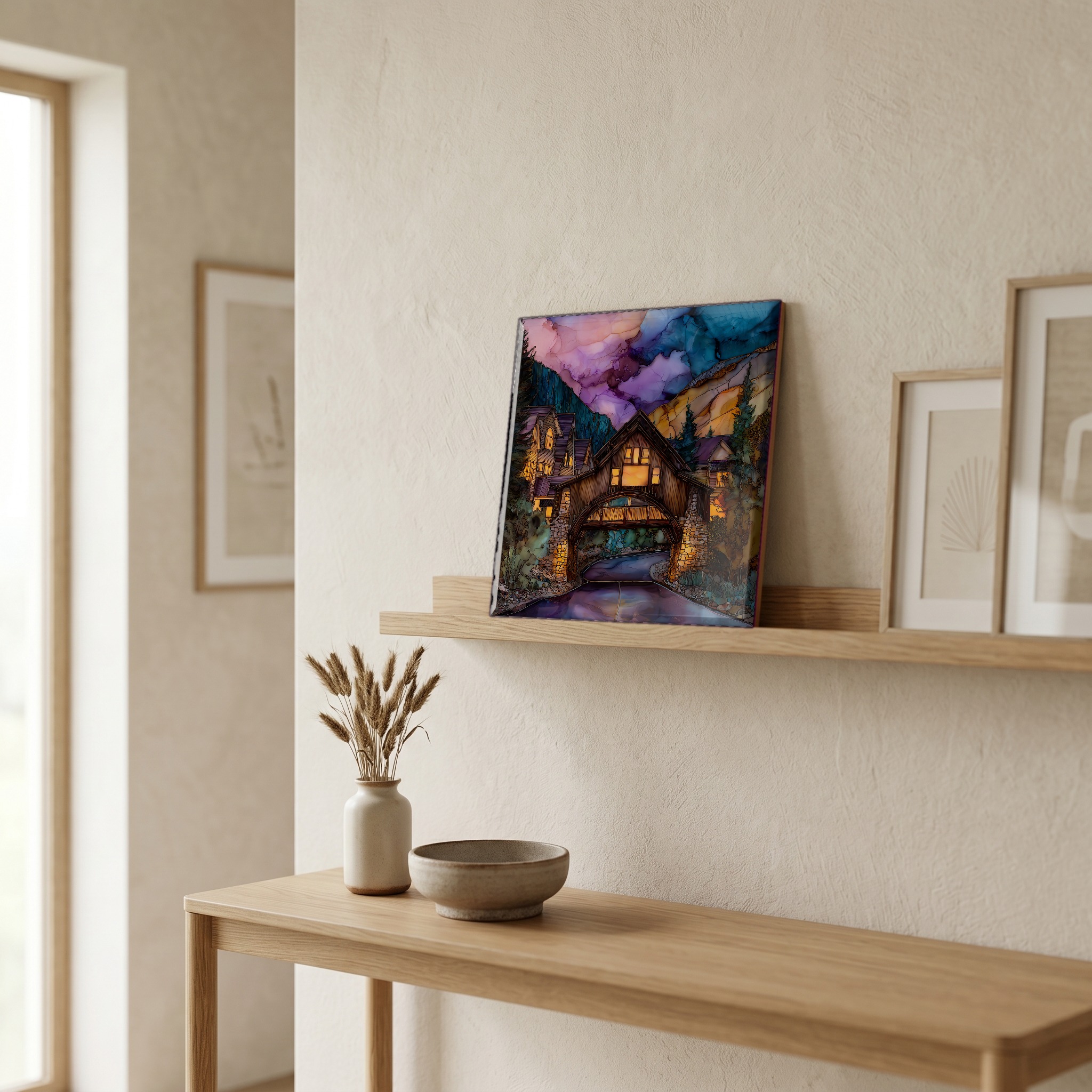
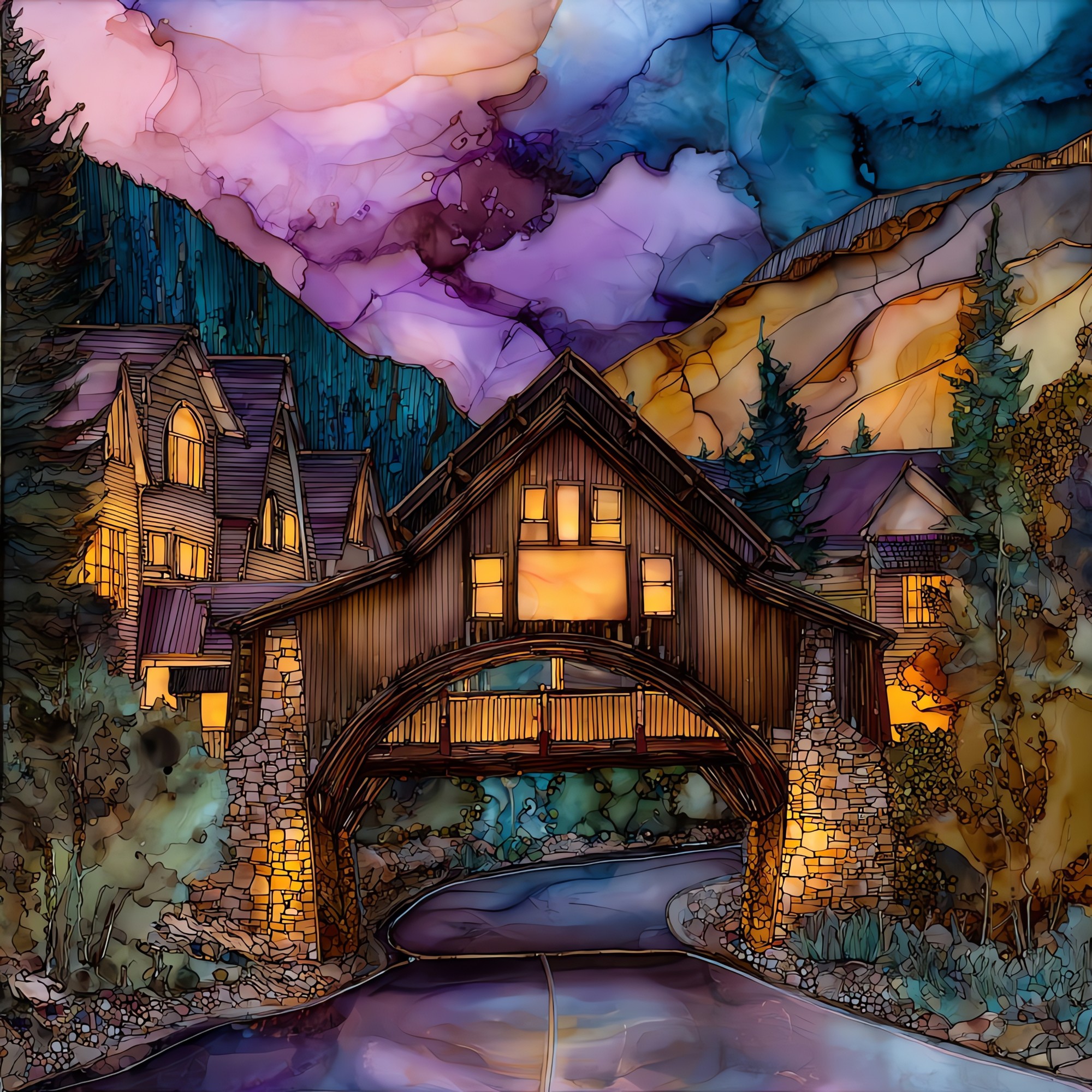
Vail Village covered bridge Eagle Valley Ceramic Art Tile
shown on ceramic, 12-inch tileColorado · United States
in the Eagle Valley, at the foot of Vail Mountain

Vail Village covered bridge Eagle Valley Ceramic Art Tile

a wooden roof, the creek below, the village beyond.

Where it lives

Not only on a wall.

A small tile on the nightstand catching the morning. A larger one above the fire. Yours, wherever you spend the slow hours.
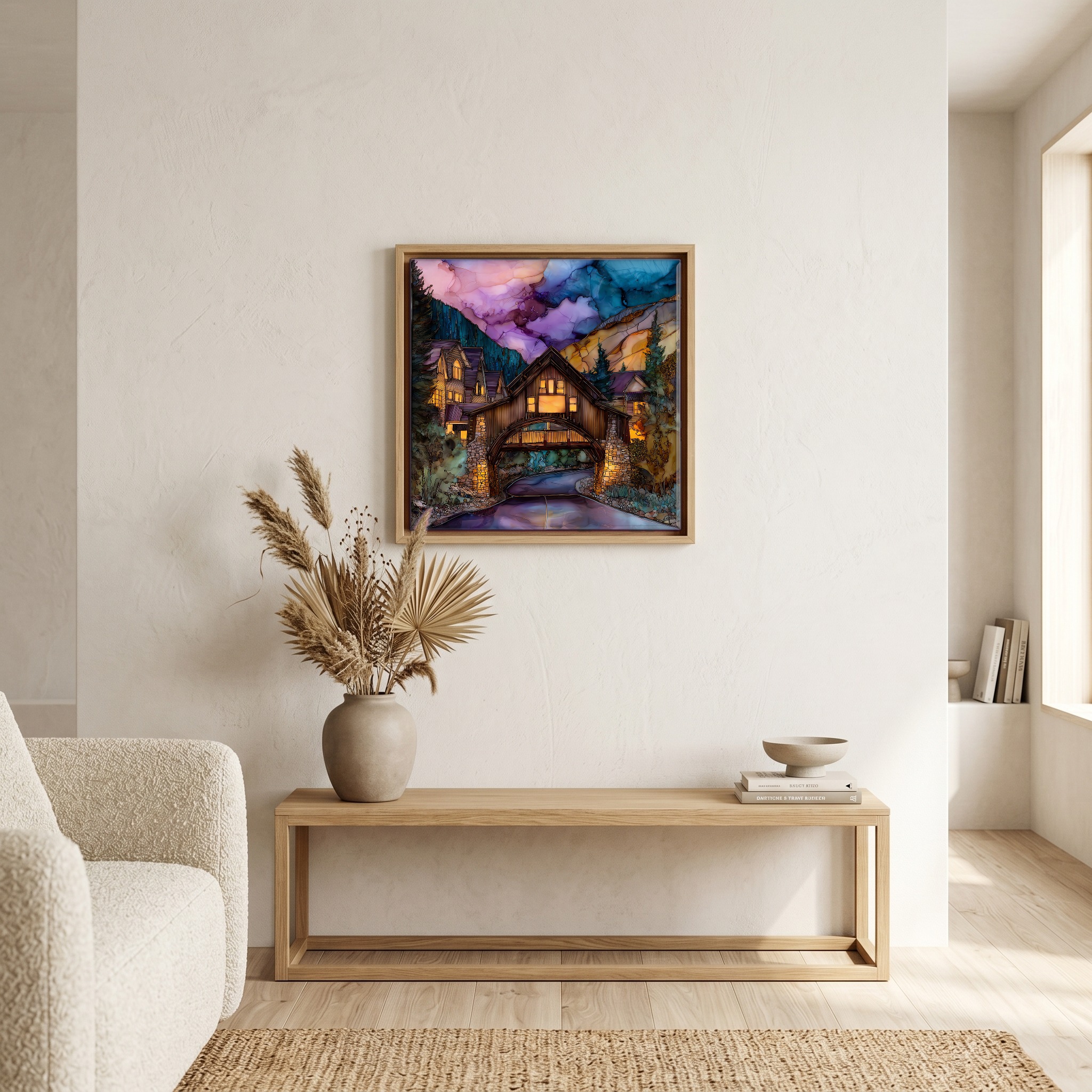
Above the bench, in a warm oak surround.
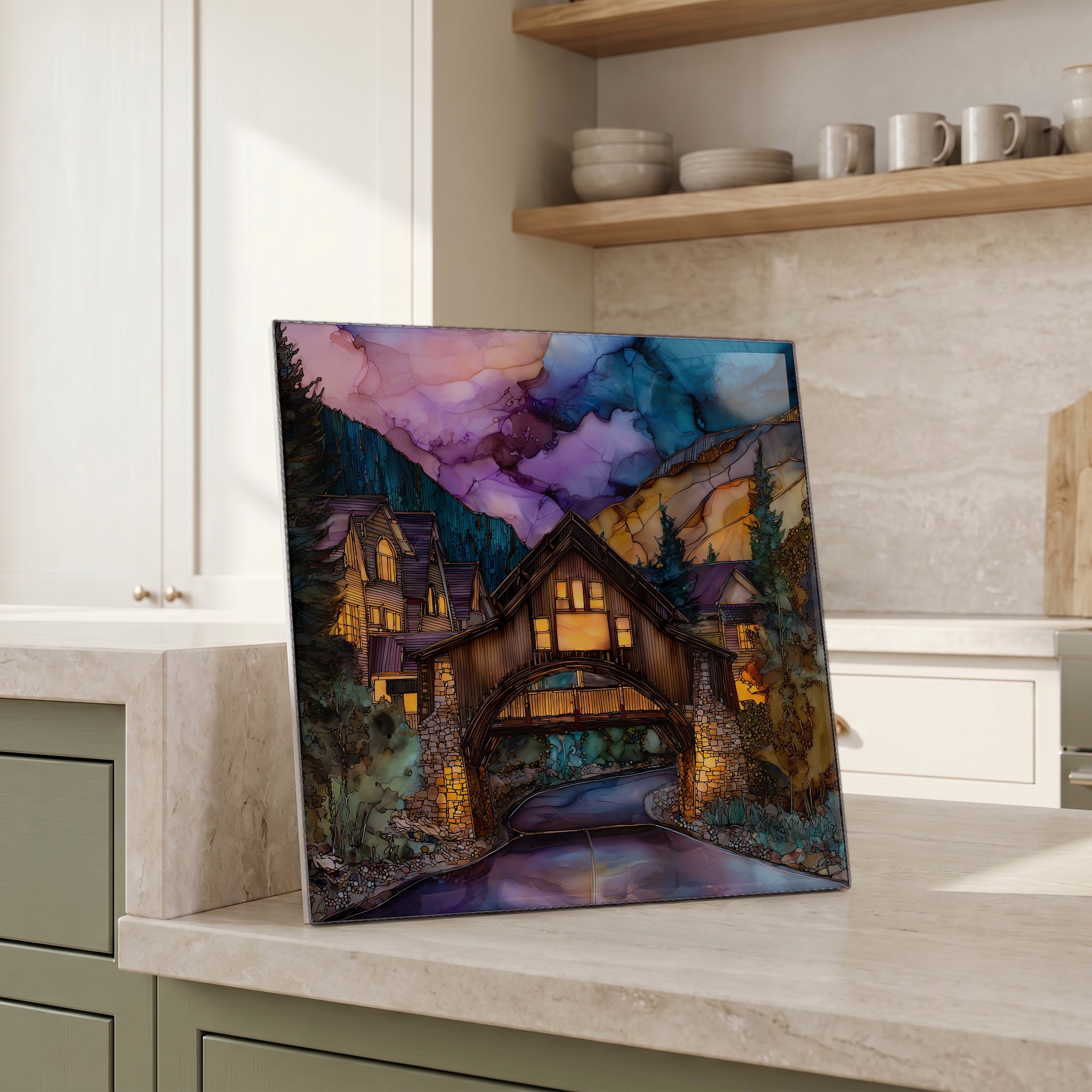
Beside the kettle, propped on the counter.
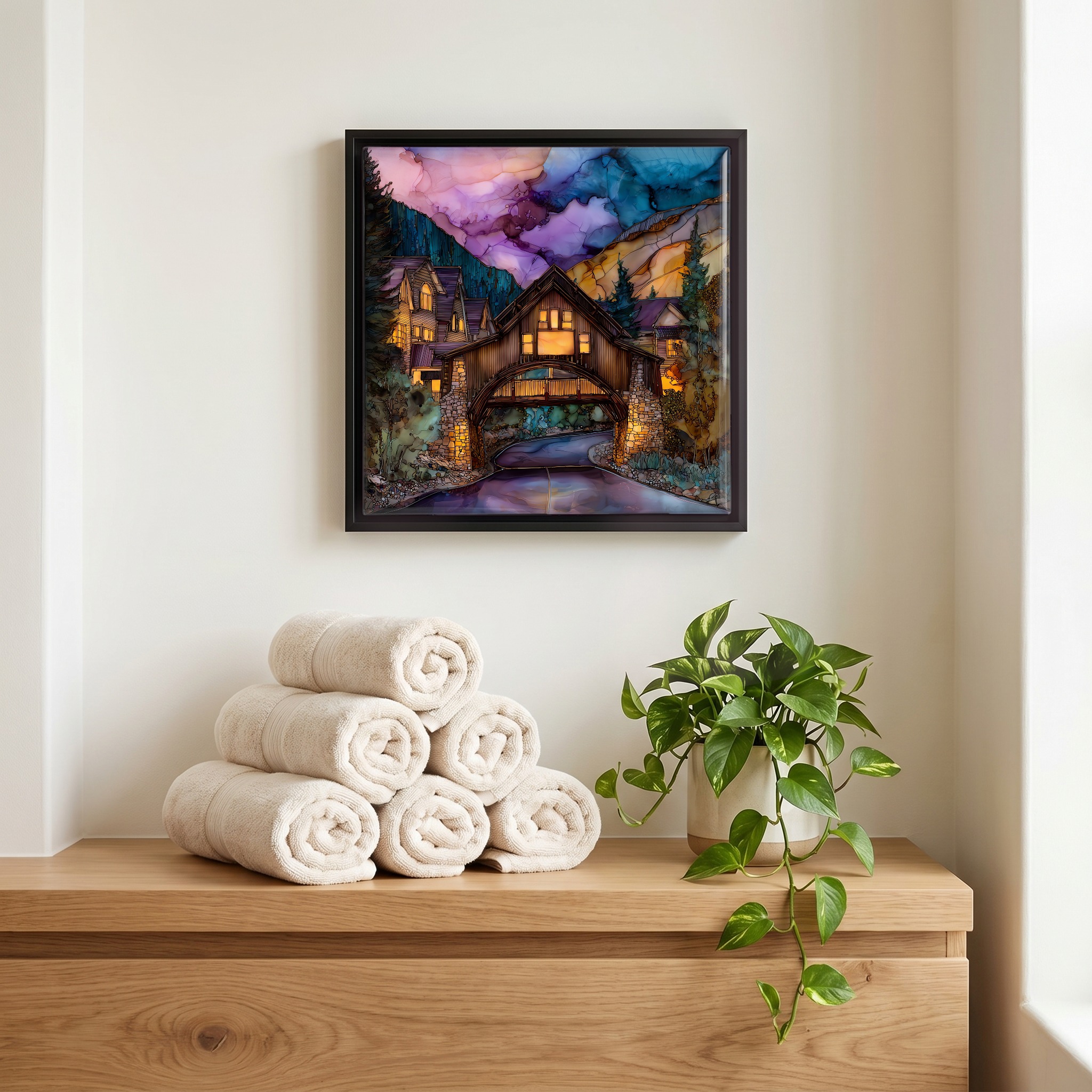
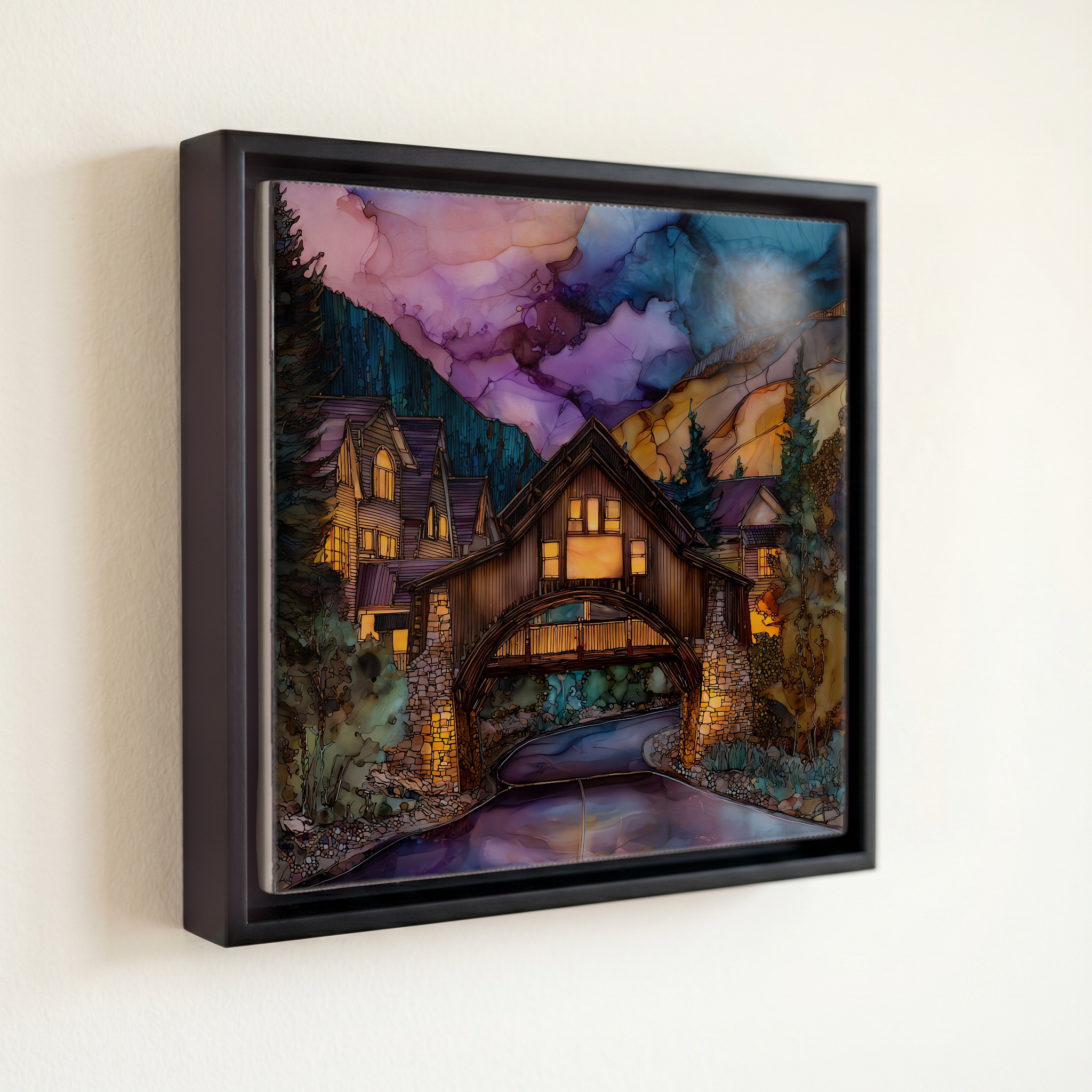
Above the linens, in a slim black surround.
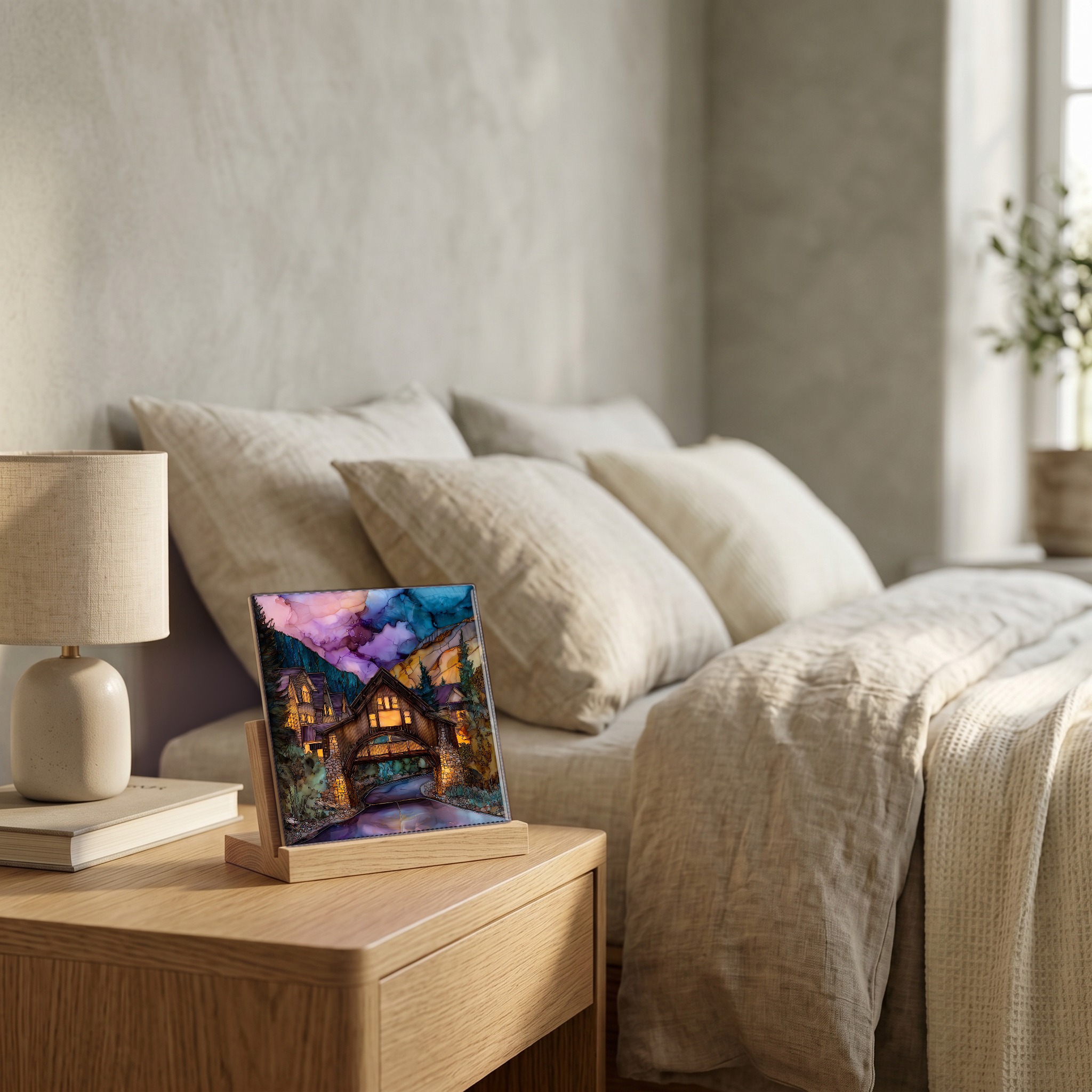
On the nightstand, on a light oak stand.
On a picture ledge, where the light comes in.
a note from the studio

The wooden bridge over Gore Creek, at the head of Vail Village. It went up in the late 1960s, when Fitzhugh Scott was laying out the new resort village in alpine vernacular and wanted a covered entrance the way the small bridges back east are covered. In winter snow piles on the roof. In summer the flower boxes spill petunias over the rail. The creek runs loud beneath it in May when the high country melts. People stop in the middle and photograph it. Almost everyone.
from the studio
shown in a slim black floating frame · 6 × 6 in
— bring it home

Vail Village covered bridge Eagle Valley Ceramic Art Tile, on ceramic.

Each tile is finished by hand in our Knoxville studio. Artwork is slowly infused into the ceramic surface under high heat and pressure, and rests beneath a thin glossy finish. The colour lives in the surface, not on top of it.

What kind of piece?
One tile — square or rectangle.
How big?
the popular one — counter, shelf, nightstand
6 × 6 in · 15 cm · 1.6 lb
Surface finish
A clear glossy finish — the artwork reads as if under resin. Ideal for show-pieces and framed wall art.
How it sits
A hidden cleat — sits ¼″ proud of the wall.
$58
Hand-finished and shipped from our studio at the foot of the Smokies. On your wall in about ten days.
size
6 × 6 in
15 cm
weighs
1.6 lb
solid in the hand
surface
ceramic, hand-finished
art rests beneath a thin glossy finish
from
Knoxville, TN
our family studio, at the foot of the Smokies
— start a Coaster Set

Pick any four 4-inch tiles — National Parks you've been to, a Smokies set, the four seasons of one place. $ for a set of , cork-backed, ready to live on the table.
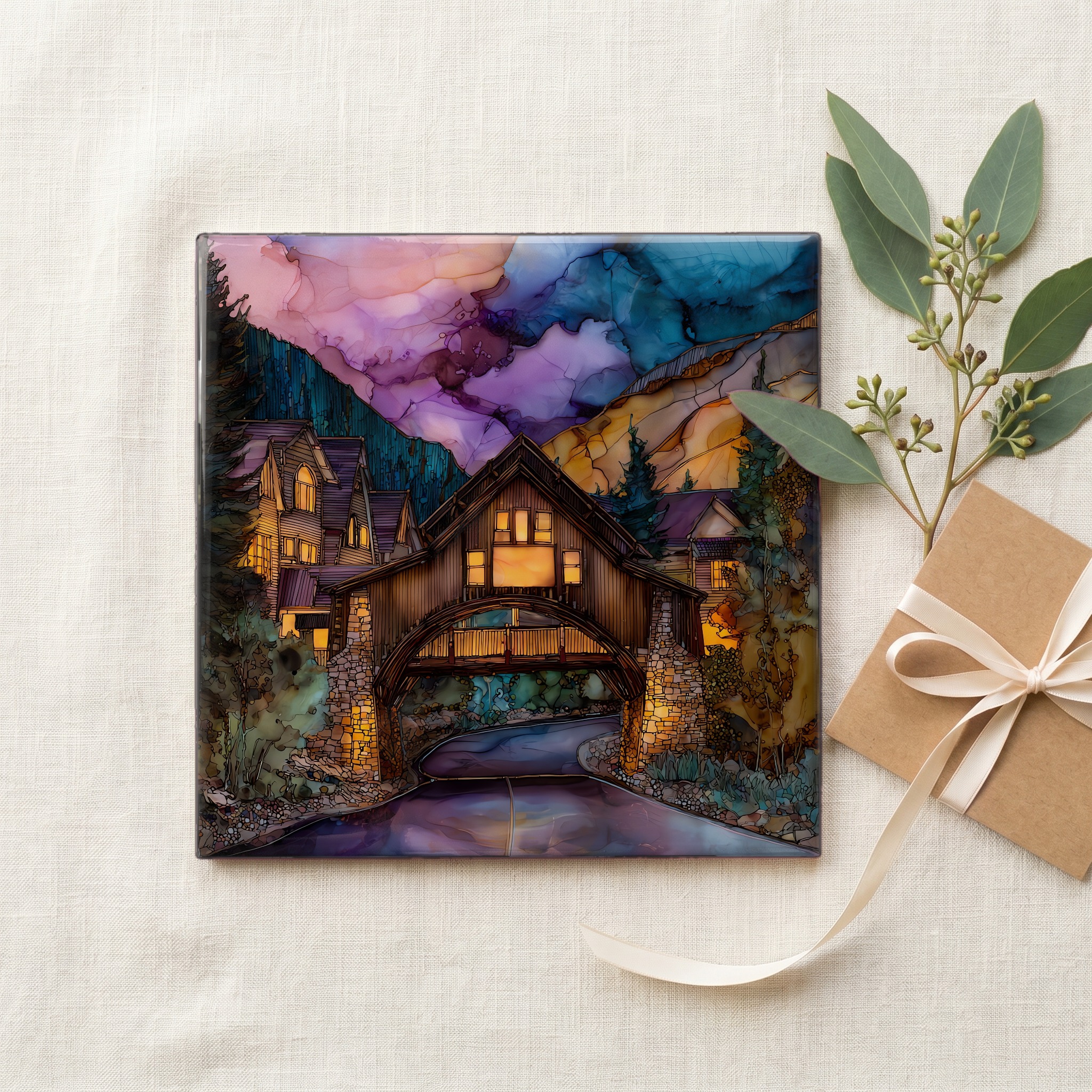
comes gift-ready
comes gift-ready

Each tile ships in a kraft box, tied with cream ribbon, with a handwritten note from the studio if you'd like to add one.
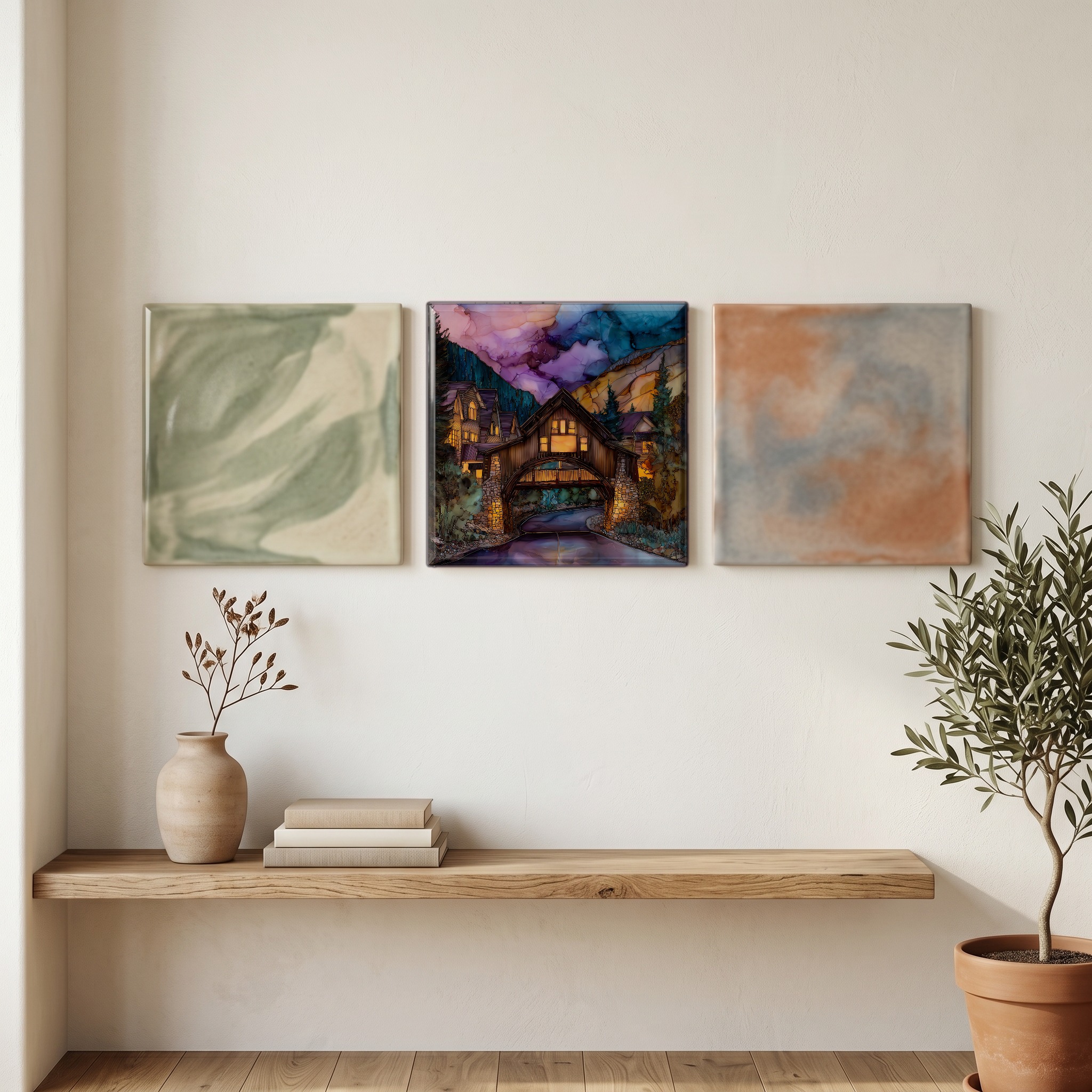
or build a grouping
or build a grouping

Three or five different vistas, hung together — a chapter of places you've been, or want to go.

about Vail Village covered bridge Eagle Valley Ceramic Art Tile

The place, in three passes.

A little of what's known, in case you fall down the rabbit hole — or want to go see it yourself.
the place

The bridge crosses Gore Creek at the northern edge of Vail Village, in Eagle County in central Colorado, about 100 miles west of Denver along Interstate 70. The town sits at roughly 8,150 feet (2,484 m) in the Gore Creek valley, with Vail Mountain to the south and the Gore Range to the north. The covered bridge went in around 1969 as part of architect Fitzhugh Scott's master plan for the village, which Vail Associates began building from raw meadow in 1962. The bridge connects the Vail Village Transportation Center, where the buses arrive, to Bridge Street, the pedestrian spine of the village.

the season

The bridge wears each season differently. By Thanksgiving the snow has usually started and the wooden roof carries a foot or more through midwinter, with white piled along the rails and the village string-lights running underneath. In late April and May the snowpack on Vail Mountain melts down through Gore Creek and the water under the bridge runs fast and loud for a few weeks. By July the flower boxes are full of petunias spilling over the wooden sides. September turns the aspens above town gold; by Halloween they're down and the village is quiet again until the lifts open at Thanksgiving.

the visit

The bridge is a public pedestrian crossing with no fee, no hours, and no posted rule against stopping in the middle. It carries foot traffic between the Vail Village Transportation Center and Bridge Street, the village's main shopping and dining stretch. Most arrivals from outside Eagle County come via Eagle County Regional Airport in Gypsum, about 35 miles west, or Denver International, about 120 miles east. In winter the Colorado Department of Transportation runs Bustang and Pegasus coaches up Interstate 70 from Denver. The bridge itself takes about 30 seconds to cross. Photographers tend to set up on the Gore Creek side, looking back at the village with Vail Mountain behind.

— informed by Town of Vail, CDOT Bustang
where
United States · Vail, Eagle County, Colorado
elevation
2,484 m · 8,150 ft
position
39.6404° N · 106.3742° W
the neighborhood

What's nearby.

A handful of named places within an hour's walk or short drive. Some we've already painted; some we will.
1 km S
Vail Mountain
ski mountain
5 km N
Gore Range
mountain range
21 km SW
Mount of the Holy Cross
Colorado fourteener
16 km W
Beaver Creek Village
ski resort village
N
Vail Village covered bridge Eagle Valley Ceramic Art Tile
Vail Mountain
Gore Range
Mount of the Holy Cross
Beaver Creek Village
common questions

What people ask.

A few questions we get about Vail Village covered bridge Eagle Valley Ceramic Art Tile — and about bringing the piece home.
about the place

The covered design is intentional alpine vernacular, drawn from the small wooden covered bridges of New England and Switzerland. The roof keeps snow and ice off the deck through the long Vail winter and gives the village a clear, sheltered entrance from the Frontage Road side.

The bridge went in around 1969 as part of architect Fitzhugh Scott's master plan for the village. Vail Associates had begun building the resort village from raw meadow in 1962, and the covered bridge became the formal pedestrian entry from Vail Road into Bridge Street.

Gore Creek. It drains the Gore Range to the north and runs through Vail Village before joining the Eagle River about 8 miles downstream. In May the snowmelt off Vail Mountain doubles its volume; by August it slows to a clear, cold trout stream.

Park at the Vail Village Transportation Center or step off the Bustang or ECO bus and walk south. The bridge sits about 100 yards from the bus drop, between Vail Road and Bridge Street. There is no fee and no posted hours.

Each season works. The covered roof under fresh snow in January is the most familiar postcard frame. Petunia season in July reads warmer. Late September gold aspens above the village give the strongest colour contrast against the wooden cladding.

No. The covered bridge is pedestrian only, and the entire Bridge Street corridor it leads into is closed to cars. Service and delivery vehicles use designated early-morning access windows before the village opens for the day.

About 100 miles west, up Interstate 70 and over Vail Pass at 10,662 feet. The drive runs roughly two hours in clear weather and longer in winter. Eagle County Regional Airport in Gypsum is the closer flight option, about 35 miles west of Vail.

about the piece in your home

It's been a meaningful gift for ski-condo owners, season pass-holders, and anyone whose proposal or honeymoon happened in the village. The covered bridge is the single most recognised image in Vail. A Medium or Large in the glossy finish reads well over a ski-house mantel; a Keepsake works as a slope-side memento with a handwritten note from the studio.

Three families in particular. Alpine-modern interiors built around wood, stone, and warm metal. Mountain-modern with darker palettes and felted textiles. And the older lodge style, with hooked rugs and copper. The artwork's reds, blacks, and aspen-yellows reach into all three without locking into any single one.

Yes. Alpine-modern has moved hard toward textured, hand-touched surfaces over the last few years, in reaction to the flat finishes that dominated the 2010s. A ceramic tile with this much surface depth and seasonal colour sits squarely inside that turn. The palette also pairs naturally with reclaimed barnwood.

For most sofas (84 to 96 inches), the single Large at 15 by 15 inches sits well over a console table; a 4-tile Mural at 30 by 30 inches is the right scale above a sofa; a 9-tile Mural at 45 by 45 inches anchors a high ski-house wall.

Yes, in the Dura Satin or Matte finish. Dura Satin is scratch-resistant and stands up to humidity, so it suits a bathroom wall, a powder room, or a kitchen backsplash. The glossy finish is better kept to dry display areas where its sheen reads as intended.

A soft microfibre cloth and warm water. The colour is slowly infused into the ceramic surface under high heat and pressure, so it does not wear off the way printed pieces do. Avoid abrasive pads, ammonia, and bleach; mild dish soap is fine when needed.

Yes. Every WenderVista piece is original artwork by Reid Wender, curator of the studio, made for one specific place. The work is never licensed in from outside artists, and the studio is the only place these tiles are made.

if this one stayed with you

A few you might also love.

Hand-picked by the eye that found Sorapis. Same air, same kind of quiet.