Wender·Vista
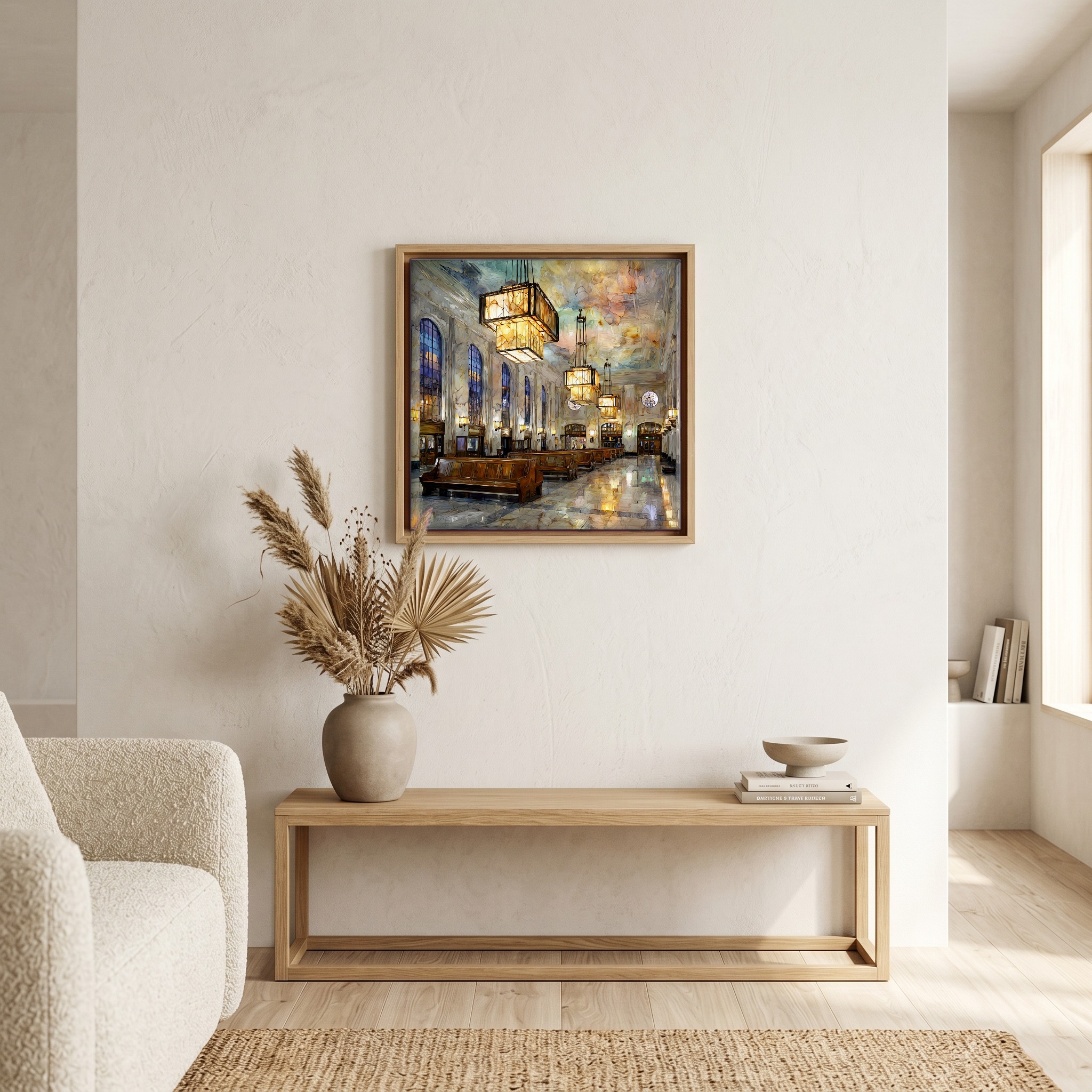
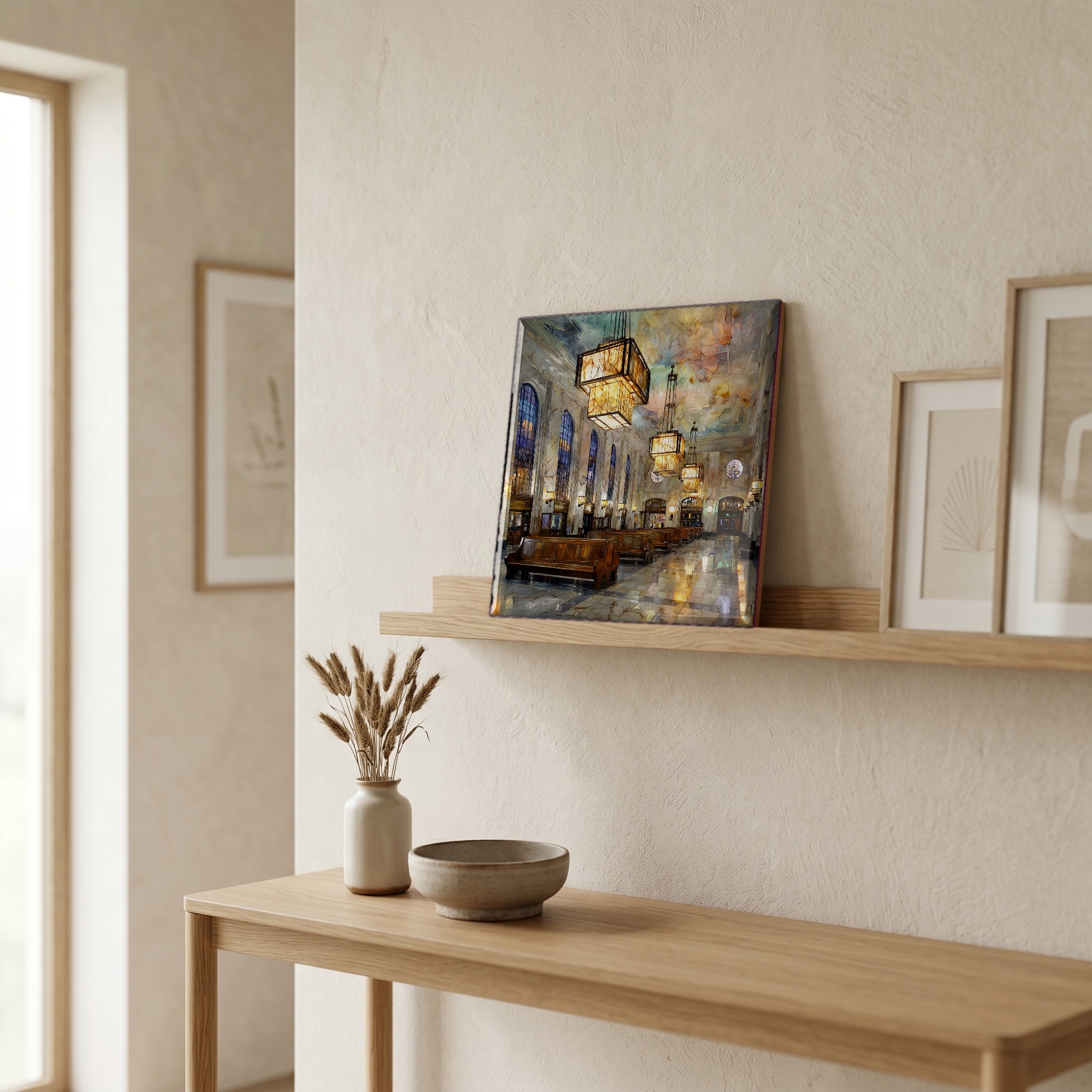
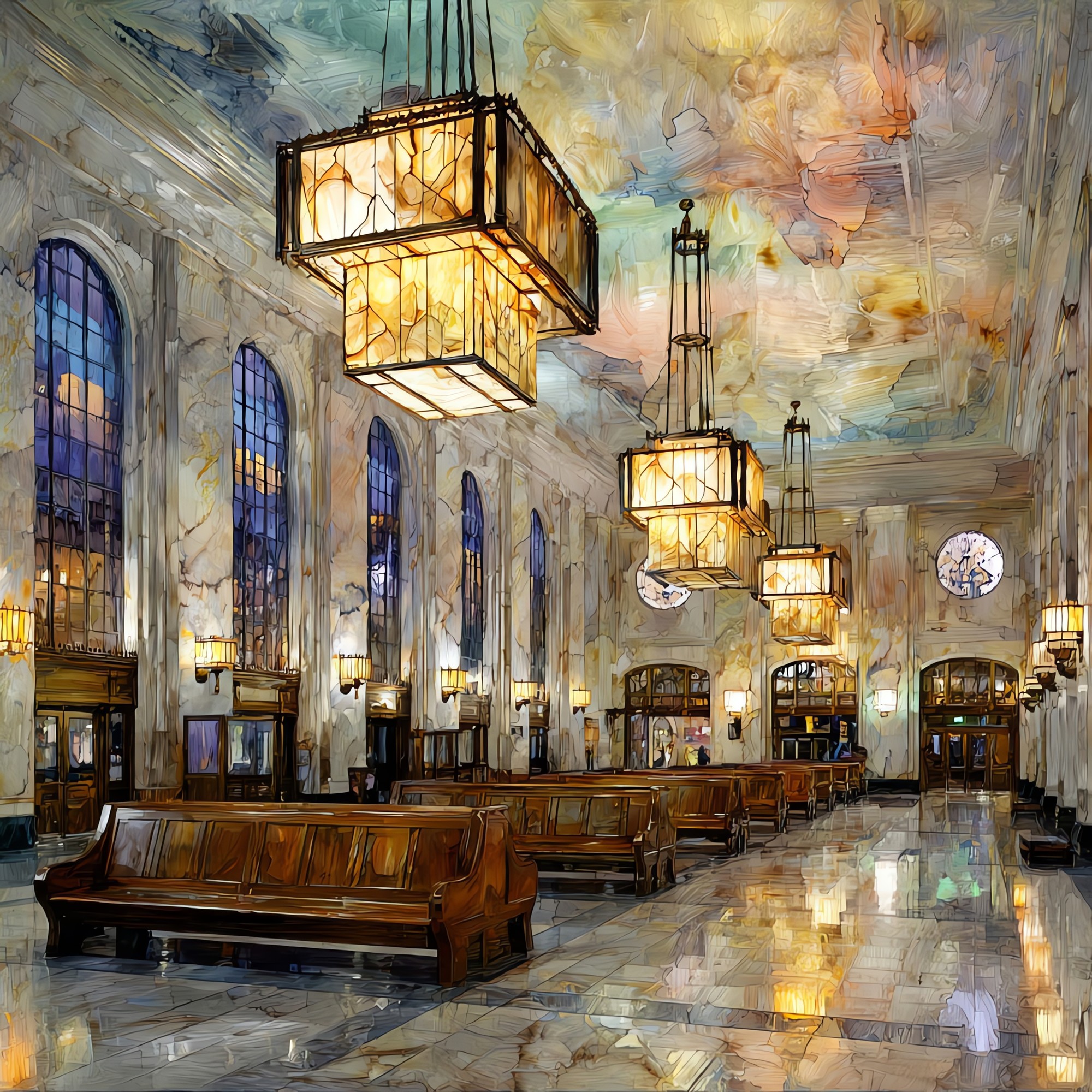
Denver Union Station great hall Denver Metro Ceramic Art Tile
shown on ceramic, 12-inch tileColorado · United States
in Lower Downtown Denver, at the foot of 17th Street

Denver Union Station great hall Denver Metro Ceramic Art Tile

— the warmth a great room keeps after dark.

Where it lives

Not only on a wall.

A small tile on the nightstand catching the morning. A larger one above the fire. Yours, wherever you spend the slow hours.
Above the bench, in a warm oak surround.
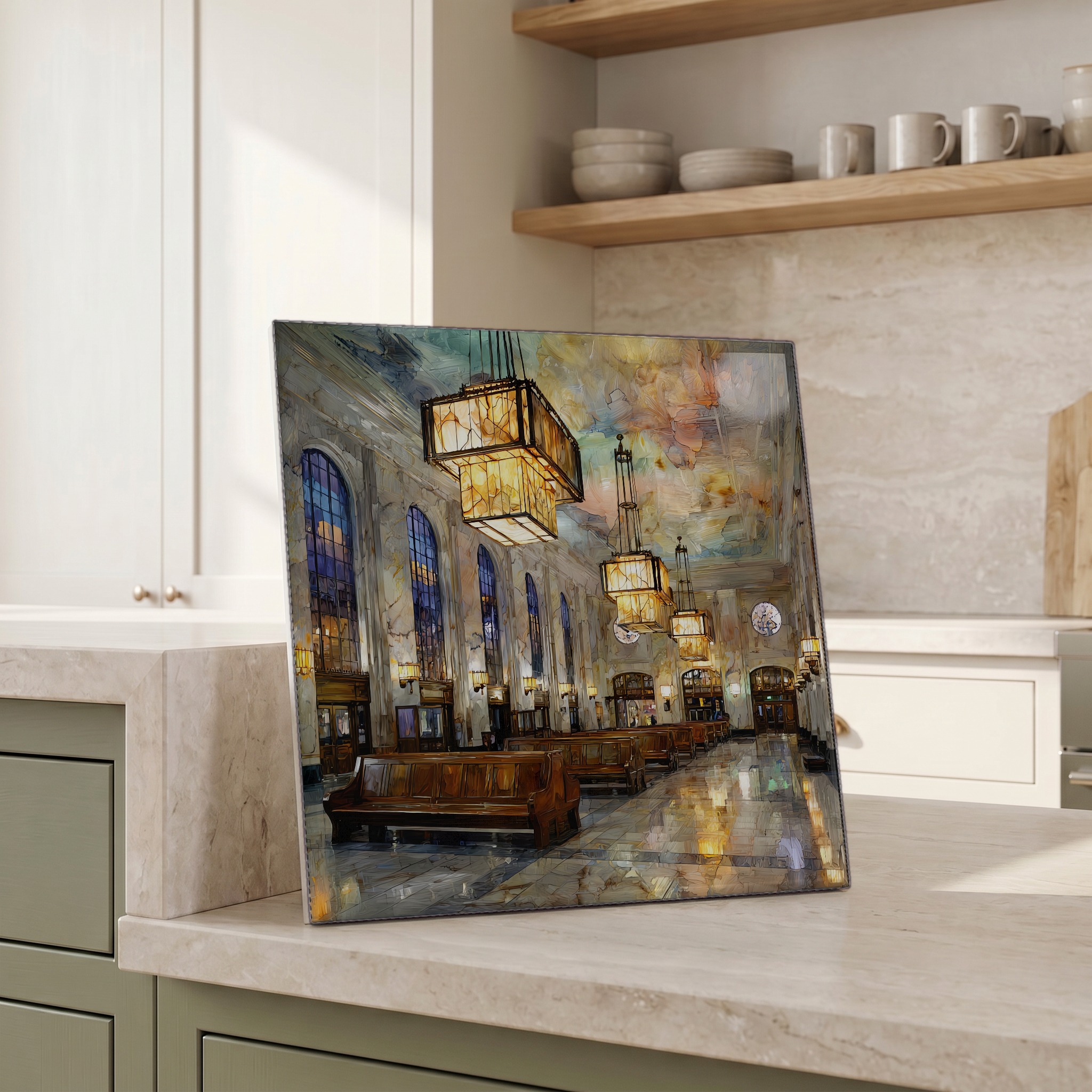
Beside the kettle, propped on the counter.
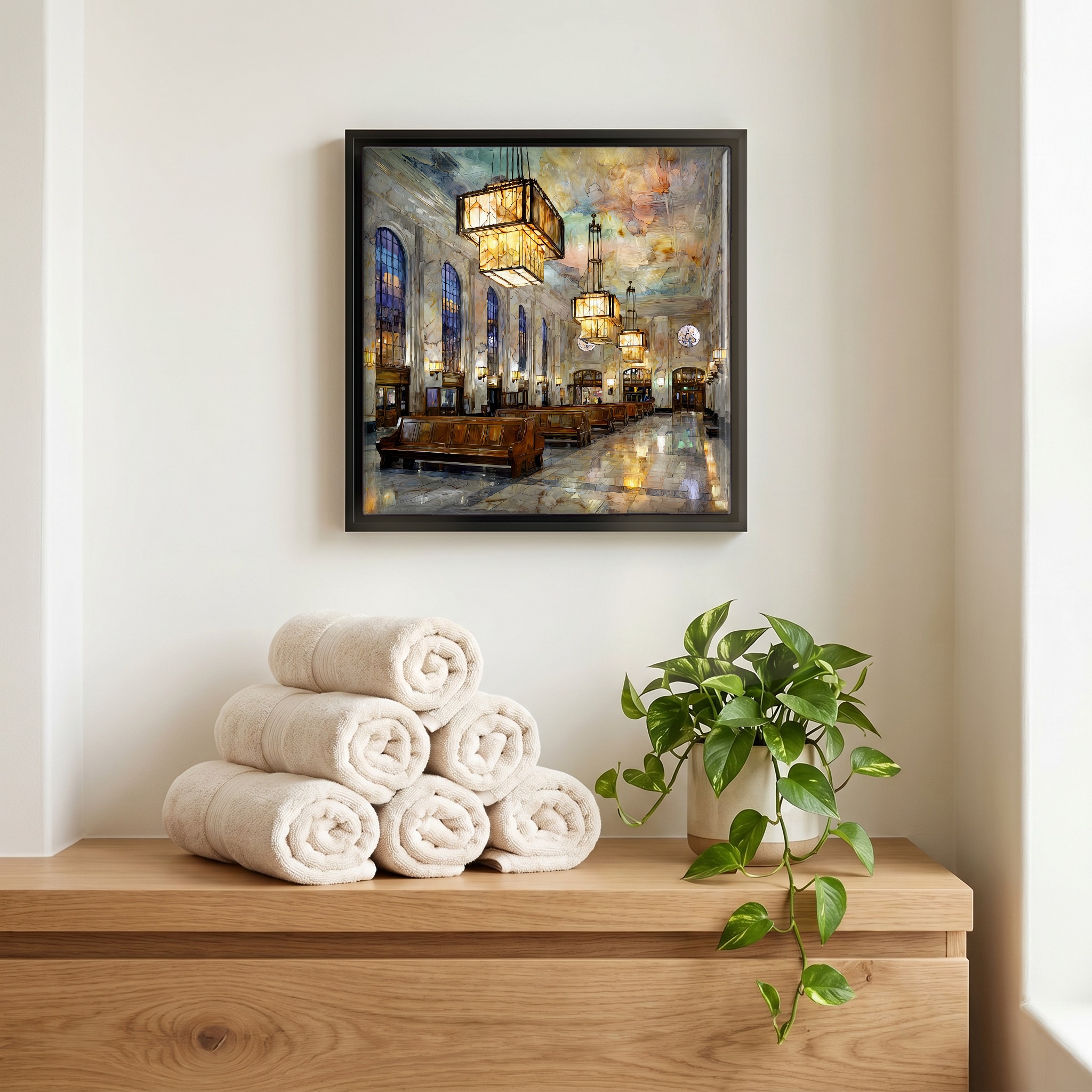
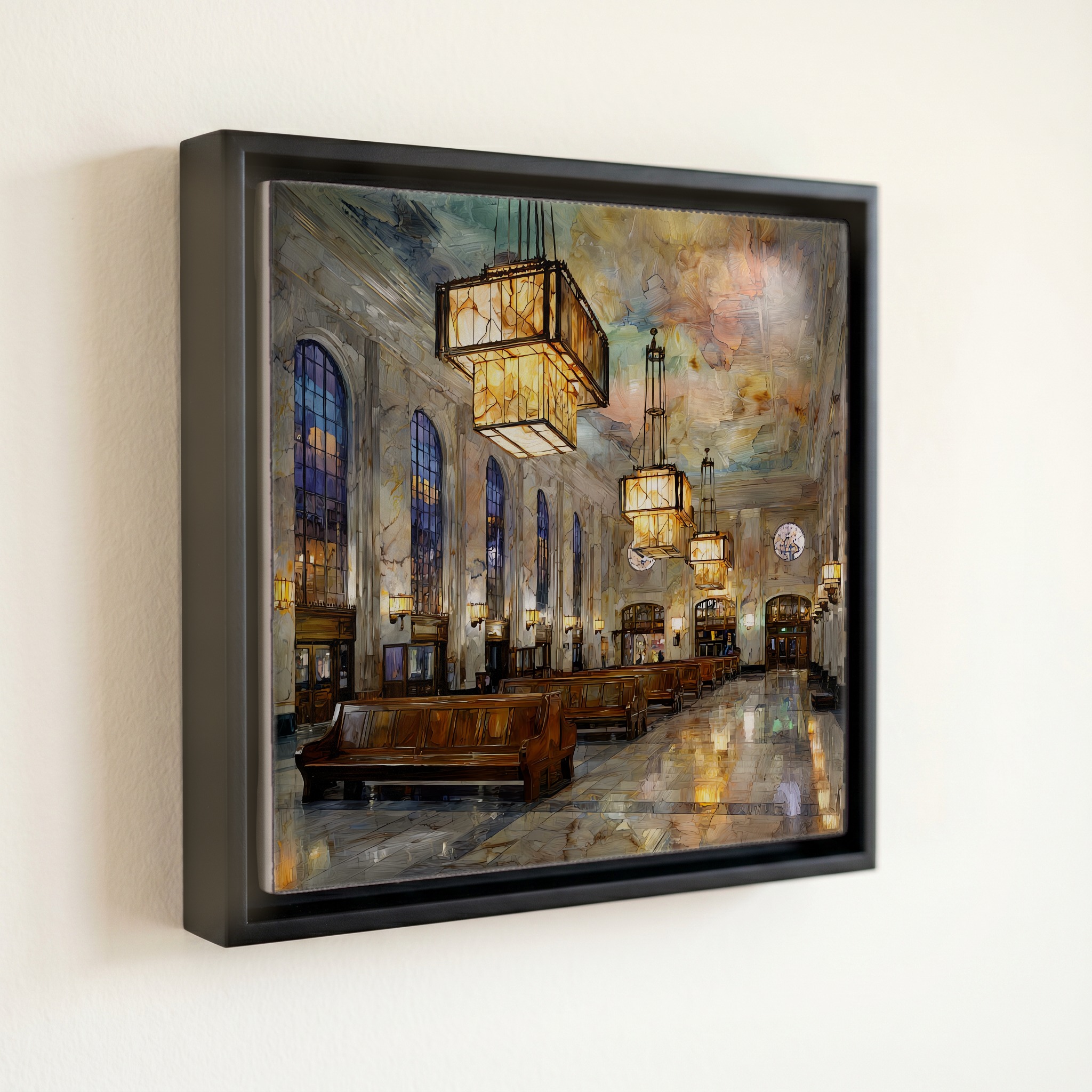
Above the linens, in a slim black surround.
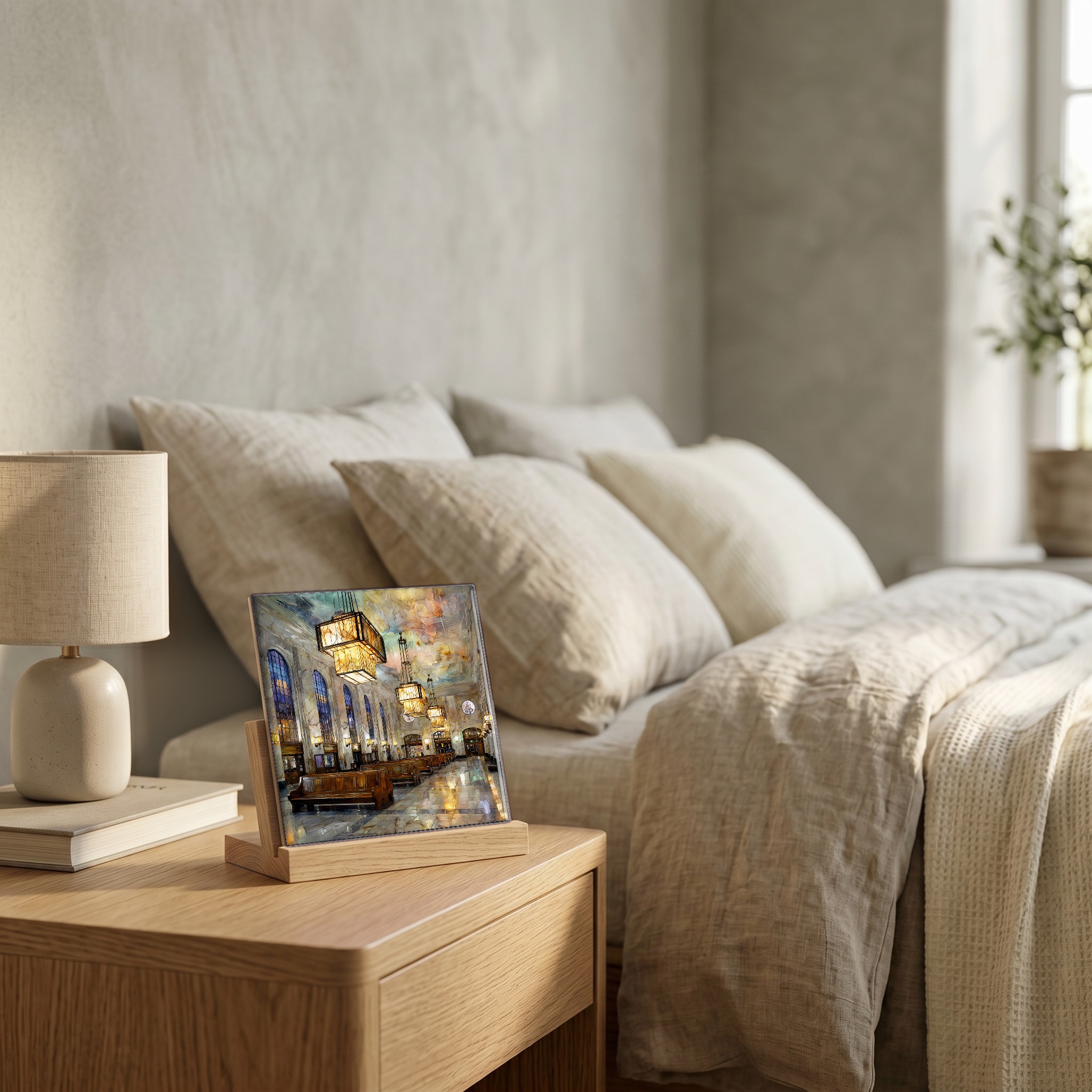
On the nightstand, on a light oak stand.
On a picture ledge, where the light comes in.
a note from the studio

Denver opened this station in 1881 and rebuilt the centerpiece in 1914 in granite and terra-cotta, a Beaux-Arts hall set on the long axis of 17th Street. For decades it was a working depot growing quieter. The 2014 restoration kept the bones and gave the room back to the city. The orange neon still says Travel by Train. The chandeliers throw the same warm light over leather sofas, shuffleboard tables, long communal tables. People meet there for coffee before the California Zephyr pulls in, or stay until the bar closes. The planners called it Denver's living room. The name stuck.
from the studio
shown in a slim black floating frame · 6 × 6 in
— bring it home

Denver Union Station great hall Denver Metro Ceramic Art Tile, on ceramic.

Each tile is finished by hand in our Knoxville studio. Artwork is slowly infused into the ceramic surface under high heat and pressure, and rests beneath a thin glossy finish. The colour lives in the surface, not on top of it.

What kind of piece?
One tile — square or rectangle.
How big?
the popular one — counter, shelf, nightstand
6 × 6 in · 15 cm · 1.6 lb
Surface finish
A clear glossy finish — the artwork reads as if under resin. Ideal for show-pieces and framed wall art.
How it sits
A hidden cleat — sits ¼″ proud of the wall.
$58
Hand-finished and shipped from our studio at the foot of the Smokies. On your wall in about ten days.
size
6 × 6 in
15 cm
weighs
1.6 lb
solid in the hand
surface
ceramic, hand-finished
art rests beneath a thin glossy finish
from
Knoxville, TN
our family studio, at the foot of the Smokies
— start a Coaster Set

Pick any four 4-inch tiles — National Parks you've been to, a Smokies set, the four seasons of one place. $ for a set of , cork-backed, ready to live on the table.
comes gift-ready
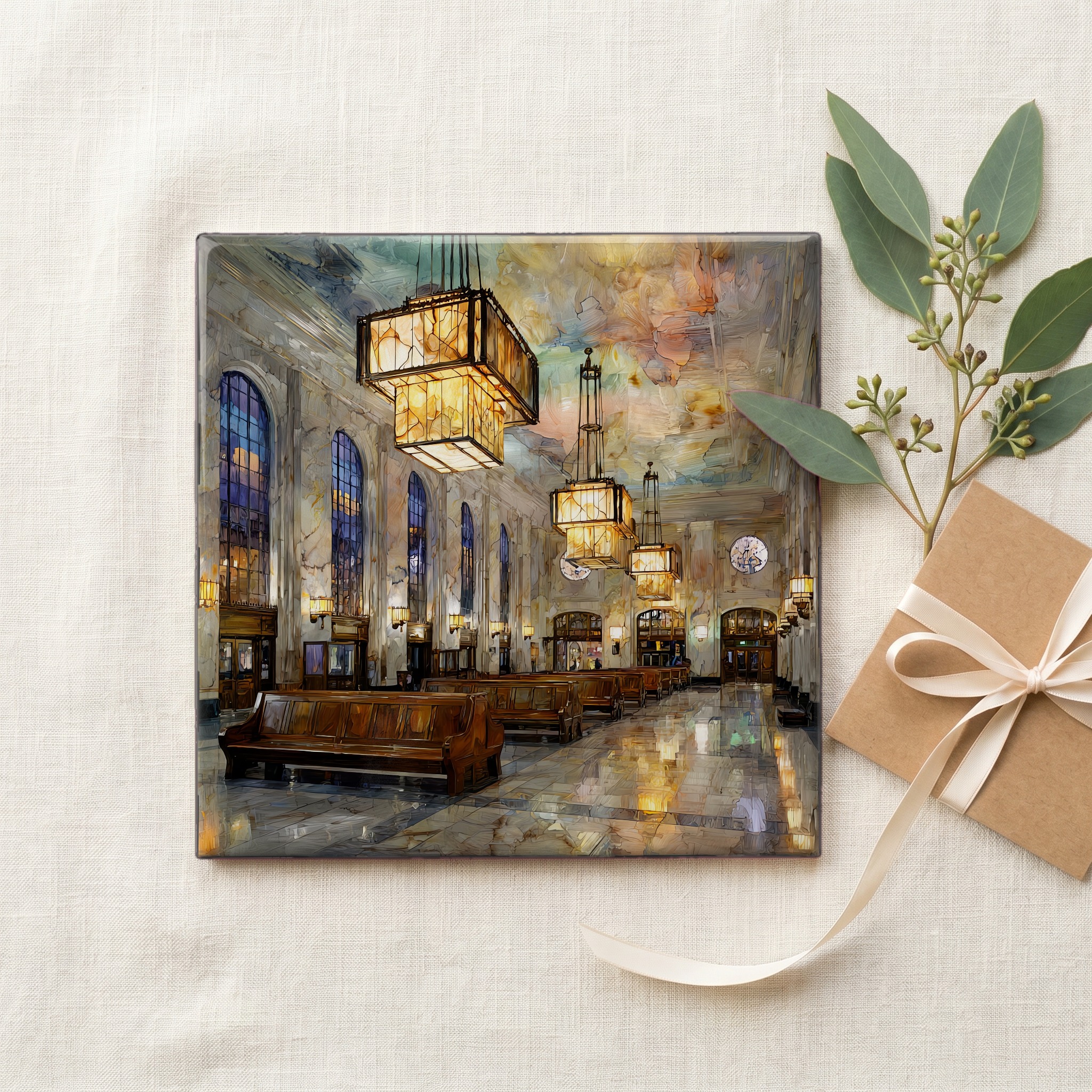
comes gift-ready

Each tile ships in a kraft box, tied with cream ribbon, with a handwritten note from the studio if you'd like to add one.
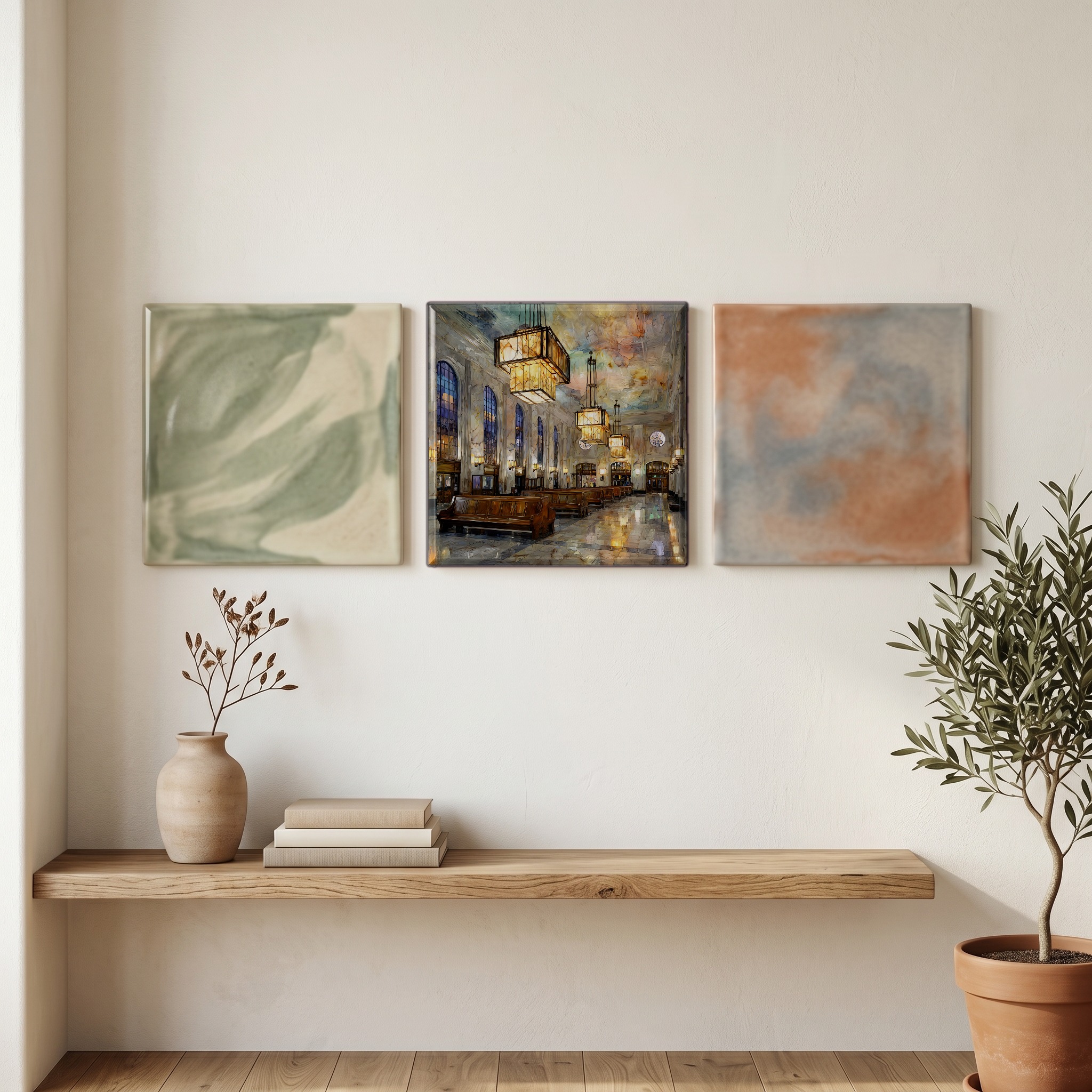
or build a grouping
or build a grouping

Three or five different vistas, hung together — a chapter of places you've been, or want to go.

about Denver Union Station great hall Denver Metro Ceramic Art Tile

The place, in three passes.

A little of what's known, in case you fall down the rabbit hole — or want to go see it yourself.
the place

Denver Union Station sits in LoDo, Lower Downtown Denver, on the axis of 17th Street at the western foot of the 16th Street Mall. The address is 1701 Wynkoop Street, four blocks from the Colorado State Capitol in the mile-high state capital. The original 1881 depot replaced four separate stations that had served the city's railroads, consolidating them into one terminal. A 1914 rebuild gave the building its current centerpiece, a Beaux-Arts hall by Denver architects Gove & Walsh, flanked by the surviving Romanesque-revival wings of the original station. Today the building is a stop on Amtrak's California Zephyr route from Chicago to the Bay Area, and the hub of the regional RTD commuter rail, light rail, and bus network.

the stone

The 1914 center section is Beaux-Arts Neoclassical, built of Colorado granite on a steel frame with terra-cotta detailing, three stories tall and ornamented like a Carnegie library more than a depot. Aaron Gove and Thomas Walsh, the Denver firm responsible for the city's Sugar Building and several other early-twentieth-century landmarks, scaled the hall to handle the swell of passenger traffic Denver was carrying that decade. Inside, a vaulted ceiling rises over the public room, and three large chandeliers hang in the style of the 1914 originals, returned as part of the 2014 restoration. The orange neon Travel by Train sign above each clock dates to 1952, a marketing campaign by the host railroads when rail travel was already losing ground to highways and airlines.

the visit

The Great Hall is open 24 hours a day and has been called Denver's living room since the 2014 restoration. The ground-floor public room is also the lobby of the 112-room Crawford Hotel, which occupies the building's upper floors. Long communal tables with outlets, leather sofas, and shuffleboard tables fill the floor. Bars and restaurants line the perimeter, among them Mercantile Dining & Provision, Stoic & Genuine, the Terminal Bar, and the Cooper Lounge. Amtrak's California Zephyr arrives and departs once each direction, daily, on the platforms behind the hall. RTD commuter rail, light rail, and regional buses run from the connected transit center. No admission fee.

where
United States · Denver, Colorado
position
39.7531° N · 105.0001° W
the neighborhood

What's nearby.

A handful of named places within an hour's walk or short drive. Some we've already painted; some we will.
0.5 km N
Coors Field
baseball park
1 km NW
Confluence Park
urban river park
0.5 km SE
Larimer Square
historic district
1 km SE
Brown Palace Hotel
historic hotel
2 km SE
Colorado State Capitol
state capitol
2 km S
Denver Art Museum
art museum
N
Denver Union Station great hall Denver Metro Ceramic Art Tile
Coors Field
Confluence Park
Larimer Square
Brown Palace Hotel
Colorado State Capitol
Denver Art Museum
common questions

What people ask.

A few questions we get about Denver Union Station great hall Denver Metro Ceramic Art Tile — and about bringing the piece home.
about the place

Denver Union Station is at 1701 Wynkoop Street in LoDo, the Lower Downtown district of Denver, Colorado. The Great Hall sits on the axis of 17th Street, two blocks from Coors Field and four blocks from the Colorado State Capitol.

The current center section opened in 1914, a Beaux-Arts hall by Denver architects Gove & Walsh that replaced the depot's original central wing. The Romanesque-revival outer wings date to the original 1881 station.

Aaron Gove and Thomas Walsh, partners in the Denver firm Gove & Walsh, designed the 1914 center section. The 2014 renovation was led by the architecture firm Skidmore, Owings & Merrill in partnership with the Union Station Alliance preservation group.

Planners gave the hall that name after the 2014 restoration opened the room to the public around the clock, with no ticket required to enter. Long communal tables, leather sofas, and shuffleboard tables fill the floor under the chandeliers.

The two orange neon signs above the clocks read Union Station and Travel by Train. The host railroads installed them in 1952 as a marketing push at a time when passenger rail was already losing ground to highways and airlines.

Yes. Amtrak's California Zephyr runs daily through the station on its Chicago to San Francisco Bay route, and RTD's A Line commuter rail, light rail, and regional buses run from the connected transit center behind the hall.

The Great Hall covers about 12,000 square feet on the ground floor of the 1914 building, with a vaulted ceiling and three large chandeliers. The hall also serves as the lobby of the 112-room Crawford Hotel on the upper floors.

about the piece in your home

It carries well for anyone with ties to LoDo or the city's transit history. The Great Hall is one of the most loved public rooms in Denver, equally familiar to commuters, Rockies fans walking to Coors Field, and travelers off the California Zephyr. A Small or Medium with a handwritten note from the studio is a strong choice.

The tile pairs especially with Industrial-modern, Mountain-modern, and Classic-Loft interiors common to LoDo and Denver lofts more broadly. The warm chandelier light and architectural geometry give it a quieter palette than the lake and mountain pieces in our atlas, so it sits well over a leather sofa or above a bar cart.

Architectural Beaux-Arts subjects have been steady in modern interiors, and railroad and depot imagery is a recurring thread in current Industrial-modern and Mountain-modern rooms. A Mural-size piece reads as a statement above a console or sideboard in a loft or open-plan kitchen.

Over a standard sofa, the single Large or a four-tile Mural reads at the right scale, and a nine-tile Mural fills a tall focal wall. Over a console or narrow side table, a Medium or a Coaster Set in a display stand stays in proportion.

Yes, in the Dura Satin or Matte finish. Both are scratch-resistant and rated for vertical installation in wet rooms, so a Medium or Large works above a backsplash or beside a powder-room sink. The Glossy finish is meant for framed wall art rather than installation.

A soft microfibre cloth with water is the right tool for routine cleaning. For anything stickier, a mild dish-soap solution on the cloth lifts most marks. Avoid abrasive pads and solvent cleaners; the colour lives in the surface and the gloss layer is thin.

Yes. The Great Hall painting was made in-house by Reid Wender, the curator of WenderVista, and the tile is hand-finished in our Knoxville, Tennessee studio. There is no licensing of outside imagery in the WenderVista line.

if this one stayed with you

A few you might also love.

Hand-picked by the eye that found Sorapis. Same air, same kind of quiet.