Wender·Vista
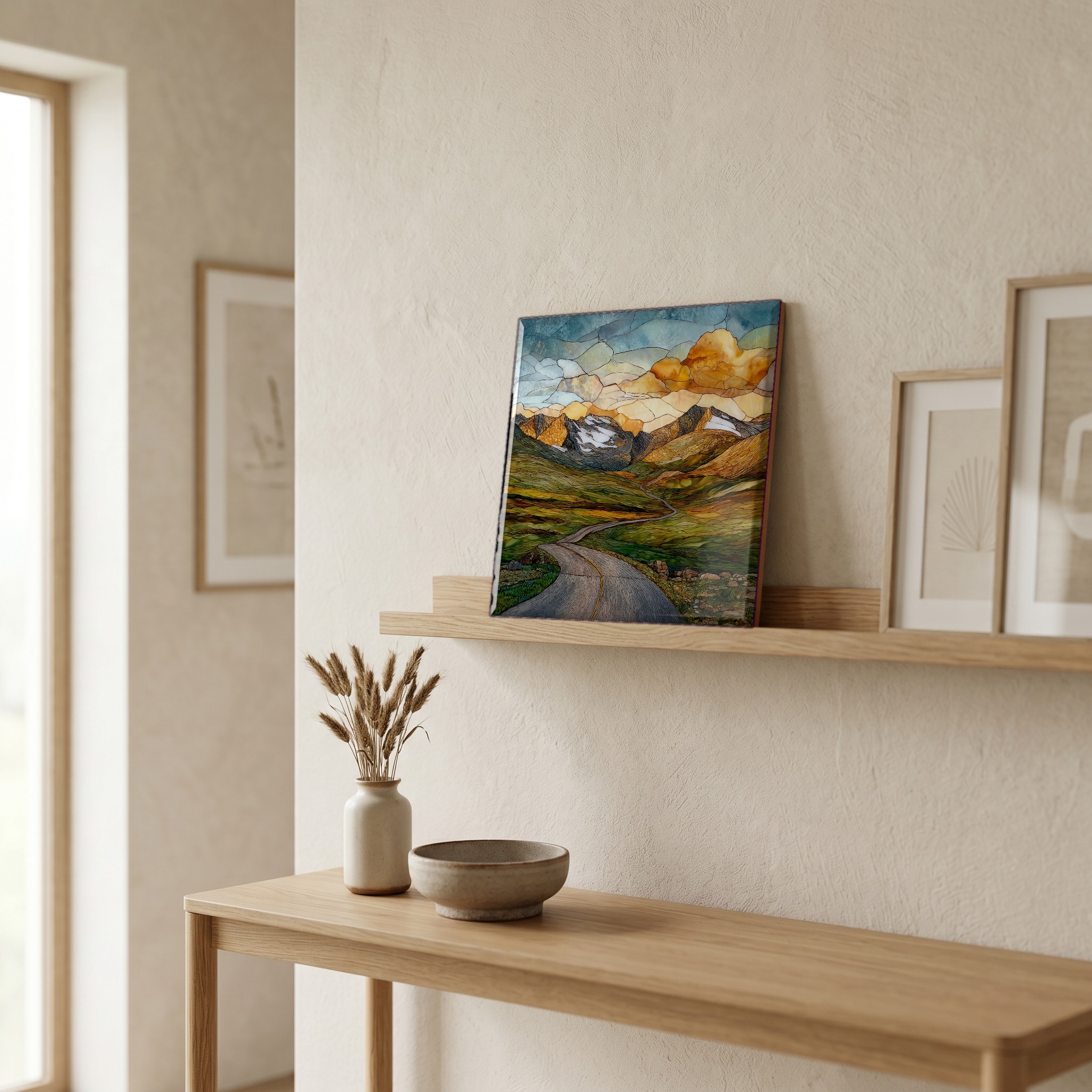
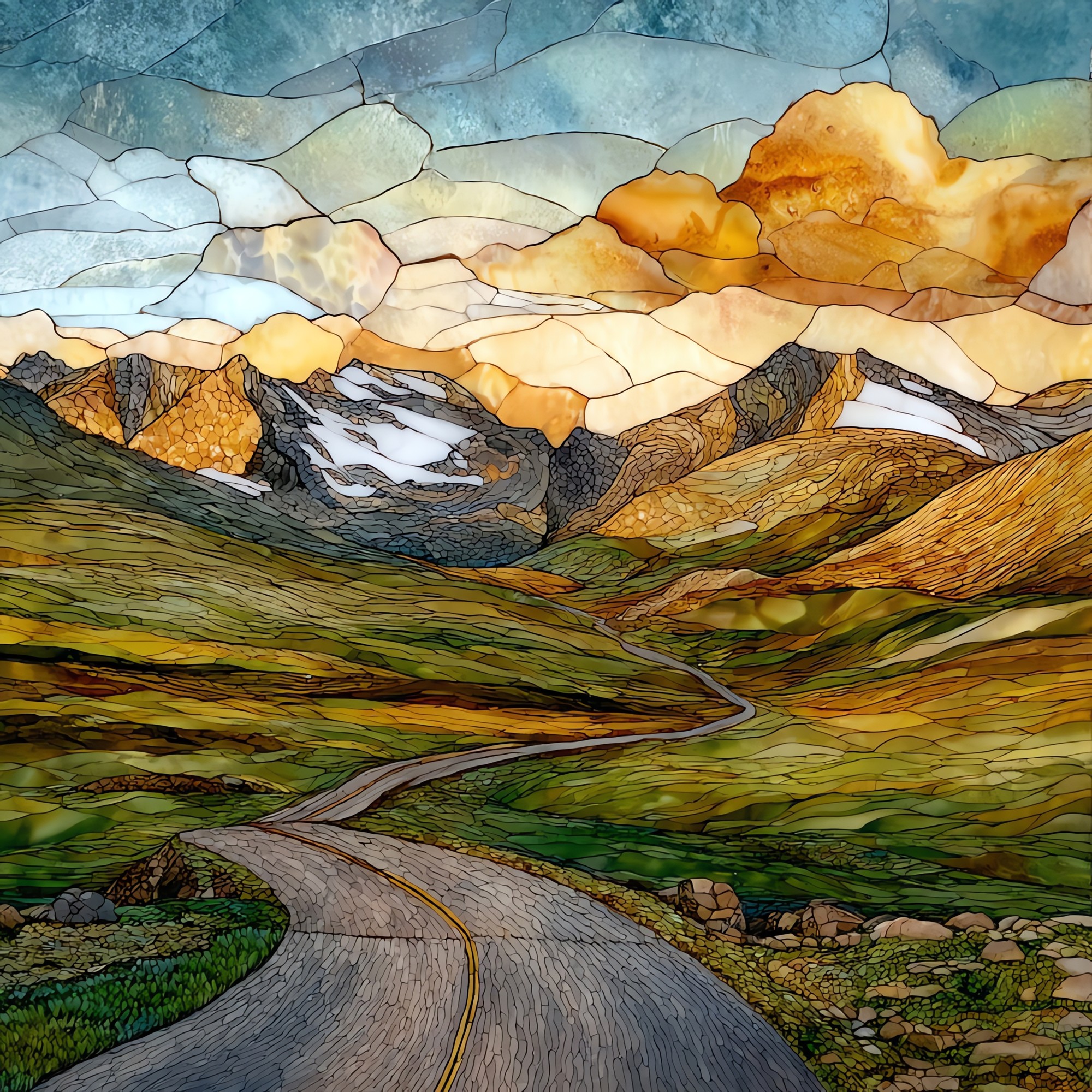
Trail Ridge Road Rocky Mountain National Park Ceramic Art Tile
shown on ceramic, 12-inch tileColorado · United States
across the top of Rocky Mountain National Park, in northern Colorado

Trail Ridge Road Rocky Mountain National Park Ceramic Art Tile

— the country above the trees.

Where it lives

Not only on a wall.

A small tile on the nightstand catching the morning. A larger one above the fire. Yours, wherever you spend the slow hours.
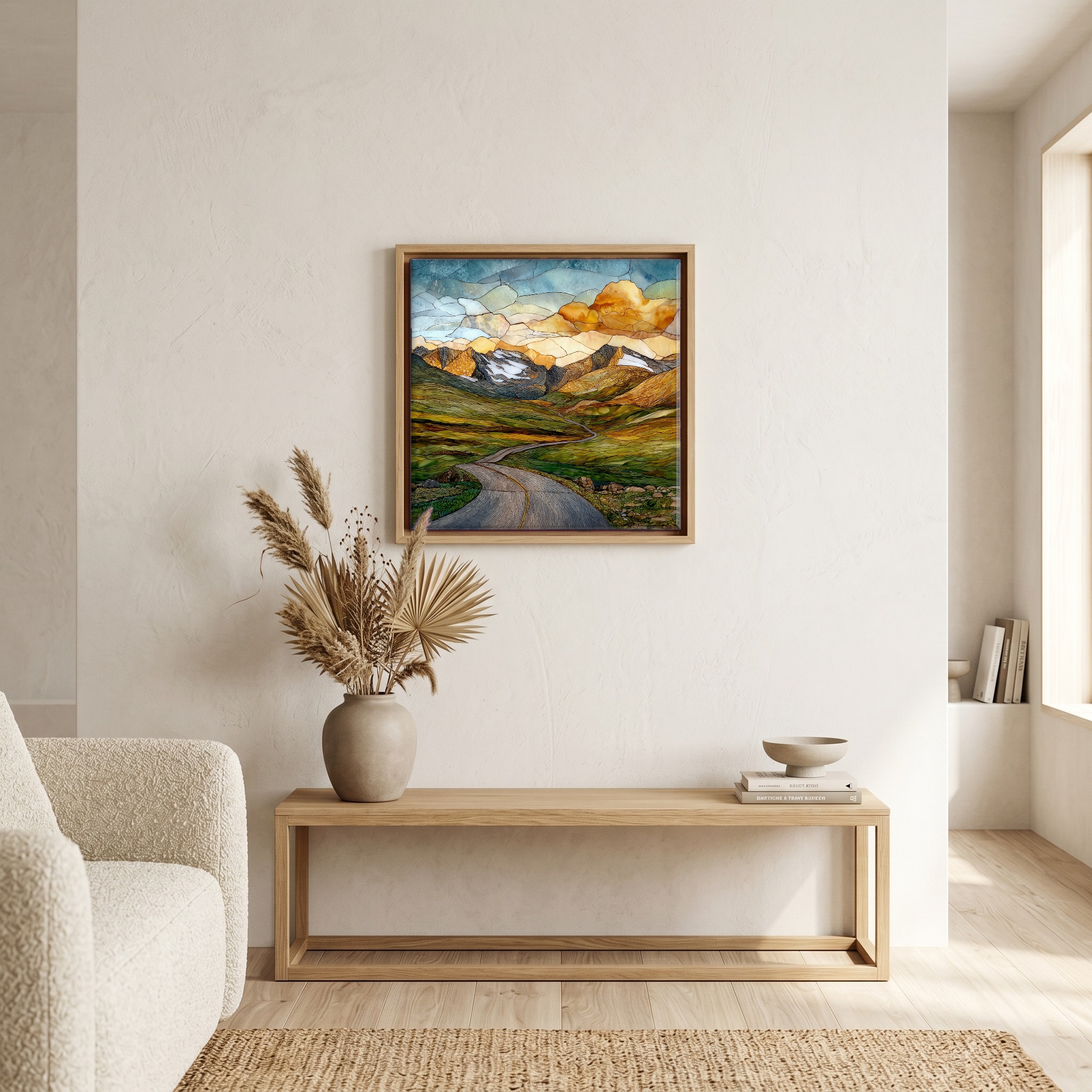
Above the bench, in a warm oak surround.
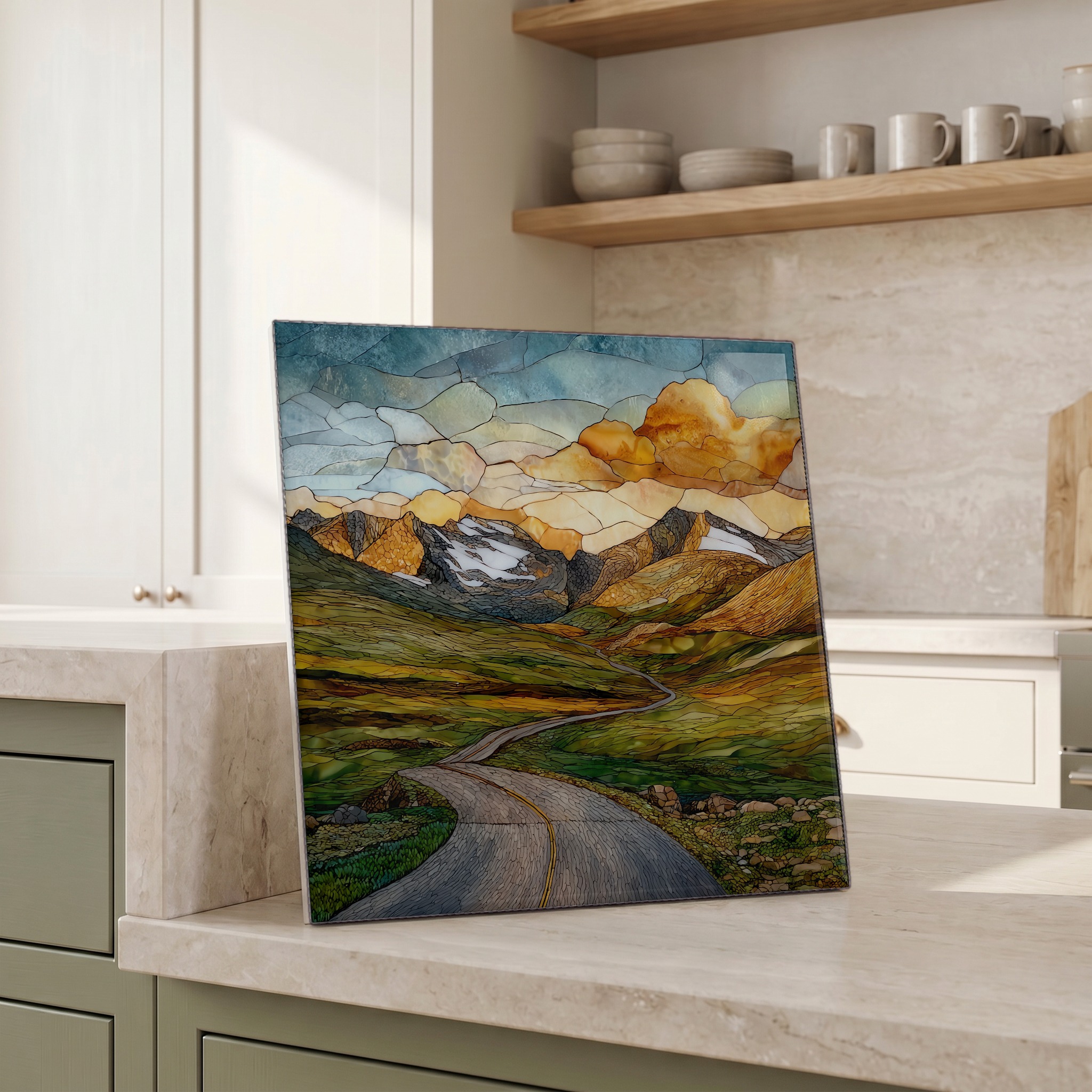
Beside the kettle, propped on the counter.
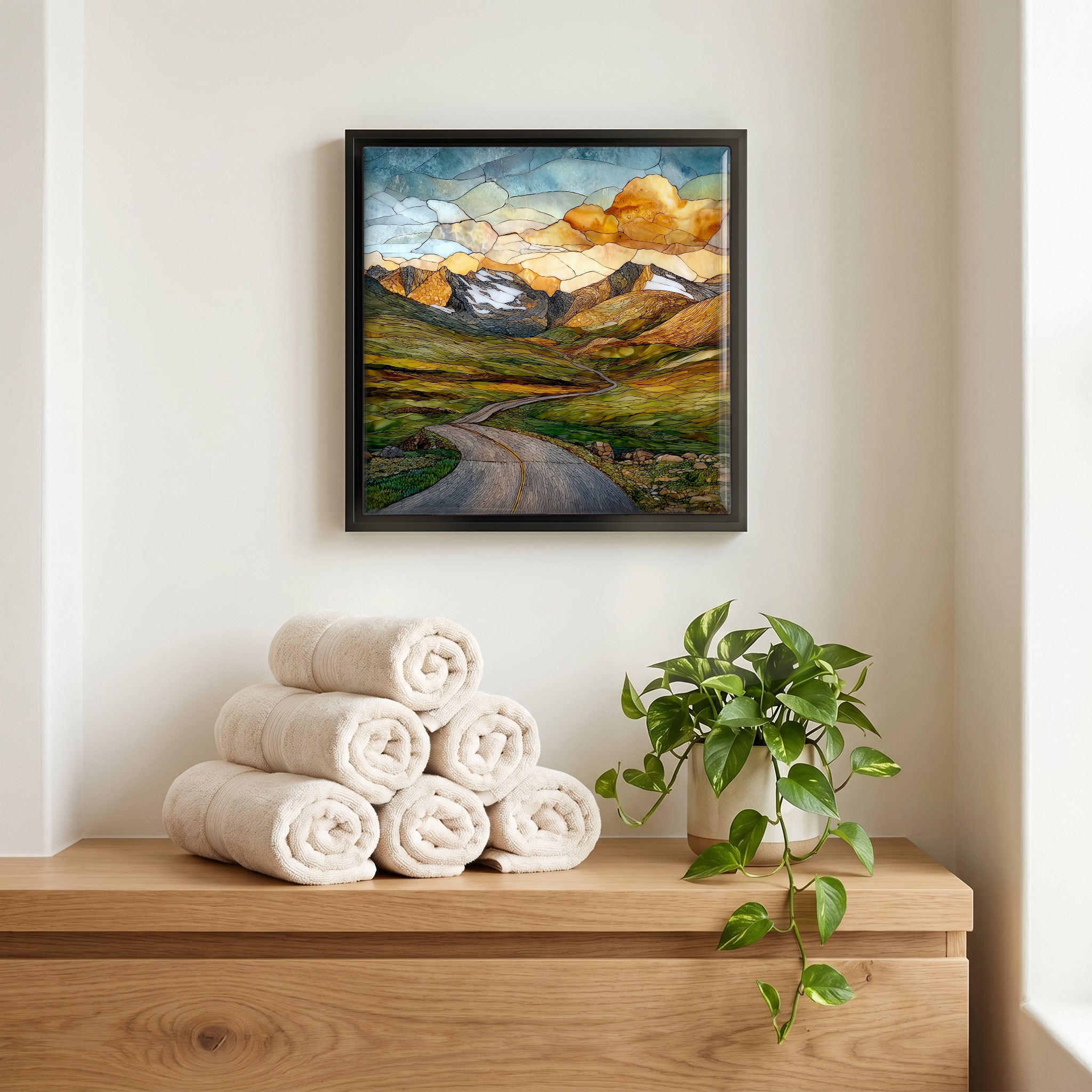
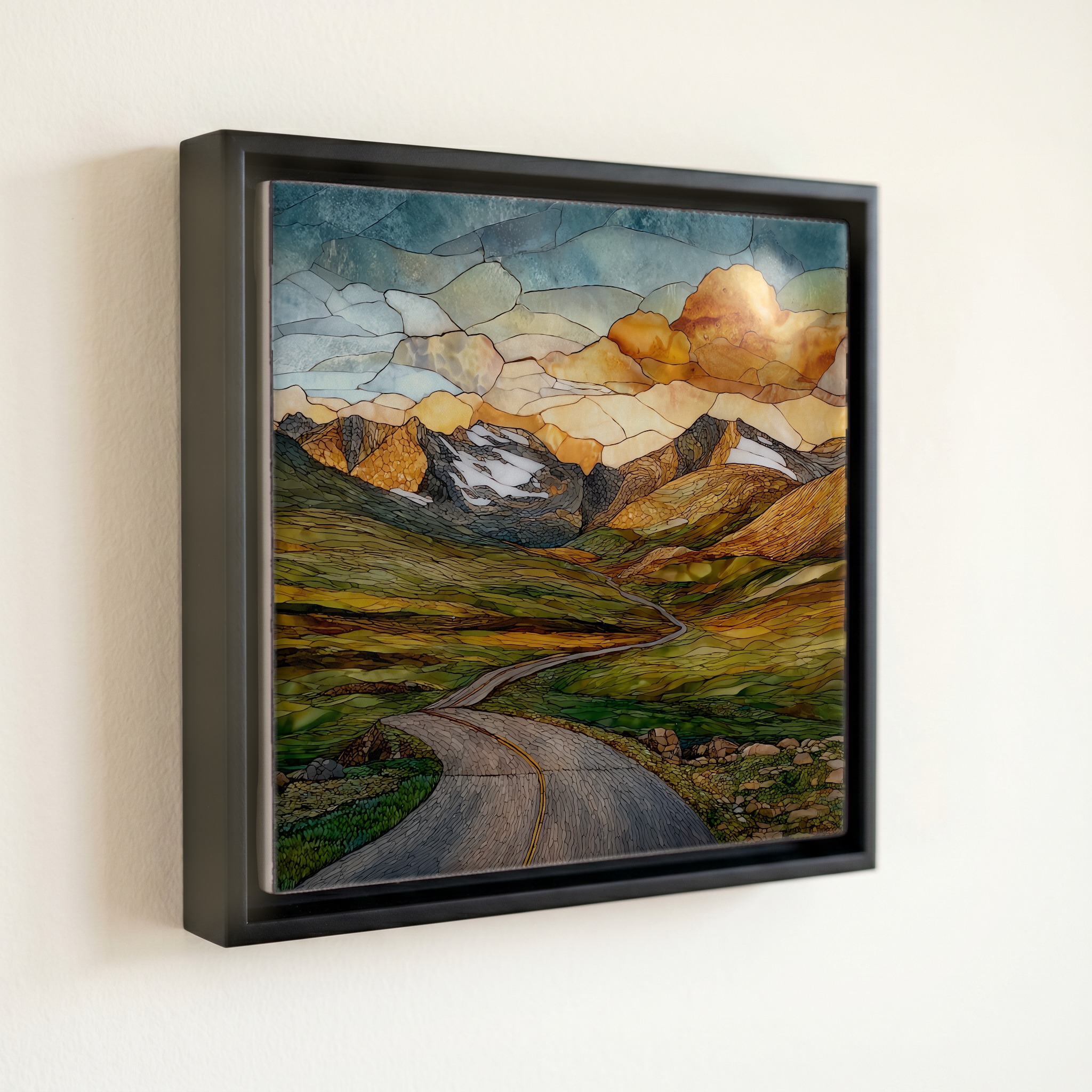
Above the linens, in a slim black surround.
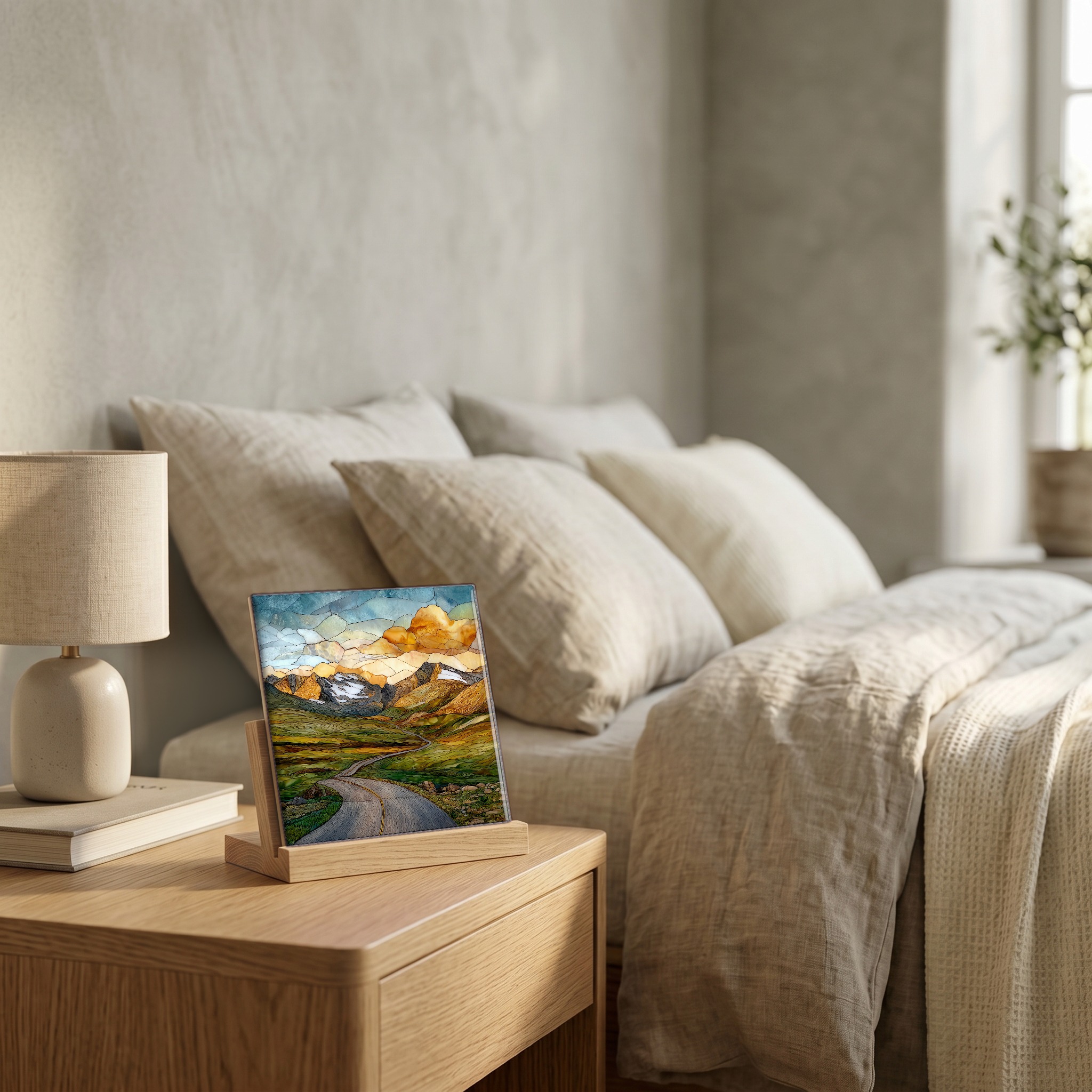
On the nightstand, on a light oak stand.
On a picture ledge, where the light comes in.
a note from the studio

Forty-eight miles of pavement across the top of Rocky Mountain National Park, climbing to 12,183 feet at the summit. It is the highest continuous paved road in North America. Eight of those miles run through alpine tundra, country above where any tree can grow. Pull-offs at Rainbow Curve and Forest Canyon. The Ute crossed this ridge for centuries before the road existed; their stone cairns still mark the older route over Forest Canyon Pass. Closed by snow from late October until Memorial Day, when crews dig out drifts that can stand twenty-five feet deep.
from the studio
shown in a slim black floating frame · 6 × 6 in
— bring it home

Trail Ridge Road Rocky Mountain National Park Ceramic Art Tile, on ceramic.

Each tile is finished by hand in our Knoxville studio. Artwork is slowly infused into the ceramic surface under high heat and pressure, and rests beneath a thin glossy finish. The colour lives in the surface, not on top of it.

What kind of piece?
One tile — square or rectangle.
How big?
the popular one — counter, shelf, nightstand
6 × 6 in · 15 cm · 1.6 lb
Surface finish
A clear glossy finish — the artwork reads as if under resin. Ideal for show-pieces and framed wall art.
How it sits
A hidden cleat — sits ¼″ proud of the wall.
$58
Hand-finished and shipped from our studio at the foot of the Smokies. On your wall in about ten days.
size
6 × 6 in
15 cm
weighs
1.6 lb
solid in the hand
surface
ceramic, hand-finished
art rests beneath a thin glossy finish
from
Knoxville, TN
our family studio, at the foot of the Smokies
— start a Coaster Set

Pick any four 4-inch tiles — National Parks you've been to, a Smokies set, the four seasons of one place. $ for a set of , cork-backed, ready to live on the table.
comes gift-ready
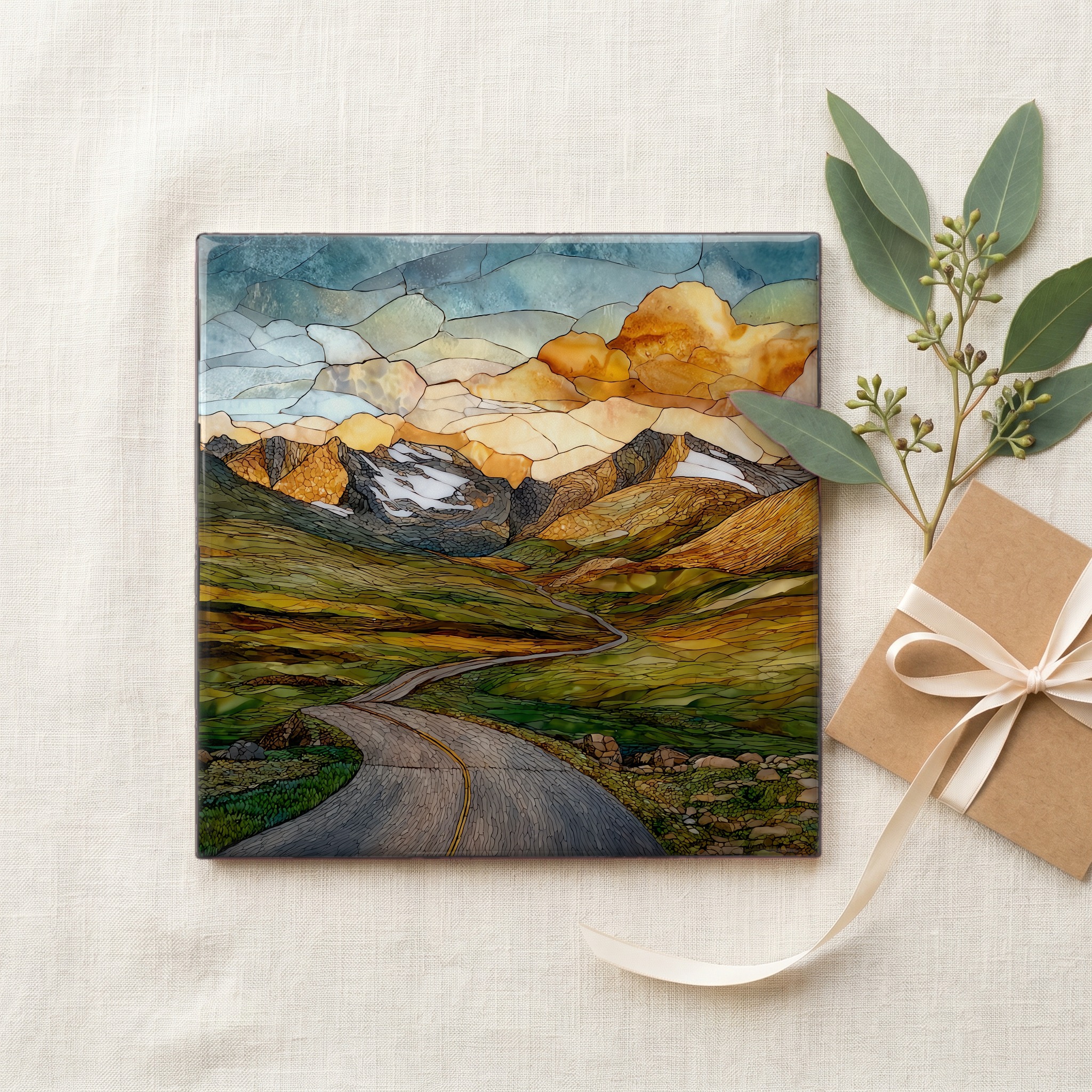
comes gift-ready

Each tile ships in a kraft box, tied with cream ribbon, with a handwritten note from the studio if you'd like to add one.
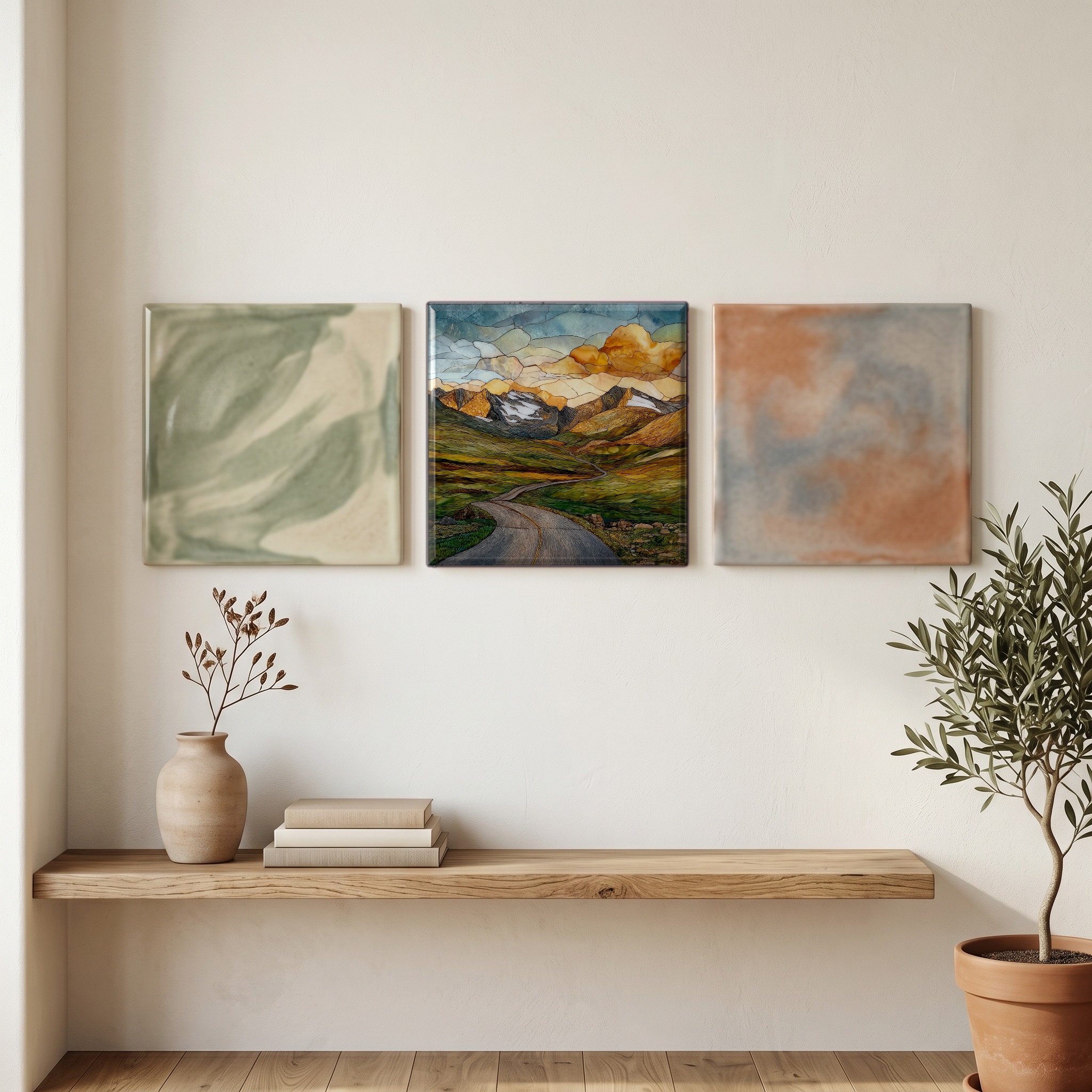
or build a grouping
or build a grouping

Three or five different vistas, hung together — a chapter of places you've been, or want to go.

about Trail Ridge Road Rocky Mountain National Park Ceramic Art Tile

The place, in three passes.

A little of what's known, in case you fall down the rabbit hole — or want to go see it yourself.
the place

Trail Ridge Road is the forty-eight-mile stretch of U.S. Highway 34 that crosses Rocky Mountain National Park in northern Colorado, climbing from Estes Park in the east to Grand Lake in the west. The road tops out at 12,183 feet near Gore Range Overlook, making it the highest continuous paved road in North America. Eleven miles sit above 11,000 feet; four miles never drop below 12,000. The route crosses the Continental Divide at Milner Pass, elevation 10,755 feet. The Alpine Visitor Center, perched at 11,796 feet at Fall River Pass, is the highest visitor center in the National Park System. Built between 1929 and 1938, the road follows a ridgeline used for generations by the Ute and Arapaho.

the air

Above 11,400 feet the trees end and the country opens into alpine tundra. Eight miles of Trail Ridge Road run through this band, a treeless landscape of cushion plants, lichen-crusted granite, and grasses that anchor against winds the National Park Service has measured past 150 miles per hour. Marmots and pikas keep house under the boulders; bighorn sheep work the slopes off Rainbow Curve. The plants here grow on a timescale most ridges do not. A cushion pink less than four inches across may be two centuries old. The Tundra Communities Trail, a half-mile paved walk near the high point, threads through this country at 12,110 feet. The first frost can arrive in any month of the year.

the season

The road opens around Memorial Day weekend and closes with the first major October snowstorm, a window of roughly five months and often shorter. Park crews begin plowing in mid-April, working from both ends through drifts that can stand twenty-five feet deep on the wetter western side. July and August carry the strongest afternoon storms, which build over the Continental Divide most days by two o'clock and can drop hail on the high passes within minutes. The wildflower bloom runs late June through July at lower elevations and through August on the tundra, where the growing season compresses into about ten weeks. Aspens turn gold the third week of September on the lower stretches. Sunset light on the Mummy Range, seen from Many Parks Curve, holds for about twenty minutes.

where
United States · Larimer and Grand Counties, Colorado
within
Rocky Mountain National Park
elevation
3,713 m · 12,183 ft
position
40.4264° N · 105.7553° W
the neighborhood

What's nearby.

A handful of named places within an hour's walk or short drive. Some we've already painted; some we will.
3 km NE
Alpine Visitor Center
visitor center
7 km SW
Milner Pass
Continental Divide pass
14 km S
Bear Lake
alpine lake
17 km SE
Longs Peak
14er summit
12 km SE
Sprague Lake
subalpine lake
27 km E
Estes Park
gateway town
28 km W
Grand Lake
gateway town and natural lake
3 km NE
Old Fall River Road
one-way scenic road
N
Trail Ridge Road Rocky Mountain National Park Ceramic Art Tile
Alpine Visitor Center
Milner Pass
Bear Lake
Longs Peak
Sprague Lake
Estes Park
Grand Lake
common questions

What people ask.

A few questions we get about Trail Ridge Road Rocky Mountain National Park Ceramic Art Tile — and about bringing the piece home.
about the place

Trail Ridge Road is the 48-mile stretch of U.S. Highway 34 that crosses Rocky Mountain National Park in northern Colorado, running between Estes Park on the east and Grand Lake on the west. It crosses the Continental Divide at Milner Pass.

The road tops out at 12,183 feet near Gore Range Overlook, making it the highest continuous paved road in North America. Eleven miles sit above 11,000 feet, and four miles never drop below 12,000.

The full road is typically open from around Memorial Day weekend in late May to mid-October, depending on snow. Park crews begin plowing in mid-April, sometimes through drifts twenty-five feet deep. The lower sections from Estes Park to Many Parks Curve stay open through winter.

The road is famous for crossing eight miles of alpine tundra, a treeless landscape above 11,400 feet, and for reaching 12,183 feet without leaving pavement. It is the only road in the National Park System that does so, and the highest continuous paved road in North America.

The National Park Service built it between 1929 and 1938, championed by superintendent Roger Toll and engineered to replace the older one-way Fall River Road. Crews worked short summer seasons and finished the eastern section first, opening it to traffic in 1932.

The ridge had been crossed for centuries by the Ute and the Arapaho, who left stone cairns marking the older Forest Canyon Pass route. The present-day Ute Trail follows part of that ancient path. The road takes its name from these prehistoric pathways across the treeless ridge.

Yes. The Alpine Visitor Center sits at 11,796 feet at Fall River Pass, the highest visitor center in the National Park System. It is open from late May to mid-October, and is reached only when the road itself is open.

about the piece in your home

It has been a meaningful gift for many of our customers with ties to Rocky Mountain National Park. The drive sits in the memory of nearly anyone who has made it, the moment the trees end and the long view east toward the Mummy Range opens up. A Small or Medium with a handwritten note from the studio carries well.

The tile reads well in Mountain-modern interiors, Cabin-modern, and Jewel-tone Maximalist rooms, where the blues and stormlight tones of the painting hold against wood, leather, and warm stone. Quieter settings like a hallway or a study let the color do the work.

Yes. Alpine modern leans on natural texture, a deep mountain palette, and one strong piece of artwork over a restrained background. This tile fits that brief: saturated pigment, a clear subject, a hand-finished surface that catches light. The Large or a 4-tile Mural anchors a room without competing with wood or stone.

For a sofa or a wide console, the Large is the standard single-tile choice. For a longer wall, a 4-tile Mural reads as one composition, and a 9-tile Mural carries above a sectional or a king bed. Smaller pieces like the Medium or a Coaster Set work better grouped at eye level.

Yes, in the Dura Satin or Matte finish. Both are scratch-resistant and stand up to humidity and splash, which makes them suited to backsplashes, shower walls, and powder-room installations. The Glossy finish is reserved for framed wall pieces in dry rooms.

A microfibre cloth and plain water. The color is slowly infused into the ceramic surface under high heat and pressure, so it will not fade or scratch off with ordinary cleaning. Avoid bleach, acidic cleaners, and abrasive pads.

Yes. Every WenderVista piece is painted in-house at Wender Studios in Knoxville, Tennessee, by Reid Wender. We do not license third-party imagery. The Trail Ridge Road piece was painted from the curator's eye on Rocky Mountain National Park and the country above the trees.

if this one stayed with you

A few you might also love.

Hand-picked by the eye that found Sorapis. Same air, same kind of quiet.