Wender·Vista
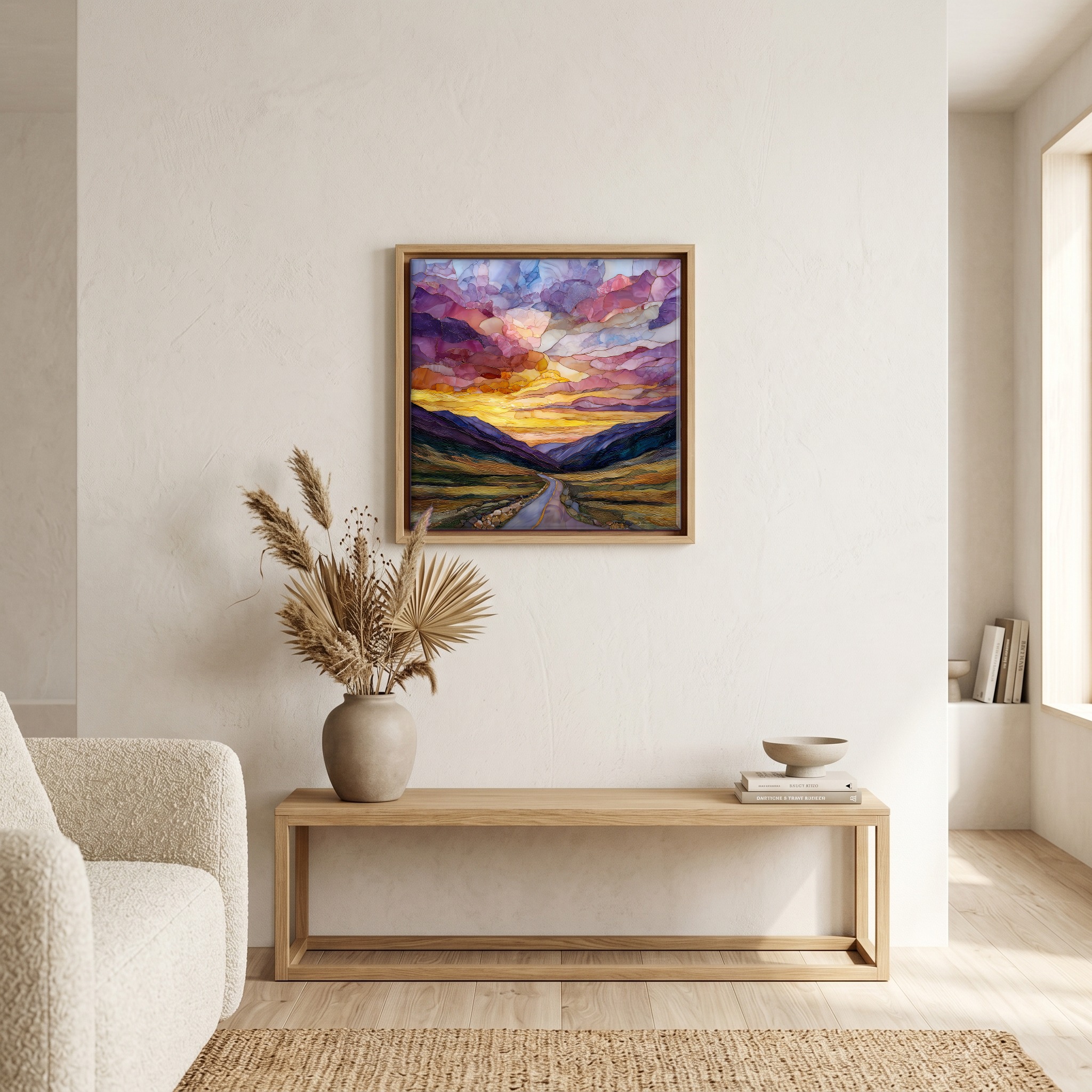
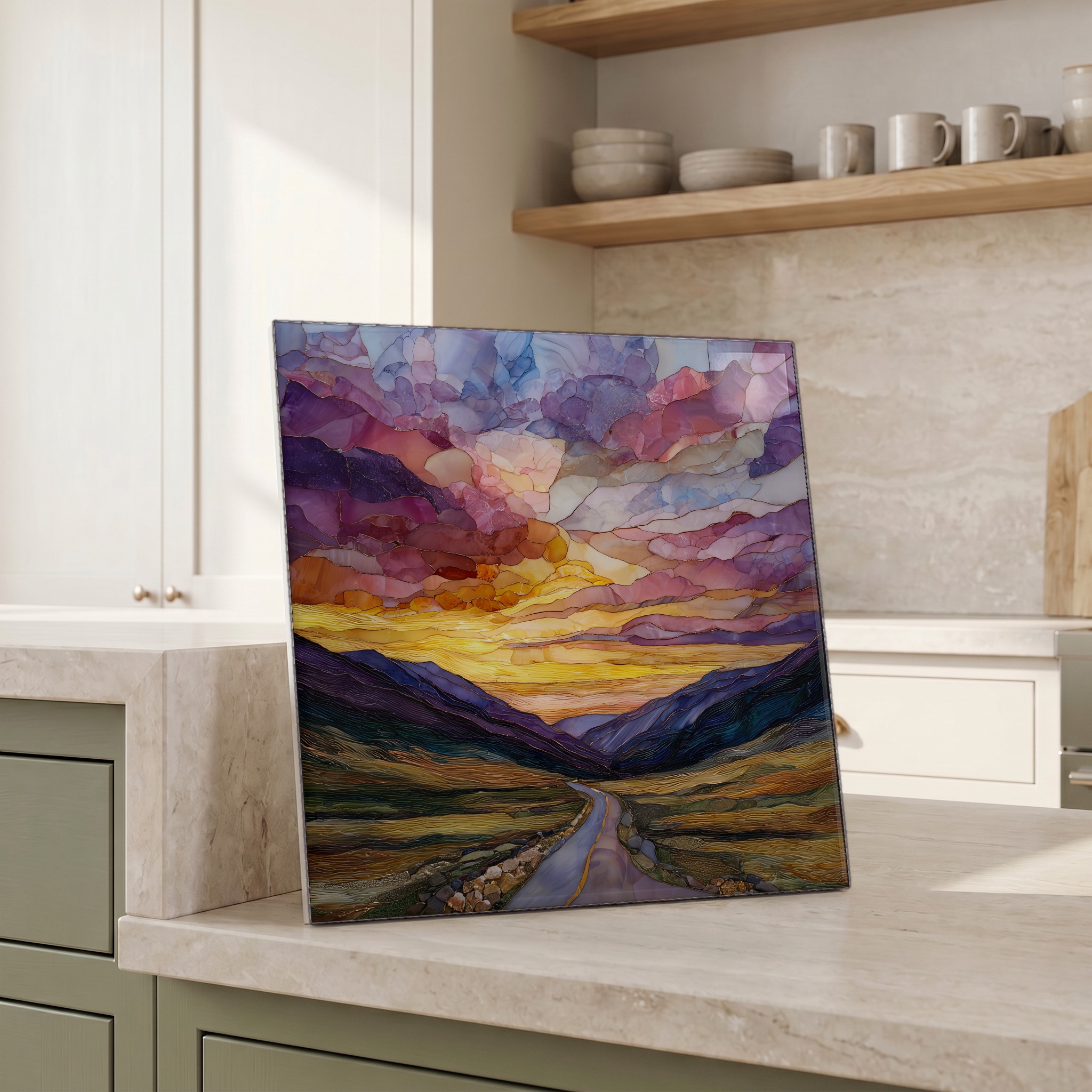
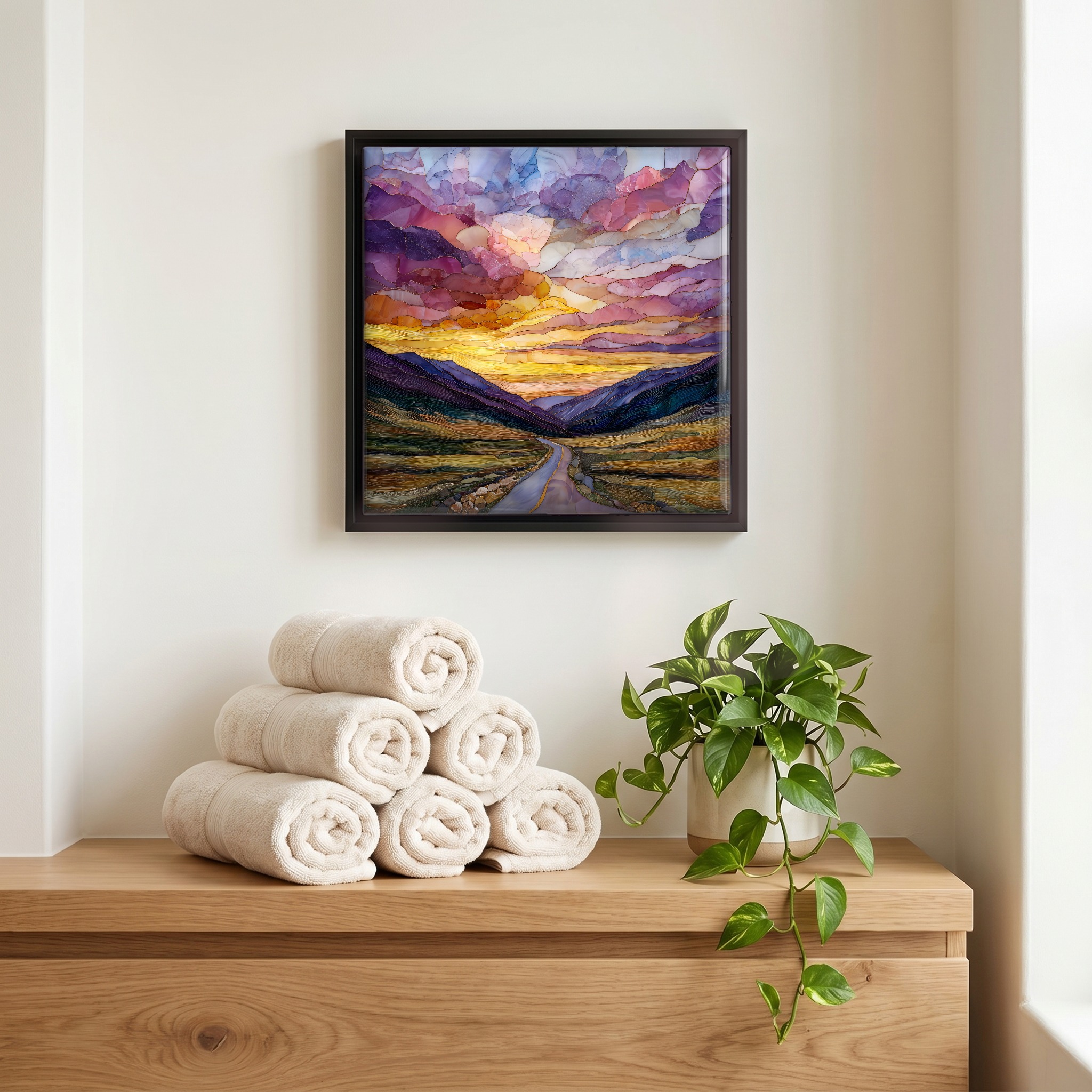
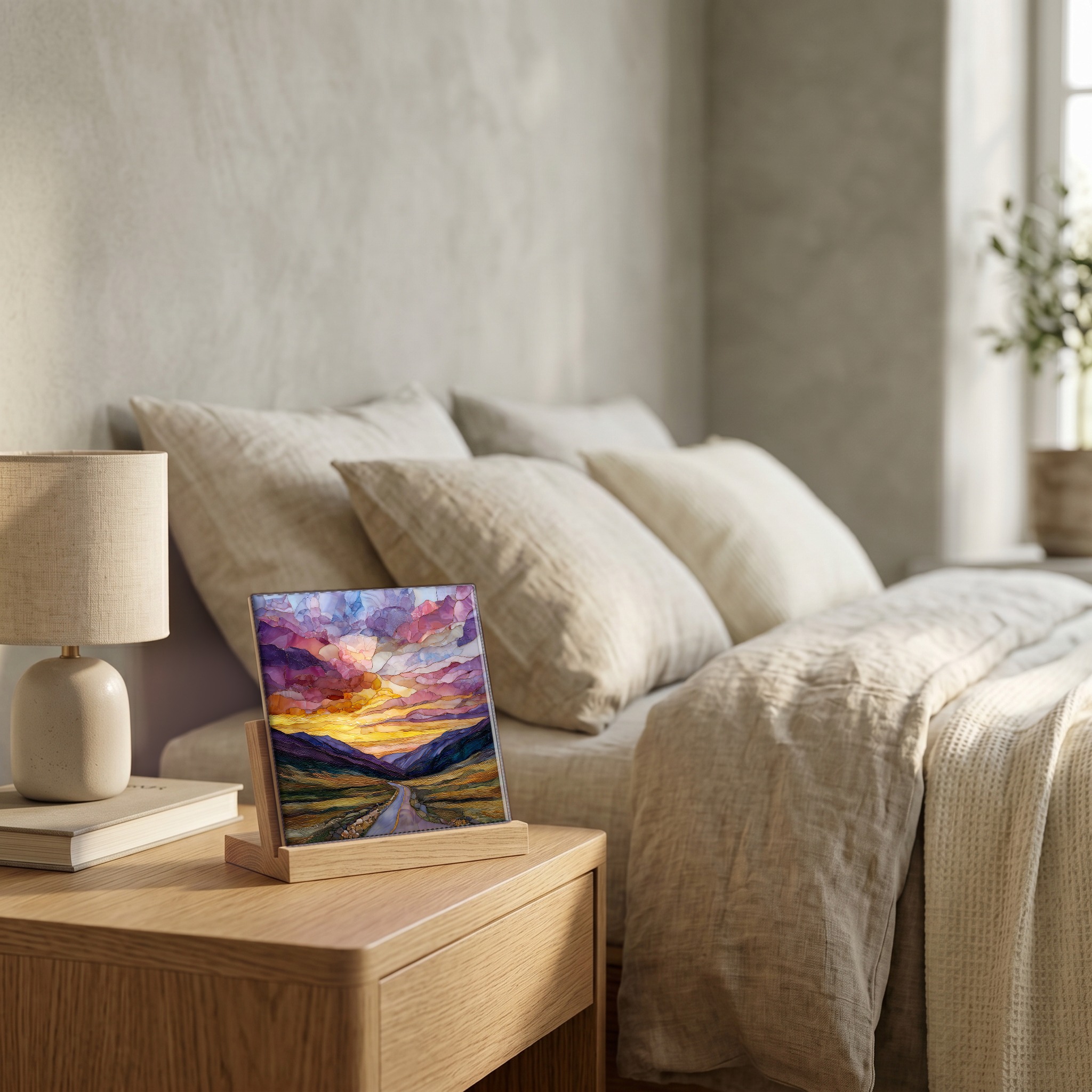
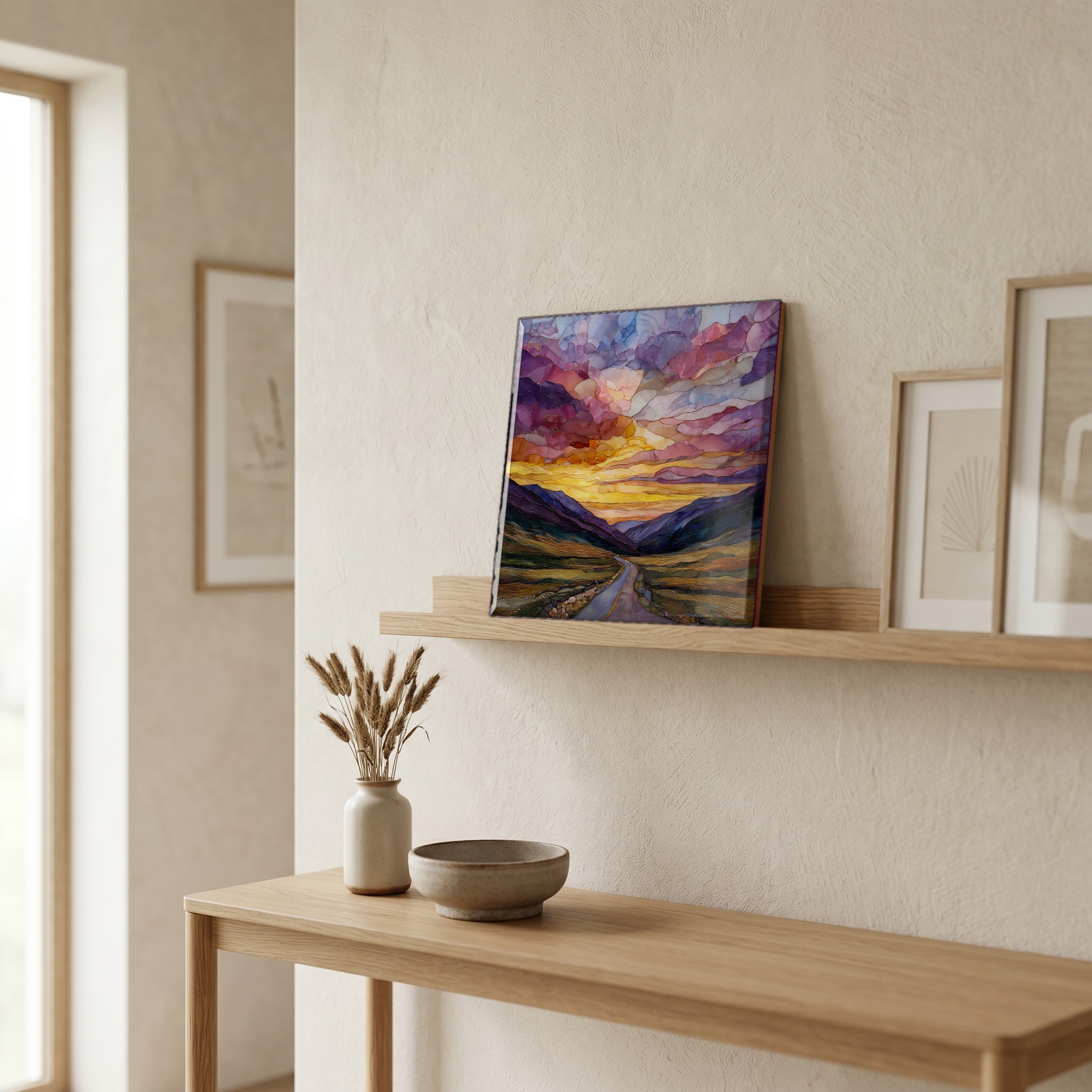
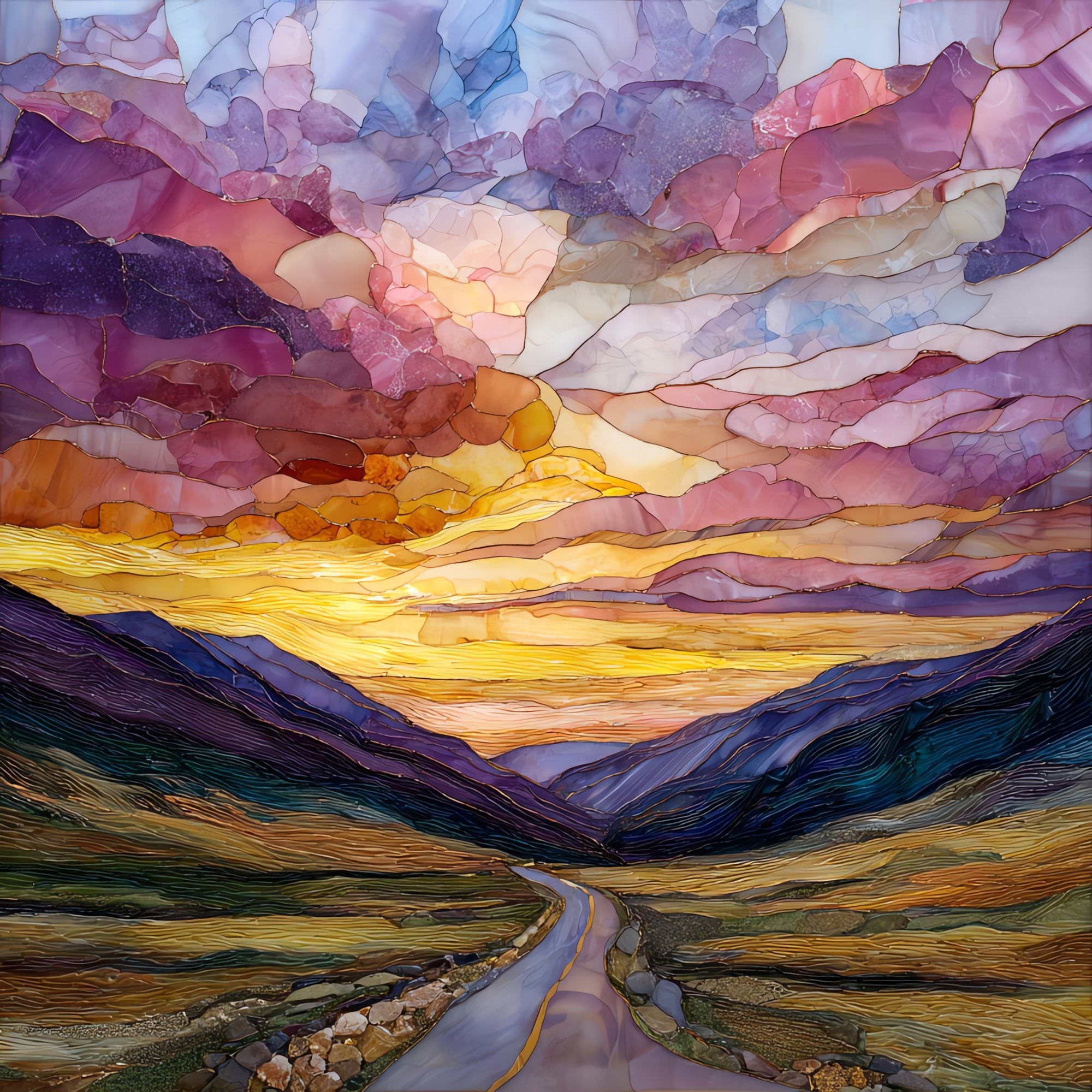
Trail Ridge byway sunset Rocky Mountain National Park Ceramic Art Tile
shown on ceramic, 12-inch tileColorado · United States
in Rocky Mountain National Park, between Estes Park and Grand Lake

Trail Ridge byway sunset Rocky Mountain National Park Ceramic Art Tile

— the hour the tundra keeps the colour.

Where it lives

Not only on a wall.

A small tile on the nightstand catching the morning. A larger one above the fire. Yours, wherever you spend the slow hours.
Above the bench, in a warm oak surround.
Beside the kettle, propped on the counter.
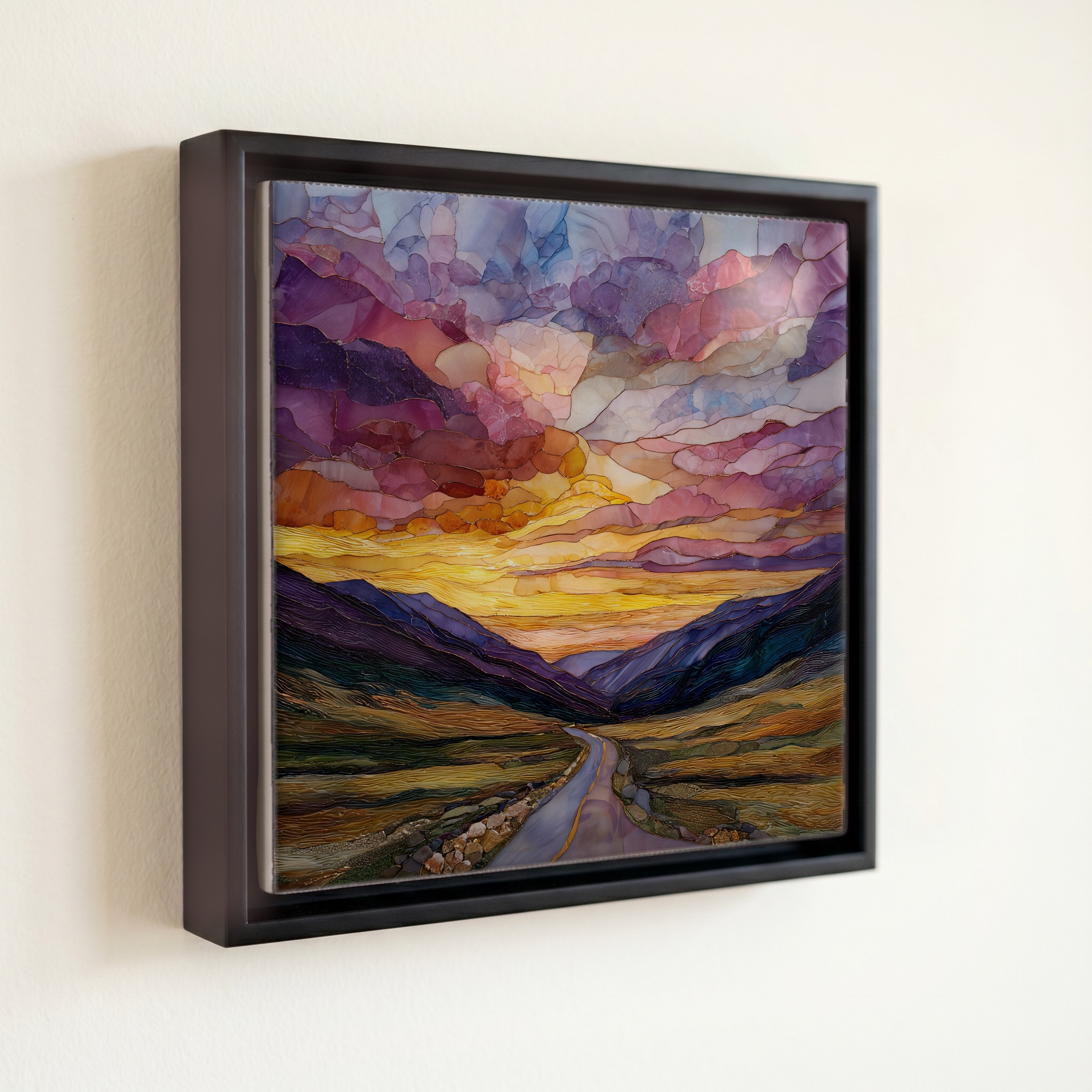
Above the linens, in a slim black surround.
On the nightstand, on a light oak stand.
On a picture ledge, where the light comes in.
a note from the studio

The highest continuous paved road in North America. Forty-eight miles between Estes Park and Grand Lake, crossing the Continental Divide at Milner Pass. Eleven miles of it run above 11,500 feet through alpine tundra, the same plant community that grows north of the Arctic Circle. Closed by snow most of the year; open from Memorial Day to mid-October if the weather holds. Late in the day the light arrives nearly unfiltered up here. The sun drops behind the Never Summer Mountains and the tundra holds the colour, brown to copper to violet, while the Mummy Range to the north stays warm a little longer.
from the studio
shown in a slim black floating frame · 6 × 6 in
— bring it home

Trail Ridge byway sunset Rocky Mountain National Park Ceramic Art Tile, on ceramic.

Each tile is finished by hand in our Knoxville studio. Artwork is slowly infused into the ceramic surface under high heat and pressure, and rests beneath a thin glossy finish. The colour lives in the surface, not on top of it.

What kind of piece?
One tile — square or rectangle.
How big?
the popular one — counter, shelf, nightstand
6 × 6 in · 15 cm · 1.6 lb
Surface finish
A clear glossy finish — the artwork reads as if under resin. Ideal for show-pieces and framed wall art.
How it sits
A hidden cleat — sits ¼″ proud of the wall.
$58
Hand-finished and shipped from our studio at the foot of the Smokies. On your wall in about ten days.
size
6 × 6 in
15 cm
weighs
1.6 lb
solid in the hand
surface
ceramic, hand-finished
art rests beneath a thin glossy finish
from
Knoxville, TN
our family studio, at the foot of the Smokies
— start a Coaster Set

Pick any four 4-inch tiles — National Parks you've been to, a Smokies set, the four seasons of one place. $ for a set of , cork-backed, ready to live on the table.
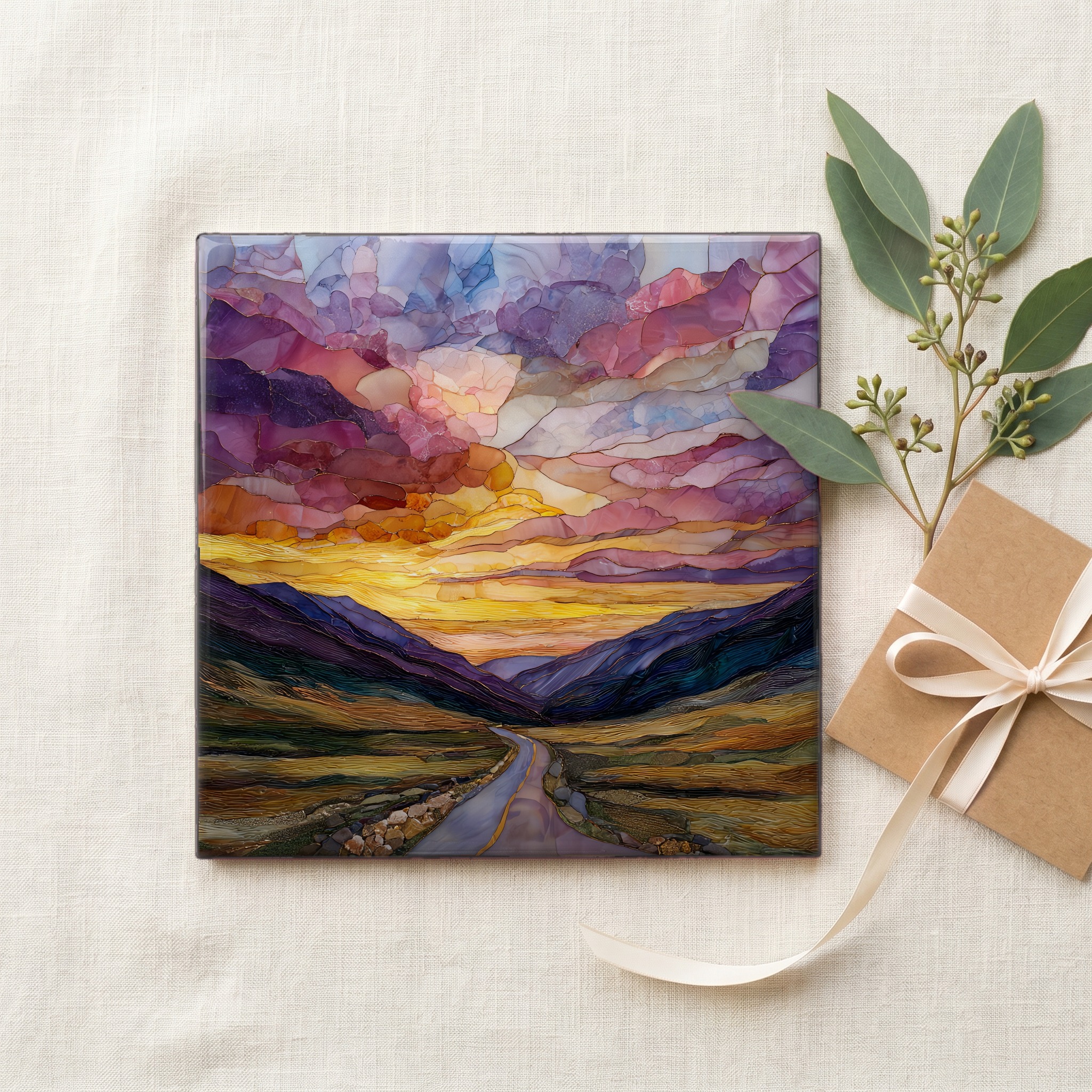
comes gift-ready
comes gift-ready

Each tile ships in a kraft box, tied with cream ribbon, with a handwritten note from the studio if you'd like to add one.
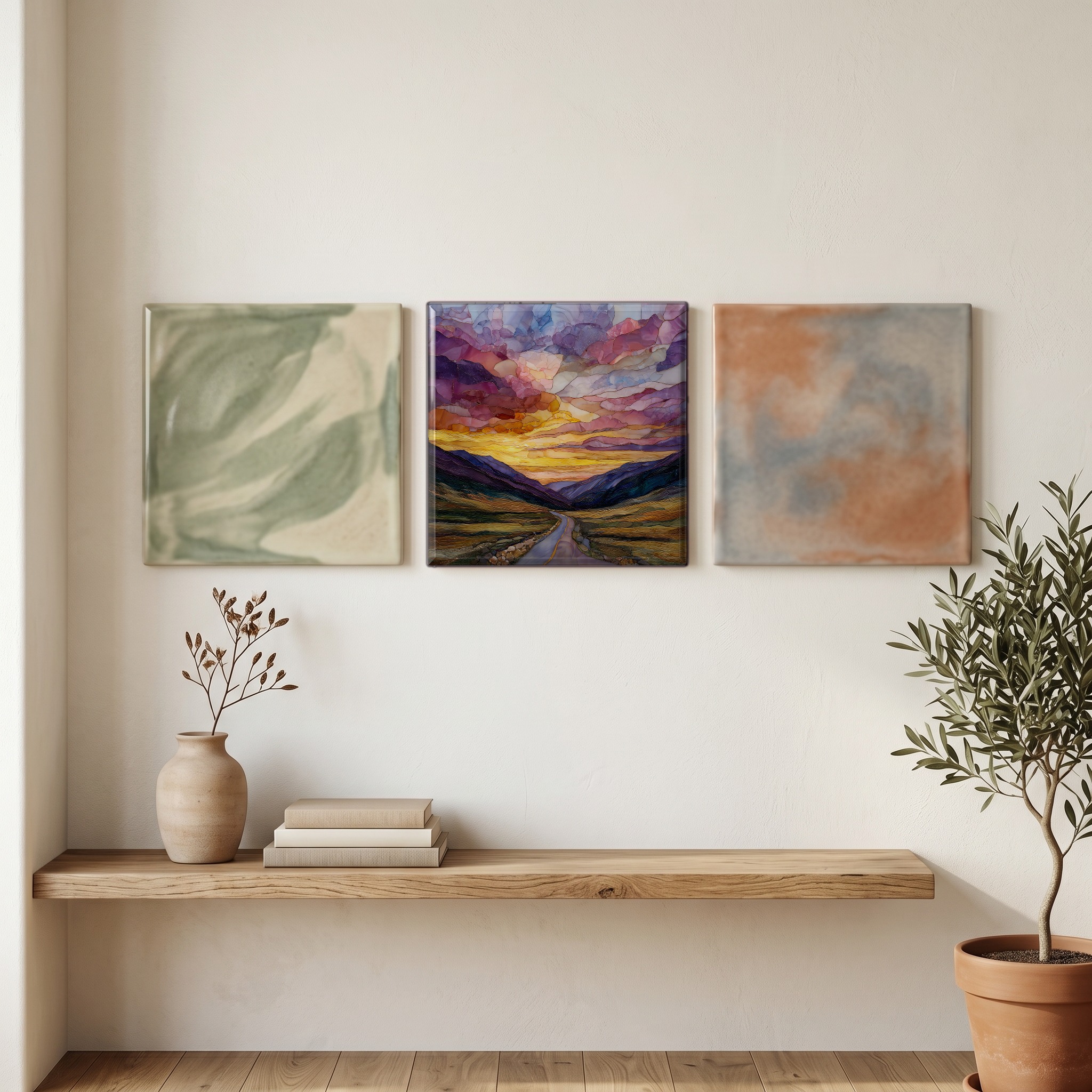
or build a grouping
or build a grouping

Three or five different vistas, hung together — a chapter of places you've been, or want to go.

about Trail Ridge byway sunset Rocky Mountain National Park Ceramic Art Tile

The place, in three passes.

A little of what's known, in case you fall down the rabbit hole — or want to go see it yourself.
the place

Trail Ridge Road is U.S. Highway 34 through Rocky Mountain National Park in north-central Colorado. The 48-mile route runs between the town of Estes Park on the east side and Grand Lake on the west, crossing the Continental Divide at Milner Pass at 10,758 feet. Construction began in 1929 and the road opened in 1932, replacing Old Fall River Road as the main park crossing. The high point sits at 12,183 feet, the highest continuous paved road in North America, with about eleven miles of the route running above treeline through alpine tundra. The Alpine Visitor Center near Fall River Pass sits at 11,796 feet.

the light

At 12,000 feet the atmosphere is thin enough that the late light arrives nearly unfiltered. There is little dust, less moisture than in the valleys below, and almost no vegetation to absorb it. The bare ridgelines and alpine tundra hold colour for several minutes after the sun drops behind the Never Summer Mountains and the Continental Divide peaks to the west. The Mummy Range to the north, lit at a low angle, stays warm a little longer. Photographers favour the high overlooks: Rock Cut, the Gore Range Overlook, the Lava Cliffs. In summer the sun sets around 8:30 in the evening; by late September it is gone by 7.

the season

Trail Ridge Road is the highest seasonally closed highway in the United States. The National Park Service typically opens the road around Memorial Day weekend in late May, depending on plow progress through the season's snowpack, and closes it by mid-October when winter storms set in. Snow falls at this elevation in every month of the year, and the road can close on short notice for high wind, lightning, or whiteout. The most settled stretch falls between July and early September. By late September the aspens below treeline turn gold and the tundra grasses go copper, two or three weeks before the road closes for the season.

where
United States · Larimer and Grand Counties, Colorado
within
Rocky Mountain National Park
elevation
3,713 m · 12,183 ft
the neighborhood

What's nearby.

A handful of named places within an hour's walk or short drive. Some we've already painted; some we will.
at the lake
Alpine Visitor Center
visitor center
3 km E
Forest Canyon Overlook
scenic overlook
10 km E
Many Parks Curve
scenic overlook
at the lake
Old Fall River Road
scenic highway
12 km E
Horseshoe Park
glacial valley
30 km E
Estes Park
gateway town
40 km SW
Grand Lake
gateway town
15 km SE
Longs Peak
mountain peak
N
Trail Ridge byway sunset Rocky Mountain National Park Ceramic Art Tile
Alpine Visitor Center
Forest Canyon Overlook
Many Parks Curve
Old Fall River Road
Horseshoe Park
Estes Park
Grand Lake
common questions

What people ask.

A few questions we get about Trail Ridge byway sunset Rocky Mountain National Park Ceramic Art Tile — and about bringing the piece home.
about the place

Trail Ridge Road is U.S. Highway 34 through Rocky Mountain National Park in north-central Colorado. It runs about 48 miles between Estes Park on the east side and Grand Lake on the west, crossing the Continental Divide at Milner Pass.

The high point sits at 12,183 feet, making it the highest continuous paved road in North America. About eleven miles of the route run above treeline near 11,500 feet, where only alpine tundra grows. The Alpine Visitor Center sits at 11,796 feet.

Construction began in 1929 and the road opened in 1932. It replaced Old Fall River Road, which had been the only auto route into the park's high country since 1920, and remains the main crossing through Rocky Mountain National Park today.

The road typically opens around Memorial Day weekend in late May and closes by mid-October when winter storms arrive. Snow can fall at this elevation in any month, and the exact opening date depends on plow progress through the season's snowpack.

Above treeline at 12,000 feet the air is thin and largely dust-free, so the light reaches the tundra without much scattering. The bare slopes hold colour for several minutes after the sun drops behind the Never Summer Mountains, while the Mummy Range to the north stays lit a little longer.

The road crosses the Continental Divide at Milner Pass, elevation 10,758 feet. From here, water flows west to the Pacific via the Colorado River and east to the Gulf of Mexico via the South Platte. A short marked trail leads from the pass to Poudre Lake.

Elk graze the tundra in summer and bugle in the lower meadows during the autumn rut. Yellow-bellied marmots and pikas live in the boulder fields along the upper miles. Bighorn sheep frequent the cliffs near Rock Cut, and white-tailed ptarmigan nest in the alpine zone.

about the piece in your home

It carries well for someone with that drive in their memory. The light above treeline at sunset is what most people who make the climb remember. A Small or Medium with a handwritten note from the studio fits a writing desk or a reading-room shelf.

The sunset palette of copper, violet, and slate sits well in mountain-modern rooms, jewel-tone maximalist spaces, and rooms with warm wood and stone. It also reads well against deep navy or forest-green walls, where the warm tones come forward.

Mountain-modern interiors have moved toward warmer, more saturated artwork in recent years, set against deep greens, warm wood, and stone. The stained-glass treatment of a Colorado high-country sunset reads as both painterly and graphic, which is the register the style is currently drawing on.

For a standard sofa, a single Large or a four-tile Mural carries the wall. For a console table or a narrow entry, a Medium reads well. For a long living-room or stairwell wall, the nine-tile Mural arrangement holds the eye.

Yes, in the Dura Satin or Matte finish. Both are scratch-resistant and stand up to humidity, splashes, and regular cleaning. The Glossy finish is recommended for framed wall pieces and dry rooms only.

A soft microfiber cloth with water is enough for routine cleaning. The colour is slowly infused into the ceramic surface under high heat and pressure beneath a thin glossy finish, so it does not lift, fade, or scratch with normal use.

Yes. Every WenderVista piece is created in-house by Reid Wender, the curator and eye behind the studio. We do not license artwork from third parties, and we do not reproduce other artists' work.

if this one stayed with you

A few you might also love.

Hand-picked by the eye that found Sorapis. Same air, same kind of quiet.