Wender·Vista
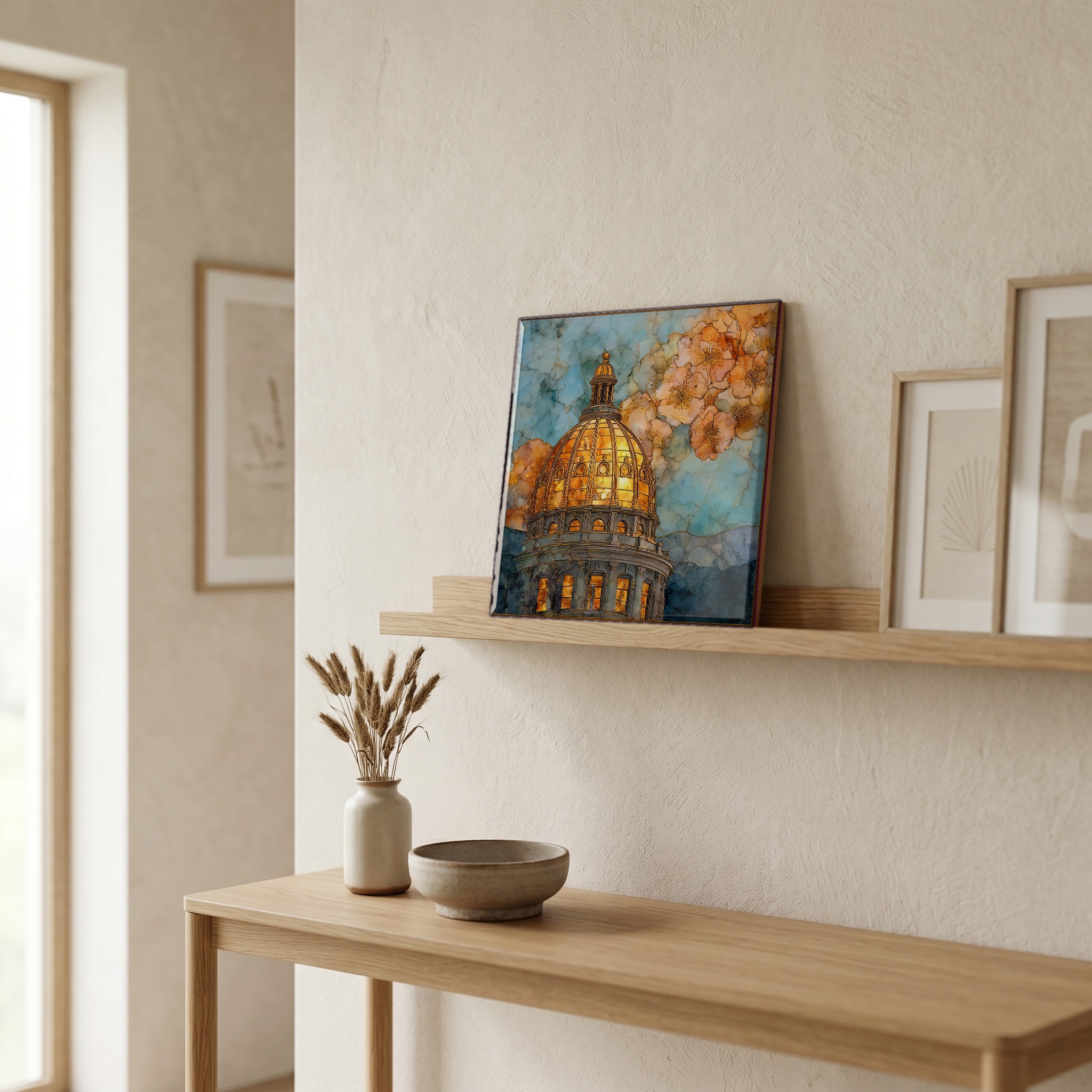
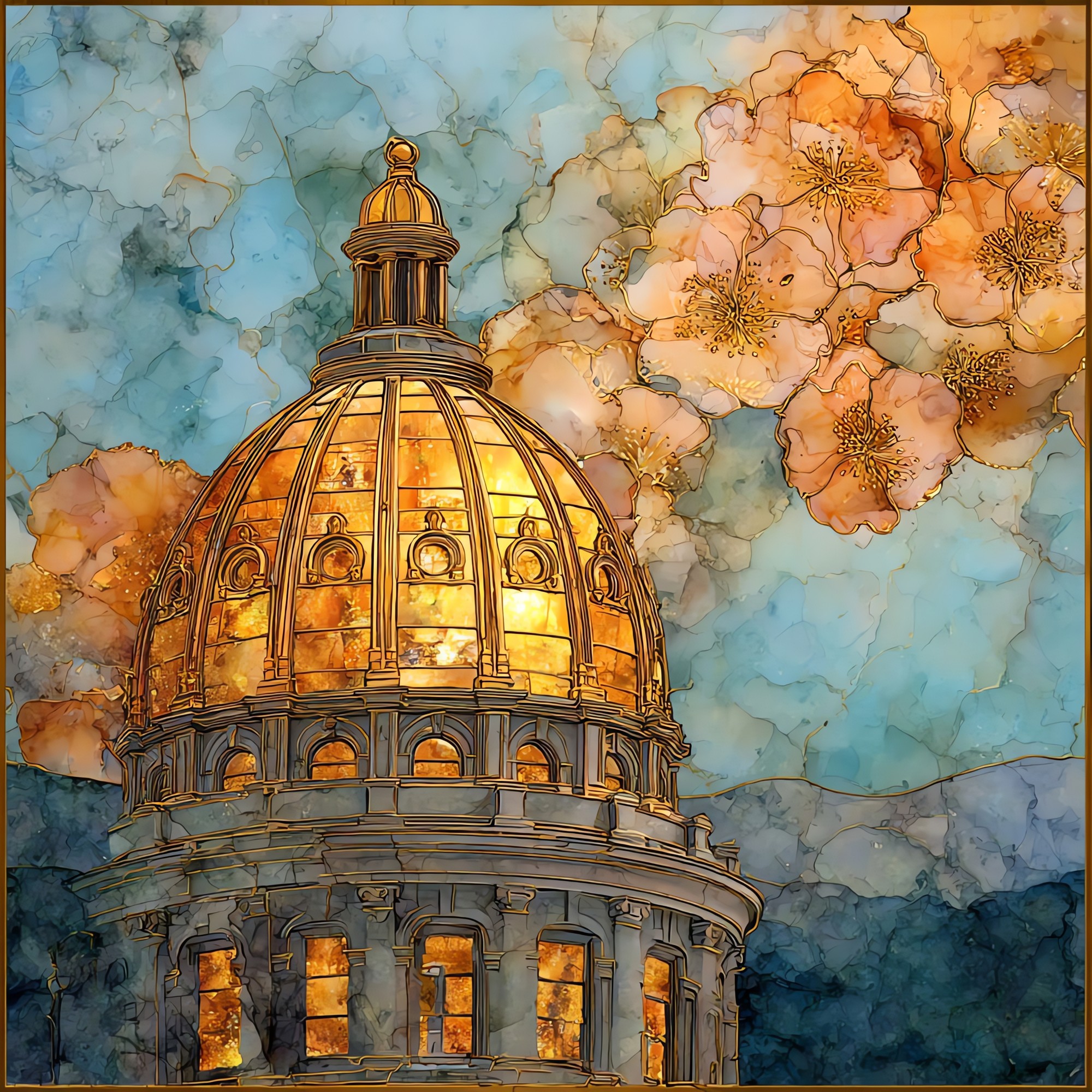
Colorado State Capitol dome Denver Metro Ceramic Art Tile
shown on ceramic, 12-inch tileColorado · United States
in downtown Denver, where the plains meet the Front Range

Colorado State Capitol dome Denver Metro Ceramic Art Tile

Colorado gold on Colorado granite.

Where it lives

Not only on a wall.

A small tile on the nightstand catching the morning. A larger one above the fire. Yours, wherever you spend the slow hours.
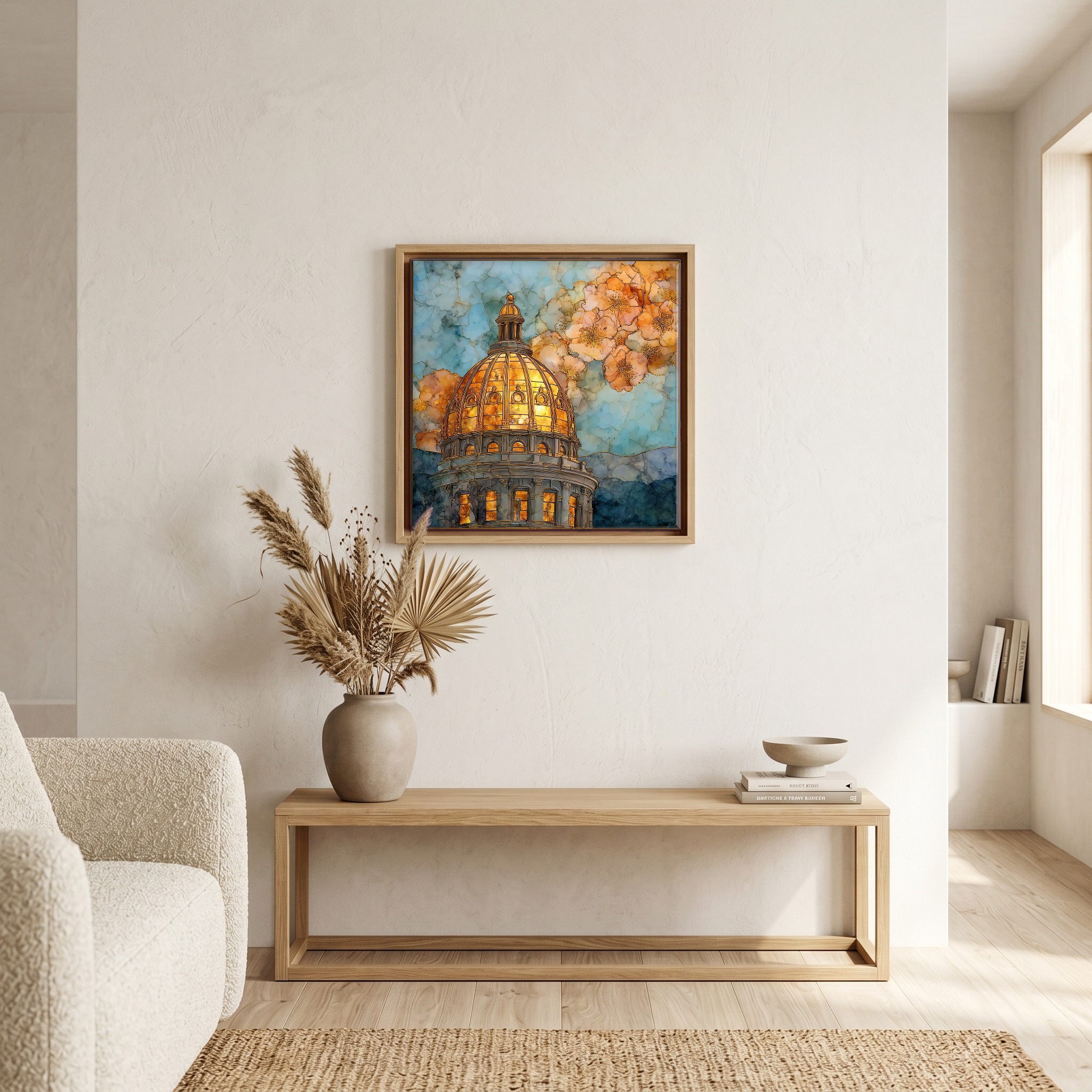
Above the bench, in a warm oak surround.
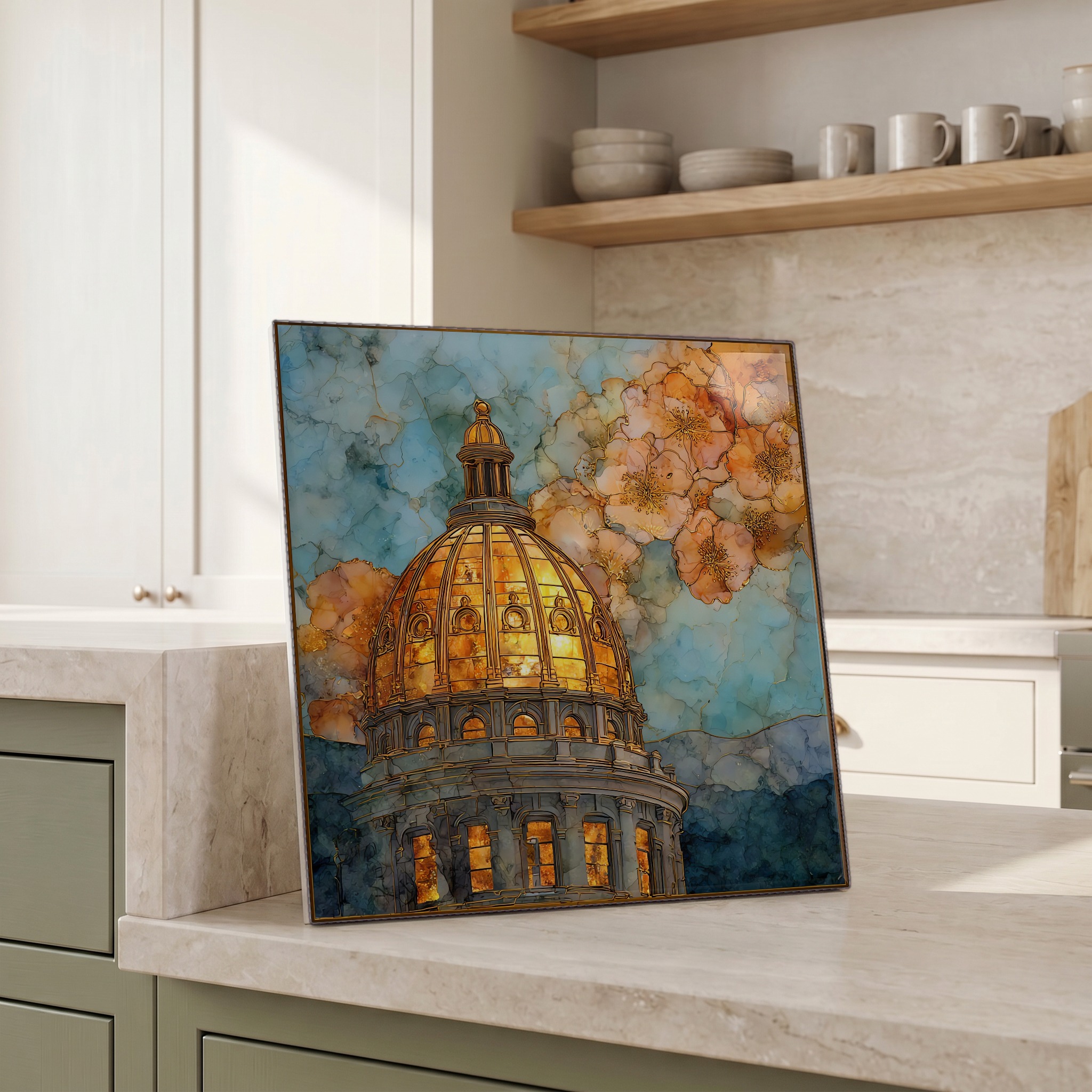
Beside the kettle, propped on the counter.
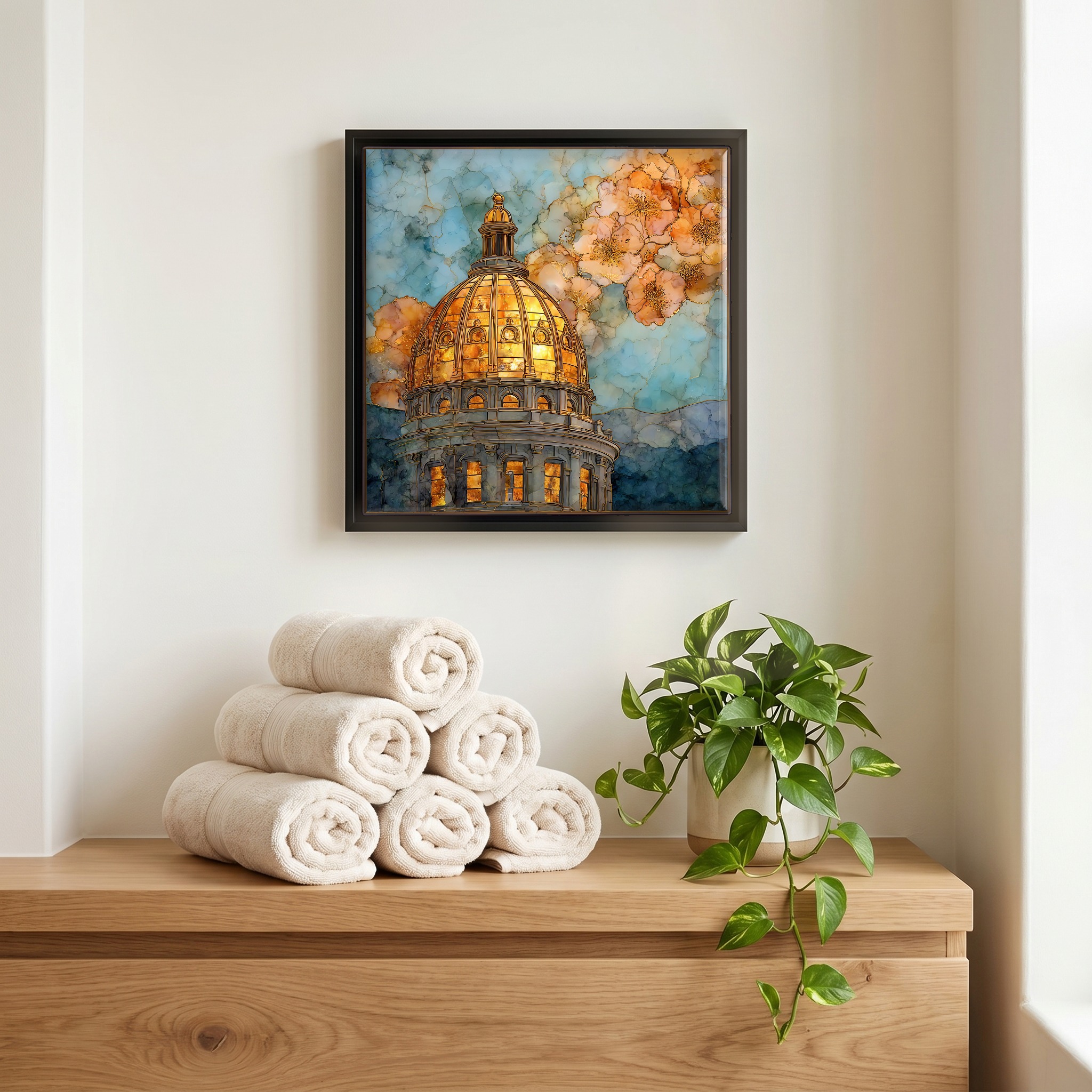
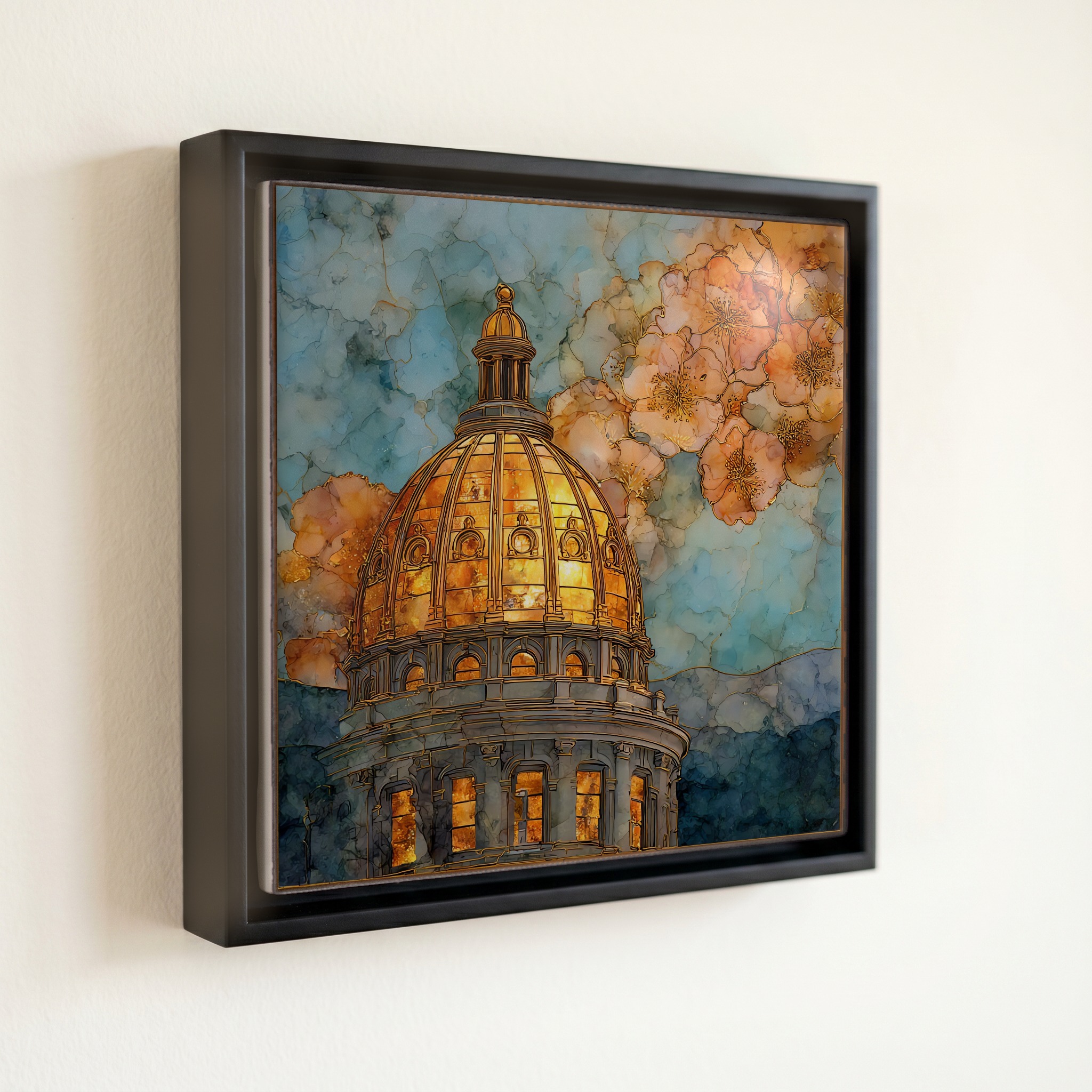
Above the linens, in a slim black surround.
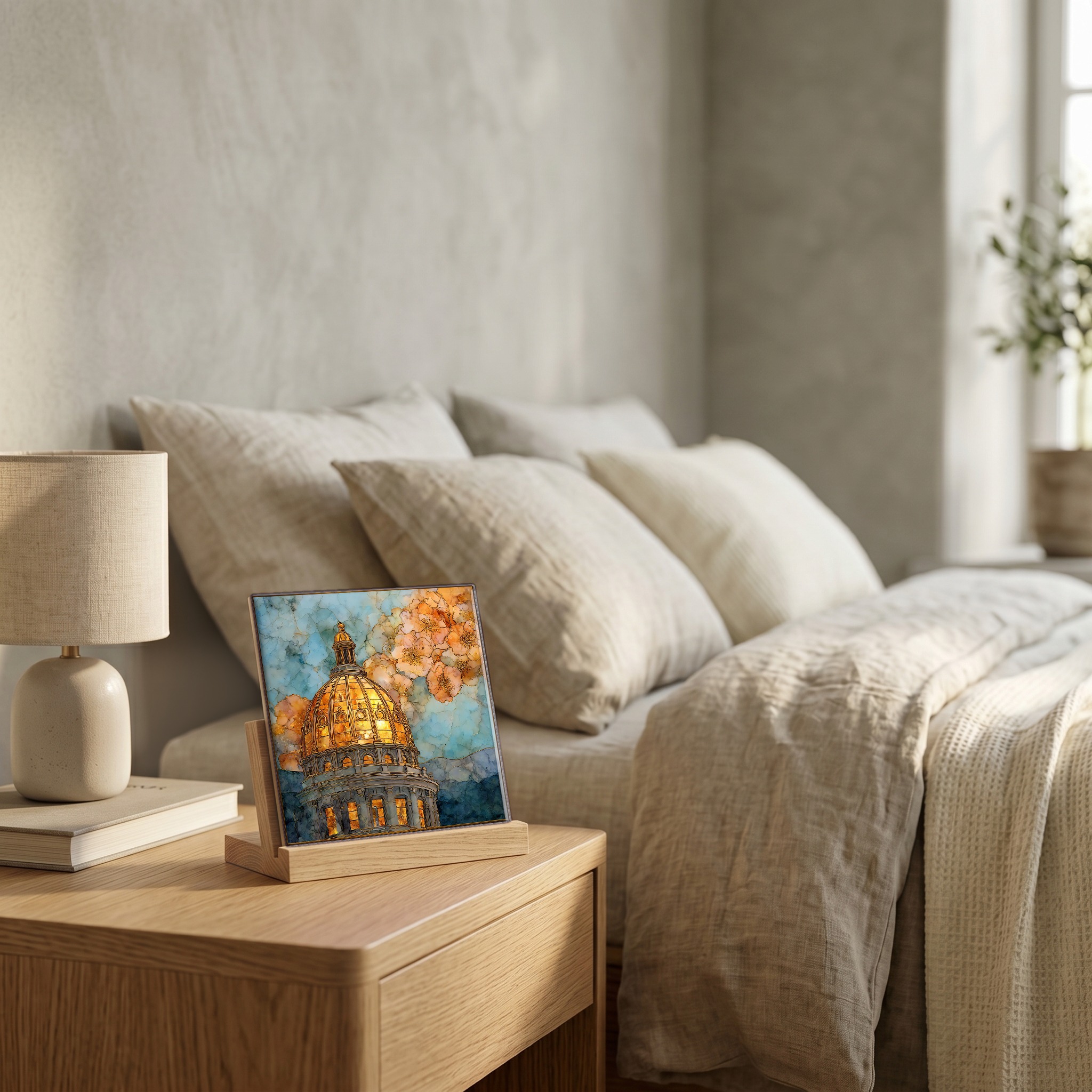
On the nightstand, on a light oak stand.
On a picture ledge, where the light comes in.
a note from the studio

The Capitol stands on the rise above Civic Center Park, looking west to the Front Range. The dome was first gilded in 1908, with gold leaf donated by Colorado mine operators, and it has been regilded several times since. On the west steps, three different stones have been cut at three different decades to mark exactly one mile above sea level. The surveys keep catching up to themselves. From the right block on Colfax, late afternoon catches the dome and holds it.
from the studio
shown in a slim black floating frame · 6 × 6 in
— bring it home

Colorado State Capitol dome Denver Metro Ceramic Art Tile, on ceramic.

Each tile is finished by hand in our Knoxville studio. Artwork is slowly infused into the ceramic surface under high heat and pressure, and rests beneath a thin glossy finish. The colour lives in the surface, not on top of it.

What kind of piece?
One tile — square or rectangle.
How big?
the popular one — counter, shelf, nightstand
6 × 6 in · 15 cm · 1.6 lb
Surface finish
A clear glossy finish — the artwork reads as if under resin. Ideal for show-pieces and framed wall art.
How it sits
A hidden cleat — sits ¼″ proud of the wall.
$58
Hand-finished and shipped from our studio at the foot of the Smokies. On your wall in about ten days.
size
6 × 6 in
15 cm
weighs
1.6 lb
solid in the hand
surface
ceramic, hand-finished
art rests beneath a thin glossy finish
from
Knoxville, TN
our family studio, at the foot of the Smokies
— start a Coaster Set

Pick any four 4-inch tiles — National Parks you've been to, a Smokies set, the four seasons of one place. $ for a set of , cork-backed, ready to live on the table.
comes gift-ready
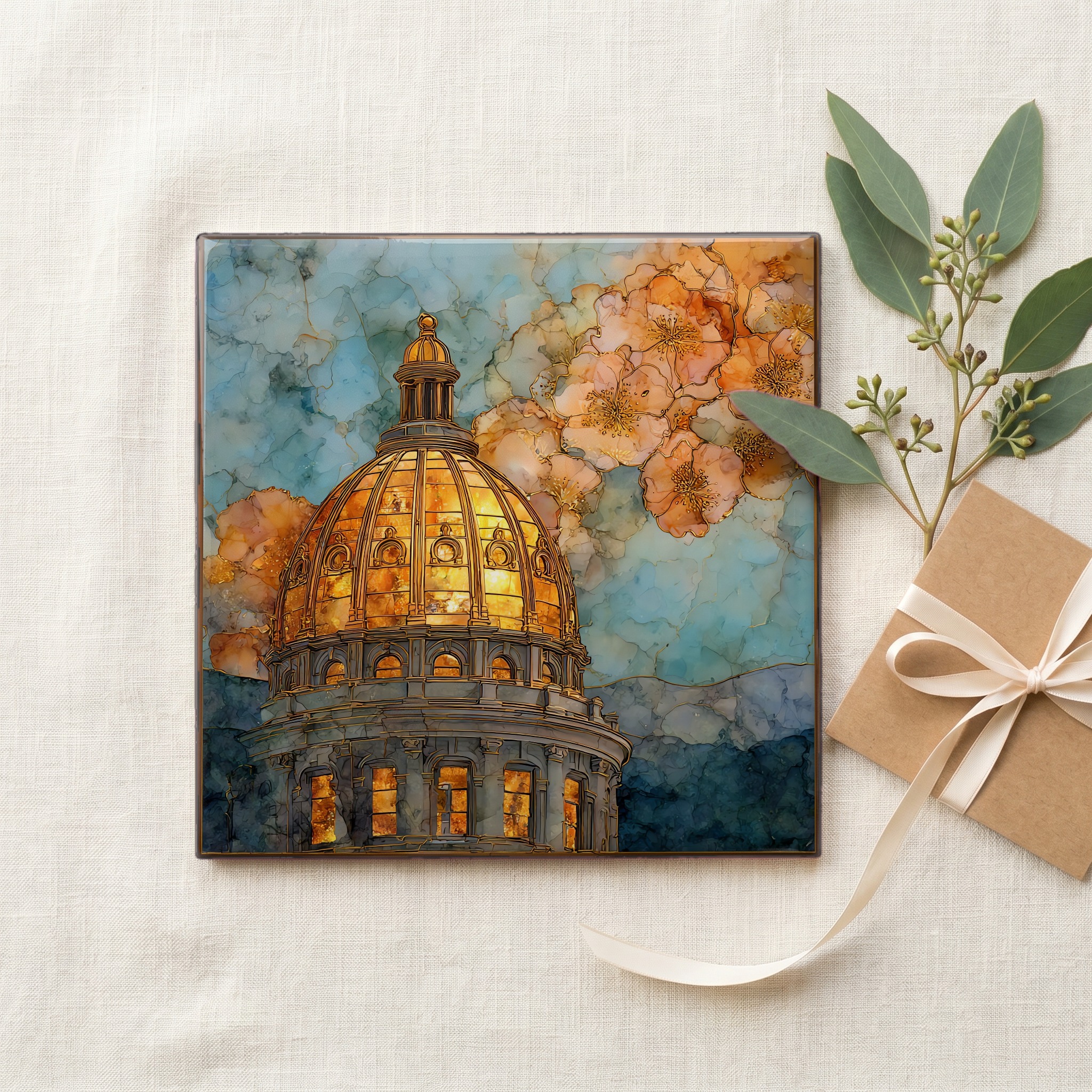
comes gift-ready

Each tile ships in a kraft box, tied with cream ribbon, with a handwritten note from the studio if you'd like to add one.
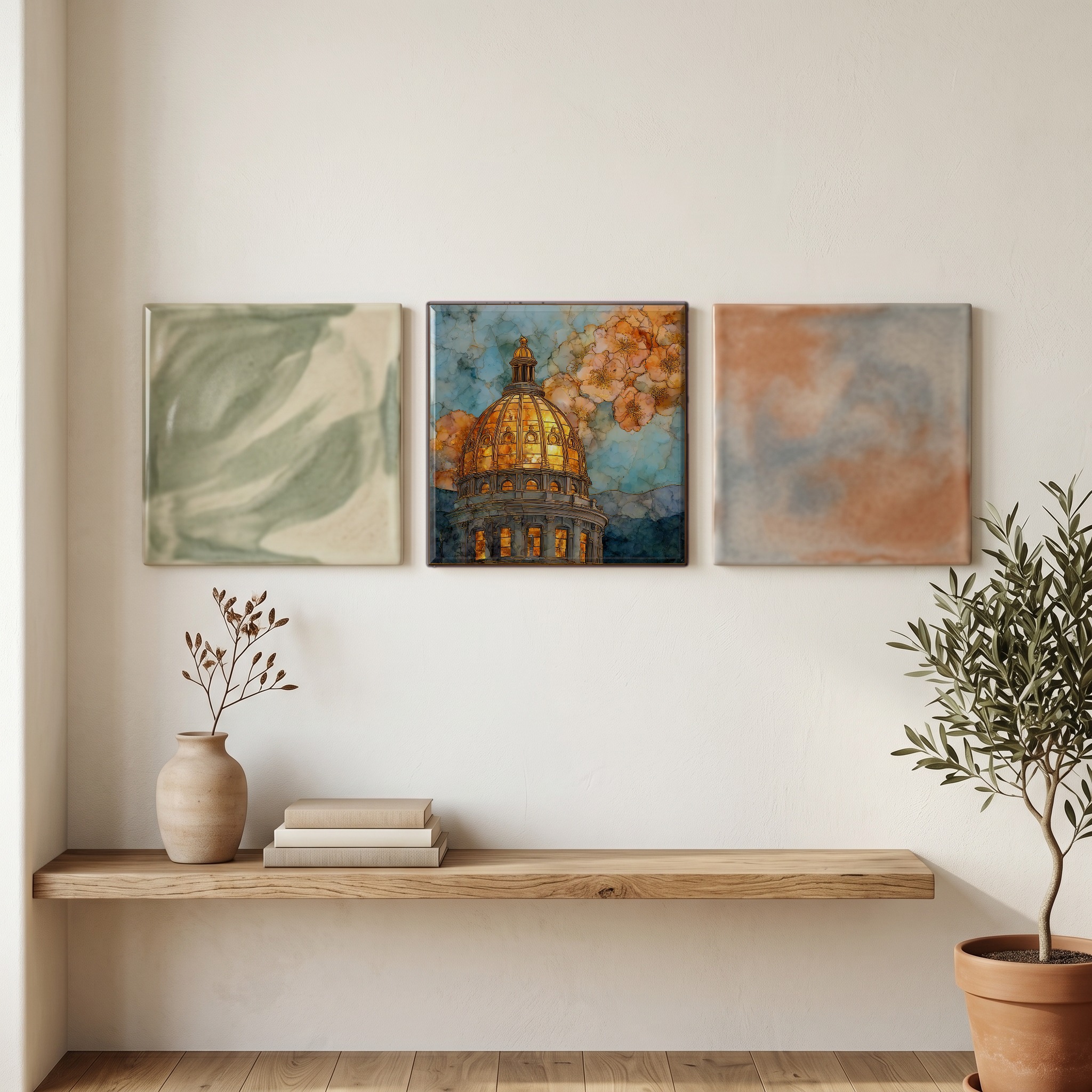
or build a grouping
or build a grouping

Three or five different vistas, hung together — a chapter of places you've been, or want to go.

about Colorado State Capitol dome Denver Metro Ceramic Art Tile

The place, in three passes.

A little of what's known, in case you fall down the rabbit hole — or want to go see it yourself.
the place

The Capitol sits at 200 East Colfax Avenue, on the rise above Civic Center Park in downtown Denver. Construction ran from 1886 to 1901, to a Neoclassical design by Elijah E. Myers, who also designed the Texas and Michigan capitols. The dome rises about 272 feet above the ground floor and was first gilded in 1908 with roughly 200 troy ounces of gold leaf, donated by Colorado's mining industry. The building has been regilded several times since, most recently in the 2013-2014 restoration. Three stones on the west steps mark one mile above sea level: a brass plate cut on the 13th step in 1909, a corrected marker on the 18th step after a 1969 survey, and a third marker recut on the 13th step in 2003.

the stone

The exterior is Colorado white granite from the Aberdeen quarry near Gunnison, chosen after a long political fight over which Colorado stone the Capitol should rest on. The wainscoting inside is Beulah red marble, often called Colorado rose onyx, quarried from a small deposit at Beulah, Colorado. The seam at Beulah was small, and the Capitol commissioners specified enough material to finish the interior. By 1898 the deposit was exhausted, and no commercial source of Colorado rose onyx has been found since. The floors are Yule marble from the town of Marble, the same quarry that later supplied the statue at the Lincoln Memorial and the Tomb of the Unknown Soldier.

the visit

The Capitol is open to the public on weekdays at no charge. Free guided tours of the legislative chambers run on the hour Monday through Friday and last roughly 45 minutes, and a separate dome tour climbs to the open-air viewing gallery near the top of the building. The dome climb is 99 steps from the top of the elevator landing to the gallery, which looks west over Civic Center Park to the Front Range and east across the plains. The address is 200 East Colfax Avenue, two blocks east of the Civic Center light rail station and three blocks south of the 16th Street pedestrian mall.

where
United States · Denver, Colorado
elevation
1,609 m · 5,280 ft
position
39.7393° N · 104.9848° W
the neighborhood

What's nearby.

A handful of named places within an hour's walk or short drive. Some we've already painted; some we will.
at the lake
Civic Center Park
civic park
0.4 km SW
Denver Art Museum
art museum
0.5 km S
Denver Public Library Central
public library
0.5 km S
Colorado History Center
history museum
0.6 km NW
16th Street Mall
pedestrian mall
1.5 km N
Coors Field
baseball stadium
N
Colorado State Capitol dome Denver Metro Ceramic Art Tile
Civic Center Park
Denver Art Museum
Denver Public Library Central
Colorado History Center
16th Street Mall
Coors Field
common questions

What people ask.

A few questions we get about Colorado State Capitol dome Denver Metro Ceramic Art Tile — and about bringing the piece home.
about the place

The Capitol was originally crowned with a copper dome that quickly tarnished. In 1908, mining-industry leaders in Colorado donated about 200 troy ounces of gold leaf to gild the dome, linking the building's most visible surface to Colorado's mining history. It has been regilded several times since.

The dome rises about 272 feet from the ground floor to the top of the lantern, making the Capitol one of the tallest civic buildings on the rise above Civic Center Park. An open-air viewing gallery near the top of the dome looks west to the Front Range and east over the plains.

Three different markers have all claimed the title. A brass plate was cut on the 13th step in 1909, a corrected marker was added on the 18th step after a 1969 resurvey, and a third marker was recut on the 13th step in 2003 using a Global Positioning System measurement. All three are still visible.

The exterior is Colorado white granite from the Aberdeen quarry near Gunnison. The interior wainscoting is Beulah red marble, often called Colorado rose onyx, from a small deposit at Beulah that was completely exhausted by 1898. The floors are Yule marble from the town of Marble, Colorado.

The architect was Elijah E. Myers, who also designed the Texas State Capitol and the Michigan State Capitol. His Neoclassical plan was modeled on the United States Capitol in Washington. Construction ran from 1886 to 1901, with major interior work continuing past the formal dedication.

Yes. The Capitol is open to the public on weekdays at no charge, with free guided tours of the legislative chambers and a separate tour that climbs to the dome viewing gallery. The address is 200 East Colfax Avenue, on the east edge of Civic Center Park in downtown Denver.

The most recent regilding was completed during the 2013-2014 exterior restoration, the third major application of gold leaf since the original 1908 gilding. Colorado mining companies and private donors continued the tradition of supplying the gold for the work.

about the piece in your home

It's been a meaningful gift for many of our customers with ties to Colorado. The dome is the place locals point to from a freeway exit, from a baseball game, from a block on the 16th Street mall. A piece of personal geography. A Coaster or Small with a handwritten note from the studio carries well.

The deep stained-glass colour and the warm gold register well with Mountain-modern, Jewel-tone Maximalist, and Library-warm interiors. The piece holds against dark walnut, leather, and dark green walls, and reads as art over a sideboard or hallway console rather than as civic decoration.

Mountain-modern leans on warm wood, blackened steel, and a few jewel-toned focal pieces against neutral envelopes. This tile fits that focal-piece role. The gold leaf in the dome reads as warm metal, and the stained-glass palette grounds it. A Medium or Large works well centred above a console or fireplace mantel.

Above a sofa, a single Large is the most common choice, or a 4-tile Mural if the wall is wide. Above a console, a Medium or Large hangs at roughly eye level. For a long mantel or a stair-landing wall, the 9-tile Mural carries the room.

Yes. Order the Dura Satin or Matte finish for wet or high-traffic rooms. Both are scratch-resistant and handle splash and steam without hazing. The Glossy finish is intended for framed wall art and drier rooms.

A soft microfibre cloth and clean water are all the surface needs. The colour is slowly infused into the ceramic surface under high heat and pressure, beneath a thin protective layer, so it does not lift with normal cleaning. Avoid abrasive pads and bleach-based cleansers.

Yes. Every WenderVista tile is a one-of-a-one painting by Reid Wender, in the studio's stained-glass and alcohol-ink visual language. We do not license the imagery to other manufacturers, and each tile is hand-finished in Knoxville, Tennessee.

if this one stayed with you

A few you might also love.

Hand-picked by the eye that found Sorapis. Same air, same kind of quiet.