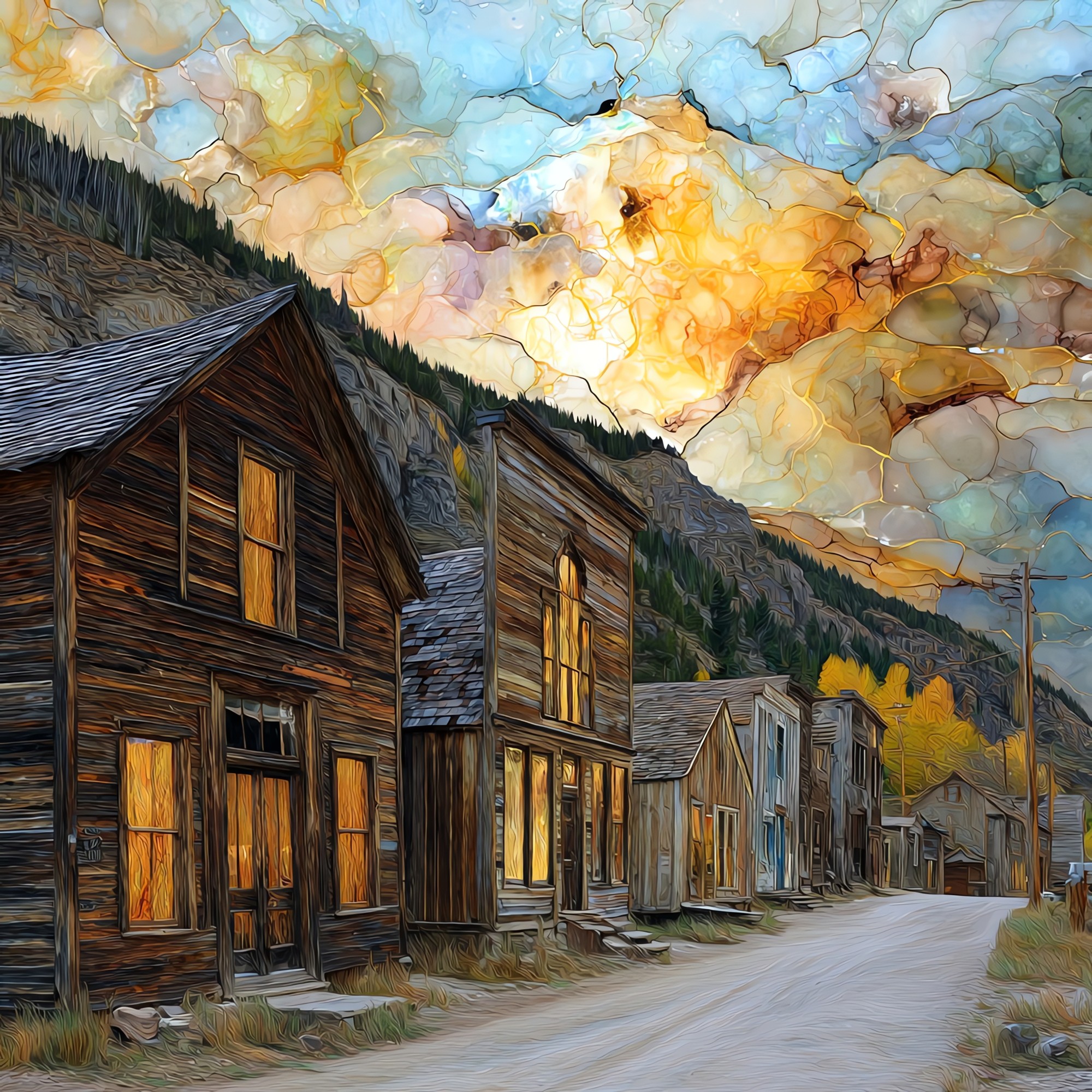
St Elmo ghost town Sawatch Range Ceramic Art Tile
— what the mountain kept when the trains stopped.
Not only on a wall.

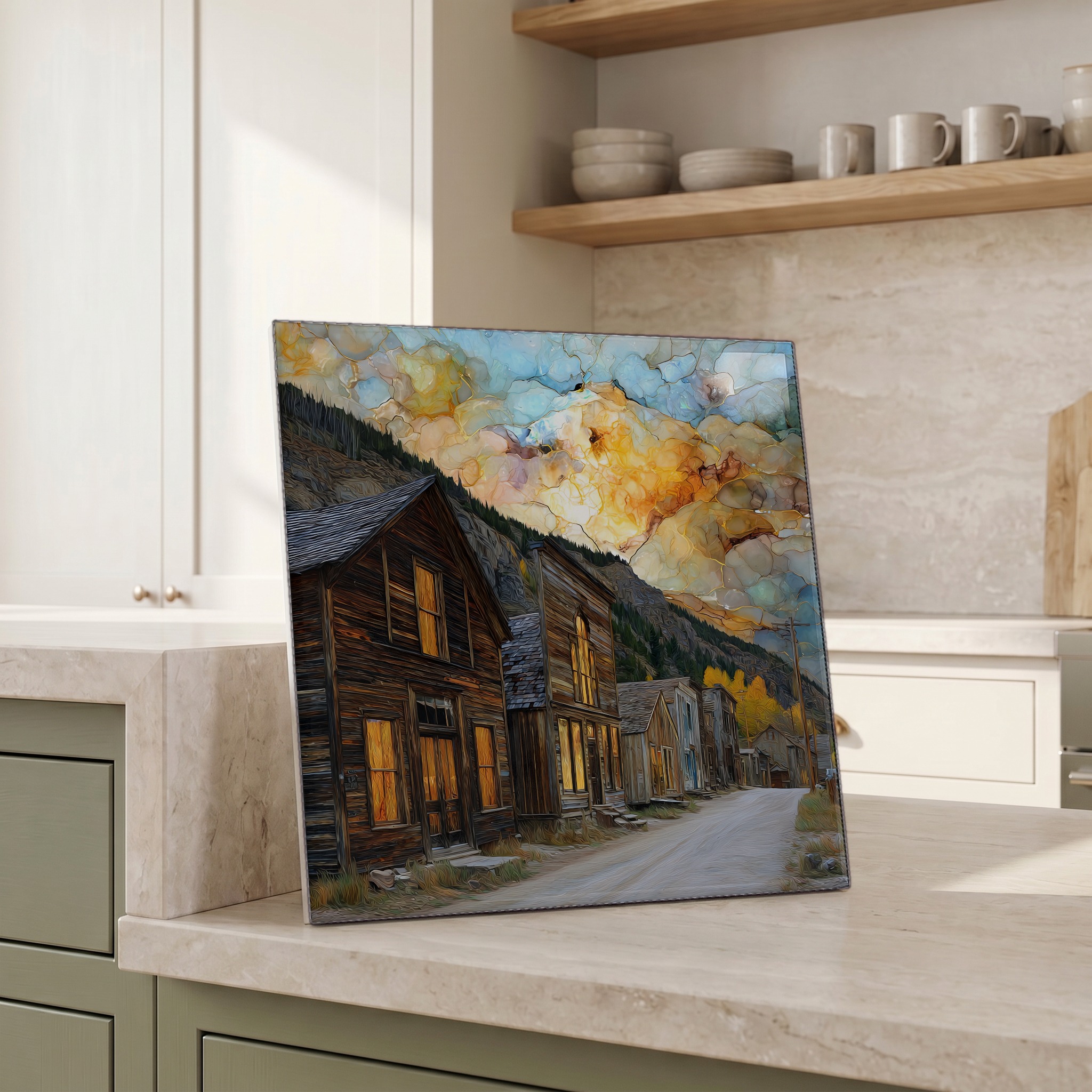
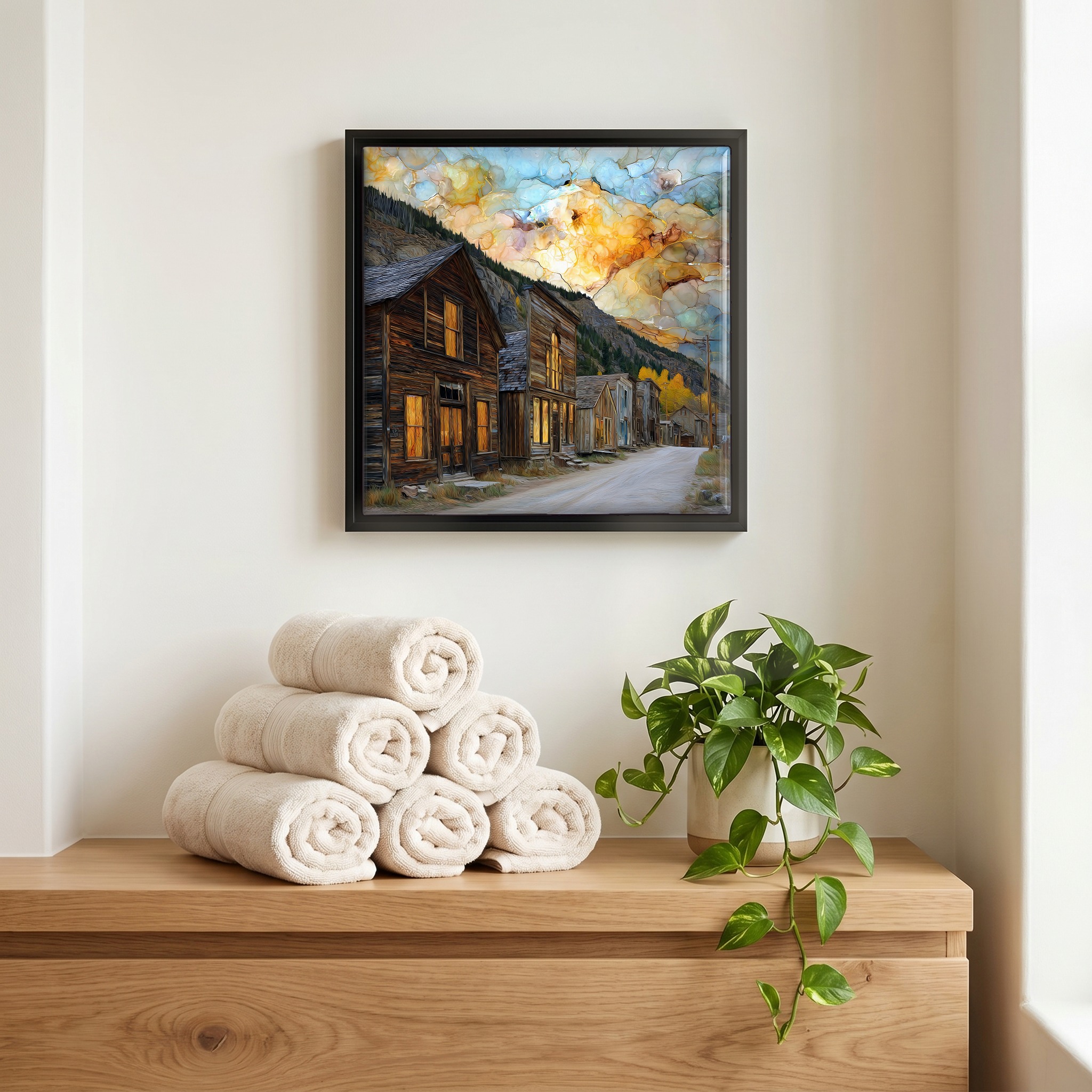

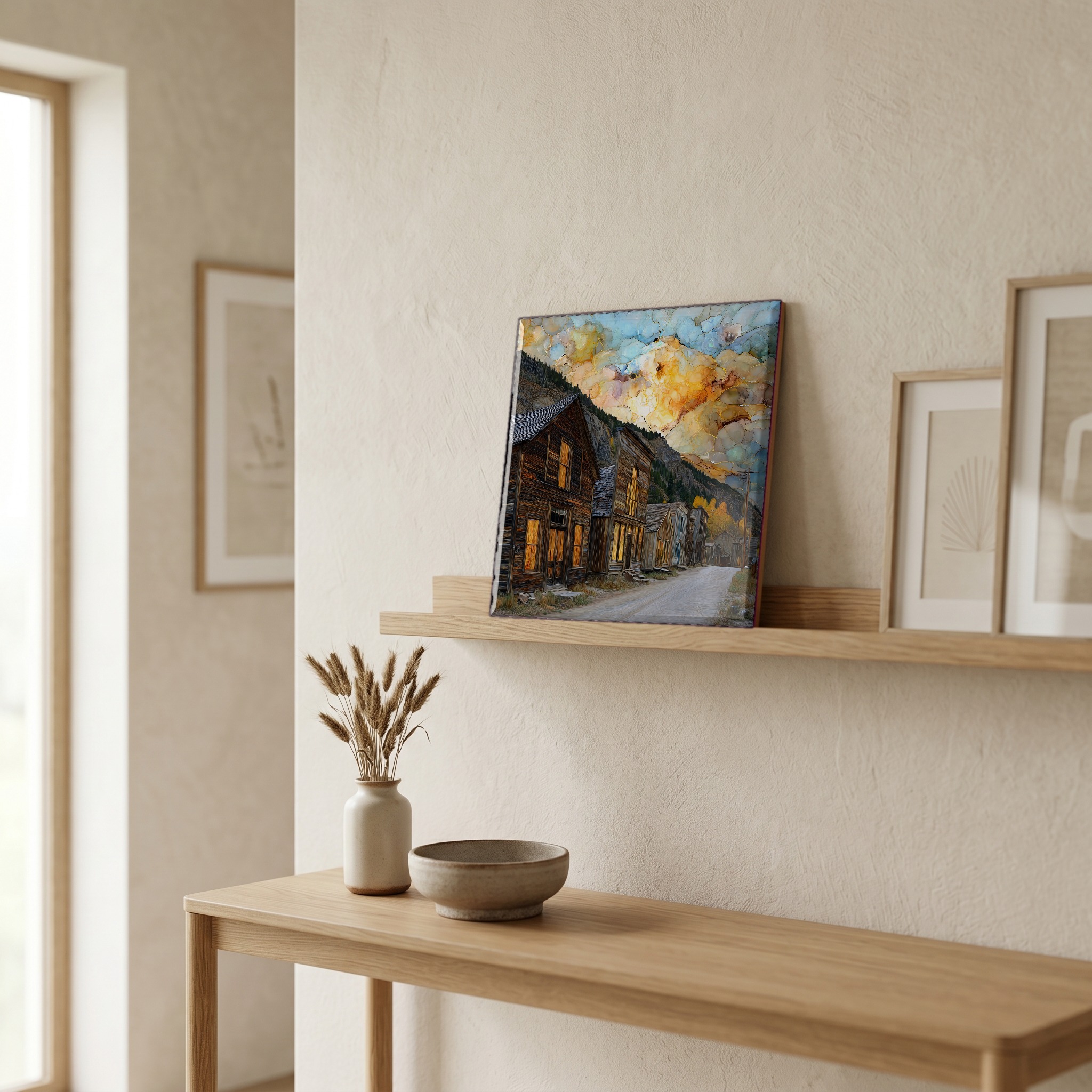
“A nineteenth-century mining town at the end of Chaffee County Road 162, above the Chalk Creek drainage in the Sawatch Range. Most of the buildings are still standing: town hall, general store, miners' cabins, a small schoolhouse. The dry mountain air at almost ten thousand feet keeps the wood the way nothing else could. The railroad that built it pulled out in 1922 and never came back. In summer the road fills with day-trippers and the chipmunks own the porches. By October the road closes and the town goes quiet again until June.
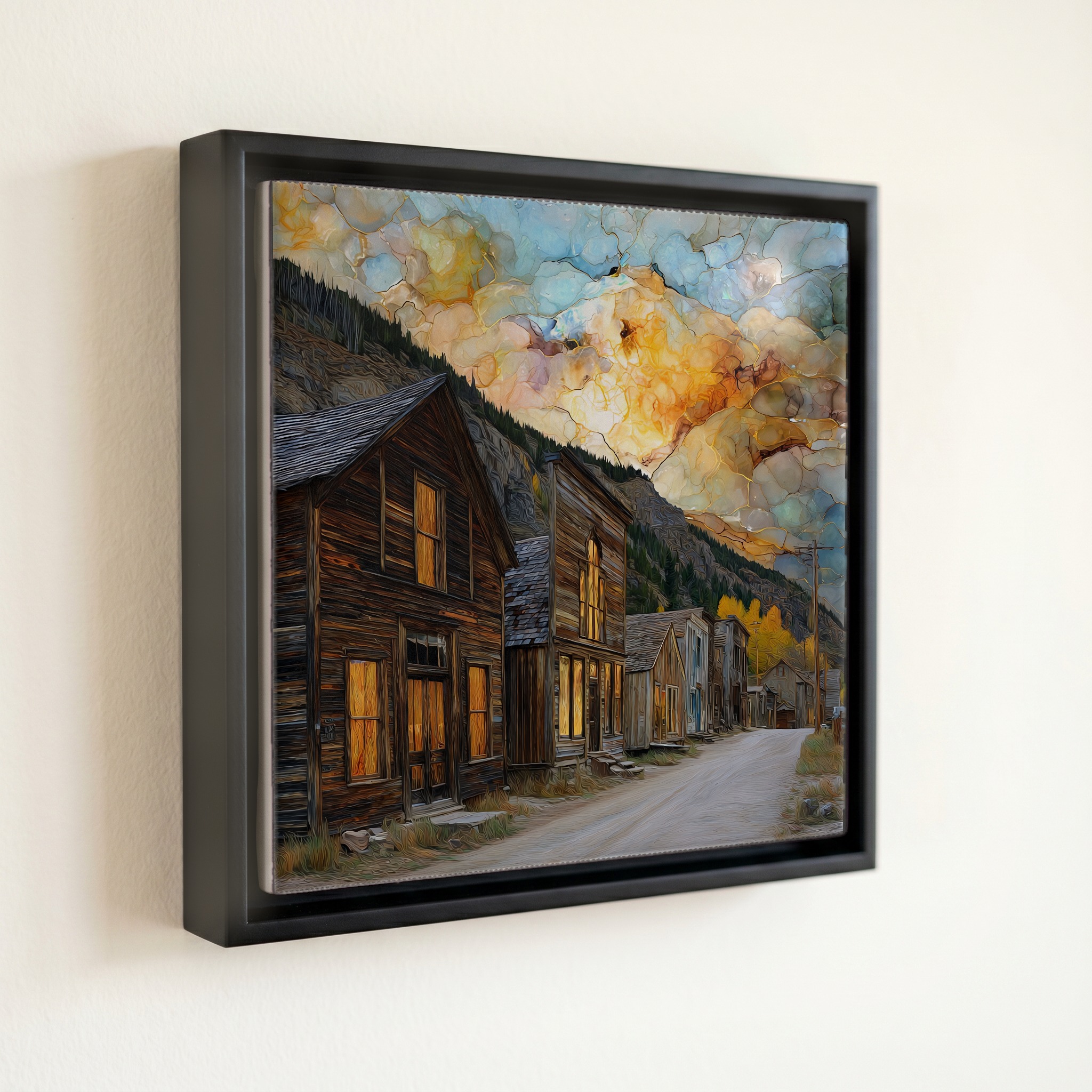
St Elmo ghost town Sawatch Range Ceramic Art Tile, on ceramic.
Each tile is finished by hand in our Knoxville studio. Artwork is slowly infused into the ceramic surface under high heat and pressure, and rests beneath a thin glossy finish. The colour lives in the surface, not on top of it.
Pick any four 4-inch tiles — National Parks you've been to, a Smokies set, the four seasons of one place. $ for a set of , cork-backed, ready to live on the table.
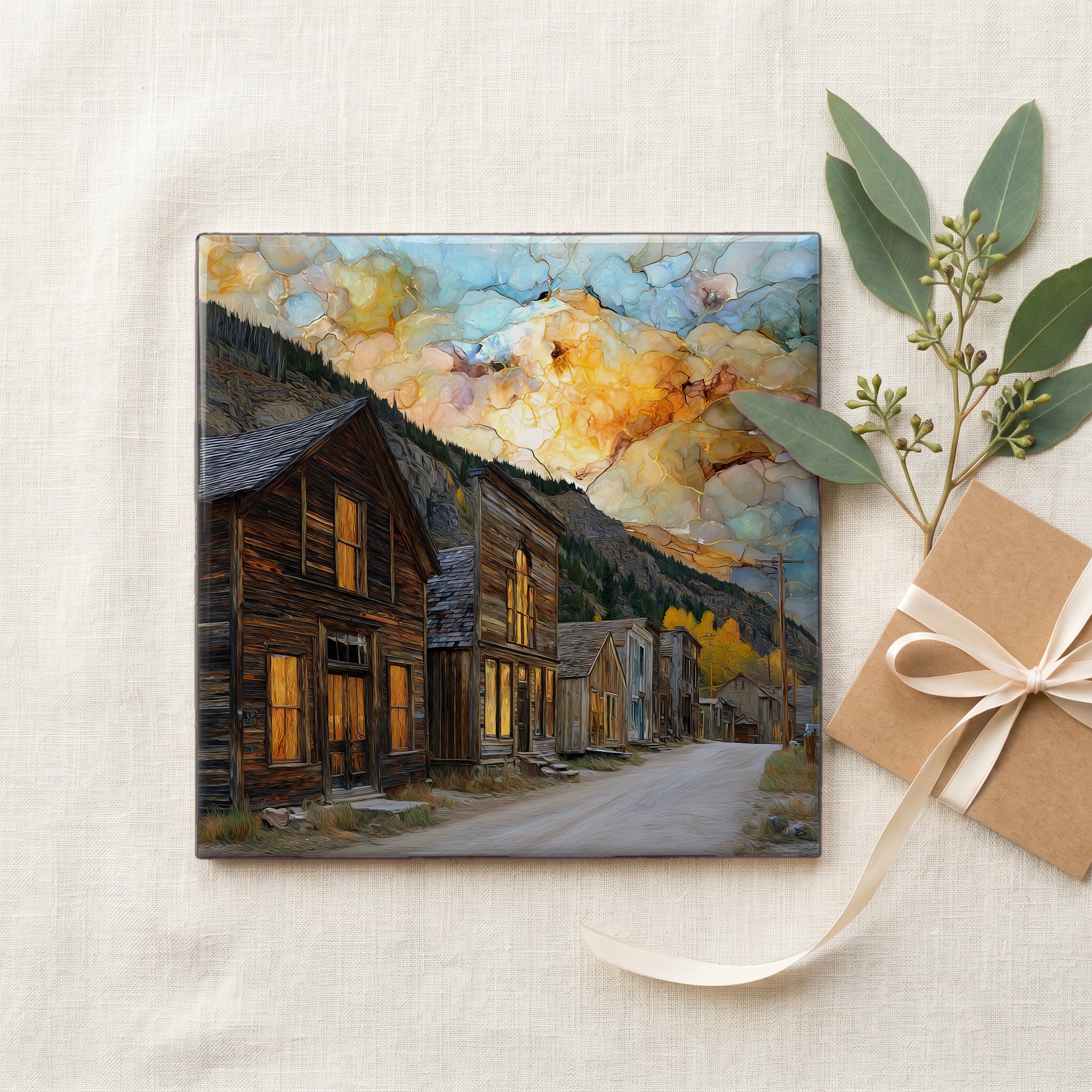
Each tile ships in a kraft box, tied with cream ribbon, with a handwritten note from the studio if you'd like to add one.

Three or five different vistas, hung together — a chapter of places you've been, or want to go.
The place, in three passes.
St. Elmo sits at 9,961 feet in Chaffee County, Colorado, in the Sawatch Range of the Rocky Mountains. The town was founded in 1880 during the Chalk Creek silver and gold boom and originally called Forest City; the name was changed within months to St. Elmo, after Augusta Jane Evans's 1866 novel of the same name. The Denver, South Park and Pacific Railroad reached the canyon in 1881 to serve the Mary Murphy Mine and a dozen smaller operations. Access today is from Nathrop on US-285, fifteen miles west on Chaffee County Road 162, past the Mount Princeton Hot Springs Resort. The site lies within the Pike-San Isabel National Forest at the foot of Chrysolite Mountain.
Most of the original townsite still stands, more than at almost any other Colorado ghost town. The town hall, general store, schoolhouse, and Stark Brothers Hotel face Main Street much as they did in the 1880s. The buildings are timber-framed and have lasted because the dry alpine air slows the rot that would have taken them at any lower elevation. Several Main Street structures, including the town hall, were lost in a 2002 fire and later rebuilt with period methods by the St. Elmo and Chalk Creek Canyon Historical Society and local volunteers. The townsite was added to the National Register of Historic Places in 1979.
The Chaffee County road to St. Elmo is open from late spring through October. The Forest Service typically closes the upper road once the snow arrives, usually by early November, and it does not fully reopen until late May or June. In summer the town is reached by passenger car, though four-wheel-drive trails climb past it toward the Mary Murphy Mine, Tincup Pass, and the Hancock townsite. The General Store opens seasonally and sells small bags of feed for the chipmunks that swarm the porch railings in the warm months. Winter visits are by snowmobile or backcountry ski only, and the town reads very differently when the porches are buried.