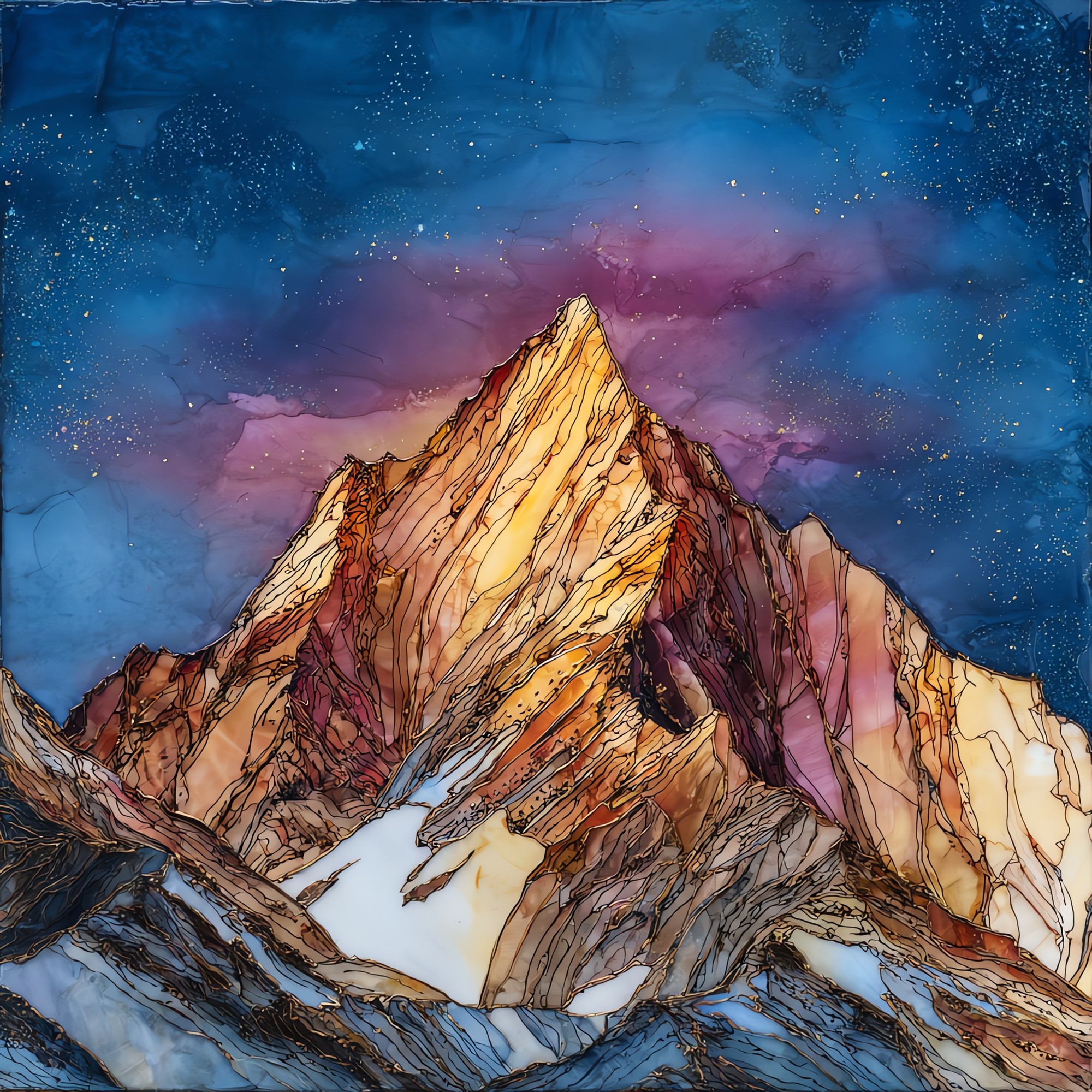
Snowy Mount Sneffels alpenglow San Juans Ceramic Art Tile
— — the pink the snow keeps after the sun goes.
Not only on a wall.
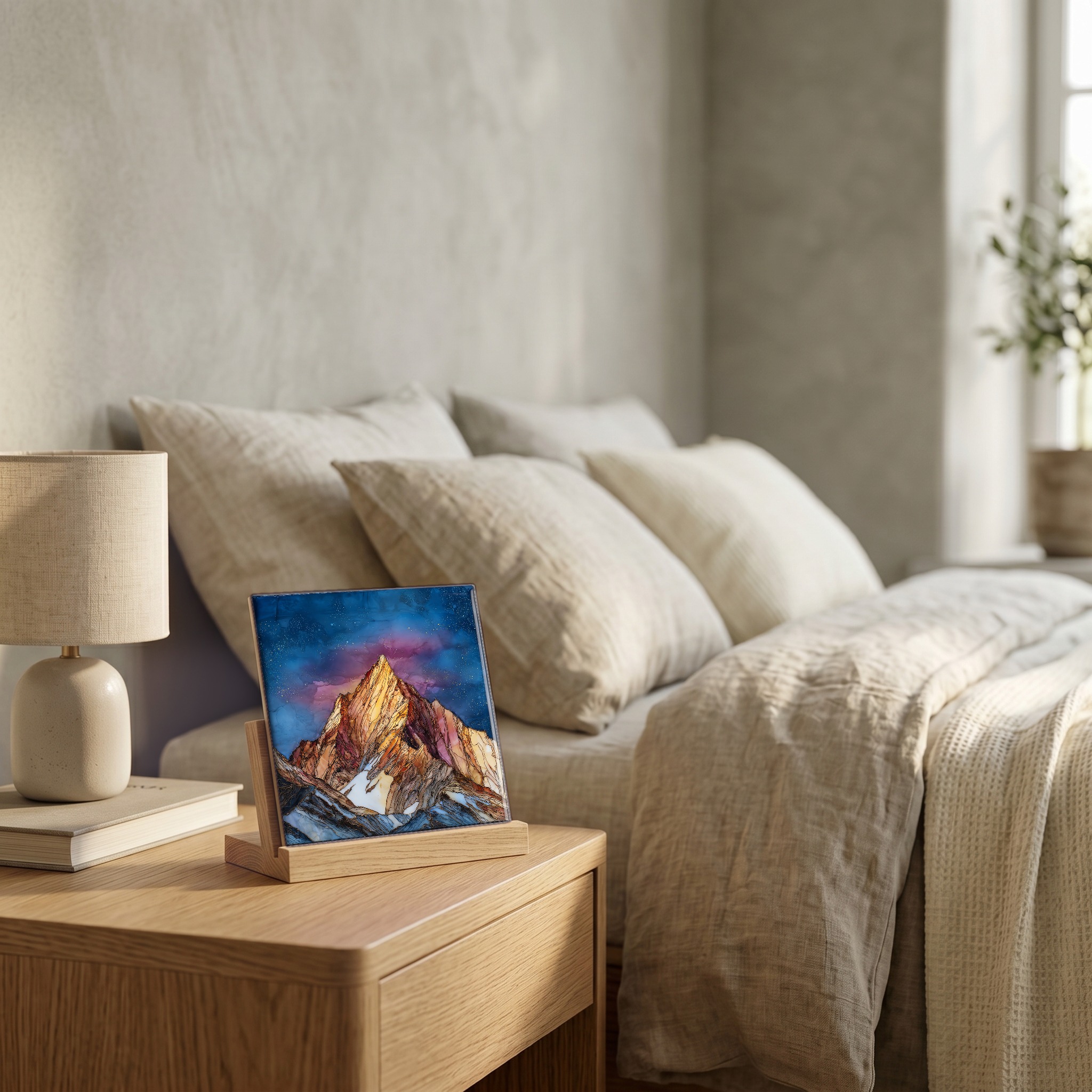
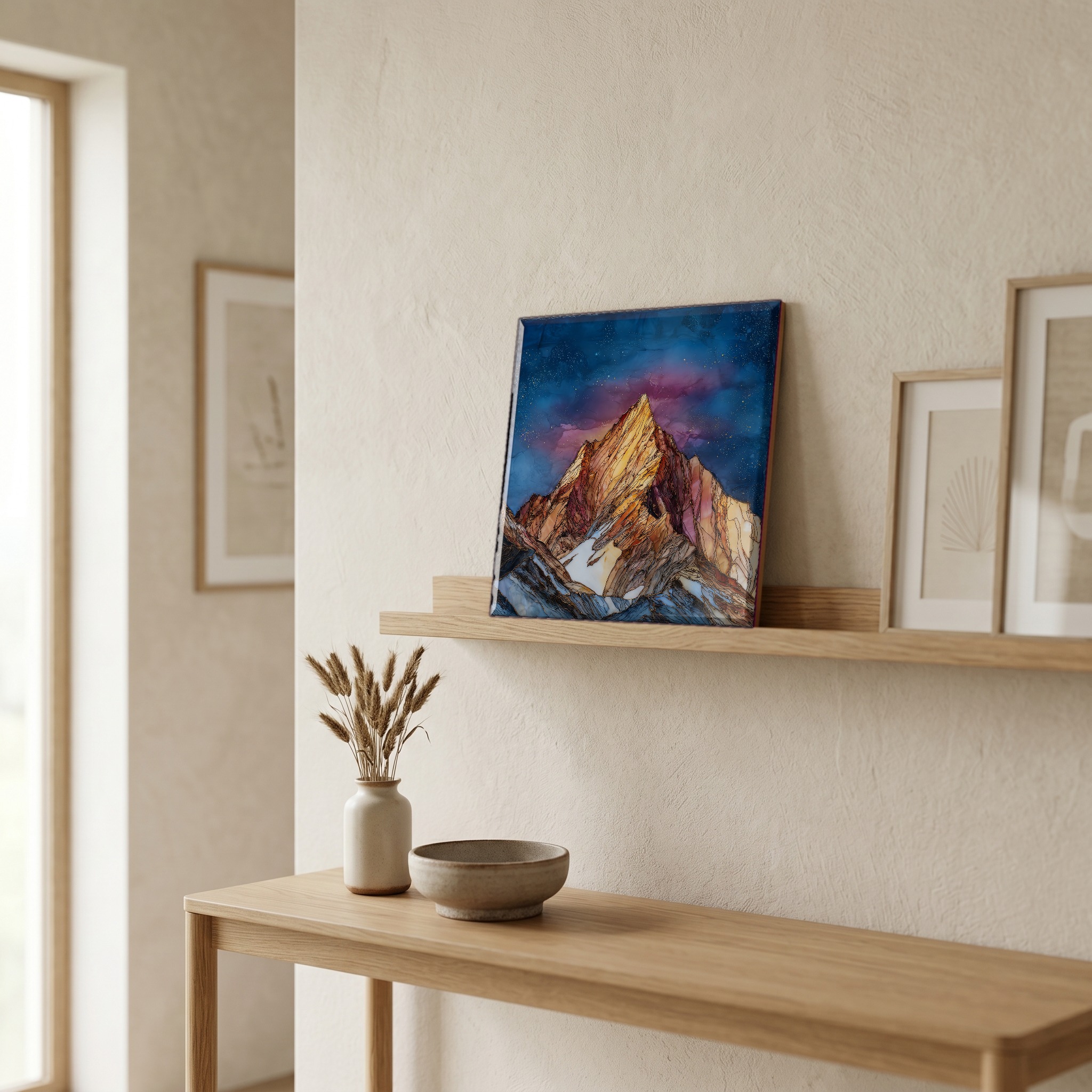
“The 14,158-foot peak above Ridgway, Colorado, photographed in winter from the Dallas Divide on State Highway 62. Sneffels has a long, unbroken west face that catches the last red light of the day for several minutes after the sun has dropped, while the foreground sits already in cold blue shadow. Photographers call that interval alpenglow. It lasts about eight minutes in midwinter, shorter the further the year drifts from solstice. The snow takes the colour straight, no foliage to compete. Named in 1874 by the Hayden Survey for Snæfellsjökull, the Icelandic volcano in Jules Verne's Journey to the Center of the Earth. The view has not changed in 150 years.
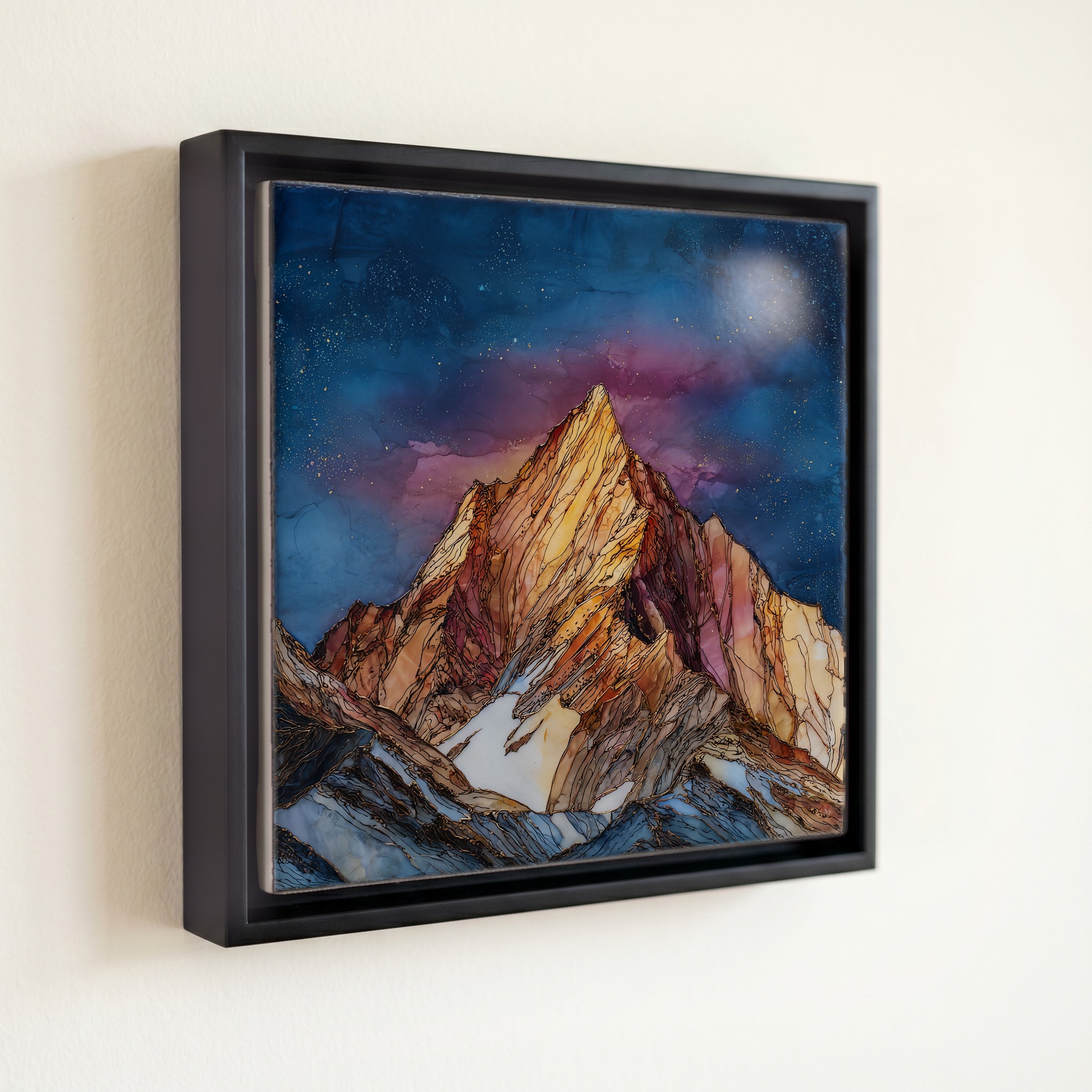
Snowy Mount Sneffels alpenglow San Juans Ceramic Art Tile, on ceramic.
Each tile is finished by hand in our Knoxville studio. Artwork is slowly infused into the ceramic surface under high heat and pressure, and rests beneath a thin glossy finish. The colour lives in the surface, not on top of it.
Pick any four 4-inch tiles — National Parks you've been to, a Smokies set, the four seasons of one place. $ for a set of , cork-backed, ready to live on the table.
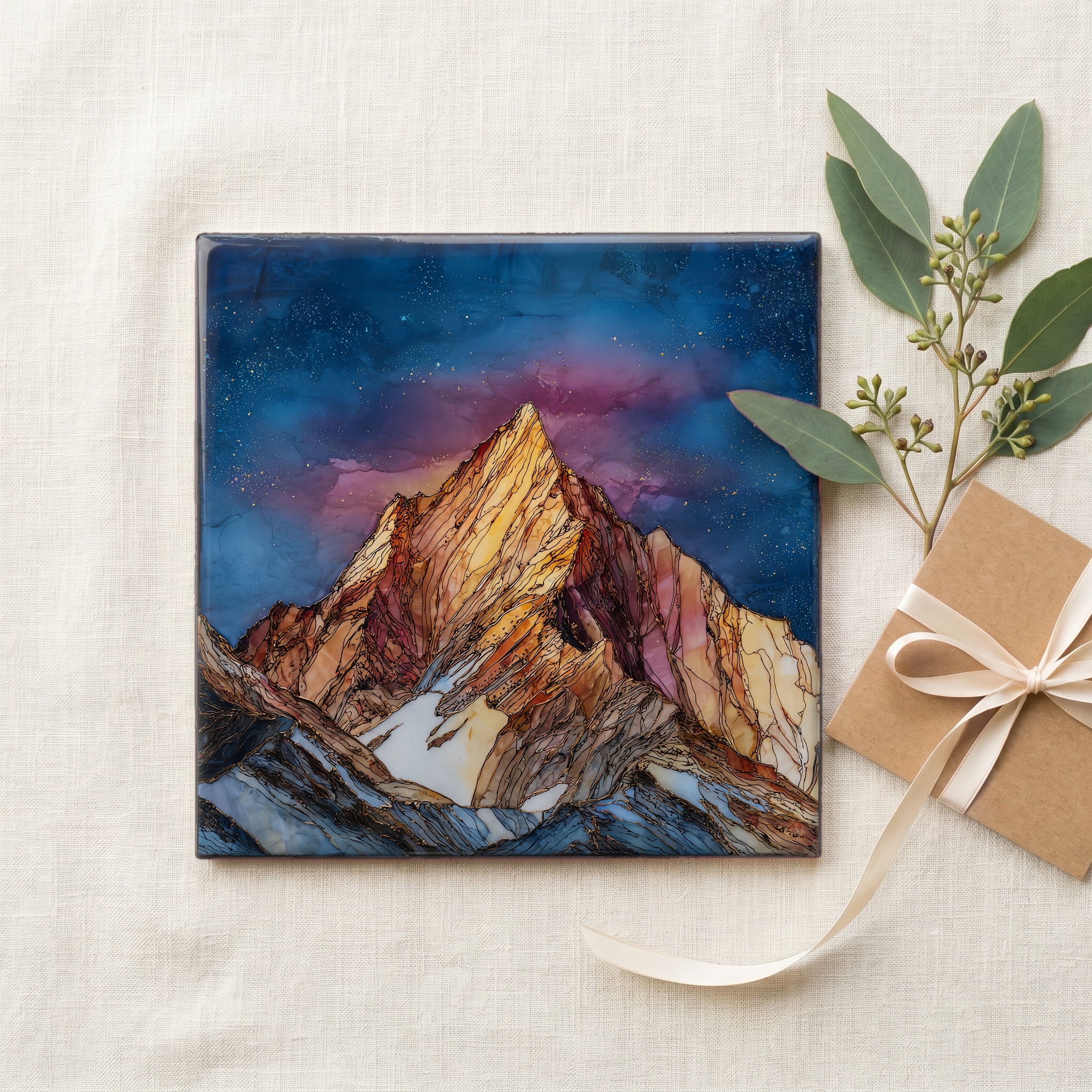
Each tile ships in a kraft box, tied with cream ribbon, with a handwritten note from the studio if you'd like to add one.
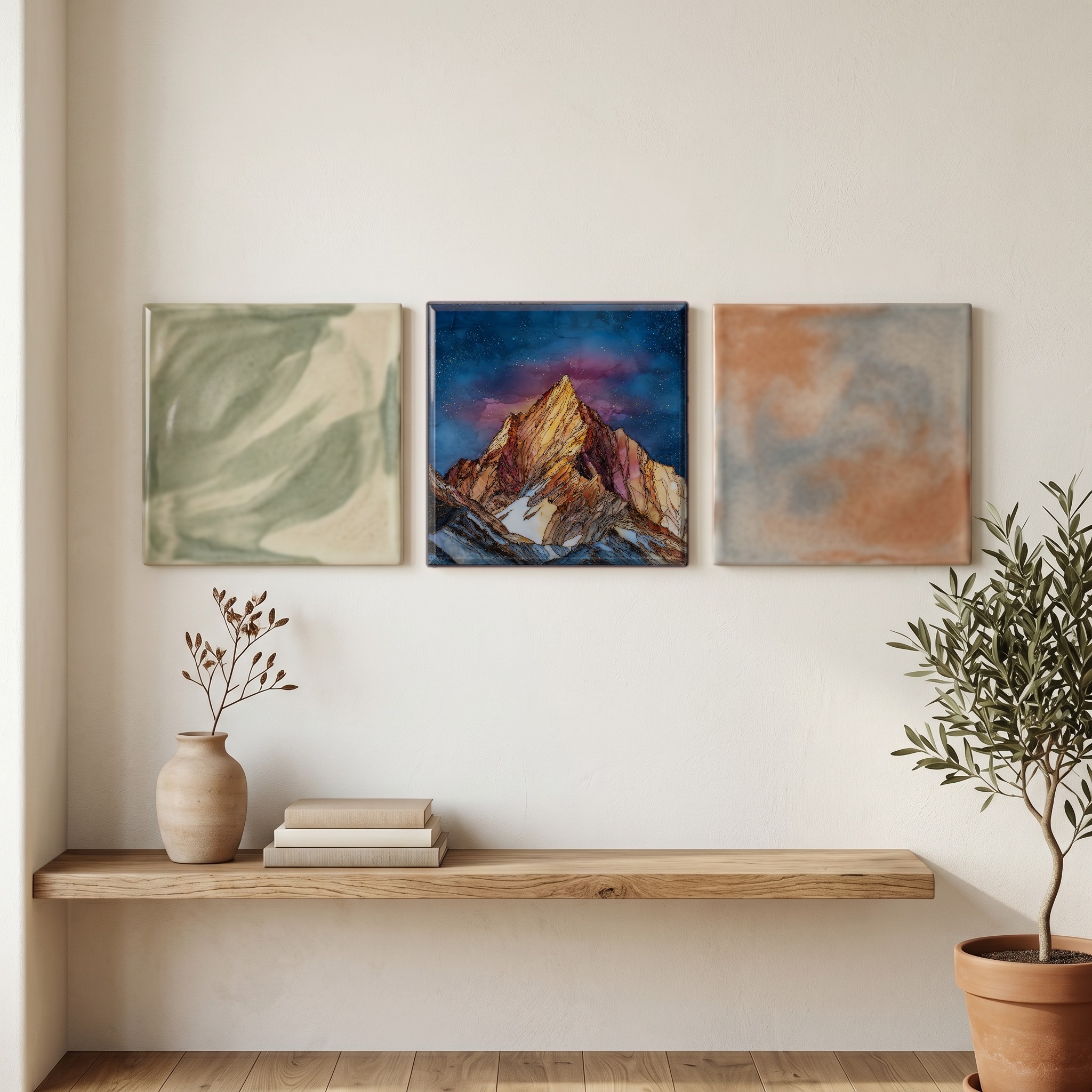
Three or five different vistas, hung together — a chapter of places you've been, or want to go.
The place, in three passes.
Mount Sneffels rises to 14,158 feet (4,315 m) in the Sneffels Range of the San Juan Mountains, in Ouray County, southwestern Colorado. The peak anchors the 16,565-acre Mount Sneffels Wilderness, designated by Congress in 1980 inside the Uncompahgre National Forest. Its long west face, the one in the artwork, looks out across the Pleasant Valley toward the Uncompahgre Plateau, with the town of Ridgway visible from upper elevations. Sneffels is the highest peak of the range and the centerpiece of the long horizon that drivers see on State Highway 62 between Ridgway and Placerville. The name has carried since 1874, when Hayden Survey geologist F.M. Endlich compared the profile to Iceland's Snæfellsjökull.
Alpenglow is the rose-pink wash that holds on west-facing snow for several minutes after the sun has dropped below the horizon. The mechanism is the physics of a red sunset. Atmospheric scattering removes the shorter blue wavelengths from the low-angle light, and what reaches the snow is the long-wavelength red end of the spectrum. The duration is short. About eight to twelve minutes in winter at this latitude, shorter as the days lengthen toward summer. Mount Sneffels is one of the most photographed alpenglow stages in the American West because its long west face catches that final light without any taller ridge in the way, and the snow surface takes the colour without distortion.
The Dallas Divide viewpoint stays open through winter. State Highway 62 is plowed by the Colorado Department of Transportation and reaches 8,970 feet at its high point on the divide. The winter alpenglow window registers most strongly between mid-December and early March, when the snow line is deepest and the air is coldest and clearest. Sunset times around the winter solstice fall near 4:55 p.m. local; the pink wash arrives in the eight to ten minutes after. Winter ascents of the peak are made, but they require ice tools, avalanche assessment, and a ski approach up Camp Bird Road, which closes to vehicles past the historic mining ruins above Ouray.