Wender·Vista
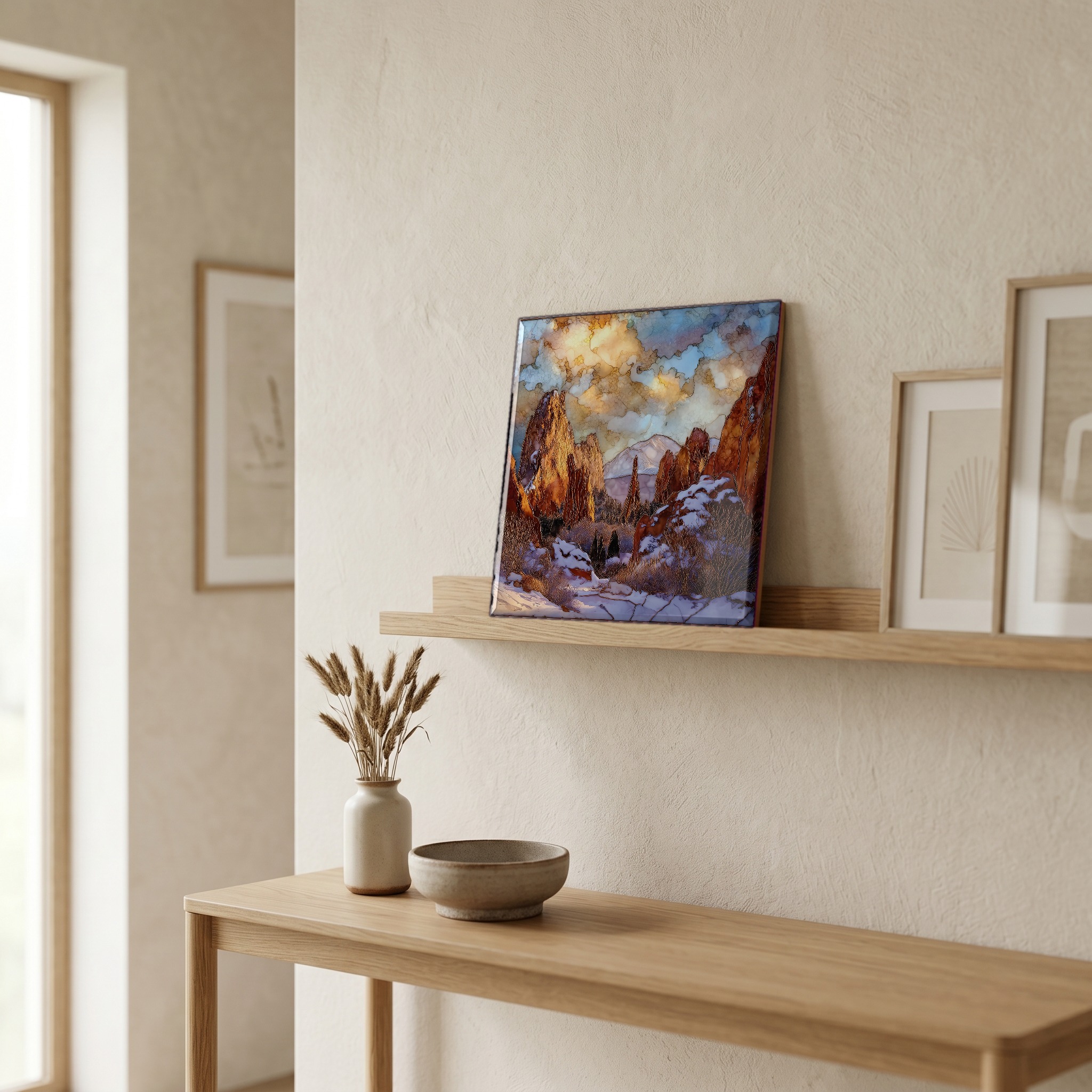
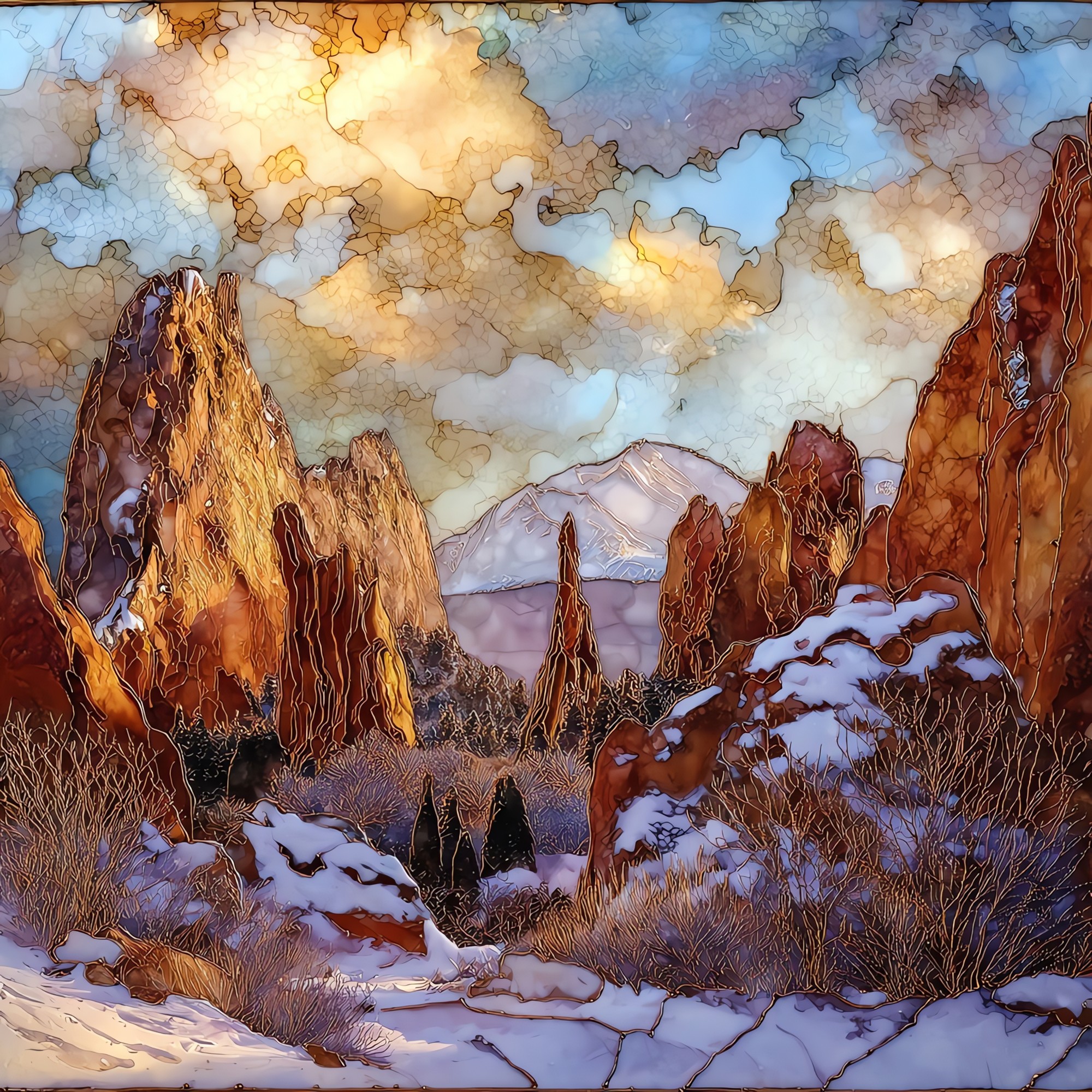
Snow on Garden of the Gods Front Range Ceramic Art Tile
shown on ceramic, 12-inch tileColorado · United States
in Colorado Springs, where the plains meet the Front Range

Snow on Garden of the Gods Front Range Ceramic Art Tile

a snow the red rock will not hold long.

Where it lives

Not only on a wall.

A small tile on the nightstand catching the morning. A larger one above the fire. Yours, wherever you spend the slow hours.
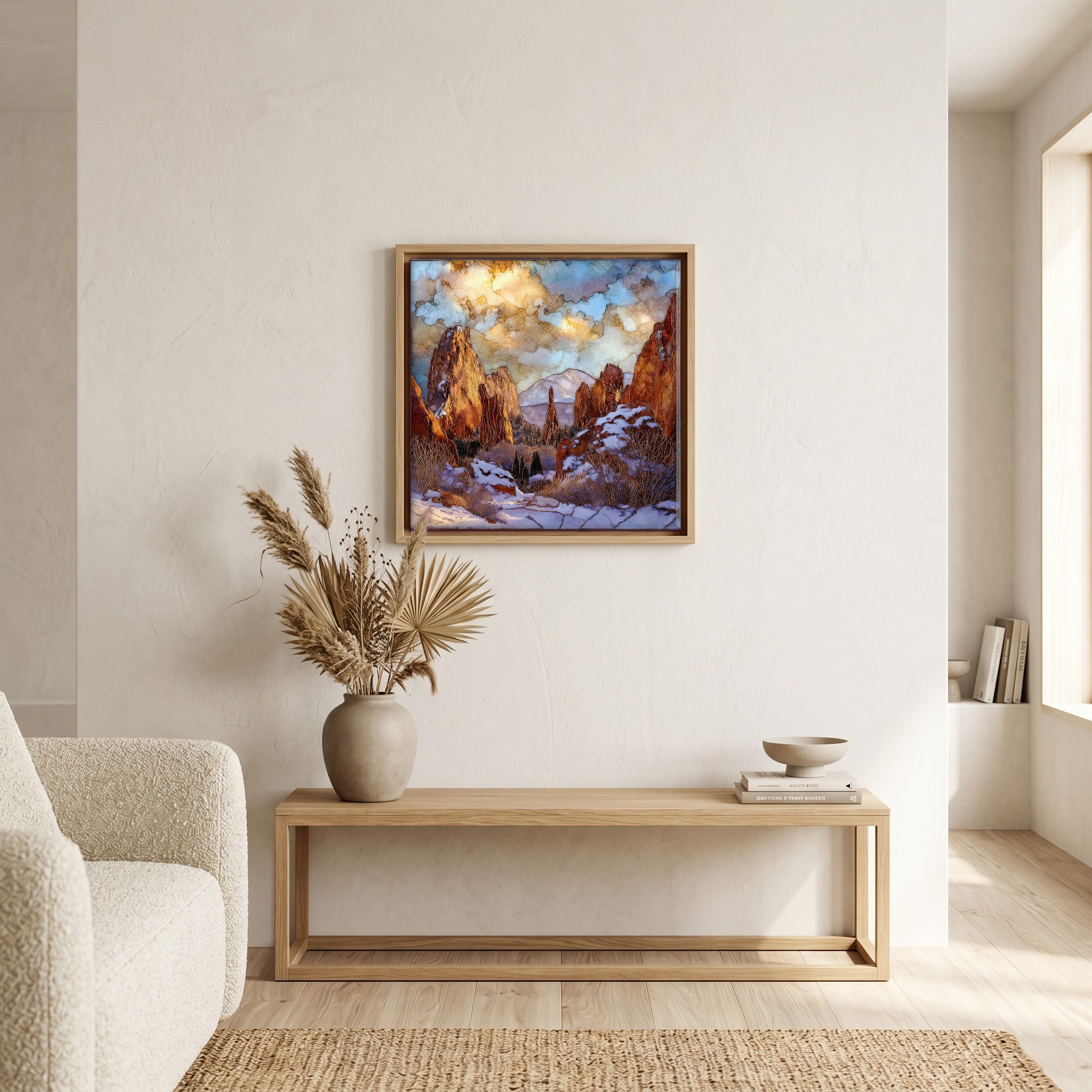
Above the bench, in a warm oak surround.
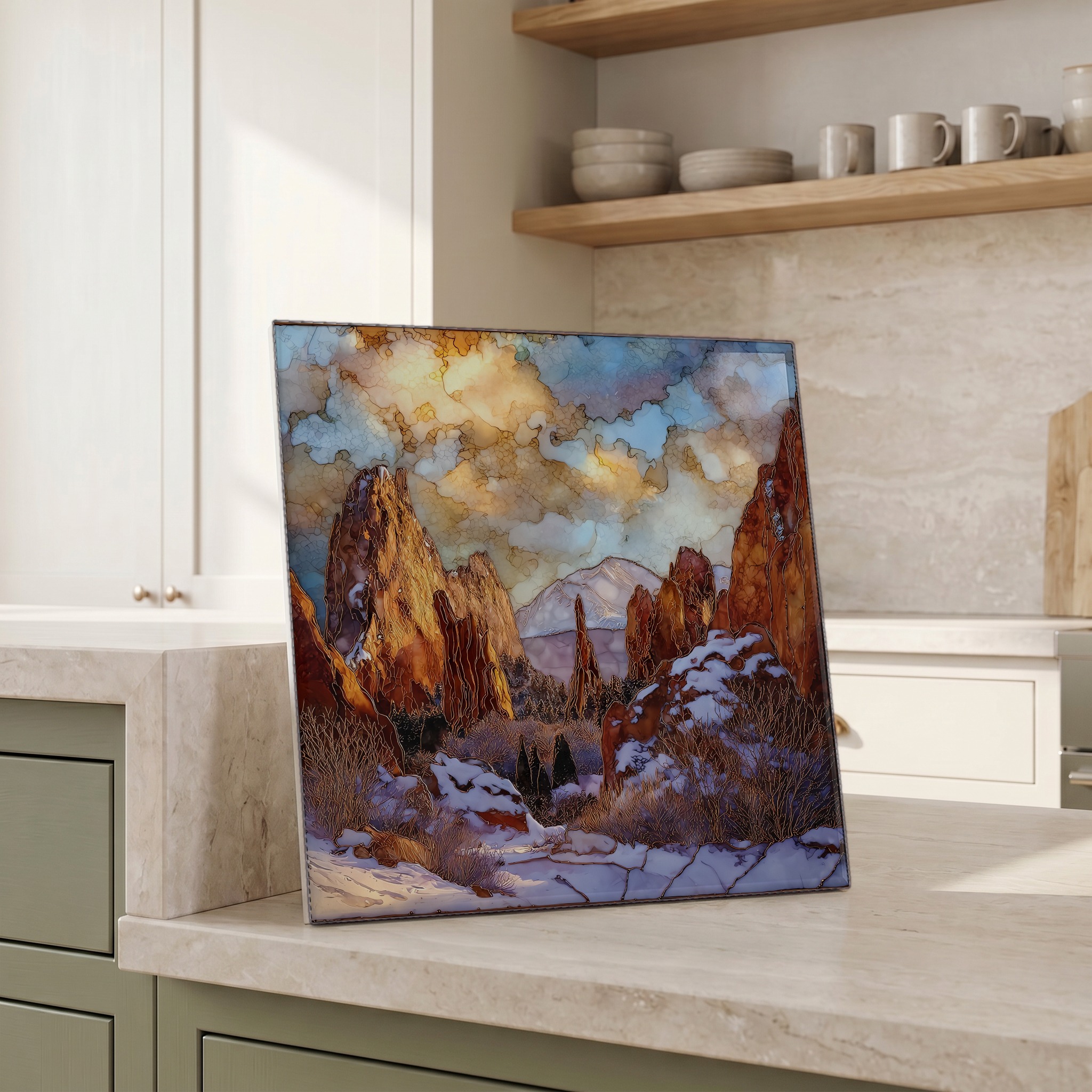
Beside the kettle, propped on the counter.
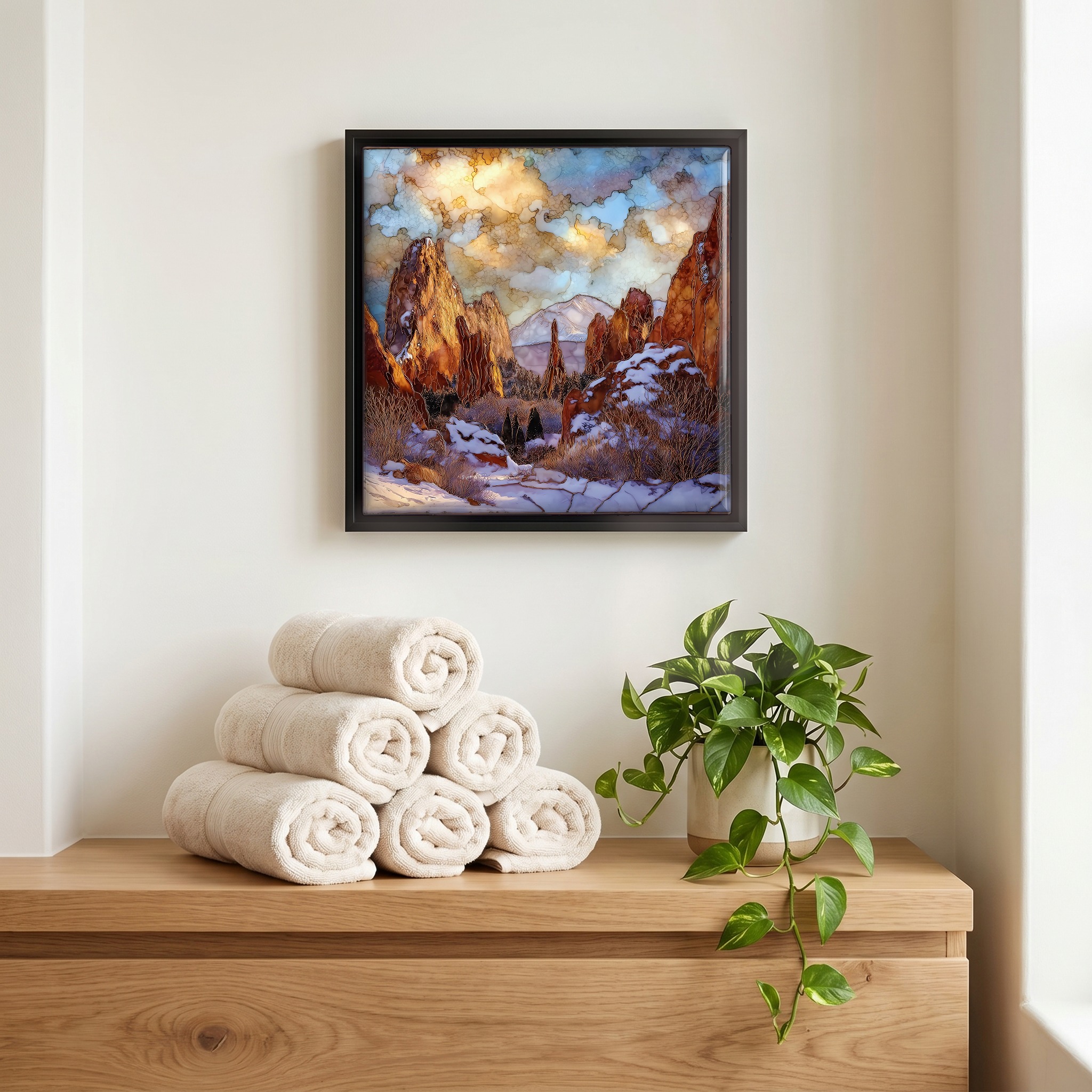
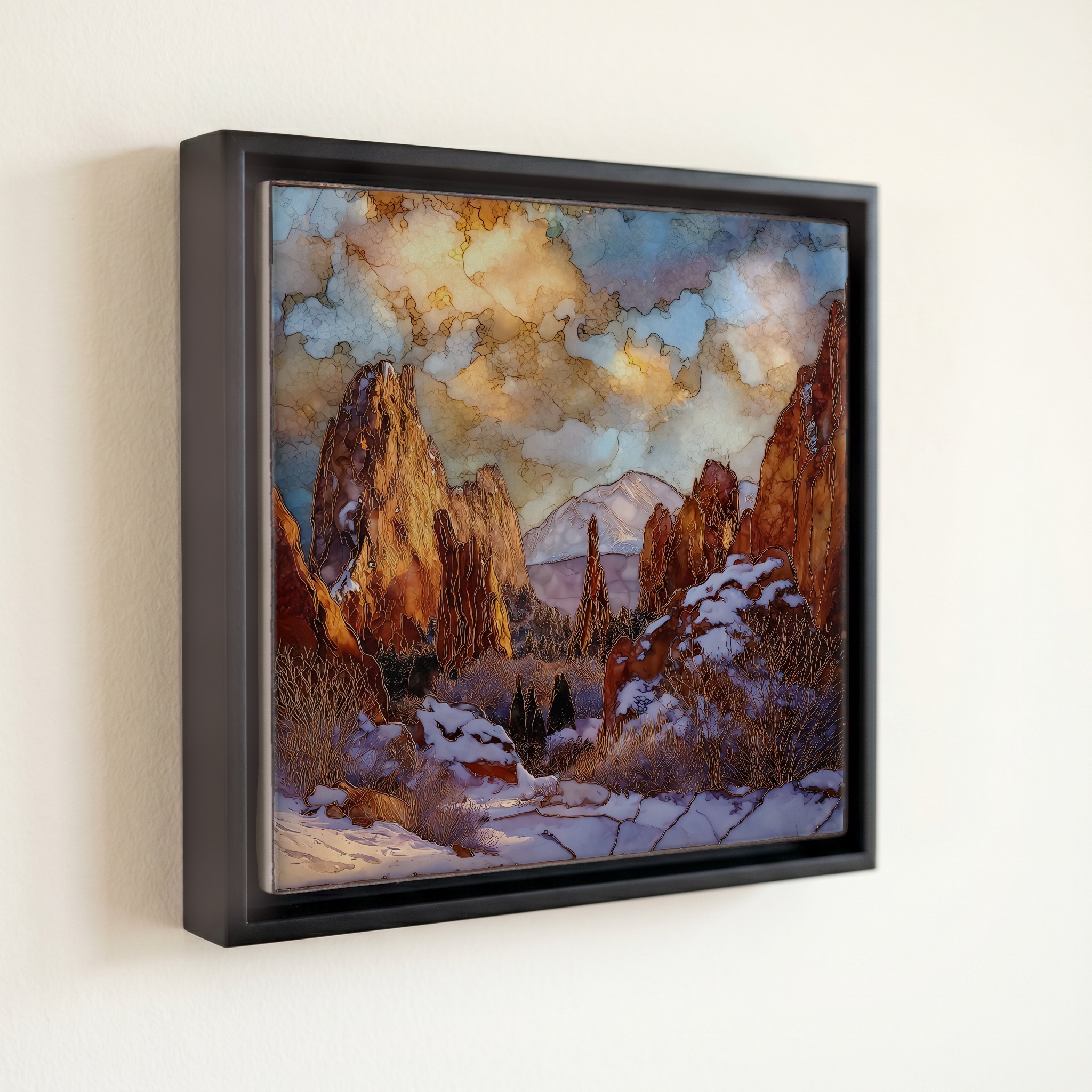
Above the linens, in a slim black surround.
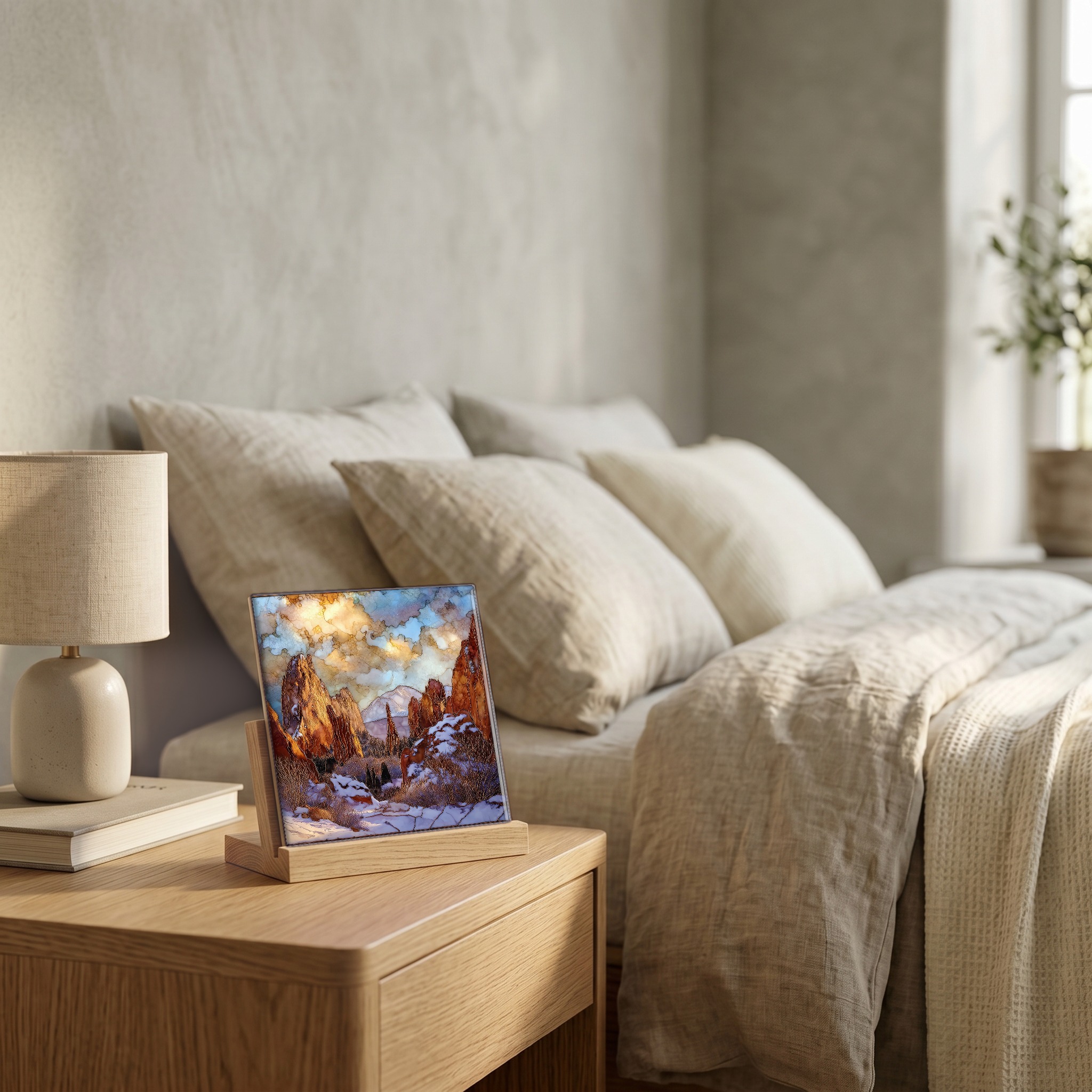
On the nightstand, on a light oak stand.
On a picture ledge, where the light comes in.
a note from the studio

Red sandstone the colour of rust and embers, lifted out of the high plains by the same uplift that built the Front Range. Garden of the Gods is the city park of Colorado Springs. Charles Elliott Perkins' family gave it to the city in 1909 with the only condition that it stay free, and it has. In winter, snow settles into the cracks and ledges and the rocks show twice as red. The Cathedral Spires keep their colour under it. Pikes Peak holds the western edge of the view. The locals walk the paved loop before the sun is fully up, when the wind is still and the rock is the brightest thing for miles.
from the studio
shown in a slim black floating frame · 6 × 6 in
— bring it home

Snow on Garden of the Gods Front Range Ceramic Art Tile, on ceramic.

Each tile is finished by hand in our Knoxville studio. Artwork is slowly infused into the ceramic surface under high heat and pressure, and rests beneath a thin glossy finish. The colour lives in the surface, not on top of it.

What kind of piece?
One tile — square or rectangle.
How big?
the popular one — counter, shelf, nightstand
6 × 6 in · 15 cm · 1.6 lb
Surface finish
A clear glossy finish — the artwork reads as if under resin. Ideal for show-pieces and framed wall art.
How it sits
A hidden cleat — sits ¼″ proud of the wall.
$58
Hand-finished and shipped from our studio at the foot of the Smokies. On your wall in about ten days.
size
6 × 6 in
15 cm
weighs
1.6 lb
solid in the hand
surface
ceramic, hand-finished
art rests beneath a thin glossy finish
from
Knoxville, TN
our family studio, at the foot of the Smokies
— start a Coaster Set

Pick any four 4-inch tiles — National Parks you've been to, a Smokies set, the four seasons of one place. $ for a set of , cork-backed, ready to live on the table.
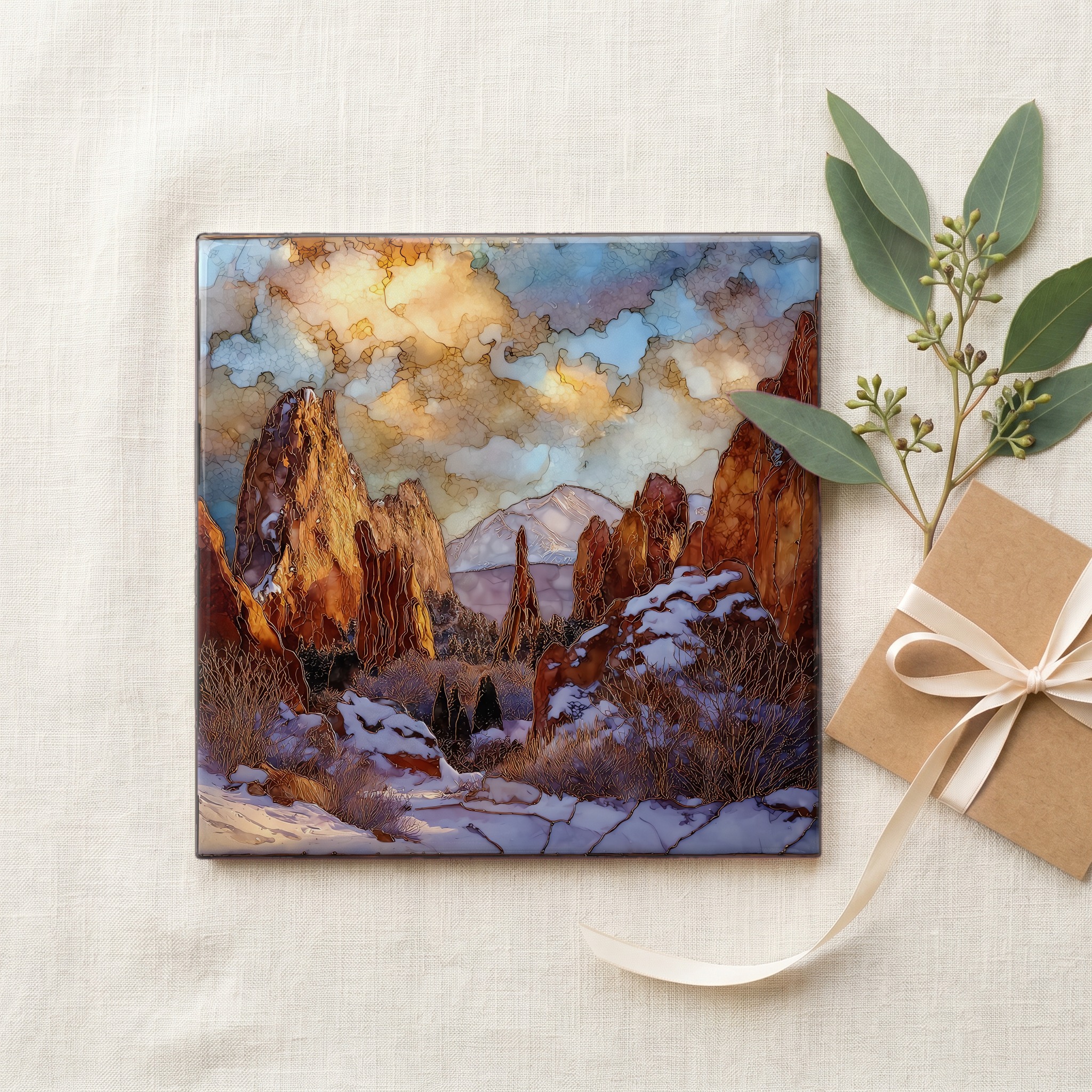
comes gift-ready
comes gift-ready

Each tile ships in a kraft box, tied with cream ribbon, with a handwritten note from the studio if you'd like to add one.
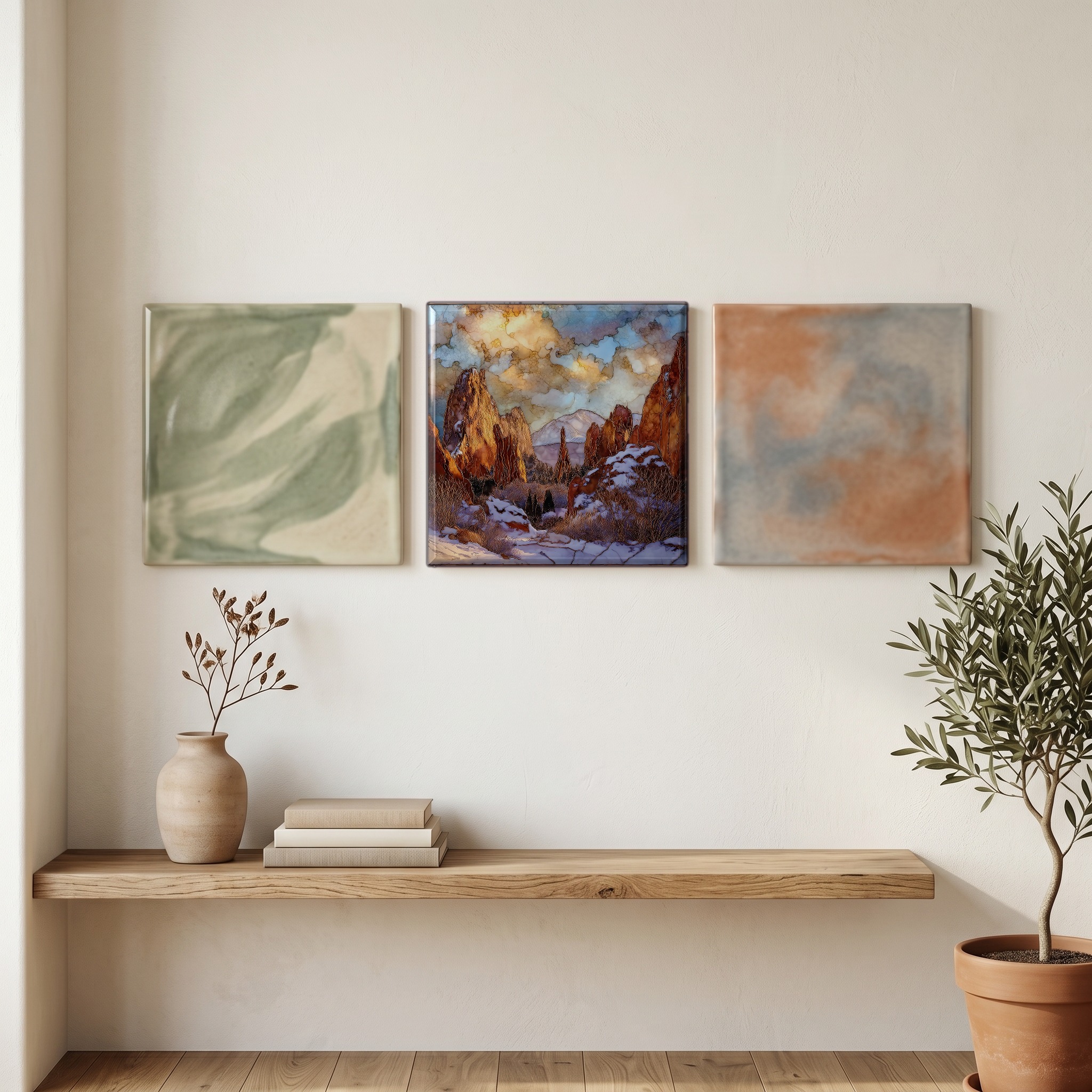
or build a grouping
or build a grouping

Three or five different vistas, hung together — a chapter of places you've been, or want to go.

about Snow on Garden of the Gods Front Range Ceramic Art Tile

The place, in three passes.

A little of what's known, in case you fall down the rabbit hole — or want to go see it yourself.
the place

Garden of the Gods is a 1,367-acre public park on the western edge of Colorado Springs, where the high plains meet the Front Range of the Rockies. The red sandstone fins, ridges, and spires were lifted to their near-vertical orientation by the Laramide orogeny, the same uplift that built the modern Rockies, beginning roughly 70 million years ago. The park sits at about 6,400 feet, with Pikes Peak (14,115 feet) framing the western horizon. The land was deeded to the City of Colorado Springs in 1909 by the children of Charles Elliott Perkins under the condition that it remain free to the public forever, and it has been.

the stone

The towering fins are mostly Lyons Sandstone, a fine-grained Permian-age rock laid down roughly 280 million years ago when this region was a coastal desert. Iron oxide gives the stone its rust-red colour. The lower red beds belong to the older Fountain Formation. The vertical tilt of the rock came later, during the Laramide orogeny that built the modern Rockies and stood the once-horizontal beds nearly on end. Named features include Cathedral Spires, Three Graces, Kissing Camels, Tower of Babel, and Balanced Rock. The park was designated a National Natural Landmark by the National Park Service in 1971 for the geological story the formations make legible at a glance.

the season

Garden of the Gods is open every day of the year, free of charge, with hours posted at the Visitor and Nature Center. Snow at this elevation (about 6,400 feet) usually arrives between November and March, with the heaviest accumulations in March, when upslope storms off the plains can lay several inches against the red rock in a single morning. The contrast is brief. Colorado Springs averages more than 240 sunny days a year, and the sun on the south-facing fins typically clears the snow within a day or two. The Perkins Central Garden Trail is paved and accessible in most conditions; the unpaved loops can ice over after a storm, and the park posts winter trail conditions at the Visitor and Nature Center.

where
United States · Colorado Springs, El Paso County, Colorado
within
Garden of the Gods
elevation
1,951 m · 6,400 ft
position
38.8784° N · 104.8867° W
the neighborhood

What's nearby.

A handful of named places within an hour's walk or short drive. Some we've already painted; some we will.
13 km W
Pikes Peak
14er summit
5 km W
Manitou Springs
mountain town
1 km NW
Glen Eyrie
historic castle
7 km W
Cave of the Winds
cavern attraction
3 km SW
Red Rock Canyon Open Space
open space
4 km E
Old Colorado City
historic district
N
Snow on Garden of the Gods Front Range Ceramic Art Tile
Pikes Peak
Manitou Springs
Glen Eyrie
Cave of the Winds
Red Rock Canyon Open Space
Old Colorado City
common questions

What people ask.

A few questions we get about Snow on Garden of the Gods Front Range Ceramic Art Tile — and about bringing the piece home.
about the place

Garden of the Gods is a 1,367-acre public park on the western edge of Colorado Springs, Colorado, at the eastern foot of the Front Range. The main Visitor and Nature Center sits at 1805 N. 30th Street, about a 90-minute drive south of Denver. Pikes Peak rises directly to the west.

The main formations are Lyons Sandstone, laid down roughly 280 million years ago in a coastal desert and stained rust-red by iron oxide. The vertical orientation of the fins came later, when the Laramide orogeny built the modern Rockies and tilted the once-horizontal beds nearly on end.

No. The park is free, every day of the year. The children of Charles Elliott Perkins deeded the land to the City of Colorado Springs in 1909 with the binding condition that it remain free to the public forever. Parking, trails, and the Visitor and Nature Center cost nothing.

Yes. The park sits at about 6,400 feet, and snow falls regularly between November and March, with March often the snowiest month. Storms can lay several inches against the red sandstone in a morning, though Colorado Springs's high sun count usually clears the south-facing fins within a day or two.

Balanced Rock is a 700-ton block of red sandstone resting on a narrower pedestal near the southwestern edge of the park, about a mile from the main loop. It was operated as a paid roadside attraction in the late 1800s and early 1900s before being acquired by the City of Colorado Springs and added to the park.

The narrow window from a late-evening snowfall to the next morning's sun. Colorado Springs averages more than 240 sunny days a year, so south-facing fins typically clear within hours of dawn. The park opens before sunrise, which usually puts visitors in the formations as the light first touches them.

Yes. The 1.5-mile Perkins Central Garden Trail is paved and accessible in most winter conditions. Unpaved loops can ice over after a storm; the park posts trail conditions at the Visitor and Nature Center. Microspikes are sensible for the back trails after a heavy snow.

about the piece in your home

Garden of the Gods is the place locals take every visiting cousin and grandparent, and the snowed-in mornings are a particularly local image. A Medium hung in a kitchen or hallway carries well. A Coaster Set lands quietly for someone with a desk job and a Colorado Springs zip code in their bio.

The colour story is iron-rust red on cool blue-white snow, with shadow lines of slate. It reads cleanly in Mountain-modern, Southwestern, and Jewel-tone Maximalist rooms. Against warm wood it warms the wood; against white plaster it holds the eye without crowding.

Yes. The current Mountain-modern direction favours saturated natural-stone tones against pale walls, with one painterly piece anchoring the room. The red sandstone reading of this tile sits cleanly inside that palette, and the snow holds enough light value to keep the wall from going heavy.

A single Large (24 x 24 inches) reads from across a small room. A 4-tile Mural (48 x 48) suits a standard 84-inch sofa. A 9-tile Mural (72 x 72) is built for a longer wall above a console or sideboard, with at least eight feet of clearance.

Yes, in either the Dura Satin or Matte finish. Both are scratch-resistant and shrug off moisture, so they sit cleanly on a backsplash, in a shower surround, or beside a tub. The Glossy finish is best reserved for framed dry-wall hangings.

A soft microfibre cloth and warm water is enough for any of the three finishes. For a kitchen tile with grease, a drop of mild dish soap is fine. Avoid abrasive scrubbers and any solvent stronger than household glass cleaner; the colour lives in the surface, not on top of it.

Yes. Every WenderVista piece is created by Reid Wender at the studio in Knoxville, Tennessee. We do not license artwork from outside artists or stock libraries. The atlas of places, the visual language, and the finished tile are all the studio's own work.

if this one stayed with you

A few you might also love.

Hand-picked by the eye that found Sorapis. Same air, same kind of quiet.