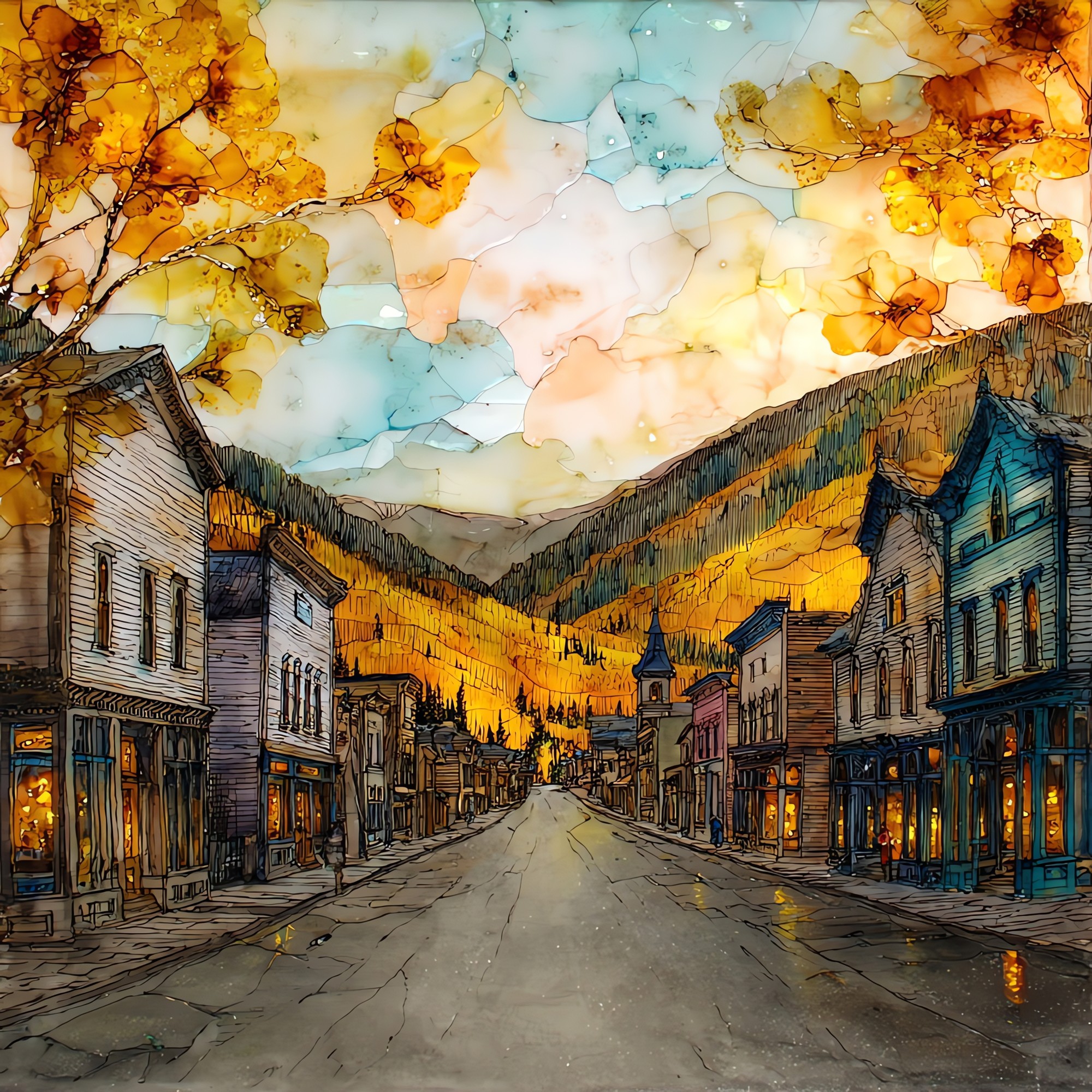
Silverton main street San Juans Ceramic Art Tile
— — the colour that survives at the snowline.
Not only on a wall.




“Silverton sits in a flat basin of the San Juan Mountains, ringed by peaks well over thirteen thousand feet. Greene Street runs the length of the historic district, restored Victorian storefronts in mineral colours, a few brick anchors, the Grand Imperial Hotel from 1882. The Durango & Silverton Narrow Gauge Railroad rolls in once a day from May through October, the whistle echoing off Kendall Mountain before the engine clears the curve. After the day-trippers reboard, the street empties. About six hundred people stay up here through the winter, when the road over Red Mountain Pass closes for storms and the basin holds its silence.
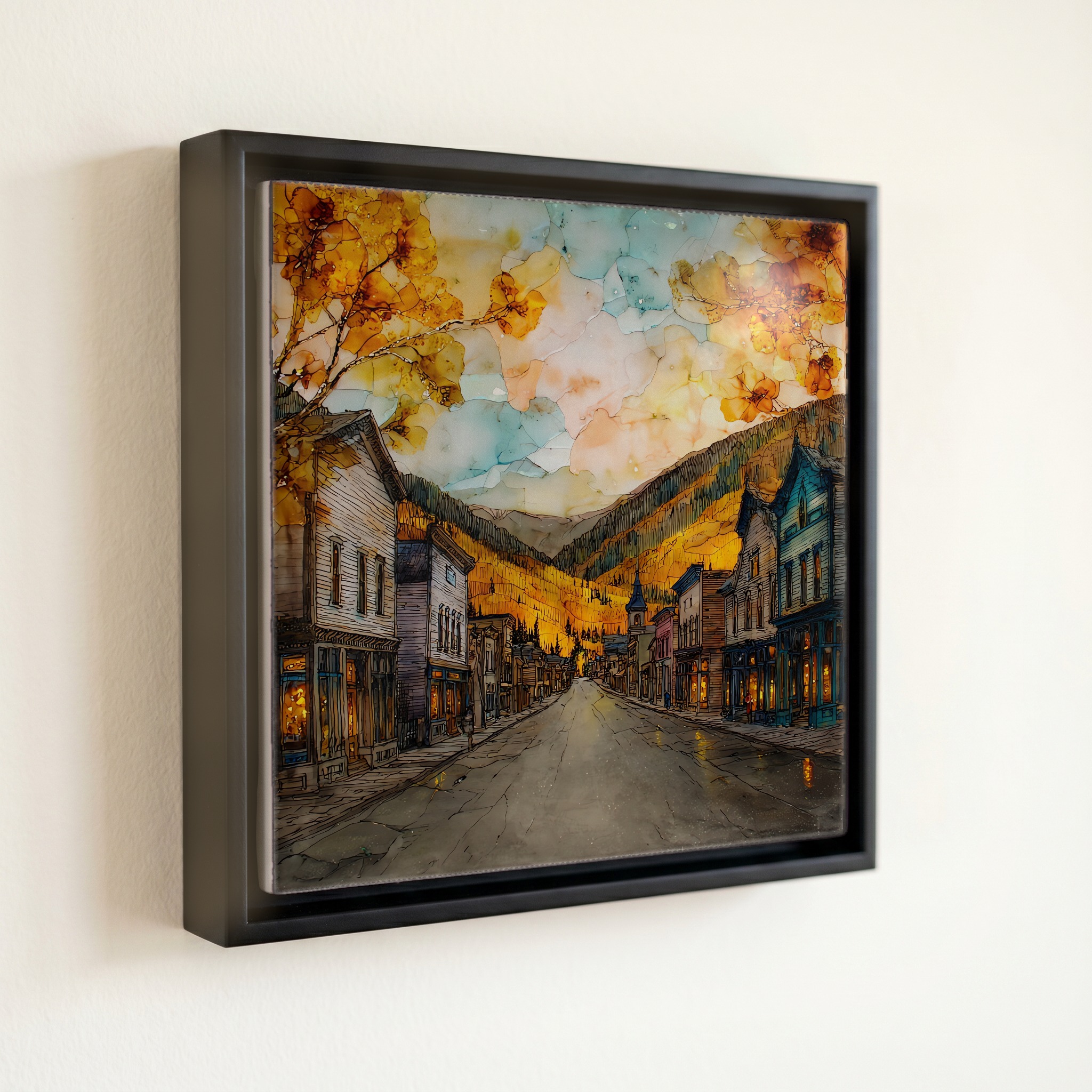
Silverton main street San Juans Ceramic Art Tile, on ceramic.
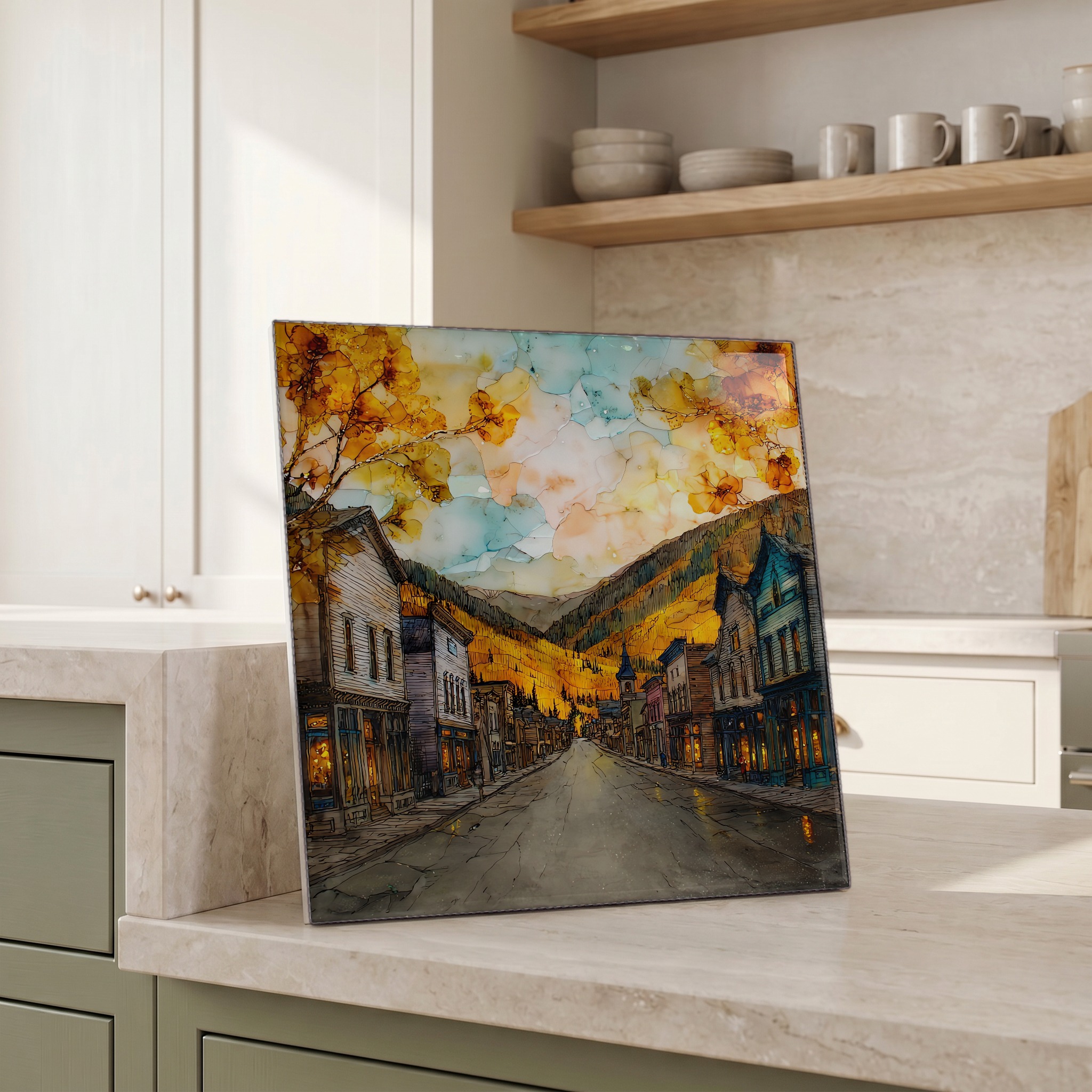
Each tile is finished by hand in our Knoxville studio. Artwork is slowly infused into the ceramic surface under high heat and pressure, and rests beneath a thin glossy finish. The colour lives in the surface, not on top of it.
Pick any four 4-inch tiles — National Parks you've been to, a Smokies set, the four seasons of one place. $ for a set of , cork-backed, ready to live on the table.

Each tile ships in a kraft box, tied with cream ribbon, with a handwritten note from the studio if you'd like to add one.

Three or five different vistas, hung together — a chapter of places you've been, or want to go.
The place, in three passes.
Silverton is the county seat of San Juan County in southwestern Colorado, at 9,318 feet (2,840 m) in a flat basin formed by the upper Animas River. The town is reached by U.S. Route 550, the Million Dollar Highway, which climbs in from Ouray to the north or arrives by a more measured forty-eight miles north of Durango. The Durango & Silverton Narrow Gauge Railroad has connected the two towns since 1882, originally hauling silver ore from the mines above and now hauling passengers along the Animas Canyon. Silverton sits among peaks of the western San Juans: Kendall Mountain (13,066 ft) to the southeast, Sultan Mountain (13,368 ft) to the southwest, and Anvil Mountain rising to the north. Population at the 2020 census was 637.
The Silverton Historic District was designated a National Historic Landmark in 1961, one of the most intact mining-era streetscapes in the American West. Greene Street, the paved commercial run, holds a sequence of false-front wooden storefronts and brick hotels built between 1874 and the early 1900s, anchored by the Grand Imperial Hotel of 1882 at 1219 Greene. Parallel and one block east, Blair Street was the historic saloon-and-bordello strip and remains unpaved along much of its length. The painted colours along Greene trace the mineral palette of nineteenth-century mining towns: oxide reds, ochres, copper greens, the same tones the surrounding peaks shed when the late-season aspens drop and the rock comes through.
Silverton runs on a steep seasonal calendar. The Durango & Silverton Narrow Gauge Railroad operates daily service from early May through late October, peaking in summer and the late-September aspen turn. U.S. 550 over Red Mountain Pass — the Million Dollar Highway — stays open through the year but closes intermittently for avalanche control between November and April. The North American monsoon brings afternoon thunderstorms most days in July and August, so mornings are the photographer's window. Winter is the long quiet: snow accumulates from October through May, the day-trip economy hibernates, and Silverton Mountain Ski Area runs a limited backcountry-style season on the slopes outside town. The year-round population sits near six hundred and changes little between seasons.